


7451 Results
Form:
books
books
Price:
$42.00
(available in store)
Summary:
À l’heure où nos traces numériques s’accumulent, une nouvelle forme de mémoire émerge. Les technomémoires désignent ces formes hybrides que nous construisons à travers les plateformes numériques et les objets connectés. Des albums photos enrichis par l’intelligence artificielle aux assistants qui mémorisent nos habitudes, des médias socionumériques qui stockent nos(...)
$42.00
(available in store)
Summary:
À l’heure où nos traces numériques s’accumulent, une nouvelle forme de mémoire émerge. Les technomémoires désignent ces formes hybrides que nous construisons à travers les plateformes numériques et les objets connectés. Des albums photos enrichis par l’intelligence artificielle aux assistants qui mémorisent nos habitudes, des médias socionumériques qui stockent nos(...)
Subject:
Archive, library and the digital
Archive, library and the digital
Publication:
January 2026
January 2026
Title:
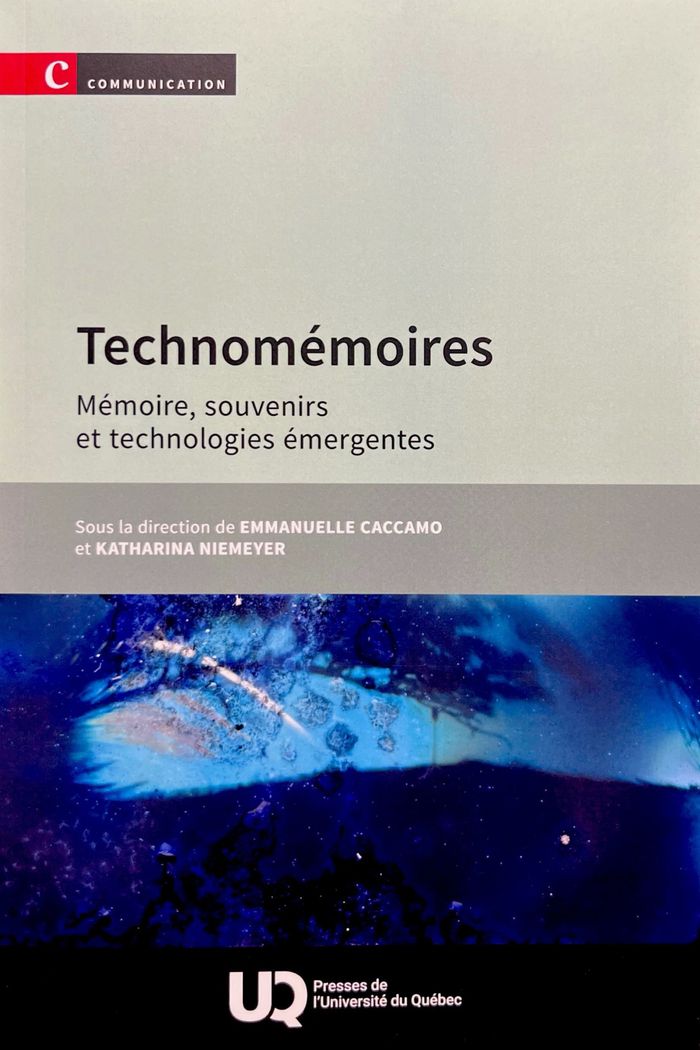
Technomémoires : mémoire, souvenirs et technologies émergentes
Actions:
Price:
$42.00
(available in store)
Summary:
À l’heure où nos traces numériques s’accumulent, une nouvelle forme de mémoire émerge. Les technomémoires désignent ces formes hybrides que nous construisons à travers les plateformes numériques et les objets connectés. Des albums photos enrichis par l’intelligence artificielle aux assistants qui mémorisent nos habitudes, des médias socionumériques qui stockent nos interactions aux objets connectés qui documentent nos comportements quotidiens, un nouvel écosystème mémoriel se dessine. Ce livre en explore les contours à travers trois axes?: la mémoire collective ancrée dans les territoires et les objets?; les pratiques personnelles façonnées par nos interactions numériques?; et les perspectives ouvertes par l’intelligence artificielle dans la gestion – et la fabrication – de nos souvenirs. Il s’adresse aux spécialistes de la mémoire et des médias, aux personnes étudiantes en sciences humaines et sociales, ainsi qu’au grand public curieux de comprendre ce que signifie se souvenir au XXIe siècle, à l’ère des machines qui «?se remémorent?»… supposément mieux que nous.
Technomémoires : mémoire, souvenirs et technologies émergentes
Actions:
Price:
$42.00
(available in store)
Summary:
À l’heure où nos traces numériques s’accumulent, une nouvelle forme de mémoire émerge. Les technomémoires désignent ces formes hybrides que nous construisons à travers les plateformes numériques et les objets connectés. Des albums photos enrichis par l’intelligence artificielle aux assistants qui mémorisent nos habitudes, des médias socionumériques qui stockent nos interactions aux objets connectés qui documentent nos comportements quotidiens, un nouvel écosystème mémoriel se dessine. Ce livre en explore les contours à travers trois axes?: la mémoire collective ancrée dans les territoires et les objets?; les pratiques personnelles façonnées par nos interactions numériques?; et les perspectives ouvertes par l’intelligence artificielle dans la gestion – et la fabrication – de nos souvenirs. Il s’adresse aux spécialistes de la mémoire et des médias, aux personnes étudiantes en sciences humaines et sociales, ainsi qu’au grand public curieux de comprendre ce que signifie se souvenir au XXIe siècle, à l’ère des machines qui «?se remémorent?»… supposément mieux que nous.
Form:
books
books
Publication:
January 2026
January 2026
Subject:
Archive, library and the digital
Archive, library and the digital
Form:
books
books
Price:
$48.00
(available in store)
Summary:
What has planetary-scale computation done to our geopolitical realities? It takes different forms at different scales—from energy and mineral sourcing and subterranean cloud infrastructure to urban software and massive universal addressing systems; from interfaces drawn by the augmentation of the hand and eye to users identified by self-quantification and the arrival of(...)
$48.00
(available in store)
Summary:
What has planetary-scale computation done to our geopolitical realities? It takes different forms at different scales—from energy and mineral sourcing and subterranean cloud infrastructure to urban software and massive universal addressing systems; from interfaces drawn by the augmentation of the hand and eye to users identified by self-quantification and the arrival of(...)
Title:
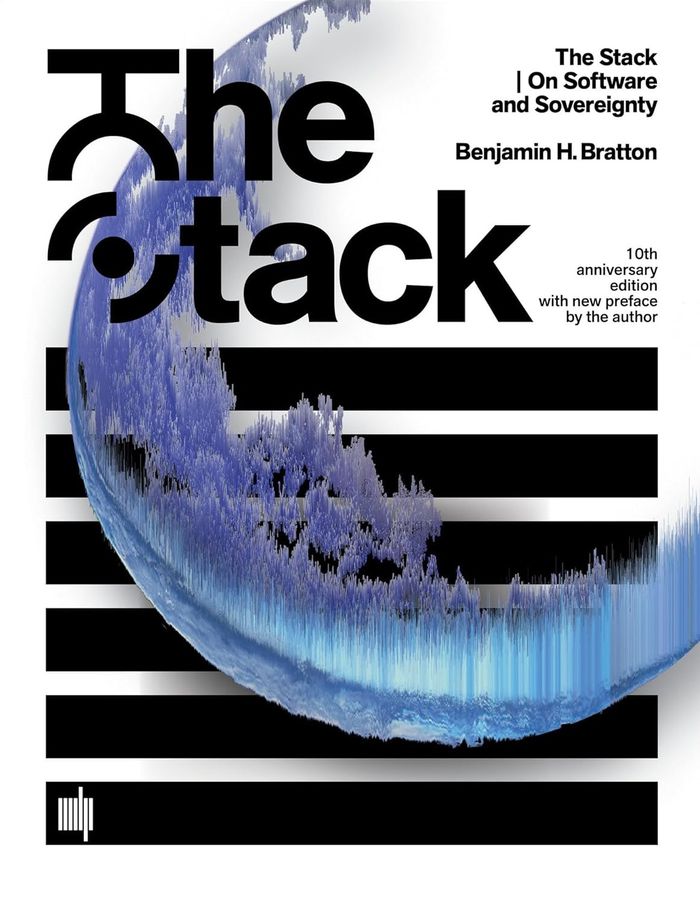
The stack: On software and sovereignty. 10th anniversary edition
Actions:
Price:
$48.00
(available in store)
Summary:
What has planetary-scale computation done to our geopolitical realities? It takes different forms at different scales—from energy and mineral sourcing and subterranean cloud infrastructure to urban software and massive universal addressing systems; from interfaces drawn by the augmentation of the hand and eye to users identified by self-quantification and the arrival of legions of sensors, algorithms, and robots. Together, how do these distort and deform modern political geographies and produce new territories in their own image? In an account that is both theoretical and technical, drawing on political philosophy, design theory, and computer science, Bratton explores six layers of ''The Stack'': Earth, Cloud, City, Address, Interface, User.
The stack: On software and sovereignty. 10th anniversary edition
Actions:
Price:
$48.00
(available in store)
Summary:
What has planetary-scale computation done to our geopolitical realities? It takes different forms at different scales—from energy and mineral sourcing and subterranean cloud infrastructure to urban software and massive universal addressing systems; from interfaces drawn by the augmentation of the hand and eye to users identified by self-quantification and the arrival of legions of sensors, algorithms, and robots. Together, how do these distort and deform modern political geographies and produce new territories in their own image? In an account that is both theoretical and technical, drawing on political philosophy, design theory, and computer science, Bratton explores six layers of ''The Stack'': Earth, Cloud, City, Address, Interface, User.
Form:
books
books
Publication:
March 2026
March 2026
Subject:
Archive, library and the digital
Archive, library and the digital
Form:
books
books

Actions:
Price:
$30.00
(available in store)
Summary:
Gérard Berréby s'entretient avec Aurélie Noury sur ce qui constitue sa première expérience éditoriale, au tout début des années 1980. En décidant de réaliser sur sa seule initiative une édition pirate du livre d'Aragon – alors opposé à tout retirage –, Gérard Berréby soulève plusieurs questions liées à l'appropriation et à l'autoédition : la copie et le faux, la(...)
$30.00
(available in store)
Summary:
Gérard Berréby s'entretient avec Aurélie Noury sur ce qui constitue sa première expérience éditoriale, au tout début des années 1980. En décidant de réaliser sur sa seule initiative une édition pirate du livre d'Aragon – alors opposé à tout retirage –, Gérard Berréby soulève plusieurs questions liées à l'appropriation et à l'autoédition : la copie et le faux, la(...)
Title:
Documents relatifs à l'édition pirate du Traité du style de Louis Aragon par Gérard Berréby
Actions:
Price:
$30.00
(available in store)
Summary:
Gérard Berréby s'entretient avec Aurélie Noury sur ce qui constitue sa première expérience éditoriale, au tout début des années 1980. En décidant de réaliser sur sa seule initiative une édition pirate du livre d'Aragon – alors opposé à tout retirage –, Gérard Berréby soulève plusieurs questions liées à l'appropriation et à l'autoédition : la copie et le faux, la circulation des textes, le détournement, le droit d'auteur, l'édition comme geste politique, la prescription, etc. L'épisode, inédit dans l'histoire de l'édition généraliste, aura provoqué de nombreuses réactions dans le monde littéraire, jusqu'aux poursuites judiciaires engagées par Gallimard. À partir des témoignages et documents d'époque, analysés par Berréby et mis en perspective par Nathalie Leleu plus de 40 ans après, l'ouvrage retrace les circonstances d'un geste fondateur pour le futur directeur des éditions Allia.
Documents relatifs à l'édition pirate du Traité du style de Louis Aragon par Gérard Berréby
Actions:
Price:
$30.00
(available in store)
Summary:
Gérard Berréby s'entretient avec Aurélie Noury sur ce qui constitue sa première expérience éditoriale, au tout début des années 1980. En décidant de réaliser sur sa seule initiative une édition pirate du livre d'Aragon – alors opposé à tout retirage –, Gérard Berréby soulève plusieurs questions liées à l'appropriation et à l'autoédition : la copie et le faux, la circulation des textes, le détournement, le droit d'auteur, l'édition comme geste politique, la prescription, etc. L'épisode, inédit dans l'histoire de l'édition généraliste, aura provoqué de nombreuses réactions dans le monde littéraire, jusqu'aux poursuites judiciaires engagées par Gallimard. À partir des témoignages et documents d'époque, analysés par Berréby et mis en perspective par Nathalie Leleu plus de 40 ans après, l'ouvrage retrace les circonstances d'un geste fondateur pour le futur directeur des éditions Allia.
Form:
books
books
Publication:
March 2024
March 2024
Subject:
Archive, library and the digital
Archive, library and the digital
Form:
books
books
Actions:
Price:
$34.95
(available to order)
Summary:
Philip K. Dick, one of the most prolific and visionary authors of the 20th century, crafted compelling visions of possible futures and dystopian realities teeming with humans, artificial intelligences, and more. Yet, the Dickian universe is more than just its characters—it’s a realm intricately built with technological devices, machines, and objects entirely conceived by(...)
$34.95
(available to order)
Summary:
Philip K. Dick, one of the most prolific and visionary authors of the 20th century, crafted compelling visions of possible futures and dystopian realities teeming with humans, artificial intelligences, and more. Yet, the Dickian universe is more than just its characters—it’s a realm intricately built with technological devices, machines, and objects entirely conceived by(...)
Subject:
Archive, library and the digital
Archive, library and the digital
Publication:
July 2024
July 2024
Title:
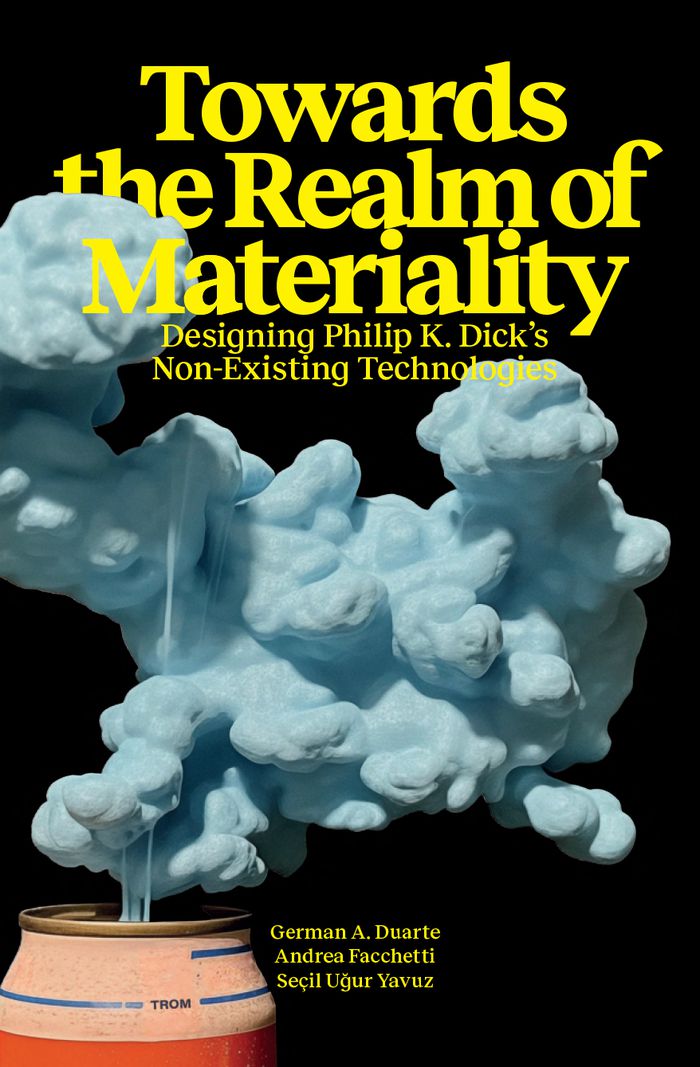
Towards the realm of materiality: Designing Philip K. Dick's non-existing technologies
Actions:
Price:
$34.95
(available to order)
Summary:
Philip K. Dick, one of the most prolific and visionary authors of the 20th century, crafted compelling visions of possible futures and dystopian realities teeming with humans, artificial intelligences, and more. Yet, the Dickian universe is more than just its characters—it’s a realm intricately built with technological devices, machines, and objects entirely conceived by this brilliant mind. How did Philip K. Dick envision these technologies, and through them, the future? And now, decades after his time, how should we perceive and interpret these tools? More intriguingly, how can we decode and reconstruct the creative process that led to the creation and "materialization" of these devices? Grounded in a multidisciplinary framework, this volume explores alternative designs and projects for some of the non-existing technologies described in Philip K. Dick’s oeuvre.
Towards the realm of materiality: Designing Philip K. Dick's non-existing technologies
Actions:
Price:
$34.95
(available to order)
Summary:
Philip K. Dick, one of the most prolific and visionary authors of the 20th century, crafted compelling visions of possible futures and dystopian realities teeming with humans, artificial intelligences, and more. Yet, the Dickian universe is more than just its characters—it’s a realm intricately built with technological devices, machines, and objects entirely conceived by this brilliant mind. How did Philip K. Dick envision these technologies, and through them, the future? And now, decades after his time, how should we perceive and interpret these tools? More intriguingly, how can we decode and reconstruct the creative process that led to the creation and "materialization" of these devices? Grounded in a multidisciplinary framework, this volume explores alternative designs and projects for some of the non-existing technologies described in Philip K. Dick’s oeuvre.
Form:
books
books
Publication:
July 2024
July 2024
Subject:
Archive, library and the digital
Archive, library and the digital
Form:
books
books

Price:
$37.95
(available to order)
Summary:
In "The politics of collecting," Eunsong Kim traces how racial capitalism and colonialism situated the rise of US museum collections and conceptual art forms. Investigating historical legal and property claims, she argues that regimes of expropriation--rather than merit or good taste--are responsible for popular ideas of formal innovation and artistic genius. In doing so,(...)
$37.95
(available to order)
Summary:
In "The politics of collecting," Eunsong Kim traces how racial capitalism and colonialism situated the rise of US museum collections and conceptual art forms. Investigating historical legal and property claims, she argues that regimes of expropriation--rather than merit or good taste--are responsible for popular ideas of formal innovation and artistic genius. In doing so,(...)
Title:
The politics of collecting: Race and the aestheticization of property
Actions:
Price:
$37.95
(available to order)
Summary:
In "The politics of collecting," Eunsong Kim traces how racial capitalism and colonialism situated the rise of US museum collections and conceptual art forms. Investigating historical legal and property claims, she argues that regimes of expropriation--rather than merit or good taste--are responsible for popular ideas of formal innovation and artistic genius. In doing so, she details how Marcel Duchamp's canonization has more to do with his patron's donations to museums than it does the quality of Duchamp's work, and she uncovers the racialized and financialized logic behind the Archive of New Poetry's collecting practices. Ranging from the conception of philanthropy devised by the robber barons of the late nineteenth century to ongoing digitization projects, Kim provides a new history of contemporary art that accounts for the complicated entanglement of race, capital, and labor behind storied art institutions and artists. Drawing on history, theory, and economics, Kim challenges received notions of artistic success and talent and calls for a new vision of art beyond the cultural institution.
The politics of collecting: Race and the aestheticization of property
Actions:
Price:
$37.95
(available to order)
Summary:
In "The politics of collecting," Eunsong Kim traces how racial capitalism and colonialism situated the rise of US museum collections and conceptual art forms. Investigating historical legal and property claims, she argues that regimes of expropriation--rather than merit or good taste--are responsible for popular ideas of formal innovation and artistic genius. In doing so, she details how Marcel Duchamp's canonization has more to do with his patron's donations to museums than it does the quality of Duchamp's work, and she uncovers the racialized and financialized logic behind the Archive of New Poetry's collecting practices. Ranging from the conception of philanthropy devised by the robber barons of the late nineteenth century to ongoing digitization projects, Kim provides a new history of contemporary art that accounts for the complicated entanglement of race, capital, and labor behind storied art institutions and artists. Drawing on history, theory, and economics, Kim challenges received notions of artistic success and talent and calls for a new vision of art beyond the cultural institution.
Form:
books
books
Publication:
August 2024
August 2024
Subject:
Archive, library and the digital
Archive, library and the digital
Form:
books
books
Actions:
Price:
$52.00
(available to order)
Summary:
Dans une démarche interdisciplinaire inspirée des études des sciences et techniques, articulant approches muséologiques et sociologiques, cette étude inédite sur les réserves des musées apporte un éclairage nouveau sur le monde de la conservation de l'art et du patrimoine. Lieu essentiel du musée où sont conservées les œuvres quand elles ne sont pas exposées, les(...)
$52.00
(available to order)
Summary:
Dans une démarche interdisciplinaire inspirée des études des sciences et techniques, articulant approches muséologiques et sociologiques, cette étude inédite sur les réserves des musées apporte un éclairage nouveau sur le monde de la conservation de l'art et du patrimoine. Lieu essentiel du musée où sont conservées les œuvres quand elles ne sont pas exposées, les(...)
Subject:
Archive, library and the digital
Archive, library and the digital
Publication:
September 2024
September 2024
Title:
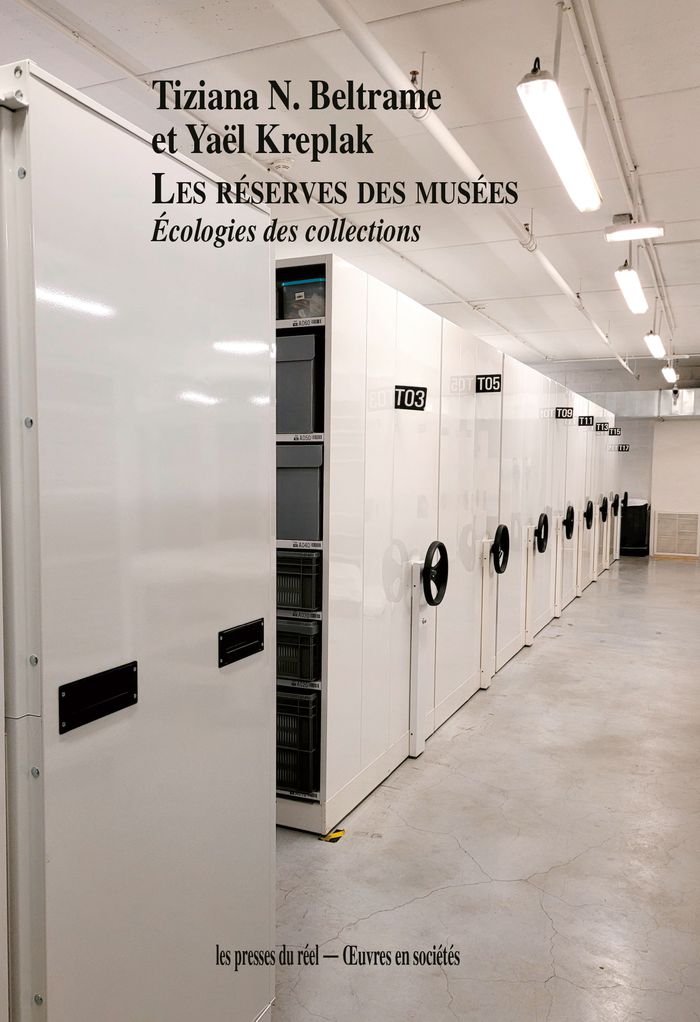
Les réserves des musées : Écologies des collections
Actions:
Price:
$52.00
(available to order)
Summary:
Dans une démarche interdisciplinaire inspirée des études des sciences et techniques, articulant approches muséologiques et sociologiques, cette étude inédite sur les réserves des musées apporte un éclairage nouveau sur le monde de la conservation de l'art et du patrimoine. Lieu essentiel du musée où sont conservées les œuvres quand elles ne sont pas exposées, les réserves sont restées longtemps dans l'ombre des salles d'expositions. Or, dans la majorité des institutions, seule une infime portion des collections est présentée au public : il y a donc un réel enjeu à penser la relation entre leurs parts visible et invisible, les problématiques liées à leur stockage et leur mouvement, et le travail qu'elles impliquent.
Les réserves des musées : Écologies des collections
Actions:
Price:
$52.00
(available to order)
Summary:
Dans une démarche interdisciplinaire inspirée des études des sciences et techniques, articulant approches muséologiques et sociologiques, cette étude inédite sur les réserves des musées apporte un éclairage nouveau sur le monde de la conservation de l'art et du patrimoine. Lieu essentiel du musée où sont conservées les œuvres quand elles ne sont pas exposées, les réserves sont restées longtemps dans l'ombre des salles d'expositions. Or, dans la majorité des institutions, seule une infime portion des collections est présentée au public : il y a donc un réel enjeu à penser la relation entre leurs parts visible et invisible, les problématiques liées à leur stockage et leur mouvement, et le travail qu'elles impliquent.
Form:
books
books
Publication:
September 2024
September 2024
Subject:
Archive, library and the digital
Archive, library and the digital
Form:
books
books
Title:
Programmed inequality: how Britain discarded women technologists and lost its edge in computing
Programmed inequality: how Britain discarded women technologists and lost its edge in computing
Actions:
Price:
$51.95
(available to order)
Summary:
In 1944, Britain led the world in electronic computing. By 1974, the British computer industry was all but extinct. What happened in the intervening thirty years holds lessons for all postindustrial superpowers. As Britain struggled to use technology to retain its global power, the nation’s inability to manage its technical labor force hobbled its transition into the(...)
$51.95
(available to order)
Summary:
In 1944, Britain led the world in electronic computing. By 1974, the British computer industry was all but extinct. What happened in the intervening thirty years holds lessons for all postindustrial superpowers. As Britain struggled to use technology to retain its global power, the nation’s inability to manage its technical labor force hobbled its transition into the(...)
Title:
Programmed inequality: how Britain discarded women technologists and lost its edge in computing
Actions:
Price:
$51.95
(available to order)
Summary:
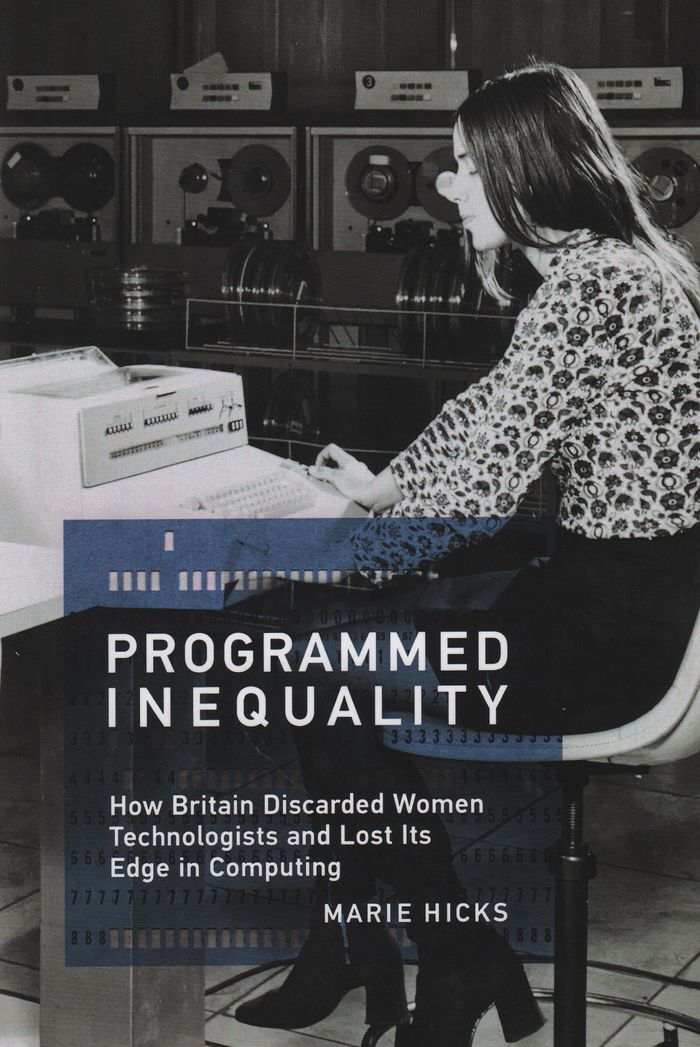
In 1944, Britain led the world in electronic computing. By 1974, the British computer industry was all but extinct. What happened in the intervening thirty years holds lessons for all postindustrial superpowers. As Britain struggled to use technology to retain its global power, the nation’s inability to manage its technical labor force hobbled its transition into the information age. In "Programmed inequality", Marie Hicks explores the story of labor feminization and gendered technocracy that undercut British efforts to computerize. That failure sprang from the government’s systematic neglect of its largest trained technical workforce simply because they were women. Women were a hidden engine of growth in high technology from World War II to the 1960s. As computing experienced a gender flip, becoming male-identified in the 1960s and 1970s, labor problems grew into structural ones and gender discrimination caused the nation’s largest computer user—the civil service and sprawling public sector—to make decisions that were disastrous for the British computer industry and the nation as a whole.
Programmed inequality: how Britain discarded women technologists and lost its edge in computing
Actions:
Price:
$51.95
(available to order)
Summary:
In 1944, Britain led the world in electronic computing. By 1974, the British computer industry was all but extinct. What happened in the intervening thirty years holds lessons for all postindustrial superpowers. As Britain struggled to use technology to retain its global power, the nation’s inability to manage its technical labor force hobbled its transition into the information age. In "Programmed inequality", Marie Hicks explores the story of labor feminization and gendered technocracy that undercut British efforts to computerize. That failure sprang from the government’s systematic neglect of its largest trained technical workforce simply because they were women. Women were a hidden engine of growth in high technology from World War II to the 1960s. As computing experienced a gender flip, becoming male-identified in the 1960s and 1970s, labor problems grew into structural ones and gender discrimination caused the nation’s largest computer user—the civil service and sprawling public sector—to make decisions that were disastrous for the British computer industry and the nation as a whole.
Form:
books
books
Publication:
February 2017
February 2017
Subject:
Archive, library and the digital
Archive, library and the digital
Form:
books
books
Title:
The big archive
The big archive
Actions:
Price:
$35.50
(available to order)
Summary:
The typewriter, the card index, and the filing cabinet: these are technologies and modalities of the archive. To the bureaucrat, archives contain little more than garbage, paperwork no longer needed; to the historian, on the other hand, the archive’s content stands as a quasi-objective correlative of the “living” past. Twentieth-century art made use of the archive in a(...)
$35.50
(available to order)
Summary:
The typewriter, the card index, and the filing cabinet: these are technologies and modalities of the archive. To the bureaucrat, archives contain little more than garbage, paperwork no longer needed; to the historian, on the other hand, the archive’s content stands as a quasi-objective correlative of the “living” past. Twentieth-century art made use of the archive in a(...)
Title:
The big archive
Actions:
Price:
$35.50
(available to order)
Summary:
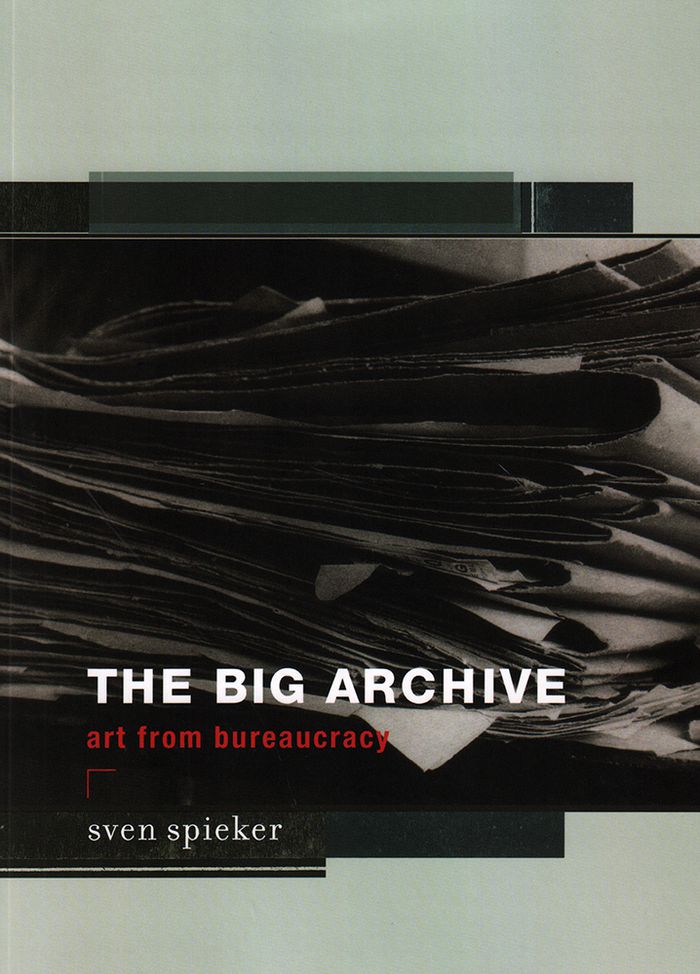
The typewriter, the card index, and the filing cabinet: these are technologies and modalities of the archive. To the bureaucrat, archives contain little more than garbage, paperwork no longer needed; to the historian, on the other hand, the archive’s content stands as a quasi-objective correlative of the “living” past. Twentieth-century art made use of the archive in a variety of ways—from what Spieker calls Marcel Duchamp’s “anemic archive” of readymades and El Lissitzky’s Demonstration Rooms to the compilations of photographs made by such postwar artists as Susan Hiller and Gerhard Richter. In "The big archive", Sven Spieker investigates the archive—as both bureaucratic institution and index of evolving attitudes toward contingent time in science and art—and finds it to be a crucible of twentieth-century modernism.
The big archive
Actions:
Price:
$35.50
(available to order)
Summary:
The typewriter, the card index, and the filing cabinet: these are technologies and modalities of the archive. To the bureaucrat, archives contain little more than garbage, paperwork no longer needed; to the historian, on the other hand, the archive’s content stands as a quasi-objective correlative of the “living” past. Twentieth-century art made use of the archive in a variety of ways—from what Spieker calls Marcel Duchamp’s “anemic archive” of readymades and El Lissitzky’s Demonstration Rooms to the compilations of photographs made by such postwar artists as Susan Hiller and Gerhard Richter. In "The big archive", Sven Spieker investigates the archive—as both bureaucratic institution and index of evolving attitudes toward contingent time in science and art—and finds it to be a crucible of twentieth-century modernism.
Form:
books
books
Publication:
March 2017
March 2017
Subject:
Archive, library and the digital
Archive, library and the digital
Form:
books
books
Actions:
Price:
$42.95
(available to order)
Summary:
Aaron Swartz était programmeur informatique, essayiste, organisateur politique, et hacker-activiste américain. Adolescent, il était déjà un libre penseur, un programmeur, un écrivain et un militant profondément engagé en faveur de l’accès libre et gratuit à l’information contribuant au bien du public. Élevé dans la banlieue riche de Chicago, il atteint la majorité alors(...)
$42.95
(available to order)
Summary:
Aaron Swartz était programmeur informatique, essayiste, organisateur politique, et hacker-activiste américain. Adolescent, il était déjà un libre penseur, un programmeur, un écrivain et un militant profondément engagé en faveur de l’accès libre et gratuit à l’information contribuant au bien du public. Élevé dans la banlieue riche de Chicago, il atteint la majorité alors(...)
Subject:
Archive, library and the digital
Archive, library and the digital
Publication:
April 2017
April 2017
Title:
Celui qui pourrait changer le monde : écrits
Actions:
Price:
$42.95
(available to order)
Summary:
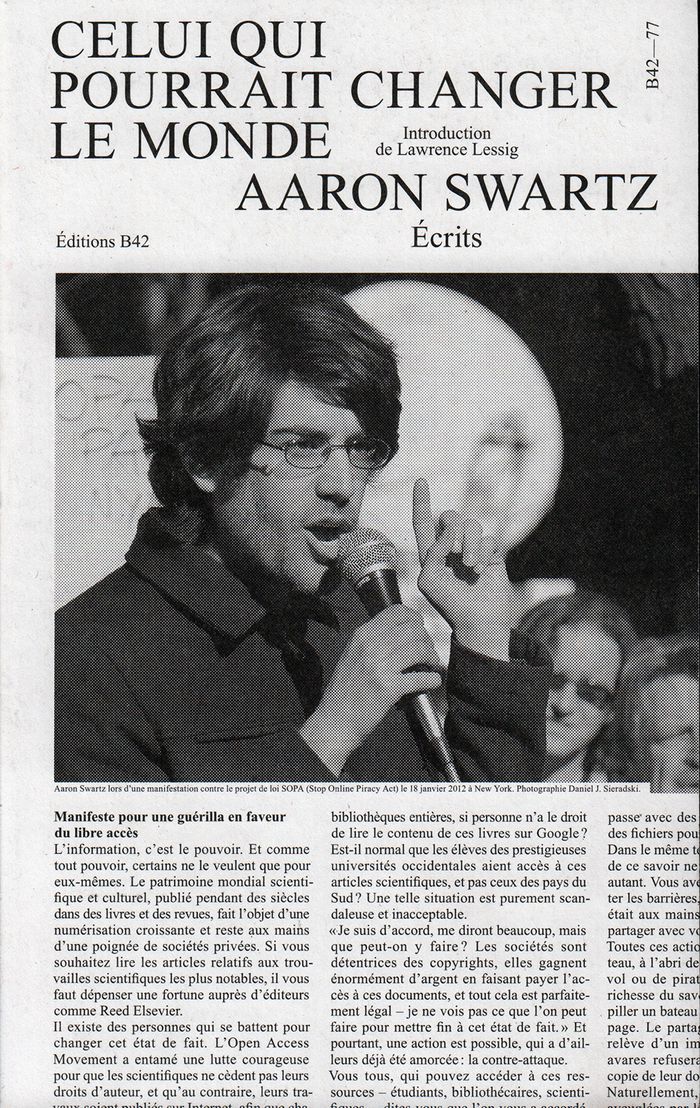
Aaron Swartz était programmeur informatique, essayiste, organisateur politique, et hacker-activiste américain. Adolescent, il était déjà un libre penseur, un programmeur, un écrivain et un militant profondément engagé en faveur de l’accès libre et gratuit à l’information contribuant au bien du public. Élevé dans la banlieue riche de Chicago, il atteint la majorité alors que la bataille relative au téléchargement illégal de musique bat son plein. Il devancera à cette occasion grand nombre des questions encore débattues aujourd’hui. Harcelé par le FBI suite au procès attenté à son égard, Aaron Swartz connaît une fin tragique en mettant fin à ses jours à l’âge de 26 ans alors qu’il faisait face à l’opposition entre son idéal de « free culture » et les lois relatives à la propriété intellectuelle aux États-Unis. Étant donné la terrible brièveté de son audacieuse vie intellectuelle "Celui qui pourrait changer le monde" est une remarquable et substantielle collection de ses écrits (articles, essais, conférences), qui soulignent la pluralité des intérêts du jeune homme, de son amour pour le code, à son idéal d’un monde collaboratif et virtuel. On y découvre un personnage curieux de tout, drôle, brillant, radical et visionnaire, mais aussi plein d’autodérision. Le livre est divisé en six chapitres, suivant ses centres d’intérêts : la culture libre, tout d’abord, les ordinateurs, la politique, les media, les livres et la culture et enfin l’éducation. Ses différents combats (pour la culture libre notamment, qui se politisèrent à la fin de sa vie) sont enracinés dans la croyance qu’accéder à la connaissance et la possibilité de l’utiliser constitue le meilleur moyen d’empowerment et de justice. L’activisme multi-facette de Swartz inclue l’orchestration de pétitions massives en ligne contre les lois relatives au droit d’auteur et la lutte contre le piratage. Swartz a également écrit avec passion sur les livres (Kafka et David Foster font partis de ses favoris), les magazines, les films, la musique et l’éducation.
Celui qui pourrait changer le monde : écrits
Actions:
Price:
$42.95
(available to order)
Summary:
Aaron Swartz était programmeur informatique, essayiste, organisateur politique, et hacker-activiste américain. Adolescent, il était déjà un libre penseur, un programmeur, un écrivain et un militant profondément engagé en faveur de l’accès libre et gratuit à l’information contribuant au bien du public. Élevé dans la banlieue riche de Chicago, il atteint la majorité alors que la bataille relative au téléchargement illégal de musique bat son plein. Il devancera à cette occasion grand nombre des questions encore débattues aujourd’hui. Harcelé par le FBI suite au procès attenté à son égard, Aaron Swartz connaît une fin tragique en mettant fin à ses jours à l’âge de 26 ans alors qu’il faisait face à l’opposition entre son idéal de « free culture » et les lois relatives à la propriété intellectuelle aux États-Unis. Étant donné la terrible brièveté de son audacieuse vie intellectuelle "Celui qui pourrait changer le monde" est une remarquable et substantielle collection de ses écrits (articles, essais, conférences), qui soulignent la pluralité des intérêts du jeune homme, de son amour pour le code, à son idéal d’un monde collaboratif et virtuel. On y découvre un personnage curieux de tout, drôle, brillant, radical et visionnaire, mais aussi plein d’autodérision. Le livre est divisé en six chapitres, suivant ses centres d’intérêts : la culture libre, tout d’abord, les ordinateurs, la politique, les media, les livres et la culture et enfin l’éducation. Ses différents combats (pour la culture libre notamment, qui se politisèrent à la fin de sa vie) sont enracinés dans la croyance qu’accéder à la connaissance et la possibilité de l’utiliser constitue le meilleur moyen d’empowerment et de justice. L’activisme multi-facette de Swartz inclue l’orchestration de pétitions massives en ligne contre les lois relatives au droit d’auteur et la lutte contre le piratage. Swartz a également écrit avec passion sur les livres (Kafka et David Foster font partis de ses favoris), les magazines, les films, la musique et l’éducation.
Form:
books
books
Publication:
April 2017
April 2017
Subject:
Archive, library and the digital
Archive, library and the digital
Form:
books
books
Actions:
Price:
$23.50
(available to order)
Summary:
“The revolution will be Twittered!” declared journalist Andrew Sullivan after protests erupted in Iran. But as journalist and social commentator Evgeny Morozov argues in The Net Delusion, the Internet is a tool that both revolutionaries and authoritarian governments can use. For all of the talk in the West about the power of the Internet to democratize societies, regimes(...)
$23.50
(available to order)
Summary:
“The revolution will be Twittered!” declared journalist Andrew Sullivan after protests erupted in Iran. But as journalist and social commentator Evgeny Morozov argues in The Net Delusion, the Internet is a tool that both revolutionaries and authoritarian governments can use. For all of the talk in the West about the power of the Internet to democratize societies, regimes(...)
Title:
The net delusion: the dark side of the internet
Actions:
Price:
$23.50
(available to order)
Summary:
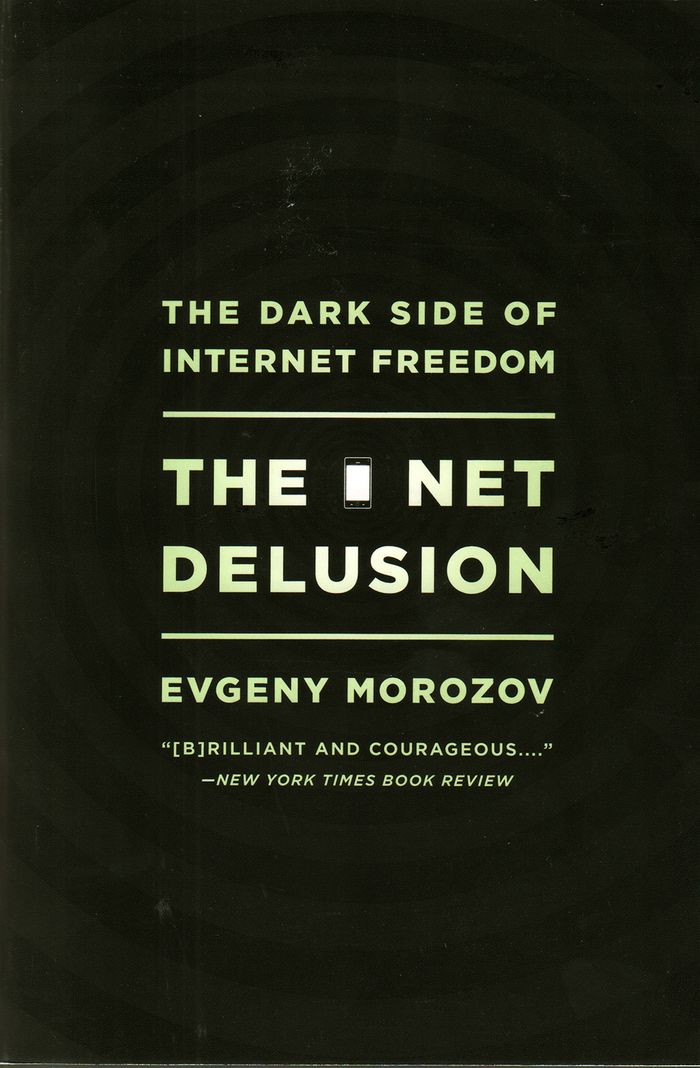
“The revolution will be Twittered!” declared journalist Andrew Sullivan after protests erupted in Iran. But as journalist and social commentator Evgeny Morozov argues in The Net Delusion, the Internet is a tool that both revolutionaries and authoritarian governments can use. For all of the talk in the West about the power of the Internet to democratize societies, regimes in Iran and China are as stable and repressive as ever. Social media sites have been used there to entrench dictators and threaten dissidents, making it harder—not easier—to promote democracy. Marshalling a compelling set of case studies, The Net Delusion shows why the cyber-utopian stance that the Internet is inherently liberating is wrong, and how ambitious and seemingly noble initiatives like the promotion of “Internet freedom” are misguided and, on occasion, harmful.
The net delusion: the dark side of the internet
Actions:
Price:
$23.50
(available to order)
Summary:
“The revolution will be Twittered!” declared journalist Andrew Sullivan after protests erupted in Iran. But as journalist and social commentator Evgeny Morozov argues in The Net Delusion, the Internet is a tool that both revolutionaries and authoritarian governments can use. For all of the talk in the West about the power of the Internet to democratize societies, regimes in Iran and China are as stable and repressive as ever. Social media sites have been used there to entrench dictators and threaten dissidents, making it harder—not easier—to promote democracy. Marshalling a compelling set of case studies, The Net Delusion shows why the cyber-utopian stance that the Internet is inherently liberating is wrong, and how ambitious and seemingly noble initiatives like the promotion of “Internet freedom” are misguided and, on occasion, harmful.
Form:
books
books
Publication:
February 2012
February 2012
Subject:
Archive, library and the digital
Archive, library and the digital


