


6624 Results
Form:
books
books
Actions:
Holdings:
Description:
143 pages : illustrations (chiefly color), map ; 24 cm.
Description:
143 pages : illustrations (chiefly color), map ; 24 cm.
Author:
Subject:
Publication:
New York, New York : Princeton Architectural Press, [2014]
New York, New York : Princeton Architectural Press, [2014]
Title:
American city X : Syracuse after the master plan / edited by Mark Robbins ; with contributions by Barry Bergdoll, Nancy Cantor, Julia Czerniak, Mark Robbins, Syracuse University School of Architecture and Princeton Architectural Press.
Actions:
Holdings:
Description:
143 pages : illustrations (chiefly color), map ; 24 cm.
American city X : Syracuse after the master plan / edited by Mark Robbins ; with contributions by Barry Bergdoll, Nancy Cantor, Julia Czerniak, Mark Robbins, Syracuse University School of Architecture and Princeton Architectural Press.
Actions:
Holdings:
Description:
143 pages : illustrations (chiefly color), map ; 24 cm.
Form:
books
books
Publication:
New York, New York : Princeton Architectural Press, [2014]
New York, New York : Princeton Architectural Press, [2014]
Author:
Subject:
Form:
journals and magazines
journals and magazines
Actions:
Price:
$38.00
(available to order)
Summary:
At a moment when the word “design” has come to refer to everything and thus nothing, this issue examines the hidden mechanics and visible output of design practice in order to track the shifting role of designers in society and to gauge the capacity of designers to effect change in a world of mounting crises. The issue’s title, ''Instruments of Service'', carries a(...)
$38.00
(available to order)
Summary:
At a moment when the word “design” has come to refer to everything and thus nothing, this issue examines the hidden mechanics and visible output of design practice in order to track the shifting role of designers in society and to gauge the capacity of designers to effect change in a world of mounting crises. The issue’s title, ''Instruments of Service'', carries a(...)
Title:
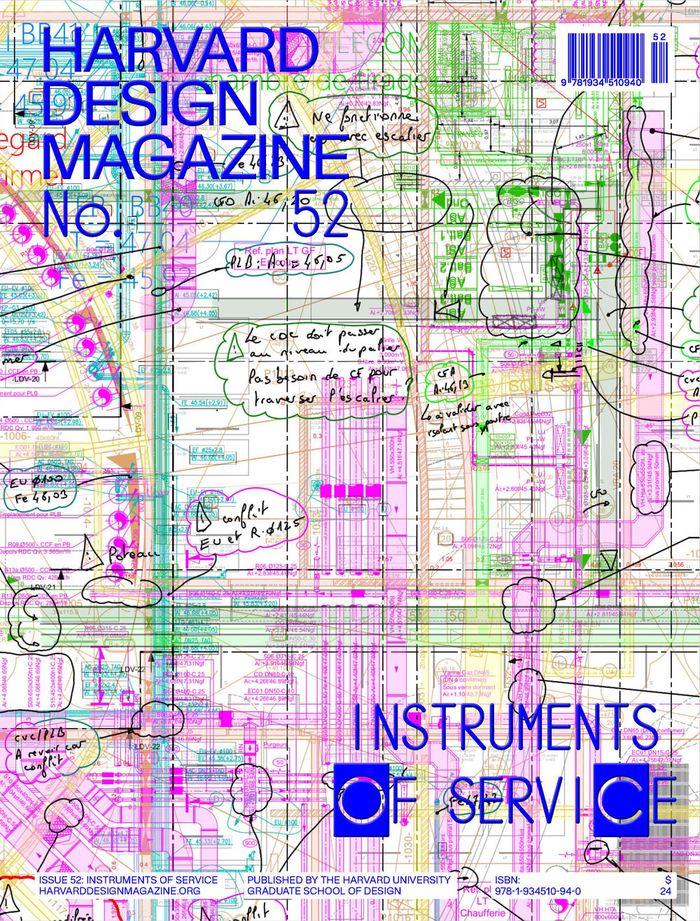
Harvard Design Magazine no. 52 : Instruments of service
Actions:
Price:
$38.00
(available to order)
Summary:
At a moment when the word “design” has come to refer to everything and thus nothing, this issue examines the hidden mechanics and visible output of design practice in order to track the shifting role of designers in society and to gauge the capacity of designers to effect change in a world of mounting crises. The issue’s title, ''Instruments of Service'', carries a double meaning. As defined in standard American Institute of Architects contracts, “Instruments of Service are representations, in any medium of expression now known or later developed, of the tangible and intangible creative work performed by the Architect and the Architect’s consultants under their respective professional services agreements. Instruments of Service may include, without limitation, studies, surveys, models, sketches, drawings, specifications, and other similar materials.” Instruments of service are the instruction manuals that architects—and other designers—make so that others can make something. They define the architect’s relationships with labor, construction, clients, and society. And these relationships—along with the agency of architectural practice—are changing as a growing number of external pressures force instruments of service to change. Architects and designers can also be seen as instruments of service to society, responsible to a continually shifting set of values. At a fundamental level, the designer’s job is to imagine and articulate a better future. In a time of crisis and competing value systems—market returns, cultural relevance, environmental response, social equity, automation—the role of the designer in society is ever more important and increasingly accountable to divergent interests that call into question the raison d’être of design practice itself.
Harvard Design Magazine no. 52 : Instruments of service
Actions:
Price:
$38.00
(available to order)
Summary:
At a moment when the word “design” has come to refer to everything and thus nothing, this issue examines the hidden mechanics and visible output of design practice in order to track the shifting role of designers in society and to gauge the capacity of designers to effect change in a world of mounting crises. The issue’s title, ''Instruments of Service'', carries a double meaning. As defined in standard American Institute of Architects contracts, “Instruments of Service are representations, in any medium of expression now known or later developed, of the tangible and intangible creative work performed by the Architect and the Architect’s consultants under their respective professional services agreements. Instruments of Service may include, without limitation, studies, surveys, models, sketches, drawings, specifications, and other similar materials.” Instruments of service are the instruction manuals that architects—and other designers—make so that others can make something. They define the architect’s relationships with labor, construction, clients, and society. And these relationships—along with the agency of architectural practice—are changing as a growing number of external pressures force instruments of service to change. Architects and designers can also be seen as instruments of service to society, responsible to a continually shifting set of values. At a fundamental level, the designer’s job is to imagine and articulate a better future. In a time of crisis and competing value systems—market returns, cultural relevance, environmental response, social equity, automation—the role of the designer in society is ever more important and increasingly accountable to divergent interests that call into question the raison d’être of design practice itself.
Form:
journals and magazines
journals and magazines
Publication:
February 2025
February 2025
Subject:
Magazines
Magazines
Form:
books
books
Actions:
Price:
$65.95
(available to order)
Summary:
Studies in Tectonic Culture is nothing less than a rethinking of the entire modern architectural tradition. The notion of tectonics as employed by Frampton -- the focus on architecture as a constructional craft -- constitutes a direct challenge to current mainstream thinking on the artistic limits of postmodernism, and suggests a convincing alternative. Indeed, Frampton(...)
$65.95
(available to order)
Summary:
Studies in Tectonic Culture is nothing less than a rethinking of the entire modern architectural tradition. The notion of tectonics as employed by Frampton -- the focus on architecture as a constructional craft -- constitutes a direct challenge to current mainstream thinking on the artistic limits of postmodernism, and suggests a convincing alternative. Indeed, Frampton(...)
Title:
Studies in tectonic culture: the poetics of construction in nineteenth and twentieth century architecture
Actions:
Price:
$65.95
(available to order)
Summary:
Studies in Tectonic Culture is nothing less than a rethinking of the entire modern architectural tradition. The notion of tectonics as employed by Frampton -- the focus on architecture as a constructional craft -- constitutes a direct challenge to current mainstream thinking on the artistic limits of postmodernism, and suggests a convincing alternative. Indeed, Frampton argues, modern architecture is invariably as much about structure and construction as it is about space and abstract form. Composed of ten essays and an epilogue that trace the history of contemporary form as an evolving poetic of structure and construction, the book's analytical framework rests on Frampton's close readings of key French and German, and English sources from the eighteenth century to the present. He clarifies the various turns that structural engineering and tectonic imagination have taken in the work of such architects as Perret, Wright, Kahn, Scarpa, and Mies, and shows how both constructional form and material character were integral to an evolving architectural expression of their work. Frampton also demonstrates that the way in which these elements are articulated from one work to the next provides a basis upon which to evaluate the works as a whole. This is especially evident in his consideration of the work of Perret, Mies, and Kahn and the continuities in their thought and attitudes that linked them to the past. Frampton considers the conscious cultivation of the tectonic tradition in architecture as an essential element in the future development of architectural form, casting a critical new light on the entire issue of modernity and on the place of much work that has passed as "avant-garde."
Studies in tectonic culture: the poetics of construction in nineteenth and twentieth century architecture
Actions:
Price:
$65.95
(available to order)
Summary:
Studies in Tectonic Culture is nothing less than a rethinking of the entire modern architectural tradition. The notion of tectonics as employed by Frampton -- the focus on architecture as a constructional craft -- constitutes a direct challenge to current mainstream thinking on the artistic limits of postmodernism, and suggests a convincing alternative. Indeed, Frampton argues, modern architecture is invariably as much about structure and construction as it is about space and abstract form. Composed of ten essays and an epilogue that trace the history of contemporary form as an evolving poetic of structure and construction, the book's analytical framework rests on Frampton's close readings of key French and German, and English sources from the eighteenth century to the present. He clarifies the various turns that structural engineering and tectonic imagination have taken in the work of such architects as Perret, Wright, Kahn, Scarpa, and Mies, and shows how both constructional form and material character were integral to an evolving architectural expression of their work. Frampton also demonstrates that the way in which these elements are articulated from one work to the next provides a basis upon which to evaluate the works as a whole. This is especially evident in his consideration of the work of Perret, Mies, and Kahn and the continuities in their thought and attitudes that linked them to the past. Frampton considers the conscious cultivation of the tectonic tradition in architecture as an essential element in the future development of architectural form, casting a critical new light on the entire issue of modernity and on the place of much work that has passed as "avant-garde."
Form:
books
books
Publication:
October 2001, Cambridge, Mass.
October 2001, Cambridge, Mass.
Subject:
Architectural Theory
Architectural Theory
Form:
books
books
Actions:
Price:
$79.95
(available to order)
Summary:
Les Grands Appartements constituent, avec la galerie des Glaces, l'espace d'apparat du château de Versailles. La réalisation des décors demanda dix années, entre 1671 et 1681. Dès son achèvement, le Grand Appartement de Louis XIV ne servait plus à loger le souverain, mais il était le cadre des cérémonies de la cour : soirs d' "Appartement", avec buffets, musique, jeu et(...)
$79.95
(available to order)
Summary:
Les Grands Appartements constituent, avec la galerie des Glaces, l'espace d'apparat du château de Versailles. La réalisation des décors demanda dix années, entre 1671 et 1681. Dès son achèvement, le Grand Appartement de Louis XIV ne servait plus à loger le souverain, mais il était le cadre des cérémonies de la cour : soirs d' "Appartement", avec buffets, musique, jeu et(...)
Title:
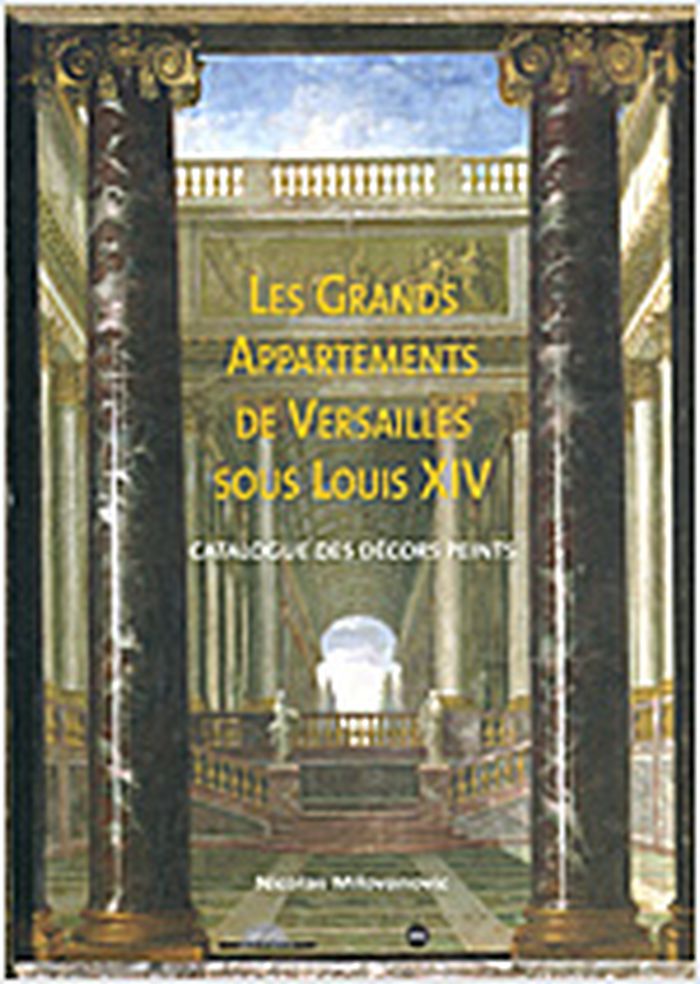
Les Grands Appartements de Versailles sous Louis XIV
Actions:
Price:
$79.95
(available to order)
Summary:
Les Grands Appartements constituent, avec la galerie des Glaces, l'espace d'apparat du château de Versailles. La réalisation des décors demanda dix années, entre 1671 et 1681. Dès son achèvement, le Grand Appartement de Louis XIV ne servait plus à loger le souverain, mais il était le cadre des cérémonies de la cour : soirs d' "Appartement", avec buffets, musique, jeu et danse, trois fois par semaine, mais aussi parcours des grandes ambassades reçues par le roi. Les décors comprennent des lambris de marbres, des portes et dessus de porte en bois sculpté et doré, mais surtout des plafonds cintrés, ornés de stucs et de peintures réalisés par les meilleurs artistes de l'Académie royale (Charles de La Fosse, Jean Jouvenet, Jean-Baptiste de Champaigne, Noël Coypel...). Charles Le Brun, le Premier peintre de Louis XIV, assurait l'unité décorative en donnant aux artistes et aux artisans les dessins de la structure des plafonds, des éléments sculptés et même de certains sujets peints. Chaque salle était dédiée à l'une des sept " planètes " connues au XVIIe siècle, et à la divinité correspondante : Vénus, Diane (la Lune), Mars, Mercure, Apollon (le Soleil), Jupiter, Saturne. Cette iconographie, soigneusement élaborée par la Petite Académie (future Académie des inscriptions et belles-lettres), comprenait également un message politique, qui en constituait le " sens caché ". La complexité de l'iconographie répondait ainsi à la richesse des décors. Les Grands Appartements n'avaient pourtant bénéficié d'aucune étude monographique. L'objet de cet ouvrage est de combler cette lacune, en proposant pour la première fois une étude d'ensemble des décors, une couverture photographique complète ainsi que le catalogue raisonné des décors peints.
Les Grands Appartements de Versailles sous Louis XIV
Actions:
Price:
$79.95
(available to order)
Summary:
Les Grands Appartements constituent, avec la galerie des Glaces, l'espace d'apparat du château de Versailles. La réalisation des décors demanda dix années, entre 1671 et 1681. Dès son achèvement, le Grand Appartement de Louis XIV ne servait plus à loger le souverain, mais il était le cadre des cérémonies de la cour : soirs d' "Appartement", avec buffets, musique, jeu et danse, trois fois par semaine, mais aussi parcours des grandes ambassades reçues par le roi. Les décors comprennent des lambris de marbres, des portes et dessus de porte en bois sculpté et doré, mais surtout des plafonds cintrés, ornés de stucs et de peintures réalisés par les meilleurs artistes de l'Académie royale (Charles de La Fosse, Jean Jouvenet, Jean-Baptiste de Champaigne, Noël Coypel...). Charles Le Brun, le Premier peintre de Louis XIV, assurait l'unité décorative en donnant aux artistes et aux artisans les dessins de la structure des plafonds, des éléments sculptés et même de certains sujets peints. Chaque salle était dédiée à l'une des sept " planètes " connues au XVIIe siècle, et à la divinité correspondante : Vénus, Diane (la Lune), Mars, Mercure, Apollon (le Soleil), Jupiter, Saturne. Cette iconographie, soigneusement élaborée par la Petite Académie (future Académie des inscriptions et belles-lettres), comprenait également un message politique, qui en constituait le " sens caché ". La complexité de l'iconographie répondait ainsi à la richesse des décors. Les Grands Appartements n'avaient pourtant bénéficié d'aucune étude monographique. L'objet de cet ouvrage est de combler cette lacune, en proposant pour la première fois une étude d'ensemble des décors, une couverture photographique complète ainsi que le catalogue raisonné des décors peints.
Form:
books
books
Publication:
June 2005, Paris
June 2005, Paris
Subject:
History until 1900
History until 1900
Form:
books
books
Actions:
Price:
$46.95
(available to order)
Summary:
"XXL-XS" represents the emerging discipline of ecological design by assembling a wide range of innovators with diverse interests. Geo-engineering, synthetic biology, construction site co-robotics, low-energy fabrication, up-cycling waste, minimally invasive design, living materials, and molecular self-assembly are just a few of the important advances explored in the book.(...)
$46.95
(available to order)
Summary:
"XXL-XS" represents the emerging discipline of ecological design by assembling a wide range of innovators with diverse interests. Geo-engineering, synthetic biology, construction site co-robotics, low-energy fabrication, up-cycling waste, minimally invasive design, living materials, and molecular self-assembly are just a few of the important advances explored in the book.(...)
Title:
XXL-XS: new directions on ecological design
Actions:
Price:
$46.95
(available to order)
Summary:
"XXL-XS" represents the emerging discipline of ecological design by assembling a wide range of innovators with diverse interests. Geo-engineering, synthetic biology, construction site co-robotics, low-energy fabrication, up-cycling waste, minimally invasive design, living materials, and molecular self-assembly are just a few of the important advances explored in the book. At one extreme are massive public works, at the other, micro to nano-sized interventions that can have equally profound impacts on our world. From terraforming to bio-manufacturing, a whole new generation of designers is proposing unique ways of confronting the difficult challenges ahead. In this way design becomes a totality of relationships that affects all disciplines, which can no-longer be thought of as self-contained fields, each handled separately by narrowly focused specialists. Globalization demands a restructuring of the profession, as we know it. This requires a new breed of generalists who can work across fields and engage research on multiple sites around the globe. Today we need planetary designers versed in the craft of integral design. Our thesis is therefore both global and performative in scope. We need an architecture that is more than just a constellation of bio-picturesque images, digitally generated surface effects, and conventional materials. We seek a holistic architecture that uses the best techniques to connect directly with existing natural systems while creating a renewed ecology that can sustain itself well into the future. Along these lines, many of the projects featured in this book simply abandon the old tropes and construction processes of the past by creating numerous green alternatives that proliferate along unexpected pathways.
XXL-XS: new directions on ecological design
Actions:
Price:
$46.95
(available to order)
Summary:
"XXL-XS" represents the emerging discipline of ecological design by assembling a wide range of innovators with diverse interests. Geo-engineering, synthetic biology, construction site co-robotics, low-energy fabrication, up-cycling waste, minimally invasive design, living materials, and molecular self-assembly are just a few of the important advances explored in the book. At one extreme are massive public works, at the other, micro to nano-sized interventions that can have equally profound impacts on our world. From terraforming to bio-manufacturing, a whole new generation of designers is proposing unique ways of confronting the difficult challenges ahead. In this way design becomes a totality of relationships that affects all disciplines, which can no-longer be thought of as self-contained fields, each handled separately by narrowly focused specialists. Globalization demands a restructuring of the profession, as we know it. This requires a new breed of generalists who can work across fields and engage research on multiple sites around the globe. Today we need planetary designers versed in the craft of integral design. Our thesis is therefore both global and performative in scope. We need an architecture that is more than just a constellation of bio-picturesque images, digitally generated surface effects, and conventional materials. We seek a holistic architecture that uses the best techniques to connect directly with existing natural systems while creating a renewed ecology that can sustain itself well into the future. Along these lines, many of the projects featured in this book simply abandon the old tropes and construction processes of the past by creating numerous green alternatives that proliferate along unexpected pathways.
Form:
books
books
Publication:
June 2017
June 2017
Subject:
Green Architecture
Green Architecture
Form:
books
books
Actions:
Price:
$42.00
(available in store)
Summary:
When is the digital in architecture? What are the conditions that led architects to integrate digital tools into their practices? Over the course of the Archaeology of the Digital research program, the CCA has collected the archival records of twenty-five projects realized between the late 1980s and the early 2000s in order to understand this moment as a point of origin(...)
$42.00
(available in store)
Summary:
When is the digital in architecture? What are the conditions that led architects to integrate digital tools into their practices? Over the course of the Archaeology of the Digital research program, the CCA has collected the archival records of twenty-five projects realized between the late 1980s and the early 2000s in order to understand this moment as a point of origin(...)
Title:
When is the digital in architecture?
Actions:
Price:
$42.00
(available in store)
Summary:
When is the digital in architecture? What are the conditions that led architects to integrate digital tools into their practices? Over the course of the Archaeology of the Digital research program, the CCA has collected the archival records of twenty-five projects realized between the late 1980s and the early 2000s in order to understand this moment as a point of origin for the digital. But if we take care to identify the digital as a condition that is made possible by the conceptual foundations of digital media and not necessarily by digital media itself, the boundaries of the digital moment—when it began and under what circumstances—become less clear. There are eight million stories of the origins of the digital in architecture, and this book brings together fourteen of them in a chronology of responses to the question of when the digital is in architecture. The arguments address specific changes in ways of thinking about architecture, building, and cities, as well as the shifts in technology that resulted from these changes, marking both a capstone to Archaeology of the Digital and the beginning of an investigation of other beginnings of the digital in architecture. Asking a question like When is the digital in architecture? can produce eight million stories in response, and eight million digressions and redirections that narrow in focus and change geographies, producing a Tristram Shandy of the digital as the CCA continues to build its digital archive and makes it increasingly accessible to researchers. If this novel of digressions is distributed across future research projects and extended with studies of new archival material, so much the better for the reader, in our opinion.
When is the digital in architecture?
Actions:
Price:
$42.00
(available in store)
Summary:
When is the digital in architecture? What are the conditions that led architects to integrate digital tools into their practices? Over the course of the Archaeology of the Digital research program, the CCA has collected the archival records of twenty-five projects realized between the late 1980s and the early 2000s in order to understand this moment as a point of origin for the digital. But if we take care to identify the digital as a condition that is made possible by the conceptual foundations of digital media and not necessarily by digital media itself, the boundaries of the digital moment—when it began and under what circumstances—become less clear. There are eight million stories of the origins of the digital in architecture, and this book brings together fourteen of them in a chronology of responses to the question of when the digital is in architecture. The arguments address specific changes in ways of thinking about architecture, building, and cities, as well as the shifts in technology that resulted from these changes, marking both a capstone to Archaeology of the Digital and the beginning of an investigation of other beginnings of the digital in architecture. Asking a question like When is the digital in architecture? can produce eight million stories in response, and eight million digressions and redirections that narrow in focus and change geographies, producing a Tristram Shandy of the digital as the CCA continues to build its digital archive and makes it increasingly accessible to researchers. If this novel of digressions is distributed across future research projects and extended with studies of new archival material, so much the better for the reader, in our opinion.
Form:
books
books
Publication:
June 2017
June 2017
Subject:
CCA Publications
CCA Publications
Form:
books
books
Title:
Who owns antiquity?
Who owns antiquity?
Actions:
Price:
$24.95
(available to order)
Summary:
Whether antiquities should be returned to the countries where they were found is one of the most urgent and controversial issues in the art world today, and it has pitted museums, private collectors, and dealers against source countries, archaeologists, and academics. Maintaining that the acquisition of undocumented antiquities by museums encourages the looting of(...)
$24.95
(available to order)
Summary:
Whether antiquities should be returned to the countries where they were found is one of the most urgent and controversial issues in the art world today, and it has pitted museums, private collectors, and dealers against source countries, archaeologists, and academics. Maintaining that the acquisition of undocumented antiquities by museums encourages the looting of(...)
Title:
Who owns antiquity?
Actions:
Price:
$24.95
(available to order)
Summary:
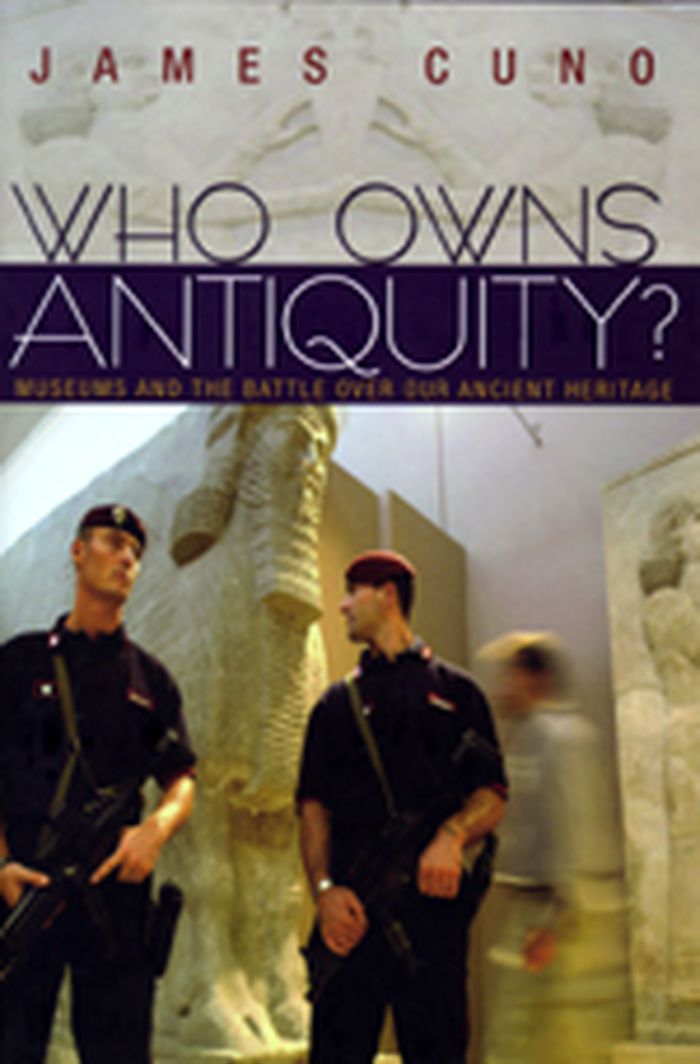
Whether antiquities should be returned to the countries where they were found is one of the most urgent and controversial issues in the art world today, and it has pitted museums, private collectors, and dealers against source countries, archaeologists, and academics. Maintaining that the acquisition of undocumented antiquities by museums encourages the looting of archaeological sites, countries such as Italy, Greece, Egypt, Turkey, and China have claimed ancient artifacts as state property, called for their return from museums around the world, and passed laws against their future export. But in Who Owns Antiquity?, one of the world's leading museum directors vigorously challenges this nationalistic position, arguing that it is damaging and often disingenuous. "Antiquities," James Cuno argues, "are the cultural property of all humankind," "evidence of the world's ancient past and not that of a particular modern nation. They comprise antiquity, and antiquity knows no borders." Cuno argues that nationalistic retention and reclamation policies impede common access to this common heritage and encourage a dubious and dangerous politicization of antiquities--and of culture itself. Antiquities need to be protected from looting but also from nationalistic identity politics. To do this, Cuno calls for measures to broaden rather than restrict international access to antiquities. He advocates restoration of the system under which source countries would share newly discovered artifacts in exchange for archaeological help, and he argues that museums should again be allowed reasonable ways to acquire undocumented antiquities. The first extended defense of the side of museums in the struggle over antiquities, Who Owns Antiquity? is sure to be as important as it is controversial.
Who owns antiquity?
Actions:
Price:
$24.95
(available to order)
Summary:
Whether antiquities should be returned to the countries where they were found is one of the most urgent and controversial issues in the art world today, and it has pitted museums, private collectors, and dealers against source countries, archaeologists, and academics. Maintaining that the acquisition of undocumented antiquities by museums encourages the looting of archaeological sites, countries such as Italy, Greece, Egypt, Turkey, and China have claimed ancient artifacts as state property, called for their return from museums around the world, and passed laws against their future export. But in Who Owns Antiquity?, one of the world's leading museum directors vigorously challenges this nationalistic position, arguing that it is damaging and often disingenuous. "Antiquities," James Cuno argues, "are the cultural property of all humankind," "evidence of the world's ancient past and not that of a particular modern nation. They comprise antiquity, and antiquity knows no borders." Cuno argues that nationalistic retention and reclamation policies impede common access to this common heritage and encourage a dubious and dangerous politicization of antiquities--and of culture itself. Antiquities need to be protected from looting but also from nationalistic identity politics. To do this, Cuno calls for measures to broaden rather than restrict international access to antiquities. He advocates restoration of the system under which source countries would share newly discovered artifacts in exchange for archaeological help, and he argues that museums should again be allowed reasonable ways to acquire undocumented antiquities. The first extended defense of the side of museums in the struggle over antiquities, Who Owns Antiquity? is sure to be as important as it is controversial.
Form:
books
books
Publication:
May 2008, Princeton, Oxford
May 2008, Princeton, Oxford
Subject:
Museology
Museology
Form:
books
books
Actions:
Price:
$27.50
(available to order)
Summary:
The American suburban dream house-a single-family, detached dwelling, frequently clustered in tight rows and cul-de-sacs-has been attacked for some time as homogeneous and barren, yet the suburbs are home to half of the American population. Architectural historian John Archer suggests the endurance of the ideal house is deeply rooted in the notions of privacy, property,(...)
$27.50
(available to order)
Summary:
The American suburban dream house-a single-family, detached dwelling, frequently clustered in tight rows and cul-de-sacs-has been attacked for some time as homogeneous and barren, yet the suburbs are home to half of the American population. Architectural historian John Archer suggests the endurance of the ideal house is deeply rooted in the notions of privacy, property,(...)
Title:
Architecture and suburbia: from english villa to American dream house, 1690-2000
Actions:
Price:
$27.50
(available to order)
Summary:
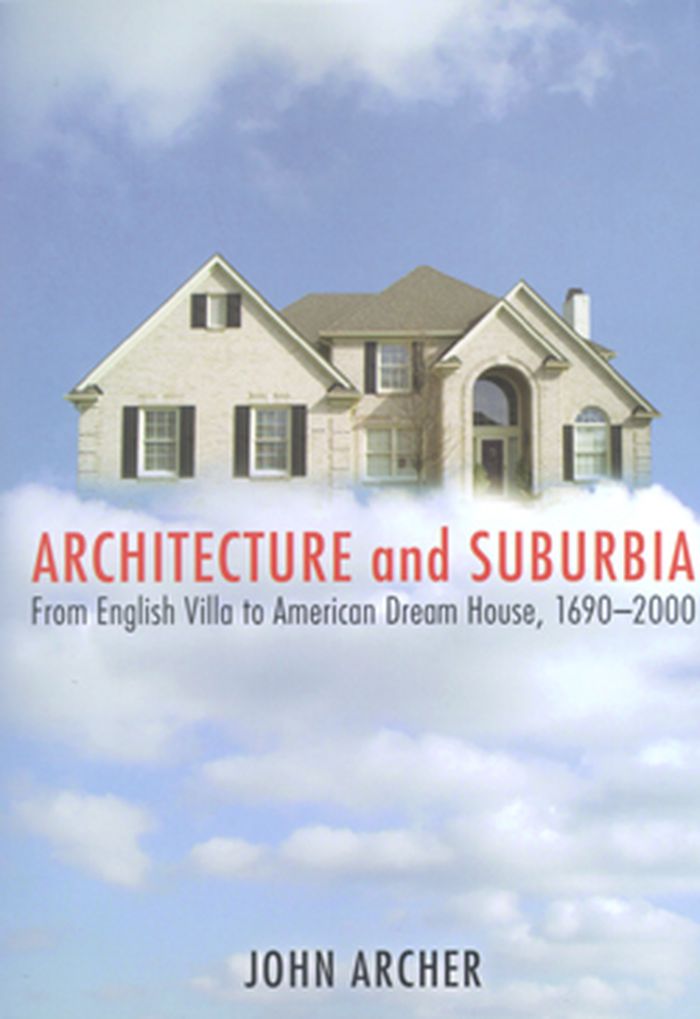
The American suburban dream house-a single-family, detached dwelling, frequently clustered in tight rows and cul-de-sacs-has been attacked for some time as homogeneous and barren, yet the suburbs are home to half of the American population. Architectural historian John Archer suggests the endurance of the ideal house is deeply rooted in the notions of privacy, property, and selfhood that were introduced in late seventeenth-century England and became the foundation of the American nation and identity. Spanning four centuries, Architecture and Suburbia explores phenomena ranging from household furnishings and routines to the proliferation of the dream house in parallel with Cold War politics. Beginning with John Locke, whose Enlightenment philosophy imagined individuals capable of self-fulfillment, Archer examines the eighteenth-century British bourgeois villa and the earliest London suburbs. He recounts how early American homeowners used houses to establish social status and how twentieth-century Americans continued to flock to single-family houses in the suburbs, encouraged by patriotism, fueled by consumerism, and resisting disdain by disaffected youths, designers, and intellectuals. Finally, he recognizes “hybridized” or increasingly diverse American suburbs as the dynamic basis for a strengthened social fabric. From Enlightenment philosophy to rap lyrics, from the rise of a mercantile economy to discussions over neighborhoods, sprawl, and gated communities, Archer addresses the past, present, and future of the American dream house. John Archer is professor of cultural studies and comparative literature at the University of Minnesota. His book The Literature of British Domestic Architecture, 1715-1842, is the standard reference on the subject, and he also contributed to the Encyclopedia of Urban America and the Encyclopedia of Twentieth-Century Architecture.
Architecture and suburbia: from english villa to American dream house, 1690-2000
Actions:
Price:
$27.50
(available to order)
Summary:
The American suburban dream house-a single-family, detached dwelling, frequently clustered in tight rows and cul-de-sacs-has been attacked for some time as homogeneous and barren, yet the suburbs are home to half of the American population. Architectural historian John Archer suggests the endurance of the ideal house is deeply rooted in the notions of privacy, property, and selfhood that were introduced in late seventeenth-century England and became the foundation of the American nation and identity. Spanning four centuries, Architecture and Suburbia explores phenomena ranging from household furnishings and routines to the proliferation of the dream house in parallel with Cold War politics. Beginning with John Locke, whose Enlightenment philosophy imagined individuals capable of self-fulfillment, Archer examines the eighteenth-century British bourgeois villa and the earliest London suburbs. He recounts how early American homeowners used houses to establish social status and how twentieth-century Americans continued to flock to single-family houses in the suburbs, encouraged by patriotism, fueled by consumerism, and resisting disdain by disaffected youths, designers, and intellectuals. Finally, he recognizes “hybridized” or increasingly diverse American suburbs as the dynamic basis for a strengthened social fabric. From Enlightenment philosophy to rap lyrics, from the rise of a mercantile economy to discussions over neighborhoods, sprawl, and gated communities, Archer addresses the past, present, and future of the American dream house. John Archer is professor of cultural studies and comparative literature at the University of Minnesota. His book The Literature of British Domestic Architecture, 1715-1842, is the standard reference on the subject, and he also contributed to the Encyclopedia of Urban America and the Encyclopedia of Twentieth-Century Architecture.
Form:
books
books
Publication:
February 2008, Minneapolis, London
February 2008, Minneapolis, London
Subject:
Suburbs
Suburbs
Form:
books
books
Actions:
Price:
$105.00
(available in store)
Summary:
In April 2013, photographers Nico Krebs and Taiyo Onorato, who have been working together for a dozen years, loaded up their 1987 Toyota Land Cruiser in Switzerland and headed east. They'd already roughly traced their route by running a finger across the map of Eurasia to their ultimate destination, Ulan Bator, the capital of Mongolia. It felt like setting forth on an(...)
$105.00
(available in store)
Summary:
In April 2013, photographers Nico Krebs and Taiyo Onorato, who have been working together for a dozen years, loaded up their 1987 Toyota Land Cruiser in Switzerland and headed east. They'd already roughly traced their route by running a finger across the map of Eurasia to their ultimate destination, Ulan Bator, the capital of Mongolia. It felt like setting forth on an(...)
Title:
Continental drift: Nico Krebs, Taiyo Onorato
Actions:
Price:
$105.00
(available in store)
Summary:
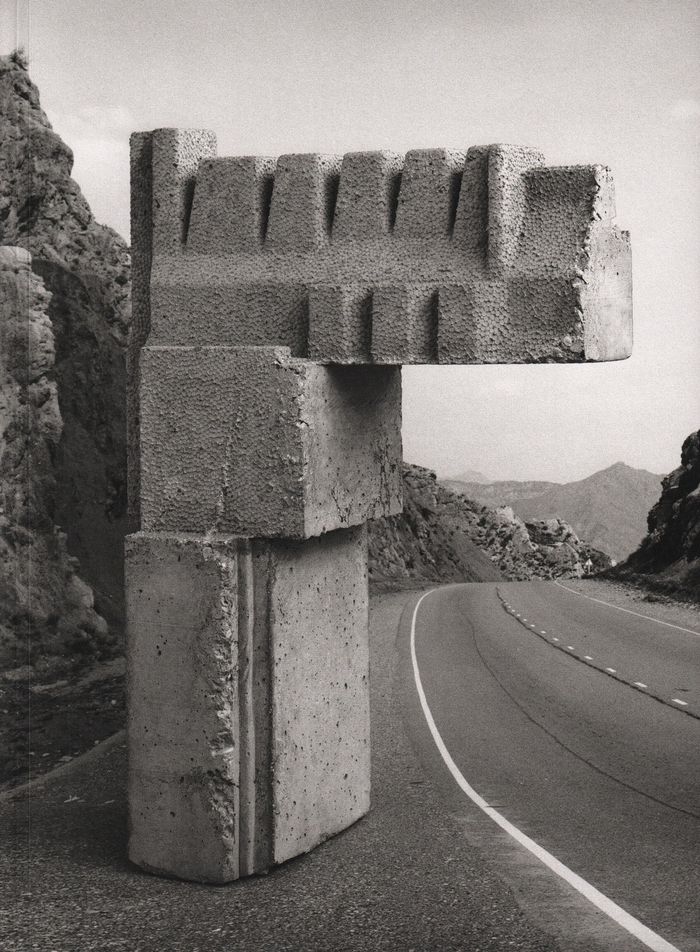
In April 2013, photographers Nico Krebs and Taiyo Onorato, who have been working together for a dozen years, loaded up their 1987 Toyota Land Cruiser in Switzerland and headed east. They'd already roughly traced their route by running a finger across the map of Eurasia to their ultimate destination, Ulan Bator, the capital of Mongolia. It felt like setting forth on an expedition to the mystical realms of the East: Eurasia, Central Asia, the foothills of the Himalayas, the forests of Siberia, the Stan Republics, the gigantic expanse of the former Soviet Union. A vast land mass, very few images of which are lodged in our minds, at least no clear and well-defined images, rather a haze of history and global politics. Nico Krebs and Taiyo Onorato went out in search of these images, to reproduce them, and to create them themselves. "Continental drift" is a travel log straddling the fine line between documentation and fiction about unknown lands, their possible past and conjectured future. It relates encounters with the utterly bizarre and inaccessibly alien, as well as with a remarkable openness and lavish hospitality they'd never known before, in striking contrast to their previous trip across the United States (The Great Unreal, now in its third edition at Edition Patrick Frey). Many of the countries and regions they traversed are in the throes of upheaval, caught between thousand-year-old traditions and post-Communist history and geopolitics, religious, territorial and ethnic turmoil, and the spreading desire to jump on the bandwagon of global turbocapitalism. The search for identity here is palpable—a search, along with the attendant confusion, graphically depicted in "Continental drift".
Continental drift: Nico Krebs, Taiyo Onorato
Actions:
Price:
$105.00
(available in store)
Summary:
In April 2013, photographers Nico Krebs and Taiyo Onorato, who have been working together for a dozen years, loaded up their 1987 Toyota Land Cruiser in Switzerland and headed east. They'd already roughly traced their route by running a finger across the map of Eurasia to their ultimate destination, Ulan Bator, the capital of Mongolia. It felt like setting forth on an expedition to the mystical realms of the East: Eurasia, Central Asia, the foothills of the Himalayas, the forests of Siberia, the Stan Republics, the gigantic expanse of the former Soviet Union. A vast land mass, very few images of which are lodged in our minds, at least no clear and well-defined images, rather a haze of history and global politics. Nico Krebs and Taiyo Onorato went out in search of these images, to reproduce them, and to create them themselves. "Continental drift" is a travel log straddling the fine line between documentation and fiction about unknown lands, their possible past and conjectured future. It relates encounters with the utterly bizarre and inaccessibly alien, as well as with a remarkable openness and lavish hospitality they'd never known before, in striking contrast to their previous trip across the United States (The Great Unreal, now in its third edition at Edition Patrick Frey). Many of the countries and regions they traversed are in the throes of upheaval, caught between thousand-year-old traditions and post-Communist history and geopolitics, religious, territorial and ethnic turmoil, and the spreading desire to jump on the bandwagon of global turbocapitalism. The search for identity here is palpable—a search, along with the attendant confusion, graphically depicted in "Continental drift".
Form:
books
books
Publication:
April 2017
April 2017
Subject:
Photography monographs
Photography monographs
Form:
books
books
Actions:
Price:
$41.95
(available to order)
Summary:
The concept of "the city" — as well as "the state" and "the nation state" — is passé, agree contributors to this insightful book. The new scale for considering economic strength and growth opportunities is "the megaregion", a network of metropolitan centers and their surrounding areas that are spatially and functionally linked through environmental, economic, and(...)
$41.95
(available to order)
Summary:
The concept of "the city" — as well as "the state" and "the nation state" — is passé, agree contributors to this insightful book. The new scale for considering economic strength and growth opportunities is "the megaregion", a network of metropolitan centers and their surrounding areas that are spatially and functionally linked through environmental, economic, and(...)
Title:
Megaregions ; planning for global competitiveness
Actions:
Price:
$41.95
(available to order)
Summary:
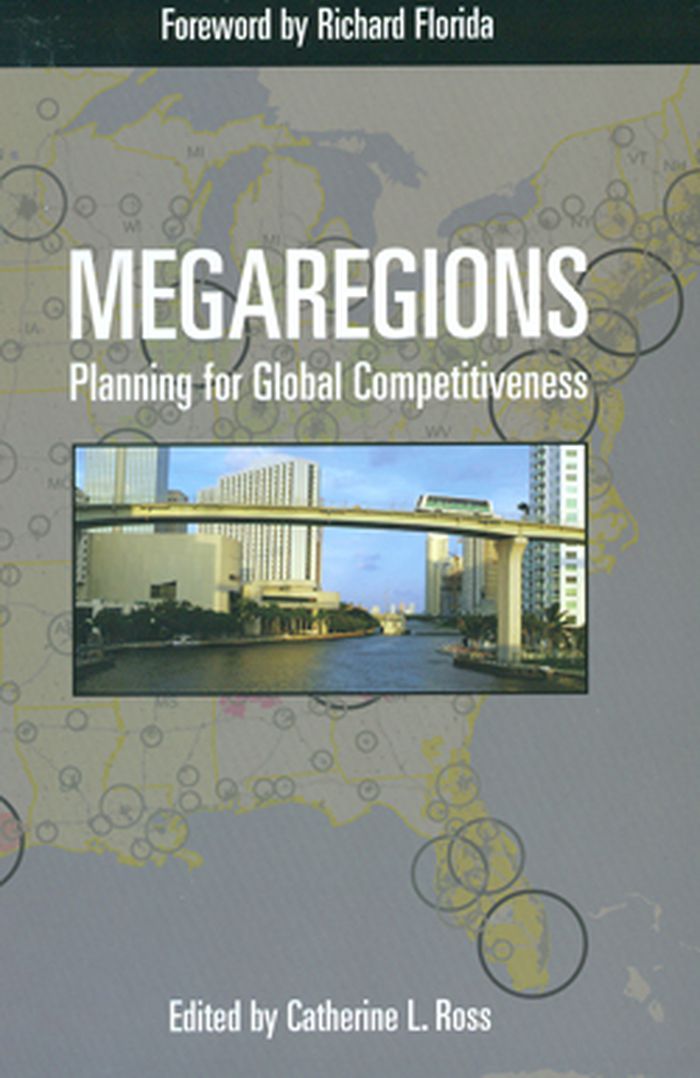
The concept of "the city" — as well as "the state" and "the nation state" — is passé, agree contributors to this insightful book. The new scale for considering economic strength and growth opportunities is "the megaregion", a network of metropolitan centers and their surrounding areas that are spatially and functionally linked through environmental, economic, and infrastructure interactions. Recently a great deal of attention has been focused on the emergence of the European Union and on European spatial planning, which has boosted the region’s competitiveness. Megaregions applies these emerging concepts in an American context. It addresses critical questions for our future : What are the spatial implications of local, regional, national, and global trends within the context of sustainability, economic competitiveness, and social equity? How can we address housing, transportation, and infrastructure needs in growing megaregions? How can we develop and implement the policy changes necessary to make viable, livable megaregions? By the year 2050, megaregions will contain two-thirds of the U.S. population. Given the projected growth of the U.S. population and the accompanying geographic changes, this forward-looking book argues that U.S. planners and policymakers must examine and implement the megaregion as a new and appropriate framework. Contributors, all of whom are leaders in their academic and professional specialties, address the most critical issues confronting the U.S. over the next fifty years. At the same time, they examine ways in which the idea of megaregions might help address our concerns about equity, the economy, and the environment. Together, these essays define the theoretical, analytical, and operational underpinnings of a new structure that could respond to the anticipated upheavals in U.S. population and living patterns.
Megaregions ; planning for global competitiveness
Actions:
Price:
$41.95
(available to order)
Summary:
The concept of "the city" — as well as "the state" and "the nation state" — is passé, agree contributors to this insightful book. The new scale for considering economic strength and growth opportunities is "the megaregion", a network of metropolitan centers and their surrounding areas that are spatially and functionally linked through environmental, economic, and infrastructure interactions. Recently a great deal of attention has been focused on the emergence of the European Union and on European spatial planning, which has boosted the region’s competitiveness. Megaregions applies these emerging concepts in an American context. It addresses critical questions for our future : What are the spatial implications of local, regional, national, and global trends within the context of sustainability, economic competitiveness, and social equity? How can we address housing, transportation, and infrastructure needs in growing megaregions? How can we develop and implement the policy changes necessary to make viable, livable megaregions? By the year 2050, megaregions will contain two-thirds of the U.S. population. Given the projected growth of the U.S. population and the accompanying geographic changes, this forward-looking book argues that U.S. planners and policymakers must examine and implement the megaregion as a new and appropriate framework. Contributors, all of whom are leaders in their academic and professional specialties, address the most critical issues confronting the U.S. over the next fifty years. At the same time, they examine ways in which the idea of megaregions might help address our concerns about equity, the economy, and the environment. Together, these essays define the theoretical, analytical, and operational underpinnings of a new structure that could respond to the anticipated upheavals in U.S. population and living patterns.
Form:
books
books
Publication:
June 2009
June 2009
Subject:
Urban Theory
Urban Theory


