


6653 Results
Form:
books
books
Price:
$39.95
(available to order)
Summary:
With this richly illustrated history of industrial design reform in nineteenth-century Britain, Lara Kriegel demonstrates that preoccupations with trade, labor, and manufacture lay at the heart of Victorian-era debates about cultural institutions. Through aesthetic reform, Victorians sought to redress the inferiority of British crafts in comparison to those made on the(...)
$39.95
(available to order)
Summary:
With this richly illustrated history of industrial design reform in nineteenth-century Britain, Lara Kriegel demonstrates that preoccupations with trade, labor, and manufacture lay at the heart of Victorian-era debates about cultural institutions. Through aesthetic reform, Victorians sought to redress the inferiority of British crafts in comparison to those made on the(...)
Title:
Grand Designs: Labor, empire and the museum in Victorian culture
Actions:
Price:
$39.95
(available to order)
Summary:
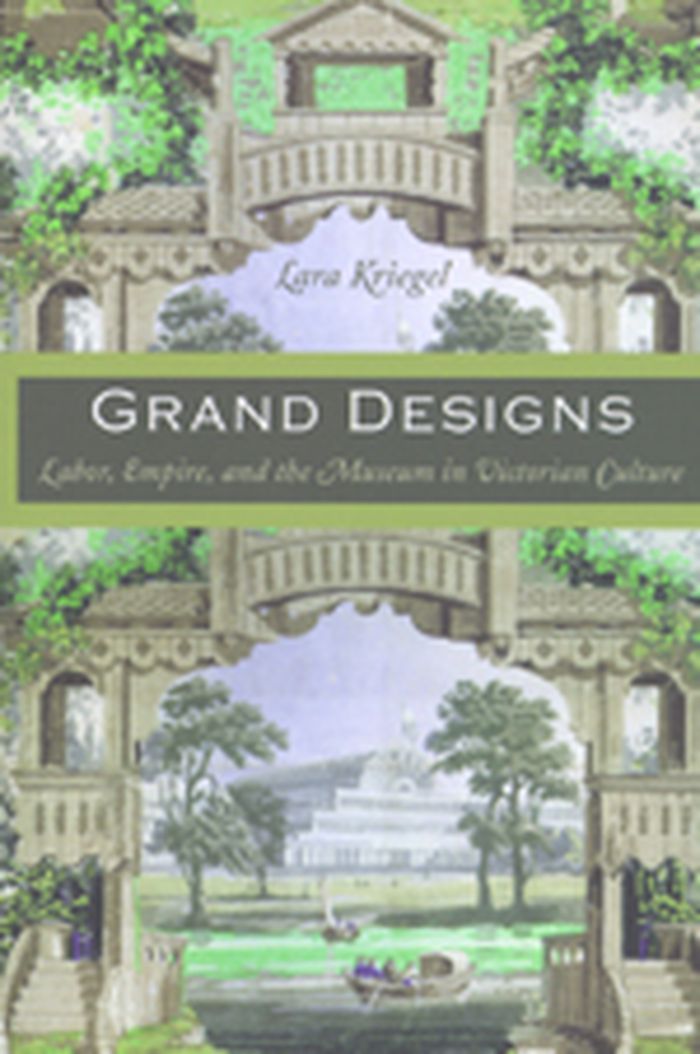
With this richly illustrated history of industrial design reform in nineteenth-century Britain, Lara Kriegel demonstrates that preoccupations with trade, labor, and manufacture lay at the heart of Victorian-era debates about cultural institutions. Through aesthetic reform, Victorians sought to redress the inferiority of British crafts in comparison to those made on the continent and in the colonies. Declaring a crisis of design and workmanship among the British laboring classes, reformers pioneered schools of design, copyright protections, and spectacular displays of industrial and imperial wares, most notably the Great Exhibition of 1851. Their efforts culminated with the establishment of the South Kensington Museum, predecessor to the Victoria and Albert Museum, which stands today as home to the world’s foremost collection of the decorative and applied arts. Kriegel’s identification of the significant links between markets and museums, and between economics and aesthetics, amounts to a rethinking of Victorian cultural formation. Drawing on a wide range of sources, including museum guidebooks, design manuals, illustrated newspapers, pattern books, and government reports, Kriegel brings to life the many Victorians who claimed a stake in aesthetic reform during the middle years of the nineteenth century. The aspiring artists who attended the Government School of Design, the embattled provincial printers who sought a strengthened industrial copyright, the Exhibition-going millions who visited the Crystal Palace, the lower-middle-class consumers who learned new principles of taste in metropolitan museums, and the working men of London who critiqued the city’s art and design collections are all cast by Kriegel as leading cultural actors of their day. Grand Designs shows how these Victorians vied to upend aesthetic hierarchies in an imperial age and, in the process, to refashion London’s public culture.
Grand Designs: Labor, empire and the museum in Victorian culture
Actions:
Price:
$39.95
(available to order)
Summary:
With this richly illustrated history of industrial design reform in nineteenth-century Britain, Lara Kriegel demonstrates that preoccupations with trade, labor, and manufacture lay at the heart of Victorian-era debates about cultural institutions. Through aesthetic reform, Victorians sought to redress the inferiority of British crafts in comparison to those made on the continent and in the colonies. Declaring a crisis of design and workmanship among the British laboring classes, reformers pioneered schools of design, copyright protections, and spectacular displays of industrial and imperial wares, most notably the Great Exhibition of 1851. Their efforts culminated with the establishment of the South Kensington Museum, predecessor to the Victoria and Albert Museum, which stands today as home to the world’s foremost collection of the decorative and applied arts. Kriegel’s identification of the significant links between markets and museums, and between economics and aesthetics, amounts to a rethinking of Victorian cultural formation. Drawing on a wide range of sources, including museum guidebooks, design manuals, illustrated newspapers, pattern books, and government reports, Kriegel brings to life the many Victorians who claimed a stake in aesthetic reform during the middle years of the nineteenth century. The aspiring artists who attended the Government School of Design, the embattled provincial printers who sought a strengthened industrial copyright, the Exhibition-going millions who visited the Crystal Palace, the lower-middle-class consumers who learned new principles of taste in metropolitan museums, and the working men of London who critiqued the city’s art and design collections are all cast by Kriegel as leading cultural actors of their day. Grand Designs shows how these Victorians vied to upend aesthetic hierarchies in an imperial age and, in the process, to refashion London’s public culture.
Form:
books
books
Publication:
November 2007
November 2007
Subject:
Museology
Museology
Form:
books
books
Actions:
Price:
$22.99
(available to order)
Summary:
In 1923, a group of young radical German thinkers and intellectuals came together to at Victoria Alle 7, Frankfurt, determined to explain the workings of the modern world. Among the most prominent members of what became the Frankfurt School were the philosophers Walter Benjamin, Theodor Adorno, Max Horkheimer, and Herbert Marcuse. Not only would they change the way we(...)
$22.99
(available to order)
Summary:
In 1923, a group of young radical German thinkers and intellectuals came together to at Victoria Alle 7, Frankfurt, determined to explain the workings of the modern world. Among the most prominent members of what became the Frankfurt School were the philosophers Walter Benjamin, Theodor Adorno, Max Horkheimer, and Herbert Marcuse. Not only would they change the way we(...)
Title:
Grand Hotel Abyss: the lives of the Frankfurt school
Actions:
Price:
$22.99
(available to order)
Summary:
In 1923, a group of young radical German thinkers and intellectuals came together to at Victoria Alle 7, Frankfurt, determined to explain the workings of the modern world. Among the most prominent members of what became the Frankfurt School were the philosophers Walter Benjamin, Theodor Adorno, Max Horkheimer, and Herbert Marcuse. Not only would they change the way we think, but also the subjects we deem worthy of intellectual investigation. Their lives, like their ideas, profoundly, sometimes tragically, reflected and shaped the shattering events of the twentieth century. "Grand Hotel Abyss" combines biography, philosophy, and storytelling to reveal how the Frankfurt thinkers gathered in hopes of understanding the politics of culture during the rise of fascism. Some of them, forced to escape the horrors of Nazi Germany, later found exile in the United States. Benjamin, with his last great work—the incomplete Arcades Project—in his suitcase, was arrested in Spain and committed suicide when threatened with deportation to Nazi-occupied France. On the other side of the Atlantic, Adorno failed in his bid to become a Hollywood screenwriter, denounced jazz, and even met Charlie Chaplin in Malibu. After the war, there was a resurgence of interest in the School. From the relative comfort of sun-drenched California, Herbert Marcuse wrote the classic One Dimensional Man, which influenced the 1960s counterculture and thinkers such as Angela Davis; while in a tragic coda, Adorno died from a heart attack following confrontations with student radicals in Berlin. By taking popular culture seriously as an object of study—whether it was film, music, ideas, or consumerism—the Frankfurt School elaborated upon the nature and crisis of our mass-produced, mechanised society. Grand Hotel Abyss shows how much these ideas still tell us about our age of social media and runaway consumption.
Grand Hotel Abyss: the lives of the Frankfurt school
Actions:
Price:
$22.99
(available to order)
Summary:
In 1923, a group of young radical German thinkers and intellectuals came together to at Victoria Alle 7, Frankfurt, determined to explain the workings of the modern world. Among the most prominent members of what became the Frankfurt School were the philosophers Walter Benjamin, Theodor Adorno, Max Horkheimer, and Herbert Marcuse. Not only would they change the way we think, but also the subjects we deem worthy of intellectual investigation. Their lives, like their ideas, profoundly, sometimes tragically, reflected and shaped the shattering events of the twentieth century. "Grand Hotel Abyss" combines biography, philosophy, and storytelling to reveal how the Frankfurt thinkers gathered in hopes of understanding the politics of culture during the rise of fascism. Some of them, forced to escape the horrors of Nazi Germany, later found exile in the United States. Benjamin, with his last great work—the incomplete Arcades Project—in his suitcase, was arrested in Spain and committed suicide when threatened with deportation to Nazi-occupied France. On the other side of the Atlantic, Adorno failed in his bid to become a Hollywood screenwriter, denounced jazz, and even met Charlie Chaplin in Malibu. After the war, there was a resurgence of interest in the School. From the relative comfort of sun-drenched California, Herbert Marcuse wrote the classic One Dimensional Man, which influenced the 1960s counterculture and thinkers such as Angela Davis; while in a tragic coda, Adorno died from a heart attack following confrontations with student radicals in Berlin. By taking popular culture seriously as an object of study—whether it was film, music, ideas, or consumerism—the Frankfurt School elaborated upon the nature and crisis of our mass-produced, mechanised society. Grand Hotel Abyss shows how much these ideas still tell us about our age of social media and runaway consumption.
Form:
books
books
Publication:
September 2017
September 2017
Subject:
Critical Theory
Critical Theory
Form:
books
books
Actions:
Price:
$90.00
(available to order)
Summary:
Le Corbusier's first trip to the United States in 1935 is generally considered a failure because it produced no commissions. The experience nevertheless had a profound effect on him, both personally and professionally. Sponsored by the Museum of Modern Art in New York, Le Corbusier promoted his ideas through a lecture tour, exhibition, and press conferences, as well as in(...)
$90.00
(available to order)
Summary:
Le Corbusier's first trip to the United States in 1935 is generally considered a failure because it produced no commissions. The experience nevertheless had a profound effect on him, both personally and professionally. Sponsored by the Museum of Modern Art in New York, Le Corbusier promoted his ideas through a lecture tour, exhibition, and press conferences, as well as in(...)
Subject:
Architecture Monographs
Architecture Monographs
Publication:
May 2001, Cambridge, Mass.
May 2001, Cambridge, Mass.
Title:
Le Corbusier in America : travels in the land of the timid
Actions:
Price:
$90.00
(available to order)
Summary:
Le Corbusier's first trip to the United States in 1935 is generally considered a failure because it produced no commissions. The experience nevertheless had a profound effect on him, both personally and professionally. Sponsored by the Museum of Modern Art in New York, Le Corbusier promoted his ideas through a lecture tour, exhibition, and press conferences, as well as in meetings with industrialists, housing reformers, New Deal technocrats, and editors. His lectures were watershed events that advanced the cause of European modernism. Yet he returned to France empty-handed and published a bittersweet account, "Quand les cathédrales étaient blanches: voyage au pays des timides" ("When the Cathedrals Were White: Journey to the Country of Timid People"), which faulted America for lacking the courage to adopt his ideas. In this first major study of Le Corbusier's American tour, Mardges Bacon reconstructs his encounter with America in all its fascinating detail. Through extensive archival research and interviews, she presents a critical history of the tour as well as a nuanced and intimate portrait of the architect. Drawing on the methods of microhistory, she also considers how small ordinary events affect larger biographical, architectural, and cultural developments. Bacon notes that Le Corbusier's dialogue with America was drafted within a spirited European discourse on américanisme. She contends that the trip validated his concept of a "second machine age" that would unite standardized industrial methods with a new humanism. Le Corbusier's subsequent work, she suggests, reflected an "Americanization," evidenced by the introduction of tension structures and the textured skyscraper conceived as an integrated system with functions articulated. She also defines Le Corbusier's role in the debate over New York City high-rise public housing. Appearing here in print for the first time are color reproductions of the pastel drawings that illustrated Le Corbusier's American lectures.
Le Corbusier in America : travels in the land of the timid
Actions:
Price:
$90.00
(available to order)
Summary:
Le Corbusier's first trip to the United States in 1935 is generally considered a failure because it produced no commissions. The experience nevertheless had a profound effect on him, both personally and professionally. Sponsored by the Museum of Modern Art in New York, Le Corbusier promoted his ideas through a lecture tour, exhibition, and press conferences, as well as in meetings with industrialists, housing reformers, New Deal technocrats, and editors. His lectures were watershed events that advanced the cause of European modernism. Yet he returned to France empty-handed and published a bittersweet account, "Quand les cathédrales étaient blanches: voyage au pays des timides" ("When the Cathedrals Were White: Journey to the Country of Timid People"), which faulted America for lacking the courage to adopt his ideas. In this first major study of Le Corbusier's American tour, Mardges Bacon reconstructs his encounter with America in all its fascinating detail. Through extensive archival research and interviews, she presents a critical history of the tour as well as a nuanced and intimate portrait of the architect. Drawing on the methods of microhistory, she also considers how small ordinary events affect larger biographical, architectural, and cultural developments. Bacon notes that Le Corbusier's dialogue with America was drafted within a spirited European discourse on américanisme. She contends that the trip validated his concept of a "second machine age" that would unite standardized industrial methods with a new humanism. Le Corbusier's subsequent work, she suggests, reflected an "Americanization," evidenced by the introduction of tension structures and the textured skyscraper conceived as an integrated system with functions articulated. She also defines Le Corbusier's role in the debate over New York City high-rise public housing. Appearing here in print for the first time are color reproductions of the pastel drawings that illustrated Le Corbusier's American lectures.
Form:
books
books
Publication:
May 2001, Cambridge, Mass.
May 2001, Cambridge, Mass.
Subject:
Architecture Monographs
Architecture Monographs
Form:
books
books
Price:
$49.95
(available to order)
Summary:
"Last Landscapes" is an exploration of the cult and celebration of death, loss and memory. It traces the history and design of burial places throughout Europe and the USA, ranging from the picturesque tradition of the village churchyard to tightly packed ‘cities of the dead’, such as the Jewish Cemetery in Prague and Père Lachaise in Paris. Other landscapes that feature(...)
$49.95
(available to order)
Summary:
"Last Landscapes" is an exploration of the cult and celebration of death, loss and memory. It traces the history and design of burial places throughout Europe and the USA, ranging from the picturesque tradition of the village churchyard to tightly packed ‘cities of the dead’, such as the Jewish Cemetery in Prague and Père Lachaise in Paris. Other landscapes that feature(...)
Title:
Last landscapes : the architecture of the cemetery in the west
Actions:
Price:
$49.95
(available to order)
Summary:
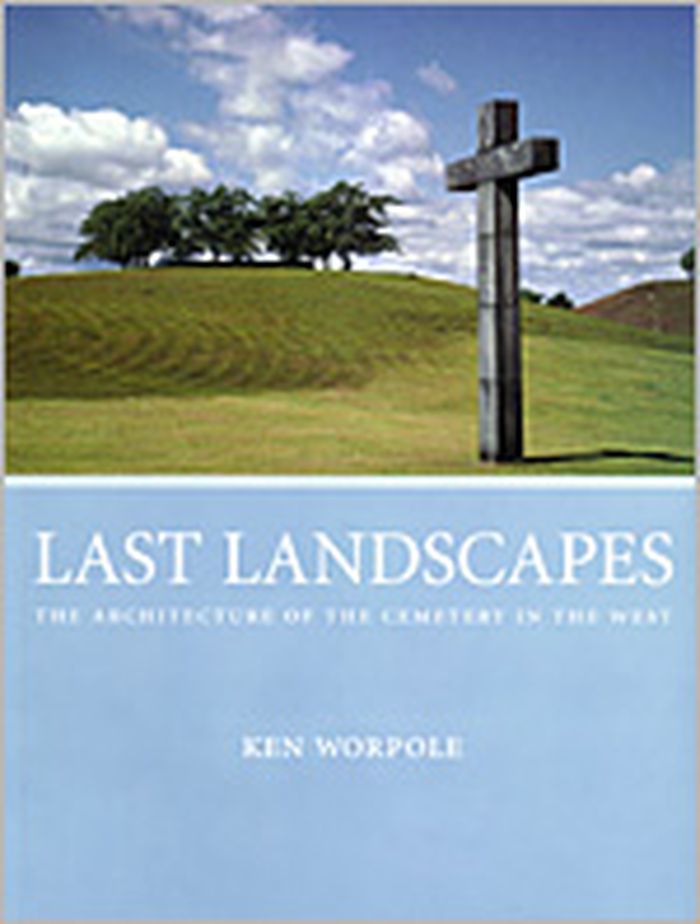
"Last Landscapes" is an exploration of the cult and celebration of death, loss and memory. It traces the history and design of burial places throughout Europe and the USA, ranging from the picturesque tradition of the village churchyard to tightly packed ‘cities of the dead’, such as the Jewish Cemetery in Prague and Père Lachaise in Paris. Other landscapes that feature in this book include the war cemeteries of northern France, Viking burial islands in central Sweden, Etruscan tombs and early Christian catacombs in Italy, the 17th-century Portuguese–Jewish cemetery 'Beth Haim' at Ouderkerk in the Netherlands, Forest Lawns in California, Derek Jarman’s garden in Kent and the Stockholm Woodland Cemetery. It is a fact that architecture ‘began with the tomb', yet, as Ken Worpole shows us in Last Landscapes, many historic cemeteries have been demolished or abandoned in recent times (notably the case with Jewish cemeteries in Eastern Europe), and there has been an increasing loss of inscription and memorialization in the modern urban cemetery. Too often cemeteries today are both poorly designed and physically and culturally marginalized. Worse, cremation denies a full architectural response to the mystery and solemnity of death. The author explores how modes of disposal – burial, cremation, inhumation in mausoleums and wall tombs – vary across Europe and North America, according to religious and other cultural influences. And Last Landscapes raises profound questions as to how, in an age of mass cremation, architects and landscape designers might create meaningful structures and settings in the absence of a body, since for most of history the human body itself has provided the fundamental structural scale. This evocative book also contemplates other forms of memorialization within modern societies, from sculptures to parks, most notably the extraordinary Duisberg Park, set in a former giant steelworks in Germany’s Ruhr Valley.
Last landscapes : the architecture of the cemetery in the west
Actions:
Price:
$49.95
(available to order)
Summary:
"Last Landscapes" is an exploration of the cult and celebration of death, loss and memory. It traces the history and design of burial places throughout Europe and the USA, ranging from the picturesque tradition of the village churchyard to tightly packed ‘cities of the dead’, such as the Jewish Cemetery in Prague and Père Lachaise in Paris. Other landscapes that feature in this book include the war cemeteries of northern France, Viking burial islands in central Sweden, Etruscan tombs and early Christian catacombs in Italy, the 17th-century Portuguese–Jewish cemetery 'Beth Haim' at Ouderkerk in the Netherlands, Forest Lawns in California, Derek Jarman’s garden in Kent and the Stockholm Woodland Cemetery. It is a fact that architecture ‘began with the tomb', yet, as Ken Worpole shows us in Last Landscapes, many historic cemeteries have been demolished or abandoned in recent times (notably the case with Jewish cemeteries in Eastern Europe), and there has been an increasing loss of inscription and memorialization in the modern urban cemetery. Too often cemeteries today are both poorly designed and physically and culturally marginalized. Worse, cremation denies a full architectural response to the mystery and solemnity of death. The author explores how modes of disposal – burial, cremation, inhumation in mausoleums and wall tombs – vary across Europe and North America, according to religious and other cultural influences. And Last Landscapes raises profound questions as to how, in an age of mass cremation, architects and landscape designers might create meaningful structures and settings in the absence of a body, since for most of history the human body itself has provided the fundamental structural scale. This evocative book also contemplates other forms of memorialization within modern societies, from sculptures to parks, most notably the extraordinary Duisberg Park, set in a former giant steelworks in Germany’s Ruhr Valley.
Form:
books
books
Publication:
June 2003, London
June 2003, London
Subject:
Gardens
Gardens
Form:
books
books
Actions:
Price:
$25.95
(available to order)
Summary:
Finally, we are learning that simplicity equals sanity. We're rebelling against technology that's too complicated, DVD players with too many menus, and software accompanied by 75-megabyte "read me" manuals. The iPod's clean gadgetry has made simplicity hip. But sometimes we find ourselves caught up in the simplicity paradox: we want something that's simple and easy to(...)
$25.95
(available to order)
Summary:
Finally, we are learning that simplicity equals sanity. We're rebelling against technology that's too complicated, DVD players with too many menus, and software accompanied by 75-megabyte "read me" manuals. The iPod's clean gadgetry has made simplicity hip. But sometimes we find ourselves caught up in the simplicity paradox: we want something that's simple and easy to(...)
Title:
The laws of simplicity : design, technology, business, life
Actions:
Price:
$25.95
(available to order)
Summary:
Finally, we are learning that simplicity equals sanity. We're rebelling against technology that's too complicated, DVD players with too many menus, and software accompanied by 75-megabyte "read me" manuals. The iPod's clean gadgetry has made simplicity hip. But sometimes we find ourselves caught up in the simplicity paradox: we want something that's simple and easy to use, but also does all the complex things we might ever want it to do. In "The laws of simplicity", John Maeda offers ten laws for balancing simplicity and complexity in business, technology, and design -guidelines for needing less and actually getting more. Maeda - a professor in MIT's Media Lab and a world-renowned graphic designer - explores the question of how we can redefine the notion of "improved" so that it doesn't always mean something more, something added on. Maeda's first law of simplicity is "Reduce." It's not necessarily beneficial to add technology features just because we can. And the features that we do have must be organized (Law 2) in a sensible hierarchy so users aren't distracted by features and functions they don't need. But simplicity is not less just for the sake of less. Skip ahead to Law 9: "Failure : accept the fact that some things can never be made simple." Maeda's concise guide to simplicity in the digital age shows us how this idea can be a cornerstone of organizations and their products -how it can drive both business and technology. We can learn to simplify without sacrificing comfort and meaning, and we can achieve the balance described in Law 10. This law, which Maeda calls "The One," tells us: "Simplicity is about subtracting the obvious, and adding the meaningful."
The laws of simplicity : design, technology, business, life
Actions:
Price:
$25.95
(available to order)
Summary:
Finally, we are learning that simplicity equals sanity. We're rebelling against technology that's too complicated, DVD players with too many menus, and software accompanied by 75-megabyte "read me" manuals. The iPod's clean gadgetry has made simplicity hip. But sometimes we find ourselves caught up in the simplicity paradox: we want something that's simple and easy to use, but also does all the complex things we might ever want it to do. In "The laws of simplicity", John Maeda offers ten laws for balancing simplicity and complexity in business, technology, and design -guidelines for needing less and actually getting more. Maeda - a professor in MIT's Media Lab and a world-renowned graphic designer - explores the question of how we can redefine the notion of "improved" so that it doesn't always mean something more, something added on. Maeda's first law of simplicity is "Reduce." It's not necessarily beneficial to add technology features just because we can. And the features that we do have must be organized (Law 2) in a sensible hierarchy so users aren't distracted by features and functions they don't need. But simplicity is not less just for the sake of less. Skip ahead to Law 9: "Failure : accept the fact that some things can never be made simple." Maeda's concise guide to simplicity in the digital age shows us how this idea can be a cornerstone of organizations and their products -how it can drive both business and technology. We can learn to simplify without sacrificing comfort and meaning, and we can achieve the balance described in Law 10. This law, which Maeda calls "The One," tells us: "Simplicity is about subtracting the obvious, and adding the meaningful."
Form:
books
books
Publication:
September 2006, Cambridge (MA)
September 2006, Cambridge (MA)
Subject:
Design Theory
Design Theory
Form:
books
books
Price:
$160.00
(available to order)
Summary:
Ce volume présente les plus beaux monuments en bois à travers le monde, du Moyen Âge à nos jours. Civils ou religieux, un très grand nombre de bâtiments fameux à travers le monde sont en bois. Leur diversité révèle la manière dont le génie humain a su utiliser les différentes essences de bois, les contraintes climatiques ou la culture locale pour réaliser des(...)
$160.00
(available to order)
Summary:
Ce volume présente les plus beaux monuments en bois à travers le monde, du Moyen Âge à nos jours. Civils ou religieux, un très grand nombre de bâtiments fameux à travers le monde sont en bois. Leur diversité révèle la manière dont le génie humain a su utiliser les différentes essences de bois, les contraintes climatiques ou la culture locale pour réaliser des(...)
Title:
L'art et l'histoire du bois : bâtiments privés et publics du monde entier
Actions:
Price:
$160.00
(available to order)
Summary:
Ce volume présente les plus beaux monuments en bois à travers le monde, du Moyen Âge à nos jours. Civils ou religieux, un très grand nombre de bâtiments fameux à travers le monde sont en bois. Leur diversité révèle la manière dont le génie humain a su utiliser les différentes essences de bois, les contraintes climatiques ou la culture locale pour réaliser des constructions qui nous séduisent toujours.
L'art et l'histoire du bois : bâtiments privés et publics du monde entier
Actions:
Price:
$160.00
(available to order)
Summary:
Ce volume présente les plus beaux monuments en bois à travers le monde, du Moyen Âge à nos jours. Civils ou religieux, un très grand nombre de bâtiments fameux à travers le monde sont en bois. Leur diversité révèle la manière dont le génie humain a su utiliser les différentes essences de bois, les contraintes climatiques ou la culture locale pour réaliser des constructions qui nous séduisent toujours.
Form:
books
books
Publication:
October 2005, Paris
October 2005, Paris
Subject:
Green Architecture
Green Architecture
Form:
books
books
Title:
Plafonds en bois
Plafonds en bois
Actions:
Price:
$69.95
(available to order)
Summary:
À travers une trentaine d’exemples, choisis dans des châteaux et des hôtels répertoriés dans le fonds du CRMH, cette étude analyse la structure et l’évolution - du Moyen Âge au XVIIe siècle, des dispositions de plafonds en bois (plafonds à la française, plafonds à caissons, plafonds à la fougère, etc.). Cet ouvrage est éclairé à la fois par des traités d’architecture(...)
$69.95
(available to order)
Summary:
À travers une trentaine d’exemples, choisis dans des châteaux et des hôtels répertoriés dans le fonds du CRMH, cette étude analyse la structure et l’évolution - du Moyen Âge au XVIIe siècle, des dispositions de plafonds en bois (plafonds à la française, plafonds à caissons, plafonds à la fougère, etc.). Cet ouvrage est éclairé à la fois par des traités d’architecture(...)
Title:
Plafonds en bois
Actions:
Price:
$69.95
(available to order)
Summary:
À travers une trentaine d’exemples, choisis dans des châteaux et des hôtels répertoriés dans le fonds du CRMH, cette étude analyse la structure et l’évolution - du Moyen Âge au XVIIe siècle, des dispositions de plafonds en bois (plafonds à la française, plafonds à caissons, plafonds à la fougère, etc.). Cet ouvrage est éclairé à la fois par des traités d’architecture anciens et par le résultat de recherches récentes.
Plafonds en bois
Actions:
Price:
$69.95
(available to order)
Summary:
À travers une trentaine d’exemples, choisis dans des châteaux et des hôtels répertoriés dans le fonds du CRMH, cette étude analyse la structure et l’évolution - du Moyen Âge au XVIIe siècle, des dispositions de plafonds en bois (plafonds à la française, plafonds à caissons, plafonds à la fougère, etc.). Cet ouvrage est éclairé à la fois par des traités d’architecture anciens et par le résultat de recherches récentes.
Form:
books
books
Publication:
October 2014
October 2014
Subject:
Timber Construction
Timber Construction
Form:
books
books
Title:
La société de consommation
La société de consommation
Actions:
Price:
$16.95
(available to order)
Summary:
La consommation est devenue la morale de notre monde. Elle est en train de détruire les bases de l'être humain, c'est-à-dire l'équilibre que la pensée européenne, depuis les Grecs, a maintenu entre les racines mythologiques et le monde du logos. L'auteur précise : «Comme la société du Moyen Âge s'équilibre sur la consommation et sur le diable, ainsi la nôtre s'équilibre(...)
$16.95
(available to order)
Summary:
La consommation est devenue la morale de notre monde. Elle est en train de détruire les bases de l'être humain, c'est-à-dire l'équilibre que la pensée européenne, depuis les Grecs, a maintenu entre les racines mythologiques et le monde du logos. L'auteur précise : «Comme la société du Moyen Âge s'équilibre sur la consommation et sur le diable, ainsi la nôtre s'équilibre(...)
Title:
La société de consommation
Actions:
Price:
$16.95
(available to order)
Summary:
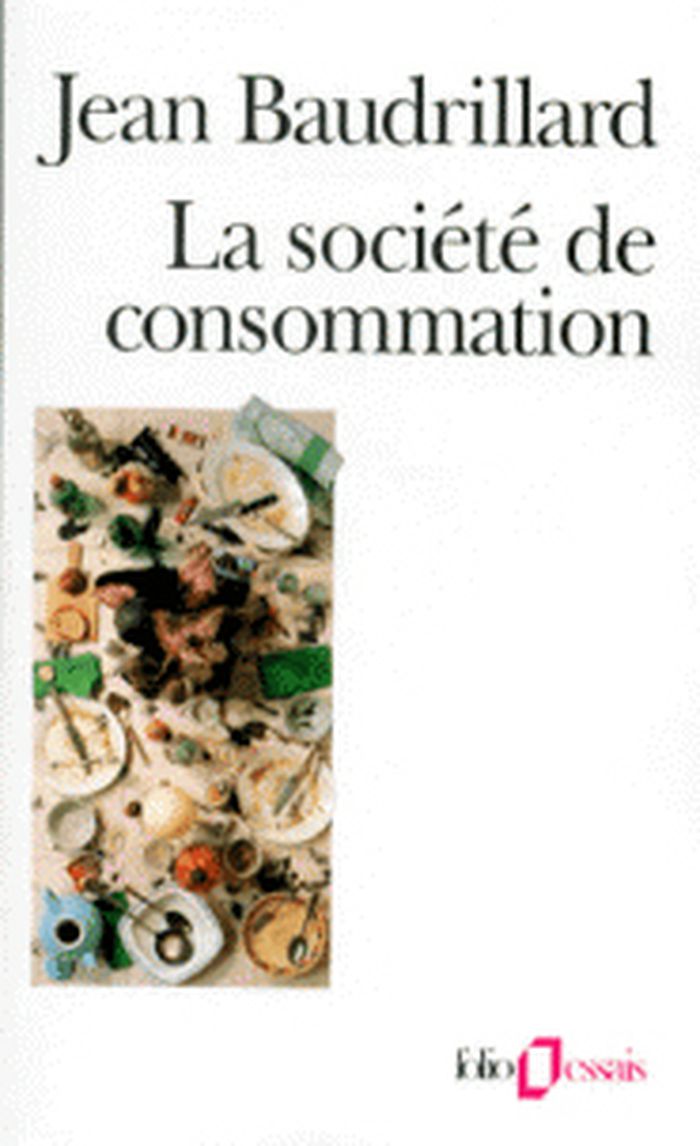
La consommation est devenue la morale de notre monde. Elle est en train de détruire les bases de l'être humain, c'est-à-dire l'équilibre que la pensée européenne, depuis les Grecs, a maintenu entre les racines mythologiques et le monde du logos. L'auteur précise : «Comme la société du Moyen Âge s'équilibre sur la consommation et sur le diable, ainsi la nôtre s'équilibre sur la consommation et sur sa dénonciation.»
La société de consommation
Actions:
Price:
$16.95
(available to order)
Summary:
La consommation est devenue la morale de notre monde. Elle est en train de détruire les bases de l'être humain, c'est-à-dire l'équilibre que la pensée européenne, depuis les Grecs, a maintenu entre les racines mythologiques et le monde du logos. L'auteur précise : «Comme la société du Moyen Âge s'équilibre sur la consommation et sur le diable, ainsi la nôtre s'équilibre sur la consommation et sur sa dénonciation.»
Form:
books
books
Publication:
September 2015
September 2015
Subject:
Critical Theory
Critical Theory
Form:
books
books
Price:
$34.95
(available to order)
Summary:
Cet ouvrage suit l’histoire de l’architecture, débutant dans l’Antiquité (le Parthénon, le temple d’Atshepsout) et les époques byzantine et gothique, continuant jusqu’au Moyen Âge, puis à la Renaissance (Uffi zi, temple de Virupaksha) et au baroque, pour finalement s’attarder aux réalisations récentes, comme le Chrysler Building et le tout nouveau stade olympique de(...)
$34.95
(available to order)
Summary:
Cet ouvrage suit l’histoire de l’architecture, débutant dans l’Antiquité (le Parthénon, le temple d’Atshepsout) et les époques byzantine et gothique, continuant jusqu’au Moyen Âge, puis à la Renaissance (Uffi zi, temple de Virupaksha) et au baroque, pour finalement s’attarder aux réalisations récentes, comme le Chrysler Building et le tout nouveau stade olympique de(...)
Subject:
Architecture since 1900, Europe
Architecture since 1900, Europe
Publication:
February 2009, Montréal
February 2009, Montréal
Title:
Les 1001 merveilles de l'architecture qu'il faut avoir vu dans sa vie
Actions:
Price:
$34.95
(available to order)
Summary:
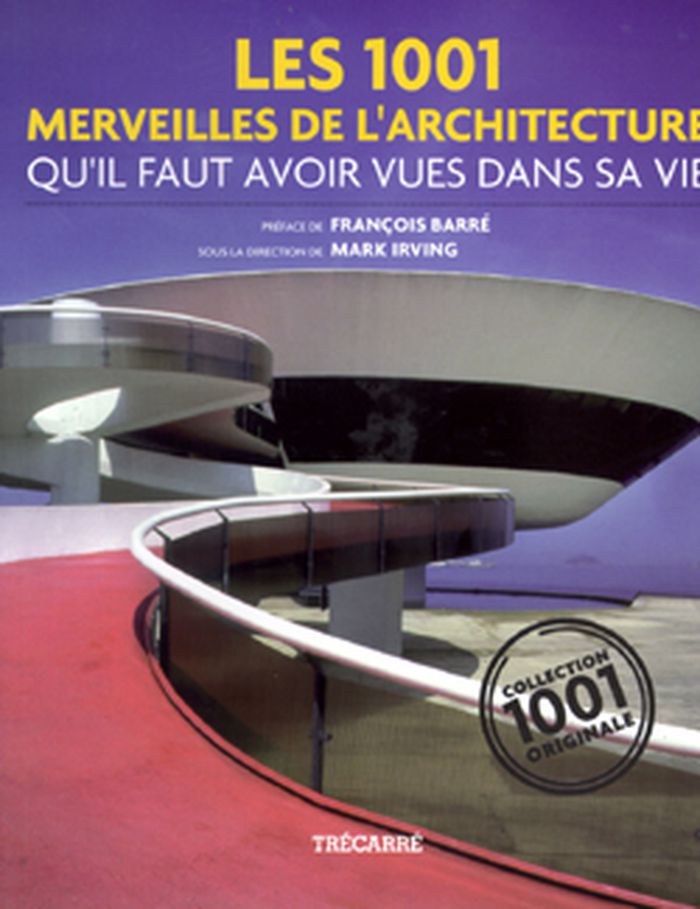
Cet ouvrage suit l’histoire de l’architecture, débutant dans l’Antiquité (le Parthénon, le temple d’Atshepsout) et les époques byzantine et gothique, continuant jusqu’au Moyen Âge, puis à la Renaissance (Uffi zi, temple de Virupaksha) et au baroque, pour finalement s’attarder aux réalisations récentes, comme le Chrysler Building et le tout nouveau stade olympique de Pékin, conçu par le duo Herzog & de Meuron, sans oublier Habitat 67. Un glossaire ainsi qu’un index des constructions classées par pays complète le tout.
Les 1001 merveilles de l'architecture qu'il faut avoir vu dans sa vie
Actions:
Price:
$34.95
(available to order)
Summary:
Cet ouvrage suit l’histoire de l’architecture, débutant dans l’Antiquité (le Parthénon, le temple d’Atshepsout) et les époques byzantine et gothique, continuant jusqu’au Moyen Âge, puis à la Renaissance (Uffi zi, temple de Virupaksha) et au baroque, pour finalement s’attarder aux réalisations récentes, comme le Chrysler Building et le tout nouveau stade olympique de Pékin, conçu par le duo Herzog & de Meuron, sans oublier Habitat 67. Un glossaire ainsi qu’un index des constructions classées par pays complète le tout.
Form:
books
books
Publication:
February 2009, Montréal
February 2009, Montréal
Subject:
Architecture since 1900, Europe
Architecture since 1900, Europe
Form:
books
books
Title:
Les grandes villes du monde
Les grandes villes du monde
Actions:
Price:
$22.95
(available to order)
Summary:
Où sont nées les villes ? Comment se sontelles développées ? Quels problèmes pose leur croissance, et comment y remédier ? Cette nouvelle collection aborde des sujets de notre temps via l’illustration et la participation créative de l’enfant. Chaque double-page se compose d’une grande illustration, d’un texte et d’une activité autour du sujet traité – dessin du plan d’une(...)
$22.95
(available to order)
Summary:
Où sont nées les villes ? Comment se sontelles développées ? Quels problèmes pose leur croissance, et comment y remédier ? Cette nouvelle collection aborde des sujets de notre temps via l’illustration et la participation créative de l’enfant. Chaque double-page se compose d’une grande illustration, d’un texte et d’une activité autour du sujet traité – dessin du plan d’une(...)
Title:
Les grandes villes du monde
Actions:
Price:
$22.95
(available to order)
Summary:
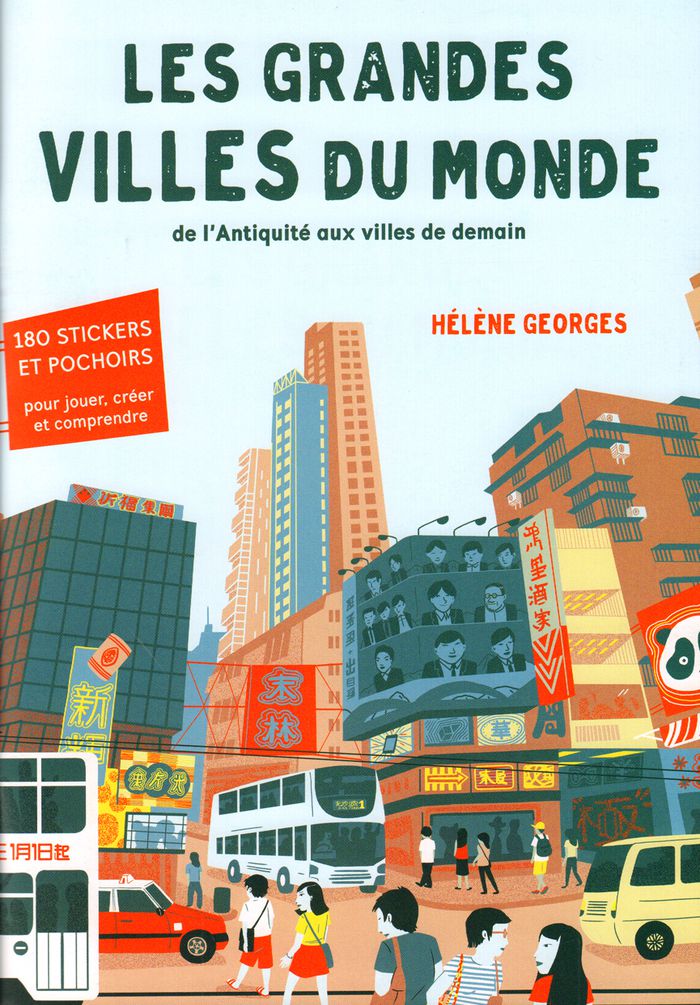
Où sont nées les villes ? Comment se sontelles développées ? Quels problèmes pose leur croissance, et comment y remédier ? Cette nouvelle collection aborde des sujets de notre temps via l’illustration et la participation créative de l’enfant. Chaque double-page se compose d’une grande illustration, d’un texte et d’une activité autour du sujet traité – dessin du plan d’une agora grecque ou d’un gratte-ciel à l’aide de pochoirs, représentation par des stickers d’une ferme verticale ou des échanges entre les villes au Moyen-Âge, …
Les grandes villes du monde
Actions:
Price:
$22.95
(available to order)
Summary:
Où sont nées les villes ? Comment se sontelles développées ? Quels problèmes pose leur croissance, et comment y remédier ? Cette nouvelle collection aborde des sujets de notre temps via l’illustration et la participation créative de l’enfant. Chaque double-page se compose d’une grande illustration, d’un texte et d’une activité autour du sujet traité – dessin du plan d’une agora grecque ou d’un gratte-ciel à l’aide de pochoirs, représentation par des stickers d’une ferme verticale ou des échanges entre les villes au Moyen-Âge, …
Form:
books
books
Publication:
October 2016
October 2016
Subject:
Children's Books
Children's Books


