


6624 Results
Form:
books
books

Price:
$34.95
(available to order)
Summary:
A world-leading expert shares her amazing story of discovering the communication that exists between trees, and shares her own story of family and grief. Now, in her first book, Suzanne Simard brings us into her world, the intimate world of the trees, in which she brilliantly illuminates the fascinating and vital truths—that trees are not simply the source of timber(...)
$34.95
(available to order)
Summary:
A world-leading expert shares her amazing story of discovering the communication that exists between trees, and shares her own story of family and grief. Now, in her first book, Suzanne Simard brings us into her world, the intimate world of the trees, in which she brilliantly illuminates the fascinating and vital truths—that trees are not simply the source of timber(...)
Title:
Finding the mother-tree: discovering the wisdom of the forest
Actions:
Price:
$34.95
(available to order)
Summary:
A world-leading expert shares her amazing story of discovering the communication that exists between trees, and shares her own story of family and grief. Now, in her first book, Suzanne Simard brings us into her world, the intimate world of the trees, in which she brilliantly illuminates the fascinating and vital truths—that trees are not simply the source of timber or pulp but are a complicated, interdependent circle of life; that forests are social, cooperative creatures connected through underground networks by which trees communicate their vitality and vulnerabilities with communal lives not that different from our own. Simard describes up close—in revealing and accessible ways—how trees, living side by side for hundreds of years, have evolved; how they perceive one another, learn and adapt their behaviors, recognize neighbors, and remember the past; how they have agency about their future; how they elicit warnings and mount defenses, compete and cooperate with one another with sophistication: characteristics previously ascribed to human intelligence, traits that are the essence of civil societies. And, at the center of it all, the Mother Trees: the mysterious, powerful forces that connect and sustain the others that surround them.Simard, born and raised in the rain forests of British Columbia, spent her days as a child cataloging the trees from the forest; she came to love and respect them and embarked on a journey of discovery and struggle. Her powerful story is one of love and loss, of observation and change, of risk and reward. And it is a testament to how deeply human scientific inquiry exists beyond data and technology: it’s about understanding who we are and our place in the world.
Finding the mother-tree: discovering the wisdom of the forest
Actions:
Price:
$34.95
(available to order)
Summary:
A world-leading expert shares her amazing story of discovering the communication that exists between trees, and shares her own story of family and grief. Now, in her first book, Suzanne Simard brings us into her world, the intimate world of the trees, in which she brilliantly illuminates the fascinating and vital truths—that trees are not simply the source of timber or pulp but are a complicated, interdependent circle of life; that forests are social, cooperative creatures connected through underground networks by which trees communicate their vitality and vulnerabilities with communal lives not that different from our own. Simard describes up close—in revealing and accessible ways—how trees, living side by side for hundreds of years, have evolved; how they perceive one another, learn and adapt their behaviors, recognize neighbors, and remember the past; how they have agency about their future; how they elicit warnings and mount defenses, compete and cooperate with one another with sophistication: characteristics previously ascribed to human intelligence, traits that are the essence of civil societies. And, at the center of it all, the Mother Trees: the mysterious, powerful forces that connect and sustain the others that surround them.Simard, born and raised in the rain forests of British Columbia, spent her days as a child cataloging the trees from the forest; she came to love and respect them and embarked on a journey of discovery and struggle. Her powerful story is one of love and loss, of observation and change, of risk and reward. And it is a testament to how deeply human scientific inquiry exists beyond data and technology: it’s about understanding who we are and our place in the world.
Form:
books
books
Publication:
May 2021
May 2021
Subject:
Landscape Theory
Landscape Theory
Form:
books
books
Title:
Well-kept ruins
Well-kept ruins
Actions:
Price:
$33.95
(available to order)
Summary:
In the Lower Saxony region of northwestern Germany sits the city of Osnabrück. This is where, in 1648, the Peace of Westphalia was signed, bringing the Thirty Years’ War and one of the most calamitous periods of European history to an end. But the city was later to witness another calamity. Today, as one walks through Old Synagogue Street in a rich neighborhood of(...)
$33.95
(available to order)
Summary:
In the Lower Saxony region of northwestern Germany sits the city of Osnabrück. This is where, in 1648, the Peace of Westphalia was signed, bringing the Thirty Years’ War and one of the most calamitous periods of European history to an end. But the city was later to witness another calamity. Today, as one walks through Old Synagogue Street in a rich neighborhood of(...)
Title:
Well-kept ruins
Actions:
Price:
$33.95
(available to order)
Summary:
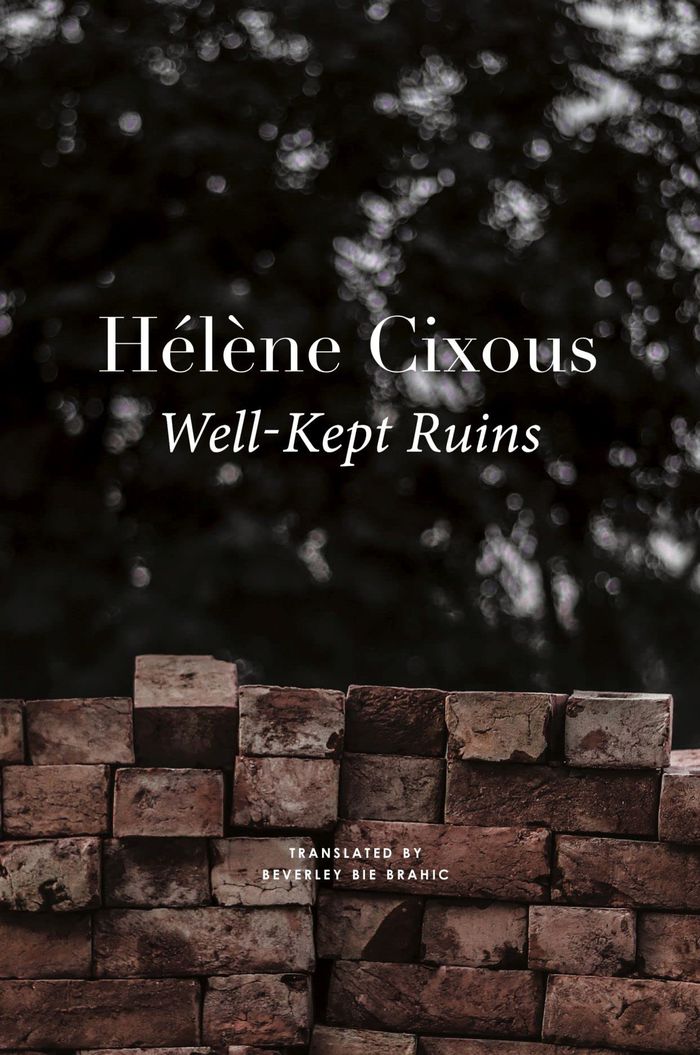
In the Lower Saxony region of northwestern Germany sits the city of Osnabrück. This is where, in 1648, the Peace of Westphalia was signed, bringing the Thirty Years’ War and one of the most calamitous periods of European history to an end. But the city was later to witness another calamity. Today, as one walks through Old Synagogue Street in a rich neighborhood of Osnabrück, one might miss noticing a pile of pale stones held together by chicken wire that sits between two fashionable homes. These are the well-kept ruins from behind which stares a gaping space—a place of memory and oblivion. Four polished plaques tell the tale of the horror-filled night of November 9, 1938—today known as Kristallnacht—when the synagogue that had stood on this spot was desecrated, looted, set on fire, and eventually demolished by Hitler’s forces. On the same day, ninety parishioners were imprisoned by the Gestapo and eventually sent to the Buchenwald concentration camp. Osnabrück was also home to Eve Klein, a member of the city’s early-twentieth-century Jewish community and the mother of author Hélène Cixous. In Well-Kept Ruins, Cixous returns to the historic city in 2019 and reflects on the remains of the synagogue that “express the life lost, the life kept.” Walking the streets of the city, plumbing the depths of the past along with her own family’s history, looking deep into the future, and punctuating her poetic prose with haunting photographs, Cixous explores the ruins at the heart of humanity. Part memoir, part philosophical meditation, ''Well-kept ruins'' is a genre-defying and timely reflection of the contemporary human condition.
Well-kept ruins
Actions:
Price:
$33.95
(available to order)
Summary:
In the Lower Saxony region of northwestern Germany sits the city of Osnabrück. This is where, in 1648, the Peace of Westphalia was signed, bringing the Thirty Years’ War and one of the most calamitous periods of European history to an end. But the city was later to witness another calamity. Today, as one walks through Old Synagogue Street in a rich neighborhood of Osnabrück, one might miss noticing a pile of pale stones held together by chicken wire that sits between two fashionable homes. These are the well-kept ruins from behind which stares a gaping space—a place of memory and oblivion. Four polished plaques tell the tale of the horror-filled night of November 9, 1938—today known as Kristallnacht—when the synagogue that had stood on this spot was desecrated, looted, set on fire, and eventually demolished by Hitler’s forces. On the same day, ninety parishioners were imprisoned by the Gestapo and eventually sent to the Buchenwald concentration camp. Osnabrück was also home to Eve Klein, a member of the city’s early-twentieth-century Jewish community and the mother of author Hélène Cixous. In Well-Kept Ruins, Cixous returns to the historic city in 2019 and reflects on the remains of the synagogue that “express the life lost, the life kept.” Walking the streets of the city, plumbing the depths of the past along with her own family’s history, looking deep into the future, and punctuating her poetic prose with haunting photographs, Cixous explores the ruins at the heart of humanity. Part memoir, part philosophical meditation, ''Well-kept ruins'' is a genre-defying and timely reflection of the contemporary human condition.
Form:
books
books
Publication:
December 2022
December 2022
Subject:
Literature and poetry
Literature and poetry
Form:
books
books
Actions:
Price:
$57.00
(available in store)
Summary:
In 1983, Ursula Schulz-Dornburg accompanied two ethnologists and an architect on a research trip to Tana Toraja on the central Indonesian island of Sulawesi. Initiated by the Royal Tropical Institute of Amsterdam, the trip was intended to “explore the changing patterns in architecture and symbolism among the Sa‘dan Toraja”. On the way back from Rantepao to Ujung Pandang(...)
$57.00
(available in store)
Summary:
In 1983, Ursula Schulz-Dornburg accompanied two ethnologists and an architect on a research trip to Tana Toraja on the central Indonesian island of Sulawesi. Initiated by the Royal Tropical Institute of Amsterdam, the trip was intended to “explore the changing patterns in architecture and symbolism among the Sa‘dan Toraja”. On the way back from Rantepao to Ujung Pandang(...)
Title:
Ursula Schulz-Dornburg: Bugis Houses, Celebes
Actions:
Price:
$57.00
(available in store)
Summary:
In 1983, Ursula Schulz-Dornburg accompanied two ethnologists and an architect on a research trip to Tana Toraja on the central Indonesian island of Sulawesi. Initiated by the Royal Tropical Institute of Amsterdam, the trip was intended to “explore the changing patterns in architecture and symbolism among the Sa‘dan Toraja”. On the way back from Rantepao to Ujung Pandang airport, Schulz-Dornburg passed the distinctive houses of the Bugis or To-Ugiq people, perched on the yellow paddy fields. Fascinated by their complex, expressive architectures, she began to photograph the houses in the short time she had before leaving, realising that the structures would likely not exist in their traditional form for much longer. The result is a body of work that not only surveys the houses’ physical forms but also considers wide-ranging ideas of physical and emotional homebuilding and the precarious place of tradition in the present day. Poised between heaven and earth and standing above the water when the rice fields are flooded, the Bugis houses reflect the creation myth of their people, in which the gods of the upper and lower worlds came together to create man to populate the uninhabited middle world. The farmers depicted by Schulz-Dornburg are likewise suspended between historic tradition and the impending pressures of the contemporary world. As they go about their work or greet her camera, they and their homes are held in the balance between past and future, mythology and everyday reality. With these shrewd and sensitive images, Schulz-Dornburg captures life as it is built and lived within a particular culture and landscape, offering a searching reflection on the places we call home.
Ursula Schulz-Dornburg: Bugis Houses, Celebes
Actions:
Price:
$57.00
(available in store)
Summary:
In 1983, Ursula Schulz-Dornburg accompanied two ethnologists and an architect on a research trip to Tana Toraja on the central Indonesian island of Sulawesi. Initiated by the Royal Tropical Institute of Amsterdam, the trip was intended to “explore the changing patterns in architecture and symbolism among the Sa‘dan Toraja”. On the way back from Rantepao to Ujung Pandang airport, Schulz-Dornburg passed the distinctive houses of the Bugis or To-Ugiq people, perched on the yellow paddy fields. Fascinated by their complex, expressive architectures, she began to photograph the houses in the short time she had before leaving, realising that the structures would likely not exist in their traditional form for much longer. The result is a body of work that not only surveys the houses’ physical forms but also considers wide-ranging ideas of physical and emotional homebuilding and the precarious place of tradition in the present day. Poised between heaven and earth and standing above the water when the rice fields are flooded, the Bugis houses reflect the creation myth of their people, in which the gods of the upper and lower worlds came together to create man to populate the uninhabited middle world. The farmers depicted by Schulz-Dornburg are likewise suspended between historic tradition and the impending pressures of the contemporary world. As they go about their work or greet her camera, they and their homes are held in the balance between past and future, mythology and everyday reality. With these shrewd and sensitive images, Schulz-Dornburg captures life as it is built and lived within a particular culture and landscape, offering a searching reflection on the places we call home.
Form:
books
books
Publication:
July 2021
July 2021
Subject:
Photography monographs
Photography monographs
Form:
audio
audio
Actions:
Description:
1 online resource.
Author:
Subject:
Publication:
[Place of publication not identified] : Failed Architecture, 2024.
[Place of publication not identified] : Failed Architecture, 2024.
Form:
audio
audio
Publication:
[Place of publication not identified] : Failed Architecture, 2024.
[Place of publication not identified] : Failed Architecture, 2024.
Author:
Subject:
Form:
books
books
Actions:
Holdings:
Description:
352 pages : color illustrations ; 25 cm.
Description:
352 pages : color illustrations ; 25 cm.
Author:
Subject:
Publication:
Cambridge, MA : SA+P Press, [2019], [Cambridge, Massachusetts] : The MIT Press., ©2019
Cambridge, MA : SA+P Press, [2019], [Cambridge, Massachusetts] : The MIT Press., ©2019
Title:
Architecture and action / edited by J. Meejin Yoon and Irina Chernyakova, with Ammar Ahmed, Sam Ghantous, and Maya Shopova.
Actions:
Holdings:
Description:
352 pages : color illustrations ; 25 cm.
Architecture and action / edited by J. Meejin Yoon and Irina Chernyakova, with Ammar Ahmed, Sam Ghantous, and Maya Shopova.
Actions:
Holdings:
Description:
352 pages : color illustrations ; 25 cm.
Form:
books
books
Publication:
Cambridge, MA : SA+P Press, [2019], [Cambridge, Massachusetts] : The MIT Press., ©2019
Cambridge, MA : SA+P Press, [2019], [Cambridge, Massachusetts] : The MIT Press., ©2019
Author:
Subject:
Form:
books
books
Title:
Z(oo)m +- books in motion
Z(oo)m +- books in motion
Actions:
Description:
1 online resource
Author:
Subject:
Publication:
[Place of publication not identified] : Blaker gml. meieri, 2015.
[Place of publication not identified] : Blaker gml. meieri, 2015.
Form:
books
books
Publication:
[Place of publication not identified] : Blaker gml. meieri, 2015.
[Place of publication not identified] : Blaker gml. meieri, 2015.
Author:
Subject:
Form:
books
books
Actions:
Price:
$34.95
(available to order)
Summary:
"The complex answer: On art as a non-binary intelligence" presents a series of entangled essays on the question on how art—and contemporary art practices in particular—embodies an intelligence capable of serving the erasure of the culture/nature distinction. The book is conceived in four parts and each not only introduces a slightly different writing on the subject(...)
$34.95
(available to order)
Summary:
"The complex answer: On art as a non-binary intelligence" presents a series of entangled essays on the question on how art—and contemporary art practices in particular—embodies an intelligence capable of serving the erasure of the culture/nature distinction. The book is conceived in four parts and each not only introduces a slightly different writing on the subject(...)
Title:
The complex answer: On art as a non-binary intelligence
Actions:
Price:
$34.95
(available to order)
Summary:
"The complex answer: On art as a non-binary intelligence" presents a series of entangled essays on the question on how art—and contemporary art practices in particular—embodies an intelligence capable of serving the erasure of the culture/nature distinction. The book is conceived in four parts and each not only introduces a slightly different writing on the subject matter, but also refers to concrete questions that affect the practice of art, the exercise of exhibiting, the duty of reflecting, and the institutional forms that define our present but may radically change in a near future. The book imagines art and contemporary art as an organ. An organ that produces an experience of inexpressible realities that are fundamental to understanding life and its processes. Stem cells exist, first, without a purpose and it is for the whole organism to decide if they will become part of an auditive nerve or the brain or the cornea of an eye. This adding to an organ is how Chus Martínez understands the intelligence of art. Poets and artists have claimed to understand the language of birds and flowers. We speak now of multi-species communication without a trace of metaphoric language. The experience of nature has evolved inside artistic practice. One could claim that the very fact that we talk about artificial intelligence is a merit of the arts. To transfer traits of organic life to inorganic entities such as information systems is a bold move that took centuries to prepare. Art has been essential in getting our senses and our arguments ready to accept this reality. The same with animal language, the synchronized reactions of a rainforest, and the transformative way fish have been discovered as able to recognize their own image in a mirror. These are just jests on the part of the sciences, developments of technical knowledges.
The complex answer: On art as a non-binary intelligence
Actions:
Price:
$34.95
(available to order)
Summary:
"The complex answer: On art as a non-binary intelligence" presents a series of entangled essays on the question on how art—and contemporary art practices in particular—embodies an intelligence capable of serving the erasure of the culture/nature distinction. The book is conceived in four parts and each not only introduces a slightly different writing on the subject matter, but also refers to concrete questions that affect the practice of art, the exercise of exhibiting, the duty of reflecting, and the institutional forms that define our present but may radically change in a near future. The book imagines art and contemporary art as an organ. An organ that produces an experience of inexpressible realities that are fundamental to understanding life and its processes. Stem cells exist, first, without a purpose and it is for the whole organism to decide if they will become part of an auditive nerve or the brain or the cornea of an eye. This adding to an organ is how Chus Martínez understands the intelligence of art. Poets and artists have claimed to understand the language of birds and flowers. We speak now of multi-species communication without a trace of metaphoric language. The experience of nature has evolved inside artistic practice. One could claim that the very fact that we talk about artificial intelligence is a merit of the arts. To transfer traits of organic life to inorganic entities such as information systems is a bold move that took centuries to prepare. Art has been essential in getting our senses and our arguments ready to accept this reality. The same with animal language, the synchronized reactions of a rainforest, and the transformative way fish have been discovered as able to recognize their own image in a mirror. These are just jests on the part of the sciences, developments of technical knowledges.
Form:
books
books
Publication:
February 2024
February 2024
Subject:
Art Theory
Art Theory
Form:
books
books
Price:
$49.00
(available to order)
Summary:
Buildings are more like us than we realize. They can be born into wealth or poverty, enjoying every privilege or struggling to make ends meet. They have parents - gods, kings and emperors, governments, visionaries and madmen - as well as friends and enemies. They have duties and responsibilities. They can endure crises of faith and purpose. They can succeed or fail. They(...)
$49.00
(available to order)
Summary:
Buildings are more like us than we realize. They can be born into wealth or poverty, enjoying every privilege or struggling to make ends meet. They have parents - gods, kings and emperors, governments, visionaries and madmen - as well as friends and enemies. They have duties and responsibilities. They can endure crises of faith and purpose. They can succeed or fail. They(...)
Title:
Fallen glory: the lives and deaths of history's greatest buildings
Actions:
Price:
$49.00
(available to order)
Summary:
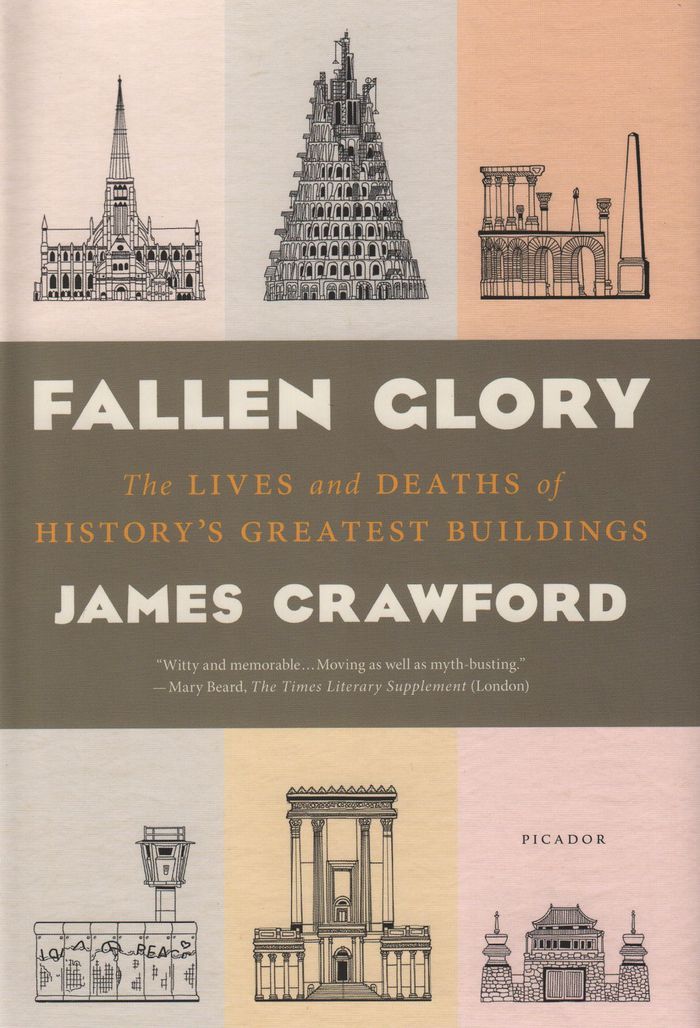
Buildings are more like us than we realize. They can be born into wealth or poverty, enjoying every privilege or struggling to make ends meet. They have parents - gods, kings and emperors, governments, visionaries and madmen - as well as friends and enemies. They have duties and responsibilities. They can endure crises of faith and purpose. They can succeed or fail. They can live. And, sooner or later, they die. In "Fallen glory", James Crawford uncovers the biographies of some of the world's most fascinating lost and ruined buildings, from the dawn of civilization to the cyber era. The lives of these iconic structures are packed with drama and intrigue. Soap operas on the grandest scale, they feature war and religion, politics and art, love and betrayal, catastrophe and hope. Frequently their afterlives have been no less dramatic - their memories used and abused down the millennia for purposes both sacred and profane. They provide the stage for a startling array of characters, including Gilgamesh, the Cretan Minotaur, Agamemnon, Nefertiti, Genghis Khan, Henry VIII, Catherine the Great, Adolf Hitler, and even Bruce Springsteen. The twenty-one structures Crawford focuses on include The Tower of Babel, The Temple of Jerusalem, The Library of Alexandria, The Bastille, Kowloon Walled City, the Berlin Wall, and the Twin Towers of the World Trade Center. Ranging from the deserts of Iraq, the banks of the Nile and the cloud forests of Peru, to the great cities of Jerusalem, Istanbul, Paris, Rome, London and New York, Fallen Glory is a unique guide to a world of vanished architecture. And, by picking through the fragments of our past, it asks what history's scattered ruins can tell us about our own future.
Fallen glory: the lives and deaths of history's greatest buildings
Actions:
Price:
$49.00
(available to order)
Summary:
Buildings are more like us than we realize. They can be born into wealth or poverty, enjoying every privilege or struggling to make ends meet. They have parents - gods, kings and emperors, governments, visionaries and madmen - as well as friends and enemies. They have duties and responsibilities. They can endure crises of faith and purpose. They can succeed or fail. They can live. And, sooner or later, they die. In "Fallen glory", James Crawford uncovers the biographies of some of the world's most fascinating lost and ruined buildings, from the dawn of civilization to the cyber era. The lives of these iconic structures are packed with drama and intrigue. Soap operas on the grandest scale, they feature war and religion, politics and art, love and betrayal, catastrophe and hope. Frequently their afterlives have been no less dramatic - their memories used and abused down the millennia for purposes both sacred and profane. They provide the stage for a startling array of characters, including Gilgamesh, the Cretan Minotaur, Agamemnon, Nefertiti, Genghis Khan, Henry VIII, Catherine the Great, Adolf Hitler, and even Bruce Springsteen. The twenty-one structures Crawford focuses on include The Tower of Babel, The Temple of Jerusalem, The Library of Alexandria, The Bastille, Kowloon Walled City, the Berlin Wall, and the Twin Towers of the World Trade Center. Ranging from the deserts of Iraq, the banks of the Nile and the cloud forests of Peru, to the great cities of Jerusalem, Istanbul, Paris, Rome, London and New York, Fallen Glory is a unique guide to a world of vanished architecture. And, by picking through the fragments of our past, it asks what history's scattered ruins can tell us about our own future.
Form:
books
books
Publication:
March 2017
March 2017
Subject:
Architectural Theory
Architectural Theory
Form:
books
books
Price:
$47.00
(available to order)
Summary:
In this survey of the politics and meanings of urban landscapes, leading sociologist Göran Therborn offers a tour of the world’s major capital cities, showing how they have been shaped by national, popular, and global forces. Their stories begin with the emergence of various kinds of nation-state, each with its own special capital city problematic. In turn, radical shifts(...)
$47.00
(available to order)
Summary:
In this survey of the politics and meanings of urban landscapes, leading sociologist Göran Therborn offers a tour of the world’s major capital cities, showing how they have been shaped by national, popular, and global forces. Their stories begin with the emergence of various kinds of nation-state, each with its own special capital city problematic. In turn, radical shifts(...)
Title:
Cities of power: the urban, the national, the popular, the global
Actions:
Price:
$47.00
(available to order)
Summary:
In this survey of the politics and meanings of urban landscapes, leading sociologist Göran Therborn offers a tour of the world’s major capital cities, showing how they have been shaped by national, popular, and global forces. Their stories begin with the emergence of various kinds of nation-state, each with its own special capital city problematic. In turn, radical shifts of power have impacted on these cities’ development, in popular urban reforms or movements of protest and resistance; in the rise and fall of fascism and military dictatorships; and the coming and going of Communism. Therborn also analyzes global moments of urban formation, of historical globalized nationalism, as well as the cities of current global image capitalism and their variations of skyscraping, gating, and displays of novelty. Through a global, historical lens, and with a thematic range extending from the mutations of modernist architecture to the contemporary return of urban revolutions, Therborn questions received assumptions about the source, manifestations, and reach of urban power, combining perspectives on politics, sociology, urban planning, architecture, and urban iconography. He argues that, at a time when they seem to be moving apart, there is a strong link between the city and the nation-state, and that the current globalization of cities is largely driven by the global aspirations of politicians as well as those of national and local capital. With its unique systematic overview, from Washington, D.C. and revolutionary Paris to the flamboyant twenty- first-century capital Astana in Kazakhstan, its wealth of urban observations from all the populated continents, and its sharp and multi-faceted analyses, Cities of Power forces us to rethink our urban future, as well as our historically shaped present.
Cities of power: the urban, the national, the popular, the global
Actions:
Price:
$47.00
(available to order)
Summary:
In this survey of the politics and meanings of urban landscapes, leading sociologist Göran Therborn offers a tour of the world’s major capital cities, showing how they have been shaped by national, popular, and global forces. Their stories begin with the emergence of various kinds of nation-state, each with its own special capital city problematic. In turn, radical shifts of power have impacted on these cities’ development, in popular urban reforms or movements of protest and resistance; in the rise and fall of fascism and military dictatorships; and the coming and going of Communism. Therborn also analyzes global moments of urban formation, of historical globalized nationalism, as well as the cities of current global image capitalism and their variations of skyscraping, gating, and displays of novelty. Through a global, historical lens, and with a thematic range extending from the mutations of modernist architecture to the contemporary return of urban revolutions, Therborn questions received assumptions about the source, manifestations, and reach of urban power, combining perspectives on politics, sociology, urban planning, architecture, and urban iconography. He argues that, at a time when they seem to be moving apart, there is a strong link between the city and the nation-state, and that the current globalization of cities is largely driven by the global aspirations of politicians as well as those of national and local capital. With its unique systematic overview, from Washington, D.C. and revolutionary Paris to the flamboyant twenty- first-century capital Astana in Kazakhstan, its wealth of urban observations from all the populated continents, and its sharp and multi-faceted analyses, Cities of Power forces us to rethink our urban future, as well as our historically shaped present.
Form:
books
books
Publication:
May 2017
May 2017
Subject:
Urban Theory
Urban Theory
Form:
books
books
Actions:
Price:
$90.00
(available to order)
Summary:
"Things as they are" presents the story of photojournalism over fifty years, from 1955 until today. It takes us from the golden era of the illustrated press—the heyday of Life magazine and Picture Post, and the moment of the Museum of Modern Art’s defining Family of Man exhibition—to the explosion of digital media in the twenty-first century. This history is told through(...)
$90.00
(available to order)
Summary:
"Things as they are" presents the story of photojournalism over fifty years, from 1955 until today. It takes us from the golden era of the illustrated press—the heyday of Life magazine and Picture Post, and the moment of the Museum of Modern Art’s defining Family of Man exhibition—to the explosion of digital media in the twenty-first century. This history is told through(...)
Publication:
March 2006, New York
March 2006, New York
Title:
Things as they are : photojournalism in context since 1955
Actions:
Price:
$90.00
(available to order)
Summary:
"Things as they are" presents the story of photojournalism over fifty years, from 1955 until today. It takes us from the golden era of the illustrated press—the heyday of Life magazine and Picture Post, and the moment of the Museum of Modern Art’s defining Family of Man exhibition—to the explosion of digital media in the twenty-first century. This history is told through the presentation of 125 photojournalism features shot and published throughout the world. These stories are presented in context—shown on the pages of newspapers and magazines, as the public originally experienced them. In this way, "Things as they are" reveals how the events of the world, the art of photographers, and the interests of publishers and the press converged on the printed page. It traces how photojournalism has developed over time alongside changing technology, media, fashions in photography—and a changing world. It includes photo-essays by photographers such as W. Eugene Smith, Sebastião Salgado, Mary Ellen Mark, and James Nachtwey, each accompanied by commentary. An international panel of one hundred photographers, editors, art directors, historians, and magazine collectors has made the final selections for the book. They have chosen stories that exemplify the highest quality of work published around the world during each period as well as stories that have played a key role in shaping the history of photojournalism itself, demonstrating important innovations in photography and in publishing. The book includes a preface by Michiel Munneke, director of World Press Photo; a foreword by Christian Caujolle, curator and founder of Agence Vu Press; an introduction by Mary Panzer that considers the past, present, and future of photojournalism; and a timeline of the period illustrated with iconic winners of the annual World Press Photo awards.
Things as they are : photojournalism in context since 1955
Actions:
Price:
$90.00
(available to order)
Summary:
"Things as they are" presents the story of photojournalism over fifty years, from 1955 until today. It takes us from the golden era of the illustrated press—the heyday of Life magazine and Picture Post, and the moment of the Museum of Modern Art’s defining Family of Man exhibition—to the explosion of digital media in the twenty-first century. This history is told through the presentation of 125 photojournalism features shot and published throughout the world. These stories are presented in context—shown on the pages of newspapers and magazines, as the public originally experienced them. In this way, "Things as they are" reveals how the events of the world, the art of photographers, and the interests of publishers and the press converged on the printed page. It traces how photojournalism has developed over time alongside changing technology, media, fashions in photography—and a changing world. It includes photo-essays by photographers such as W. Eugene Smith, Sebastião Salgado, Mary Ellen Mark, and James Nachtwey, each accompanied by commentary. An international panel of one hundred photographers, editors, art directors, historians, and magazine collectors has made the final selections for the book. They have chosen stories that exemplify the highest quality of work published around the world during each period as well as stories that have played a key role in shaping the history of photojournalism itself, demonstrating important innovations in photography and in publishing. The book includes a preface by Michiel Munneke, director of World Press Photo; a foreword by Christian Caujolle, curator and founder of Agence Vu Press; an introduction by Mary Panzer that considers the past, present, and future of photojournalism; and a timeline of the period illustrated with iconic winners of the annual World Press Photo awards.
Form:
books
books
Publication:
March 2006, New York
March 2006, New York


