


13794 Results
Form:
books
books
Price:
$32.95
(available to order)
Summary:
Events are always passing; to experience an event is to experience the passing. But how do we perceive an experience that encompasses the just-was and the is-about-to-be as much as what is actually present? In Semblance and Event, Brian Massumi, drawing on the work of William James, Alfred North Whitehead, Gilles Deleuze, and others, develops the concept of "semblance" as(...)
$32.95
(available to order)
Summary:
Events are always passing; to experience an event is to experience the passing. But how do we perceive an experience that encompasses the just-was and the is-about-to-be as much as what is actually present? In Semblance and Event, Brian Massumi, drawing on the work of William James, Alfred North Whitehead, Gilles Deleuze, and others, develops the concept of "semblance" as(...)
Title:
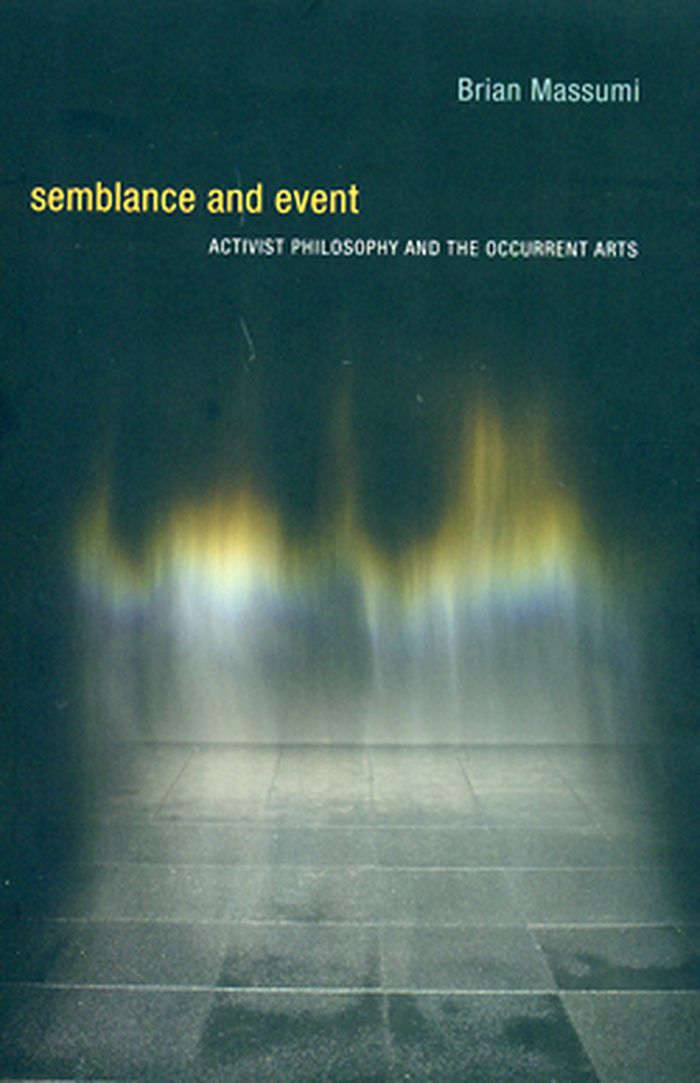
Semblance and event : activist philosophy and the occurrent arts
Actions:
Price:
$32.95
(available to order)
Summary:
Events are always passing; to experience an event is to experience the passing. But how do we perceive an experience that encompasses the just-was and the is-about-to-be as much as what is actually present? In Semblance and Event, Brian Massumi, drawing on the work of William James, Alfred North Whitehead, Gilles Deleuze, and others, develops the concept of "semblance" as a way to approach this question. It is, he argues, a question of abstraction, not as the opposite of the concrete but as a dimension of it: "lived abstraction." A semblance is a lived abstraction. Massumi uses the category of the semblance to investigate practices of art that are relational and event-oriented - variously known as interactive art, ephemeral art, performance art, art intervention - which he refers to collectively as the "occurrent arts."
Semblance and event : activist philosophy and the occurrent arts
Actions:
Price:
$32.95
(available to order)
Summary:
Events are always passing; to experience an event is to experience the passing. But how do we perceive an experience that encompasses the just-was and the is-about-to-be as much as what is actually present? In Semblance and Event, Brian Massumi, drawing on the work of William James, Alfred North Whitehead, Gilles Deleuze, and others, develops the concept of "semblance" as a way to approach this question. It is, he argues, a question of abstraction, not as the opposite of the concrete but as a dimension of it: "lived abstraction." A semblance is a lived abstraction. Massumi uses the category of the semblance to investigate practices of art that are relational and event-oriented - variously known as interactive art, ephemeral art, performance art, art intervention - which he refers to collectively as the "occurrent arts."
Form:
books
books
Publication:
July 2011
July 2011
Subject:
Critical Theory
Critical Theory
Form:
books
books
Price:
$18.00
(available to order)
Summary:
I Swear I Saw This records visionary anthropologist Michael Taussig’s reflections on the fieldwork notebooks he kept through forty years of travels in Colombia. Taking as a starting point a drawing he made in Medellin in 2006—as well as its caption, “I swear I saw this”—Taussig considers the fieldwork notebook as a type of modernist literature and the place where writers(...)
$18.00
(available to order)
Summary:
I Swear I Saw This records visionary anthropologist Michael Taussig’s reflections on the fieldwork notebooks he kept through forty years of travels in Colombia. Taking as a starting point a drawing he made in Medellin in 2006—as well as its caption, “I swear I saw this”—Taussig considers the fieldwork notebook as a type of modernist literature and the place where writers(...)
Title:
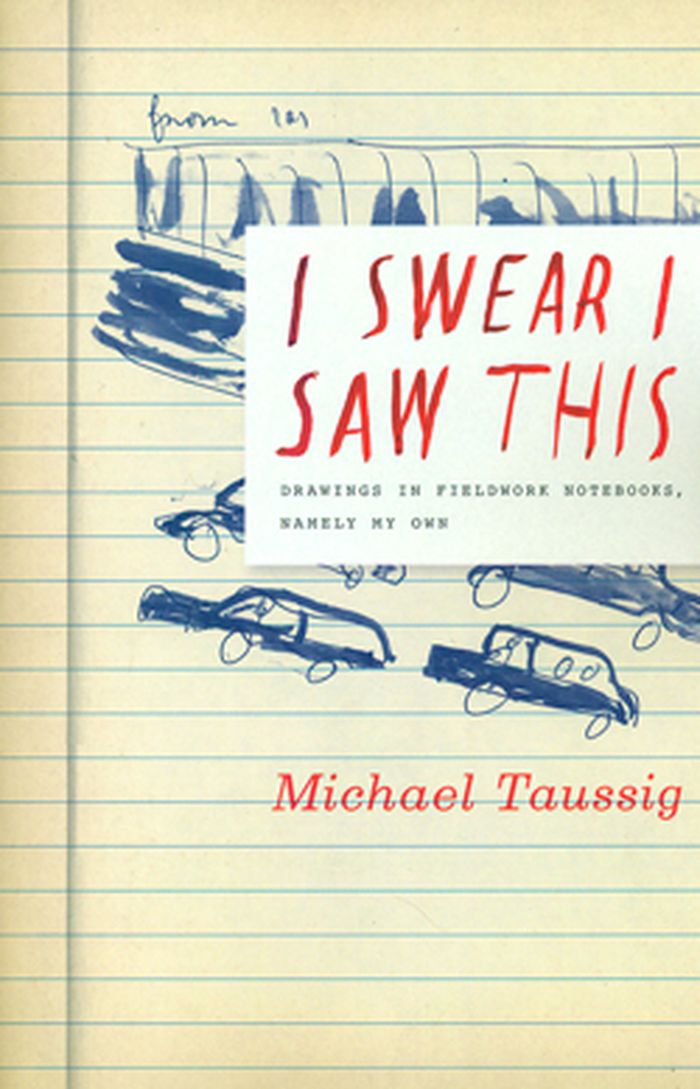
I swear I saw this: drawings in fieldwork notebooks, namely my own
Actions:
Price:
$18.00
(available to order)
Summary:
I Swear I Saw This records visionary anthropologist Michael Taussig’s reflections on the fieldwork notebooks he kept through forty years of travels in Colombia. Taking as a starting point a drawing he made in Medellin in 2006—as well as its caption, “I swear I saw this”—Taussig considers the fieldwork notebook as a type of modernist literature and the place where writers and other creators first work out the imaginative logic of discovery.
I swear I saw this: drawings in fieldwork notebooks, namely my own
Actions:
Price:
$18.00
(available to order)
Summary:
I Swear I Saw This records visionary anthropologist Michael Taussig’s reflections on the fieldwork notebooks he kept through forty years of travels in Colombia. Taking as a starting point a drawing he made in Medellin in 2006—as well as its caption, “I swear I saw this”—Taussig considers the fieldwork notebook as a type of modernist literature and the place where writers and other creators first work out the imaginative logic of discovery.
Form:
books
books
Publication:
December 2011
December 2011
Subject:
Art Theory
Art Theory
Form:
books
books
Actions:
Price:
$21.00
(available to order)
Summary:
For nearly twenty years now, Blair Kamin of the "Chicago Tribune" has explored how architecture captures our imagination and engages our deepest emotions. A winner of the Pulitzer Prize for criticism and writer of the widely read "Cityscapes" blog, Kamin treats his subjects not only as works of art but also as symbols of the cultural and political forces that inspire(...)
$21.00
(available to order)
Summary:
For nearly twenty years now, Blair Kamin of the "Chicago Tribune" has explored how architecture captures our imagination and engages our deepest emotions. A winner of the Pulitzer Prize for criticism and writer of the widely read "Cityscapes" blog, Kamin treats his subjects not only as works of art but also as symbols of the cultural and political forces that inspire(...)
Title:
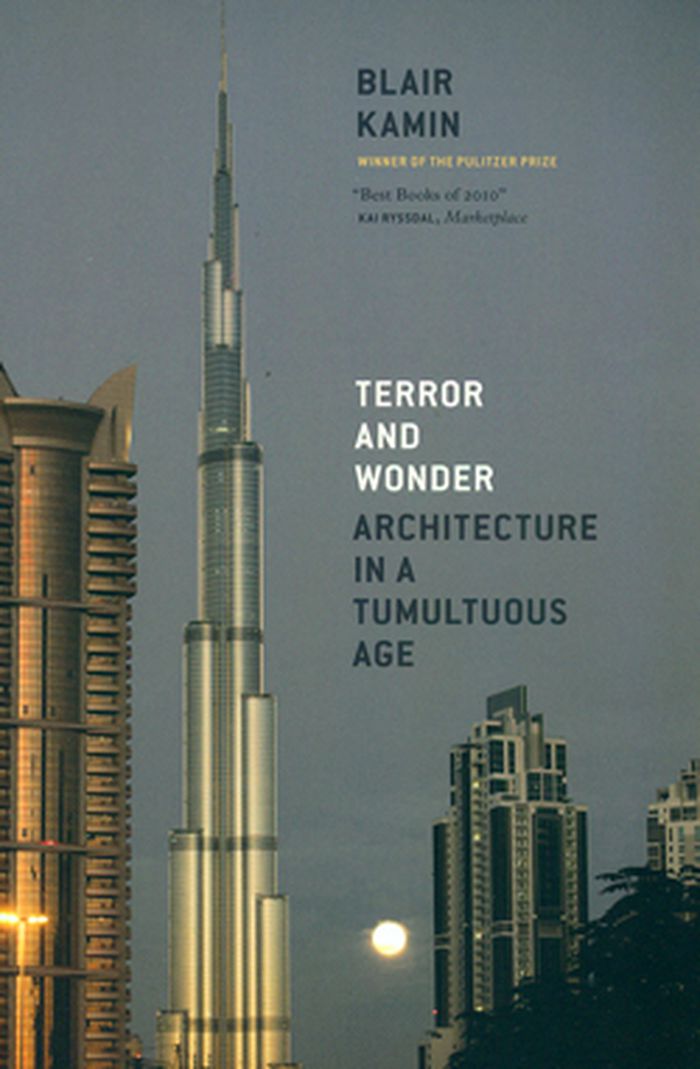
Terror and wonder : architecture in a tumultuous age
Actions:
Price:
$21.00
(available to order)
Summary:
For nearly twenty years now, Blair Kamin of the "Chicago Tribune" has explored how architecture captures our imagination and engages our deepest emotions. A winner of the Pulitzer Prize for criticism and writer of the widely read "Cityscapes" blog, Kamin treats his subjects not only as works of art but also as symbols of the cultural and political forces that inspire them. Terror and Wonder gathers the best of Kamin's writings from the past decade along with new reflections on an era framed by the destruction of the World Trade Center and the opening of the world's tallest skyscraper. Assessing ordinary commercial structures as well as head-turning designs by some of the world's leading architects, Kamin paints a sweeping but finely textured portrait of a tumultuous age torn between the conflicting mandates of architectural spectacle and sustainability. For Kamin, the story of our built environment over the past ten years is, in tangible ways, the story of the decade itself. Terror and Wonder considers how architecture has been central to the main events and crosscurrents in American life since 2001: the devastating and debilitating consequences of 9/11 and Hurricane Katrina; the real estate boom and bust; the use of over-the-top cultural designs as engines of civic renewal; new challenges in saving old buildings; the unlikely rise of energy-saving, green architecture; and growing concern over our nation's crumbling infrastructure.
Terror and wonder : architecture in a tumultuous age
Actions:
Price:
$21.00
(available to order)
Summary:
For nearly twenty years now, Blair Kamin of the "Chicago Tribune" has explored how architecture captures our imagination and engages our deepest emotions. A winner of the Pulitzer Prize for criticism and writer of the widely read "Cityscapes" blog, Kamin treats his subjects not only as works of art but also as symbols of the cultural and political forces that inspire them. Terror and Wonder gathers the best of Kamin's writings from the past decade along with new reflections on an era framed by the destruction of the World Trade Center and the opening of the world's tallest skyscraper. Assessing ordinary commercial structures as well as head-turning designs by some of the world's leading architects, Kamin paints a sweeping but finely textured portrait of a tumultuous age torn between the conflicting mandates of architectural spectacle and sustainability. For Kamin, the story of our built environment over the past ten years is, in tangible ways, the story of the decade itself. Terror and Wonder considers how architecture has been central to the main events and crosscurrents in American life since 2001: the devastating and debilitating consequences of 9/11 and Hurricane Katrina; the real estate boom and bust; the use of over-the-top cultural designs as engines of civic renewal; new challenges in saving old buildings; the unlikely rise of energy-saving, green architecture; and growing concern over our nation's crumbling infrastructure.
Form:
books
books
Publication:
September 2011
September 2011
Subject:
Architectural Theory
Architectural Theory
Form:
books
books
Actions:
Price:
$24.95
(available to order)
Summary:
As the world becomes more interconnected through travel and electronic communication, many believe that physical places will become less important. But as Mario Polèse argues in The Wealth and Poverty of Regions, geography will matter more than ever before in a world where distance is allegedly dead. This provocative book surveys the globe, from London and Cape(...)
$24.95
(available to order)
Summary:
As the world becomes more interconnected through travel and electronic communication, many believe that physical places will become less important. But as Mario Polèse argues in The Wealth and Poverty of Regions, geography will matter more than ever before in a world where distance is allegedly dead. This provocative book surveys the globe, from London and Cape(...)
Title:
The wealth & poverty of regions: why cities matter
Actions:
Price:
$24.95
(available to order)
Summary:
As the world becomes more interconnected through travel and electronic communication, many believe that physical places will become less important. But as Mario Polèse argues in The Wealth and Poverty of Regions, geography will matter more than ever before in a world where distance is allegedly dead. This provocative book surveys the globe, from London and Cape Town to New York and Beijing, contending that regions rise—or fall—due to their location, not only within nations but also on the world map. Polèse reveals how concentrations of industries and populations in specific locales often result in minor advantages that accumulate over time, resulting in reduced prices, improved transportation networks, increased diversity, and not least of all, “buzz”—the excitement and vitality that attracts ambitious people. The Wealth and Poverty of Regions maps out how a heady mix of size, infrastructure, proximity, and cost will determine which urban centers become the thriving metropolises of the future, and which become the deserted cities of the past. Engagingly written, the book provides insight to the past, present, and future of regions.
The wealth & poverty of regions: why cities matter
Actions:
Price:
$24.95
(available to order)
Summary:
As the world becomes more interconnected through travel and electronic communication, many believe that physical places will become less important. But as Mario Polèse argues in The Wealth and Poverty of Regions, geography will matter more than ever before in a world where distance is allegedly dead. This provocative book surveys the globe, from London and Cape Town to New York and Beijing, contending that regions rise—or fall—due to their location, not only within nations but also on the world map. Polèse reveals how concentrations of industries and populations in specific locales often result in minor advantages that accumulate over time, resulting in reduced prices, improved transportation networks, increased diversity, and not least of all, “buzz”—the excitement and vitality that attracts ambitious people. The Wealth and Poverty of Regions maps out how a heady mix of size, infrastructure, proximity, and cost will determine which urban centers become the thriving metropolises of the future, and which become the deserted cities of the past. Engagingly written, the book provides insight to the past, present, and future of regions.
Form:
books
books
Publication:
August 2011
August 2011
Subject:
Urban Theory
Urban Theory
Form:
books
books
Price:
$44.95
(available to order)
Summary:
This book attempts to chart the history of art and its interaction with written language. It examines the use of words (or language) in many genres of art – most often painting, but including prints, the book as art, sculpture, installation, and performance. This book asks what does it mean when a painting is 'invaded' by language? How do the two forms converse and(...)
$44.95
(available to order)
Summary:
This book attempts to chart the history of art and its interaction with written language. It examines the use of words (or language) in many genres of art – most often painting, but including prints, the book as art, sculpture, installation, and performance. This book asks what does it mean when a painting is 'invaded' by language? How do the two forms converse and(...)
Title:
Art, word and image : 2,000 years of visual/textual interaction
Actions:
Price:
$44.95
(available to order)
Summary:
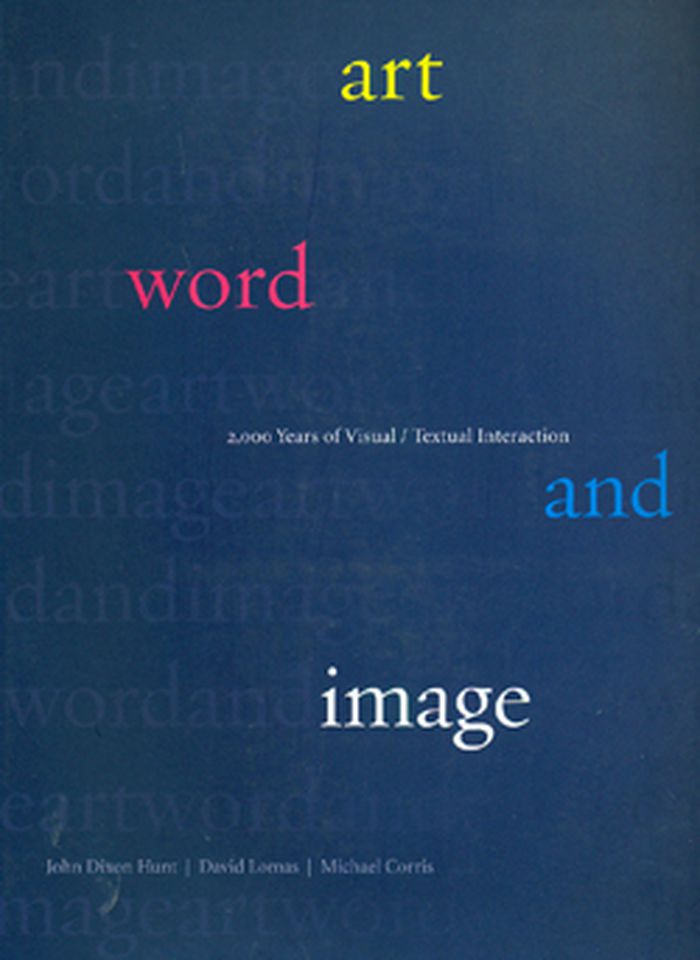
This book attempts to chart the history of art and its interaction with written language. It examines the use of words (or language) in many genres of art – most often painting, but including prints, the book as art, sculpture, installation, and performance. This book asks what does it mean when a painting is 'invaded' by language? How do the two forms converse and combine, and what messages are intended for the viewer? In addition, other important themes that are also addressed include the naming or titling of paintings, the uses of narrative in art, and the literary connections and aspirations of artists. The book is constructed around three wide-ranging essays by John Dixon Hunt, David Lomas and Michael Corris. These essays discuss the use and significance of words in art – from Classical Greece and Assyria, through to the Middle Ages and the Renaissance, to modern times and today’s digital media, where the words and image question has become a central issue. The essays cover a variety of movements (Pre-Raphaelites, Cubists, Surrealists, and Lettrists, for example) and many artists, among them Duchamp, Picasso, Ernst, Twombly, Michaux, Warhol and Kruger. The book also includes ‘spotlight’ essays on artists whose work engages substantially with questions of word and image: Blake, Klee, Schwitters, Haack, Pettibon, McCahon and Walla. With contributions by Jeremy Adler, Stephen Barber, Rex Butler and Laurence Simmons, Michael Corris, John Dixon Hunt, Michael R. Leaman, David Lomas, Joseph Viscomi, Hamza Walker, Barbara Weyandt and Michael White.
Art, word and image : 2,000 years of visual/textual interaction
Actions:
Price:
$44.95
(available to order)
Summary:
This book attempts to chart the history of art and its interaction with written language. It examines the use of words (or language) in many genres of art – most often painting, but including prints, the book as art, sculpture, installation, and performance. This book asks what does it mean when a painting is 'invaded' by language? How do the two forms converse and combine, and what messages are intended for the viewer? In addition, other important themes that are also addressed include the naming or titling of paintings, the uses of narrative in art, and the literary connections and aspirations of artists. The book is constructed around three wide-ranging essays by John Dixon Hunt, David Lomas and Michael Corris. These essays discuss the use and significance of words in art – from Classical Greece and Assyria, through to the Middle Ages and the Renaissance, to modern times and today’s digital media, where the words and image question has become a central issue. The essays cover a variety of movements (Pre-Raphaelites, Cubists, Surrealists, and Lettrists, for example) and many artists, among them Duchamp, Picasso, Ernst, Twombly, Michaux, Warhol and Kruger. The book also includes ‘spotlight’ essays on artists whose work engages substantially with questions of word and image: Blake, Klee, Schwitters, Haack, Pettibon, McCahon and Walla. With contributions by Jeremy Adler, Stephen Barber, Rex Butler and Laurence Simmons, Michael Corris, John Dixon Hunt, Michael R. Leaman, David Lomas, Joseph Viscomi, Hamza Walker, Barbara Weyandt and Michael White.
Form:
books
books
Publication:
September 2011
September 2011
Subject:
Art Theory
Art Theory
Form:
books
books
Actions:
Price:
$26.95
(available to order)
Summary:
The Salton Sea is a man-made catastrophe, redolent with the smell of algae and decomposing fish. Nevertheless, the lake's vast, placid expanses continue to attract birdwatchers, tourists and artists. In Greetings from the Salton Sea, photographer Kim Stringfellow explores the history of California's largest lake from its disastrous beginnings—the "sea" was formed when(...)
$26.95
(available to order)
Summary:
The Salton Sea is a man-made catastrophe, redolent with the smell of algae and decomposing fish. Nevertheless, the lake's vast, placid expanses continue to attract birdwatchers, tourists and artists. In Greetings from the Salton Sea, photographer Kim Stringfellow explores the history of California's largest lake from its disastrous beginnings—the "sea" was formed when(...)
Title:
Greetings from the Salton Sea: folly and intervention in the southern California landscape, 1905-2005
Actions:
Price:
$26.95
(available to order)
Summary:
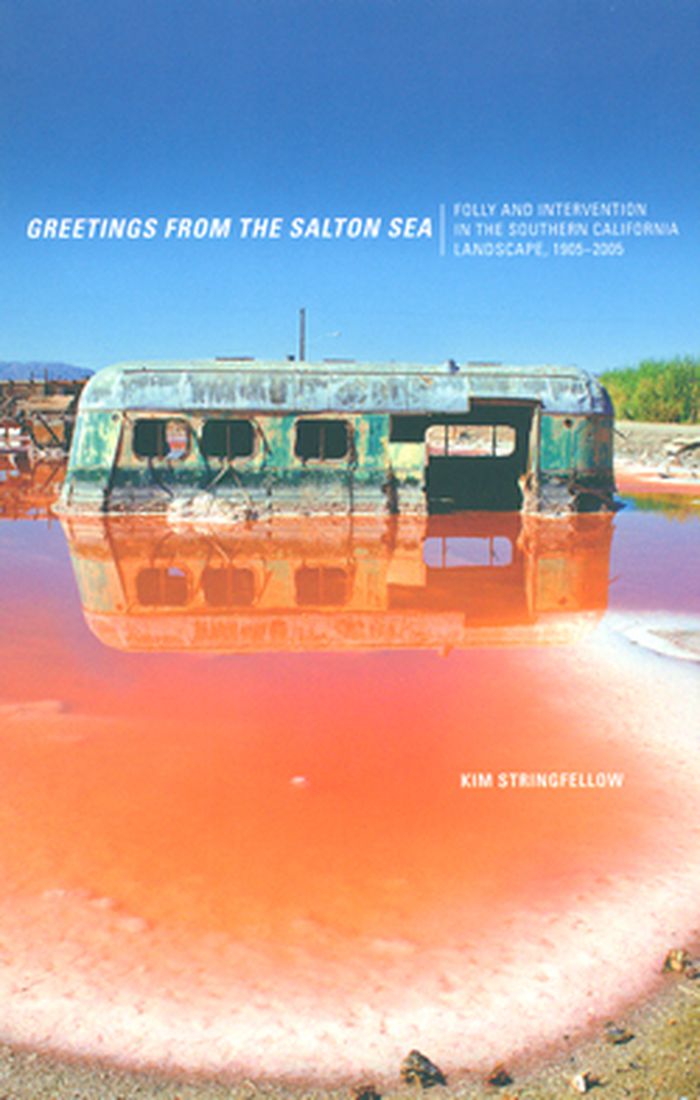
The Salton Sea is a man-made catastrophe, redolent with the smell of algae and decomposing fish. Nevertheless, the lake's vast, placid expanses continue to attract birdwatchers, tourists and artists. In Greetings from the Salton Sea, photographer Kim Stringfellow explores the history of California's largest lake from its disastrous beginnings—the "sea" was formed when Colorado River levees broke and spilled into a depression 280 feet below sea level—to its heyday as a desert paradise in the 1950s and its current state as an environmental battleground. Like the 400-plus species of birds that use the lake as a halfway point in their annual migration, developers flocked to the water too: they planted palm trees, built golf courses, and hired showstoppers such as the Beach Boys to perform at area resorts. These days, politicians seek to redirect the lake's only source of replenishment—agricultural runoff from surrounding farms—to water golf courses and green lawns elsewhere. Greetings from the Salton Sea's photographs capture the war among policymakers, environmentalists, developers, and the individuals still living along the lake's shores. As Stringfellow aptly documents, it is a war for water and, ultimately, for existence.
Greetings from the Salton Sea: folly and intervention in the southern California landscape, 1905-2005
Actions:
Price:
$26.95
(available to order)
Summary:
The Salton Sea is a man-made catastrophe, redolent with the smell of algae and decomposing fish. Nevertheless, the lake's vast, placid expanses continue to attract birdwatchers, tourists and artists. In Greetings from the Salton Sea, photographer Kim Stringfellow explores the history of California's largest lake from its disastrous beginnings—the "sea" was formed when Colorado River levees broke and spilled into a depression 280 feet below sea level—to its heyday as a desert paradise in the 1950s and its current state as an environmental battleground. Like the 400-plus species of birds that use the lake as a halfway point in their annual migration, developers flocked to the water too: they planted palm trees, built golf courses, and hired showstoppers such as the Beach Boys to perform at area resorts. These days, politicians seek to redirect the lake's only source of replenishment—agricultural runoff from surrounding farms—to water golf courses and green lawns elsewhere. Greetings from the Salton Sea's photographs capture the war among policymakers, environmentalists, developers, and the individuals still living along the lake's shores. As Stringfellow aptly documents, it is a war for water and, ultimately, for existence.
Form:
books
books
Publication:
October 2011
October 2011
Subject:
Urban Theory
Urban Theory
Form:
books
books
Title:
Tokyo vertigo: extreme-city
Tokyo vertigo: extreme-city
Actions:
Price:
$27.00
(available to order)
Summary:
From the narrow alleyways of the Golden Gai to the flashing ads and jumbotrons of the Shibuya street crossings to the skyscrapers of Shinjuku and the cartoon billboards of the Akiba, Tokyo is an intensely visual and mesmerizing city. In Tokyo Vertigo, Stephen Barber focuses upon filmic, photographic, and media cultures as well as its urban history of destruction and(...)
$27.00
(available to order)
Summary:
From the narrow alleyways of the Golden Gai to the flashing ads and jumbotrons of the Shibuya street crossings to the skyscrapers of Shinjuku and the cartoon billboards of the Akiba, Tokyo is an intensely visual and mesmerizing city. In Tokyo Vertigo, Stephen Barber focuses upon filmic, photographic, and media cultures as well as its urban history of destruction and(...)
Title:
Tokyo vertigo: extreme-city
Actions:
Price:
$27.00
(available to order)
Summary:
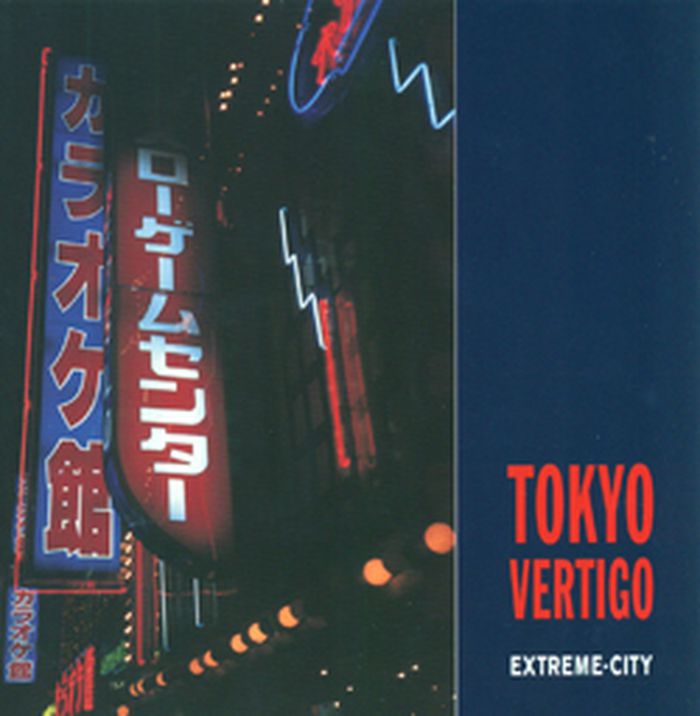
From the narrow alleyways of the Golden Gai to the flashing ads and jumbotrons of the Shibuya street crossings to the skyscrapers of Shinjuku and the cartoon billboards of the Akiba, Tokyo is an intensely visual and mesmerizing city. In Tokyo Vertigo, Stephen Barber focuses upon filmic, photographic, and media cultures as well as its urban history of destruction and reconfiguration. Dividing his analysis into three parts, Barber first interrogates the disparate urban zones of Tokyo, from the districts of Shinjuku and Shibuya to the desolate peripheries where the megalopolis falls apart. He then examines Tokyo's sexual and media cultures, through which the city's compulsive fascinations and obsessions exert their power. Finally, he looks at the ways in which European culture collides with Tokyo's urban formations, often generating unprecedented hybrid images and texts. An anti-guidebook that intimately reveals the visual culture of this city in constant flux, Tokyo Vertigo includes original photographs by Romain Slocombe and a range of photographic art-works from the 1950s to the 2010s that exemplify the intensity and spectacle of the city.
Tokyo vertigo: extreme-city
Actions:
Price:
$27.00
(available to order)
Summary:
From the narrow alleyways of the Golden Gai to the flashing ads and jumbotrons of the Shibuya street crossings to the skyscrapers of Shinjuku and the cartoon billboards of the Akiba, Tokyo is an intensely visual and mesmerizing city. In Tokyo Vertigo, Stephen Barber focuses upon filmic, photographic, and media cultures as well as its urban history of destruction and reconfiguration. Dividing his analysis into three parts, Barber first interrogates the disparate urban zones of Tokyo, from the districts of Shinjuku and Shibuya to the desolate peripheries where the megalopolis falls apart. He then examines Tokyo's sexual and media cultures, through which the city's compulsive fascinations and obsessions exert their power. Finally, he looks at the ways in which European culture collides with Tokyo's urban formations, often generating unprecedented hybrid images and texts. An anti-guidebook that intimately reveals the visual culture of this city in constant flux, Tokyo Vertigo includes original photographs by Romain Slocombe and a range of photographic art-works from the 1950s to the 2010s that exemplify the intensity and spectacle of the city.
Form:
books
books
Publication:
September 2011
September 2011
Subject:
Urban Theory
Urban Theory
Form:
books
books
Actions:
Price:
$56.95
(available to order)
Summary:
Spatialities: the geographies of art and architecture draws on a distinguished panel of artists, cultural theorists, architects, and geographers to offer a nuanced conceptual framework for understanding the ever-evolving spatial orderings that materially constitute our world. With chapters covering a wide range of topics, including the interstitial, the liminal and the(...)
$56.95
(available to order)
Summary:
Spatialities: the geographies of art and architecture draws on a distinguished panel of artists, cultural theorists, architects, and geographers to offer a nuanced conceptual framework for understanding the ever-evolving spatial orderings that materially constitute our world. With chapters covering a wide range of topics, including the interstitial, the liminal and the(...)
Title:
Spatialities: the geographies of art and architecture
Actions:
Price:
$56.95
(available to order)
Summary:
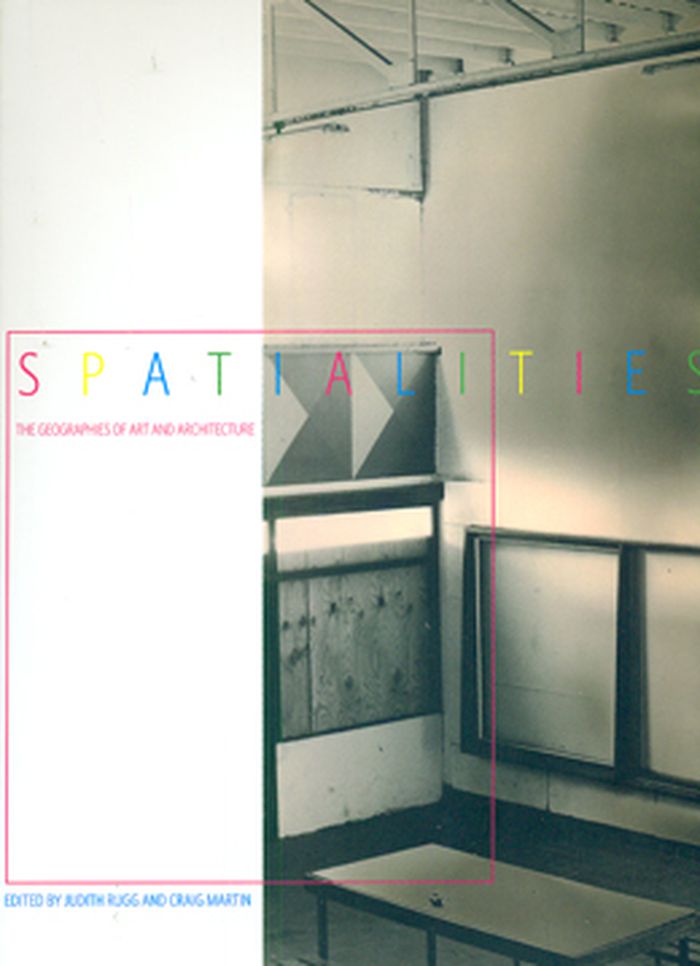
Spatialities: the geographies of art and architecture draws on a distinguished panel of artists, cultural theorists, architects, and geographers to offer a nuanced conceptual framework for understanding the ever-evolving spatial orderings that materially constitute our world. With chapters covering a wide range of topics, including the interstitial, the liminal and the relational processes of networks, accumulations, and assemblage as possibilities for spatial reflection, this volume shows space to be less a defining category and more an abstract terrain whose boundaries may be continually probed and contested.
Spatialities: the geographies of art and architecture
Actions:
Price:
$56.95
(available to order)
Summary:
Spatialities: the geographies of art and architecture draws on a distinguished panel of artists, cultural theorists, architects, and geographers to offer a nuanced conceptual framework for understanding the ever-evolving spatial orderings that materially constitute our world. With chapters covering a wide range of topics, including the interstitial, the liminal and the relational processes of networks, accumulations, and assemblage as possibilities for spatial reflection, this volume shows space to be less a defining category and more an abstract terrain whose boundaries may be continually probed and contested.
Form:
books
books
Publication:
November 2011
November 2011
Subject:
Architectural Theory
Architectural Theory
Form:
books
books
Title:
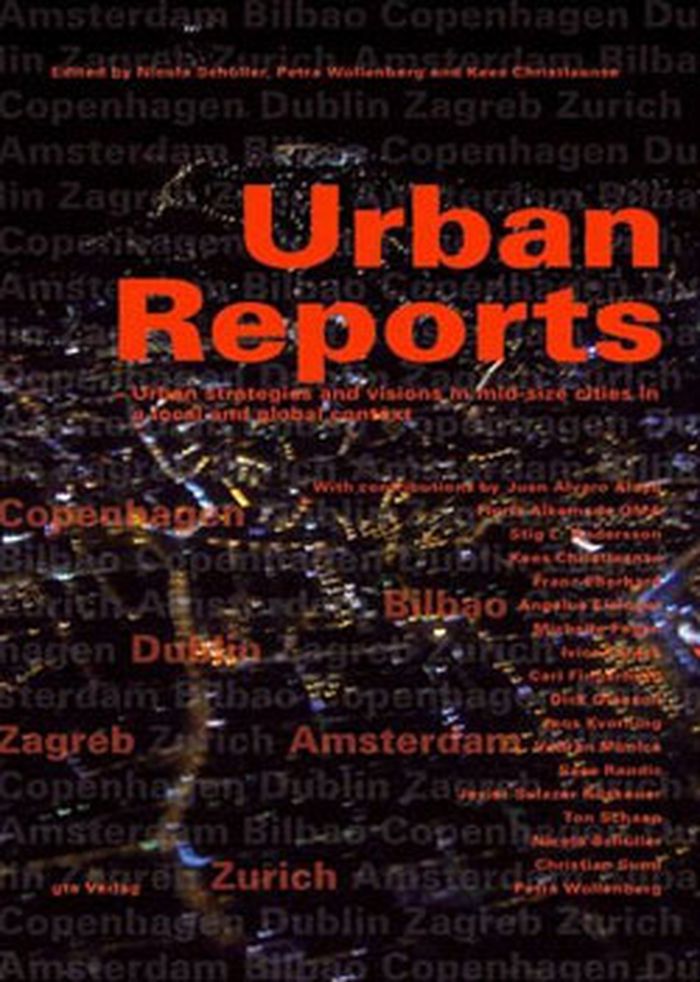
Urban reports: urban strategies and visions in mid-sized cities in a local and global context
Urban reports: urban strategies and visions in mid-sized cities in a local and global context
Actions:
Price:
$65.00
(available to order)
Summary:
This publication centres on how mid-size cities are being affected by global trends and explores the consequences and challenges they face in their development. How do these cities deal with the frictions and potentials arising from local interests and global powers? Representatives from six European cities - Amsterdam, Bilbao, Copenhagen, Dublin, Zagreb and Zurich -(...)
$65.00
(available to order)
Summary:
This publication centres on how mid-size cities are being affected by global trends and explores the consequences and challenges they face in their development. How do these cities deal with the frictions and potentials arising from local interests and global powers? Representatives from six European cities - Amsterdam, Bilbao, Copenhagen, Dublin, Zagreb and Zurich -(...)
Subject:
Urban Theory
Urban Theory
Publication:
July 2011
July 2011
Title:
Urban reports: urban strategies and visions in mid-sized cities in a local and global context
Actions:
Price:
$65.00
(available to order)
Summary:
This publication centres on how mid-size cities are being affected by global trends and explores the consequences and challenges they face in their development. How do these cities deal with the frictions and potentials arising from local interests and global powers? Representatives from six European cities - Amsterdam, Bilbao, Copenhagen, Dublin, Zagreb and Zurich - report on their fascinating visions for transforming their cities in the 21st century.
Urban reports: urban strategies and visions in mid-sized cities in a local and global context
Actions:
Price:
$65.00
(available to order)
Summary:
This publication centres on how mid-size cities are being affected by global trends and explores the consequences and challenges they face in their development. How do these cities deal with the frictions and potentials arising from local interests and global powers? Representatives from six European cities - Amsterdam, Bilbao, Copenhagen, Dublin, Zagreb and Zurich - report on their fascinating visions for transforming their cities in the 21st century.
Form:
books
books
Publication:
July 2011
July 2011
Subject:
Urban Theory
Urban Theory
Form:
books
books
Actions:
Price:
$100.00
(available to order)
Summary:
Laying out Manhattan's street grid and providing a rationale for the growth of New York was the city's first great civic enterprise, not to mention a brazenly ambitious project and major milestone in the history of city planning. The grid created the physical conditions for business and society to flourish and embodied the drive and discipline for which the city would(...)
$100.00
(available to order)
Summary:
Laying out Manhattan's street grid and providing a rationale for the growth of New York was the city's first great civic enterprise, not to mention a brazenly ambitious project and major milestone in the history of city planning. The grid created the physical conditions for business and society to flourish and embodied the drive and discipline for which the city would(...)
Title:
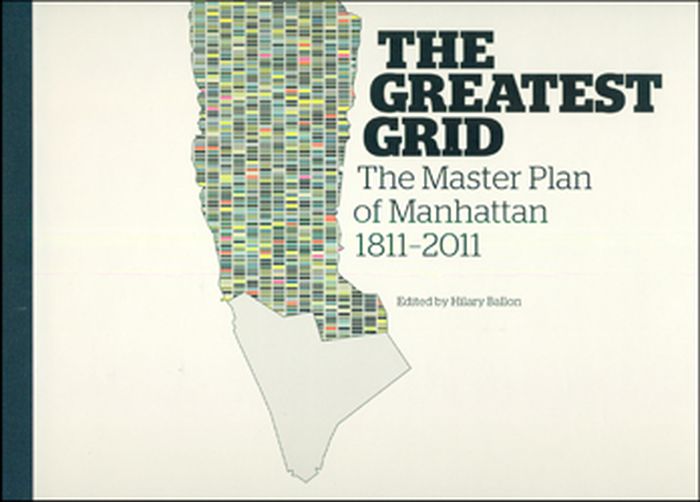
The greatest grid : the Master plan of Manhattan 1811-2011
Actions:
Price:
$100.00
(available to order)
Summary:
Laying out Manhattan's street grid and providing a rationale for the growth of New York was the city's first great civic enterprise, not to mention a brazenly ambitious project and major milestone in the history of city planning. The grid created the physical conditions for business and society to flourish and embodied the drive and discipline for which the city would come to be known. Published to coincide with an exhibition at the Museum of the City of New York celebrating the bicentennial of the Commissioners' 1811 Plan of Manhattan, this volume does more than memorialize such a visionary effort, it serves as an enduring reference full of rare images and information. "The Greatest Grid" shares the history of the Commissioners' plan, incorporating archival photos and illustrations, primary documents and testimony, and magnificent maps with essential analysis. The text, written by leading historians of New York City, follows the grid's initial design, implementation, and evolution, and then speaks to its enduring influence. A foldout map, accompanied by explanatory notes, reproduces the Commissioners' original plan, and additional maps and prints chart the city's pre-1811 irregular growth patterns and local precedent for the grid's design.
The greatest grid : the Master plan of Manhattan 1811-2011
Actions:
Price:
$100.00
(available to order)
Summary:
Laying out Manhattan's street grid and providing a rationale for the growth of New York was the city's first great civic enterprise, not to mention a brazenly ambitious project and major milestone in the history of city planning. The grid created the physical conditions for business and society to flourish and embodied the drive and discipline for which the city would come to be known. Published to coincide with an exhibition at the Museum of the City of New York celebrating the bicentennial of the Commissioners' 1811 Plan of Manhattan, this volume does more than memorialize such a visionary effort, it serves as an enduring reference full of rare images and information. "The Greatest Grid" shares the history of the Commissioners' plan, incorporating archival photos and illustrations, primary documents and testimony, and magnificent maps with essential analysis. The text, written by leading historians of New York City, follows the grid's initial design, implementation, and evolution, and then speaks to its enduring influence. A foldout map, accompanied by explanatory notes, reproduces the Commissioners' original plan, and additional maps and prints chart the city's pre-1811 irregular growth patterns and local precedent for the grid's design.
Form:
books
books
Publication:
December 2011
December 2011
Subject:
Urban Theory
Urban Theory


