


10592 Results
Form:
books
books
Actions:
Price:
$45.00
(available to order)
Summary:
To commemorate the life and work of Dennis Sharp (1933–2010), Sharp Words collates together a variety of essays that touch upon each of his architectural fascinations – among them, glass architecture, picture palaces, masters of concrete and English modernism. Punctuating these texts are a number of editorials from his days as editor of AAQ, which graphically as(...)
$45.00
(available to order)
Summary:
To commemorate the life and work of Dennis Sharp (1933–2010), Sharp Words collates together a variety of essays that touch upon each of his architectural fascinations – among them, glass architecture, picture palaces, masters of concrete and English modernism. Punctuating these texts are a number of editorials from his days as editor of AAQ, which graphically as(...)
Title:
Sharp words: selected essays of Dennis Sharp
Actions:
Price:
$45.00
(available to order)
Summary:
To commemorate the life and work of Dennis Sharp (1933–2010), Sharp Words collates together a variety of essays that touch upon each of his architectural fascinations – among them, glass architecture, picture palaces, masters of concrete and English modernism. Punctuating these texts are a number of editorials from his days as editor of AAQ, which graphically as much as intellectually offer emblems of his time at the AA.
Sharp words: selected essays of Dennis Sharp
Actions:
Price:
$45.00
(available to order)
Summary:
To commemorate the life and work of Dennis Sharp (1933–2010), Sharp Words collates together a variety of essays that touch upon each of his architectural fascinations – among them, glass architecture, picture palaces, masters of concrete and English modernism. Punctuating these texts are a number of editorials from his days as editor of AAQ, which graphically as much as intellectually offer emblems of his time at the AA.
Form:
books
books
Publication:
May 2011
May 2011
Subject:
Architectural Theory
Architectural Theory
Form:
books
books
Price:
$55.00
(available in store)
Summary:
In No More Play: Conversations on Urban Speculation in Los Angeles and Beyond , American architect Michael Maltzan traces the transformations that have taken place in the city of Los Angeles since the early 1990s. Through a series of conversations with the city's leading artists and intellectuals, Maltzan explores such issues as real-estate speculation and future urban(...)
$55.00
(available in store)
Summary:
In No More Play: Conversations on Urban Speculation in Los Angeles and Beyond , American architect Michael Maltzan traces the transformations that have taken place in the city of Los Angeles since the early 1990s. Through a series of conversations with the city's leading artists and intellectuals, Maltzan explores such issues as real-estate speculation and future urban(...)
Title:
No more play: conversations on urban speculation in Los Angeles and beyond
Actions:
Price:
$55.00
(available in store)
Summary:
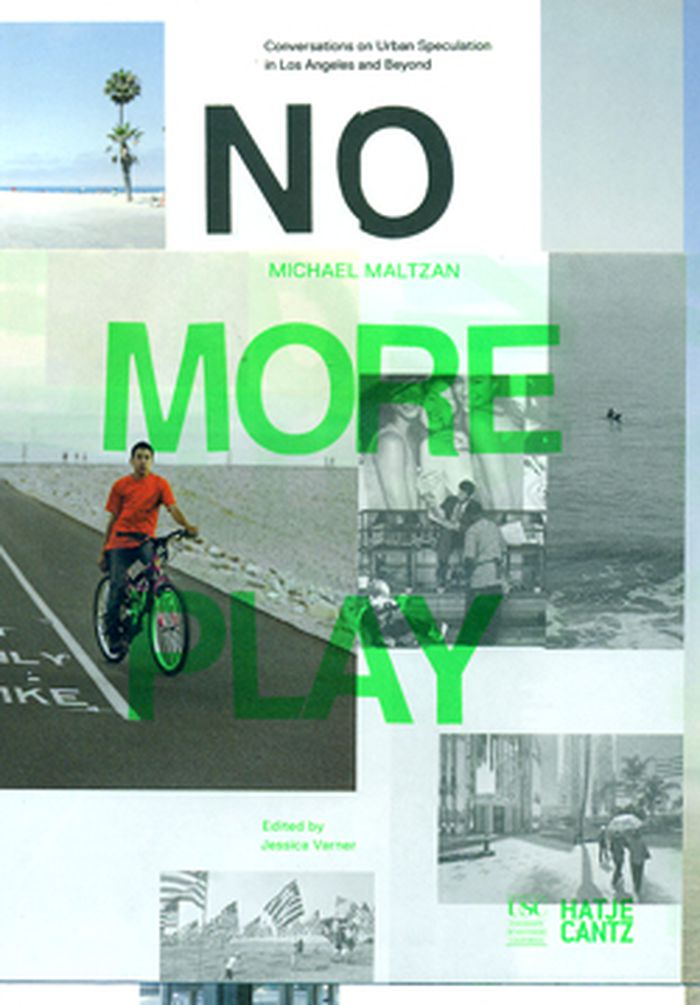
In No More Play: Conversations on Urban Speculation in Los Angeles and Beyond , American architect Michael Maltzan traces the transformations that have taken place in the city of Los Angeles since the early 1990s. Through a series of conversations with the city's leading artists and intellectuals, Maltzan explores such issues as real-estate speculation and future urban development, infrastructure, resources, site density, urban experience, political structure, commerce and community, attempting to transform our understanding of how each affects present-day Los Angeles. Intended to facilitate further dialogue on how to define the “City of Angels” at a moment when its identity is in significant flux, the book includes contributions by Iwan Baan, Catherine Opie, Sarah Whiting, Charles Waldheim, Matthew Coolidge, Geoff Manaugh, Mirko Zardini, Edward Soja, James Flanigan, Charles Jencks and Qingyun Ma.
No more play: conversations on urban speculation in Los Angeles and beyond
Actions:
Price:
$55.00
(available in store)
Summary:
In No More Play: Conversations on Urban Speculation in Los Angeles and Beyond , American architect Michael Maltzan traces the transformations that have taken place in the city of Los Angeles since the early 1990s. Through a series of conversations with the city's leading artists and intellectuals, Maltzan explores such issues as real-estate speculation and future urban development, infrastructure, resources, site density, urban experience, political structure, commerce and community, attempting to transform our understanding of how each affects present-day Los Angeles. Intended to facilitate further dialogue on how to define the “City of Angels” at a moment when its identity is in significant flux, the book includes contributions by Iwan Baan, Catherine Opie, Sarah Whiting, Charles Waldheim, Matthew Coolidge, Geoff Manaugh, Mirko Zardini, Edward Soja, James Flanigan, Charles Jencks and Qingyun Ma.
Form:
books
books
Publication:
July 2011
July 2011
Subject:
Urban Theory
Urban Theory
Form:
books
books
Price:
$32.95
(available to order)
Summary:
Ce livre permet de cerner tous les ingrédients de la production urbaine à travers l'exemple de la première ville moderne d'Europe : Ferrare, restructurée par Biagio Rossetti au XVIe siècle. " Voir la ville " implique d'observer l'ensemble du processus de planification au coeur des structures urbaines comme une oeuvre d'art, avec l'émergence d'éléments architectoniques(...)
$32.95
(available to order)
Summary:
Ce livre permet de cerner tous les ingrédients de la production urbaine à travers l'exemple de la première ville moderne d'Europe : Ferrare, restructurée par Biagio Rossetti au XVIe siècle. " Voir la ville " implique d'observer l'ensemble du processus de planification au coeur des structures urbaines comme une oeuvre d'art, avec l'émergence d'éléments architectoniques(...)
Title:
Apprendre à voir la ville: Ferrare, la première ville moderne d'Europe
Actions:
Price:
$32.95
(available to order)
Summary:
Ce livre permet de cerner tous les ingrédients de la production urbaine à travers l'exemple de la première ville moderne d'Europe : Ferrare, restructurée par Biagio Rossetti au XVIe siècle. " Voir la ville " implique d'observer l'ensemble du processus de planification au coeur des structures urbaines comme une oeuvre d'art, avec l'émergence d'éléments architectoniques telles que la place et la rue, dans une sorte de poétique de l'angle et de l'inachevé.
Apprendre à voir la ville: Ferrare, la première ville moderne d'Europe
Actions:
Price:
$32.95
(available to order)
Summary:
Ce livre permet de cerner tous les ingrédients de la production urbaine à travers l'exemple de la première ville moderne d'Europe : Ferrare, restructurée par Biagio Rossetti au XVIe siècle. " Voir la ville " implique d'observer l'ensemble du processus de planification au coeur des structures urbaines comme une oeuvre d'art, avec l'émergence d'éléments architectoniques telles que la place et la rue, dans une sorte de poétique de l'angle et de l'inachevé.
Form:
books
books
Publication:
March 2011
March 2011
Subject:
Urban Theory
Urban Theory
Form:
books
books
Title:
Architectures subjectives
Architectures subjectives
Actions:
Price:
$44.95
(available in store)
Summary:
Quelle place réserver aujourd'hui à la subjectivité dans la création architecturale? C'est la question que pose dans cet ouvrage Jean-Philippe Pargade qui revendique avec force le droit, pour l'architecte, d'exprimer sa singularité. A ses yeux, la pensée d'une architecture d'auteur s'imprègne d'abord de subjectivité, pour intégrer rationalité, rigueur et observations des(...)
$44.95
(available in store)
Summary:
Quelle place réserver aujourd'hui à la subjectivité dans la création architecturale? C'est la question que pose dans cet ouvrage Jean-Philippe Pargade qui revendique avec force le droit, pour l'architecte, d'exprimer sa singularité. A ses yeux, la pensée d'une architecture d'auteur s'imprègne d'abord de subjectivité, pour intégrer rationalité, rigueur et observations des(...)
Title:
Architectures subjectives
Actions:
Price:
$44.95
(available in store)
Summary:
Quelle place réserver aujourd'hui à la subjectivité dans la création architecturale? C'est la question que pose dans cet ouvrage Jean-Philippe Pargade qui revendique avec force le droit, pour l'architecte, d'exprimer sa singularité. A ses yeux, la pensée d'une architecture d'auteur s'imprègne d'abord de subjectivité, pour intégrer rationalité, rigueur et observations des usages. Elle échappe ainsi à la normalisation dévorante du monde contemporain. A travers son expérience d'architecte, en laissant percer ses influences venues de la musique improvisée et de l'art, l'auteur milite ici pour reconquérir une nouvelle dimension personnelle du projet, nourrie de la confrontation des idées au sein d'une équipe attentive et de la vision du maître d'ouvrage.
Architectures subjectives
Actions:
Price:
$44.95
(available in store)
Summary:
Quelle place réserver aujourd'hui à la subjectivité dans la création architecturale? C'est la question que pose dans cet ouvrage Jean-Philippe Pargade qui revendique avec force le droit, pour l'architecte, d'exprimer sa singularité. A ses yeux, la pensée d'une architecture d'auteur s'imprègne d'abord de subjectivité, pour intégrer rationalité, rigueur et observations des usages. Elle échappe ainsi à la normalisation dévorante du monde contemporain. A travers son expérience d'architecte, en laissant percer ses influences venues de la musique improvisée et de l'art, l'auteur milite ici pour reconquérir une nouvelle dimension personnelle du projet, nourrie de la confrontation des idées au sein d'une équipe attentive et de la vision du maître d'ouvrage.
Form:
books
books
Publication:
April 2010
April 2010
Subject:
Architectural Theory
Architectural Theory
Form:
books
books

Title:
Une brève histoire du jardin
Une brève histoire du jardin
Actions:
Price:
$25.95
(available to order)
Summary:
Le premier jardin est celui de l'homme ayant choisi de faire cesser l'errance. Il n'y a pas d'époque pour cette étape dans la vie d'un homme ou d'une société. Le premier jardin est vivrier. Le jardin potager est le premier jardin. Il est intemporel car il fonde l'histoire des jardins mais la traverse et la marque profondément dans toutes ses périodes. Le premier jardin(...)
$25.95
(available to order)
Summary:
Le premier jardin est celui de l'homme ayant choisi de faire cesser l'errance. Il n'y a pas d'époque pour cette étape dans la vie d'un homme ou d'une société. Le premier jardin est vivrier. Le jardin potager est le premier jardin. Il est intemporel car il fonde l'histoire des jardins mais la traverse et la marque profondément dans toutes ses périodes. Le premier jardin(...)
Title:
Une brève histoire du jardin
Actions:
Price:
$25.95
(available to order)
Summary:
Le premier jardin est celui de l'homme ayant choisi de faire cesser l'errance. Il n'y a pas d'époque pour cette étape dans la vie d'un homme ou d'une société. Le premier jardin est vivrier. Le jardin potager est le premier jardin. Il est intemporel car il fonde l'histoire des jardins mais la traverse et la marque profondément dans toutes ses périodes. Le premier jardin est un enclos. Il convient de protéger le bien précieux du jardin ; les légumes, les fruits, puis les fleurs, les animaux, l'art de vivre, ce qui, au fil du temps, ne cessera d'apparaître comme le " meilleur ". C'est la façon d'interpréter le meilleur qui, en fonction des modèles de civilisation, va déterminer le style des jardins. La notion de meilleur, de bien précieux, ne cesse d'évoluer. La scénographie destinée à valoriser le meilleur s'adapte au changement des fondamentaux du jardin mais le principe du jardin demeure constant : s'approcher le plus possible du paradis.
Une brève histoire du jardin
Actions:
Price:
$25.95
(available to order)
Summary:
Le premier jardin est celui de l'homme ayant choisi de faire cesser l'errance. Il n'y a pas d'époque pour cette étape dans la vie d'un homme ou d'une société. Le premier jardin est vivrier. Le jardin potager est le premier jardin. Il est intemporel car il fonde l'histoire des jardins mais la traverse et la marque profondément dans toutes ses périodes. Le premier jardin est un enclos. Il convient de protéger le bien précieux du jardin ; les légumes, les fruits, puis les fleurs, les animaux, l'art de vivre, ce qui, au fil du temps, ne cessera d'apparaître comme le " meilleur ". C'est la façon d'interpréter le meilleur qui, en fonction des modèles de civilisation, va déterminer le style des jardins. La notion de meilleur, de bien précieux, ne cesse d'évoluer. La scénographie destinée à valoriser le meilleur s'adapte au changement des fondamentaux du jardin mais le principe du jardin demeure constant : s'approcher le plus possible du paradis.
Form:
books
books
Publication:
April 2011
April 2011
Subject:
Landscape Theory
Landscape Theory
Form:
books
books
Actions:
Price:
$40.95
(available to order)
Summary:
While we all live our lives in designed landscapes of various types, only on occasion do we consider what these landscapes mean to us and how they have acquired that significance. Can a landscape architect or garden designer really imbue new settings with meaning, or does meaning evolve over time, created by those who perceive and use these landscapes? What role does the(...)
$40.95
(available to order)
Summary:
While we all live our lives in designed landscapes of various types, only on occasion do we consider what these landscapes mean to us and how they have acquired that significance. Can a landscape architect or garden designer really imbue new settings with meaning, or does meaning evolve over time, created by those who perceive and use these landscapes? What role does the(...)
Title:
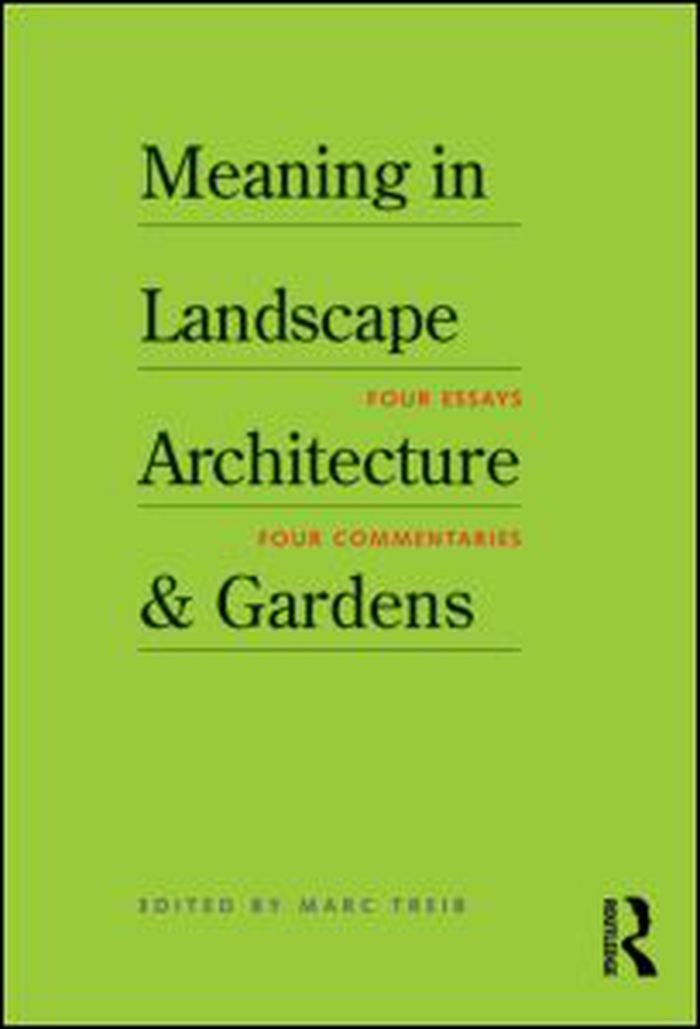
Meaning in landscape architecture and gardens: Four essays, Four commentaries
Actions:
Price:
$40.95
(available to order)
Summary:
While we all live our lives in designed landscapes of various types, only on occasion do we consider what these landscapes mean to us and how they have acquired that significance. Can a landscape architect or garden designer really imbue new settings with meaning, or does meaning evolve over time, created by those who perceive and use these landscapes? What role does the selection and arrangement of plants and hard materials play in this process and just where does the passage of time enter into the equation? These questions collectively provide the core material for Meaning in Landscape Architecture and Gardens, a compendium of four landmark essays written over a period of twenty years by leading scholars in the field of landscape architecture. New commentaries by the authors accompany each of the essays and reflect on the thinking behind them as well as the evolution of the author’s thoughts since their original publication.
Meaning in landscape architecture and gardens: Four essays, Four commentaries
Actions:
Price:
$40.95
(available to order)
Summary:
While we all live our lives in designed landscapes of various types, only on occasion do we consider what these landscapes mean to us and how they have acquired that significance. Can a landscape architect or garden designer really imbue new settings with meaning, or does meaning evolve over time, created by those who perceive and use these landscapes? What role does the selection and arrangement of plants and hard materials play in this process and just where does the passage of time enter into the equation? These questions collectively provide the core material for Meaning in Landscape Architecture and Gardens, a compendium of four landmark essays written over a period of twenty years by leading scholars in the field of landscape architecture. New commentaries by the authors accompany each of the essays and reflect on the thinking behind them as well as the evolution of the author’s thoughts since their original publication.
Form:
books
books
Publication:
March 2011
March 2011
Subject:
Landscape Theory
Landscape Theory
Form:
books
books

Actions:
Price:
$27.99
(available to order)
Summary:
In Weeds, writer Richard Mabey embarks on a journey with the historical breadth of Michael Pollan. Weaving together the insights of botanists, gardeners, artists, and writers with his own travels and lifelong fascination, Mabey shows how these plants can destroy ecosystems but also can restore war zones and derelict cities.
$27.99
(available to order)
Summary:
In Weeds, writer Richard Mabey embarks on a journey with the historical breadth of Michael Pollan. Weaving together the insights of botanists, gardeners, artists, and writers with his own travels and lifelong fascination, Mabey shows how these plants can destroy ecosystems but also can restore war zones and derelict cities.
Title:
Weeds: In defense of nature's most unloved plants
Actions:
Price:
$27.99
(available to order)
Summary:
In Weeds, writer Richard Mabey embarks on a journey with the historical breadth of Michael Pollan. Weaving together the insights of botanists, gardeners, artists, and writers with his own travels and lifelong fascination, Mabey shows how these plants can destroy ecosystems but also can restore war zones and derelict cities.
Weeds: In defense of nature's most unloved plants
Actions:
Price:
$27.99
(available to order)
Summary:
In Weeds, writer Richard Mabey embarks on a journey with the historical breadth of Michael Pollan. Weaving together the insights of botanists, gardeners, artists, and writers with his own travels and lifelong fascination, Mabey shows how these plants can destroy ecosystems but also can restore war zones and derelict cities.
Form:
books
books
Publication:
July 2011
July 2011
Subject:
Landscape Theory
Landscape Theory
Form:
books
books
Actions:
Price:
$16.95
(available to order)
Summary:
James Howard Kunstler is best known for his unflinching commentary on the collapse of the American dream in the face of the reality of Peak Oil. Written as a long-form conversational interview, The Kunstler Cast explores urban planning, architecture, transportation, energy, society and culture from the perspective of an 'embedded' reporter on the Kunstler beat.
$16.95
(available to order)
Summary:
James Howard Kunstler is best known for his unflinching commentary on the collapse of the American dream in the face of the reality of Peak Oil. Written as a long-form conversational interview, The Kunstler Cast explores urban planning, architecture, transportation, energy, society and culture from the perspective of an 'embedded' reporter on the Kunstler beat.
Title:
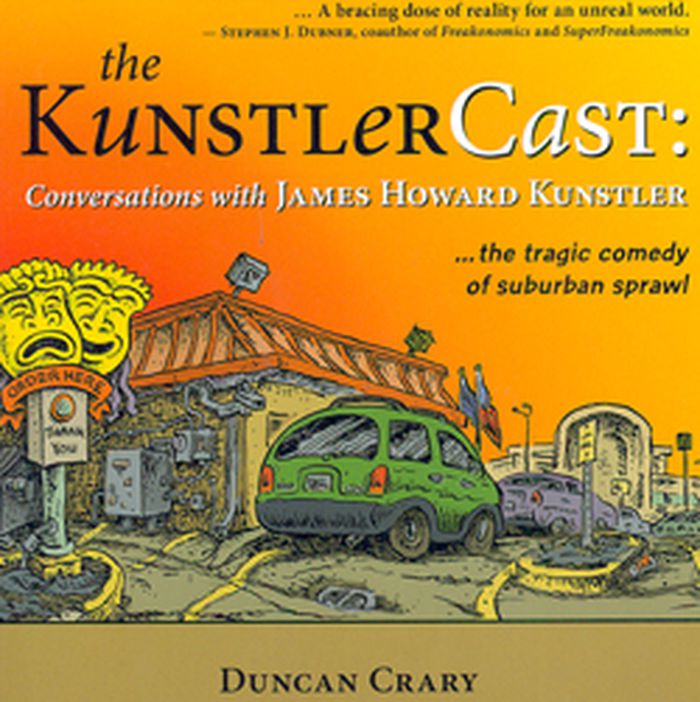
The Kunstler Cast: conversations with James Howard Kunstler
Actions:
Price:
$16.95
(available to order)
Summary:
James Howard Kunstler is best known for his unflinching commentary on the collapse of the American dream in the face of the reality of Peak Oil. Written as a long-form conversational interview, The Kunstler Cast explores urban planning, architecture, transportation, energy, society and culture from the perspective of an 'embedded' reporter on the Kunstler beat.
The Kunstler Cast: conversations with James Howard Kunstler
Actions:
Price:
$16.95
(available to order)
Summary:
James Howard Kunstler is best known for his unflinching commentary on the collapse of the American dream in the face of the reality of Peak Oil. Written as a long-form conversational interview, The Kunstler Cast explores urban planning, architecture, transportation, energy, society and culture from the perspective of an 'embedded' reporter on the Kunstler beat.
Form:
books
books
Publication:
August 2011
August 2011
Subject:
Urban Theory
Urban Theory
Form:
books
books
Actions:
Price:
$49.95
(available to order)
Summary:
Today the human impact on our planet can hardly be underestimated. Climate change, population explosion, genetic manipulation, digital networks, plastic islands floating in the oceans. This book explores our changing notion of nature. How nature has become one of the most successful products of our time, much of what we perceive as nature is merely a simulation(...)
$49.95
(available to order)
Summary:
Today the human impact on our planet can hardly be underestimated. Climate change, population explosion, genetic manipulation, digital networks, plastic islands floating in the oceans. This book explores our changing notion of nature. How nature has become one of the most successful products of our time, much of what we perceive as nature is merely a simulation(...)
Title:
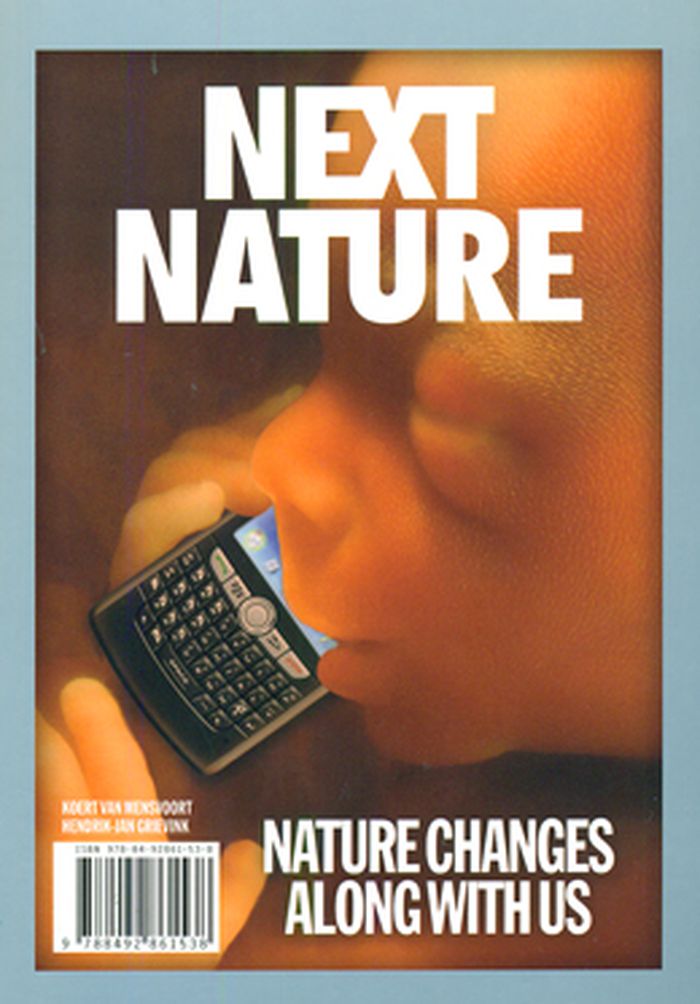
Next nature: nature changes along with us
Actions:
Price:
$49.95
(available to order)
Summary:
Today the human impact on our planet can hardly be underestimated. Climate change, population explosion, genetic manipulation, digital networks, plastic islands floating in the oceans. This book explores our changing notion of nature. How nature has become one of the most successful products of our time, much of what we perceive as nature is merely a simulation although a romanticized idea of a balanced, harmonic, inherently good and threatened entity. How evolution continues nonetheless. How technology - traditionally created to protect us from the forces of nature - gives rise to a next nature, that is just as wild, cruel, unpredictable and threatening as ever. How we are playing with fire again and again. How we should be careful in doing so, yet how this is also what makes us human.
Next nature: nature changes along with us
Actions:
Price:
$49.95
(available to order)
Summary:
Today the human impact on our planet can hardly be underestimated. Climate change, population explosion, genetic manipulation, digital networks, plastic islands floating in the oceans. This book explores our changing notion of nature. How nature has become one of the most successful products of our time, much of what we perceive as nature is merely a simulation although a romanticized idea of a balanced, harmonic, inherently good and threatened entity. How evolution continues nonetheless. How technology - traditionally created to protect us from the forces of nature - gives rise to a next nature, that is just as wild, cruel, unpredictable and threatening as ever. How we are playing with fire again and again. How we should be careful in doing so, yet how this is also what makes us human.
Form:
books
books
Publication:
May 2011
May 2011
Subject:
Landscape Theory
Landscape Theory
Form:
books
books
Actions:
Price:
$76.95
(available to order)
Summary:
Synesthetic design strives to develop products that systematically incorporate all five senses. In future, the current wealth of medical technical insights in psychology, physiology, motor functions, and neurology and the development of innovative materials with astonishing new properties will open up almost unlimited opportunities for the designer s creativity. Haverkamp(...)
$76.95
(available to order)
Summary:
Synesthetic design strives to develop products that systematically incorporate all five senses. In future, the current wealth of medical technical insights in psychology, physiology, motor functions, and neurology and the development of innovative materials with astonishing new properties will open up almost unlimited opportunities for the designer s creativity. Haverkamp(...)
Title:
Synesthetic design: handbook for a multisensory approach
Actions:
Price:
$76.95
(available to order)
Summary:
Synesthetic design strives to develop products that systematically incorporate all five senses. In future, the current wealth of medical technical insights in psychology, physiology, motor functions, and neurology and the development of innovative materials with astonishing new properties will open up almost unlimited opportunities for the designer s creativity. Haverkamp brings together for the first time precisely those aspects of this fundamental knowledge that are specifically relevant for designers. The result is a clear and well-organized handbook that offers designers of all schools a a solid foundation for their own designs. Michael Haverkamp has been working on the concept of multi-sensory design for many years; he is an internationally recognized expert on sound design and synesthesia research in general.
Synesthetic design: handbook for a multisensory approach
Actions:
Price:
$76.95
(available to order)
Summary:
Synesthetic design strives to develop products that systematically incorporate all five senses. In future, the current wealth of medical technical insights in psychology, physiology, motor functions, and neurology and the development of innovative materials with astonishing new properties will open up almost unlimited opportunities for the designer s creativity. Haverkamp brings together for the first time precisely those aspects of this fundamental knowledge that are specifically relevant for designers. The result is a clear and well-organized handbook that offers designers of all schools a a solid foundation for their own designs. Michael Haverkamp has been working on the concept of multi-sensory design for many years; he is an internationally recognized expert on sound design and synesthesia research in general.
Form:
books
books
Publication:
May 2011
May 2011
Subject:
Design Theory
Design Theory


