


6791 Results
Form:
books
books
Title:
Off the radar
Off the radar
Actions:
Price:
$54.99
(available to order)
Summary:
Architectural design is not limited by geographical, economic or political boundaries. However, the majority of the architecture brought to the world's attention tends to be concentrated in a few countries and located in the wealthier nations of Europe and North America. This "Architectural Design" title seeks to present recent architecture that is situated beyond these(...)
$54.99
(available to order)
Summary:
Architectural design is not limited by geographical, economic or political boundaries. However, the majority of the architecture brought to the world's attention tends to be concentrated in a few countries and located in the wealthier nations of Europe and North America. This "Architectural Design" title seeks to present recent architecture that is situated beyond these(...)
Subject:
Architecture in Canada
Architecture in Canada
Publication:
March 2003, London
March 2003, London
Title:
Off the radar
Actions:
Price:
$54.99
(available to order)
Summary:
Architectural design is not limited by geographical, economic or political boundaries. However, the majority of the architecture brought to the world's attention tends to be concentrated in a few countries and located in the wealthier nations of Europe and North America. This "Architectural Design" title seeks to present recent architecture that is situated beyond these familiar boundaries and outside the customary centres of architectural debate. It focuses on architecture that positively benefits from being at the periphery. By presenting work from countries as diverse as Iceland, Guinea, Canada, Portugal, Chile, New Zealand and India, it highlights buildings designed to respond to climatic extremes, remote sites and a broad range of social settings. It also identifies architects who are exploring the potential of materials and limited resources. This work has not only been sought out for attention, but is documented and connected through interviews with selected architects and international contributors who are designing, researching and building at the edge.
Off the radar
Actions:
Price:
$54.99
(available to order)
Summary:
Architectural design is not limited by geographical, economic or political boundaries. However, the majority of the architecture brought to the world's attention tends to be concentrated in a few countries and located in the wealthier nations of Europe and North America. This "Architectural Design" title seeks to present recent architecture that is situated beyond these familiar boundaries and outside the customary centres of architectural debate. It focuses on architecture that positively benefits from being at the periphery. By presenting work from countries as diverse as Iceland, Guinea, Canada, Portugal, Chile, New Zealand and India, it highlights buildings designed to respond to climatic extremes, remote sites and a broad range of social settings. It also identifies architects who are exploring the potential of materials and limited resources. This work has not only been sought out for attention, but is documented and connected through interviews with selected architects and international contributors who are designing, researching and building at the edge.
Form:
books
books
Publication:
March 2003, London
March 2003, London
Subject:
Architecture in Canada
Architecture in Canada
Form:
books
books
Actions:
Price:
$85.95
(available to order)
Summary:
"Architectures of ageing in place" provides curated critical perspectives, from a practice-based research point of view, of buildings that are purpose built and/or refurbished to accommodate housing and care needs of older people ageing in place in high rise/medium rise integrated communities. This book identifies design innovations, in line with policy innovations, that(...)
$85.95
(available to order)
Summary:
"Architectures of ageing in place" provides curated critical perspectives, from a practice-based research point of view, of buildings that are purpose built and/or refurbished to accommodate housing and care needs of older people ageing in place in high rise/medium rise integrated communities. This book identifies design innovations, in line with policy innovations, that(...)
Title:
Architectures of ageing in place
Actions:
Price:
$85.95
(available to order)
Summary:
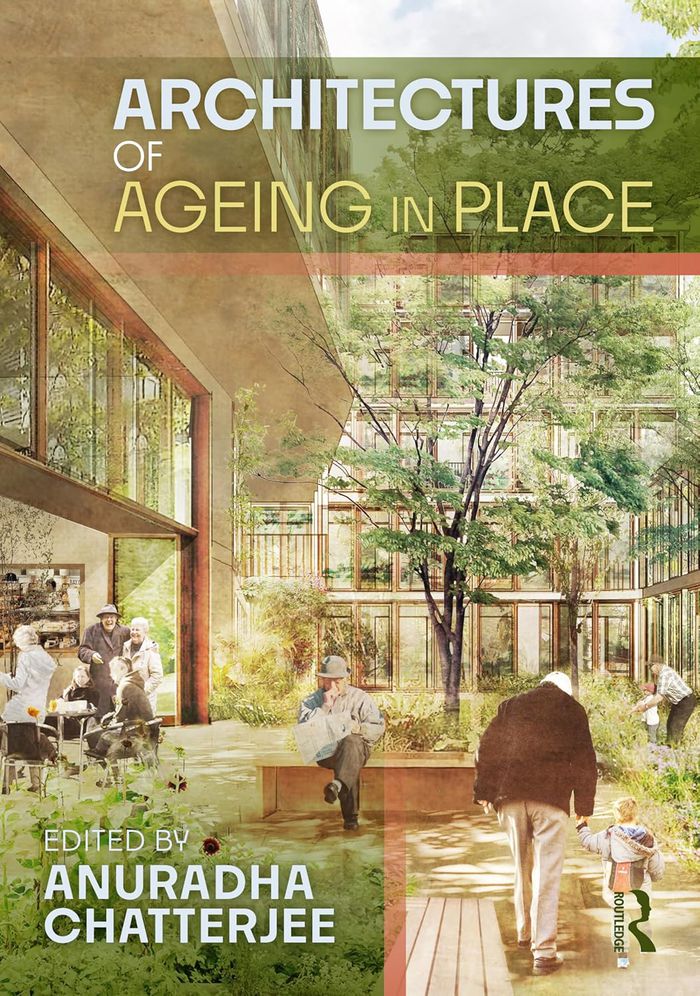
"Architectures of ageing in place" provides curated critical perspectives, from a practice-based research point of view, of buildings that are purpose built and/or refurbished to accommodate housing and care needs of older people ageing in place in high rise/medium rise integrated communities. This book identifies design innovations, in line with policy innovations, that have been made across private and public sectors to accommodate wellbeing and quality of life of older people living in integrated communities, which continue to foster intergenerational dialogue and exchange, and advance social citizenship. Case studies from a diverse range of geographies are examined including Portugal, Singapore, India, New Zealand, UK, Sweden, Belgium and the US. Chapters are grounded in evidence-based research including substantial primary data and post-occupancy evaluation, specifically the evaluation of architecture’s ‘social performance’. Projects highlight high-rise / medium-rise as an emerging and successful typology in accommodating residential and care needs of older people.
Architectures of ageing in place
Actions:
Price:
$85.95
(available to order)
Summary:
"Architectures of ageing in place" provides curated critical perspectives, from a practice-based research point of view, of buildings that are purpose built and/or refurbished to accommodate housing and care needs of older people ageing in place in high rise/medium rise integrated communities. This book identifies design innovations, in line with policy innovations, that have been made across private and public sectors to accommodate wellbeing and quality of life of older people living in integrated communities, which continue to foster intergenerational dialogue and exchange, and advance social citizenship. Case studies from a diverse range of geographies are examined including Portugal, Singapore, India, New Zealand, UK, Sweden, Belgium and the US. Chapters are grounded in evidence-based research including substantial primary data and post-occupancy evaluation, specifically the evaluation of architecture’s ‘social performance’. Projects highlight high-rise / medium-rise as an emerging and successful typology in accommodating residential and care needs of older people.
Form:
books
books
Publication:
November 2025
November 2025
Subject:
Architectural Theory
Architectural Theory
Form:
books
books
Title:
Be here now
Be here now
Actions:
Price:
$23.23
(available to order)
Summary:
In March 1961, Professor Richard Alpert - later renamed Ram Dass - held appointments in four departments at Harvard University. He published books, drove a Mercedes and regularly vacationed in the Caribbean. By most societal standards, he had achieved great success... And yet he couldn't escape the feeling that something was missing. Psilocybin and LSD changed that.(...)
$23.23
(available to order)
Summary:
In March 1961, Professor Richard Alpert - later renamed Ram Dass - held appointments in four departments at Harvard University. He published books, drove a Mercedes and regularly vacationed in the Caribbean. By most societal standards, he had achieved great success... And yet he couldn't escape the feeling that something was missing. Psilocybin and LSD changed that.(...)
Title:
Be here now
Actions:
Price:
$23.23
(available to order)
Summary:
In March 1961, Professor Richard Alpert - later renamed Ram Dass - held appointments in four departments at Harvard University. He published books, drove a Mercedes and regularly vacationed in the Caribbean. By most societal standards, he had achieved great success... And yet he couldn't escape the feeling that something was missing. Psilocybin and LSD changed that. During a period of experimentation, Alpert peeled away each layer of his identity, disassociating from himself as a professor, a social cosmopolite, and lastly, as a physical being. Fear turned into exaltation upon the realization that at his truest, he was just his inner-self: a luminous being that he could trust indefinitely and love infinitely. And thus, a spiritual journey commenced. Alpert headed to India where his guru renamed him Baba Ram Dass - "servant of God." He was introduced to mindful breathing exercises, hatha yoga, and Eastern philosophy. If he found himself reminiscing or planning, he was reminded to "Be Here Now."
Be here now
Actions:
Price:
$23.23
(available to order)
Summary:
In March 1961, Professor Richard Alpert - later renamed Ram Dass - held appointments in four departments at Harvard University. He published books, drove a Mercedes and regularly vacationed in the Caribbean. By most societal standards, he had achieved great success... And yet he couldn't escape the feeling that something was missing. Psilocybin and LSD changed that. During a period of experimentation, Alpert peeled away each layer of his identity, disassociating from himself as a professor, a social cosmopolite, and lastly, as a physical being. Fear turned into exaltation upon the realization that at his truest, he was just his inner-self: a luminous being that he could trust indefinitely and love infinitely. And thus, a spiritual journey commenced. Alpert headed to India where his guru renamed him Baba Ram Dass - "servant of God." He was introduced to mindful breathing exercises, hatha yoga, and Eastern philosophy. If he found himself reminiscing or planning, he was reminded to "Be Here Now."
Form:
books
books
Publication:
October 1971
October 1971
Subject:
Current Exhibitions
Current Exhibitions
Form:
books
books
Actions:
Price:
$85.95
(available to order)
Summary:
''Working in Mumbai'' is a critical reflection on thirty years of the practice of RMA Architects. Rahul Mehrotra weaves a narrative to connect his multiple engagements in architectural practice, including teaching, research, documenting, writing and exhibiting since the establishment of the practice in 1990. The book is structured around the subjects of interior(...)
$85.95
(available to order)
Summary:
''Working in Mumbai'' is a critical reflection on thirty years of the practice of RMA Architects. Rahul Mehrotra weaves a narrative to connect his multiple engagements in architectural practice, including teaching, research, documenting, writing and exhibiting since the establishment of the practice in 1990. The book is structured around the subjects of interior(...)
Title:
Working in Mumbai: RMA Architects
Actions:
Price:
$85.95
(available to order)
Summary:
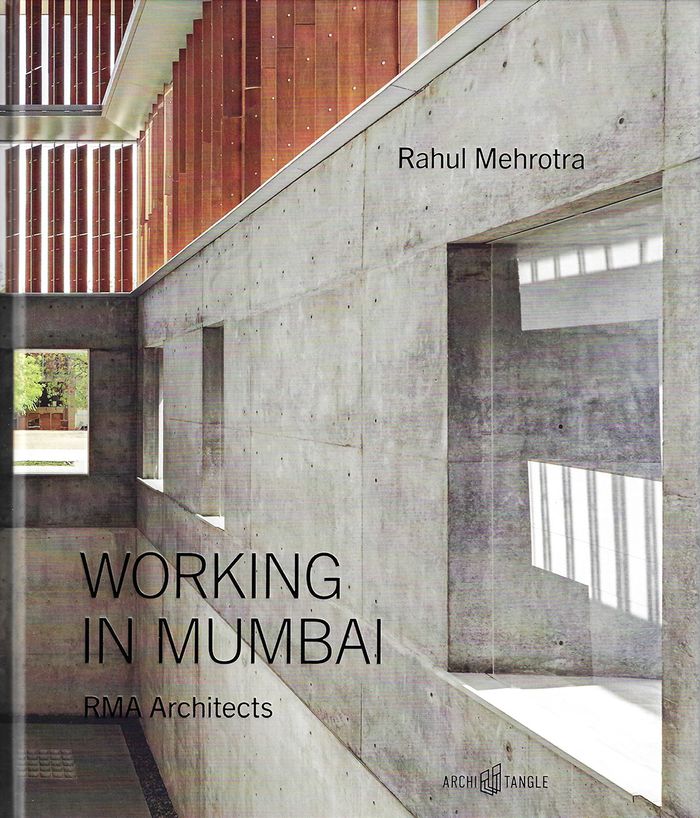
''Working in Mumbai'' is a critical reflection on thirty years of the practice of RMA Architects. Rahul Mehrotra weaves a narrative to connect his multiple engagements in architectural practice, including teaching, research, documenting, writing and exhibiting since the establishment of the practice in 1990. The book is structured around the subjects of interior architecture, critical conservation, and work and living spaces that straddle the binaries of the global and the local as well as the rural and the urban. While the book is a portfolio of the selected works of RMA Architects, the projects are curated so as to unravel and clarify the challenges faced by architects in India and in several parts of the “majority” world where issues related to rapid urbanization and the impacts of global capital are among the many that dispute conventional models of practice. ''Working in Mumbai'' is used emblematically to interrogate the notion of context and understand how the practice evolved through its association with the city of Mumbai.
Working in Mumbai: RMA Architects
Actions:
Price:
$85.95
(available to order)
Summary:
''Working in Mumbai'' is a critical reflection on thirty years of the practice of RMA Architects. Rahul Mehrotra weaves a narrative to connect his multiple engagements in architectural practice, including teaching, research, documenting, writing and exhibiting since the establishment of the practice in 1990. The book is structured around the subjects of interior architecture, critical conservation, and work and living spaces that straddle the binaries of the global and the local as well as the rural and the urban. While the book is a portfolio of the selected works of RMA Architects, the projects are curated so as to unravel and clarify the challenges faced by architects in India and in several parts of the “majority” world where issues related to rapid urbanization and the impacts of global capital are among the many that dispute conventional models of practice. ''Working in Mumbai'' is used emblematically to interrogate the notion of context and understand how the practice evolved through its association with the city of Mumbai.
Form:
books
books
Publication:
November 2020
November 2020
Subject:
Architecture Monographs
Architecture Monographs
Form:
books
books
Actions:
Price:
$63.50
(available in store)
Summary:
This book brings together key works of the noted architect and architectural theorist Christopher Alexander (1936–2022), many of which have not been published before. The book contains twenty-five essays and other works, many chosen from the newly organized Christopher Alexander archive, providing a window into the ideas and thought process of one of the most innovative(...)
$63.50
(available in store)
Summary:
This book brings together key works of the noted architect and architectural theorist Christopher Alexander (1936–2022), many of which have not been published before. The book contains twenty-five essays and other works, many chosen from the newly organized Christopher Alexander archive, providing a window into the ideas and thought process of one of the most innovative(...)
Subject:
Architectural Theory
Architectural Theory
Publication:
September 2022
September 2022
Title:
Early and unpublished writings of Christopher Alexander: Thinking, building, writing
Actions:
Price:
$63.50
(available in store)
Summary:
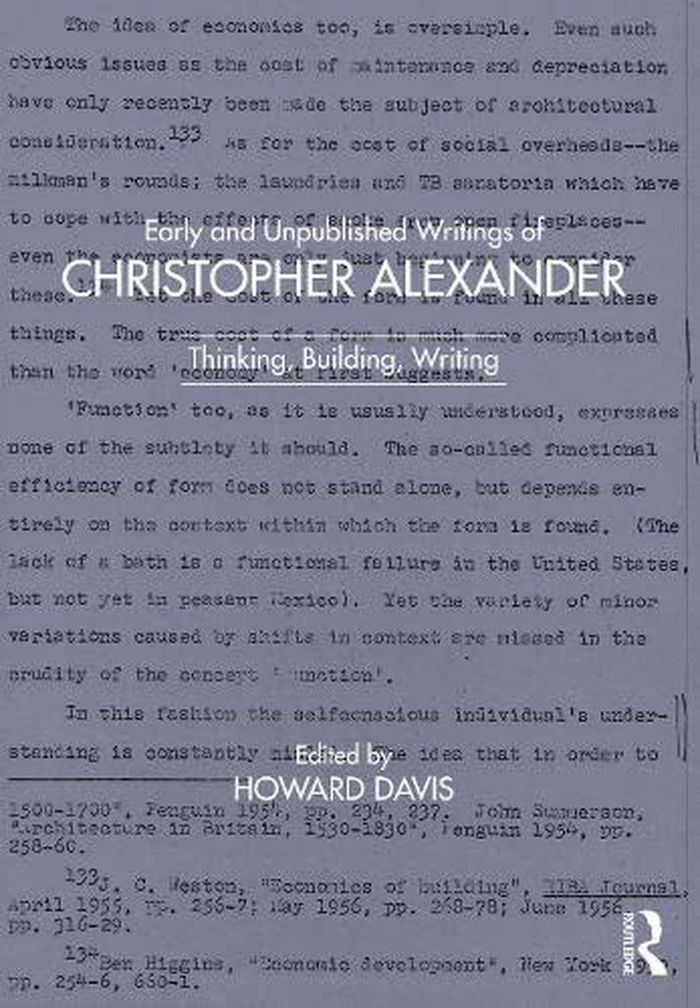
This book brings together key works of the noted architect and architectural theorist Christopher Alexander (1936–2022), many of which have not been published before. The book contains twenty-five essays and other works, many chosen from the newly organized Christopher Alexander archive, providing a window into the ideas and thought process of one of the most innovative architectural thinkers of the twentieth century. The items span Alexander’s fifty-year career, beginning with an early version of his PhD dissertation based on fieldwork in India, continuing to fifteen years in the development of "A Pattern Language", one of the best-selling books in the history of architecture, and proceeding to the writing of "The Nature of Order", Alexander’s four-volume masterwork, and beyond. The writings combine theory and descriptions of practice, and together support a blueprint for the development of a new, humane way of building, while also providing a window into the mind of an extraordinary thinker, teacher and professional.
Early and unpublished writings of Christopher Alexander: Thinking, building, writing
Actions:
Price:
$63.50
(available in store)
Summary:
This book brings together key works of the noted architect and architectural theorist Christopher Alexander (1936–2022), many of which have not been published before. The book contains twenty-five essays and other works, many chosen from the newly organized Christopher Alexander archive, providing a window into the ideas and thought process of one of the most innovative architectural thinkers of the twentieth century. The items span Alexander’s fifty-year career, beginning with an early version of his PhD dissertation based on fieldwork in India, continuing to fifteen years in the development of "A Pattern Language", one of the best-selling books in the history of architecture, and proceeding to the writing of "The Nature of Order", Alexander’s four-volume masterwork, and beyond. The writings combine theory and descriptions of practice, and together support a blueprint for the development of a new, humane way of building, while also providing a window into the mind of an extraordinary thinker, teacher and professional.
Form:
books
books
Publication:
September 2022
September 2022
Subject:
Architectural Theory
Architectural Theory
Form:
books
books
Actions:
Price:
$16.95
(available to order)
Summary:
John Gutmann (1905–1998) was one of America’s most distinctive photographers. Born in Germany where he trained as an artist and art teacher, he fled the Nazis in 1933 and settled in San Francisco, reinventing himself as a photo-reporter. Gutmann captured images of American culture, celebrating signs of a vibrant democracy, however imperfect. His own status as an(...)
$16.95
(available to order)
Summary:
John Gutmann (1905–1998) was one of America’s most distinctive photographers. Born in Germany where he trained as an artist and art teacher, he fled the Nazis in 1933 and settled in San Francisco, reinventing himself as a photo-reporter. Gutmann captured images of American culture, celebrating signs of a vibrant democracy, however imperfect. His own status as an(...)
Publication:
January 2009
January 2009
Title:
John Gutmann: the photographer at work
Actions:
Price:
$16.95
(available to order)
Summary:
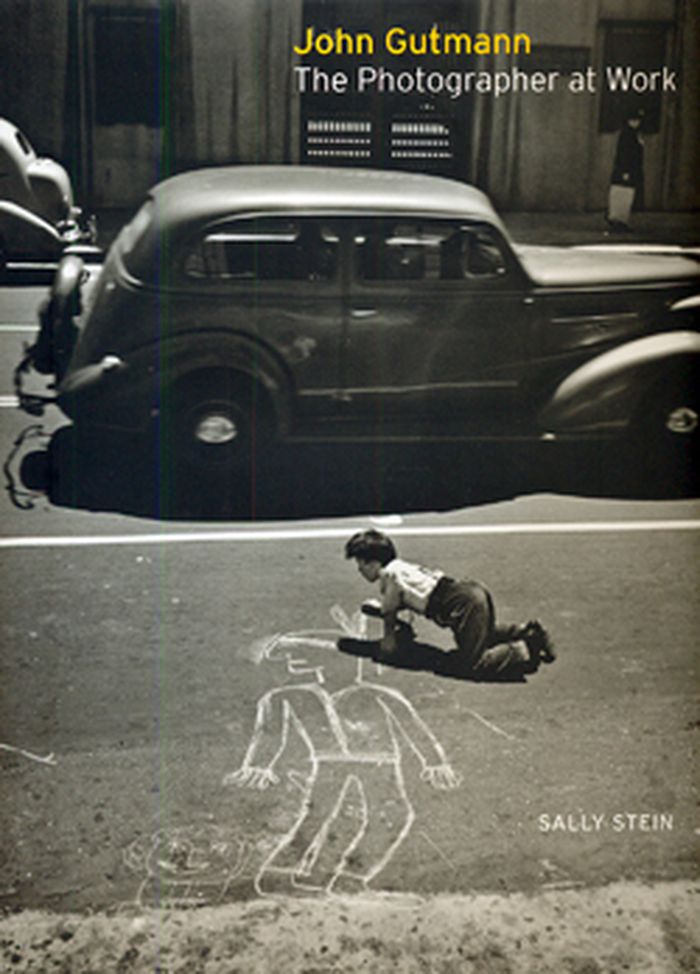
John Gutmann (1905–1998) was one of America’s most distinctive photographers. Born in Germany where he trained as an artist and art teacher, he fled the Nazis in 1933 and settled in San Francisco, reinventing himself as a photo-reporter. Gutmann captured images of American culture, celebrating signs of a vibrant democracy, however imperfect. His own status as an outsider—a Jew in Germany, a naturalized citizen in the United States—informed his focus on individuals from the Asian-American, African-American, and gay communities, as well as his photography in India, Burma, and China during World War II. This book acknowledges Gutmann’s place in the history of photography. Drawing on his archive of photographs and papers at the Center for Creative Photography, it presents both unfamiliar works and little-known contexts for his imagery, linking his photography to his passionate interest in painting and filmmaking, his collections of non-Western art and artifacts, and his pedagogy.
John Gutmann: the photographer at work
Actions:
Price:
$16.95
(available to order)
Summary:
John Gutmann (1905–1998) was one of America’s most distinctive photographers. Born in Germany where he trained as an artist and art teacher, he fled the Nazis in 1933 and settled in San Francisco, reinventing himself as a photo-reporter. Gutmann captured images of American culture, celebrating signs of a vibrant democracy, however imperfect. His own status as an outsider—a Jew in Germany, a naturalized citizen in the United States—informed his focus on individuals from the Asian-American, African-American, and gay communities, as well as his photography in India, Burma, and China during World War II. This book acknowledges Gutmann’s place in the history of photography. Drawing on his archive of photographs and papers at the Center for Creative Photography, it presents both unfamiliar works and little-known contexts for his imagery, linking his photography to his passionate interest in painting and filmmaking, his collections of non-Western art and artifacts, and his pedagogy.
Form:
books
books
Publication:
January 2009
January 2009
Form:
books
books
Actions:
Price:
$50.00
(available to order)
Summary:
In the early 1950s, many in the architectural profession turned their gaze towards India, where an ideal modern city seemed to be becoming a reality. When Le Corbusier and his team started work in February 1951 in Chandigarh, American planner Albert Mayer and his young principal architect Matthew Nowicki had already completed a land development plan for the site. The(...)
$50.00
(available to order)
Summary:
In the early 1950s, many in the architectural profession turned their gaze towards India, where an ideal modern city seemed to be becoming a reality. When Le Corbusier and his team started work in February 1951 in Chandigarh, American planner Albert Mayer and his young principal architect Matthew Nowicki had already completed a land development plan for the site. The(...)
Title:
Chandigarh: Living with Le Corbusier
Actions:
Price:
$50.00
(available to order)
Summary:
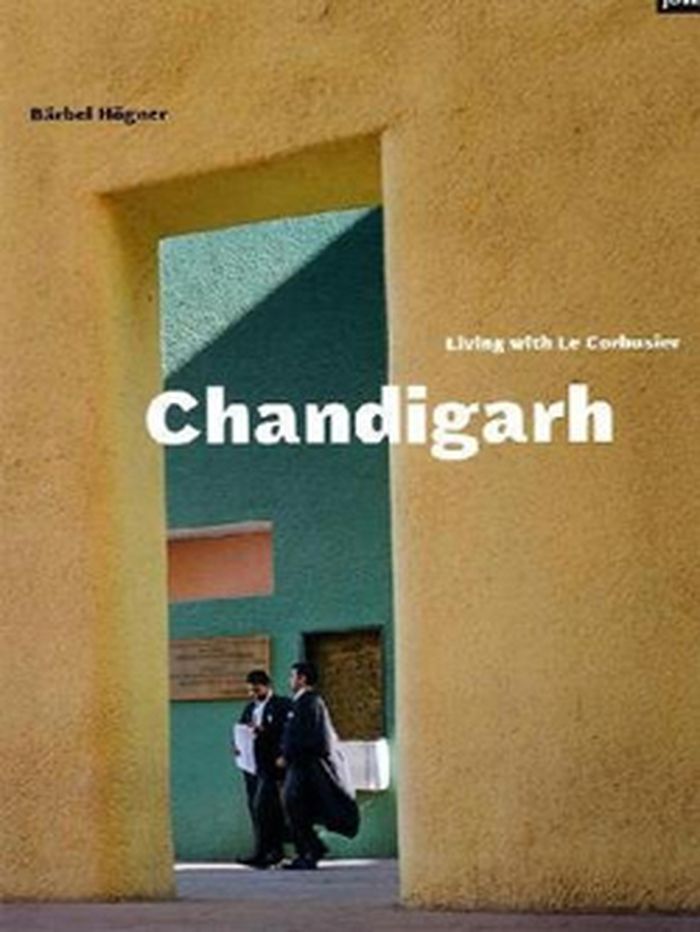
In the early 1950s, many in the architectural profession turned their gaze towards India, where an ideal modern city seemed to be becoming a reality. When Le Corbusier and his team started work in February 1951 in Chandigarh, American planner Albert Mayer and his young principal architect Matthew Nowicki had already completed a land development plan for the site. The challenge Le Corbusier then faced was to demonstrate how a city designed from the drawing board could feel humane, functional and viable once built. Once the home of public officials, Chandigarh has become a vibrant garden city and a magnet for the booming Indian software industry. Attracted to the idea of a possible dialogue and contradiction between European architecture and Indian lifestyle, German ethnographer Bärbel Högner began photographing the city. Chandigarh: Living with Le Corbusier surveys Le Courbusier's contribution to India's first planned city, while simultaneously revealing Högner's passionate interest and impeccable eye for architectural detail.
Chandigarh: Living with Le Corbusier
Actions:
Price:
$50.00
(available to order)
Summary:
In the early 1950s, many in the architectural profession turned their gaze towards India, where an ideal modern city seemed to be becoming a reality. When Le Corbusier and his team started work in February 1951 in Chandigarh, American planner Albert Mayer and his young principal architect Matthew Nowicki had already completed a land development plan for the site. The challenge Le Corbusier then faced was to demonstrate how a city designed from the drawing board could feel humane, functional and viable once built. Once the home of public officials, Chandigarh has become a vibrant garden city and a magnet for the booming Indian software industry. Attracted to the idea of a possible dialogue and contradiction between European architecture and Indian lifestyle, German ethnographer Bärbel Högner began photographing the city. Chandigarh: Living with Le Corbusier surveys Le Courbusier's contribution to India's first planned city, while simultaneously revealing Högner's passionate interest and impeccable eye for architectural detail.
Form:
books
books
Publication:
May 2011
May 2011
Subject:
Architecture Monographs
Architecture Monographs
Form:
books
books
Actions:
Price:
$27.50
(available to order)
Summary:
The concept of an encyclopedic museum was born of the Enlightenment, a manifestation of society's growing belief that the spread of knowledge and the promotion of intellectual inquiry were crucial to human development and the future of a rational society. With Museums Matter, James Cuno, president and director of the Art Institute of Chicago, takes us on a brief tour(...)
$27.50
(available to order)
Summary:
The concept of an encyclopedic museum was born of the Enlightenment, a manifestation of society's growing belief that the spread of knowledge and the promotion of intellectual inquiry were crucial to human development and the future of a rational society. With Museums Matter, James Cuno, president and director of the Art Institute of Chicago, takes us on a brief tour(...)
Title:
Museums matter: in praise of the encyclopedic museum
Actions:
Price:
$27.50
(available to order)
Summary:
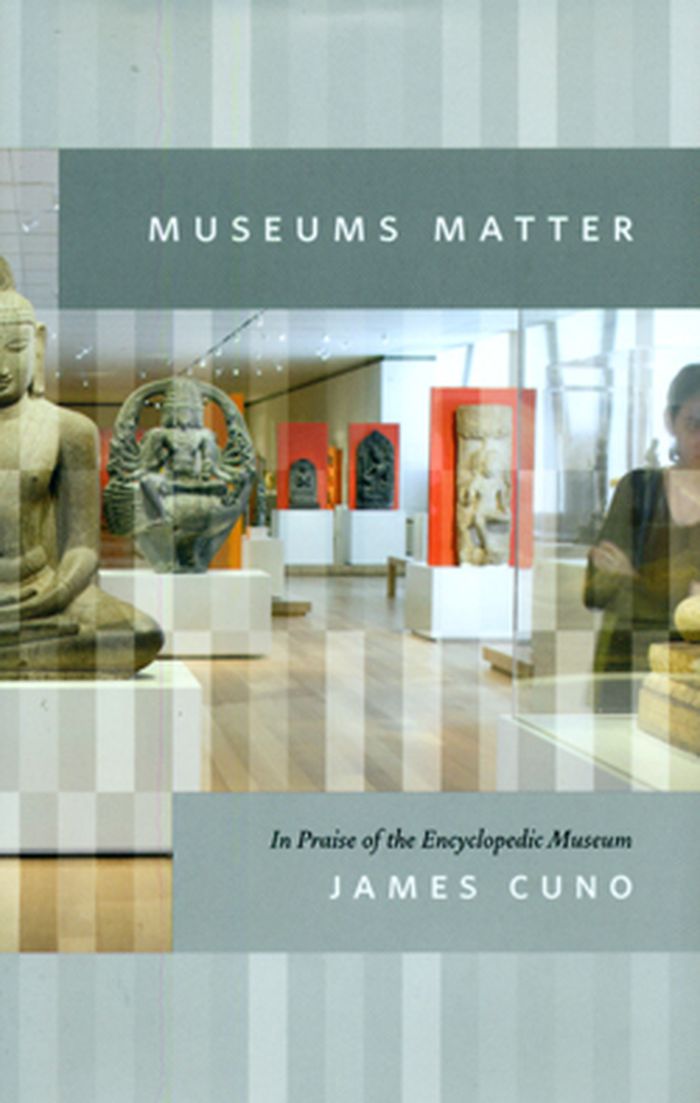
The concept of an encyclopedic museum was born of the Enlightenment, a manifestation of society's growing belief that the spread of knowledge and the promotion of intellectual inquiry were crucial to human development and the future of a rational society. With Museums Matter, James Cuno, president and director of the Art Institute of Chicago, takes us on a brief tour of the modern museum, from the creation of the British Museum - the archetypal encyclopedic collection - to the present, when major museums host millions of visitors annually and play a major role in the cultural lives of their cities. Engaging with thinkers such as Edward Said and Martha Nussbaum, and drawing on examples from the politics of India to the destruction of the Bramiyan Buddhas to the history of trade and travel, Cuno makes a case for the encyclopedic museum as a truly cosmopolitan institution, promoting tolerance, understanding, and a shared sense of history - values that are essential in our ever more globalized age.
Museums matter: in praise of the encyclopedic museum
Actions:
Price:
$27.50
(available to order)
Summary:
The concept of an encyclopedic museum was born of the Enlightenment, a manifestation of society's growing belief that the spread of knowledge and the promotion of intellectual inquiry were crucial to human development and the future of a rational society. With Museums Matter, James Cuno, president and director of the Art Institute of Chicago, takes us on a brief tour of the modern museum, from the creation of the British Museum - the archetypal encyclopedic collection - to the present, when major museums host millions of visitors annually and play a major role in the cultural lives of their cities. Engaging with thinkers such as Edward Said and Martha Nussbaum, and drawing on examples from the politics of India to the destruction of the Bramiyan Buddhas to the history of trade and travel, Cuno makes a case for the encyclopedic museum as a truly cosmopolitan institution, promoting tolerance, understanding, and a shared sense of history - values that are essential in our ever more globalized age.
Form:
books
books
Publication:
December 2011
December 2011
Subject:
Museums and Universal Exhibitions
Museums and Universal Exhibitions
Form:
books
books
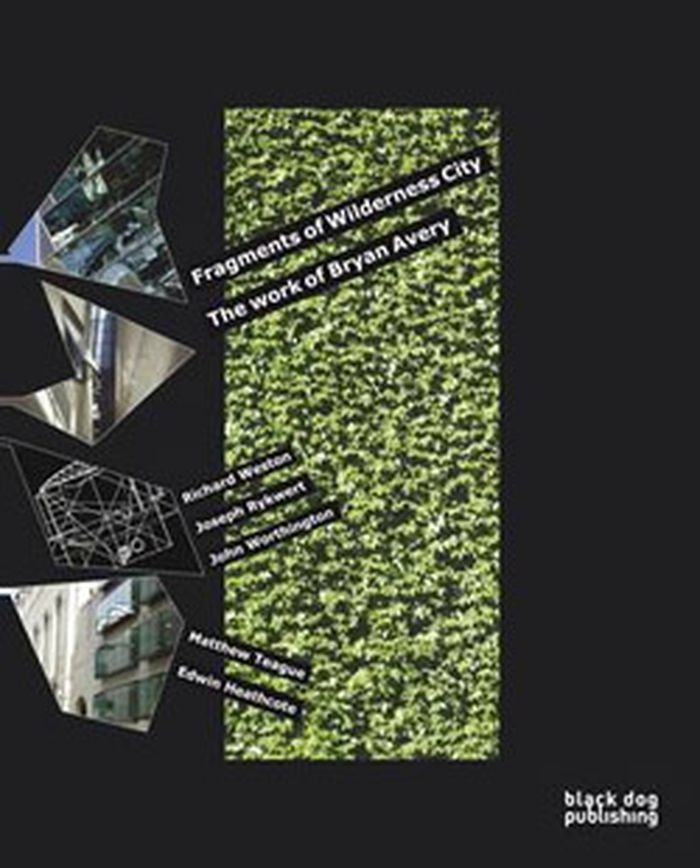
Actions:
Price:
$49.95
(available to order)
Summary:
Fragments of Wilderness City reviews the work of renowned architect Brian Avery. This publication presents perspectives from academics and architecture historians, exploring projects in India and the Middle East; major cultural commissions such as the National Film Theatre, the Museum of the Moving Image, London Transport Museum, and the Royal Academy of the Dramatic(...)
$49.95
(available to order)
Summary:
Fragments of Wilderness City reviews the work of renowned architect Brian Avery. This publication presents perspectives from academics and architecture historians, exploring projects in India and the Middle East; major cultural commissions such as the National Film Theatre, the Museum of the Moving Image, London Transport Museum, and the Royal Academy of the Dramatic(...)
Title:
Fragments of wilderness city: the work of Bryan Avery
Actions:
Price:
$49.95
(available to order)
Summary:
Fragments of Wilderness City reviews the work of renowned architect Brian Avery. This publication presents perspectives from academics and architecture historians, exploring projects in India and the Middle East; major cultural commissions such as the National Film Theatre, the Museum of the Moving Image, London Transport Museum, and the Royal Academy of the Dramatic Arts' headquarters in Bloomsbury, London; masterplanning work for Oxford Street in London, The Horniman Museum, and the Avenue of the Emirates in Abu Dhabi. Alongside profiles of their innovative work in product design and within the workplace is an essay by director Bryan Avery, providing insights into his notion of the sustainable 'wilderness city'. This manifesto sets out a vision of an accountable architectural and planning approach to the contemporary city, situated in a natural landscape and taking on board references to both the walled cities of the medieval period and the self-contained urban environments of the twentieth century 'new towns'.
Fragments of wilderness city: the work of Bryan Avery
Actions:
Price:
$49.95
(available to order)
Summary:
Fragments of Wilderness City reviews the work of renowned architect Brian Avery. This publication presents perspectives from academics and architecture historians, exploring projects in India and the Middle East; major cultural commissions such as the National Film Theatre, the Museum of the Moving Image, London Transport Museum, and the Royal Academy of the Dramatic Arts' headquarters in Bloomsbury, London; masterplanning work for Oxford Street in London, The Horniman Museum, and the Avenue of the Emirates in Abu Dhabi. Alongside profiles of their innovative work in product design and within the workplace is an essay by director Bryan Avery, providing insights into his notion of the sustainable 'wilderness city'. This manifesto sets out a vision of an accountable architectural and planning approach to the contemporary city, situated in a natural landscape and taking on board references to both the walled cities of the medieval period and the self-contained urban environments of the twentieth century 'new towns'.
Form:
books
books
Publication:
May 2012
May 2012
Subject:
Architecture Monographs
Architecture Monographs
Form:
books
books
Actions:
Price:
$59.95
(available to order)
Summary:
The book reproduces a series of the collages made by David Wild. Their subject is modern architecture in the first half of the twentieth century: in the Netherlands, in Russia, and in the work of Le Corbusier. The method of the book is to show a collage on a right-hand page; then on the facing page is a (...)
$59.95
(available to order)
Summary:
The book reproduces a series of the collages made by David Wild. Their subject is modern architecture in the first half of the twentieth century: in the Netherlands, in Russia, and in the work of Le Corbusier. The method of the book is to show a collage on a right-hand page; then on the facing page is a (...)
Title:
Fragments of utopia: collage reflections of heroic modernism
Actions:
Price:
$59.95
(available to order)
Summary:
The book reproduces a series of the collages made by David Wild. Their subject is modern architecture in the first half of the twentieth century: in the Netherlands, in Russia, and in the work of Le Corbusier. The method of the book is to show a collage on a right-hand page; then on the facing page is a prose commentary by Wild and supporting smaller images. Introducing the book, David Wild explains that the impulse for this work lies in the aftermath of a fire in his house: his scorched books lent themselves to collage. He goes on to sketch the cultural-political climate in Britain over the last 40 years: the backdrop to his work as an architect and (less directly) to this book. In the opening section on the Netherlands, the leading theme is an architecture of social equity and continuity. Rooted in old cultural traditions, and in the particular ‘football-pitch’ landscape of the country, modern architecture could realise some of its dreams in everyday buildings. Postage stamps play an active part in many of the book’s collages, and especially in this section: the design of stamps flourished in the Netherlands, through the enlightened patronage of the Dutch post office — with several architects designing stamps too. Politics and history come to prominence in the Russian section, as a motivating force in the work of the early 1920s, and then as a heavy burden — with the onset of totalitarian control and repression. At the centre of the discussion here is the architecture of constructivism: formally brilliant, but with a clear social programme. Flight and the exploration of space are recurring topics in this section, as another and particularly Russian dimension of utopian striving The work of Le Corbusier, in Europe, North and South America, Russia and India, is treated in the third section. Le Corbusier is presented as a brilliant artist, a master architect of the greatest skill and the greatest ambition — and without scruple in pursuing commissions. The images and text follow him into the years after the Second World War, culminating in the work in India. Here there is a vision of another kind of politics, of co-operation and non-violence.
Fragments of utopia: collage reflections of heroic modernism
Actions:
Price:
$59.95
(available to order)
Summary:
The book reproduces a series of the collages made by David Wild. Their subject is modern architecture in the first half of the twentieth century: in the Netherlands, in Russia, and in the work of Le Corbusier. The method of the book is to show a collage on a right-hand page; then on the facing page is a prose commentary by Wild and supporting smaller images. Introducing the book, David Wild explains that the impulse for this work lies in the aftermath of a fire in his house: his scorched books lent themselves to collage. He goes on to sketch the cultural-political climate in Britain over the last 40 years: the backdrop to his work as an architect and (less directly) to this book. In the opening section on the Netherlands, the leading theme is an architecture of social equity and continuity. Rooted in old cultural traditions, and in the particular ‘football-pitch’ landscape of the country, modern architecture could realise some of its dreams in everyday buildings. Postage stamps play an active part in many of the book’s collages, and especially in this section: the design of stamps flourished in the Netherlands, through the enlightened patronage of the Dutch post office — with several architects designing stamps too. Politics and history come to prominence in the Russian section, as a motivating force in the work of the early 1920s, and then as a heavy burden — with the onset of totalitarian control and repression. At the centre of the discussion here is the architecture of constructivism: formally brilliant, but with a clear social programme. Flight and the exploration of space are recurring topics in this section, as another and particularly Russian dimension of utopian striving The work of Le Corbusier, in Europe, North and South America, Russia and India, is treated in the third section. Le Corbusier is presented as a brilliant artist, a master architect of the greatest skill and the greatest ambition — and without scruple in pursuing commissions. The images and text follow him into the years after the Second World War, culminating in the work in India. Here there is a vision of another kind of politics, of co-operation and non-violence.
Form:
books
books
Publication:
January 1900, London
January 1900, London
Subject:
Graphic Designers, Monographs
Graphic Designers, Monographs


