


6793 Results
Form:
books
books
Actions:
Price:
$49.95
(available to order)
Summary:
Fragments of Wilderness City reviews the work of renowned architect Brian Avery. This publication presents perspectives from academics and architecture historians, exploring projects in India and the Middle East; major cultural commissions such as the National Film Theatre, the Museum of the Moving Image, London Transport Museum, and the Royal Academy of the Dramatic(...)
$49.95
(available to order)
Summary:
Fragments of Wilderness City reviews the work of renowned architect Brian Avery. This publication presents perspectives from academics and architecture historians, exploring projects in India and the Middle East; major cultural commissions such as the National Film Theatre, the Museum of the Moving Image, London Transport Museum, and the Royal Academy of the Dramatic(...)
Title:
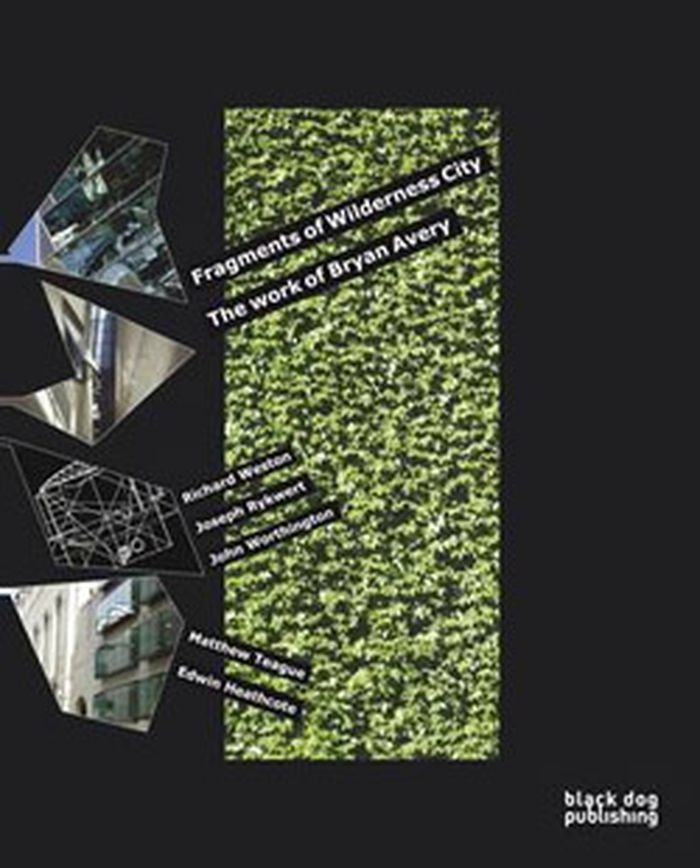
Fragments of wilderness city: the work of Bryan Avery
Actions:
Price:
$49.95
(available to order)
Summary:
Fragments of Wilderness City reviews the work of renowned architect Brian Avery. This publication presents perspectives from academics and architecture historians, exploring projects in India and the Middle East; major cultural commissions such as the National Film Theatre, the Museum of the Moving Image, London Transport Museum, and the Royal Academy of the Dramatic Arts' headquarters in Bloomsbury, London; masterplanning work for Oxford Street in London, The Horniman Museum, and the Avenue of the Emirates in Abu Dhabi. Alongside profiles of their innovative work in product design and within the workplace is an essay by director Bryan Avery, providing insights into his notion of the sustainable 'wilderness city'. This manifesto sets out a vision of an accountable architectural and planning approach to the contemporary city, situated in a natural landscape and taking on board references to both the walled cities of the medieval period and the self-contained urban environments of the twentieth century 'new towns'.
Fragments of wilderness city: the work of Bryan Avery
Actions:
Price:
$49.95
(available to order)
Summary:
Fragments of Wilderness City reviews the work of renowned architect Brian Avery. This publication presents perspectives from academics and architecture historians, exploring projects in India and the Middle East; major cultural commissions such as the National Film Theatre, the Museum of the Moving Image, London Transport Museum, and the Royal Academy of the Dramatic Arts' headquarters in Bloomsbury, London; masterplanning work for Oxford Street in London, The Horniman Museum, and the Avenue of the Emirates in Abu Dhabi. Alongside profiles of their innovative work in product design and within the workplace is an essay by director Bryan Avery, providing insights into his notion of the sustainable 'wilderness city'. This manifesto sets out a vision of an accountable architectural and planning approach to the contemporary city, situated in a natural landscape and taking on board references to both the walled cities of the medieval period and the self-contained urban environments of the twentieth century 'new towns'.
Form:
books
books
Publication:
May 2012
May 2012
Subject:
Architecture Monographs
Architecture Monographs
Form:
books
books
Actions:
Price:
$59.95
(available to order)
Summary:
The book reproduces a series of the collages made by David Wild. Their subject is modern architecture in the first half of the twentieth century: in the Netherlands, in Russia, and in the work of Le Corbusier. The method of the book is to show a collage on a right-hand page; then on the facing page is a (...)
$59.95
(available to order)
Summary:
The book reproduces a series of the collages made by David Wild. Their subject is modern architecture in the first half of the twentieth century: in the Netherlands, in Russia, and in the work of Le Corbusier. The method of the book is to show a collage on a right-hand page; then on the facing page is a (...)
Title:
Fragments of utopia: collage reflections of heroic modernism
Actions:
Price:
$59.95
(available to order)
Summary:
The book reproduces a series of the collages made by David Wild. Their subject is modern architecture in the first half of the twentieth century: in the Netherlands, in Russia, and in the work of Le Corbusier. The method of the book is to show a collage on a right-hand page; then on the facing page is a prose commentary by Wild and supporting smaller images. Introducing the book, David Wild explains that the impulse for this work lies in the aftermath of a fire in his house: his scorched books lent themselves to collage. He goes on to sketch the cultural-political climate in Britain over the last 40 years: the backdrop to his work as an architect and (less directly) to this book. In the opening section on the Netherlands, the leading theme is an architecture of social equity and continuity. Rooted in old cultural traditions, and in the particular ‘football-pitch’ landscape of the country, modern architecture could realise some of its dreams in everyday buildings. Postage stamps play an active part in many of the book’s collages, and especially in this section: the design of stamps flourished in the Netherlands, through the enlightened patronage of the Dutch post office — with several architects designing stamps too. Politics and history come to prominence in the Russian section, as a motivating force in the work of the early 1920s, and then as a heavy burden — with the onset of totalitarian control and repression. At the centre of the discussion here is the architecture of constructivism: formally brilliant, but with a clear social programme. Flight and the exploration of space are recurring topics in this section, as another and particularly Russian dimension of utopian striving The work of Le Corbusier, in Europe, North and South America, Russia and India, is treated in the third section. Le Corbusier is presented as a brilliant artist, a master architect of the greatest skill and the greatest ambition — and without scruple in pursuing commissions. The images and text follow him into the years after the Second World War, culminating in the work in India. Here there is a vision of another kind of politics, of co-operation and non-violence.
Fragments of utopia: collage reflections of heroic modernism
Actions:
Price:
$59.95
(available to order)
Summary:
The book reproduces a series of the collages made by David Wild. Their subject is modern architecture in the first half of the twentieth century: in the Netherlands, in Russia, and in the work of Le Corbusier. The method of the book is to show a collage on a right-hand page; then on the facing page is a prose commentary by Wild and supporting smaller images. Introducing the book, David Wild explains that the impulse for this work lies in the aftermath of a fire in his house: his scorched books lent themselves to collage. He goes on to sketch the cultural-political climate in Britain over the last 40 years: the backdrop to his work as an architect and (less directly) to this book. In the opening section on the Netherlands, the leading theme is an architecture of social equity and continuity. Rooted in old cultural traditions, and in the particular ‘football-pitch’ landscape of the country, modern architecture could realise some of its dreams in everyday buildings. Postage stamps play an active part in many of the book’s collages, and especially in this section: the design of stamps flourished in the Netherlands, through the enlightened patronage of the Dutch post office — with several architects designing stamps too. Politics and history come to prominence in the Russian section, as a motivating force in the work of the early 1920s, and then as a heavy burden — with the onset of totalitarian control and repression. At the centre of the discussion here is the architecture of constructivism: formally brilliant, but with a clear social programme. Flight and the exploration of space are recurring topics in this section, as another and particularly Russian dimension of utopian striving The work of Le Corbusier, in Europe, North and South America, Russia and India, is treated in the third section. Le Corbusier is presented as a brilliant artist, a master architect of the greatest skill and the greatest ambition — and without scruple in pursuing commissions. The images and text follow him into the years after the Second World War, culminating in the work in India. Here there is a vision of another kind of politics, of co-operation and non-violence.
Form:
books
books
Publication:
January 1900, London
January 1900, London
Subject:
Graphic Designers, Monographs
Graphic Designers, Monographs
Form:
audio
audio
Actions:
Description:
1 online resource.
Author:
Subject:
Publication:
[Place of publication not identified] : Lateral Addition, 2016.
[Place of publication not identified] : Lateral Addition, 2016.
Title:
A Partial Exegesis of Cricket, its Laws and Rituals.
Actions:
Description:
1 online resource.
A Partial Exegesis of Cricket, its Laws and Rituals.
Actions:
Description:
1 online resource.
Form:
audio
audio
Publication:
[Place of publication not identified] : Lateral Addition, 2016.
[Place of publication not identified] : Lateral Addition, 2016.
Author:
Subject:
Form:
books
books
Actions:
Price:
$85.00
(available to order)
Summary:
In 1950, Indian prime minister Jawaharlal Nehru invited legendary French-Swiss architect Le Corbusier to embark on one of the greatest experiments in urban planning history: to build a new capital Chandigarh, a city whose monumental modernism promised to free India from the fetters of colonial tradition. 'six decades after its founding and on the eve of its becoming a(...)
$85.00
(available to order)
Summary:
In 1950, Indian prime minister Jawaharlal Nehru invited legendary French-Swiss architect Le Corbusier to embark on one of the greatest experiments in urban planning history: to build a new capital Chandigarh, a city whose monumental modernism promised to free India from the fetters of colonial tradition. 'six decades after its founding and on the eve of its becoming a(...)
Title:
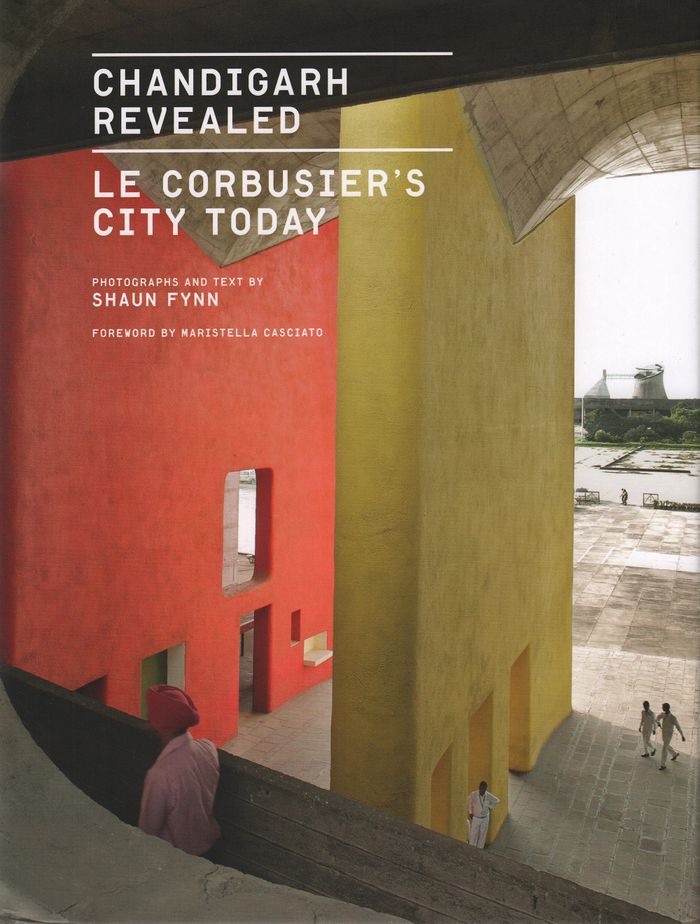
Chandigarh revealed: Le Corbusier's city today
Actions:
Price:
$85.00
(available to order)
Summary:
In 1950, Indian prime minister Jawaharlal Nehru invited legendary French-Swiss architect Le Corbusier to embark on one of the greatest experiments in urban planning history: to build a new capital Chandigarh, a city whose monumental modernism promised to free India from the fetters of colonial tradition. 'six decades after its founding and on the eve of its becoming a UNESCO World Heritage Site in 2016, photographer and Chandigarh resident Shaun Fynn was granted unprecedented access to turn his lens on Le Corbusier's city and capture what is rarely seen: the living metropolis behind the master plan. Fynn's captivating images of the city and its inhabitants reveal how the poetry of the architect's compositions has been shaped by the tumult of everyday life. Alongside descriptions of the city's architectural highlights, Chandigarh Revealed features a foreword by Le Corbusier authority Maristella Casciato, an essay by architectural historian Vikram ditya Prak sh, an interview with M. N. Sharma one of two surviving members of Le Corbusier's team and custom-designed maps to orient readers.
Chandigarh revealed: Le Corbusier's city today
Actions:
Price:
$85.00
(available to order)
Summary:
In 1950, Indian prime minister Jawaharlal Nehru invited legendary French-Swiss architect Le Corbusier to embark on one of the greatest experiments in urban planning history: to build a new capital Chandigarh, a city whose monumental modernism promised to free India from the fetters of colonial tradition. 'six decades after its founding and on the eve of its becoming a UNESCO World Heritage Site in 2016, photographer and Chandigarh resident Shaun Fynn was granted unprecedented access to turn his lens on Le Corbusier's city and capture what is rarely seen: the living metropolis behind the master plan. Fynn's captivating images of the city and its inhabitants reveal how the poetry of the architect's compositions has been shaped by the tumult of everyday life. Alongside descriptions of the city's architectural highlights, Chandigarh Revealed features a foreword by Le Corbusier authority Maristella Casciato, an essay by architectural historian Vikram ditya Prak sh, an interview with M. N. Sharma one of two surviving members of Le Corbusier's team and custom-designed maps to orient readers.
Form:
books
books
Publication:
April 2017
April 2017
Subject:
Architecture Monographs
Architecture Monographs
Form:
books
books
Title:
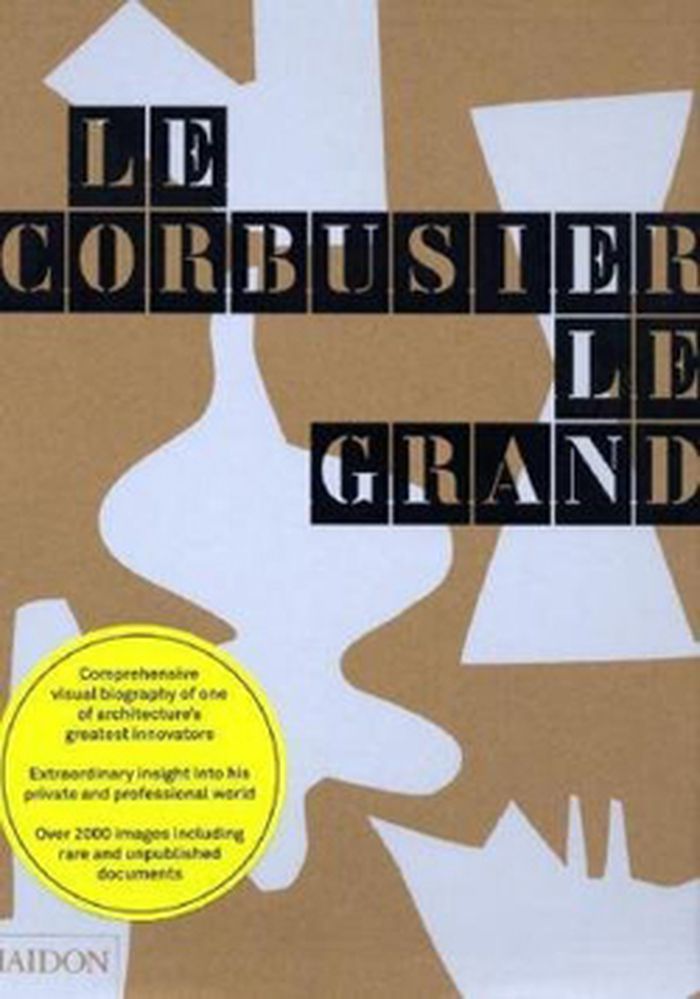
le Corbusier le Grand
le Corbusier le Grand
Actions:
Price:
$220.00
(available to order)
Summary:
Le Corbusier (1887-1965) was born Charles-Edouard Jeanneret in La Chaux-de-Fonds, Switzerland. The self-named Le Corbusier was not only the creator of some of the most important and impressive buildings of the last century--Villa Savoye at Poissy, the Chapel of Notre-Dame-du-Haut at Ronchamp, the capitol complex in Chandigarh, India--he was also an accomplished painter,(...)
$220.00
(available to order)
Summary:
Le Corbusier (1887-1965) was born Charles-Edouard Jeanneret in La Chaux-de-Fonds, Switzerland. The self-named Le Corbusier was not only the creator of some of the most important and impressive buildings of the last century--Villa Savoye at Poissy, the Chapel of Notre-Dame-du-Haut at Ronchamp, the capitol complex in Chandigarh, India--he was also an accomplished painter,(...)
Subject:
Architecture Monographs
Architecture Monographs
Publication:
May 2008, New York
May 2008, New York
Title:
le Corbusier le Grand
Actions:
Price:
$220.00
(available to order)
Summary:
Le Corbusier (1887-1965) was born Charles-Edouard Jeanneret in La Chaux-de-Fonds, Switzerland. The self-named Le Corbusier was not only the creator of some of the most important and impressive buildings of the last century--Villa Savoye at Poissy, the Chapel of Notre-Dame-du-Haut at Ronchamp, the capitol complex in Chandigarh, India--he was also an accomplished painter, sculptor, furniture designer, urbanist, and author. His work and social theories continue to be a dominant force in the world of architecture and design, while his elegant bearing, bow tie, and round black eyeglasses are still today a signature look for architects around the world. Le Corbusier Le Grand’s oversized format and luxurious binding reflect the legendary status of this “giant” of twentieth-century architecture and design. The book includes an insightful introductory essay by France’s most authoritative architectural historian and critic, Jean-Louis Cohen, and incisive chapter introductions by highly regarded Le Corbusier scholar Tim Benton. A separate booklet includes translations of documents, many of which have never been translated into English before.
le Corbusier le Grand
Actions:
Price:
$220.00
(available to order)
Summary:
Le Corbusier (1887-1965) was born Charles-Edouard Jeanneret in La Chaux-de-Fonds, Switzerland. The self-named Le Corbusier was not only the creator of some of the most important and impressive buildings of the last century--Villa Savoye at Poissy, the Chapel of Notre-Dame-du-Haut at Ronchamp, the capitol complex in Chandigarh, India--he was also an accomplished painter, sculptor, furniture designer, urbanist, and author. His work and social theories continue to be a dominant force in the world of architecture and design, while his elegant bearing, bow tie, and round black eyeglasses are still today a signature look for architects around the world. Le Corbusier Le Grand’s oversized format and luxurious binding reflect the legendary status of this “giant” of twentieth-century architecture and design. The book includes an insightful introductory essay by France’s most authoritative architectural historian and critic, Jean-Louis Cohen, and incisive chapter introductions by highly regarded Le Corbusier scholar Tim Benton. A separate booklet includes translations of documents, many of which have never been translated into English before.
Form:
books
books
Publication:
May 2008, New York
May 2008, New York
Subject:
Architecture Monographs
Architecture Monographs
Form:
books
books
Actions:
Price:
$36.95
(available to order)
Summary:
In ''The sovereign self', Grant H. Kester examines the evolving discourse of aesthetic autonomy from its origins in the Enlightenment through avant-garde projects and movements in the nineteenth and twentieth centuries. Kester traces the idea of aesthetic autonomy-the sense that art should be autonomous from social forces while retaining the ability to reflect back(...)
$36.95
(available to order)
Summary:
In ''The sovereign self', Grant H. Kester examines the evolving discourse of aesthetic autonomy from its origins in the Enlightenment through avant-garde projects and movements in the nineteenth and twentieth centuries. Kester traces the idea of aesthetic autonomy-the sense that art should be autonomous from social forces while retaining the ability to reflect back(...)
Title:
The sovereign self: Aesthetic autonomy from the Enlightenment to the Avant-Garde
Actions:
Price:
$36.95
(available to order)
Summary:
In ''The sovereign self', Grant H. Kester examines the evolving discourse of aesthetic autonomy from its origins in the Enlightenment through avant-garde projects and movements in the nineteenth and twentieth centuries. Kester traces the idea of aesthetic autonomy-the sense that art should be autonomous from social forces while retaining the ability to reflect back critically on society-through Kant, Schiller, Hegel, Marx, and Adorno. Kester critiques the use of aesthetic autonomy as the basis for understanding the nature of art and the shifting relationship between art and revolutionary praxis. He shows that dominant discourses of aesthetic autonomy reproduce the very forms of bourgeois liberalism that autonomy discourse itself claims to challenge. Analyzing avant-garde art and political movements in Russia, India, Latin America, and elsewhere, Kester retheorizes the aesthetic beyond autonomy. Ultimately, Kester demonstrates that the question of aesthetic autonomy has ramifications that extend beyond art to encompass the nature of political transformation and forms of anticolonial resistance that challenge the Eurocentric concept of ''Man,'' upon which the aesthetic itself often depends.
The sovereign self: Aesthetic autonomy from the Enlightenment to the Avant-Garde
Actions:
Price:
$36.95
(available to order)
Summary:
In ''The sovereign self', Grant H. Kester examines the evolving discourse of aesthetic autonomy from its origins in the Enlightenment through avant-garde projects and movements in the nineteenth and twentieth centuries. Kester traces the idea of aesthetic autonomy-the sense that art should be autonomous from social forces while retaining the ability to reflect back critically on society-through Kant, Schiller, Hegel, Marx, and Adorno. Kester critiques the use of aesthetic autonomy as the basis for understanding the nature of art and the shifting relationship between art and revolutionary praxis. He shows that dominant discourses of aesthetic autonomy reproduce the very forms of bourgeois liberalism that autonomy discourse itself claims to challenge. Analyzing avant-garde art and political movements in Russia, India, Latin America, and elsewhere, Kester retheorizes the aesthetic beyond autonomy. Ultimately, Kester demonstrates that the question of aesthetic autonomy has ramifications that extend beyond art to encompass the nature of political transformation and forms of anticolonial resistance that challenge the Eurocentric concept of ''Man,'' upon which the aesthetic itself often depends.
Form:
books
books
Publication:
August 2023
August 2023
Subject:
Art Theory
Art Theory
Form:
books
books
Actions:
Price:
$80.95
(available to order)
Summary:
This new monograph delves into an exciting selection of esteemed works by Delhi-based firm Morphogenesis, one of the most productive and creative architectural firms in India and a world-leader in zero net energy and sustainable design. This richly illustrated book combines stunning imagery with a comprehensive study outlining the firms strong philosophical design intent(...)
$80.95
(available to order)
Summary:
This new monograph delves into an exciting selection of esteemed works by Delhi-based firm Morphogenesis, one of the most productive and creative architectural firms in India and a world-leader in zero net energy and sustainable design. This richly illustrated book combines stunning imagery with a comprehensive study outlining the firms strong philosophical design intent(...)
Title:
Morphogenesis. The Indian perspective. The global context.
Actions:
Price:
$80.95
(available to order)
Summary:
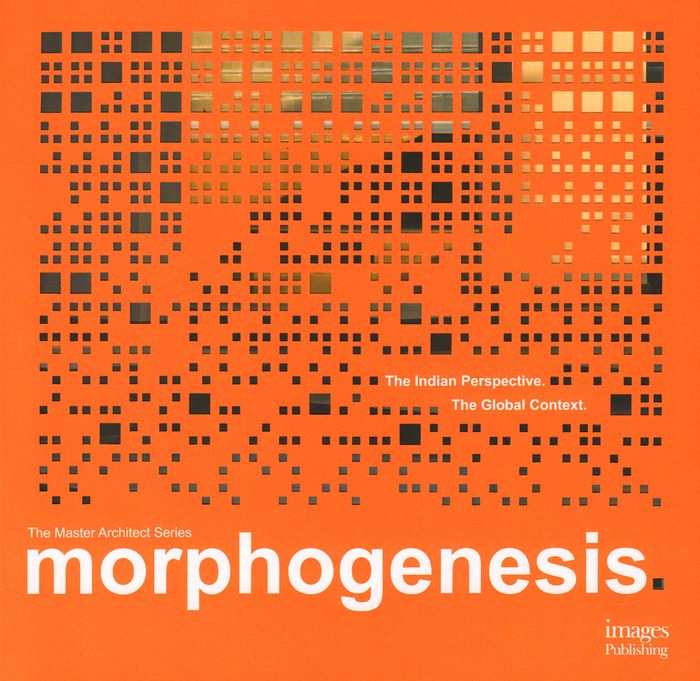
This new monograph delves into an exciting selection of esteemed works by Delhi-based firm Morphogenesis, one of the most productive and creative architectural firms in India and a world-leader in zero net energy and sustainable design. This richly illustrated book combines stunning imagery with a comprehensive study outlining the firms strong philosophical design intent across a vast range of typologies: residential; institutional; commercial; hospitality; offices; houses; interiors; public and master planning. Morphogenesis reinterprets India's architectural roots and consistently employs passive environmental solutions for a unique, contextual contemporary language. The Morphogenesis journey is a reflection of the contemporary Indian perspective within the global context, incorporating its inspired, forward-thinking vision while respectfully referencing the spirit of traditional Indian subcontinental architecture, and all the while maintaining an intimate focus on the environmental context and culture of the project. This spectacularly beautiful volume is a strong addition to IMAGES' collection of the renowned Master Architect Series and a superb example of an engaged, highly principled and vibrant emerging architectural practice in Asia that is defining a global architectural brand for countries that share similar extraordinary levels of diversity in climate, scale, economy, and typology as is seen across the subcontinent.
Morphogenesis. The Indian perspective. The global context.
Actions:
Price:
$80.95
(available to order)
Summary:
This new monograph delves into an exciting selection of esteemed works by Delhi-based firm Morphogenesis, one of the most productive and creative architectural firms in India and a world-leader in zero net energy and sustainable design. This richly illustrated book combines stunning imagery with a comprehensive study outlining the firms strong philosophical design intent across a vast range of typologies: residential; institutional; commercial; hospitality; offices; houses; interiors; public and master planning. Morphogenesis reinterprets India's architectural roots and consistently employs passive environmental solutions for a unique, contextual contemporary language. The Morphogenesis journey is a reflection of the contemporary Indian perspective within the global context, incorporating its inspired, forward-thinking vision while respectfully referencing the spirit of traditional Indian subcontinental architecture, and all the while maintaining an intimate focus on the environmental context and culture of the project. This spectacularly beautiful volume is a strong addition to IMAGES' collection of the renowned Master Architect Series and a superb example of an engaged, highly principled and vibrant emerging architectural practice in Asia that is defining a global architectural brand for countries that share similar extraordinary levels of diversity in climate, scale, economy, and typology as is seen across the subcontinent.
Form:
books
books
Publication:
December 2016
December 2016
Subject:
Architecture Monographs
Architecture Monographs
Form:
books
books
Actions:
Price:
$35.95
(available to order)
Summary:
Borrowing its title from Gregg Araki’s 2005 film, in which the camera’s contemplation of the male body encourages us to feel that body, and covering a broad span of subjects and films, Mysterious Skin offers a wider, more representative picture of the depiction of the male body in contemporary world cinemas than has hitherto been attempted. An international array of(...)
$35.95
(available to order)
Summary:
Borrowing its title from Gregg Araki’s 2005 film, in which the camera’s contemplation of the male body encourages us to feel that body, and covering a broad span of subjects and films, Mysterious Skin offers a wider, more representative picture of the depiction of the male body in contemporary world cinemas than has hitherto been attempted. An international array of(...)
Title:
Mysterious skin: male bodies in contemporary cinema
Actions:
Price:
$35.95
(available to order)
Summary:
Borrowing its title from Gregg Araki’s 2005 film, in which the camera’s contemplation of the male body encourages us to feel that body, and covering a broad span of subjects and films, Mysterious Skin offers a wider, more representative picture of the depiction of the male body in contemporary world cinemas than has hitherto been attempted. An international array of major experts explore the treatment of masculinity and the male body in the cinemas of Africa, Australia, China, France, Germany, Great Britain, India, North America, Spain, Taiwan and Vietnam, as well as Hollywood. Their common concern is to reveal how the representation of the male body is used in films to convey a country’s anxieties about its national identity and history, as well as how it engages with questions of racial, sexual or gender politics. They discuss key actors, directors and films of these countries, from Ewan MacGregor in Peter Greenaway’s The Pillow Book, through the films of Wong Kar Wai, to Paul Hogan as Mick Dundee in Crocodile Dundee. In so doing, Mysterious Skin also provides a strong overview of important cinema produced around the world in the last twenty years.
Mysterious skin: male bodies in contemporary cinema
Actions:
Price:
$35.95
(available to order)
Summary:
Borrowing its title from Gregg Araki’s 2005 film, in which the camera’s contemplation of the male body encourages us to feel that body, and covering a broad span of subjects and films, Mysterious Skin offers a wider, more representative picture of the depiction of the male body in contemporary world cinemas than has hitherto been attempted. An international array of major experts explore the treatment of masculinity and the male body in the cinemas of Africa, Australia, China, France, Germany, Great Britain, India, North America, Spain, Taiwan and Vietnam, as well as Hollywood. Their common concern is to reveal how the representation of the male body is used in films to convey a country’s anxieties about its national identity and history, as well as how it engages with questions of racial, sexual or gender politics. They discuss key actors, directors and films of these countries, from Ewan MacGregor in Peter Greenaway’s The Pillow Book, through the films of Wong Kar Wai, to Paul Hogan as Mick Dundee in Crocodile Dundee. In so doing, Mysterious Skin also provides a strong overview of important cinema produced around the world in the last twenty years.
Form:
books
books
Publication:
January 1900
January 1900
Subject:
Contemporary Art Monographs
Contemporary Art Monographs
Form:
books
books
Actions:
Price:
$130.00
(available to order)
Summary:
Designated by King George V to replace Calcutta as capital of British India, New Delhi was constructed between 1912 and 1929 under the eye of architect Sir Edward Lutyens who sought to bring to this British colony a sense of classicism, order, and institutional beauty. With more than 300 colour and black and white illustrations, plans and photographs, this book presents(...)
$130.00
(available to order)
Summary:
Designated by King George V to replace Calcutta as capital of British India, New Delhi was constructed between 1912 and 1929 under the eye of architect Sir Edward Lutyens who sought to bring to this British colony a sense of classicism, order, and institutional beauty. With more than 300 colour and black and white illustrations, plans and photographs, this book presents(...)
Title:
Imperial Delhi : the British capital of the Indian Empire
Actions:
Price:
$130.00
(available to order)
Summary:
Designated by King George V to replace Calcutta as capital of British India, New Delhi was constructed between 1912 and 1929 under the eye of architect Sir Edward Lutyens who sought to bring to this British colony a sense of classicism, order, and institutional beauty. With more than 300 colour and black and white illustrations, plans and photographs, this book presents the most comprehensive examination to date of how this city was envisioned, planned, and constructed. From the massive war memorial arch and resplendent sandstone and marble government house to the spacious gardens and the gloriously imposing Viceroy's House, the evidence of Lutyen’s architectural genius is everywhere throughout New Delhi. As architectural historian Andreas Volwahsen discusses the importance of Lutyen’s work he provides a fascinating account of the making of a city: the contentious debates and cultural considerations, the inspiration and the painstaking construction, and finally the ways in which New Delhi has evolved into a modern city. With the growing interest in the preservation of historic sights worldwide, this magnificently detailed yet highly accessible history is certain to become a classic in the fields of architecture and urban design.
Imperial Delhi : the British capital of the Indian Empire
Actions:
Price:
$130.00
(available to order)
Summary:
Designated by King George V to replace Calcutta as capital of British India, New Delhi was constructed between 1912 and 1929 under the eye of architect Sir Edward Lutyens who sought to bring to this British colony a sense of classicism, order, and institutional beauty. With more than 300 colour and black and white illustrations, plans and photographs, this book presents the most comprehensive examination to date of how this city was envisioned, planned, and constructed. From the massive war memorial arch and resplendent sandstone and marble government house to the spacious gardens and the gloriously imposing Viceroy's House, the evidence of Lutyen’s architectural genius is everywhere throughout New Delhi. As architectural historian Andreas Volwahsen discusses the importance of Lutyen’s work he provides a fascinating account of the making of a city: the contentious debates and cultural considerations, the inspiration and the painstaking construction, and finally the ways in which New Delhi has evolved into a modern city. With the growing interest in the preservation of historic sights worldwide, this magnificently detailed yet highly accessible history is certain to become a classic in the fields of architecture and urban design.
Form:
books
books
Publication:
October 2002, Munich
October 2002, Munich
Subject:
Arch Middle East
Arch Middle East
Form:
books
books

Title:
Movements & moments
Movements & moments
Actions:
Price:
$34.95
(available to order)
Summary:
In 1930s Bolivia, self-described Anarchist Cholas form a libertarian trade union. In the Northern Highlands of Vietnam, the songs of one girl’s youth lead her to a life of activism. In the Philippines, female elders from Kalinga blaze a trail when pushed into impromptu protest. Equally striking accounts from Brazil, Chile, Ecuador, India, Nepal, Peru and Thailand weave a(...)
$34.95
(available to order)
Summary:
In 1930s Bolivia, self-described Anarchist Cholas form a libertarian trade union. In the Northern Highlands of Vietnam, the songs of one girl’s youth lead her to a life of activism. In the Philippines, female elders from Kalinga blaze a trail when pushed into impromptu protest. Equally striking accounts from Brazil, Chile, Ecuador, India, Nepal, Peru and Thailand weave a(...)
Title:
Movements & moments
Actions:
Price:
$34.95
(available to order)
Summary:
In 1930s Bolivia, self-described Anarchist Cholas form a libertarian trade union. In the Northern Highlands of Vietnam, the songs of one girl’s youth lead her to a life of activism. In the Philippines, female elders from Kalinga blaze a trail when pushed into impromptu protest. Equally striking accounts from Brazil, Chile, Ecuador, India, Nepal, Peru and Thailand weave a tapestry of trauma and triumph, shedding light on not-too-distant histories otherwise overlooked. Indigenous Peoples all over the world have always had to stand their ground in the face of colonialism. While the details may differ, what these stories have in common is their commitment to resistance in a world that puts profit before respect, and western notions of progress before their own. Movements and Moments is an introductory glimpse into how Indegenous Peoples tell these stories in their own words. From Southeast Asia to South America, vibrant communities must grapple with colonial realities to assert ownership over their lands and traditions. This project was undertaken in cooperation with the Goethe-Institut Indonesien in Jakarta. These stories were selected from an open call across 42 countries to spotlight feminist movements and advocacies in the Global South.
Movements & moments
Actions:
Price:
$34.95
(available to order)
Summary:
In 1930s Bolivia, self-described Anarchist Cholas form a libertarian trade union. In the Northern Highlands of Vietnam, the songs of one girl’s youth lead her to a life of activism. In the Philippines, female elders from Kalinga blaze a trail when pushed into impromptu protest. Equally striking accounts from Brazil, Chile, Ecuador, India, Nepal, Peru and Thailand weave a tapestry of trauma and triumph, shedding light on not-too-distant histories otherwise overlooked. Indigenous Peoples all over the world have always had to stand their ground in the face of colonialism. While the details may differ, what these stories have in common is their commitment to resistance in a world that puts profit before respect, and western notions of progress before their own. Movements and Moments is an introductory glimpse into how Indegenous Peoples tell these stories in their own words. From Southeast Asia to South America, vibrant communities must grapple with colonial realities to assert ownership over their lands and traditions. This project was undertaken in cooperation with the Goethe-Institut Indonesien in Jakarta. These stories were selected from an open call across 42 countries to spotlight feminist movements and advocacies in the Global South.
Form:
books
books
Publication:
November 2022
November 2022
Subject:
Illustration
Illustration


