


2101 Results
Level of archival description:
Project
Project
Actions:
Reference number:
AP075.S1.2004.PR01
Description:
Project series documents Cornelia Hahn Oberlander's landscape project for the renovations of Buchanan Building at the University of British Columbia, Vancouver. Oberlander worked on this project in 2004 with architectural firm Busby, Perkins + Will Architects. The project consisted in a redesign of the landscaping for the two coutyards separated by a central pavilion and surrounded by the four other blocks of the Buchanan Building. The concept was to created a courtyard for ceremonies and activities and a courtyard for scultpure and contemplation. The east courtyard, designed for sitting and contemplation, included paved pathways circulating amount patches of grass and flower beds, with seating alvoces under the preserved trees to add shade. The west courtyard, designed for activities, consisted in a large parved area with a curving edge along the east side of the courtyard to provide seating and includes a covered café and a water feature. The project series contains sketches by Oberlander, design development drawings, including site plans, landscape plans and concept plans for the courtyards, and presentations drawings, including renderings. The project is also documented through correspondence, including correspondence with architects and consultants, research material, contract, financial documents, specifications, meeting notes, and photographs of existing landscaping.
AP075.S1.2004.PR01
Description:
Project series documents Cornelia Hahn Oberlander's landscape project for the renovations of Buchanan Building at the University of British Columbia, Vancouver. Oberlander worked on this project in 2004 with architectural firm Busby, Perkins + Will Architects. The project consisted in a redesign of the landscaping for the two coutyards separated by a central pavilion and surrounded by the four other blocks of the Buchanan Building. The concept was to created a courtyard for ceremonies and activities and a courtyard for scultpure and contemplation. The east courtyard, designed for sitting and contemplation, included paved pathways circulating amount patches of grass and flower beds, with seating alvoces under the preserved trees to add shade. The west courtyard, designed for activities, consisted in a large parved area with a curving edge along the east side of the courtyard to provide seating and includes a covered café and a water feature. The project series contains sketches by Oberlander, design development drawings, including site plans, landscape plans and concept plans for the courtyards, and presentations drawings, including renderings. The project is also documented through correspondence, including correspondence with architects and consultants, research material, contract, financial documents, specifications, meeting notes, and photographs of existing landscaping.
People:
Date:
2004-2009
2004-2009
Title:
Buchanan Building renovations, University of British Columbia, Vancouver, British Columbia (2004-2009)
Actions:
AP075.S1.2004.PR01
Description:
Project series documents Cornelia Hahn Oberlander's landscape project for the renovations of Buchanan Building at the University of British Columbia, Vancouver. Oberlander worked on this project in 2004 with architectural firm Busby, Perkins + Will Architects. The project consisted in a redesign of the landscaping for the two coutyards separated by a central pavilion and surrounded by the four other blocks of the Buchanan Building. The concept was to created a courtyard for ceremonies and activities and a courtyard for scultpure and contemplation. The east courtyard, designed for sitting and contemplation, included paved pathways circulating amount patches of grass and flower beds, with seating alvoces under the preserved trees to add shade. The west courtyard, designed for activities, consisted in a large parved area with a curving edge along the east side of the courtyard to provide seating and includes a covered café and a water feature. The project series contains sketches by Oberlander, design development drawings, including site plans, landscape plans and concept plans for the courtyards, and presentations drawings, including renderings. The project is also documented through correspondence, including correspondence with architects and consultants, research material, contract, financial documents, specifications, meeting notes, and photographs of existing landscaping.
Buchanan Building renovations, University of British Columbia, Vancouver, British Columbia (2004-2009)
Actions:
AP075.S1.2004.PR01
Description:
Project series documents Cornelia Hahn Oberlander's landscape project for the renovations of Buchanan Building at the University of British Columbia, Vancouver. Oberlander worked on this project in 2004 with architectural firm Busby, Perkins + Will Architects. The project consisted in a redesign of the landscaping for the two coutyards separated by a central pavilion and surrounded by the four other blocks of the Buchanan Building. The concept was to created a courtyard for ceremonies and activities and a courtyard for scultpure and contemplation. The east courtyard, designed for sitting and contemplation, included paved pathways circulating amount patches of grass and flower beds, with seating alvoces under the preserved trees to add shade. The west courtyard, designed for activities, consisted in a large parved area with a curving edge along the east side of the courtyard to provide seating and includes a covered café and a water feature. The project series contains sketches by Oberlander, design development drawings, including site plans, landscape plans and concept plans for the courtyards, and presentations drawings, including renderings. The project is also documented through correspondence, including correspondence with architects and consultants, research material, contract, financial documents, specifications, meeting notes, and photographs of existing landscaping.
Level of archival description:
Project
Project
Date:
2004-2009
2004-2009
People:
Level of archival description:
Project
Project
Reference number:
AP148.S1.1988.PR02
Description:
Project series comprises material related to a design entry for a 1988 competition on the environmental redevelopment of the San Carlo quarry in the comune of Castelnuovo Berardenga near Siena, Italy. Poli dates this project as 1988, though most of the material is undated (only 2 drawings are dated 1988). However, the project description text includes a bibliography making reference to 1991 publications, though it is possible that this document was created later than the drawings. Project material includes numerous drawings and collages, some which are overlayed with wax, one which features a metal object, and some drawn directly onto topographical maps. Project material also includes a model, a photomontage featuring images of the quarry site and geological strata, and a typed project description. Parts of the text in the project description also appear on some of the drawings. Many of the drawings feature a circular design that is repeated throughout the drawing material in this series. Poli's proposal for the redevelopment seemed to involve the addition of trees to the area and the development of a passageway. One of Poli's drawings makes reference to the earth moon highway featured in an earlier project, Interplanetary Architecture (see AP148.S1.1970.PR02).
AP148.S1.1988.PR02
Description:
Project series comprises material related to a design entry for a 1988 competition on the environmental redevelopment of the San Carlo quarry in the comune of Castelnuovo Berardenga near Siena, Italy. Poli dates this project as 1988, though most of the material is undated (only 2 drawings are dated 1988). However, the project description text includes a bibliography making reference to 1991 publications, though it is possible that this document was created later than the drawings. Project material includes numerous drawings and collages, some which are overlayed with wax, one which features a metal object, and some drawn directly onto topographical maps. Project material also includes a model, a photomontage featuring images of the quarry site and geological strata, and a typed project description. Parts of the text in the project description also appear on some of the drawings. Many of the drawings feature a circular design that is repeated throughout the drawing material in this series. Poli's proposal for the redevelopment seemed to involve the addition of trees to the area and the development of a passageway. One of Poli's drawings makes reference to the earth moon highway featured in an earlier project, Interplanetary Architecture (see AP148.S1.1970.PR02).
People:
Date:
1988
1988
Title:
Ideas competition, Riqualificazione cava di San Carlo [Redevelopment San Carlo quarry], San Vincenzo, Livorno, Italy (1988)
Actions:
AP148.S1.1988.PR02
Description:
Project series comprises material related to a design entry for a 1988 competition on the environmental redevelopment of the San Carlo quarry in the comune of Castelnuovo Berardenga near Siena, Italy. Poli dates this project as 1988, though most of the material is undated (only 2 drawings are dated 1988). However, the project description text includes a bibliography making reference to 1991 publications, though it is possible that this document was created later than the drawings. Project material includes numerous drawings and collages, some which are overlayed with wax, one which features a metal object, and some drawn directly onto topographical maps. Project material also includes a model, a photomontage featuring images of the quarry site and geological strata, and a typed project description. Parts of the text in the project description also appear on some of the drawings. Many of the drawings feature a circular design that is repeated throughout the drawing material in this series. Poli's proposal for the redevelopment seemed to involve the addition of trees to the area and the development of a passageway. One of Poli's drawings makes reference to the earth moon highway featured in an earlier project, Interplanetary Architecture (see AP148.S1.1970.PR02).
Ideas competition, Riqualificazione cava di San Carlo [Redevelopment San Carlo quarry], San Vincenzo, Livorno, Italy (1988)
Actions:
AP148.S1.1988.PR02
Description:
Project series comprises material related to a design entry for a 1988 competition on the environmental redevelopment of the San Carlo quarry in the comune of Castelnuovo Berardenga near Siena, Italy. Poli dates this project as 1988, though most of the material is undated (only 2 drawings are dated 1988). However, the project description text includes a bibliography making reference to 1991 publications, though it is possible that this document was created later than the drawings. Project material includes numerous drawings and collages, some which are overlayed with wax, one which features a metal object, and some drawn directly onto topographical maps. Project material also includes a model, a photomontage featuring images of the quarry site and geological strata, and a typed project description. Parts of the text in the project description also appear on some of the drawings. Many of the drawings feature a circular design that is repeated throughout the drawing material in this series. Poli's proposal for the redevelopment seemed to involve the addition of trees to the area and the development of a passageway. One of Poli's drawings makes reference to the earth moon highway featured in an earlier project, Interplanetary Architecture (see AP148.S1.1970.PR02).
Level of archival description:
Project
Project
Date:
1988
1988
People:
Form:
photographs
photographs
Actions:
Reference number:
PH1983:0042.06:035
Description:
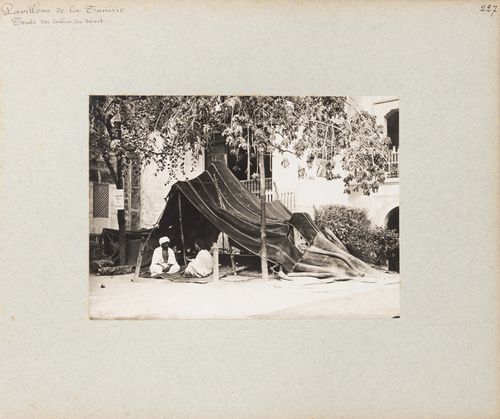
A sign posted on a tree near the tent reads "Tente / Tapis / [des?] / Nomades"
PH1983:0042.06:035
Description:
A sign posted on a tree near the tent reads "Tente / Tapis / [des?] / Nomades"
People:
Date:
1900
1900
Title:
View of Bedouin tent with two men seated at entrance, Tunisian section, Exposition universelle, 1900, Paris, France
Actions:
PH1983:0042.06:035
Description:
A sign posted on a tree near the tent reads "Tente / Tapis / [des?] / Nomades"
View of Bedouin tent with two men seated at entrance, Tunisian section, Exposition universelle, 1900, Paris, France
Actions:
PH1983:0042.06:035
Description:
A sign posted on a tree near the tent reads "Tente / Tapis / [des?] / Nomades"
Form:
photographs
photographs
Date:
1900
1900
People:
Level of archival description:
Project
Project
Reference number:
AP075.S1.2003.PR06
Description:
Project series documents Cornelia Hahn Oberlander's landscape design proposal for the Calgary Law Courts, located on the city block between 6th and the 7th Avenue, in Calgary, Alberta. This project was part of a design competition in 2004. Oberlander concept for the landscape consisted in depicting Albert's natural landscape of the Rockies, the foothills, and the prairie. The Rockies were to be recreated with excavation material from the site and would include a water feature spilling in a elongated water basins in the foothills, transforming into the prairie represented by tall grasses. Large lawn and bosque of Aspen trees would represente the City and provides shade and seating areas. The planting plan included the use of low maintenance and indigenous plants. The project also included a green roof on top of the Council Chamber and was planned to allow the reuse of storm water. The project was not realized. The project series contains perspective drawings and site plans showing planters concept, and a complete set of building plans used as reference. The project is also documented throught correspondence, including correspondence with architects, consultants and clients, competition information, competition proposal, including landscape concept proposal by Oberlander, financial documents and photographs of the site.
AP075.S1.2003.PR06
Description:
Project series documents Cornelia Hahn Oberlander's landscape design proposal for the Calgary Law Courts, located on the city block between 6th and the 7th Avenue, in Calgary, Alberta. This project was part of a design competition in 2004. Oberlander concept for the landscape consisted in depicting Albert's natural landscape of the Rockies, the foothills, and the prairie. The Rockies were to be recreated with excavation material from the site and would include a water feature spilling in a elongated water basins in the foothills, transforming into the prairie represented by tall grasses. Large lawn and bosque of Aspen trees would represente the City and provides shade and seating areas. The planting plan included the use of low maintenance and indigenous plants. The project also included a green roof on top of the Council Chamber and was planned to allow the reuse of storm water. The project was not realized. The project series contains perspective drawings and site plans showing planters concept, and a complete set of building plans used as reference. The project is also documented throught correspondence, including correspondence with architects, consultants and clients, competition information, competition proposal, including landscape concept proposal by Oberlander, financial documents and photographs of the site.
People:
Date:
2003-2004
2003-2004
Title:
Calgary Law Courts, Calgary, Alberta (2003-2004)
Actions:
AP075.S1.2003.PR06
Description:
Project series documents Cornelia Hahn Oberlander's landscape design proposal for the Calgary Law Courts, located on the city block between 6th and the 7th Avenue, in Calgary, Alberta. This project was part of a design competition in 2004. Oberlander concept for the landscape consisted in depicting Albert's natural landscape of the Rockies, the foothills, and the prairie. The Rockies were to be recreated with excavation material from the site and would include a water feature spilling in a elongated water basins in the foothills, transforming into the prairie represented by tall grasses. Large lawn and bosque of Aspen trees would represente the City and provides shade and seating areas. The planting plan included the use of low maintenance and indigenous plants. The project also included a green roof on top of the Council Chamber and was planned to allow the reuse of storm water. The project was not realized. The project series contains perspective drawings and site plans showing planters concept, and a complete set of building plans used as reference. The project is also documented throught correspondence, including correspondence with architects, consultants and clients, competition information, competition proposal, including landscape concept proposal by Oberlander, financial documents and photographs of the site.
Calgary Law Courts, Calgary, Alberta (2003-2004)
Actions:
AP075.S1.2003.PR06
Description:
Project series documents Cornelia Hahn Oberlander's landscape design proposal for the Calgary Law Courts, located on the city block between 6th and the 7th Avenue, in Calgary, Alberta. This project was part of a design competition in 2004. Oberlander concept for the landscape consisted in depicting Albert's natural landscape of the Rockies, the foothills, and the prairie. The Rockies were to be recreated with excavation material from the site and would include a water feature spilling in a elongated water basins in the foothills, transforming into the prairie represented by tall grasses. Large lawn and bosque of Aspen trees would represente the City and provides shade and seating areas. The planting plan included the use of low maintenance and indigenous plants. The project also included a green roof on top of the Council Chamber and was planned to allow the reuse of storm water. The project was not realized. The project series contains perspective drawings and site plans showing planters concept, and a complete set of building plans used as reference. The project is also documented throught correspondence, including correspondence with architects, consultants and clients, competition information, competition proposal, including landscape concept proposal by Oberlander, financial documents and photographs of the site.
Level of archival description:
Project
Project
Date:
2003-2004
2003-2004
People:
Level of archival description:
Project
Project
Actions:
Reference number:
AP075.S1.1979.PR05
Description:
Project series documents Cornelia Hahn Oberlander's landscape project for the Discovery Parks' site on the Simon Fraser University campus, in Burnaby, British Columbia. Created in 1979, Discovery Parks is an organization with the mission to accomodate scientific and technological research activities by building and renting research installations. Initially founded by the provincial government, Discovery Parks became self-governning and independant in 1990. Oberlander worked on this project from 1979-1984 with Russell Vandiver Architects. The project consisted in creating three research building north of University Drive, in the Naheeto Park, with landscaped recreational areas between each buildings. The project was later reduce to one research building located at the corner of Nelson Way and University Drive, on the far east end of the initial site. Oberlander's landscape design consisted in trees planting along the street, the parking lot and the driveway, and creating a recreational area for staff and students. The project series contains textual records, including research, Oberlander's concept notes, project proposals, correspondence with architect and clients, specifications, and financial documents. The project series also comprises photographs and working drawings, such as proposed sites plans, site plans, grading plans, planting plans and landscape plans.
AP075.S1.1979.PR05
Description:
Project series documents Cornelia Hahn Oberlander's landscape project for the Discovery Parks' site on the Simon Fraser University campus, in Burnaby, British Columbia. Created in 1979, Discovery Parks is an organization with the mission to accomodate scientific and technological research activities by building and renting research installations. Initially founded by the provincial government, Discovery Parks became self-governning and independant in 1990. Oberlander worked on this project from 1979-1984 with Russell Vandiver Architects. The project consisted in creating three research building north of University Drive, in the Naheeto Park, with landscaped recreational areas between each buildings. The project was later reduce to one research building located at the corner of Nelson Way and University Drive, on the far east end of the initial site. Oberlander's landscape design consisted in trees planting along the street, the parking lot and the driveway, and creating a recreational area for staff and students. The project series contains textual records, including research, Oberlander's concept notes, project proposals, correspondence with architect and clients, specifications, and financial documents. The project series also comprises photographs and working drawings, such as proposed sites plans, site plans, grading plans, planting plans and landscape plans.
People:
Date:
1971-1989
1971-1989
Title:
Discovery Parks, Simon Fraser University Site, Burnaby, British Columbia (1979-1984)
Actions:
AP075.S1.1979.PR05
Description:
Project series documents Cornelia Hahn Oberlander's landscape project for the Discovery Parks' site on the Simon Fraser University campus, in Burnaby, British Columbia. Created in 1979, Discovery Parks is an organization with the mission to accomodate scientific and technological research activities by building and renting research installations. Initially founded by the provincial government, Discovery Parks became self-governning and independant in 1990. Oberlander worked on this project from 1979-1984 with Russell Vandiver Architects. The project consisted in creating three research building north of University Drive, in the Naheeto Park, with landscaped recreational areas between each buildings. The project was later reduce to one research building located at the corner of Nelson Way and University Drive, on the far east end of the initial site. Oberlander's landscape design consisted in trees planting along the street, the parking lot and the driveway, and creating a recreational area for staff and students. The project series contains textual records, including research, Oberlander's concept notes, project proposals, correspondence with architect and clients, specifications, and financial documents. The project series also comprises photographs and working drawings, such as proposed sites plans, site plans, grading plans, planting plans and landscape plans.
Discovery Parks, Simon Fraser University Site, Burnaby, British Columbia (1979-1984)
Actions:
AP075.S1.1979.PR05
Description:
Project series documents Cornelia Hahn Oberlander's landscape project for the Discovery Parks' site on the Simon Fraser University campus, in Burnaby, British Columbia. Created in 1979, Discovery Parks is an organization with the mission to accomodate scientific and technological research activities by building and renting research installations. Initially founded by the provincial government, Discovery Parks became self-governning and independant in 1990. Oberlander worked on this project from 1979-1984 with Russell Vandiver Architects. The project consisted in creating three research building north of University Drive, in the Naheeto Park, with landscaped recreational areas between each buildings. The project was later reduce to one research building located at the corner of Nelson Way and University Drive, on the far east end of the initial site. Oberlander's landscape design consisted in trees planting along the street, the parking lot and the driveway, and creating a recreational area for staff and students. The project series contains textual records, including research, Oberlander's concept notes, project proposals, correspondence with architect and clients, specifications, and financial documents. The project series also comprises photographs and working drawings, such as proposed sites plans, site plans, grading plans, planting plans and landscape plans.
Level of archival description:
Project
Project
Date:
1971-1989
1971-1989
People:
Form:
drawings
drawings
Actions:
Reference number:
AP046.S1.1983.PR01.418
Description:
This file includes drawing showing proposed tree planting locations for the CCA and gardens.
AP046.S1.1983.PR01.418
Description:
This file includes drawing showing proposed tree planting locations for the CCA and gardens.
People:
Date:
1983-1989
1983-1989
Title:
Graded landscaping plans, Canadian Centre for Architecture, Montréal, Québec
Actions:
AP046.S1.1983.PR01.418
Description:
This file includes drawing showing proposed tree planting locations for the CCA and gardens.
Graded landscaping plans, Canadian Centre for Architecture, Montréal, Québec
Actions:
AP046.S1.1983.PR01.418
Description:
This file includes drawing showing proposed tree planting locations for the CCA and gardens.
Form:
drawings
drawings
Date:
1983-1989
1983-1989
People:
Level of archival description:
Project
Project
Actions:
Reference number:
AP075.S1.2000.PR09
Description:
Project series documents Cornelia Hahn Oberlander's proposal for the landscape projet for the Portside expansion of the Vancouver Convention Centre. Oberlander worked in this project in 2005 with architectural firm Downs, Archambault & Partners Architects and Musson Cattel Mackey Partnership. The team had previously worked together on another project of expansion and redesign of the portiside in the mid-1980s for Canada Place. Like for the previous project, Oberlander's concept design was intended as a way of creating a link between the sea and the city and ease public access to the portside. Oberlander design raised precast planters with a selection of plants and trees adapted to the Burrad Inlet for the promenade. She was also in charge of the landscape design for the terraced roofscape above the new lobby of the Convention Centre, and the planters lining the pedestrian connection to the waterfront walkway. The project series contains design development drawings, including landscape plans, and details for planters, reference drawings of the existing landscape, and working drawings, including landscape plans, irrigation plans, and planting plans. The project is also documented through correspondence, including correspondence with architects, clients, consultants and contractors, Oberlander's concept notes, proposal for the landscape concept, documents related to the plant selection, financial documents, press clippings on the project, and photographs of the planting.
AP075.S1.2000.PR09
Description:
Project series documents Cornelia Hahn Oberlander's proposal for the landscape projet for the Portside expansion of the Vancouver Convention Centre. Oberlander worked in this project in 2005 with architectural firm Downs, Archambault & Partners Architects and Musson Cattel Mackey Partnership. The team had previously worked together on another project of expansion and redesign of the portiside in the mid-1980s for Canada Place. Like for the previous project, Oberlander's concept design was intended as a way of creating a link between the sea and the city and ease public access to the portside. Oberlander design raised precast planters with a selection of plants and trees adapted to the Burrad Inlet for the promenade. She was also in charge of the landscape design for the terraced roofscape above the new lobby of the Convention Centre, and the planters lining the pedestrian connection to the waterfront walkway. The project series contains design development drawings, including landscape plans, and details for planters, reference drawings of the existing landscape, and working drawings, including landscape plans, irrigation plans, and planting plans. The project is also documented through correspondence, including correspondence with architects, clients, consultants and contractors, Oberlander's concept notes, proposal for the landscape concept, documents related to the plant selection, financial documents, press clippings on the project, and photographs of the planting.
People:
Date:
1999-2005
1999-2005
Title:
Vancouver Convention Centre, Portside expansion, British Columbia (2005)
Actions:
AP075.S1.2000.PR09
Description:
Project series documents Cornelia Hahn Oberlander's proposal for the landscape projet for the Portside expansion of the Vancouver Convention Centre. Oberlander worked in this project in 2005 with architectural firm Downs, Archambault & Partners Architects and Musson Cattel Mackey Partnership. The team had previously worked together on another project of expansion and redesign of the portiside in the mid-1980s for Canada Place. Like for the previous project, Oberlander's concept design was intended as a way of creating a link between the sea and the city and ease public access to the portside. Oberlander design raised precast planters with a selection of plants and trees adapted to the Burrad Inlet for the promenade. She was also in charge of the landscape design for the terraced roofscape above the new lobby of the Convention Centre, and the planters lining the pedestrian connection to the waterfront walkway. The project series contains design development drawings, including landscape plans, and details for planters, reference drawings of the existing landscape, and working drawings, including landscape plans, irrigation plans, and planting plans. The project is also documented through correspondence, including correspondence with architects, clients, consultants and contractors, Oberlander's concept notes, proposal for the landscape concept, documents related to the plant selection, financial documents, press clippings on the project, and photographs of the planting.
Vancouver Convention Centre, Portside expansion, British Columbia (2005)
Actions:
AP075.S1.2000.PR09
Description:
Project series documents Cornelia Hahn Oberlander's proposal for the landscape projet for the Portside expansion of the Vancouver Convention Centre. Oberlander worked in this project in 2005 with architectural firm Downs, Archambault & Partners Architects and Musson Cattel Mackey Partnership. The team had previously worked together on another project of expansion and redesign of the portiside in the mid-1980s for Canada Place. Like for the previous project, Oberlander's concept design was intended as a way of creating a link between the sea and the city and ease public access to the portside. Oberlander design raised precast planters with a selection of plants and trees adapted to the Burrad Inlet for the promenade. She was also in charge of the landscape design for the terraced roofscape above the new lobby of the Convention Centre, and the planters lining the pedestrian connection to the waterfront walkway. The project series contains design development drawings, including landscape plans, and details for planters, reference drawings of the existing landscape, and working drawings, including landscape plans, irrigation plans, and planting plans. The project is also documented through correspondence, including correspondence with architects, clients, consultants and contractors, Oberlander's concept notes, proposal for the landscape concept, documents related to the plant selection, financial documents, press clippings on the project, and photographs of the planting.
Level of archival description:
Project
Project
Date:
1999-2005
1999-2005
People:
Level of archival description:
Project
Project
Title:
Campus Commons and Amphitheatre, University of the Cariboo, Kamloops, British Columbia (1991-1994)
Campus Commons and Amphitheatre, University of the Cariboo, Kamloops, British Columbia (1991-1994)
Actions:
Reference number:
AP075.S1.1991.PR02
Description:
Project series documents Cornelia Hahn Oberlander’s landscape project for Campus Commons and Amphitheatre, University of the Cariboo on McGill Road in Kamloops, British Columbia. Oberlander worked on this project in 1991-1993 with architectural firm Downs Archambault & Partners. The landscape design included tree planting for the stairs leading to the amphitheatre and planting around plaza and paved pathways connecting the new campus buildings. The university is now known as the Thompson Rivers University after a merging with the BC Open University in 2005. The project series contains design development drawings, including landscape concept plans, details and planting plans, presentation drawings, including elevations and sections, and working drawings, such as irrigation plans, site plans, planting plans and details. The project is also documented through concept notes by Oberlander, proposals, correspondence with architects and clients, specifications, including landscape specifications, and also photographs of the landscaping.
AP075.S1.1991.PR02
Description:
Project series documents Cornelia Hahn Oberlander’s landscape project for Campus Commons and Amphitheatre, University of the Cariboo on McGill Road in Kamloops, British Columbia. Oberlander worked on this project in 1991-1993 with architectural firm Downs Archambault & Partners. The landscape design included tree planting for the stairs leading to the amphitheatre and planting around plaza and paved pathways connecting the new campus buildings. The university is now known as the Thompson Rivers University after a merging with the BC Open University in 2005. The project series contains design development drawings, including landscape concept plans, details and planting plans, presentation drawings, including elevations and sections, and working drawings, such as irrigation plans, site plans, planting plans and details. The project is also documented through concept notes by Oberlander, proposals, correspondence with architects and clients, specifications, including landscape specifications, and also photographs of the landscaping.
People:
Date:
1990-1994
1990-1994
Title:
Campus Commons and Amphitheatre, University of the Cariboo, Kamloops, British Columbia (1991-1994)
Actions:
AP075.S1.1991.PR02
Description:
Project series documents Cornelia Hahn Oberlander’s landscape project for Campus Commons and Amphitheatre, University of the Cariboo on McGill Road in Kamloops, British Columbia. Oberlander worked on this project in 1991-1993 with architectural firm Downs Archambault & Partners. The landscape design included tree planting for the stairs leading to the amphitheatre and planting around plaza and paved pathways connecting the new campus buildings. The university is now known as the Thompson Rivers University after a merging with the BC Open University in 2005. The project series contains design development drawings, including landscape concept plans, details and planting plans, presentation drawings, including elevations and sections, and working drawings, such as irrigation plans, site plans, planting plans and details. The project is also documented through concept notes by Oberlander, proposals, correspondence with architects and clients, specifications, including landscape specifications, and also photographs of the landscaping.
Campus Commons and Amphitheatre, University of the Cariboo, Kamloops, British Columbia (1991-1994)
Actions:
AP075.S1.1991.PR02
Description:
Project series documents Cornelia Hahn Oberlander’s landscape project for Campus Commons and Amphitheatre, University of the Cariboo on McGill Road in Kamloops, British Columbia. Oberlander worked on this project in 1991-1993 with architectural firm Downs Archambault & Partners. The landscape design included tree planting for the stairs leading to the amphitheatre and planting around plaza and paved pathways connecting the new campus buildings. The university is now known as the Thompson Rivers University after a merging with the BC Open University in 2005. The project series contains design development drawings, including landscape concept plans, details and planting plans, presentation drawings, including elevations and sections, and working drawings, such as irrigation plans, site plans, planting plans and details. The project is also documented through concept notes by Oberlander, proposals, correspondence with architects and clients, specifications, including landscape specifications, and also photographs of the landscaping.
Level of archival description:
Project
Project
Date:
1990-1994
1990-1994
People:
Level of archival description:
Project
Project
Reference number:
AP075.S1.1993.PR01
Description:
Project series documents Cornelia Hahn Oberlnader's landscape project for the C. K. Choi Building of the Institute of Asian Research at the University of British Columbia, Vancouver. Oberlander worked on this project from 1993-1995 with architectural firm Matsuzaki Wright Architects. The project consisted in creating a environmentally responsible building as well as for the landscape design. In this idea, Oberlander's landscape design only included native plans that need little maintenance, to avoid the usage of pesticides, and allow the use of organic fertilizers. She also selected trees valued as excellent absorbers of air polluants for the planting on the street edge. [1] The project was completed in 1995. The project series includes sketches design development drawings, including landscape plans, landscape details and sections, presentation drawings, working drawings, such as site plans, grading plans, and planting details, and building construction drawings used as reference.The project is also documented through concept notes by Oberlander, correspondence with architects, clients and consultants, documents related to plant selection, specifications, financial documents, and some press clippings and promotional material about the project. The project series also includes photographs of the landscaping work. Sources: [1] Herrington, Susan. Cornelia Hahn Oberlander: Making the Modern Landscape, University of Virginia Press, 2014, 304 pages, p. 184.
AP075.S1.1993.PR01
Description:
Project series documents Cornelia Hahn Oberlnader's landscape project for the C. K. Choi Building of the Institute of Asian Research at the University of British Columbia, Vancouver. Oberlander worked on this project from 1993-1995 with architectural firm Matsuzaki Wright Architects. The project consisted in creating a environmentally responsible building as well as for the landscape design. In this idea, Oberlander's landscape design only included native plans that need little maintenance, to avoid the usage of pesticides, and allow the use of organic fertilizers. She also selected trees valued as excellent absorbers of air polluants for the planting on the street edge. [1] The project was completed in 1995. The project series includes sketches design development drawings, including landscape plans, landscape details and sections, presentation drawings, working drawings, such as site plans, grading plans, and planting details, and building construction drawings used as reference.The project is also documented through concept notes by Oberlander, correspondence with architects, clients and consultants, documents related to plant selection, specifications, financial documents, and some press clippings and promotional material about the project. The project series also includes photographs of the landscaping work. Sources: [1] Herrington, Susan. Cornelia Hahn Oberlander: Making the Modern Landscape, University of Virginia Press, 2014, 304 pages, p. 184.
People:
Date:
1991-2001
1991-2001
Title:
C. K. Choi Institute of Asian Research, University of British Columbia, Vancouver, British Columbia (1993-1996)
Actions:
AP075.S1.1993.PR01
Description:
Project series documents Cornelia Hahn Oberlnader's landscape project for the C. K. Choi Building of the Institute of Asian Research at the University of British Columbia, Vancouver. Oberlander worked on this project from 1993-1995 with architectural firm Matsuzaki Wright Architects. The project consisted in creating a environmentally responsible building as well as for the landscape design. In this idea, Oberlander's landscape design only included native plans that need little maintenance, to avoid the usage of pesticides, and allow the use of organic fertilizers. She also selected trees valued as excellent absorbers of air polluants for the planting on the street edge. [1] The project was completed in 1995. The project series includes sketches design development drawings, including landscape plans, landscape details and sections, presentation drawings, working drawings, such as site plans, grading plans, and planting details, and building construction drawings used as reference.The project is also documented through concept notes by Oberlander, correspondence with architects, clients and consultants, documents related to plant selection, specifications, financial documents, and some press clippings and promotional material about the project. The project series also includes photographs of the landscaping work. Sources: [1] Herrington, Susan. Cornelia Hahn Oberlander: Making the Modern Landscape, University of Virginia Press, 2014, 304 pages, p. 184.
C. K. Choi Institute of Asian Research, University of British Columbia, Vancouver, British Columbia (1993-1996)
Actions:
AP075.S1.1993.PR01
Description:
Project series documents Cornelia Hahn Oberlnader's landscape project for the C. K. Choi Building of the Institute of Asian Research at the University of British Columbia, Vancouver. Oberlander worked on this project from 1993-1995 with architectural firm Matsuzaki Wright Architects. The project consisted in creating a environmentally responsible building as well as for the landscape design. In this idea, Oberlander's landscape design only included native plans that need little maintenance, to avoid the usage of pesticides, and allow the use of organic fertilizers. She also selected trees valued as excellent absorbers of air polluants for the planting on the street edge. [1] The project was completed in 1995. The project series includes sketches design development drawings, including landscape plans, landscape details and sections, presentation drawings, working drawings, such as site plans, grading plans, and planting details, and building construction drawings used as reference.The project is also documented through concept notes by Oberlander, correspondence with architects, clients and consultants, documents related to plant selection, specifications, financial documents, and some press clippings and promotional material about the project. The project series also includes photographs of the landscaping work. Sources: [1] Herrington, Susan. Cornelia Hahn Oberlander: Making the Modern Landscape, University of Virginia Press, 2014, 304 pages, p. 184.
Level of archival description:
Project
Project
Date:
1991-2001
1991-2001
People:
Level of archival description:
Project
Project
Reference number:
AP075.S1.1983.PR02
Description:
Project series documents Cornelia Hahn Oberlander's landscape project for the Canadian Chancery on Pennsylvania Avenue, in Washington D.C. Oberlander worked in this project from 1983-1989 with architect Arthur Erickson. Oberlander and Erickson received the National Landscape Award for the project landscape design. The design included a paved courtyard accessible through Pennsylvania Avenue and John Marshall Place Park. Oberlanded connected the park, designed by landscape architect Carol L. Johnson in 1983, to the Chancery site by adding a paving area in place of the closed street separating the two blocks. A terraced façade featuring a hanging garden with trees and roses was design as a way of extending the John Marshall Park up to the roof of the building. The project series contains sketches and working drawings for the landscaping, including planting plans, irrigation plans, planters details, sections and planters irrigation plans, and architectural plans provided for reference use. It also contains photographs of the building and the courtyard landscaping. The project is also documented through textual records, including concept notes by Oberlander, correspondence with clients, architects, suppliers and consultants, specifications, meetings notes, financial documents, promotional material and articles on the project. Source: Herrington, Susan. Cornelia Hahn Oberlander: Making the Modern Landscape, University of Virginia Press, 2014, 304 pages.
AP075.S1.1983.PR02
Description:
Project series documents Cornelia Hahn Oberlander's landscape project for the Canadian Chancery on Pennsylvania Avenue, in Washington D.C. Oberlander worked in this project from 1983-1989 with architect Arthur Erickson. Oberlander and Erickson received the National Landscape Award for the project landscape design. The design included a paved courtyard accessible through Pennsylvania Avenue and John Marshall Place Park. Oberlanded connected the park, designed by landscape architect Carol L. Johnson in 1983, to the Chancery site by adding a paving area in place of the closed street separating the two blocks. A terraced façade featuring a hanging garden with trees and roses was design as a way of extending the John Marshall Park up to the roof of the building. The project series contains sketches and working drawings for the landscaping, including planting plans, irrigation plans, planters details, sections and planters irrigation plans, and architectural plans provided for reference use. It also contains photographs of the building and the courtyard landscaping. The project is also documented through textual records, including concept notes by Oberlander, correspondence with clients, architects, suppliers and consultants, specifications, meetings notes, financial documents, promotional material and articles on the project. Source: Herrington, Susan. Cornelia Hahn Oberlander: Making the Modern Landscape, University of Virginia Press, 2014, 304 pages.
People:
Date:
1983-1990
1983-1990
Title:
Canadian Chancery, Washington D.C. (1983-1990)
Actions:
AP075.S1.1983.PR02
Description:
Project series documents Cornelia Hahn Oberlander's landscape project for the Canadian Chancery on Pennsylvania Avenue, in Washington D.C. Oberlander worked in this project from 1983-1989 with architect Arthur Erickson. Oberlander and Erickson received the National Landscape Award for the project landscape design. The design included a paved courtyard accessible through Pennsylvania Avenue and John Marshall Place Park. Oberlanded connected the park, designed by landscape architect Carol L. Johnson in 1983, to the Chancery site by adding a paving area in place of the closed street separating the two blocks. A terraced façade featuring a hanging garden with trees and roses was design as a way of extending the John Marshall Park up to the roof of the building. The project series contains sketches and working drawings for the landscaping, including planting plans, irrigation plans, planters details, sections and planters irrigation plans, and architectural plans provided for reference use. It also contains photographs of the building and the courtyard landscaping. The project is also documented through textual records, including concept notes by Oberlander, correspondence with clients, architects, suppliers and consultants, specifications, meetings notes, financial documents, promotional material and articles on the project. Source: Herrington, Susan. Cornelia Hahn Oberlander: Making the Modern Landscape, University of Virginia Press, 2014, 304 pages.
Canadian Chancery, Washington D.C. (1983-1990)
Actions:
AP075.S1.1983.PR02
Description:
Project series documents Cornelia Hahn Oberlander's landscape project for the Canadian Chancery on Pennsylvania Avenue, in Washington D.C. Oberlander worked in this project from 1983-1989 with architect Arthur Erickson. Oberlander and Erickson received the National Landscape Award for the project landscape design. The design included a paved courtyard accessible through Pennsylvania Avenue and John Marshall Place Park. Oberlanded connected the park, designed by landscape architect Carol L. Johnson in 1983, to the Chancery site by adding a paving area in place of the closed street separating the two blocks. A terraced façade featuring a hanging garden with trees and roses was design as a way of extending the John Marshall Park up to the roof of the building. The project series contains sketches and working drawings for the landscaping, including planting plans, irrigation plans, planters details, sections and planters irrigation plans, and architectural plans provided for reference use. It also contains photographs of the building and the courtyard landscaping. The project is also documented through textual records, including concept notes by Oberlander, correspondence with clients, architects, suppliers and consultants, specifications, meetings notes, financial documents, promotional material and articles on the project. Source: Herrington, Susan. Cornelia Hahn Oberlander: Making the Modern Landscape, University of Virginia Press, 2014, 304 pages.
Level of archival description:
Project
Project
Date:
1983-1990
1983-1990
People:


