


6832 Results
Form:
books
books
Actions:
Price:
$39.50
(available to order)
Summary:
Magnificent Buildings, Splendid Gardens returns to print some of the most important works of David Coffin, a leading authority on Renaissance architecture who, as one of the first scholars to apply the tools of art history to the study of gardens, became a founder of the discipline of garden and landscape studies. These essays span the wide range of Coffin's work, from(...)
$39.50
(available to order)
Summary:
Magnificent Buildings, Splendid Gardens returns to print some of the most important works of David Coffin, a leading authority on Renaissance architecture who, as one of the first scholars to apply the tools of art history to the study of gardens, became a founder of the discipline of garden and landscape studies. These essays span the wide range of Coffin's work, from(...)
Title:
Magnificent buildings, splendid gardens
Actions:
Price:
$39.50
(available to order)
Summary:
Magnificent Buildings, Splendid Gardens returns to print some of the most important works of David Coffin, a leading authority on Renaissance architecture who, as one of the first scholars to apply the tools of art history to the study of gardens, became a founder of the discipline of garden and landscape studies. These essays span the wide range of Coffin's work, from Italian Renaissance architecture, garden design, sculpture, and drawings to English gardens and landscape designers of the seventeenth to early nineteenth centuries. Coffin's approaches are as varied as his subject matter. Some of these essays present the results of his archival research, including his discovery of crucial documents on the Emilian architect Giovan Battista Aleotti and the only documentary evidence identifying Vignola as the architect of the Villa Lante at Bagnaia. Other essays take a much broader cultural view, investigating, for example, the phenomenon of public access to private Renaissance gardens, elucidating the evolving meaning of images of the goddess Venus in English gardens, and identifying the significance of the decorative programs of monuments as diverse as the Villa Belvedere in Rome and the eighteenth-century gardens at Rousham in Oxfordshire. The book also includes a commentary on each essay, written by one of Coffin's former students; a full analytical index; and a complete bibliography of Coffin's work.
Magnificent buildings, splendid gardens
Actions:
Price:
$39.50
(available to order)
Summary:
Magnificent Buildings, Splendid Gardens returns to print some of the most important works of David Coffin, a leading authority on Renaissance architecture who, as one of the first scholars to apply the tools of art history to the study of gardens, became a founder of the discipline of garden and landscape studies. These essays span the wide range of Coffin's work, from Italian Renaissance architecture, garden design, sculpture, and drawings to English gardens and landscape designers of the seventeenth to early nineteenth centuries. Coffin's approaches are as varied as his subject matter. Some of these essays present the results of his archival research, including his discovery of crucial documents on the Emilian architect Giovan Battista Aleotti and the only documentary evidence identifying Vignola as the architect of the Villa Lante at Bagnaia. Other essays take a much broader cultural view, investigating, for example, the phenomenon of public access to private Renaissance gardens, elucidating the evolving meaning of images of the goddess Venus in English gardens, and identifying the significance of the decorative programs of monuments as diverse as the Villa Belvedere in Rome and the eighteenth-century gardens at Rousham in Oxfordshire. The book also includes a commentary on each essay, written by one of Coffin's former students; a full analytical index; and a complete bibliography of Coffin's work.
Form:
books
books
Publication:
March 2008, New Haven
March 2008, New Haven
Subject:
Gardens
Gardens
Form:
books
books
Actions:
Price:
$52.50
(available to order)
Summary:
On connaissait André Malraux écrivain, sensible à la peinture, à la sculpture, aux arts d'Extrême-Orient ou d'Afrique. Mais il fut également très attentif à la création architecturale française et à la protection du patrimoine. Ministre fondateur des Affaires culturelles sous le général de Gaulle, de 1959 à 1969, il contribua à donner à l'architecture et au patrimoine un(...)
$52.50
(available to order)
Summary:
On connaissait André Malraux écrivain, sensible à la peinture, à la sculpture, aux arts d'Extrême-Orient ou d'Afrique. Mais il fut également très attentif à la création architecturale française et à la protection du patrimoine. Ministre fondateur des Affaires culturelles sous le général de Gaulle, de 1959 à 1969, il contribua à donner à l'architecture et au patrimoine un(...)
Title:
André Malraux et l'architecture
Actions:
Price:
$52.50
(available to order)
Summary:
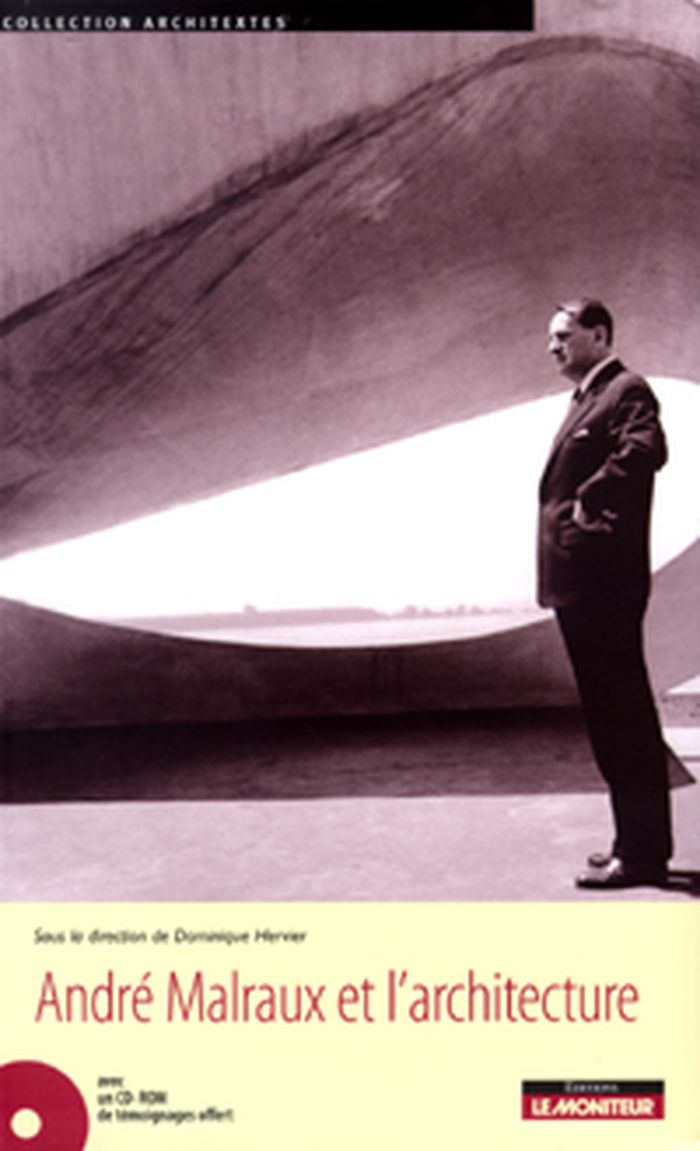
On connaissait André Malraux écrivain, sensible à la peinture, à la sculpture, aux arts d'Extrême-Orient ou d'Afrique. Mais il fut également très attentif à la création architecturale française et à la protection du patrimoine. Ministre fondateur des Affaires culturelles sous le général de Gaulle, de 1959 à 1969, il contribua à donner à l'architecture et au patrimoine un élan novateur. Il mit en place les fondements de la protection du patrimoine du XXe siècle, lança l'Inventaire général, la loi sur les secteurs sauvegardés et s'intéressa à la commande publique (les préfectures des nouveaux départements de la couronne parisienne, les maisons de la culture, le projet de musée du Vingtième-Siècle), nouant au fil des années des rapports admiratifs ou amicaux avec les architectes contemporains : Le Corbusier bien sûr, Wogenscky, Faugeron. Issu des communications présentées lors de la journée d'études organisée par le comité d'histoire du ministère pour le trentième anniversaire de la mort d'André Malraux, en 2006, cet ouvrage collectif, grâce à l'apport de recherches récentes et de documents inédits, éclaire la politique de l'architecture et du patrimoine des débuts de la Cinquième République. Le CD qui l'accompagne permet d'écouter de nombreux témoignages sur le rôle de l'écrivain-ministre en matière d'architecture et de patrimoine, ainsi que le célèbre hommage à Le Corbusier, prononcé en 1965.
André Malraux et l'architecture
Actions:
Price:
$52.50
(available to order)
Summary:
On connaissait André Malraux écrivain, sensible à la peinture, à la sculpture, aux arts d'Extrême-Orient ou d'Afrique. Mais il fut également très attentif à la création architecturale française et à la protection du patrimoine. Ministre fondateur des Affaires culturelles sous le général de Gaulle, de 1959 à 1969, il contribua à donner à l'architecture et au patrimoine un élan novateur. Il mit en place les fondements de la protection du patrimoine du XXe siècle, lança l'Inventaire général, la loi sur les secteurs sauvegardés et s'intéressa à la commande publique (les préfectures des nouveaux départements de la couronne parisienne, les maisons de la culture, le projet de musée du Vingtième-Siècle), nouant au fil des années des rapports admiratifs ou amicaux avec les architectes contemporains : Le Corbusier bien sûr, Wogenscky, Faugeron. Issu des communications présentées lors de la journée d'études organisée par le comité d'histoire du ministère pour le trentième anniversaire de la mort d'André Malraux, en 2006, cet ouvrage collectif, grâce à l'apport de recherches récentes et de documents inédits, éclaire la politique de l'architecture et du patrimoine des débuts de la Cinquième République. Le CD qui l'accompagne permet d'écouter de nombreux témoignages sur le rôle de l'écrivain-ministre en matière d'architecture et de patrimoine, ainsi que le célèbre hommage à Le Corbusier, prononcé en 1965.
Form:
books
books
Publication:
August 2008, Paris
August 2008, Paris
Subject:
Architectural Theory
Architectural Theory
Form:
books
books
Price:
$120.00
(available to order)
Summary:
Addressing fundamental problems in modern Western approaches to art, this book proposes a conceptual frame-work for the analysis and understanding of all art by replacing the notion of the 'visual arts' with that of the 'spatial arts', which comprise two fundamental categories: 'real space' and 'virtual space'. Real space is the space we share with other people and(...)
$120.00
(available to order)
Summary:
Addressing fundamental problems in modern Western approaches to art, this book proposes a conceptual frame-work for the analysis and understanding of all art by replacing the notion of the 'visual arts' with that of the 'spatial arts', which comprise two fundamental categories: 'real space' and 'virtual space'. Real space is the space we share with other people and(...)
Title:
Real spaces : world art history and the rise of Western modernism
Actions:
Price:
$120.00
(available to order)
Summary:
Addressing fundamental problems in modern Western approaches to art, this book proposes a conceptual frame-work for the analysis and understanding of all art by replacing the notion of the 'visual arts' with that of the 'spatial arts', which comprise two fundamental categories: 'real space' and 'virtual space'. Real space is the space we share with other people and things, and its fundamental arts are sculpture - the art of personal space - and architecture, the art of social space. Virtual space, representing real space in two dimensions, as in paintings, drawings and prints, always entails a format in real space, thus making real space the primary category. Using these distinctions and adopting a wide definition of art that in principle embraces anything that is made, the author examines some of the basic characteristics of all art in a survey that traces the development of human skill from the first hominid tools to the sophisticated universal three-dimensional grid of modern technology, which he describes as 'metaoptical' space. Successive chapters deal with facture, refinement and the discovery of abstract relations; the making of places, boundaries and alignments; the creation of centres and the relations between art, order and political power; the origins of three-dimensional, planar and virtual images; planarity and the development of measures, ratios and grids; virtual images, the development of perspective and the essentially centreless metaoptical world of Western modernism.
Real spaces : world art history and the rise of Western modernism
Actions:
Price:
$120.00
(available to order)
Summary:
Addressing fundamental problems in modern Western approaches to art, this book proposes a conceptual frame-work for the analysis and understanding of all art by replacing the notion of the 'visual arts' with that of the 'spatial arts', which comprise two fundamental categories: 'real space' and 'virtual space'. Real space is the space we share with other people and things, and its fundamental arts are sculpture - the art of personal space - and architecture, the art of social space. Virtual space, representing real space in two dimensions, as in paintings, drawings and prints, always entails a format in real space, thus making real space the primary category. Using these distinctions and adopting a wide definition of art that in principle embraces anything that is made, the author examines some of the basic characteristics of all art in a survey that traces the development of human skill from the first hominid tools to the sophisticated universal three-dimensional grid of modern technology, which he describes as 'metaoptical' space. Successive chapters deal with facture, refinement and the discovery of abstract relations; the making of places, boundaries and alignments; the creation of centres and the relations between art, order and political power; the origins of three-dimensional, planar and virtual images; planarity and the development of measures, ratios and grids; virtual images, the development of perspective and the essentially centreless metaoptical world of Western modernism.
Form:
books
books
Publication:
May 2003, London / New York
May 2003, London / New York
Subject:
Architectural Theory
Architectural Theory
Form:
books
books
Actions:
Price:
$42.00
(available to order)
Summary:
Art historian Hans Belting proposes a new anthropological theory for interpreting human picture making. Rather than focus exclusively on pictures as they are embodied in various media such as painting, sculpture, or photography, he links pictures to our mental images and therefore our bodies. The body is understood as a "living medium" that produces, perceives, or(...)
$42.00
(available to order)
Summary:
Art historian Hans Belting proposes a new anthropological theory for interpreting human picture making. Rather than focus exclusively on pictures as they are embodied in various media such as painting, sculpture, or photography, he links pictures to our mental images and therefore our bodies. The body is understood as a "living medium" that produces, perceives, or(...)
Title:
An anthropology of images: picture, medium, body
Actions:
Price:
$42.00
(available to order)
Summary:
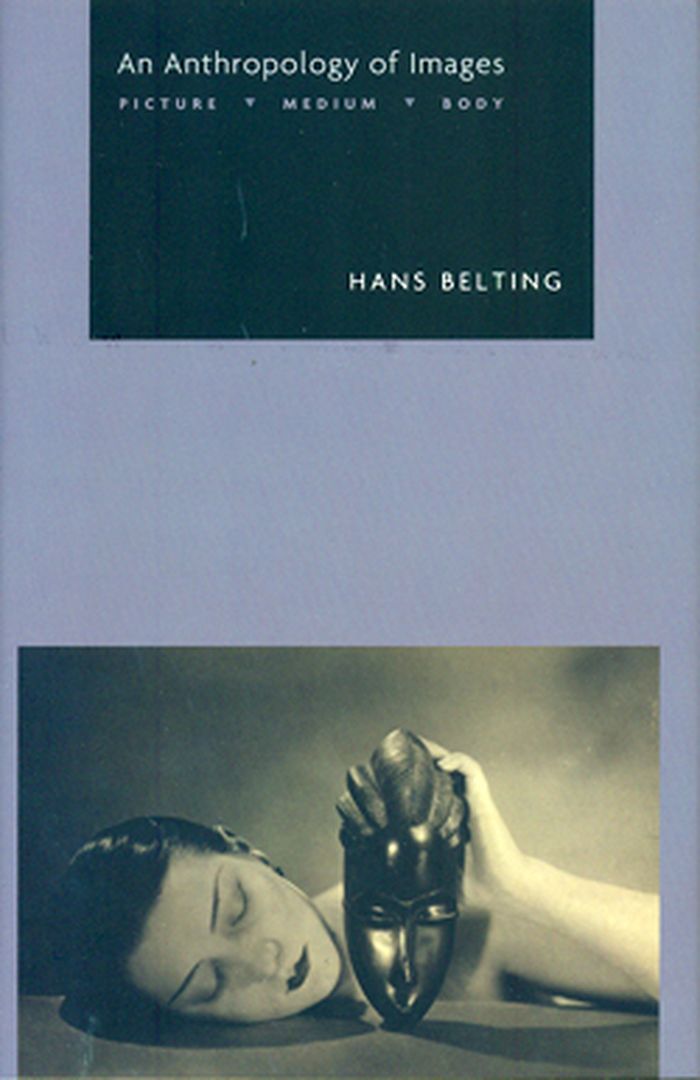
Art historian Hans Belting proposes a new anthropological theory for interpreting human picture making. Rather than focus exclusively on pictures as they are embodied in various media such as painting, sculpture, or photography, he links pictures to our mental images and therefore our bodies. The body is understood as a "living medium" that produces, perceives, or remembers images that are different from the images we encounter through handmade or technical pictures. Refusing to reduce images to their material embodiment yet acknowledging the importance of the historical media in which images are manifested, this publication presents a challenging and provocative new account of what pictures are and how they function. The book demonstrates these ideas with a series of case studies, ranging from Dante's picture theory to post-photography. One chapter explores the tension between image and medium in two "media of the body," the coat of arms and the portrait painting. Another, central chapter looks at the relationship between image and death, tracing picture production, including the first use of the mask, to early funerary rituals in which pictures served to represent the missing bodies of the dead. Pictures were tools to re-embody the deceased, to make them present again, a fact that offers a surprising clue to the riddle of presence and absence in most pictures and that reveals a genealogy of pictures obscured by Platonic picture theory.
An anthropology of images: picture, medium, body
Actions:
Price:
$42.00
(available to order)
Summary:
Art historian Hans Belting proposes a new anthropological theory for interpreting human picture making. Rather than focus exclusively on pictures as they are embodied in various media such as painting, sculpture, or photography, he links pictures to our mental images and therefore our bodies. The body is understood as a "living medium" that produces, perceives, or remembers images that are different from the images we encounter through handmade or technical pictures. Refusing to reduce images to their material embodiment yet acknowledging the importance of the historical media in which images are manifested, this publication presents a challenging and provocative new account of what pictures are and how they function. The book demonstrates these ideas with a series of case studies, ranging from Dante's picture theory to post-photography. One chapter explores the tension between image and medium in two "media of the body," the coat of arms and the portrait painting. Another, central chapter looks at the relationship between image and death, tracing picture production, including the first use of the mask, to early funerary rituals in which pictures served to represent the missing bodies of the dead. Pictures were tools to re-embody the deceased, to make them present again, a fact that offers a surprising clue to the riddle of presence and absence in most pictures and that reveals a genealogy of pictures obscured by Platonic picture theory.
Form:
books
books
Publication:
September 2011
September 2011
Subject:
Art Theory
Art Theory
Form:
books
books

Title:
The ethics of earth art
The ethics of earth art
Actions:
Price:
$27.95
(available to order)
Summary:
Since its inception in the 1960s, the earth art movement has sought to make visible the elusive presence of nature. Though most often associated with monumental land-based sculptures, earth art encompasses a wide range of media, from sculpture, body art performances, and installations to photographic interventions, public protest art, and community projects. In this(...)
$27.95
(available to order)
Summary:
Since its inception in the 1960s, the earth art movement has sought to make visible the elusive presence of nature. Though most often associated with monumental land-based sculptures, earth art encompasses a wide range of media, from sculpture, body art performances, and installations to photographic interventions, public protest art, and community projects. In this(...)
Title:
The ethics of earth art
Actions:
Price:
$27.95
(available to order)
Summary:
Since its inception in the 1960s, the earth art movement has sought to make visible the elusive presence of nature. Though most often associated with monumental land-based sculptures, earth art encompasses a wide range of media, from sculpture, body art performances, and installations to photographic interventions, public protest art, and community projects. In this book, Amanda Boetzkes analyzes the development of the earth art movement, arguing that such diverse artists as Robert Smithson, Ana Mendieta, James Turrell, Jackie Brookner, Olafur Eliasson, Basia Irland, and Ichi Ikeda are connected through their elucidation of the earth as a domain of ethical concern. Boetzkes contends that in basing their works’ relationship to the natural world on receptivity rather than representation, earth artists take an ethical stance that counters both the instrumental view that seeks to master nature and the Romantic view that posits a return to a mythical state of unencumbered continuity with nature. By incorporating receptive surfaces into their work—film footage of glaring sunlight, an aperture in a chamber that opens to the sky, or a porous armature on which vegetation grows—earth artists articulate the dilemma of representation that nature presents. Revealing the fundamental difference between the human world and the earth, Boetzkes shows that earth art mediates the sensations of nature while allowing nature itself to remain irreducible to human signification.
The ethics of earth art
Actions:
Price:
$27.95
(available to order)
Summary:
Since its inception in the 1960s, the earth art movement has sought to make visible the elusive presence of nature. Though most often associated with monumental land-based sculptures, earth art encompasses a wide range of media, from sculpture, body art performances, and installations to photographic interventions, public protest art, and community projects. In this book, Amanda Boetzkes analyzes the development of the earth art movement, arguing that such diverse artists as Robert Smithson, Ana Mendieta, James Turrell, Jackie Brookner, Olafur Eliasson, Basia Irland, and Ichi Ikeda are connected through their elucidation of the earth as a domain of ethical concern. Boetzkes contends that in basing their works’ relationship to the natural world on receptivity rather than representation, earth artists take an ethical stance that counters both the instrumental view that seeks to master nature and the Romantic view that posits a return to a mythical state of unencumbered continuity with nature. By incorporating receptive surfaces into their work—film footage of glaring sunlight, an aperture in a chamber that opens to the sky, or a porous armature on which vegetation grows—earth artists articulate the dilemma of representation that nature presents. Revealing the fundamental difference between the human world and the earth, Boetzkes shows that earth art mediates the sensations of nature while allowing nature itself to remain irreducible to human signification.
Form:
books
books
Publication:
July 2010
July 2010
Subject:
Land Art
Land Art
Form:
books
books
Actions:
Price:
$33.95
(available to order)
Summary:
Poets often have responded vitally to the art of their time, and ever since Susan Stewart began writing about art in the early 1980s, her work has resonated with practicing artists, curators, art historians, and art critics. Rooted in a broad and learned range of references, Stewart's fresh and independent essays bridge the fields of literature, aesthetics, and(...)
$33.95
(available to order)
Summary:
Poets often have responded vitally to the art of their time, and ever since Susan Stewart began writing about art in the early 1980s, her work has resonated with practicing artists, curators, art historians, and art critics. Rooted in a broad and learned range of references, Stewart's fresh and independent essays bridge the fields of literature, aesthetics, and(...)
Title:
The open studio : Essays on art and aesthetics
Actions:
Price:
$33.95
(available to order)
Summary:
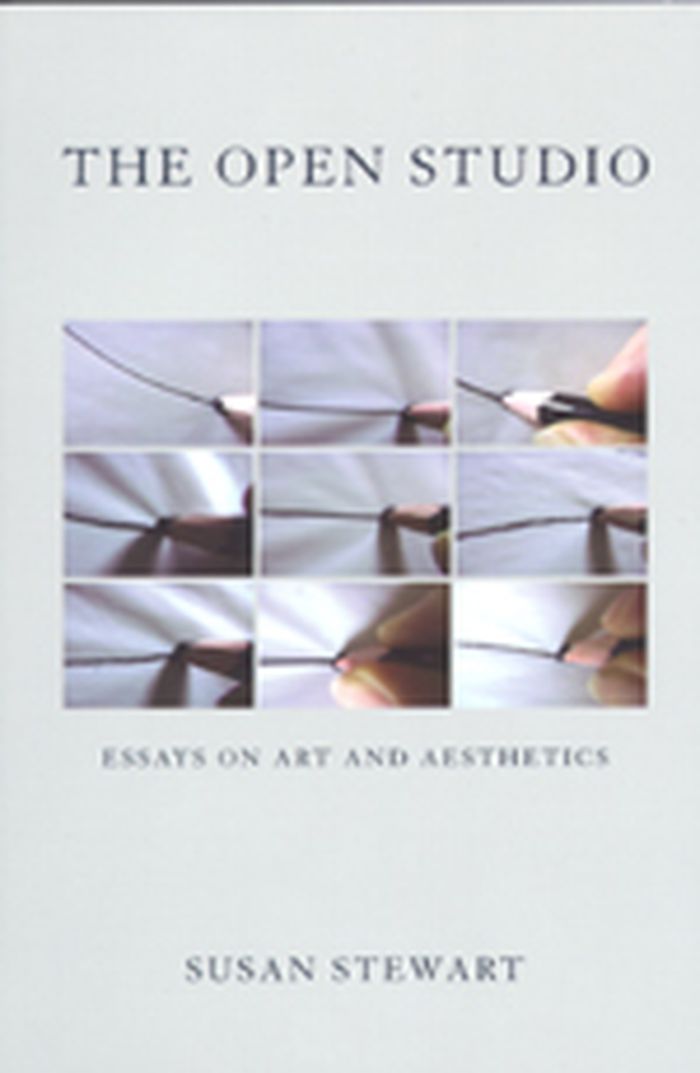
Poets often have responded vitally to the art of their time, and ever since Susan Stewart began writing about art in the early 1980s, her work has resonated with practicing artists, curators, art historians, and art critics. Rooted in a broad and learned range of references, Stewart's fresh and independent essays bridge the fields of literature, aesthetics, and contemporary art. Gathering most of Stewart's writing on contemporary art—long and short pieces first published in small magazines, museum and gallery publications, and edited collections—The Open Studio illuminates work ranging from the installation art of Ann Hamilton to the sculptures and watercolors of Thomas Schütte, the prints and animations of William Kentridge to the films of Tacita Dean. Stewart's essays are often the record of studio conversations with living artists and curators, and of the afterlife of those experiences in the solitude of her own study. Considering a wide variety of art forms, Stewart finds pathbreaking ways to explore them. Whether she is following central traditions of painting, drawing, sculpture, film, photography, and printmaking or exploring the less well-known realms of portrait miniatures, collecting practices, doll-making, music boxes, and gardening, Stewart speaks to the creative process in general and to the relation between art and ethics. The Open Studio will be read eagerly by scholars of art, poetry, and visual theory; by historians interested in the links between contemporary and classic literature and art; and by teachers, students, and practitioners of the visual arts.
The open studio : Essays on art and aesthetics
Actions:
Price:
$33.95
(available to order)
Summary:
Poets often have responded vitally to the art of their time, and ever since Susan Stewart began writing about art in the early 1980s, her work has resonated with practicing artists, curators, art historians, and art critics. Rooted in a broad and learned range of references, Stewart's fresh and independent essays bridge the fields of literature, aesthetics, and contemporary art. Gathering most of Stewart's writing on contemporary art—long and short pieces first published in small magazines, museum and gallery publications, and edited collections—The Open Studio illuminates work ranging from the installation art of Ann Hamilton to the sculptures and watercolors of Thomas Schütte, the prints and animations of William Kentridge to the films of Tacita Dean. Stewart's essays are often the record of studio conversations with living artists and curators, and of the afterlife of those experiences in the solitude of her own study. Considering a wide variety of art forms, Stewart finds pathbreaking ways to explore them. Whether she is following central traditions of painting, drawing, sculpture, film, photography, and printmaking or exploring the less well-known realms of portrait miniatures, collecting practices, doll-making, music boxes, and gardening, Stewart speaks to the creative process in general and to the relation between art and ethics. The Open Studio will be read eagerly by scholars of art, poetry, and visual theory; by historians interested in the links between contemporary and classic literature and art; and by teachers, students, and practitioners of the visual arts.
Form:
books
books
Publication:
September 2004, Chicago London
September 2004, Chicago London
Subject:
Art Theory
Art Theory
Form:
books
books
Title:
Roman Signer
Roman Signer
Actions:
Price:
$59.95
(available to order)
Summary:
Since the mid 1970s Roman Signer has examined the forces of the elements – air, fire, earth and water – in a combination of performance (documented by photography and video) and sculpture (the physical remains of his acts). With a Dadaist love for the absurd, his artworks include Race (1981), in which the artist races a rocket across a field (hopelessly behind from the(...)
$59.95
(available to order)
Summary:
Since the mid 1970s Roman Signer has examined the forces of the elements – air, fire, earth and water – in a combination of performance (documented by photography and video) and sculpture (the physical remains of his acts). With a Dadaist love for the absurd, his artworks include Race (1981), in which the artist races a rocket across a field (hopelessly behind from the(...)
Subject:
Contemporary Art Monographs
Contemporary Art Monographs
Publication:
June 2006, London
June 2006, London
Title:
Roman Signer
Actions:
Price:
$59.95
(available to order)
Summary:
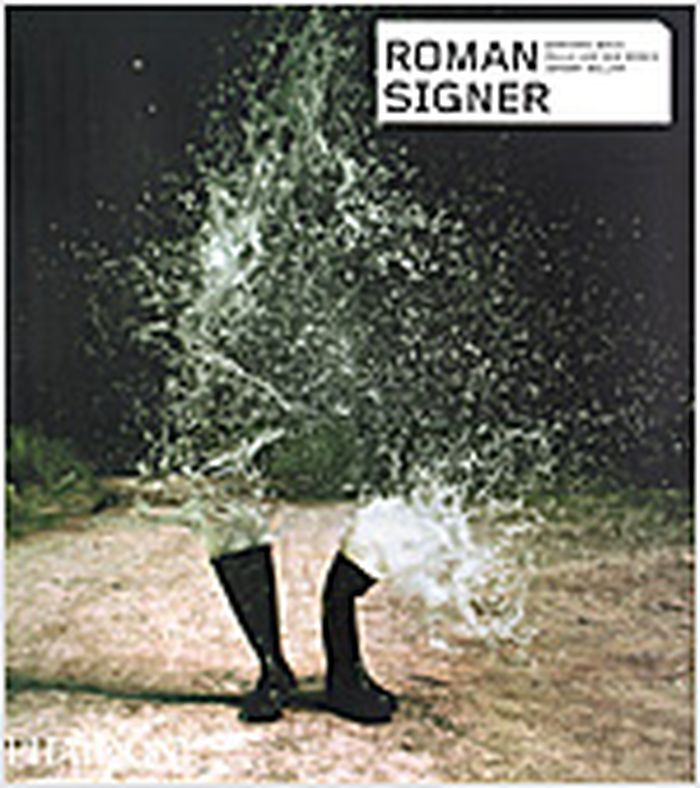
Since the mid 1970s Roman Signer has examined the forces of the elements – air, fire, earth and water – in a combination of performance (documented by photography and video) and sculpture (the physical remains of his acts). With a Dadaist love for the absurd, his artworks include Race (1981), in which the artist races a rocket across a field (hopelessly behind from the outset, the artist loses by nearly the entire length); Action at Hotel Weissbad (1992), in which an ordinary table is shot out a hotel window, the resulting photographs showing a table flying incongruously over a sleepy Swiss village; Power of Rain (1974), in which rainwater gathers slowly in a funnel until its force shatters a block of plaster; and Bicycle with Rockets (1991), the photographs of which show a fiery bicycle flying through the gallery like a demon comet. Often Signer will exhibit in the gallery the remains of an event not witnessed by the public, such as four empty barrels and a violently splattered wall, the remains of an explosion of paint in the gallery space (Portrait Gallery, 1993), or four sand piles with perfectly round craters on each, the neat result of four simultaneous explosions at their peaks (Cones of Sand, 1988). Roman Signer’s work has been exhibited at major venues across Europe and North America, as well as important international exhibitions such as Documenta 8 (1987), Skulptur Projekte in Munster (1997) and the 48th Venice Biennale (1999), in which he represented Switzerland.
Roman Signer
Actions:
Price:
$59.95
(available to order)
Summary:
Since the mid 1970s Roman Signer has examined the forces of the elements – air, fire, earth and water – in a combination of performance (documented by photography and video) and sculpture (the physical remains of his acts). With a Dadaist love for the absurd, his artworks include Race (1981), in which the artist races a rocket across a field (hopelessly behind from the outset, the artist loses by nearly the entire length); Action at Hotel Weissbad (1992), in which an ordinary table is shot out a hotel window, the resulting photographs showing a table flying incongruously over a sleepy Swiss village; Power of Rain (1974), in which rainwater gathers slowly in a funnel until its force shatters a block of plaster; and Bicycle with Rockets (1991), the photographs of which show a fiery bicycle flying through the gallery like a demon comet. Often Signer will exhibit in the gallery the remains of an event not witnessed by the public, such as four empty barrels and a violently splattered wall, the remains of an explosion of paint in the gallery space (Portrait Gallery, 1993), or four sand piles with perfectly round craters on each, the neat result of four simultaneous explosions at their peaks (Cones of Sand, 1988). Roman Signer’s work has been exhibited at major venues across Europe and North America, as well as important international exhibitions such as Documenta 8 (1987), Skulptur Projekte in Munster (1997) and the 48th Venice Biennale (1999), in which he represented Switzerland.
Form:
books
books
Publication:
June 2006, London
June 2006, London
Subject:
Contemporary Art Monographs
Contemporary Art Monographs
Form:
books
books
Actions:
Price:
$31.95
(available to order)
Summary:
German artist Kurt Schwitters' Hannover Merzbau, a combination of collage, sculpture, and architecture, began, according to Schwitters, in 1923 with a small construction in a corner of the artist's studio, a room contained within the apartment he shared with (...)
$31.95
(available to order)
Summary:
German artist Kurt Schwitters' Hannover Merzbau, a combination of collage, sculpture, and architecture, began, according to Schwitters, in 1923 with a small construction in a corner of the artist's studio, a room contained within the apartment he shared with (...)
Title:
Kurt Schwitters' Merzbau : the cathedral of erotic misery
Actions:
Price:
$31.95
(available to order)
Summary:
German artist Kurt Schwitters' Hannover Merzbau, a combination of collage, sculpture, and architecture, began, according to Schwitters, in 1923 with a small construction in a corner of the artist's studio, a room contained within the apartment he shared with members of his family. Also called "The Cathedral of Erotic Misery" or KdeE, the project eventually took over many of the spaces of his living quarters, filling the rooms with grottoes and caves dedicated to friends, artists, and cultural events. Left unfinished when Schwitters fled Hannover in early 1938, the Merzbau was completely destroyed during an Allied bombing raid over Hannover in 1943. While the project is usually listed as a marginal episode in the annals of Modern art and architecture, the Merzbau is of seminal importance in understanding the complex relationships between several European Avant-garde movements, including Expressionism, Dada, Constructivism, and Merz, the one-man movement Schwitters insisted was available to anyone. The project also provides information supporting the belief that artists such as Joseph Beuys and Robert Rauschenberg consciously extend the project of Merz. In delving into Schwitters' creative 'principles,' as well as the influences of prominent artists and architects on the Merzbau and vice versa, Elizabeth Burns Gamard discusses the project's physical evolution, its hidden meanings, and its significance within the artist's entire oeuvre. She also focusses on the relationship between Schwitters' ideas and those of German nature mysticism and German Romanticism, thus providing an extensive genealogy of the project as well.
Kurt Schwitters' Merzbau : the cathedral of erotic misery
Actions:
Price:
$31.95
(available to order)
Summary:
German artist Kurt Schwitters' Hannover Merzbau, a combination of collage, sculpture, and architecture, began, according to Schwitters, in 1923 with a small construction in a corner of the artist's studio, a room contained within the apartment he shared with members of his family. Also called "The Cathedral of Erotic Misery" or KdeE, the project eventually took over many of the spaces of his living quarters, filling the rooms with grottoes and caves dedicated to friends, artists, and cultural events. Left unfinished when Schwitters fled Hannover in early 1938, the Merzbau was completely destroyed during an Allied bombing raid over Hannover in 1943. While the project is usually listed as a marginal episode in the annals of Modern art and architecture, the Merzbau is of seminal importance in understanding the complex relationships between several European Avant-garde movements, including Expressionism, Dada, Constructivism, and Merz, the one-man movement Schwitters insisted was available to anyone. The project also provides information supporting the belief that artists such as Joseph Beuys and Robert Rauschenberg consciously extend the project of Merz. In delving into Schwitters' creative 'principles,' as well as the influences of prominent artists and architects on the Merzbau and vice versa, Elizabeth Burns Gamard discusses the project's physical evolution, its hidden meanings, and its significance within the artist's entire oeuvre. She also focusses on the relationship between Schwitters' ideas and those of German nature mysticism and German Romanticism, thus providing an extensive genealogy of the project as well.
Form:
books
books
Publication:
January 1960, New York
January 1960, New York
Subject:
Architectural Theory
Architectural Theory
Form:
books
books
Actions:
Price:
$37.99
(available to order)
Summary:
How, in a turbulent century, was Le Corbusier able to reinvent himself at least five times? How was he able to become the Picasso (or Duchamp) of architecture? How was he able to produce work in a regional Art Nouveau mode, then become a leader of the Modern Movement and International Style, then switch to primitive materials and Brutalism before pre-empting(...)
$37.99
(available to order)
Summary:
How, in a turbulent century, was Le Corbusier able to reinvent himself at least five times? How was he able to become the Picasso (or Duchamp) of architecture? How was he able to produce work in a regional Art Nouveau mode, then become a leader of the Modern Movement and International Style, then switch to primitive materials and Brutalism before pre-empting(...)
Title:
Architecture landscape urbanisme 9 : Le Corbusier & the architecture of reinvention
Actions:
Price:
$37.99
(available to order)
Summary:
How, in a turbulent century, was Le Corbusier able to reinvent himself at least five times? How was he able to become the Picasso (or Duchamp) of architecture? How was he able to produce work in a regional Art Nouveau mode, then become a leader of the Modern Movement and International Style, then switch to primitive materials and Brutalism before pre-empting Post-Modernism through Ronchamp and Chandigarh, and pre-empting High-Tech and Complexity Architecture through the Centre Le Corbusier and the Philips Pavilion? How?’ These transformations were helped along by the way Le Corbusier was able to cross ideas from one medium to another. A work of architecture could be considered as a written text, a drawing, a model, a photograph, a sculpture, a painting or a detailed set of plans. Each medium challenged, clarified and refined the idea from different viewpoints. Each medium made use of different neurons, of different parts of his mind. The result? Continuous creation from different perspectives, a continual reinvention of architecture. This book brings together leading scholars to explore Le Corbusier’s tactics of self-reinvention, his relationship to the artistic avant-garde and his work as a multimedia practitioner. It also contains an English-language edition of Le Corbusier's 'Poème de l’Angle Droit', complete with beautiful colour lithographs. Authors include Tim Benton, Peter Carl, Hilde Heynen, Charles Jencks, Mohsen Mostafavi, Daniel Naegele, Fernando Pérez Oyarzun, and Stanislaus von Moos.
Architecture landscape urbanisme 9 : Le Corbusier & the architecture of reinvention
Actions:
Price:
$37.99
(available to order)
Summary:
How, in a turbulent century, was Le Corbusier able to reinvent himself at least five times? How was he able to become the Picasso (or Duchamp) of architecture? How was he able to produce work in a regional Art Nouveau mode, then become a leader of the Modern Movement and International Style, then switch to primitive materials and Brutalism before pre-empting Post-Modernism through Ronchamp and Chandigarh, and pre-empting High-Tech and Complexity Architecture through the Centre Le Corbusier and the Philips Pavilion? How?’ These transformations were helped along by the way Le Corbusier was able to cross ideas from one medium to another. A work of architecture could be considered as a written text, a drawing, a model, a photograph, a sculpture, a painting or a detailed set of plans. Each medium challenged, clarified and refined the idea from different viewpoints. Each medium made use of different neurons, of different parts of his mind. The result? Continuous creation from different perspectives, a continual reinvention of architecture. This book brings together leading scholars to explore Le Corbusier’s tactics of self-reinvention, his relationship to the artistic avant-garde and his work as a multimedia practitioner. It also contains an English-language edition of Le Corbusier's 'Poème de l’Angle Droit', complete with beautiful colour lithographs. Authors include Tim Benton, Peter Carl, Hilde Heynen, Charles Jencks, Mohsen Mostafavi, Daniel Naegele, Fernando Pérez Oyarzun, and Stanislaus von Moos.
Form:
books
books
Publication:
March 2003, London
March 2003, London
Subject:
Architecture Monographs
Architecture Monographs
Form:
books
books
Price:
$44.95
(available to order)
Summary:
This book attempts to chart the history of art and its interaction with written language. It examines the use of words (or language) in many genres of art – most often painting, but including prints, the book as art, sculpture, installation, and performance. This book asks what does it mean when a painting is 'invaded' by language? How do the two forms converse and(...)
$44.95
(available to order)
Summary:
This book attempts to chart the history of art and its interaction with written language. It examines the use of words (or language) in many genres of art – most often painting, but including prints, the book as art, sculpture, installation, and performance. This book asks what does it mean when a painting is 'invaded' by language? How do the two forms converse and(...)
Title:
Art, word and image : 2,000 years of visual/textual interaction
Actions:
Price:
$44.95
(available to order)
Summary:
This book attempts to chart the history of art and its interaction with written language. It examines the use of words (or language) in many genres of art – most often painting, but including prints, the book as art, sculpture, installation, and performance. This book asks what does it mean when a painting is 'invaded' by language? How do the two forms converse and combine, and what messages are intended for the viewer? In addition, other important themes that are also addressed include the naming or titling of paintings, the uses of narrative in art, and the literary connections and aspirations of artists. The book is constructed around three wide-ranging essays by John Dixon Hunt, David Lomas and Michael Corris. These essays discuss the use and significance of words in art – from Classical Greece and Assyria, through to the Middle Ages and the Renaissance, to modern times and today’s digital media, where the words and image question has become a central issue. The essays cover a variety of movements (Pre-Raphaelites, Cubists, Surrealists, and Lettrists, for example) and many artists, among them Duchamp, Picasso, Ernst, Twombly, Michaux, Warhol and Kruger. The book also includes ‘spotlight’ essays on artists whose work engages substantially with questions of word and image: Blake, Klee, Schwitters, Haack, Pettibon, McCahon and Walla. With contributions by Jeremy Adler, Stephen Barber, Rex Butler and Laurence Simmons, Michael Corris, John Dixon Hunt, Michael R. Leaman, David Lomas, Joseph Viscomi, Hamza Walker, Barbara Weyandt and Michael White.
Art, word and image : 2,000 years of visual/textual interaction
Actions:
Price:
$44.95
(available to order)
Summary:
This book attempts to chart the history of art and its interaction with written language. It examines the use of words (or language) in many genres of art – most often painting, but including prints, the book as art, sculpture, installation, and performance. This book asks what does it mean when a painting is 'invaded' by language? How do the two forms converse and combine, and what messages are intended for the viewer? In addition, other important themes that are also addressed include the naming or titling of paintings, the uses of narrative in art, and the literary connections and aspirations of artists. The book is constructed around three wide-ranging essays by John Dixon Hunt, David Lomas and Michael Corris. These essays discuss the use and significance of words in art – from Classical Greece and Assyria, through to the Middle Ages and the Renaissance, to modern times and today’s digital media, where the words and image question has become a central issue. The essays cover a variety of movements (Pre-Raphaelites, Cubists, Surrealists, and Lettrists, for example) and many artists, among them Duchamp, Picasso, Ernst, Twombly, Michaux, Warhol and Kruger. The book also includes ‘spotlight’ essays on artists whose work engages substantially with questions of word and image: Blake, Klee, Schwitters, Haack, Pettibon, McCahon and Walla. With contributions by Jeremy Adler, Stephen Barber, Rex Butler and Laurence Simmons, Michael Corris, John Dixon Hunt, Michael R. Leaman, David Lomas, Joseph Viscomi, Hamza Walker, Barbara Weyandt and Michael White.
Form:
books
books
Publication:
September 2011
September 2011
Subject:
Art Theory
Art Theory


