


1067 Results
Form:
journals and magazines
journals and magazines
Actions:
Price:
$30.95
(available to order)
Summary:
Following on from the two previous issues which tackled various representations of power in architecture, this third number goes a step further and demonstrates how power is using architecture not just simply to express itself, but to organise itself. The central thesis reflected in this timely and wide-ranging collection of articles and images is that power structures(...)
$30.95
(available to order)
Summary:
Following on from the two previous issues which tackled various representations of power in architecture, this third number goes a step further and demonstrates how power is using architecture not just simply to express itself, but to organise itself. The central thesis reflected in this timely and wide-ranging collection of articles and images is that power structures(...)
Title:
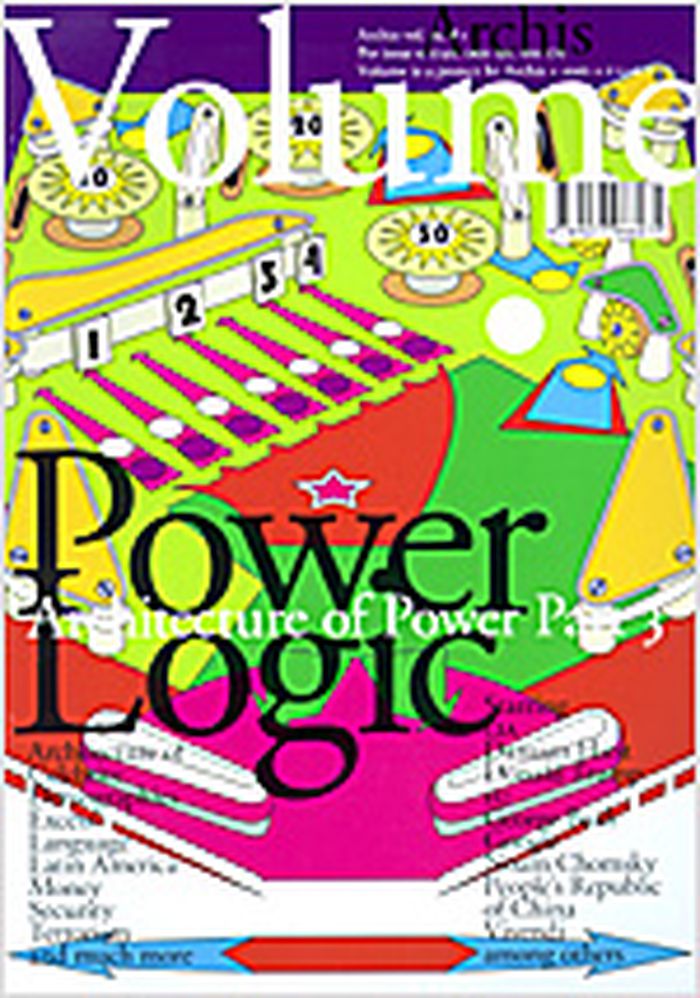
Volume 7 : architecture of power, part 3
Actions:
Price:
$30.95
(available to order)
Summary:
Following on from the two previous issues which tackled various representations of power in architecture, this third number goes a step further and demonstrates how power is using architecture not just simply to express itself, but to organise itself. The central thesis reflected in this timely and wide-ranging collection of articles and images is that power structures and power relations think architecturally in order to be successful.
Volume 7 : architecture of power, part 3
Actions:
Price:
$30.95
(available to order)
Summary:
Following on from the two previous issues which tackled various representations of power in architecture, this third number goes a step further and demonstrates how power is using architecture not just simply to express itself, but to organise itself. The central thesis reflected in this timely and wide-ranging collection of articles and images is that power structures and power relations think architecturally in order to be successful.
Form:
journals and magazines
journals and magazines
Publication:
July 2006, Amsterdam
July 2006, Amsterdam
Subject:
Magazines
Magazines
Form:
books
books
Price:
$40.00
(available in store)
Summary:
Virtuous situations from the industrial past and some ideas for the ‘climatic metropolis’ to come (cases of Brussels and Paris) compiles examples and projections that question the shape given to the city and territory at a moment of paradigm shift. The rapid evolution of climate change is leading to a clear state of emergency that is going to redefine the values and(...)
$40.00
(available in store)
Summary:
Virtuous situations from the industrial past and some ideas for the ‘climatic metropolis’ to come (cases of Brussels and Paris) compiles examples and projections that question the shape given to the city and territory at a moment of paradigm shift. The rapid evolution of climate change is leading to a clear state of emergency that is going to redefine the values and(...)
Title:
CENTRAL office for architecture and urbanism & Maxime Delvaux
Actions:
Price:
$40.00
(available in store)
Summary:
Virtuous situations from the industrial past and some ideas for the ‘climatic metropolis’ to come (cases of Brussels and Paris) compiles examples and projections that question the shape given to the city and territory at a moment of paradigm shift. The rapid evolution of climate change is leading to a clear state of emergency that is going to redefine the values and forms of our society and its territories. Several signs of a gradual paradigm shift have appeared and citizen voices are being raised against a social model that is at odds with the environment. Looking towards the past, a fascinated reading of a city’s ability to transform itself radically when necessary, is proposed. The change, generated by the race towards industrialization and social emancipation, forced metropolises such as Brussels and Paris to develop new urban functions and logics. This evolution took shape in territories that were not yet highly urbanized, but also within the city itself, in negotiation with the existing context. A series of 23 situations from the industrial age draws a panorama of virtuous examples, illustrating an assumed cohabitation between the urban fabric and the infrastructural, productive and energy needs at a precise moment of radical change in Paris and Brussels. The development of the ‘climatic metropolis’ must imperatively be based on design values and principles capable of generating a common vision. In this perspective, we propose some ideas for reflection formalized by projects tied to the built stories from the past, outlining potential situations of a new state to come for the European city.
CENTRAL office for architecture and urbanism & Maxime Delvaux
Actions:
Price:
$40.00
(available in store)
Summary:
Virtuous situations from the industrial past and some ideas for the ‘climatic metropolis’ to come (cases of Brussels and Paris) compiles examples and projections that question the shape given to the city and territory at a moment of paradigm shift. The rapid evolution of climate change is leading to a clear state of emergency that is going to redefine the values and forms of our society and its territories. Several signs of a gradual paradigm shift have appeared and citizen voices are being raised against a social model that is at odds with the environment. Looking towards the past, a fascinated reading of a city’s ability to transform itself radically when necessary, is proposed. The change, generated by the race towards industrialization and social emancipation, forced metropolises such as Brussels and Paris to develop new urban functions and logics. This evolution took shape in territories that were not yet highly urbanized, but also within the city itself, in negotiation with the existing context. A series of 23 situations from the industrial age draws a panorama of virtuous examples, illustrating an assumed cohabitation between the urban fabric and the infrastructural, productive and energy needs at a precise moment of radical change in Paris and Brussels. The development of the ‘climatic metropolis’ must imperatively be based on design values and principles capable of generating a common vision. In this perspective, we propose some ideas for reflection formalized by projects tied to the built stories from the past, outlining potential situations of a new state to come for the European city.
Form:
books
books
Publication:
July 2019
July 2019
Subject:
Architecture Monographs
Architecture Monographs
Form:
books
books
Title:
Architecture and abstraction
Architecture and abstraction
Actions:
Price:
$45.95
(available in store)
Summary:
In this theoretical study of abstraction in architecture—the first of its kind—Pier Vittorio Aureli argues for a reconsideration of abstraction, its meanings, and its sources. Although architects have typically interpreted abstraction in formal terms—the purposeful reduction of the complexities of design to its essentials—Aureli shows that abstraction instead arises from(...)
$45.95
(available in store)
Summary:
In this theoretical study of abstraction in architecture—the first of its kind—Pier Vittorio Aureli argues for a reconsideration of abstraction, its meanings, and its sources. Although architects have typically interpreted abstraction in formal terms—the purposeful reduction of the complexities of design to its essentials—Aureli shows that abstraction instead arises from(...)
Title:
Architecture and abstraction
Actions:
Price:
$45.95
(available in store)
Summary:
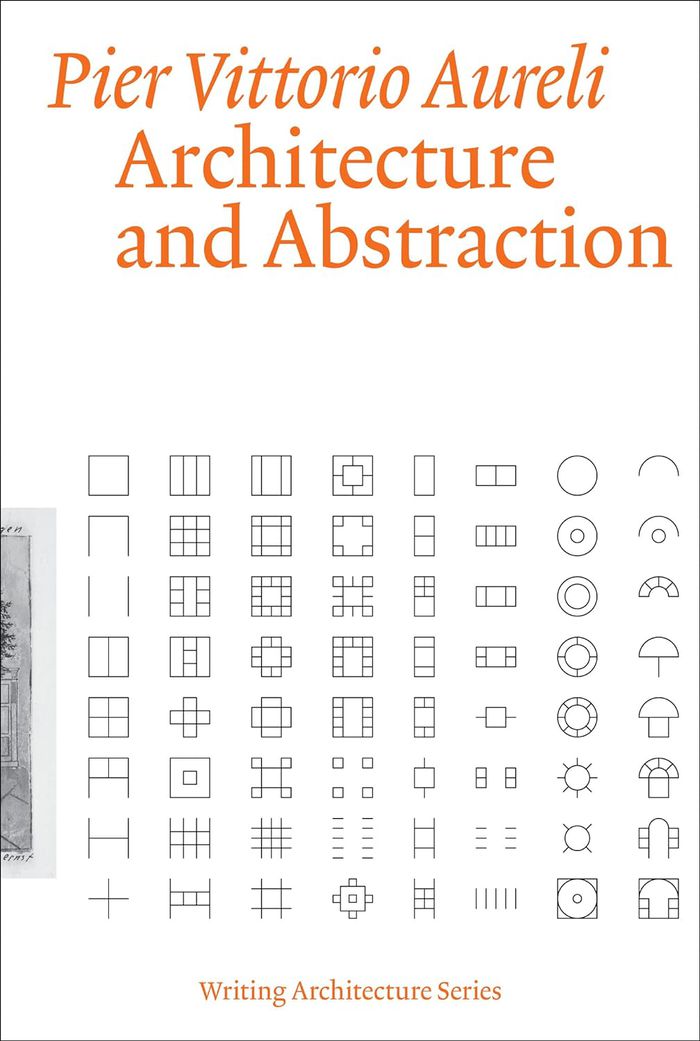
In this theoretical study of abstraction in architecture—the first of its kind—Pier Vittorio Aureli argues for a reconsideration of abstraction, its meanings, and its sources. Although architects have typically interpreted abstraction in formal terms—the purposeful reduction of the complexities of design to its essentials—Aureli shows that abstraction instead arises from the material conditions of building production. In a lively study informed by Walter Benjamin, Karl Marx, Alfred Sohn-Rethel, and other social theorists, Architecture and Abstraction presents abstraction in architecture not as an aesthetic tendency but as a movement that arises from modern divisions of labor and consequent social asymmetries. These divisions were anticipated by the architecture of antiquity, which established a distinction between manual and intellectual labor, and placed the former in service to the latter. Further abstractions arose as geometry, used for measuring territories, became the intermediary between land and money and eventually produced the logic of the grid. In our own time, architectural abstraction serves the logic of capitalism and embraces the premise that all things can be exchanged—even experience itself is a commodity. To resist this turn, Aureli seeks a critique of architecture that begins not by scaling philosophical heights, but by standing at the ground level of material practice.
Architecture and abstraction
Actions:
Price:
$45.95
(available in store)
Summary:
In this theoretical study of abstraction in architecture—the first of its kind—Pier Vittorio Aureli argues for a reconsideration of abstraction, its meanings, and its sources. Although architects have typically interpreted abstraction in formal terms—the purposeful reduction of the complexities of design to its essentials—Aureli shows that abstraction instead arises from the material conditions of building production. In a lively study informed by Walter Benjamin, Karl Marx, Alfred Sohn-Rethel, and other social theorists, Architecture and Abstraction presents abstraction in architecture not as an aesthetic tendency but as a movement that arises from modern divisions of labor and consequent social asymmetries. These divisions were anticipated by the architecture of antiquity, which established a distinction between manual and intellectual labor, and placed the former in service to the latter. Further abstractions arose as geometry, used for measuring territories, became the intermediary between land and money and eventually produced the logic of the grid. In our own time, architectural abstraction serves the logic of capitalism and embraces the premise that all things can be exchanged—even experience itself is a commodity. To resist this turn, Aureli seeks a critique of architecture that begins not by scaling philosophical heights, but by standing at the ground level of material practice.
Form:
books
books
Publication:
May 2023
May 2023
Subject:
Architectural Theory
Architectural Theory
Form:
books
books
Actions:
Price:
$33.95
(available to order)
Summary:
Can architectural discourse rethink itself in terms of a radical emancipatory project? And if so, what would be the contours of such a discourse?
$33.95
(available to order)
Summary:
Can architectural discourse rethink itself in terms of a radical emancipatory project? And if so, what would be the contours of such a discourse?
Title:
Can architecture be an emancipatory project? Dialogues on architecture and the left
Actions:
Price:
$33.95
(available to order)
Summary:
Can architectural discourse rethink itself in terms of a radical emancipatory project? And if so, what would be the contours of such a discourse?
Can architecture be an emancipatory project? Dialogues on architecture and the left
Actions:
Price:
$33.95
(available to order)
Summary:
Can architectural discourse rethink itself in terms of a radical emancipatory project? And if so, what would be the contours of such a discourse?
Form:
books
books
Publication:
March 2016
March 2016
Subject:
Architectural Theory
Architectural Theory
Form:
books
books
Actions:
Price:
$37.50
(available to order)
Summary:
Beginning from the rise of modern history in the eighteenth century, this book examines how changing ideas in the discipline of history itself has affected architecture from the beginning of modernity up to the present day.
$37.50
(available to order)
Summary:
Beginning from the rise of modern history in the eighteenth century, this book examines how changing ideas in the discipline of history itself has affected architecture from the beginning of modernity up to the present day.
Title:
Architecture re-assembled : the use (and abuse) of history
Actions:
Price:
$37.50
(available to order)
Summary:
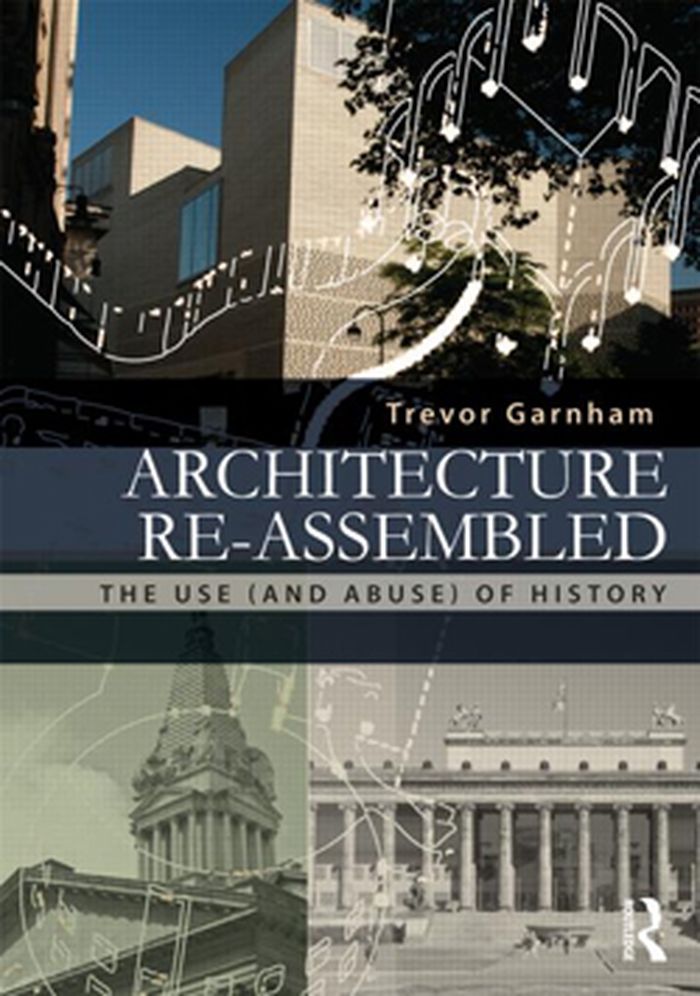
Beginning from the rise of modern history in the eighteenth century, this book examines how changing ideas in the discipline of history itself has affected architecture from the beginning of modernity up to the present day.
Architecture re-assembled : the use (and abuse) of history
Actions:
Price:
$37.50
(available to order)
Summary:
Beginning from the rise of modern history in the eighteenth century, this book examines how changing ideas in the discipline of history itself has affected architecture from the beginning of modernity up to the present day.
Form:
books
books
Publication:
April 2013
April 2013
Subject:
Architectural Theory
Architectural Theory
Form:
books
books
Holdings:
Description:
xv, 341 pages : illustrations (some color), maps ; 24 cm
Description:
xv, 341 pages : illustrations (some color), maps ; 24 cm
Author:
Subject:
Publication:
Honolulu : University of Hawaii Press, [1996], ©1996
Honolulu : University of Hawaii Press, [1996], ©1996
Title:
Angkor Wat : time, space, and kingship / Eleanor Mannikka.
Actions:
Holdings:
Description:
xv, 341 pages : illustrations (some color), maps ; 24 cm
Angkor Wat : time, space, and kingship / Eleanor Mannikka.
Actions:
Holdings:
Description:
xv, 341 pages : illustrations (some color), maps ; 24 cm
Form:
books
books
Publication:
Honolulu : University of Hawaii Press, [1996], ©1996
Honolulu : University of Hawaii Press, [1996], ©1996
Author:
Subject:
Form:
books
books
Actions:
Price:
$32.00
(available in store)
Summary:
Architecture is a constant presence in the study of human interaction- acting as both the ground on which human social behavior is performed and a means of shaping subjectivity itself. ''Proxemics'' was an attempt to visualize and instrumentalize these dynamics, appealing to both the social sciences and the emerging field of environmental design. Founded by anthropologist(...)
$32.00
(available in store)
Summary:
Architecture is a constant presence in the study of human interaction- acting as both the ground on which human social behavior is performed and a means of shaping subjectivity itself. ''Proxemics'' was an attempt to visualize and instrumentalize these dynamics, appealing to both the social sciences and the emerging field of environmental design. Founded by anthropologist(...)
Title:
Proxemics and the architecture of social interaction
Actions:
Price:
$32.00
(available in store)
Summary:
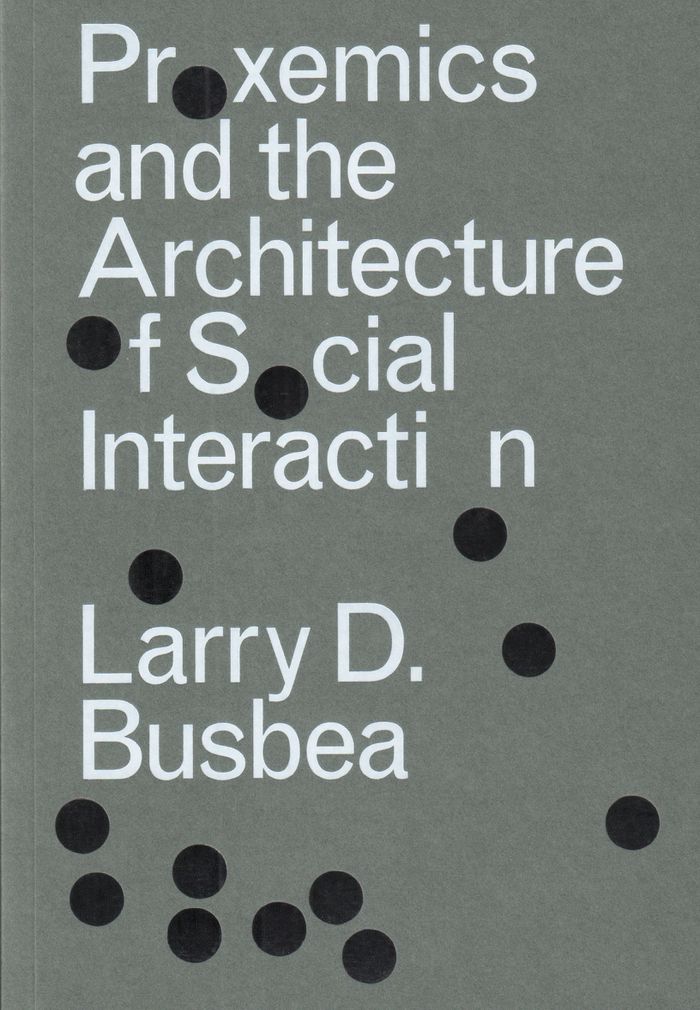
Architecture is a constant presence in the study of human interaction- acting as both the ground on which human social behavior is performed and a means of shaping subjectivity itself. ''Proxemics'' was an attempt to visualize and instrumentalize these dynamics, appealing to both the social sciences and the emerging field of environmental design. Founded by anthropologist Edward T. Hall and taking shape between the departments of architecture and anthropology at the Illinois Institute of Technology, proxemics developed amidst cold war political tensions and intense social and civil unrest. ''Proxemics and the Architecture of Social Interaction'' presents selections from Hall’s extensive archive of visual materials alongside a critical analysis that traces transformations in the fields of design and science. Together these materials illuminate a moment in American history when new spatial practices arose to challenge the environmental conditions of cultural, political, and racial identity.
Proxemics and the architecture of social interaction
Actions:
Price:
$32.00
(available in store)
Summary:
Architecture is a constant presence in the study of human interaction- acting as both the ground on which human social behavior is performed and a means of shaping subjectivity itself. ''Proxemics'' was an attempt to visualize and instrumentalize these dynamics, appealing to both the social sciences and the emerging field of environmental design. Founded by anthropologist Edward T. Hall and taking shape between the departments of architecture and anthropology at the Illinois Institute of Technology, proxemics developed amidst cold war political tensions and intense social and civil unrest. ''Proxemics and the Architecture of Social Interaction'' presents selections from Hall’s extensive archive of visual materials alongside a critical analysis that traces transformations in the fields of design and science. Together these materials illuminate a moment in American history when new spatial practices arose to challenge the environmental conditions of cultural, political, and racial identity.
Form:
books
books
Publication:
January 2021
January 2021
Subject:
Architecture ecologies
Architecture ecologies
Form:
books
books
Price:
$55.00
(available in store)
Summary:
The Autopoiesis of Architecture , which presents the topic as a discipline with its own unique logic. Architecture's conception of itself is addressed as well as its development within wider contemporary society.The first of two volumes that together present a comprehensive account of architecture's autopoiesis, this book elaborates the theory of architecture's(...)
$55.00
(available in store)
Summary:
The Autopoiesis of Architecture , which presents the topic as a discipline with its own unique logic. Architecture's conception of itself is addressed as well as its development within wider contemporary society.The first of two volumes that together present a comprehensive account of architecture's autopoiesis, this book elaborates the theory of architecture's(...)
Title:
The Autopoiesis of architecture: a new framework for architecture. Vol. 1
Actions:
Price:
$55.00
(available in store)
Summary:
The Autopoiesis of Architecture , which presents the topic as a discipline with its own unique logic. Architecture's conception of itself is addressed as well as its development within wider contemporary society.The first of two volumes that together present a comprehensive account of architecture's autopoiesis, this book elaborates the theory of architecture's autopoeisis in 8 parts, 50 sections and 200 chapters. Each of the 50 sections poses a thesis drawing a central message from the insights articulated within the respective section. The 200 chapters are gathering and sorting the accumulated intelligence of the discipline according to the new conceptual framework adopted, in order to catalyze and elaborate the new formulations and insights that are then encapsulated in the theses.
The Autopoiesis of architecture: a new framework for architecture. Vol. 1
Actions:
Price:
$55.00
(available in store)
Summary:
The Autopoiesis of Architecture , which presents the topic as a discipline with its own unique logic. Architecture's conception of itself is addressed as well as its development within wider contemporary society.The first of two volumes that together present a comprehensive account of architecture's autopoiesis, this book elaborates the theory of architecture's autopoeisis in 8 parts, 50 sections and 200 chapters. Each of the 50 sections poses a thesis drawing a central message from the insights articulated within the respective section. The 200 chapters are gathering and sorting the accumulated intelligence of the discipline according to the new conceptual framework adopted, in order to catalyze and elaborate the new formulations and insights that are then encapsulated in the theses.
Form:
books
books
Publication:
March 2011
March 2011
Subject:
Architectural Theory
Architectural Theory
Form:
books
books
Actions:
Price:
$40.00
(available to order)
Summary:
There was a time when seeing a movie meant more than seeing a film. The theater itself shaped the very perception of events on screen. This multilayered history tells the story of American film through the evolution of theater architecture and the surprisingly varied ways movies were shown, ranging from Edison's 1896 projections to the 1968 Cinerama premiere of Stanley(...)
$40.00
(available to order)
Summary:
There was a time when seeing a movie meant more than seeing a film. The theater itself shaped the very perception of events on screen. This multilayered history tells the story of American film through the evolution of theater architecture and the surprisingly varied ways movies were shown, ranging from Edison's 1896 projections to the 1968 Cinerama premiere of Stanley(...)
Title:
When movies were theater: architecture, exhibition, and the evolution of American film
Actions:
Price:
$40.00
(available to order)
Summary:
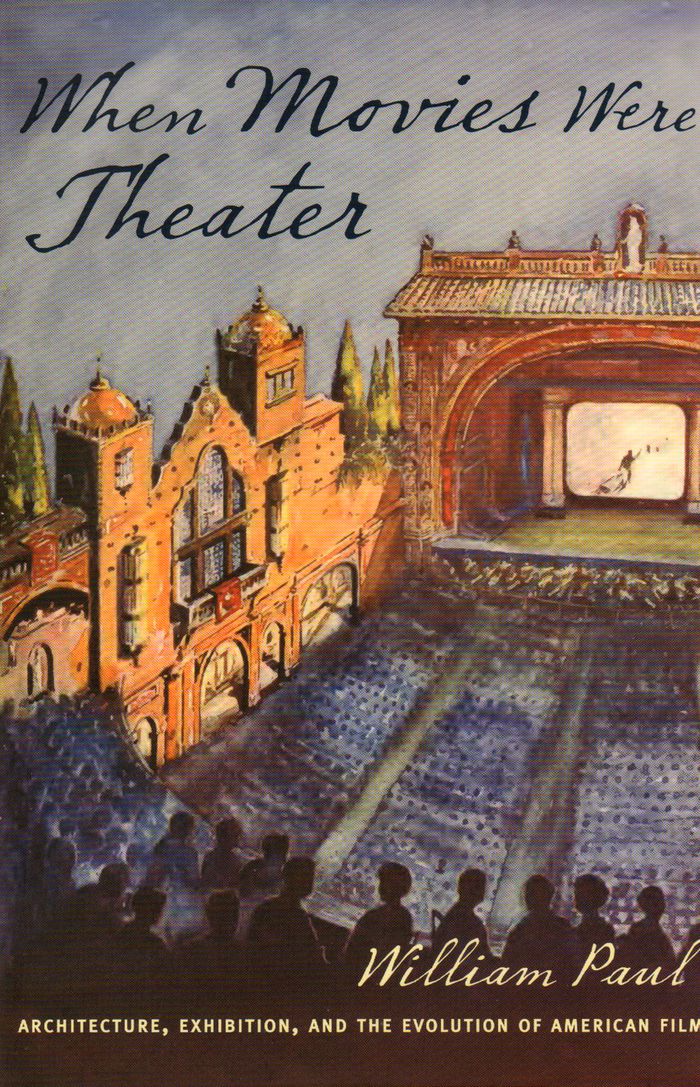
There was a time when seeing a movie meant more than seeing a film. The theater itself shaped the very perception of events on screen. This multilayered history tells the story of American film through the evolution of theater architecture and the surprisingly varied ways movies were shown, ranging from Edison's 1896 projections to the 1968 Cinerama premiere of Stanley Kubrick's 2001. William Paul matches distinct architectural forms to movie styles, showing how cinema's roots in theater influenced business practices, exhibition strategies, and film technologies.
When movies were theater: architecture, exhibition, and the evolution of American film
Actions:
Price:
$40.00
(available to order)
Summary:
There was a time when seeing a movie meant more than seeing a film. The theater itself shaped the very perception of events on screen. This multilayered history tells the story of American film through the evolution of theater architecture and the surprisingly varied ways movies were shown, ranging from Edison's 1896 projections to the 1968 Cinerama premiere of Stanley Kubrick's 2001. William Paul matches distinct architectural forms to movie styles, showing how cinema's roots in theater influenced business practices, exhibition strategies, and film technologies.
Form:
books
books
Publication:
May 2016
May 2016
Subject:
Architecture and Film, Set Design
Architecture and Film, Set Design
Form:
books
books
Actions:
Price:
$67.50
(available to order)
Summary:
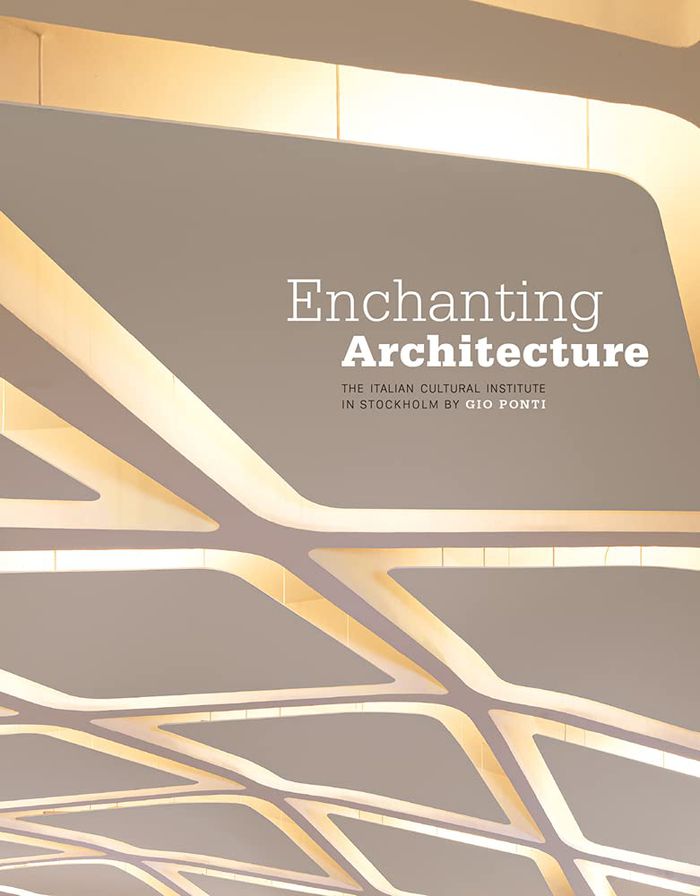
This book celebrates, by way of a dual narrative, the Italian Cultural Institute in Stockholm, designed and furnished by Gio Ponti to a commission from Carlo Maurilio Lerici. The essays aim to examine the events linked to the commission of the project itself, and to the planning and realization of the building together with its interior design. The volume contains a(...)
$67.50
(available to order)
Summary:
This book celebrates, by way of a dual narrative, the Italian Cultural Institute in Stockholm, designed and furnished by Gio Ponti to a commission from Carlo Maurilio Lerici. The essays aim to examine the events linked to the commission of the project itself, and to the planning and realization of the building together with its interior design. The volume contains a(...)
Title:
Enchanting architecture: Gio Ponti's Italian Cultural institute in Stockholm
Actions:
Price:
$67.50
(available to order)
Summary:
This book celebrates, by way of a dual narrative, the Italian Cultural Institute in Stockholm, designed and furnished by Gio Ponti to a commission from Carlo Maurilio Lerici. The essays aim to examine the events linked to the commission of the project itself, and to the planning and realization of the building together with its interior design. The volume contains a selection of images taken from the Institute's historical archive, as well as a new photographic reportage on the architectural and design elements featured in this building. It is well-known that Ponti took a great interest in Sweden (suffice it to think of all the space that was devoted to Swedish design in the pages of the magazine Domus from the early 1950s), yet it is fascinating to learn more and find answers regarding the dynamics that lay behind the making of this structure. Indeed, Gio Ponti managed to surpass the Swedish architect Ture Wennerholm's original idea, to breathe life into a project where the spaces, albeit organized according to function, succeed one another in a harmonious play of broken lines and different hues. Assisting him in the task were Pier Luigi Nervi and Ferruccio Rossetti. Gio Ponti gave life to a "classical modern" project in which art and architecture merge, proof that he had overcome the limits that were set by the trends characterizing that day and age. In so doing, he laid the groundwork for a new course in the cultural relations between Italy and Sweden.
Enchanting architecture: Gio Ponti's Italian Cultural institute in Stockholm
Actions:
Price:
$67.50
(available to order)
Summary:
This book celebrates, by way of a dual narrative, the Italian Cultural Institute in Stockholm, designed and furnished by Gio Ponti to a commission from Carlo Maurilio Lerici. The essays aim to examine the events linked to the commission of the project itself, and to the planning and realization of the building together with its interior design. The volume contains a selection of images taken from the Institute's historical archive, as well as a new photographic reportage on the architectural and design elements featured in this building. It is well-known that Ponti took a great interest in Sweden (suffice it to think of all the space that was devoted to Swedish design in the pages of the magazine Domus from the early 1950s), yet it is fascinating to learn more and find answers regarding the dynamics that lay behind the making of this structure. Indeed, Gio Ponti managed to surpass the Swedish architect Ture Wennerholm's original idea, to breathe life into a project where the spaces, albeit organized according to function, succeed one another in a harmonious play of broken lines and different hues. Assisting him in the task were Pier Luigi Nervi and Ferruccio Rossetti. Gio Ponti gave life to a "classical modern" project in which art and architecture merge, proof that he had overcome the limits that were set by the trends characterizing that day and age. In so doing, he laid the groundwork for a new course in the cultural relations between Italy and Sweden.
Form:
books
books
Publication:
June 2021
June 2021
Subject:
Architecture Monographs
Architecture Monographs


