


7806 Results
Form:
books
books
Actions:
Price:
$37.00
(available to order)
Summary:
Here is the flip-side of John Chamberlain's well-known crushed car sculptures: his work in foam. Just as revelatory in their formal sophistication, these works, primarily made from 1966 to 1970, with a few made in the late 1970s and early 1980s, boggle the eye with their simplicity. To make them, Chamberlain looped rope around a mass of plain or painted urethane foam and(...)
$37.00
(available to order)
Summary:
Here is the flip-side of John Chamberlain's well-known crushed car sculptures: his work in foam. Just as revelatory in their formal sophistication, these works, primarily made from 1966 to 1970, with a few made in the late 1970s and early 1980s, boggle the eye with their simplicity. To make them, Chamberlain looped rope around a mass of plain or painted urethane foam and(...)
Subject:
Contemporary Art Monographs
Contemporary Art Monographs
Publication:
March 2008, Texas
March 2008, Texas
Title:
John Chamberlain The Foam Sculpture
Actions:
Price:
$37.00
(available to order)
Summary:
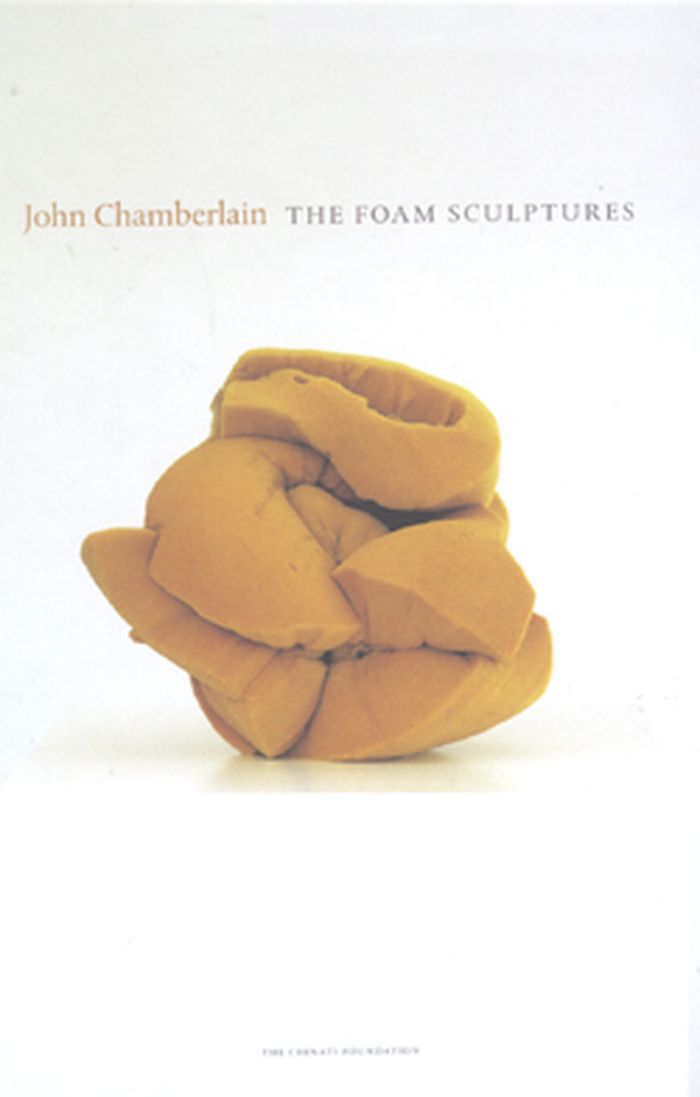
Here is the flip-side of John Chamberlain's well-known crushed car sculptures: his work in foam. Just as revelatory in their formal sophistication, these works, primarily made from 1966 to 1970, with a few made in the late 1970s and early 1980s, boggle the eye with their simplicity. To make them, Chamberlain looped rope around a mass of plain or painted urethane foam and tightened it to create dynamic tensions, which resulted in seductively rounded volumes. These sculptures are essential to Chamberlain's oeuvre, and this is the first publication to address them. Its first section is based on the Marfa, Texas, Chinati Foundation exhibition of 2005-2006, with installation shots and photographs of each exhibited piece; the second section assembles a total of 85 foam sculptures, constituting an almost complete catalogue of this group, and an update to Chamberlain's catalogue raisonne of 1986. Essays by Klaus Kertess, Iris Winkelmeyer and Marianne Stockebrand treat the sculptures in the larger context of Chamberlain's oeuvre and discuss the issue of conservation.
John Chamberlain The Foam Sculpture
Actions:
Price:
$37.00
(available to order)
Summary:
Here is the flip-side of John Chamberlain's well-known crushed car sculptures: his work in foam. Just as revelatory in their formal sophistication, these works, primarily made from 1966 to 1970, with a few made in the late 1970s and early 1980s, boggle the eye with their simplicity. To make them, Chamberlain looped rope around a mass of plain or painted urethane foam and tightened it to create dynamic tensions, which resulted in seductively rounded volumes. These sculptures are essential to Chamberlain's oeuvre, and this is the first publication to address them. Its first section is based on the Marfa, Texas, Chinati Foundation exhibition of 2005-2006, with installation shots and photographs of each exhibited piece; the second section assembles a total of 85 foam sculptures, constituting an almost complete catalogue of this group, and an update to Chamberlain's catalogue raisonne of 1986. Essays by Klaus Kertess, Iris Winkelmeyer and Marianne Stockebrand treat the sculptures in the larger context of Chamberlain's oeuvre and discuss the issue of conservation.
Form:
books
books
Publication:
March 2008, Texas
March 2008, Texas
Subject:
Contemporary Art Monographs
Contemporary Art Monographs
Form:
books
books
Actions:
Price:
$58.00
(available to order)
Summary:
280 mostly full page color illustrations. Text by Ann Temkin, Briony Fer. Melissa Ho, Nora Lawrence. Published to accompany a major exhibition at The Museum of Modern Art, New York, this volume begins with Marcel Duchamp’s Tu m’, the artist’s final painting, made in 1918, with its long array of color samples looming across the canvas. This early recognition of color’s(...)
$58.00
(available to order)
Summary:
280 mostly full page color illustrations. Text by Ann Temkin, Briony Fer. Melissa Ho, Nora Lawrence. Published to accompany a major exhibition at The Museum of Modern Art, New York, this volume begins with Marcel Duchamp’s Tu m’, the artist’s final painting, made in 1918, with its long array of color samples looming across the canvas. This early recognition of color’s(...)
Title:
Color Chart: Reinventing Color, 1950 to Today
Actions:
Price:
$58.00
(available to order)
Summary:
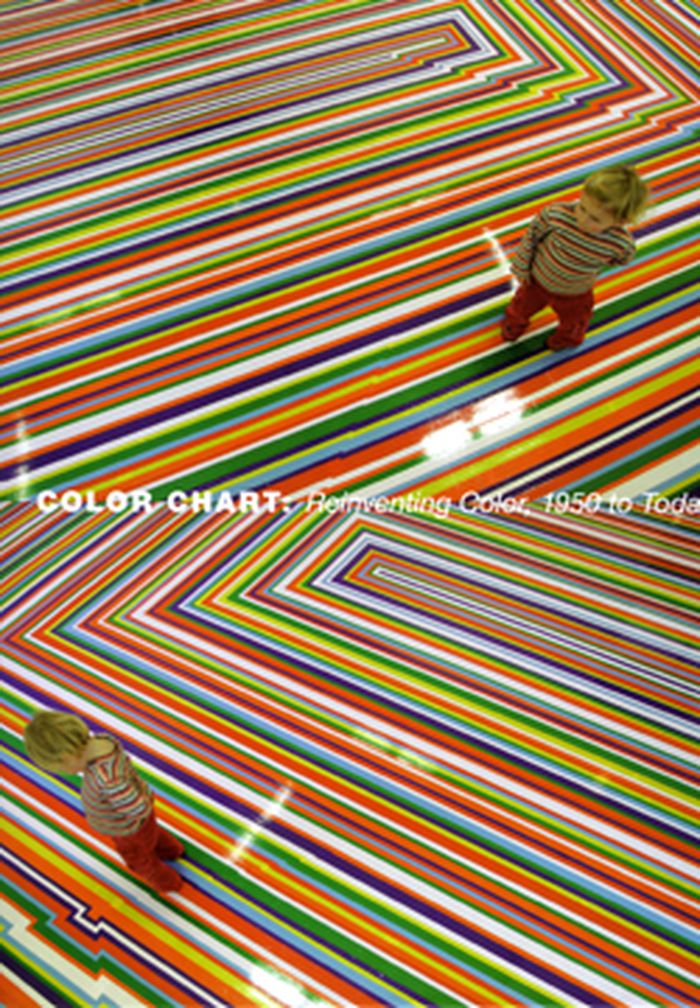
280 mostly full page color illustrations. Text by Ann Temkin, Briony Fer. Melissa Ho, Nora Lawrence. Published to accompany a major exhibition at The Museum of Modern Art, New York, this volume begins with Marcel Duchamp’s Tu m’, the artist’s final painting, made in 1918, with its long array of color samples looming across the canvas. This early recognition of color’s commercial nature was fully explored more than three decades later by artists such as Robert Rauschenberg, Andy Warhol, Gerhard Richter and Alighiero Boetti, who in the 1950s to the 1970s, with a host of others, redefined the parameters of color from a matter of personal expression to one of arbitrary systems and random processes. The repercussions of this transformation continue to be felt into the twenty-first century, in work by artists including Sherrie Levine, Mike Kelley and Damien Hirst, as well as others who explore color in digital technology This volume traces the lineage of the questions provoked by color’s new status, and the variety of answers that have resulted.
Color Chart: Reinventing Color, 1950 to Today
Actions:
Price:
$58.00
(available to order)
Summary:
280 mostly full page color illustrations. Text by Ann Temkin, Briony Fer. Melissa Ho, Nora Lawrence. Published to accompany a major exhibition at The Museum of Modern Art, New York, this volume begins with Marcel Duchamp’s Tu m’, the artist’s final painting, made in 1918, with its long array of color samples looming across the canvas. This early recognition of color’s commercial nature was fully explored more than three decades later by artists such as Robert Rauschenberg, Andy Warhol, Gerhard Richter and Alighiero Boetti, who in the 1950s to the 1970s, with a host of others, redefined the parameters of color from a matter of personal expression to one of arbitrary systems and random processes. The repercussions of this transformation continue to be felt into the twenty-first century, in work by artists including Sherrie Levine, Mike Kelley and Damien Hirst, as well as others who explore color in digital technology This volume traces the lineage of the questions provoked by color’s new status, and the variety of answers that have resulted.
Form:
books
books
Publication:
March 2008, New York
March 2008, New York
Subject:
Colour Theory and Design
Colour Theory and Design
Form:
books
books
Title:
Programmed inequality: how Britain discarded women technologists and lost its edge in computing
Programmed inequality: how Britain discarded women technologists and lost its edge in computing
Actions:
Price:
$51.95
(available to order)
Summary:
In 1944, Britain led the world in electronic computing. By 1974, the British computer industry was all but extinct. What happened in the intervening thirty years holds lessons for all postindustrial superpowers. As Britain struggled to use technology to retain its global power, the nation’s inability to manage its technical labor force hobbled its transition into the(...)
$51.95
(available to order)
Summary:
In 1944, Britain led the world in electronic computing. By 1974, the British computer industry was all but extinct. What happened in the intervening thirty years holds lessons for all postindustrial superpowers. As Britain struggled to use technology to retain its global power, the nation’s inability to manage its technical labor force hobbled its transition into the(...)
Title:
Programmed inequality: how Britain discarded women technologists and lost its edge in computing
Actions:
Price:
$51.95
(available to order)
Summary:
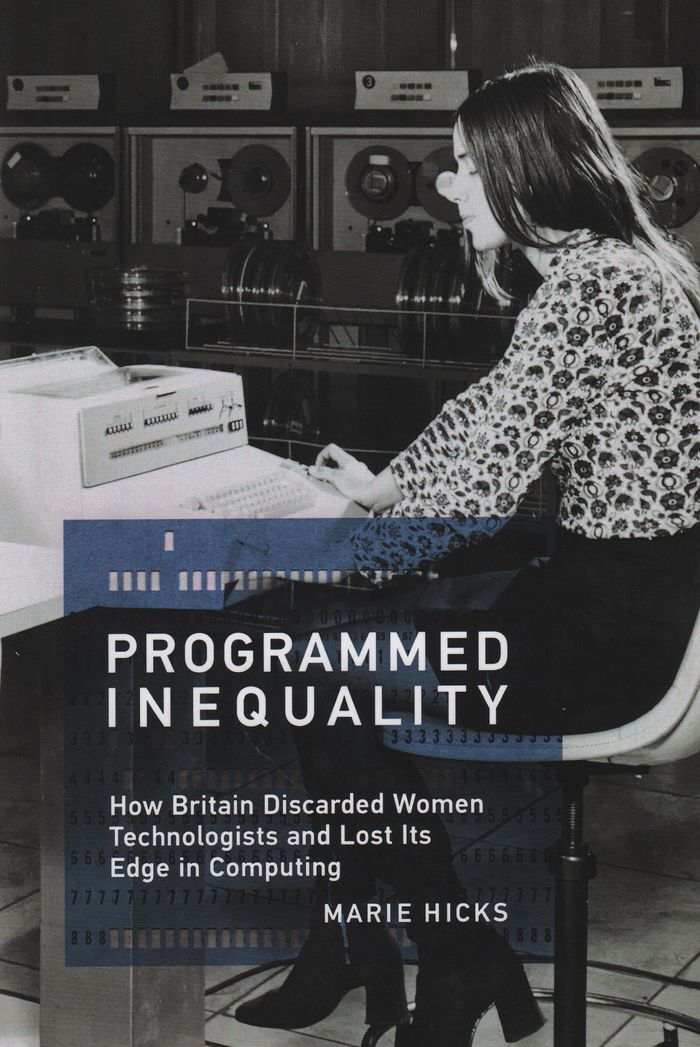
In 1944, Britain led the world in electronic computing. By 1974, the British computer industry was all but extinct. What happened in the intervening thirty years holds lessons for all postindustrial superpowers. As Britain struggled to use technology to retain its global power, the nation’s inability to manage its technical labor force hobbled its transition into the information age. In "Programmed inequality", Marie Hicks explores the story of labor feminization and gendered technocracy that undercut British efforts to computerize. That failure sprang from the government’s systematic neglect of its largest trained technical workforce simply because they were women. Women were a hidden engine of growth in high technology from World War II to the 1960s. As computing experienced a gender flip, becoming male-identified in the 1960s and 1970s, labor problems grew into structural ones and gender discrimination caused the nation’s largest computer user—the civil service and sprawling public sector—to make decisions that were disastrous for the British computer industry and the nation as a whole.
Programmed inequality: how Britain discarded women technologists and lost its edge in computing
Actions:
Price:
$51.95
(available to order)
Summary:
In 1944, Britain led the world in electronic computing. By 1974, the British computer industry was all but extinct. What happened in the intervening thirty years holds lessons for all postindustrial superpowers. As Britain struggled to use technology to retain its global power, the nation’s inability to manage its technical labor force hobbled its transition into the information age. In "Programmed inequality", Marie Hicks explores the story of labor feminization and gendered technocracy that undercut British efforts to computerize. That failure sprang from the government’s systematic neglect of its largest trained technical workforce simply because they were women. Women were a hidden engine of growth in high technology from World War II to the 1960s. As computing experienced a gender flip, becoming male-identified in the 1960s and 1970s, labor problems grew into structural ones and gender discrimination caused the nation’s largest computer user—the civil service and sprawling public sector—to make decisions that were disastrous for the British computer industry and the nation as a whole.
Form:
books
books
Publication:
February 2017
February 2017
Subject:
Archive, library and the digital
Archive, library and the digital
Form:
books
books
Actions:
Price:
$30.95
(available to order)
Summary:
The rise of a prominent auditory culture, reveals the degree to which sound art is lending definition to the 21st Century. And yet sound art still lacks related literature to compliment, and expand, the realm of practice. Background Noise sets out an historical overview, while at the same time shaping that history according to what sound art reveals - the dynamics of art(...)
$30.95
(available to order)
Summary:
The rise of a prominent auditory culture, reveals the degree to which sound art is lending definition to the 21st Century. And yet sound art still lacks related literature to compliment, and expand, the realm of practice. Background Noise sets out an historical overview, while at the same time shaping that history according to what sound art reveals - the dynamics of art(...)
Title:
Background noise: perspectives on sound art
Actions:
Price:
$30.95
(available to order)
Summary:
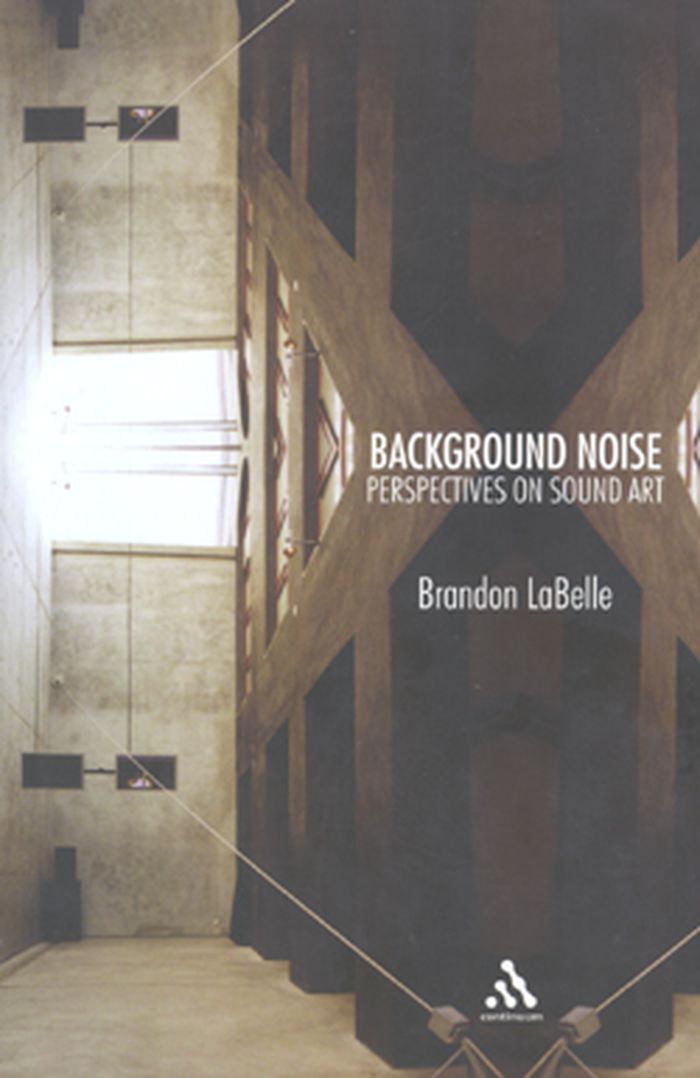
The rise of a prominent auditory culture, reveals the degree to which sound art is lending definition to the 21st Century. And yet sound art still lacks related literature to compliment, and expand, the realm of practice. Background Noise sets out an historical overview, while at the same time shaping that history according to what sound art reveals - the dynamics of art to operate spatially, through media of reproduction and broadcast, and in relation to the intensities of communication and its contextual framework Brandon LaBelle is a writer and curator who currently lives in Denmark. From 1998 to 2002 he developed and curated an international sound art festival in Los Angeles, Beyond Music; in 2001 he developed and organized Social Music, a series of radio works for Kunstradio in Vienna; in 2002 he curated Concrete Feedback, an exhibition of sound installations working with architecture, presented at the Southern California Institute of Architecture; and in 2002-03 he researched and curated the music section to the exhibition, Beyond Geometry: Experiments in Form, 1940s - 1970s for the Los Angeles County Museum of Art.
Background noise: perspectives on sound art
Actions:
Price:
$30.95
(available to order)
Summary:
The rise of a prominent auditory culture, reveals the degree to which sound art is lending definition to the 21st Century. And yet sound art still lacks related literature to compliment, and expand, the realm of practice. Background Noise sets out an historical overview, while at the same time shaping that history according to what sound art reveals - the dynamics of art to operate spatially, through media of reproduction and broadcast, and in relation to the intensities of communication and its contextual framework Brandon LaBelle is a writer and curator who currently lives in Denmark. From 1998 to 2002 he developed and curated an international sound art festival in Los Angeles, Beyond Music; in 2001 he developed and organized Social Music, a series of radio works for Kunstradio in Vienna; in 2002 he curated Concrete Feedback, an exhibition of sound installations working with architecture, presented at the Southern California Institute of Architecture; and in 2002-03 he researched and curated the music section to the exhibition, Beyond Geometry: Experiments in Form, 1940s - 1970s for the Los Angeles County Museum of Art.
Form:
books
books
Publication:
April 2006, New York, London
April 2006, New York, London
Subject:
Acoustics
Acoustics
Form:
books
books
Actions:
Price:
$35.00
(available to order)
Summary:
With over 150 photographs, this publication covers the main themes in the body of work of Gabriele Basilico (Milan, 1944–2013), in particular his relationship with cities and urban landscapes. Beginning with the Milano: Ritratti di fabbriche cycle from the late 1970s, this book follows the evolution of Basilico’s artistic language from his legendary pictures taken in(...)
$35.00
(available to order)
Summary:
With over 150 photographs, this publication covers the main themes in the body of work of Gabriele Basilico (Milan, 1944–2013), in particular his relationship with cities and urban landscapes. Beginning with the Milano: Ritratti di fabbriche cycle from the late 1970s, this book follows the evolution of Basilico’s artistic language from his legendary pictures taken in(...)
Subject:
Photography monographs
Photography monographs
Publication:
October 2016
October 2016
Title:
Gabriele Basilico: I listen to your heart, city
Actions:
Price:
$35.00
(available to order)
Summary:
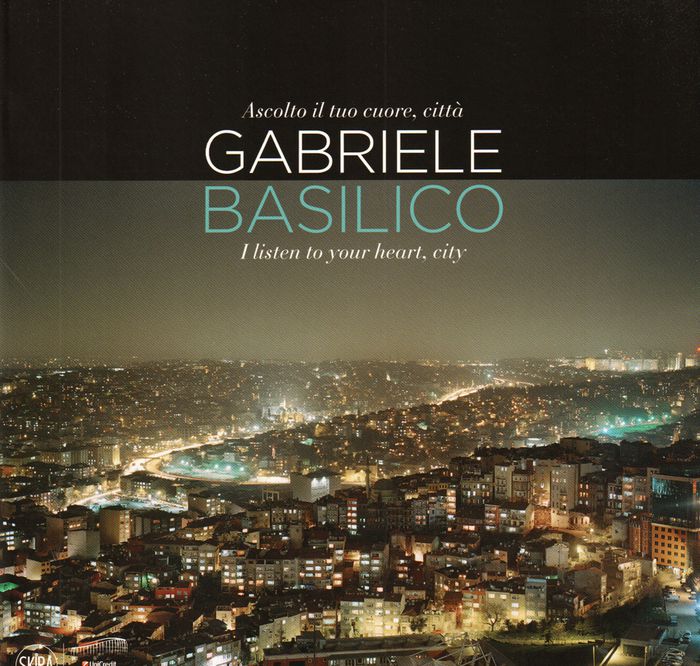
With over 150 photographs, this publication covers the main themes in the body of work of Gabriele Basilico (Milan, 1944–2013), in particular his relationship with cities and urban landscapes. Beginning with the Milano: Ritratti di fabbriche cycle from the late 1970s, this book follows the evolution of Basilico’s artistic language from his legendary pictures taken in France and in major ports across Europe in the 1980s to the 1991 series devoted to Beirut, which had just left behind its long civil war, up to his final work on the renewal of the Porta Nuova district in Milan. The main core of works in this publication consists of the fifty portraits of cities which the artist took over the course of his career: Paris, Madrid, Berlin, Moscow, San Francisco, Istanbul, Rio de Janeiro, and Shanghai intermingle and dialogue through Basilico’s impassioned and contemplative gaze. He was able to interpret the passage of time, transformations in architecture, and unexpected analogies in an endless journey across the bodies of cities.
Gabriele Basilico: I listen to your heart, city
Actions:
Price:
$35.00
(available to order)
Summary:
With over 150 photographs, this publication covers the main themes in the body of work of Gabriele Basilico (Milan, 1944–2013), in particular his relationship with cities and urban landscapes. Beginning with the Milano: Ritratti di fabbriche cycle from the late 1970s, this book follows the evolution of Basilico’s artistic language from his legendary pictures taken in France and in major ports across Europe in the 1980s to the 1991 series devoted to Beirut, which had just left behind its long civil war, up to his final work on the renewal of the Porta Nuova district in Milan. The main core of works in this publication consists of the fifty portraits of cities which the artist took over the course of his career: Paris, Madrid, Berlin, Moscow, San Francisco, Istanbul, Rio de Janeiro, and Shanghai intermingle and dialogue through Basilico’s impassioned and contemplative gaze. He was able to interpret the passage of time, transformations in architecture, and unexpected analogies in an endless journey across the bodies of cities.
Form:
books
books
Publication:
October 2016
October 2016
Subject:
Photography monographs
Photography monographs
Form:
books
books

Title:
Anthony Hernandez
Anthony Hernandez
Actions:
Price:
$64.95
(available to order)
Summary:
Since the early 1970s, when he began photographing on the streets of his native Los Angeles, Anthony Hernandez has consistently pushed his practice into uncharted territory, challenging himself by adopting new formats and subject matter. Moving from black and white to color, from 35mm to large-format cameras, and from the human figure to landscapes to abstracted detail,(...)
$64.95
(available to order)
Summary:
Since the early 1970s, when he began photographing on the streets of his native Los Angeles, Anthony Hernandez has consistently pushed his practice into uncharted territory, challenging himself by adopting new formats and subject matter. Moving from black and white to color, from 35mm to large-format cameras, and from the human figure to landscapes to abstracted detail,(...)
Title:
Anthony Hernandez
Actions:
Price:
$64.95
(available to order)
Summary:
Since the early 1970s, when he began photographing on the streets of his native Los Angeles, Anthony Hernandez has consistently pushed his practice into uncharted territory, challenging himself by adopting new formats and subject matter. Moving from black and white to color, from 35mm to large-format cameras, and from the human figure to landscapes to abstracted detail, he has produced an unusually varied body of work united by its arresting beauty and subtle engagement with social issues. At first largely unaware of the formal traditions of the medium, Hernandez developed his own style of street photography, one uniquely attuned to the desolate allure and sprawling expanses of LA. Published to accompany the photographer’s first retrospective, Anthony Hernandez offers a comprehensive introduction to his career of more than 40 years, tracing his evolution as well as highlighting continuities across his practice. The catalogue represents the full range and breadth of Hernandez’s work, with an extensive plate section that includes many photographs that have never before been exhibited or published.
Anthony Hernandez
Actions:
Price:
$64.95
(available to order)
Summary:
Since the early 1970s, when he began photographing on the streets of his native Los Angeles, Anthony Hernandez has consistently pushed his practice into uncharted territory, challenging himself by adopting new formats and subject matter. Moving from black and white to color, from 35mm to large-format cameras, and from the human figure to landscapes to abstracted detail, he has produced an unusually varied body of work united by its arresting beauty and subtle engagement with social issues. At first largely unaware of the formal traditions of the medium, Hernandez developed his own style of street photography, one uniquely attuned to the desolate allure and sprawling expanses of LA. Published to accompany the photographer’s first retrospective, Anthony Hernandez offers a comprehensive introduction to his career of more than 40 years, tracing his evolution as well as highlighting continuities across his practice. The catalogue represents the full range and breadth of Hernandez’s work, with an extensive plate section that includes many photographs that have never before been exhibited or published.
Form:
books
books
Publication:
September 2016
September 2016
Subject:
Photography monographs
Photography monographs
Form:
books
books

Price:
$48.00
(available to order)
Summary:
Paffard Keatinge-Clay was born near Stonehenge in England, studied in London and Zurich, worked in both Le Corbusier's studio in Paris and at Frank Lloyd Wright's Taliesin, and then settled in the American West, where he worked for Skidmore, Owings & Merrill before starting out on his own. While he remained in the U.S. until the mid-1970s, and practiced there, his work(...)
$48.00
(available to order)
Summary:
Paffard Keatinge-Clay was born near Stonehenge in England, studied in London and Zurich, worked in both Le Corbusier's studio in Paris and at Frank Lloyd Wright's Taliesin, and then settled in the American West, where he worked for Skidmore, Owings & Merrill before starting out on his own. While he remained in the U.S. until the mid-1970s, and practiced there, his work(...)
Title:
Paffard Keatinge-Clay : modern architect(ure) / modern master(s)
Actions:
Price:
$48.00
(available to order)
Summary:
Paffard Keatinge-Clay was born near Stonehenge in England, studied in London and Zurich, worked in both Le Corbusier's studio in Paris and at Frank Lloyd Wright's Taliesin, and then settled in the American West, where he worked for Skidmore, Owings & Merrill before starting out on his own. While he remained in the U.S. until the mid-1970s, and practiced there, his work remains largely unknown even in San Francisco, where he spent more than 20 years. His brand of orthodox Modernism was decidedly out of step with the prevailing Bay Area Modernism exemplified by figures like Moore, Wurster, McCue and Turnbull, who dominated both the academic and professional arenas of the period. Keatinge-Clay had to struggle to execute his own expressive, nonconformist architectural language, and when he did, he garnered minimal recognition. This book brings to light the importance of his work as representative of its time period and clarifies the influences his mentors - including Mies van der Rohe, Richard Neutra and Charles and Ray Eames--had upon it.
Paffard Keatinge-Clay : modern architect(ure) / modern master(s)
Actions:
Price:
$48.00
(available to order)
Summary:
Paffard Keatinge-Clay was born near Stonehenge in England, studied in London and Zurich, worked in both Le Corbusier's studio in Paris and at Frank Lloyd Wright's Taliesin, and then settled in the American West, where he worked for Skidmore, Owings & Merrill before starting out on his own. While he remained in the U.S. until the mid-1970s, and practiced there, his work remains largely unknown even in San Francisco, where he spent more than 20 years. His brand of orthodox Modernism was decidedly out of step with the prevailing Bay Area Modernism exemplified by figures like Moore, Wurster, McCue and Turnbull, who dominated both the academic and professional arenas of the period. Keatinge-Clay had to struggle to execute his own expressive, nonconformist architectural language, and when he did, he garnered minimal recognition. This book brings to light the importance of his work as representative of its time period and clarifies the influences his mentors - including Mies van der Rohe, Richard Neutra and Charles and Ray Eames--had upon it.
Form:
books
books
Publication:
April 2006, Los Angeles
April 2006, Los Angeles
Subject:
Architecture Monographs
Architecture Monographs
Form:
books
books

Actions:
Price:
$45.00
(available to order)
Summary:
Digital media–GIFs, films, TED Talks, tweets, and more–have become integral to daily life and, unsurprisingly, to Indigenous people’s strategies for addressing the historical and ongoing effects of colonization. In this volume, Thomas DuBois and Coppélie Cocq examine how Sámi people of Norway, Finland, and Sweden use media to advance a social, cultural, and political(...)
$45.00
(available to order)
Summary:
Digital media–GIFs, films, TED Talks, tweets, and more–have become integral to daily life and, unsurprisingly, to Indigenous people’s strategies for addressing the historical and ongoing effects of colonization. In this volume, Thomas DuBois and Coppélie Cocq examine how Sámi people of Norway, Finland, and Sweden use media to advance a social, cultural, and political(...)
Title:
Sámi media and Indigenous agency in the Arctic North
Actions:
Price:
$45.00
(available to order)
Summary:
Digital media–GIFs, films, TED Talks, tweets, and more–have become integral to daily life and, unsurprisingly, to Indigenous people’s strategies for addressing the historical and ongoing effects of colonization. In this volume, Thomas DuBois and Coppélie Cocq examine how Sámi people of Norway, Finland, and Sweden use media to advance a social, cultural, and political agenda anchored in notions of cultural continuity and self-determination. Beginning in the 1970s, Sámi have used Sámi-language media—including commercially produced musical recordings, feature and documentary films, books of literature and poetry, and magazines—to communicate a sense of identity both within the Sámi community and within broader Nordic and international arenas. In more contemporary contexts, Sámi activists, artists, and cultural workers have used the media to undo layers of ignorance surrounding Sámi livelihoods and rights to self-determination. Downloadable songs, music festivals, films, videos, social media posts, images, and tweets are just some of the diverse media through which Sámi activists transform how Nordic majority populations view and understand Sámi minority communities and, more globally, how modern states regard and treat Indigenous populations.
Sámi media and Indigenous agency in the Arctic North
Actions:
Price:
$45.00
(available to order)
Summary:
Digital media–GIFs, films, TED Talks, tweets, and more–have become integral to daily life and, unsurprisingly, to Indigenous people’s strategies for addressing the historical and ongoing effects of colonization. In this volume, Thomas DuBois and Coppélie Cocq examine how Sámi people of Norway, Finland, and Sweden use media to advance a social, cultural, and political agenda anchored in notions of cultural continuity and self-determination. Beginning in the 1970s, Sámi have used Sámi-language media—including commercially produced musical recordings, feature and documentary films, books of literature and poetry, and magazines—to communicate a sense of identity both within the Sámi community and within broader Nordic and international arenas. In more contemporary contexts, Sámi activists, artists, and cultural workers have used the media to undo layers of ignorance surrounding Sámi livelihoods and rights to self-determination. Downloadable songs, music festivals, films, videos, social media posts, images, and tweets are just some of the diverse media through which Sámi activists transform how Nordic majority populations view and understand Sámi minority communities and, more globally, how modern states regard and treat Indigenous populations.
Form:
books
books
Publication:
May 2020
May 2020
Subject:
Social
Social
Form:
books
books

Actions:
Price:
$80.00
(available to order)
Summary:
The photographs by Richard Misrach assembled in this volume are a stark, affecting reminders of the physical and psychological impact of Hurricane Katrina as told by those on the ground, and seen through the lens of a contemporary master. Rather than simply surveying the damage, Misrach-who has photographed the region regularly since the 1970s, most notably for his(...)
$80.00
(available to order)
Summary:
The photographs by Richard Misrach assembled in this volume are a stark, affecting reminders of the physical and psychological impact of Hurricane Katrina as told by those on the ground, and seen through the lens of a contemporary master. Rather than simply surveying the damage, Misrach-who has photographed the region regularly since the 1970s, most notably for his(...)
Publication:
September 2010
September 2010
Title:
Richard Misrach: Destroy this memory
Actions:
Price:
$80.00
(available to order)
Summary:
The photographs by Richard Misrach assembled in this volume are a stark, affecting reminders of the physical and psychological impact of Hurricane Katrina as told by those on the ground, and seen through the lens of a contemporary master. Rather than simply surveying the damage, Misrach-who has photographed the region regularly since the 1970s, most notably for his ongoing "Cancer Alley" project-found himself drawn to the hurricane-inspired graffiti. "Destroy This Memory" presents previously unpublished and starkly compelling material, all of which Misrach shot with his 4 MP pocket camera while also working on a separate archive of over 1,000 photographs with his 8 x 10 large-format camera. Created between October and December 2005, this series of images serves as a potent, unalloyed document of the raw experiences of those left to fend for themselves in the aftermath of Katrina. With no essay, titles or even page numbers in the way, the words on these homes, cars and trees offer a searing testament that continues to speak volumes.
Richard Misrach: Destroy this memory
Actions:
Price:
$80.00
(available to order)
Summary:
The photographs by Richard Misrach assembled in this volume are a stark, affecting reminders of the physical and psychological impact of Hurricane Katrina as told by those on the ground, and seen through the lens of a contemporary master. Rather than simply surveying the damage, Misrach-who has photographed the region regularly since the 1970s, most notably for his ongoing "Cancer Alley" project-found himself drawn to the hurricane-inspired graffiti. "Destroy This Memory" presents previously unpublished and starkly compelling material, all of which Misrach shot with his 4 MP pocket camera while also working on a separate archive of over 1,000 photographs with his 8 x 10 large-format camera. Created between October and December 2005, this series of images serves as a potent, unalloyed document of the raw experiences of those left to fend for themselves in the aftermath of Katrina. With no essay, titles or even page numbers in the way, the words on these homes, cars and trees offer a searing testament that continues to speak volumes.
Form:
books
books
Publication:
September 2010
September 2010
Form:
books
books
Price:
$38.95
(available to order)
Summary:
In February 1956 the president of IBM hired the industrial designer and architect Eliot F. Noyes, charging him with reinventing IBM's corporate image, from stationery and curtains to products such as typewriters and computers and to laboratory and administration buildings. What followed remade IBM in a way that would also transform the relationships between design,(...)
$38.95
(available to order)
Summary:
In February 1956 the president of IBM hired the industrial designer and architect Eliot F. Noyes, charging him with reinventing IBM's corporate image, from stationery and curtains to products such as typewriters and computers and to laboratory and administration buildings. What followed remade IBM in a way that would also transform the relationships between design,(...)
Title:
The interface: IBM and the transformation of corporate design 1945-1976
Actions:
Price:
$38.95
(available to order)
Summary:
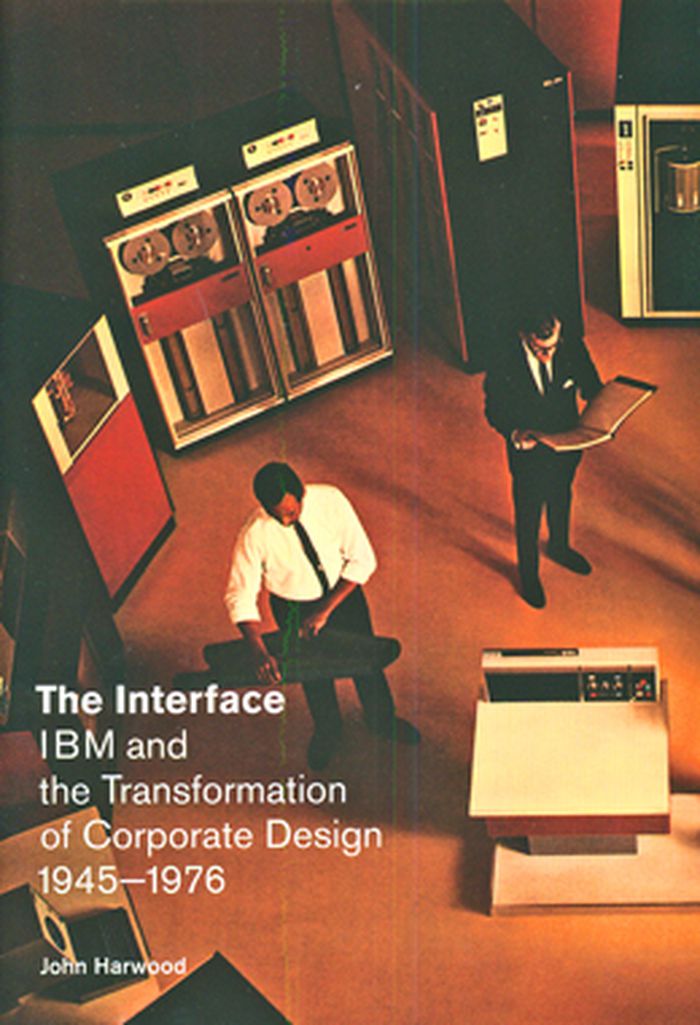
In February 1956 the president of IBM hired the industrial designer and architect Eliot F. Noyes, charging him with reinventing IBM's corporate image, from stationery and curtains to products such as typewriters and computers and to laboratory and administration buildings. What followed remade IBM in a way that would also transform the relationships between design, computer science, and corporate culture. IBM's program assembled a cast of leading figures in American design: Noyes, Charles Eames, Paul Rand, George Nelson, and Edgar Kaufmann Jr. The Interface offers a detailed account of the key role these designers played in shaping both the computer and the multinational corporation. Harwood describes the influence of computer and corporation on the theory and practice of design. Here we see how, in the period stretching from the "invention" of the computer during World War II to the appearance of the personal computer in the mid-1970s, disciplines once well outside the realm of architectural design -information and management theory, cybernetics, ergonomics, computer science- became integral aspects of design.
The interface: IBM and the transformation of corporate design 1945-1976
Actions:
Price:
$38.95
(available to order)
Summary:
In February 1956 the president of IBM hired the industrial designer and architect Eliot F. Noyes, charging him with reinventing IBM's corporate image, from stationery and curtains to products such as typewriters and computers and to laboratory and administration buildings. What followed remade IBM in a way that would also transform the relationships between design, computer science, and corporate culture. IBM's program assembled a cast of leading figures in American design: Noyes, Charles Eames, Paul Rand, George Nelson, and Edgar Kaufmann Jr. The Interface offers a detailed account of the key role these designers played in shaping both the computer and the multinational corporation. Harwood describes the influence of computer and corporation on the theory and practice of design. Here we see how, in the period stretching from the "invention" of the computer during World War II to the appearance of the personal computer in the mid-1970s, disciplines once well outside the realm of architectural design -information and management theory, cybernetics, ergonomics, computer science- became integral aspects of design.
Form:
books
books
Publication:
November 2011
November 2011
Subject:
Industrial Design
Industrial Design


