


73 Results
Form:
books
books
Price:
$30.00
(available to order)
Summary:
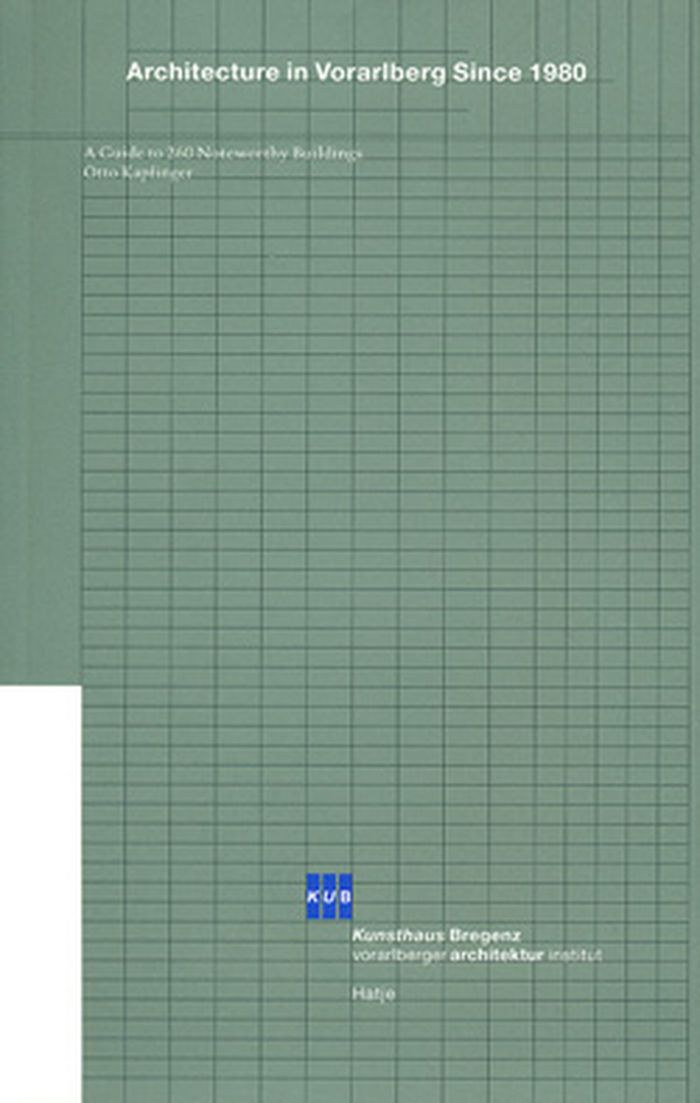
Essay by Otto Kapfinger. Architects include: Carlo Baumschlager, Marianne Burkhalter, Dietmar Eberle, Ernst Giselbrecht, Roland Gnaiger, Hermann Kaufmann, Christian Lenz, Wolfgang Ritsch, Bruno Spagolla, Christian Sumi, Peter Zumthor.
$30.00
(available to order)
Summary:
Essay by Otto Kapfinger. Architects include: Carlo Baumschlager, Marianne Burkhalter, Dietmar Eberle, Ernst Giselbrecht, Roland Gnaiger, Hermann Kaufmann, Christian Lenz, Wolfgang Ritsch, Bruno Spagolla, Christian Sumi, Peter Zumthor.
Title:
Architecture in Vorarlberg since 1980: a guide to 260 noteworthy buildings
Actions:
Price:
$30.00
(available to order)
Summary:
Essay by Otto Kapfinger. Architects include: Carlo Baumschlager, Marianne Burkhalter, Dietmar Eberle, Ernst Giselbrecht, Roland Gnaiger, Hermann Kaufmann, Christian Lenz, Wolfgang Ritsch, Bruno Spagolla, Christian Sumi, Peter Zumthor.
Architecture in Vorarlberg since 1980: a guide to 260 noteworthy buildings
Actions:
Price:
$30.00
(available to order)
Summary:
Essay by Otto Kapfinger. Architects include: Carlo Baumschlager, Marianne Burkhalter, Dietmar Eberle, Ernst Giselbrecht, Roland Gnaiger, Hermann Kaufmann, Christian Lenz, Wolfgang Ritsch, Bruno Spagolla, Christian Sumi, Peter Zumthor.
Form:
books
books
Publication:
April 2002, Stuttgart
April 2002, Stuttgart
Form:
books
books
Title:
Museums and memory
Museums and memory
Actions:
Price:
$28.50
(available to order)
Summary:
Museums today are more than familiar cultural institutions and showplaces of accumulated objects; they are the sites of interaction between personal and collective identities, between memory and history. The essays in this volume consider museums from personal experience and historical study, and from the memories of museum visitors, curators, and(...)
$28.50
(available to order)
Summary:
Museums today are more than familiar cultural institutions and showplaces of accumulated objects; they are the sites of interaction between personal and collective identities, between memory and history. The essays in this volume consider museums from personal experience and historical study, and from the memories of museum visitors, curators, and(...)
Title:
Museums and memory
Actions:
Price:
$28.50
(available to order)
Summary:
Museums today are more than familiar cultural institutions and showplaces of accumulated objects; they are the sites of interaction between personal and collective identities, between memory and history. The essays in this volume consider museums from personal experience and historical study, and from the memories of museum visitors, curators, and scholars. Representing a variety of fields—history, anthropology, art history, and museum scholarship—the contributors discuss museums across disciplinary boundaries that have separated art museums from natural history museums or local history museums from national galleries. The essays range widely over time (from the Renaissance to the second half of the twentieth century), and place (China, Japan, the United States, and Germany), in exhibitions explored (photography, Native American history, and “Jurassic technology”), and institution (the Chinese Imperial Collection, Renaissance curiosity cabinets, and modern art museums). Memory operates thematically among the essays in diverse and provocative ways. The papers are organized according to three suggestive themes: experimental ways of theorizing and designing contemporary museums with an explicit interest in history and memory; discussions of personal encounters with historical exhibits; and the professional risks at stake for collectors and curators who shape the institutional presentation of history and memory. The contributors are Susan A. Crane, Wolfgang Ernst, Michael Fehr, Paula Findlen, Tamara Hamlish, Alexis Joachimides, Suzanne Marchand, Julia A. Thomas, and Diana Drake Wilson.
Museums and memory
Actions:
Price:
$28.50
(available to order)
Summary:
Museums today are more than familiar cultural institutions and showplaces of accumulated objects; they are the sites of interaction between personal and collective identities, between memory and history. The essays in this volume consider museums from personal experience and historical study, and from the memories of museum visitors, curators, and scholars. Representing a variety of fields—history, anthropology, art history, and museum scholarship—the contributors discuss museums across disciplinary boundaries that have separated art museums from natural history museums or local history museums from national galleries. The essays range widely over time (from the Renaissance to the second half of the twentieth century), and place (China, Japan, the United States, and Germany), in exhibitions explored (photography, Native American history, and “Jurassic technology”), and institution (the Chinese Imperial Collection, Renaissance curiosity cabinets, and modern art museums). Memory operates thematically among the essays in diverse and provocative ways. The papers are organized according to three suggestive themes: experimental ways of theorizing and designing contemporary museums with an explicit interest in history and memory; discussions of personal encounters with historical exhibits; and the professional risks at stake for collectors and curators who shape the institutional presentation of history and memory. The contributors are Susan A. Crane, Wolfgang Ernst, Michael Fehr, Paula Findlen, Tamara Hamlish, Alexis Joachimides, Suzanne Marchand, Julia A. Thomas, and Diana Drake Wilson.
Form:
books
books
Publication:
June 2000, Stanford
June 2000, Stanford
Subject:
Museums and Universal Exhibitions
Museums and Universal Exhibitions
Form:
journals and magazines
journals and magazines
Price:
$36.00
(available to order)
Summary:
The modern design and perception of the public domain is to a large degree determined by the tension between different memories - individual and collective, old and new, indigenous and immigrant. This makes memory a topical theme in the public domain, and its content, management and place are in urgent need of renewed consideration. How can one actively make use of the(...)
$36.00
(available to order)
Summary:
The modern design and perception of the public domain is to a large degree determined by the tension between different memories - individual and collective, old and new, indigenous and immigrant. This makes memory a topical theme in the public domain, and its content, management and place are in urgent need of renewed consideration. How can one actively make use of the(...)
Title:
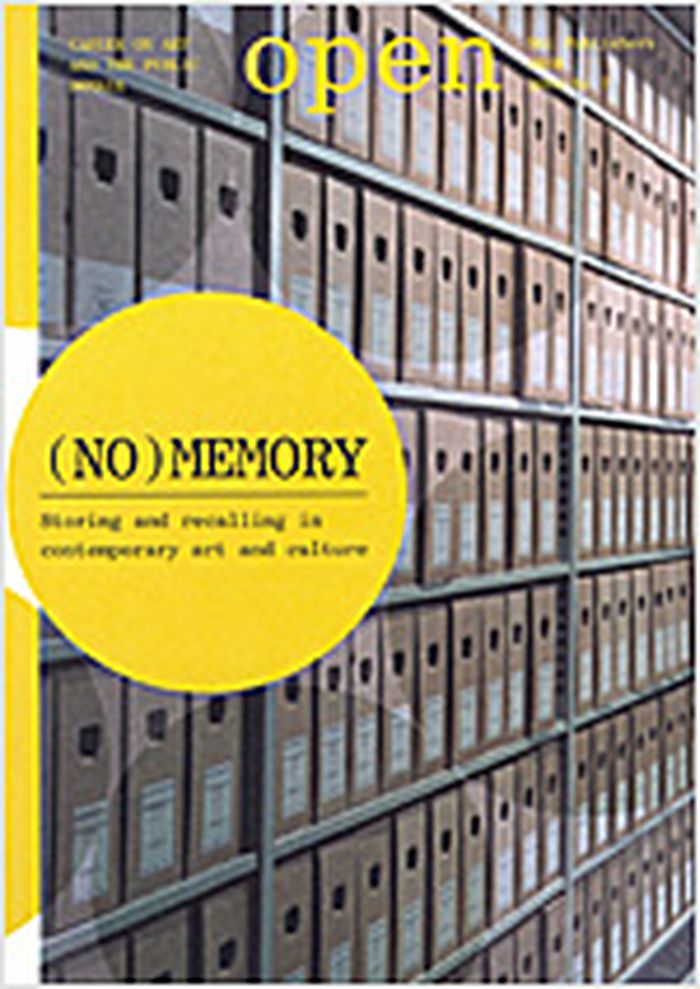
Open 7 (no)memory : storing and recalling in contemporary art and culture
Actions:
Price:
$36.00
(available to order)
Summary:
The modern design and perception of the public domain is to a large degree determined by the tension between different memories - individual and collective, old and new, indigenous and immigrant. This makes memory a topical theme in the public domain, and its content, management and place are in urgent need of renewed consideration. How can one actively make use of the information that is stored in modern-day 'places of memory'? What role does art play in this? Is collective memory even a possibility these days? How can cultural heritage be made accessible without transforming city and countryside into one big open-air museum? And what are the implications of new media and digital storage technologies for the social and historical processes of preserving and remembering? Rudi Laermans analyses the modern-day 'heritage regime'. Frank van Vree examines the role of the contemporary monument. Cor Wagenaar advocates the introduction of time as an instrument for the Belvedere Policy. Wolfgang Ernst considers how the archive becomes a literal metaphor in a digital culture. Nico Bick photographed various archives. Jorinde Seijdel takes a closer look at the visual archive of Bill Gates. Sven Lütticken writes about the conspiracy of openness that is apparently at work in the mass media. Geert Lovink interviews artist and archivist Tjebbe van Tijen. Artists' contributions from Joke Robaard, Nico Dockx, Hans Aarsman, Arnoud Holleman and Barbara Visser. Other contributions by Henk Oosterling, Brigitte van der Sande, Stef Scagliola, Jordan Crandall and Paul Meurs.
Open 7 (no)memory : storing and recalling in contemporary art and culture
Actions:
Price:
$36.00
(available to order)
Summary:
The modern design and perception of the public domain is to a large degree determined by the tension between different memories - individual and collective, old and new, indigenous and immigrant. This makes memory a topical theme in the public domain, and its content, management and place are in urgent need of renewed consideration. How can one actively make use of the information that is stored in modern-day 'places of memory'? What role does art play in this? Is collective memory even a possibility these days? How can cultural heritage be made accessible without transforming city and countryside into one big open-air museum? And what are the implications of new media and digital storage technologies for the social and historical processes of preserving and remembering? Rudi Laermans analyses the modern-day 'heritage regime'. Frank van Vree examines the role of the contemporary monument. Cor Wagenaar advocates the introduction of time as an instrument for the Belvedere Policy. Wolfgang Ernst considers how the archive becomes a literal metaphor in a digital culture. Nico Bick photographed various archives. Jorinde Seijdel takes a closer look at the visual archive of Bill Gates. Sven Lütticken writes about the conspiracy of openness that is apparently at work in the mass media. Geert Lovink interviews artist and archivist Tjebbe van Tijen. Artists' contributions from Joke Robaard, Nico Dockx, Hans Aarsman, Arnoud Holleman and Barbara Visser. Other contributions by Henk Oosterling, Brigitte van der Sande, Stef Scagliola, Jordan Crandall and Paul Meurs.
Form:
journals and magazines
journals and magazines
Publication:
January 1900, Rotterdam
January 1900, Rotterdam
Subject:
Magazines
Magazines


