


7451 Results
Form:
books
books

Price:
$20.00
(available to order)
Summary:
Interior architecture today operates at the intersection between physical and mediated spaces, such as those of mass communications, digital platforms or visual arts. Considering any form of representation as potentially architectural, from writing to photography, drawing to cinema, Javier Fernández Contreras traces the origins of this process of hybridisation between(...)
$20.00
(available to order)
Summary:
Interior architecture today operates at the intersection between physical and mediated spaces, such as those of mass communications, digital platforms or visual arts. Considering any form of representation as potentially architectural, from writing to photography, drawing to cinema, Javier Fernández Contreras traces the origins of this process of hybridisation between(...)
Title:
Manifestes 1: Manifesto of interiors, thinking in the expanded media
Actions:
Price:
$20.00
(available to order)
Summary:
Interior architecture today operates at the intersection between physical and mediated spaces, such as those of mass communications, digital platforms or visual arts. Considering any form of representation as potentially architectural, from writing to photography, drawing to cinema, Javier Fernández Contreras traces the origins of this process of hybridisation between space and media back to the Renaissance and addresses the role of interiors as an experimental laboratory of late modernity. Combining historic scholarship with bold hypotheses, his essay explores contemporary interiors as platforms of ‘expanded media’, examining their belonging to different places and temporalities, whether physical or virtual, close or distant, ultimately reasserting the role of interior architecture in the construction of contemporaneity.
Manifestes 1: Manifesto of interiors, thinking in the expanded media
Actions:
Price:
$20.00
(available to order)
Summary:
Interior architecture today operates at the intersection between physical and mediated spaces, such as those of mass communications, digital platforms or visual arts. Considering any form of representation as potentially architectural, from writing to photography, drawing to cinema, Javier Fernández Contreras traces the origins of this process of hybridisation between space and media back to the Renaissance and addresses the role of interiors as an experimental laboratory of late modernity. Combining historic scholarship with bold hypotheses, his essay explores contemporary interiors as platforms of ‘expanded media’, examining their belonging to different places and temporalities, whether physical or virtual, close or distant, ultimately reasserting the role of interior architecture in the construction of contemporaneity.
Form:
books
books
Publication:
January 2022
January 2022
Subject:
Architectural Theory
Architectural Theory
Form:
books
books
Actions:
Price:
$70.95
(available to order)
Summary:
How can homes be upgraded to meet today’s demands – from living comfort to energy efficiency and digital requirements? How can the fusion of the historic and the new be used as a design element? The use of existing residential buildings scores not only with the charm of what has been handed down, be it a baroque villa, a 19th-century farmhouse, or a post-war bungalow, but(...)
$70.95
(available to order)
Summary:
How can homes be upgraded to meet today’s demands – from living comfort to energy efficiency and digital requirements? How can the fusion of the historic and the new be used as a design element? The use of existing residential buildings scores not only with the charm of what has been handed down, be it a baroque villa, a 19th-century farmhouse, or a post-war bungalow, but(...)
Publication:
August 2022
August 2022
Title:
Old becomes new: Housing transformation
Actions:
Price:
$70.95
(available to order)
Summary:
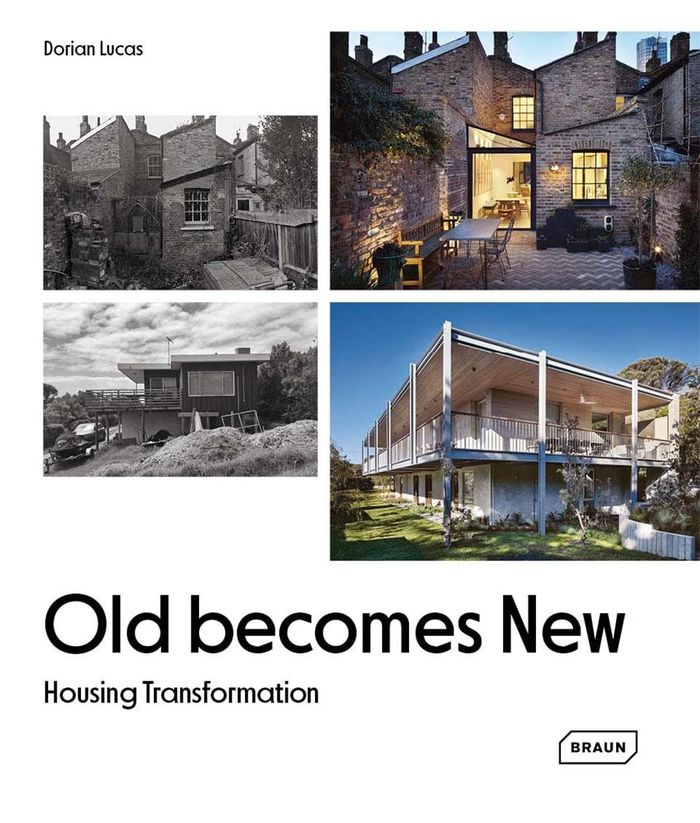
How can homes be upgraded to meet today’s demands – from living comfort to energy efficiency and digital requirements? How can the fusion of the historic and the new be used as a design element? The use of existing residential buildings scores not only with the charm of what has been handed down, be it a baroque villa, a 19th-century farmhouse, or a post-war bungalow, but actually also always with an excellent ecological balance. The extensive reworking, whether modernization, renovation or extension, is a widespread and thoroughly rewarding task for many architects. Since the initial situation is documented for each of the presented projects, the reader can clearly understand the redesign process.
Old becomes new: Housing transformation
Actions:
Price:
$70.95
(available to order)
Summary:
How can homes be upgraded to meet today’s demands – from living comfort to energy efficiency and digital requirements? How can the fusion of the historic and the new be used as a design element? The use of existing residential buildings scores not only with the charm of what has been handed down, be it a baroque villa, a 19th-century farmhouse, or a post-war bungalow, but actually also always with an excellent ecological balance. The extensive reworking, whether modernization, renovation or extension, is a widespread and thoroughly rewarding task for many architects. Since the initial situation is documented for each of the presented projects, the reader can clearly understand the redesign process.
Form:
books
books
Publication:
August 2022
August 2022
Form:
books
books
Title:
Isik Kaya: Second nature
Isik Kaya: Second nature
Actions:
Price:
$73.95
(available to order)
Summary:
With the uprise of mobile devices, the infrastructural needs of the telecommunication industry have exploded, and since the 1980s, cell towers have started to fill the planet. The scenery changed dramatically when an antenna was transformed into an artificial pine tree for the first time in 1992. Since then, this kind of camouflage has evolved into a global phenomenon(...)
$73.95
(available to order)
Summary:
With the uprise of mobile devices, the infrastructural needs of the telecommunication industry have exploded, and since the 1980s, cell towers have started to fill the planet. The scenery changed dramatically when an antenna was transformed into an artificial pine tree for the first time in 1992. Since then, this kind of camouflage has evolved into a global phenomenon(...)
Title:
Isik Kaya: Second nature
Actions:
Price:
$73.95
(available to order)
Summary:
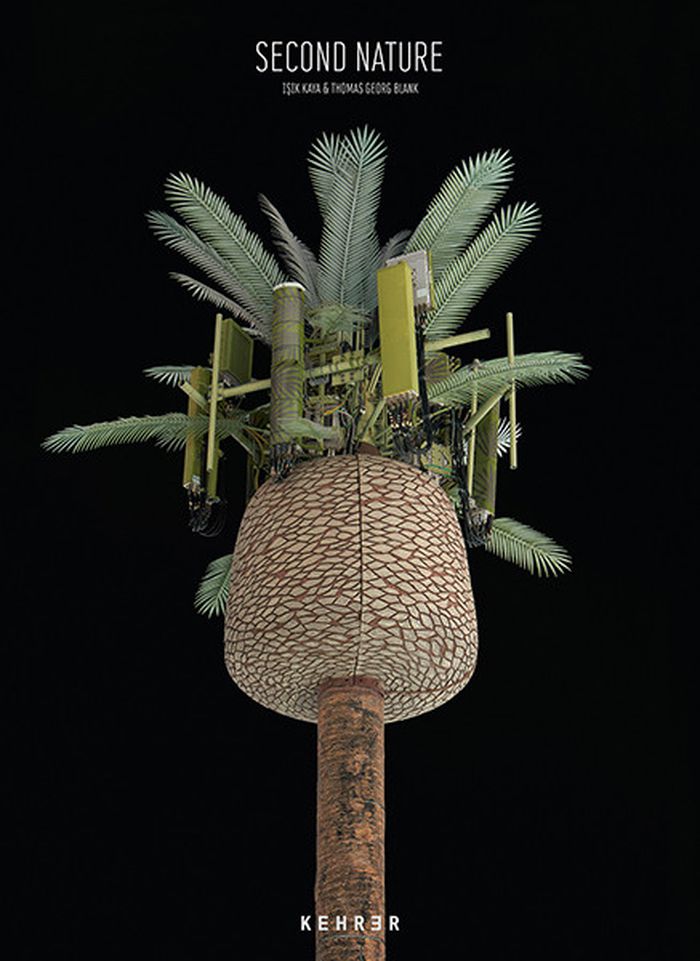
With the uprise of mobile devices, the infrastructural needs of the telecommunication industry have exploded, and since the 1980s, cell towers have started to fill the planet. The scenery changed dramatically when an antenna was transformed into an artificial pine tree for the first time in 1992. Since then, this kind of camouflage has evolved into a global phenomenon that raises fundamental questions about the relationship between humans and nature. The images from the series Second Nature focus on cell tower trees that became part of the Southern California landscape. The series depicts these artefacts of the digital age as, in Amy Clarke's words, a societal preference for fake aesthetics over ugly reality.
Isik Kaya: Second nature
Actions:
Price:
$73.95
(available to order)
Summary:
With the uprise of mobile devices, the infrastructural needs of the telecommunication industry have exploded, and since the 1980s, cell towers have started to fill the planet. The scenery changed dramatically when an antenna was transformed into an artificial pine tree for the first time in 1992. Since then, this kind of camouflage has evolved into a global phenomenon that raises fundamental questions about the relationship between humans and nature. The images from the series Second Nature focus on cell tower trees that became part of the Southern California landscape. The series depicts these artefacts of the digital age as, in Amy Clarke's words, a societal preference for fake aesthetics over ugly reality.
Form:
books
books
Publication:
August 2022
August 2022
Subject:
Photography monographs
Photography monographs
Form:
books
books
Title:
My green city
My green city
Actions:
Price:
$65.00
(available to order)
Summary:
The last few decades were dominated by the urban, the digital, and the sleek as well as a notable esteem for speed and consumption. Today, a growing countermovement is advocating for a sustainable and more responsible way of dealing with our environment and bringing nature back to our cities. My Green City celebrates this turnaround as well as the way of life and(...)
$65.00
(available to order)
Summary:
The last few decades were dominated by the urban, the digital, and the sleek as well as a notable esteem for speed and consumption. Today, a growing countermovement is advocating for a sustainable and more responsible way of dealing with our environment and bringing nature back to our cities. My Green City celebrates this turnaround as well as the way of life and(...)
Title:
My green city
Actions:
Price:
$65.00
(available to order)
Summary:
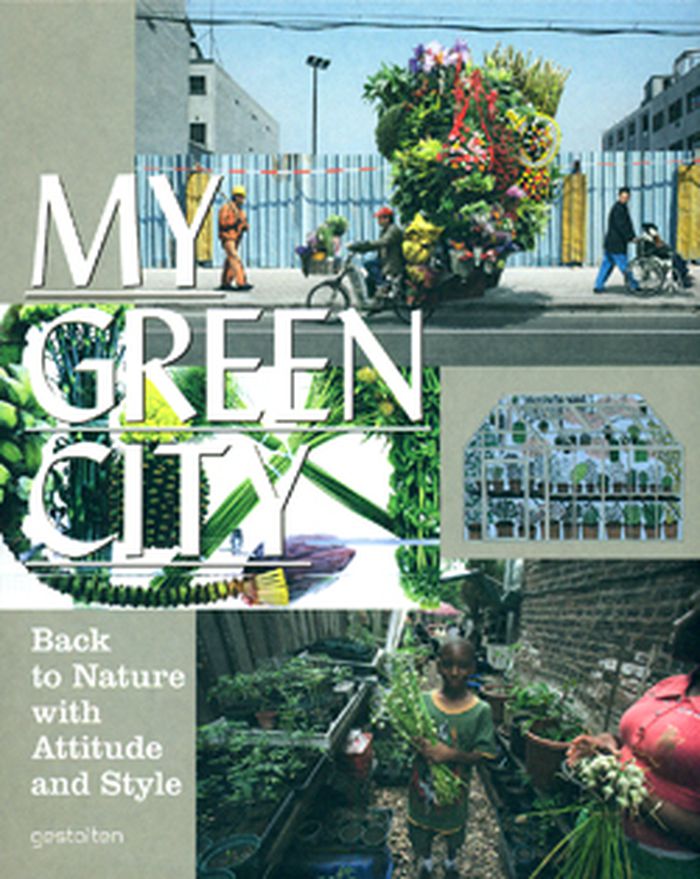
The last few decades were dominated by the urban, the digital, and the sleek as well as a notable esteem for speed and consumption. Today, a growing countermovement is advocating for a sustainable and more responsible way of dealing with our environment and bringing nature back to our cities. My Green City celebrates this turnaround as well as the way of life and creativity of the designers, artists, architects, activists, and passionate laypeople involved. The book presents projects from around the world - from urban farming initiatives and architectural visions that are changing our cities as a whole, to furniture and other everyday objects that can make our own streets and homes greener.
My green city
Actions:
Price:
$65.00
(available to order)
Summary:
The last few decades were dominated by the urban, the digital, and the sleek as well as a notable esteem for speed and consumption. Today, a growing countermovement is advocating for a sustainable and more responsible way of dealing with our environment and bringing nature back to our cities. My Green City celebrates this turnaround as well as the way of life and creativity of the designers, artists, architects, activists, and passionate laypeople involved. The book presents projects from around the world - from urban farming initiatives and architectural visions that are changing our cities as a whole, to furniture and other everyday objects that can make our own streets and homes greener.
Form:
books
books
Publication:
March 2011
March 2011
Subject:
Green Architecture
Green Architecture
Form:
books
books
Actions:
Price:
$86.95
(available in store)
Summary:
Risograph is a brand of digital duplicators that are designed mainly for high-volume photocopying and printing. The process creates micro-imperfections in printing, similar to spontaneity, or even comparable to how improvisation in jazz can lead to an unexpected but pleasant result. The result of two years of research by O.OO, a graphic design studio based in Taipei, the(...)
$86.95
(available in store)
Summary:
Risograph is a brand of digital duplicators that are designed mainly for high-volume photocopying and printing. The process creates micro-imperfections in printing, similar to spontaneity, or even comparable to how improvisation in jazz can lead to an unexpected but pleasant result. The result of two years of research by O.OO, a graphic design studio based in Taipei, the(...)
Title:
No Magic In Riso, 3rd reprint
Actions:
Price:
$86.95
(available in store)
Summary:
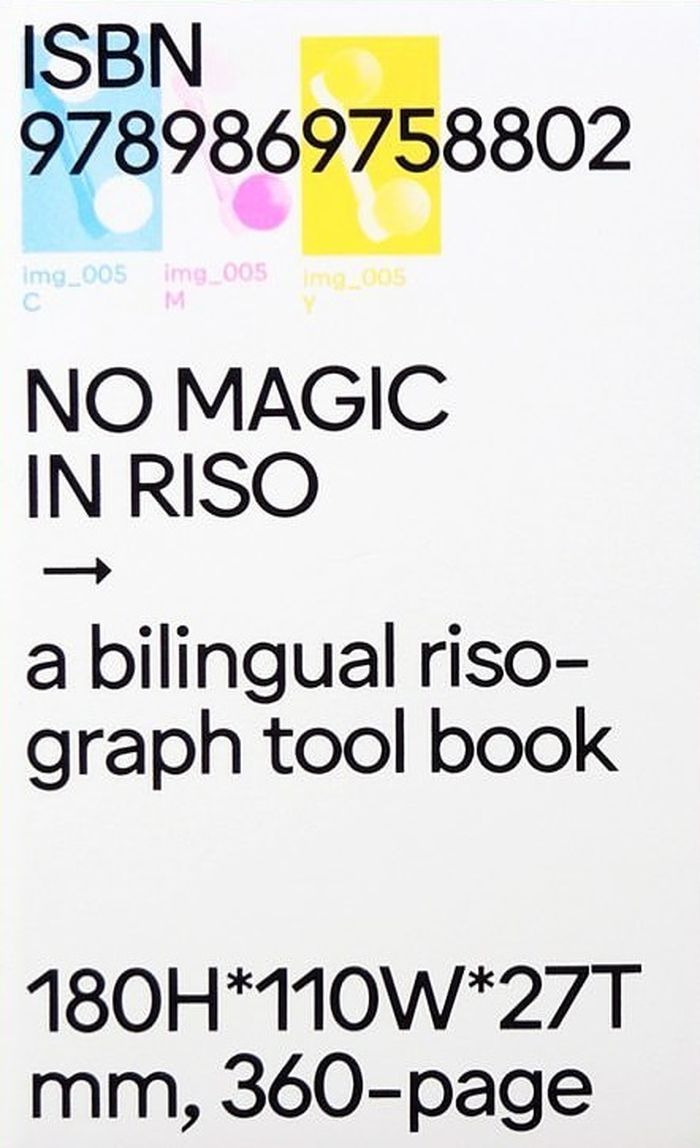
Risograph is a brand of digital duplicators that are designed mainly for high-volume photocopying and printing. The process creates micro-imperfections in printing, similar to spontaneity, or even comparable to how improvisation in jazz can lead to an unexpected but pleasant result. The result of two years of research by O.OO, a graphic design studio based in Taipei, the main focus of this publication is colour separation and experimentation with images. The studio does not claim the colour separation methods described here to be absolute or the “right” way, but offer resources in hopes that they can provide helpful advice in practice while on the path to professionalism in this field.
No Magic In Riso, 3rd reprint
Actions:
Price:
$86.95
(available in store)
Summary:
Risograph is a brand of digital duplicators that are designed mainly for high-volume photocopying and printing. The process creates micro-imperfections in printing, similar to spontaneity, or even comparable to how improvisation in jazz can lead to an unexpected but pleasant result. The result of two years of research by O.OO, a graphic design studio based in Taipei, the main focus of this publication is colour separation and experimentation with images. The studio does not claim the colour separation methods described here to be absolute or the “right” way, but offer resources in hopes that they can provide helpful advice in practice while on the path to professionalism in this field.
Form:
books
books
Publication:
August 2019
August 2019
Subject:
Printed Matter
Printed Matter
Form:
books
books
Price:
$23.00
(available to order)
Summary:
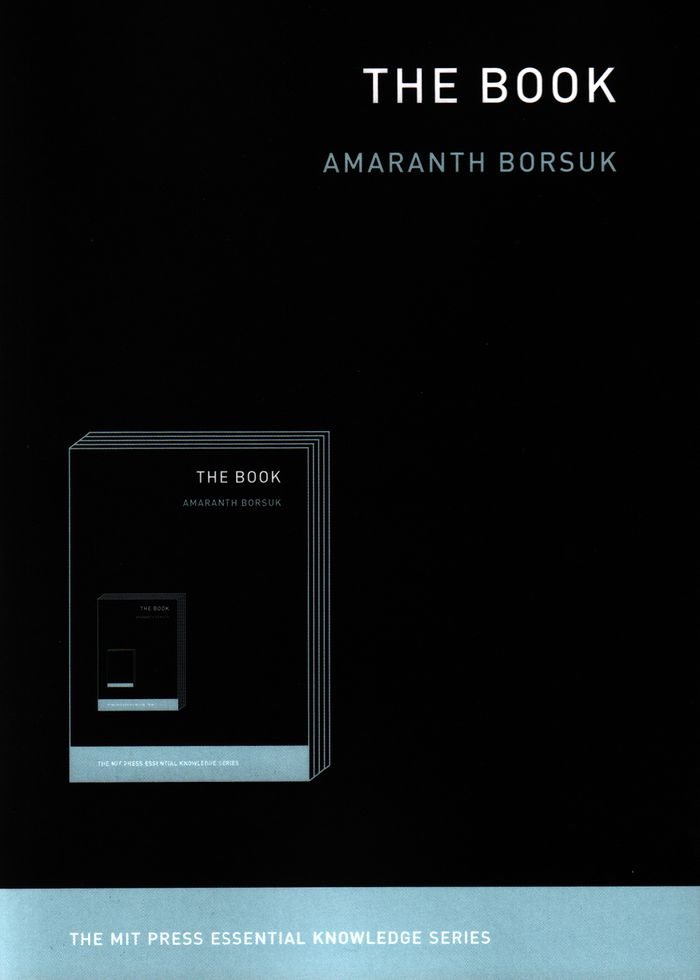
What is the book in a digital age? Is it a physical object containing pages encased in covers? Is it a portable device that gives us access to entire libraries? The codex, the book as bound paper sheets, emerged around 150 CE. It was preceded by clay tablets and papyrus scrolls. Are those books? In this volume in the MIT Press Essential Knowledge series, Amaranth Borsuk(...)
$23.00
(available to order)
Summary:
What is the book in a digital age? Is it a physical object containing pages encased in covers? Is it a portable device that gives us access to entire libraries? The codex, the book as bound paper sheets, emerged around 150 CE. It was preceded by clay tablets and papyrus scrolls. Are those books? In this volume in the MIT Press Essential Knowledge series, Amaranth Borsuk(...)
Title:
The book
Actions:
Price:
$23.00
(available to order)
Summary:
What is the book in a digital age? Is it a physical object containing pages encased in covers? Is it a portable device that gives us access to entire libraries? The codex, the book as bound paper sheets, emerged around 150 CE. It was preceded by clay tablets and papyrus scrolls. Are those books? In this volume in the MIT Press Essential Knowledge series, Amaranth Borsuk considers the history of the book, the future of the book, and the idea of the book. Tracing the interrelationship of form and content in the book's development, she bridges book history, book arts, and electronic literature to expand our definition of an object we thought we knew intimately.
The book
Actions:
Price:
$23.00
(available to order)
Summary:
What is the book in a digital age? Is it a physical object containing pages encased in covers? Is it a portable device that gives us access to entire libraries? The codex, the book as bound paper sheets, emerged around 150 CE. It was preceded by clay tablets and papyrus scrolls. Are those books? In this volume in the MIT Press Essential Knowledge series, Amaranth Borsuk considers the history of the book, the future of the book, and the idea of the book. Tracing the interrelationship of form and content in the book's development, she bridges book history, book arts, and electronic literature to expand our definition of an object we thought we knew intimately.
Form:
books
books
Publication:
May 2018
May 2018
Subject:
Book Design
Book Design
Form:
books
books
Actions:
Price:
$21.50
(available to order)
Summary:
Rethinking strategies for rural development is a global pressing challenge. To stimulate the international discussion Aedes Architecture Forum Berlin is presenting a remarkable example from rural China. Dynamic urbanization processes shape large parts of the world and China in particular. The young population migrates to the cities, whereas many elderly people and(...)
$21.50
(available to order)
Summary:
Rethinking strategies for rural development is a global pressing challenge. To stimulate the international discussion Aedes Architecture Forum Berlin is presenting a remarkable example from rural China. Dynamic urbanization processes shape large parts of the world and China in particular. The young population migrates to the cities, whereas many elderly people and(...)
Publication:
March 2018
March 2018
Title:
DnA_Design and Architecture: Rural moves, the Songyang story
Actions:
Price:
$21.50
(available to order)
Summary:
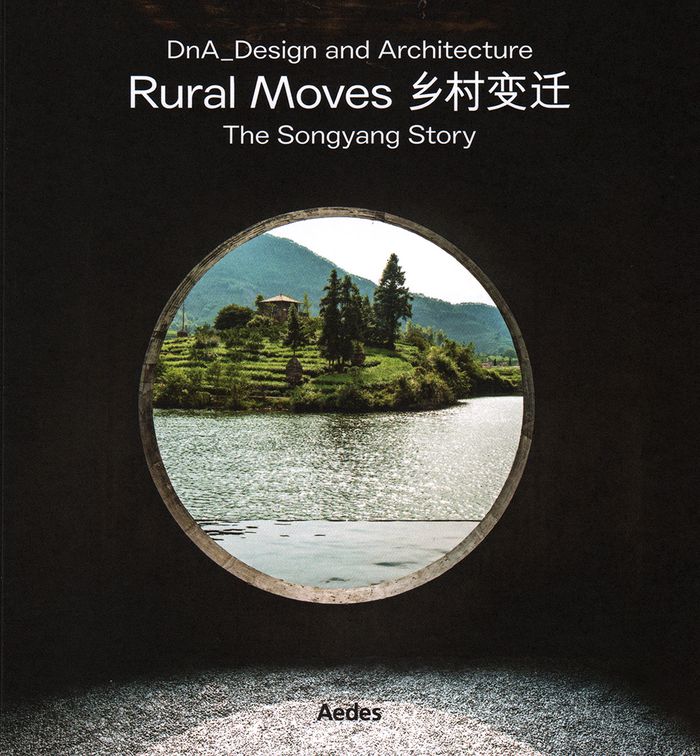
Rethinking strategies for rural development is a global pressing challenge. To stimulate the international discussion Aedes Architecture Forum Berlin is presenting a remarkable example from rural China. Dynamic urbanization processes shape large parts of the world and China in particular. The young population migrates to the cities, whereas many elderly people and children remain in the rural areas. While in the German hinterland railway lines are shut down and the digital infrastructure is more than inadequate, the rural exodus in China is countered with new high-speed train lines and even the most remote mountain villages are being connected by broadband coverage. But also small-scale architecture creates positive future prospects for cultural, social and economic development.
DnA_Design and Architecture: Rural moves, the Songyang story
Actions:
Price:
$21.50
(available to order)
Summary:
Rethinking strategies for rural development is a global pressing challenge. To stimulate the international discussion Aedes Architecture Forum Berlin is presenting a remarkable example from rural China. Dynamic urbanization processes shape large parts of the world and China in particular. The young population migrates to the cities, whereas many elderly people and children remain in the rural areas. While in the German hinterland railway lines are shut down and the digital infrastructure is more than inadequate, the rural exodus in China is countered with new high-speed train lines and even the most remote mountain villages are being connected by broadband coverage. But also small-scale architecture creates positive future prospects for cultural, social and economic development.
Form:
books
books
Publication:
March 2018
March 2018
Form:
books
books
Price:
$33.95
(available to order)
Summary:
An investigation through texts, interviews, and documentation of the complex relationship between the urban, the rural, and contemporary cultural production. What, and where, is “the Rural”? From the rocks that break a farmer's plough on a field in Japan to digital infrastructures that organize geographically dispersed interests and ambitions, vast parts of our lives(...)
$33.95
(available to order)
Summary:
An investigation through texts, interviews, and documentation of the complex relationship between the urban, the rural, and contemporary cultural production. What, and where, is “the Rural”? From the rocks that break a farmer's plough on a field in Japan to digital infrastructures that organize geographically dispersed interests and ambitions, vast parts of our lives(...)
Title:
The rural
Actions:
Price:
$33.95
(available to order)
Summary:
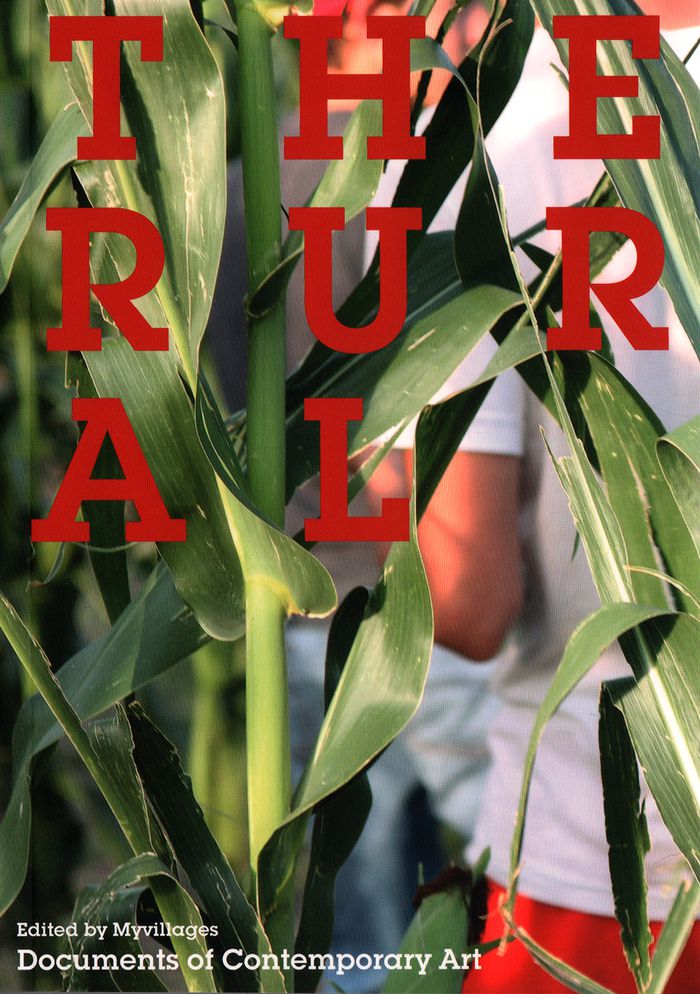
An investigation through texts, interviews, and documentation of the complex relationship between the urban, the rural, and contemporary cultural production. What, and where, is “the Rural”? From the rocks that break a farmer's plough on a field in Japan to digital infrastructures that organize geographically dispersed interests and ambitions, vast parts of our lives are still connected and dependent on resources, production, and infrastructures located within rural geographies, and the rural remains a shared cultural space. This anthology is formed as a document, tool, and navigation device for future artistic practice in which “the rural” is filtered through a lens sharpened by an audience-based model of art that practices from within the culture it addresses.
The rural
Actions:
Price:
$33.95
(available to order)
Summary:
An investigation through texts, interviews, and documentation of the complex relationship between the urban, the rural, and contemporary cultural production. What, and where, is “the Rural”? From the rocks that break a farmer's plough on a field in Japan to digital infrastructures that organize geographically dispersed interests and ambitions, vast parts of our lives are still connected and dependent on resources, production, and infrastructures located within rural geographies, and the rural remains a shared cultural space. This anthology is formed as a document, tool, and navigation device for future artistic practice in which “the rural” is filtered through a lens sharpened by an audience-based model of art that practices from within the culture it addresses.
Form:
books
books
Publication:
March 2019
March 2019
Subject:
Art Theory
Art Theory
Form:
books
books
Actions:
Price:
$43.95
(available to order)
Summary:
Examines Perec's impact on architecture, art, design, media, electronic communications, computing and the everyday. What do Perec's descriptions of the minutiae of everyday life reveal about our use of information and communications technologies? What happens if we read "Life: A User's Manual" as a toolbox of ideas for games studies? What light does the concept of the(...)
$43.95
(available to order)
Summary:
Examines Perec's impact on architecture, art, design, media, electronic communications, computing and the everyday. What do Perec's descriptions of the minutiae of everyday life reveal about our use of information and communications technologies? What happens if we read "Life: A User's Manual" as a toolbox of ideas for games studies? What light does the concept of the(...)
Title:
The afterlives of Georges Perec
Actions:
Price:
$43.95
(available to order)
Summary:
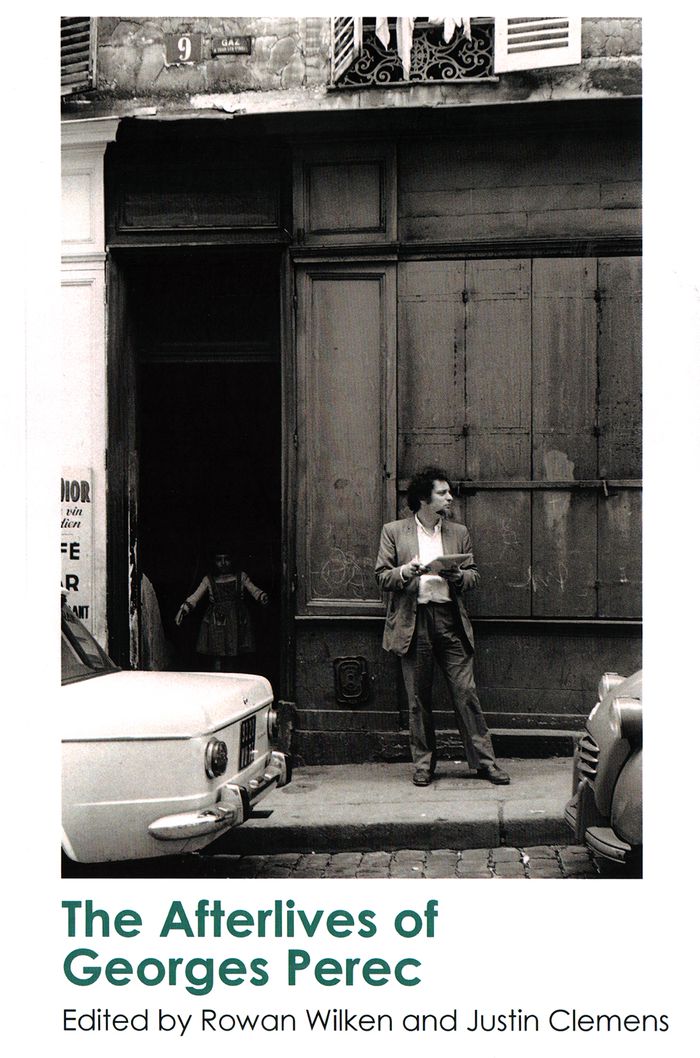
Examines Perec's impact on architecture, art, design, media, electronic communications, computing and the everyday. What do Perec's descriptions of the minutiae of everyday life reveal about our use of information and communications technologies? What happens if we read "Life: A User's Manual" as a toolbox of ideas for games studies? What light does the concept of the 'infra-ordinary' shed on social media? What insights does algorithmic writing generate for the digital humanities? What lessons can architects, artists, game-designers and writers draw from Perec's fascination with creative constraints? Through an examination of such questions, this collection takes Perec scholarship beyond its existing limits to offer new ways of rethinking our present.
The afterlives of Georges Perec
Actions:
Price:
$43.95
(available to order)
Summary:
Examines Perec's impact on architecture, art, design, media, electronic communications, computing and the everyday. What do Perec's descriptions of the minutiae of everyday life reveal about our use of information and communications technologies? What happens if we read "Life: A User's Manual" as a toolbox of ideas for games studies? What light does the concept of the 'infra-ordinary' shed on social media? What insights does algorithmic writing generate for the digital humanities? What lessons can architects, artists, game-designers and writers draw from Perec's fascination with creative constraints? Through an examination of such questions, this collection takes Perec scholarship beyond its existing limits to offer new ways of rethinking our present.
Form:
books
books
Publication:
September 2018
September 2018
Subject:
Literature and poetry
Literature and poetry
Form:
books
books
Price:
$43.95
(available to order)
Summary:
Bringing the creative process of three contemporary artists into conversation, ''Architectures of the Unforeseen'' stages an encounter between philosophy and art and design. Its prose invites the reader to think along with Brian Massumi as he thoroughly embodies the work of these artists, walking the line that separates theory from art and providing equally nurturing(...)
$43.95
(available to order)
Summary:
Bringing the creative process of three contemporary artists into conversation, ''Architectures of the Unforeseen'' stages an encounter between philosophy and art and design. Its prose invites the reader to think along with Brian Massumi as he thoroughly embodies the work of these artists, walking the line that separates theory from art and providing equally nurturing(...)
Title:
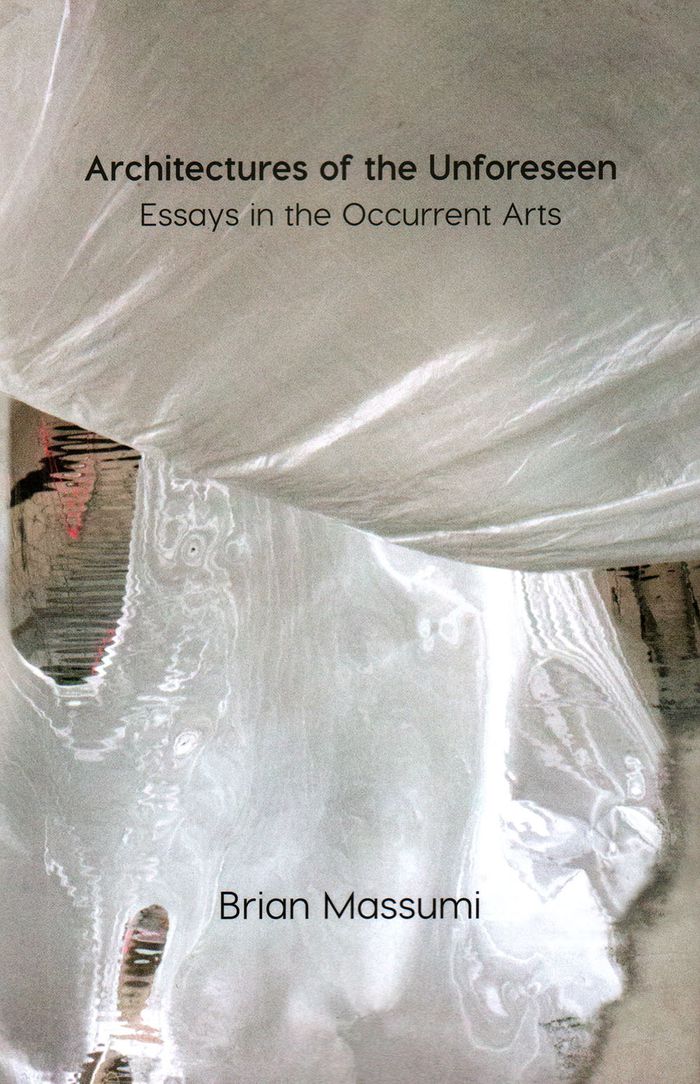
Architectures of the unforeseen: essays in the occurrent arts
Actions:
Price:
$43.95
(available to order)
Summary:
Bringing the creative process of three contemporary artists into conversation, ''Architectures of the Unforeseen'' stages an encounter between philosophy and art and design. Its prose invites the reader to think along with Brian Massumi as he thoroughly embodies the work of these artists, walking the line that separates theory from art and providing equally nurturing sustenance for practicing artists and working philosophers. Based on Massumi’s lengthy relationships with digital architect Greg Lynn, interactive media artist Rafael-Lozano Hemmer, and mixed-media installation creator Simryn Gill, ''Architectures of the Unforeseen' delves into their processes of creating art. The book’s primary interest is in what motivates each artist’s practice and in how their pieces work to give off their unique effects.
Architectures of the unforeseen: essays in the occurrent arts
Actions:
Price:
$43.95
(available to order)
Summary:
Bringing the creative process of three contemporary artists into conversation, ''Architectures of the Unforeseen'' stages an encounter between philosophy and art and design. Its prose invites the reader to think along with Brian Massumi as he thoroughly embodies the work of these artists, walking the line that separates theory from art and providing equally nurturing sustenance for practicing artists and working philosophers. Based on Massumi’s lengthy relationships with digital architect Greg Lynn, interactive media artist Rafael-Lozano Hemmer, and mixed-media installation creator Simryn Gill, ''Architectures of the Unforeseen' delves into their processes of creating art. The book’s primary interest is in what motivates each artist’s practice and in how their pieces work to give off their unique effects.
Form:
books
books
Publication:
June 2019
June 2019
Subject:
Art Theory
Art Theory


