


36173 Results
Form:
books
books
Title:
Andreas Herzau : Istanbul
Andreas Herzau : Istanbul
Actions:
Price:
$54.00
(available to order)
Summary:
Prompted by the debate surrounding Turkey's potential membership in the European Union, German photographer Andreas Herzau (born 1962) began documenting life in the country. Situated at the border of Europe and Asia, Istanbul, the photographer found, sums up the challenges and opportunities facing Turkey today. Herzau's images precisely capture the many facets of the(...)
$54.00
(available to order)
Summary:
Prompted by the debate surrounding Turkey's potential membership in the European Union, German photographer Andreas Herzau (born 1962) began documenting life in the country. Situated at the border of Europe and Asia, Istanbul, the photographer found, sums up the challenges and opportunities facing Turkey today. Herzau's images precisely capture the many facets of the(...)
Title:
Andreas Herzau : Istanbul
Actions:
Price:
$54.00
(available to order)
Summary:
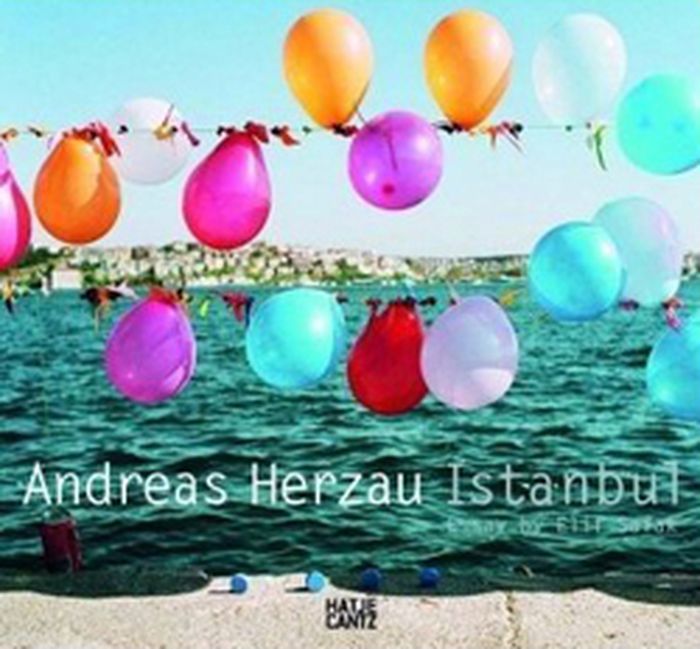
Prompted by the debate surrounding Turkey's potential membership in the European Union, German photographer Andreas Herzau (born 1962) began documenting life in the country. Situated at the border of Europe and Asia, Istanbul, the photographer found, sums up the challenges and opportunities facing Turkey today. Herzau's images precisely capture the many facets of the Turkish port where tradition and modernity collide.
Andreas Herzau : Istanbul
Actions:
Price:
$54.00
(available to order)
Summary:
Prompted by the debate surrounding Turkey's potential membership in the European Union, German photographer Andreas Herzau (born 1962) began documenting life in the country. Situated at the border of Europe and Asia, Istanbul, the photographer found, sums up the challenges and opportunities facing Turkey today. Herzau's images precisely capture the many facets of the Turkish port where tradition and modernity collide.
Form:
books
books
Publication:
October 2010
October 2010
Subject:
Photography monographs
Photography monographs
Form:
books
books
Actions:
Price:
$36.00
(available to order)
Summary:
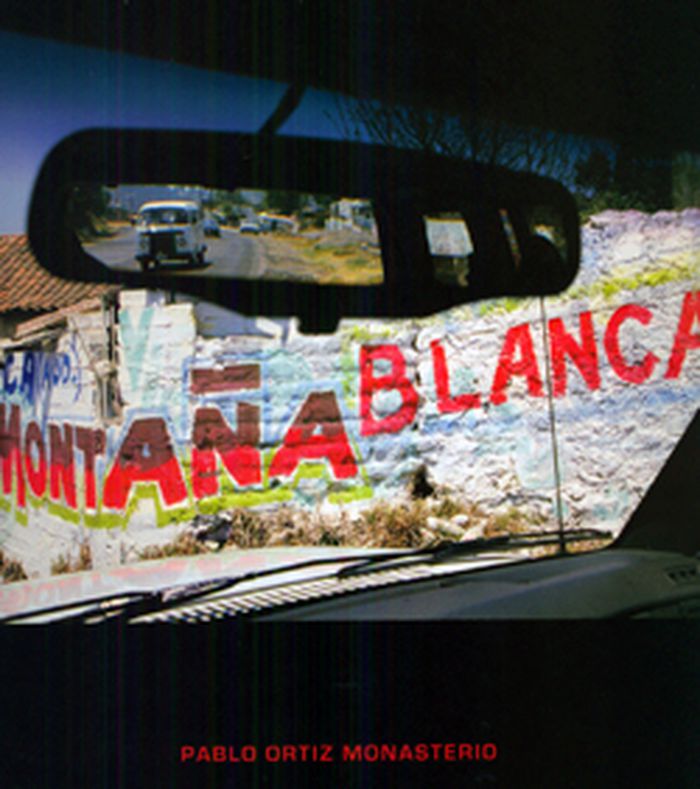
Mexico's White Mountain was once home to the indigenous pre-Columbian Zapotec civilization. Photographer Pablo Ortíz Monasterio engages this foundational mythology by documenting its physical manifestations in contemporary life, as depicted on decorative murals, key chains, ashtrays and pony glasses.
$36.00
(available to order)
Summary:
Mexico's White Mountain was once home to the indigenous pre-Columbian Zapotec civilization. Photographer Pablo Ortíz Monasterio engages this foundational mythology by documenting its physical manifestations in contemporary life, as depicted on decorative murals, key chains, ashtrays and pony glasses.
Subject:
Photography monographs
Photography monographs
Publication:
October 2010
October 2010
Title:
Pablo Otiz Monasterio: White mountain
Actions:
Price:
$36.00
(available to order)
Summary:
Mexico's White Mountain was once home to the indigenous pre-Columbian Zapotec civilization. Photographer Pablo Ortíz Monasterio engages this foundational mythology by documenting its physical manifestations in contemporary life, as depicted on decorative murals, key chains, ashtrays and pony glasses.
Pablo Otiz Monasterio: White mountain
Actions:
Price:
$36.00
(available to order)
Summary:
Mexico's White Mountain was once home to the indigenous pre-Columbian Zapotec civilization. Photographer Pablo Ortíz Monasterio engages this foundational mythology by documenting its physical manifestations in contemporary life, as depicted on decorative murals, key chains, ashtrays and pony glasses.
Form:
books
books
Publication:
October 2010
October 2010
Subject:
Photography monographs
Photography monographs
Form:
books
books
Actions:
Price:
$66.00
(available to order)
Summary:
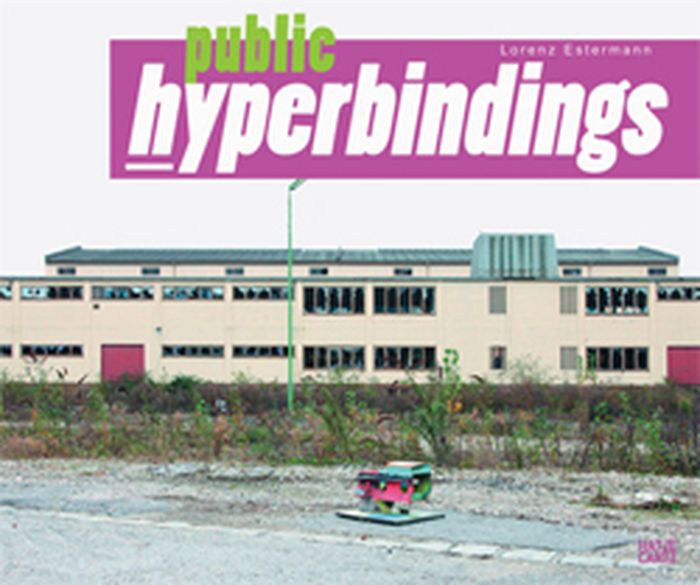
Austrian artist Lorenz Estermann engages the ideals of the modern utopia in his work. Inspired by 1960s and 70s architecture, he produces works on paper, architectural models and spatial installations that incorporate painting, sculpture, photography and design, fusing the aspirations of the Bauhaus with the ironised remove of Pop art.
$66.00
(available to order)
Summary:
Austrian artist Lorenz Estermann engages the ideals of the modern utopia in his work. Inspired by 1960s and 70s architecture, he produces works on paper, architectural models and spatial installations that incorporate painting, sculpture, photography and design, fusing the aspirations of the Bauhaus with the ironised remove of Pop art.
Subject:
Contemporary Art Monographs
Contemporary Art Monographs
Publication:
August 2010
August 2010
Title:
Lorenz Estermann: Public hyperbindings
Actions:
Price:
$66.00
(available to order)
Summary:
Austrian artist Lorenz Estermann engages the ideals of the modern utopia in his work. Inspired by 1960s and 70s architecture, he produces works on paper, architectural models and spatial installations that incorporate painting, sculpture, photography and design, fusing the aspirations of the Bauhaus with the ironised remove of Pop art.
Lorenz Estermann: Public hyperbindings
Actions:
Price:
$66.00
(available to order)
Summary:
Austrian artist Lorenz Estermann engages the ideals of the modern utopia in his work. Inspired by 1960s and 70s architecture, he produces works on paper, architectural models and spatial installations that incorporate painting, sculpture, photography and design, fusing the aspirations of the Bauhaus with the ironised remove of Pop art.
Form:
books
books
Publication:
August 2010
August 2010
Subject:
Contemporary Art Monographs
Contemporary Art Monographs
Form:
books
books
Actions:
Price:
$66.00
(available to order)
Summary:
David T. Hanson's photographs of the coal-mining town of Colstrip, Montana, and the ruined landscape around it were exhibited by John Szarkowski at the Museum of Modern Art in New York in 1986. The work signaled a shift in American landscape photography, away from the cool modernism of the New Topographics. For this publication, Hanson has added 21 images and re-sequenced(...)
$66.00
(available to order)
Summary:
David T. Hanson's photographs of the coal-mining town of Colstrip, Montana, and the ruined landscape around it were exhibited by John Szarkowski at the Museum of Modern Art in New York in 1986. The work signaled a shift in American landscape photography, away from the cool modernism of the New Topographics. For this publication, Hanson has added 21 images and re-sequenced(...)
Title:
David T. Hanson: Colstrip, Montana
Actions:
Price:
$66.00
(available to order)
Summary:
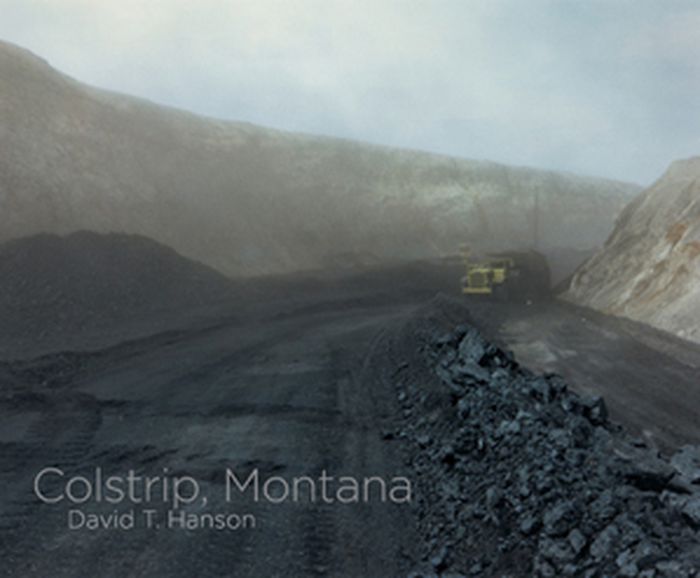
David T. Hanson's photographs of the coal-mining town of Colstrip, Montana, and the ruined landscape around it were exhibited by John Szarkowski at the Museum of Modern Art in New York in 1986. The work signaled a shift in American landscape photography, away from the cool modernism of the New Topographics. For this publication, Hanson has added 21 images and re-sequenced the series. Although the photographs were made in the early 1980s, they are perhaps even more relevant today, given growing concerns about energy production, environmental degradation and climate change. The pictures remain tragic reflections of a despoiled environment.
David T. Hanson: Colstrip, Montana
Actions:
Price:
$66.00
(available to order)
Summary:
David T. Hanson's photographs of the coal-mining town of Colstrip, Montana, and the ruined landscape around it were exhibited by John Szarkowski at the Museum of Modern Art in New York in 1986. The work signaled a shift in American landscape photography, away from the cool modernism of the New Topographics. For this publication, Hanson has added 21 images and re-sequenced the series. Although the photographs were made in the early 1980s, they are perhaps even more relevant today, given growing concerns about energy production, environmental degradation and climate change. The pictures remain tragic reflections of a despoiled environment.
Form:
books
books
Publication:
November 2010
November 2010
Subject:
Photography monographs
Photography monographs
Form:
books
books
Actions:
Price:
$63.00
(available to order)
Summary:
This publication is dedicated to the transformation of spaces and structures. It covers a range of residential and commercial architecture as well as large-scale urban renewal, showcasing projects that frequently cross functional boundaries.
$63.00
(available to order)
Summary:
This publication is dedicated to the transformation of spaces and structures. It covers a range of residential and commercial architecture as well as large-scale urban renewal, showcasing projects that frequently cross functional boundaries.
Title:
Transformer: workplace, residential, schools, art & culture, hotel & lounge
Actions:
Price:
$63.00
(available to order)
Summary:
This publication is dedicated to the transformation of spaces and structures. It covers a range of residential and commercial architecture as well as large-scale urban renewal, showcasing projects that frequently cross functional boundaries.
Transformer: workplace, residential, schools, art & culture, hotel & lounge
Actions:
Price:
$63.00
(available to order)
Summary:
This publication is dedicated to the transformation of spaces and structures. It covers a range of residential and commercial architecture as well as large-scale urban renewal, showcasing projects that frequently cross functional boundaries.
Form:
books
books
Publication:
March 2010
March 2010
Form:
books
books
Title:
Zaha Hadid : recent project
Zaha Hadid : recent project
Actions:
Price:
$69.95
(available to order)
Summary:
Since the last GA publication devoted to her work in 2007, Zaha Hadid Architects has grown by over 50%. This compendium features 21 recent and current global projects by Hadid, including the Sunrise Tower Kuala Lumpur, the London Aquatics Centre for the 2012 Olympics, and the new waterfront of Reggio Calabria, Italy. Also included is an essay by Patrik Schumacher, an(...)
$69.95
(available to order)
Summary:
Since the last GA publication devoted to her work in 2007, Zaha Hadid Architects has grown by over 50%. This compendium features 21 recent and current global projects by Hadid, including the Sunrise Tower Kuala Lumpur, the London Aquatics Centre for the 2012 Olympics, and the new waterfront of Reggio Calabria, Italy. Also included is an essay by Patrik Schumacher, an(...)
Title:
Zaha Hadid : recent project
Actions:
Price:
$69.95
(available to order)
Summary:
Since the last GA publication devoted to her work in 2007, Zaha Hadid Architects has grown by over 50%. This compendium features 21 recent and current global projects by Hadid, including the Sunrise Tower Kuala Lumpur, the London Aquatics Centre for the 2012 Olympics, and the new waterfront of Reggio Calabria, Italy. Also included is an essay by Patrik Schumacher, an interview with Hadid, and a feature on her 2010 exhibition in Zurich, 'Zaha Hadid and Suprematism', which explored the impact of the early twentieth century Russian avant-garde on Hadid's architectural vision.
Zaha Hadid : recent project
Actions:
Price:
$69.95
(available to order)
Summary:
Since the last GA publication devoted to her work in 2007, Zaha Hadid Architects has grown by over 50%. This compendium features 21 recent and current global projects by Hadid, including the Sunrise Tower Kuala Lumpur, the London Aquatics Centre for the 2012 Olympics, and the new waterfront of Reggio Calabria, Italy. Also included is an essay by Patrik Schumacher, an interview with Hadid, and a feature on her 2010 exhibition in Zurich, 'Zaha Hadid and Suprematism', which explored the impact of the early twentieth century Russian avant-garde on Hadid's architectural vision.
Form:
books
books
Publication:
September 2010
September 2010
Subject:
Architecture Monographs
Architecture Monographs
Form:
books
books
Actions:
Price:
$66.00
(available to order)
Summary:
Swiss photographer Claudio Moser (born 1959) wanders the peripheries of cities and towns for hours - sometimes to the point of exhaustion - in search of the perfect image. Further distending his process, the artist often lets years pass after developing his film before viewing the images. Only then does he produce large-scale prints, revealing atmospherically dense(...)
$66.00
(available to order)
Summary:
Swiss photographer Claudio Moser (born 1959) wanders the peripheries of cities and towns for hours - sometimes to the point of exhaustion - in search of the perfect image. Further distending his process, the artist often lets years pass after developing his film before viewing the images. Only then does he produce large-scale prints, revealing atmospherically dense(...)
Title:
Claudio Moser : nowhere near far enough
Actions:
Price:
$66.00
(available to order)
Summary:
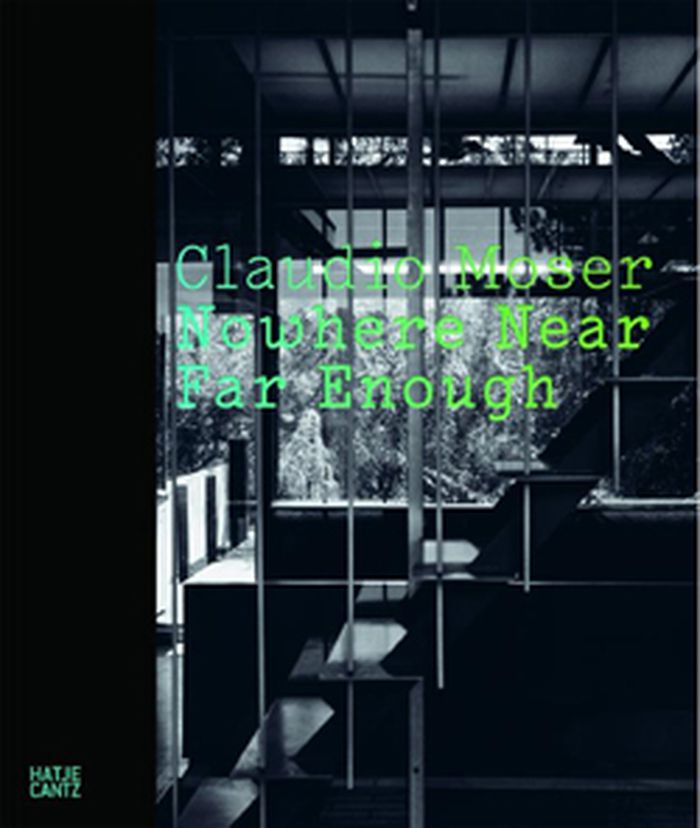
Swiss photographer Claudio Moser (born 1959) wanders the peripheries of cities and towns for hours - sometimes to the point of exhaustion - in search of the perfect image. Further distending his process, the artist often lets years pass after developing his film before viewing the images. Only then does he produce large-scale prints, revealing atmospherically dense photographs of industrial wasteland and "non-places."
Claudio Moser : nowhere near far enough
Actions:
Price:
$66.00
(available to order)
Summary:
Swiss photographer Claudio Moser (born 1959) wanders the peripheries of cities and towns for hours - sometimes to the point of exhaustion - in search of the perfect image. Further distending his process, the artist often lets years pass after developing his film before viewing the images. Only then does he produce large-scale prints, revealing atmospherically dense photographs of industrial wasteland and "non-places."
Form:
books
books
Publication:
February 2011
February 2011
Subject:
Photography monographs
Photography monographs
Form:
books
books
Actions:
Price:
$84.95
(available to order)
Summary:
Architecte-designer et scénographe, Bruno Moinard a réalisé avec son équipe de l'agence 4B1 des boutiques de luxe, des musées, des sièges sociaux, des grands magasins, des appartements et des maisons prestigieuses. Observateur passionné par la vie, il parcourt inlassablement le monde, toujours accompagné d'un grand cartable rempli de feutres, de crayons de couleur et(...)
$84.95
(available to order)
Summary:
Architecte-designer et scénographe, Bruno Moinard a réalisé avec son équipe de l'agence 4B1 des boutiques de luxe, des musées, des sièges sociaux, des grands magasins, des appartements et des maisons prestigieuses. Observateur passionné par la vie, il parcourt inlassablement le monde, toujours accompagné d'un grand cartable rempli de feutres, de crayons de couleur et(...)
Title:
Bruno Moinard: L'architecte promeneur
Actions:
Price:
$84.95
(available to order)
Summary:
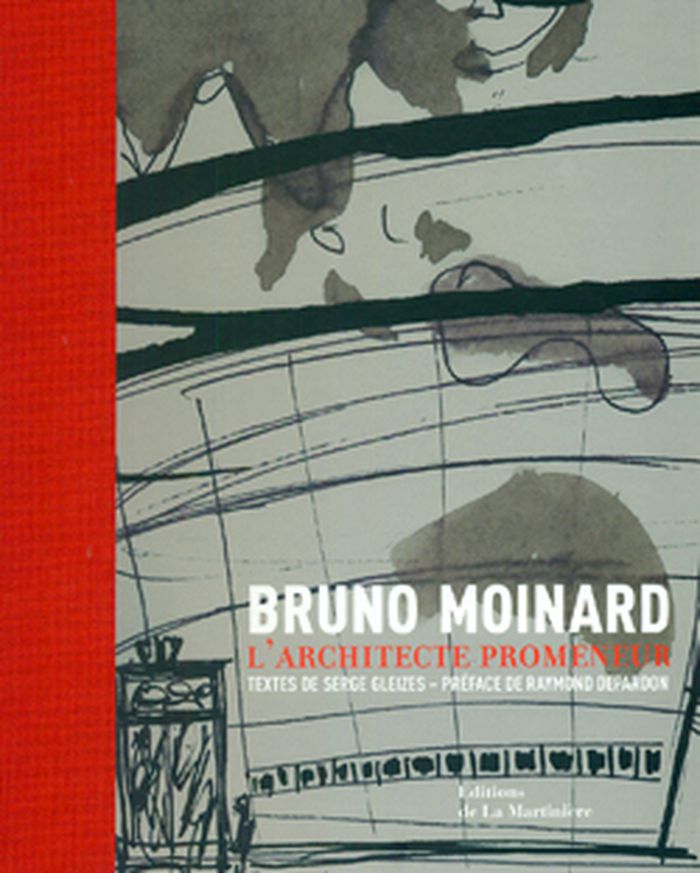
Architecte-designer et scénographe, Bruno Moinard a réalisé avec son équipe de l'agence 4B1 des boutiques de luxe, des musées, des sièges sociaux, des grands magasins, des appartements et des maisons prestigieuses. Observateur passionné par la vie, il parcourt inlassablement le monde, toujours accompagné d'un grand cartable rempli de feutres, de crayons de couleur et d'encres de Chine. Ses croquis d'architecte rigoureux et limpides ainsi que ses aquarelles enlevées et instinctives dévoilent le jardin secret de ce globe trotter. Jusque là enfouis dans des tiroirs, ces gouaches, collages et dessins, très personnels, denses et colorés, composent les pages d'un journal intime, souvent très drôle. Ils présentent les thèmes chers à l'architecte, l'amour de la couleur, de la lumière, des lignes dépouillées qui disent tout avec trois fuis rien et peuvent servir de prémices aux grandes réalisations fut ores.
Bruno Moinard: L'architecte promeneur
Actions:
Price:
$84.95
(available to order)
Summary:
Architecte-designer et scénographe, Bruno Moinard a réalisé avec son équipe de l'agence 4B1 des boutiques de luxe, des musées, des sièges sociaux, des grands magasins, des appartements et des maisons prestigieuses. Observateur passionné par la vie, il parcourt inlassablement le monde, toujours accompagné d'un grand cartable rempli de feutres, de crayons de couleur et d'encres de Chine. Ses croquis d'architecte rigoureux et limpides ainsi que ses aquarelles enlevées et instinctives dévoilent le jardin secret de ce globe trotter. Jusque là enfouis dans des tiroirs, ces gouaches, collages et dessins, très personnels, denses et colorés, composent les pages d'un journal intime, souvent très drôle. Ils présentent les thèmes chers à l'architecte, l'amour de la couleur, de la lumière, des lignes dépouillées qui disent tout avec trois fuis rien et peuvent servir de prémices aux grandes réalisations fut ores.
Form:
books
books
Publication:
October 2010
October 2010
Subject:
Architecture Monographs
Architecture Monographs
Form:
books
books
Title:
L'Urbanisme
L'Urbanisme
Actions:
Price:
$17.95
(available to order)
Summary:
L'urbanisme, terme apparu récemment dans la langue (au début du XXe siècle), n'est pas aisé à définir. Il a suscité de nombreuses " théories " dont aucune n'a fait l'unanimité. Peut-être cette difficulté s'explique-t-elle par le caractère essentiellement pluridisciplinaire d'une activité qui vise à créer dans le temps une disposition ordonnée de l'espace, en recherchant(...)
$17.95
(available to order)
Summary:
L'urbanisme, terme apparu récemment dans la langue (au début du XXe siècle), n'est pas aisé à définir. Il a suscité de nombreuses " théories " dont aucune n'a fait l'unanimité. Peut-être cette difficulté s'explique-t-elle par le caractère essentiellement pluridisciplinaire d'une activité qui vise à créer dans le temps une disposition ordonnée de l'espace, en recherchant(...)
Title:
L'Urbanisme
Actions:
Price:
$17.95
(available to order)
Summary:
L'urbanisme, terme apparu récemment dans la langue (au début du XXe siècle), n'est pas aisé à définir. Il a suscité de nombreuses " théories " dont aucune n'a fait l'unanimité. Peut-être cette difficulté s'explique-t-elle par le caractère essentiellement pluridisciplinaire d'une activité qui vise à créer dans le temps une disposition ordonnée de l'espace, en recherchant harmonie, bien-être et économie. En effet, l'urbanisme relève autant de l'art que de l'architecture, de l'économie que de la sociologie, de l'histoire que de la géographie, du droit que de l'ingénierie.
L'Urbanisme
Actions:
Price:
$17.95
(available to order)
Summary:
L'urbanisme, terme apparu récemment dans la langue (au début du XXe siècle), n'est pas aisé à définir. Il a suscité de nombreuses " théories " dont aucune n'a fait l'unanimité. Peut-être cette difficulté s'explique-t-elle par le caractère essentiellement pluridisciplinaire d'une activité qui vise à créer dans le temps une disposition ordonnée de l'espace, en recherchant harmonie, bien-être et économie. En effet, l'urbanisme relève autant de l'art que de l'architecture, de l'économie que de la sociologie, de l'histoire que de la géographie, du droit que de l'ingénierie.
Form:
books
books
Publication:
September 2010
September 2010
Subject:
Urban Theory
Urban Theory
Form:
books
books
Price:
$15.95
(available to order)
Summary:
Voici 12 histoires courtes et absurdes qui éclatent d’une pirouette joyeuse les contours de l’évidence et de la logique. Dans le monde d’Oleg Grigoriev, tout est sujet à rire, en particulier, ce qui semble banal au premier abord : un trou creusé dans la rue, deux enfants avec une orange, des marches d’escalier...
$15.95
(available to order)
Summary:
Voici 12 histoires courtes et absurdes qui éclatent d’une pirouette joyeuse les contours de l’évidence et de la logique. Dans le monde d’Oleg Grigoriev, tout est sujet à rire, en particulier, ce qui semble banal au premier abord : un trou creusé dans la rue, deux enfants avec une orange, des marches d’escalier...
Title:
Et alors?
Actions:
Price:
$15.95
(available to order)
Summary:
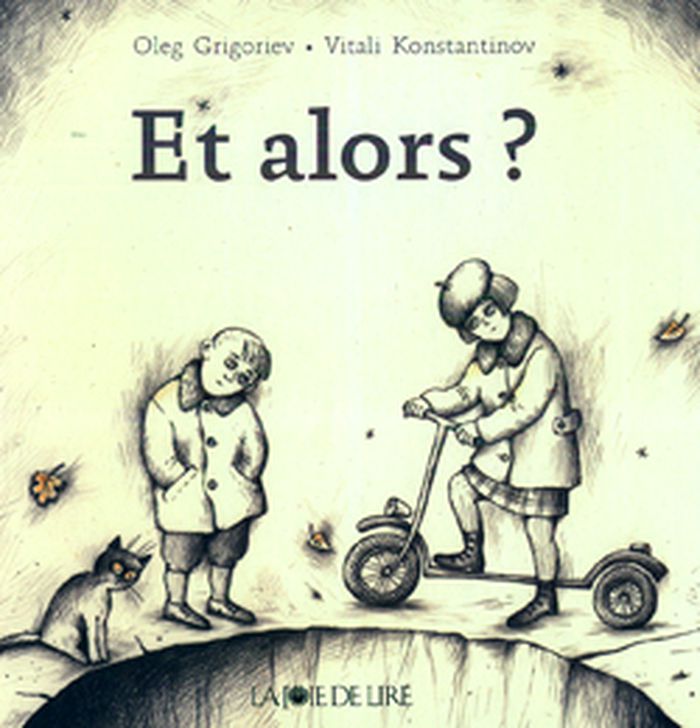
Voici 12 histoires courtes et absurdes qui éclatent d’une pirouette joyeuse les contours de l’évidence et de la logique. Dans le monde d’Oleg Grigoriev, tout est sujet à rire, en particulier, ce qui semble banal au premier abord : un trou creusé dans la rue, deux enfants avec une orange, des marches d’escalier...
Et alors?
Actions:
Price:
$15.95
(available to order)
Summary:
Voici 12 histoires courtes et absurdes qui éclatent d’une pirouette joyeuse les contours de l’évidence et de la logique. Dans le monde d’Oleg Grigoriev, tout est sujet à rire, en particulier, ce qui semble banal au premier abord : un trou creusé dans la rue, deux enfants avec une orange, des marches d’escalier...
Form:
books
books
Publication:
October 2010
October 2010
Subject:
Children's Books
Children's Books


