


7186 Results
Form:
journals and magazines
journals and magazines
Actions:
Author:
Subject:
Publication:
New Delhi, India : Shri Ram Centre for Industrial Relations, 1965-
New Delhi, India : Shri Ram Centre for Industrial Relations, 1965-
Form:
journals and magazines
journals and magazines
Publication:
New Delhi, India : Shri Ram Centre for Industrial Relations, 1965-
New Delhi, India : Shri Ram Centre for Industrial Relations, 1965-
Author:
Subject:
Form:
journals and magazines
journals and magazines
Title:
Annals.
Annals.
Actions:
Description:
1 online resource (volumes) illustrations
Author:
Subject:
Publication:
Poona [1919]-
Poona [1919]-
Form:
journals and magazines
journals and magazines
Publication:
Poona [1919]-
Poona [1919]-
Author:
Subject:
Form:
books
books
Actions:
Price:
$41.95
(available to order)
Summary:
During the economic boom of the 1990's, art museums expanded dramatically in size, scope, and ambition. They came to be seen as new civic centers : on the one hand as places of entertainment, leisure, and commerce, on the other as socially therapeutic institutions. But museums were also criticized for everything from elitism to looting or illegally exporting works from(...)
$41.95
(available to order)
Summary:
During the economic boom of the 1990's, art museums expanded dramatically in size, scope, and ambition. They came to be seen as new civic centers : on the one hand as places of entertainment, leisure, and commerce, on the other as socially therapeutic institutions. But museums were also criticized for everything from elitism to looting or illegally exporting works from(...)
Subject:
Museums and Universal Exhibitions
Museums and Universal Exhibitions
Publication:
January 2004, Princeton / Cambridge, Mass.
January 2004, Princeton / Cambridge, Mass.
Title:
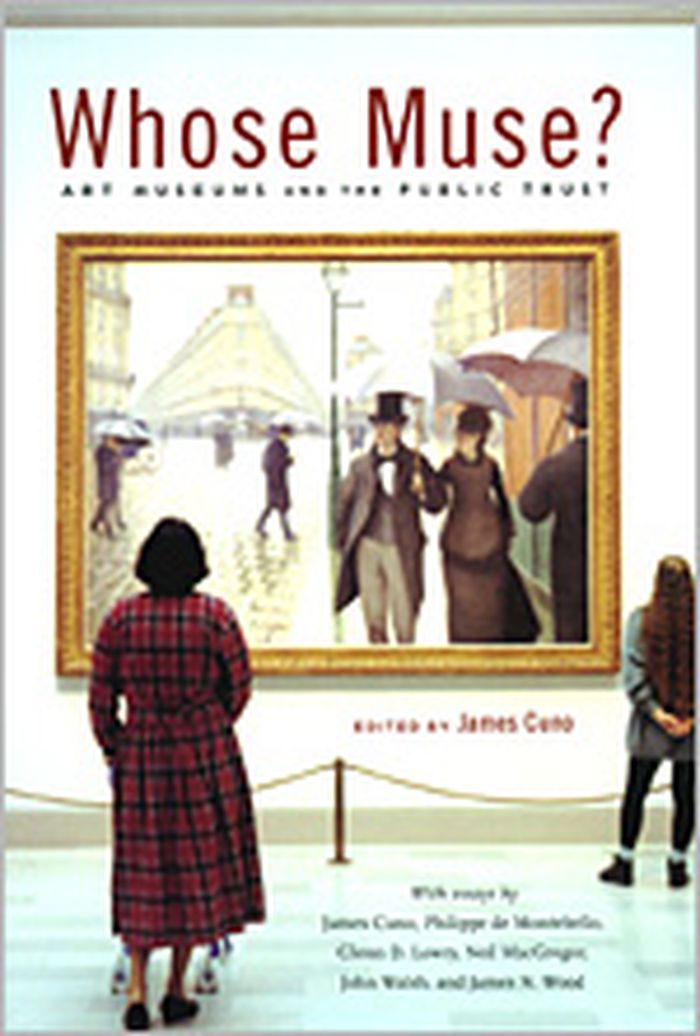
Whose muse? : art museums and the public trust
Actions:
Price:
$41.95
(available to order)
Summary:
During the economic boom of the 1990's, art museums expanded dramatically in size, scope, and ambition. They came to be seen as new civic centers : on the one hand as places of entertainment, leisure, and commerce, on the other as socially therapeutic institutions. But museums were also criticized for everything from elitism to looting or illegally exporting works from other countries, to exhibiting works offensive to the public taste. "Whose Muse?" brings together five directors of leading American and British art museums who together offer a forward-looking alternative to such prevailing views. While their approaches differ, certain themes recur : as museums have become increasingly complex and costly to manage, and as government support has waned, the temptation is great to follow policies driven not by a mission but by the market. However, the directors concur that public trust can be upheld only if museums continue to see their core mission as building collections that reflect a nation's artistic legacy and providing informed and unfettered access to them. The book, based on a lecture series of the same title held in 2000-2001 by the Harvard Program for Art Museum Directors, also includes an introduction by Cuno and a fascinating - and surprisingly frank - roundtable discussion among the participating directors. A rare collection of sustained reflections by prominent museum directors on the current state of affairs in their profession, this book is without equal. It will be read widely not only by museum professionals, trustees, critics, and scholars, but also by the art-loving public itself.
Whose muse? : art museums and the public trust
Actions:
Price:
$41.95
(available to order)
Summary:
During the economic boom of the 1990's, art museums expanded dramatically in size, scope, and ambition. They came to be seen as new civic centers : on the one hand as places of entertainment, leisure, and commerce, on the other as socially therapeutic institutions. But museums were also criticized for everything from elitism to looting or illegally exporting works from other countries, to exhibiting works offensive to the public taste. "Whose Muse?" brings together five directors of leading American and British art museums who together offer a forward-looking alternative to such prevailing views. While their approaches differ, certain themes recur : as museums have become increasingly complex and costly to manage, and as government support has waned, the temptation is great to follow policies driven not by a mission but by the market. However, the directors concur that public trust can be upheld only if museums continue to see their core mission as building collections that reflect a nation's artistic legacy and providing informed and unfettered access to them. The book, based on a lecture series of the same title held in 2000-2001 by the Harvard Program for Art Museum Directors, also includes an introduction by Cuno and a fascinating - and surprisingly frank - roundtable discussion among the participating directors. A rare collection of sustained reflections by prominent museum directors on the current state of affairs in their profession, this book is without equal. It will be read widely not only by museum professionals, trustees, critics, and scholars, but also by the art-loving public itself.
Form:
books
books
Publication:
January 2004, Princeton / Cambridge, Mass.
January 2004, Princeton / Cambridge, Mass.
Subject:
Museums and Universal Exhibitions
Museums and Universal Exhibitions
Form:
books
books
Title:
For a new georgraphy
For a new georgraphy
Actions:
Price:
$38.99
(available to order)
Summary:
Originally published in 1978 in Portuguese, ''For a new geography'' is a milestone in the history of critical geography, and it marked the emergence of its author, Milton Santos (1926-2001), as a major interpreter of geographical thought, a prominent Afro-Brazilian public intellectual, and one of the foremost global theorists of space. Published in the midst of a(...)
$38.99
(available to order)
Summary:
Originally published in 1978 in Portuguese, ''For a new geography'' is a milestone in the history of critical geography, and it marked the emergence of its author, Milton Santos (1926-2001), as a major interpreter of geographical thought, a prominent Afro-Brazilian public intellectual, and one of the foremost global theorists of space. Published in the midst of a(...)
Title:
For a new georgraphy
Actions:
Price:
$38.99
(available to order)
Summary:
Originally published in 1978 in Portuguese, ''For a new geography'' is a milestone in the history of critical geography, and it marked the emergence of its author, Milton Santos (1926-2001), as a major interpreter of geographical thought, a prominent Afro-Brazilian public intellectual, and one of the foremost global theorists of space. Published in the midst of a crisis in geographical thought, ''For a new geography'' functioned as a bridge between geography's past and its future. In advancing his vision of a geography of action and liberation, Santos begins by turning to the roots of modern geography and its colonial legacies. Moving from a critique of the shortcomings of geography from the field's foundations as a modern science to the outline of a new field of critical geography, he sets forth both an ontology of space and a methodology for geography. In so doing, he introduces novel theoretical categories to the analysis of space. It is, in short, both a critique of the Northern, Anglo-centric discipline from within and a systematic critique of its flaws and assumptions from outside. Critical geography has developed in the past four decades into a heterogenous and creative field of enquiry. Though accruing a set of theoretical touchstones in the process, it has become detached from a longer and broader history of geographical thought. ''For a new geography'' reconciles these divergent histories. Arriving in English at a time of renewed interest in alternative geographical traditions and the history of radical geography, it takes its place in the canonical works of critical geography.
For a new georgraphy
Actions:
Price:
$38.99
(available to order)
Summary:
Originally published in 1978 in Portuguese, ''For a new geography'' is a milestone in the history of critical geography, and it marked the emergence of its author, Milton Santos (1926-2001), as a major interpreter of geographical thought, a prominent Afro-Brazilian public intellectual, and one of the foremost global theorists of space. Published in the midst of a crisis in geographical thought, ''For a new geography'' functioned as a bridge between geography's past and its future. In advancing his vision of a geography of action and liberation, Santos begins by turning to the roots of modern geography and its colonial legacies. Moving from a critique of the shortcomings of geography from the field's foundations as a modern science to the outline of a new field of critical geography, he sets forth both an ontology of space and a methodology for geography. In so doing, he introduces novel theoretical categories to the analysis of space. It is, in short, both a critique of the Northern, Anglo-centric discipline from within and a systematic critique of its flaws and assumptions from outside. Critical geography has developed in the past four decades into a heterogenous and creative field of enquiry. Though accruing a set of theoretical touchstones in the process, it has become detached from a longer and broader history of geographical thought. ''For a new geography'' reconciles these divergent histories. Arriving in English at a time of renewed interest in alternative geographical traditions and the history of radical geography, it takes its place in the canonical works of critical geography.
Form:
books
books
Publication:
November 2021
November 2021
Subject:
Social
Social
Form:
journals and magazines
journals and magazines
Title:
Zeitschrift für Politik.
Zeitschrift für Politik.
Actions:
Description:
1 online resource
Author:
Subject:
Publication:
Baden-Baden : Nomos Verlagsgesellschaft, Berlin : Carl Heymanns Verlag
Baden-Baden : Nomos Verlagsgesellschaft, Berlin : Carl Heymanns Verlag
Form:
journals and magazines
journals and magazines
Publication:
Baden-Baden : Nomos Verlagsgesellschaft, Berlin : Carl Heymanns Verlag
Baden-Baden : Nomos Verlagsgesellschaft, Berlin : Carl Heymanns Verlag
Author:
Subject:
Form:
journals and magazines
journals and magazines
Description:
1 online resource (volumes) : illustrations
Author:
Subject:
Publication:
Damas : Institut français de Damas, 1931-, Damas : Institut français du Proche-Orient
Damas : Institut français de Damas, 1931-, Damas : Institut français du Proche-Orient
Title:
Bulletin d'études orientales / Institut français de Damas.
Actions:
Description:
1 online resource (volumes) : illustrations
Bulletin d'études orientales / Institut français de Damas.
Actions:
Description:
1 online resource (volumes) : illustrations
Form:
journals and magazines
journals and magazines
Publication:
Damas : Institut français de Damas, 1931-, Damas : Institut français du Proche-Orient
Damas : Institut français de Damas, 1931-, Damas : Institut français du Proche-Orient
Author:
Subject:
Form:
journals and magazines
journals and magazines
Title:
CEA critic.
CEA critic.
Actions:
Author:
Subject:
Publication:
[College Station, Tex.] : [Dept. of English, Texas A & M University], Baltimore, MD : John Hopkins University Press
[College Station, Tex.] : [Dept. of English, Texas A & M University], Baltimore, MD : John Hopkins University Press
Form:
journals and magazines
journals and magazines
Publication:
[College Station, Tex.] : [Dept. of English, Texas A & M University], Baltimore, MD : John Hopkins University Press
[College Station, Tex.] : [Dept. of English, Texas A & M University], Baltimore, MD : John Hopkins University Press
Author:
Subject:
Form:
journals and magazines
journals and magazines
Title:
Peace research.
Peace research.
Actions:
Description:
1 online resource (volumes) illustrations
Author:
Subject:
Publication:
Brandon, Man., Canadian Peace Research and Education Association
Brandon, Man., Canadian Peace Research and Education Association
Form:
journals and magazines
journals and magazines
Publication:
Brandon, Man., Canadian Peace Research and Education Association
Brandon, Man., Canadian Peace Research and Education Association
Author:
Subject:
Form:
books
books
Title:
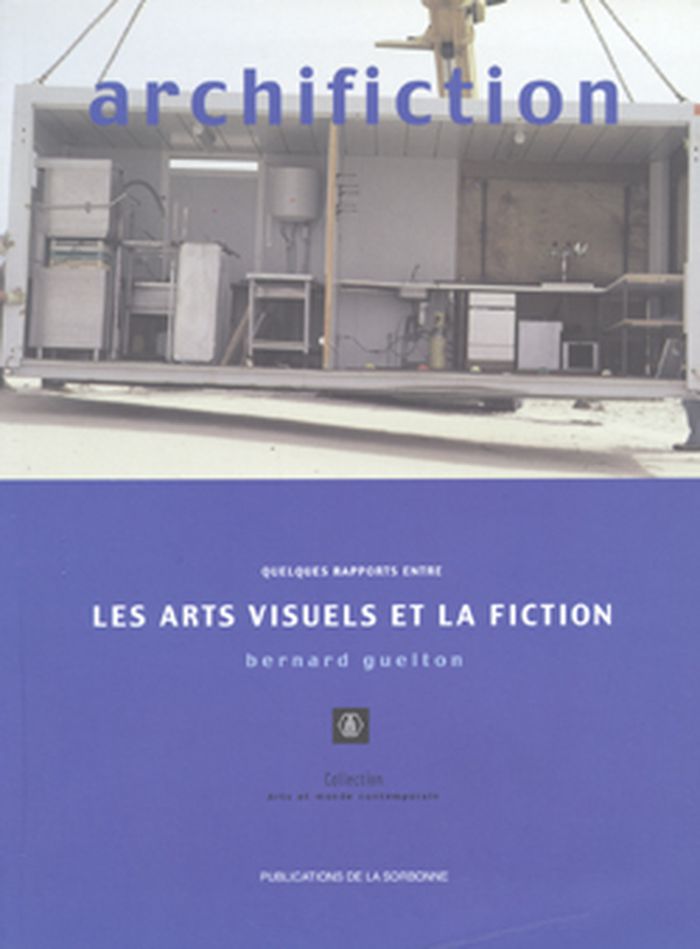
Archification
Archification
Actions:
Price:
$59.99
(available to order)
Summary:
Si la littérature et le cinéma ont nourri une réflexion approfondie sur la fiction, d'autres domaines liés aux arts visuels sont largement restés inexplorés. Ainsi l'exposition peut recourir aux fictions canoniques (vidéo, cinéma, dispositifs textuels), mais aussi à l'image fixe, l'installation ou la performance. Quelle est l'importance respective de chacun de ces(...)
$59.99
(available to order)
Summary:
Si la littérature et le cinéma ont nourri une réflexion approfondie sur la fiction, d'autres domaines liés aux arts visuels sont largement restés inexplorés. Ainsi l'exposition peut recourir aux fictions canoniques (vidéo, cinéma, dispositifs textuels), mais aussi à l'image fixe, l'installation ou la performance. Quelle est l'importance respective de chacun de ces(...)
Title:
Archification
Actions:
Price:
$59.99
(available to order)
Summary:
Si la littérature et le cinéma ont nourri une réflexion approfondie sur la fiction, d'autres domaines liés aux arts visuels sont largement restés inexplorés. Ainsi l'exposition peut recourir aux fictions canoniques (vidéo, cinéma, dispositifs textuels), mais aussi à l'image fixe, l'installation ou la performance. Quelle est l'importance respective de chacun de ces éléments en rapport avec la fiction ? Que produisent leurs éventuelles cohabitations ? Quelle est la place dévolue au " scénario ", celle relative au concepteur ou au visiteur de l'exposition ? Deux lieux communs informent massivement l'art contemporain dans son rapport à la fiction. Le premier consiste à qualifier l'œuvre d'art comme suspendue entre réalité et fiction. Le second justifie cette indétermination comme une conséquence de la spectacularisation du monde, l'indistinction entre le vécu et sa représentation. Que recouvrent ces lieux communs ? Quelles sont les limites du tout fictionnel ? Certains rapports entre l'architecture et la fiction dans le cadre de l'exposition d'art contemporain sont analysés à travers un ensemble d'expositions personnelles réalisées par l'auteur entre 1993 et 2001 mais aussi étendus à cinq paradigmes susceptibles de caractériser la création contemporaine : in situ et readymade, peinture abstraite et performance, pratiques collaboratives. Dans leurs situations aux marges des fictions canoniques, les fictions artistiques et visuelles viennent nous interroger sur le statut de la croyance et l'importance des niveaux de représentations dans la génération des univers fictionnels. Mais, à travers la multiplicité des exemples qu'il est loisible de convoquer pour exemplifier les fictions artistiques, n'est-ce pas de façon à chaque fois différente, nous mettre dans le passage d'un monde à un autre ? Et gommer un peu à chaque fois la priorité de notre monde ordinaire en l'ouvrant vers une pluralité de mondes possibles ?
Archification
Actions:
Price:
$59.99
(available to order)
Summary:
Si la littérature et le cinéma ont nourri une réflexion approfondie sur la fiction, d'autres domaines liés aux arts visuels sont largement restés inexplorés. Ainsi l'exposition peut recourir aux fictions canoniques (vidéo, cinéma, dispositifs textuels), mais aussi à l'image fixe, l'installation ou la performance. Quelle est l'importance respective de chacun de ces éléments en rapport avec la fiction ? Que produisent leurs éventuelles cohabitations ? Quelle est la place dévolue au " scénario ", celle relative au concepteur ou au visiteur de l'exposition ? Deux lieux communs informent massivement l'art contemporain dans son rapport à la fiction. Le premier consiste à qualifier l'œuvre d'art comme suspendue entre réalité et fiction. Le second justifie cette indétermination comme une conséquence de la spectacularisation du monde, l'indistinction entre le vécu et sa représentation. Que recouvrent ces lieux communs ? Quelles sont les limites du tout fictionnel ? Certains rapports entre l'architecture et la fiction dans le cadre de l'exposition d'art contemporain sont analysés à travers un ensemble d'expositions personnelles réalisées par l'auteur entre 1993 et 2001 mais aussi étendus à cinq paradigmes susceptibles de caractériser la création contemporaine : in situ et readymade, peinture abstraite et performance, pratiques collaboratives. Dans leurs situations aux marges des fictions canoniques, les fictions artistiques et visuelles viennent nous interroger sur le statut de la croyance et l'importance des niveaux de représentations dans la génération des univers fictionnels. Mais, à travers la multiplicité des exemples qu'il est loisible de convoquer pour exemplifier les fictions artistiques, n'est-ce pas de façon à chaque fois différente, nous mettre dans le passage d'un monde à un autre ? Et gommer un peu à chaque fois la priorité de notre monde ordinaire en l'ouvrant vers une pluralité de mondes possibles ?
Form:
books
books
Publication:
February 2007, Paris
February 2007, Paris
Subject:
Architectural Theory
Architectural Theory
Form:
books
books
Actions:
Price:
$42.00
(available to order)
Summary:
The past two decades have seen revolutionary shifts in our ability to navigate, inhabit, and define the spatial realm. The data flows that condition much of our lives now regularly include Global Positioning System (GPS) readings and satellite images of a quality once reserved for a few militaries and intelligence agencies, and powerful geographic information system (GIS)(...)
$42.00
(available to order)
Summary:
The past two decades have seen revolutionary shifts in our ability to navigate, inhabit, and define the spatial realm. The data flows that condition much of our lives now regularly include Global Positioning System (GPS) readings and satellite images of a quality once reserved for a few militaries and intelligence agencies, and powerful geographic information system (GIS)(...)
Title:
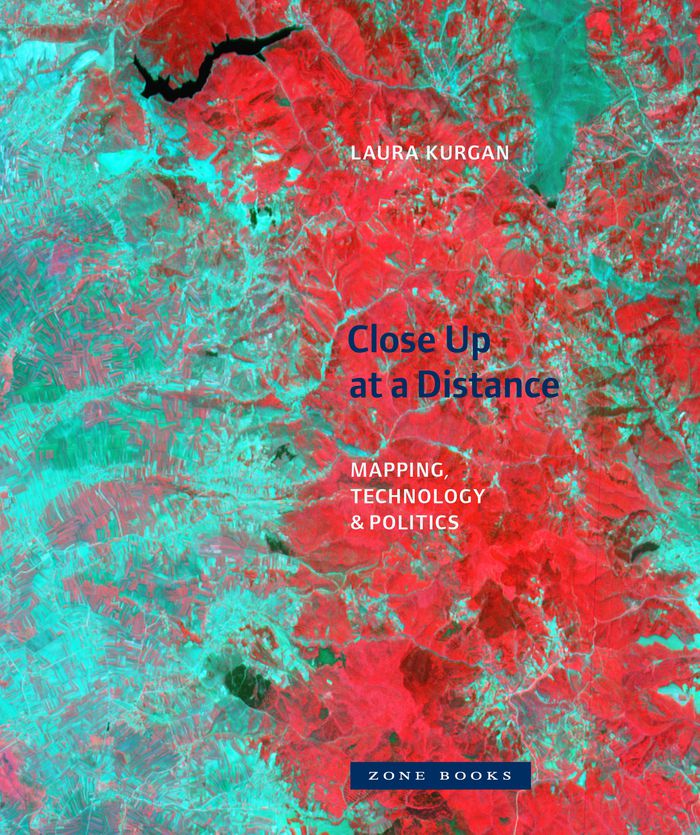
Close up at a distance: mapping, technology and politics
Actions:
Price:
$42.00
(available to order)
Summary:
The past two decades have seen revolutionary shifts in our ability to navigate, inhabit, and define the spatial realm. The data flows that condition much of our lives now regularly include Global Positioning System (GPS) readings and satellite images of a quality once reserved for a few militaries and intelligence agencies, and powerful geographic information system (GIS) software is now commonplace. These new technologies have raised fundamental questions about the intersection between physical space and its representation, virtual space and its realization. In ''Close up at a distance,'' Laura Kurgan offers a theoretical account of these new digital technologies of location and a series of practical experiments in making maps and images with spatial data. Neither simply useful tools nor objects of wonder or anxiety, the technologies of GPS, GIS, and satellite imagery become, in this book, the subject and the medium of a critical exploration. ''Close up at a distance'' records situations of intense conflict and struggle, on the one hand, and fundamental transformations in our ways of seeing and of experiencing space, on the other. Kurgan maps and theorizes mass graves, incarceration patterns, disappearing forests, and currency flows in a series of cases that range from Kuwait (1991) to Kosovo (1999), New York (2001) to Indonesia (2010). Using digital spatial hardware and software designed for military and governmental use in reconnaissance, secrecy, monitoring, ballistics, the census, and national security, Kurgan engages and confronts the politics and complexities of these technologies and their uses. At the intersection of art, architecture, activism, and geography, she uncovers, in her essays and projects, the opacities inherent in the recording of information and data and reimagines the spaces they have opened up.
Close up at a distance: mapping, technology and politics
Actions:
Price:
$42.00
(available to order)
Summary:
The past two decades have seen revolutionary shifts in our ability to navigate, inhabit, and define the spatial realm. The data flows that condition much of our lives now regularly include Global Positioning System (GPS) readings and satellite images of a quality once reserved for a few militaries and intelligence agencies, and powerful geographic information system (GIS) software is now commonplace. These new technologies have raised fundamental questions about the intersection between physical space and its representation, virtual space and its realization. In ''Close up at a distance,'' Laura Kurgan offers a theoretical account of these new digital technologies of location and a series of practical experiments in making maps and images with spatial data. Neither simply useful tools nor objects of wonder or anxiety, the technologies of GPS, GIS, and satellite imagery become, in this book, the subject and the medium of a critical exploration. ''Close up at a distance'' records situations of intense conflict and struggle, on the one hand, and fundamental transformations in our ways of seeing and of experiencing space, on the other. Kurgan maps and theorizes mass graves, incarceration patterns, disappearing forests, and currency flows in a series of cases that range from Kuwait (1991) to Kosovo (1999), New York (2001) to Indonesia (2010). Using digital spatial hardware and software designed for military and governmental use in reconnaissance, secrecy, monitoring, ballistics, the census, and national security, Kurgan engages and confronts the politics and complexities of these technologies and their uses. At the intersection of art, architecture, activism, and geography, she uncovers, in her essays and projects, the opacities inherent in the recording of information and data and reimagines the spaces they have opened up.
Form:
books
books
Publication:
October 2022
October 2022
Subject:
Architectural Theory
Architectural Theory


