


7081 Results
Form:
books
books
Actions:
Price:
$96.95
(available to order)
Summary:
One of the most prized categories of early photography was the reproduction of artworks, a role in which photographs largely replaced engravings in book imagery during the mid-19th century. Photographs of paintings, sculptures, and other works were compiled in albums, ranging from surveys of museum collections and catalogues of works by single artists to illustrated(...)
$96.95
(available to order)
Summary:
One of the most prized categories of early photography was the reproduction of artworks, a role in which photographs largely replaced engravings in book imagery during the mid-19th century. Photographs of paintings, sculptures, and other works were compiled in albums, ranging from surveys of museum collections and catalogues of works by single artists to illustrated(...)
Title:
Art and the early photographic album
Actions:
Price:
$96.95
(available to order)
Summary:
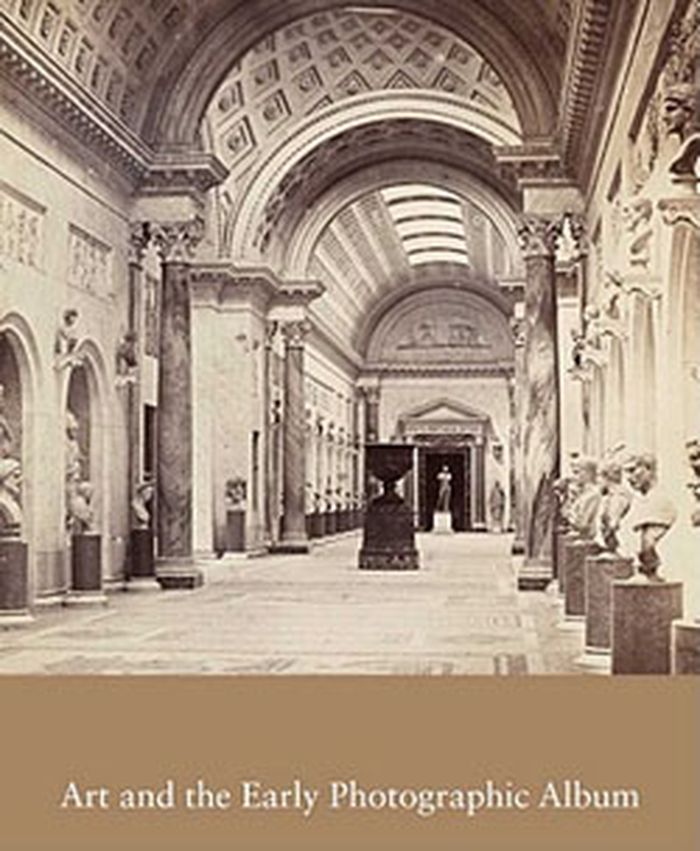
One of the most prized categories of early photography was the reproduction of artworks, a role in which photographs largely replaced engravings in book imagery during the mid-19th century. Photographs of paintings, sculptures, and other works were compiled in albums, ranging from surveys of museum collections and catalogues of works by single artists to illustrated travel guides and archaeological reports. While such albums have often been valued for documentary purposes, their broader role in the institutional development of art has, until now, been overlooked. The first book on the subject, this collection of twelve essays explores topics such as how the acclaim of artists like Rubens grew because their paintings reproduced so well in photographs, how Michelangelo's Sistine Chapel frescoes were given a new public identity by the photographer's choice of striking details never explored in traditional prints, and other important ways in which photographically illustrated publications influenced the experience and the history of art.
Art and the early photographic album
Actions:
Price:
$96.95
(available to order)
Summary:
One of the most prized categories of early photography was the reproduction of artworks, a role in which photographs largely replaced engravings in book imagery during the mid-19th century. Photographs of paintings, sculptures, and other works were compiled in albums, ranging from surveys of museum collections and catalogues of works by single artists to illustrated travel guides and archaeological reports. While such albums have often been valued for documentary purposes, their broader role in the institutional development of art has, until now, been overlooked. The first book on the subject, this collection of twelve essays explores topics such as how the acclaim of artists like Rubens grew because their paintings reproduced so well in photographs, how Michelangelo's Sistine Chapel frescoes were given a new public identity by the photographer's choice of striking details never explored in traditional prints, and other important ways in which photographically illustrated publications influenced the experience and the history of art.
Form:
books
books
Publication:
April 2011
April 2011
Subject:
Photography Collections
Photography Collections
Form:
books
books
Price:
$33.95
(available to order)
Summary:
From the time of its invention, photography has enabled artists not only to capture the world around them but also to create worlds of their own. "Utopia/Dystopia" investigates how artists from the late 19th century to the present have used photographic fragments or techniques to represent political, social, or cultural states of utopia or dystopia. Artists have employed(...)
$33.95
(available to order)
Summary:
From the time of its invention, photography has enabled artists not only to capture the world around them but also to create worlds of their own. "Utopia/Dystopia" investigates how artists from the late 19th century to the present have used photographic fragments or techniques to represent political, social, or cultural states of utopia or dystopia. Artists have employed(...)
Publication:
April 2012
April 2012
Title:
Utopia dystopia : construction and destruction in photography and collage
Actions:
Price:
$33.95
(available to order)
Summary:
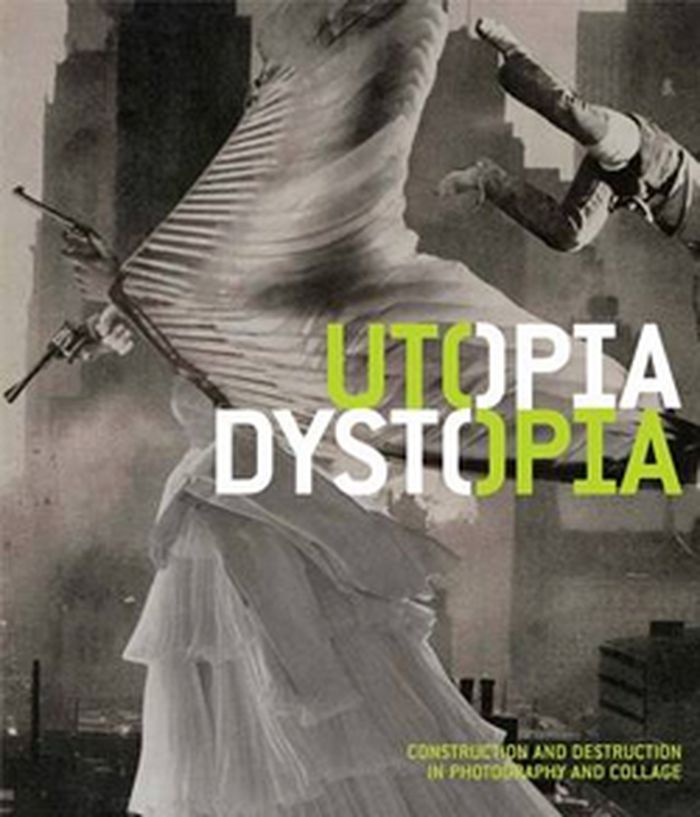
From the time of its invention, photography has enabled artists not only to capture the world around them but also to create worlds of their own. "Utopia/Dystopia" investigates how artists from the late 19th century to the present have used photographic fragments or techniques to represent political, social, or cultural states of utopia or dystopia. Artists have employed a number of strategies to this end, such as cutting, fragmenting, and puncturing images as well as reassembling those culled from ready-made materials or giving a subject multiple exposures. The resulting photographs, photocollages, photomontages, and other creations question the validity of seamless pictorial images, and attempt to dismantle the notion of photography as an objective medium. This publication features approximately forty-five exemplary works by artists such as Herbert Bayer, John Heartfield, Hannah Hoch, Arata Isozaki, El Lissitzky, Carter Mull, Laszlo Moholy-Nagy, Vik Muniz, Man Ray, Okanoue Toshiko, and many others.
Utopia dystopia : construction and destruction in photography and collage
Actions:
Price:
$33.95
(available to order)
Summary:
From the time of its invention, photography has enabled artists not only to capture the world around them but also to create worlds of their own. "Utopia/Dystopia" investigates how artists from the late 19th century to the present have used photographic fragments or techniques to represent political, social, or cultural states of utopia or dystopia. Artists have employed a number of strategies to this end, such as cutting, fragmenting, and puncturing images as well as reassembling those culled from ready-made materials or giving a subject multiple exposures. The resulting photographs, photocollages, photomontages, and other creations question the validity of seamless pictorial images, and attempt to dismantle the notion of photography as an objective medium. This publication features approximately forty-five exemplary works by artists such as Herbert Bayer, John Heartfield, Hannah Hoch, Arata Isozaki, El Lissitzky, Carter Mull, Laszlo Moholy-Nagy, Vik Muniz, Man Ray, Okanoue Toshiko, and many others.
Form:
books
books
Publication:
April 2012
April 2012
Form:
books
books
Actions:
Price:
$54.95
(available in store)
Summary:
What use can we make today of a prints collection dating between the 16th and 19th century housed in a library storage room? What does it tell us of the periods in which it was created, preserved and reorganised? How can this information relate to the contemporary? Can an artist re-enact shared scenarios emphasising what of the old persists in the present? This(...)
$54.95
(available in store)
Summary:
What use can we make today of a prints collection dating between the 16th and 19th century housed in a library storage room? What does it tell us of the periods in which it was created, preserved and reorganised? How can this information relate to the contemporary? Can an artist re-enact shared scenarios emphasising what of the old persists in the present? This(...)
Title:
Present archives: Reflections from a collection of prints
Actions:
Price:
$54.95
(available in store)
Summary:
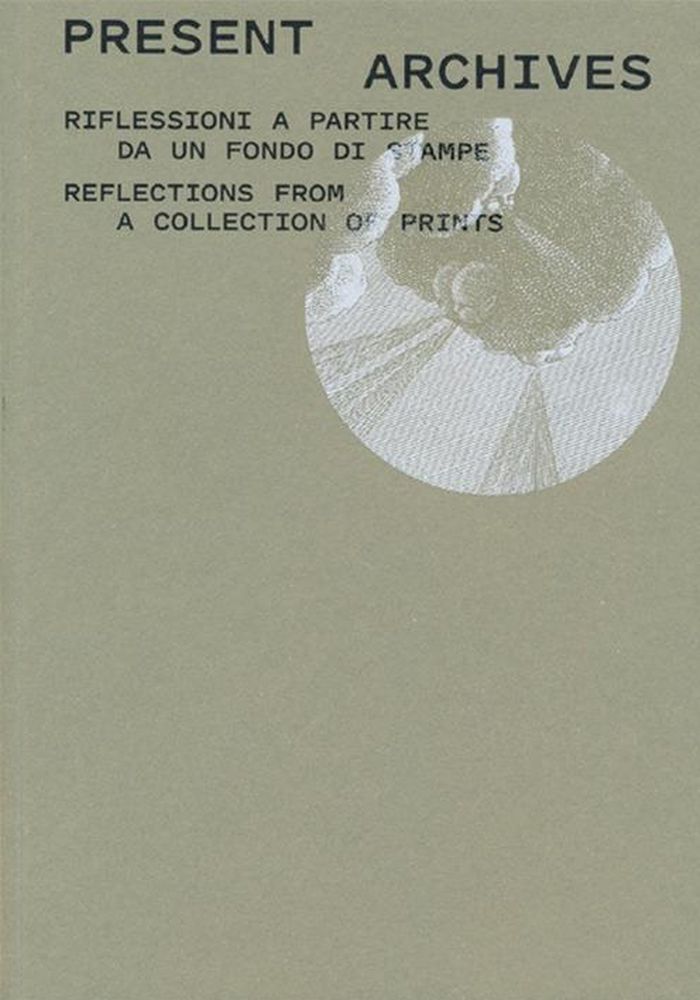
What use can we make today of a prints collection dating between the 16th and 19th century housed in a library storage room? What does it tell us of the periods in which it was created, preserved and reorganised? How can this information relate to the contemporary? Can an artist re-enact shared scenarios emphasising what of the old persists in the present? This publication collects three years' work within present_continuous, a project aimed at enhancing a collection of prints housed at the Biblioteca Nazionale Universitaria in Turin. A still rather unexplored point of excellence in the institution’s holdings, which was organised in albums in the 1860s by the eclectic Piedmontese collector and connoisseur Giovanni Volpato. The project includes a cataloguing campaign, a symposium whose purpose was to renew the contemporary perception of the archive and in an international call was opened in order to select two artists – Alessandra Messali and Ryts Monet (Enrico De Napoli) – for a residency program dedicated to creating new perspectives, right from the collection of print, trying to voicing the social and cultural issues of our time.
Present archives: Reflections from a collection of prints
Actions:
Price:
$54.95
(available in store)
Summary:
What use can we make today of a prints collection dating between the 16th and 19th century housed in a library storage room? What does it tell us of the periods in which it was created, preserved and reorganised? How can this information relate to the contemporary? Can an artist re-enact shared scenarios emphasising what of the old persists in the present? This publication collects three years' work within present_continuous, a project aimed at enhancing a collection of prints housed at the Biblioteca Nazionale Universitaria in Turin. A still rather unexplored point of excellence in the institution’s holdings, which was organised in albums in the 1860s by the eclectic Piedmontese collector and connoisseur Giovanni Volpato. The project includes a cataloguing campaign, a symposium whose purpose was to renew the contemporary perception of the archive and in an international call was opened in order to select two artists – Alessandra Messali and Ryts Monet (Enrico De Napoli) – for a residency program dedicated to creating new perspectives, right from the collection of print, trying to voicing the social and cultural issues of our time.
Form:
books
books
Publication:
October 2019
October 2019
Form:
books
books
Actions:
Price:
$75.00
(available to order)
Summary:
Gardens have inspired artists for hundreds of years. In the late 19th and early 20th centuries, photographers ranging from Eugène Atget to Edward Steichen were drawn to gardens for their beauty and their metaphorical associations. A century later, in the mid-1980s, an unusually large number of artists returned to the garden as a subject for their photography. This lovely(...)
$75.00
(available to order)
Summary:
Gardens have inspired artists for hundreds of years. In the late 19th and early 20th centuries, photographers ranging from Eugène Atget to Edward Steichen were drawn to gardens for their beauty and their metaphorical associations. A century later, in the mid-1980s, an unusually large number of artists returned to the garden as a subject for their photography. This lovely(...)
Subject:
Theory of Photography
Theory of Photography
Publication:
November 2004, New York
November 2004, New York
Title:
Contemporary photography and the garden
Actions:
Price:
$75.00
(available to order)
Summary:
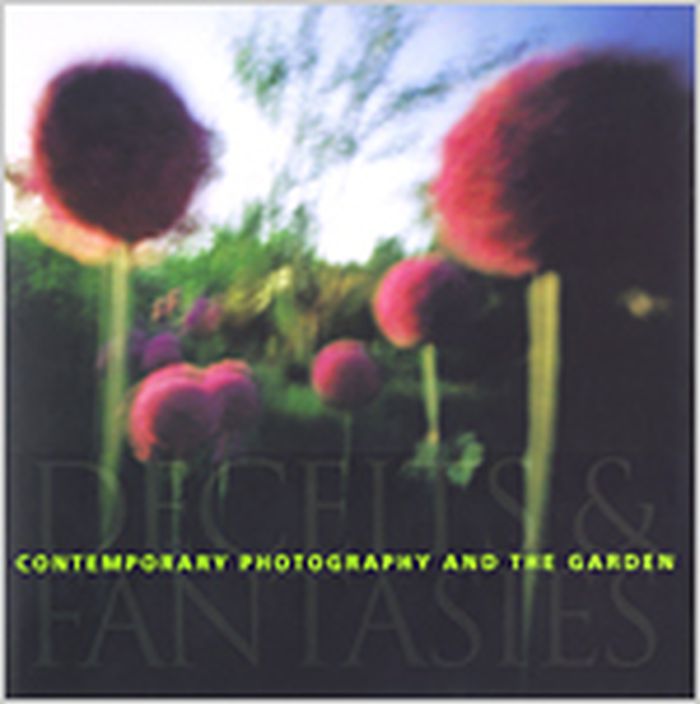
Gardens have inspired artists for hundreds of years. In the late 19th and early 20th centuries, photographers ranging from Eugène Atget to Edward Steichen were drawn to gardens for their beauty and their metaphorical associations. A century later, in the mid-1980s, an unusually large number of artists returned to the garden as a subject for their photography. This lovely book devoted to the garden photography of contemporary artists accompanies an exhibition organized by the American Federation of Arts. The photographs—by Gregory Crewdson, Len Jenshel, Erica Lennard, Sally Mann, Catherine Opie, Jack Pierson, and other acclaimed artists—demonstrate a remarkably wide range of artistic responses to the garden. Whether presenting it as a haven of tranquility and lyrical beauty or drawing on it as a dark visual metaphor for the manipulation of nature, these photographs express the artists' investigation of the forms, atmosphere, and symbolism of the garden. Essays by Thomas Padon, Robert Harrison, Ronald Jones, and Shirin Neshat bring historical and contextual insight to the fascination many contemporary artists have with this popular subject.
Contemporary photography and the garden
Actions:
Price:
$75.00
(available to order)
Summary:
Gardens have inspired artists for hundreds of years. In the late 19th and early 20th centuries, photographers ranging from Eugène Atget to Edward Steichen were drawn to gardens for their beauty and their metaphorical associations. A century later, in the mid-1980s, an unusually large number of artists returned to the garden as a subject for their photography. This lovely book devoted to the garden photography of contemporary artists accompanies an exhibition organized by the American Federation of Arts. The photographs—by Gregory Crewdson, Len Jenshel, Erica Lennard, Sally Mann, Catherine Opie, Jack Pierson, and other acclaimed artists—demonstrate a remarkably wide range of artistic responses to the garden. Whether presenting it as a haven of tranquility and lyrical beauty or drawing on it as a dark visual metaphor for the manipulation of nature, these photographs express the artists' investigation of the forms, atmosphere, and symbolism of the garden. Essays by Thomas Padon, Robert Harrison, Ronald Jones, and Shirin Neshat bring historical and contextual insight to the fascination many contemporary artists have with this popular subject.
Form:
books
books
Publication:
November 2004, New York
November 2004, New York
Subject:
Theory of Photography
Theory of Photography
Form:
books
books

Actions:
Price:
$27.95
(available to order)
Summary:
As early as the end of the 19th century, anarchists such as Peter Kropotkin and Élisée Reclus became interested in indigenous peoples, many of whom they saw as societies without a state or private property, living a form of communism. Thinkers such as David Graeber and John Holloway have continued this tradition of engagement with the practices of indigenous societies and(...)
$27.95
(available to order)
Summary:
As early as the end of the 19th century, anarchists such as Peter Kropotkin and Élisée Reclus became interested in indigenous peoples, many of whom they saw as societies without a state or private property, living a form of communism. Thinkers such as David Graeber and John Holloway have continued this tradition of engagement with the practices of indigenous societies and(...)
Title:
Anarcho-Indigenism: Conversations on land and freedom
Actions:
Price:
$27.95
(available to order)
Summary:
As early as the end of the 19th century, anarchists such as Peter Kropotkin and Élisée Reclus became interested in indigenous peoples, many of whom they saw as societies without a state or private property, living a form of communism. Thinkers such as David Graeber and John Holloway have continued this tradition of engagement with the practices of indigenous societies and their politics. There has also been a long history of (often imperfect) collaboration between anarchists and indigenous activists, over land rights and environmental issues, including recent high-profile anti-pipeline campaigns. ''Anarcho-Indigenism'' is a dialogue between anarchism and indigenous politics, featuring interviews from indigenous contributors Véronique Hébert, Gord Hill, Freda Huson, J. Kehaulani Kauanui, Clifton Ariwakehte Nicholas and Toghestiy, as well as the Marxist scholar specialist in indigenous people’s history and politics, Roxanne Dunbar-Ortiz. The contributors reveal what indigenous thought and traditions and anarchism have in common, without denying the scars left by colonialism even within this anti-authoritarian movement. They ultimately offer a vision of the world that combines anti-colonialism, feminism, ecology, anti-capitalism and anti-statism.
Anarcho-Indigenism: Conversations on land and freedom
Actions:
Price:
$27.95
(available to order)
Summary:
As early as the end of the 19th century, anarchists such as Peter Kropotkin and Élisée Reclus became interested in indigenous peoples, many of whom they saw as societies without a state or private property, living a form of communism. Thinkers such as David Graeber and John Holloway have continued this tradition of engagement with the practices of indigenous societies and their politics. There has also been a long history of (often imperfect) collaboration between anarchists and indigenous activists, over land rights and environmental issues, including recent high-profile anti-pipeline campaigns. ''Anarcho-Indigenism'' is a dialogue between anarchism and indigenous politics, featuring interviews from indigenous contributors Véronique Hébert, Gord Hill, Freda Huson, J. Kehaulani Kauanui, Clifton Ariwakehte Nicholas and Toghestiy, as well as the Marxist scholar specialist in indigenous people’s history and politics, Roxanne Dunbar-Ortiz. The contributors reveal what indigenous thought and traditions and anarchism have in common, without denying the scars left by colonialism even within this anti-authoritarian movement. They ultimately offer a vision of the world that combines anti-colonialism, feminism, ecology, anti-capitalism and anti-statism.
Form:
books
books
Publication:
September 2023
September 2023
Subject:
indigenous
indigenous
Form:
books
books
Title:
Arnaud Maggs : nomenclature
Arnaud Maggs : nomenclature
Actions:
Price:
$18.00
(available to order)
Summary:
Arnaud Maggs has a 40 year photographic career marked by an interest in systems. This publication highlights his photographs of two seminal studies on color published in the 19th century. "Werner's Nomenclature of Colours" and "Cercles chromatiques de M. E. Chevreul" had a profound impact on naturalists, scientists and artists. Langford outlines their history and the(...)
$18.00
(available to order)
Summary:
Arnaud Maggs has a 40 year photographic career marked by an interest in systems. This publication highlights his photographs of two seminal studies on color published in the 19th century. "Werner's Nomenclature of Colours" and "Cercles chromatiques de M. E. Chevreul" had a profound impact on naturalists, scientists and artists. Langford outlines their history and the(...)
Subject:
Photography monographs
Photography monographs
Publication:
February 2006, Oshawa
February 2006, Oshawa
Title:
Arnaud Maggs : nomenclature
Actions:
Price:
$18.00
(available to order)
Summary:
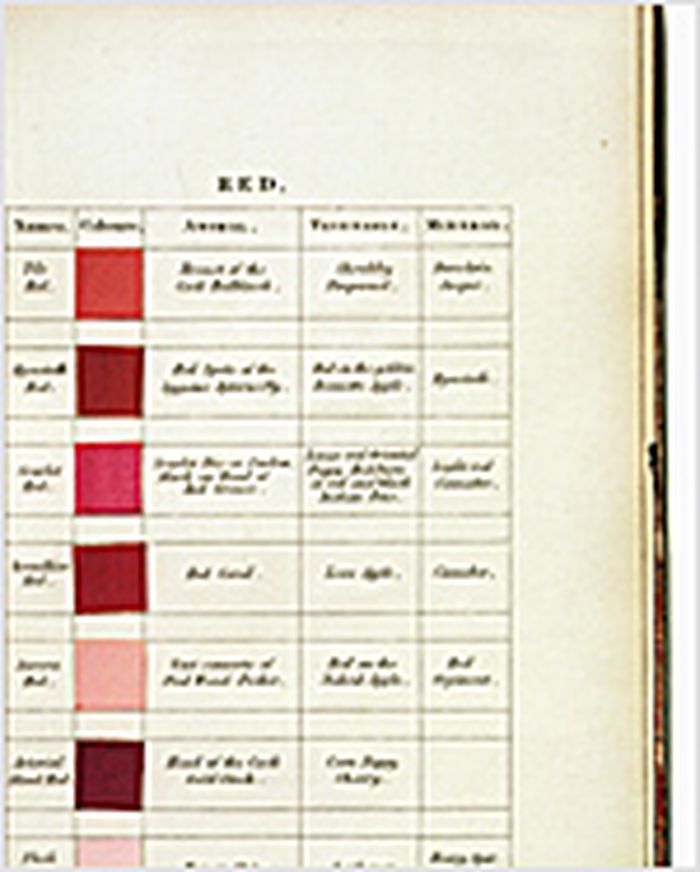
Arnaud Maggs has a 40 year photographic career marked by an interest in systems. This publication highlights his photographs of two seminal studies on color published in the 19th century. "Werner's Nomenclature of Colours" and "Cercles chromatiques de M. E. Chevreul" had a profound impact on naturalists, scientists and artists. Langford outlines their history and the extent to which they influenced society; even Darwin carried a copy of Werner's on the Beagle. Maggs gives us photographs of rare copies of both books. Arnaud Maggs a une carrière photographique qui s'étend sur plus de 40 ans, carrière marquée par un intérêt pour les systèmes. Cette publication nous présente des photographies de deux études sur la couleur publiées au 19e siècle : la «Werner's Nomenclature of Colours» et «Cercles chromatiques» de M. E. Chevreul. L'impact de ces études pour les naturalistes, scientifiques et artistes a été ressentie dans plusieurs disciplines. Langford résume l'histoires des études ainsi que l'étendue de leurs influences sur la société passée et présente. Maggs nous présente des photographies de copies rares des deux ouvrages.
Arnaud Maggs : nomenclature
Actions:
Price:
$18.00
(available to order)
Summary:
Arnaud Maggs has a 40 year photographic career marked by an interest in systems. This publication highlights his photographs of two seminal studies on color published in the 19th century. "Werner's Nomenclature of Colours" and "Cercles chromatiques de M. E. Chevreul" had a profound impact on naturalists, scientists and artists. Langford outlines their history and the extent to which they influenced society; even Darwin carried a copy of Werner's on the Beagle. Maggs gives us photographs of rare copies of both books. Arnaud Maggs a une carrière photographique qui s'étend sur plus de 40 ans, carrière marquée par un intérêt pour les systèmes. Cette publication nous présente des photographies de deux études sur la couleur publiées au 19e siècle : la «Werner's Nomenclature of Colours» et «Cercles chromatiques» de M. E. Chevreul. L'impact de ces études pour les naturalistes, scientifiques et artistes a été ressentie dans plusieurs disciplines. Langford résume l'histoires des études ainsi que l'étendue de leurs influences sur la société passée et présente. Maggs nous présente des photographies de copies rares des deux ouvrages.
Form:
books
books
Publication:
February 2006, Oshawa
February 2006, Oshawa
Subject:
Photography monographs
Photography monographs
Form:
books
books
Price:
$74.95
(available to order)
Summary:
In the late 19th century, a centuries-old preference for highly ornamented architecture gave way to a budding Modernism of clean lines and unadorned surfaces. At the same moment, everyday objects—cups, saucers, chairs, and tables—began to receive critical attention. Alina Payne addresses this shift, arguing for a new understanding of the genealogy of architectural(...)
$74.95
(available to order)
Summary:
In the late 19th century, a centuries-old preference for highly ornamented architecture gave way to a budding Modernism of clean lines and unadorned surfaces. At the same moment, everyday objects—cups, saucers, chairs, and tables—began to receive critical attention. Alina Payne addresses this shift, arguing for a new understanding of the genealogy of architectural(...)
Title:
From ornament to object: genealogies of architectural modernism
Actions:
Price:
$74.95
(available to order)
Summary:
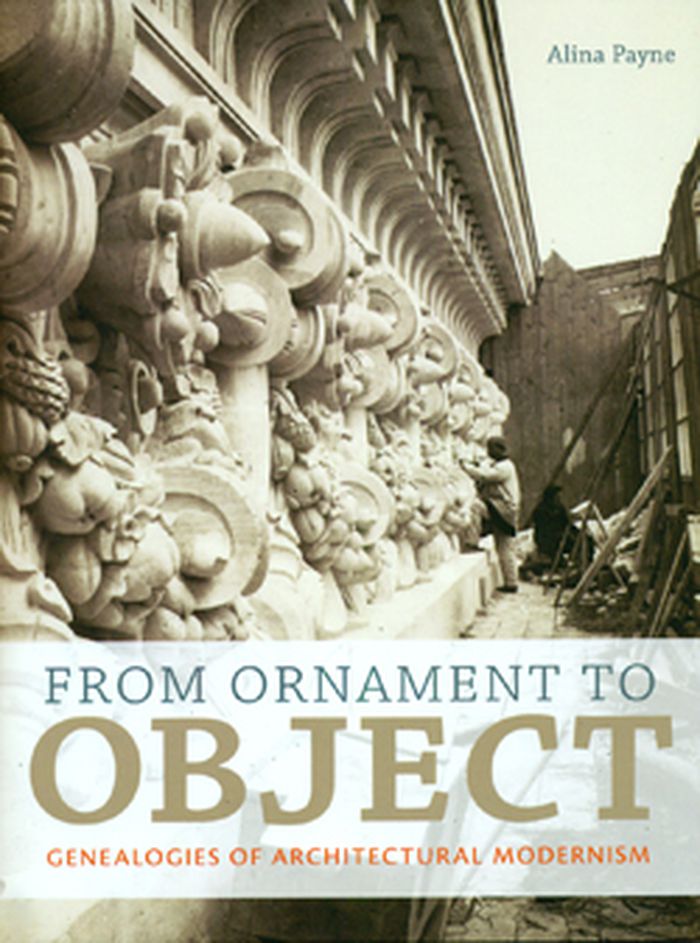
In the late 19th century, a centuries-old preference for highly ornamented architecture gave way to a budding Modernism of clean lines and unadorned surfaces. At the same moment, everyday objects—cups, saucers, chairs, and tables—began to receive critical attention. Alina Payne addresses this shift, arguing for a new understanding of the genealogy of architectural modernism: rather than the well-known story in which an absorption of technology and mass production created a radical aesthetic that broke decisively with the past, Payne argues for a more gradual shift, as the eloquence of architectural ornamentation was taken on by objects of daily use. As she demonstrates, the work of Adolf Loos and Le Corbusier should be seen as the culmination of a conversation about ornament dating as far back as the Renaissance. Payne looks beyond the usual suspects of philosophy and science to establish theoretical catalysts for the shift from ornament to object in the varied fields of anthropology and ethnology; art history and the museum; and archaeology and psychology.
From ornament to object: genealogies of architectural modernism
Actions:
Price:
$74.95
(available to order)
Summary:
In the late 19th century, a centuries-old preference for highly ornamented architecture gave way to a budding Modernism of clean lines and unadorned surfaces. At the same moment, everyday objects—cups, saucers, chairs, and tables—began to receive critical attention. Alina Payne addresses this shift, arguing for a new understanding of the genealogy of architectural modernism: rather than the well-known story in which an absorption of technology and mass production created a radical aesthetic that broke decisively with the past, Payne argues for a more gradual shift, as the eloquence of architectural ornamentation was taken on by objects of daily use. As she demonstrates, the work of Adolf Loos and Le Corbusier should be seen as the culmination of a conversation about ornament dating as far back as the Renaissance. Payne looks beyond the usual suspects of philosophy and science to establish theoretical catalysts for the shift from ornament to object in the varied fields of anthropology and ethnology; art history and the museum; and archaeology and psychology.
Form:
books
books
Publication:
July 2012
July 2012
Subject:
Architectural Theory
Architectural Theory
Form:
books
books
Actions:
Price:
$65.00
(available to order)
Summary:
Before the invention of photography, civil engineers employed topographic artists to record the progression of their projects. Termed "record pictures," these illustrations followed the tradition of the Dutch topographical landscapes of the 17th century, combining the qualities of detail and clarity with the objectivity of technical drawings. As such, record pictures had(...)
$65.00
(available to order)
Summary:
Before the invention of photography, civil engineers employed topographic artists to record the progression of their projects. Termed "record pictures," these illustrations followed the tradition of the Dutch topographical landscapes of the 17th century, combining the qualities of detail and clarity with the objectivity of technical drawings. As such, record pictures had(...)
Publication:
January 2004, Göttingen, Germany
January 2004, Göttingen, Germany
Title:
Record pictures : photographs from the archives of the Institution of Civil Engineers
Actions:
Price:
$65.00
(available to order)
Summary:
Before the invention of photography, civil engineers employed topographic artists to record the progression of their projects. Termed "record pictures," these illustrations followed the tradition of the Dutch topographical landscapes of the 17th century, combining the qualities of detail and clarity with the objectivity of technical drawings. As such, record pictures had a scientific rather than an artistic purpose, just as most photography did in its infancy. Photography’s prime value was historically regarded as its ability to make highly detailed, objective (and relatively inexpensive) records. Industry was quick to harness the new medium to make record pictures. Significantly, one of the founders of Britain’s Photographic Society was a leading civil engineer. This original application gave rise to a genre of landscape photography that has not been properly recognized. Record Pictures: Photographs from the Archive of the Institution of Civil Engineers represents the photographic jewels of arguably the finest collection in Britain. Spanning a period of 75 years from the mid-19th century, the book contains previously unpublished examples drawn from across Europe, Africa, Australasia, the Far East, and Latin America. Record pictures are the unacknowledged foundation of the history of photography. In his introductory essay, Michael Collins demonstrates how this fundamental approach continues unchanged, only now it is no longer industry that applies these principles but such eminent artists as Bernd & Hilla Becher and Thomas Struth, proponents of contemporary art photography.
Record pictures : photographs from the archives of the Institution of Civil Engineers
Actions:
Price:
$65.00
(available to order)
Summary:
Before the invention of photography, civil engineers employed topographic artists to record the progression of their projects. Termed "record pictures," these illustrations followed the tradition of the Dutch topographical landscapes of the 17th century, combining the qualities of detail and clarity with the objectivity of technical drawings. As such, record pictures had a scientific rather than an artistic purpose, just as most photography did in its infancy. Photography’s prime value was historically regarded as its ability to make highly detailed, objective (and relatively inexpensive) records. Industry was quick to harness the new medium to make record pictures. Significantly, one of the founders of Britain’s Photographic Society was a leading civil engineer. This original application gave rise to a genre of landscape photography that has not been properly recognized. Record Pictures: Photographs from the Archive of the Institution of Civil Engineers represents the photographic jewels of arguably the finest collection in Britain. Spanning a period of 75 years from the mid-19th century, the book contains previously unpublished examples drawn from across Europe, Africa, Australasia, the Far East, and Latin America. Record pictures are the unacknowledged foundation of the history of photography. In his introductory essay, Michael Collins demonstrates how this fundamental approach continues unchanged, only now it is no longer industry that applies these principles but such eminent artists as Bernd & Hilla Becher and Thomas Struth, proponents of contemporary art photography.
Form:
books
books
Publication:
January 2004, Göttingen, Germany
January 2004, Göttingen, Germany
Form:
books
books
Price:
$72.50
(available in store)
Summary:
This publication introduces the untold story of German artist and poet Anneliese Hager. Active from the 1930s to the 1960s, Hager began her photographic experimentation in Germany during the Nazi censure of modern art. Her preferred medium was the cameraless photograph, or photogram—an image made by placing objects directly on (or in close proximity to) a light-sensitive(...)
$72.50
(available in store)
Summary:
This publication introduces the untold story of German artist and poet Anneliese Hager. Active from the 1930s to the 1960s, Hager began her photographic experimentation in Germany during the Nazi censure of modern art. Her preferred medium was the cameraless photograph, or photogram—an image made by placing objects directly on (or in close proximity to) a light-sensitive(...)
Title:
White shadows: Anneliese Hager and the camera-less photograph
Actions:
Price:
$72.50
(available in store)
Summary:
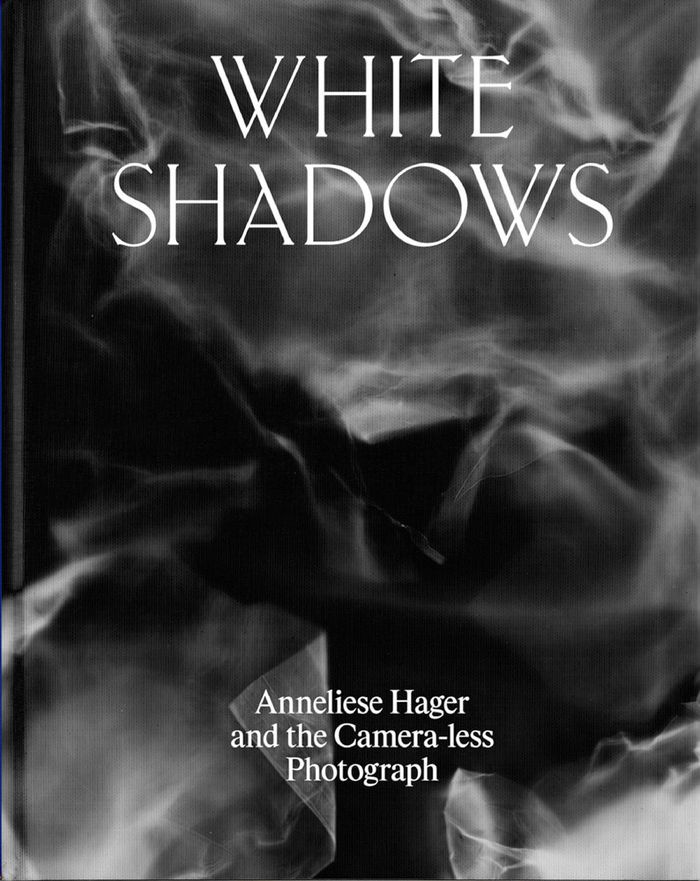
This publication introduces the untold story of German artist and poet Anneliese Hager. Active from the 1930s to the 1960s, Hager began her photographic experimentation in Germany during the Nazi censure of modern art. Her preferred medium was the cameraless photograph, or photogram—an image made by placing objects directly on (or in close proximity to) a light-sensitive surface and exposing the assembled material to light. In its final form, a photogram is a one-of-a-kind work that reverses light and dark: the longer the paper is covered, and hence unexposed, the brighter the covered parts will be, and vice versa. Hager called these bright areas "white shadows." Hager’s photograms offer a more inclusive history of the medium, synthesizing the technique’s 20th-century avant-garde trajectory (best known in the work of László Moholy-Nagy and Man Ray) and its 19th-century prehistories in the realm of science and in practices such as the making of silhouettes, collage and textile arts—pursuits often coded feminine. In 1945, all Hager’s existing artwork was destroyed in the bombing of Dresden during World War II. This book offers an unprecedented reconstruction of her development and postwar creation of otherworldly, Surrealist visions in photograms and poems, a selection of which appear here in English for the first time. For Hager, the photogram was significant for its provocative tonal inversions and surprising chance effects, but also for what emerges from the dark.
White shadows: Anneliese Hager and the camera-less photograph
Actions:
Price:
$72.50
(available in store)
Summary:
This publication introduces the untold story of German artist and poet Anneliese Hager. Active from the 1930s to the 1960s, Hager began her photographic experimentation in Germany during the Nazi censure of modern art. Her preferred medium was the cameraless photograph, or photogram—an image made by placing objects directly on (or in close proximity to) a light-sensitive surface and exposing the assembled material to light. In its final form, a photogram is a one-of-a-kind work that reverses light and dark: the longer the paper is covered, and hence unexposed, the brighter the covered parts will be, and vice versa. Hager called these bright areas "white shadows." Hager’s photograms offer a more inclusive history of the medium, synthesizing the technique’s 20th-century avant-garde trajectory (best known in the work of László Moholy-Nagy and Man Ray) and its 19th-century prehistories in the realm of science and in practices such as the making of silhouettes, collage and textile arts—pursuits often coded feminine. In 1945, all Hager’s existing artwork was destroyed in the bombing of Dresden during World War II. This book offers an unprecedented reconstruction of her development and postwar creation of otherworldly, Surrealist visions in photograms and poems, a selection of which appear here in English for the first time. For Hager, the photogram was significant for its provocative tonal inversions and surprising chance effects, but also for what emerges from the dark.
Form:
books
books
Publication:
November 2023
November 2023
Subject:
Photography monographs
Photography monographs
Form:
books
books

Actions:
Price:
$67.50
(available in store)
Summary:
Founded by Alexander the Great in 332 BC, Alexandria was for a long time the largest city in the ancient world. Flattened by a tsunami in 365 AD, it was little more than a fishing village when captured by Napoleon in 1798. The 19th century saw it become the center of the Egyptian cotton trade, bringing prosperity and an influx of European merchants. Then came the(...)
$67.50
(available in store)
Summary:
Founded by Alexander the Great in 332 BC, Alexandria was for a long time the largest city in the ancient world. Flattened by a tsunami in 365 AD, it was little more than a fishing village when captured by Napoleon in 1798. The 19th century saw it become the center of the Egyptian cotton trade, bringing prosperity and an influx of European merchants. Then came the(...)
Title:
Alexandria architectural guide
Actions:
Price:
$67.50
(available in store)
Summary:
Founded by Alexander the Great in 332 BC, Alexandria was for a long time the largest city in the ancient world. Flattened by a tsunami in 365 AD, it was little more than a fishing village when captured by Napoleon in 1798. The 19th century saw it become the center of the Egyptian cotton trade, bringing prosperity and an influx of European merchants. Then came the bombardment by the English in 1882, which almost flattened the city a second time, and the revolution of 1952, which in effect condemned many of its residential buildings to slow but picturesque decay. The ebbs and flows of history and different cultures (especially Arabic, Muslim, Greek, Italian, English, and, not least, Jewish) have all left their marks on Alexandria's architecture. There are classical ruins; Ottoman fortifications; Egyptian okelles (medieval merchants' buildings); a colorful fishing port; mosques, shrines, churches, and synagogues; mansions and apartment buildings in the neo-Renaissance, art deco, and international styles; brutalist post-revolutionary institutions. And then are oddities such as the Cotton Palace Tower, a skyscraper intended for use as the headquarters of the country s cotton industry but inexplicably abandoned before completion.
Alexandria architectural guide
Actions:
Price:
$67.50
(available in store)
Summary:
Founded by Alexander the Great in 332 BC, Alexandria was for a long time the largest city in the ancient world. Flattened by a tsunami in 365 AD, it was little more than a fishing village when captured by Napoleon in 1798. The 19th century saw it become the center of the Egyptian cotton trade, bringing prosperity and an influx of European merchants. Then came the bombardment by the English in 1882, which almost flattened the city a second time, and the revolution of 1952, which in effect condemned many of its residential buildings to slow but picturesque decay. The ebbs and flows of history and different cultures (especially Arabic, Muslim, Greek, Italian, English, and, not least, Jewish) have all left their marks on Alexandria's architecture. There are classical ruins; Ottoman fortifications; Egyptian okelles (medieval merchants' buildings); a colorful fishing port; mosques, shrines, churches, and synagogues; mansions and apartment buildings in the neo-Renaissance, art deco, and international styles; brutalist post-revolutionary institutions. And then are oddities such as the Cotton Palace Tower, a skyscraper intended for use as the headquarters of the country s cotton industry but inexplicably abandoned before completion.
Form:
books
books
Publication:
July 2021
July 2021
Subject:
City Guides
City Guides


