


7437 Results
Form:
books
books

Actions:
Price:
$45.00
(available to order)
Summary:
"The Legacy of Transgressive Objects" traces the afterlife and historicization of the concept of transgression in the art, architecture, technology, music and psychedelic practices of 1968 and its legacy, by looking at the objects, materials and images that originally shaped these ideas. These decades saw the fertile cross-pollination of rebellious political and artistic(...)
$45.00
(available to order)
Summary:
"The Legacy of Transgressive Objects" traces the afterlife and historicization of the concept of transgression in the art, architecture, technology, music and psychedelic practices of 1968 and its legacy, by looking at the objects, materials and images that originally shaped these ideas. These decades saw the fertile cross-pollination of rebellious political and artistic(...)
Title:
The legacy of transgressive objects
Actions:
Price:
$45.00
(available to order)
Summary:
"The Legacy of Transgressive Objects" traces the afterlife and historicization of the concept of transgression in the art, architecture, technology, music and psychedelic practices of 1968 and its legacy, by looking at the objects, materials and images that originally shaped these ideas. These decades saw the fertile cross-pollination of rebellious political and artistic energies: radical architecture suggested a whole new organization of society, artistic practices enthusiastically dissolved boundaries between art and life, and music festivals staged gleeful opportunities for transgression. The material heritage of this historical moment is ambivalent—though often ephemeral and deteriorating, the objects associated with these ideas still function as repositories of time and as evocative physical objects. Against this background, this book traces the historical index of these objects that promised to change the world and now open up to the future horizons of the recent past.
The legacy of transgressive objects
Actions:
Price:
$45.00
(available to order)
Summary:
"The Legacy of Transgressive Objects" traces the afterlife and historicization of the concept of transgression in the art, architecture, technology, music and psychedelic practices of 1968 and its legacy, by looking at the objects, materials and images that originally shaped these ideas. These decades saw the fertile cross-pollination of rebellious political and artistic energies: radical architecture suggested a whole new organization of society, artistic practices enthusiastically dissolved boundaries between art and life, and music festivals staged gleeful opportunities for transgression. The material heritage of this historical moment is ambivalent—though often ephemeral and deteriorating, the objects associated with these ideas still function as repositories of time and as evocative physical objects. Against this background, this book traces the historical index of these objects that promised to change the world and now open up to the future horizons of the recent past.
Form:
books
books
Publication:
May 2019
May 2019
Subject:
Art Theory
Art Theory
Form:
books
books
Actions:
Price:
$45.00
(available to order)
Summary:
This second volume in the "Future Cities Laboratory Indicia" series focuses on the tools, methods and approaches needed for urban research. In short, following Marshall McLuhan’s famous provocation, the editors focus less on the message and more on the medium of research. This involves retreating from research contents—the topics, themes, questions, hypotheses, insights,(...)
$45.00
(available to order)
Summary:
This second volume in the "Future Cities Laboratory Indicia" series focuses on the tools, methods and approaches needed for urban research. In short, following Marshall McLuhan’s famous provocation, the editors focus less on the message and more on the medium of research. This involves retreating from research contents—the topics, themes, questions, hypotheses, insights,(...)
Title:
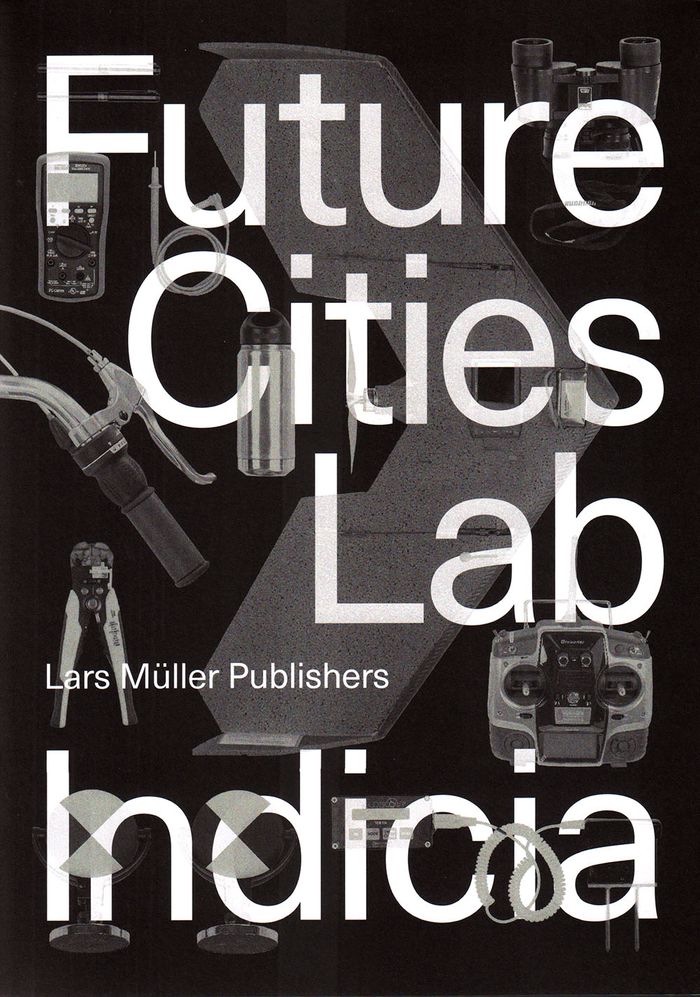
Future cities laboratory: Indicia 02
Actions:
Price:
$45.00
(available to order)
Summary:
This second volume in the "Future Cities Laboratory Indicia" series focuses on the tools, methods and approaches needed for urban research. In short, following Marshall McLuhan’s famous provocation, the editors focus less on the message and more on the medium of research. This involves retreating from research contents—the topics, themes, questions, hypotheses, insights, ideas, concepts and thoughts—for the moment to consider the materials, methods, tools, techniques and approaches that support them. This change in perspective reveals a rich array of research approaches that include two- and three-dimensional mapping of vegetation, temperature and humidity, in conjunction with point cloud terrestrial and airborne laser-scanning technology; gathering data from sensors and geospatial data and the emergence of “solution spaces” and multi-dimensional complexity science; subject-oriented approaches to behavioral and cognitive decision making in city navigation.
Future cities laboratory: Indicia 02
Actions:
Price:
$45.00
(available to order)
Summary:
This second volume in the "Future Cities Laboratory Indicia" series focuses on the tools, methods and approaches needed for urban research. In short, following Marshall McLuhan’s famous provocation, the editors focus less on the message and more on the medium of research. This involves retreating from research contents—the topics, themes, questions, hypotheses, insights, ideas, concepts and thoughts—for the moment to consider the materials, methods, tools, techniques and approaches that support them. This change in perspective reveals a rich array of research approaches that include two- and three-dimensional mapping of vegetation, temperature and humidity, in conjunction with point cloud terrestrial and airborne laser-scanning technology; gathering data from sensors and geospatial data and the emergence of “solution spaces” and multi-dimensional complexity science; subject-oriented approaches to behavioral and cognitive decision making in city navigation.
Form:
books
books
Publication:
April 2019
April 2019
Subject:
Urban Theory
Urban Theory
Form:
books
books
Actions:
Price:
$34.99
(available to order)
Summary:
Nothing is harder to do these days than nothing. But in a world where our value is determined by our 24/7 data productivity, doing nothing may be our most important form of resistance. So argues artist and critic Jenny Odell in this field guide to doing nothing (at least as capitalism defines it). Odell sees our attention as the most precious—and overdrawn—resource we(...)
$34.99
(available to order)
Summary:
Nothing is harder to do these days than nothing. But in a world where our value is determined by our 24/7 data productivity, doing nothing may be our most important form of resistance. So argues artist and critic Jenny Odell in this field guide to doing nothing (at least as capitalism defines it). Odell sees our attention as the most precious—and overdrawn—resource we(...)
Title:
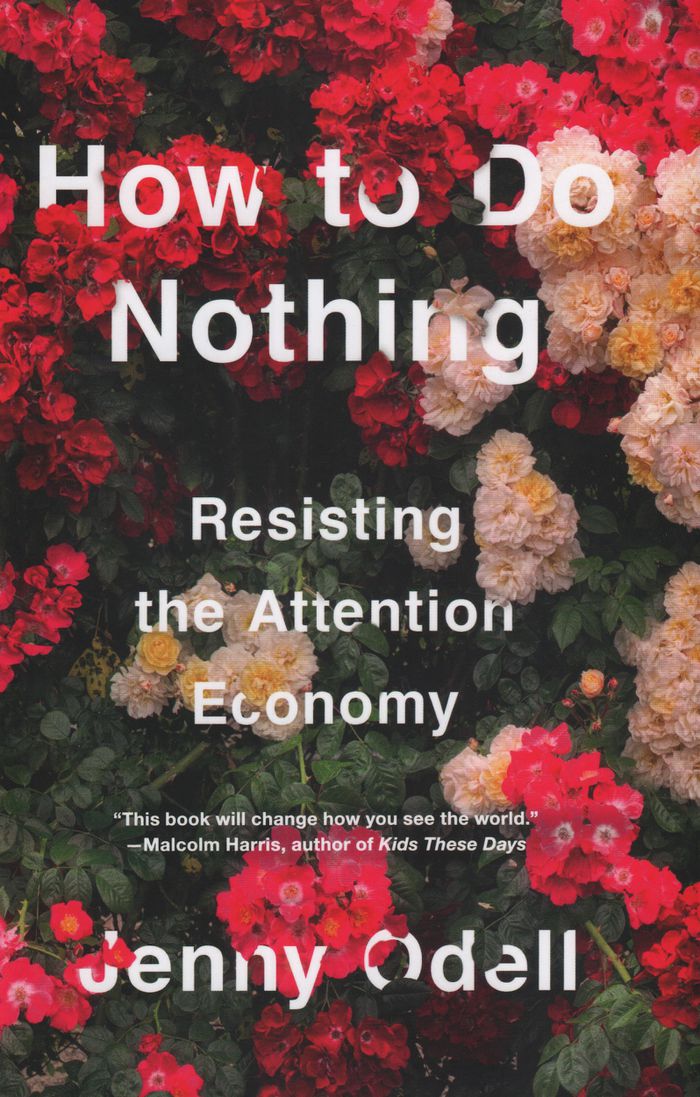
How to do nothing: resisting the attention economy
Actions:
Price:
$34.99
(available to order)
Summary:
Nothing is harder to do these days than nothing. But in a world where our value is determined by our 24/7 data productivity, doing nothing may be our most important form of resistance. So argues artist and critic Jenny Odell in this field guide to doing nothing (at least as capitalism defines it). Odell sees our attention as the most precious—and overdrawn—resource we have. Once we can start paying a new kind of attention, she writes, we can undertake bolder forms of political action, reimagine humankind’s role in the environment, and arrive at more meaningful understandings of happiness and progress. Far from the simple anti-technology screed, or the back-to-nature meditation we read so often, ''How to do nothing'' is an action plan for thinking outside of capitalist narratives of efficiency and techno-determinism.
How to do nothing: resisting the attention economy
Actions:
Price:
$34.99
(available to order)
Summary:
Nothing is harder to do these days than nothing. But in a world where our value is determined by our 24/7 data productivity, doing nothing may be our most important form of resistance. So argues artist and critic Jenny Odell in this field guide to doing nothing (at least as capitalism defines it). Odell sees our attention as the most precious—and overdrawn—resource we have. Once we can start paying a new kind of attention, she writes, we can undertake bolder forms of political action, reimagine humankind’s role in the environment, and arrive at more meaningful understandings of happiness and progress. Far from the simple anti-technology screed, or the back-to-nature meditation we read so often, ''How to do nothing'' is an action plan for thinking outside of capitalist narratives of efficiency and techno-determinism.
Form:
books
books
Publication:
April 2019
April 2019
Subject:
Critical Theory
Critical Theory
Form:
books
books
Actions:
Price:
$110.00
(available in store)
Summary:
This is the first book devoted to the Bangladeshi architect Marina Tabassum and her multifaceted architectural oeuvre. Tabassum’s exploratory approach makes her architectural practice one of the outstanding contemporary positions internationally. Her diverse oeuvre spans from governmental projects to housing and has brought her numerous honors and accolades in the(...)
$110.00
(available in store)
Summary:
This is the first book devoted to the Bangladeshi architect Marina Tabassum and her multifaceted architectural oeuvre. Tabassum’s exploratory approach makes her architectural practice one of the outstanding contemporary positions internationally. Her diverse oeuvre spans from governmental projects to housing and has brought her numerous honors and accolades in the(...)
Title:
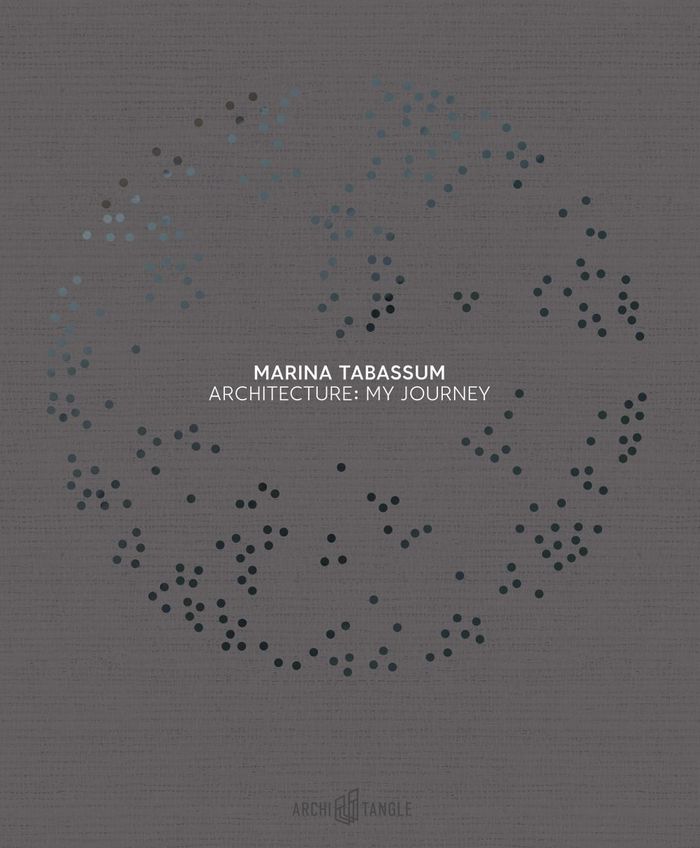
Marina Tabassum: Architecture, my journey
Actions:
Price:
$110.00
(available in store)
Summary:
This is the first book devoted to the Bangladeshi architect Marina Tabassum and her multifaceted architectural oeuvre. Tabassum’s exploratory approach makes her architectural practice one of the outstanding contemporary positions internationally. Her diverse oeuvre spans from governmental projects to housing and has brought her numerous honors and accolades in the international field of architecture. The selection of her architecture in this book ranges from early projects in the city of Dhaka shortly after completing her studies at Bangladesh University of Engineering and Technology (BUET) to recent mobile modular structures called Khudi Bari. Tabassum is establishing the latter for the people affected by displacement in various geographically and climatically challenged locations—both in the Ganges Delta and in the Rohingya refugee camp at Cox’s Bazar on the border to Myanmar, which is currently the largest refugee camp in the world.
Marina Tabassum: Architecture, my journey
Actions:
Price:
$110.00
(available in store)
Summary:
This is the first book devoted to the Bangladeshi architect Marina Tabassum and her multifaceted architectural oeuvre. Tabassum’s exploratory approach makes her architectural practice one of the outstanding contemporary positions internationally. Her diverse oeuvre spans from governmental projects to housing and has brought her numerous honors and accolades in the international field of architecture. The selection of her architecture in this book ranges from early projects in the city of Dhaka shortly after completing her studies at Bangladesh University of Engineering and Technology (BUET) to recent mobile modular structures called Khudi Bari. Tabassum is establishing the latter for the people affected by displacement in various geographically and climatically challenged locations—both in the Ganges Delta and in the Rohingya refugee camp at Cox’s Bazar on the border to Myanmar, which is currently the largest refugee camp in the world.
Form:
books
books
Publication:
October 2022
October 2022
Subject:
Architecture Monographs
Architecture Monographs
Form:
books
books
Actions:
Price:
$71.50
(available to order)
Summary:
Catalogue of the ''Technoscape'' exhibition, which was held at MAXXI in Autumn 2022, focused on the relationship between artistic and scientific disciplines, nowadays closer than ever, and the consequent contacts between technique, creativity, and social awareness. Architecture, engineering, and science have overlapped on numerous occasions during the 20th century. First(...)
$71.50
(available to order)
Summary:
Catalogue of the ''Technoscape'' exhibition, which was held at MAXXI in Autumn 2022, focused on the relationship between artistic and scientific disciplines, nowadays closer than ever, and the consequent contacts between technique, creativity, and social awareness. Architecture, engineering, and science have overlapped on numerous occasions during the 20th century. First(...)
Title:
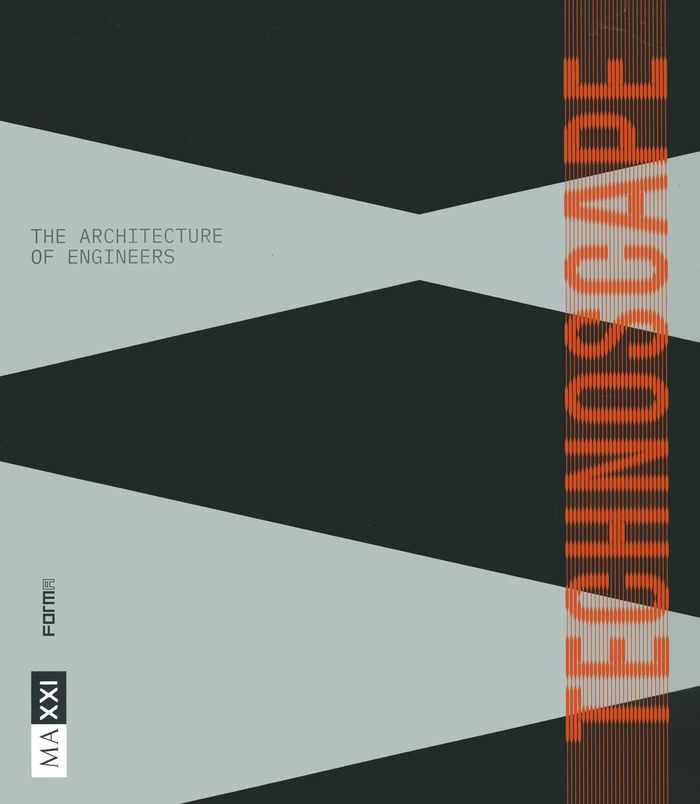
Technoscape: The architecture of engineers
Actions:
Price:
$71.50
(available to order)
Summary:
Catalogue of the ''Technoscape'' exhibition, which was held at MAXXI in Autumn 2022, focused on the relationship between artistic and scientific disciplines, nowadays closer than ever, and the consequent contacts between technique, creativity, and social awareness. Architecture, engineering, and science have overlapped on numerous occasions during the 20th century. First in the heroic phase and then in the mature phase of the reinforced concrete, then with the affirmation of hi-tech construction methods in the 1970s and 1980s and finally with the eruption of digitally controlled technologies. The volume follows the dual register of the exhibition, first dealing with how technology is making architecture, urban planning, and other related disciplines more aware of their technical and scientific responsibility and capable of opening up new lines of research. The focus shifts then to structural engineering, comparing current masterpieces with previous historical modernist examples.
Technoscape: The architecture of engineers
Actions:
Price:
$71.50
(available to order)
Summary:
Catalogue of the ''Technoscape'' exhibition, which was held at MAXXI in Autumn 2022, focused on the relationship between artistic and scientific disciplines, nowadays closer than ever, and the consequent contacts between technique, creativity, and social awareness. Architecture, engineering, and science have overlapped on numerous occasions during the 20th century. First in the heroic phase and then in the mature phase of the reinforced concrete, then with the affirmation of hi-tech construction methods in the 1970s and 1980s and finally with the eruption of digitally controlled technologies. The volume follows the dual register of the exhibition, first dealing with how technology is making architecture, urban planning, and other related disciplines more aware of their technical and scientific responsibility and capable of opening up new lines of research. The focus shifts then to structural engineering, comparing current masterpieces with previous historical modernist examples.
Form:
books
books
Publication:
February 2023
February 2023
Subject:
Engineering Structures
Engineering Structures
Form:
books
books
Title:
Militant modernism
Militant modernism
Actions:
Price:
$25.95
(available to order)
Summary:
This book is a defence of Modernism against its defenders. In readings of modern design, film and especially architecture, it attempts to reclaim a revolutionary modernism against its absorption into the heritage industry and the aesthetics of the luxury flat. This publication argues for a Modernism of everyday life, immersed in questions of socialism, sexual politics(...)
$25.95
(available to order)
Summary:
This book is a defence of Modernism against its defenders. In readings of modern design, film and especially architecture, it attempts to reclaim a revolutionary modernism against its absorption into the heritage industry and the aesthetics of the luxury flat. This publication argues for a Modernism of everyday life, immersed in questions of socialism, sexual politics(...)
Title:
Militant modernism
Actions:
Price:
$25.95
(available to order)
Summary:
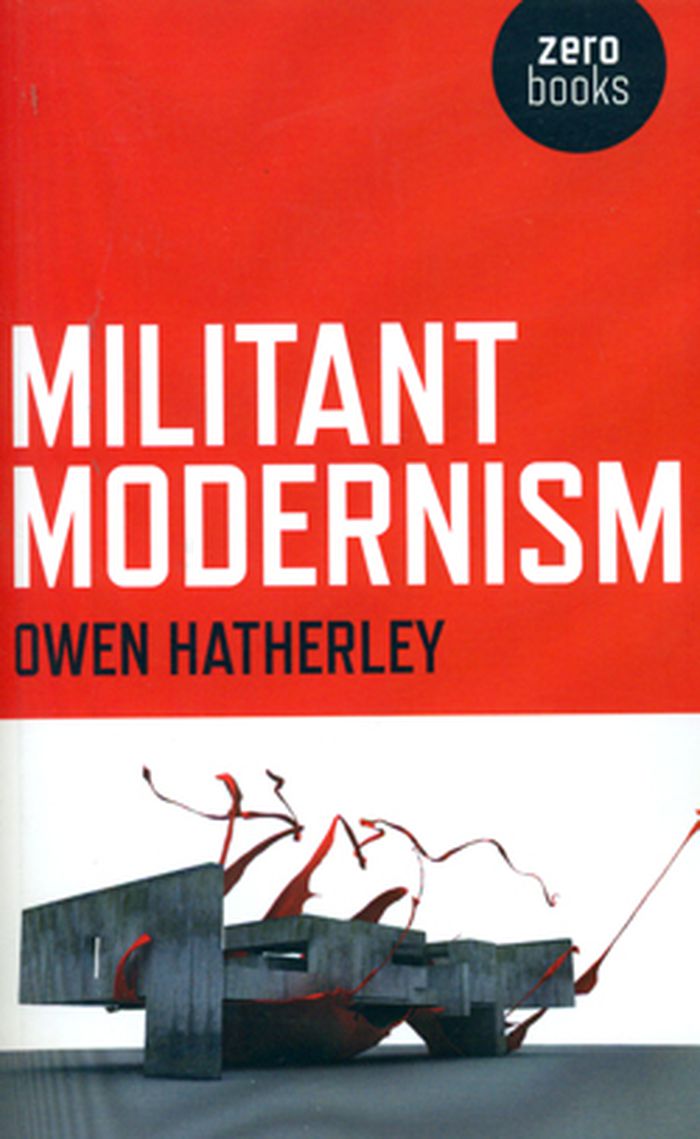
This book is a defence of Modernism against its defenders. In readings of modern design, film and especially architecture, it attempts to reclaim a revolutionary modernism against its absorption into the heritage industry and the aesthetics of the luxury flat. This publication argues for a Modernism of everyday life, immersed in questions of socialism, sexual politics and technology. It features new readings of some familiar names - Bertolt Brecht, Le Corbusier, Vladimir Mayakovsky - and much more on the lesser known, quotidian modernists of the 20th century. The chapters range from a study of industrial and brutalist aesthetics in Britain, Russian Constructivism in architecture, the Sexpol of Wilhelm Reich in film and design, and the alienation effects of Brecht and Hanns Eisler on record and on screen. Against the world of 'there is no alternative', this book tries to excavate Modernism’s other futures.
Militant modernism
Actions:
Price:
$25.95
(available to order)
Summary:
This book is a defence of Modernism against its defenders. In readings of modern design, film and especially architecture, it attempts to reclaim a revolutionary modernism against its absorption into the heritage industry and the aesthetics of the luxury flat. This publication argues for a Modernism of everyday life, immersed in questions of socialism, sexual politics and technology. It features new readings of some familiar names - Bertolt Brecht, Le Corbusier, Vladimir Mayakovsky - and much more on the lesser known, quotidian modernists of the 20th century. The chapters range from a study of industrial and brutalist aesthetics in Britain, Russian Constructivism in architecture, the Sexpol of Wilhelm Reich in film and design, and the alienation effects of Brecht and Hanns Eisler on record and on screen. Against the world of 'there is no alternative', this book tries to excavate Modernism’s other futures.
Form:
books
books
Publication:
May 2009
May 2009
Subject:
Architectural Theory
Architectural Theory
Form:
books
books
Actions:
Price:
$58.00
(available to order)
Summary:
The harnessing of solar energy via photovoltaic (i.e. solar electrical) technology has become one of the world's highest priorities, as dwindling oil resources compel nations all over the world to reconsider their energy policies. Soon, many countries will be able to produce as much as 25 percent of their electricity through photovoltaics--that is, if architecture can(...)
$58.00
(available to order)
Summary:
The harnessing of solar energy via photovoltaic (i.e. solar electrical) technology has become one of the world's highest priorities, as dwindling oil resources compel nations all over the world to reconsider their energy policies. Soon, many countries will be able to produce as much as 25 percent of their electricity through photovoltaics--that is, if architecture can(...)
Title:
Energizing architecture: design and photovoltaics
Actions:
Price:
$58.00
(available to order)
Summary:
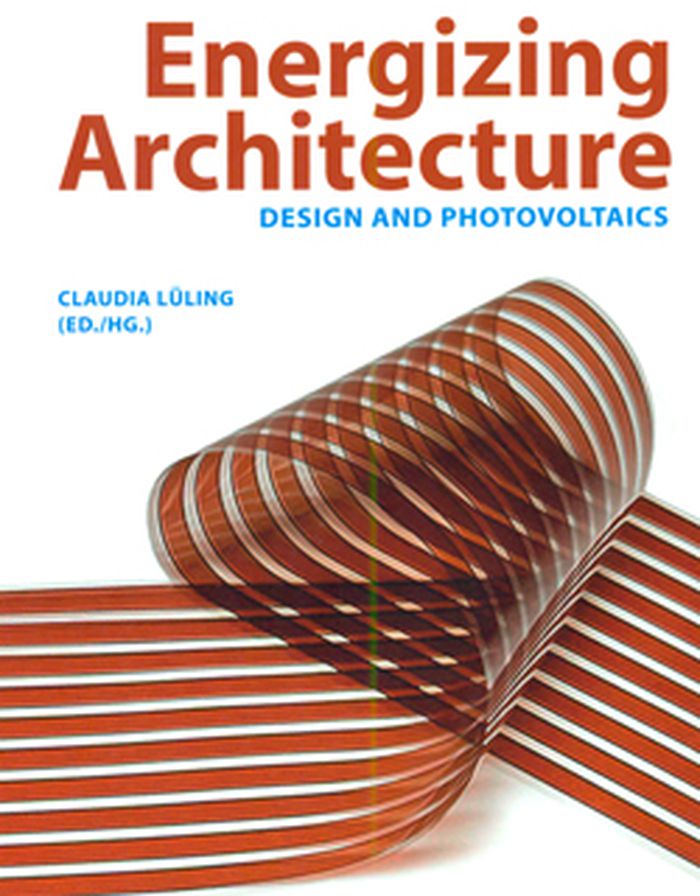
The harnessing of solar energy via photovoltaic (i.e. solar electrical) technology has become one of the world's highest priorities, as dwindling oil resources compel nations all over the world to reconsider their energy policies. Soon, many countries will be able to produce as much as 25 percent of their electricity through photovoltaics--that is, if architecture can rise to the challenge and integrate its visual and design language with that of photovoltaic systems. This challenge has already been tackled in a huge variety of projects, and Energizing Architecture presents the full range of possible photovoltaic modules, using realized buildings as examples. Intended for planners, architects and anybody concerned with the field of environmental design, it provides an index of all relevant materials, and demonstrates that the integration of photovoltaics into architectural practice can be achieved with aesthetically pleasing results.
Energizing architecture: design and photovoltaics
Actions:
Price:
$58.00
(available to order)
Summary:
The harnessing of solar energy via photovoltaic (i.e. solar electrical) technology has become one of the world's highest priorities, as dwindling oil resources compel nations all over the world to reconsider their energy policies. Soon, many countries will be able to produce as much as 25 percent of their electricity through photovoltaics--that is, if architecture can rise to the challenge and integrate its visual and design language with that of photovoltaic systems. This challenge has already been tackled in a huge variety of projects, and Energizing Architecture presents the full range of possible photovoltaic modules, using realized buildings as examples. Intended for planners, architects and anybody concerned with the field of environmental design, it provides an index of all relevant materials, and demonstrates that the integration of photovoltaics into architectural practice can be achieved with aesthetically pleasing results.
Form:
books
books
Publication:
November 2009
November 2009
Subject:
Green Architecture
Green Architecture
Form:
books
books
Actions:
Price:
$27.95
(available to order)
Summary:
We now have the technology to reach nearby planets. Even though many long-term technical issues still need to be resolved to create the conditions for a permanent, self-sustaining human life on another planet, imagining humans as a multiplanetary species is no longer merely the stuff of science fiction. Against this backdrop, "Planetary Echoes" considers the place of this(...)
$27.95
(available to order)
Summary:
We now have the technology to reach nearby planets. Even though many long-term technical issues still need to be resolved to create the conditions for a permanent, self-sustaining human life on another planet, imagining humans as a multiplanetary species is no longer merely the stuff of science fiction. Against this backdrop, "Planetary Echoes" considers the place of this(...)
Title:
Planetary echoes: Exploring the implications of human settlement in outer space
Actions:
Price:
$27.95
(available to order)
Summary:
We now have the technology to reach nearby planets. Even though many long-term technical issues still need to be resolved to create the conditions for a permanent, self-sustaining human life on another planet, imagining humans as a multiplanetary species is no longer merely the stuff of science fiction. Against this backdrop, "Planetary Echoes" considers the place of this dream of human life on other planets in the arts, literature and sciences at the beginning of the 21st century. In this volume, a broad, interdisciplinary list of contributors (scientists, astronauts, designers, philanthropists, inventors, artists and curators) weighs in on the imaginable possibilities of space settlement. The list of contributors ranges from Buzz Aldrin to Richard Branson to Norman Foster, with many more perspectives on offer a list eclectic enough to match the eccentricity of the human dream of colonizing outer space.
Planetary echoes: Exploring the implications of human settlement in outer space
Actions:
Price:
$27.95
(available to order)
Summary:
We now have the technology to reach nearby planets. Even though many long-term technical issues still need to be resolved to create the conditions for a permanent, self-sustaining human life on another planet, imagining humans as a multiplanetary species is no longer merely the stuff of science fiction. Against this backdrop, "Planetary Echoes" considers the place of this dream of human life on other planets in the arts, literature and sciences at the beginning of the 21st century. In this volume, a broad, interdisciplinary list of contributors (scientists, astronauts, designers, philanthropists, inventors, artists and curators) weighs in on the imaginable possibilities of space settlement. The list of contributors ranges from Buzz Aldrin to Richard Branson to Norman Foster, with many more perspectives on offer a list eclectic enough to match the eccentricity of the human dream of colonizing outer space.
Form:
books
books
Publication:
November 2018
November 2018
Subject:
Journeys
Journeys
Form:
books
books
Actions:
Price:
$67.50
(available to order)
Summary:
The “home of the future” has long been a topic of fascination in popular culture and an intriguing prospect for designers, and the 20th century offered up countless visions of the future of domestic life, from the aspirational to the radical. Whether it was the dream of the fully mechanized home or the notion that technology might free us from the home altogether, the(...)
$67.50
(available to order)
Summary:
The “home of the future” has long been a topic of fascination in popular culture and an intriguing prospect for designers, and the 20th century offered up countless visions of the future of domestic life, from the aspirational to the radical. Whether it was the dream of the fully mechanized home or the notion that technology might free us from the home altogether, the(...)
Publication:
April 2019
April 2019
Title:
Home futures: living in yesterday's tomorrow
Actions:
Price:
$67.50
(available to order)
Summary:
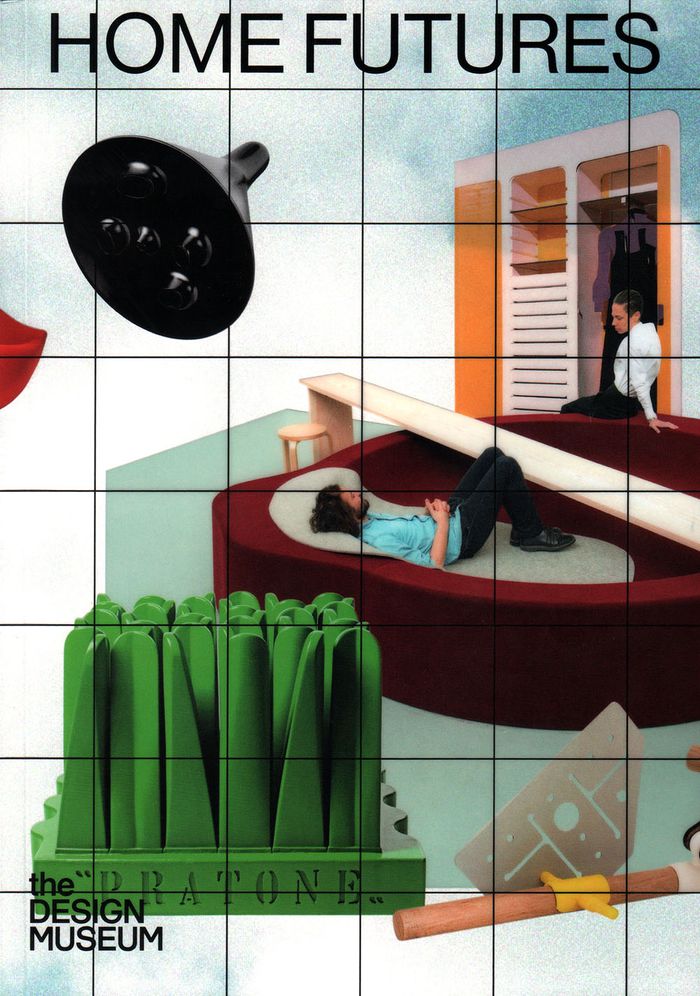
The “home of the future” has long been a topic of fascination in popular culture and an intriguing prospect for designers, and the 20th century offered up countless visions of the future of domestic life, from the aspirational to the radical. Whether it was the dream of the fully mechanized home or the notion that technology might free us from the home altogether, the domestic realm was a site of endless invention and speculation. But what happened to those visions? Are the smart homes of today and patterns of use in the sharing economy the future that architects and designers once predicted, or has the “home” proved resistant to radical change? "Home Futures: Living in Yesterday’s Tomorrow" explores different approaches to reinventing domestic life, tracing the social and technological developments that have driven change in the home.
Home futures: living in yesterday's tomorrow
Actions:
Price:
$67.50
(available to order)
Summary:
The “home of the future” has long been a topic of fascination in popular culture and an intriguing prospect for designers, and the 20th century offered up countless visions of the future of domestic life, from the aspirational to the radical. Whether it was the dream of the fully mechanized home or the notion that technology might free us from the home altogether, the domestic realm was a site of endless invention and speculation. But what happened to those visions? Are the smart homes of today and patterns of use in the sharing economy the future that architects and designers once predicted, or has the “home” proved resistant to radical change? "Home Futures: Living in Yesterday’s Tomorrow" explores different approaches to reinventing domestic life, tracing the social and technological developments that have driven change in the home.
Form:
books
books
Publication:
April 2019
April 2019
Form:
books
books
Actions:
Price:
$58.00
(available to order)
Summary:
The period from the 1960 arrival of Edward J. Logue as the powerful and often controversial director of the Boston Redevelopment Authority to the reopening of Quincy Market in 1976 saw Boston as an urban laboratory for the exploration of concrete’s structural and sculptural qualities. What emerged was a vision for the city’s widespread revitalization often referred to as(...)
$58.00
(available to order)
Summary:
The period from the 1960 arrival of Edward J. Logue as the powerful and often controversial director of the Boston Redevelopment Authority to the reopening of Quincy Market in 1976 saw Boston as an urban laboratory for the exploration of concrete’s structural and sculptural qualities. What emerged was a vision for the city’s widespread revitalization often referred to as(...)
Subject:
Architecture since 1900, Europe
Architecture since 1900, Europe
Publication:
October 2015
October 2015
Title:
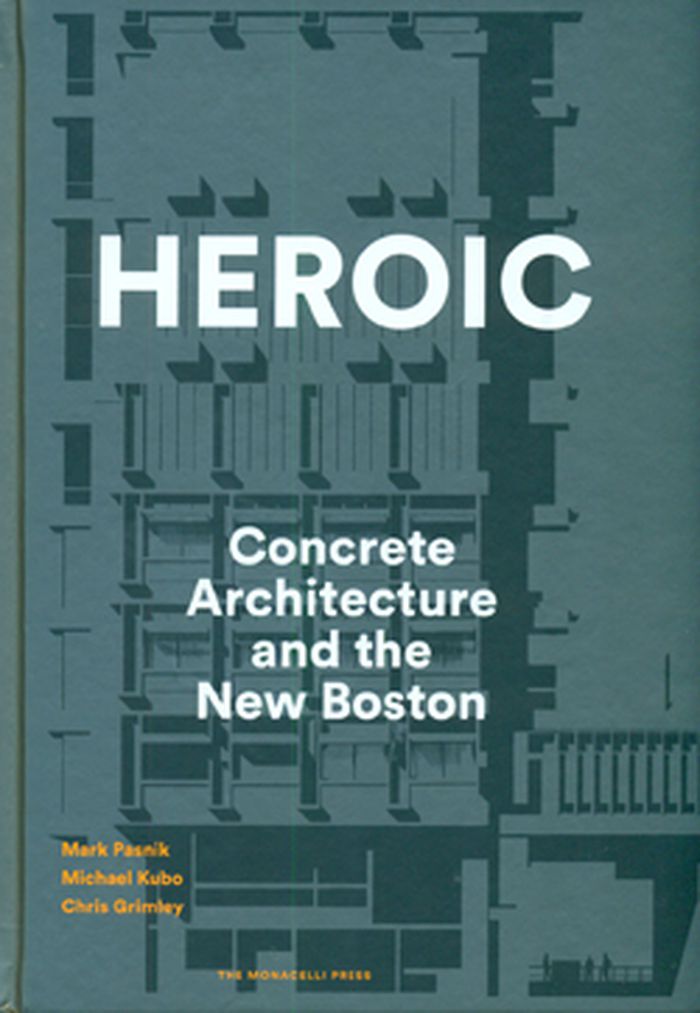
Heroic: concrete architecture and the new Boston
Actions:
Price:
$58.00
(available to order)
Summary:
The period from the 1960 arrival of Edward J. Logue as the powerful and often controversial director of the Boston Redevelopment Authority to the reopening of Quincy Market in 1976 saw Boston as an urban laboratory for the exploration of concrete’s structural and sculptural qualities. What emerged was a vision for the city’s widespread revitalization often referred to as the “New Boston.” Today, when concrete buildings across the nation are in danger of insensitive renovation or demolition, Heroic presents the concrete structures that defined Boston during this remarkable period—from the well-known (Boston City Hall, New England Aquarium, and cornerstones of the Massachusetts Institute of Technology and Harvard University) to the already lost — with hundreds of images; essays by architectural historians Joan Ockman, Lizabeth Cohen, Keith N. Morgan, and Douglass Shand-Tucci; and interviews with a number of the architects themselves.
Heroic: concrete architecture and the new Boston
Actions:
Price:
$58.00
(available to order)
Summary:
The period from the 1960 arrival of Edward J. Logue as the powerful and often controversial director of the Boston Redevelopment Authority to the reopening of Quincy Market in 1976 saw Boston as an urban laboratory for the exploration of concrete’s structural and sculptural qualities. What emerged was a vision for the city’s widespread revitalization often referred to as the “New Boston.” Today, when concrete buildings across the nation are in danger of insensitive renovation or demolition, Heroic presents the concrete structures that defined Boston during this remarkable period—from the well-known (Boston City Hall, New England Aquarium, and cornerstones of the Massachusetts Institute of Technology and Harvard University) to the already lost — with hundreds of images; essays by architectural historians Joan Ockman, Lizabeth Cohen, Keith N. Morgan, and Douglass Shand-Tucci; and interviews with a number of the architects themselves.
Form:
books
books
Publication:
October 2015
October 2015
Subject:
Architecture since 1900, Europe
Architecture since 1900, Europe


