


13794 Results
Form:
books
books
Title:
The architectural model: histories of the miniature and the prototype, the exemplar and the muse
The architectural model: histories of the miniature and the prototype, the exemplar and the muse
Actions:
Price:
$60.00
(available to order)
Summary:
For more than five hundred years, architects have employed three-dimensional models as tools to test, refine, and illustrate their ideas. But, as Matthew Mindrup shows, the uses of physical architectural models extend beyond mere representation. An architectural model can also simulate, instruct, inspire, and generate architectural designs. It can be, among other things,(...)
$60.00
(available to order)
Summary:
For more than five hundred years, architects have employed three-dimensional models as tools to test, refine, and illustrate their ideas. But, as Matthew Mindrup shows, the uses of physical architectural models extend beyond mere representation. An architectural model can also simulate, instruct, inspire, and generate architectural designs. It can be, among other things,(...)
Title:
The architectural model: histories of the miniature and the prototype, the exemplar and the muse
Actions:
Price:
$60.00
(available to order)
Summary:
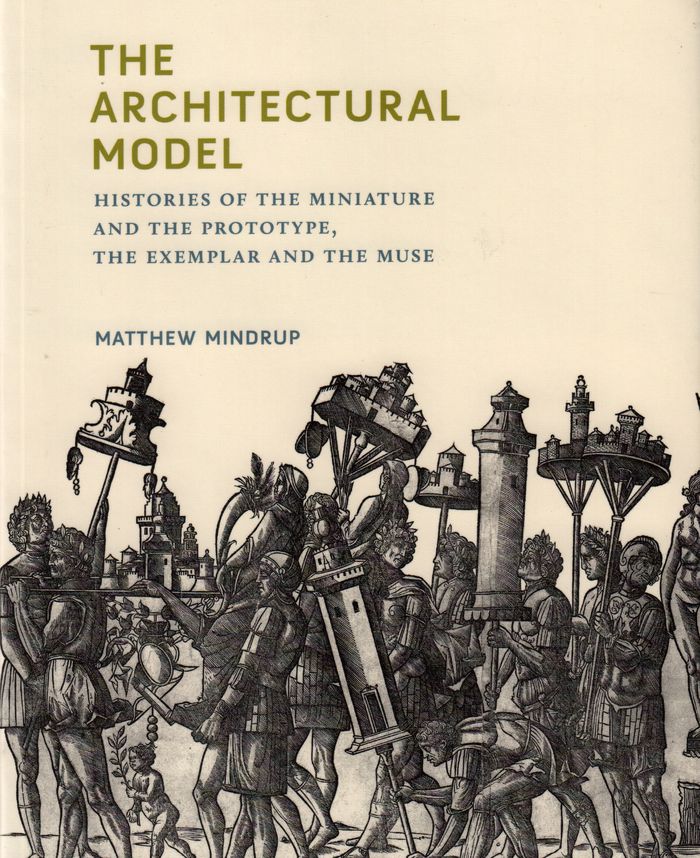
For more than five hundred years, architects have employed three-dimensional models as tools to test, refine, and illustrate their ideas. But, as Matthew Mindrup shows, the uses of physical architectural models extend beyond mere representation. An architectural model can also simulate, instruct, inspire, and generate architectural designs. It can be, among other things, sign, souvenir, toy, funerary object, didactic tool, medium, or muse. In this book, Mindrup surveys the history of architectural models by investigating their uses, both theoretical and practical. Tracing the architectural model's development from antiquity to the present, Mindrup also offers an interpretive framework for understanding each of its applications in the context of time and place. He first examines models meant to portray extant, fantastic, or proposed structures, describing their use in ancient funerary or dedicatory practices, in which models are endowed with magical power; as a medium for architectural reverie and inspiration; and as prototypes for twentieth-century experimental designs. Mindrup then considers models that exemplify certain architectural uses, exploring the influence of Leon Battista Alberti's dictum that models be simple, lest they distract from the architect's ideas; analyzing the model as a generative tool; and investigating allegorical, analogical, and anagogical interpretations of models. Mindrup's histories show how the model can be a surrogate for the architectural structure itself, or for the experience of its formal, tactile, and sensory complexity; and beyond that, that the manipulation, play, experimentation, and dreaming enabled by models allow us to imagine architecture in new ways.
The architectural model: histories of the miniature and the prototype, the exemplar and the muse
Actions:
Price:
$60.00
(available to order)
Summary:
For more than five hundred years, architects have employed three-dimensional models as tools to test, refine, and illustrate their ideas. But, as Matthew Mindrup shows, the uses of physical architectural models extend beyond mere representation. An architectural model can also simulate, instruct, inspire, and generate architectural designs. It can be, among other things, sign, souvenir, toy, funerary object, didactic tool, medium, or muse. In this book, Mindrup surveys the history of architectural models by investigating their uses, both theoretical and practical. Tracing the architectural model's development from antiquity to the present, Mindrup also offers an interpretive framework for understanding each of its applications in the context of time and place. He first examines models meant to portray extant, fantastic, or proposed structures, describing their use in ancient funerary or dedicatory practices, in which models are endowed with magical power; as a medium for architectural reverie and inspiration; and as prototypes for twentieth-century experimental designs. Mindrup then considers models that exemplify certain architectural uses, exploring the influence of Leon Battista Alberti's dictum that models be simple, lest they distract from the architect's ideas; analyzing the model as a generative tool; and investigating allegorical, analogical, and anagogical interpretations of models. Mindrup's histories show how the model can be a surrogate for the architectural structure itself, or for the experience of its formal, tactile, and sensory complexity; and beyond that, that the manipulation, play, experimentation, and dreaming enabled by models allow us to imagine architecture in new ways.
Form:
books
books
Publication:
October 2019
October 2019
Subject:
Architectural Theory
Architectural Theory
Form:
books
books
Title:
Michael Snow
Michael Snow
Actions:
Price:
$36.95
(available to order)
Summary:
Few filmmakers have had as large an impact on the recent avant-garde film scene as Canadian Michael Snow (b. 1928). His works in a range of media—film, installation, video, painting, sculpture, sound, photography, drawing, writing, and music—address the fundamental properties of his materials, the conditions of perception and experience, questions of authorship in(...)
$36.95
(available to order)
Summary:
Few filmmakers have had as large an impact on the recent avant-garde film scene as Canadian Michael Snow (b. 1928). His works in a range of media—film, installation, video, painting, sculpture, sound, photography, drawing, writing, and music—address the fundamental properties of his materials, the conditions of perception and experience, questions of authorship in(...)
Title:
Michael Snow
Actions:
Price:
$36.95
(available to order)
Summary:
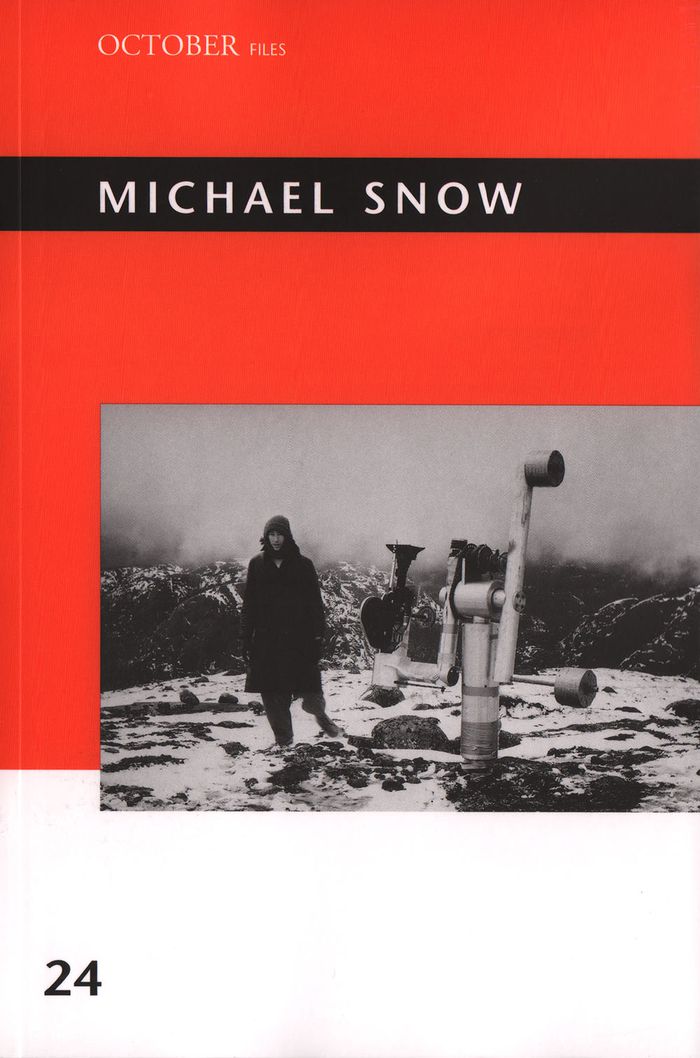
Few filmmakers have had as large an impact on the recent avant-garde film scene as Canadian Michael Snow (b. 1928). His works in a range of media—film, installation, video, painting, sculpture, sound, photography, drawing, writing, and music—address the fundamental properties of his materials, the conditions of perception and experience, questions of authorship in technologically reproducible media, and techniques of translation through written and pictorial representation. This volume collects essential texts on Snow's work, with essays and interviews spanning more than four decades.
Michael Snow
Actions:
Price:
$36.95
(available to order)
Summary:
Few filmmakers have had as large an impact on the recent avant-garde film scene as Canadian Michael Snow (b. 1928). His works in a range of media—film, installation, video, painting, sculpture, sound, photography, drawing, writing, and music—address the fundamental properties of his materials, the conditions of perception and experience, questions of authorship in technologically reproducible media, and techniques of translation through written and pictorial representation. This volume collects essential texts on Snow's work, with essays and interviews spanning more than four decades.
Form:
books
books
Publication:
October 2019
October 2019
Subject:
Art Theory
Art Theory
Form:
books
books
Title:
The cybernetic hypothesis
The cybernetic hypothesis
Actions:
Price:
$18.95
(available to order)
Summary:
This early Tiqqun text has lost none of its pertinence. ''The Cybernetic Hypothesis'' presents a genealogy of our “technical” present that doesn't point out the political and ethical dilemmas embedded in it as if they were puzzles to be solved, but rather unmasks an enemy force to be engaged and defeated. Cybernetics in this context is the ''teknê'' of threat reduction,(...)
$18.95
(available to order)
Summary:
This early Tiqqun text has lost none of its pertinence. ''The Cybernetic Hypothesis'' presents a genealogy of our “technical” present that doesn't point out the political and ethical dilemmas embedded in it as if they were puzzles to be solved, but rather unmasks an enemy force to be engaged and defeated. Cybernetics in this context is the ''teknê'' of threat reduction,(...)
Title:
The cybernetic hypothesis
Actions:
Price:
$18.95
(available to order)
Summary:
This early Tiqqun text has lost none of its pertinence. ''The Cybernetic Hypothesis'' presents a genealogy of our “technical” present that doesn't point out the political and ethical dilemmas embedded in it as if they were puzzles to be solved, but rather unmasks an enemy force to be engaged and defeated. Cybernetics in this context is the ''teknê'' of threat reduction, which unfortunately has required the reduction of a disturbing humanity to packets of manageable information. Not so easily done. Not smooth. A matter of civil war, in fact. According to the authors, cybernetics is the latest master fable, welcomed at a certain crisis juncture in late capitalism. And now the interesting question is: Has the guest in the house become the master of the house?
The cybernetic hypothesis
Actions:
Price:
$18.95
(available to order)
Summary:
This early Tiqqun text has lost none of its pertinence. ''The Cybernetic Hypothesis'' presents a genealogy of our “technical” present that doesn't point out the political and ethical dilemmas embedded in it as if they were puzzles to be solved, but rather unmasks an enemy force to be engaged and defeated. Cybernetics in this context is the ''teknê'' of threat reduction, which unfortunately has required the reduction of a disturbing humanity to packets of manageable information. Not so easily done. Not smooth. A matter of civil war, in fact. According to the authors, cybernetics is the latest master fable, welcomed at a certain crisis juncture in late capitalism. And now the interesting question is: Has the guest in the house become the master of the house?
Form:
books
books
Publication:
October 2019
October 2019
Subject:
Critical Theory
Critical Theory
Form:
books
books
Actions:
Price:
$36.00
(available to order)
Summary:
We encounter the world through surfaces: the screen, the page, our skin, the ocean’s swell. Here on the sea is the surfer, positioned at the edge of the collapsing wave. And lurking underneath in a monstrous mirroring is the shark. When the two meet, carving along the surface, breaking through the boundary, is when death appears. Steering her analysis from the(...)
$36.00
(available to order)
Summary:
We encounter the world through surfaces: the screen, the page, our skin, the ocean’s swell. Here on the sea is the surfer, positioned at the edge of the collapsing wave. And lurking underneath in a monstrous mirroring is the shark. When the two meet, carving along the surface, breaking through the boundary, is when death appears. Steering her analysis from the(...)
Title:
Sharks, death, surfers: an illustrated companion
Actions:
Price:
$36.00
(available to order)
Summary:
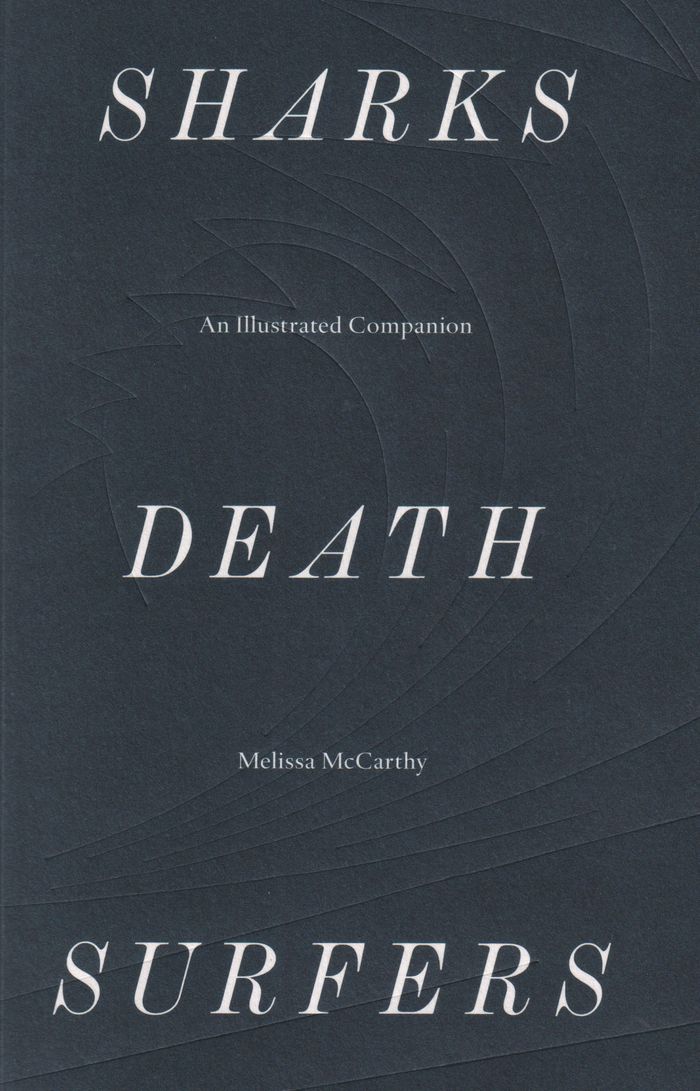
We encounter the world through surfaces: the screen, the page, our skin, the ocean’s swell. Here on the sea is the surfer, positioned at the edge of the collapsing wave. And lurking underneath in a monstrous mirroring is the shark. When the two meet, carving along the surface, breaking through the boundary, is when death appears. Steering her analysis from the newspaper obituary in and out of literature and past cinema, Melissa McCarthy investigates a fundamental aspect of the human condition: our state of being between life and death, always in precarious and watery balance. Sharks, Death, Surfers: An Illustrated Companion observes how sharks have been depicted over centuries and across cultures, then flips the lens (and dissects the cornea) to consider what sharks see when they look back.
Sharks, death, surfers: an illustrated companion
Actions:
Price:
$36.00
(available to order)
Summary:
We encounter the world through surfaces: the screen, the page, our skin, the ocean’s swell. Here on the sea is the surfer, positioned at the edge of the collapsing wave. And lurking underneath in a monstrous mirroring is the shark. When the two meet, carving along the surface, breaking through the boundary, is when death appears. Steering her analysis from the newspaper obituary in and out of literature and past cinema, Melissa McCarthy investigates a fundamental aspect of the human condition: our state of being between life and death, always in precarious and watery balance. Sharks, Death, Surfers: An Illustrated Companion observes how sharks have been depicted over centuries and across cultures, then flips the lens (and dissects the cornea) to consider what sharks see when they look back.
Form:
books
books
Publication:
March 2019
March 2019
Subject:
Critical Theory
Critical Theory
Form:
books
books
Price:
$29.00
(available to order)
Summary:
A new wave of artistic activism has emerged in recent years in response to the ever-increasing dominance of authoritarian neoliberalism. Activist practices in the art field, however, have been around much longer. As Oliver Marchart claims, there has always been an activist undercurrent in art. In this book he traces trajectories of artistic activism in theater, dance,(...)
$29.00
(available to order)
Summary:
A new wave of artistic activism has emerged in recent years in response to the ever-increasing dominance of authoritarian neoliberalism. Activist practices in the art field, however, have been around much longer. As Oliver Marchart claims, there has always been an activist undercurrent in art. In this book he traces trajectories of artistic activism in theater, dance,(...)
Title:
Conflictual aesthetics: artistic activism and the public sphere
Actions:
Price:
$29.00
(available to order)
Summary:
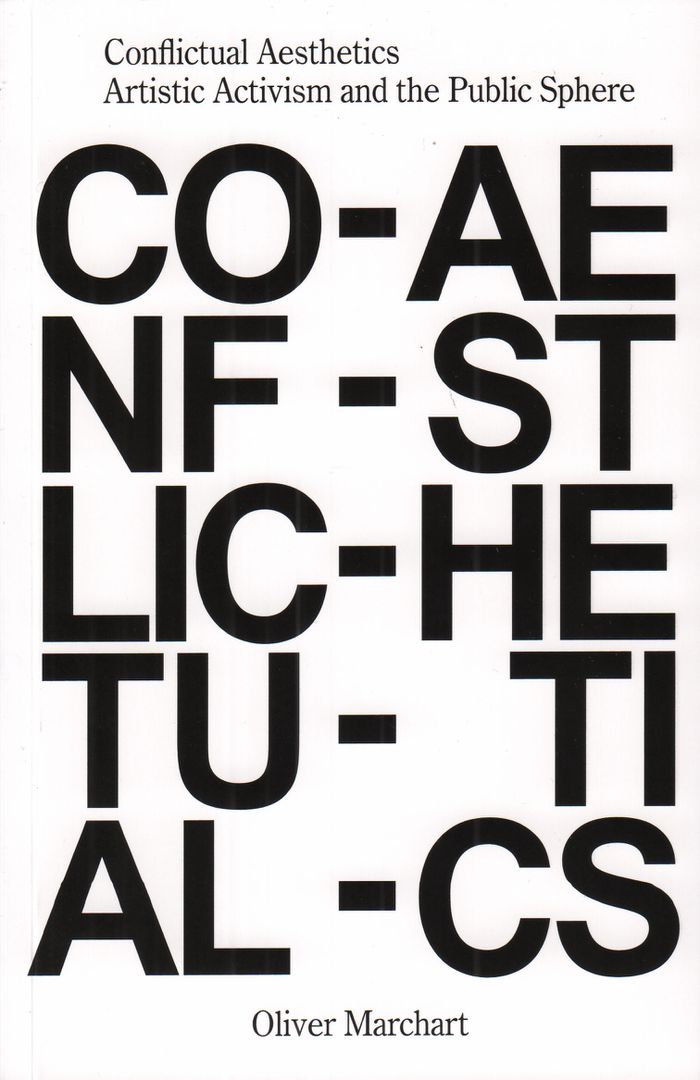
A new wave of artistic activism has emerged in recent years in response to the ever-increasing dominance of authoritarian neoliberalism. Activist practices in the art field, however, have been around much longer. As Oliver Marchart claims, there has always been an activist undercurrent in art. In this book he traces trajectories of artistic activism in theater, dance, performance, and public art, and investigates the political potential of urbanism, curating, and 'biennials of resistance.' What emerges is a conflictual aesthetics that does not conform with traditional approaches to the field and that activates the political potential of artistic practice.
Conflictual aesthetics: artistic activism and the public sphere
Actions:
Price:
$29.00
(available to order)
Summary:
A new wave of artistic activism has emerged in recent years in response to the ever-increasing dominance of authoritarian neoliberalism. Activist practices in the art field, however, have been around much longer. As Oliver Marchart claims, there has always been an activist undercurrent in art. In this book he traces trajectories of artistic activism in theater, dance, performance, and public art, and investigates the political potential of urbanism, curating, and 'biennials of resistance.' What emerges is a conflictual aesthetics that does not conform with traditional approaches to the field and that activates the political potential of artistic practice.
Form:
books
books
Publication:
December 2019
December 2019
Subject:
Art Theory
Art Theory
Form:
books
books
Title:
Aesthetics of standstill
Aesthetics of standstill
Actions:
Price:
$41.95
(available to order)
Summary:
“Standstill” could be the name for the exact kind of experience that is the hiatus between social expectations and real possibilities of agency. Standstill may also be the name of an aesthetic strategy to instill a non-linear time of resistance and experience into the political protocol of progress. Finally, standstill can be the name for the temporal fissure in the midst(...)
$41.95
(available to order)
Summary:
“Standstill” could be the name for the exact kind of experience that is the hiatus between social expectations and real possibilities of agency. Standstill may also be the name of an aesthetic strategy to instill a non-linear time of resistance and experience into the political protocol of progress. Finally, standstill can be the name for the temporal fissure in the midst(...)
Subject:
Critical Theory
Critical Theory
Publication:
July 2019
July 2019
Title:
Aesthetics of standstill
Actions:
Price:
$41.95
(available to order)
Summary:
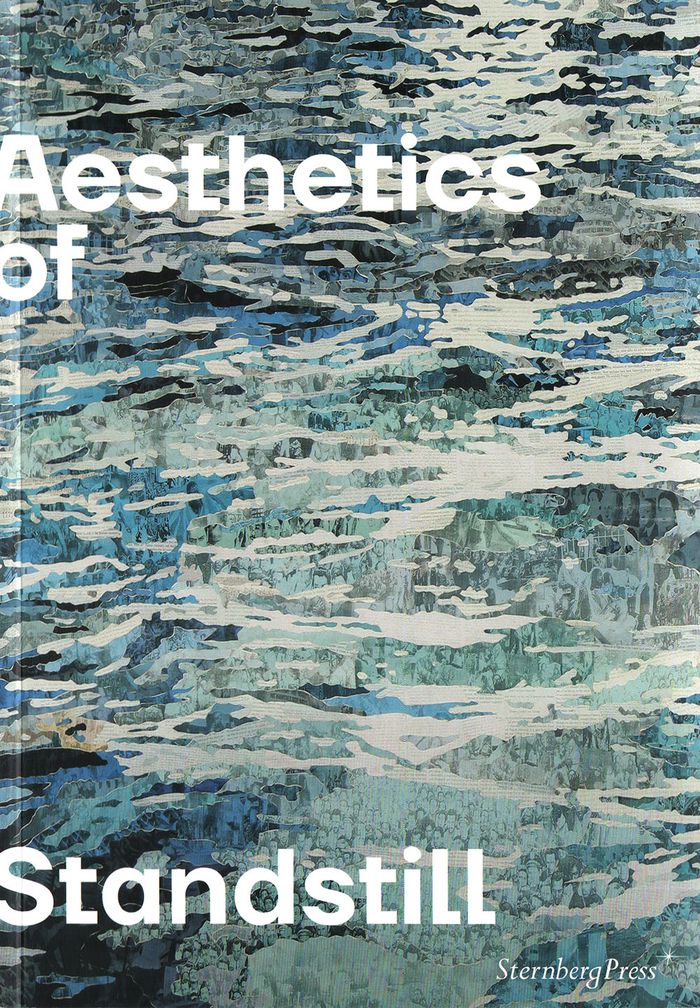
“Standstill” could be the name for the exact kind of experience that is the hiatus between social expectations and real possibilities of agency. Standstill may also be the name of an aesthetic strategy to instill a non-linear time of resistance and experience into the political protocol of progress. Finally, standstill can be the name for the temporal fissure in the midst of the subject, for the lapse between the subject of the enunciation and the subject of a statement, the limit that is the border between the inside and the outside. It can be the name for the mode of potentiality, for the moment of gesture, or, with Walter Benjamin, the medium of the dialectical image. The essays of this book transverse these dimensions of standstill as an in-between of time. The book includes essays by Georges Didi-Huberman, David Lapoujade, Peter Osborne, Jacques Rancière, Christine Ross, and others as well as conversations with Via Lewandowsky, Aernout Mik and Marcel Odenbach.
Aesthetics of standstill
Actions:
Price:
$41.95
(available to order)
Summary:
“Standstill” could be the name for the exact kind of experience that is the hiatus between social expectations and real possibilities of agency. Standstill may also be the name of an aesthetic strategy to instill a non-linear time of resistance and experience into the political protocol of progress. Finally, standstill can be the name for the temporal fissure in the midst of the subject, for the lapse between the subject of the enunciation and the subject of a statement, the limit that is the border between the inside and the outside. It can be the name for the mode of potentiality, for the moment of gesture, or, with Walter Benjamin, the medium of the dialectical image. The essays of this book transverse these dimensions of standstill as an in-between of time. The book includes essays by Georges Didi-Huberman, David Lapoujade, Peter Osborne, Jacques Rancière, Christine Ross, and others as well as conversations with Via Lewandowsky, Aernout Mik and Marcel Odenbach.
Form:
books
books
Publication:
July 2019
July 2019
Subject:
Critical Theory
Critical Theory
Form:
books
books
Price:
$25.95
(available to order)
Summary:
Approaching the comic medium as a supercollider for achieving maximum abstraction, in ''Chronosis'' artist Keith Tilford and philosopher Reza Negarestani create a graphically stunning and conceptually explosive universe in which the worlds of pop culture, modern art, philosophy, science fiction, and theoretical physics crash into one another. Taking place after the(...)
$25.95
(available to order)
Summary:
Approaching the comic medium as a supercollider for achieving maximum abstraction, in ''Chronosis'' artist Keith Tilford and philosopher Reza Negarestani create a graphically stunning and conceptually explosive universe in which the worlds of pop culture, modern art, philosophy, science fiction, and theoretical physics crash into one another. Taking place after the(...)
Title:
Chronosis
Actions:
Price:
$25.95
(available to order)
Summary:
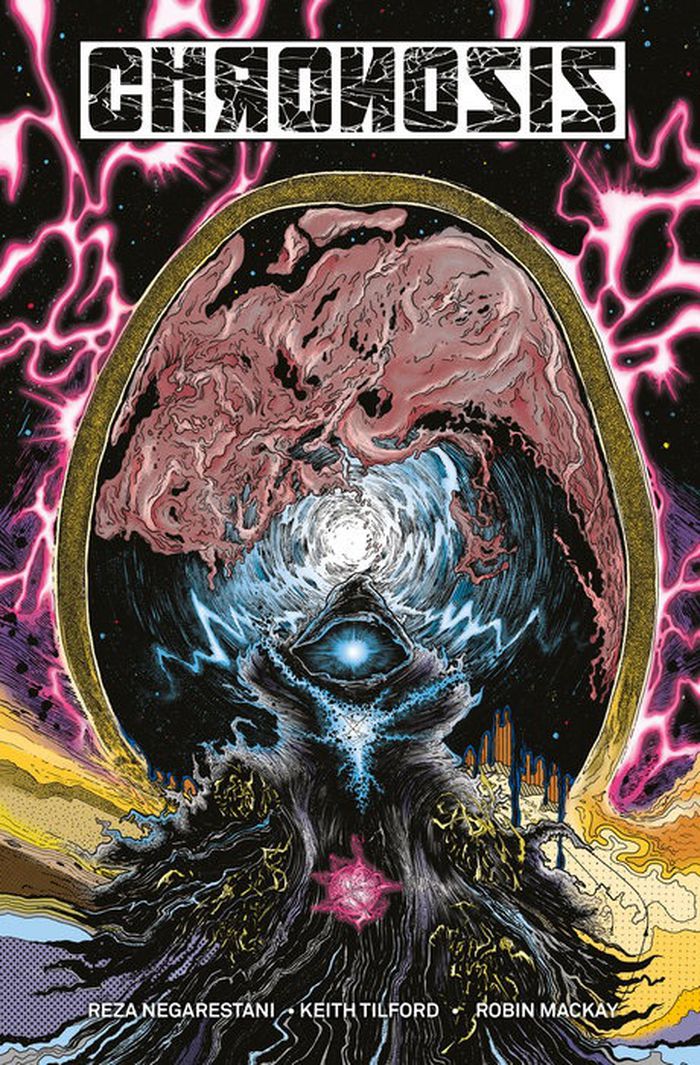
Approaching the comic medium as a supercollider for achieving maximum abstraction, in ''Chronosis'' artist Keith Tilford and philosopher Reza Negarestani create a graphically stunning and conceptually explosive universe in which the worlds of pop culture, modern art, philosophy, science fiction, and theoretical physics crash into one another. Taking place after the catastrophic advent of the birth of time, ''Chronosis'' narrates the story of a sprawling multiverse at the center of which monazzeins, the monks of an esoteric time-cult, attempt to build bridges between the many fragmented tribes and histories of multiple possible worlds. Across a series of dizzying overlapping stories we glimpse worlds where time flows backward, where the universe can be recreated every five minutes, or where rigid facts are washed away by the tides of an infinite ocean of possibility. A unique fusion of comics culture and philosophical cogitation, this conceptually and visually mind-expanding tale takes the reader on a dizzying rollercoaster ride through time, space, and thought.
Chronosis
Actions:
Price:
$25.95
(available to order)
Summary:
Approaching the comic medium as a supercollider for achieving maximum abstraction, in ''Chronosis'' artist Keith Tilford and philosopher Reza Negarestani create a graphically stunning and conceptually explosive universe in which the worlds of pop culture, modern art, philosophy, science fiction, and theoretical physics crash into one another. Taking place after the catastrophic advent of the birth of time, ''Chronosis'' narrates the story of a sprawling multiverse at the center of which monazzeins, the monks of an esoteric time-cult, attempt to build bridges between the many fragmented tribes and histories of multiple possible worlds. Across a series of dizzying overlapping stories we glimpse worlds where time flows backward, where the universe can be recreated every five minutes, or where rigid facts are washed away by the tides of an infinite ocean of possibility. A unique fusion of comics culture and philosophical cogitation, this conceptually and visually mind-expanding tale takes the reader on a dizzying rollercoaster ride through time, space, and thought.
Form:
books
books
Publication:
March 2020
March 2020
Subject:
Critical Theory
Critical Theory
Form:
books
books
Actions:
Price:
$68.95
(available to order)
Summary:
Considered by many to be the most important artist of the twentieth century, the object of intensive critical scrutiny and extensive theorizing, Marcel Duchamp remains an enigma. He may be the most intellectual artist of all time; and yet, toward the end of his life, he said, "If you wish, my art would be that of living: each second, each breath is a work which is(...)
$68.95
(available to order)
Summary:
Considered by many to be the most important artist of the twentieth century, the object of intensive critical scrutiny and extensive theorizing, Marcel Duchamp remains an enigma. He may be the most intellectual artist of all time; and yet, toward the end of his life, he said, "If you wish, my art would be that of living: each second, each breath is a work which is(...)
Title:
Marcel Duchamp and the art of life
Actions:
Price:
$68.95
(available to order)
Summary:
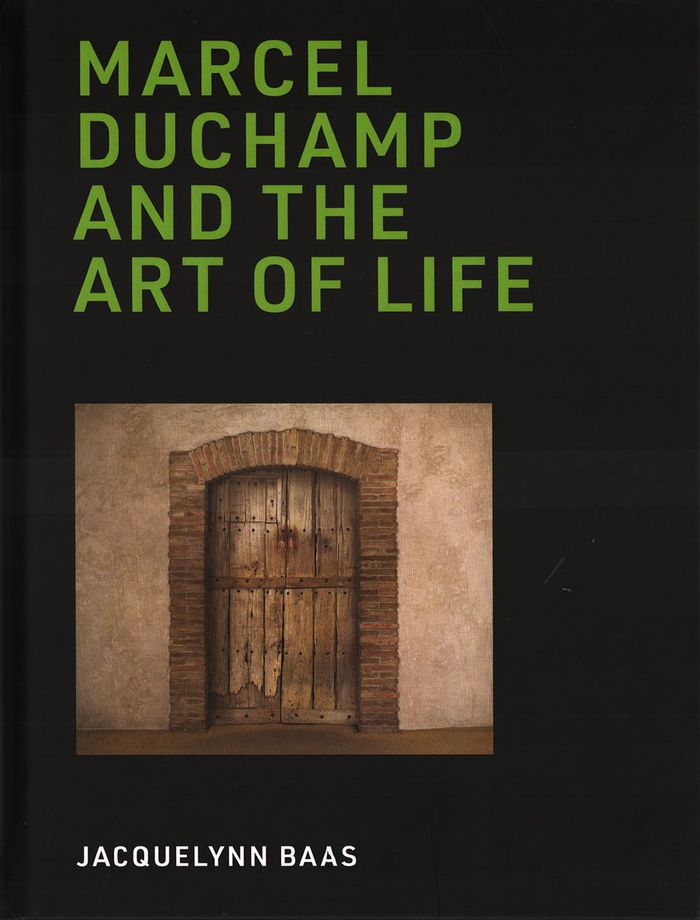
Considered by many to be the most important artist of the twentieth century, the object of intensive critical scrutiny and extensive theorizing, Marcel Duchamp remains an enigma. He may be the most intellectual artist of all time; and yet, toward the end of his life, he said, "If you wish, my art would be that of living: each second, each breath is a work which is inscribed nowhere, which is neither visual or cerebral." In this book, Jacquelynn Baas offers a new reading of Duchamp, arguing in particular that his work may have been informed by Asian "esoterism, " energetic spiritual practices that identify creative energy with the erotic impulse.
Marcel Duchamp and the art of life
Actions:
Price:
$68.95
(available to order)
Summary:
Considered by many to be the most important artist of the twentieth century, the object of intensive critical scrutiny and extensive theorizing, Marcel Duchamp remains an enigma. He may be the most intellectual artist of all time; and yet, toward the end of his life, he said, "If you wish, my art would be that of living: each second, each breath is a work which is inscribed nowhere, which is neither visual or cerebral." In this book, Jacquelynn Baas offers a new reading of Duchamp, arguing in particular that his work may have been informed by Asian "esoterism, " energetic spiritual practices that identify creative energy with the erotic impulse.
Form:
books
books
Publication:
November 2019
November 2019
Subject:
Art Theory
Art Theory
Form:
books
books
Actions:
Price:
$54.95
(available to order)
Summary:
Montage has been hailed as one of the key structural principles of modernity, yet its importance to the history of modern thought about cities and their architecture has never been adequately explored. In this new work, Martino Stierli charts the history of montage in late 19th-century urban and architectural contexts, its application by the early 20th-century(...)
$54.95
(available to order)
Summary:
Montage has been hailed as one of the key structural principles of modernity, yet its importance to the history of modern thought about cities and their architecture has never been adequately explored. In this new work, Martino Stierli charts the history of montage in late 19th-century urban and architectural contexts, its application by the early 20th-century(...)
Title:
Montage and the metropolis: architecture, modernity, and the representation of space
Actions:
Price:
$54.95
(available to order)
Summary:
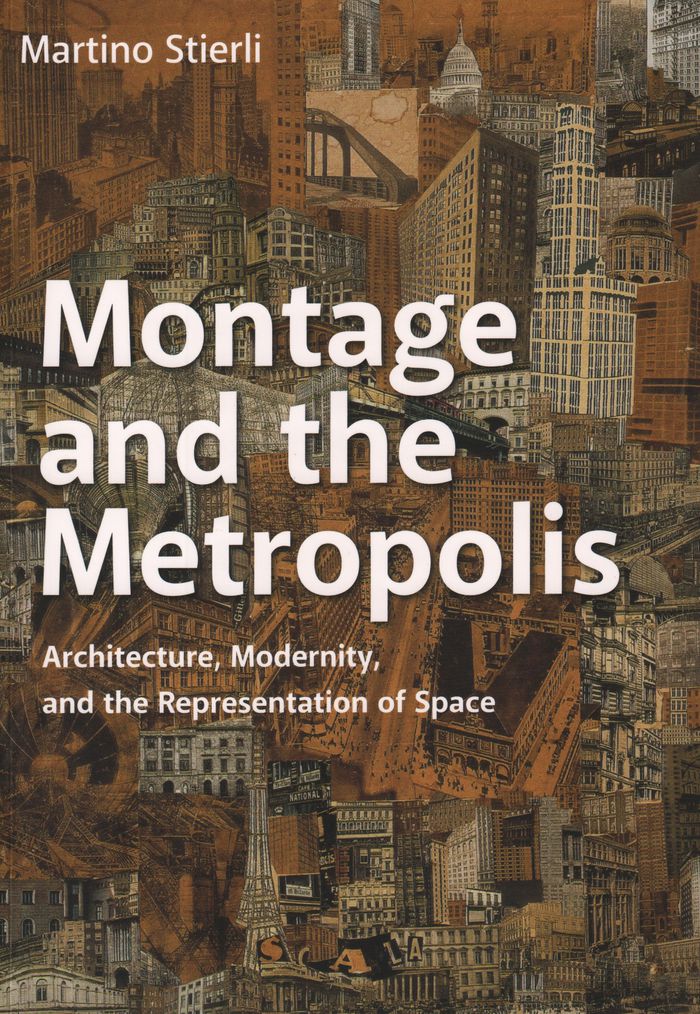
Montage has been hailed as one of the key structural principles of modernity, yet its importance to the history of modern thought about cities and their architecture has never been adequately explored. In this new work, Martino Stierli charts the history of montage in late 19th-century urban and architectural contexts, its application by the early 20th-century avant-gardes, and its eventual appropriation in the postmodern period. With chapters focusing on photomontage, the film theories of Sergei Eisenstein, Mies van der Rohe’s spatial experiments, and Rem Koolhaas’s use of literary montage in his seminal manifesto Delirious New York (1978), Stierli demonstrates the centrality of montage in modern explorations of space, and in conceiving and representing the contemporary city.
Montage and the metropolis: architecture, modernity, and the representation of space
Actions:
Price:
$54.95
(available to order)
Summary:
Montage has been hailed as one of the key structural principles of modernity, yet its importance to the history of modern thought about cities and their architecture has never been adequately explored. In this new work, Martino Stierli charts the history of montage in late 19th-century urban and architectural contexts, its application by the early 20th-century avant-gardes, and its eventual appropriation in the postmodern period. With chapters focusing on photomontage, the film theories of Sergei Eisenstein, Mies van der Rohe’s spatial experiments, and Rem Koolhaas’s use of literary montage in his seminal manifesto Delirious New York (1978), Stierli demonstrates the centrality of montage in modern explorations of space, and in conceiving and representing the contemporary city.
Form:
books
books
Publication:
September 2019
September 2019
Subject:
Architectural Theory
Architectural Theory
Form:
books
books
Actions:
Price:
$64.95
(available in store)
Summary:
This publication brings together texts by Canadian artist Ken Lum. They include a letter to an editor, diary entries, articles, catalogue essays, curatorial statements, and more. Along the way, the reader learns about late modern, postmodern, and contemporary art practices, as well as debates around issues like race, class, and monumentality. Penetrating, insightful, and(...)
$64.95
(available in store)
Summary:
This publication brings together texts by Canadian artist Ken Lum. They include a letter to an editor, diary entries, articles, catalogue essays, curatorial statements, and more. Along the way, the reader learns about late modern, postmodern, and contemporary art practices, as well as debates around issues like race, class, and monumentality. Penetrating, insightful, and(...)
Title:
Everything is relevant: writings on art and life, 1991-2018
Actions:
Price:
$64.95
(available in store)
Summary:
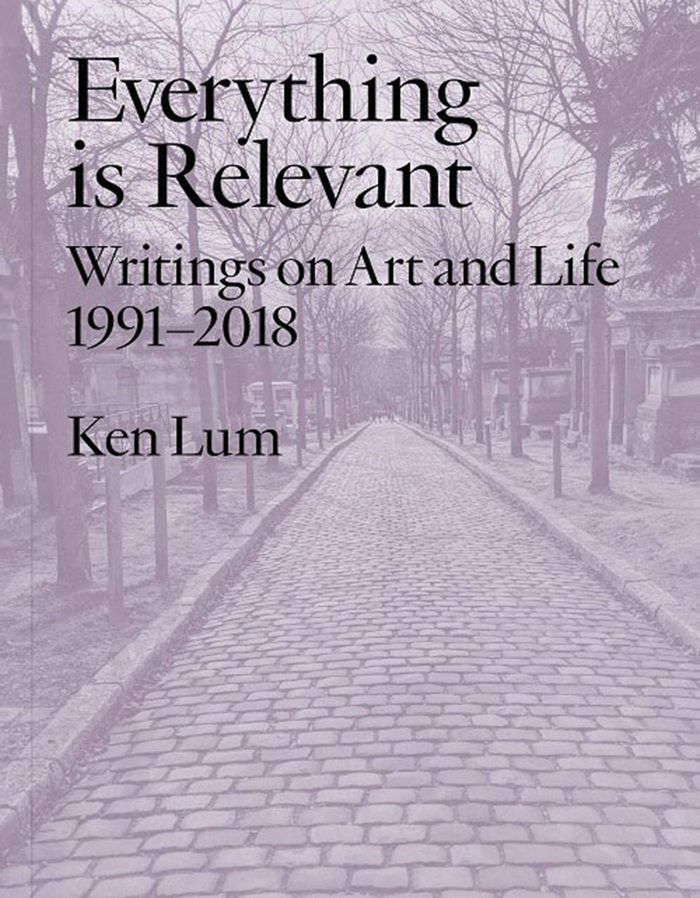
This publication brings together texts by Canadian artist Ken Lum. They include a letter to an editor, diary entries, articles, catalogue essays, curatorial statements, and more. Along the way, the reader learns about late modern, postmodern, and contemporary art practices, as well as debates around issues like race, class, and monumentality. Penetrating, insightful, and often moving, Lum’s writings are essential for understanding his varied practice, which has often been prescient of developments within contemporary art.
Everything is relevant: writings on art and life, 1991-2018
Actions:
Price:
$64.95
(available in store)
Summary:
This publication brings together texts by Canadian artist Ken Lum. They include a letter to an editor, diary entries, articles, catalogue essays, curatorial statements, and more. Along the way, the reader learns about late modern, postmodern, and contemporary art practices, as well as debates around issues like race, class, and monumentality. Penetrating, insightful, and often moving, Lum’s writings are essential for understanding his varied practice, which has often been prescient of developments within contemporary art.
Form:
books
books
Publication:
January 2020
January 2020
Subject:
Art Theory
Art Theory


