


870 Results
Form:
video
video
Actions:
Holdings:
Description:
6 videocassettes (Mini-DV) (ca. 264 min.) : sd., col. ; 1/4 in. master., 2 videodiscs (DVD-R) (ca. 90 min.) : sd., col. ; 12 cm. consultation copy., 1 videocassette (DV) :...
Description:
6 videocassettes (Mini-DV) (ca. 264 min.) : sd., col. ; 1/4 in. master., 2 videodiscs (DVD-R) (ca. 90 min.) : sd., col. ; 12 cm. consultation copy., 1 videocassette (DV) :...
Author:
Subject:
Title:
Will Alsop : space creatures, 2008 Oct. 2.
Actions:
Holdings:
Description:
6 videocassettes (Mini-DV) (ca. 264 min.) : sd., col. ; 1/4 in. master., 2 videodiscs (DVD-R) (ca. 90 min.) : sd., col. ; 12 cm. consultation copy., 1 videocassette (DV) :...
Will Alsop : space creatures, 2008 Oct. 2.
Actions:
Holdings:
Description:
6 videocassettes (Mini-DV) (ca. 264 min.) : sd., col. ; 1/4 in. master., 2 videodiscs (DVD-R) (ca. 90 min.) : sd., col. ; 12 cm. consultation copy., 1 videocassette (DV) :...
Form:
video
video
Author:
Subject:
Form:
books
books
Actions:
Price:
$56.50
(available to order)
Summary:
In this illustrated volume, Bernard Herman provides a history of urban dwellings and the people who built and lived in them in early America. In the eighteenth century, cities were constant objects of idealization, often viewed as the outward manifestations of an organized, civil society. As the physical objects that composed the largest portion of urban settings, town(...)
$56.50
(available to order)
Summary:
In this illustrated volume, Bernard Herman provides a history of urban dwellings and the people who built and lived in them in early America. In the eighteenth century, cities were constant objects of idealization, often viewed as the outward manifestations of an organized, civil society. As the physical objects that composed the largest portion of urban settings, town(...)
Subject:
History until 1900, North America
History until 1900, North America
Publication:
November 2005, Chapel Hill, North Carolina
November 2005, Chapel Hill, North Carolina
Title:
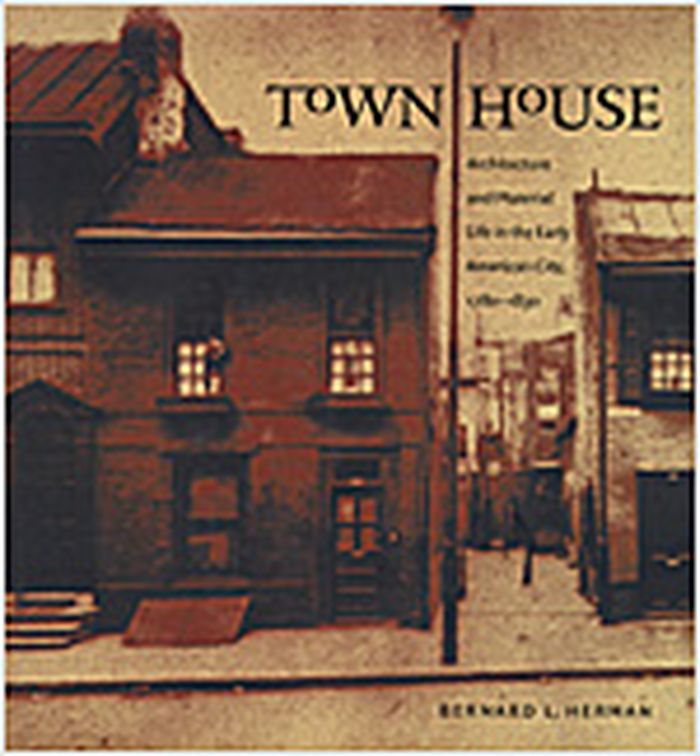
Town house : architecture and material life in the early american city, 1780-1830
Actions:
Price:
$56.50
(available to order)
Summary:
In this illustrated volume, Bernard Herman provides a history of urban dwellings and the people who built and lived in them in early America. In the eighteenth century, cities were constant objects of idealization, often viewed as the outward manifestations of an organized, civil society. As the physical objects that composed the largest portion of urban settings, town houses contained and signified different aspects of city life, argues Herman. Taking a material culture approach, Herman examines urban domestic buildings from Charleston, South Carolina, to Portsmouth, New Hampshire, as well as those in English cities and towns, to better understand why people built the houses they did and how their homes informed everyday city life. Working with buildings and documentary sources as diverse as court cases and recipes, Herman interprets town houses as lived experience. Chapters consider an array of domestic spaces, including the merchant family's house, the servant's quarter, and the widow's dower. Herman demonstrates that city houses served as sites of power as well as complex and often conflicted artifacts mapping the everyday negotiations of social identity and the display of sociability.
Town house : architecture and material life in the early american city, 1780-1830
Actions:
Price:
$56.50
(available to order)
Summary:
In this illustrated volume, Bernard Herman provides a history of urban dwellings and the people who built and lived in them in early America. In the eighteenth century, cities were constant objects of idealization, often viewed as the outward manifestations of an organized, civil society. As the physical objects that composed the largest portion of urban settings, town houses contained and signified different aspects of city life, argues Herman. Taking a material culture approach, Herman examines urban domestic buildings from Charleston, South Carolina, to Portsmouth, New Hampshire, as well as those in English cities and towns, to better understand why people built the houses they did and how their homes informed everyday city life. Working with buildings and documentary sources as diverse as court cases and recipes, Herman interprets town houses as lived experience. Chapters consider an array of domestic spaces, including the merchant family's house, the servant's quarter, and the widow's dower. Herman demonstrates that city houses served as sites of power as well as complex and often conflicted artifacts mapping the everyday negotiations of social identity and the display of sociability.
Form:
books
books
Publication:
November 2005, Chapel Hill, North Carolina
November 2005, Chapel Hill, North Carolina
Subject:
History until 1900, North America
History until 1900, North America
Form:
books
books
Title:
Le collectionneur de briques
Le collectionneur de briques
Actions:
Price:
$19.95
(available to order)
Summary:
Après la faillite de son cabinet, Valerio, un architecte, devient la curiosité de son quartier en érigeant une singulière tour de briques au motif encore plus incompréhensible. Au-delà des manifestations de compassion ou de crainte des voisins, l’édifice du vieil homme renvoie un déconcertant constat : celui de la déconstruction de nos villes, de nos sociétés, et de la(...)
$19.95
(available to order)
Summary:
Après la faillite de son cabinet, Valerio, un architecte, devient la curiosité de son quartier en érigeant une singulière tour de briques au motif encore plus incompréhensible. Au-delà des manifestations de compassion ou de crainte des voisins, l’édifice du vieil homme renvoie un déconcertant constat : celui de la déconstruction de nos villes, de nos sociétés, et de la(...)
Title:
Le collectionneur de briques
Actions:
Price:
$19.95
(available to order)
Summary:
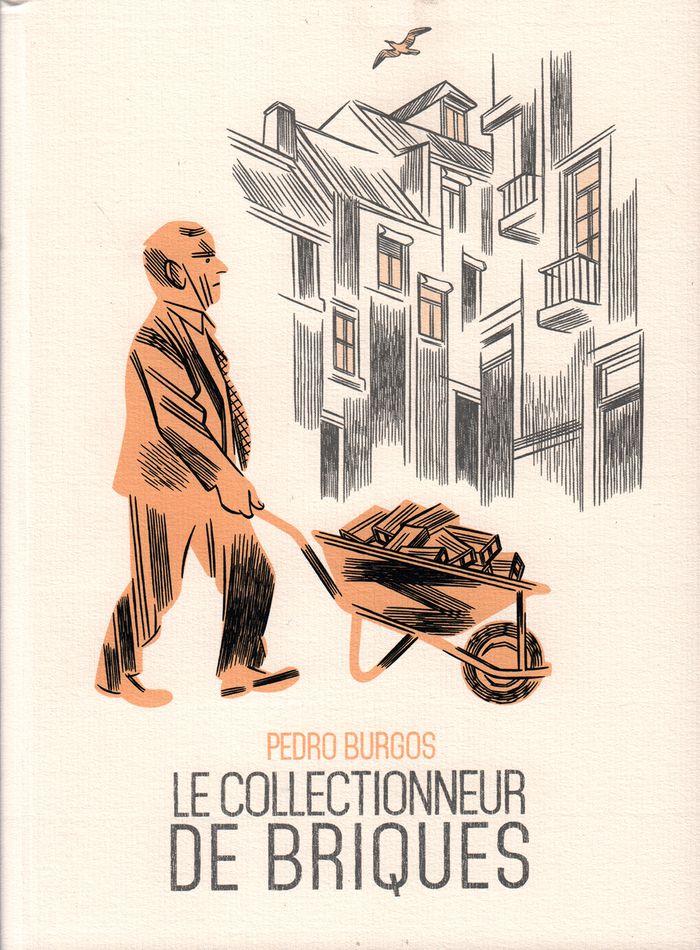
Après la faillite de son cabinet, Valerio, un architecte, devient la curiosité de son quartier en érigeant une singulière tour de briques au motif encore plus incompréhensible. Au-delà des manifestations de compassion ou de crainte des voisins, l’édifice du vieil homme renvoie un déconcertant constat : celui de la déconstruction de nos villes, de nos sociétés, et de la dislocation de nos vies modernes. Tandis que son gendre, agent immobilier, mène d’intenses tractations pour revendre l’immeuble familial, on en vient à se demander où commence la folie quand elle se bâtit au milieu d’un austère champ de ruines. Une perspective biaisée où économie, police, mais aussi famille et lien social, semblent tous glisser le long d’un fil à plomb... Sur un fond de crise économique, l’histoire romantique et singulière de Valerio, aidé par Chiara, une bénévole du samu social lisboète, nous parle du déclassement des citoyens européens à l’heure de la dégradation de nos conditions de vie, alimentée par une mondialisation nivelant par le bas. Poétique, tragique mais combatif.
Le collectionneur de briques
Actions:
Price:
$19.95
(available to order)
Summary:
Après la faillite de son cabinet, Valerio, un architecte, devient la curiosité de son quartier en érigeant une singulière tour de briques au motif encore plus incompréhensible. Au-delà des manifestations de compassion ou de crainte des voisins, l’édifice du vieil homme renvoie un déconcertant constat : celui de la déconstruction de nos villes, de nos sociétés, et de la dislocation de nos vies modernes. Tandis que son gendre, agent immobilier, mène d’intenses tractations pour revendre l’immeuble familial, on en vient à se demander où commence la folie quand elle se bâtit au milieu d’un austère champ de ruines. Une perspective biaisée où économie, police, mais aussi famille et lien social, semblent tous glisser le long d’un fil à plomb... Sur un fond de crise économique, l’histoire romantique et singulière de Valerio, aidé par Chiara, une bénévole du samu social lisboète, nous parle du déclassement des citoyens européens à l’heure de la dégradation de nos conditions de vie, alimentée par une mondialisation nivelant par le bas. Poétique, tragique mais combatif.
Form:
books
books
Publication:
May 2017
May 2017
Subject:
Illustration
Illustration
Form:
books
books
Actions:
Price:
$42.95
(available to order)
Summary:
Monarchie et républiques confondues : les grands travaux du prince seraient-ils une spécificité et une passion française ? Cet ouvrage expose un mode d'emploi de l'absolutisme et une interrogation sur le pouvoir. " Architecture parlante ", discours politique par la pierre, le marbre, la peinture, Versailles s'identifie en grande partie au long règne de louis XIV(...)
$42.95
(available to order)
Summary:
Monarchie et républiques confondues : les grands travaux du prince seraient-ils une spécificité et une passion française ? Cet ouvrage expose un mode d'emploi de l'absolutisme et une interrogation sur le pouvoir. " Architecture parlante ", discours politique par la pierre, le marbre, la peinture, Versailles s'identifie en grande partie au long règne de louis XIV(...)
Title:
Versailles : le pouvoir de la pierre
Actions:
Price:
$42.95
(available to order)
Summary:
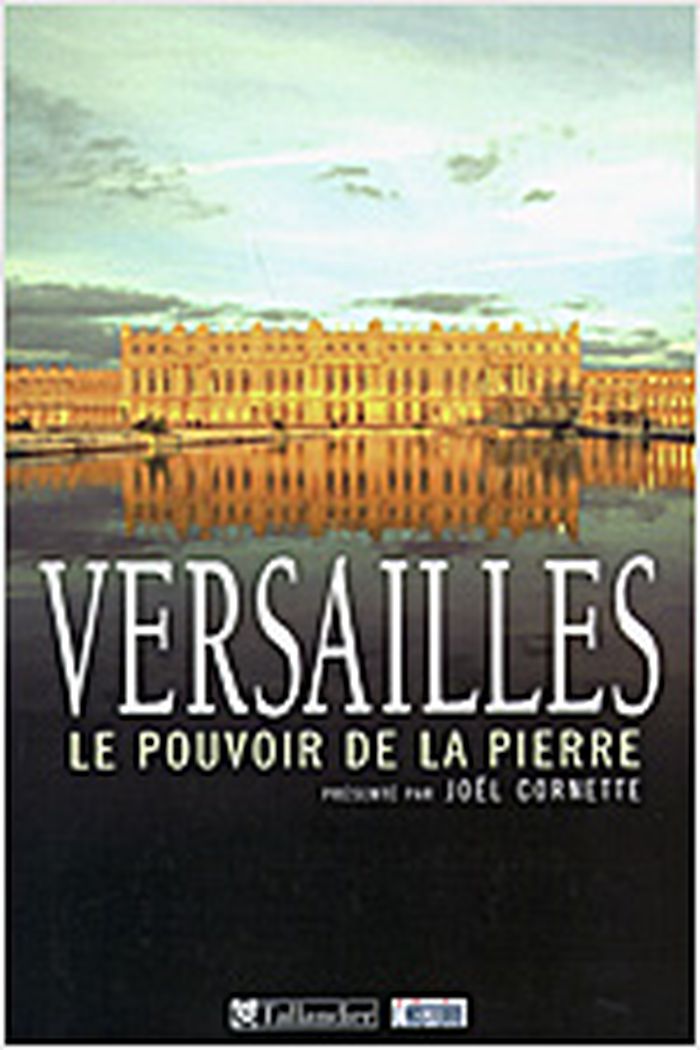
Monarchie et républiques confondues : les grands travaux du prince seraient-ils une spécificité et une passion française ? Cet ouvrage expose un mode d'emploi de l'absolutisme et une interrogation sur le pouvoir. " Architecture parlante ", discours politique par la pierre, le marbre, la peinture, Versailles s'identifie en grande partie au long règne de louis XIV (1643-1715). L'histoire du château : par ses dimensions, par son opulence, par sa richesse artistique, ce palais du " plus grand roi du monde " a été un modèle pour tous les souverains de l'Europe des Lumières. l'histoire d'une forme de pouvoir, ensuite : l'Etat absolu, dont Versailles constitue la cour, fut imité, contesté, avant d'être abattu par les révolutionnaires de 1789. Mais la " grande histoire " ne doit pas masquer les manifestations moins connues de la vie quotidienne à Versailles : rituel contraignant de la cour, problèmes d'intendance, espace bruissant de rumeurs, de cabales, de scandales... Ce volume offre également un dossier d'histoire en construction : les sources et les études multiples qui ont profondément renouvelé la compréhension de ce monument.
Versailles : le pouvoir de la pierre
Actions:
Price:
$42.95
(available to order)
Summary:
Monarchie et républiques confondues : les grands travaux du prince seraient-ils une spécificité et une passion française ? Cet ouvrage expose un mode d'emploi de l'absolutisme et une interrogation sur le pouvoir. " Architecture parlante ", discours politique par la pierre, le marbre, la peinture, Versailles s'identifie en grande partie au long règne de louis XIV (1643-1715). L'histoire du château : par ses dimensions, par son opulence, par sa richesse artistique, ce palais du " plus grand roi du monde " a été un modèle pour tous les souverains de l'Europe des Lumières. l'histoire d'une forme de pouvoir, ensuite : l'Etat absolu, dont Versailles constitue la cour, fut imité, contesté, avant d'être abattu par les révolutionnaires de 1789. Mais la " grande histoire " ne doit pas masquer les manifestations moins connues de la vie quotidienne à Versailles : rituel contraignant de la cour, problèmes d'intendance, espace bruissant de rumeurs, de cabales, de scandales... Ce volume offre également un dossier d'histoire en construction : les sources et les études multiples qui ont profondément renouvelé la compréhension de ce monument.
Form:
books
books
Publication:
June 2005, Paris
June 2005, Paris
Subject:
History until 1900, France
History until 1900, France
Form:
books
books
Actions:
Price:
$74.95
(available in store)
Summary:
By structuring this volume around the concept of form, Stefano Corbo links together Eisenman’s architecture with his theory. The book argues that form is the sphere of mediation between our body, our inner world and the exterior world and, as such, it enables connections to be made between philosophy and architecture. From the start of his career on, Eisenman has been(...)
$74.95
(available in store)
Summary:
By structuring this volume around the concept of form, Stefano Corbo links together Eisenman’s architecture with his theory. The book argues that form is the sphere of mediation between our body, our inner world and the exterior world and, as such, it enables connections to be made between philosophy and architecture. From the start of his career on, Eisenman has been(...)
Title:
From formalism to weak form: The architecture and philosophy of Peter Eisenman
Actions:
Price:
$74.95
(available in store)
Summary:
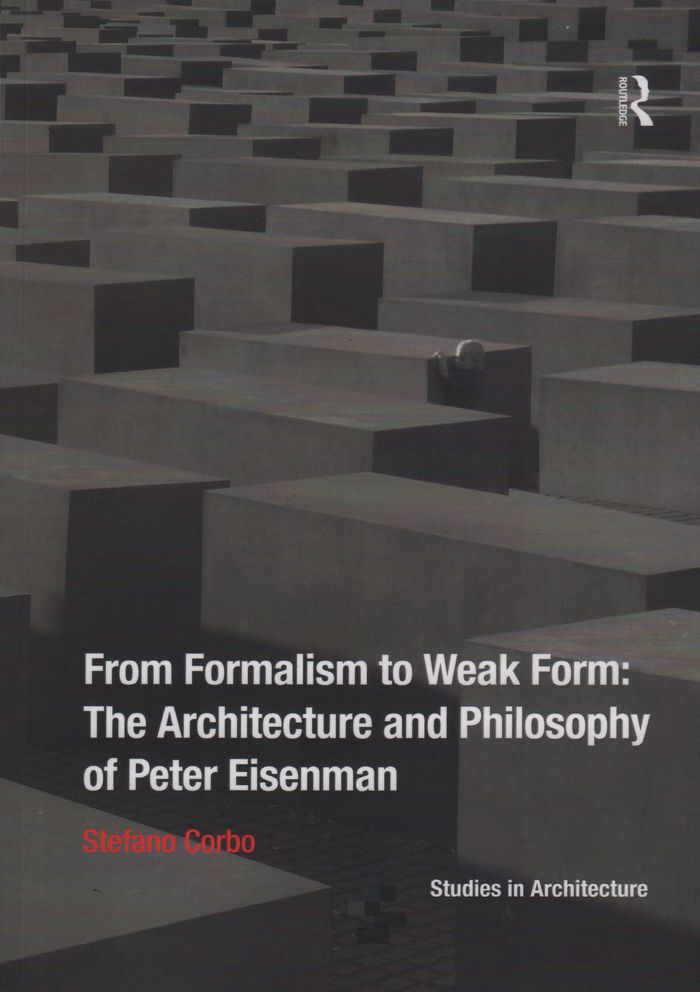
By structuring this volume around the concept of form, Stefano Corbo links together Eisenman’s architecture with his theory. The book argues that form is the sphere of mediation between our body, our inner world and the exterior world and, as such, it enables connections to be made between philosophy and architecture. From the start of his career on, Eisenman has been deeply interested in the problem of form in architecture and has constantly challenged the classical concept of it. For him, form is not simply a cognitive tool that determines a physical structure, which discriminates all that is active from what is passive, what is inside from what is outside. He has always tried to connect his own work with the cultural manifestations of the time. These different moments underline different phases, different projects, different programmatic manifestos; and above all, an evolving notion of form. Taking a multi-disciplinary approach based on the intersections between architecture and philosophy, this book investigates all these definitions and, in doing so, provides new insights into and a deeper understanding of the complexity of Eisenman’s work.
From formalism to weak form: The architecture and philosophy of Peter Eisenman
Actions:
Price:
$74.95
(available in store)
Summary:
By structuring this volume around the concept of form, Stefano Corbo links together Eisenman’s architecture with his theory. The book argues that form is the sphere of mediation between our body, our inner world and the exterior world and, as such, it enables connections to be made between philosophy and architecture. From the start of his career on, Eisenman has been deeply interested in the problem of form in architecture and has constantly challenged the classical concept of it. For him, form is not simply a cognitive tool that determines a physical structure, which discriminates all that is active from what is passive, what is inside from what is outside. He has always tried to connect his own work with the cultural manifestations of the time. These different moments underline different phases, different projects, different programmatic manifestos; and above all, an evolving notion of form. Taking a multi-disciplinary approach based on the intersections between architecture and philosophy, this book investigates all these definitions and, in doing so, provides new insights into and a deeper understanding of the complexity of Eisenman’s work.
Form:
books
books
Publication:
December 2020
December 2020
Subject:
Architecture Monographs
Architecture Monographs
Form:
books
books
Price:
$225.95
(available to order)
Summary:
The current phase of capitalist development manifests itself through a very diverse range of spatial byproducts: data centers, warehouses, container terminals, logistics parks, and many others. These architectural episodes express specific power relations, exacerbate issues of labor, and generate dramatic processes of subjectivity. Most importantly, these architectures,(...)
$225.95
(available to order)
Summary:
The current phase of capitalist development manifests itself through a very diverse range of spatial byproducts: data centers, warehouses, container terminals, logistics parks, and many others. These architectural episodes express specific power relations, exacerbate issues of labor, and generate dramatic processes of subjectivity. Most importantly, these architectures,(...)
Title:
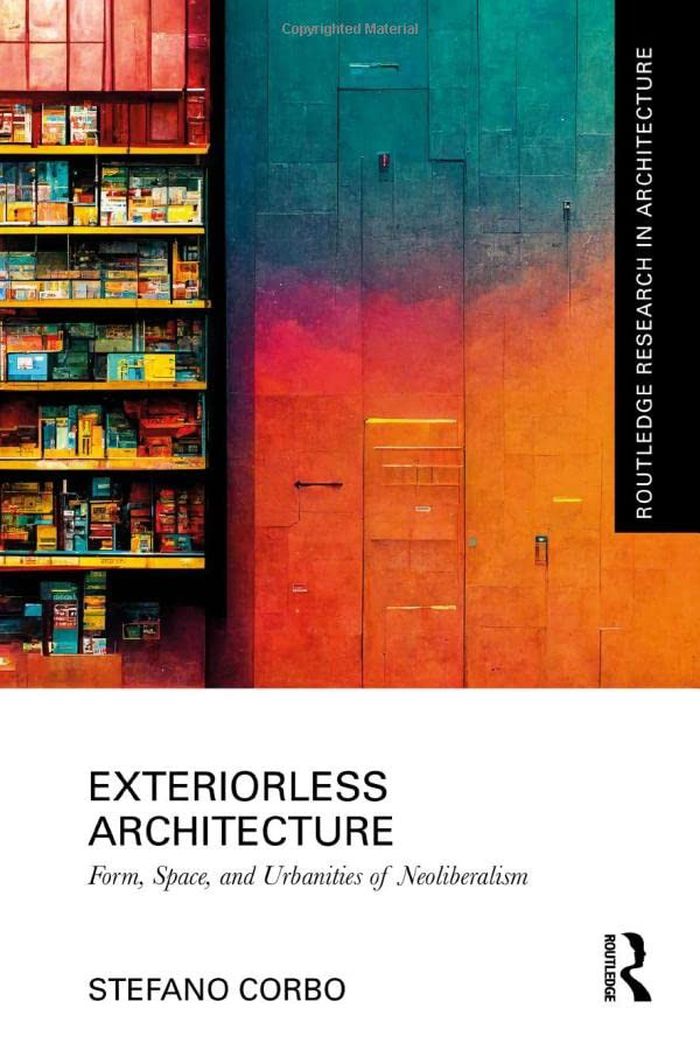
Exteriorless architecture: Form, space, and urbanities of neoliberalism
Actions:
Price:
$225.95
(available to order)
Summary:
The current phase of capitalist development manifests itself through a very diverse range of spatial byproducts: data centers, warehouses, container terminals, logistics parks, and many others. These architectural episodes express specific power relations, exacerbate issues of labor, and generate dramatic processes of subjectivity. Most importantly, these architectures, despite their formal and typological heterogeneity, belong to a common paradigm: the exteriorless. How can an architecture of the exteriorless be defined? How does it differentiate from examples and manifestations of the past? How do notions of legibility, form versus function, typological articulation come into play? In situating the spatialities of contemporary capitalism within the larger debate on Anthropocene, Post-Anthropocene, and Capitalocene, the book attempts to answer those questions by delineating three main characteristics for an architecture of the exteriorless: its physical and symbolic role as interface; its ambiguous condition of being at the same time local and global, isolated and connected, compressed and expanded; and, lastly, its contribution to new forms of urbanity in absence of the traditional city.
Exteriorless architecture: Form, space, and urbanities of neoliberalism
Actions:
Price:
$225.95
(available to order)
Summary:
The current phase of capitalist development manifests itself through a very diverse range of spatial byproducts: data centers, warehouses, container terminals, logistics parks, and many others. These architectural episodes express specific power relations, exacerbate issues of labor, and generate dramatic processes of subjectivity. Most importantly, these architectures, despite their formal and typological heterogeneity, belong to a common paradigm: the exteriorless. How can an architecture of the exteriorless be defined? How does it differentiate from examples and manifestations of the past? How do notions of legibility, form versus function, typological articulation come into play? In situating the spatialities of contemporary capitalism within the larger debate on Anthropocene, Post-Anthropocene, and Capitalocene, the book attempts to answer those questions by delineating three main characteristics for an architecture of the exteriorless: its physical and symbolic role as interface; its ambiguous condition of being at the same time local and global, isolated and connected, compressed and expanded; and, lastly, its contribution to new forms of urbanity in absence of the traditional city.
Form:
books
books
Publication:
June 2023
June 2023
Subject:
Architectural Theory
Architectural Theory
Form:
books
books

Price:
$65.00
(available to order)
Summary:
One of Japan’s leading contemporary artists, Takashi Murakami (b. 1962) is known for a wide-ranging practice that encompasses not only fine art but fashion, consumer products, curation, and entertainment. Founder of the Superflat movement, Murakami makes art that is larger than life, boldly colored, and buoyant, with a Pop sensibility that draws inspiration from anime and(...)
$65.00
(available to order)
Summary:
One of Japan’s leading contemporary artists, Takashi Murakami (b. 1962) is known for a wide-ranging practice that encompasses not only fine art but fashion, consumer products, curation, and entertainment. Founder of the Superflat movement, Murakami makes art that is larger than life, boldly colored, and buoyant, with a Pop sensibility that draws inspiration from anime and(...)
Subject:
Contemporary Art Monographs
Contemporary Art Monographs
Publication:
September 2023
September 2023
Title:
Murakami: Unfamiliar people- swelling of monsterized human ego
Actions:
Price:
$65.00
(available to order)
Summary:
One of Japan’s leading contemporary artists, Takashi Murakami (b. 1962) is known for a wide-ranging practice that encompasses not only fine art but fashion, consumer products, curation, and entertainment. Founder of the Superflat movement, Murakami makes art that is larger than life, boldly colored, and buoyant, with a Pop sensibility that draws inspiration from anime and manga. But beyond the happy flowers and kawaii characters that have defined Murakami’s career lurk darker manifestations: the sharp-toothed, multi-eyed monsters that have increasingly become the artist’s vehicle for expressing the effects of rampant consumerism, human fallibility, and the perils of life in the digital fast lane. This book explores these themes in works from the last decade, presenting a disquieting vision of monsterized beings born in an era of unprecedented environmental, political, and social turmoil. Conversations with Murakami and essays by Laura W. Allen, Hiroko Ikegami, and Masako Shiba deconstruct what monsters mean to the artist and reflect on new directions in Murakami’s sculpture and the genesis of his recent NFT projects.
Murakami: Unfamiliar people- swelling of monsterized human ego
Actions:
Price:
$65.00
(available to order)
Summary:
One of Japan’s leading contemporary artists, Takashi Murakami (b. 1962) is known for a wide-ranging practice that encompasses not only fine art but fashion, consumer products, curation, and entertainment. Founder of the Superflat movement, Murakami makes art that is larger than life, boldly colored, and buoyant, with a Pop sensibility that draws inspiration from anime and manga. But beyond the happy flowers and kawaii characters that have defined Murakami’s career lurk darker manifestations: the sharp-toothed, multi-eyed monsters that have increasingly become the artist’s vehicle for expressing the effects of rampant consumerism, human fallibility, and the perils of life in the digital fast lane. This book explores these themes in works from the last decade, presenting a disquieting vision of monsterized beings born in an era of unprecedented environmental, political, and social turmoil. Conversations with Murakami and essays by Laura W. Allen, Hiroko Ikegami, and Masako Shiba deconstruct what monsters mean to the artist and reflect on new directions in Murakami’s sculpture and the genesis of his recent NFT projects.
Form:
books
books
Publication:
September 2023
September 2023
Subject:
Contemporary Art Monographs
Contemporary Art Monographs
Form:
books
books
Actions:
Price:
$41.99
(available to order)
Summary:
In Nairobi’s underserved neighborhoods, “hustle” has emerged as both a vital survival strategy and a way of life for youth. Exploring the multiple meanings and manifestations of the hustle economy across different scenarios of provisioning, distribution, exchange, learning, and mobilizing, ''Hustle Urbanism'' draws on more than a decade of ethnographic engagement to(...)
$41.99
(available to order)
Summary:
In Nairobi’s underserved neighborhoods, “hustle” has emerged as both a vital survival strategy and a way of life for youth. Exploring the multiple meanings and manifestations of the hustle economy across different scenarios of provisioning, distribution, exchange, learning, and mobilizing, ''Hustle Urbanism'' draws on more than a decade of ethnographic engagement to(...)
Title:
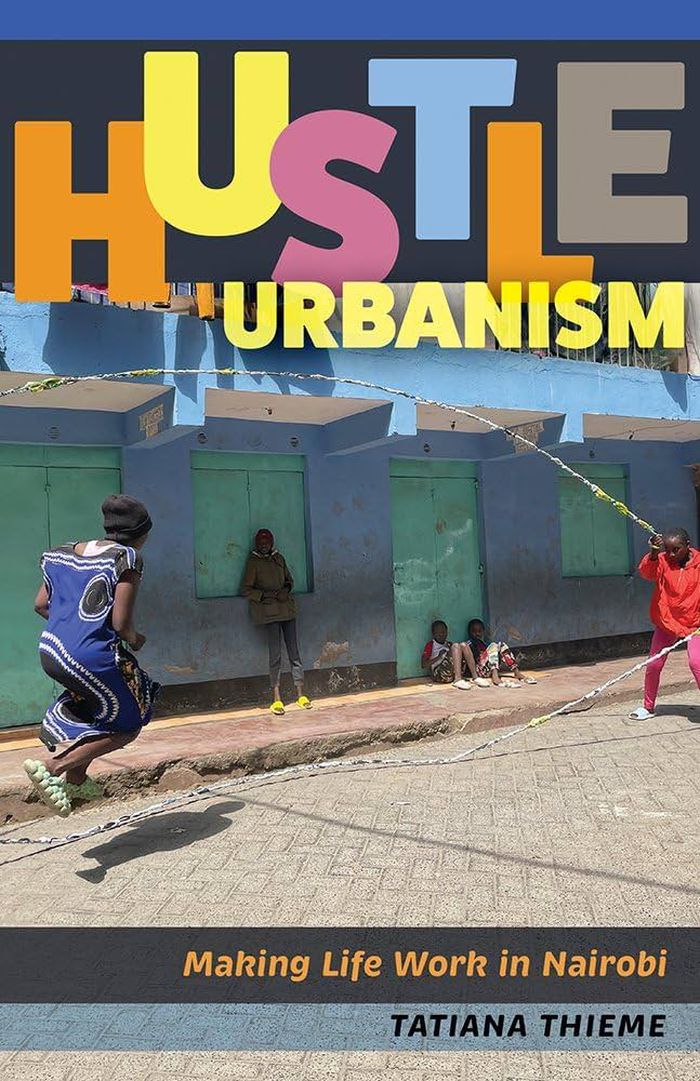
Hustle urbanism: Making life work in Nairobi
Actions:
Price:
$41.99
(available to order)
Summary:
In Nairobi’s underserved neighborhoods, “hustle” has emerged as both a vital survival strategy and a way of life for youth. Exploring the multiple meanings and manifestations of the hustle economy across different scenarios of provisioning, distribution, exchange, learning, and mobilizing, ''Hustle Urbanism'' draws on more than a decade of ethnographic engagement to center the logics, perspectives, and inventive strategies of a group of youth who constantly navigate job scarcity, inadequate basic services, and climate-induced harms. Tatiana Thieme shows how young people develop tools of resistance against the legacies of colonial violence and uneven urban development while carving out spaces of opportunity for themselves and their peers. The stories she includes bring thick ethnographic detail and longitudinal perspective to the lives and livelihoods of youth whose diverse skill sets and knowledges span from circular economies and eco-activism to hip hop and local leadership. Filling a significant gap in both existing scholarship and popular discussion, ''Hustle Urbanism'' offers critical theorization of precarious urban environments and the affirmative modes of making life work in the city against the odds.
Hustle urbanism: Making life work in Nairobi
Actions:
Price:
$41.99
(available to order)
Summary:
In Nairobi’s underserved neighborhoods, “hustle” has emerged as both a vital survival strategy and a way of life for youth. Exploring the multiple meanings and manifestations of the hustle economy across different scenarios of provisioning, distribution, exchange, learning, and mobilizing, ''Hustle Urbanism'' draws on more than a decade of ethnographic engagement to center the logics, perspectives, and inventive strategies of a group of youth who constantly navigate job scarcity, inadequate basic services, and climate-induced harms. Tatiana Thieme shows how young people develop tools of resistance against the legacies of colonial violence and uneven urban development while carving out spaces of opportunity for themselves and their peers. The stories she includes bring thick ethnographic detail and longitudinal perspective to the lives and livelihoods of youth whose diverse skill sets and knowledges span from circular economies and eco-activism to hip hop and local leadership. Filling a significant gap in both existing scholarship and popular discussion, ''Hustle Urbanism'' offers critical theorization of precarious urban environments and the affirmative modes of making life work in the city against the odds.
Form:
books
books
Publication:
June 2025
June 2025
Subject:
Urban Theory
Urban Theory
Form:
books
books
Actions:
Price:
$42.00
(available to order)
Summary:
This project began with an essay on the "McMansion" phenomenon, and it grew to become a meditation on the assorted different building types that are found in every American city and suburb. While it’s true that good buildings do exist for each of those categories, they are very much the exception, these buildings more typically ranging from dull to assertively ugly. The(...)
$42.00
(available to order)
Summary:
This project began with an essay on the "McMansion" phenomenon, and it grew to become a meditation on the assorted different building types that are found in every American city and suburb. While it’s true that good buildings do exist for each of those categories, they are very much the exception, these buildings more typically ranging from dull to assertively ugly. The(...)
Title:
Everyday architecture: A vast wasteland
Actions:
Price:
$42.00
(available to order)
Summary:
This project began with an essay on the "McMansion" phenomenon, and it grew to become a meditation on the assorted different building types that are found in every American city and suburb. While it’s true that good buildings do exist for each of those categories, they are very much the exception, these buildings more typically ranging from dull to assertively ugly. The book is meant to be a fairly pitiless and revealing look at this "vast wasteland," with an architect’s hat on but without resort to the profession’s fads and verbiages. Several natural categories inform the organization of the contents, including commercial, residential, and institutional, even including cars and other manifestations of "architecture on the move" that have also lost their way in stylistic terms. The writing includes capsule histories of many of the building types included, plus some lesser-known facts and some sidebars on sociocultural aspects which make up much of one’s experience of these places. Stylistically, a bit of an acerbic tone makes for diverting as well as informative reading.
Everyday architecture: A vast wasteland
Actions:
Price:
$42.00
(available to order)
Summary:
This project began with an essay on the "McMansion" phenomenon, and it grew to become a meditation on the assorted different building types that are found in every American city and suburb. While it’s true that good buildings do exist for each of those categories, they are very much the exception, these buildings more typically ranging from dull to assertively ugly. The book is meant to be a fairly pitiless and revealing look at this "vast wasteland," with an architect’s hat on but without resort to the profession’s fads and verbiages. Several natural categories inform the organization of the contents, including commercial, residential, and institutional, even including cars and other manifestations of "architecture on the move" that have also lost their way in stylistic terms. The writing includes capsule histories of many of the building types included, plus some lesser-known facts and some sidebars on sociocultural aspects which make up much of one’s experience of these places. Stylistically, a bit of an acerbic tone makes for diverting as well as informative reading.
Form:
books
books
Publication:
July 2025
July 2025
Subject:
Contemporary Architecture
Contemporary Architecture
Form:
books
books
Price:
$41.99
(available to order)
Summary:
The current epoch is one of accumulation: not only of capital but also of raw, often unruly material, from plastic in the ocean and carbon in the atmosphere to people, buildings, and cities. Alongside this material growth, image-making practices embedded within the fields of art and architecture have proven to be fertile, mobile, and capacious. Images of accumulation help(...)
$41.99
(available to order)
Summary:
The current epoch is one of accumulation: not only of capital but also of raw, often unruly material, from plastic in the ocean and carbon in the atmosphere to people, buildings, and cities. Alongside this material growth, image-making practices embedded within the fields of art and architecture have proven to be fertile, mobile, and capacious. Images of accumulation help(...)
Subject:
Architectural Theory
Architectural Theory
Publication:
April 2022
April 2022
Title:
Accumulation: the art, architecture and media of climate change
Actions:
Price:
$41.99
(available to order)
Summary:
The current epoch is one of accumulation: not only of capital but also of raw, often unruly material, from plastic in the ocean and carbon in the atmosphere to people, buildings, and cities. Alongside this material growth, image-making practices embedded within the fields of art and architecture have proven to be fertile, mobile, and capacious. Images of accumulation help open up the climate to cultural inquiry and political mobilization and have formed a cultural infrastructure focused on the relationships between humans, other species, and their environments. The essays in ''Accumulation'' address this cultural infrastructure and the methodological challenges of its analysis. They offer a response to the relative invisibility of the climate now seen as material manifestations of social behavior. Contributors outline opportunities and ambitions of visual scholarship as a means to encounter the challenges emergent in the current moment: how can climate become visible, culturally and politically? Knowledge of climatic instability can change collective behavior and offer other trajectories, counteraccumulations that draw the present into a different, more livable, future.
Accumulation: the art, architecture and media of climate change
Actions:
Price:
$41.99
(available to order)
Summary:
The current epoch is one of accumulation: not only of capital but also of raw, often unruly material, from plastic in the ocean and carbon in the atmosphere to people, buildings, and cities. Alongside this material growth, image-making practices embedded within the fields of art and architecture have proven to be fertile, mobile, and capacious. Images of accumulation help open up the climate to cultural inquiry and political mobilization and have formed a cultural infrastructure focused on the relationships between humans, other species, and their environments. The essays in ''Accumulation'' address this cultural infrastructure and the methodological challenges of its analysis. They offer a response to the relative invisibility of the climate now seen as material manifestations of social behavior. Contributors outline opportunities and ambitions of visual scholarship as a means to encounter the challenges emergent in the current moment: how can climate become visible, culturally and politically? Knowledge of climatic instability can change collective behavior and offer other trajectories, counteraccumulations that draw the present into a different, more livable, future.
Form:
books
books
Publication:
April 2022
April 2022
Subject:
Architectural Theory
Architectural Theory


