


746 Results
Form:
books
books
Price:
$37.50
(available to order)
Summary:
Living on a damaged planet challenges who we are and where we live. This timely anthology calls on twenty eminent humanists and scientists to revitalize curiosity, observation, and transdisciplinary conversation about life on earth. As human-induced environmental change threatens multispecies livability, "Arts of living on a damaged planet" puts forward a bold proposal:(...)
$37.50
(available to order)
Summary:
Living on a damaged planet challenges who we are and where we live. This timely anthology calls on twenty eminent humanists and scientists to revitalize curiosity, observation, and transdisciplinary conversation about life on earth. As human-induced environmental change threatens multispecies livability, "Arts of living on a damaged planet" puts forward a bold proposal:(...)
Subject:
Environment and environmental theory
Environment and environmental theory
Publication:
May 2017
May 2017
Title:
Arts of living on a damaged planet: ghosts of the Anthropocene
Actions:
Price:
$37.50
(available to order)
Summary:
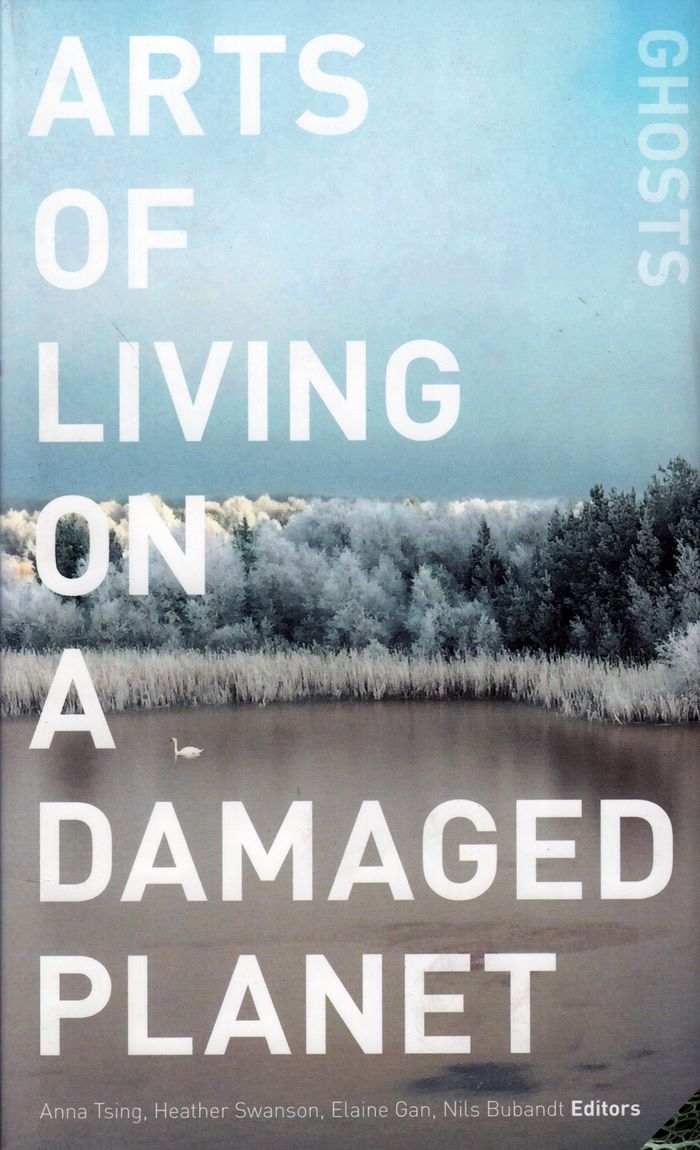
Living on a damaged planet challenges who we are and where we live. This timely anthology calls on twenty eminent humanists and scientists to revitalize curiosity, observation, and transdisciplinary conversation about life on earth. As human-induced environmental change threatens multispecies livability, "Arts of living on a damaged planet" puts forward a bold proposal: entangled histories, situated narratives, and thick descriptions offer urgent "arts of living." Included are essays by scholars in anthropology, ecology, science studies, art, literature, and bioinformatics who posit critical and creative tools for collaborative survival in a more-than-human Anthropocene. The essays are organized around two key figures that also serve as the publication's two openings: Ghosts, or landscapes haunted by the violences of modernity; and Monsters, or interspecies and intraspecies sociality. Ghosts and Monsters are tentacular, windy, and arboreal arts that invite readers to encounter ants, lichen, rocks, electrons, flying foxes, salmon, chestnut trees, mud volcanoes, border zones, graves, radioactive waste--in short, the wonders and terrors of an unintended epoch.
Arts of living on a damaged planet: ghosts of the Anthropocene
Actions:
Price:
$37.50
(available to order)
Summary:
Living on a damaged planet challenges who we are and where we live. This timely anthology calls on twenty eminent humanists and scientists to revitalize curiosity, observation, and transdisciplinary conversation about life on earth. As human-induced environmental change threatens multispecies livability, "Arts of living on a damaged planet" puts forward a bold proposal: entangled histories, situated narratives, and thick descriptions offer urgent "arts of living." Included are essays by scholars in anthropology, ecology, science studies, art, literature, and bioinformatics who posit critical and creative tools for collaborative survival in a more-than-human Anthropocene. The essays are organized around two key figures that also serve as the publication's two openings: Ghosts, or landscapes haunted by the violences of modernity; and Monsters, or interspecies and intraspecies sociality. Ghosts and Monsters are tentacular, windy, and arboreal arts that invite readers to encounter ants, lichen, rocks, electrons, flying foxes, salmon, chestnut trees, mud volcanoes, border zones, graves, radioactive waste--in short, the wonders and terrors of an unintended epoch.
Form:
books
books
Publication:
May 2017
May 2017
Subject:
Environment and environmental theory
Environment and environmental theory
Form:
books
books
Price:
$109.00
(available to order)
Summary:
Over the last years, coinciding with the growing social movement that aims for the introduction of a real environmental sensitivity in the European society, a new generation of architects has appeared in Spain. They plan and built using passive design strategies, use techniques to reduce both water consumption and waste production and even generate energy from the active(...)
$109.00
(available to order)
Summary:
Over the last years, coinciding with the growing social movement that aims for the introduction of a real environmental sensitivity in the European society, a new generation of architects has appeared in Spain. They plan and built using passive design strategies, use techniques to reduce both water consumption and waste production and even generate energy from the active(...)
Title:
New Environmental Sensitivity: 2000-2006 in Spanish Architecture
Actions:
Price:
$109.00
(available to order)
Summary:
Over the last years, coinciding with the growing social movement that aims for the introduction of a real environmental sensitivity in the European society, a new generation of architects has appeared in Spain. They plan and built using passive design strategies, use techniques to reduce both water consumption and waste production and even generate energy from the active use of renewable energies. Selected projects included: Botanical Garden of Montjuic in Barcelona and the Western Beach Promenade in Benidorm (Alicante), by Carlos Ferrater; the Spanish Pavilion at the Expo 2005 Aichi (Japan), by Farshid Moussavi and Alejandro Zaera, as well as the Spanish Pavilion at the Expo Zaragoza 2008, by Franciso J. Mangado and Florencio Manteca; the Hesperia Tower Hotel, by Alonso Balaguer Asociados and Richard Roger Partnership, and the Habitat Hotel in Barcelona, by Ruiz Geli, Vito Acconci and Ruy Ohtake; and the new head offices of Endesa and Telefónica in Madrid, both projected by Rafael de La-Hoz.
New Environmental Sensitivity: 2000-2006 in Spanish Architecture
Actions:
Price:
$109.00
(available to order)
Summary:
Over the last years, coinciding with the growing social movement that aims for the introduction of a real environmental sensitivity in the European society, a new generation of architects has appeared in Spain. They plan and built using passive design strategies, use techniques to reduce both water consumption and waste production and even generate energy from the active use of renewable energies. Selected projects included: Botanical Garden of Montjuic in Barcelona and the Western Beach Promenade in Benidorm (Alicante), by Carlos Ferrater; the Spanish Pavilion at the Expo 2005 Aichi (Japan), by Farshid Moussavi and Alejandro Zaera, as well as the Spanish Pavilion at the Expo Zaragoza 2008, by Franciso J. Mangado and Florencio Manteca; the Hesperia Tower Hotel, by Alonso Balaguer Asociados and Richard Roger Partnership, and the Habitat Hotel in Barcelona, by Ruiz Geli, Vito Acconci and Ruy Ohtake; and the new head offices of Endesa and Telefónica in Madrid, both projected by Rafael de La-Hoz.
Form:
books
books
Publication:
February 2008
February 2008
Subject:
Architecture since 1900, Europe
Architecture since 1900, Europe
Form:
books
books

Actions:
Price:
$41.99
(available to order)
Summary:
Nurturing health, hope, and community, gardeners in cities and suburbs are reclaiming lost commons, transforming vacant lots into vibrant plots, turning waste into compost, and recreating what was once the most productive agriculture in recorded human history. In a history that has been hidden in plain sight, working-class gardeners have consistently played an outsized(...)
$41.99
(available to order)
Summary:
Nurturing health, hope, and community, gardeners in cities and suburbs are reclaiming lost commons, transforming vacant lots into vibrant plots, turning waste into compost, and recreating what was once the most productive agriculture in recorded human history. In a history that has been hidden in plain sight, working-class gardeners have consistently played an outsized(...)
Title:
Tiny gardens everywhere: The past, present, and future of the self-provisioning city
Actions:
Price:
$41.99
(available to order)
Summary:
Nurturing health, hope, and community, gardeners in cities and suburbs are reclaiming lost commons, transforming vacant lots into vibrant plots, turning waste into compost, and recreating what was once the most productive agriculture in recorded human history. In a history that has been hidden in plain sight, working-class gardeners have consistently played an outsized role. In London, they devised ways to feed themselves when wage labor fell short. In Paris, a superabundance of horse manure in the streets nourished urban gardens that fed two million residents. In Berlin, gardeners built social safety nets for those marginalized by the state. In Washington, DC, African American migrants brought rural traditions of self-provisioning that were later disrupted by “urban renewal.” In rustbelt Mansfield, Ohio, farming ex-cons grow hope for the city’s future. In post-Soviet Estonia, shared gardens became lifelines for survival amid economic upheaval. And in Amsterdam, activists are reclaiming sustainable farming practices in a sinking landscape oversaturated with fertilizers.
Tiny gardens everywhere: The past, present, and future of the self-provisioning city
Actions:
Price:
$41.99
(available to order)
Summary:
Nurturing health, hope, and community, gardeners in cities and suburbs are reclaiming lost commons, transforming vacant lots into vibrant plots, turning waste into compost, and recreating what was once the most productive agriculture in recorded human history. In a history that has been hidden in plain sight, working-class gardeners have consistently played an outsized role. In London, they devised ways to feed themselves when wage labor fell short. In Paris, a superabundance of horse manure in the streets nourished urban gardens that fed two million residents. In Berlin, gardeners built social safety nets for those marginalized by the state. In Washington, DC, African American migrants brought rural traditions of self-provisioning that were later disrupted by “urban renewal.” In rustbelt Mansfield, Ohio, farming ex-cons grow hope for the city’s future. In post-Soviet Estonia, shared gardens became lifelines for survival amid economic upheaval. And in Amsterdam, activists are reclaiming sustainable farming practices in a sinking landscape oversaturated with fertilizers.
Form:
books
books
Publication:
February 2026
February 2026
Subject:
Gardens
Gardens
Form:
books
books
Price:
$72.95
(available in store)
Summary:
''Architecture and Social Change'' is a timely, and urgently needed, survey of social and environmental justice advocacy in architecture. Spotlighting contemporary design and research practitioners who are creatively leveraging their expertise for social change, this book features interviews with fifteen influential design leaders who are at the forefront of their(...)
$72.95
(available in store)
Summary:
''Architecture and Social Change'' is a timely, and urgently needed, survey of social and environmental justice advocacy in architecture. Spotlighting contemporary design and research practitioners who are creatively leveraging their expertise for social change, this book features interviews with fifteen influential design leaders who are at the forefront of their(...)
Title:
Architecture and social change: Shaping an impactful practice
Actions:
Price:
$72.95
(available in store)
Summary:
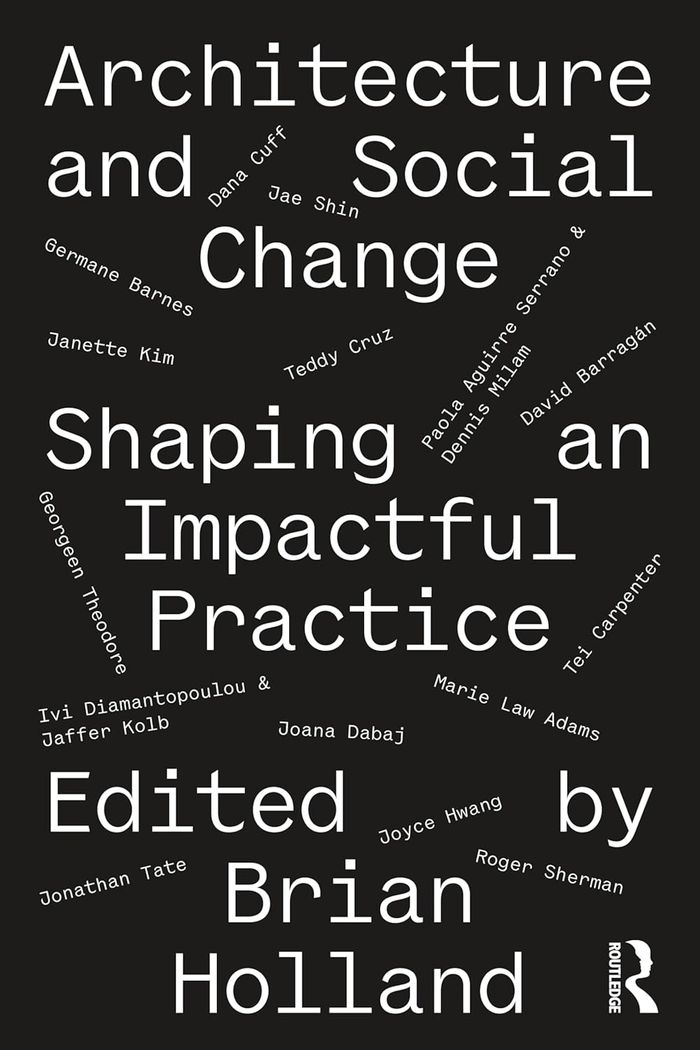
''Architecture and Social Change'' is a timely, and urgently needed, survey of social and environmental justice advocacy in architecture. Spotlighting contemporary design and research practitioners who are creatively leveraging their expertise for social change, this book features interviews with fifteen influential design leaders who are at the forefront of their profession’s efforts to confront pressing challenges like housing insecurity, racial and economic inequality, environmental degradation, and architectural waste. Among the interviewees are Dana Cuff, who, as director of cityLAB, is helping to reshape housing policy in California; Joana Dabaj, cofounder of the design charity CatalyticAction, which empowers refugee children from the Syrian civil war to act as “co-designers” of playgrounds and public spaces in Lebanon; and Ivi Diamantopoulou and Jaffer Kolb of New York City–based New Affiliates, who repurpose, through lively recontextualization, the architectural byproducts of their city’s museum exhibitions and building-performance mockups. These insightful student-led interviews compellingly capture the current moment of soul-searching in both the profession and the academy.
Architecture and social change: Shaping an impactful practice
Actions:
Price:
$72.95
(available in store)
Summary:
''Architecture and Social Change'' is a timely, and urgently needed, survey of social and environmental justice advocacy in architecture. Spotlighting contemporary design and research practitioners who are creatively leveraging their expertise for social change, this book features interviews with fifteen influential design leaders who are at the forefront of their profession’s efforts to confront pressing challenges like housing insecurity, racial and economic inequality, environmental degradation, and architectural waste. Among the interviewees are Dana Cuff, who, as director of cityLAB, is helping to reshape housing policy in California; Joana Dabaj, cofounder of the design charity CatalyticAction, which empowers refugee children from the Syrian civil war to act as “co-designers” of playgrounds and public spaces in Lebanon; and Ivi Diamantopoulou and Jaffer Kolb of New York City–based New Affiliates, who repurpose, through lively recontextualization, the architectural byproducts of their city’s museum exhibitions and building-performance mockups. These insightful student-led interviews compellingly capture the current moment of soul-searching in both the profession and the academy.
Form:
books
books
Publication:
May 2025
May 2025
Subject:
Architectural Theory
Architectural Theory
Form:
books
books
Title:
The gatherers
The gatherers
Actions:
Price:
$45.00
(available in store)
Summary:
Accompanying the major exhibition at MoMA PS1, The Gatherers brings together original texts on issues relating to waste, accumulation and excess. In a time when social and political lives are shaped by the glut of garbage and information, the exhibition draws methodological parallels between 14 artists across four continents. This compendium features full-color(...)
$45.00
(available in store)
Summary:
Accompanying the major exhibition at MoMA PS1, The Gatherers brings together original texts on issues relating to waste, accumulation and excess. In a time when social and political lives are shaped by the glut of garbage and information, the exhibition draws methodological parallels between 14 artists across four continents. This compendium features full-color(...)
Title:
The gatherers
Actions:
Price:
$45.00
(available in store)
Summary:
Accompanying the major exhibition at MoMA PS1, The Gatherers brings together original texts on issues relating to waste, accumulation and excess. In a time when social and political lives are shaped by the glut of garbage and information, the exhibition draws methodological parallels between 14 artists across four continents. This compendium features full-color illustrations of their artworks, which span sculptural installation, assemblage, painting, video and performance. In a longform essay, Ruba Katrib contextualizes their practices within the promises and failures of neoliberalism, the shifting constructions of East and West and the explosion of new technologies. Additionally, the catalog situates their practices within larger art historical trends, from Greek asàrotos òikos and Dutch still lifes, to 20th-century Surrealism and postwar assemblage. With newly commissioned texts on each of the participating artists by leading curators, theorists and writers from across the globe, the catalog offers incisive critical writing on issues in contemporary art and the 21st century.
The gatherers
Actions:
Price:
$45.00
(available in store)
Summary:
Accompanying the major exhibition at MoMA PS1, The Gatherers brings together original texts on issues relating to waste, accumulation and excess. In a time when social and political lives are shaped by the glut of garbage and information, the exhibition draws methodological parallels between 14 artists across four continents. This compendium features full-color illustrations of their artworks, which span sculptural installation, assemblage, painting, video and performance. In a longform essay, Ruba Katrib contextualizes their practices within the promises and failures of neoliberalism, the shifting constructions of East and West and the explosion of new technologies. Additionally, the catalog situates their practices within larger art historical trends, from Greek asàrotos òikos and Dutch still lifes, to 20th-century Surrealism and postwar assemblage. With newly commissioned texts on each of the participating artists by leading curators, theorists and writers from across the globe, the catalog offers incisive critical writing on issues in contemporary art and the 21st century.
Form:
books
books
Publication:
October 2025
October 2025
Form:
books
books
Actions:
Price:
$75.00
(available to order)
Summary:
In November 2022, the water level of the Great Salt Lake fell to its lowest on record. Diverted water supply from its feeding rivers, pollution from nearby extraction plants and ravaging droughts have brought this landmark to a crisis point. As the lake reached its lowest ebb, photographer Fazal Sheikh (born 1965), together with writer Terry Tempest Williams (born 1955),(...)
$75.00
(available to order)
Summary:
In November 2022, the water level of the Great Salt Lake fell to its lowest on record. Diverted water supply from its feeding rivers, pollution from nearby extraction plants and ravaging droughts have brought this landmark to a crisis point. As the lake reached its lowest ebb, photographer Fazal Sheikh (born 1965), together with writer Terry Tempest Williams (born 1955),(...)
Title:
Fazal Sheikh: Thirst, Great Salt Lake
Actions:
Price:
$75.00
(available to order)
Summary:
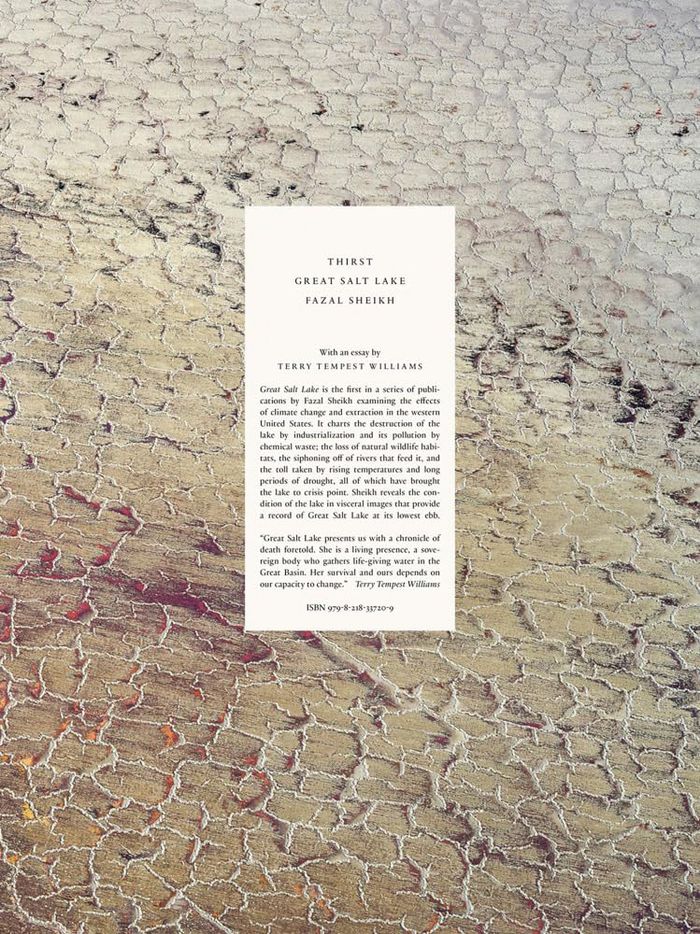
In November 2022, the water level of the Great Salt Lake fell to its lowest on record. Diverted water supply from its feeding rivers, pollution from nearby extraction plants and ravaging droughts have brought this landmark to a crisis point. As the lake reached its lowest ebb, photographer Fazal Sheikh (born 1965), together with writer Terry Tempest Williams (born 1955), walked the shoreline, awed by its epic beauty while recording the destruction of its natural habitats. As Utah native Williams writes in her essay, "Retreat," she is witnessing the death of a lake that has been a constant presence in her life. Meanwhile, Sheikh documents the shrinking salt basin from above, revealing how the lake has been exploited: plundered for its natural salts, dissected by concrete highways, discolored by toxic waste, depleted by evaporation. His images hold a mirror to the lake’s surface, charting its destruction while demanding the viewer’s visceral response.
Fazal Sheikh: Thirst, Great Salt Lake
Actions:
Price:
$75.00
(available to order)
Summary:
In November 2022, the water level of the Great Salt Lake fell to its lowest on record. Diverted water supply from its feeding rivers, pollution from nearby extraction plants and ravaging droughts have brought this landmark to a crisis point. As the lake reached its lowest ebb, photographer Fazal Sheikh (born 1965), together with writer Terry Tempest Williams (born 1955), walked the shoreline, awed by its epic beauty while recording the destruction of its natural habitats. As Utah native Williams writes in her essay, "Retreat," she is witnessing the death of a lake that has been a constant presence in her life. Meanwhile, Sheikh documents the shrinking salt basin from above, revealing how the lake has been exploited: plundered for its natural salts, dissected by concrete highways, discolored by toxic waste, depleted by evaporation. His images hold a mirror to the lake’s surface, charting its destruction while demanding the viewer’s visceral response.
Form:
books
books
Publication:
November 2024
November 2024
Subject:
Photography monographs
Photography monographs
Form:
books
books
Title:
The last pictures
The last pictures
Actions:
Price:
$52.00
(available in store)
Summary:
Human civilizations' longest lasting artifacts are not the great Pyramids of Giza, nor the cave paintings at Lascaux, but the communications satellites that circle our planet. In a stationary orbit above the equator, the satellites that broadcast our TV signals, route our phone calls, and process our credit card transactions experience no atmospheric drag. Their inert(...)
$52.00
(available in store)
Summary:
Human civilizations' longest lasting artifacts are not the great Pyramids of Giza, nor the cave paintings at Lascaux, but the communications satellites that circle our planet. In a stationary orbit above the equator, the satellites that broadcast our TV signals, route our phone calls, and process our credit card transactions experience no atmospheric drag. Their inert(...)
Title:
The last pictures
Actions:
Price:
$52.00
(available in store)
Summary:
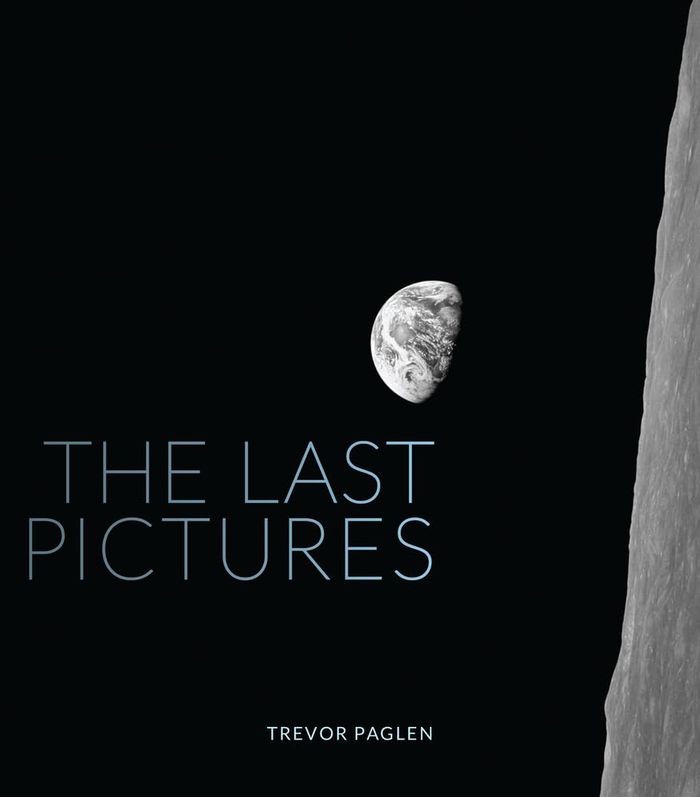
Human civilizations' longest lasting artifacts are not the great Pyramids of Giza, nor the cave paintings at Lascaux, but the communications satellites that circle our planet. In a stationary orbit above the equator, the satellites that broadcast our TV signals, route our phone calls, and process our credit card transactions experience no atmospheric drag. Their inert hulls will continue to drift around Earth until the Sun expands into a red giant and engulfs them about 4.5 billion years from now. he Last Pictures, co-published by Creative Time Books, is rooted in the premise that these communications satellites will ultimately become the cultural and material ruins of the late 20th and early 21st centuries, far outlasting anything else humans have created. Inspired in part by ancient cave paintings, nuclear waste warning signs, and Carl Sagan's Golden Records of the 1970s, artist/geographer and MacArthur "Genius" Fellow Trevor Paglen has developed a collection of one hundred images that will be etched onto an ultra-archival, golden silicon disc.
The last pictures
Actions:
Price:
$52.00
(available in store)
Summary:
Human civilizations' longest lasting artifacts are not the great Pyramids of Giza, nor the cave paintings at Lascaux, but the communications satellites that circle our planet. In a stationary orbit above the equator, the satellites that broadcast our TV signals, route our phone calls, and process our credit card transactions experience no atmospheric drag. Their inert hulls will continue to drift around Earth until the Sun expands into a red giant and engulfs them about 4.5 billion years from now. he Last Pictures, co-published by Creative Time Books, is rooted in the premise that these communications satellites will ultimately become the cultural and material ruins of the late 20th and early 21st centuries, far outlasting anything else humans have created. Inspired in part by ancient cave paintings, nuclear waste warning signs, and Carl Sagan's Golden Records of the 1970s, artist/geographer and MacArthur "Genius" Fellow Trevor Paglen has developed a collection of one hundred images that will be etched onto an ultra-archival, golden silicon disc.
Form:
books
books
Publication:
September 2012
September 2012
Subject:
Art Theory
Art Theory
Form:
books
books

Actions:
Price:
$115.00
(available in store)
Summary:
Basketry is one of Japan’s oldest art forms. Since the eighth century, meticulously woven bamboo baskets have served daily functions, first in Buddhist liturgy and later in the tea ceremony. Over the past two centuries, bamboo art has risen to the status of fine art, with leading makers creating coveted works for ikebana and, more recently, sculptural objects celebrated(...)
$115.00
(available in store)
Summary:
Basketry is one of Japan’s oldest art forms. Since the eighth century, meticulously woven bamboo baskets have served daily functions, first in Buddhist liturgy and later in the tea ceremony. Over the past two centuries, bamboo art has risen to the status of fine art, with leading makers creating coveted works for ikebana and, more recently, sculptural objects celebrated(...)
Title:
Japanese baskets: Woven art for an endangered planet
Actions:
Price:
$115.00
(available in store)
Summary:
Basketry is one of Japan’s oldest art forms. Since the eighth century, meticulously woven bamboo baskets have served daily functions, first in Buddhist liturgy and later in the tea ceremony. Over the past two centuries, bamboo art has risen to the status of fine art, with leading makers creating coveted works for ikebana and, more recently, sculptural objects celebrated as contemporary art. This elegant, richly illustrated volume presents over 160 baskets, highlighting their spectacular silhouettes and exquisite details—from complex weaving patterns and refined signatures to intricately plaited undersides. Informative captions reveal the techniques of an art now enjoying renewed attention, as bamboo offers a durable and ecological alternative to disposable materials. Most photographs were taken against specially conceived backdrops recalling the enigmatic architectural spaces of Giorgio de Chirico, while others show baskets with contemporary flower arrangements set before industrial waste-processing facilities, underscoring the book’s advocacy for bamboo as a renewable resource that challenges our throwaway plastic culture.
Japanese baskets: Woven art for an endangered planet
Actions:
Price:
$115.00
(available in store)
Summary:
Basketry is one of Japan’s oldest art forms. Since the eighth century, meticulously woven bamboo baskets have served daily functions, first in Buddhist liturgy and later in the tea ceremony. Over the past two centuries, bamboo art has risen to the status of fine art, with leading makers creating coveted works for ikebana and, more recently, sculptural objects celebrated as contemporary art. This elegant, richly illustrated volume presents over 160 baskets, highlighting their spectacular silhouettes and exquisite details—from complex weaving patterns and refined signatures to intricately plaited undersides. Informative captions reveal the techniques of an art now enjoying renewed attention, as bamboo offers a durable and ecological alternative to disposable materials. Most photographs were taken against specially conceived backdrops recalling the enigmatic architectural spaces of Giorgio de Chirico, while others show baskets with contemporary flower arrangements set before industrial waste-processing facilities, underscoring the book’s advocacy for bamboo as a renewable resource that challenges our throwaway plastic culture.
Form:
books
books
Publication:
April 2026
April 2026
Subject:
Design, Periods and Styles
Design, Periods and Styles
Form:
books
books
Actions:
Price:
$110.00
(available to order)
Summary:
Peter Latz and Partners specialize in a contemporary, intelligent use of alternative technologies and the regeneration of industrial wastelands. They have worked with Norman Foster among others. The trademark of the works of the firm, which was founded in 1968, is its ability to express ecological and social concerns in a strong aesthetic language. Process orientation(...)
$110.00
(available to order)
Summary:
Peter Latz and Partners specialize in a contemporary, intelligent use of alternative technologies and the regeneration of industrial wastelands. They have worked with Norman Foster among others. The trademark of the works of the firm, which was founded in 1968, is its ability to express ecological and social concerns in a strong aesthetic language. Process orientation(...)
Subject:
Gardens
Gardens
Publication:
September 2007, Basel, Boston, Berlin
September 2007, Basel, Boston, Berlin
Title:
Syntax of landscape : the landscape architecture of Peter Latz and partners
Actions:
Price:
$110.00
(available to order)
Summary:
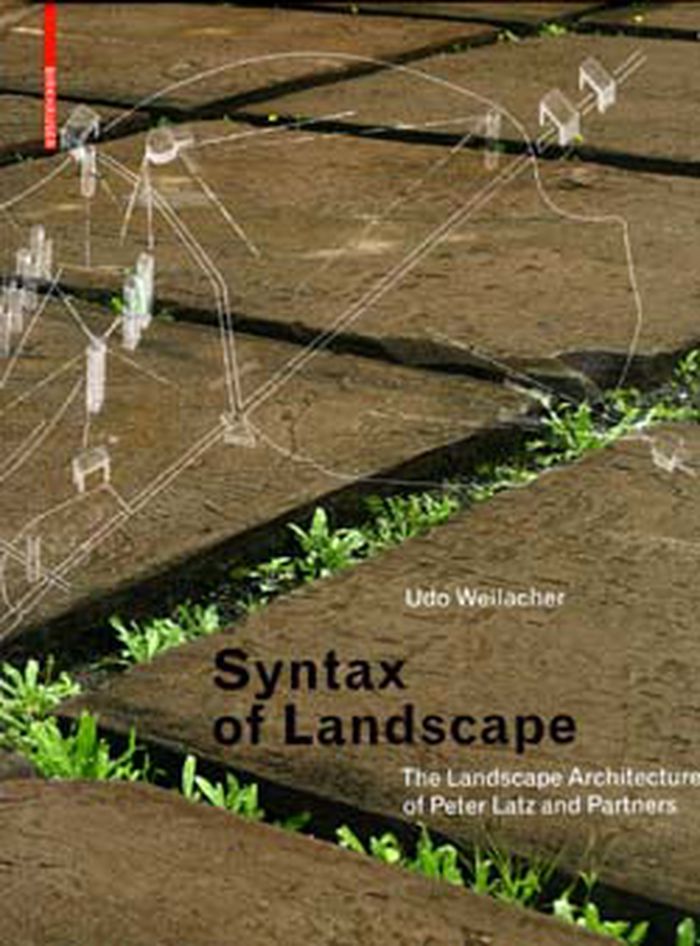
Peter Latz and Partners specialize in a contemporary, intelligent use of alternative technologies and the regeneration of industrial wastelands. They have worked with Norman Foster among others. The trademark of the works of the firm, which was founded in 1968, is its ability to express ecological and social concerns in a strong aesthetic language. Process orientation and the revealing of chronological layers of a site are the focus of design. The firm’s current projects include the design of large-scale street and park environments on the Plateau de Kirchberg in the European City of Luxembourg, the Parco Dora in Turin, Italy, and the conversion of a disused waste disposal site in Ayalon Park near Tel Aviv, Israel. Peter Latz teaches at the Technical University) in Munich-Weihenstephan and has held guest professorships at the University of Pennsylvania and Harvard University. Udo Weilacher is dean of the Fakultät für Architektur und Landschaft (School of Architecture and Landscape) at Hanover University.
Syntax of landscape : the landscape architecture of Peter Latz and partners
Actions:
Price:
$110.00
(available to order)
Summary:
Peter Latz and Partners specialize in a contemporary, intelligent use of alternative technologies and the regeneration of industrial wastelands. They have worked with Norman Foster among others. The trademark of the works of the firm, which was founded in 1968, is its ability to express ecological and social concerns in a strong aesthetic language. Process orientation and the revealing of chronological layers of a site are the focus of design. The firm’s current projects include the design of large-scale street and park environments on the Plateau de Kirchberg in the European City of Luxembourg, the Parco Dora in Turin, Italy, and the conversion of a disused waste disposal site in Ayalon Park near Tel Aviv, Israel. Peter Latz teaches at the Technical University) in Munich-Weihenstephan and has held guest professorships at the University of Pennsylvania and Harvard University. Udo Weilacher is dean of the Fakultät für Architektur und Landschaft (School of Architecture and Landscape) at Hanover University.
Form:
books
books
Publication:
September 2007, Basel, Boston, Berlin
September 2007, Basel, Boston, Berlin
Subject:
Gardens
Gardens
Form:
books
books
![[Collecting systems] : learning book #001](/img-bookstore/8f1VgIQpwBbXOpoE_9GM4qCs1mc=/700x998/MIG-18252.jpg)
Actions:
Price:
$11.50
(available to order)
Summary:
Factories, farms, and ecosystems all generate mountains of unused material every day. These materials—often viewed as useless leftovers —actually have rich, untapped creative potential. The artist collective Learning Group created several art projects that explore these possibilities, and [Collecting systems] presents these projects in images and words. Members of(...)
$11.50
(available to order)
Summary:
Factories, farms, and ecosystems all generate mountains of unused material every day. These materials—often viewed as useless leftovers —actually have rich, untapped creative potential. The artist collective Learning Group created several art projects that explore these possibilities, and [Collecting systems] presents these projects in images and words. Members of(...)
Publication:
August 2006, Chicago
August 2006, Chicago
Title:
[Collecting systems] : learning book #001
Actions:
Price:
$11.50
(available to order)
Summary:
Factories, farms, and ecosystems all generate mountains of unused material every day. These materials—often viewed as useless leftovers —actually have rich, untapped creative potential. The artist collective Learning Group created several art projects that explore these possibilities, and [Collecting systems] presents these projects in images and words. Members of Learning Group traveled to three different urban environments—Chicago; Monterrey, Mexico; and Mikado, Japan — and built structures that incorporated waste objects in unexpected and fascinating ways. Whether a cardboard house modeled after the structure of sea urchin shells, a wearable walking city, or two houses made of plastic bottles and other gathered materials, their projects recycle trash into treasure. The authors investigate the social issues connected to these projects, such as economics, labor, property rights, and environmental conditions, and they propose innovative courses of action on these issues. In an increasingly disposable world, [Collecting systems] is a compelling look at how we can use the materials around us to their fullest potential.
[Collecting systems] : learning book #001
Actions:
Price:
$11.50
(available to order)
Summary:
Factories, farms, and ecosystems all generate mountains of unused material every day. These materials—often viewed as useless leftovers —actually have rich, untapped creative potential. The artist collective Learning Group created several art projects that explore these possibilities, and [Collecting systems] presents these projects in images and words. Members of Learning Group traveled to three different urban environments—Chicago; Monterrey, Mexico; and Mikado, Japan — and built structures that incorporated waste objects in unexpected and fascinating ways. Whether a cardboard house modeled after the structure of sea urchin shells, a wearable walking city, or two houses made of plastic bottles and other gathered materials, their projects recycle trash into treasure. The authors investigate the social issues connected to these projects, such as economics, labor, property rights, and environmental conditions, and they propose innovative courses of action on these issues. In an increasingly disposable world, [Collecting systems] is a compelling look at how we can use the materials around us to their fullest potential.
Form:
books
books
Publication:
August 2006, Chicago
August 2006, Chicago


