


7437 Results
Form:
books
books
Actions:
Price:
$47.00
(available in store)
Summary:
For seven thousand years concrete has periodically shaped the path of human progress. Reese Palley's fascinating history of this ubiquitous and versatile material chronicles the repeated and often centuries-long losses of the technology and its many reemergences and the cultural, scientific, and engineering accomplishments it has enabled. Palley takes us from concrete's(...)
$47.00
(available in store)
Summary:
For seven thousand years concrete has periodically shaped the path of human progress. Reese Palley's fascinating history of this ubiquitous and versatile material chronicles the repeated and often centuries-long losses of the technology and its many reemergences and the cultural, scientific, and engineering accomplishments it has enabled. Palley takes us from concrete's(...)
Title:
Concrete : a seven-thousand-year history
Actions:
Price:
$47.00
(available in store)
Summary:
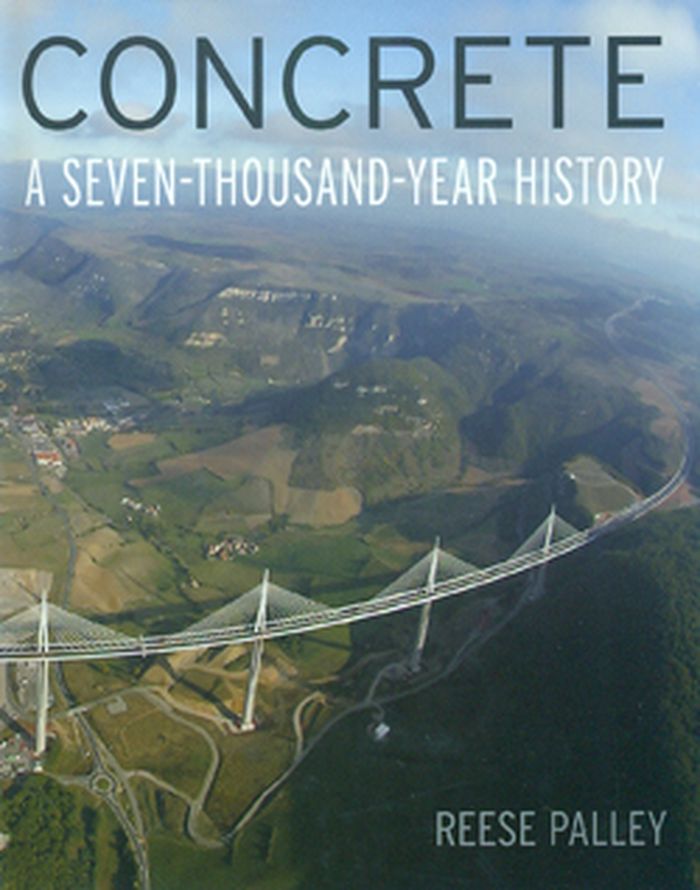
For seven thousand years concrete has periodically shaped the path of human progress. Reese Palley's fascinating history of this ubiquitous and versatile material chronicles the repeated and often centuries-long losses of the technology and its many reemergences and the cultural, scientific, and engineering accomplishments it has enabled. Palley takes us from concrete's earliest beginnings, including the startling proof that at least one of the pyramids was partially poured, through the building of the Eddystone Light, to the dramatic building explosion in the use of concrete during the twentieth century and the start of the twenty-first century. He discusses the environmental impact of the production of concrete and attempts to find substitutes for the burning of lime. He ends by contemplating outer space, where almost all of the elements needed to build extraterrestrial communities already exist in the chemical makeup of the moon and Mars.
Concrete : a seven-thousand-year history
Actions:
Price:
$47.00
(available in store)
Summary:
For seven thousand years concrete has periodically shaped the path of human progress. Reese Palley's fascinating history of this ubiquitous and versatile material chronicles the repeated and often centuries-long losses of the technology and its many reemergences and the cultural, scientific, and engineering accomplishments it has enabled. Palley takes us from concrete's earliest beginnings, including the startling proof that at least one of the pyramids was partially poured, through the building of the Eddystone Light, to the dramatic building explosion in the use of concrete during the twentieth century and the start of the twenty-first century. He discusses the environmental impact of the production of concrete and attempts to find substitutes for the burning of lime. He ends by contemplating outer space, where almost all of the elements needed to build extraterrestrial communities already exist in the chemical makeup of the moon and Mars.
Form:
books
books
Publication:
October 2010
October 2010
Subject:
Materials and Lighting
Materials and Lighting
Form:
journals and magazines
journals and magazines
Title:
Detail 10 2011 : Toitures
Detail 10 2011 : Toitures
Actions:
Price:
$24.95
(available to order)
Summary:
An increasing number of people want to live in city centres, where space is limited. This causes architecture to grow vertically, creating new worlds on top of old roofs. Examples of this, seen on the Rhine riverbank in Cologne, Copenhagen and Graz, show how charming these new living spaces can look. Eight roofs from around the world are examined in detail, each covered(...)
$24.95
(available to order)
Summary:
An increasing number of people want to live in city centres, where space is limited. This causes architecture to grow vertically, creating new worlds on top of old roofs. Examples of this, seen on the Rhine riverbank in Cologne, Copenhagen and Graz, show how charming these new living spaces can look. Eight roofs from around the world are examined in detail, each covered(...)
Title:
Detail 10 2011 : Toitures
Actions:
Price:
$24.95
(available to order)
Summary:
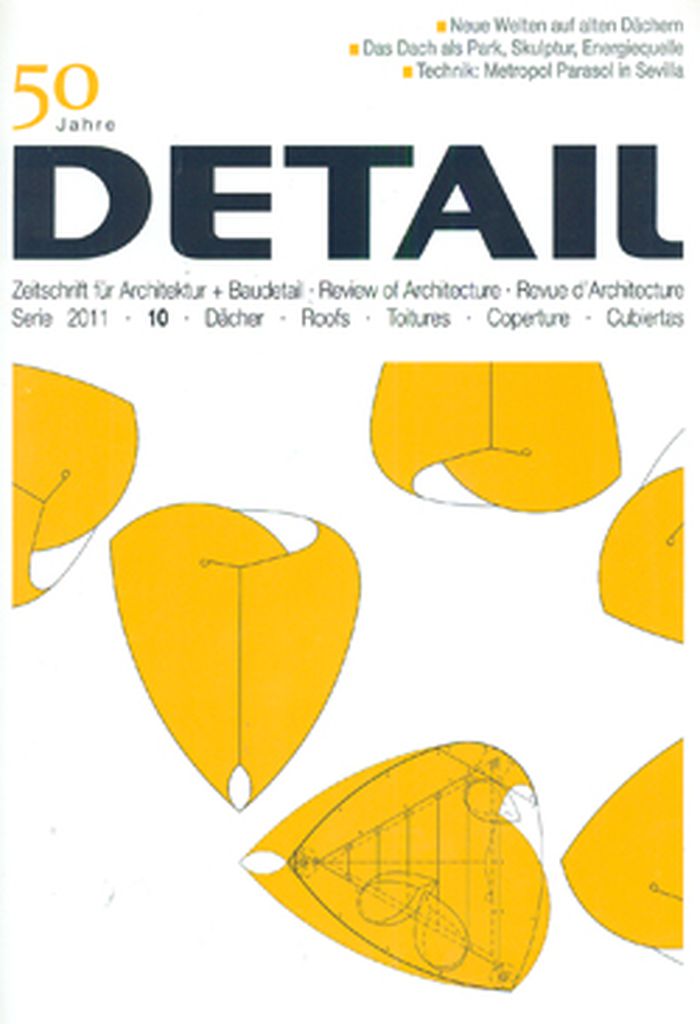
An increasing number of people want to live in city centres, where space is limited. This causes architecture to grow vertically, creating new worlds on top of old roofs. Examples of this, seen on the Rhine riverbank in Cologne, Copenhagen and Graz, show how charming these new living spaces can look. Eight roofs from around the world are examined in detail, each covered with different materials: Adam Kahn uses wood shingles for his 'swimming visitors' centre; Diller Scofidio designs a park on top of a restaurant's green roof; Hopkins Architects gives the steel supporting frame of the Olympic cycling stadium a dynamic swing; Zaha Hadid wallows in Glasgow, with curves made of zinc sheeting and Jürgen Mayer H. is under huge umbrellas in the Spanish sun. In the chapter »technology« the complex supporting structure of the polyurethane-laminated, veneer-layered timber construction will be explained in detail.
Detail 10 2011 : Toitures
Actions:
Price:
$24.95
(available to order)
Summary:
An increasing number of people want to live in city centres, where space is limited. This causes architecture to grow vertically, creating new worlds on top of old roofs. Examples of this, seen on the Rhine riverbank in Cologne, Copenhagen and Graz, show how charming these new living spaces can look. Eight roofs from around the world are examined in detail, each covered with different materials: Adam Kahn uses wood shingles for his 'swimming visitors' centre; Diller Scofidio designs a park on top of a restaurant's green roof; Hopkins Architects gives the steel supporting frame of the Olympic cycling stadium a dynamic swing; Zaha Hadid wallows in Glasgow, with curves made of zinc sheeting and Jürgen Mayer H. is under huge umbrellas in the Spanish sun. In the chapter »technology« the complex supporting structure of the polyurethane-laminated, veneer-layered timber construction will be explained in detail.
Form:
journals and magazines
journals and magazines
Publication:
October 2011
October 2011
Subject:
Magazines
Magazines
Form:
books
books
Actions:
Price:
$69.95
(available to order)
Summary:
The product of an innovative research project realized in cooperation between three Swiss universities—École Polytechnique Fédérale de Lausanne’s School of Architecture, the College of Architecture and Technology in Fribourg, and the University of Fribourg—the smart living lab is a research and development center for the built environment of the future. This high-tech(...)
$69.95
(available to order)
Summary:
The product of an innovative research project realized in cooperation between three Swiss universities—École Polytechnique Fédérale de Lausanne’s School of Architecture, the College of Architecture and Technology in Fribourg, and the University of Fribourg—the smart living lab is a research and development center for the built environment of the future. This high-tech(...)
Publication:
July 2019
July 2019
Title:
Exploring: research driven building design
Actions:
Price:
$69.95
(available to order)
Summary:
The product of an innovative research project realized in cooperation between three Swiss universities—École Polytechnique Fédérale de Lausanne’s School of Architecture, the College of Architecture and Technology in Fribourg, and the University of Fribourg—the smart living lab is a research and development center for the built environment of the future. This high-tech structure also serves as an emblem of the cooperative’s aim to translate academic research into actual buildings. The follow-up to ''Thinking,'' ''Exploring'' presents the next phase of research at the smart living lab, which focuses on the various problems that must be solved to satisfy future buildings’ sustainability goals. Given that the building sector is one of the world’s biggest contributors to CO2 emissions and energy consumption, the researchers are seeking strategies to improve energy and carbon performance at the smart living lab, anticipating tight requirements thirty years from now.
Exploring: research driven building design
Actions:
Price:
$69.95
(available to order)
Summary:
The product of an innovative research project realized in cooperation between three Swiss universities—École Polytechnique Fédérale de Lausanne’s School of Architecture, the College of Architecture and Technology in Fribourg, and the University of Fribourg—the smart living lab is a research and development center for the built environment of the future. This high-tech structure also serves as an emblem of the cooperative’s aim to translate academic research into actual buildings. The follow-up to ''Thinking,'' ''Exploring'' presents the next phase of research at the smart living lab, which focuses on the various problems that must be solved to satisfy future buildings’ sustainability goals. Given that the building sector is one of the world’s biggest contributors to CO2 emissions and energy consumption, the researchers are seeking strategies to improve energy and carbon performance at the smart living lab, anticipating tight requirements thirty years from now.
Form:
books
books
Publication:
July 2019
July 2019
Form:
books
books

Actions:
Price:
$60.00
(available to order)
Summary:
''Kengo Kuma: Portland Japanese Garden'' introduces the star Japanese architect's first public project in the United States. Kuma won the Portland Japanese Garden invitational competition by proposing a design that, while executed with contemporary materials and the latest construction technology, also builds on the principles of traditional architecture and(...)
$60.00
(available to order)
Summary:
''Kengo Kuma: Portland Japanese Garden'' introduces the star Japanese architect's first public project in the United States. Kuma won the Portland Japanese Garden invitational competition by proposing a design that, while executed with contemporary materials and the latest construction technology, also builds on the principles of traditional architecture and(...)
Subject:
Landscape Architecture, Monographs
Landscape Architecture, Monographs
Publication:
April 2019
April 2019
Title:
Kengo Kuma: Portland Japanese garden
Actions:
Price:
$60.00
(available to order)
Summary:
''Kengo Kuma: Portland Japanese Garden'' introduces the star Japanese architect's first public project in the United States. Kuma won the Portland Japanese Garden invitational competition by proposing a design that, while executed with contemporary materials and the latest construction technology, also builds on the principles of traditional architecture and craftsmanship. The resulting group of small buildings superbly blends with its magnificent natural environment and provides an outstanding example of Kuma's artistry of seamlessly connecting nature and architecture as well as past and present without falling into the trap of mimicry or sentimentality. The book includes chapters on the reverence of nature and Japanese culture, on architecture and gardens in Japan, on the architecture of Kengo Kuma beyond the garden, and on craftsmanship and design, as well as on the new buildings and the garden itself, which is widely considered the most beautiful such garden outside Japan.
Kengo Kuma: Portland Japanese garden
Actions:
Price:
$60.00
(available to order)
Summary:
''Kengo Kuma: Portland Japanese Garden'' introduces the star Japanese architect's first public project in the United States. Kuma won the Portland Japanese Garden invitational competition by proposing a design that, while executed with contemporary materials and the latest construction technology, also builds on the principles of traditional architecture and craftsmanship. The resulting group of small buildings superbly blends with its magnificent natural environment and provides an outstanding example of Kuma's artistry of seamlessly connecting nature and architecture as well as past and present without falling into the trap of mimicry or sentimentality. The book includes chapters on the reverence of nature and Japanese culture, on architecture and gardens in Japan, on the architecture of Kengo Kuma beyond the garden, and on craftsmanship and design, as well as on the new buildings and the garden itself, which is widely considered the most beautiful such garden outside Japan.
Form:
books
books
Publication:
April 2019
April 2019
Subject:
Landscape Architecture, Monographs
Landscape Architecture, Monographs
Form:
books
books

Actions:
Price:
$67.95
(available to order)
Summary:
Where is the space for dreaming in the twenty-first century? Lofty thoughts, like dreams, are born and live overhead, just as they have been represented in Renaissance paintings and modern cartoons. Ceilings are often repositories of stories, events and otherwise invisible oneiric narratives. Yet environments that inspire innovative thinking are dwindling as our world(...)
$67.95
(available to order)
Summary:
Where is the space for dreaming in the twenty-first century? Lofty thoughts, like dreams, are born and live overhead, just as they have been represented in Renaissance paintings and modern cartoons. Ceilings are often repositories of stories, events and otherwise invisible oneiric narratives. Yet environments that inspire innovative thinking are dwindling as our world(...)
Subject:
Architectural Theory
Architectural Theory
Publication:
August 2019
August 2019
Title:
Ceilings and dreams: the architecture of levity
Actions:
Price:
$67.95
(available to order)
Summary:
Where is the space for dreaming in the twenty-first century? Lofty thoughts, like dreams, are born and live overhead, just as they have been represented in Renaissance paintings and modern cartoons. Ceilings are often repositories of stories, events and otherwise invisible oneiric narratives. Yet environments that inspire innovative thinking are dwindling as our world confronts enormous challenges, and almost all of our thinking, debating and decision-making takes place under endless ceiling grids. Quantitative research establishes that spaces with taller ceilings elicit broader, more creative thoughts. Today, ceilings are usually squat conduits of technology: they have become the blind spot of modern architecture. The twenty essays in this book look across cultures, places and ceilings over time to discover their potential to uplift the human spirit. Not just one building element among many, the ceiling is a key to unlock the architectural imagination.
Ceilings and dreams: the architecture of levity
Actions:
Price:
$67.95
(available to order)
Summary:
Where is the space for dreaming in the twenty-first century? Lofty thoughts, like dreams, are born and live overhead, just as they have been represented in Renaissance paintings and modern cartoons. Ceilings are often repositories of stories, events and otherwise invisible oneiric narratives. Yet environments that inspire innovative thinking are dwindling as our world confronts enormous challenges, and almost all of our thinking, debating and decision-making takes place under endless ceiling grids. Quantitative research establishes that spaces with taller ceilings elicit broader, more creative thoughts. Today, ceilings are usually squat conduits of technology: they have become the blind spot of modern architecture. The twenty essays in this book look across cultures, places and ceilings over time to discover their potential to uplift the human spirit. Not just one building element among many, the ceiling is a key to unlock the architectural imagination.
Form:
books
books
Publication:
August 2019
August 2019
Subject:
Architectural Theory
Architectural Theory
Form:
books
books

Actions:
Price:
$28.95
(available to order)
Summary:
This irreverent survey celebrates the more populist and enduring work in graphic and industrial design that was a product of the Soviet era - a period that remains politically sensitive and under-explored, yet whose influence on the objects and aesthetics of Russian life and thought has been profound. "Made in Russia" presents fifty such masterpieces, from pioneers of(...)
$28.95
(available to order)
Summary:
This irreverent survey celebrates the more populist and enduring work in graphic and industrial design that was a product of the Soviet era - a period that remains politically sensitive and under-explored, yet whose influence on the objects and aesthetics of Russian life and thought has been profound. "Made in Russia" presents fifty such masterpieces, from pioneers of(...)
Title:
Made in Russia: unsung icons of Soviet design
Actions:
Price:
$28.95
(available to order)
Summary:
This irreverent survey celebrates the more populist and enduring work in graphic and industrial design that was a product of the Soviet era - a period that remains politically sensitive and under-explored, yet whose influence on the objects and aesthetics of Russian life and thought has been profound. "Made in Russia" presents fifty such masterpieces, from pioneers of Soviet technology such as the Sputnik, the Buran snowmobile, and the LOMO camera to icons of quotidian culture such as the fishnet shopping bag, the beveled glass, a Cold War-inspired arcade game, and Misha the Olympic bear. Edited by the journalist and author Michael Idov - a Soviet product himself - and including essays from Boris Kachka, Vitaly Komar, Gary Shteyngart, and Lara Vapnyar, the collection explores the provenance of these objects in the forgotten Soviet culture and the unique climate for design from which they could only have emerged.
Made in Russia: unsung icons of Soviet design
Actions:
Price:
$28.95
(available to order)
Summary:
This irreverent survey celebrates the more populist and enduring work in graphic and industrial design that was a product of the Soviet era - a period that remains politically sensitive and under-explored, yet whose influence on the objects and aesthetics of Russian life and thought has been profound. "Made in Russia" presents fifty such masterpieces, from pioneers of Soviet technology such as the Sputnik, the Buran snowmobile, and the LOMO camera to icons of quotidian culture such as the fishnet shopping bag, the beveled glass, a Cold War-inspired arcade game, and Misha the Olympic bear. Edited by the journalist and author Michael Idov - a Soviet product himself - and including essays from Boris Kachka, Vitaly Komar, Gary Shteyngart, and Lara Vapnyar, the collection explores the provenance of these objects in the forgotten Soviet culture and the unique climate for design from which they could only have emerged.
Form:
books
books
Publication:
April 2011
April 2011
Subject:
Current Exhibitions
Current Exhibitions
Form:
books
books

Price:
$34.95
(available to order)
Summary:
From the advent of early colonial photography in the 19th century to contemporary 'white savior' social-media images, photography continues to play an integral role in the maintenance of white sovereignty. As various scholars have shown, the technology of the camera is not innocent, and neither are the images it produces. The invention and continuation of the 'white(...)
$34.95
(available to order)
Summary:
From the advent of early colonial photography in the 19th century to contemporary 'white savior' social-media images, photography continues to play an integral role in the maintenance of white sovereignty. As various scholars have shown, the technology of the camera is not innocent, and neither are the images it produces. The invention and continuation of the 'white(...)
Title:
The image of whiteness: Contemporary photography and racialization
Actions:
Price:
$34.95
(available to order)
Summary:
From the advent of early colonial photography in the 19th century to contemporary 'white savior' social-media images, photography continues to play an integral role in the maintenance of white sovereignty. As various scholars have shown, the technology of the camera is not innocent, and neither are the images it produces. The invention and continuation of the 'white race' is not just a political, social and legal phenomenon; it is also a complexly visual one. What does whiteness look like, and how might we begin to trace an antiracist history of artistic resistance that works against it? ''The image of whiteness'' seeks to introduce its reader to some important extracts from the troubling story of whiteness, to describe its falsehoods, its paradoxes and its oppressive nature, and to highlight some of the crucial work photographic artists have done to subvert and critique its image.
The image of whiteness: Contemporary photography and racialization
Actions:
Price:
$34.95
(available to order)
Summary:
From the advent of early colonial photography in the 19th century to contemporary 'white savior' social-media images, photography continues to play an integral role in the maintenance of white sovereignty. As various scholars have shown, the technology of the camera is not innocent, and neither are the images it produces. The invention and continuation of the 'white race' is not just a political, social and legal phenomenon; it is also a complexly visual one. What does whiteness look like, and how might we begin to trace an antiracist history of artistic resistance that works against it? ''The image of whiteness'' seeks to introduce its reader to some important extracts from the troubling story of whiteness, to describe its falsehoods, its paradoxes and its oppressive nature, and to highlight some of the crucial work photographic artists have done to subvert and critique its image.
Form:
books
books
Publication:
July 2022
July 2022
Subject:
Theory of Photography
Theory of Photography
Form:
books
books
Actions:
Price:
$25.95
(available in store)
Summary:
From the excesses of world expositions to myths of better living through technology, modernist design, in its European-based guises, has excluded and oppressed the very people whose lands and lives it reshaped. This book first asks how modernist design has encompassed and advanced the harmful project of colonization—then shows how design might address these harms by(...)
$25.95
(available in store)
Summary:
From the excesses of world expositions to myths of better living through technology, modernist design, in its European-based guises, has excluded and oppressed the very people whose lands and lives it reshaped. This book first asks how modernist design has encompassed and advanced the harmful project of colonization—then shows how design might address these harms by(...)
Title:
Decolonizing design: A cultural justice guidebook
Actions:
Price:
$25.95
(available in store)
Summary:
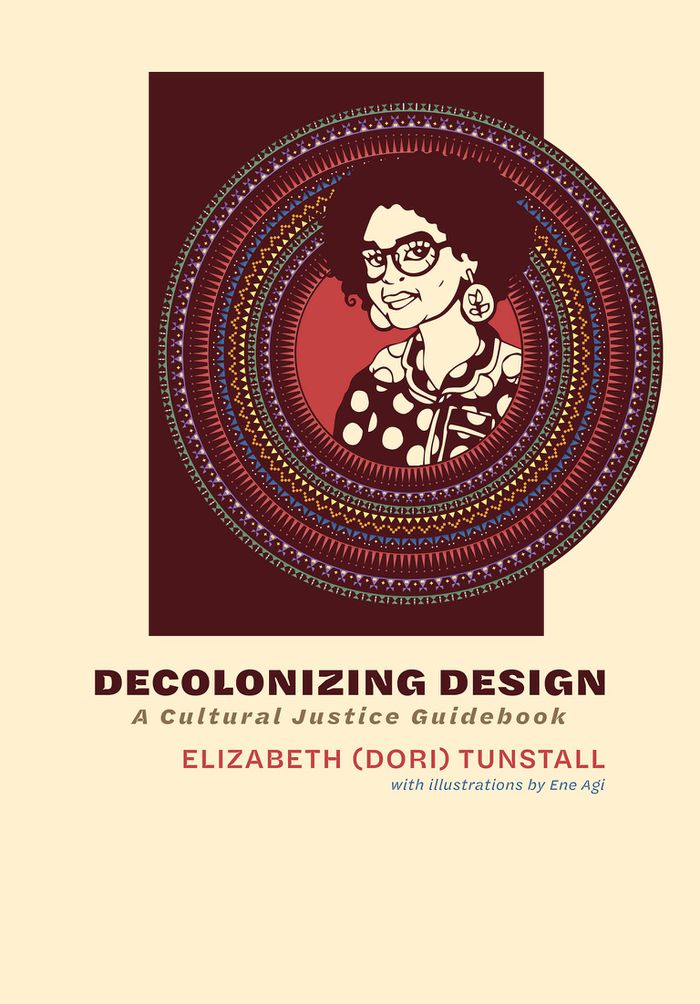
From the excesses of world expositions to myths of better living through technology, modernist design, in its European-based guises, has excluded and oppressed the very people whose lands and lives it reshaped. This book first asks how modernist design has encompassed and advanced the harmful project of colonization—then shows how design might address these harms by recentering its theory and practice in global Indigenous cultures and histories. A leading figure in the movement to decolonize design, Dori Tunstall uses hard-hitting real-life examples and case studies drawn from over fifteen years of working to transform institutions to better reflect the lived experiences of Indigenous, Black, and People of Color communities. Her book is at once enlightening, inspiring, and practical, interweaving her lived experiences with extensive research to show what decolonizing design means, how it heals, and how to practice it in our institutions today.
Decolonizing design: A cultural justice guidebook
Actions:
Price:
$25.95
(available in store)
Summary:
From the excesses of world expositions to myths of better living through technology, modernist design, in its European-based guises, has excluded and oppressed the very people whose lands and lives it reshaped. This book first asks how modernist design has encompassed and advanced the harmful project of colonization—then shows how design might address these harms by recentering its theory and practice in global Indigenous cultures and histories. A leading figure in the movement to decolonize design, Dori Tunstall uses hard-hitting real-life examples and case studies drawn from over fifteen years of working to transform institutions to better reflect the lived experiences of Indigenous, Black, and People of Color communities. Her book is at once enlightening, inspiring, and practical, interweaving her lived experiences with extensive research to show what decolonizing design means, how it heals, and how to practice it in our institutions today.
Form:
books
books
Publication:
February 2023
February 2023
Subject:
Social
Social
Form:
books
books
Actions:
Price:
$110.00
(available to order)
Summary:
For millennia, disused buildings have been cannibalized for the construction of new ones. Yet, in today’s world, what is known as circular architecture raises a multitude of questions and challenges with regard to technology, safety, energy, and associated legal aspects. This book is a unique compendium of circular architecture. Richly illustrated, it explores(...)
$110.00
(available to order)
Summary:
For millennia, disused buildings have been cannibalized for the construction of new ones. Yet, in today’s world, what is known as circular architecture raises a multitude of questions and challenges with regard to technology, safety, energy, and associated legal aspects. This book is a unique compendium of circular architecture. Richly illustrated, it explores(...)
Title:
Reuse in construction: A compendium of circular architecture
Actions:
Price:
$110.00
(available to order)
Summary:
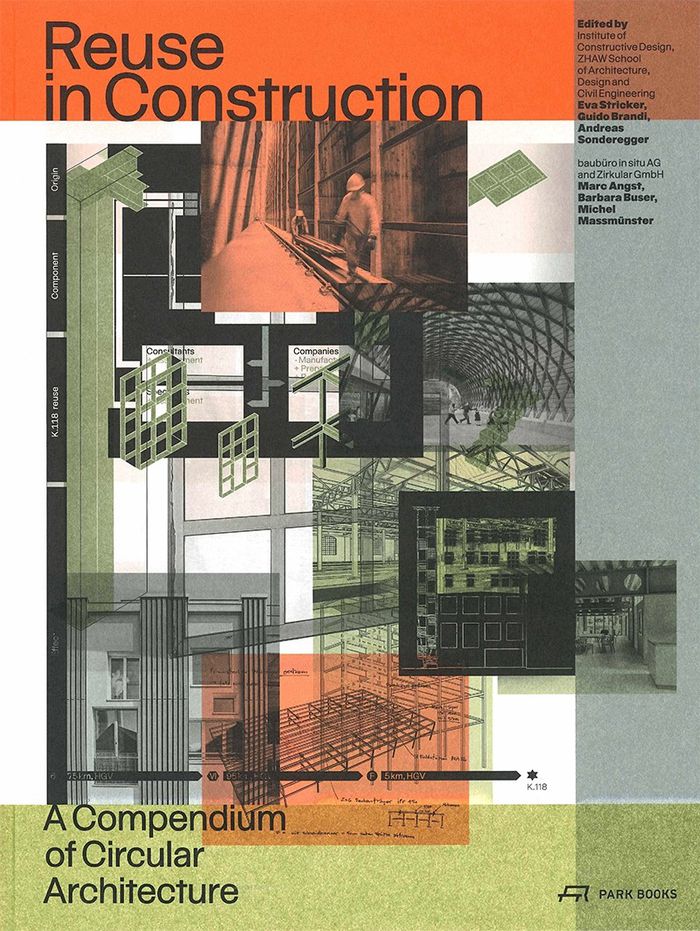
For millennia, disused buildings have been cannibalized for the construction of new ones. Yet, in today’s world, what is known as circular architecture raises a multitude of questions and challenges with regard to technology, safety, energy, and associated legal aspects. This book is a unique compendium of circular architecture. Richly illustrated, it explores comprehensively through essays and illuminating conversations between experts all the questions and challenges that architects and engineers face with circular architecture designs. It is based on the case study of the K.118 project in Winterthur, Switzerland’s largest building to date that consists mainly of re-used parts. Since its outset in 2018, the K.118 project has been evaluated within the framework of an interdisciplinary research with regard to aspects of design and engineering, energy, economy, processes, and legal issues. This volume presents the results in striking visuals and concise texts.
Reuse in construction: A compendium of circular architecture
Actions:
Price:
$110.00
(available to order)
Summary:
For millennia, disused buildings have been cannibalized for the construction of new ones. Yet, in today’s world, what is known as circular architecture raises a multitude of questions and challenges with regard to technology, safety, energy, and associated legal aspects. This book is a unique compendium of circular architecture. Richly illustrated, it explores comprehensively through essays and illuminating conversations between experts all the questions and challenges that architects and engineers face with circular architecture designs. It is based on the case study of the K.118 project in Winterthur, Switzerland’s largest building to date that consists mainly of re-used parts. Since its outset in 2018, the K.118 project has been evaluated within the framework of an interdisciplinary research with regard to aspects of design and engineering, energy, economy, processes, and legal issues. This volume presents the results in striking visuals and concise texts.
Form:
books
books
Publication:
February 2023
February 2023
Subject:
Green Architecture
Green Architecture
Form:
books
books
Actions:
Price:
$22.99
(available to order)
Summary:
In an era of increasing individualism, we have never been more isolated and dispirited. A paradox confronts us. While research and technology find new ways to measure contentment and popular culture encourages us to think of happiness as a human right, misery is abundant. Segal believes we have lost the art of “radical happiness”—the liberation that comes with(...)
$22.99
(available to order)
Summary:
In an era of increasing individualism, we have never been more isolated and dispirited. A paradox confronts us. While research and technology find new ways to measure contentment and popular culture encourages us to think of happiness as a human right, misery is abundant. Segal believes we have lost the art of “radical happiness”—the liberation that comes with(...)
Title:
Radical happiness: moments of collective joy
Actions:
Price:
$22.99
(available to order)
Summary:
In an era of increasing individualism, we have never been more isolated and dispirited. A paradox confronts us. While research and technology find new ways to measure contentment and popular culture encourages us to think of happiness as a human right, misery is abundant. Segal believes we have lost the art of “radical happiness”—the liberation that comes with transformative, collective joy. She argues that instead of obsessing about our own well-being we should seek fulfilment in the lives of others. Examining her own experience in the women’s movement, Segal looks at the relationship between love and sex, and the scope for utopian thinking as a means to a better future. She also shows how the gaps in care that come from the diminishing role of the welfare state must be replaced by alternative ways of living together and looking after one another.
Radical happiness: moments of collective joy
Actions:
Price:
$22.99
(available to order)
Summary:
In an era of increasing individualism, we have never been more isolated and dispirited. A paradox confronts us. While research and technology find new ways to measure contentment and popular culture encourages us to think of happiness as a human right, misery is abundant. Segal believes we have lost the art of “radical happiness”—the liberation that comes with transformative, collective joy. She argues that instead of obsessing about our own well-being we should seek fulfilment in the lives of others. Examining her own experience in the women’s movement, Segal looks at the relationship between love and sex, and the scope for utopian thinking as a means to a better future. She also shows how the gaps in care that come from the diminishing role of the welfare state must be replaced by alternative ways of living together and looking after one another.
Form:
books
books
Publication:
November 2018
November 2018
Subject:
Social
Social


