


7437 Results
Form:
books
books
Title:
Technics & civilization
Technics & civilization
Actions:
Price:
$45.95
(available to order)
Summary:
Technics and Civilization first presented its compelling history of the machine and critical study of its effects on civilization in 1934 —before television, the personal computer, and the Internet even appeared on our periphery. Drawing upon art, science, philosophy, and the history of culture, Lewis Mumford explained the origin of the machine age and traced its(...)
$45.95
(available to order)
Summary:
Technics and Civilization first presented its compelling history of the machine and critical study of its effects on civilization in 1934 —before television, the personal computer, and the Internet even appeared on our periphery. Drawing upon art, science, philosophy, and the history of culture, Lewis Mumford explained the origin of the machine age and traced its(...)
Title:
Technics & civilization
Actions:
Price:
$45.95
(available to order)
Summary:
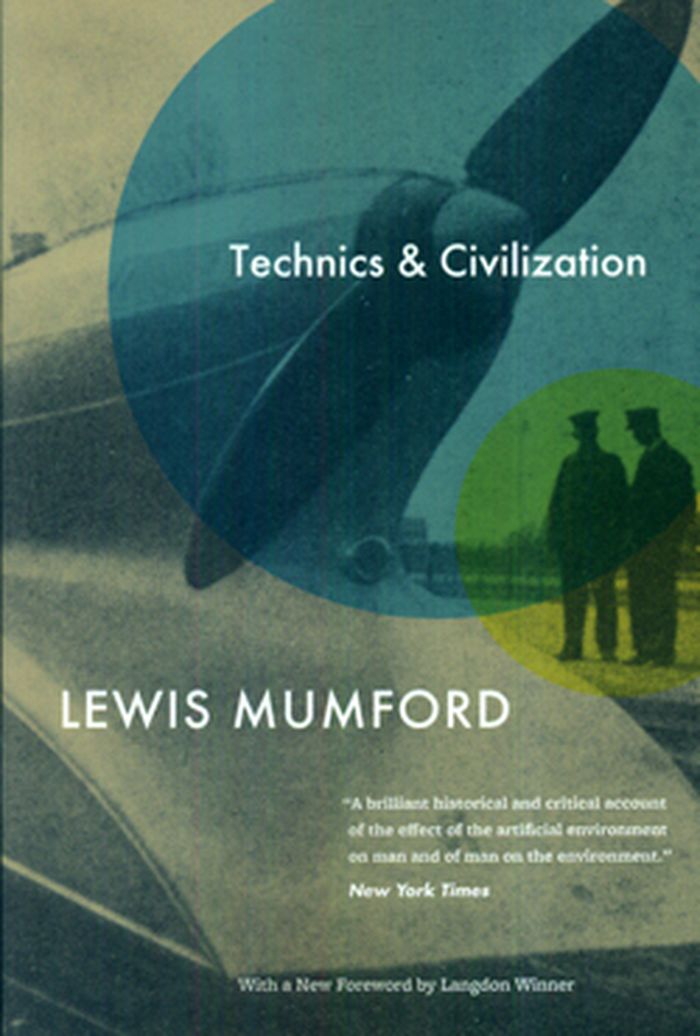
Technics and Civilization first presented its compelling history of the machine and critical study of its effects on civilization in 1934 —before television, the personal computer, and the Internet even appeared on our periphery. Drawing upon art, science, philosophy, and the history of culture, Lewis Mumford explained the origin of the machine age and traced its social results, asserting that the development of modern technology had its roots in the Middle Ages rather than the Industrial Revolution. Mumford sagely argued that it was the moral, economic, and political choices we made, not the machines that we used, that determined our then industrially driven economy. Equal parts powerful history and polemic criticism, this book was the first comprehensive attempt in English to portray the development of the machine age over the last thousand years — and to predict the pull the technological still holds over us today.
Technics & civilization
Actions:
Price:
$45.95
(available to order)
Summary:
Technics and Civilization first presented its compelling history of the machine and critical study of its effects on civilization in 1934 —before television, the personal computer, and the Internet even appeared on our periphery. Drawing upon art, science, philosophy, and the history of culture, Lewis Mumford explained the origin of the machine age and traced its social results, asserting that the development of modern technology had its roots in the Middle Ages rather than the Industrial Revolution. Mumford sagely argued that it was the moral, economic, and political choices we made, not the machines that we used, that determined our then industrially driven economy. Equal parts powerful history and polemic criticism, this book was the first comprehensive attempt in English to portray the development of the machine age over the last thousand years — and to predict the pull the technological still holds over us today.
Form:
books
books
Publication:
October 2010
October 2010
Subject:
Architectural Theory
Architectural Theory
Form:
journals and magazines
journals and magazines
Title:
Bracket 3, At Extremes
Bracket 3, At Extremes
Actions:
Price:
$51.95
(available to order)
Summary:
"Bracket [at Extremes]" includes critical articles and unpublished design projects that investigate architecture, infrastructure and technology as they operate in conditions of imbalance, negotiate tipping points and test limit states. We are conditioned, as designers of the built environment, towards the organization of people, programs and movement. Indeed the history(...)
$51.95
(available to order)
Summary:
"Bracket [at Extremes]" includes critical articles and unpublished design projects that investigate architecture, infrastructure and technology as they operate in conditions of imbalance, negotiate tipping points and test limit states. We are conditioned, as designers of the built environment, towards the organization of people, programs and movement. Indeed the history(...)
Title:
Bracket 3, At Extremes
Actions:
Price:
$51.95
(available to order)
Summary:
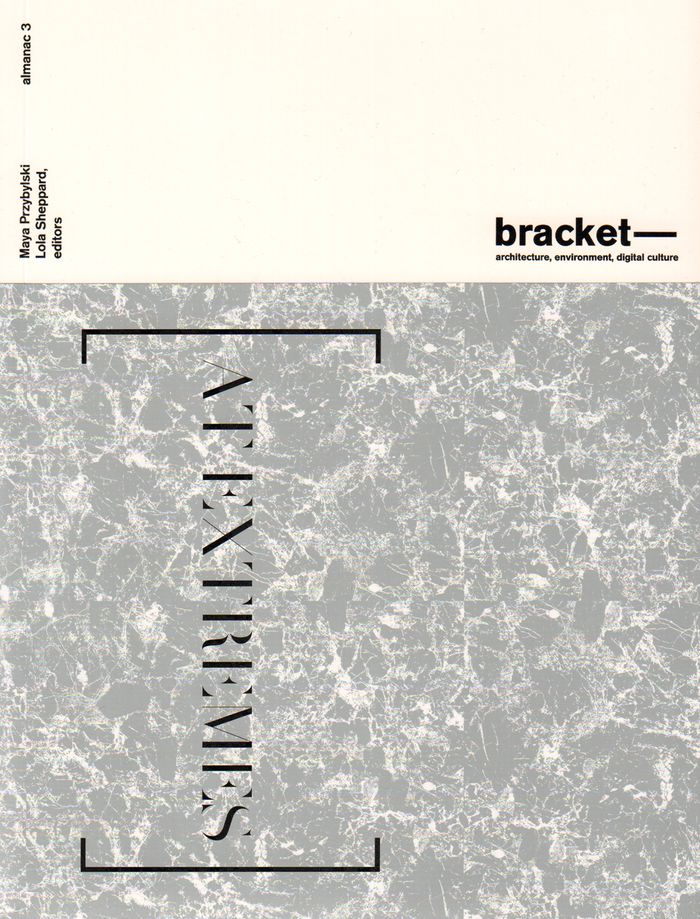
"Bracket [at Extremes]" includes critical articles and unpublished design projects that investigate architecture, infrastructure and technology as they operate in conditions of imbalance, negotiate tipping points and test limit states. We are conditioned, as designers of the built environment, towards the organization of people, programs and movement. Indeed the history of modern urbanism, architecture and building science has been predicated on an anti-entropic notion of programmatic and social order. But are there scenarios in which a state of extremity or imbalance is productive? Bracket [at Extremes] seeks to understand what new spatial orders emerge in this liminal space. How might it be leveraged as an opportunity for invention? What are the limits of wilderness and control, of the natural and artificial, the real and the virtual? What new landscapes, networks, and urban models might emerge in the wake of destabilized economic, social and environmental conditions?
Bracket 3, At Extremes
Actions:
Price:
$51.95
(available to order)
Summary:
"Bracket [at Extremes]" includes critical articles and unpublished design projects that investigate architecture, infrastructure and technology as they operate in conditions of imbalance, negotiate tipping points and test limit states. We are conditioned, as designers of the built environment, towards the organization of people, programs and movement. Indeed the history of modern urbanism, architecture and building science has been predicated on an anti-entropic notion of programmatic and social order. But are there scenarios in which a state of extremity or imbalance is productive? Bracket [at Extremes] seeks to understand what new spatial orders emerge in this liminal space. How might it be leveraged as an opportunity for invention? What are the limits of wilderness and control, of the natural and artificial, the real and the virtual? What new landscapes, networks, and urban models might emerge in the wake of destabilized economic, social and environmental conditions?
Form:
journals and magazines
journals and magazines
Publication:
September 2016
September 2016
Subject:
Magazines
Magazines
Form:
books
books
Title:
Climateskin
Climateskin
Actions:
Price:
$91.95
(available to order)
Summary:
The facade plays a critical role in the conception of energy- and climate-optimized buildings: it is the building’s skin and functions as an interface between interior and exterior space. It provides thermal and sound insulation and ventilation, and controls and guides the entrance of daylight into the building. Climate Skin offers concrete planning advice for(...)
$91.95
(available to order)
Summary:
The facade plays a critical role in the conception of energy- and climate-optimized buildings: it is the building’s skin and functions as an interface between interior and exterior space. It provides thermal and sound insulation and ventilation, and controls and guides the entrance of daylight into the building. Climate Skin offers concrete planning advice for(...)
Subject:
Green Architecture
Green Architecture
Publication:
November 2007, Basel, Boston, Berlin
November 2007, Basel, Boston, Berlin
Title:
Climateskin
Actions:
Price:
$91.95
(available to order)
Summary:
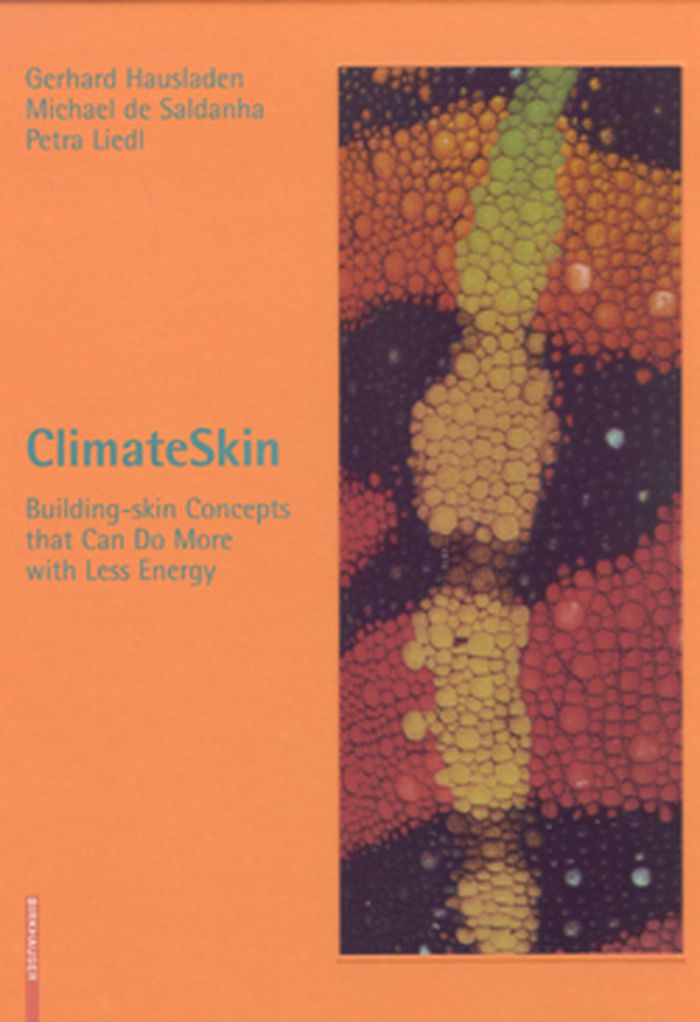
The facade plays a critical role in the conception of energy- and climate-optimized buildings: it is the building’s skin and functions as an interface between interior and exterior space. It provides thermal and sound insulation and ventilation, and controls and guides the entrance of daylight into the building. Climate Skin offers concrete planning advice for architects and engineers who wish to exploit not only the architectural potential of facades but also their energy and climate-control possibilities, treating the building envelope as an essential component within a complete climate-control and technology solution. It provides a solid foundation of knowledge that equips the reader to make competent technical and economic evaluations of building envelopes. For everyone concerned with facades, Climate Skin is a comprehensive planning handbook and reference work that covers all of the relevant technical and physical aspects of the design and detailed planning of energy-efficient facades.
Climateskin
Actions:
Price:
$91.95
(available to order)
Summary:
The facade plays a critical role in the conception of energy- and climate-optimized buildings: it is the building’s skin and functions as an interface between interior and exterior space. It provides thermal and sound insulation and ventilation, and controls and guides the entrance of daylight into the building. Climate Skin offers concrete planning advice for architects and engineers who wish to exploit not only the architectural potential of facades but also their energy and climate-control possibilities, treating the building envelope as an essential component within a complete climate-control and technology solution. It provides a solid foundation of knowledge that equips the reader to make competent technical and economic evaluations of building envelopes. For everyone concerned with facades, Climate Skin is a comprehensive planning handbook and reference work that covers all of the relevant technical and physical aspects of the design and detailed planning of energy-efficient facades.
Form:
books
books
Publication:
November 2007, Basel, Boston, Berlin
November 2007, Basel, Boston, Berlin
Subject:
Green Architecture
Green Architecture
Form:
books
books
Actions:
Price:
$38.00
(available to order)
Summary:
From the Tower of Babel to the Leaning Tower of Pisa, from European cathedrals to the Twin Towers and the currently scandalous Freedom Tower, highrises have always been a symbol of mankind's cultural aspirations and technological achievements. The biennial International Highrise Award specifies that an ideal contemporary tower should make exceptional use of aesthetics,(...)
$38.00
(available to order)
Summary:
From the Tower of Babel to the Leaning Tower of Pisa, from European cathedrals to the Twin Towers and the currently scandalous Freedom Tower, highrises have always been a symbol of mankind's cultural aspirations and technological achievements. The biennial International Highrise Award specifies that an ideal contemporary tower should make exceptional use of aesthetics,(...)
Subject:
Gratte-ciels
Gratte-ciels
Publication:
April 2007, Frankfurt / Main
April 2007, Frankfurt / Main
Title:
High Society: Contemporary highrise architecture and the international highrise Award 2006 / Aktuelle hochhausarchitektur und der nternationale hochhaus preis 2006
Actions:
Price:
$38.00
(available to order)
Summary:
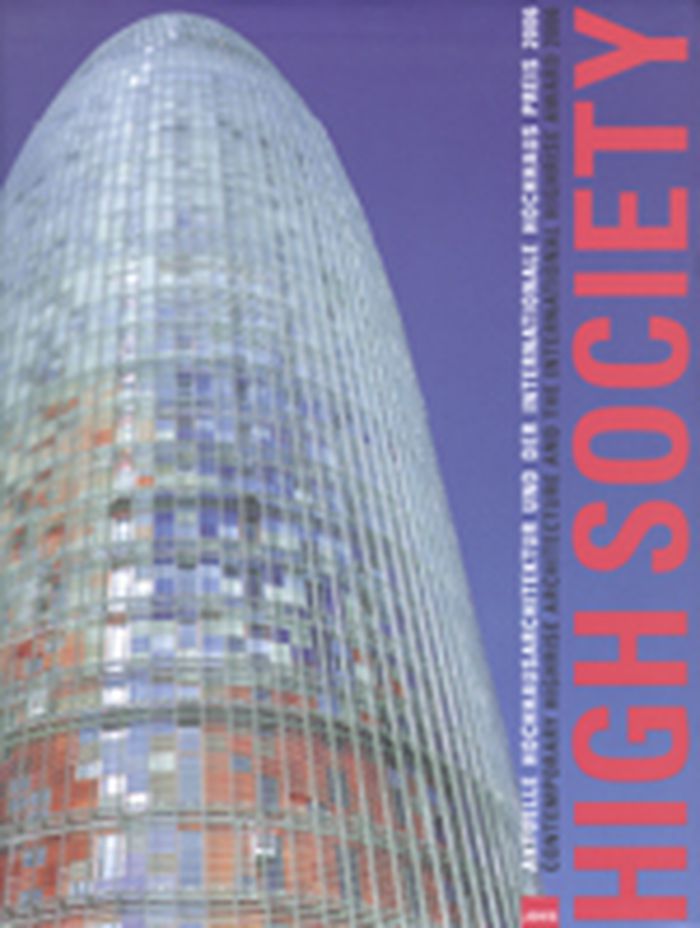
From the Tower of Babel to the Leaning Tower of Pisa, from European cathedrals to the Twin Towers and the currently scandalous Freedom Tower, highrises have always been a symbol of mankind's cultural aspirations and technological achievements. The biennial International Highrise Award specifies that an ideal contemporary tower should make exceptional use of aesthetics, design and technology, and show cost-effectiveness, sustainability and integration into town planning. This album of the 2006 contenders honors foremost the winners, Jean Nouvel and Fermin Vasquez, who designed the Torre Agbar building in Barcelona. The Agbar Tower's distinctive rounded crown had already earned it a nominee spot in Cabinet Magazine's Most Phallic Building in the World Contest. Here, the Highrise Award's more serious honor cites the building's "expressive shape," "pulsating dynamism" and "a multi-layer outer skin that generates its varied and exciting appearance." Runners-up include Santiago Calatrava's Turning Torso in Malmo, Sweden.
High Society: Contemporary highrise architecture and the international highrise Award 2006 / Aktuelle hochhausarchitektur und der nternationale hochhaus preis 2006
Actions:
Price:
$38.00
(available to order)
Summary:
From the Tower of Babel to the Leaning Tower of Pisa, from European cathedrals to the Twin Towers and the currently scandalous Freedom Tower, highrises have always been a symbol of mankind's cultural aspirations and technological achievements. The biennial International Highrise Award specifies that an ideal contemporary tower should make exceptional use of aesthetics, design and technology, and show cost-effectiveness, sustainability and integration into town planning. This album of the 2006 contenders honors foremost the winners, Jean Nouvel and Fermin Vasquez, who designed the Torre Agbar building in Barcelona. The Agbar Tower's distinctive rounded crown had already earned it a nominee spot in Cabinet Magazine's Most Phallic Building in the World Contest. Here, the Highrise Award's more serious honor cites the building's "expressive shape," "pulsating dynamism" and "a multi-layer outer skin that generates its varied and exciting appearance." Runners-up include Santiago Calatrava's Turning Torso in Malmo, Sweden.
Form:
books
books
Publication:
April 2007, Frankfurt / Main
April 2007, Frankfurt / Main
Subject:
Gratte-ciels
Gratte-ciels
Form:
books
books
Actions:
Price:
$45.00
(available in store)
Summary:
Design office ipv Delft offers the readers realistic insights into the bridge designing process. What exactly is involved? What knowledge is required? How much does a bridge actually cost? And how can you ensure that all the requisite factors • technology, design requirements and desired image • are combined to create a successful bridge design? Bridging the Dutch(...)
$45.00
(available in store)
Summary:
Design office ipv Delft offers the readers realistic insights into the bridge designing process. What exactly is involved? What knowledge is required? How much does a bridge actually cost? And how can you ensure that all the requisite factors • technology, design requirements and desired image • are combined to create a successful bridge design? Bridging the Dutch(...)
Subject:
Engineering Structures
Engineering Structures
Publication:
March 2007, Amsterdam
March 2007, Amsterdam
Title:
Bridging the Dutch Landscape : design guide for bridges
Actions:
Price:
$45.00
(available in store)
Summary:
Design office ipv Delft offers the readers realistic insights into the bridge designing process. What exactly is involved? What knowledge is required? How much does a bridge actually cost? And how can you ensure that all the requisite factors • technology, design requirements and desired image • are combined to create a successful bridge design? Bridging the Dutch Landscape tells the story of the design process, based on 26 bridge designs and a design guide. One by one, it shows the different parts of a bridge and their function and possibilities. Apart from interesting design features, factors such as the building costs and bridge size are included for each projects ipv Delft has been designing bridges and outdoor products for ten years. In the process, the company has gained a wealth of experience and has become an expert in bridge design and all that is involved in the design and building processes.
Bridging the Dutch Landscape : design guide for bridges
Actions:
Price:
$45.00
(available in store)
Summary:
Design office ipv Delft offers the readers realistic insights into the bridge designing process. What exactly is involved? What knowledge is required? How much does a bridge actually cost? And how can you ensure that all the requisite factors • technology, design requirements and desired image • are combined to create a successful bridge design? Bridging the Dutch Landscape tells the story of the design process, based on 26 bridge designs and a design guide. One by one, it shows the different parts of a bridge and their function and possibilities. Apart from interesting design features, factors such as the building costs and bridge size are included for each projects ipv Delft has been designing bridges and outdoor products for ten years. In the process, the company has gained a wealth of experience and has become an expert in bridge design and all that is involved in the design and building processes.
Form:
books
books
Publication:
March 2007, Amsterdam
March 2007, Amsterdam
Subject:
Engineering Structures
Engineering Structures
Form:
books
books
Price:
$34.99
(available in store)
Summary:
''Fortress Power'' presents a genealogy of fortification as a material and political technology intent on obstruction, tracing its implementation across battlefields, borders, and urban environments. Drawing on the influential work of philosophers Michel Foucault and Giorgio Agamben, Derek S. Denman places the fortress alongside the archetypes of the prison and the camp,(...)
$34.99
(available in store)
Summary:
''Fortress Power'' presents a genealogy of fortification as a material and political technology intent on obstruction, tracing its implementation across battlefields, borders, and urban environments. Drawing on the influential work of philosophers Michel Foucault and Giorgio Agamben, Derek S. Denman places the fortress alongside the archetypes of the prison and the camp,(...)
Title:
Fortress power: Hostile designs and the politics of spatial control
Actions:
Price:
$34.99
(available in store)
Summary:
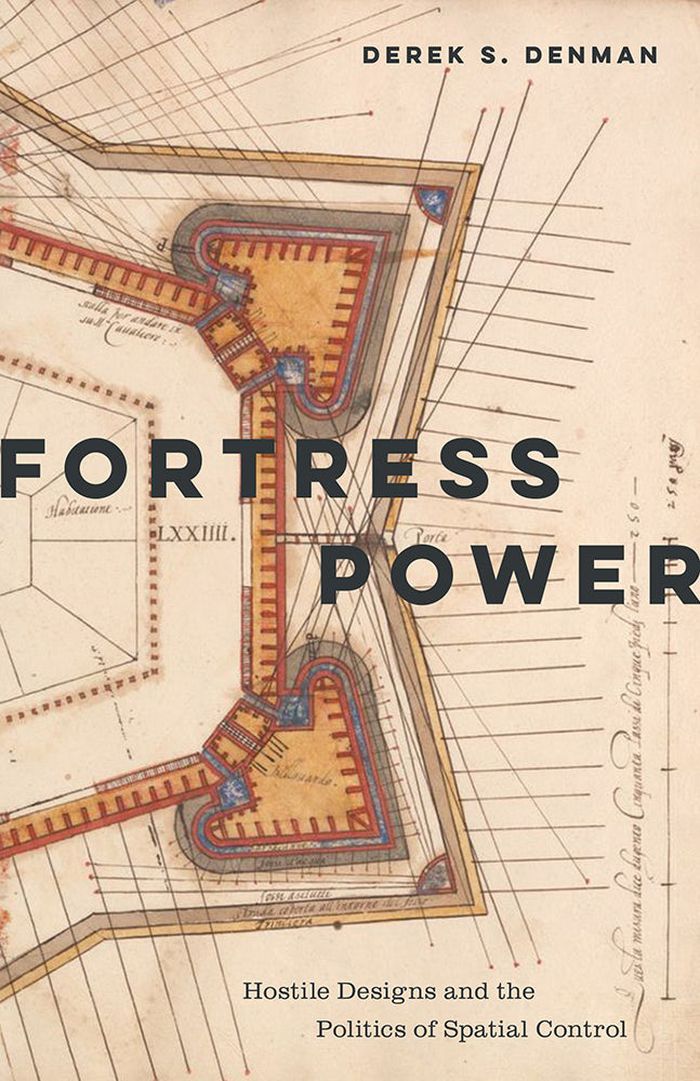
''Fortress Power'' presents a genealogy of fortification as a material and political technology intent on obstruction, tracing its implementation across battlefields, borders, and urban environments. Drawing on the influential work of philosophers Michel Foucault and Giorgio Agamben, Derek S. Denman places the fortress alongside the archetypes of the prison and the camp, citing them as paradigmatic of how space is transformed into a tool of domination and control. Focusing on the defensive architecture of bastion fortresses, urban design, and border landscapes, ''Fortress Power'' charts the rise of a form of governance grounded in hostility, extending the scope of its subject from a piece of military construction to a much broader political concept. Detailing how power manifests in everything from city centers to international boundaries, the book analyzes the logic of fortification as it moves through various contexts in the advancement of surveillance, exploitation, warfare, and political authority.
Fortress power: Hostile designs and the politics of spatial control
Actions:
Price:
$34.99
(available in store)
Summary:
''Fortress Power'' presents a genealogy of fortification as a material and political technology intent on obstruction, tracing its implementation across battlefields, borders, and urban environments. Drawing on the influential work of philosophers Michel Foucault and Giorgio Agamben, Derek S. Denman places the fortress alongside the archetypes of the prison and the camp, citing them as paradigmatic of how space is transformed into a tool of domination and control. Focusing on the defensive architecture of bastion fortresses, urban design, and border landscapes, ''Fortress Power'' charts the rise of a form of governance grounded in hostility, extending the scope of its subject from a piece of military construction to a much broader political concept. Detailing how power manifests in everything from city centers to international boundaries, the book analyzes the logic of fortification as it moves through various contexts in the advancement of surveillance, exploitation, warfare, and political authority.
Form:
books
books
Publication:
July 2025
July 2025
Subject:
Architectural Theory
Architectural Theory
Form:
books
books
Actions:
Price:
$48.00
(available to order)
Summary:
Developed by Amsterdam-based Slovenian artist and researcher Andrea Knezovic (born 1990) in collaboration with editor-curator Agata Bar, curator Tia Cicek and graphic designer Miquel Hervás Gómez, ''Nocturnalities: Bargaining Beyond Rest'' looks at how technology can assist, instead of coopting, care urgencies and needs. What is rest if not the space of safety? How can we(...)
$48.00
(available to order)
Summary:
Developed by Amsterdam-based Slovenian artist and researcher Andrea Knezovic (born 1990) in collaboration with editor-curator Agata Bar, curator Tia Cicek and graphic designer Miquel Hervás Gómez, ''Nocturnalities: Bargaining Beyond Rest'' looks at how technology can assist, instead of coopting, care urgencies and needs. What is rest if not the space of safety? How can we(...)
Title:
Nocturnalities: Bargaining beyond rest
Actions:
Price:
$48.00
(available to order)
Summary:
Developed by Amsterdam-based Slovenian artist and researcher Andrea Knezovic (born 1990) in collaboration with editor-curator Agata Bar, curator Tia Cicek and graphic designer Miquel Hervás Gómez, ''Nocturnalities: Bargaining Beyond Rest'' looks at how technology can assist, instead of coopting, care urgencies and needs. What is rest if not the space of safety? How can we use or appropriate care methodologies in capitalism and create little oases of comfort, exchange and "communal comradeship"? The value of this work is embedded in the way it offers different—local and international—perspectives and understandings of how we relate to the politics of rest, negotiate institutional and intimate care, and imagine varieties of care systems and healing strategies within a local setting. The intent is not necessarily to offer one solution to the larger inquiry but to allow a plurality of voices and contributions to be heard, expressed and remembered.
Nocturnalities: Bargaining beyond rest
Actions:
Price:
$48.00
(available to order)
Summary:
Developed by Amsterdam-based Slovenian artist and researcher Andrea Knezovic (born 1990) in collaboration with editor-curator Agata Bar, curator Tia Cicek and graphic designer Miquel Hervás Gómez, ''Nocturnalities: Bargaining Beyond Rest'' looks at how technology can assist, instead of coopting, care urgencies and needs. What is rest if not the space of safety? How can we use or appropriate care methodologies in capitalism and create little oases of comfort, exchange and "communal comradeship"? The value of this work is embedded in the way it offers different—local and international—perspectives and understandings of how we relate to the politics of rest, negotiate institutional and intimate care, and imagine varieties of care systems and healing strategies within a local setting. The intent is not necessarily to offer one solution to the larger inquiry but to allow a plurality of voices and contributions to be heard, expressed and remembered.
Form:
books
books
Publication:
July 2025
July 2025
Subject:
Social
Social
Form:
books
books
Actions:
Price:
$58.00
(available to order)
Summary:
Daniel Marques was born in 1950 in Aarau, Switzerland. He studied under Aldo Rossi and Dolf Schnebli at the Federal Institute of Technology in Zurich and went on to found his own office in Lucerne in 1977. Besides working as an architect he has taught at various schools of architecture and in 2000 he became professor at the Technical University in Graz. This(...)
$58.00
(available to order)
Summary:
Daniel Marques was born in 1950 in Aarau, Switzerland. He studied under Aldo Rossi and Dolf Schnebli at the Federal Institute of Technology in Zurich and went on to found his own office in Lucerne in 1977. Besides working as an architect he has taught at various schools of architecture and in 2000 he became professor at the Technical University in Graz. This(...)
Subject:
Architecture Monographs
Architecture Monographs
Publication:
April 2002, Luzern / Basel
April 2002, Luzern / Basel
Title:
Daniele Marques : 2 x 2 +3 wohnhäuser, houses
Actions:
Price:
$58.00
(available to order)
Summary:
Daniel Marques was born in 1950 in Aarau, Switzerland. He studied under Aldo Rossi and Dolf Schnebli at the Federal Institute of Technology in Zurich and went on to found his own office in Lucerne in 1977. Besides working as an architect he has taught at various schools of architecture and in 2000 he became professor at the Technical University in Graz. This publication accompanies an exhibition on Daniel Marques' work at the Architecture Gallery Lucerne. Along with photographs by Hannes Henz, Zurich, it documents and provides in-depth analyses of five residential buildings, all of which have been realised in the last few years. Martin Steinmann commented "The reduction that determines the architecture of Daniele Marques - at least in these houses - turns out to be a method of providing the things -with intensity: by postponing the moment in which they transform into specific meanings."
Daniele Marques : 2 x 2 +3 wohnhäuser, houses
Actions:
Price:
$58.00
(available to order)
Summary:
Daniel Marques was born in 1950 in Aarau, Switzerland. He studied under Aldo Rossi and Dolf Schnebli at the Federal Institute of Technology in Zurich and went on to found his own office in Lucerne in 1977. Besides working as an architect he has taught at various schools of architecture and in 2000 he became professor at the Technical University in Graz. This publication accompanies an exhibition on Daniel Marques' work at the Architecture Gallery Lucerne. Along with photographs by Hannes Henz, Zurich, it documents and provides in-depth analyses of five residential buildings, all of which have been realised in the last few years. Martin Steinmann commented "The reduction that determines the architecture of Daniele Marques - at least in these houses - turns out to be a method of providing the things -with intensity: by postponing the moment in which they transform into specific meanings."
Form:
books
books
Publication:
April 2002, Luzern / Basel
April 2002, Luzern / Basel
Subject:
Architecture Monographs
Architecture Monographs
Form:
books
books
Actions:
Price:
$37.95
(available to order)
Summary:
Toyo Ito is one of the foremost architects working today. His architecture makes innovative use of steel and aluminium and includes such buildings as the White U House and the Eggs of Winds in Tokyo. This volume focuses on his Mediathèque in Sendai. This newly completed structure, which houses a library, art gallery, cinema, lecture theatre, and cybercafé, is predicated(...)
$37.95
(available to order)
Summary:
Toyo Ito is one of the foremost architects working today. His architecture makes innovative use of steel and aluminium and includes such buildings as the White U House and the Eggs of Winds in Tokyo. This volume focuses on his Mediathèque in Sendai. This newly completed structure, which houses a library, art gallery, cinema, lecture theatre, and cybercafé, is predicated(...)
Title:
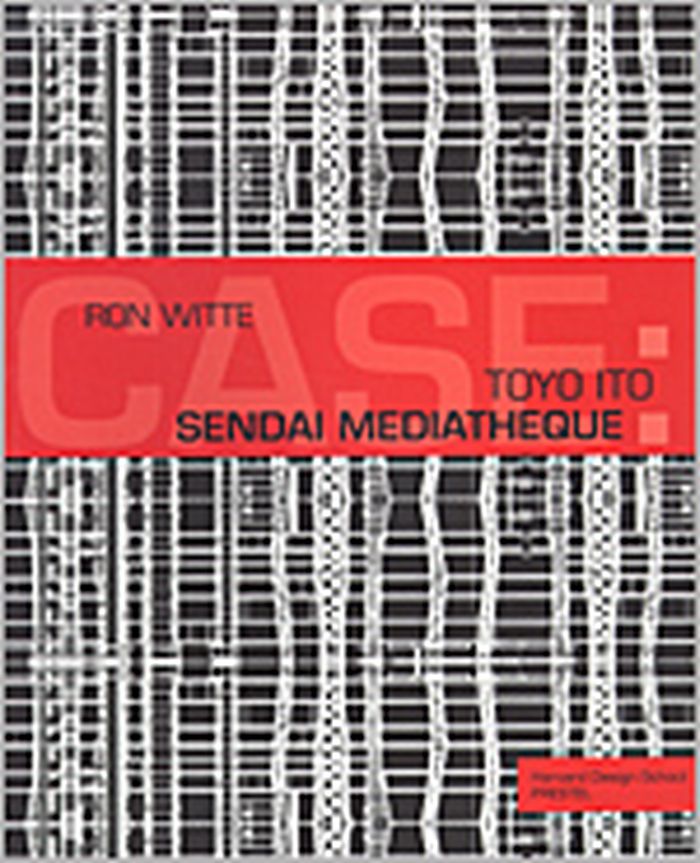
Case : Toyo Ito - Sendai Mediatheque
Actions:
Price:
$37.95
(available to order)
Summary:
Toyo Ito is one of the foremost architects working today. His architecture makes innovative use of steel and aluminium and includes such buildings as the White U House and the Eggs of Winds in Tokyo. This volume focuses on his Mediathèque in Sendai. This newly completed structure, which houses a library, art gallery, cinema, lecture theatre, and cybercafé, is predicated on the idea that the users of the building occupy a media/ information landscape or “digital ecology. ”Through a series of extraordinary technical advances, floors supported by a system of occupiable hollow tubes and sophisticated information and media networks, the building creates an environment in which people can engage in cultural activities both internally (within the structure) and externally (through digital connections to the world at large). This volume investigates the evolution of the structure through a series of essays by experts on media, architectural technology, and digital culture.
Case : Toyo Ito - Sendai Mediatheque
Actions:
Price:
$37.95
(available to order)
Summary:
Toyo Ito is one of the foremost architects working today. His architecture makes innovative use of steel and aluminium and includes such buildings as the White U House and the Eggs of Winds in Tokyo. This volume focuses on his Mediathèque in Sendai. This newly completed structure, which houses a library, art gallery, cinema, lecture theatre, and cybercafé, is predicated on the idea that the users of the building occupy a media/ information landscape or “digital ecology. ”Through a series of extraordinary technical advances, floors supported by a system of occupiable hollow tubes and sophisticated information and media networks, the building creates an environment in which people can engage in cultural activities both internally (within the structure) and externally (through digital connections to the world at large). This volume investigates the evolution of the structure through a series of essays by experts on media, architectural technology, and digital culture.
Form:
books
books
Publication:
October 2001, Munich
October 2001, Munich
Subject:
Architecture Monographs
Architecture Monographs
Form:
books
books
Title:
Future transport in cities
Future transport in cities
Actions:
Price:
$62.50
(available to order)
Summary:
Richards shows that attractive and practical alternatives to a car dependent society are possible. With the growth of car ownership and use reaching crisis proportions in our cities it is imperative to find and implement alternatives if cities are to survive and prosper. He reveals how transport technology is developing, in particular, showing how it can be integrated(...)
$62.50
(available to order)
Summary:
Richards shows that attractive and practical alternatives to a car dependent society are possible. With the growth of car ownership and use reaching crisis proportions in our cities it is imperative to find and implement alternatives if cities are to survive and prosper. He reveals how transport technology is developing, in particular, showing how it can be integrated(...)
Subject:
Transportation, Tourism, Migration
Transportation, Tourism, Migration
Publication:
October 2001, London
October 2001, London
Title:
Future transport in cities
Actions:
Price:
$62.50
(available to order)
Summary:
Richards shows that attractive and practical alternatives to a car dependent society are possible. With the growth of car ownership and use reaching crisis proportions in our cities it is imperative to find and implement alternatives if cities are to survive and prosper. He reveals how transport technology is developing, in particular, showing how it can be integrated into the urban environment. The book opens with a look at the "best" of current transportation systems and goes on to explore such advanced technologies as automated highways, covered cities, monorails, new elevated systems, smart cars, guided buses, as well as intelligent highways, and car-free housing. The importance, too, of simple measures such as walking and cycling are covered as being an essential part of any future city as well as that of an "integrated transport" if people are to be encouraged to get out of their cars.
Future transport in cities
Actions:
Price:
$62.50
(available to order)
Summary:
Richards shows that attractive and practical alternatives to a car dependent society are possible. With the growth of car ownership and use reaching crisis proportions in our cities it is imperative to find and implement alternatives if cities are to survive and prosper. He reveals how transport technology is developing, in particular, showing how it can be integrated into the urban environment. The book opens with a look at the "best" of current transportation systems and goes on to explore such advanced technologies as automated highways, covered cities, monorails, new elevated systems, smart cars, guided buses, as well as intelligent highways, and car-free housing. The importance, too, of simple measures such as walking and cycling are covered as being an essential part of any future city as well as that of an "integrated transport" if people are to be encouraged to get out of their cars.
Form:
books
books
Publication:
October 2001, London
October 2001, London
Subject:
Transportation, Tourism, Migration
Transportation, Tourism, Migration


