


7457 Results
Form:
books
books

Title:
Who is architecture? The 2009 Domus China interviews : conversations on the borders of building
Who is architecture? The 2009 Domus China interviews : conversations on the borders of building
Actions:
Price:
$34.00
(available to order)
Summary:
Architecture is a collaborative art, calling on the efforts of not only architects but also engineers, developers, plumbers, electricians and others. The production process must balance individual empowerment and general management to allow for meaningful dialogue between diverse professionals. This publication explores these interactions through ten interviews with(...)
$34.00
(available to order)
Summary:
Architecture is a collaborative art, calling on the efforts of not only architects but also engineers, developers, plumbers, electricians and others. The production process must balance individual empowerment and general management to allow for meaningful dialogue between diverse professionals. This publication explores these interactions through ten interviews with(...)
Title:
Who is architecture? The 2009 Domus China interviews : conversations on the borders of building
Actions:
Price:
$34.00
(available to order)
Summary:
Architecture is a collaborative art, calling on the efforts of not only architects but also engineers, developers, plumbers, electricians and others. The production process must balance individual empowerment and general management to allow for meaningful dialogue between diverse professionals. This publication explores these interactions through ten interviews with professionals who contribute to architecture in various ways. Conducted by writer and editor Brendan McGetrick, and originally published as a series for the Chinese edition of Domus magazine, these conversations illustrate the many facets of architectural practice. Interview subjects include : Michael Rock (Founder of the graphic design firm 2x4), Lu Zhenggang (Founder of the digital rendering company Crystal CG), Barry Bergdoll (Curator of Architecture and Design at The Museum of Modern Art, New York), Mark Wigley (Dean of Columbia University's Graduate School of Architecture, Planning and Preservation) and Tan Xiaochun (Chief of Construction for China's National Stadium).
Who is architecture? The 2009 Domus China interviews : conversations on the borders of building
Actions:
Price:
$34.00
(available to order)
Summary:
Architecture is a collaborative art, calling on the efforts of not only architects but also engineers, developers, plumbers, electricians and others. The production process must balance individual empowerment and general management to allow for meaningful dialogue between diverse professionals. This publication explores these interactions through ten interviews with professionals who contribute to architecture in various ways. Conducted by writer and editor Brendan McGetrick, and originally published as a series for the Chinese edition of Domus magazine, these conversations illustrate the many facets of architectural practice. Interview subjects include : Michael Rock (Founder of the graphic design firm 2x4), Lu Zhenggang (Founder of the digital rendering company Crystal CG), Barry Bergdoll (Curator of Architecture and Design at The Museum of Modern Art, New York), Mark Wigley (Dean of Columbia University's Graduate School of Architecture, Planning and Preservation) and Tan Xiaochun (Chief of Construction for China's National Stadium).
Form:
books
books
Publication:
October 2010
October 2010
Subject:
Architectural Theory
Architectural Theory
Form:
journals and magazines
journals and magazines
Description:
1 online resource
Author:
Subject:
Publication:
Malden, Mass. : Blackwell Publishers, Oxford: Oxford Academic
Malden, Mass. : Blackwell Publishers, Oxford: Oxford Academic
Title:
Biometrics : journal of the International Biometric Society.
Actions:
Description:
1 online resource
Biometrics : journal of the International Biometric Society.
Actions:
Description:
1 online resource
Form:
journals and magazines
journals and magazines
Publication:
Malden, Mass. : Blackwell Publishers, Oxford: Oxford Academic
Malden, Mass. : Blackwell Publishers, Oxford: Oxford Academic
Author:
Subject:
Form:
books
books
Actions:
Price:
$22.00
(available to order)
Summary:
This publication gathers for the first time a selection of Vicki Goldberg's essays and criticism, culled from her writings published over the past 25 years. Goldberg's subjects range from pop imagery to war journalism, from photo-booth portraits to manipulated digital imagery, from the “boredom” of voyeurism to the great preponderance of tragic photographs in the news.(...)
$22.00
(available to order)
Summary:
This publication gathers for the first time a selection of Vicki Goldberg's essays and criticism, culled from her writings published over the past 25 years. Goldberg's subjects range from pop imagery to war journalism, from photo-booth portraits to manipulated digital imagery, from the “boredom” of voyeurism to the great preponderance of tragic photographs in the news.(...)
Title:
Light matters : writings on photography
Actions:
Price:
$22.00
(available to order)
Summary:
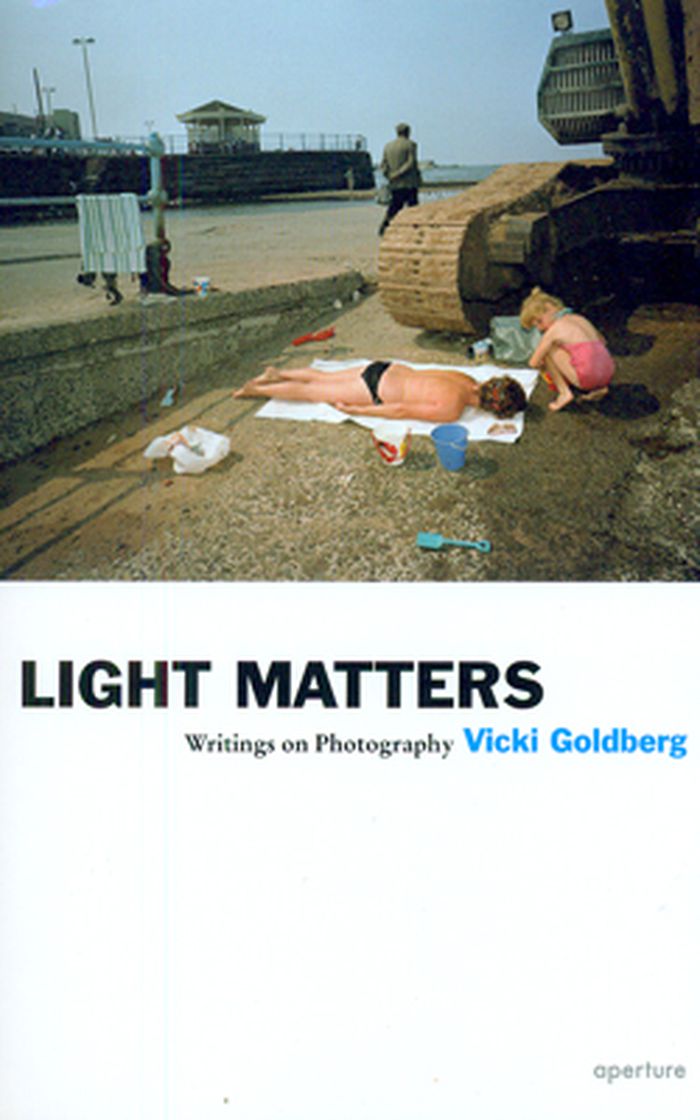
This publication gathers for the first time a selection of Vicki Goldberg's essays and criticism, culled from her writings published over the past 25 years. Goldberg's subjects range from pop imagery to war journalism, from photo-booth portraits to manipulated digital imagery, from the “boredom” of voyeurism to the great preponderance of tragic photographs in the news. She brings new light to the work of the medium's “old masters,” among them Walker Evans, Lotte Jacobi and Lartigue, writing with equal acuity about contemporary trailblazers such as Bill Viola, Daido Moriyama and Bastienne Schmidt. Goldberg also tackles provocative larger issues facing the medium, such as the potentially “transgressive” nature of photographs, and the camera's powerful role in a culture of commodification. Dismissing clichés and deftly negotiating the many diverging paths photography now follows, Goldberg demonstrates how to consider not just photographic images themselves, but their impact, and the meaning of that impact.
Light matters : writings on photography
Actions:
Price:
$22.00
(available to order)
Summary:
This publication gathers for the first time a selection of Vicki Goldberg's essays and criticism, culled from her writings published over the past 25 years. Goldberg's subjects range from pop imagery to war journalism, from photo-booth portraits to manipulated digital imagery, from the “boredom” of voyeurism to the great preponderance of tragic photographs in the news. She brings new light to the work of the medium's “old masters,” among them Walker Evans, Lotte Jacobi and Lartigue, writing with equal acuity about contemporary trailblazers such as Bill Viola, Daido Moriyama and Bastienne Schmidt. Goldberg also tackles provocative larger issues facing the medium, such as the potentially “transgressive” nature of photographs, and the camera's powerful role in a culture of commodification. Dismissing clichés and deftly negotiating the many diverging paths photography now follows, Goldberg demonstrates how to consider not just photographic images themselves, but their impact, and the meaning of that impact.
Form:
books
books
Publication:
November 2010
November 2010
Subject:
Theory of Photography
Theory of Photography
Form:
books
books
Title:
Ryoji Ikeda: dataphonics
Ryoji Ikeda: dataphonics
Actions:
Price:
$40.00
(available to order)
Summary:
Japan's leading electronic composer and sound artist Ryoji Ikeda (born 1966) focuses on the building blocks of sound and aural minutiae, often deploying frequencies at the very edges of human hearing. His albums +/- (1997) and Matrix (2001) spread this soundworld of sine waves and ambient glitchery to a wider audience; since then, he has exhibited and collaborated(...)
$40.00
(available to order)
Summary:
Japan's leading electronic composer and sound artist Ryoji Ikeda (born 1966) focuses on the building blocks of sound and aural minutiae, often deploying frequencies at the very edges of human hearing. His albums +/- (1997) and Matrix (2001) spread this soundworld of sine waves and ambient glitchery to a wider audience; since then, he has exhibited and collaborated(...)
Title:
Ryoji Ikeda: dataphonics
Actions:
Price:
$40.00
(available to order)
Summary:
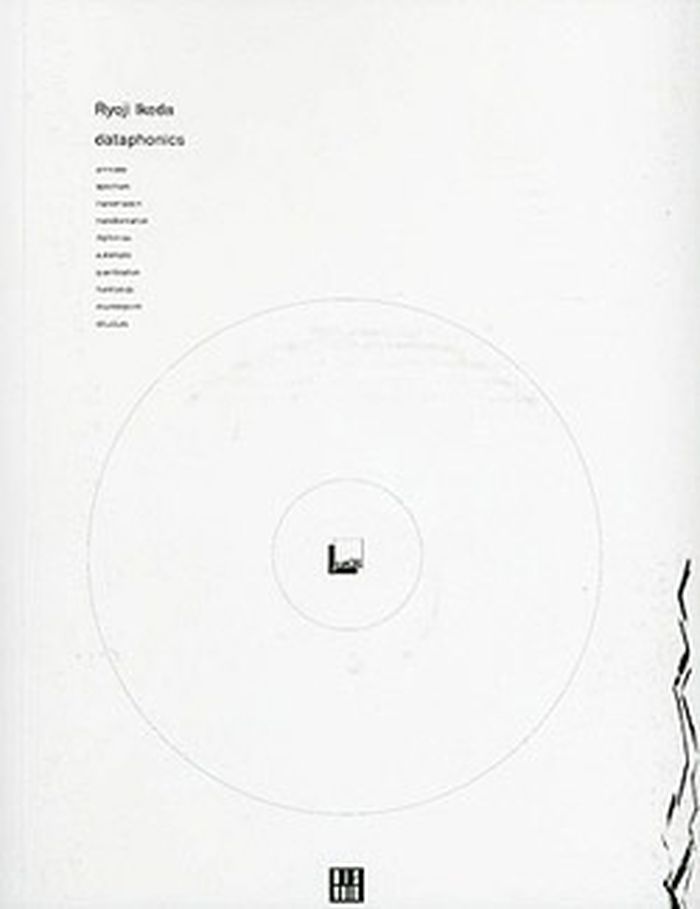
Japan's leading electronic composer and sound artist Ryoji Ikeda (born 1966) focuses on the building blocks of sound and aural minutiae, often deploying frequencies at the very edges of human hearing. His albums +/- (1997) and Matrix (2001) spread this soundworld of sine waves and ambient glitchery to a wider audience; since then, he has exhibited and collaborated (notably with Carsten Nicolai) across the world. A homage to Musique Concrète pioneer Pierre Schaeffer's Solfege de l'objet sonore, Dataphonics began as a monthly broadcast on France culture's Atelier de Création Radiophonique, in which Ikeda created a highly physical auditory experience based on the idea of binary-logic data made audible, “to materialize the invisible domain of ‘totally pure digital data.'” This book and CD includes spreads of graphic scores, codes, symbols and the composition itself, recomposed from the ten segments in which it was originally conceived.
Ryoji Ikeda: dataphonics
Actions:
Price:
$40.00
(available to order)
Summary:
Japan's leading electronic composer and sound artist Ryoji Ikeda (born 1966) focuses on the building blocks of sound and aural minutiae, often deploying frequencies at the very edges of human hearing. His albums +/- (1997) and Matrix (2001) spread this soundworld of sine waves and ambient glitchery to a wider audience; since then, he has exhibited and collaborated (notably with Carsten Nicolai) across the world. A homage to Musique Concrète pioneer Pierre Schaeffer's Solfege de l'objet sonore, Dataphonics began as a monthly broadcast on France culture's Atelier de Création Radiophonique, in which Ikeda created a highly physical auditory experience based on the idea of binary-logic data made audible, “to materialize the invisible domain of ‘totally pure digital data.'” This book and CD includes spreads of graphic scores, codes, symbols and the composition itself, recomposed from the ten segments in which it was originally conceived.
Form:
books
books
Publication:
July 2012
July 2012
Subject:
Acoustics
Acoustics
Form:
books
books
Title:
Competing for excellence in architecture: editorials from the Canadian Competitions Catalogue
Competing for excellence in architecture: editorials from the Canadian Competitions Catalogue
Actions:
Price:
$84.95
(available to order)
Summary:
A travel guide for those in search of architectural quality, this book can be browsed in many ways. Written in a clear and concise manner by about thirty authors, it features a collection of editorials from the Canadian Competitions Catalogue (CCC), a large online digital archive open to the public since 2006. The editorials explore more than sixty Canadian architecture(...)
$84.95
(available to order)
Summary:
A travel guide for those in search of architectural quality, this book can be browsed in many ways. Written in a clear and concise manner by about thirty authors, it features a collection of editorials from the Canadian Competitions Catalogue (CCC), a large online digital archive open to the public since 2006. The editorials explore more than sixty Canadian architecture(...)
Title:
Competing for excellence in architecture: editorials from the Canadian Competitions Catalogue
Actions:
Price:
$84.95
(available to order)
Summary:
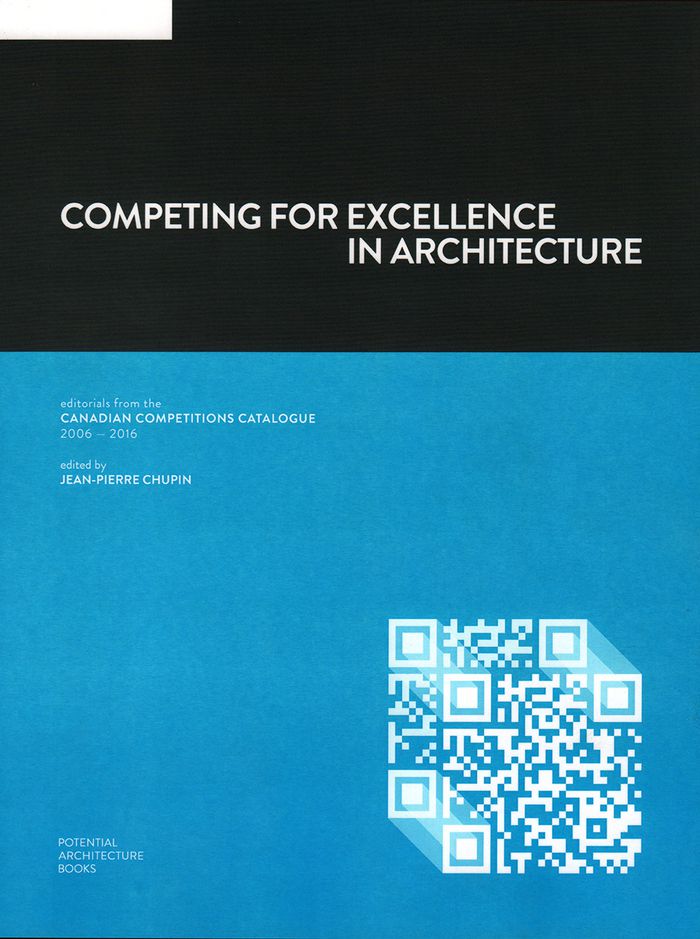
A travel guide for those in search of architectural quality, this book can be browsed in many ways. Written in a clear and concise manner by about thirty authors, it features a collection of editorials from the Canadian Competitions Catalogue (CCC), a large online digital archive open to the public since 2006. The editorials explore more than sixty Canadian architecture competitions held in the last seventy years. Especially in recent years, both public and private institutions have organized competitions across Canada, producing hundreds of architectural, urban planning, and landscape design projects. Together these proposals, most of which remain unbuilt, constitute a fantastic treasure in our tangible and intangible common heritage. Given that competition organizers, designers, juries, and critics never operate alone, there is no doubt whatsoever that this book results from the collaboration of a myriad of people, contributing to and competing for excellence in architecture.
Competing for excellence in architecture: editorials from the Canadian Competitions Catalogue
Actions:
Price:
$84.95
(available to order)
Summary:
A travel guide for those in search of architectural quality, this book can be browsed in many ways. Written in a clear and concise manner by about thirty authors, it features a collection of editorials from the Canadian Competitions Catalogue (CCC), a large online digital archive open to the public since 2006. The editorials explore more than sixty Canadian architecture competitions held in the last seventy years. Especially in recent years, both public and private institutions have organized competitions across Canada, producing hundreds of architectural, urban planning, and landscape design projects. Together these proposals, most of which remain unbuilt, constitute a fantastic treasure in our tangible and intangible common heritage. Given that competition organizers, designers, juries, and critics never operate alone, there is no doubt whatsoever that this book results from the collaboration of a myriad of people, contributing to and competing for excellence in architecture.
Form:
books
books
Publication:
October 2017
October 2017
Subject:
Architecture in Canada
Architecture in Canada
Form:
books
books

Title:
Being ecological
Being ecological
Actions:
Price:
$21.99
(available to order)
Summary:
Don't care about ecology? This book is for you. Timothy Morton, who has been called 'Our most popular guide to the new epoch' (Guardian), sets out to show us that whether we know it or not, we already have the capacity and the will to change the way we understand the place of humans in the world, and our very understanding of the term 'ecology'. A cross-disciplinarian who(...)
$21.99
(available to order)
Summary:
Don't care about ecology? This book is for you. Timothy Morton, who has been called 'Our most popular guide to the new epoch' (Guardian), sets out to show us that whether we know it or not, we already have the capacity and the will to change the way we understand the place of humans in the world, and our very understanding of the term 'ecology'. A cross-disciplinarian who(...)
Title:
Being ecological
Actions:
Price:
$21.99
(available to order)
Summary:
Don't care about ecology? This book is for you. Timothy Morton, who has been called 'Our most popular guide to the new epoch' (Guardian), sets out to show us that whether we know it or not, we already have the capacity and the will to change the way we understand the place of humans in the world, and our very understanding of the term 'ecology'. A cross-disciplinarian who has collaborated with everyone from Bjoerk to Hans Ulrich Obrist, Morton is also a member of the object-oriented philosophy movement, a group of forward-looking thinkers who are grappling with modern-day notions of subjectivity and objectivity, while also offering fascinating new understandings of Heidegger and Kant. Calling the volume a book containing 'no ecological facts', Morton confronts the 'information dump' fatigue of the digital age, and offers an invigorated approach to creating a liveable future.
Being ecological
Actions:
Price:
$21.99
(available to order)
Summary:
Don't care about ecology? This book is for you. Timothy Morton, who has been called 'Our most popular guide to the new epoch' (Guardian), sets out to show us that whether we know it or not, we already have the capacity and the will to change the way we understand the place of humans in the world, and our very understanding of the term 'ecology'. A cross-disciplinarian who has collaborated with everyone from Bjoerk to Hans Ulrich Obrist, Morton is also a member of the object-oriented philosophy movement, a group of forward-looking thinkers who are grappling with modern-day notions of subjectivity and objectivity, while also offering fascinating new understandings of Heidegger and Kant. Calling the volume a book containing 'no ecological facts', Morton confronts the 'information dump' fatigue of the digital age, and offers an invigorated approach to creating a liveable future.
Form:
books
books
Publication:
January 2018
January 2018
Subject:
Environment and environmental theory
Environment and environmental theory
Form:
books
books
Actions:
Price:
$65.00
(available to order)
Summary:
This book presents and analyses the career of architect Carlos Ferrater since the creation of his new studio called OAB (Office of Architecture in Barcelona). With the arrival of young architects to the team, the activity of OAB is not only deployed in the execution of construction projects, but how it is also complemented and enriched by going into depth in other fields(...)
$65.00
(available to order)
Summary:
This book presents and analyses the career of architect Carlos Ferrater since the creation of his new studio called OAB (Office of Architecture in Barcelona). With the arrival of young architects to the team, the activity of OAB is not only deployed in the execution of construction projects, but how it is also complemented and enriched by going into depth in other fields(...)
Title:
OAB: Carlos Ferrater and partners
Actions:
Price:
$65.00
(available to order)
Summary:
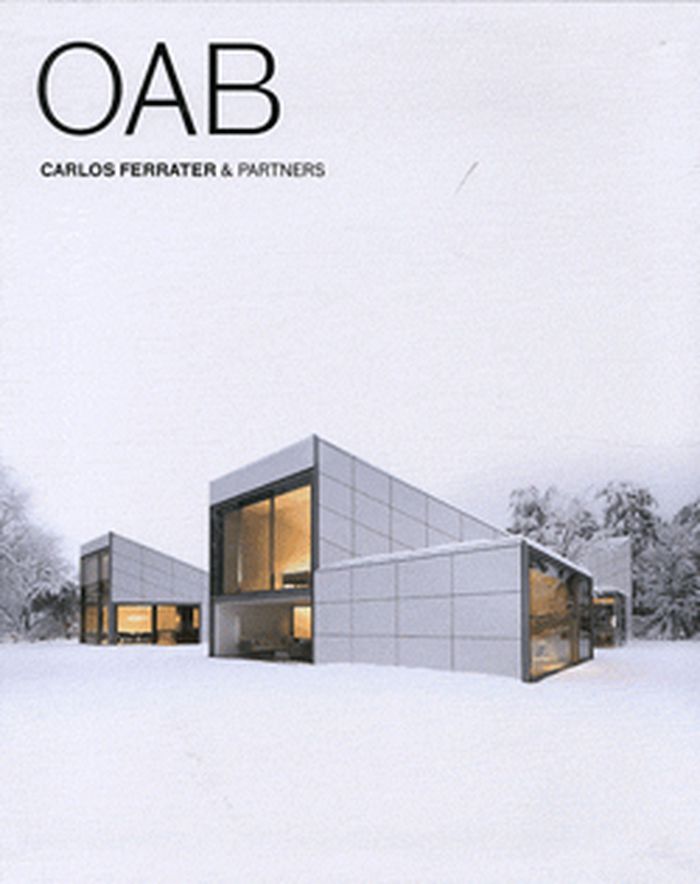
This book presents and analyses the career of architect Carlos Ferrater since the creation of his new studio called OAB (Office of Architecture in Barcelona). With the arrival of young architects to the team, the activity of OAB is not only deployed in the execution of construction projects, but how it is also complemented and enriched by going into depth in other fields such as teaching and academic research. OAB draws on the collaborative nature of Carlos Ferrater’s previous studio, incorporating new ways of understanding the contributions of each team member to generate richer, more varied, and flexible projects. Their most relevant projects are the Beach Promenade in Benidorm, the Mandarin Hotel, the Zaragoza-Delicias Station, House A and Roca Barcelona Gallery, among many others. Recent works and projects presented by means of extensive photoreportages, plans, drawings and QR codes which link the printed matter and the digital world.
OAB: Carlos Ferrater and partners
Actions:
Price:
$65.00
(available to order)
Summary:
This book presents and analyses the career of architect Carlos Ferrater since the creation of his new studio called OAB (Office of Architecture in Barcelona). With the arrival of young architects to the team, the activity of OAB is not only deployed in the execution of construction projects, but how it is also complemented and enriched by going into depth in other fields such as teaching and academic research. OAB draws on the collaborative nature of Carlos Ferrater’s previous studio, incorporating new ways of understanding the contributions of each team member to generate richer, more varied, and flexible projects. Their most relevant projects are the Beach Promenade in Benidorm, the Mandarin Hotel, the Zaragoza-Delicias Station, House A and Roca Barcelona Gallery, among many others. Recent works and projects presented by means of extensive photoreportages, plans, drawings and QR codes which link the printed matter and the digital world.
Form:
books
books
Publication:
November 2010
November 2010
Subject:
Architecture Monographs
Architecture Monographs
Form:
books
books
Actions:
Price:
$28.00
(available to order)
Summary:
Addressing the histories and speculating on the futures of radical design and art education, "Decolonising design education" looks at the role that different institutional modes play in these endeavors. Developed in a dialogue among Regina Bittner, Katja Klaus and Philipp Sack (Bauhaus Dessau Foundation) and JJ Adibrata and farid rakun (Gudskul), the publication features(...)
$28.00
(available to order)
Summary:
Addressing the histories and speculating on the futures of radical design and art education, "Decolonising design education" looks at the role that different institutional modes play in these endeavors. Developed in a dialogue among Regina Bittner, Katja Klaus and Philipp Sack (Bauhaus Dessau Foundation) and JJ Adibrata and farid rakun (Gudskul), the publication features(...)
Title:
Decolonising design education: Schools of departure no.1
Actions:
Price:
$28.00
(available to order)
Summary:
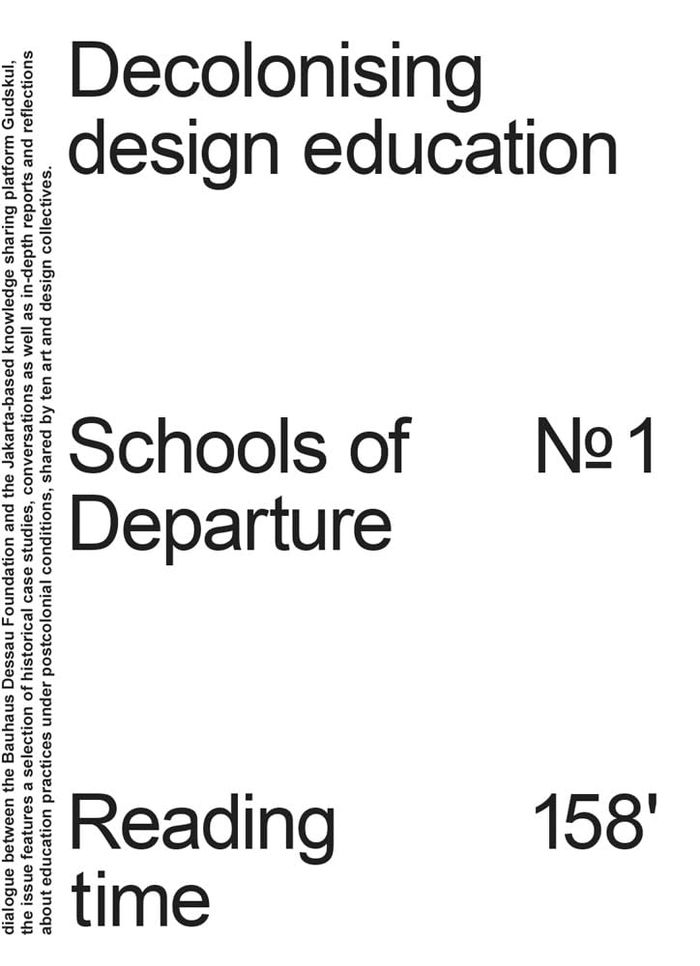
Addressing the histories and speculating on the futures of radical design and art education, "Decolonising design education" looks at the role that different institutional modes play in these endeavors. Developed in a dialogue among Regina Bittner, Katja Klaus and Philipp Sack (Bauhaus Dessau Foundation) and JJ Adibrata and farid rakun (Gudskul), the publication features a selection of historical case studies, conversations and in-depth reports about education practices in formerly colonized regions, shared by 10 art and design collectives. The publication is part of the Schools of Departure series, jointly published with a digital atlas mapping experiments in art and design education beyond the Bauhaus. By studying these phenomena as manifestations of "traveling concepts," which keep a wide variety of educational approaches in a process of constant exchange and motion, the publication explores routes of appropriation that move between different geographies, times and cultures.
Decolonising design education: Schools of departure no.1
Actions:
Price:
$28.00
(available to order)
Summary:
Addressing the histories and speculating on the futures of radical design and art education, "Decolonising design education" looks at the role that different institutional modes play in these endeavors. Developed in a dialogue among Regina Bittner, Katja Klaus and Philipp Sack (Bauhaus Dessau Foundation) and JJ Adibrata and farid rakun (Gudskul), the publication features a selection of historical case studies, conversations and in-depth reports about education practices in formerly colonized regions, shared by 10 art and design collectives. The publication is part of the Schools of Departure series, jointly published with a digital atlas mapping experiments in art and design education beyond the Bauhaus. By studying these phenomena as manifestations of "traveling concepts," which keep a wide variety of educational approaches in a process of constant exchange and motion, the publication explores routes of appropriation that move between different geographies, times and cultures.
Form:
books
books
Publication:
March 2024
March 2024
Subject:
Design Theory
Design Theory
Form:
journals and magazines
journals and magazines

Title:
Open 12 : Freedom of culture
Open 12 : Freedom of culture
Actions:
Price:
$42.00
(available to order)
Summary:
The contemporary public domain, the "free" space where culture is produced and exchanged, is under pressure. The exchange and distribution of cultural products ("content" in the form of music, image or text) is easier in digital society, but increasingly hemmed in by corresponding moves towards greater regulation and control, new copyright laws and intellectual property(...)
$42.00
(available to order)
Summary:
The contemporary public domain, the "free" space where culture is produced and exchanged, is under pressure. The exchange and distribution of cultural products ("content" in the form of music, image or text) is easier in digital society, but increasingly hemmed in by corresponding moves towards greater regulation and control, new copyright laws and intellectual property(...)
Title:
Open 12 : Freedom of culture
Actions:
Price:
$42.00
(available to order)
Summary:
The contemporary public domain, the "free" space where culture is produced and exchanged, is under pressure. The exchange and distribution of cultural products ("content" in the form of music, image or text) is easier in digital society, but increasingly hemmed in by corresponding moves towards greater regulation and control, new copyright laws and intellectual property policy. Instead of enjoying a "free culture," we are watching the emergence of what Lawrence Lessig calls "a permission culture." Simultaneously, as an aspect of broader privatization and regulation processes, private entities are appropriating more and more of public culture, and deciding what is made available or publicly accessible. This issue of the Dutch architectural journal, Open, investigates the root causes of these developments, how they interrelate and what the implications are for the "free" production and practice of culture, as well as for the internal dynamics and balance of power in the public domain.
Open 12 : Freedom of culture
Actions:
Price:
$42.00
(available to order)
Summary:
The contemporary public domain, the "free" space where culture is produced and exchanged, is under pressure. The exchange and distribution of cultural products ("content" in the form of music, image or text) is easier in digital society, but increasingly hemmed in by corresponding moves towards greater regulation and control, new copyright laws and intellectual property policy. Instead of enjoying a "free culture," we are watching the emergence of what Lawrence Lessig calls "a permission culture." Simultaneously, as an aspect of broader privatization and regulation processes, private entities are appropriating more and more of public culture, and deciding what is made available or publicly accessible. This issue of the Dutch architectural journal, Open, investigates the root causes of these developments, how they interrelate and what the implications are for the "free" production and practice of culture, as well as for the internal dynamics and balance of power in the public domain.
Form:
journals and magazines
journals and magazines
Publication:
August 2007, Rotterdam
August 2007, Rotterdam
Subject:
Magazines
Magazines
Form:
books
books
Actions:
Price:
$147.99
(available in store)
Summary:
The work of Modernist architect Carlo Scarpa (1906-1978) is exemplary of an in-between practice, which is neither architecture nor conservation, but rather, architecture in conversion, dependent upon time, weather, and tempo. This book discusses the notion of architecture in conversion, revealing it to be radically different from current conservation practices, and to(...)
$147.99
(available in store)
Summary:
The work of Modernist architect Carlo Scarpa (1906-1978) is exemplary of an in-between practice, which is neither architecture nor conservation, but rather, architecture in conversion, dependent upon time, weather, and tempo. This book discusses the notion of architecture in conversion, revealing it to be radically different from current conservation practices, and to(...)
Title:
Architecture in conversion and the work of Carlo Scarpa
Actions:
Price:
$147.99
(available in store)
Summary:
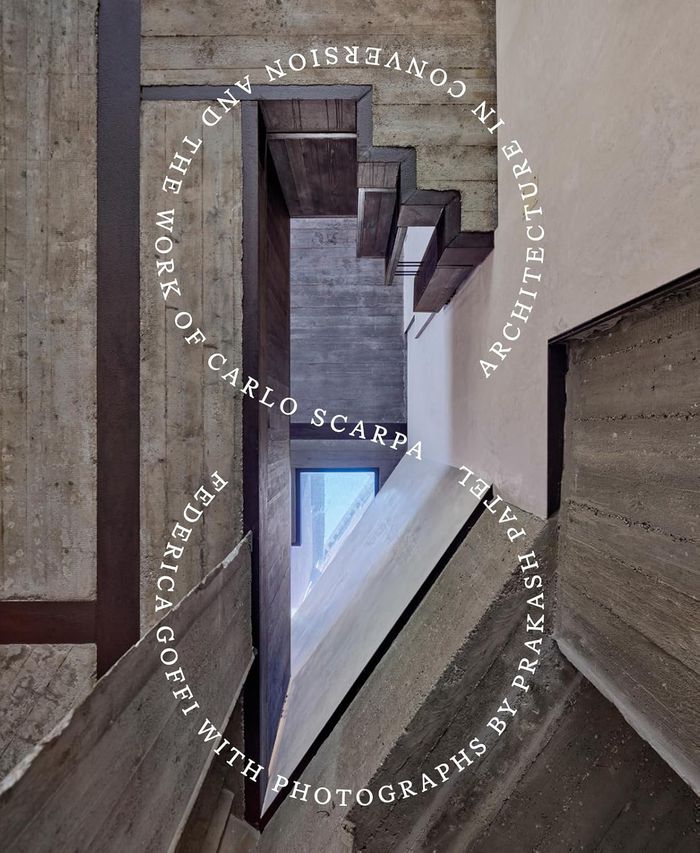
The work of Modernist architect Carlo Scarpa (1906-1978) is exemplary of an in-between practice, which is neither architecture nor conservation, but rather, architecture in conversion, dependent upon time, weather, and tempo. This book discusses the notion of architecture in conversion, revealing it to be radically different from current conservation practices, and to entail more than a change of use. Scarpa’s work represents ‘a radical turn in how we see or understand something’. The significance of time, weather and tempo within Scarpa’s work, as well as the influences of artists such as Man Ray and Emilio Vedova and composer Luigi Nono, are revealed through a close analysis of Scarpa’s drawings and details from key buildings and their histories of multiple authorship. The book examines drawing as central to Scarpa’s practice: in lieu of creating physical models, his muti-directional drawings foreshadow the orbital movements of digital modeling techniques.
Architecture in conversion and the work of Carlo Scarpa
Actions:
Price:
$147.99
(available in store)
Summary:
The work of Modernist architect Carlo Scarpa (1906-1978) is exemplary of an in-between practice, which is neither architecture nor conservation, but rather, architecture in conversion, dependent upon time, weather, and tempo. This book discusses the notion of architecture in conversion, revealing it to be radically different from current conservation practices, and to entail more than a change of use. Scarpa’s work represents ‘a radical turn in how we see or understand something’. The significance of time, weather and tempo within Scarpa’s work, as well as the influences of artists such as Man Ray and Emilio Vedova and composer Luigi Nono, are revealed through a close analysis of Scarpa’s drawings and details from key buildings and their histories of multiple authorship. The book examines drawing as central to Scarpa’s practice: in lieu of creating physical models, his muti-directional drawings foreshadow the orbital movements of digital modeling techniques.
Form:
books
books
Publication:
December 2025
December 2025
Subject:
Architecture Monographs
Architecture Monographs


