


7565 Results
Form:
books
books
Actions:
Price:
$53.25
(available to order)
Summary:
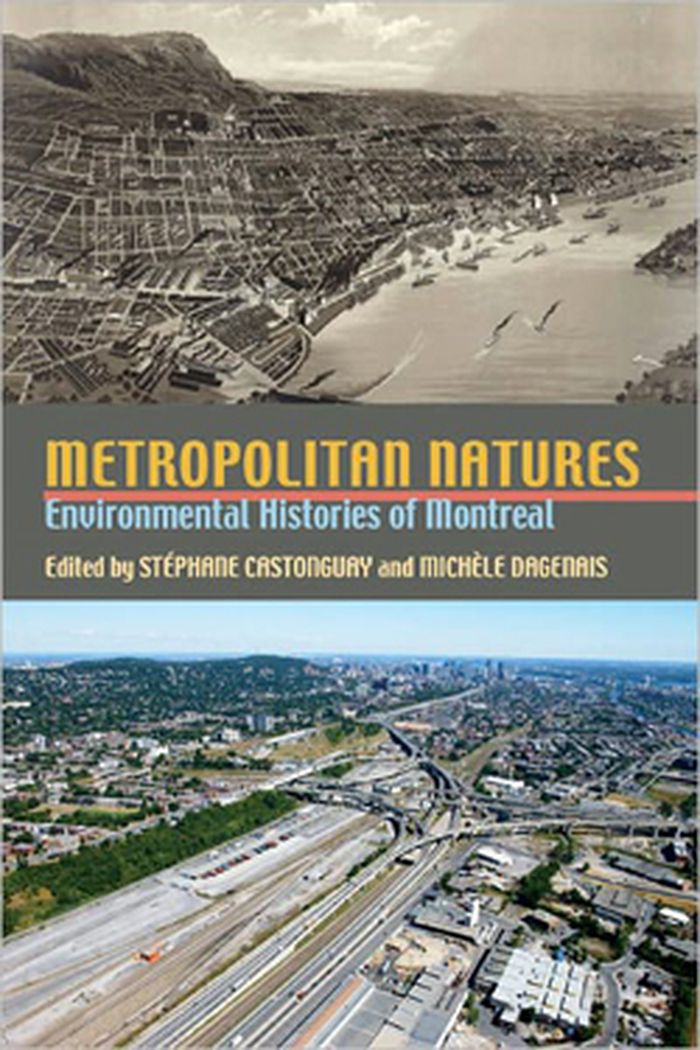
Metropolitan Natures presents original histories of the diverse environments that constitute Montreal and its region. It explores the agricultural and industrial transformation of the metropolitan area, the interaction of city and hinterland, and the interplay of humans and nature.It covers a wide range of issues, from landscape representations during the colonial era to(...)
$53.25
(available to order)
Summary:
Metropolitan Natures presents original histories of the diverse environments that constitute Montreal and its region. It explores the agricultural and industrial transformation of the metropolitan area, the interaction of city and hinterland, and the interplay of humans and nature.It covers a wide range of issues, from landscape representations during the colonial era to(...)
Subject:
Architecture de Montréal
Architecture de Montréal
Publication:
June 2011
June 2011
Title:
Metropolitan natures: environmental histories of Montréal
Actions:
Price:
$53.25
(available to order)
Summary:
Metropolitan Natures presents original histories of the diverse environments that constitute Montreal and its region. It explores the agricultural and industrial transformation of the metropolitan area, the interaction of city and hinterland, and the interplay of humans and nature.It covers a wide range of issues, from landscape representations during the colonial era to urban encroachments on the Kahnawake Mohawk reservation on the south shore of the island, from the 1918-1920 Spanish Flu epidemic and the ensuing modifications to the urban sprawl characteristic of North America during the postwar period.
Metropolitan natures: environmental histories of Montréal
Actions:
Price:
$53.25
(available to order)
Summary:
Metropolitan Natures presents original histories of the diverse environments that constitute Montreal and its region. It explores the agricultural and industrial transformation of the metropolitan area, the interaction of city and hinterland, and the interplay of humans and nature.It covers a wide range of issues, from landscape representations during the colonial era to urban encroachments on the Kahnawake Mohawk reservation on the south shore of the island, from the 1918-1920 Spanish Flu epidemic and the ensuing modifications to the urban sprawl characteristic of North America during the postwar period.
Form:
books
books
Publication:
June 2011
June 2011
Subject:
Architecture de Montréal
Architecture de Montréal
Form:
books
books
Title:
Photography at MoMA / edited by Quentin Bajac, Lucy Gallun, Roxana Marcoci, Sarah Hermanson Meister.
Photography at MoMA / edited by Quentin Bajac, Lucy Gallun, Roxana Marcoci, Sarah Hermanson Meister.
Actions:
Holdings:
Description:
3 volumes : illustrations (some color), portraits ; 32 cm
Description:
3 volumes : illustrations (some color), portraits ; 32 cm
Author:
Subject:
Publication:
New York : Museum of Modern Art, 2015-2017.
New York : Museum of Modern Art, 2015-2017.
Title:
Photography at MoMA / edited by Quentin Bajac, Lucy Gallun, Roxana Marcoci, Sarah Hermanson Meister.
Actions:
Holdings:
Description:
3 volumes : illustrations (some color), portraits ; 32 cm
Photography at MoMA / edited by Quentin Bajac, Lucy Gallun, Roxana Marcoci, Sarah Hermanson Meister.
Actions:
Holdings:
Description:
3 volumes : illustrations (some color), portraits ; 32 cm
Form:
books
books
Publication:
New York : Museum of Modern Art, 2015-2017.
New York : Museum of Modern Art, 2015-2017.
Author:
Subject:
Form:
books
books
Actions:
Price:
$29.95
(available to order)
Summary:
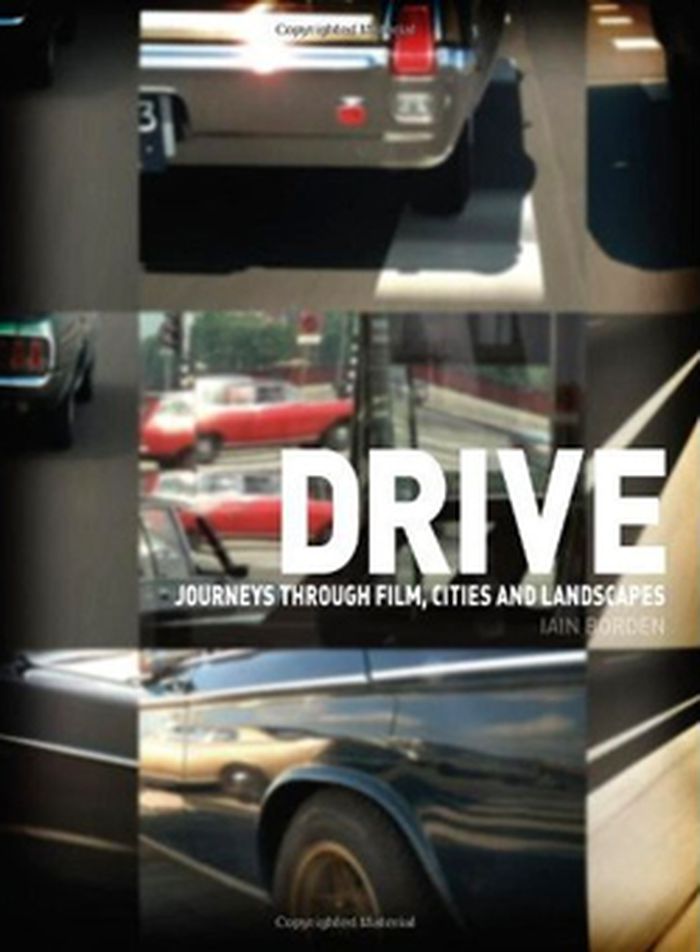
This book explores the experience of driving cars as a way of encountering landscapes and cities around the world. A richly illustrated cultural history, drawing on social and urban history, art, literature and music, Drive explores in particular how car driving is portrayed in cinema and other moving images, from America to Europe and Asia, and from Hollywood to the(...)
$29.95
(available to order)
Summary:
This book explores the experience of driving cars as a way of encountering landscapes and cities around the world. A richly illustrated cultural history, drawing on social and urban history, art, literature and music, Drive explores in particular how car driving is portrayed in cinema and other moving images, from America to Europe and Asia, and from Hollywood to the(...)
Title:
Drive : journeys through film, cities and landscapes
Actions:
Price:
$29.95
(available to order)
Summary:
This book explores the experience of driving cars as a way of encountering landscapes and cities around the world. A richly illustrated cultural history, drawing on social and urban history, art, literature and music, Drive explores in particular how car driving is portrayed in cinema and other moving images, from America to Europe and Asia, and from Hollywood to the avant-garde. Drive is about dynamic journeys, experiences and speeds, rooted in specific places and roads, and expanded into the realm of cinema, art and video games. It moves from the gentle deserts of The Grapes of Wrath to the adventurous city streets of The Italian Job, from the aesthetic delights of Rain Man and Traffic to the existential musings of Two-Lane Blacktop, Thelma and Louise and Vanishing Point, from the contemplative freeway pleasures of Lift to the Scaffold, Radio On and London Orbital to the hallucinatory high-speed dangers of Crash, Bullitt, Death Proof and C’était un Rendezvous. It shows how various kinds of driving – with different speeds, cars, attitudes, roads and cities – provide experiences and values that we ignore at our peril.
Drive : journeys through film, cities and landscapes
Actions:
Price:
$29.95
(available to order)
Summary:
This book explores the experience of driving cars as a way of encountering landscapes and cities around the world. A richly illustrated cultural history, drawing on social and urban history, art, literature and music, Drive explores in particular how car driving is portrayed in cinema and other moving images, from America to Europe and Asia, and from Hollywood to the avant-garde. Drive is about dynamic journeys, experiences and speeds, rooted in specific places and roads, and expanded into the realm of cinema, art and video games. It moves from the gentle deserts of The Grapes of Wrath to the adventurous city streets of The Italian Job, from the aesthetic delights of Rain Man and Traffic to the existential musings of Two-Lane Blacktop, Thelma and Louise and Vanishing Point, from the contemplative freeway pleasures of Lift to the Scaffold, Radio On and London Orbital to the hallucinatory high-speed dangers of Crash, Bullitt, Death Proof and C’était un Rendezvous. It shows how various kinds of driving – with different speeds, cars, attitudes, roads and cities – provide experiences and values that we ignore at our peril.
Form:
books
books
Publication:
September 2012
September 2012
Subject:
Architecture and Film, Set Design
Architecture and Film, Set Design
Form:
journals and magazines
journals and magazines
Actions:
Price:
$15.00
(available in store)
Summary:
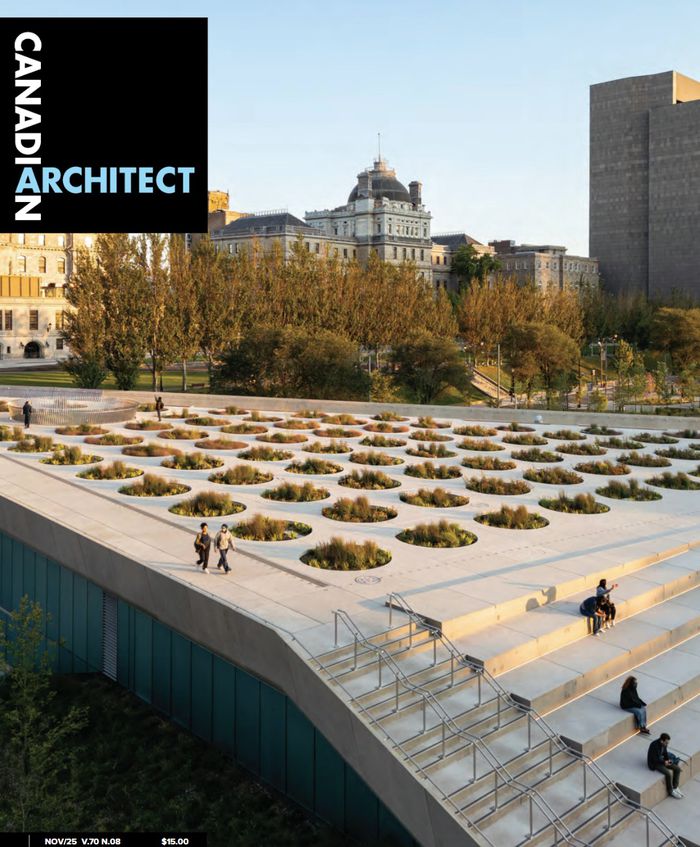
At first blush, there’s a clear distinction between the scope of work of architects and landscape architects. But that doesn’t always hold true. This month’s issue looks at a series of projects where the work of architecture and landscape architecture are tightly intertwined and interwoven.
$15.00
(available in store)
Summary:
At first blush, there’s a clear distinction between the scope of work of architects and landscape architects. But that doesn’t always hold true. This month’s issue looks at a series of projects where the work of architecture and landscape architecture are tightly intertwined and interwoven.
Title:
Canadian Architect v.70 n.08 November 2025
Actions:
Price:
$15.00
(available in store)
Summary:
At first blush, there’s a clear distinction between the scope of work of architects and landscape architects. But that doesn’t always hold true. This month’s issue looks at a series of projects where the work of architecture and landscape architecture are tightly intertwined and interwoven.
Canadian Architect v.70 n.08 November 2025
Actions:
Price:
$15.00
(available in store)
Summary:
At first blush, there’s a clear distinction between the scope of work of architects and landscape architects. But that doesn’t always hold true. This month’s issue looks at a series of projects where the work of architecture and landscape architecture are tightly intertwined and interwoven.
Form:
journals and magazines
journals and magazines
Publication:
November 2025
November 2025
Subject:
Magazines
Magazines
Form:
books
books
Actions:
Price:
$47.95
(available to order)
Summary:
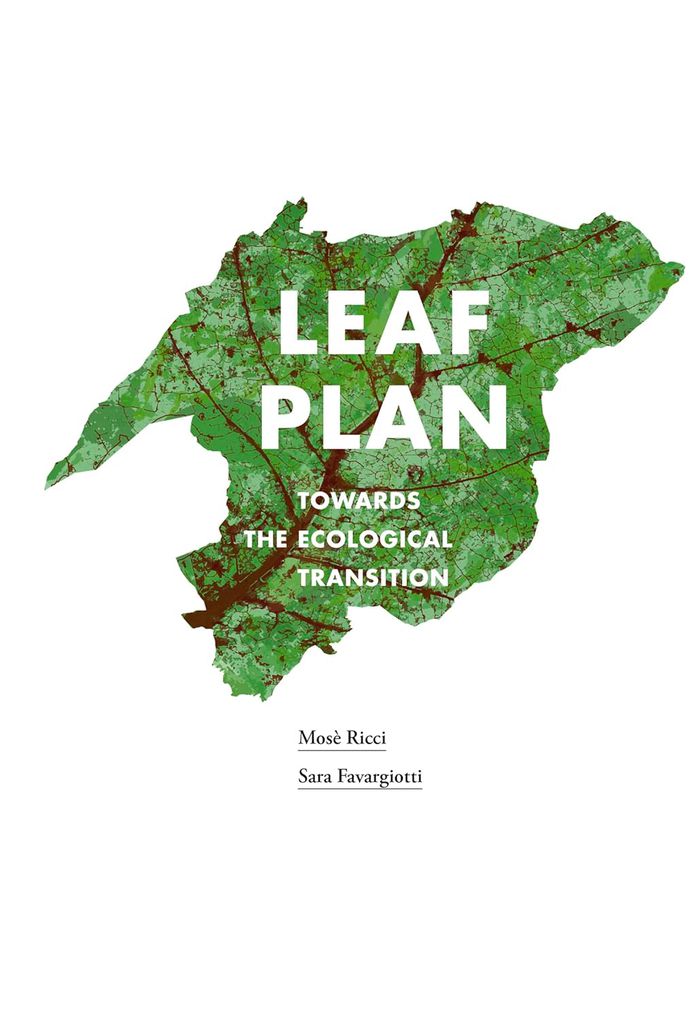
"Leaf plan" will illustrate comprehensive design approaches to address climate change, urban metabolism, temporary uses, landscape multifunctionality, cohabitation through new modes of urban design based on criteria of flexibility and adaptability. Trento is the experimental territory where the innovative process, methodologies and theoretical reflection have been tested(...)
$47.95
(available to order)
Summary:
"Leaf plan" will illustrate comprehensive design approaches to address climate change, urban metabolism, temporary uses, landscape multifunctionality, cohabitation through new modes of urban design based on criteria of flexibility and adaptability. Trento is the experimental territory where the innovative process, methodologies and theoretical reflection have been tested(...)
Title:
Leaf plan: Towards the ecological transition
Actions:
Price:
$47.95
(available to order)
Summary:
"Leaf plan" will illustrate comprehensive design approaches to address climate change, urban metabolism, temporary uses, landscape multifunctionality, cohabitation through new modes of urban design based on criteria of flexibility and adaptability. Trento is the experimental territory where the innovative process, methodologies and theoretical reflection have been tested above the framework of the three-year research project "TUT Trento Urban Transformation". The book is structured around the five challenges (Ecological, Accessible, Smart, Welcoming and Beauty) proposed by the TUT research group for the Trento Leaf Plan, the new metabolic plan for the city of Trento. Beside the innovative field-test experimentations, the holistic methodological approach proposed by the book will be transferable and adapted in other metropolitan contexts to enhance the urban ecological transition. The publication, edited by the TUT research group, will include theoretical essays, critical selection of reference projects, operational tools, and interviews with experts in ecological transition, sustainable mobility, co-design approach, sharing, and urban resilience.
Leaf plan: Towards the ecological transition
Actions:
Price:
$47.95
(available to order)
Summary:
"Leaf plan" will illustrate comprehensive design approaches to address climate change, urban metabolism, temporary uses, landscape multifunctionality, cohabitation through new modes of urban design based on criteria of flexibility and adaptability. Trento is the experimental territory where the innovative process, methodologies and theoretical reflection have been tested above the framework of the three-year research project "TUT Trento Urban Transformation". The book is structured around the five challenges (Ecological, Accessible, Smart, Welcoming and Beauty) proposed by the TUT research group for the Trento Leaf Plan, the new metabolic plan for the city of Trento. Beside the innovative field-test experimentations, the holistic methodological approach proposed by the book will be transferable and adapted in other metropolitan contexts to enhance the urban ecological transition. The publication, edited by the TUT research group, will include theoretical essays, critical selection of reference projects, operational tools, and interviews with experts in ecological transition, sustainable mobility, co-design approach, sharing, and urban resilience.
Form:
books
books
Publication:
February 2024
February 2024
Subject:
Green Architecture
Green Architecture
Form:
books
books
Title:
Zentrum Paul Klee, Bern
Zentrum Paul Klee, Bern
Actions:
Price:
$42.00
(available in store)
Summary:
The Genovese architect Renzo Piano has designed a museum building — the Zentrum Paul Klee on the outskirts of Bern. Piano was convinced from the outset that he would find the answers to his own questions in the art of Paul Klee. The Center, says Piano, is dedicated to the “poet of silence,” and thus it was only fitting to consider building a museum that would speak(...)
$42.00
(available in store)
Summary:
The Genovese architect Renzo Piano has designed a museum building — the Zentrum Paul Klee on the outskirts of Bern. Piano was convinced from the outset that he would find the answers to his own questions in the art of Paul Klee. The Center, says Piano, is dedicated to the “poet of silence,” and thus it was only fitting to consider building a museum that would speak(...)
Title:
Zentrum Paul Klee, Bern
Actions:
Price:
$42.00
(available in store)
Summary:
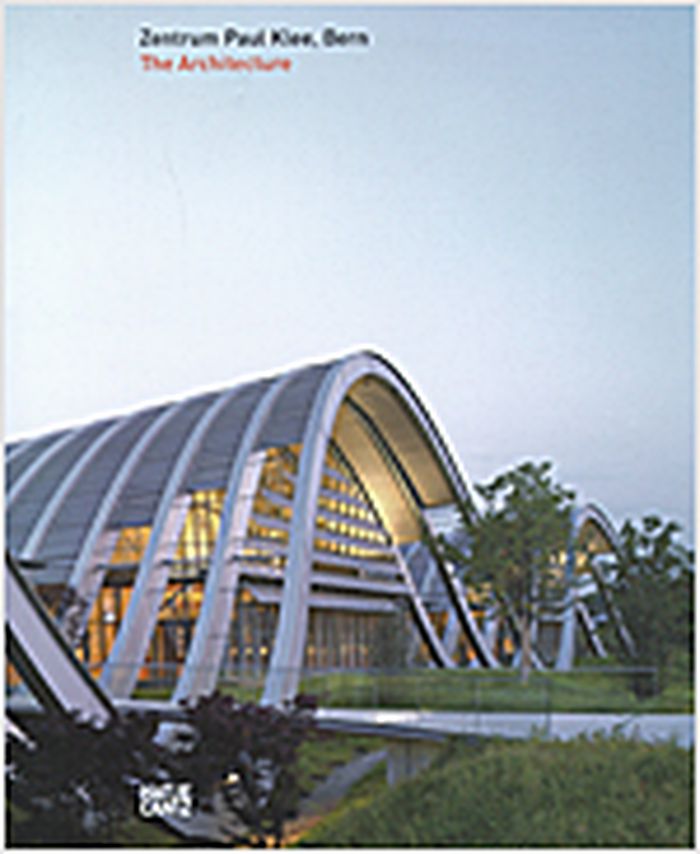
The Genovese architect Renzo Piano has designed a museum building — the Zentrum Paul Klee on the outskirts of Bern. Piano was convinced from the outset that he would find the answers to his own questions in the art of Paul Klee. The Center, says Piano, is dedicated to the “poet of silence,” and thus it was only fitting to consider building a museum that would speak softly. Renzo Piano was also inspired by the identity of the location and the gentle, undulating lines of the terrain. The Zentrum Paul Klee rises upward in the form of three hills connected by a 150-meter-long thoroughfare, the “Museumsstrasse” within the museum complex. It is a harmonious yet prominent landscape sculpture featuring a steel construction that supports the roof. In this documentation, Benedikt Lodererprovides a precisely detailed description of Renzo Piano’s architectural idea. With the aid of numerous photographs, design sketches, plans, and models, this book presents an image of a building and its architectural history.
Zentrum Paul Klee, Bern
Actions:
Price:
$42.00
(available in store)
Summary:
The Genovese architect Renzo Piano has designed a museum building — the Zentrum Paul Klee on the outskirts of Bern. Piano was convinced from the outset that he would find the answers to his own questions in the art of Paul Klee. The Center, says Piano, is dedicated to the “poet of silence,” and thus it was only fitting to consider building a museum that would speak softly. Renzo Piano was also inspired by the identity of the location and the gentle, undulating lines of the terrain. The Zentrum Paul Klee rises upward in the form of three hills connected by a 150-meter-long thoroughfare, the “Museumsstrasse” within the museum complex. It is a harmonious yet prominent landscape sculpture featuring a steel construction that supports the roof. In this documentation, Benedikt Lodererprovides a precisely detailed description of Renzo Piano’s architectural idea. With the aid of numerous photographs, design sketches, plans, and models, this book presents an image of a building and its architectural history.
Form:
books
books
Publication:
May 2006
May 2006
Subject:
Architecture Monographs
Architecture Monographs
Form:
books
books
Title:
The dominion of the dead
The dominion of the dead
Actions:
Price:
$17.50
(available to order)
Summary:
How do the living maintain relations to the dead? Why do we bury people when they die? And what is at stake when we do? In "The dominion of the dead", Robert Pogue Harrison considers the supreme importance of these questions to Western civilization, exploring the many places where the dead cohabit the world of the living-the graves, images, literature, architecture, and(...)
$17.50
(available to order)
Summary:
How do the living maintain relations to the dead? Why do we bury people when they die? And what is at stake when we do? In "The dominion of the dead", Robert Pogue Harrison considers the supreme importance of these questions to Western civilization, exploring the many places where the dead cohabit the world of the living-the graves, images, literature, architecture, and(...)
Title:
The dominion of the dead
Actions:
Price:
$17.50
(available to order)
Summary:
How do the living maintain relations to the dead? Why do we bury people when they die? And what is at stake when we do? In "The dominion of the dead", Robert Pogue Harrison considers the supreme importance of these questions to Western civilization, exploring the many places where the dead cohabit the world of the living-the graves, images, literature, architecture, and monuments that house the dead in their afterlife among us. This work devotes particular attention to the practice of burial. Harrison contends that we bury our dead to humanize the lands where we build our present and imagine our future. As long as the dead are interred in graves and tombs, they never truly depart from this world, but remain, if only symbolically, among the living. Spanning a broad range of examples, from the graves of our first human ancestors to the empty tomb of the Gospels to the Vietnam Veterans Memorial, Harrison also considers the authority of predecessors in both modern and premodern societies. Through inspired readings of major writers and thinkers such as Vico, Virgil, Dante, Pater, Nietzsche, Heidegger, and Rilke, he argues that the buried dead form an essential foundation where future generations can retrieve their past, while burial grounds provide an important bedrock where past generations can preserve their legacy for the unborn.
The dominion of the dead
Actions:
Price:
$17.50
(available to order)
Summary:
How do the living maintain relations to the dead? Why do we bury people when they die? And what is at stake when we do? In "The dominion of the dead", Robert Pogue Harrison considers the supreme importance of these questions to Western civilization, exploring the many places where the dead cohabit the world of the living-the graves, images, literature, architecture, and monuments that house the dead in their afterlife among us. This work devotes particular attention to the practice of burial. Harrison contends that we bury our dead to humanize the lands where we build our present and imagine our future. As long as the dead are interred in graves and tombs, they never truly depart from this world, but remain, if only symbolically, among the living. Spanning a broad range of examples, from the graves of our first human ancestors to the empty tomb of the Gospels to the Vietnam Veterans Memorial, Harrison also considers the authority of predecessors in both modern and premodern societies. Through inspired readings of major writers and thinkers such as Vico, Virgil, Dante, Pater, Nietzsche, Heidegger, and Rilke, he argues that the buried dead form an essential foundation where future generations can retrieve their past, while burial grounds provide an important bedrock where past generations can preserve their legacy for the unborn.
Form:
books
books
Publication:
May 2005, Chicago, London
May 2005, Chicago, London
Subject:
Landscape Theory
Landscape Theory
Form:
books
books
Title:
Paysage, lieu et temps
Paysage, lieu et temps
Actions:
Price:
$93.00
(available to order)
Summary:
«Lorsque nous détruisons un paysage nous sommes un peu plus perdus, car notre rapport au temps, et donc avec nous-mêmes, s’en trouve appauvri et comme effiloché» affirme le poète-écrivain Giorgio Todde. Face à une société effrénée où tout le monde veut gagner du temps, alors que le réel défi consisterait à gagner un autre rapport au temps, cet ouvrage tente de calmer le(...)
$93.00
(available to order)
Summary:
«Lorsque nous détruisons un paysage nous sommes un peu plus perdus, car notre rapport au temps, et donc avec nous-mêmes, s’en trouve appauvri et comme effiloché» affirme le poète-écrivain Giorgio Todde. Face à une société effrénée où tout le monde veut gagner du temps, alors que le réel défi consisterait à gagner un autre rapport au temps, cet ouvrage tente de calmer le(...)
Title:
Paysage, lieu et temps
Actions:
Price:
$93.00
(available to order)
Summary:
«Lorsque nous détruisons un paysage nous sommes un peu plus perdus, car notre rapport au temps, et donc avec nous-mêmes, s’en trouve appauvri et comme effiloché» affirme le poète-écrivain Giorgio Todde. Face à une société effrénée où tout le monde veut gagner du temps, alors que le réel défi consisterait à gagner un autre rapport au temps, cet ouvrage tente de calmer le jeu en repositionnant les fondements d’une pensée de l’espace développée à partir du paysage et de son architecture. Dans ce contexte, l’auteur tisse des échanges privilégiés avec les travaux de l’Agence Latz+Partner. Temps et histoire, corps et tactilité, lieu et parcours, matériaux et restes, sol et profondeur, accueil et ouverture, seuils et limites ainsi qu’avenir du paysage postindustriel sont autant de thématiques alimentant une réflexion autour de cette pensée de l’espace et du projet. Cette approche spécifique prend ses distances du chant des sirènes et des éblouissements passagers qui nous guettent à tout moment. S’opposant à l’effilochement regretté par Todde, les points d’ancrage proposés dans cet ouvrage permettent d’appréhender les forces qui agissent sur l’espace des hommes et concourent à sa transformation. L’auteur montre par cet essai qu’il appartient au groupe restreint de ceux qui écrivent à la fois sur le paysage et sur l’architecture, et dont les réflexions contribuent au nécessaire rapprochement des deux versants d’une même pensée.
Paysage, lieu et temps
Actions:
Price:
$93.00
(available to order)
Summary:
«Lorsque nous détruisons un paysage nous sommes un peu plus perdus, car notre rapport au temps, et donc avec nous-mêmes, s’en trouve appauvri et comme effiloché» affirme le poète-écrivain Giorgio Todde. Face à une société effrénée où tout le monde veut gagner du temps, alors que le réel défi consisterait à gagner un autre rapport au temps, cet ouvrage tente de calmer le jeu en repositionnant les fondements d’une pensée de l’espace développée à partir du paysage et de son architecture. Dans ce contexte, l’auteur tisse des échanges privilégiés avec les travaux de l’Agence Latz+Partner. Temps et histoire, corps et tactilité, lieu et parcours, matériaux et restes, sol et profondeur, accueil et ouverture, seuils et limites ainsi qu’avenir du paysage postindustriel sont autant de thématiques alimentant une réflexion autour de cette pensée de l’espace et du projet. Cette approche spécifique prend ses distances du chant des sirènes et des éblouissements passagers qui nous guettent à tout moment. S’opposant à l’effilochement regretté par Todde, les points d’ancrage proposés dans cet ouvrage permettent d’appréhender les forces qui agissent sur l’espace des hommes et concourent à sa transformation. L’auteur montre par cet essai qu’il appartient au groupe restreint de ceux qui écrivent à la fois sur le paysage et sur l’architecture, et dont les réflexions contribuent au nécessaire rapprochement des deux versants d’une même pensée.
Form:
books
books
Publication:
May 2016
May 2016
Subject:
Landscape Theory
Landscape Theory
Form:
books
books
Price:
$19.95
(available to order)
Summary:
Dans le champ du projet, la nature est aujourd’hui sans cesse évoquée. Invoquant l’impératif environnemental et écologique, les architectes promettent de rendre la ville de demain plus accueillante et agréable, grâce à une architecture de plus en plus « végétale ». Des images séduisantes et « verdoyantes », associées à un vocabulaire étranger au champ lexical du projet,(...)
$19.95
(available to order)
Summary:
Dans le champ du projet, la nature est aujourd’hui sans cesse évoquée. Invoquant l’impératif environnemental et écologique, les architectes promettent de rendre la ville de demain plus accueillante et agréable, grâce à une architecture de plus en plus « végétale ». Des images séduisantes et « verdoyantes », associées à un vocabulaire étranger au champ lexical du projet,(...)
Title:
Paysages réactionnaires : nostalgie de la nature et projet néolibéral
Actions:
Price:
$19.95
(available to order)
Summary:
Dans le champ du projet, la nature est aujourd’hui sans cesse évoquée. Invoquant l’impératif environnemental et écologique, les architectes promettent de rendre la ville de demain plus accueillante et agréable, grâce à une architecture de plus en plus « végétale ». Des images séduisantes et « verdoyantes », associées à un vocabulaire étranger au champ lexical du projet, cachent l’architecture en tant qu’objet minéral. L’hégémonie et l’abus de la notion de paysage révèlent en réalité des problématiques culturelles profondes. Le retour à l’identité, aux racines, au lieu : un triptyque hégémonique chez les architectes et le grand public, qu’il convient de remettre en question. Politiquement très ambigus dans leurs implications, ces nouveaux mots d’ordres instrumentalisent une version banalisée de la beauté. C’est en ce sens que nous parlons ici de paysages réactionnaires. L’acception esthétisante et nostalgique du paysage transforme l’impératif écologiste en une idéologie dénuée de toute l’urgence politique que la question mériterait. Cet ouvrage, en dressant une histoire synthétique du « dispositif visuel » structurant une certaine idée de Modernité, entend montrer comment cette dérive contemplative du paysage est révélatrice d’une crise de la notion de projet, entendu dans son sens le plus profondément politique. Nous entendons au contraire affirmer une conception du paysage complexe et évolutive, synthétisant plusieurs questions (d’échelle, de temps, d’objectivité/subjectivité), contre toute rhétorique nostalgique de la « belle intégralité perdue ».
Paysages réactionnaires : nostalgie de la nature et projet néolibéral
Actions:
Price:
$19.95
(available to order)
Summary:
Dans le champ du projet, la nature est aujourd’hui sans cesse évoquée. Invoquant l’impératif environnemental et écologique, les architectes promettent de rendre la ville de demain plus accueillante et agréable, grâce à une architecture de plus en plus « végétale ». Des images séduisantes et « verdoyantes », associées à un vocabulaire étranger au champ lexical du projet, cachent l’architecture en tant qu’objet minéral. L’hégémonie et l’abus de la notion de paysage révèlent en réalité des problématiques culturelles profondes. Le retour à l’identité, aux racines, au lieu : un triptyque hégémonique chez les architectes et le grand public, qu’il convient de remettre en question. Politiquement très ambigus dans leurs implications, ces nouveaux mots d’ordres instrumentalisent une version banalisée de la beauté. C’est en ce sens que nous parlons ici de paysages réactionnaires. L’acception esthétisante et nostalgique du paysage transforme l’impératif écologiste en une idéologie dénuée de toute l’urgence politique que la question mériterait. Cet ouvrage, en dressant une histoire synthétique du « dispositif visuel » structurant une certaine idée de Modernité, entend montrer comment cette dérive contemplative du paysage est révélatrice d’une crise de la notion de projet, entendu dans son sens le plus profondément politique. Nous entendons au contraire affirmer une conception du paysage complexe et évolutive, synthétisant plusieurs questions (d’échelle, de temps, d’objectivité/subjectivité), contre toute rhétorique nostalgique de la « belle intégralité perdue ».
Form:
books
books
Publication:
September 2016
September 2016
Subject:
Landscape Theory
Landscape Theory
Form:
books
books
Price:
$32.95
(available to order)
Summary:
In 1949, the forest magnate, H.R. MacMillan, opened an exhibition at the Vancouver Art Gallery entitled “Design for Living,” a show which brought together design and artistic communities to create four imaginary households for postwar Vancouverites. It also heralded an unprecedented level of cooperation between the province’s industry and its artists and craftspeople – a(...)
$32.95
(available to order)
Summary:
In 1949, the forest magnate, H.R. MacMillan, opened an exhibition at the Vancouver Art Gallery entitled “Design for Living,” a show which brought together design and artistic communities to create four imaginary households for postwar Vancouverites. It also heralded an unprecedented level of cooperation between the province’s industry and its artists and craftspeople – a(...)
Title:
A Modern life : art and design in British Columbia, 1945-1960
Actions:
Price:
$32.95
(available to order)
Summary:
In 1949, the forest magnate, H.R. MacMillan, opened an exhibition at the Vancouver Art Gallery entitled “Design for Living,” a show which brought together design and artistic communities to create four imaginary households for postwar Vancouverites. It also heralded an unprecedented level of cooperation between the province’s industry and its artists and craftspeople – a relationship that seemed to hold great promise for the development of art, furniture, and craft in B.C. The celebration of the cooperative spirit between “architects, artists and designers,” between “potters, weavers and gardeners” is central to "A Modern Life", which examines the coming together of what were often very separate disciplines in post-World War II British Columbia, as well as the trend-setting design and use of materials that developed in the province, and the impact these had on the more traditional art community. "A Modern Life", demonstrates that the ideas of the artistic and design community as a whole during this vibrant period – an era of optimism and promise for the future, in a province that had reason to believe passionately in what was to come – have a continued relevance and importance for our understanding of the history of this community and the relationship of the built environment to the extraordinary landscape of British Columbia. With essays by Rachel Chinnery on ceramics, Scott Watson on fine arts, Alan Elder on collaboration, Allan Collier on wood and design, and Sherry McKay on architecture.
A Modern life : art and design in British Columbia, 1945-1960
Actions:
Price:
$32.95
(available to order)
Summary:
In 1949, the forest magnate, H.R. MacMillan, opened an exhibition at the Vancouver Art Gallery entitled “Design for Living,” a show which brought together design and artistic communities to create four imaginary households for postwar Vancouverites. It also heralded an unprecedented level of cooperation between the province’s industry and its artists and craftspeople – a relationship that seemed to hold great promise for the development of art, furniture, and craft in B.C. The celebration of the cooperative spirit between “architects, artists and designers,” between “potters, weavers and gardeners” is central to "A Modern Life", which examines the coming together of what were often very separate disciplines in post-World War II British Columbia, as well as the trend-setting design and use of materials that developed in the province, and the impact these had on the more traditional art community. "A Modern Life", demonstrates that the ideas of the artistic and design community as a whole during this vibrant period – an era of optimism and promise for the future, in a province that had reason to believe passionately in what was to come – have a continued relevance and importance for our understanding of the history of this community and the relationship of the built environment to the extraordinary landscape of British Columbia. With essays by Rachel Chinnery on ceramics, Scott Watson on fine arts, Alan Elder on collaboration, Allan Collier on wood and design, and Sherry McKay on architecture.
Form:
books
books
Publication:
October 2004, Vancouver
October 2004, Vancouver
Subject:
Architecture in Canada
Architecture in Canada


