


7253 Results
Form:
books
books
Actions:
Price:
$47.50
(available to order)
Summary:
The rising Dutch artist Erik van Lieshout, temporarily based in Los Angeles while he sets up for bicoastal American museum debuts at the Hammer in Los Angeles and at Mass MoCA, in North Adams, Massachusetts, works with video installation, painting and drawing to analyze our daily reality in currently confusing times. In a dizzying game of political correctness versus(...)
$47.50
(available to order)
Summary:
The rising Dutch artist Erik van Lieshout, temporarily based in Los Angeles while he sets up for bicoastal American museum debuts at the Hammer in Los Angeles and at Mass MoCA, in North Adams, Massachusetts, works with video installation, painting and drawing to analyze our daily reality in currently confusing times. In a dizzying game of political correctness versus(...)
Title:
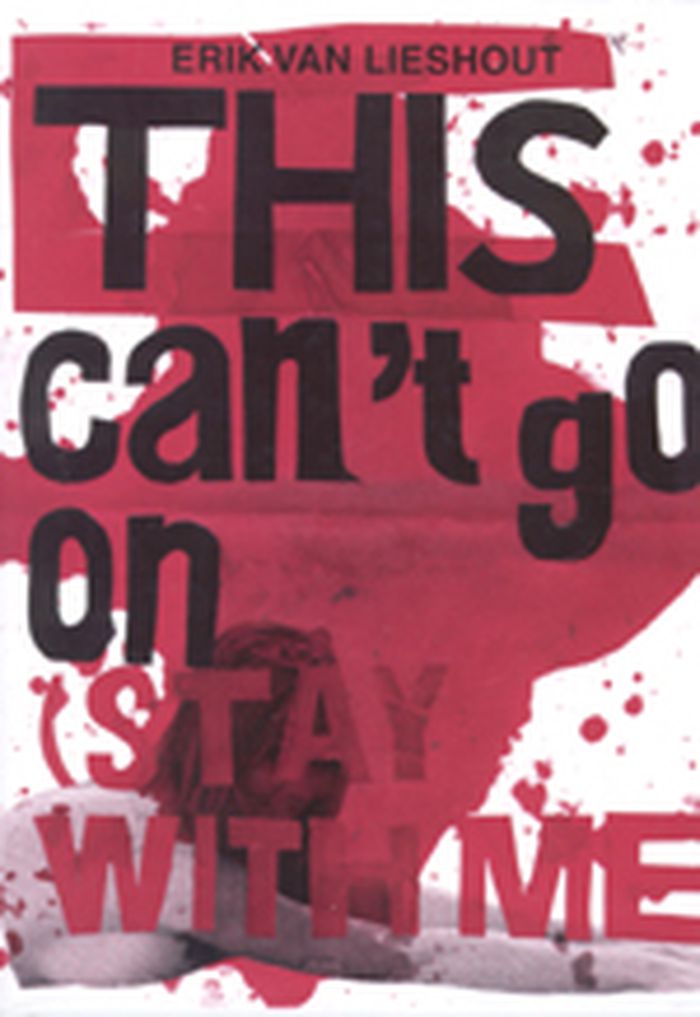
Erik van Lieshout: This can't go on (stay with me)
Actions:
Price:
$47.50
(available to order)
Summary:
The rising Dutch artist Erik van Lieshout, temporarily based in Los Angeles while he sets up for bicoastal American museum debuts at the Hammer in Los Angeles and at Mass MoCA, in North Adams, Massachusetts, works with video installation, painting and drawing to analyze our daily reality in currently confusing times. In a dizzying game of political correctness versus incorrectness, he provides razor-sharp comments on sociocultural truths, always seeming to wind up in unfamiliar, uncomfortable and confrontational situations. As he says: "My challenge is to lose control...Because it's only when you lose control that you have the feeling of freedom." On his way to that freedom, van Lieshout turns whomever he encounters into subject matter for social documentaries--his endless curiosity and his disarming personality encouraging strangers to share their intimate feelings and politics openly with him. In his work, van Lieshout translates this ferocious exploration of the behaviors of people he meets into aggressive, sometimes violent, sexual imagery. Born in 1968 in the Netherlands, van Lieshout's work was recently featured in the 2006 Berlin Bienniale and the 2003 Venice Biennale, among others.
Erik van Lieshout: This can't go on (stay with me)
Actions:
Price:
$47.50
(available to order)
Summary:
The rising Dutch artist Erik van Lieshout, temporarily based in Los Angeles while he sets up for bicoastal American museum debuts at the Hammer in Los Angeles and at Mass MoCA, in North Adams, Massachusetts, works with video installation, painting and drawing to analyze our daily reality in currently confusing times. In a dizzying game of political correctness versus incorrectness, he provides razor-sharp comments on sociocultural truths, always seeming to wind up in unfamiliar, uncomfortable and confrontational situations. As he says: "My challenge is to lose control...Because it's only when you lose control that you have the feeling of freedom." On his way to that freedom, van Lieshout turns whomever he encounters into subject matter for social documentaries--his endless curiosity and his disarming personality encouraging strangers to share their intimate feelings and politics openly with him. In his work, van Lieshout translates this ferocious exploration of the behaviors of people he meets into aggressive, sometimes violent, sexual imagery. Born in 1968 in the Netherlands, van Lieshout's work was recently featured in the 2006 Berlin Bienniale and the 2003 Venice Biennale, among others.
Form:
books
books
Publication:
October 2007, Zurich
October 2007, Zurich
Subject:
Contemporary Art Monographs
Contemporary Art Monographs
Form:
books
books
Actions:
Price:
$47.00
(available to order)
Summary:
2x4, 3 Deep Design, A Practice for Everyday Life, Åbäke & Daniel Eatock, Adrian Shaughnessy, Alon Levin, &&&, Andrew Blauvelt, Angela Lorenz, Anna Gerber, Anne Burdick, Base, Bibliothèque, Bluesource, Brighten the Corners, Browns, Build, Cartlidge Levene, Catalogtree, Christos Lialios, COMA, Cornel Windlin, Coup, Cyan, Default, Design Machine, The Designers Republic,(...)
$47.00
(available to order)
Summary:
2x4, 3 Deep Design, A Practice for Everyday Life, Åbäke & Daniel Eatock, Adrian Shaughnessy, Alon Levin, &&&, Andrew Blauvelt, Angela Lorenz, Anna Gerber, Anne Burdick, Base, Bibliothèque, Bluesource, Brighten the Corners, Browns, Build, Cartlidge Levene, Catalogtree, Christos Lialios, COMA, Cornel Windlin, Coup, Cyan, Default, Design Machine, The Designers Republic,(...)
Title:
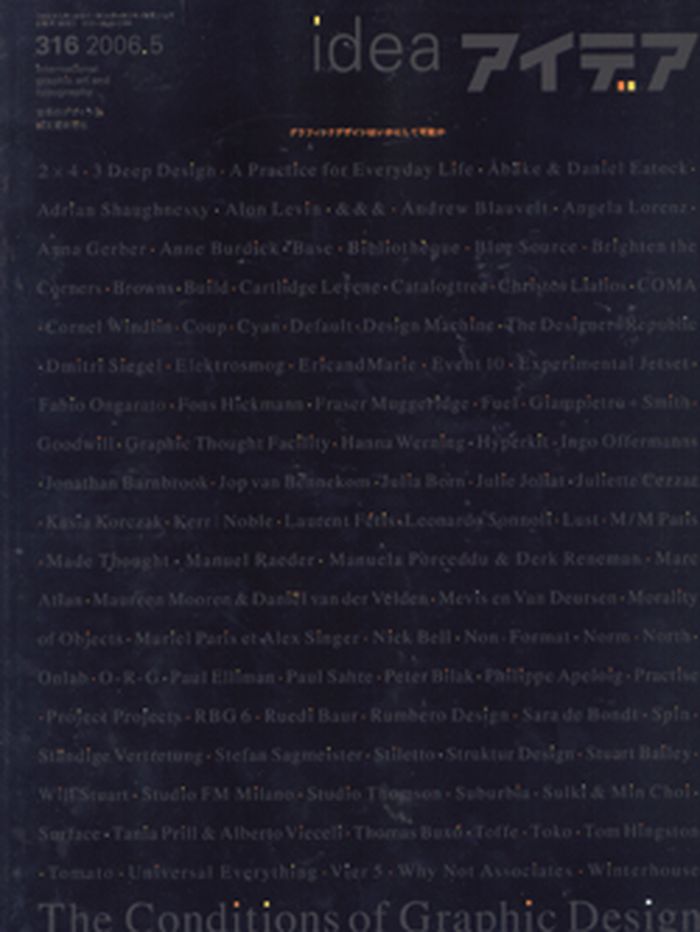
Idea 316 The conditions of graphic design
Actions:
Price:
$47.00
(available to order)
Summary:
2x4, 3 Deep Design, A Practice for Everyday Life, Åbäke & Daniel Eatock, Adrian Shaughnessy, Alon Levin, &&&, Andrew Blauvelt, Angela Lorenz, Anna Gerber, Anne Burdick, Base, Bibliothèque, Bluesource, Brighten the Corners, Browns, Build, Cartlidge Levene, Catalogtree, Christos Lialios, COMA, Cornel Windlin, Coup, Cyan, Default, Design Machine, The Designers Republic, Dmitri Siegel, Elektrosmog, EricandMarie, Event10, Experimental Jetset, Fabio Ongarato, Fons Hickmann, Fraser Muggeridge, Fuel, Giampietro+Smith, Goodwill, Graphic Thought Facility, Hanna Werning, Hyperkit, Ingo Offermanns, Jonathan Barnbrook, Jop van Bennekom, Julia Born, Julie Joliat, Juliette Cezzar, Kasia Korczak, Kerr|Noble, Laurent Fétis, Leonardo Sonnoli, Lust, M/M Paris, MadeThought, Manuel Raeder, Manuela Porceddu & Derk Reneman, Marc Atlan, Maureen Mooren & Daniël van der Velden, Mevis en Van Deursen, Morality of Objects, Muriel Paris et Alex Singer, Nick Bell, Non-Format, Norm, North, Onlab, O-R-G, Paul Elliman, Paul Sahre, Peter Bilak, Philippe Apeloig, Practise, Project Projects, RBG 6, Ruedi Baur, Rumbero Design, Sara de Bondt, Spin, Ständige Vertretung, Stefan Sagmeister, Stiletto, Struktur Design, Stuart Bailey, Will Stuart, Studio FM milano, Studio Thomson, Suburbia, Sulki & Min Choi, Surface, Tania Prill & Alberto Vieceli, Thomas Buxó, Toffe, Toko, Tom Hingston, Tomato, Universal Everything, Vier5, Why Not Associates, Winterhouse
Idea 316 The conditions of graphic design
Actions:
Price:
$47.00
(available to order)
Summary:
2x4, 3 Deep Design, A Practice for Everyday Life, Åbäke & Daniel Eatock, Adrian Shaughnessy, Alon Levin, &&&, Andrew Blauvelt, Angela Lorenz, Anna Gerber, Anne Burdick, Base, Bibliothèque, Bluesource, Brighten the Corners, Browns, Build, Cartlidge Levene, Catalogtree, Christos Lialios, COMA, Cornel Windlin, Coup, Cyan, Default, Design Machine, The Designers Republic, Dmitri Siegel, Elektrosmog, EricandMarie, Event10, Experimental Jetset, Fabio Ongarato, Fons Hickmann, Fraser Muggeridge, Fuel, Giampietro+Smith, Goodwill, Graphic Thought Facility, Hanna Werning, Hyperkit, Ingo Offermanns, Jonathan Barnbrook, Jop van Bennekom, Julia Born, Julie Joliat, Juliette Cezzar, Kasia Korczak, Kerr|Noble, Laurent Fétis, Leonardo Sonnoli, Lust, M/M Paris, MadeThought, Manuel Raeder, Manuela Porceddu & Derk Reneman, Marc Atlan, Maureen Mooren & Daniël van der Velden, Mevis en Van Deursen, Morality of Objects, Muriel Paris et Alex Singer, Nick Bell, Non-Format, Norm, North, Onlab, O-R-G, Paul Elliman, Paul Sahre, Peter Bilak, Philippe Apeloig, Practise, Project Projects, RBG 6, Ruedi Baur, Rumbero Design, Sara de Bondt, Spin, Ständige Vertretung, Stefan Sagmeister, Stiletto, Struktur Design, Stuart Bailey, Will Stuart, Studio FM milano, Studio Thomson, Suburbia, Sulki & Min Choi, Surface, Tania Prill & Alberto Vieceli, Thomas Buxó, Toffe, Toko, Tom Hingston, Tomato, Universal Everything, Vier5, Why Not Associates, Winterhouse
Form:
books
books
Publication:
May 2006, Tokyo
May 2006, Tokyo
Subject:
Graphic Design and Typography
Graphic Design and Typography
Form:
books
books
Actions:
Price:
$35.95
(available to order)
Summary:
Borrowing its title from Gregg Araki’s 2005 film, in which the camera’s contemplation of the male body encourages us to feel that body, and covering a broad span of subjects and films, Mysterious Skin offers a wider, more representative picture of the depiction of the male body in contemporary world cinemas than has hitherto been attempted. An international array of(...)
$35.95
(available to order)
Summary:
Borrowing its title from Gregg Araki’s 2005 film, in which the camera’s contemplation of the male body encourages us to feel that body, and covering a broad span of subjects and films, Mysterious Skin offers a wider, more representative picture of the depiction of the male body in contemporary world cinemas than has hitherto been attempted. An international array of(...)
Title:
Mysterious skin: male bodies in contemporary cinema
Actions:
Price:
$35.95
(available to order)
Summary:
Borrowing its title from Gregg Araki’s 2005 film, in which the camera’s contemplation of the male body encourages us to feel that body, and covering a broad span of subjects and films, Mysterious Skin offers a wider, more representative picture of the depiction of the male body in contemporary world cinemas than has hitherto been attempted. An international array of major experts explore the treatment of masculinity and the male body in the cinemas of Africa, Australia, China, France, Germany, Great Britain, India, North America, Spain, Taiwan and Vietnam, as well as Hollywood. Their common concern is to reveal how the representation of the male body is used in films to convey a country’s anxieties about its national identity and history, as well as how it engages with questions of racial, sexual or gender politics. They discuss key actors, directors and films of these countries, from Ewan MacGregor in Peter Greenaway’s The Pillow Book, through the films of Wong Kar Wai, to Paul Hogan as Mick Dundee in Crocodile Dundee. In so doing, Mysterious Skin also provides a strong overview of important cinema produced around the world in the last twenty years.
Mysterious skin: male bodies in contemporary cinema
Actions:
Price:
$35.95
(available to order)
Summary:
Borrowing its title from Gregg Araki’s 2005 film, in which the camera’s contemplation of the male body encourages us to feel that body, and covering a broad span of subjects and films, Mysterious Skin offers a wider, more representative picture of the depiction of the male body in contemporary world cinemas than has hitherto been attempted. An international array of major experts explore the treatment of masculinity and the male body in the cinemas of Africa, Australia, China, France, Germany, Great Britain, India, North America, Spain, Taiwan and Vietnam, as well as Hollywood. Their common concern is to reveal how the representation of the male body is used in films to convey a country’s anxieties about its national identity and history, as well as how it engages with questions of racial, sexual or gender politics. They discuss key actors, directors and films of these countries, from Ewan MacGregor in Peter Greenaway’s The Pillow Book, through the films of Wong Kar Wai, to Paul Hogan as Mick Dundee in Crocodile Dundee. In so doing, Mysterious Skin also provides a strong overview of important cinema produced around the world in the last twenty years.
Form:
books
books
Publication:
January 1900
January 1900
Subject:
Contemporary Art Monographs
Contemporary Art Monographs
Form:
books
books
Price:
$100.00
(available to order)
Summary:
Legendary for his massive photographic undertaking The North American Indian, Edward Sheriff Curtis (1868-1952) recorded much more than portraits of Native American tribespeople. Among his huge body of work are numerous images of all manner of native dwellings: tipis, hogans, huts, cliff houses, adobes, and many(...)
$100.00
(available to order)
Summary:
Legendary for his massive photographic undertaking The North American Indian, Edward Sheriff Curtis (1868-1952) recorded much more than portraits of Native American tribespeople. Among his huge body of work are numerous images of all manner of native dwellings: tipis, hogans, huts, cliff houses, adobes, and many(...)
Subject:
Photography monographs
Photography monographs
Publication:
September 2000, San Francisco
September 2000, San Francisco
Title:
Sites & structures : the architectural photographs of Edward S. Curtis
Actions:
Price:
$100.00
(available to order)
Summary:
Legendary for his massive photographic undertaking The North American Indian, Edward Sheriff Curtis (1868-1952) recorded much more than portraits of Native American tribespeople. Among his huge body of work are numerous images of all manner of native dwellings: tipis, hogans, huts, cliff houses, adobes, and many more that are far less familiar to the public eye. Though people are largely absent from these photographs, each image speaks volumes about the lives and lifestyles of the tribes to which they belonged. Other structures such as tombs, religious buildings, granaries, and totem poles are also featured prominently, further glimpses into ways of life that were in the process of disappearing. Taken from the Dan and Mary Solomon collection, Sites & Structures: The Architectural Photographs of Edward S. Curtis is the first book of Curtis photographs to explore these dwellings and structures, faithfully reproduced from the original prints and gravures. Curator and photography historian Rod Slemmons puts these photographs in context among Curtis's more familiar portraits and considers their anthropological and artistic importance. Reproduced in large, splendid tritones, Sites & Structures is one of the finest monographs of this American photographic master.
Sites & structures : the architectural photographs of Edward S. Curtis
Actions:
Price:
$100.00
(available to order)
Summary:
Legendary for his massive photographic undertaking The North American Indian, Edward Sheriff Curtis (1868-1952) recorded much more than portraits of Native American tribespeople. Among his huge body of work are numerous images of all manner of native dwellings: tipis, hogans, huts, cliff houses, adobes, and many more that are far less familiar to the public eye. Though people are largely absent from these photographs, each image speaks volumes about the lives and lifestyles of the tribes to which they belonged. Other structures such as tombs, religious buildings, granaries, and totem poles are also featured prominently, further glimpses into ways of life that were in the process of disappearing. Taken from the Dan and Mary Solomon collection, Sites & Structures: The Architectural Photographs of Edward S. Curtis is the first book of Curtis photographs to explore these dwellings and structures, faithfully reproduced from the original prints and gravures. Curator and photography historian Rod Slemmons puts these photographs in context among Curtis's more familiar portraits and considers their anthropological and artistic importance. Reproduced in large, splendid tritones, Sites & Structures is one of the finest monographs of this American photographic master.
Form:
books
books
Publication:
September 2000, San Francisco
September 2000, San Francisco
Subject:
Photography monographs
Photography monographs
Form:
books
books
Title:
Benthem Crouwel : 1980-2000
Benthem Crouwel : 1980-2000
Actions:
Price:
$95.95
(available in store)
Summary:
The work of Benthem Crouwel Architects is sober, practical and functional - wholly in line with the Dutch tradition of soundness and reliability. At the same time there is wide-spread admiration for the expressive and aesthetic values of the designs, which achieve maximum effect with a minimum of means. This profusely (...)
$95.95
(available in store)
Summary:
The work of Benthem Crouwel Architects is sober, practical and functional - wholly in line with the Dutch tradition of soundness and reliability. At the same time there is wide-spread admiration for the expressive and aesthetic values of the designs, which achieve maximum effect with a minimum of means. This profusely (...)
Subject:
Architecture Monographs
Architecture Monographs
Publication:
October 1999, Rotterdam
October 1999, Rotterdam
Title:
Benthem Crouwel : 1980-2000
Actions:
Price:
$95.95
(available in store)
Summary:
The work of Benthem Crouwel Architects is sober, practical and functional - wholly in line with the Dutch tradition of soundness and reliability. At the same time there is wide-spread admiration for the expressive and aesthetic values of the designs, which achieve maximum effect with a minimum of means. This profusely illustrated publication presents the complete oeuvre spanning twenty years on the basis of five themes. "Living" focuses on the private houses and apartment buildings such as those for Jager, Nieuwland and Soutelande. "Working" gives a picture of such diverse projects as the Amsterdam office for Wagons Lits, the Provincial Hall in Groningen, de Malie Tower in The Hague and the Mors factory in Opmeer. "Shopping" describes recent projects in Leidschendam, Amsterdam Zuid-Oost and Schiphol. "Travelling" likewise features various projects for Schiphol, supplemented with proposals for Amsterdam's North/South underground line and Lelystad airport. Finally in "Visiting" we encounter the firm's many recreational and museological projects such as the popcluster 013 in Tilburg, new major spaces for the RAI and Ahoy' complexes, the so-called cultural strip in Amstelveen, and the Anne Frank Museum in Amsterdam.
Benthem Crouwel : 1980-2000
Actions:
Price:
$95.95
(available in store)
Summary:
The work of Benthem Crouwel Architects is sober, practical and functional - wholly in line with the Dutch tradition of soundness and reliability. At the same time there is wide-spread admiration for the expressive and aesthetic values of the designs, which achieve maximum effect with a minimum of means. This profusely illustrated publication presents the complete oeuvre spanning twenty years on the basis of five themes. "Living" focuses on the private houses and apartment buildings such as those for Jager, Nieuwland and Soutelande. "Working" gives a picture of such diverse projects as the Amsterdam office for Wagons Lits, the Provincial Hall in Groningen, de Malie Tower in The Hague and the Mors factory in Opmeer. "Shopping" describes recent projects in Leidschendam, Amsterdam Zuid-Oost and Schiphol. "Travelling" likewise features various projects for Schiphol, supplemented with proposals for Amsterdam's North/South underground line and Lelystad airport. Finally in "Visiting" we encounter the firm's many recreational and museological projects such as the popcluster 013 in Tilburg, new major spaces for the RAI and Ahoy' complexes, the so-called cultural strip in Amstelveen, and the Anne Frank Museum in Amsterdam.
Form:
books
books
Publication:
October 1999, Rotterdam
October 1999, Rotterdam
Subject:
Architecture Monographs
Architecture Monographs
Form:
books
books
Actions:
Price:
$70.00
(available in store)
Summary:
Drawing from the nearly half a million photographs and documents comprising the Historic American Buildings Survey held in the US Library of Congress, this book constructs a fictional ‘one-way road trip’ across the United States, weaving north and south across the Mason-Dixon line while tacking west. In ''A field measure survey of American architecture,'' Jeffrey Ladd(...)
$70.00
(available in store)
Summary:
Drawing from the nearly half a million photographs and documents comprising the Historic American Buildings Survey held in the US Library of Congress, this book constructs a fictional ‘one-way road trip’ across the United States, weaving north and south across the Mason-Dixon line while tacking west. In ''A field measure survey of American architecture,'' Jeffrey Ladd(...)
Title:
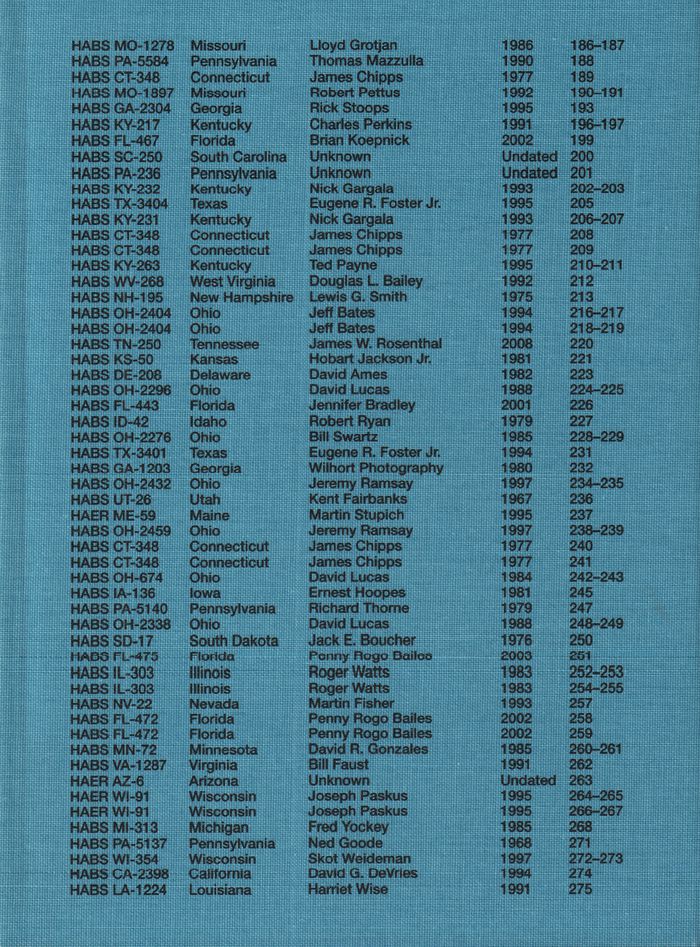
A field measure survey of American architecture
Actions:
Price:
$70.00
(available in store)
Summary:
Drawing from the nearly half a million photographs and documents comprising the Historic American Buildings Survey held in the US Library of Congress, this book constructs a fictional ‘one-way road trip’ across the United States, weaving north and south across the Mason-Dixon line while tacking west. In ''A field measure survey of American architecture,'' Jeffrey Ladd uses the HABS archive as a surrogate in order to manifest a portrait of his former country at a moment when its democracy seems imperiled. Inspired equally by the social documentary work of Walker Evans and the architectural interventions of Gordon Matta-Clark and others, Ladd embraces the muteness of photographs to create an ambiguous space where the sculptural, political, forensic, and fictional coalesce within a landscape of both beauty and fragility. What initially appears to be a single voice is revealed to belong to dozens of makers; what seems a description of the distant past is revealed to be closer to the present than expected. ''A field measure survey of American architecture'' sheds light not only on this remarkable archive but on the proliferate meanings that can be shaped from its images.
A field measure survey of American architecture
Actions:
Price:
$70.00
(available in store)
Summary:
Drawing from the nearly half a million photographs and documents comprising the Historic American Buildings Survey held in the US Library of Congress, this book constructs a fictional ‘one-way road trip’ across the United States, weaving north and south across the Mason-Dixon line while tacking west. In ''A field measure survey of American architecture,'' Jeffrey Ladd uses the HABS archive as a surrogate in order to manifest a portrait of his former country at a moment when its democracy seems imperiled. Inspired equally by the social documentary work of Walker Evans and the architectural interventions of Gordon Matta-Clark and others, Ladd embraces the muteness of photographs to create an ambiguous space where the sculptural, political, forensic, and fictional coalesce within a landscape of both beauty and fragility. What initially appears to be a single voice is revealed to belong to dozens of makers; what seems a description of the distant past is revealed to be closer to the present than expected. ''A field measure survey of American architecture'' sheds light not only on this remarkable archive but on the proliferate meanings that can be shaped from its images.
Form:
books
books
Publication:
September 2021
September 2021
Subject:
Photography monographs
Photography monographs
Form:
books
books
Actions:
Price:
$35.00
(available to order)
Summary:
Benjamin Franklin secretly loved London more than Philadelphia: it was simply the most exciting place to be in the British Empire. And in the decade before the outbreak of the American Revolution, thousands of his fellow colonists flocked to the Georgian city in its first big wave of American visitors. At the very point of political rupture, mother country and colonies(...)
$35.00
(available to order)
Summary:
Benjamin Franklin secretly loved London more than Philadelphia: it was simply the most exciting place to be in the British Empire. And in the decade before the outbreak of the American Revolution, thousands of his fellow colonists flocked to the Georgian city in its first big wave of American visitors. At the very point of political rupture, mother country and colonies(...)
Title:
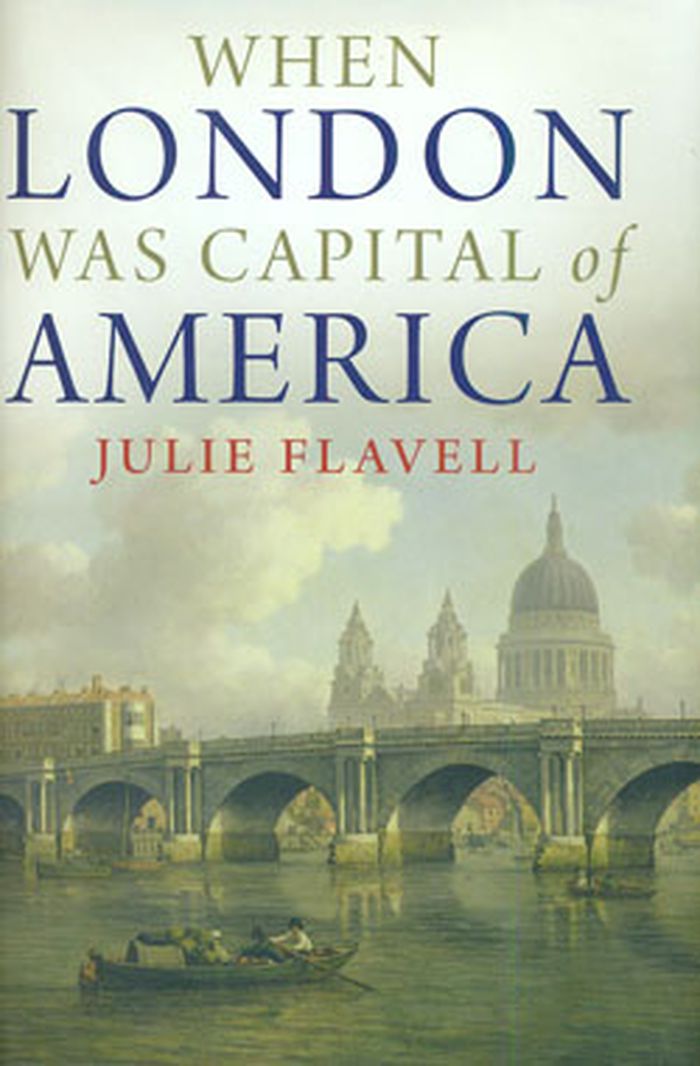
When London was capital of America
Actions:
Price:
$35.00
(available to order)
Summary:
Benjamin Franklin secretly loved London more than Philadelphia: it was simply the most exciting place to be in the British Empire. And in the decade before the outbreak of the American Revolution, thousands of his fellow colonists flocked to the Georgian city in its first big wave of American visitors. At the very point of political rupture, mother country and colonies were socially and culturally closer than ever before. In this first-ever portrait of eighteenth-century London as the capital of America, Julie Flavell recreates the famous city's heyday as the centre of an empire that encompassed North America and the West Indies. The momentous years before independence saw more colonial Americans than ever on London's streets: wealthy Southern plantation owners in quest of culture, slaves hoping for a chance of freedom, Yankee businessmen looking for opportunities in the city, even Ben Franklin seeking a second, more distinguished career. The stories of the colonials, no innocents abroad, vividly recreate a time when Americans saw London as their own and remind us of the complex, multiracial - at times even decadent - nature of America's colonial British heritage.
When London was capital of America
Actions:
Price:
$35.00
(available to order)
Summary:
Benjamin Franklin secretly loved London more than Philadelphia: it was simply the most exciting place to be in the British Empire. And in the decade before the outbreak of the American Revolution, thousands of his fellow colonists flocked to the Georgian city in its first big wave of American visitors. At the very point of political rupture, mother country and colonies were socially and culturally closer than ever before. In this first-ever portrait of eighteenth-century London as the capital of America, Julie Flavell recreates the famous city's heyday as the centre of an empire that encompassed North America and the West Indies. The momentous years before independence saw more colonial Americans than ever on London's streets: wealthy Southern plantation owners in quest of culture, slaves hoping for a chance of freedom, Yankee businessmen looking for opportunities in the city, even Ben Franklin seeking a second, more distinguished career. The stories of the colonials, no innocents abroad, vividly recreate a time when Americans saw London as their own and remind us of the complex, multiracial - at times even decadent - nature of America's colonial British heritage.
Form:
books
books
Publication:
June 2010
June 2010
Subject:
History until 1900, Great Britain
History until 1900, Great Britain
Form:
books
books
Price:
$30.00
(available to order)
Summary:
Parks are importantly fertile places to talk about land. Whether its big national parks, provincial campgrounds, isolated conservation areas, destination parks, or humble urban patches of grass, we tend to speak of parks as unqualified goods. People think of parks as public or common land, and it is a common belief that parks are the best uses of land and are good for(...)
$30.00
(available to order)
Summary:
Parks are importantly fertile places to talk about land. Whether its big national parks, provincial campgrounds, isolated conservation areas, destination parks, or humble urban patches of grass, we tend to speak of parks as unqualified goods. People think of parks as public or common land, and it is a common belief that parks are the best uses of land and are good for(...)
Title:
On this patch of grass: city parks and the politics of occupied land
Actions:
Price:
$30.00
(available to order)
Summary:
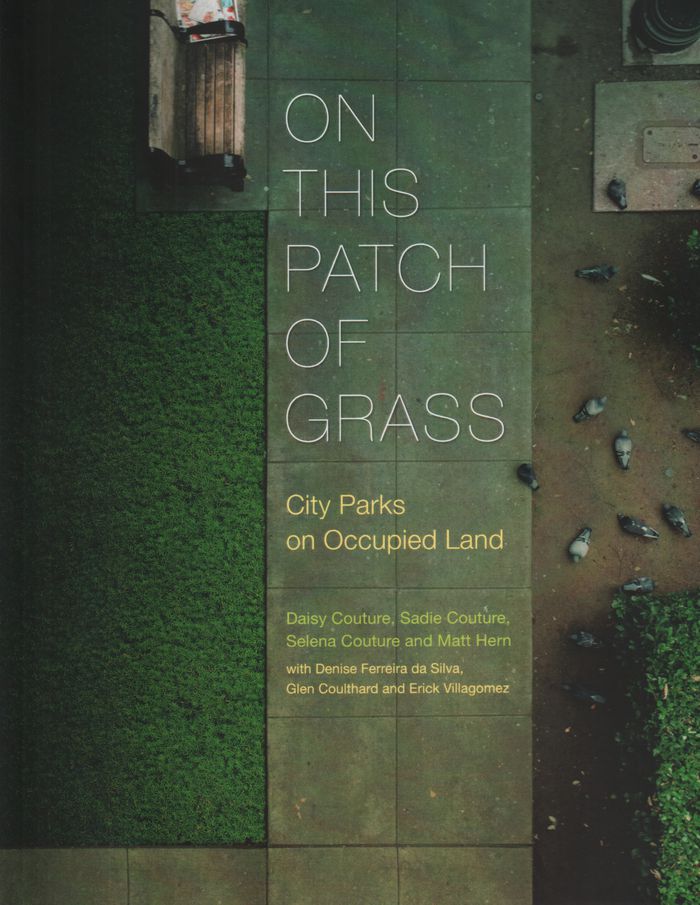
Parks are importantly fertile places to talk about land. Whether its big national parks, provincial campgrounds, isolated conservation areas, destination parks, or humble urban patches of grass, we tend to speak of parks as unqualified goods. People think of parks as public or common land, and it is a common belief that parks are the best uses of land and are good for everyone. But no park is innocent. Parks are lionized as "natural oases," and urban parks as "pure nature" in the midst of the city -- but that's absurd. Parks are as "natural" as the roads or buildings around them, and just as political. Every park in North America is performing modernity and settler colonialism everyday. Furthermore, parks are not private property, but while they are called ''public'', they are highly regulated spaces that normatively demand and closely control behaviours. Parks are a certain kind of property, and thus creations of law, and they are subject to all kinds of presumptions about what parks are for, and what kinds of people should be doing what kinds of things in them. Parks- as they are currently constituted- are colonial enterprises.
On this patch of grass: city parks and the politics of occupied land
Actions:
Price:
$30.00
(available to order)
Summary:
Parks are importantly fertile places to talk about land. Whether its big national parks, provincial campgrounds, isolated conservation areas, destination parks, or humble urban patches of grass, we tend to speak of parks as unqualified goods. People think of parks as public or common land, and it is a common belief that parks are the best uses of land and are good for everyone. But no park is innocent. Parks are lionized as "natural oases," and urban parks as "pure nature" in the midst of the city -- but that's absurd. Parks are as "natural" as the roads or buildings around them, and just as political. Every park in North America is performing modernity and settler colonialism everyday. Furthermore, parks are not private property, but while they are called ''public'', they are highly regulated spaces that normatively demand and closely control behaviours. Parks are a certain kind of property, and thus creations of law, and they are subject to all kinds of presumptions about what parks are for, and what kinds of people should be doing what kinds of things in them. Parks- as they are currently constituted- are colonial enterprises.
Form:
books
books
Publication:
November 2018
November 2018
Subject:
Landscape Theory
Landscape Theory
Form:
books
books
Title:
Photography and travel
Photography and travel
Actions:
Price:
$42.95
(available to order)
Summary:
Photography and travel have been linked since 1839, when Daguerre and Talbot first made their inventions known to the public. The inventors and their advocates immediately recognised photography’s capability to vividly represent the spectacles of the world, and make them accessible to the general public in the comfort of their homes. The unquestionable connection between(...)
$42.95
(available to order)
Summary:
Photography and travel have been linked since 1839, when Daguerre and Talbot first made their inventions known to the public. The inventors and their advocates immediately recognised photography’s capability to vividly represent the spectacles of the world, and make them accessible to the general public in the comfort of their homes. The unquestionable connection between(...)
Title:
Photography and travel
Actions:
Price:
$42.95
(available to order)
Summary:
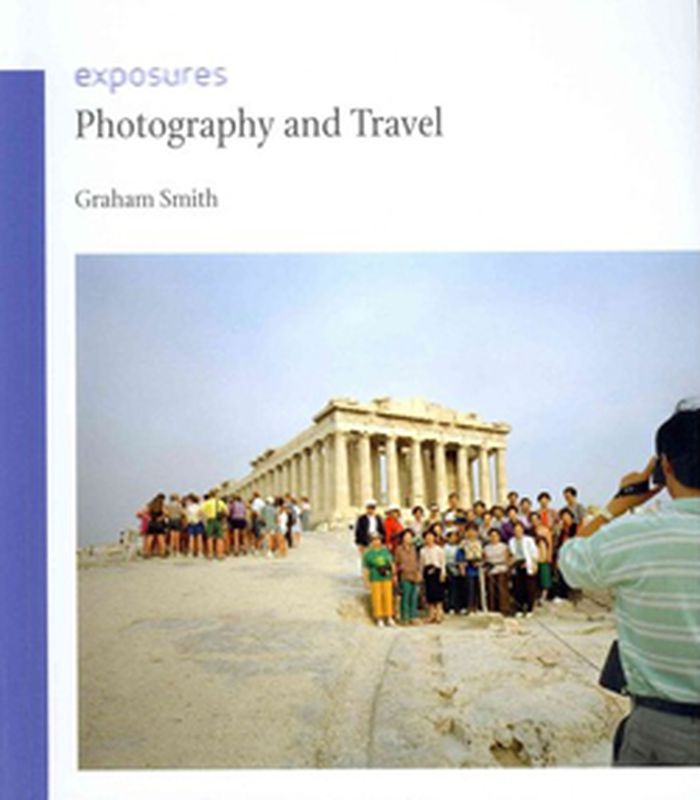
Photography and travel have been linked since 1839, when Daguerre and Talbot first made their inventions known to the public. The inventors and their advocates immediately recognised photography’s capability to vividly represent the spectacles of the world, and make them accessible to the general public in the comfort of their homes. The unquestionable connection between photography and travel remains vital today. In Photography and Travel, Graham Smith provides a lively account of this partnership, discussing the diverse applications of photography to travel during the nineteenth century, in destinations as exotic as France, Italy, Greece, Egypt, Japan and North America. He then moves to the twentieth century, ranging from seaside excursions to transcontinental travel by rail, road and air. As it has become more democratized, the methods and experiences of travel have developed in many unexpected directions, all of which have created their own new photographic narratives.Photography and Travel shows that photographers have often gone to great lengths – at considerable personal danger – to record exotic destinations, from the ice caves and crevasses of the Mer de Glace to the maw of Vesuvius, from the summit of Mount Everest to the pock-marked surface of the moon.
Photography and travel
Actions:
Price:
$42.95
(available to order)
Summary:
Photography and travel have been linked since 1839, when Daguerre and Talbot first made their inventions known to the public. The inventors and their advocates immediately recognised photography’s capability to vividly represent the spectacles of the world, and make them accessible to the general public in the comfort of their homes. The unquestionable connection between photography and travel remains vital today. In Photography and Travel, Graham Smith provides a lively account of this partnership, discussing the diverse applications of photography to travel during the nineteenth century, in destinations as exotic as France, Italy, Greece, Egypt, Japan and North America. He then moves to the twentieth century, ranging from seaside excursions to transcontinental travel by rail, road and air. As it has become more democratized, the methods and experiences of travel have developed in many unexpected directions, all of which have created their own new photographic narratives.Photography and Travel shows that photographers have often gone to great lengths – at considerable personal danger – to record exotic destinations, from the ice caves and crevasses of the Mer de Glace to the maw of Vesuvius, from the summit of Mount Everest to the pock-marked surface of the moon.
Form:
books
books
Publication:
June 2012
June 2012
Subject:
Theory of Photography
Theory of Photography
Form:
books
books
Title:
Taking to the streets: crowds, politics, and the urban experience in mid-nineteenth-Century Montreal
Taking to the streets: crowds, politics, and the urban experience in mid-nineteenth-Century Montreal
Actions:
Price:
$37.95
(available to order)
Summary:
The 1840s were a period of rapid growth and social conflict in Montreal. The city''s public life was marked by a series of labour conflicts and bloody sectarian riots; at the same time, the ways that elites wielded power and ordinary people engaged in the political process were changing, particularly in public space. In Taking to the Streets Dan Horner examines how the(...)
$37.95
(available to order)
Summary:
The 1840s were a period of rapid growth and social conflict in Montreal. The city''s public life was marked by a series of labour conflicts and bloody sectarian riots; at the same time, the ways that elites wielded power and ordinary people engaged in the political process were changing, particularly in public space. In Taking to the Streets Dan Horner examines how the(...)
Title:
Taking to the streets: crowds, politics, and the urban experience in mid-nineteenth-Century Montreal
Actions:
Price:
$37.95
(available to order)
Summary:
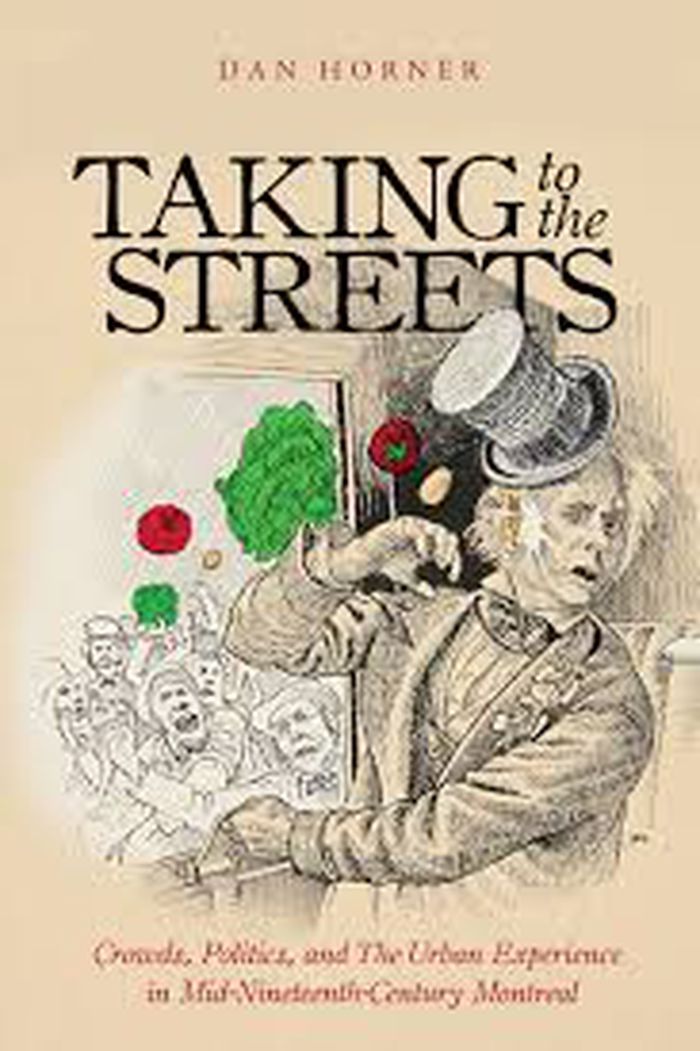
The 1840s were a period of rapid growth and social conflict in Montreal. The city''s public life was marked by a series of labour conflicts and bloody sectarian riots; at the same time, the ways that elites wielded power and ordinary people engaged in the political process were changing, particularly in public space. In Taking to the Streets Dan Horner examines how the urban environment became a vital and contentious political site during the tumultuous period from the end of the 1837-38 rebellions to the burning of Parliament in 1849. Employing a close reading of newspaper and judicial archives, he looks at a broad range of collective crowd experiences, including riots, labour demonstrations, religious processions, and parades. By examining how crowd events were used both to assert claims of political authority and to challenge their legitimacy, Horner charts the development of a contentious democratic political culture in British North America. Taking to the Streets is an important contribution to the political and urban history of pre-Confederation Canada and a timely reminder of how Montrealers from all walks of life have always used the streets to build community and make their voices heard.
Taking to the streets: crowds, politics, and the urban experience in mid-nineteenth-Century Montreal
Actions:
Price:
$37.95
(available to order)
Summary:
The 1840s were a period of rapid growth and social conflict in Montreal. The city''s public life was marked by a series of labour conflicts and bloody sectarian riots; at the same time, the ways that elites wielded power and ordinary people engaged in the political process were changing, particularly in public space. In Taking to the Streets Dan Horner examines how the urban environment became a vital and contentious political site during the tumultuous period from the end of the 1837-38 rebellions to the burning of Parliament in 1849. Employing a close reading of newspaper and judicial archives, he looks at a broad range of collective crowd experiences, including riots, labour demonstrations, religious processions, and parades. By examining how crowd events were used both to assert claims of political authority and to challenge their legitimacy, Horner charts the development of a contentious democratic political culture in British North America. Taking to the Streets is an important contribution to the political and urban history of pre-Confederation Canada and a timely reminder of how Montrealers from all walks of life have always used the streets to build community and make their voices heard.
Form:
books
books
Publication:
June 2020
June 2020


