


13794 Results
Form:
books
books
Actions:
Price:
$26.95
(available to order)
Summary:
Part aphorism and part manifesto, this book by Canadian architect Reza Aliabadi (RZLBD) references his ideas and thoughts about space. He suggests ‘the empty room’ as the very essence of architecture, and ‘the spatial experience’ as its highest mandate. Reza revisits architecture –not as the walls that enclose the space– but rather the space in-between the walls. What he(...)
$26.95
(available to order)
Summary:
Part aphorism and part manifesto, this book by Canadian architect Reza Aliabadi (RZLBD) references his ideas and thoughts about space. He suggests ‘the empty room’ as the very essence of architecture, and ‘the spatial experience’ as its highest mandate. Reza revisits architecture –not as the walls that enclose the space– but rather the space in-between the walls. What he(...)
Title:
Reza Aliabadi:The empty room, fragmented thoughts on space
Actions:
Price:
$26.95
(available to order)
Summary:
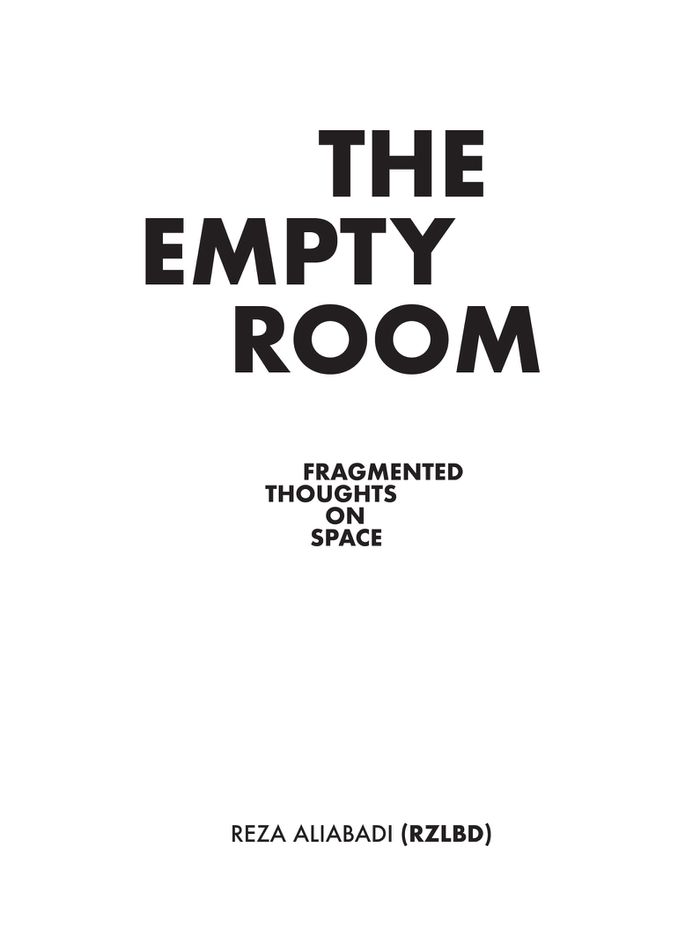
Part aphorism and part manifesto, this book by Canadian architect Reza Aliabadi (RZLBD) references his ideas and thoughts about space. He suggests ‘the empty room’ as the very essence of architecture, and ‘the spatial experience’ as its highest mandate. Reza revisits architecture –not as the walls that enclose the space– but rather the space in-between the walls. What he calls an “anti-architecture” of invisible voids. As Kahn always said: “Architecture comes from the making of a room”. This book starts with this, the very desire to dwell in a space in its most basic form — a room. Through short passages and aphorisms, this text revisits space as the only protagonist, the very foundation, and the sole essence of architecture. It affects your perception of space, it makes you to look at architecture differently — most likely to see the invisible.
Reza Aliabadi:The empty room, fragmented thoughts on space
Actions:
Price:
$26.95
(available to order)
Summary:
Part aphorism and part manifesto, this book by Canadian architect Reza Aliabadi (RZLBD) references his ideas and thoughts about space. He suggests ‘the empty room’ as the very essence of architecture, and ‘the spatial experience’ as its highest mandate. Reza revisits architecture –not as the walls that enclose the space– but rather the space in-between the walls. What he calls an “anti-architecture” of invisible voids. As Kahn always said: “Architecture comes from the making of a room”. This book starts with this, the very desire to dwell in a space in its most basic form — a room. Through short passages and aphorisms, this text revisits space as the only protagonist, the very foundation, and the sole essence of architecture. It affects your perception of space, it makes you to look at architecture differently — most likely to see the invisible.
Form:
books
books
Publication:
August 2020
August 2020
Subject:
Architectural Theory
Architectural Theory
Form:
books
books
Price:
$30.00
(available to order)
Summary:
Inner Space is part of an ongoing research project into the construction of the architectural imagination. It sets out to investigate the space between the inner and outer realities, a space that could be inhabited and explored in itself, looking for those moments in which the two realms interact most vividly. Besides, it also identifies two parallel and strictly(...)
$30.00
(available to order)
Summary:
Inner Space is part of an ongoing research project into the construction of the architectural imagination. It sets out to investigate the space between the inner and outer realities, a space that could be inhabited and explored in itself, looking for those moments in which the two realms interact most vividly. Besides, it also identifies two parallel and strictly(...)
Title:
Inner space. Poetics of Reason, Lisbon Architecture Triennale
Actions:
Price:
$30.00
(available to order)
Summary:
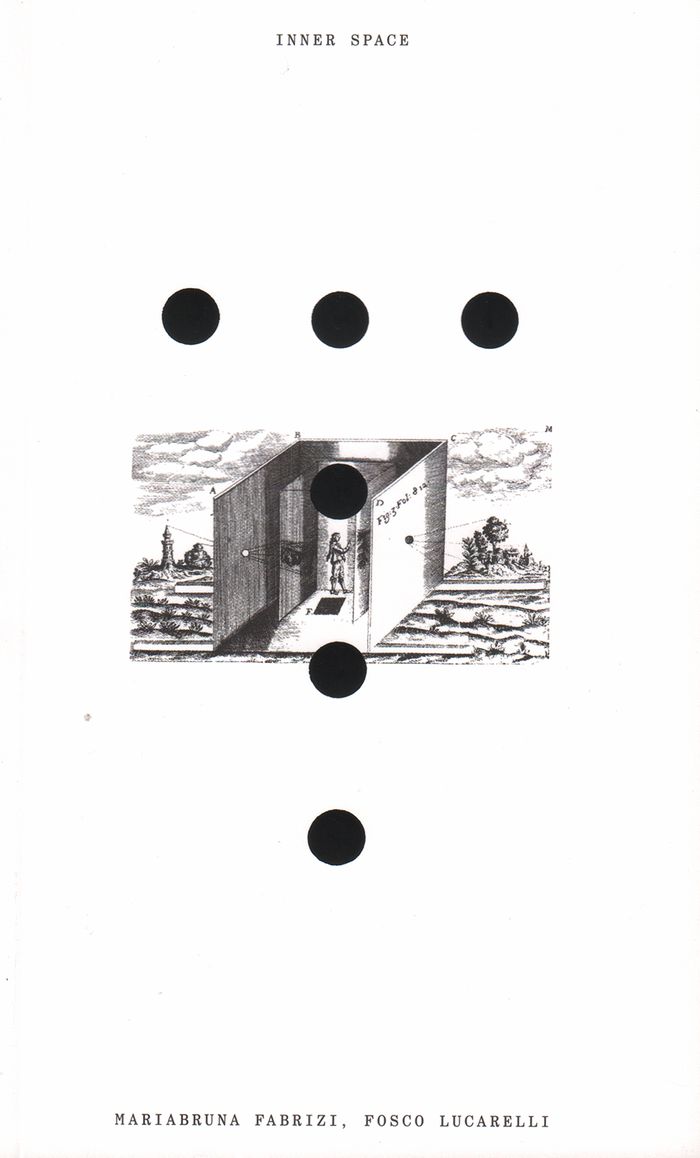
Inner Space is part of an ongoing research project into the construction of the architectural imagination. It sets out to investigate the space between the inner and outer realities, a space that could be inhabited and explored in itself, looking for those moments in which the two realms interact most vividly. Besides, it also identifies two parallel and strictly intertwined movements intervening in the construction of architectural imagination: a collective one and an individual one, two spheres complementing each other. The aim is to identify imagination as an immersive territory that can be experienced, crossed and even inhabited, defined as a human ability which partly relies on a collective process.
Inner space. Poetics of Reason, Lisbon Architecture Triennale
Actions:
Price:
$30.00
(available to order)
Summary:
Inner Space is part of an ongoing research project into the construction of the architectural imagination. It sets out to investigate the space between the inner and outer realities, a space that could be inhabited and explored in itself, looking for those moments in which the two realms interact most vividly. Besides, it also identifies two parallel and strictly intertwined movements intervening in the construction of architectural imagination: a collective one and an individual one, two spheres complementing each other. The aim is to identify imagination as an immersive territory that can be experienced, crossed and even inhabited, defined as a human ability which partly relies on a collective process.
Form:
books
books
Publication:
November 2019
November 2019
Subject:
Architectural Theory
Architectural Theory
Form:
books
books
Price:
$24.00
(available in store)
Summary:
The publication takes the form of a series of statements on architecture, construction, rationality and photography as well as it proceeds as a photographic essay that gathers side by side constructive forms.
$24.00
(available in store)
Summary:
The publication takes the form of a series of statements on architecture, construction, rationality and photography as well as it proceeds as a photographic essay that gathers side by side constructive forms.
Title:
Natural beauty. The Poetics of Reason, Lisbon Architecture Triennale
Actions:
Price:
$24.00
(available in store)
Summary:
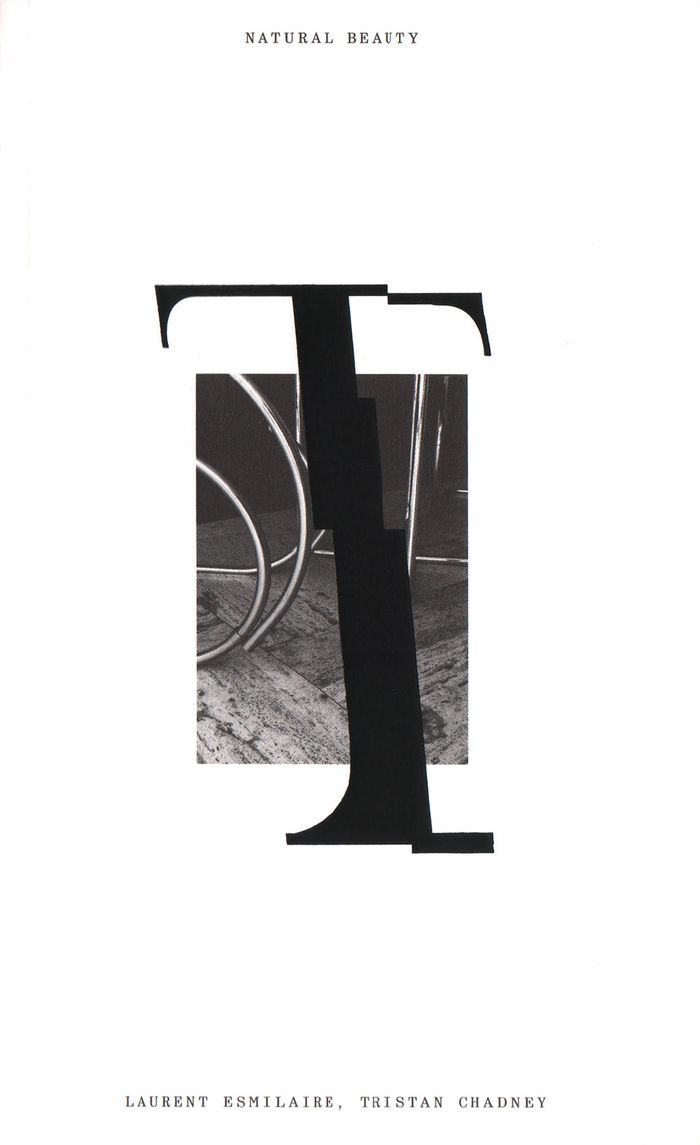
The publication takes the form of a series of statements on architecture, construction, rationality and photography as well as it proceeds as a photographic essay that gathers side by side constructive forms.
Natural beauty. The Poetics of Reason, Lisbon Architecture Triennale
Actions:
Price:
$24.00
(available in store)
Summary:
The publication takes the form of a series of statements on architecture, construction, rationality and photography as well as it proceeds as a photographic essay that gathers side by side constructive forms.
Form:
books
books
Publication:
November 2019
November 2019
Subject:
Architectural Theory
Architectural Theory
Form:
books
books
Actions:
Price:
$40.00
(available to order)
Summary:
Are metropolises really the “manifest destiny” of humankind? Is the environmental predicament calling for more concentration and incorporation? Or is it conducive to some kind of urban exodus? By and large, what might be the principles and ethics of design in such a condition? These are some of the issues that this book addresses.
$40.00
(available to order)
Summary:
Are metropolises really the “manifest destiny” of humankind? Is the environmental predicament calling for more concentration and incorporation? Or is it conducive to some kind of urban exodus? By and large, what might be the principles and ethics of design in such a condition? These are some of the issues that this book addresses.
Title:
Taking the country's side agriculture and architecture. Poetics of Reason, Lisbon Architecture Triennale
Actions:
Price:
$40.00
(available to order)
Summary:
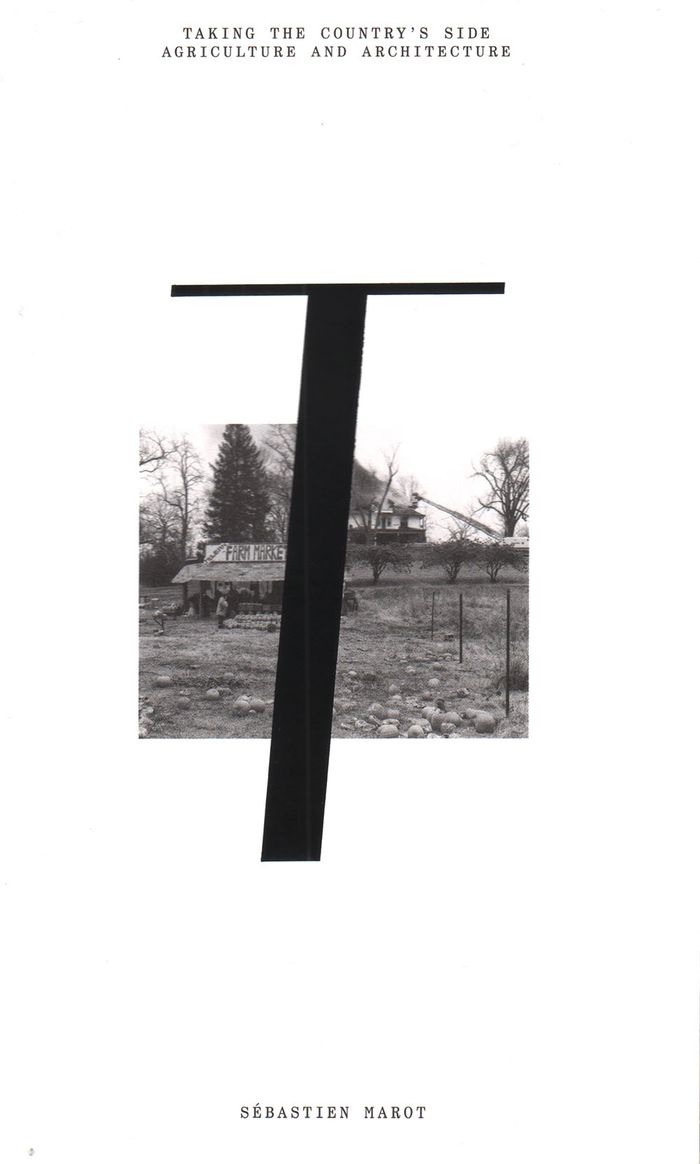
Are metropolises really the “manifest destiny” of humankind? Is the environmental predicament calling for more concentration and incorporation? Or is it conducive to some kind of urban exodus? By and large, what might be the principles and ethics of design in such a condition? These are some of the issues that this book addresses.
Taking the country's side agriculture and architecture. Poetics of Reason, Lisbon Architecture Triennale
Actions:
Price:
$40.00
(available to order)
Summary:
Are metropolises really the “manifest destiny” of humankind? Is the environmental predicament calling for more concentration and incorporation? Or is it conducive to some kind of urban exodus? By and large, what might be the principles and ethics of design in such a condition? These are some of the issues that this book addresses.
Form:
books
books
Publication:
November 2019
November 2019
Subject:
Architectural Theory
Architectural Theory
Form:
books
books
Price:
$30.00
(available to order)
Summary:
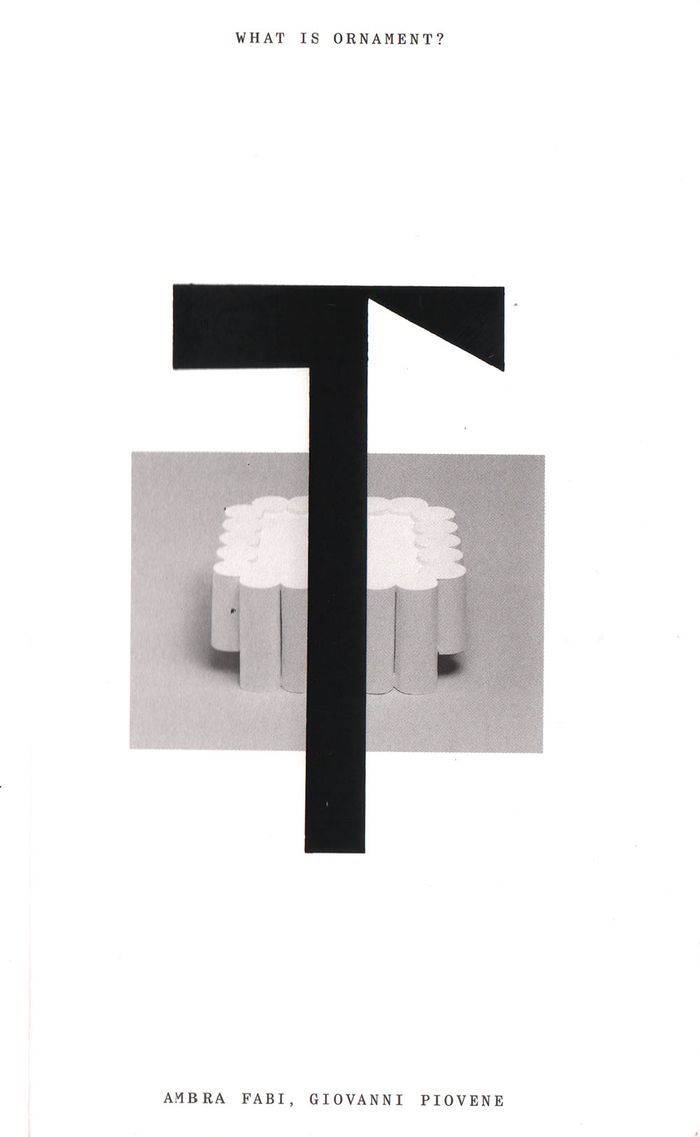
The book is organized as a reader, a collection of contributions, ranging from Vitruvius to the current day dealing, in different ways with the debate around ornament.
$30.00
(available to order)
Summary:
The book is organized as a reader, a collection of contributions, ranging from Vitruvius to the current day dealing, in different ways with the debate around ornament.
Title:
What is ornament? Poetics of Reason, Lisbon Architecture Triennale
Actions:
Price:
$30.00
(available to order)
Summary:
The book is organized as a reader, a collection of contributions, ranging from Vitruvius to the current day dealing, in different ways with the debate around ornament.
What is ornament? Poetics of Reason, Lisbon Architecture Triennale
Actions:
Price:
$30.00
(available to order)
Summary:
The book is organized as a reader, a collection of contributions, ranging from Vitruvius to the current day dealing, in different ways with the debate around ornament.
Form:
books
books
Publication:
November 2019
November 2019
Subject:
Architectural Theory
Architectural Theory
Form:
books
books
Actions:
Price:
$115.00
(available to order)
Summary:
For ''The Poetics of Reason'' exhibition, the Lisbon Architectural Triennale published in partnership with the Barcelona based publisher Polígrafa a book series as unique editions of architecture, focusing on the several themes of the main exhibitions in a compilation. Pocketsize, this limited collection was edited by the curatorial team. The collection includes the(...)
$115.00
(available to order)
Summary:
For ''The Poetics of Reason'' exhibition, the Lisbon Architectural Triennale published in partnership with the Barcelona based publisher Polígrafa a book series as unique editions of architecture, focusing on the several themes of the main exhibitions in a compilation. Pocketsize, this limited collection was edited by the curatorial team. The collection includes the(...)
Title:
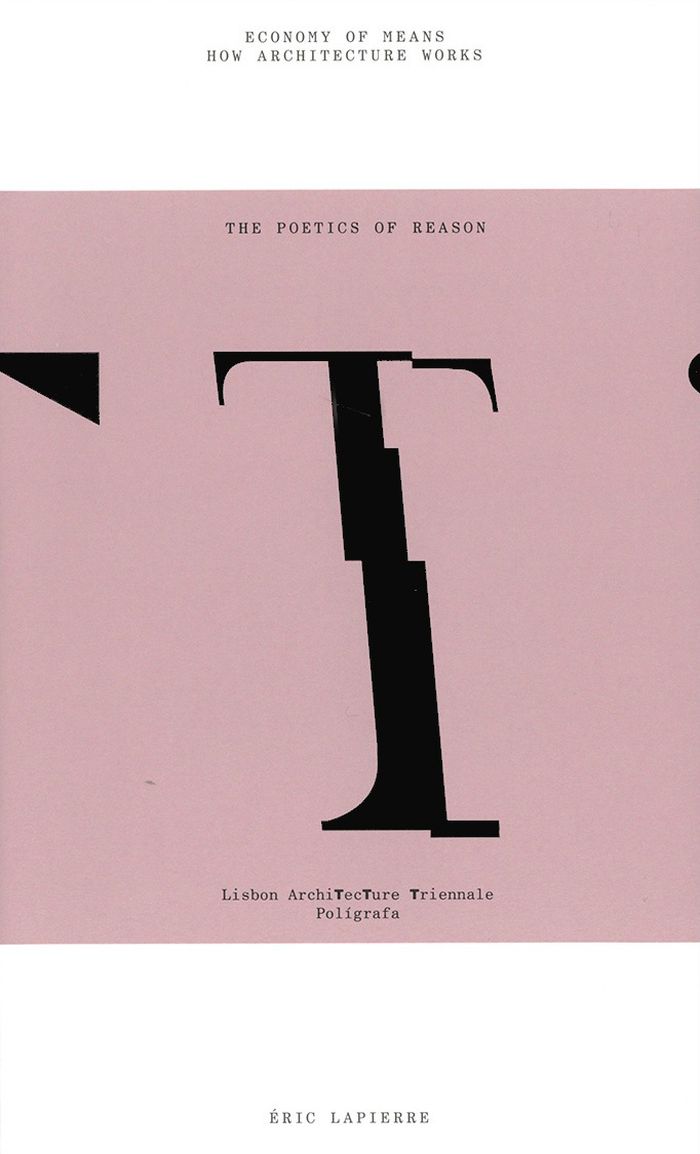
The poetics of reason. Lisbon Architecture Triennale
Actions:
Price:
$115.00
(available to order)
Summary:
For ''The Poetics of Reason'' exhibition, the Lisbon Architectural Triennale published in partnership with the Barcelona based publisher Polígrafa a book series as unique editions of architecture, focusing on the several themes of the main exhibitions in a compilation. Pocketsize, this limited collection was edited by the curatorial team. The collection includes the titles ''Economy of means'', ''What is ornament?'', ''Inner space'', ''Taking the country's side: Agriculture and architecture'' and ''Natural Beauty,''
The poetics of reason. Lisbon Architecture Triennale
Actions:
Price:
$115.00
(available to order)
Summary:
For ''The Poetics of Reason'' exhibition, the Lisbon Architectural Triennale published in partnership with the Barcelona based publisher Polígrafa a book series as unique editions of architecture, focusing on the several themes of the main exhibitions in a compilation. Pocketsize, this limited collection was edited by the curatorial team. The collection includes the titles ''Economy of means'', ''What is ornament?'', ''Inner space'', ''Taking the country's side: Agriculture and architecture'' and ''Natural Beauty,''
Form:
books
books
Publication:
August 2019
August 2019
Subject:
Architectural Theory
Architectural Theory
Form:
books
books
Actions:
Price:
$54.95
(available to order)
Summary:
Questions d'échelle « Sans aucun doute les philosophes ont raison de nous dire que rien n'est grand ni petit sauf par comparaison. » Cette phrase, que Swift fait prononcer à Gulliver, est sans conteste le noyau invisible autour duquel est construit cet ouvrage. Cette anthologie présente un corpus de textes variés qui examine les aspects pluriels des questions d'échelle.(...)
$54.95
(available to order)
Summary:
Questions d'échelle « Sans aucun doute les philosophes ont raison de nous dire que rien n'est grand ni petit sauf par comparaison. » Cette phrase, que Swift fait prononcer à Gulliver, est sans conteste le noyau invisible autour duquel est construit cet ouvrage. Cette anthologie présente un corpus de textes variés qui examine les aspects pluriels des questions d'échelle.(...)
Title:
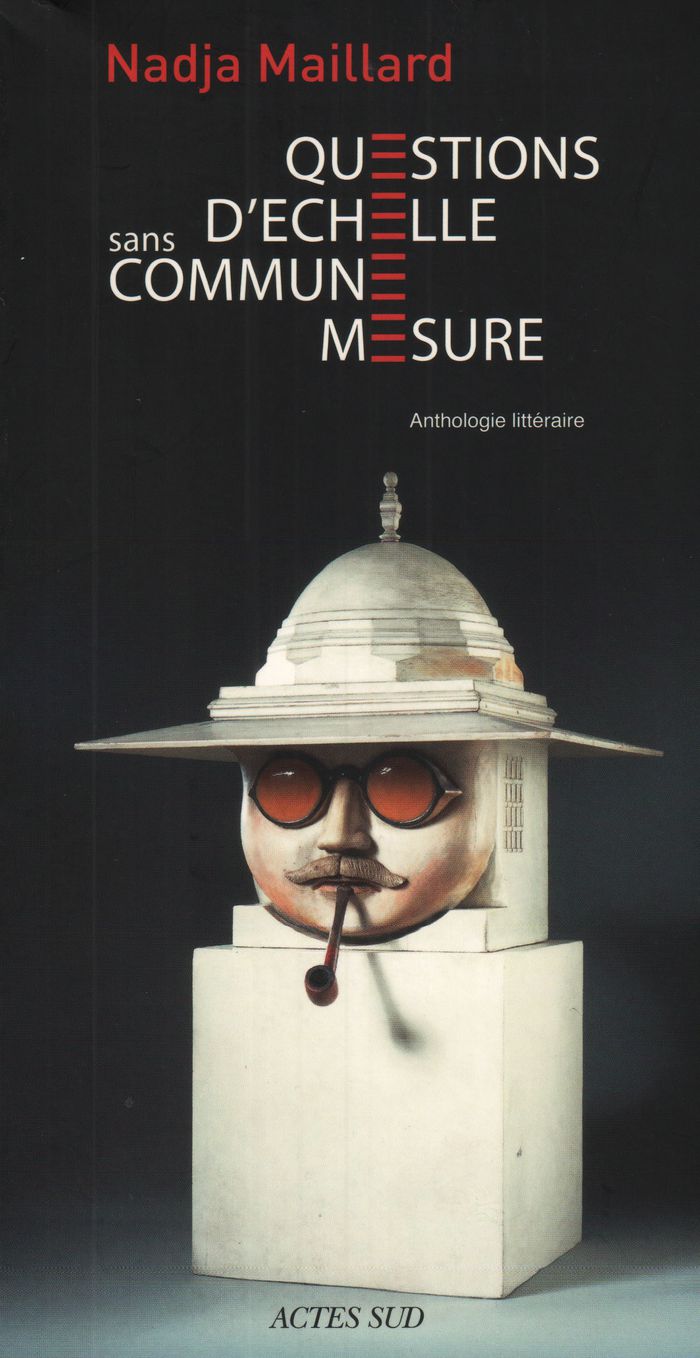
Questions d'échelle sans commune mesure
Actions:
Price:
$54.95
(available to order)
Summary:
Questions d'échelle « Sans aucun doute les philosophes ont raison de nous dire que rien n'est grand ni petit sauf par comparaison. » Cette phrase, que Swift fait prononcer à Gulliver, est sans conteste le noyau invisible autour duquel est construit cet ouvrage. Cette anthologie présente un corpus de textes variés qui examine les aspects pluriels des questions d'échelle. Plus de cent auteurs (philosophes, écrivains, plasticiens, metteurs en scène, anthropologues, photographes, architectes, maquettistes, etc.) sont ainsi convoqués pour s'exprimer sur la réduction, comme objet et comme symbole, sur la miniature comme jouet ou comme dispositif cognitif, sur le modèle réduit et la maquette, sur la relativité des ordres de grandeur.S'il est bien un dénominateur commun à tous ces textes, quel que soit leur registre, leur ambition, leur provenance, c'est le fait qu'en traitant des questions d'échelle, leurs auteurs interrogent immanquablement la condition humaine, prise entre l'infiniment grand et l'infiniment petit, pour paraphraser Pascal ou Voltaire, et questionnent ainsi notre manière d'être au monde et de l'habiter.
Questions d'échelle sans commune mesure
Actions:
Price:
$54.95
(available to order)
Summary:
Questions d'échelle « Sans aucun doute les philosophes ont raison de nous dire que rien n'est grand ni petit sauf par comparaison. » Cette phrase, que Swift fait prononcer à Gulliver, est sans conteste le noyau invisible autour duquel est construit cet ouvrage. Cette anthologie présente un corpus de textes variés qui examine les aspects pluriels des questions d'échelle. Plus de cent auteurs (philosophes, écrivains, plasticiens, metteurs en scène, anthropologues, photographes, architectes, maquettistes, etc.) sont ainsi convoqués pour s'exprimer sur la réduction, comme objet et comme symbole, sur la miniature comme jouet ou comme dispositif cognitif, sur le modèle réduit et la maquette, sur la relativité des ordres de grandeur.S'il est bien un dénominateur commun à tous ces textes, quel que soit leur registre, leur ambition, leur provenance, c'est le fait qu'en traitant des questions d'échelle, leurs auteurs interrogent immanquablement la condition humaine, prise entre l'infiniment grand et l'infiniment petit, pour paraphraser Pascal ou Voltaire, et questionnent ainsi notre manière d'être au monde et de l'habiter.
Form:
books
books
Publication:
February 2018
February 2018
Subject:
Critical Theory
Critical Theory
Form:
books
books
Actions:
Price:
$54.95
(available in store)
Summary:
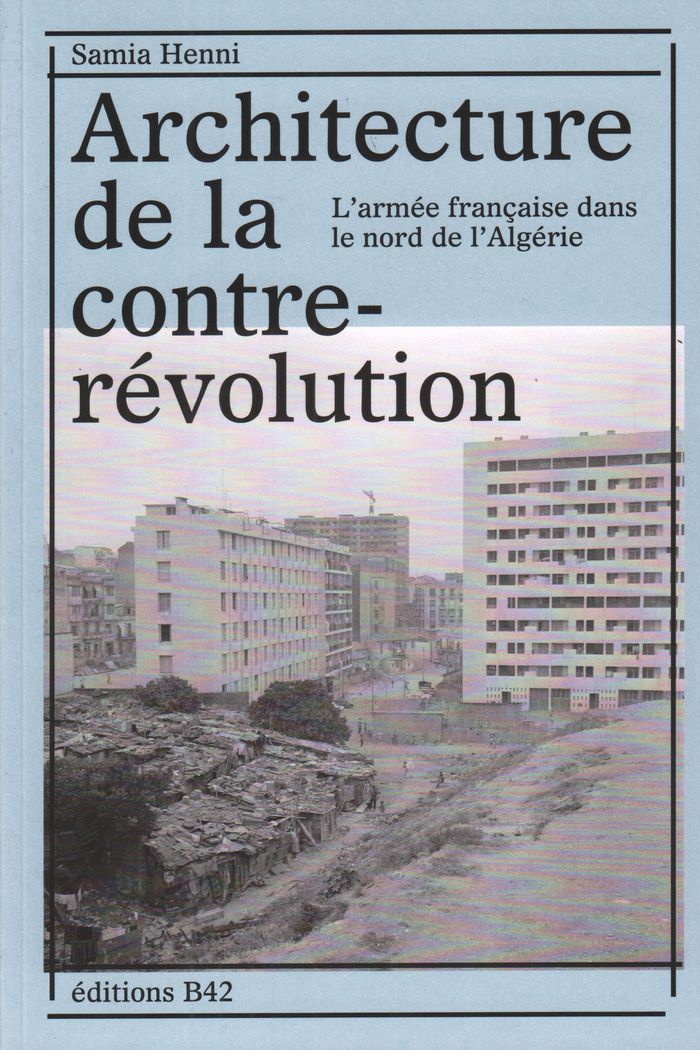
Dans 'Architecture de la contre-révolution' Samia Henni analyse les politiques en matière d’urbanisme et d’architecture mises en œuvre par l’État colonial français pendant la longue guerre d’indépendance algérienne (1954-1962) au croisement des vastes opérations militaires contre-insurectionnelles menées sur l’ensemble du territoire algérien.
$54.95
(available in store)
Summary:
Dans 'Architecture de la contre-révolution' Samia Henni analyse les politiques en matière d’urbanisme et d’architecture mises en œuvre par l’État colonial français pendant la longue guerre d’indépendance algérienne (1954-1962) au croisement des vastes opérations militaires contre-insurectionnelles menées sur l’ensemble du territoire algérien.
Title:
Architecture de la contre-révolution
Actions:
Price:
$54.95
(available in store)
Summary:
Dans 'Architecture de la contre-révolution' Samia Henni analyse les politiques en matière d’urbanisme et d’architecture mises en œuvre par l’État colonial français pendant la longue guerre d’indépendance algérienne (1954-1962) au croisement des vastes opérations militaires contre-insurectionnelles menées sur l’ensemble du territoire algérien.
Architecture de la contre-révolution
Actions:
Price:
$54.95
(available in store)
Summary:
Dans 'Architecture de la contre-révolution' Samia Henni analyse les politiques en matière d’urbanisme et d’architecture mises en œuvre par l’État colonial français pendant la longue guerre d’indépendance algérienne (1954-1962) au croisement des vastes opérations militaires contre-insurectionnelles menées sur l’ensemble du territoire algérien.
Form:
books
books
Publication:
December 2019
December 2019
Subject:
Urban Theory
Urban Theory
Form:
books
books
Actions:
Price:
$37.00
(available to order)
Summary:
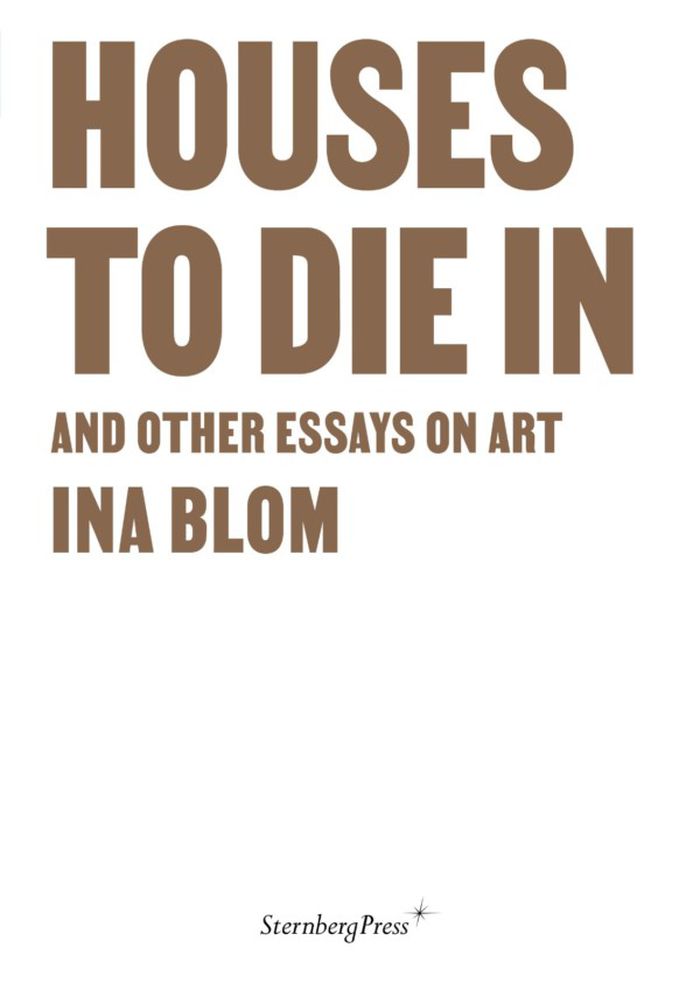
The undead of contemporary painting, avant-garde populism, photography courting stupidity, fraught networking, synthetic atmospheres, displaced abstractions, and the mediation of pain: these are among the subjects treated in this collection of essays by art historian and critic Ina Blom. Drawing on Blom's familiarity with the contemporary art scene as well as the archives(...)
$37.00
(available to order)
Summary:
The undead of contemporary painting, avant-garde populism, photography courting stupidity, fraught networking, synthetic atmospheres, displaced abstractions, and the mediation of pain: these are among the subjects treated in this collection of essays by art historian and critic Ina Blom. Drawing on Blom's familiarity with the contemporary art scene as well as the archives(...)
Title:
Houses to die in and other essays on art
Actions:
Price:
$37.00
(available to order)
Summary:
The undead of contemporary painting, avant-garde populism, photography courting stupidity, fraught networking, synthetic atmospheres, displaced abstractions, and the mediation of pain: these are among the subjects treated in this collection of essays by art historian and critic Ina Blom. Drawing on Blom's familiarity with the contemporary art scene as well as the archives of twentieth-century avant-garde art, these texts share a pull towards artistic projects that are not redemptive or exemplary but that rather convey a sense of—often unheroic—trouble. Leaning into ambivalence as a methodology of criticism, Blom takes a particular interest in the detours, doubts, and difficulties that run alongside avant-garde art’s more constructively hopeful desires for transformative innovation and change.
Houses to die in and other essays on art
Actions:
Price:
$37.00
(available to order)
Summary:
The undead of contemporary painting, avant-garde populism, photography courting stupidity, fraught networking, synthetic atmospheres, displaced abstractions, and the mediation of pain: these are among the subjects treated in this collection of essays by art historian and critic Ina Blom. Drawing on Blom's familiarity with the contemporary art scene as well as the archives of twentieth-century avant-garde art, these texts share a pull towards artistic projects that are not redemptive or exemplary but that rather convey a sense of—often unheroic—trouble. Leaning into ambivalence as a methodology of criticism, Blom takes a particular interest in the detours, doubts, and difficulties that run alongside avant-garde art’s more constructively hopeful desires for transformative innovation and change.
Form:
books
books
Publication:
December 2022
December 2022
Subject:
Art Theory
Art Theory
Form:
books
books
Actions:
Price:
$36.95
(available to order)
Summary:
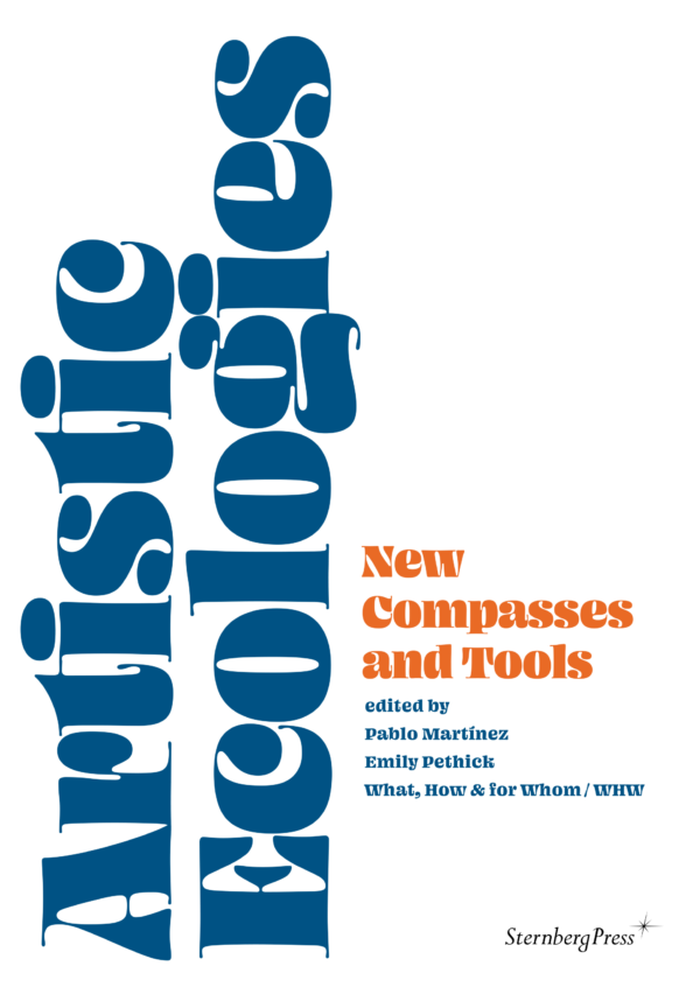
Going beyond tensions between individuals and institutions, this volume examines avenues for engaged pedagogies, collective learning, and artistic ecologies that can engender new institutionalities. If learning for life is emancipation—understood as a matter not just of power but of freedom—the essential question that emerges is: What knowledge makes us free, and how can(...)
$36.95
(available to order)
Summary:
Going beyond tensions between individuals and institutions, this volume examines avenues for engaged pedagogies, collective learning, and artistic ecologies that can engender new institutionalities. If learning for life is emancipation—understood as a matter not just of power but of freedom—the essential question that emerges is: What knowledge makes us free, and how can(...)
Title:
Artistic ecologies: new compasses and tools
Actions:
Price:
$36.95
(available to order)
Summary:
Going beyond tensions between individuals and institutions, this volume examines avenues for engaged pedagogies, collective learning, and artistic ecologies that can engender new institutionalities. If learning for life is emancipation—understood as a matter not just of power but of freedom—the essential question that emerges is: What knowledge makes us free, and how can institutions help produce it? In search of an answer, this publication’s textual and visual contributions explore sites and practices through which new artistic ecosystems can emerge.
Artistic ecologies: new compasses and tools
Actions:
Price:
$36.95
(available to order)
Summary:
Going beyond tensions between individuals and institutions, this volume examines avenues for engaged pedagogies, collective learning, and artistic ecologies that can engender new institutionalities. If learning for life is emancipation—understood as a matter not just of power but of freedom—the essential question that emerges is: What knowledge makes us free, and how can institutions help produce it? In search of an answer, this publication’s textual and visual contributions explore sites and practices through which new artistic ecosystems can emerge.
Form:
books
books
Publication:
October 2022
October 2022
Subject:
Art Theory
Art Theory


