


7238 Results
Form:
books
books
Title:
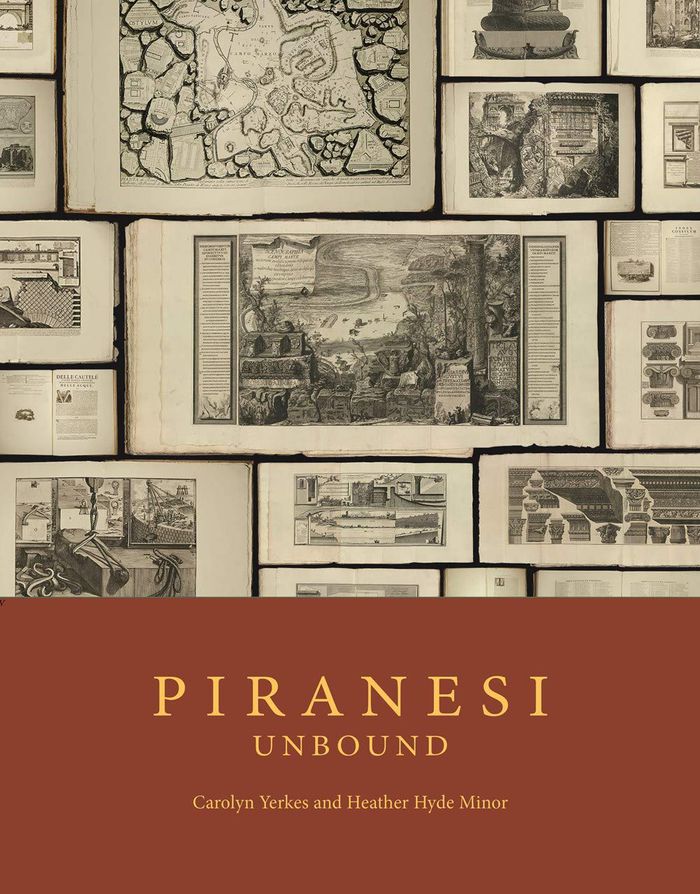
Piranesi unbound
Piranesi unbound
Actions:
Price:
$82.95
(available to order)
Summary:
A draftsman, printmaker, architect, and archaeologist, Giovanni Battista Piranesi (1720–78) is best known today as the virtuoso etcher of the immersive and captivating ''Views of Rome'' and the darkly inventive ''Imaginary Prisons.'' Yet Carolyn Yerkes and Heather Hyde Minor argue that his single greatest art form- one that combined his obsessions most powerfully and that(...)
$82.95
(available to order)
Summary:
A draftsman, printmaker, architect, and archaeologist, Giovanni Battista Piranesi (1720–78) is best known today as the virtuoso etcher of the immersive and captivating ''Views of Rome'' and the darkly inventive ''Imaginary Prisons.'' Yet Carolyn Yerkes and Heather Hyde Minor argue that his single greatest art form- one that combined his obsessions most powerfully and that(...)
Title:
Piranesi unbound
Actions:
Price:
$82.95
(available to order)
Summary:
A draftsman, printmaker, architect, and archaeologist, Giovanni Battista Piranesi (1720–78) is best known today as the virtuoso etcher of the immersive and captivating ''Views of Rome'' and the darkly inventive ''Imaginary Prisons.'' Yet Carolyn Yerkes and Heather Hyde Minor argue that his single greatest art form- one that combined his obsessions most powerfully and that he pursued throughout his career- was the book. ''Piranesi unbound'' provides a fundamental reinterpretation of Piranesi by recognizing him, first and foremost, as a writer, illustrator, printer, and publisher of books. Featuring nearly two hundred of Piranesi’s engravings and drawings, including some that have never been published before, this visually stunning book returns Piranesi’s artworks to the context for which he originally produced them: a dozen volumes that combine text and image, archaeology and imagination, erudition and humor. Drawing on new research, ''Piranesi unbound'' uncovers the social networks in which Piranesi published, including the readers who bought, read, and debated his books. It reveals his habit of raiding the wastepaper pile for cast-off sheets upon which to draw and fuse printed images and texts. It shows how, even after his books were bound, they were subject to change by Piranesi and others as pages were torn out and added.
Piranesi unbound
Actions:
Price:
$82.95
(available to order)
Summary:
A draftsman, printmaker, architect, and archaeologist, Giovanni Battista Piranesi (1720–78) is best known today as the virtuoso etcher of the immersive and captivating ''Views of Rome'' and the darkly inventive ''Imaginary Prisons.'' Yet Carolyn Yerkes and Heather Hyde Minor argue that his single greatest art form- one that combined his obsessions most powerfully and that he pursued throughout his career- was the book. ''Piranesi unbound'' provides a fundamental reinterpretation of Piranesi by recognizing him, first and foremost, as a writer, illustrator, printer, and publisher of books. Featuring nearly two hundred of Piranesi’s engravings and drawings, including some that have never been published before, this visually stunning book returns Piranesi’s artworks to the context for which he originally produced them: a dozen volumes that combine text and image, archaeology and imagination, erudition and humor. Drawing on new research, ''Piranesi unbound'' uncovers the social networks in which Piranesi published, including the readers who bought, read, and debated his books. It reveals his habit of raiding the wastepaper pile for cast-off sheets upon which to draw and fuse printed images and texts. It shows how, even after his books were bound, they were subject to change by Piranesi and others as pages were torn out and added.
Form:
books
books
Publication:
September 2020
September 2020
Subject:
Art Theory
Art Theory
Form:
books
books
Title:
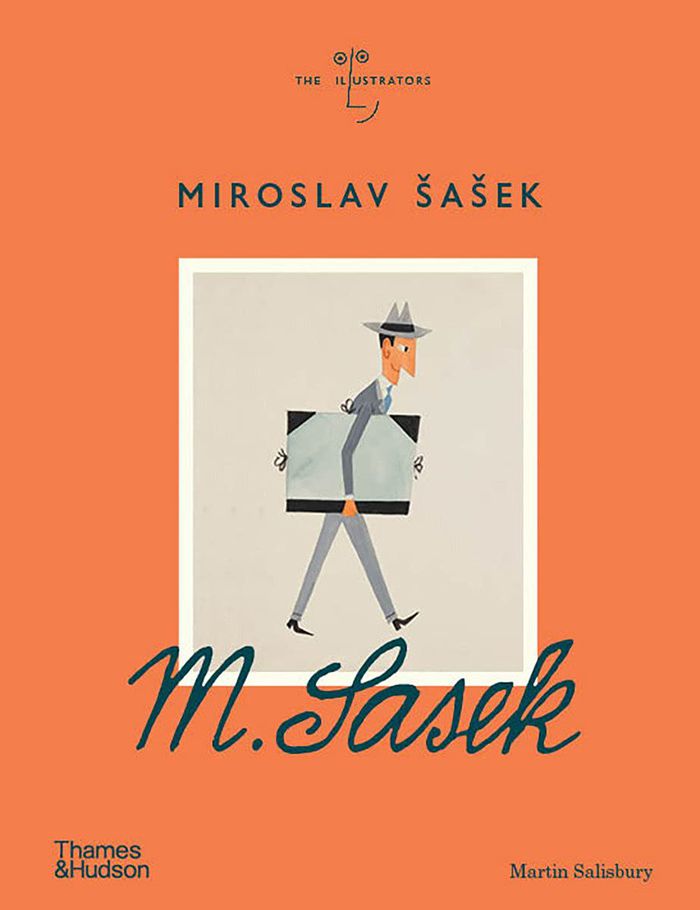
Miroslav Sasek
Miroslav Sasek
Actions:
Price:
$39.95
(available to order)
Summary:
Czech artist Miroslav Šašek (1916–1980) is celebrated for his pioneering approach to narrative nonfiction picture books, particularly his bestselling This Is series, which began with ''This is Paris'' in 1959 and eventually totaled eighteen books. With their distinct visual vocabulary, this witty collection of travel guides illustrating life and culture in a variety of(...)
$39.95
(available to order)
Summary:
Czech artist Miroslav Šašek (1916–1980) is celebrated for his pioneering approach to narrative nonfiction picture books, particularly his bestselling This Is series, which began with ''This is Paris'' in 1959 and eventually totaled eighteen books. With their distinct visual vocabulary, this witty collection of travel guides illustrating life and culture in a variety of(...)
Title:
Miroslav Sasek
Actions:
Price:
$39.95
(available to order)
Summary:
Czech artist Miroslav Šašek (1916–1980) is celebrated for his pioneering approach to narrative nonfiction picture books, particularly his bestselling This Is series, which began with ''This is Paris'' in 1959 and eventually totaled eighteen books. With their distinct visual vocabulary, this witty collection of travel guides illustrating life and culture in a variety of cities and countries around the world from a child’s perspective, became immensely popular and garnered many awards. The artist’s charming travelogues continue to appeal to adults and children alike, even in a digital age exploding with travel imagery. Acclaimed author Martin Salisbury analyzes Šašek’s techniques and how his work not only reflects his architectural training and the ideas of the midcentury European avant-garde, but also the influence of contemporaries such as Saul Steinberg. In this beautifully designed volume, illustrated with sketches and original artwork from the Šašek Foundation in Prague, with examples ranging from Greece to Hong Kong, Rome to San Francisco, Ireland to Israel, Paris to New York, and more, Šašek’s best-known works come alive alongside lesser-known aspects of his practice, such as oil painting. Full of insight into the life and work of a singular talent, ''Miroslav Šašek'' will appeal to illustrators and those interested in the midcentury modern period.
Miroslav Sasek
Actions:
Price:
$39.95
(available to order)
Summary:
Czech artist Miroslav Šašek (1916–1980) is celebrated for his pioneering approach to narrative nonfiction picture books, particularly his bestselling This Is series, which began with ''This is Paris'' in 1959 and eventually totaled eighteen books. With their distinct visual vocabulary, this witty collection of travel guides illustrating life and culture in a variety of cities and countries around the world from a child’s perspective, became immensely popular and garnered many awards. The artist’s charming travelogues continue to appeal to adults and children alike, even in a digital age exploding with travel imagery. Acclaimed author Martin Salisbury analyzes Šašek’s techniques and how his work not only reflects his architectural training and the ideas of the midcentury European avant-garde, but also the influence of contemporaries such as Saul Steinberg. In this beautifully designed volume, illustrated with sketches and original artwork from the Šašek Foundation in Prague, with examples ranging from Greece to Hong Kong, Rome to San Francisco, Ireland to Israel, Paris to New York, and more, Šašek’s best-known works come alive alongside lesser-known aspects of his practice, such as oil painting. Full of insight into the life and work of a singular talent, ''Miroslav Šašek'' will appeal to illustrators and those interested in the midcentury modern period.
Form:
books
books
Publication:
October 2021
October 2021
Subject:
Design Monographs
Design Monographs
Form:
books
books
Price:
$175.00
(available in store)
Summary:
The Gilded Age, also referred to as the American Renaissance, is an era associated with unparalleled growth, technological advancement, prosperity, and cultural change. Spanning from the 1870s to the 1930s, it marks the first time that the titans of American finance and industry had more wealth than their European counterparts. As the center of this dynamic economy, New(...)
$175.00
(available in store)
Summary:
The Gilded Age, also referred to as the American Renaissance, is an era associated with unparalleled growth, technological advancement, prosperity, and cultural change. Spanning from the 1870s to the 1930s, it marks the first time that the titans of American finance and industry had more wealth than their European counterparts. As the center of this dynamic economy, New(...)
Title:
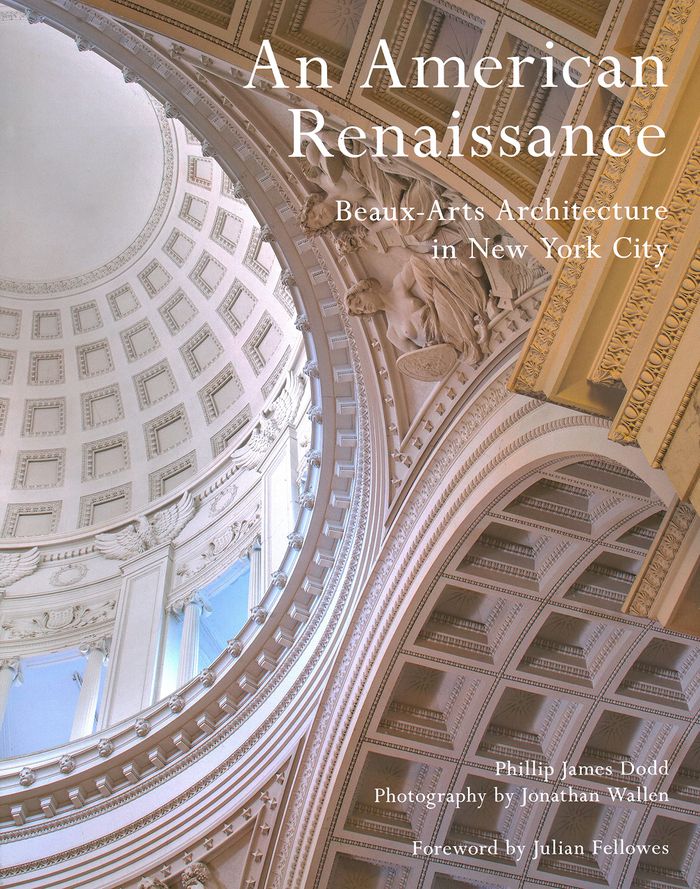
An American Renaissance: Beaux-Artsarchitecture in New York City
Actions:
Price:
$175.00
(available in store)
Summary:
The Gilded Age, also referred to as the American Renaissance, is an era associated with unparalleled growth, technological advancement, prosperity, and cultural change. Spanning from the 1870s to the 1930s, it marks the first time that the titans of American finance and industry had more wealth than their European counterparts. As the center of this dynamic economy, New York City attracted immigrant workers and millionaires alike. It was not enough for the self-appointed elite to just build their own grand châteaux and palazzos along Fifth Avenue- collectively they dreamed of creating a new metropolis to rival the great cultural capitals of London, Paris, and Rome. To flaunt their newly acquired wealth they needed an architecture dripping in embellishment and historical reference. Enter the Beaux-Arts. This book takes a close look at twenty of the finest examples of Beaux-Arts architecture in New York City. While showing public exteriors, its focus is on the lavish interiors that are associated with the opulence of the Gilded Age- often providing a glimpse inside buildings not otherwise viewable to the public. While some of the buildings and monuments featured are world-renowned landmarks recognizable and accessible to all, others are obscure buildings that history has forgotten.
An American Renaissance: Beaux-Artsarchitecture in New York City
Actions:
Price:
$175.00
(available in store)
Summary:
The Gilded Age, also referred to as the American Renaissance, is an era associated with unparalleled growth, technological advancement, prosperity, and cultural change. Spanning from the 1870s to the 1930s, it marks the first time that the titans of American finance and industry had more wealth than their European counterparts. As the center of this dynamic economy, New York City attracted immigrant workers and millionaires alike. It was not enough for the self-appointed elite to just build their own grand châteaux and palazzos along Fifth Avenue- collectively they dreamed of creating a new metropolis to rival the great cultural capitals of London, Paris, and Rome. To flaunt their newly acquired wealth they needed an architecture dripping in embellishment and historical reference. Enter the Beaux-Arts. This book takes a close look at twenty of the finest examples of Beaux-Arts architecture in New York City. While showing public exteriors, its focus is on the lavish interiors that are associated with the opulence of the Gilded Age- often providing a glimpse inside buildings not otherwise viewable to the public. While some of the buildings and monuments featured are world-renowned landmarks recognizable and accessible to all, others are obscure buildings that history has forgotten.
Form:
books
books
Publication:
November 2021
November 2021
Subject:
History until 1900, North America
History until 1900, North America
Form:
books
books
Title:
Francesca Woodman's notebook
Francesca Woodman's notebook
Actions:
Price:
$49.95
(available to order)
Summary:
The American photographer Francesca Woodman (1958-1981) spent a brief portion of her childhood in the countryside around Florence, living with her parents in an old farm whose dilapidated interiors were later to influence the backdrops of her mesmerizing self-portraits. In 1977 she returned to Italy, studying in Rome on a year-long RISD honors program. During this tenure,(...)
$49.95
(available to order)
Summary:
The American photographer Francesca Woodman (1958-1981) spent a brief portion of her childhood in the countryside around Florence, living with her parents in an old farm whose dilapidated interiors were later to influence the backdrops of her mesmerizing self-portraits. In 1977 she returned to Italy, studying in Rome on a year-long RISD honors program. During this tenure,(...)
Title:
Francesca Woodman's notebook
Actions:
Price:
$49.95
(available to order)
Summary:
The American photographer Francesca Woodman (1958-1981) spent a brief portion of her childhood in the countryside around Florence, living with her parents in an old farm whose dilapidated interiors were later to influence the backdrops of her mesmerizing self-portraits. In 1977 she returned to Italy, studying in Rome on a year-long RISD honors program. During this tenure, Woodman found five tattered school exercise books, printed in 1906, side-stapled and inscribed in fine cursive penmanship with notes from physics lectures or poems in English and Italian. To these evocative objects, Woodman--already fully formed as the photographer we recognize and admire today--added her characteristic black-and-white photographs, either as small paper prints or as prints made on transparent film that allows the writing beneath to show through, further embellishing them with her own captions or remarks. This facsimile edition of one of these notebooks was selected for publication by Woodman's mother and father as an artist's book of particular beauty and revelatory content that provides unprecedented insight into the emphatically narrative logic of Woodman's photography. Housed in a lightweight printed box, it includes an afterword by George Woodman, Francesca's father, that contextualizes the work within the photographer's artist's book production.
Francesca Woodman's notebook
Actions:
Price:
$49.95
(available to order)
Summary:
The American photographer Francesca Woodman (1958-1981) spent a brief portion of her childhood in the countryside around Florence, living with her parents in an old farm whose dilapidated interiors were later to influence the backdrops of her mesmerizing self-portraits. In 1977 she returned to Italy, studying in Rome on a year-long RISD honors program. During this tenure, Woodman found five tattered school exercise books, printed in 1906, side-stapled and inscribed in fine cursive penmanship with notes from physics lectures or poems in English and Italian. To these evocative objects, Woodman--already fully formed as the photographer we recognize and admire today--added her characteristic black-and-white photographs, either as small paper prints or as prints made on transparent film that allows the writing beneath to show through, further embellishing them with her own captions or remarks. This facsimile edition of one of these notebooks was selected for publication by Woodman's mother and father as an artist's book of particular beauty and revelatory content that provides unprecedented insight into the emphatically narrative logic of Woodman's photography. Housed in a lightweight printed box, it includes an afterword by George Woodman, Francesca's father, that contextualizes the work within the photographer's artist's book production.
Form:
books
books
Publication:
March 2012
March 2012
Subject:
Contemporary Art Monographs
Contemporary Art Monographs
Form:
books
books
Actions:
Price:
$82.50
(available to order)
Summary:
In this provocative revisionist work, Evonne Levy brings fresh theoretical perspectives to the study of the "propagandistic" art and architecture of the Jesuit order as exemplified by its late Baroque Roman church interiors. The first extensive analysis of the aims, mechanisms, and effects of Jesuit art and architecture, this original and sophisticated study also(...)
$82.50
(available to order)
Summary:
In this provocative revisionist work, Evonne Levy brings fresh theoretical perspectives to the study of the "propagandistic" art and architecture of the Jesuit order as exemplified by its late Baroque Roman church interiors. The first extensive analysis of the aims, mechanisms, and effects of Jesuit art and architecture, this original and sophisticated study also(...)
Title:
Propaganda and the Jesuit Baroque
Actions:
Price:
$82.50
(available to order)
Summary:
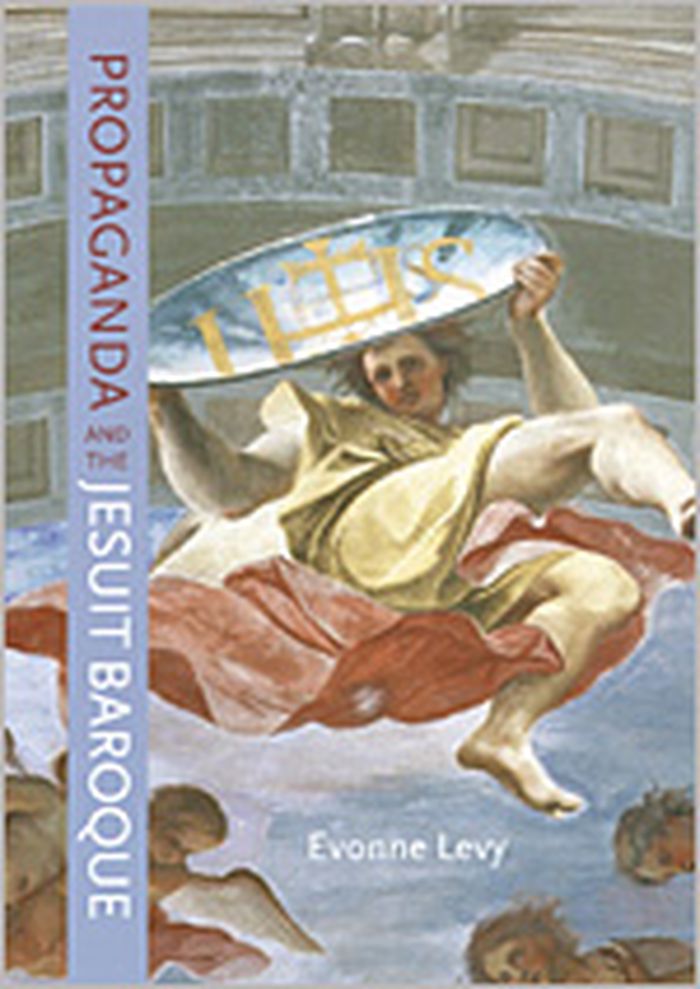
In this provocative revisionist work, Evonne Levy brings fresh theoretical perspectives to the study of the "propagandistic" art and architecture of the Jesuit order as exemplified by its late Baroque Roman church interiors. The first extensive analysis of the aims, mechanisms, and effects of Jesuit art and architecture, this original and sophisticated study also evaluates how the term "propaganda" functions in art history, distinguishes it from rhetoric, and proposes a precise use of the term for the visual arts for the first time. Levy begins by looking at Nazi architecture as a gateway to the emotional and ethical issues raised by the term "propaganda." Jesuit art once stirred similar passions, as she shows in a discussion of the controversial nineteenth-century rubric the "Jesuit Style." She then considers three central aspects of Jesuit art as essential components of propaganda: authorship, message, and diffusion. Levy tests her theoretical formulations against a broad range of documents and works of art, including the Chapel of St. Ignatius and other major works in Rome by Andrea Pozzo as well as chapels in Central Europe and Poland. Innovative in bringing a broad range of social and critical theory to bear on Baroque art and architecture in Europe and beyond, Levy's work highlights the subject-forming capacity of early modern Catholic art and architecture while establishing "propaganda" as a productive term for art history.
Propaganda and the Jesuit Baroque
Actions:
Price:
$82.50
(available to order)
Summary:
In this provocative revisionist work, Evonne Levy brings fresh theoretical perspectives to the study of the "propagandistic" art and architecture of the Jesuit order as exemplified by its late Baroque Roman church interiors. The first extensive analysis of the aims, mechanisms, and effects of Jesuit art and architecture, this original and sophisticated study also evaluates how the term "propaganda" functions in art history, distinguishes it from rhetoric, and proposes a precise use of the term for the visual arts for the first time. Levy begins by looking at Nazi architecture as a gateway to the emotional and ethical issues raised by the term "propaganda." Jesuit art once stirred similar passions, as she shows in a discussion of the controversial nineteenth-century rubric the "Jesuit Style." She then considers three central aspects of Jesuit art as essential components of propaganda: authorship, message, and diffusion. Levy tests her theoretical formulations against a broad range of documents and works of art, including the Chapel of St. Ignatius and other major works in Rome by Andrea Pozzo as well as chapels in Central Europe and Poland. Innovative in bringing a broad range of social and critical theory to bear on Baroque art and architecture in Europe and beyond, Levy's work highlights the subject-forming capacity of early modern Catholic art and architecture while establishing "propaganda" as a productive term for art history.
Form:
books
books
Publication:
April 2004, Berkeley
April 2004, Berkeley
Subject:
History until 1900
History until 1900
Form:
books
books
Actions:
Price:
$39.50
(available to order)
Summary:
Magnificent Buildings, Splendid Gardens returns to print some of the most important works of David Coffin, a leading authority on Renaissance architecture who, as one of the first scholars to apply the tools of art history to the study of gardens, became a founder of the discipline of garden and landscape studies. These essays span the wide range of Coffin's work, from(...)
$39.50
(available to order)
Summary:
Magnificent Buildings, Splendid Gardens returns to print some of the most important works of David Coffin, a leading authority on Renaissance architecture who, as one of the first scholars to apply the tools of art history to the study of gardens, became a founder of the discipline of garden and landscape studies. These essays span the wide range of Coffin's work, from(...)
Title:
Magnificent buildings, splendid gardens
Actions:
Price:
$39.50
(available to order)
Summary:
Magnificent Buildings, Splendid Gardens returns to print some of the most important works of David Coffin, a leading authority on Renaissance architecture who, as one of the first scholars to apply the tools of art history to the study of gardens, became a founder of the discipline of garden and landscape studies. These essays span the wide range of Coffin's work, from Italian Renaissance architecture, garden design, sculpture, and drawings to English gardens and landscape designers of the seventeenth to early nineteenth centuries. Coffin's approaches are as varied as his subject matter. Some of these essays present the results of his archival research, including his discovery of crucial documents on the Emilian architect Giovan Battista Aleotti and the only documentary evidence identifying Vignola as the architect of the Villa Lante at Bagnaia. Other essays take a much broader cultural view, investigating, for example, the phenomenon of public access to private Renaissance gardens, elucidating the evolving meaning of images of the goddess Venus in English gardens, and identifying the significance of the decorative programs of monuments as diverse as the Villa Belvedere in Rome and the eighteenth-century gardens at Rousham in Oxfordshire. The book also includes a commentary on each essay, written by one of Coffin's former students; a full analytical index; and a complete bibliography of Coffin's work.
Magnificent buildings, splendid gardens
Actions:
Price:
$39.50
(available to order)
Summary:
Magnificent Buildings, Splendid Gardens returns to print some of the most important works of David Coffin, a leading authority on Renaissance architecture who, as one of the first scholars to apply the tools of art history to the study of gardens, became a founder of the discipline of garden and landscape studies. These essays span the wide range of Coffin's work, from Italian Renaissance architecture, garden design, sculpture, and drawings to English gardens and landscape designers of the seventeenth to early nineteenth centuries. Coffin's approaches are as varied as his subject matter. Some of these essays present the results of his archival research, including his discovery of crucial documents on the Emilian architect Giovan Battista Aleotti and the only documentary evidence identifying Vignola as the architect of the Villa Lante at Bagnaia. Other essays take a much broader cultural view, investigating, for example, the phenomenon of public access to private Renaissance gardens, elucidating the evolving meaning of images of the goddess Venus in English gardens, and identifying the significance of the decorative programs of monuments as diverse as the Villa Belvedere in Rome and the eighteenth-century gardens at Rousham in Oxfordshire. The book also includes a commentary on each essay, written by one of Coffin's former students; a full analytical index; and a complete bibliography of Coffin's work.
Form:
books
books
Publication:
March 2008, New Haven
March 2008, New Haven
Subject:
Gardens
Gardens
Form:
books
books
Actions:
Price:
$19.75
(available to order)
Summary:
La guerre futuriste est une mobilisation totale contre les valeurs politiques, morales et culturelles du passé; elle permet à Marinetti de rompre les ponts avec la décadence, d'être de plain-pied dans la réalité qui n'est plus la conséquence du passé mais son contraire. Il repère un ennemi immédiat - les empires centraux "moribonds" - et un objectif facile -(...)
$19.75
(available to order)
Summary:
La guerre futuriste est une mobilisation totale contre les valeurs politiques, morales et culturelles du passé; elle permet à Marinetti de rompre les ponts avec la décadence, d'être de plain-pied dans la réalité qui n'est plus la conséquence du passé mais son contraire. Il repère un ennemi immédiat - les empires centraux "moribonds" - et un objectif facile -(...)
Title:
Marinetti et la révolution futuriste
Actions:
Price:
$19.75
(available to order)
Summary:
La guerre futuriste est une mobilisation totale contre les valeurs politiques, morales et culturelles du passé; elle permet à Marinetti de rompre les ponts avec la décadence, d'être de plain-pied dans la réalité qui n'est plus la conséquence du passé mais son contraire. Il repère un ennemi immédiat - les empires centraux "moribonds" - et un objectif facile - l'irrédentisme ; mais surtout il identifie, dans la technique au service du mythe, l'avènement traumatique de la modernité. [...] Marinetti n'est décidément pas facile à cerner. Il est de "droite" ou plutôt d'"extrême droite", lorsqu'il en appelle au droit du plus fort, au reniement de la solidarité de classe, à la loi martiale contre les pacifistes et les traîtres, à la destruction de l'ennemi et pas seulement à sa défaite. Il est de "gauche ", ou plutôt d'"extrême gauche" parce qu'à ses yeux la guerre doit mener à la dissolution de tout ordre préétabli, y compris celui des non-belligérants comme l'Eglise - d'où sa fronde pendant la période fasciste contre les compromis et la corruption du régime. Maurizio Serra, diplomate et historien italien, né à Londres en 1955 ; il dirige actuellement l'Institut diplomatique du ministère des Affaires étrangères italien. Spécialiste d'histoire des idées au XXe siècle, professeur de relations internationales à l'université LUISS de Rome, il est l'auteur de plusieurs ouvrages dont Le Passager du siècle.
Marinetti et la révolution futuriste
Actions:
Price:
$19.75
(available to order)
Summary:
La guerre futuriste est une mobilisation totale contre les valeurs politiques, morales et culturelles du passé; elle permet à Marinetti de rompre les ponts avec la décadence, d'être de plain-pied dans la réalité qui n'est plus la conséquence du passé mais son contraire. Il repère un ennemi immédiat - les empires centraux "moribonds" - et un objectif facile - l'irrédentisme ; mais surtout il identifie, dans la technique au service du mythe, l'avènement traumatique de la modernité. [...] Marinetti n'est décidément pas facile à cerner. Il est de "droite" ou plutôt d'"extrême droite", lorsqu'il en appelle au droit du plus fort, au reniement de la solidarité de classe, à la loi martiale contre les pacifistes et les traîtres, à la destruction de l'ennemi et pas seulement à sa défaite. Il est de "gauche ", ou plutôt d'"extrême gauche" parce qu'à ses yeux la guerre doit mener à la dissolution de tout ordre préétabli, y compris celui des non-belligérants comme l'Eglise - d'où sa fronde pendant la période fasciste contre les compromis et la corruption du régime. Maurizio Serra, diplomate et historien italien, né à Londres en 1955 ; il dirige actuellement l'Institut diplomatique du ministère des Affaires étrangères italien. Spécialiste d'histoire des idées au XXe siècle, professeur de relations internationales à l'université LUISS de Rome, il est l'auteur de plusieurs ouvrages dont Le Passager du siècle.
Form:
books
books
Publication:
November 2008, Paris
November 2008, Paris
Subject:
Art Theory
Art Theory
Form:
books
books
Price:
$29.50
(available to order)
Summary:
This exhibition catalogue explores 'the cult of the ruin', a phenomenon of 18th and early 19th century Europe. Mock ruins were built as 'follies' in landscape gardens, while artists imagined how London would appear as a ruined city after the collapse of the British Empire. In Rome, interiors were painted as trompe l'oeil(...)
$29.50
(available to order)
Summary:
This exhibition catalogue explores 'the cult of the ruin', a phenomenon of 18th and early 19th century Europe. Mock ruins were built as 'follies' in landscape gardens, while artists imagined how London would appear as a ruined city after the collapse of the British Empire. In Rome, interiors were painted as trompe l'oeil(...)
Subject:
Architecture Monographs
Architecture Monographs
Publication:
January 1999, London
January 1999, London
Title:
Visions of ruin : architectural fantasies & designs for garden follies
Actions:
Price:
$29.50
(available to order)
Summary:
This exhibition catalogue explores 'the cult of the ruin', a phenomenon of 18th and early 19th century Europe. Mock ruins were built as 'follies' in landscape gardens, while artists imagined how London would appear as a ruined city after the collapse of the British Empire. In Rome, interiors were painted as trompe l'oeil ruins, and in Paris the great chef Antoine Carême served blancmanges in the shape of Roman ruins. John Soane represents the climax of this fascination. In the garden of his Museum at No.13 Lincoln's Inn Fields is the 'Monk's Yard', a mock-ruin assembled from medieval fragments of the Palace of Westminster. At his country house, Pitzhanger Manor in Ealing, he pretended that a mock-classical ruin was a Roman temple he had discovered at the bottom of the garden. He commemorated the completion of his masterpiece, the Bank of England, by exhibiting a series of astonishing views of the structure as if a ruin. He even wrote a narrative, "Crude Hints Towards the History of My House", in which he imagined an archaeologist of future centuries inspecting the fragments of his home. The transcribed text is reprinted in this publication. Architects and artists include Robert Adam, William Chambers, Hubert Robert, Piranesi, Clerrisseau, Richard Wilson, J. M. W. Turner, Gustave Doré and John Martin.
Visions of ruin : architectural fantasies & designs for garden follies
Actions:
Price:
$29.50
(available to order)
Summary:
This exhibition catalogue explores 'the cult of the ruin', a phenomenon of 18th and early 19th century Europe. Mock ruins were built as 'follies' in landscape gardens, while artists imagined how London would appear as a ruined city after the collapse of the British Empire. In Rome, interiors were painted as trompe l'oeil ruins, and in Paris the great chef Antoine Carême served blancmanges in the shape of Roman ruins. John Soane represents the climax of this fascination. In the garden of his Museum at No.13 Lincoln's Inn Fields is the 'Monk's Yard', a mock-ruin assembled from medieval fragments of the Palace of Westminster. At his country house, Pitzhanger Manor in Ealing, he pretended that a mock-classical ruin was a Roman temple he had discovered at the bottom of the garden. He commemorated the completion of his masterpiece, the Bank of England, by exhibiting a series of astonishing views of the structure as if a ruin. He even wrote a narrative, "Crude Hints Towards the History of My House", in which he imagined an archaeologist of future centuries inspecting the fragments of his home. The transcribed text is reprinted in this publication. Architects and artists include Robert Adam, William Chambers, Hubert Robert, Piranesi, Clerrisseau, Richard Wilson, J. M. W. Turner, Gustave Doré and John Martin.
Form:
books
books
Publication:
January 1999, London
January 1999, London
Subject:
Architecture Monographs
Architecture Monographs
Form:
books
books
Actions:
Price:
$78.00
(available to order)
Summary:
For centuries, the cardinals, popes, and rulers of Italy have devoted themselves to creating vast villa gardens that represent their wealth and power, provide a calm refuge from city life, and showcase lavish plantings and rare flowers. Here, in over two hundred photographs — taken during the Edwardian era when these historic gardens were at their peak — twenty-two of(...)
$78.00
(available to order)
Summary:
For centuries, the cardinals, popes, and rulers of Italy have devoted themselves to creating vast villa gardens that represent their wealth and power, provide a calm refuge from city life, and showcase lavish plantings and rare flowers. Here, in over two hundred photographs — taken during the Edwardian era when these historic gardens were at their peak — twenty-two of(...)
Title:
Italian gardens : romantic splendor in the Edwardian age
Actions:
Price:
$78.00
(available to order)
Summary:
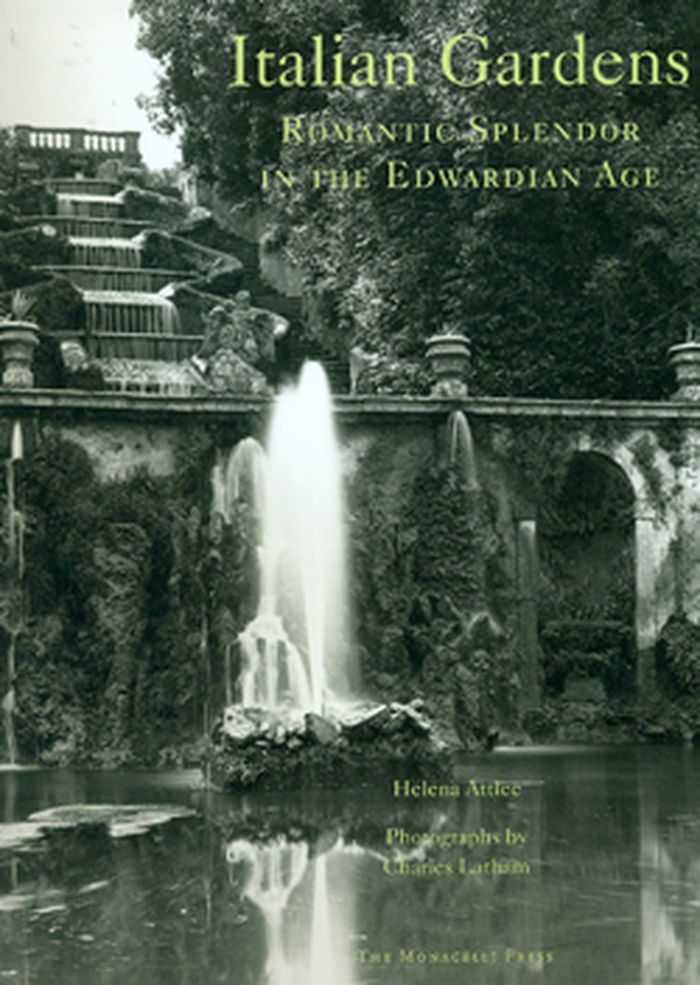
For centuries, the cardinals, popes, and rulers of Italy have devoted themselves to creating vast villa gardens that represent their wealth and power, provide a calm refuge from city life, and showcase lavish plantings and rare flowers. Here, in over two hundred photographs — taken during the Edwardian era when these historic gardens were at their peak — twenty-two of central Italy's most ornate and spectacular palace gardens are presented. This publication reveals the vanished magnificence of the aristocracy's landscapes in images from the archives of Britain's Country Life magazine. Classic photographs display patterned grottoes, elaborate terraces, sophisticated fountains, antique statuary, and sun-dappled arbors to provide an important record of these gardens at a nostalgic moment in time, before the two World Wars provoked irrevocable changes in Italy's political and economic climate and many gardens fell into neglect. Discussing the history and design of each garden, author Helena Attlee brings to life the personalities responsible for such extravagant creations as the Alley of a Hundred Fountains at the Villa d'Este in Tivoli, the swirling parterres de broderie of Villa Doria Pamphili in Rome, the broad terraces and majestic staircases of the Vatican Gardens, the frescoed loggia of the Villa Medici in Fiesole, and the border of innumerable citrus trees circling the Isolotto in Florence's famous Boboli Gardens.
Italian gardens : romantic splendor in the Edwardian age
Actions:
Price:
$78.00
(available to order)
Summary:
For centuries, the cardinals, popes, and rulers of Italy have devoted themselves to creating vast villa gardens that represent their wealth and power, provide a calm refuge from city life, and showcase lavish plantings and rare flowers. Here, in over two hundred photographs — taken during the Edwardian era when these historic gardens were at their peak — twenty-two of central Italy's most ornate and spectacular palace gardens are presented. This publication reveals the vanished magnificence of the aristocracy's landscapes in images from the archives of Britain's Country Life magazine. Classic photographs display patterned grottoes, elaborate terraces, sophisticated fountains, antique statuary, and sun-dappled arbors to provide an important record of these gardens at a nostalgic moment in time, before the two World Wars provoked irrevocable changes in Italy's political and economic climate and many gardens fell into neglect. Discussing the history and design of each garden, author Helena Attlee brings to life the personalities responsible for such extravagant creations as the Alley of a Hundred Fountains at the Villa d'Este in Tivoli, the swirling parterres de broderie of Villa Doria Pamphili in Rome, the broad terraces and majestic staircases of the Vatican Gardens, the frescoed loggia of the Villa Medici in Fiesole, and the border of innumerable citrus trees circling the Isolotto in Florence's famous Boboli Gardens.
Form:
books
books
Publication:
August 2009
August 2009
Subject:
Gardens
Gardens
Form:
books
books
Actions:
Price:
$60.95
(available to order)
Summary:
Mussolini’s bold claims upon the monuments and rhetoric of ancient Rome have been the subject of a number of recent books. D. Medina Lasansky shows us a much less familiar side of the cultural politics of Italian Fascism, tracing its wide-ranging efforts to adapt the nation’s medieval and Renaissance heritage to satisfy the regime’s programs of national regeneration.(...)
$60.95
(available to order)
Summary:
Mussolini’s bold claims upon the monuments and rhetoric of ancient Rome have been the subject of a number of recent books. D. Medina Lasansky shows us a much less familiar side of the cultural politics of Italian Fascism, tracing its wide-ranging efforts to adapt the nation’s medieval and Renaissance heritage to satisfy the regime’s programs of national regeneration.(...)
Title:
The Renaissance perfected: architecture, spectacle, and tourism in Fascist Italy
Actions:
Price:
$60.95
(available to order)
Summary:
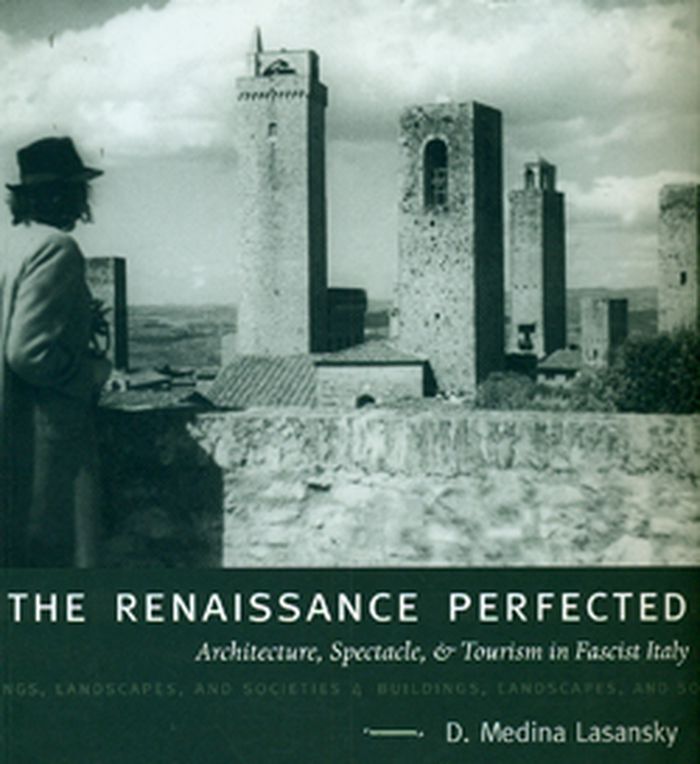
Mussolini’s bold claims upon the monuments and rhetoric of ancient Rome have been the subject of a number of recent books. D. Medina Lasansky shows us a much less familiar side of the cultural politics of Italian Fascism, tracing its wide-ranging efforts to adapt the nation’s medieval and Renaissance heritage to satisfy the regime’s programs of national regeneration. Anyone acquainted with the beauties of Tuscany will be surprised to learn that architects, planners, and administrators working within Fascist programs fabricated much of what today’s tourists admire as authentic. Public squares, town halls, palaces, gardens, and civic rituals (including the famed palio of Siena) were all "restored" to suit a vision of the past shaped by Fascist notions of virile power, social order, and national achievement in the arts. Ultimately, Lasansky forces readers to question long-standing assumptions about the Renaissance even as she expands the parameters of what constitutes Fascist culture.The arguments in The Renaissance Perfected are based in fresh archival evidence and a rich collection of illustrations, many reproduced for the first time, ranging from photographs and architectural drawings to tourist posters and film stills. Lasansky’s groundbreaking book will be essential reading for students of medieval, Renaissance, and twentieth-century Italy as well as all those concerned with visual culture, architectural preservation, heritage studies, and tourism studies.
The Renaissance perfected: architecture, spectacle, and tourism in Fascist Italy
Actions:
Price:
$60.95
(available to order)
Summary:
Mussolini’s bold claims upon the monuments and rhetoric of ancient Rome have been the subject of a number of recent books. D. Medina Lasansky shows us a much less familiar side of the cultural politics of Italian Fascism, tracing its wide-ranging efforts to adapt the nation’s medieval and Renaissance heritage to satisfy the regime’s programs of national regeneration. Anyone acquainted with the beauties of Tuscany will be surprised to learn that architects, planners, and administrators working within Fascist programs fabricated much of what today’s tourists admire as authentic. Public squares, town halls, palaces, gardens, and civic rituals (including the famed palio of Siena) were all "restored" to suit a vision of the past shaped by Fascist notions of virile power, social order, and national achievement in the arts. Ultimately, Lasansky forces readers to question long-standing assumptions about the Renaissance even as she expands the parameters of what constitutes Fascist culture.The arguments in The Renaissance Perfected are based in fresh archival evidence and a rich collection of illustrations, many reproduced for the first time, ranging from photographs and architectural drawings to tourist posters and film stills. Lasansky’s groundbreaking book will be essential reading for students of medieval, Renaissance, and twentieth-century Italy as well as all those concerned with visual culture, architectural preservation, heritage studies, and tourism studies.
Form:
books
books
Publication:
May 2009
May 2009
Subject:
Architectural Theory
Architectural Theory


