


13794 Results
Form:
books
books

Title:
A Something Else reader
A Something Else reader
Actions:
Price:
$39.95
(available in store)
Summary:
This is a previously-unpublished anthology edited by Dick Higgins in 1972 to celebrate Something Else Press, the publishing house he founded in 1963 to showcase Fluxus and other experimental artistic and literary forms. Higgins had a firm vision that radical art could be housed in book form and distributed throughout the world and he worked endlessly to cultivate new(...)
$39.95
(available in store)
Summary:
This is a previously-unpublished anthology edited by Dick Higgins in 1972 to celebrate Something Else Press, the publishing house he founded in 1963 to showcase Fluxus and other experimental artistic and literary forms. Higgins had a firm vision that radical art could be housed in book form and distributed throughout the world and he worked endlessly to cultivate new(...)
Title:
A Something Else reader
Actions:
Price:
$39.95
(available in store)
Summary:
This is a previously-unpublished anthology edited by Dick Higgins in 1972 to celebrate Something Else Press, the publishing house he founded in 1963 to showcase Fluxus and other experimental artistic and literary forms. Higgins had a firm vision that radical art could be housed in book form and distributed throughout the world and he worked endlessly to cultivate new works that challenged conventional notions of both contemporary art and books. While other presses created extraordinary publications, none were able to achieve the breadth of titles and artists like Higgins, who successfully ran Something Else Press until 1974 in a manner that resembled a more traditional paperback publisher. The publication features a selection of writings from Claes Oldenburg, John Cage, Jackson Mac Low, Gertrude Stein, Bern Porter, Wolf Vostell, among others. An annotated checklist assembled by Hugh Fox and Higgins’s unpublished introduction are also included.
A Something Else reader
Actions:
Price:
$39.95
(available in store)
Summary:
This is a previously-unpublished anthology edited by Dick Higgins in 1972 to celebrate Something Else Press, the publishing house he founded in 1963 to showcase Fluxus and other experimental artistic and literary forms. Higgins had a firm vision that radical art could be housed in book form and distributed throughout the world and he worked endlessly to cultivate new works that challenged conventional notions of both contemporary art and books. While other presses created extraordinary publications, none were able to achieve the breadth of titles and artists like Higgins, who successfully ran Something Else Press until 1974 in a manner that resembled a more traditional paperback publisher. The publication features a selection of writings from Claes Oldenburg, John Cage, Jackson Mac Low, Gertrude Stein, Bern Porter, Wolf Vostell, among others. An annotated checklist assembled by Hugh Fox and Higgins’s unpublished introduction are also included.
Form:
books
books
Publication:
September 2022
September 2022
Subject:
Art Theory
Art Theory
Form:
books
books
Price:
$49.00
(available to order)
Summary:
Looking beyond East/West and North/South divisions, the ''Art and solidarity reader'' asks: what were and are the alternative circuits of survival and solidarity among artists and activists from nonaligned nations and politically challenging contexts? What do these trajectories of solidarity lead to, in and outside of art worlds? How can traveling exhibitions,(...)
$49.00
(available to order)
Summary:
Looking beyond East/West and North/South divisions, the ''Art and solidarity reader'' asks: what were and are the alternative circuits of survival and solidarity among artists and activists from nonaligned nations and politically challenging contexts? What do these trajectories of solidarity lead to, in and outside of art worlds? How can traveling exhibitions,(...)
Title:
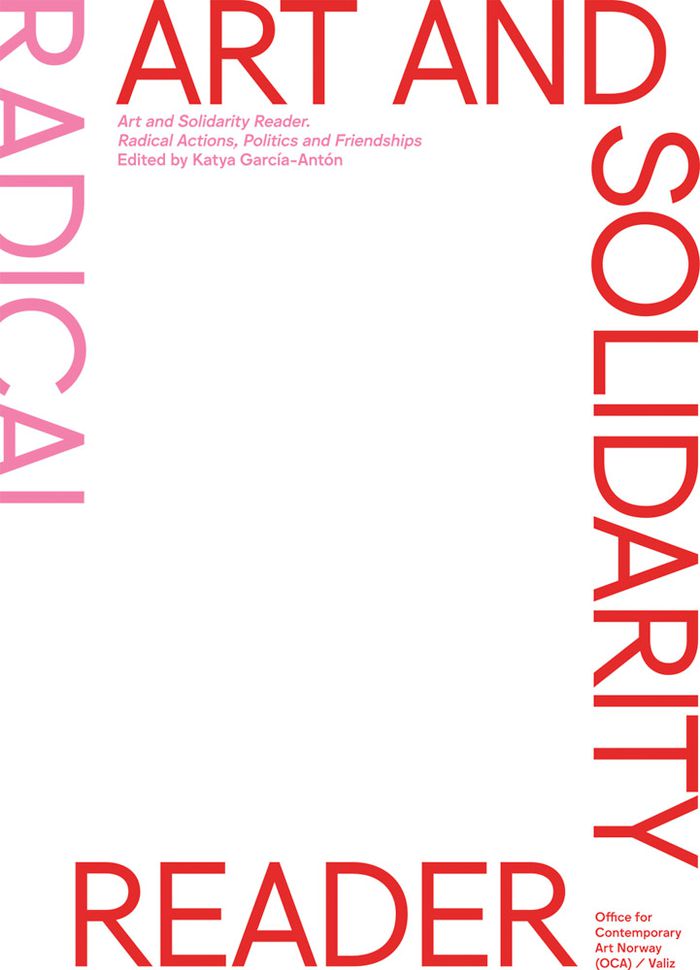
Art and solidarity reader: radical actions, politics and friendships
Actions:
Price:
$49.00
(available to order)
Summary:
Looking beyond East/West and North/South divisions, the ''Art and solidarity reader'' asks: what were and are the alternative circuits of survival and solidarity among artists and activists from nonaligned nations and politically challenging contexts? What do these trajectories of solidarity lead to, in and outside of art worlds? How can traveling exhibitions, museological displays, the idea of ''the museum in exile,'' artistic actions and performative groupings become tools for political struggle against oppression and social fragmentation? The ''Art and solidarity reader'' gathers microhistories from the 1970s to today, rethinking our collective responses to the multiple crises related to migration, colonialism, rising radicalization, religious conflicts, class divisions, new technology, heteronormativity and environmental urgencies.
Art and solidarity reader: radical actions, politics and friendships
Actions:
Price:
$49.00
(available to order)
Summary:
Looking beyond East/West and North/South divisions, the ''Art and solidarity reader'' asks: what were and are the alternative circuits of survival and solidarity among artists and activists from nonaligned nations and politically challenging contexts? What do these trajectories of solidarity lead to, in and outside of art worlds? How can traveling exhibitions, museological displays, the idea of ''the museum in exile,'' artistic actions and performative groupings become tools for political struggle against oppression and social fragmentation? The ''Art and solidarity reader'' gathers microhistories from the 1970s to today, rethinking our collective responses to the multiple crises related to migration, colonialism, rising radicalization, religious conflicts, class divisions, new technology, heteronormativity and environmental urgencies.
Form:
books
books
Publication:
November 2022
November 2022
Subject:
Art Theory
Art Theory
Form:
books
books
Title:
If these apples should fall
If these apples should fall
Actions:
Price:
$53.95
(available to order)
Summary:
For many artists and writers, the art of Paul Cézanne represents the key to modernity. His paintings were a touchstone for writers such as Samuel Beckett as much as for artists such as Henri Matisse. Rainer Maria Rilke revered him deeply, as did Pablo Picasso. They thought if they lost touch with his sense of life, they lost an essential element of their own(...)
$53.95
(available to order)
Summary:
For many artists and writers, the art of Paul Cézanne represents the key to modernity. His paintings were a touchstone for writers such as Samuel Beckett as much as for artists such as Henri Matisse. Rainer Maria Rilke revered him deeply, as did Pablo Picasso. They thought if they lost touch with his sense of life, they lost an essential element of their own(...)
Title:
If these apples should fall
Actions:
Price:
$53.95
(available to order)
Summary:
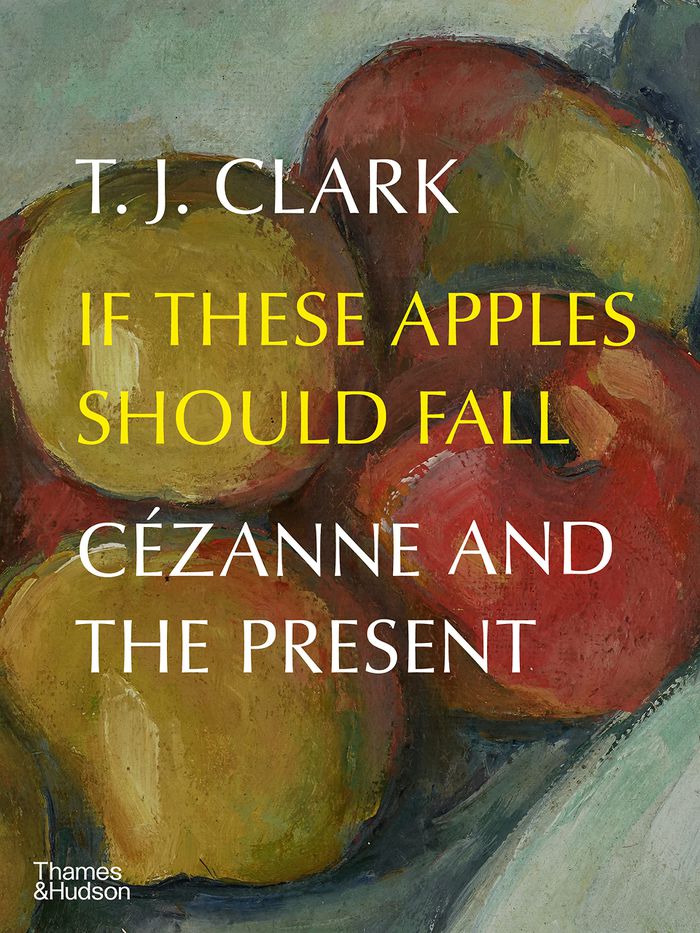
For many artists and writers, the art of Paul Cézanne represents the key to modernity. His paintings were a touchstone for writers such as Samuel Beckett as much as for artists such as Henri Matisse. Rainer Maria Rilke revered him deeply, as did Pablo Picasso. They thought if they lost touch with his sense of life, they lost an essential element of their own self-understanding. In ''If these apples should fall,'' celebrated art historian T. J. Clark looks back on Cézanne from our current moment when such judgments need justifying. What was it, he asks, that held Cézanne’s viewers spellbound? At the heart of Cézanne’s work lies a sense of disquiet: a hopelessness haunting the vividness, an anxiety beneath the splendid colors. Clark addresses this strangeness head-on, examining the art of Camille Pissarro, Matisse, and others in relation to Cézanne’s. Above all, he speaks to the uncanniness and beauty of Cézanne’s achievement.
If these apples should fall
Actions:
Price:
$53.95
(available to order)
Summary:
For many artists and writers, the art of Paul Cézanne represents the key to modernity. His paintings were a touchstone for writers such as Samuel Beckett as much as for artists such as Henri Matisse. Rainer Maria Rilke revered him deeply, as did Pablo Picasso. They thought if they lost touch with his sense of life, they lost an essential element of their own self-understanding. In ''If these apples should fall,'' celebrated art historian T. J. Clark looks back on Cézanne from our current moment when such judgments need justifying. What was it, he asks, that held Cézanne’s viewers spellbound? At the heart of Cézanne’s work lies a sense of disquiet: a hopelessness haunting the vividness, an anxiety beneath the splendid colors. Clark addresses this strangeness head-on, examining the art of Camille Pissarro, Matisse, and others in relation to Cézanne’s. Above all, he speaks to the uncanniness and beauty of Cézanne’s achievement.
Form:
books
books
Publication:
September 2022
September 2022
Subject:
Art Theory
Art Theory
Form:
books
books
Price:
$39.95
(available to order)
Summary:
This is the first popular history of squatting as practised in Europe and North America. Alex Vasudevan retraces the struggle for housing in Amsterdam, Berlin, Copenhagen, Detroit, Hamburg, London, Madrid, Milan, New York, and Vancouver. He looks at the organisation of alternative forms of housing—from Copenhagen’s Freetown Christiana to the squats of the Lower East(...)
$39.95
(available to order)
Summary:
This is the first popular history of squatting as practised in Europe and North America. Alex Vasudevan retraces the struggle for housing in Amsterdam, Berlin, Copenhagen, Detroit, Hamburg, London, Madrid, Milan, New York, and Vancouver. He looks at the organisation of alternative forms of housing—from Copenhagen’s Freetown Christiana to the squats of the Lower East(...)
Title:
The autonomous city: A history of urban squatting. 2nd edition
Actions:
Price:
$39.95
(available to order)
Summary:
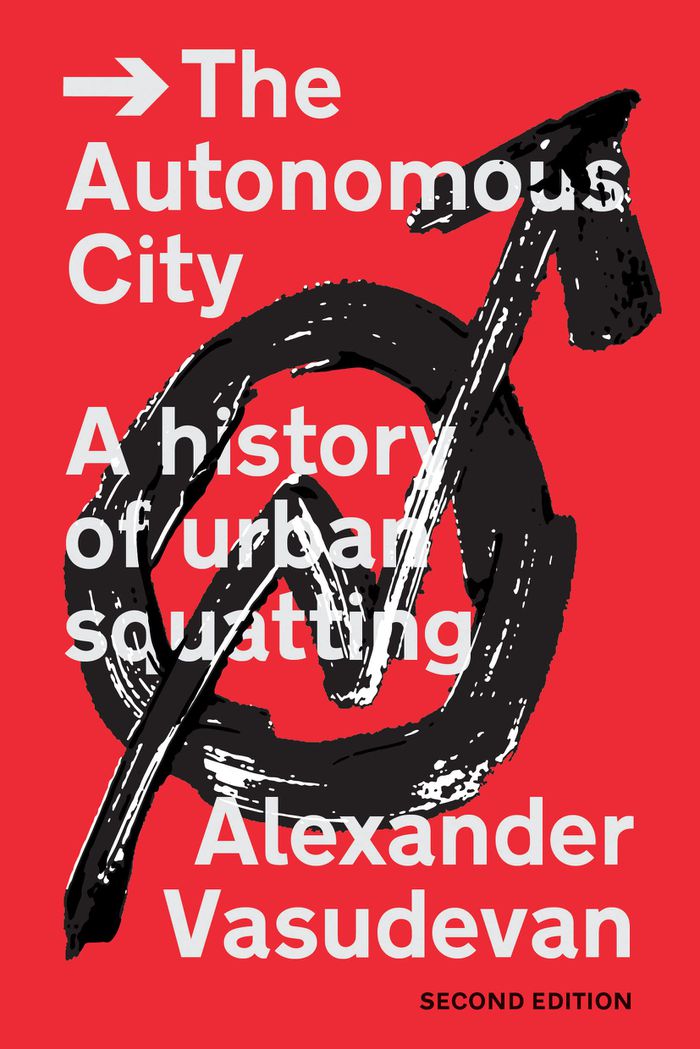
This is the first popular history of squatting as practised in Europe and North America. Alex Vasudevan retraces the struggle for housing in Amsterdam, Berlin, Copenhagen, Detroit, Hamburg, London, Madrid, Milan, New York, and Vancouver. He looks at the organisation of alternative forms of housing—from Copenhagen’s Freetown Christiana to the squats of the Lower East Side—as well as the official response, including the recent criminalisation of squatting, the brutal eviction of squatters and their widespread vilification. Second edition.
The autonomous city: A history of urban squatting. 2nd edition
Actions:
Price:
$39.95
(available to order)
Summary:
This is the first popular history of squatting as practised in Europe and North America. Alex Vasudevan retraces the struggle for housing in Amsterdam, Berlin, Copenhagen, Detroit, Hamburg, London, Madrid, Milan, New York, and Vancouver. He looks at the organisation of alternative forms of housing—from Copenhagen’s Freetown Christiana to the squats of the Lower East Side—as well as the official response, including the recent criminalisation of squatting, the brutal eviction of squatters and their widespread vilification. Second edition.
Form:
books
books
Publication:
January 2023
January 2023
Subject:
Urban Theory
Urban Theory
Form:
books
books
Price:
$29.95
(available to order)
Summary:
In this publication, outreach worker Greg Cook and street nurse Cathy Crowe present the stories of frontline workers, advocates, and people living without homes during the pandemic. The book uses prose, poetry, and photography to document lived experiences of homelessness, responses to the housing crisis, efforts to fight back for homes, and possible solutions to move(...)
$29.95
(available to order)
Summary:
In this publication, outreach worker Greg Cook and street nurse Cathy Crowe present the stories of frontline workers, advocates, and people living without homes during the pandemic. The book uses prose, poetry, and photography to document lived experiences of homelessness, responses to the housing crisis, efforts to fight back for homes, and possible solutions to move(...)
Title:
Displacement city: Fighting for health and home in a pandemic
Actions:
Price:
$29.95
(available to order)
Summary:
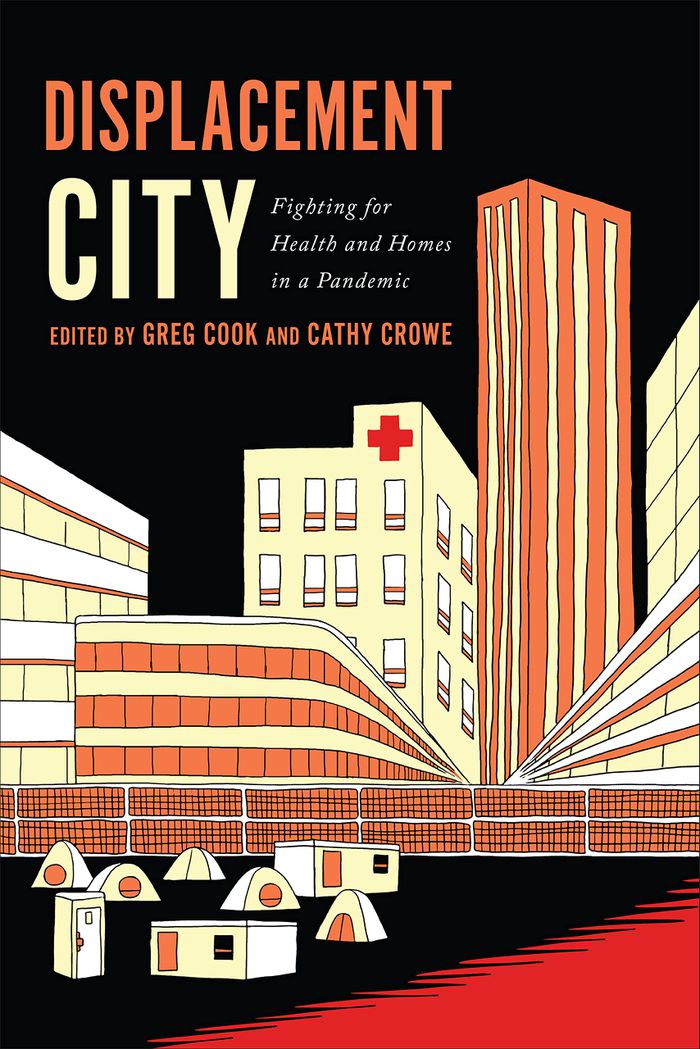
In this publication, outreach worker Greg Cook and street nurse Cathy Crowe present the stories of frontline workers, advocates, and people living without homes during the pandemic. The book uses prose, poetry, and photography to document lived experiences of homelessness, responses to the housing crisis, efforts to fight back for homes, and possible solutions to move Toronto forward. Contributors provide particular insight into policies affecting Indigenous peoples and how the legacy of colonialism and displacement reached a critical point during the pandemic. Offering rich stories of care, mutual aid, and solidarity, it provides a vivid account of a humanitarian disaster.
Displacement city: Fighting for health and home in a pandemic
Actions:
Price:
$29.95
(available to order)
Summary:
In this publication, outreach worker Greg Cook and street nurse Cathy Crowe present the stories of frontline workers, advocates, and people living without homes during the pandemic. The book uses prose, poetry, and photography to document lived experiences of homelessness, responses to the housing crisis, efforts to fight back for homes, and possible solutions to move Toronto forward. Contributors provide particular insight into policies affecting Indigenous peoples and how the legacy of colonialism and displacement reached a critical point during the pandemic. Offering rich stories of care, mutual aid, and solidarity, it provides a vivid account of a humanitarian disaster.
Form:
books
books
Publication:
November 2022
November 2022
Subject:
Urban Theory
Urban Theory
Form:
books
books

Actions:
Price:
$44.95
(available to order)
Summary:
The Villa Tugendhat, designed by Mies van der Rohe in 1928, is an icon of architectural modernism and a UNESCO World Heritage site. This book tells the true story of the large family connected to it, who rose to prominence through industrial textile manufacturing. It traces the transformations in the life of the family, from their roots in a Jewish ghetto to part of the(...)
$44.95
(available to order)
Summary:
The Villa Tugendhat, designed by Mies van der Rohe in 1928, is an icon of architectural modernism and a UNESCO World Heritage site. This book tells the true story of the large family connected to it, who rose to prominence through industrial textile manufacturing. It traces the transformations in the life of the family, from their roots in a Jewish ghetto to part of the(...)
Title:
Behind the glass: The Villa Tugendhat and its family
Actions:
Price:
$44.95
(available to order)
Summary:
The Villa Tugendhat, designed by Mies van der Rohe in 1928, is an icon of architectural modernism and a UNESCO World Heritage site. This book tells the true story of the large family connected to it, who rose to prominence through industrial textile manufacturing. It traces the transformations in the life of the family, from their roots in a Jewish ghetto to part of the wealthy bourgeoisie in the Austro-Hungarian Empire to adaptation in interwar independent Czechoslovakia and flight in the face of Nazi invasion. Michael Lambek examines the generation born in the first decade of the twentieth century, especially Grete Tugendhat – Lambek’s maternal grandmother – who commissioned, inhabited, championed, and relinquished the distinctive modern house.The book also provides unpublished correspondence between Martin Heidegger and Ernst Tugendhat, Grete’s son, as well as a description of the impact of a 2017 family reunion.
Behind the glass: The Villa Tugendhat and its family
Actions:
Price:
$44.95
(available to order)
Summary:
The Villa Tugendhat, designed by Mies van der Rohe in 1928, is an icon of architectural modernism and a UNESCO World Heritage site. This book tells the true story of the large family connected to it, who rose to prominence through industrial textile manufacturing. It traces the transformations in the life of the family, from their roots in a Jewish ghetto to part of the wealthy bourgeoisie in the Austro-Hungarian Empire to adaptation in interwar independent Czechoslovakia and flight in the face of Nazi invasion. Michael Lambek examines the generation born in the first decade of the twentieth century, especially Grete Tugendhat – Lambek’s maternal grandmother – who commissioned, inhabited, championed, and relinquished the distinctive modern house.The book also provides unpublished correspondence between Martin Heidegger and Ernst Tugendhat, Grete’s son, as well as a description of the impact of a 2017 family reunion.
Form:
books
books
Publication:
November 2022
November 2022
Subject:
Architectural Theory
Architectural Theory
Form:
books
books
Actions:
Price:
$55.00
(available to order)
Summary:
A place comes into existence through the depth of relationships that underwrite a physical location with layers of sedimented names. In this volume scholars and artists conduct varied forms of place-based inquiry to demonstrate why place matters. The volume brings into conversation photographic projects and essays that revitalize the study of landscape. Contributors(...)
$55.00
(available to order)
Summary:
A place comes into existence through the depth of relationships that underwrite a physical location with layers of sedimented names. In this volume scholars and artists conduct varied forms of place-based inquiry to demonstrate why place matters. The volume brings into conversation photographic projects and essays that revitalize the study of landscape. Contributors(...)
Title:
Place matters: critical topographies in word and image
Actions:
Price:
$55.00
(available to order)
Summary:
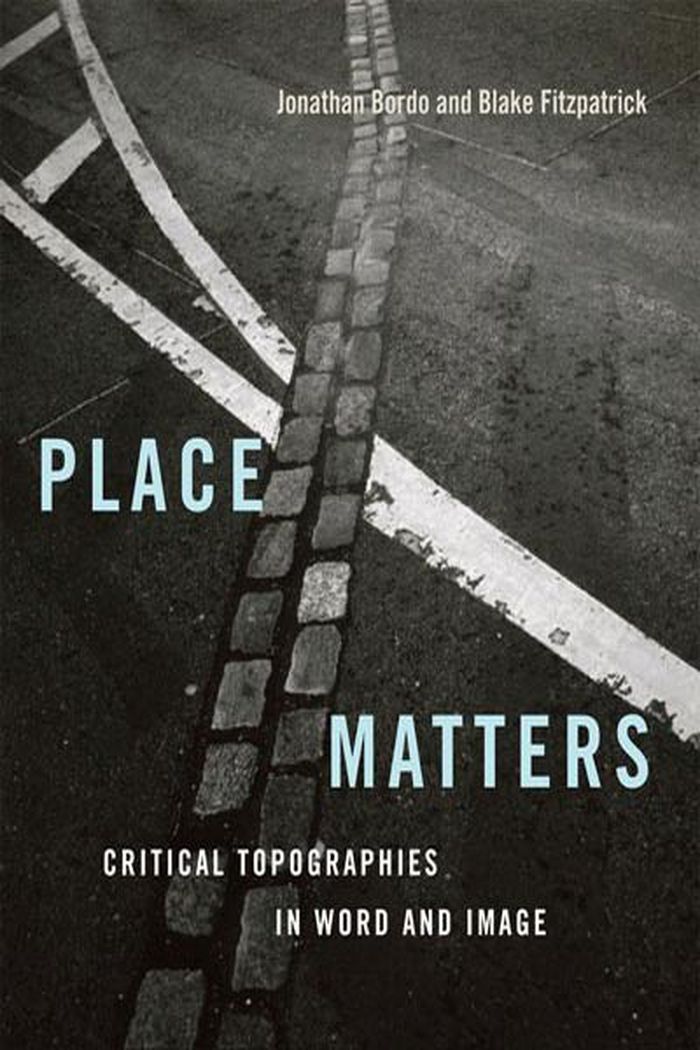
A place comes into existence through the depth of relationships that underwrite a physical location with layers of sedimented names. In this volume scholars and artists conduct varied forms of place-based inquiry to demonstrate why place matters. The volume brings into conversation photographic projects and essays that revitalize the study of landscape. Contributors engage the study of place through an approach that Jonathan Bordo and Blake Fitzpatrick call critical topography: the way that we understand critical thought to range over a place, or how thought and symbolic forms invent place through text and image as if initiated by an X marking the spot. Critical topography’s tasks are to mediate and to diminish the gap between representation and referent, to be both in the world and about the world; to ask what place is this, what are its names, where am I, how and with what responsibilities may I be here?
Place matters: critical topographies in word and image
Actions:
Price:
$55.00
(available to order)
Summary:
A place comes into existence through the depth of relationships that underwrite a physical location with layers of sedimented names. In this volume scholars and artists conduct varied forms of place-based inquiry to demonstrate why place matters. The volume brings into conversation photographic projects and essays that revitalize the study of landscape. Contributors engage the study of place through an approach that Jonathan Bordo and Blake Fitzpatrick call critical topography: the way that we understand critical thought to range over a place, or how thought and symbolic forms invent place through text and image as if initiated by an X marking the spot. Critical topography’s tasks are to mediate and to diminish the gap between representation and referent, to be both in the world and about the world; to ask what place is this, what are its names, where am I, how and with what responsibilities may I be here?
Form:
books
books
Publication:
December 2022
December 2022
Subject:
Architectural Theory
Architectural Theory
Form:
books
books
Actions:
Price:
$34.99
(available in store)
Summary:
Disability critiques of architecture usually emphasize the need for modification and increased access, but this publication calls for a radical reorientation of this perspective by situating experiences of impairment as a new foundation for the built environment. With its provocative proposal for "the construction of disability," this book fundamentally reconsiders how we(...)
$34.99
(available in store)
Summary:
Disability critiques of architecture usually emphasize the need for modification and increased access, but this publication calls for a radical reorientation of this perspective by situating experiences of impairment as a new foundation for the built environment. With its provocative proposal for "the construction of disability," this book fundamentally reconsiders how we(...)
Title:
The architecture of disability: Buildings, cities, and landscapes beyond access
Actions:
Price:
$34.99
(available in store)
Summary:
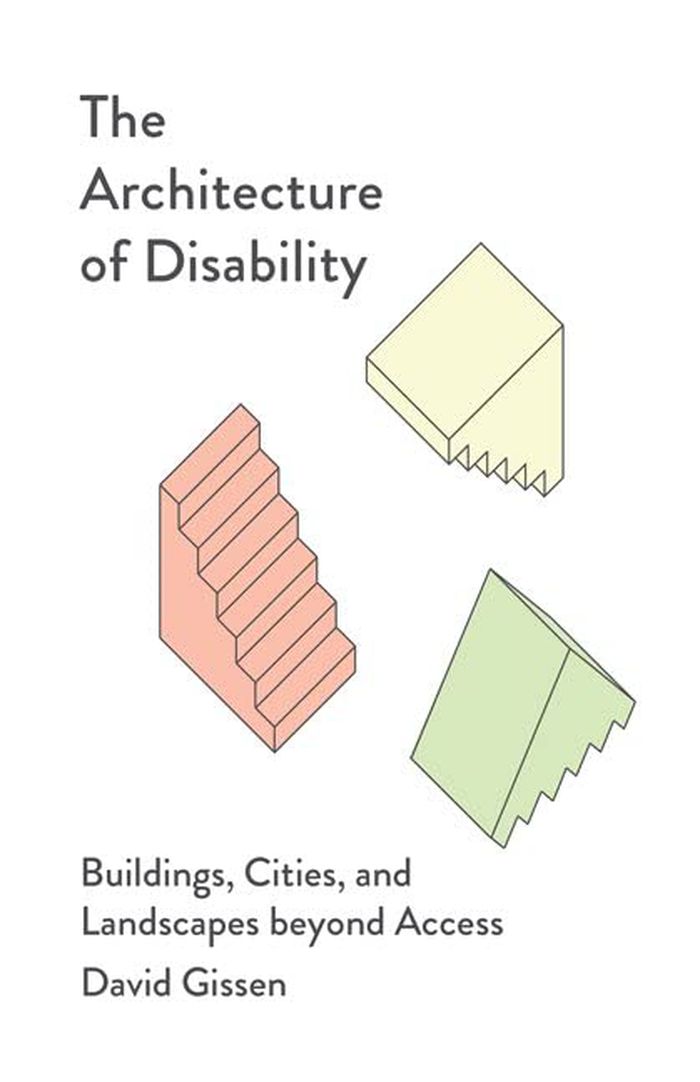
Disability critiques of architecture usually emphasize the need for modification and increased access, but this publication calls for a radical reorientation of this perspective by situating experiences of impairment as a new foundation for the built environment. With its provocative proposal for "the construction of disability," this book fundamentally reconsiders how we conceive of and experience disability in our world. Stressing the connection between architectural form and the capacities of the human body, David Gissen demonstrates how disability haunts the history and practice of architecture. Examining various historic sites, landscape designs, and urban spaces, he deconstructs the prevailing functionalist approach to accommodating disabled people in architecture and instead asserts that physical capacity is essential to the conception of all designed space.
The architecture of disability: Buildings, cities, and landscapes beyond access
Actions:
Price:
$34.99
(available in store)
Summary:
Disability critiques of architecture usually emphasize the need for modification and increased access, but this publication calls for a radical reorientation of this perspective by situating experiences of impairment as a new foundation for the built environment. With its provocative proposal for "the construction of disability," this book fundamentally reconsiders how we conceive of and experience disability in our world. Stressing the connection between architectural form and the capacities of the human body, David Gissen demonstrates how disability haunts the history and practice of architecture. Examining various historic sites, landscape designs, and urban spaces, he deconstructs the prevailing functionalist approach to accommodating disabled people in architecture and instead asserts that physical capacity is essential to the conception of all designed space.
Form:
books
books
Publication:
January 2023
January 2023
Subject:
Architectural Theory
Architectural Theory
Form:
books
books
Actions:
Price:
$13.99
(available in store)
Summary:
In this publication, Caterina Albano examines the cultural significance of breath and air to a wide array of forces in our midst, including economy, politics, infection, and ecological violence. Through a consideration of recent art practices and projects, including the dance project Breath Catalogue, which makes visible the breathing patterns of dancers, and Forensic(...)
$13.99
(available in store)
Summary:
In this publication, Caterina Albano examines the cultural significance of breath and air to a wide array of forces in our midst, including economy, politics, infection, and ecological violence. Through a consideration of recent art practices and projects, including the dance project Breath Catalogue, which makes visible the breathing patterns of dancers, and Forensic(...)
Title:
Out of breath: Vulnerability of air in contemporary art
Actions:
Price:
$13.99
(available in store)
Summary:
In this publication, Caterina Albano examines the cultural significance of breath and air to a wide array of forces in our midst, including economy, politics, infection, and ecological violence. Through a consideration of recent art practices and projects, including the dance project Breath Catalogue, which makes visible the breathing patterns of dancers, and Forensic Architecture’s Cloud Studies video, which investigates eight different kinds of clouds from airstrikes to herbicides to tear gas, Albano focuses on breath as both an intuitive process and a conveyer of meanings. Conceived in response to the Covid-19 pandemic and systemic inequalities that it has laid bare, the book shows the potential of artistic practices to mobilize affect as a form of cultural and political critique.
Out of breath: Vulnerability of air in contemporary art
Actions:
Price:
$13.99
(available in store)
Summary:
In this publication, Caterina Albano examines the cultural significance of breath and air to a wide array of forces in our midst, including economy, politics, infection, and ecological violence. Through a consideration of recent art practices and projects, including the dance project Breath Catalogue, which makes visible the breathing patterns of dancers, and Forensic Architecture’s Cloud Studies video, which investigates eight different kinds of clouds from airstrikes to herbicides to tear gas, Albano focuses on breath as both an intuitive process and a conveyer of meanings. Conceived in response to the Covid-19 pandemic and systemic inequalities that it has laid bare, the book shows the potential of artistic practices to mobilize affect as a form of cultural and political critique.
Form:
books
books
Publication:
June 2022
June 2022
Subject:
Art Theory
Art Theory
Form:
books
books
Actions:
Price:
$54.95
(available to order)
Summary:
With this book, Jeffrey Saletnik explores the origins of Josef Albers’s teaching practices and their significance in conveying attitudes about form, material, and sensory understanding to artists Eva Hesse and Richard Serra. He demonstrates how pedagogy is a framework that establishes the possibility for artistic discourse and how the methods through which artists learn(...)
$54.95
(available to order)
Summary:
With this book, Jeffrey Saletnik explores the origins of Josef Albers’s teaching practices and their significance in conveying attitudes about form, material, and sensory understanding to artists Eva Hesse and Richard Serra. He demonstrates how pedagogy is a framework that establishes the possibility for artistic discourse and how the methods through which artists learn(...)
Title:
Joseph Albers, late modernism, and pedagogic form
Actions:
Price:
$54.95
(available to order)
Summary:
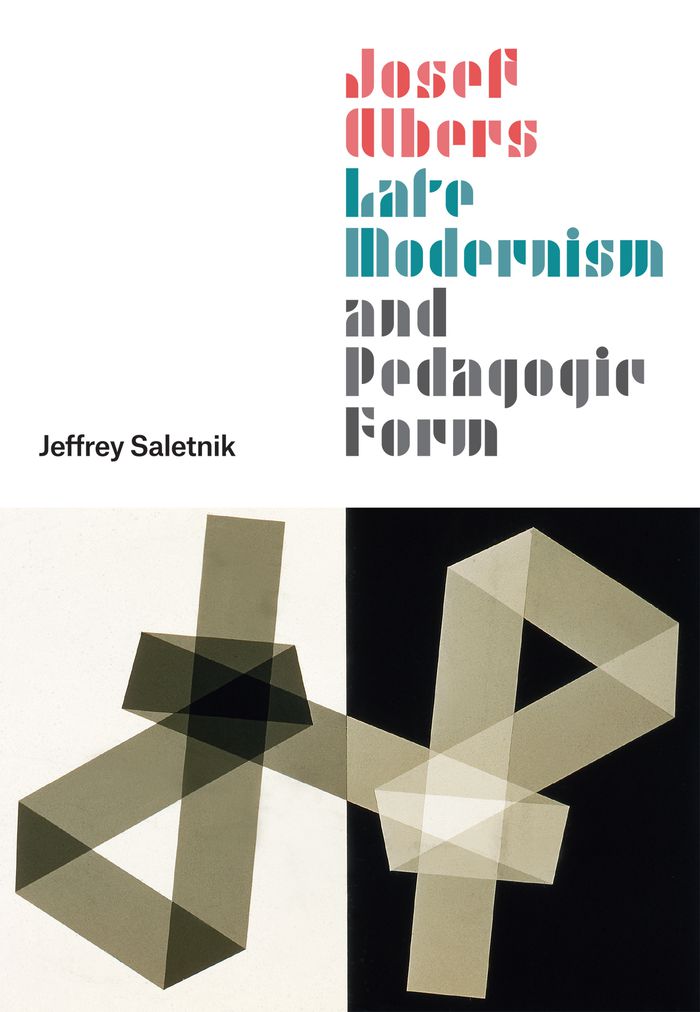
With this book, Jeffrey Saletnik explores the origins of Josef Albers’s teaching practices and their significance in conveying attitudes about form, material, and sensory understanding to artists Eva Hesse and Richard Serra. He demonstrates how pedagogy is a framework that establishes the possibility for artistic discourse and how the methods through which artists learn are manifested in their individual practices. Tracing through lines from Albers’s training in German educational traditions to his influence on American postwar art, this volume positions Albers’s pedagogy as central to the life of modernism.
Joseph Albers, late modernism, and pedagogic form
Actions:
Price:
$54.95
(available to order)
Summary:
With this book, Jeffrey Saletnik explores the origins of Josef Albers’s teaching practices and their significance in conveying attitudes about form, material, and sensory understanding to artists Eva Hesse and Richard Serra. He demonstrates how pedagogy is a framework that establishes the possibility for artistic discourse and how the methods through which artists learn are manifested in their individual practices. Tracing through lines from Albers’s training in German educational traditions to his influence on American postwar art, this volume positions Albers’s pedagogy as central to the life of modernism.
Form:
books
books
Publication:
September 2022
September 2022
Subject:
Architectural Theory
Architectural Theory


