


7239 Results
Form:
books
books
Actions:
Price:
$97.95
(available to order)
Summary:
This wide-ranging book provides for the first time a complete view of German Gothic church architecture. Architectural historian Norbert Nussbaum surveys church construction from the early thirteenth to the early sixteenth century in the German-language regions(...)
$97.95
(available to order)
Summary:
This wide-ranging book provides for the first time a complete view of German Gothic church architecture. Architectural historian Norbert Nussbaum surveys church construction from the early thirteenth to the early sixteenth century in the German-language regions(...)
Title:
German gothic church architecture
Actions:
Price:
$97.95
(available to order)
Summary:
This wide-ranging book provides for the first time a complete view of German Gothic church architecture. Architectural historian Norbert Nussbaum surveys church construction from the early thirteenth to the early sixteenth century in the German-language regions of medieval Europe. These areas of the Holy Roman Empire--including Bohemia, Austria, northern Switzerland, Alsace, Silesia, and East Prussia--were hereditary fiefdoms at the time, and their diverse cultures contributed to the extreme variety of German Gothic. Nussbaum looks at this rich period of architectural history from many perspectives and offers an informative tour of dozens of German Gothic churches, spectacular for both their beauty and variety. Soon after the Gothic first influenced German builders in the thirteenth century, it developed in several directions, Nussbaum shows. The differences are reflected in the great cathedral lodges of Cologne and Strasbourg, the conscious poverty of form expressed by the Mendicant orders, and red brick churches on the North Sea and Baltic coasts. A fourteenth-century synthesis of these styles was at last achieved in Prague Cathedral, the only great church financed by a German kaiser, Charles IV. In the fifteenth century, German Late Gothic style--unlike the monarchy-supported style of Germanyís neighbors to the west--evolved as cities undertook the financing of parish churches. This period of design culminated with the construction of transcendent churches early in the sixteenth century, characterized by high, sculptured towers and audacious, sometimes fantastic vault structures.
German gothic church architecture
Actions:
Price:
$97.95
(available to order)
Summary:
This wide-ranging book provides for the first time a complete view of German Gothic church architecture. Architectural historian Norbert Nussbaum surveys church construction from the early thirteenth to the early sixteenth century in the German-language regions of medieval Europe. These areas of the Holy Roman Empire--including Bohemia, Austria, northern Switzerland, Alsace, Silesia, and East Prussia--were hereditary fiefdoms at the time, and their diverse cultures contributed to the extreme variety of German Gothic. Nussbaum looks at this rich period of architectural history from many perspectives and offers an informative tour of dozens of German Gothic churches, spectacular for both their beauty and variety. Soon after the Gothic first influenced German builders in the thirteenth century, it developed in several directions, Nussbaum shows. The differences are reflected in the great cathedral lodges of Cologne and Strasbourg, the conscious poverty of form expressed by the Mendicant orders, and red brick churches on the North Sea and Baltic coasts. A fourteenth-century synthesis of these styles was at last achieved in Prague Cathedral, the only great church financed by a German kaiser, Charles IV. In the fifteenth century, German Late Gothic style--unlike the monarchy-supported style of Germanyís neighbors to the west--evolved as cities undertook the financing of parish churches. This period of design culminated with the construction of transcendent churches early in the sixteenth century, characterized by high, sculptured towers and audacious, sometimes fantastic vault structures.
Form:
books
books
Publication:
January 1900, London
January 1900, London
Subject:
History until 1900
History until 1900
Form:
books
books
Actions:
Price:
$46.95
(available to order)
Summary:
Post, ex, sub and dis - these are but a few of the prefixes that have been used to compose neologisms for describing the contemporary cityscape in Western Europe and North America. Terms such as posturban space, postsuburbia, exurbia, exopolis, suburban downtown and disurbia are part of a dizzying collection of often hotly contested labels. The plethora of neologisms(...)
$46.95
(available to order)
Summary:
Post, ex, sub and dis - these are but a few of the prefixes that have been used to compose neologisms for describing the contemporary cityscape in Western Europe and North America. Terms such as posturban space, postsuburbia, exurbia, exopolis, suburban downtown and disurbia are part of a dizzying collection of often hotly contested labels. The plethora of neologisms(...)
Title:
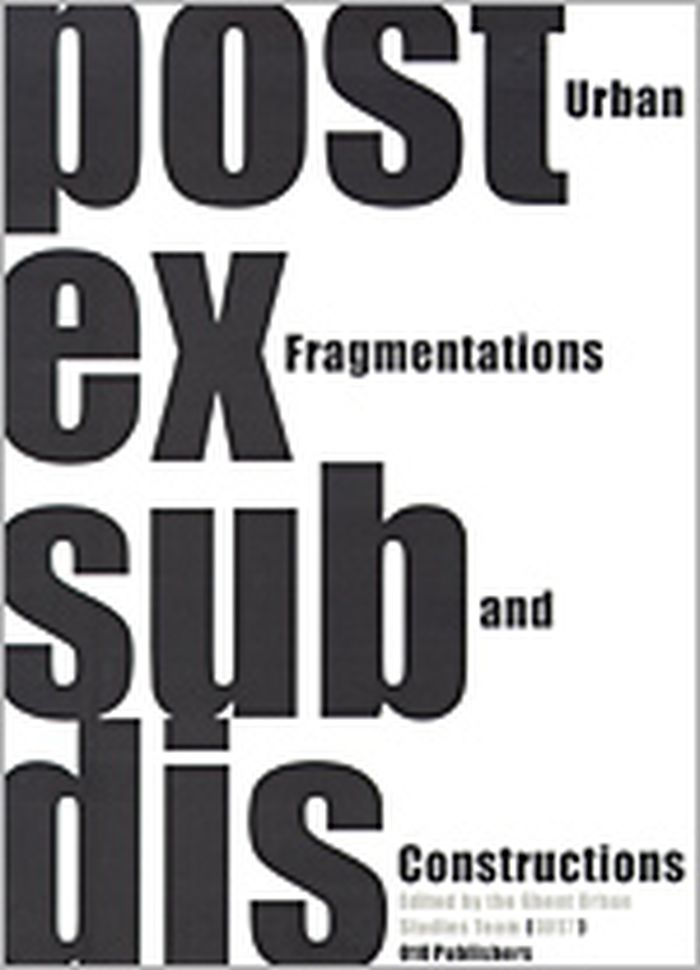
Post ex sub dis : urban fragmentations and constructions
Actions:
Price:
$46.95
(available to order)
Summary:
Post, ex, sub and dis - these are but a few of the prefixes that have been used to compose neologisms for describing the contemporary cityscape in Western Europe and North America. Terms such as posturban space, postsuburbia, exurbia, exopolis, suburban downtown and disurbia are part of a dizzying collection of often hotly contested labels. The plethora of neologisms demonstrates how difficult it has become to name, map and analyse the contemporary cityscape. To many observers, urban environments and urban society have come to evince a radically chaotic and fragmented structure. This book explores how in recent decades the notion of fragmentation - a mainstay already of reflections on urban modernity - has acquired new meanings and how, within the current decentralized and centrifugal context, the urban landscape is constantly being deconstructed and reconstructed, both materially and discursively. Richly illustrated with works by artists and photographers who have visualized various new kinds of urban fragmentation, the volume brings together a series of essays on spatial, social and cultural issues written by distinguished scholars and practitioners from an unusual variety of disciplines. It will be especially useful to students of urban planning, architecture, sociology, literature and the arts. With text contributions by Aaron Betsky, Sophie Body-Gendrot, Stefano Boeri, Lizabeth Cohen, Rosalyn Deutsche, Bart Eeckhout, Adriaan Geuze, Paul Gilroy, Steven Jacobs, Regine Leibinger, Scott Malcomson, Peter Marcuse, Bruce Robbins, Luc Sante, William Sharpe, Edward W. Soja and Mark Wigley.
Post ex sub dis : urban fragmentations and constructions
Actions:
Price:
$46.95
(available to order)
Summary:
Post, ex, sub and dis - these are but a few of the prefixes that have been used to compose neologisms for describing the contemporary cityscape in Western Europe and North America. Terms such as posturban space, postsuburbia, exurbia, exopolis, suburban downtown and disurbia are part of a dizzying collection of often hotly contested labels. The plethora of neologisms demonstrates how difficult it has become to name, map and analyse the contemporary cityscape. To many observers, urban environments and urban society have come to evince a radically chaotic and fragmented structure. This book explores how in recent decades the notion of fragmentation - a mainstay already of reflections on urban modernity - has acquired new meanings and how, within the current decentralized and centrifugal context, the urban landscape is constantly being deconstructed and reconstructed, both materially and discursively. Richly illustrated with works by artists and photographers who have visualized various new kinds of urban fragmentation, the volume brings together a series of essays on spatial, social and cultural issues written by distinguished scholars and practitioners from an unusual variety of disciplines. It will be especially useful to students of urban planning, architecture, sociology, literature and the arts. With text contributions by Aaron Betsky, Sophie Body-Gendrot, Stefano Boeri, Lizabeth Cohen, Rosalyn Deutsche, Bart Eeckhout, Adriaan Geuze, Paul Gilroy, Steven Jacobs, Regine Leibinger, Scott Malcomson, Peter Marcuse, Bruce Robbins, Luc Sante, William Sharpe, Edward W. Soja and Mark Wigley.
Form:
books
books
Publication:
November 2002, Rotterdam
November 2002, Rotterdam
Subject:
Urban Theory
Urban Theory
Form:
books
books
Title:
Manifestos
Manifestos
Actions:
Price:
$39.95
(available to order)
Summary:
"Manifestos" brings together for the first time in English the manifestos written by Édouard Glissant and Patrick Chamoiseau between 2000 and 2009. Composed in part in the aftermath of Barack Obama’s election in 2008, the texts resonate with the current context of divided identities and criticisms of multiculturalism. The individual texts grapple with concrete historical(...)
$39.95
(available to order)
Summary:
"Manifestos" brings together for the first time in English the manifestos written by Édouard Glissant and Patrick Chamoiseau between 2000 and 2009. Composed in part in the aftermath of Barack Obama’s election in 2008, the texts resonate with the current context of divided identities and criticisms of multiculturalism. The individual texts grapple with concrete historical(...)
Subject:
Environment and environmental theory
Environment and environmental theory
Publication:
September 2022
September 2022
Title:
Manifestos
Actions:
Price:
$39.95
(available to order)
Summary:
"Manifestos" brings together for the first time in English the manifestos written by Édouard Glissant and Patrick Chamoiseau between 2000 and 2009. Composed in part in the aftermath of Barack Obama’s election in 2008, the texts resonate with the current context of divided identities and criticisms of multiculturalism. The individual texts grapple with concrete historical and political moments in France, the Caribbean, and North America. Across the manifestos, as well as two collectively signed op-eds, the authors engage with socio-political aspects of climate catastrophe, resource extraction, toxicity, and neocolonialism. Throughout the collection, Glissant and Chamoiseau engage with key themes articulated through their poetic vocabulary, including Relation, globalization, globality (mondialité), anti-universalism, métissage, the tout-monde ("whole-world") and the tout-vivant ("all-living," including the relationship of humans to each other and "nature"), créolité and the creolization of the world, and the liberation from community assignations in response to individualism and neoliberal societies. Translated as the first volume in the Planetarities series with Goldsmiths Press, the themes of "Manifestos" resonate with the planetary as they work in response to contemporary forms of (economic) globalization, western capitalism, identity politics, and urban, digital and cosmic ecosystems, as well as the role of the poet-writer. A distinguishing feature of this publication is its interventional aspect, which prioritizes engaged scholarship and practice while demonstrating the relevance of the poetic in response to the urgencies of planetary crisis.
Manifestos
Actions:
Price:
$39.95
(available to order)
Summary:
"Manifestos" brings together for the first time in English the manifestos written by Édouard Glissant and Patrick Chamoiseau between 2000 and 2009. Composed in part in the aftermath of Barack Obama’s election in 2008, the texts resonate with the current context of divided identities and criticisms of multiculturalism. The individual texts grapple with concrete historical and political moments in France, the Caribbean, and North America. Across the manifestos, as well as two collectively signed op-eds, the authors engage with socio-political aspects of climate catastrophe, resource extraction, toxicity, and neocolonialism. Throughout the collection, Glissant and Chamoiseau engage with key themes articulated through their poetic vocabulary, including Relation, globalization, globality (mondialité), anti-universalism, métissage, the tout-monde ("whole-world") and the tout-vivant ("all-living," including the relationship of humans to each other and "nature"), créolité and the creolization of the world, and the liberation from community assignations in response to individualism and neoliberal societies. Translated as the first volume in the Planetarities series with Goldsmiths Press, the themes of "Manifestos" resonate with the planetary as they work in response to contemporary forms of (economic) globalization, western capitalism, identity politics, and urban, digital and cosmic ecosystems, as well as the role of the poet-writer. A distinguishing feature of this publication is its interventional aspect, which prioritizes engaged scholarship and practice while demonstrating the relevance of the poetic in response to the urgencies of planetary crisis.
Form:
books
books
Publication:
September 2022
September 2022
Subject:
Environment and environmental theory
Environment and environmental theory
Form:
books
books
Price:
$31.95
(available in store)
Summary:
"Words of the Inuit" is an important compendium of Inuit culture illustrated through Inuit words. It brings the sum of the author’s decades of experience and engagement with Inuit and Inuktitut to bear on what he fashions as an amiable, leisurely stroll through words and meanings. Inuit words are often more complex than English words and frequently contain small units of(...)
$31.95
(available in store)
Summary:
"Words of the Inuit" is an important compendium of Inuit culture illustrated through Inuit words. It brings the sum of the author’s decades of experience and engagement with Inuit and Inuktitut to bear on what he fashions as an amiable, leisurely stroll through words and meanings. Inuit words are often more complex than English words and frequently contain small units of(...)
Title:
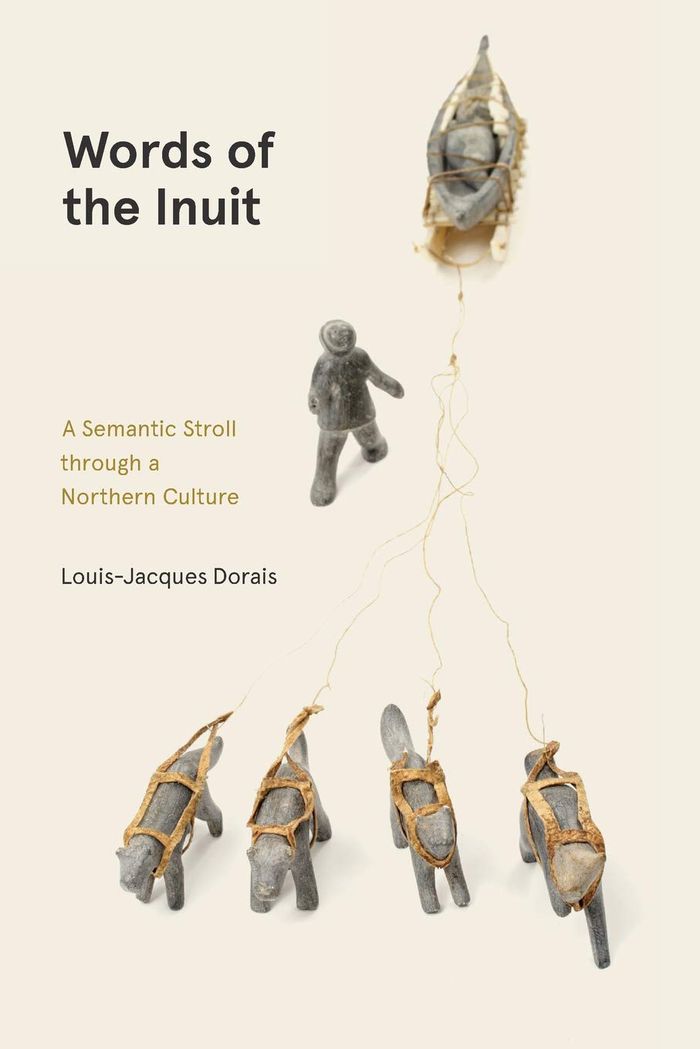
Words of the Inuit: A semantic stroll though a northern culture
Actions:
Price:
$31.95
(available in store)
Summary:
"Words of the Inuit" is an important compendium of Inuit culture illustrated through Inuit words. It brings the sum of the author’s decades of experience and engagement with Inuit and Inuktitut to bear on what he fashions as an amiable, leisurely stroll through words and meanings. Inuit words are often more complex than English words and frequently contain small units of meaning that add up to convey a larger sensibility. Dorais’ lexical and semantic analyses and reconstructions are not overly technical, yet they reliably evince connections and underlying significations that allow for an in-depth reflection on the richness of Inuit linguistic and cultural heritage and identity. An appendix on the polysynthetic character of Inuit languages includes more detailed grammatical description of interest to more specialist readers. Organized thematically, the book tours the histories and meanings of the words to illuminate numerous aspects of Inuit culture, including environment and the land; animals and subsistence activities; humans and spirits; family, kinship, and naming; the human body; and socializing with other people in the contemporary world. It concludes with a reflection on the usefulness for modern Inuit- especially youth and others looking to strengthen their cultural identity- to know about the underlying meanings embedded in their language and culture. With recent reports alerting us to the declining use of the Inuit language in the North, "Words of the Inuit" is a timely contribution to understanding one of the world’s most resilient Indigenous languages.
Words of the Inuit: A semantic stroll though a northern culture
Actions:
Price:
$31.95
(available in store)
Summary:
"Words of the Inuit" is an important compendium of Inuit culture illustrated through Inuit words. It brings the sum of the author’s decades of experience and engagement with Inuit and Inuktitut to bear on what he fashions as an amiable, leisurely stroll through words and meanings. Inuit words are often more complex than English words and frequently contain small units of meaning that add up to convey a larger sensibility. Dorais’ lexical and semantic analyses and reconstructions are not overly technical, yet they reliably evince connections and underlying significations that allow for an in-depth reflection on the richness of Inuit linguistic and cultural heritage and identity. An appendix on the polysynthetic character of Inuit languages includes more detailed grammatical description of interest to more specialist readers. Organized thematically, the book tours the histories and meanings of the words to illuminate numerous aspects of Inuit culture, including environment and the land; animals and subsistence activities; humans and spirits; family, kinship, and naming; the human body; and socializing with other people in the contemporary world. It concludes with a reflection on the usefulness for modern Inuit- especially youth and others looking to strengthen their cultural identity- to know about the underlying meanings embedded in their language and culture. With recent reports alerting us to the declining use of the Inuit language in the North, "Words of the Inuit" is a timely contribution to understanding one of the world’s most resilient Indigenous languages.
Form:
books
books
Publication:
September 2020
September 2020
Subject:
indigenous
indigenous
Form:
books
books
Price:
$22.50
(available in store)
Summary:
When architect Rafael Vinoly was commissioned to design a major new centre for the arts at Duke University, he set about creating his first museum in North America and the first stand-alone museum in Duke's eighty-year history. The resulting 65,000-square-foot building has changed the cultural landscape of the university and indeed the Southeast. This book(...)
$22.50
(available in store)
Summary:
When architect Rafael Vinoly was commissioned to design a major new centre for the arts at Duke University, he set about creating his first museum in North America and the first stand-alone museum in Duke's eighty-year history. The resulting 65,000-square-foot building has changed the cultural landscape of the university and indeed the Southeast. This book(...)
Subject:
Architecture Monographs
Architecture Monographs
Publication:
October 2005, Durham, North Carolina
October 2005, Durham, North Carolina
Title:
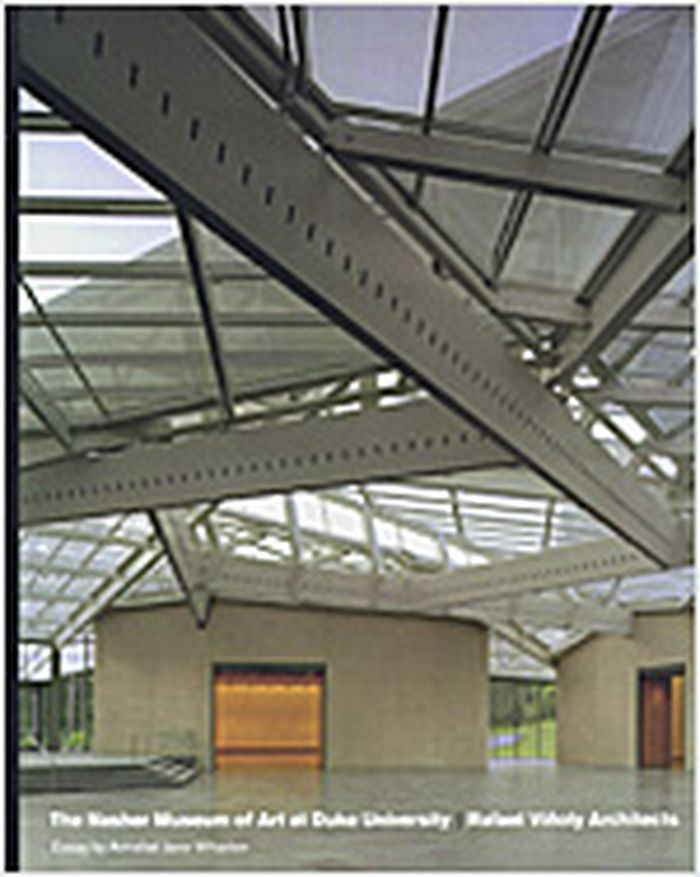
The Nasher Museum of Art at Duke University : Rafael Vinoly Architects
Actions:
Price:
$22.50
(available in store)
Summary:
When architect Rafael Vinoly was commissioned to design a major new centre for the arts at Duke University, he set about creating his first museum in North America and the first stand-alone museum in Duke's eighty-year history. The resulting 65,000-square-foot building has changed the cultural landscape of the university and indeed the Southeast. This book documents the genesis and design of the new museum, which opens on October 2, 2005. The building is named in honor of the family of Raymond D. Nasher, an internationally prominent art collector who graduated from Duke in 1943. The brilliant core of the Nasher at Duke is a 13,000-square-foot glass and steel canopy rising to a height of 45 feet above the central gallery space. The faceted roof soars above the irregular pentagonal great hall, where five concrete pavilions fan out at different angles. The pavilions will house three large gallery spaces, an auditorium, offices, university and community classrooms, a museum shop, and a café with outdoor seating overlooking a sculpture garden. Set in the forest on Duke's campus, the museum's full-height glass walls and green slate floor connect the pavilions and further blur the division between building and nature. With an essay by art historian Annabel Jane Wharton, a design statement by architect Rafael Vinoly, a foreword by museum namesake Raymond D. Nasher, and photographs by Brad Feinknopf and Jerry Blow, this book documents the building that will become a cornerstone for cultural activities for the university and the public.
The Nasher Museum of Art at Duke University : Rafael Vinoly Architects
Actions:
Price:
$22.50
(available in store)
Summary:
When architect Rafael Vinoly was commissioned to design a major new centre for the arts at Duke University, he set about creating his first museum in North America and the first stand-alone museum in Duke's eighty-year history. The resulting 65,000-square-foot building has changed the cultural landscape of the university and indeed the Southeast. This book documents the genesis and design of the new museum, which opens on October 2, 2005. The building is named in honor of the family of Raymond D. Nasher, an internationally prominent art collector who graduated from Duke in 1943. The brilliant core of the Nasher at Duke is a 13,000-square-foot glass and steel canopy rising to a height of 45 feet above the central gallery space. The faceted roof soars above the irregular pentagonal great hall, where five concrete pavilions fan out at different angles. The pavilions will house three large gallery spaces, an auditorium, offices, university and community classrooms, a museum shop, and a café with outdoor seating overlooking a sculpture garden. Set in the forest on Duke's campus, the museum's full-height glass walls and green slate floor connect the pavilions and further blur the division between building and nature. With an essay by art historian Annabel Jane Wharton, a design statement by architect Rafael Vinoly, a foreword by museum namesake Raymond D. Nasher, and photographs by Brad Feinknopf and Jerry Blow, this book documents the building that will become a cornerstone for cultural activities for the university and the public.
Form:
books
books
Publication:
October 2005, Durham, North Carolina
October 2005, Durham, North Carolina
Subject:
Architecture Monographs
Architecture Monographs
Form:
books
books
Price:
$31.50
(available to order)
Summary:
In "Enduring innocence", Keller Easterling tells the stories of outlaw "spatial products"- resorts, information technology campuses, retail chains, golf courses, ports, and other hybrid spaces that exist outside normal constituencies and jurisdictions-in difficult political situations around the world. These spaces-familiar commercial formulas of retail, business, and(...)
$31.50
(available to order)
Summary:
In "Enduring innocence", Keller Easterling tells the stories of outlaw "spatial products"- resorts, information technology campuses, retail chains, golf courses, ports, and other hybrid spaces that exist outside normal constituencies and jurisdictions-in difficult political situations around the world. These spaces-familiar commercial formulas of retail, business, and(...)
Subject:
Architectural Theory
Architectural Theory
Publication:
January 1900, Cambridge, London
January 1900, Cambridge, London
Title:
Enduring innocence : global architecture and its political masquerades
Actions:
Price:
$31.50
(available to order)
Summary:
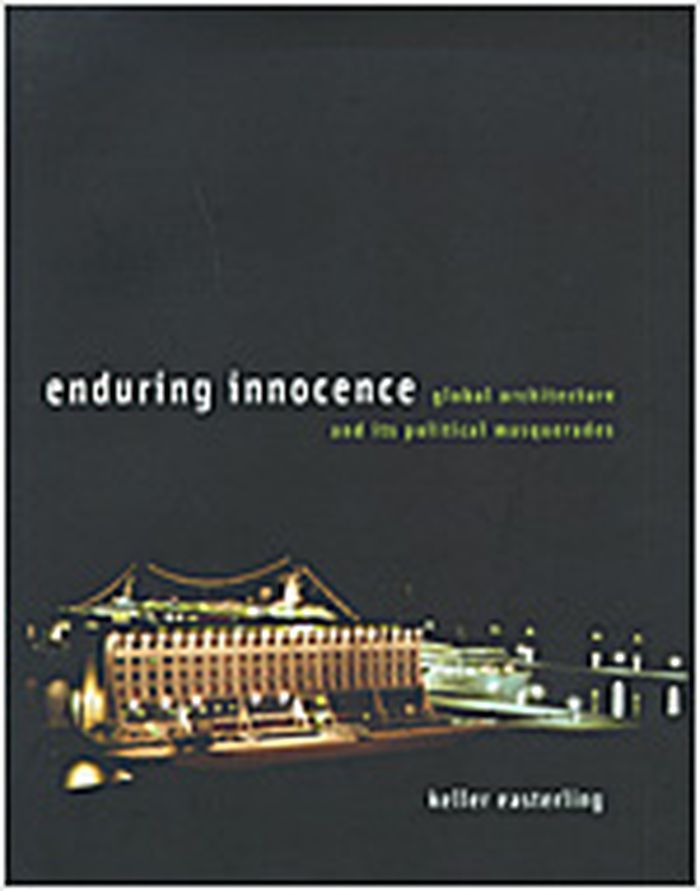
In "Enduring innocence", Keller Easterling tells the stories of outlaw "spatial products"- resorts, information technology campuses, retail chains, golf courses, ports, and other hybrid spaces that exist outside normal constituencies and jurisdictions-in difficult political situations around the world. These spaces-familiar commercial formulas of retail, business, and trade-aspire to be worlds unto themselves, self-reflexive and innocent of politics. But as Easterling shows, in reality these enclaves can become political pawns and objects of contention. Jurisdictionally ambiguous, they are imbued with myths, desires, and symbolic capital. Their hilarious and dangerous masquerades often mix quite easily with the cunning of political platforms. Easterling argues that the study of such "real estate cocktails" provides vivid evidence of the market's weakness, resilience, or violence. "Enduring innocence" collects six stories of spatial products and their political predicaments: cruise ship tourism in North Korea; high-tech agricultural formations in Spain (which have reignited labor wars and piracy in the Mediterranean); hyperbolic forms of sovereignty in commercial and spiritual organizations shared by gurus and golf celebrities; automated global ports; microwave urbanism in South Asian IT enclaves; and a global industry of building demolition that suggests urban warfare. These regimes of nonnational sovereignty, writes Easterling, "move around the world like weather fronts"; she focuses not on their blending- their global connectivity-but on their segregation and the cultural collisions that ensue. "Enduring innocence" resists the dream of one globally legible world found in many architectural discourses on globalization. Instead, Easterling's consideration of these segregated worlds provides new tools for practitioners sensitive to the political composition of urban landscapes.
Enduring innocence : global architecture and its political masquerades
Actions:
Price:
$31.50
(available to order)
Summary:
In "Enduring innocence", Keller Easterling tells the stories of outlaw "spatial products"- resorts, information technology campuses, retail chains, golf courses, ports, and other hybrid spaces that exist outside normal constituencies and jurisdictions-in difficult political situations around the world. These spaces-familiar commercial formulas of retail, business, and trade-aspire to be worlds unto themselves, self-reflexive and innocent of politics. But as Easterling shows, in reality these enclaves can become political pawns and objects of contention. Jurisdictionally ambiguous, they are imbued with myths, desires, and symbolic capital. Their hilarious and dangerous masquerades often mix quite easily with the cunning of political platforms. Easterling argues that the study of such "real estate cocktails" provides vivid evidence of the market's weakness, resilience, or violence. "Enduring innocence" collects six stories of spatial products and their political predicaments: cruise ship tourism in North Korea; high-tech agricultural formations in Spain (which have reignited labor wars and piracy in the Mediterranean); hyperbolic forms of sovereignty in commercial and spiritual organizations shared by gurus and golf celebrities; automated global ports; microwave urbanism in South Asian IT enclaves; and a global industry of building demolition that suggests urban warfare. These regimes of nonnational sovereignty, writes Easterling, "move around the world like weather fronts"; she focuses not on their blending- their global connectivity-but on their segregation and the cultural collisions that ensue. "Enduring innocence" resists the dream of one globally legible world found in many architectural discourses on globalization. Instead, Easterling's consideration of these segregated worlds provides new tools for practitioners sensitive to the political composition of urban landscapes.
Form:
books
books
Publication:
January 1900, Cambridge, London
January 1900, Cambridge, London
Subject:
Architectural Theory
Architectural Theory
Form:
books
books
Actions:
Price:
$39.95
(available to order)
Summary:
This book examines the development of Vancouver’s unique approach to zoning, planning, and urban design from its inception in the early 1970's to its maturity in the management of urban change at the beginning of the twenty-first century. By the late 1990's, Vancouver had established a reputation in North America for its planning achievement, especially for its creation(...)
$39.95
(available to order)
Summary:
This book examines the development of Vancouver’s unique approach to zoning, planning, and urban design from its inception in the early 1970's to its maturity in the management of urban change at the beginning of the twenty-first century. By the late 1990's, Vancouver had established a reputation in North America for its planning achievement, especially for its creation(...)
Title:
The Vancouver achievement : urban planning and design
Actions:
Price:
$39.95
(available to order)
Summary:
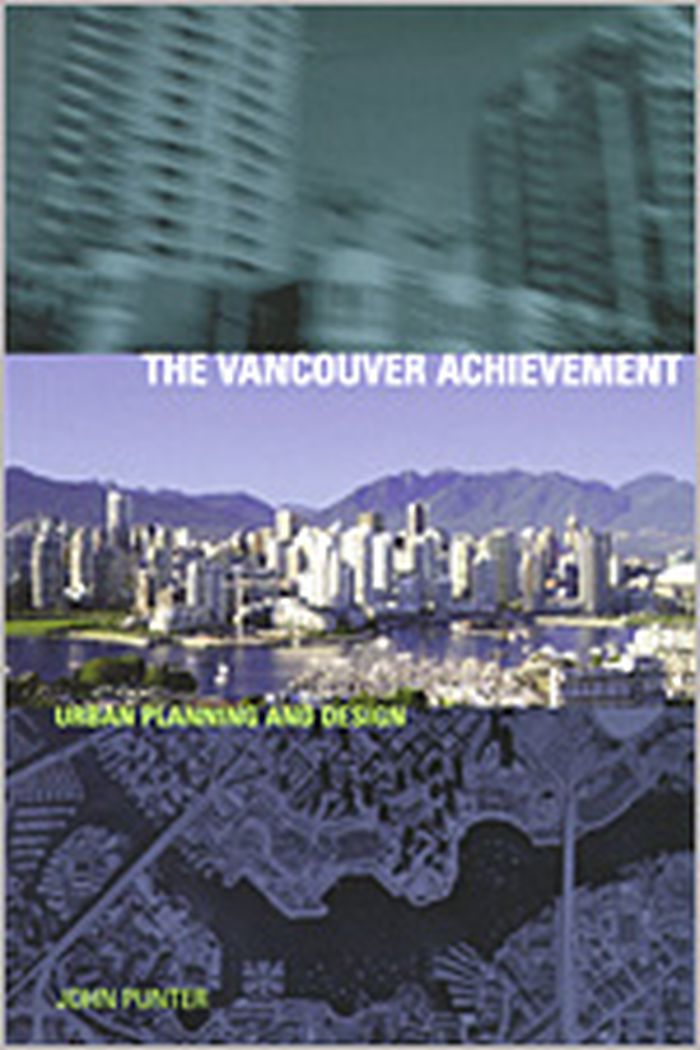
This book examines the development of Vancouver’s unique approach to zoning, planning, and urban design from its inception in the early 1970's to its maturity in the management of urban change at the beginning of the twenty-first century. By the late 1990's, Vancouver had established a reputation in North America for its planning achievement, especially for its creation of a participative, responsive, and design-led approach to urban regeneration and redevelopment. This system has other important features: an innovative approach to megaproject planning, a system of cost and amenity levies on major schemes, a participative CityPlan process to underpin active neighbourhood planning, and a sophisticated panoply of design guidelines. These systems, processes, and their achievements place Vancouver at the forefront of international planning practice. "The Vancouver Achievement" explains the evolution and evaluates the outcomes of Vancouver’s unique system of discretionary zoning. The introductory chapters set the context for the study: they cover the invention and refinement of this system in the reform movement, its development of policies, guidelines, and control processes, and its translation into official development plans and neighbourhood design in the 1970's. Subsequent chapters focus upon the downtown, waterfront megaprojects, single-family neighbourhoods, the city-wide strategic planning programme (CityPlan), pressures for reform of control processes, and current downtown and inner city developments, especially issues of affordable housing, social exclusion, and multiple deprivation. The concluding chapter summarizes "The Vancouver Achievement," explains the keys to its success, and evaluates its design success against internationally accepted criteria.
The Vancouver achievement : urban planning and design
Actions:
Price:
$39.95
(available to order)
Summary:
This book examines the development of Vancouver’s unique approach to zoning, planning, and urban design from its inception in the early 1970's to its maturity in the management of urban change at the beginning of the twenty-first century. By the late 1990's, Vancouver had established a reputation in North America for its planning achievement, especially for its creation of a participative, responsive, and design-led approach to urban regeneration and redevelopment. This system has other important features: an innovative approach to megaproject planning, a system of cost and amenity levies on major schemes, a participative CityPlan process to underpin active neighbourhood planning, and a sophisticated panoply of design guidelines. These systems, processes, and their achievements place Vancouver at the forefront of international planning practice. "The Vancouver Achievement" explains the evolution and evaluates the outcomes of Vancouver’s unique system of discretionary zoning. The introductory chapters set the context for the study: they cover the invention and refinement of this system in the reform movement, its development of policies, guidelines, and control processes, and its translation into official development plans and neighbourhood design in the 1970's. Subsequent chapters focus upon the downtown, waterfront megaprojects, single-family neighbourhoods, the city-wide strategic planning programme (CityPlan), pressures for reform of control processes, and current downtown and inner city developments, especially issues of affordable housing, social exclusion, and multiple deprivation. The concluding chapter summarizes "The Vancouver Achievement," explains the keys to its success, and evaluates its design success against internationally accepted criteria.
Form:
books
books
Publication:
April 2004, Vancouver
April 2004, Vancouver
Subject:
Architecture in Canada
Architecture in Canada
Form:
books
books
Title:
Ed Ruscha, photographer
Ed Ruscha, photographer
Actions:
Price:
$54.95
(available to order)
Summary:
Although known for his paintings and drawings, California artist Ed Ruscha has also attracted critical attention for his photography. A new exhibition and accompanying catalogue, "Ed Ruscha, photographer", depart from earlier books to explore how the artist’s different disciplines — painting, drawing, printmaking, and photography — are guided and shaped by a single(...)
$54.95
(available to order)
Summary:
Although known for his paintings and drawings, California artist Ed Ruscha has also attracted critical attention for his photography. A new exhibition and accompanying catalogue, "Ed Ruscha, photographer", depart from earlier books to explore how the artist’s different disciplines — painting, drawing, printmaking, and photography — are guided and shaped by a single(...)
Title:
Ed Ruscha, photographer
Actions:
Price:
$54.95
(available to order)
Summary:
Although known for his paintings and drawings, California artist Ed Ruscha has also attracted critical attention for his photography. A new exhibition and accompanying catalogue, "Ed Ruscha, photographer", depart from earlier books to explore how the artist’s different disciplines — painting, drawing, printmaking, and photography — are guided and shaped by a single vision. Ruscha’s relationship to photography is complex and ambivalent, and the work is difficult to define. He has referred to his photography as a “hobby” but from the outset it has drawn considerable critical interest. The small books of photographs that Ruscha produced in the sixties and seventies earned him a reputation as an underground artist among his peers, and have influenced subsequent generations of artists in Europe and North America. The photographs were snapshot size, with an amateurish quality that intrigued his contemporaries. Neither purely documentary nor solely artistic, their subject matter was stereotypical and banal, with motifs drawn from sites in Southern California or the western United States. This, combined with their serial presentation, created a mythical road-movie or photo-novel effect with Beat Generation innuendos and inspired interest among artists at a time when serial logic was prominent in Pop art and Minimalism, and later in Conceptual art. This volume is produced in conjunction with a traveling exhibition to be shown in Europe in 2006, organized by The Whitney Museum of American Art, New York. The exhibition photographs have been selected from the collections of the Whitney and the artist by independent curator Margit Rowell.
Ed Ruscha, photographer
Actions:
Price:
$54.95
(available to order)
Summary:
Although known for his paintings and drawings, California artist Ed Ruscha has also attracted critical attention for his photography. A new exhibition and accompanying catalogue, "Ed Ruscha, photographer", depart from earlier books to explore how the artist’s different disciplines — painting, drawing, printmaking, and photography — are guided and shaped by a single vision. Ruscha’s relationship to photography is complex and ambivalent, and the work is difficult to define. He has referred to his photography as a “hobby” but from the outset it has drawn considerable critical interest. The small books of photographs that Ruscha produced in the sixties and seventies earned him a reputation as an underground artist among his peers, and have influenced subsequent generations of artists in Europe and North America. The photographs were snapshot size, with an amateurish quality that intrigued his contemporaries. Neither purely documentary nor solely artistic, their subject matter was stereotypical and banal, with motifs drawn from sites in Southern California or the western United States. This, combined with their serial presentation, created a mythical road-movie or photo-novel effect with Beat Generation innuendos and inspired interest among artists at a time when serial logic was prominent in Pop art and Minimalism, and later in Conceptual art. This volume is produced in conjunction with a traveling exhibition to be shown in Europe in 2006, organized by The Whitney Museum of American Art, New York. The exhibition photographs have been selected from the collections of the Whitney and the artist by independent curator Margit Rowell.
Form:
books
books
Publication:
January 1900, Göttingen
January 1900, Göttingen
Subject:
Contemporary Art Monographs
Contemporary Art Monographs
Form:
books
books
Title:
For the temporary accomodation of settlers: Architecture and immigrant reception in Canada 1870-1930
For the temporary accomodation of settlers: Architecture and immigrant reception in Canada 1870-1930
Actions:
Price:
$75.00
(available to order)
Summary:
For immigrants making the transoceanic journey from Europe or Asia to North America, the experience of a new country began when they disembarked. In Canada the federal government built a network of buildings that provided newcomers with shelter, services, and state support. "Immigration sheds" such as Pier 21 in Halifax – where ocean liners would dock and global migrants(...)
$75.00
(available to order)
Summary:
For immigrants making the transoceanic journey from Europe or Asia to North America, the experience of a new country began when they disembarked. In Canada the federal government built a network of buildings that provided newcomers with shelter, services, and state support. "Immigration sheds" such as Pier 21 in Halifax – where ocean liners would dock and global migrants(...)
Title:
For the temporary accomodation of settlers: Architecture and immigrant reception in Canada 1870-1930
Actions:
Price:
$75.00
(available to order)
Summary:
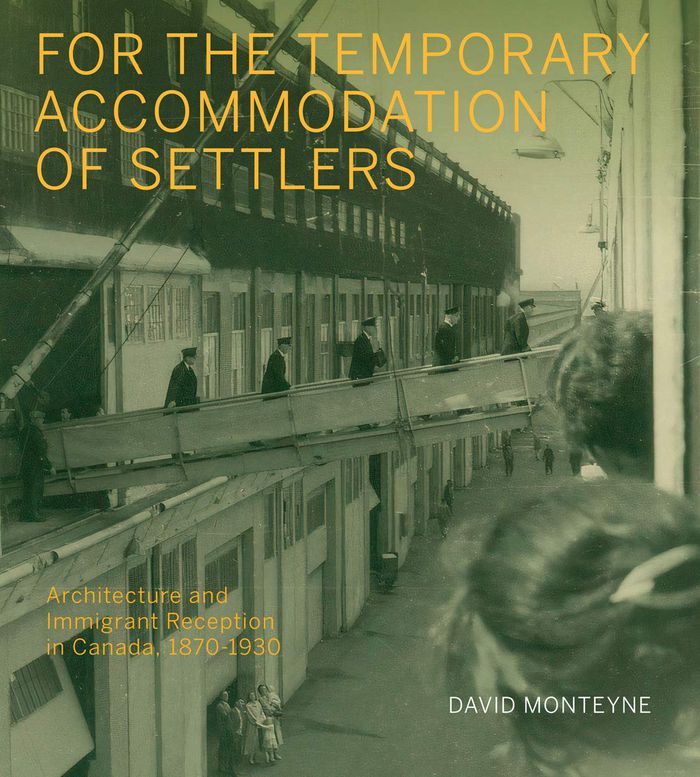
For immigrants making the transoceanic journey from Europe or Asia to North America, the experience of a new country began when they disembarked. In Canada the federal government built a network of buildings that provided newcomers with shelter, services, and state support. "Immigration sheds" such as Pier 21 in Halifax – where ocean liners would dock and global migrants arrived and were processed – had many counterparts across the country: new arrivals were accommodated or incarcerated at reception halls, quarantine stations, and immigrant detention hospitals. For the Temporary Accommodation of Settlers reconstructs the experiences of people in these spaces – both immigrants and government agents – to pose a question at the heart of architectural thinking: how is meaning produced in the built environments that we encounter? David Monteyne interprets official governmental intentions and policy goals embodied by the architecture of immigration but foregrounds the unofficial, informal practices of people who negotiated these spaces to satisfy basic needs, ensure the safety of their families, learn about land and job opportunities, and ultimately arrive at their destinations. The extent of this Canadian network, which peaked in the early twentieth century at over sixty different sites, and the range of building types that comprised it are unique among immigrant-receiving nations in this period. In our era of pandemic quarantine and migrant detention facilities, ''For the temporary accommodation of settlers'' offers new ways of seeing and thinking about the historical processes of immigration, challenging readers to consider government architecture and the experience of migrants across global networks.
For the temporary accomodation of settlers: Architecture and immigrant reception in Canada 1870-1930
Actions:
Price:
$75.00
(available to order)
Summary:
For immigrants making the transoceanic journey from Europe or Asia to North America, the experience of a new country began when they disembarked. In Canada the federal government built a network of buildings that provided newcomers with shelter, services, and state support. "Immigration sheds" such as Pier 21 in Halifax – where ocean liners would dock and global migrants arrived and were processed – had many counterparts across the country: new arrivals were accommodated or incarcerated at reception halls, quarantine stations, and immigrant detention hospitals. For the Temporary Accommodation of Settlers reconstructs the experiences of people in these spaces – both immigrants and government agents – to pose a question at the heart of architectural thinking: how is meaning produced in the built environments that we encounter? David Monteyne interprets official governmental intentions and policy goals embodied by the architecture of immigration but foregrounds the unofficial, informal practices of people who negotiated these spaces to satisfy basic needs, ensure the safety of their families, learn about land and job opportunities, and ultimately arrive at their destinations. The extent of this Canadian network, which peaked in the early twentieth century at over sixty different sites, and the range of building types that comprised it are unique among immigrant-receiving nations in this period. In our era of pandemic quarantine and migrant detention facilities, ''For the temporary accommodation of settlers'' offers new ways of seeing and thinking about the historical processes of immigration, challenging readers to consider government architecture and the experience of migrants across global networks.
Form:
books
books
Publication:
December 2021
December 2021
Subject:
Architecture in Canada
Architecture in Canada
Form:
books
books
Price:
$26.00
(available to order)
Summary:
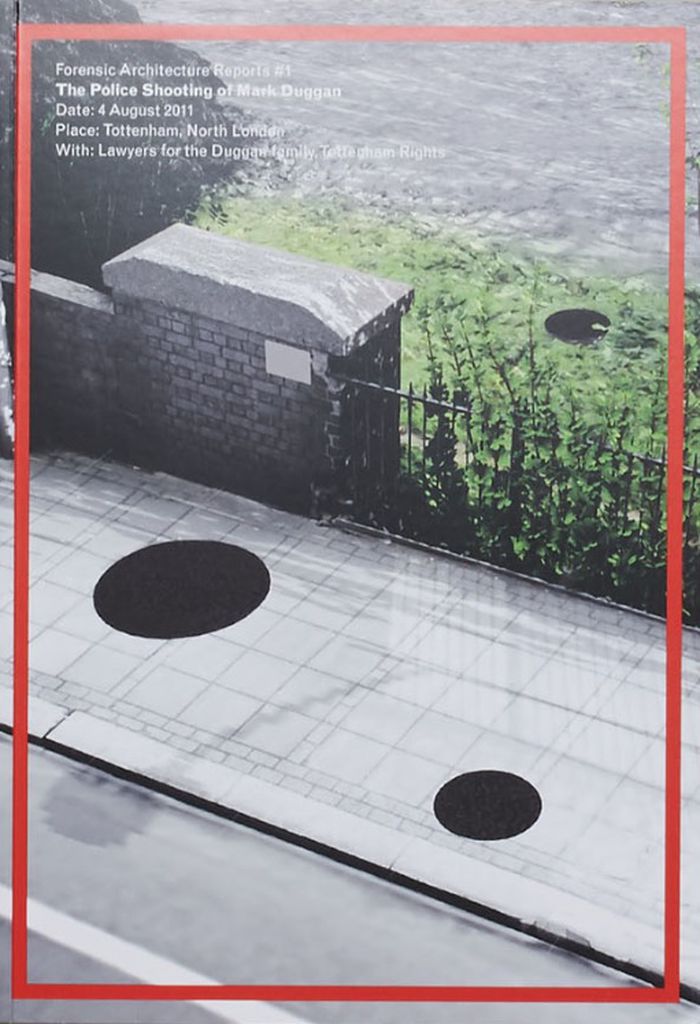
This is the first installation of Forensic Architecture Reports, a series of books each dedicated to a single FA investigation, with insights into the agency’s research methodologies, additional texts from and interviews with collaborators, and dossiers of documents that shaped the investigation in question. On the evening of 4 August 2011, Mark Duggan was shot and(...)
$26.00
(available to order)
Summary:
This is the first installation of Forensic Architecture Reports, a series of books each dedicated to a single FA investigation, with insights into the agency’s research methodologies, additional texts from and interviews with collaborators, and dossiers of documents that shaped the investigation in question. On the evening of 4 August 2011, Mark Duggan was shot and(...)
Title:
Forensic Architecture, reports #1: The police shooting of Mark Duggan
Actions:
Price:
$26.00
(available to order)
Summary:
This is the first installation of Forensic Architecture Reports, a series of books each dedicated to a single FA investigation, with insights into the agency’s research methodologies, additional texts from and interviews with collaborators, and dossiers of documents that shaped the investigation in question. On the evening of 4 August 2011, Mark Duggan was shot and killed by the police in the north London neighbourhood of Tottenham after the minicab in which he was traveling was pulled over by a team of undercover officers. The team had begun following Duggan shortly after receiving intelligence that he was in possession of a gun, and the officer who shot him testified that he had seen, for a ‘split second’, Duggan aiming the gun at him after he had exited the minicab. However, the gun was not found next to Duggan’s body on the pavement. According to the police, they discovered it in a patch of grass some seven meters away. After a coroner’s inquest ruled Duggan’s killing ‘lawful’ and the police watchdog organisation issued a report siding with the officers’ version of events, the Duggan family’s legal team commissioned Forensic Architecture to conduct an investigation into the critical question at the heart of the case: How did the gun end up in the grass? ?With no video footage of the shooting itself, Forensic Architecture had to rely primarily on the written and oral testimony of the officers involved to develop a spatial investigation designed to test the plausibility of the police’s narrative and to examine whether the officers themselves could have planted the gun...
Forensic Architecture, reports #1: The police shooting of Mark Duggan
Actions:
Price:
$26.00
(available to order)
Summary:
This is the first installation of Forensic Architecture Reports, a series of books each dedicated to a single FA investigation, with insights into the agency’s research methodologies, additional texts from and interviews with collaborators, and dossiers of documents that shaped the investigation in question. On the evening of 4 August 2011, Mark Duggan was shot and killed by the police in the north London neighbourhood of Tottenham after the minicab in which he was traveling was pulled over by a team of undercover officers. The team had begun following Duggan shortly after receiving intelligence that he was in possession of a gun, and the officer who shot him testified that he had seen, for a ‘split second’, Duggan aiming the gun at him after he had exited the minicab. However, the gun was not found next to Duggan’s body on the pavement. According to the police, they discovered it in a patch of grass some seven meters away. After a coroner’s inquest ruled Duggan’s killing ‘lawful’ and the police watchdog organisation issued a report siding with the officers’ version of events, the Duggan family’s legal team commissioned Forensic Architecture to conduct an investigation into the critical question at the heart of the case: How did the gun end up in the grass? ?With no video footage of the shooting itself, Forensic Architecture had to rely primarily on the written and oral testimony of the officers involved to develop a spatial investigation designed to test the plausibility of the police’s narrative and to examine whether the officers themselves could have planted the gun...
Form:
books
books
Publication:
September 2021
September 2021
Subject:
Social
Social


