


10592 Results
Form:
books
books

Actions:
Price:
$40.00
(available to order)
Summary:
Since its launch in late 2000, Cabinet magazine has become a touchstone for a certain approach to understanding culture, one that shuns orthodox distinctions--high/low, serious/humorous, professional/amateur--in favor of a commitment to the idea that all objects, practices and discourses can, if read against the grain, teach us something important about the world. Its(...)
$40.00
(available to order)
Summary:
Since its launch in late 2000, Cabinet magazine has become a touchstone for a certain approach to understanding culture, one that shuns orthodox distinctions--high/low, serious/humorous, professional/amateur--in favor of a commitment to the idea that all objects, practices and discourses can, if read against the grain, teach us something important about the world. Its(...)
Title:
Curiosity and method: ten years of Cabinet Magazine
Actions:
Price:
$40.00
(available to order)
Summary:
Since its launch in late 2000, Cabinet magazine has become a touchstone for a certain approach to understanding culture, one that shuns orthodox distinctions--high/low, serious/humorous, professional/amateur--in favor of a commitment to the idea that all objects, practices and discourses can, if read against the grain, teach us something important about the world. Its hybrid sensibility merges the visually engaging style of an arts periodical, the exuberance of a fanzine and the in-depth exploration of a scholarly journal to create a sourcebook of ideas for an international audience of readers, from artists and designers to scientists, philosophers and historians. Using essays, interviews and artist projects to present a variety of topics in language accessible to the non-specialist, Cabinet has aimed to encourage a new culture of curiosity.
Curiosity and method: ten years of Cabinet Magazine
Actions:
Price:
$40.00
(available to order)
Summary:
Since its launch in late 2000, Cabinet magazine has become a touchstone for a certain approach to understanding culture, one that shuns orthodox distinctions--high/low, serious/humorous, professional/amateur--in favor of a commitment to the idea that all objects, practices and discourses can, if read against the grain, teach us something important about the world. Its hybrid sensibility merges the visually engaging style of an arts periodical, the exuberance of a fanzine and the in-depth exploration of a scholarly journal to create a sourcebook of ideas for an international audience of readers, from artists and designers to scientists, philosophers and historians. Using essays, interviews and artist projects to present a variety of topics in language accessible to the non-specialist, Cabinet has aimed to encourage a new culture of curiosity.
Form:
books
books
Publication:
December 2012
December 2012
Subject:
Architectural Theory
Architectural Theory
Form:
books
books
Actions:
Price:
$24.95
(available to order)
Summary:
Bien que Richter se soit exprimé à maintes reprises par la parole et l'écrit, jusqu'à présent il s'est toujours montré réservé quant à la publication de ses textes. Hormis de nombreuses interviews, seuls quelques fragments de textes isolés ont été publiés ici et là. Outre ses notes et extraits de journal écrits au fil des mots, trouvera-t-on des essais, des lettres,(...)
$24.95
(available to order)
Summary:
Bien que Richter se soit exprimé à maintes reprises par la parole et l'écrit, jusqu'à présent il s'est toujours montré réservé quant à la publication de ses textes. Hormis de nombreuses interviews, seuls quelques fragments de textes isolés ont été publiés ici et là. Outre ses notes et extraits de journal écrits au fil des mots, trouvera-t-on des essais, des lettres,(...)
Title:
Gerhard Richter: textes, 1962-1993
Actions:
Price:
$24.95
(available to order)
Summary:
Bien que Richter se soit exprimé à maintes reprises par la parole et l'écrit, jusqu'à présent il s'est toujours montré réservé quant à la publication de ses textes. Hormis de nombreuses interviews, seuls quelques fragments de textes isolés ont été publiés ici et là. Outre ses notes et extraits de journal écrits au fil des mots, trouvera-t-on des essais, des lettres, prises de positions et déclarations, manifestes, entretiens, conversations et dialogues. Les notes écrites de Richter accompagnent l'acte de peindre, elles le mettent en question et subissent même son correctif. Au lieu d'un texte anticipatoire et explicite, apparaissent une pensée synchrone et une réflexion ultérieure, raisonnée au sens le plus littéral du terme, où le réfléchir sur soi-même est le prolongement du doute. Comme nul autre artiste contemporain, Richter s'interroge sur le possible et l'impossible, sur la fonction et l'autonomie de l'art actuel.
Gerhard Richter: textes, 1962-1993
Actions:
Price:
$24.95
(available to order)
Summary:
Bien que Richter se soit exprimé à maintes reprises par la parole et l'écrit, jusqu'à présent il s'est toujours montré réservé quant à la publication de ses textes. Hormis de nombreuses interviews, seuls quelques fragments de textes isolés ont été publiés ici et là. Outre ses notes et extraits de journal écrits au fil des mots, trouvera-t-on des essais, des lettres, prises de positions et déclarations, manifestes, entretiens, conversations et dialogues. Les notes écrites de Richter accompagnent l'acte de peindre, elles le mettent en question et subissent même son correctif. Au lieu d'un texte anticipatoire et explicite, apparaissent une pensée synchrone et une réflexion ultérieure, raisonnée au sens le plus littéral du terme, où le réfléchir sur soi-même est le prolongement du doute. Comme nul autre artiste contemporain, Richter s'interroge sur le possible et l'impossible, sur la fonction et l'autonomie de l'art actuel.
Form:
books
books
Publication:
July 2012
July 2012
Subject:
Art Theory
Art Theory
Form:
books
books
Actions:
Price:
$24.95
(available in store)
Summary:
Une approche biographique de l'œuvre de Gerhard Richter à travers une enquête, à la fois essai critique et roman policier, qui dévoile le terrible secret dissimulé dans les tableaux de l'un des plus célèbres peintres contemporains.
$24.95
(available in store)
Summary:
Une approche biographique de l'œuvre de Gerhard Richter à travers une enquête, à la fois essai critique et roman policier, qui dévoile le terrible secret dissimulé dans les tableaux de l'un des plus célèbres peintres contemporains.
Title:
Richter, peintre d'Allemagne: le drame d'une famille
Actions:
Price:
$24.95
(available in store)
Summary:
Une approche biographique de l'œuvre de Gerhard Richter à travers une enquête, à la fois essai critique et roman policier, qui dévoile le terrible secret dissimulé dans les tableaux de l'un des plus célèbres peintres contemporains.
Richter, peintre d'Allemagne: le drame d'une famille
Actions:
Price:
$24.95
(available in store)
Summary:
Une approche biographique de l'œuvre de Gerhard Richter à travers une enquête, à la fois essai critique et roman policier, qui dévoile le terrible secret dissimulé dans les tableaux de l'un des plus célèbres peintres contemporains.
Form:
books
books
Publication:
July 2012
July 2012
Subject:
Art Theory
Art Theory
Form:
books
books
Title:
Artistes et entreprises
Artistes et entreprises
Actions:
Price:
$24.95
(available to order)
Summary:
De pays et d'horizons différents, artistes, critiques, historiens de l'art, économistes et philosophes interrogent les entreprises-artistes. Véritable conjonction entre une forme entrepreneuriale et un artiste, elles surgissent des quatre coins du globe depuis les années 1960, en tant que « sociétés » ou bien « firmes » et sont portées par des artistes entrepreneurs. (...)
$24.95
(available to order)
Summary:
De pays et d'horizons différents, artistes, critiques, historiens de l'art, économistes et philosophes interrogent les entreprises-artistes. Véritable conjonction entre une forme entrepreneuriale et un artiste, elles surgissent des quatre coins du globe depuis les années 1960, en tant que « sociétés » ou bien « firmes » et sont portées par des artistes entrepreneurs. (...)
Title:
Artistes et entreprises
Actions:
Price:
$24.95
(available to order)
Summary:
De pays et d'horizons différents, artistes, critiques, historiens de l'art, économistes et philosophes interrogent les entreprises-artistes. Véritable conjonction entre une forme entrepreneuriale et un artiste, elles surgissent des quatre coins du globe depuis les années 1960, en tant que « sociétés » ou bien « firmes » et sont portées par des artistes entrepreneurs. Cet ouvrage a pour ambition de confronter des approches critiques sur une forme de questionnement et d'appropriation par les artistes du modèle de l'entreprise : son nom, son statut, sa labellisation, son image graphique, son mode de fonctionnement, son marketing ou encore sa production. Tout semble converger vers une remise en question profonde de la place que les artistes entendent prendre dans la société. Pourquoi et comment ont-ils investi ce domaine à priori hors du champ artistique ? L'apparition de ces « firmes », souvent qualifiées d'« entreprises critiques », est à mettre en regard de l'évolution de la société mondiale ; les artistes entrepreneurs veulent ainsi y répondre à leur manière en détournant les codes du monde entrepreneurial, en parodiant parfois même les stratégies à l'œuvre dans l'entreprise, voire en inventant de nouvelles formes d'autonomisation en rupture avec les modèles ayant cours dans le marché et le milieu de l'art.
Artistes et entreprises
Actions:
Price:
$24.95
(available to order)
Summary:
De pays et d'horizons différents, artistes, critiques, historiens de l'art, économistes et philosophes interrogent les entreprises-artistes. Véritable conjonction entre une forme entrepreneuriale et un artiste, elles surgissent des quatre coins du globe depuis les années 1960, en tant que « sociétés » ou bien « firmes » et sont portées par des artistes entrepreneurs. Cet ouvrage a pour ambition de confronter des approches critiques sur une forme de questionnement et d'appropriation par les artistes du modèle de l'entreprise : son nom, son statut, sa labellisation, son image graphique, son mode de fonctionnement, son marketing ou encore sa production. Tout semble converger vers une remise en question profonde de la place que les artistes entendent prendre dans la société. Pourquoi et comment ont-ils investi ce domaine à priori hors du champ artistique ? L'apparition de ces « firmes », souvent qualifiées d'« entreprises critiques », est à mettre en regard de l'évolution de la société mondiale ; les artistes entrepreneurs veulent ainsi y répondre à leur manière en détournant les codes du monde entrepreneurial, en parodiant parfois même les stratégies à l'œuvre dans l'entreprise, voire en inventant de nouvelles formes d'autonomisation en rupture avec les modèles ayant cours dans le marché et le milieu de l'art.
Form:
books
books
Publication:
July 2012
July 2012
Subject:
Art Theory
Art Theory
Form:
books
books
Actions:
Price:
$46.95
(available to order)
Summary:
Scolari's illustrated studies show that illusionistic perspective is not the only, or even the best, representation of objects in history; parallel projection, for example, preserves in scale the actual measurements of objects it represents, avoiding the distortions of one-point perspective. Scolari analyzes the use of nonperspectival representations in pre-Renaissance(...)
$46.95
(available to order)
Summary:
Scolari's illustrated studies show that illusionistic perspective is not the only, or even the best, representation of objects in history; parallel projection, for example, preserves in scale the actual measurements of objects it represents, avoiding the distortions of one-point perspective. Scolari analyzes the use of nonperspectival representations in pre-Renaissance(...)
Title:
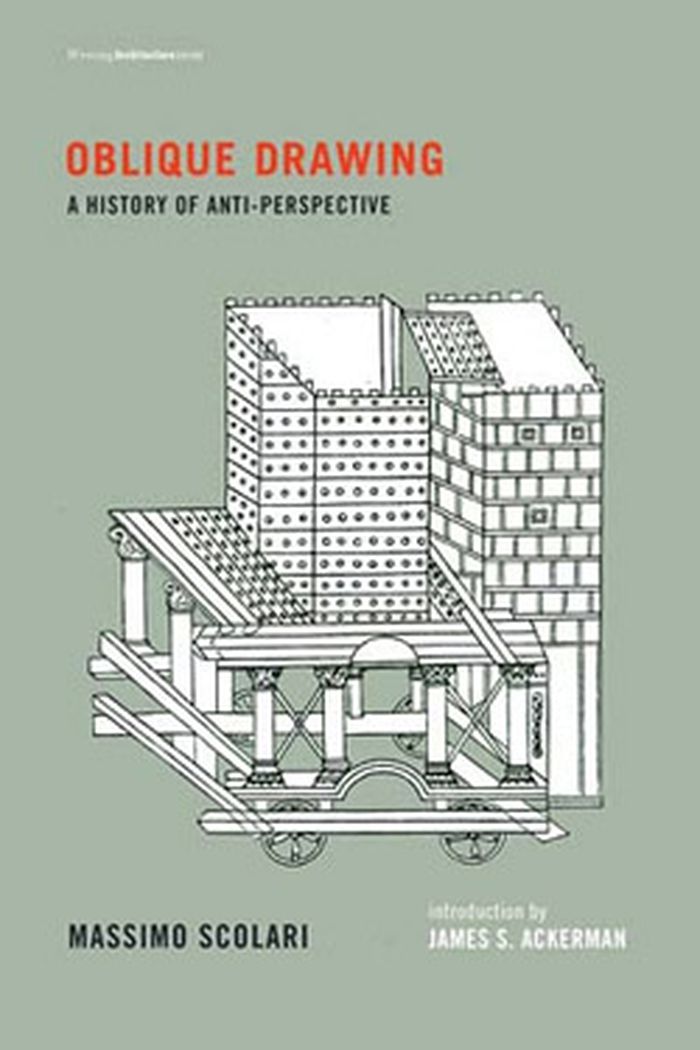
Oblique drawing : a history of anti-perspective
Actions:
Price:
$46.95
(available to order)
Summary:
Scolari's illustrated studies show that illusionistic perspective is not the only, or even the best, representation of objects in history; parallel projection, for example, preserves in scale the actual measurements of objects it represents, avoiding the distortions of one-point perspective. Scolari analyzes the use of nonperspectival representations in pre-Renaissance images of machines and military hardware, architectural models and drawings, and illustrations of geometrical solids. He challenges Panofsky's theory of Pompeiian perspective and explains the difficulties encountered by the Chinese when they viewed Jesuit missionaries' perspectival religious images. Scolari demonstrates the diversity of representational forms devised through the centuries, and shows how each one reveals something that is lacking in the others.
Oblique drawing : a history of anti-perspective
Actions:
Price:
$46.95
(available to order)
Summary:
Scolari's illustrated studies show that illusionistic perspective is not the only, or even the best, representation of objects in history; parallel projection, for example, preserves in scale the actual measurements of objects it represents, avoiding the distortions of one-point perspective. Scolari analyzes the use of nonperspectival representations in pre-Renaissance images of machines and military hardware, architectural models and drawings, and illustrations of geometrical solids. He challenges Panofsky's theory of Pompeiian perspective and explains the difficulties encountered by the Chinese when they viewed Jesuit missionaries' perspectival religious images. Scolari demonstrates the diversity of representational forms devised through the centuries, and shows how each one reveals something that is lacking in the others.
Form:
books
books
Publication:
September 2012
September 2012
Subject:
Architectural Theory
Architectural Theory
Form:
books
books
Actions:
Price:
$27.95
(available to order)
Summary:
This collection surveys the choreographic turn in the artistic imagination from the 1950s onwards, and in doing so outlines the philosophies of movement instrumental to the development of experimental dance. By introducing and discussing the concepts of embodiment and corporeality, choreopolitics, and the notion of dance in an expanded field, Dance establishes the(...)
$27.95
(available to order)
Summary:
This collection surveys the choreographic turn in the artistic imagination from the 1950s onwards, and in doing so outlines the philosophies of movement instrumental to the development of experimental dance. By introducing and discussing the concepts of embodiment and corporeality, choreopolitics, and the notion of dance in an expanded field, Dance establishes the(...)
Title:
Documents of contemporary art : Dance
Actions:
Price:
$27.95
(available to order)
Summary:
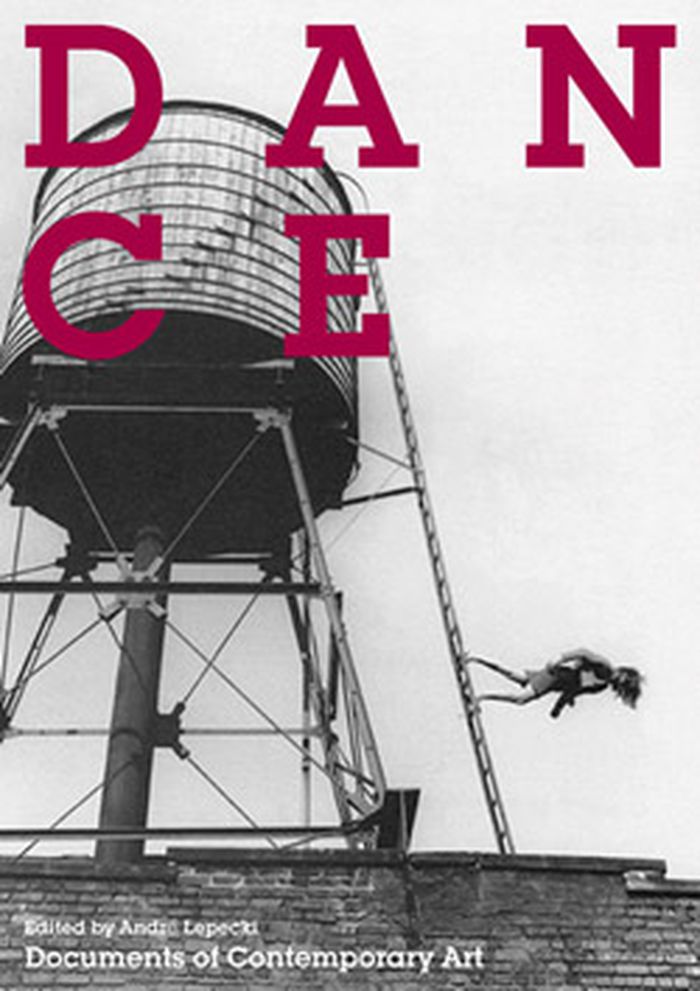
This collection surveys the choreographic turn in the artistic imagination from the 1950s onwards, and in doing so outlines the philosophies of movement instrumental to the development of experimental dance. By introducing and discussing the concepts of embodiment and corporeality, choreopolitics, and the notion of dance in an expanded field, Dance establishes the aesthetics and politics of dance as a major impetus in contemporary culture. It offers testimonies and writings by influential visual artists whose work has taken inspiration from dance and choreography. Dance--because of its ephemerality, corporeality, precariousness, scoring, and performativity--is arguably the art form that most clearly engages the politics of aesthetics in contemporary culture. Dance's ephemerality suggests the possibility of an escape from the regimes of commodification and fetishization in the arts. Its corporeality can embody critiques of representation inscribed in bodies and subjects. Its precariousness underlines the fragility of contemporary states of being. Scoring links it with conceptual art, as language becomes the articulator for possible as well as impossible modes of action. Finally, because dance always establishes a contract, or promise, between its choreographic planning and its actualization in movement, it reveals an essential performativity in its aesthetic project--a central concern for both art and critical thought in our time.
Documents of contemporary art : Dance
Actions:
Price:
$27.95
(available to order)
Summary:
This collection surveys the choreographic turn in the artistic imagination from the 1950s onwards, and in doing so outlines the philosophies of movement instrumental to the development of experimental dance. By introducing and discussing the concepts of embodiment and corporeality, choreopolitics, and the notion of dance in an expanded field, Dance establishes the aesthetics and politics of dance as a major impetus in contemporary culture. It offers testimonies and writings by influential visual artists whose work has taken inspiration from dance and choreography. Dance--because of its ephemerality, corporeality, precariousness, scoring, and performativity--is arguably the art form that most clearly engages the politics of aesthetics in contemporary culture. Dance's ephemerality suggests the possibility of an escape from the regimes of commodification and fetishization in the arts. Its corporeality can embody critiques of representation inscribed in bodies and subjects. Its precariousness underlines the fragility of contemporary states of being. Scoring links it with conceptual art, as language becomes the articulator for possible as well as impossible modes of action. Finally, because dance always establishes a contract, or promise, between its choreographic planning and its actualization in movement, it reveals an essential performativity in its aesthetic project--a central concern for both art and critical thought in our time.
Form:
books
books
Publication:
September 2012
September 2012
Subject:
Art Theory
Art Theory
Form:
books
books
Actions:
Price:
$27.95
(available to order)
Summary:
This anthology investigates the turn in art not only towards archives and histories, the relics of modernities past, but toward the phenomena, in themselves, of "haunting" and the activation of memory. It looks at a wide array of artistic relationships to memory association, repetition and reappearance, as well as forms of "active" forgetting. Its discussions encompass(...)
$27.95
(available to order)
Summary:
This anthology investigates the turn in art not only towards archives and histories, the relics of modernities past, but toward the phenomena, in themselves, of "haunting" and the activation of memory. It looks at a wide array of artistic relationships to memory association, repetition and reappearance, as well as forms of "active" forgetting. Its discussions encompass(...)
Title:
Documents of contemporary art : Memory
Actions:
Price:
$27.95
(available to order)
Summary:
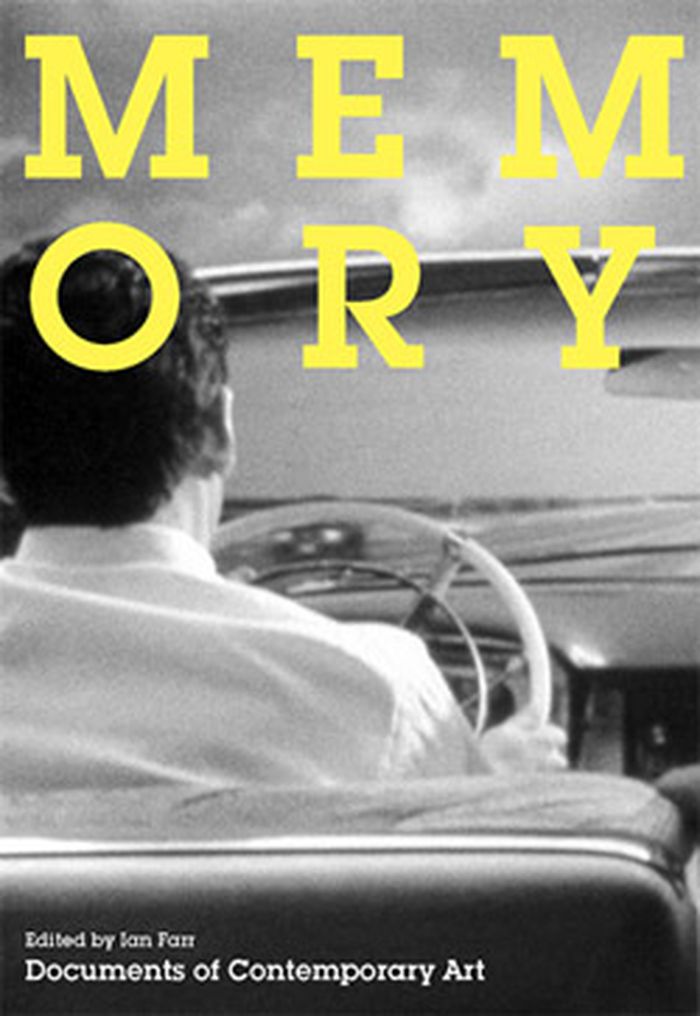
This anthology investigates the turn in art not only towards archives and histories, the relics of modernities past, but toward the phenomena, in themselves, of "haunting" and the activation of memory. It looks at a wide array of artistic relationships to memory association, repetition and reappearance, as well as forms of "active" forgetting. Its discussions encompass artworks from the late 1940s onward, ranging from reperformances such as Marina Abramovi's Seven Easy Pieces (embodied resurrections of decades-removed performance pieces by her contemporaries) to the inanimate trace of "memory" Robert Morris assigns to his free-form felt pieces, which "forget" in their present configurations their previous slides and falls. Contextualizing memory's role in visual theory and aesthetic politics--from Marcel Proust's optics to Bernard Stiegler's analysis of memory's "industrialization"--this collection also surveys the diversity of situations and registers in which contemporary artists explore memory. Art that engages with memory embodied in material and spatial conditions is examined beside works that reflect upon memory's effects through time, and yet others that enlist the agency of remembrance or forgetting to work through aspects of the numerous pasts by which the present is always haunted.
Documents of contemporary art : Memory
Actions:
Price:
$27.95
(available to order)
Summary:
This anthology investigates the turn in art not only towards archives and histories, the relics of modernities past, but toward the phenomena, in themselves, of "haunting" and the activation of memory. It looks at a wide array of artistic relationships to memory association, repetition and reappearance, as well as forms of "active" forgetting. Its discussions encompass artworks from the late 1940s onward, ranging from reperformances such as Marina Abramovi's Seven Easy Pieces (embodied resurrections of decades-removed performance pieces by her contemporaries) to the inanimate trace of "memory" Robert Morris assigns to his free-form felt pieces, which "forget" in their present configurations their previous slides and falls. Contextualizing memory's role in visual theory and aesthetic politics--from Marcel Proust's optics to Bernard Stiegler's analysis of memory's "industrialization"--this collection also surveys the diversity of situations and registers in which contemporary artists explore memory. Art that engages with memory embodied in material and spatial conditions is examined beside works that reflect upon memory's effects through time, and yet others that enlist the agency of remembrance or forgetting to work through aspects of the numerous pasts by which the present is always haunted.
Form:
books
books
Publication:
September 2012
September 2012
Subject:
Art Theory
Art Theory
Form:
books
books
Actions:
Price:
$17.95
(available to order)
Summary:
In the work Kunsthalle Bern 1992, Asher removed the radiators from all the museum's exhibition spaces and reassembled them in its entryway gallery. Metal pipes connected the relocated radiators to their original sockets; these tubular conduits, coursing in linear fashion along the Kunsthalle's walls, kept the steam heat flowing and endowed the installation with(...)
$17.95
(available to order)
Summary:
In the work Kunsthalle Bern 1992, Asher removed the radiators from all the museum's exhibition spaces and reassembled them in its entryway gallery. Metal pipes connected the relocated radiators to their original sockets; these tubular conduits, coursing in linear fashion along the Kunsthalle's walls, kept the steam heat flowing and endowed the installation with(...)
Title:
Michael Asher : Kunsthalle Bern, 1929
Actions:
Price:
$17.95
(available to order)
Summary:
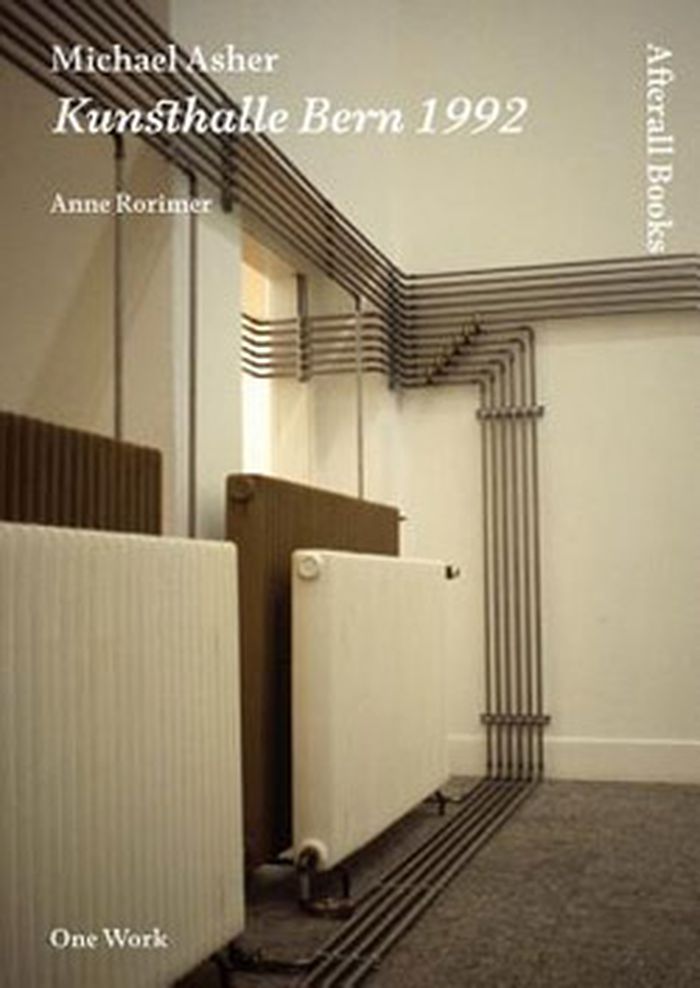
In the work Kunsthalle Bern 1992, Asher removed the radiators from all the museum's exhibition spaces and reassembled them in its entryway gallery. Metal pipes connected the relocated radiators to their original sockets; these tubular conduits, coursing in linear fashion along the Kunsthalle's walls, kept the steam heat flowing and endowed the installation with directional lines of force. This "displacement of givens" offers a perfect example of site-specific practice, one that took the gallery space and the institution itself as its subject. In this detailed examination of Kunsthalle Bern 1992, Anne Rorimer considers the work in the context of Asher's ongoing desire to fuse art with the material, economic, and social conditions of institutional presentation. Rorimer analyzes Kunsthalle Bern 1992 in relation to the earlier innovations of such minimalist artists as Donald Judd, Carl Andre, Robert Morris, Sol LeWitt, Bruce Nauman, and Dan Flavin as well as to such conceptualist contemporaries as Daniel Buren, Dan Graham, and Maria Nordman. She also considers the installation in the context of other works by Asher that have used non-art, functional elements, including walls, or that have investigated museological issues.
Michael Asher : Kunsthalle Bern, 1929
Actions:
Price:
$17.95
(available to order)
Summary:
In the work Kunsthalle Bern 1992, Asher removed the radiators from all the museum's exhibition spaces and reassembled them in its entryway gallery. Metal pipes connected the relocated radiators to their original sockets; these tubular conduits, coursing in linear fashion along the Kunsthalle's walls, kept the steam heat flowing and endowed the installation with directional lines of force. This "displacement of givens" offers a perfect example of site-specific practice, one that took the gallery space and the institution itself as its subject. In this detailed examination of Kunsthalle Bern 1992, Anne Rorimer considers the work in the context of Asher's ongoing desire to fuse art with the material, economic, and social conditions of institutional presentation. Rorimer analyzes Kunsthalle Bern 1992 in relation to the earlier innovations of such minimalist artists as Donald Judd, Carl Andre, Robert Morris, Sol LeWitt, Bruce Nauman, and Dan Flavin as well as to such conceptualist contemporaries as Daniel Buren, Dan Graham, and Maria Nordman. She also considers the installation in the context of other works by Asher that have used non-art, functional elements, including walls, or that have investigated museological issues.
Form:
books
books
Publication:
November 2012
November 2012
Subject:
Art Theory
Art Theory
Form:
books
books
Actions:
Price:
$17.95
(available to order)
Summary:
Almost a half-century after Yayoi Kusama debuted her landmark installation Infinity Mirror Room - Phalli's Field (1965) in New York, the work remains challenging and unclassifiable. Shifting between the Pop-like and the Surreal, the Minimal and the metaphorical, the figurative and the abstract, the psychotic and the erotic, with references to "free love" and psychedelia,(...)
$17.95
(available to order)
Summary:
Almost a half-century after Yayoi Kusama debuted her landmark installation Infinity Mirror Room - Phalli's Field (1965) in New York, the work remains challenging and unclassifiable. Shifting between the Pop-like and the Surreal, the Minimal and the metaphorical, the figurative and the abstract, the psychotic and the erotic, with references to "free love" and psychedelia,(...)
Title:
Yayoi Kusuma : Infinity mirror room - Phalli's Field
Actions:
Price:
$17.95
(available to order)
Summary:
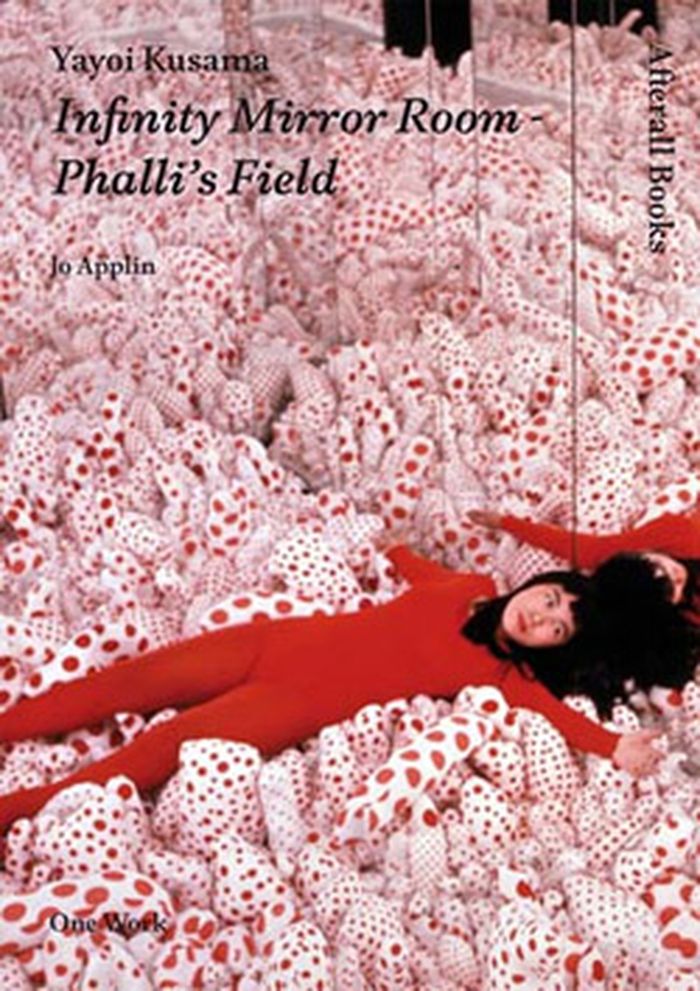
Almost a half-century after Yayoi Kusama debuted her landmark installation Infinity Mirror Room - Phalli's Field (1965) in New York, the work remains challenging and unclassifiable. Shifting between the Pop-like and the Surreal, the Minimal and the metaphorical, the figurative and the abstract, the psychotic and the erotic, with references to "free love" and psychedelia, it seemed to embody all that the 1960s was about, while at the same time denying the prevailing aesthetics of its time. The installation itself was a room lined with mirrored panels and carpeted with several hundred brightly polka-dotted soft fabric protrusions into which the visitor was completely absorbed. Kusama simply called it "a sublime, miraculous field of phalluses." A precursor of performance-based feminist art practice, media pranksterism, and "Occupy" movements, Kusama (born in 1929) was once as well known as her admirers - Andy Warhol, Donald Judd, and Joseph Cornell. In this first monograph on an epoch-defining work, Jo Applin looks at the installation in detail and places it in the context of subsequent art practice and theory as well as Kusama's own (as she called it) "obsessional art." Applin also discusses Kusama's relationship to her contemporaries, particularly those working with environments, abstract-erotic sculpture, and mirrors, and those grappling with such issues as abstraction, eroticism, sexuality, and softness. The work of Lee Lozano, Claes Oldenburg, Louise Bourgeois, and Eva Hesse is seen anew when considered in relation to Yayoi Kusama's.
Yayoi Kusuma : Infinity mirror room - Phalli's Field
Actions:
Price:
$17.95
(available to order)
Summary:
Almost a half-century after Yayoi Kusama debuted her landmark installation Infinity Mirror Room - Phalli's Field (1965) in New York, the work remains challenging and unclassifiable. Shifting between the Pop-like and the Surreal, the Minimal and the metaphorical, the figurative and the abstract, the psychotic and the erotic, with references to "free love" and psychedelia, it seemed to embody all that the 1960s was about, while at the same time denying the prevailing aesthetics of its time. The installation itself was a room lined with mirrored panels and carpeted with several hundred brightly polka-dotted soft fabric protrusions into which the visitor was completely absorbed. Kusama simply called it "a sublime, miraculous field of phalluses." A precursor of performance-based feminist art practice, media pranksterism, and "Occupy" movements, Kusama (born in 1929) was once as well known as her admirers - Andy Warhol, Donald Judd, and Joseph Cornell. In this first monograph on an epoch-defining work, Jo Applin looks at the installation in detail and places it in the context of subsequent art practice and theory as well as Kusama's own (as she called it) "obsessional art." Applin also discusses Kusama's relationship to her contemporaries, particularly those working with environments, abstract-erotic sculpture, and mirrors, and those grappling with such issues as abstraction, eroticism, sexuality, and softness. The work of Lee Lozano, Claes Oldenburg, Louise Bourgeois, and Eva Hesse is seen anew when considered in relation to Yayoi Kusama's.
Form:
books
books
Publication:
November 2012
November 2012
Subject:
Art Theory
Art Theory
Form:
books
books
Actions:
Price:
$31.95
(available to order)
Summary:
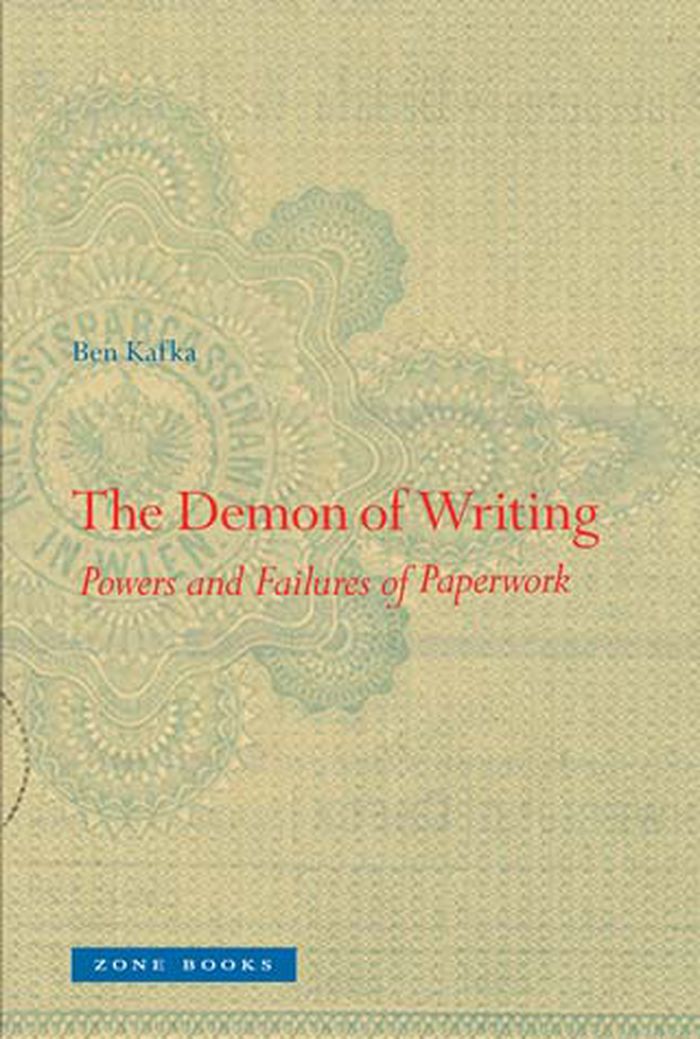
Since the middle of the eighteenth century, political thinkers of all kinds--radical and reactionary, professional and amateur--have been complaining about “bureaucracy.” But what, exactly, are they complaining about? In The Demon of Writing, Ben Kafka offers a critical history and theory of one of the most ubiquitous, least understood forms of media: paperwork.(...)
$31.95
(available to order)
Summary:
Since the middle of the eighteenth century, political thinkers of all kinds--radical and reactionary, professional and amateur--have been complaining about “bureaucracy.” But what, exactly, are they complaining about? In The Demon of Writing, Ben Kafka offers a critical history and theory of one of the most ubiquitous, least understood forms of media: paperwork.(...)
Title:
The demon of writing: powers and failures of paperwork
Actions:
Price:
$31.95
(available to order)
Summary:
Since the middle of the eighteenth century, political thinkers of all kinds--radical and reactionary, professional and amateur--have been complaining about “bureaucracy.” But what, exactly, are they complaining about? In The Demon of Writing, Ben Kafka offers a critical history and theory of one of the most ubiquitous, least understood forms of media: paperwork. States rely on records to tax and spend, protect and serve, discipline and punish. But time and again, this paperwork proves to be unreliable. Examining episodes that range from the story of a clerk who lost his job and then his mind in the French Revolution to an account of Roland Barthes’s brief stint as a university administrator, Kafka reveals the powers, the failures, and even the pleasures of paperwork. Many of its complexities, he argues, have been obscured by the comic-paranoid style that characterizes much of our criticism of bureaucracy. Kafka proposes a new theory of what Karl Marx called the “bureaucratic medium.”
The demon of writing: powers and failures of paperwork
Actions:
Price:
$31.95
(available to order)
Summary:
Since the middle of the eighteenth century, political thinkers of all kinds--radical and reactionary, professional and amateur--have been complaining about “bureaucracy.” But what, exactly, are they complaining about? In The Demon of Writing, Ben Kafka offers a critical history and theory of one of the most ubiquitous, least understood forms of media: paperwork. States rely on records to tax and spend, protect and serve, discipline and punish. But time and again, this paperwork proves to be unreliable. Examining episodes that range from the story of a clerk who lost his job and then his mind in the French Revolution to an account of Roland Barthes’s brief stint as a university administrator, Kafka reveals the powers, the failures, and even the pleasures of paperwork. Many of its complexities, he argues, have been obscured by the comic-paranoid style that characterizes much of our criticism of bureaucracy. Kafka proposes a new theory of what Karl Marx called the “bureaucratic medium.”
Form:
books
books
Publication:
November 2012
November 2012
Subject:
Architectural Theory
Architectural Theory


