


7798 Results
Form:
books
books
Title:
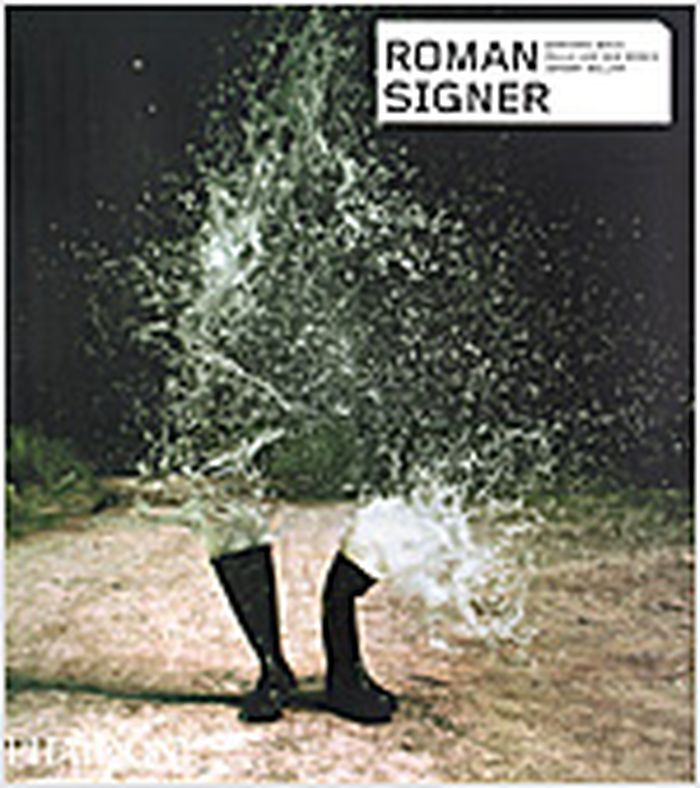
Roman Signer
Roman Signer
Actions:
Price:
$59.95
(available to order)
Summary:
Since the mid 1970s Roman Signer has examined the forces of the elements – air, fire, earth and water – in a combination of performance (documented by photography and video) and sculpture (the physical remains of his acts). With a Dadaist love for the absurd, his artworks include Race (1981), in which the artist races a rocket across a field (hopelessly behind from the(...)
$59.95
(available to order)
Summary:
Since the mid 1970s Roman Signer has examined the forces of the elements – air, fire, earth and water – in a combination of performance (documented by photography and video) and sculpture (the physical remains of his acts). With a Dadaist love for the absurd, his artworks include Race (1981), in which the artist races a rocket across a field (hopelessly behind from the(...)
Subject:
Contemporary Art Monographs
Contemporary Art Monographs
Publication:
June 2006, London
June 2006, London
Title:
Roman Signer
Actions:
Price:
$59.95
(available to order)
Summary:
Since the mid 1970s Roman Signer has examined the forces of the elements – air, fire, earth and water – in a combination of performance (documented by photography and video) and sculpture (the physical remains of his acts). With a Dadaist love for the absurd, his artworks include Race (1981), in which the artist races a rocket across a field (hopelessly behind from the outset, the artist loses by nearly the entire length); Action at Hotel Weissbad (1992), in which an ordinary table is shot out a hotel window, the resulting photographs showing a table flying incongruously over a sleepy Swiss village; Power of Rain (1974), in which rainwater gathers slowly in a funnel until its force shatters a block of plaster; and Bicycle with Rockets (1991), the photographs of which show a fiery bicycle flying through the gallery like a demon comet. Often Signer will exhibit in the gallery the remains of an event not witnessed by the public, such as four empty barrels and a violently splattered wall, the remains of an explosion of paint in the gallery space (Portrait Gallery, 1993), or four sand piles with perfectly round craters on each, the neat result of four simultaneous explosions at their peaks (Cones of Sand, 1988). Roman Signer’s work has been exhibited at major venues across Europe and North America, as well as important international exhibitions such as Documenta 8 (1987), Skulptur Projekte in Munster (1997) and the 48th Venice Biennale (1999), in which he represented Switzerland.
Roman Signer
Actions:
Price:
$59.95
(available to order)
Summary:
Since the mid 1970s Roman Signer has examined the forces of the elements – air, fire, earth and water – in a combination of performance (documented by photography and video) and sculpture (the physical remains of his acts). With a Dadaist love for the absurd, his artworks include Race (1981), in which the artist races a rocket across a field (hopelessly behind from the outset, the artist loses by nearly the entire length); Action at Hotel Weissbad (1992), in which an ordinary table is shot out a hotel window, the resulting photographs showing a table flying incongruously over a sleepy Swiss village; Power of Rain (1974), in which rainwater gathers slowly in a funnel until its force shatters a block of plaster; and Bicycle with Rockets (1991), the photographs of which show a fiery bicycle flying through the gallery like a demon comet. Often Signer will exhibit in the gallery the remains of an event not witnessed by the public, such as four empty barrels and a violently splattered wall, the remains of an explosion of paint in the gallery space (Portrait Gallery, 1993), or four sand piles with perfectly round craters on each, the neat result of four simultaneous explosions at their peaks (Cones of Sand, 1988). Roman Signer’s work has been exhibited at major venues across Europe and North America, as well as important international exhibitions such as Documenta 8 (1987), Skulptur Projekte in Munster (1997) and the 48th Venice Biennale (1999), in which he represented Switzerland.
Form:
books
books
Publication:
June 2006, London
June 2006, London
Subject:
Contemporary Art Monographs
Contemporary Art Monographs
Form:
books
books
Actions:
Price:
$63.95
(available to order)
Summary:
Instructive, amusing, colorful—pictorial maps have been used and admired since the first medieval cartographer put pen to paper depicting mountains and trees across countries, people and objects around margins, and sea monsters in oceans. More recent generations of pictorial map artists have continued that traditional mixture of whimsy and fact, combining cartographic(...)
$63.95
(available to order)
Summary:
Instructive, amusing, colorful—pictorial maps have been used and admired since the first medieval cartographer put pen to paper depicting mountains and trees across countries, people and objects around margins, and sea monsters in oceans. More recent generations of pictorial map artists have continued that traditional mixture of whimsy and fact, combining cartographic(...)
Title:
Picturing America: the golden age of pictorial maps
Actions:
Price:
$63.95
(available to order)
Summary:
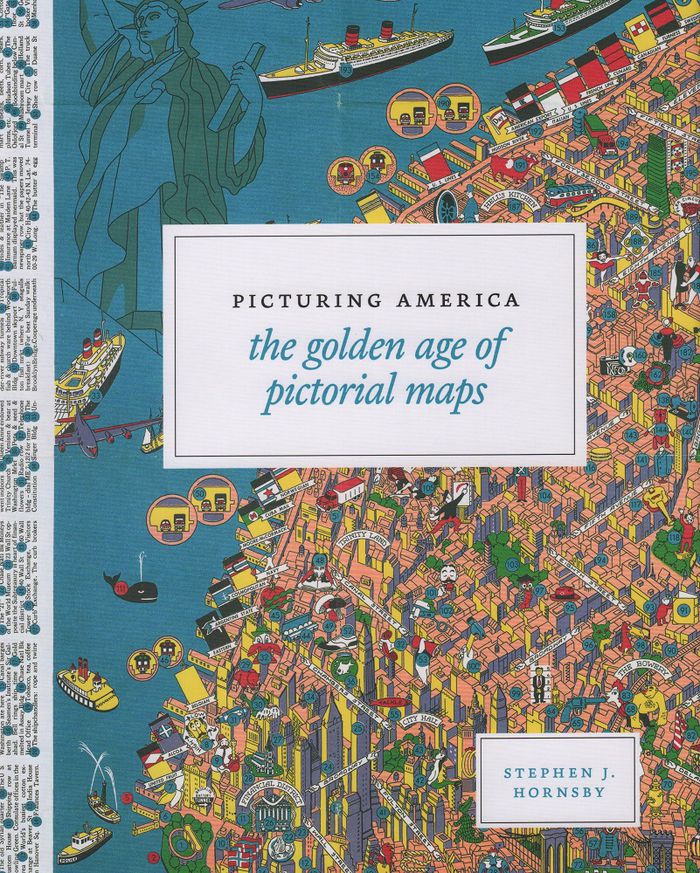
Instructive, amusing, colorful—pictorial maps have been used and admired since the first medieval cartographer put pen to paper depicting mountains and trees across countries, people and objects around margins, and sea monsters in oceans. More recent generations of pictorial map artists have continued that traditional mixture of whimsy and fact, combining cartographic elements with text and images and featuring bold and arresting designs, bright and cheerful colors, and lively detail. In the United States, the art form flourished from the 1920s through the 1970s, when thousands of innovative maps were mass-produced for use as advertisements and decorative objects—the golden age of American pictorial maps. "Picturing America" is the first book to showcase this vivid and popular genre of maps. Geographer Stephen J. Hornsby gathers together 158 delightful pictorial jewels, most drawn from the extensive collections of the Library of Congress. In his informative introduction, Hornsby outlines the development of the cartographic form, identifies several representative artists, describes the process of creating a pictorial map, and considers the significance of the form in the history of Western cartography. Organized into six thematic sections, "Picturing America" covers a vast swath of the pictorial map tradition during its golden age, ranging from “Maps to Amuse” to “Maps for War.” Hornsby has unearthed the most fascinating and visually striking maps the United States has to offer: Disney cartoon maps, college campus maps, kooky state tourism ads, World War II promotional posters, and many more.
Picturing America: the golden age of pictorial maps
Actions:
Price:
$63.95
(available to order)
Summary:
Instructive, amusing, colorful—pictorial maps have been used and admired since the first medieval cartographer put pen to paper depicting mountains and trees across countries, people and objects around margins, and sea monsters in oceans. More recent generations of pictorial map artists have continued that traditional mixture of whimsy and fact, combining cartographic elements with text and images and featuring bold and arresting designs, bright and cheerful colors, and lively detail. In the United States, the art form flourished from the 1920s through the 1970s, when thousands of innovative maps were mass-produced for use as advertisements and decorative objects—the golden age of American pictorial maps. "Picturing America" is the first book to showcase this vivid and popular genre of maps. Geographer Stephen J. Hornsby gathers together 158 delightful pictorial jewels, most drawn from the extensive collections of the Library of Congress. In his informative introduction, Hornsby outlines the development of the cartographic form, identifies several representative artists, describes the process of creating a pictorial map, and considers the significance of the form in the history of Western cartography. Organized into six thematic sections, "Picturing America" covers a vast swath of the pictorial map tradition during its golden age, ranging from “Maps to Amuse” to “Maps for War.” Hornsby has unearthed the most fascinating and visually striking maps the United States has to offer: Disney cartoon maps, college campus maps, kooky state tourism ads, World War II promotional posters, and many more.
Form:
books
books
Publication:
March 2017
March 2017
Subject:
Architectural Plans and Cartography
Architectural Plans and Cartography
Form:
books
books
Actions:
Price:
$68.00
(available to order)
Summary:
British architect Cedric Price (1934–2003) had a lifelong fascination with the mechanization of society and its effect on people’s lives. In the 1960s and ’70s, Price began to look for answers to some of the pressing problems he saw in society in the tenets of architecture and design. His intense intellectual curiosity soon led him to other disciplines, including the(...)
$68.00
(available to order)
Summary:
British architect Cedric Price (1934–2003) had a lifelong fascination with the mechanization of society and its effect on people’s lives. In the 1960s and ’70s, Price began to look for answers to some of the pressing problems he saw in society in the tenets of architecture and design. His intense intellectual curiosity soon led him to other disciplines, including the(...)
Title:
The city and the architecture of change: the work and radical visions of Cedric Price
Actions:
Price:
$68.00
(available to order)
Summary:
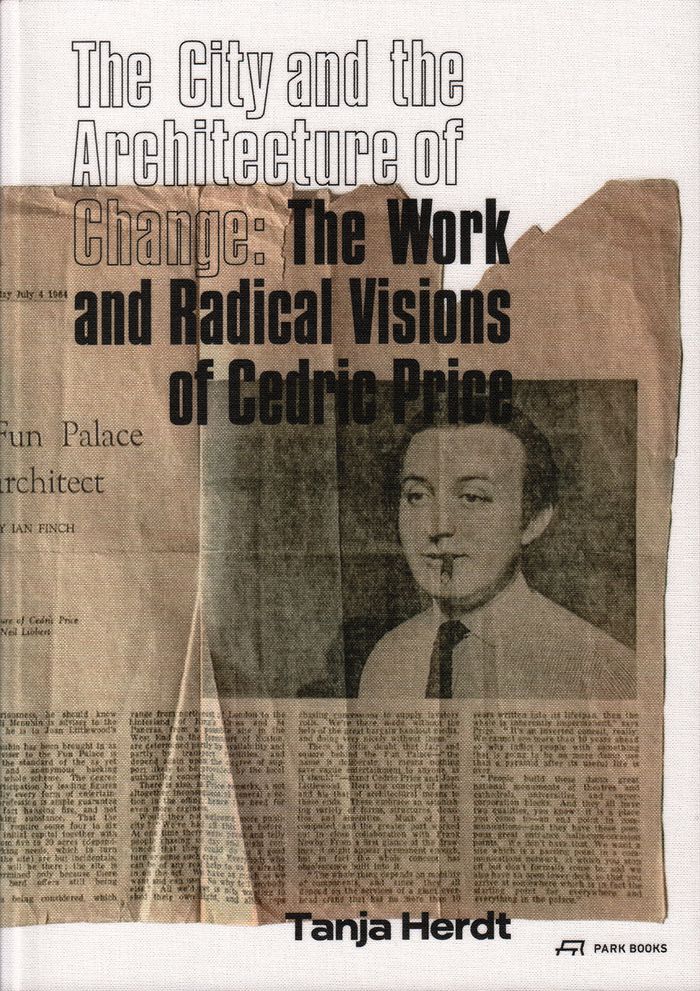
British architect Cedric Price (1934–2003) had a lifelong fascination with the mechanization of society and its effect on people’s lives. In the 1960s and ’70s, Price began to look for answers to some of the pressing problems he saw in society in the tenets of architecture and design. His intense intellectual curiosity soon led him to other disciplines, including the social and natural sciences, while his sense of humor and self-irony—which also extended to his profession—allowed him to keep his ideas in perspective. With "The city and the architecture of change", Tanja Herdt offers a comprehensive look back at the life and work of Price. Based on extensive research, including previously unpublished materials, Herdt provides a thorough account of Price’s key architectural concepts and visions, and then analyzes his perspectives on the city as a system, the influence of products and contemporary culture on architecture, and the role of science and technology in architecture and design. Apart from providing new insights into Price’s well-known and studied projects, such as Fun Palace and Potteries Thinkbelt, Herdt also brings to light many lesser-known works from the 1970s like McAppy and The Generator. She concludes by refuting the common perception of Cedric Price as an “anti-architect.” Richly illustrated with plans and photographs, many of which have never been published before, "The city and the architecture of change" affords a glimpse into the mind of this highly creative and forward-thinking architect.
The city and the architecture of change: the work and radical visions of Cedric Price
Actions:
Price:
$68.00
(available to order)
Summary:
British architect Cedric Price (1934–2003) had a lifelong fascination with the mechanization of society and its effect on people’s lives. In the 1960s and ’70s, Price began to look for answers to some of the pressing problems he saw in society in the tenets of architecture and design. His intense intellectual curiosity soon led him to other disciplines, including the social and natural sciences, while his sense of humor and self-irony—which also extended to his profession—allowed him to keep his ideas in perspective. With "The city and the architecture of change", Tanja Herdt offers a comprehensive look back at the life and work of Price. Based on extensive research, including previously unpublished materials, Herdt provides a thorough account of Price’s key architectural concepts and visions, and then analyzes his perspectives on the city as a system, the influence of products and contemporary culture on architecture, and the role of science and technology in architecture and design. Apart from providing new insights into Price’s well-known and studied projects, such as Fun Palace and Potteries Thinkbelt, Herdt also brings to light many lesser-known works from the 1970s like McAppy and The Generator. She concludes by refuting the common perception of Cedric Price as an “anti-architect.” Richly illustrated with plans and photographs, many of which have never been published before, "The city and the architecture of change" affords a glimpse into the mind of this highly creative and forward-thinking architect.
Form:
books
books
Publication:
October 2017
October 2017
Subject:
Architecture Monographs
Architecture Monographs
Form:
books
books
Title:
When America became suburban
When America became suburban
Actions:
Price:
$23.95
(available to order)
Summary:
In the decades after World War II, the United States became the most prosperous nation in the world and a superpower whose dominance was symbolized by the American suburbs. Spurred by the decline of its industrial cities and by mass suburbanization, people imagined a new national identity—one that emphasized consumerism, social mobility, and a suburban lifestyle. The(...)
$23.95
(available to order)
Summary:
In the decades after World War II, the United States became the most prosperous nation in the world and a superpower whose dominance was symbolized by the American suburbs. Spurred by the decline of its industrial cities and by mass suburbanization, people imagined a new national identity—one that emphasized consumerism, social mobility, and a suburban lifestyle. The(...)
Title:
When America became suburban
Actions:
Price:
$23.95
(available to order)
Summary:
In the decades after World War II, the United States became the most prosperous nation in the world and a superpower whose dominance was symbolized by the American suburbs. Spurred by the decline of its industrial cities and by mass suburbanization, people imagined a new national identity—one that emphasized consumerism, social mobility, and a suburban lifestyle. The urbanity of the city was lost. In "When America became suburban", Robert A. Beauregard examines this historic intersection of urban decline, mass suburbanization, domestic prosperity, and U.S. global aspirations as it unfolded from 1945 to the mid-1970s. Suburban expansion and the subsequent emergence of sprawling Sunbelt cities transformed every aspect of American society. Assessing the global implications of America’s suburban way of life as evidence of the superiority of capitalist democracy, Beauregard traces how the suburban ideology enabled America to distinguish itself from both the Communist bloc and Western Europe, thereby deepening its claim of exceptionalism on the world-historical stage. Placing the decline of America’s industrial cities and the rise of vast suburban housing and retail spaces into a cultural, political, and global context, Beauregard illuminates how these phenomena contributed to a changing notion of America’s identity at home and abroad. "When America became suburban" brings to light the profound implications of de-urbanization: from the siphoning of investments from the cities and the effect on the quality of life for those left behind to a profound shift in national identity.
When America became suburban
Actions:
Price:
$23.95
(available to order)
Summary:
In the decades after World War II, the United States became the most prosperous nation in the world and a superpower whose dominance was symbolized by the American suburbs. Spurred by the decline of its industrial cities and by mass suburbanization, people imagined a new national identity—one that emphasized consumerism, social mobility, and a suburban lifestyle. The urbanity of the city was lost. In "When America became suburban", Robert A. Beauregard examines this historic intersection of urban decline, mass suburbanization, domestic prosperity, and U.S. global aspirations as it unfolded from 1945 to the mid-1970s. Suburban expansion and the subsequent emergence of sprawling Sunbelt cities transformed every aspect of American society. Assessing the global implications of America’s suburban way of life as evidence of the superiority of capitalist democracy, Beauregard traces how the suburban ideology enabled America to distinguish itself from both the Communist bloc and Western Europe, thereby deepening its claim of exceptionalism on the world-historical stage. Placing the decline of America’s industrial cities and the rise of vast suburban housing and retail spaces into a cultural, political, and global context, Beauregard illuminates how these phenomena contributed to a changing notion of America’s identity at home and abroad. "When America became suburban" brings to light the profound implications of de-urbanization: from the siphoning of investments from the cities and the effect on the quality of life for those left behind to a profound shift in national identity.
Form:
books
books
Publication:
September 2006, Minneapolis, London
September 2006, Minneapolis, London
Subject:
Suburbs
Suburbs
Form:
books
books

Actions:
Price:
$56.95
(available to order)
Summary:
In Outlaw Territories, Felicity Scott traces the relation of architecture and urbanism to human unsettlement and territorial insecurity during the 1960s and 1970s. Investigating a set of responses to the growing urban unrest in the developed and developing worlds, Scott revisits an era when the discipline of architecture staked out a role in global environmental(...)
$56.95
(available to order)
Summary:
In Outlaw Territories, Felicity Scott traces the relation of architecture and urbanism to human unsettlement and territorial insecurity during the 1960s and 1970s. Investigating a set of responses to the growing urban unrest in the developed and developing worlds, Scott revisits an era when the discipline of architecture staked out a role in global environmental(...)
Title:
Outlaw Territories: Environments of Insecurity/ Architectures of Counterinsurgency
Actions:
Price:
$56.95
(available to order)
Summary:
In Outlaw Territories, Felicity Scott traces the relation of architecture and urbanism to human unsettlement and territorial insecurity during the 1960s and 1970s. Investigating a set of responses to the growing urban unrest in the developed and developing worlds, Scott revisits an era when the discipline of architecture staked out a role in global environmental governance and the biopolitical management of populations. She describes architecture’s response to the displacement of persons brought on by migration, urbanization, environmental catastrophe, and warfare, and she traces architecture’s relationship to the material, environmental, psychological, and geopolitical transformations brought on by postindustrial technologies and neoliberal capitalism after World War II. At the height of the U.S.-led war in Vietnam and Cambodia, with ongoing decolonization struggles in many parts of the world, architecture not only emerged as a target of political agitation because of its inherent normativity but also became heavily enmeshed with military, legal, and humanitarian apparatuses, participating in scientific and technological research dedicated to questions of international management and security. Once architecture became aligned with a global matrix of forces concerned with the environment, economic development, migration, genocide, and war, its role shifted at times toward providing strategic expertise for institutions born of neoliberal capitalism. Scott investigates this nexus and questions how and to what ends architecture and the environment came to be intimately connected to the expanded exercise of power within the shifting geopolitical frameworks at this time.
Outlaw Territories: Environments of Insecurity/ Architectures of Counterinsurgency
Actions:
Price:
$56.95
(available to order)
Summary:
In Outlaw Territories, Felicity Scott traces the relation of architecture and urbanism to human unsettlement and territorial insecurity during the 1960s and 1970s. Investigating a set of responses to the growing urban unrest in the developed and developing worlds, Scott revisits an era when the discipline of architecture staked out a role in global environmental governance and the biopolitical management of populations. She describes architecture’s response to the displacement of persons brought on by migration, urbanization, environmental catastrophe, and warfare, and she traces architecture’s relationship to the material, environmental, psychological, and geopolitical transformations brought on by postindustrial technologies and neoliberal capitalism after World War II. At the height of the U.S.-led war in Vietnam and Cambodia, with ongoing decolonization struggles in many parts of the world, architecture not only emerged as a target of political agitation because of its inherent normativity but also became heavily enmeshed with military, legal, and humanitarian apparatuses, participating in scientific and technological research dedicated to questions of international management and security. Once architecture became aligned with a global matrix of forces concerned with the environment, economic development, migration, genocide, and war, its role shifted at times toward providing strategic expertise for institutions born of neoliberal capitalism. Scott investigates this nexus and questions how and to what ends architecture and the environment came to be intimately connected to the expanded exercise of power within the shifting geopolitical frameworks at this time.
Form:
books
books
Publication:
February 2016
February 2016
Subject:
Architectural Theory
Architectural Theory
Form:
books
books
Title:
The Hollywood sign
The Hollywood sign
Actions:
Price:
$27.95
(available to order)
Summary:
Hollywood's famous sign, constructed of massive white block letters set into a steep hillside, is an emblem of the movie capital it looms over and an international symbol of glamour and star power. To so many who see its image, the sign represents the earthly home of that otherwise ethereal world of fame, stardom, and celebrity -the goal of American and worldwide(...)
$27.95
(available to order)
Summary:
Hollywood's famous sign, constructed of massive white block letters set into a steep hillside, is an emblem of the movie capital it looms over and an international symbol of glamour and star power. To so many who see its image, the sign represents the earthly home of that otherwise ethereal world of fame, stardom, and celebrity -the goal of American and worldwide(...)
Title:
The Hollywood sign
Actions:
Price:
$27.95
(available to order)
Summary:
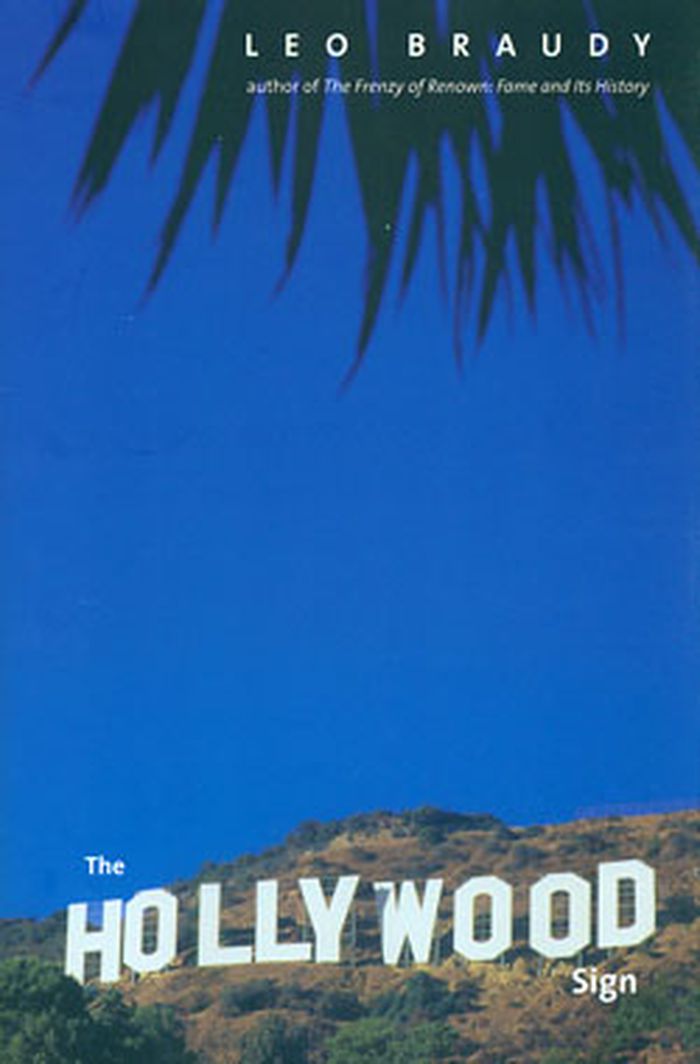
Hollywood's famous sign, constructed of massive white block letters set into a steep hillside, is an emblem of the movie capital it looms over and an international symbol of glamour and star power. To so many who see its image, the sign represents the earthly home of that otherwise ethereal world of fame, stardom, and celebrity -the goal of American and worldwide aspiration to be in the limelight, to be, like the Hollywood sign itself, instantly recognizable. How an advertisement erected in 1923, touting the real estate development Hollywoodland, took on a life of its own is a story worthy of the entertainment world that is its focus. Leo Braudy traces the remarkable history of this distinctly American landmark, which has been saved over the years by a disparate group of fans and supporters, among them Alice Cooper and Hugh Hefner, who spearheaded its reconstruction in the 1970s. He also uses the sign's history to offer an intriguing look at the rise of the movie business from its earliest, silent days through the development of the studio system that helped define modern Hollywood. Mixing social history, urban studies, literature, and film, along with forays into such topics as the lure of Hollywood for utopian communities and the development of domestic architecture in Los Angeles, The Hollywood Sign is a fascinating account of how a temporary structure has become a permanent icon of American culture.
The Hollywood sign
Actions:
Price:
$27.95
(available to order)
Summary:
Hollywood's famous sign, constructed of massive white block letters set into a steep hillside, is an emblem of the movie capital it looms over and an international symbol of glamour and star power. To so many who see its image, the sign represents the earthly home of that otherwise ethereal world of fame, stardom, and celebrity -the goal of American and worldwide aspiration to be in the limelight, to be, like the Hollywood sign itself, instantly recognizable. How an advertisement erected in 1923, touting the real estate development Hollywoodland, took on a life of its own is a story worthy of the entertainment world that is its focus. Leo Braudy traces the remarkable history of this distinctly American landmark, which has been saved over the years by a disparate group of fans and supporters, among them Alice Cooper and Hugh Hefner, who spearheaded its reconstruction in the 1970s. He also uses the sign's history to offer an intriguing look at the rise of the movie business from its earliest, silent days through the development of the studio system that helped define modern Hollywood. Mixing social history, urban studies, literature, and film, along with forays into such topics as the lure of Hollywood for utopian communities and the development of domestic architecture in Los Angeles, The Hollywood Sign is a fascinating account of how a temporary structure has become a permanent icon of American culture.
Form:
books
books
Publication:
March 2011
March 2011
Subject:
Signage
Signage
Form:
books
books
Price:
$39.95
(available to order)
Summary:
Since the 1990s, critics and curators have broadly accepted the notion that participatory art is the ultimate political art: that by encouraging an audience to take part an artist can promote new emancipatory social relations. Around the world, the champions of this form of expression are numerous, ranging from art historians such as Grant Kester, curators such as Nicolas(...)
$39.95
(available to order)
Summary:
Since the 1990s, critics and curators have broadly accepted the notion that participatory art is the ultimate political art: that by encouraging an audience to take part an artist can promote new emancipatory social relations. Around the world, the champions of this form of expression are numerous, ranging from art historians such as Grant Kester, curators such as Nicolas(...)
Title:
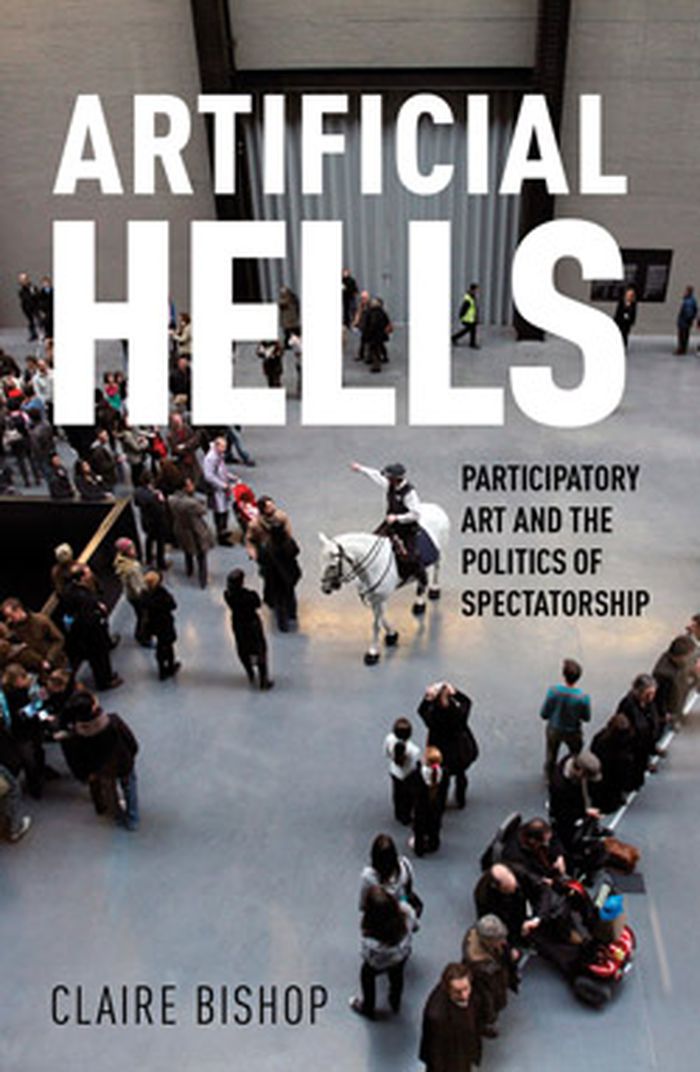
Artificial hells : participatory art and the politics of spectatorship
Actions:
Price:
$39.95
(available to order)
Summary:
Since the 1990s, critics and curators have broadly accepted the notion that participatory art is the ultimate political art: that by encouraging an audience to take part an artist can promote new emancipatory social relations. Around the world, the champions of this form of expression are numerous, ranging from art historians such as Grant Kester, curators such as Nicolas Bourriaud and Nato Thompson, to performance theorists such as Shannon Jackson. Artificial Hells is the first historical and theoretical overview of socially engaged participatory art, known in the US as “social practice.” Claire Bishop follows the trajectory of twentieth-century art and examines key moments in the development of a participatory aesthetic. This itinerary takes in Futurism and Dada; the Situationist International; Happenings in Eastern Europe, Argentina and Paris; the 1970s Community Arts Movement; and the Artists Placement Group. It concludes with a discussion of long-term educational projects by contemporary artists such as Thomas Hirschhorn, Tania Bruguera, Pawe Althamer and Paul Chan. Since her controversial essay in Artforum in 2006, Claire Bishop has been one of the few to challenge the political and aesthetic ambitions of participatory art. In Artificial Hells, she not only scrutinizes the emancipatory claims made for these projects, but also provides an alternative to the ethical (rather than artistic) criteria invited by such artworks. Artificial Hells calls for a less prescriptive approach to art and politics, and for more compelling, troubling and bolder forms of participatory art and criticism.
Artificial hells : participatory art and the politics of spectatorship
Actions:
Price:
$39.95
(available to order)
Summary:
Since the 1990s, critics and curators have broadly accepted the notion that participatory art is the ultimate political art: that by encouraging an audience to take part an artist can promote new emancipatory social relations. Around the world, the champions of this form of expression are numerous, ranging from art historians such as Grant Kester, curators such as Nicolas Bourriaud and Nato Thompson, to performance theorists such as Shannon Jackson. Artificial Hells is the first historical and theoretical overview of socially engaged participatory art, known in the US as “social practice.” Claire Bishop follows the trajectory of twentieth-century art and examines key moments in the development of a participatory aesthetic. This itinerary takes in Futurism and Dada; the Situationist International; Happenings in Eastern Europe, Argentina and Paris; the 1970s Community Arts Movement; and the Artists Placement Group. It concludes with a discussion of long-term educational projects by contemporary artists such as Thomas Hirschhorn, Tania Bruguera, Pawe Althamer and Paul Chan. Since her controversial essay in Artforum in 2006, Claire Bishop has been one of the few to challenge the political and aesthetic ambitions of participatory art. In Artificial Hells, she not only scrutinizes the emancipatory claims made for these projects, but also provides an alternative to the ethical (rather than artistic) criteria invited by such artworks. Artificial Hells calls for a less prescriptive approach to art and politics, and for more compelling, troubling and bolder forms of participatory art and criticism.
Form:
books
books
Publication:
July 2012
July 2012
Form:
books
books
Price:
$75.00
(available to order)
Summary:
The retro-futuristic epoch is one of the most visually spectacular in architecture's history. This book compiles radical ideas and visionary structures. The notion of utopia proves as diverse as it does universal. From exuberant master plans to singular architectural expressions, the rise of the utopian architectural movement in the 1960s and 1970s represents a critical(...)
$75.00
(available to order)
Summary:
The retro-futuristic epoch is one of the most visually spectacular in architecture's history. This book compiles radical ideas and visionary structures. The notion of utopia proves as diverse as it does universal. From exuberant master plans to singular architectural expressions, the rise of the utopian architectural movement in the 1960s and 1970s represents a critical(...)
Title:
The tale of tomorrow: utopian architecture in the modernist realm
Actions:
Price:
$75.00
(available to order)
Summary:
The retro-futuristic epoch is one of the most visually spectacular in architecture's history. This book compiles radical ideas and visionary structures. The notion of utopia proves as diverse as it does universal. From exuberant master plans to singular architectural expressions, the rise of the utopian architectural movement in the 1960s and 1970s represents a critical shift in ideology away from mid-century traditionalism. This period shakes off the conformity and conventions of the 1950s in favor of a more experimental post-war agenda. Marked by groundbreaking reinterpretations of both the single family house as well as more large scale developments, the embrace of utopian and generally progressive thinking mirrored the cultural revolution of the times. These daring, charming, futuristic, and hopeful designs were not isolated to a particular part of the world. Visionary voices longing for a fresh approach to architecture began appearing across France, Japan, the United States, and beyond. The Tale of Tomorrow documents this prolific era in architecture--a time when anything felt possible as architects began to think further and further outside the box. 'The Tale of Tomorrow' focuses exclusively on built manifestations of utopian ideas. Highlighting well-known projects as well as the more obscure, the collection of utopian approaches compiled here maintain their visual power and infectious optimism nearly half a century later. These experimental structures, both large and small, appear in everyday places in stark contrast to their far-from-utopian contexts.
The tale of tomorrow: utopian architecture in the modernist realm
Actions:
Price:
$75.00
(available to order)
Summary:
The retro-futuristic epoch is one of the most visually spectacular in architecture's history. This book compiles radical ideas and visionary structures. The notion of utopia proves as diverse as it does universal. From exuberant master plans to singular architectural expressions, the rise of the utopian architectural movement in the 1960s and 1970s represents a critical shift in ideology away from mid-century traditionalism. This period shakes off the conformity and conventions of the 1950s in favor of a more experimental post-war agenda. Marked by groundbreaking reinterpretations of both the single family house as well as more large scale developments, the embrace of utopian and generally progressive thinking mirrored the cultural revolution of the times. These daring, charming, futuristic, and hopeful designs were not isolated to a particular part of the world. Visionary voices longing for a fresh approach to architecture began appearing across France, Japan, the United States, and beyond. The Tale of Tomorrow documents this prolific era in architecture--a time when anything felt possible as architects began to think further and further outside the box. 'The Tale of Tomorrow' focuses exclusively on built manifestations of utopian ideas. Highlighting well-known projects as well as the more obscure, the collection of utopian approaches compiled here maintain their visual power and infectious optimism nearly half a century later. These experimental structures, both large and small, appear in everyday places in stark contrast to their far-from-utopian contexts.
Form:
books
books
Publication:
April 2015
April 2015
Subject:
Experimentale architecture
Experimentale architecture
Form:
journals and magazines
journals and magazines
Actions:
Holdings:
Description:
volumes : color illustrations ; 30 cm
Description:
volumes : color illustrations ; 30 cm
Author:
Subject:
Publication:
Prades-Codalet, France : Association culturelle de Cuxa
Prades-Codalet, France : Association culturelle de Cuxa
Title:
Les Cahiers de Saint-Michel de Cuxa.
Actions:
Holdings:
Description:
volumes : color illustrations ; 30 cm
Les Cahiers de Saint-Michel de Cuxa.
Actions:
Holdings:
Description:
volumes : color illustrations ; 30 cm
Form:
journals and magazines
journals and magazines
Publication:
Prades-Codalet, France : Association culturelle de Cuxa
Prades-Codalet, France : Association culturelle de Cuxa
Author:
Subject:
Form:
books
books
Actions:
Subject:
Publication:
Talker eeeeee.pub 2026
Talker eeeeee.pub 2026
Form:
books
books
Publication:
Talker eeeeee.pub 2026
Talker eeeeee.pub 2026
Subject:


