


7452 Results
Form:
books
books

Actions:
Price:
$46.99
(available to order)
Summary:
Between 1936 and 1941 Walker Evans and James Agee collaborated on one of the most provocative books in American literature, "Let Us Now Praise Famous Men" (1941). While at work on this book, the two also conceived another less well-known but equally important book project entitled "Many Are Called". This three-year photographic study of subway passengers made with a(...)
$46.99
(available to order)
Summary:
Between 1936 and 1941 Walker Evans and James Agee collaborated on one of the most provocative books in American literature, "Let Us Now Praise Famous Men" (1941). While at work on this book, the two also conceived another less well-known but equally important book project entitled "Many Are Called". This three-year photographic study of subway passengers made with a(...)
Title:
Many are called : Walker Evans
Actions:
Price:
$46.99
(available to order)
Summary:
Between 1936 and 1941 Walker Evans and James Agee collaborated on one of the most provocative books in American literature, "Let Us Now Praise Famous Men" (1941). While at work on this book, the two also conceived another less well-known but equally important book project entitled "Many Are Called". This three-year photographic study of subway passengers made with a hidden camera was first published in 1966, with an introduction written by Agee in 1940. Long out of print, "Many Are Called" is now being reissued with a new foreword and afterword and with exquisitely reproduced images from newly prepared digital scans. "Many Are Called" came to fruition at a slow pace. In 1938, Walker Evans began surreptitiously photographing people on the New York City subway. With his camera hidden in his coat--the lens peeking through a buttonhole--he captured the faces of riders hurtling through the dark tunnels, wrapped in their own private thoughts. By 1940-41, Evans had made over six hundred photographs and had begun to edit the series. The book remained unpublished until 1966 when The Museum of Modern Art mounted an exhibition of Evans’s subway portraits. This beautiful new edition--published in the centenary year of the NYC subway--is an essential book for all admirers of Evans’s unparalleled photographs, Agee’s elegant prose, and the great City of New York. Designed by Katy Homans with an introduction by Luc Santé.
Many are called : Walker Evans
Actions:
Price:
$46.99
(available to order)
Summary:
Between 1936 and 1941 Walker Evans and James Agee collaborated on one of the most provocative books in American literature, "Let Us Now Praise Famous Men" (1941). While at work on this book, the two also conceived another less well-known but equally important book project entitled "Many Are Called". This three-year photographic study of subway passengers made with a hidden camera was first published in 1966, with an introduction written by Agee in 1940. Long out of print, "Many Are Called" is now being reissued with a new foreword and afterword and with exquisitely reproduced images from newly prepared digital scans. "Many Are Called" came to fruition at a slow pace. In 1938, Walker Evans began surreptitiously photographing people on the New York City subway. With his camera hidden in his coat--the lens peeking through a buttonhole--he captured the faces of riders hurtling through the dark tunnels, wrapped in their own private thoughts. By 1940-41, Evans had made over six hundred photographs and had begun to edit the series. The book remained unpublished until 1966 when The Museum of Modern Art mounted an exhibition of Evans’s subway portraits. This beautiful new edition--published in the centenary year of the NYC subway--is an essential book for all admirers of Evans’s unparalleled photographs, Agee’s elegant prose, and the great City of New York. Designed by Katy Homans with an introduction by Luc Santé.
Form:
books
books
Publication:
January 1900, New Haven, London
January 1900, New Haven, London
Subject:
Photography monographs
Photography monographs
Form:
journals and magazines
journals and magazines
Title:
ARCH+ : Release architecture
ARCH+ : Release architecture
Actions:
Price:
$39.95
(available in store)
Summary:
An architecture biennale can be more than a place to simply represent and celebrate the status quo in architectural production. Exhibitions are increasingly becoming a place for researching and producing an experimental and critical architectural practice: a place not for the presentation of finished products, but for the production of content. This calls into question(...)
$39.95
(available in store)
Summary:
An architecture biennale can be more than a place to simply represent and celebrate the status quo in architectural production. Exhibitions are increasingly becoming a place for researching and producing an experimental and critical architectural practice: a place not for the presentation of finished products, but for the production of content. This calls into question(...)
Title:
ARCH+ : Release architecture
Actions:
Price:
$39.95
(available in store)
Summary:
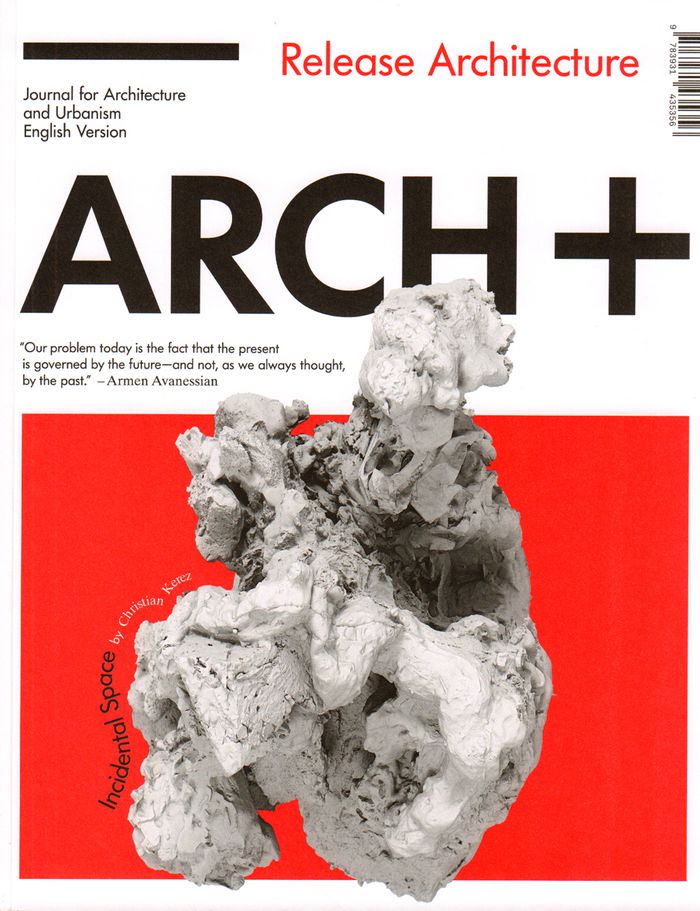
An architecture biennale can be more than a place to simply represent and celebrate the status quo in architectural production. Exhibitions are increasingly becoming a place for researching and producing an experimental and critical architectural practice: a place not for the presentation of finished products, but for the production of content. This calls into question the supposed boundary between architecture and exhibition. Inquiry becomes a form of display. Christian Kerez’s Incidental Space, exhibited in the Swiss Pavilion at the 2016 Architecture Biennale in Venice, attempts to inquire into the outer limits of what can be achieved in architecture today—in terms of both technical feasibility and the limits of our own imagination. How can you use the medium of architecture to contemplate an architectural space that is entirely abstract and as complex as possible? How could this kind of imaginary space even be visualized, and how could it be produced? Conceived in close collaboration with Sandra Oehy, the curator of the Swiss Pavilion, and Christian Kerez, the Swiss Pavilion architect, this issue of ARCH+ delves into the questions posed by Kerez’s “speculative space.” Contributors like Philip Ursprung, Mario Carpo, Armen Avanessian, and Timothy Morton consider how the object stands in relation to the subject in a world where the capacity for technological and digital reproduction increasingly renders the distinction between depiction and reality moot. Where is the space for architectural autonomy in this? How can we “Release Architecture”? A report from architecture’s speculative front.
ARCH+ : Release architecture
Actions:
Price:
$39.95
(available in store)
Summary:
An architecture biennale can be more than a place to simply represent and celebrate the status quo in architectural production. Exhibitions are increasingly becoming a place for researching and producing an experimental and critical architectural practice: a place not for the presentation of finished products, but for the production of content. This calls into question the supposed boundary between architecture and exhibition. Inquiry becomes a form of display. Christian Kerez’s Incidental Space, exhibited in the Swiss Pavilion at the 2016 Architecture Biennale in Venice, attempts to inquire into the outer limits of what can be achieved in architecture today—in terms of both technical feasibility and the limits of our own imagination. How can you use the medium of architecture to contemplate an architectural space that is entirely abstract and as complex as possible? How could this kind of imaginary space even be visualized, and how could it be produced? Conceived in close collaboration with Sandra Oehy, the curator of the Swiss Pavilion, and Christian Kerez, the Swiss Pavilion architect, this issue of ARCH+ delves into the questions posed by Kerez’s “speculative space.” Contributors like Philip Ursprung, Mario Carpo, Armen Avanessian, and Timothy Morton consider how the object stands in relation to the subject in a world where the capacity for technological and digital reproduction increasingly renders the distinction between depiction and reality moot. Where is the space for architectural autonomy in this? How can we “Release Architecture”? A report from architecture’s speculative front.
Form:
journals and magazines
journals and magazines
Publication:
May 2016
May 2016
Subject:
Magazines
Magazines
Form:
books
books
Actions:
Price:
$58.00
(available in store)
Summary:
From the 1960s onward, Allan Chasanoff (1936–2020) maintained a daily photographic practice, producing tens of thousands of images that pushed the limits of the medium and questioned its reliability as a document of reality. Preferring to experiment away from the art world, Chasanoff rarely exhibited his photographs, his art remaining unknown to all but a select circle of(...)
$58.00
(available in store)
Summary:
From the 1960s onward, Allan Chasanoff (1936–2020) maintained a daily photographic practice, producing tens of thousands of images that pushed the limits of the medium and questioned its reliability as a document of reality. Preferring to experiment away from the art world, Chasanoff rarely exhibited his photographs, his art remaining unknown to all but a select circle of(...)
Title:
Seeing and not believing: The photography of Allan Chasanoff
Actions:
Price:
$58.00
(available in store)
Summary:
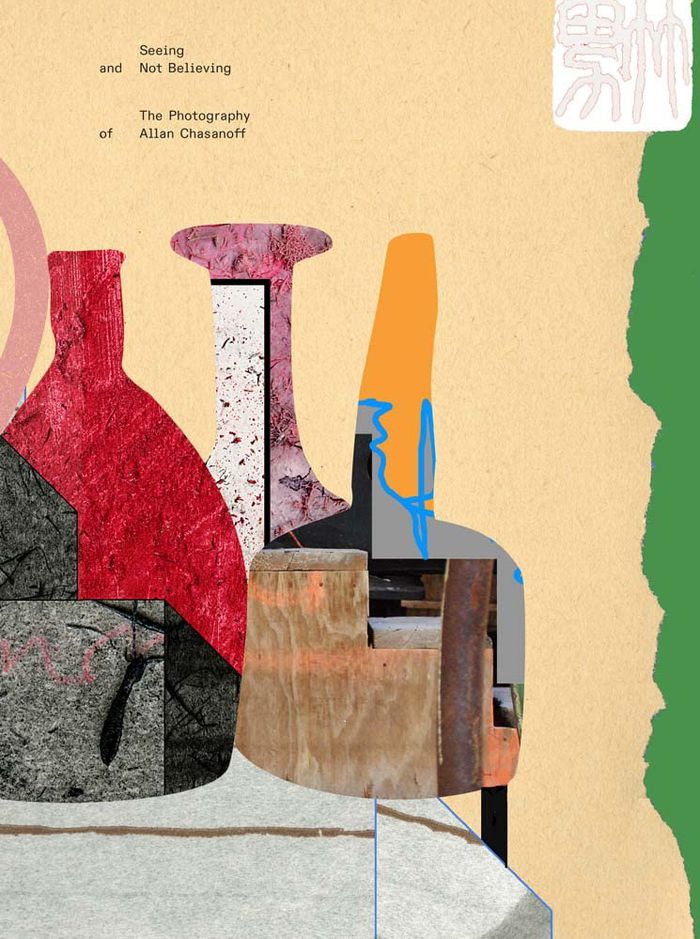
From the 1960s onward, Allan Chasanoff (1936–2020) maintained a daily photographic practice, producing tens of thousands of images that pushed the limits of the medium and questioned its reliability as a document of reality. Preferring to experiment away from the art world, Chasanoff rarely exhibited his photographs, his art remaining unknown to all but a select circle of friends and collaborators. This catalogue is the first to survey his beguiling work. Artist Mónika Sziládi, who worked as an archivist for Chasanoff, contributes an outline of Chasanoff’s life and practice, tracing the development of his art from his early experiments with light, shadow, and color in his lens-shot photographs to his late-career foray into 3D printing, which he viewed as the latest frontier of photography. Influenced by the ideas of Marshall McLuhan and Jacques Derrida, Chasanoff understood photographic images to be full of multivalent symbolism, and his art highlights the fluid nature of the medium. Using analog optical effects, such as blurring and other distortions, and on-screen tools to cut and layer digital images, Chasanoff created a wide range of pictures, some of which reference or appropriate the work of artists like Henri Matisse, Mark Rothko, or Giorgio Morandi. With nearly 200 plates organized into 7 thematic sections, ''Seeing and not believing'' brings Chasanoff’s contribution to postmodern photography to a wider audience and underlines how the artist’s work challenges our assumptions about believing what we see.
Seeing and not believing: The photography of Allan Chasanoff
Actions:
Price:
$58.00
(available in store)
Summary:
From the 1960s onward, Allan Chasanoff (1936–2020) maintained a daily photographic practice, producing tens of thousands of images that pushed the limits of the medium and questioned its reliability as a document of reality. Preferring to experiment away from the art world, Chasanoff rarely exhibited his photographs, his art remaining unknown to all but a select circle of friends and collaborators. This catalogue is the first to survey his beguiling work. Artist Mónika Sziládi, who worked as an archivist for Chasanoff, contributes an outline of Chasanoff’s life and practice, tracing the development of his art from his early experiments with light, shadow, and color in his lens-shot photographs to his late-career foray into 3D printing, which he viewed as the latest frontier of photography. Influenced by the ideas of Marshall McLuhan and Jacques Derrida, Chasanoff understood photographic images to be full of multivalent symbolism, and his art highlights the fluid nature of the medium. Using analog optical effects, such as blurring and other distortions, and on-screen tools to cut and layer digital images, Chasanoff created a wide range of pictures, some of which reference or appropriate the work of artists like Henri Matisse, Mark Rothko, or Giorgio Morandi. With nearly 200 plates organized into 7 thematic sections, ''Seeing and not believing'' brings Chasanoff’s contribution to postmodern photography to a wider audience and underlines how the artist’s work challenges our assumptions about believing what we see.
Form:
books
books
Publication:
September 2023
September 2023
Subject:
Photography monographs
Photography monographs
Form:
books
books
Actions:
Price:
$39.95
(available to order)
Summary:
In this contribution to contemporary media studies, acclaimed theorist Francesco Casetti advances a provocative hypothesis: instead of being prostheses that expand or extend our perceptions, modern screen-based media are in fact apparatuses that shelter and protect us from exposure to the world. Rather than bringing us closer to external reality, dominant forms of visual(...)
$39.95
(available to order)
Summary:
In this contribution to contemporary media studies, acclaimed theorist Francesco Casetti advances a provocative hypothesis: instead of being prostheses that expand or extend our perceptions, modern screen-based media are in fact apparatuses that shelter and protect us from exposure to the world. Rather than bringing us closer to external reality, dominant forms of visual(...)
Title:
Screening fears: On protective media
Actions:
Price:
$39.95
(available to order)
Summary:
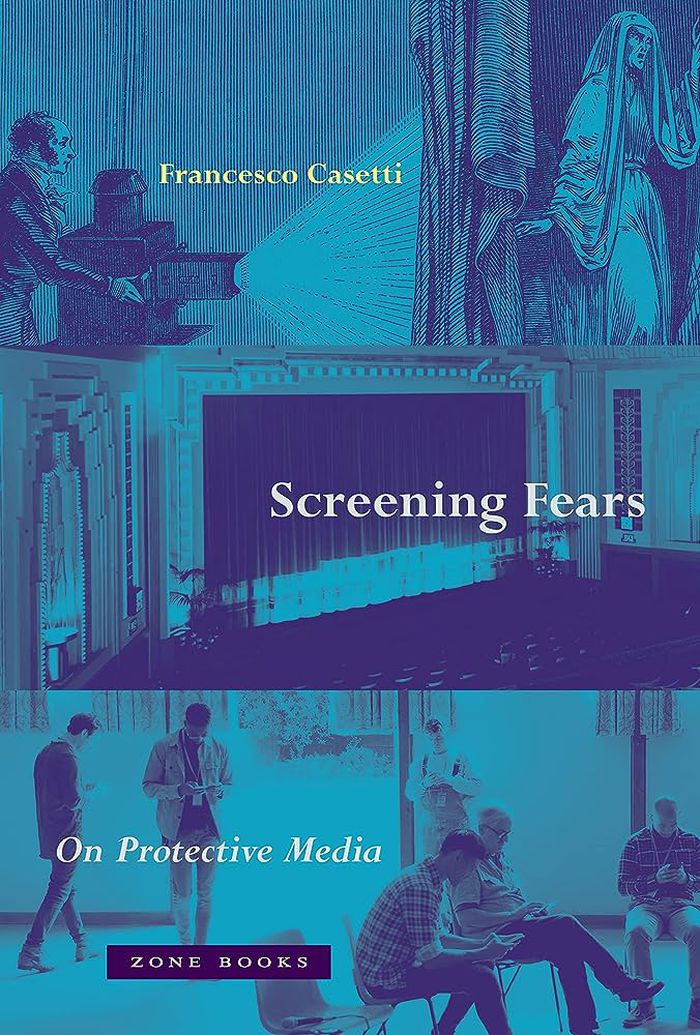
In this contribution to contemporary media studies, acclaimed theorist Francesco Casetti advances a provocative hypothesis: instead of being prostheses that expand or extend our perceptions, modern screen-based media are in fact apparatuses that shelter and protect us from exposure to the world. Rather than bringing us closer to external reality, dominant forms of visual media function as barriers or enclosures that defend against the apparent threats and dangers that seem increasingly to surround us. Working with an original historical overview that begins with the Phantasmagoria of the late eighteenth century, then the shared interior spaces of the movie theater in the early to mid-twentieth century, and finally the solitary digital milieus of the present, Casetti traces the outlines of the protective 'bubbles' that disconnect us from our immediate surroundings. To be provided with a shield of immunity to the hazards and uncertainties of the world while experiencing them at a safe remove might seem a positive development. But, he asks, what if these media, instead of providing invulnerability, ensnare individuals in a suffocating enclosure? What if, in their effort to keep reality under control, they exercise a violence equal to that of the dangers they resist? In a dialectical exercise, and through a vivid range of cultural artifacts, ''Screening fears'' traces the emergence of modern protective media and the way they changed our forms of mediation with the world in which we live.
Screening fears: On protective media
Actions:
Price:
$39.95
(available to order)
Summary:
In this contribution to contemporary media studies, acclaimed theorist Francesco Casetti advances a provocative hypothesis: instead of being prostheses that expand or extend our perceptions, modern screen-based media are in fact apparatuses that shelter and protect us from exposure to the world. Rather than bringing us closer to external reality, dominant forms of visual media function as barriers or enclosures that defend against the apparent threats and dangers that seem increasingly to surround us. Working with an original historical overview that begins with the Phantasmagoria of the late eighteenth century, then the shared interior spaces of the movie theater in the early to mid-twentieth century, and finally the solitary digital milieus of the present, Casetti traces the outlines of the protective 'bubbles' that disconnect us from our immediate surroundings. To be provided with a shield of immunity to the hazards and uncertainties of the world while experiencing them at a safe remove might seem a positive development. But, he asks, what if these media, instead of providing invulnerability, ensnare individuals in a suffocating enclosure? What if, in their effort to keep reality under control, they exercise a violence equal to that of the dangers they resist? In a dialectical exercise, and through a vivid range of cultural artifacts, ''Screening fears'' traces the emergence of modern protective media and the way they changed our forms of mediation with the world in which we live.
Form:
books
books
Publication:
August 2023
August 2023
Subject:
Critical Theory
Critical Theory
Form:
books
books
Title:
Manifestos
Manifestos
Actions:
Price:
$39.95
(available to order)
Summary:
"Manifestos" brings together for the first time in English the manifestos written by Édouard Glissant and Patrick Chamoiseau between 2000 and 2009. Composed in part in the aftermath of Barack Obama’s election in 2008, the texts resonate with the current context of divided identities and criticisms of multiculturalism. The individual texts grapple with concrete historical(...)
$39.95
(available to order)
Summary:
"Manifestos" brings together for the first time in English the manifestos written by Édouard Glissant and Patrick Chamoiseau between 2000 and 2009. Composed in part in the aftermath of Barack Obama’s election in 2008, the texts resonate with the current context of divided identities and criticisms of multiculturalism. The individual texts grapple with concrete historical(...)
Subject:
Environment and environmental theory
Environment and environmental theory
Publication:
September 2022
September 2022
Title:
Manifestos
Actions:
Price:
$39.95
(available to order)
Summary:
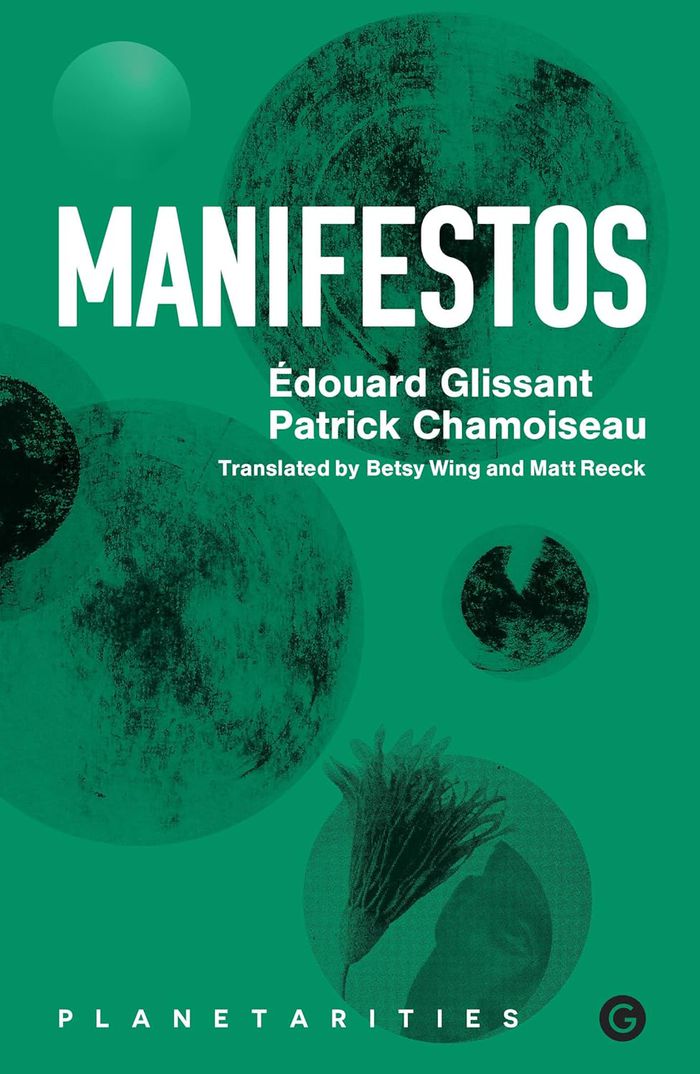
"Manifestos" brings together for the first time in English the manifestos written by Édouard Glissant and Patrick Chamoiseau between 2000 and 2009. Composed in part in the aftermath of Barack Obama’s election in 2008, the texts resonate with the current context of divided identities and criticisms of multiculturalism. The individual texts grapple with concrete historical and political moments in France, the Caribbean, and North America. Across the manifestos, as well as two collectively signed op-eds, the authors engage with socio-political aspects of climate catastrophe, resource extraction, toxicity, and neocolonialism. Throughout the collection, Glissant and Chamoiseau engage with key themes articulated through their poetic vocabulary, including Relation, globalization, globality (mondialité), anti-universalism, métissage, the tout-monde ("whole-world") and the tout-vivant ("all-living," including the relationship of humans to each other and "nature"), créolité and the creolization of the world, and the liberation from community assignations in response to individualism and neoliberal societies. Translated as the first volume in the Planetarities series with Goldsmiths Press, the themes of "Manifestos" resonate with the planetary as they work in response to contemporary forms of (economic) globalization, western capitalism, identity politics, and urban, digital and cosmic ecosystems, as well as the role of the poet-writer. A distinguishing feature of this publication is its interventional aspect, which prioritizes engaged scholarship and practice while demonstrating the relevance of the poetic in response to the urgencies of planetary crisis.
Manifestos
Actions:
Price:
$39.95
(available to order)
Summary:
"Manifestos" brings together for the first time in English the manifestos written by Édouard Glissant and Patrick Chamoiseau between 2000 and 2009. Composed in part in the aftermath of Barack Obama’s election in 2008, the texts resonate with the current context of divided identities and criticisms of multiculturalism. The individual texts grapple with concrete historical and political moments in France, the Caribbean, and North America. Across the manifestos, as well as two collectively signed op-eds, the authors engage with socio-political aspects of climate catastrophe, resource extraction, toxicity, and neocolonialism. Throughout the collection, Glissant and Chamoiseau engage with key themes articulated through their poetic vocabulary, including Relation, globalization, globality (mondialité), anti-universalism, métissage, the tout-monde ("whole-world") and the tout-vivant ("all-living," including the relationship of humans to each other and "nature"), créolité and the creolization of the world, and the liberation from community assignations in response to individualism and neoliberal societies. Translated as the first volume in the Planetarities series with Goldsmiths Press, the themes of "Manifestos" resonate with the planetary as they work in response to contemporary forms of (economic) globalization, western capitalism, identity politics, and urban, digital and cosmic ecosystems, as well as the role of the poet-writer. A distinguishing feature of this publication is its interventional aspect, which prioritizes engaged scholarship and practice while demonstrating the relevance of the poetic in response to the urgencies of planetary crisis.
Form:
books
books
Publication:
September 2022
September 2022
Subject:
Environment and environmental theory
Environment and environmental theory
Form:
books
books
Actions:
Price:
$77.00
(available to order)
Summary:
The occupation of space is a trend that can currently be recognized in many creative fields. While furniture and product design were once largely driven by classical industrial and interior design, these disciplines are now also being shaped by the visual culture of graphic design and high-tech production processes. These new influences are contributing to the creation of(...)
$77.00
(available to order)
Summary:
The occupation of space is a trend that can currently be recognized in many creative fields. While furniture and product design were once largely driven by classical industrial and interior design, these disciplines are now also being shaped by the visual culture of graphic design and high-tech production processes. These new influences are contributing to the creation of(...)
Title:
Furnish: Furniture and interior design for the 21st century
Actions:
Price:
$77.00
(available to order)
Summary:
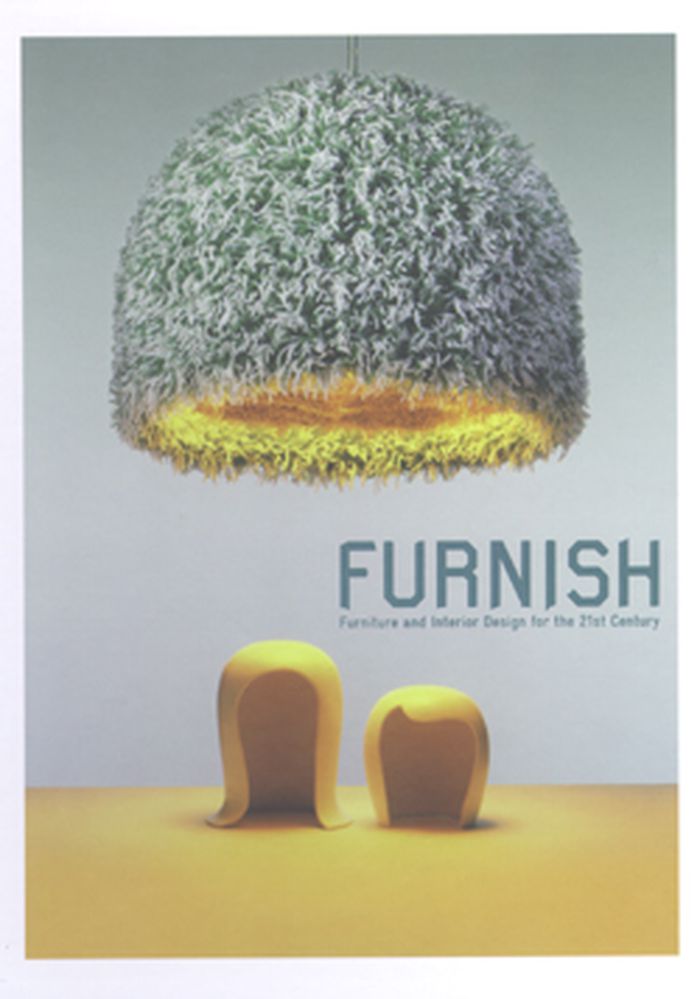
The occupation of space is a trend that can currently be recognized in many creative fields. While furniture and product design were once largely driven by classical industrial and interior design, these disciplines are now also being shaped by the visual culture of graphic design and high-tech production processes. These new influences are contributing to the creation of furniture and interiors that go beyond anything previously designed or imagined. Furnish presents domestic territories that expand upon our current understanding of interior design. The book documents recent work by designers, artists and architects that shows how they are using furniture in pioneering ways: as environment, as art object, as digital-organic growth, as mutation or as insertion. These cutting-edge examples are a sure indicator of the trends that will be influencing interiors as well as hotel, restaurant and club design for the next several years. Furnish also explores the new hybrid nature of occupied spaces, where the domestic enters the realm of fine art and where objects from pimped heirlooms to rapid prototypes find their homes. The book also presents surprising interdisciplinary work, for example, the results of architects engineering tables, graphic designers creating soft furniture and industrial designers making concept art. The experimental spaces that are shown in Furnish are not only interesting for interior designers, but also contain innovative examples of interdisciplinary design work that are relevant and inspiring for anyone working creatively.
Furnish: Furniture and interior design for the 21st century
Actions:
Price:
$77.00
(available to order)
Summary:
The occupation of space is a trend that can currently be recognized in many creative fields. While furniture and product design were once largely driven by classical industrial and interior design, these disciplines are now also being shaped by the visual culture of graphic design and high-tech production processes. These new influences are contributing to the creation of furniture and interiors that go beyond anything previously designed or imagined. Furnish presents domestic territories that expand upon our current understanding of interior design. The book documents recent work by designers, artists and architects that shows how they are using furniture in pioneering ways: as environment, as art object, as digital-organic growth, as mutation or as insertion. These cutting-edge examples are a sure indicator of the trends that will be influencing interiors as well as hotel, restaurant and club design for the next several years. Furnish also explores the new hybrid nature of occupied spaces, where the domestic enters the realm of fine art and where objects from pimped heirlooms to rapid prototypes find their homes. The book also presents surprising interdisciplinary work, for example, the results of architects engineering tables, graphic designers creating soft furniture and industrial designers making concept art. The experimental spaces that are shown in Furnish are not only interesting for interior designers, but also contain innovative examples of interdisciplinary design work that are relevant and inspiring for anyone working creatively.
Form:
books
books
Publication:
October 2007, Berlin
October 2007, Berlin
Subject:
Industrial Design
Industrial Design
Form:
books
books

Price:
$40.00
(available to order)
Summary:
Cities can make us sick. They always have—diseases spread more easily when more people are close to one another. And disease is hardly the only ill that accompanies urban density. Cities have been demonized as breeding grounds for vice and crime from Sodom and Gomorrah on. But cities have flourished nonetheless because they are humanity’s greatest invention, indispensable(...)
$40.00
(available to order)
Summary:
Cities can make us sick. They always have—diseases spread more easily when more people are close to one another. And disease is hardly the only ill that accompanies urban density. Cities have been demonized as breeding grounds for vice and crime from Sodom and Gomorrah on. But cities have flourished nonetheless because they are humanity’s greatest invention, indispensable(...)
Title:
Survival of the city: Living and thriving in an age of isolation
Actions:
Price:
$40.00
(available to order)
Summary:
Cities can make us sick. They always have—diseases spread more easily when more people are close to one another. And disease is hardly the only ill that accompanies urban density. Cities have been demonized as breeding grounds for vice and crime from Sodom and Gomorrah on. But cities have flourished nonetheless because they are humanity’s greatest invention, indispensable engines for creativity, innovation, wealth, and connection, the loom on which the fabric of civilization is woven. But cities now stand at a crossroads. During the global COVID crisis, cities grew silent as people worked from home—if they could work at all. The normal forms of socializing ground to a halt. How permanent are these changes? Advances in digital technology mean that many people can opt out of city life as never before. Will they? Are we on the brink of a post-urban world? City life will survive but individual cities face terrible risks, argue Edward Glaeser and David Cutler, and a wave of urban failure would be absolutely disastrous. In terms of intimacy and inspiration, nothing can replace what cities offer. Great cities have always demanded great management, and our current crisis has exposed fearful gaps in our capacity for good governance. It is possible to drive a city into the ground, pandemic or not. Glaeser and Cutler examine the evolution that is already happening, and describe the possible futures that lie before us.
Survival of the city: Living and thriving in an age of isolation
Actions:
Price:
$40.00
(available to order)
Summary:
Cities can make us sick. They always have—diseases spread more easily when more people are close to one another. And disease is hardly the only ill that accompanies urban density. Cities have been demonized as breeding grounds for vice and crime from Sodom and Gomorrah on. But cities have flourished nonetheless because they are humanity’s greatest invention, indispensable engines for creativity, innovation, wealth, and connection, the loom on which the fabric of civilization is woven. But cities now stand at a crossroads. During the global COVID crisis, cities grew silent as people worked from home—if they could work at all. The normal forms of socializing ground to a halt. How permanent are these changes? Advances in digital technology mean that many people can opt out of city life as never before. Will they? Are we on the brink of a post-urban world? City life will survive but individual cities face terrible risks, argue Edward Glaeser and David Cutler, and a wave of urban failure would be absolutely disastrous. In terms of intimacy and inspiration, nothing can replace what cities offer. Great cities have always demanded great management, and our current crisis has exposed fearful gaps in our capacity for good governance. It is possible to drive a city into the ground, pandemic or not. Glaeser and Cutler examine the evolution that is already happening, and describe the possible futures that lie before us.
Form:
books
books
Publication:
September 2021
September 2021
Subject:
Urban Theory
Urban Theory
Form:
books
books
Price:
$44.95
(available to order)
Summary:
This book attempts to chart the history of art and its interaction with written language. It examines the use of words (or language) in many genres of art – most often painting, but including prints, the book as art, sculpture, installation, and performance. This book asks what does it mean when a painting is 'invaded' by language? How do the two forms converse and(...)
$44.95
(available to order)
Summary:
This book attempts to chart the history of art and its interaction with written language. It examines the use of words (or language) in many genres of art – most often painting, but including prints, the book as art, sculpture, installation, and performance. This book asks what does it mean when a painting is 'invaded' by language? How do the two forms converse and(...)
Title:
Art, word and image : 2,000 years of visual/textual interaction
Actions:
Price:
$44.95
(available to order)
Summary:
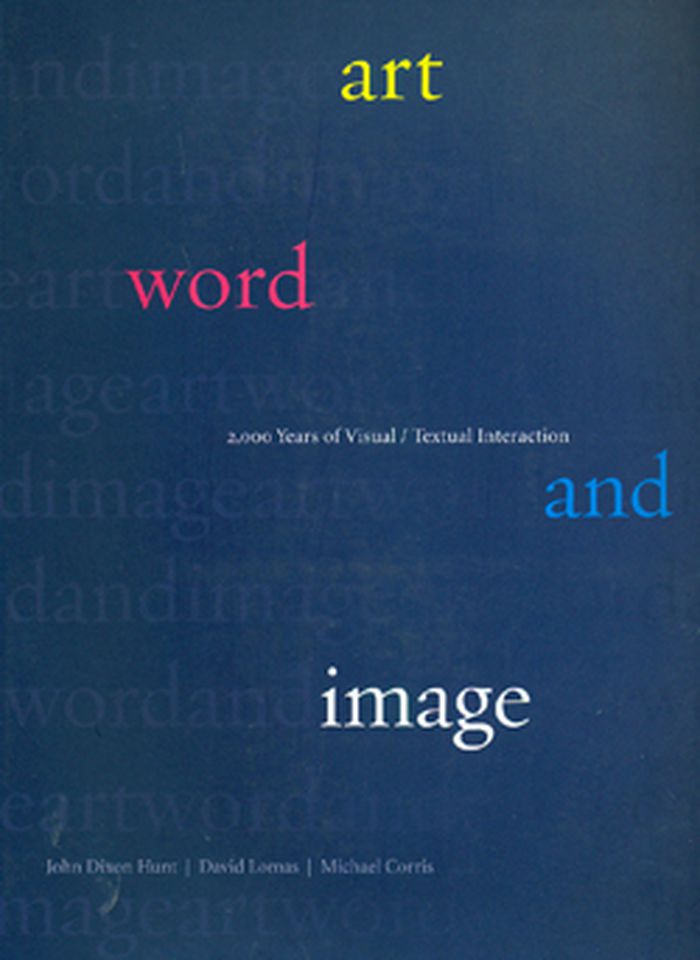
This book attempts to chart the history of art and its interaction with written language. It examines the use of words (or language) in many genres of art – most often painting, but including prints, the book as art, sculpture, installation, and performance. This book asks what does it mean when a painting is 'invaded' by language? How do the two forms converse and combine, and what messages are intended for the viewer? In addition, other important themes that are also addressed include the naming or titling of paintings, the uses of narrative in art, and the literary connections and aspirations of artists. The book is constructed around three wide-ranging essays by John Dixon Hunt, David Lomas and Michael Corris. These essays discuss the use and significance of words in art – from Classical Greece and Assyria, through to the Middle Ages and the Renaissance, to modern times and today’s digital media, where the words and image question has become a central issue. The essays cover a variety of movements (Pre-Raphaelites, Cubists, Surrealists, and Lettrists, for example) and many artists, among them Duchamp, Picasso, Ernst, Twombly, Michaux, Warhol and Kruger. The book also includes ‘spotlight’ essays on artists whose work engages substantially with questions of word and image: Blake, Klee, Schwitters, Haack, Pettibon, McCahon and Walla. With contributions by Jeremy Adler, Stephen Barber, Rex Butler and Laurence Simmons, Michael Corris, John Dixon Hunt, Michael R. Leaman, David Lomas, Joseph Viscomi, Hamza Walker, Barbara Weyandt and Michael White.
Art, word and image : 2,000 years of visual/textual interaction
Actions:
Price:
$44.95
(available to order)
Summary:
This book attempts to chart the history of art and its interaction with written language. It examines the use of words (or language) in many genres of art – most often painting, but including prints, the book as art, sculpture, installation, and performance. This book asks what does it mean when a painting is 'invaded' by language? How do the two forms converse and combine, and what messages are intended for the viewer? In addition, other important themes that are also addressed include the naming or titling of paintings, the uses of narrative in art, and the literary connections and aspirations of artists. The book is constructed around three wide-ranging essays by John Dixon Hunt, David Lomas and Michael Corris. These essays discuss the use and significance of words in art – from Classical Greece and Assyria, through to the Middle Ages and the Renaissance, to modern times and today’s digital media, where the words and image question has become a central issue. The essays cover a variety of movements (Pre-Raphaelites, Cubists, Surrealists, and Lettrists, for example) and many artists, among them Duchamp, Picasso, Ernst, Twombly, Michaux, Warhol and Kruger. The book also includes ‘spotlight’ essays on artists whose work engages substantially with questions of word and image: Blake, Klee, Schwitters, Haack, Pettibon, McCahon and Walla. With contributions by Jeremy Adler, Stephen Barber, Rex Butler and Laurence Simmons, Michael Corris, John Dixon Hunt, Michael R. Leaman, David Lomas, Joseph Viscomi, Hamza Walker, Barbara Weyandt and Michael White.
Form:
books
books
Publication:
September 2011
September 2011
Subject:
Art Theory
Art Theory
Form:
books
books
Actions:
Holdings:
Description:
191 pages : illustrations (chiefly color), plans ; 24 cm
Description:
191 pages : illustrations (chiefly color), plans ; 24 cm
Author:
Subject:
Publication:
Antony : Éditions Le Moniteur, [2021], ©2021
Antony : Éditions Le Moniteur, [2021], ©2021
Title:
L'intelligence artificielle au service de l'architecture / Stanislas Chaillou.
Actions:
Holdings:
Description:
191 pages : illustrations (chiefly color), plans ; 24 cm
L'intelligence artificielle au service de l'architecture / Stanislas Chaillou.
Actions:
Holdings:
Description:
191 pages : illustrations (chiefly color), plans ; 24 cm
Form:
books
books
Publication:
Antony : Éditions Le Moniteur, [2021], ©2021
Antony : Éditions Le Moniteur, [2021], ©2021
Author:
Subject:
Form:
books
books
Actions:
Holdings:
Description:
676 pages : illustrations (some color), map ; 20 cm
Description:
676 pages : illustrations (some color), map ; 20 cm
Author:
Subject:
Publication:
Quito, Ecuador : Colegio de Arquitectos del Ecuador, Provincial de Pichincha, 2020., ©2020
Quito, Ecuador : Colegio de Arquitectos del Ecuador, Provincial de Pichincha, 2020., ©2020
Title:
Bienal Panamericana de Arquitectura de Quito : BAQ 2020 : XXII edición / dirección editorial: Blanca Nieves Sosa Nieves, Yadhira Álvarez.
Actions:
Holdings:
Description:
676 pages : illustrations (some color), map ; 20 cm
Bienal Panamericana de Arquitectura de Quito : BAQ 2020 : XXII edición / dirección editorial: Blanca Nieves Sosa Nieves, Yadhira Álvarez.
Actions:
Holdings:
Description:
676 pages : illustrations (some color), map ; 20 cm
Form:
books
books
Publication:
Quito, Ecuador : Colegio de Arquitectos del Ecuador, Provincial de Pichincha, 2020., ©2020
Quito, Ecuador : Colegio de Arquitectos del Ecuador, Provincial de Pichincha, 2020., ©2020
Author:
Subject:


