


7437 Results
Form:
books
books
Actions:
Price:
$56.00
(available in store)
Summary:
''Collective Intelligence'' is an innovative monograph that documents the last ten years of Polish-born conceptual artist Agnieszka Kurant’s interdisciplinary practice. It includes newly commissioned texts by renowned thinkers in science, philosophy, art, technology, anthropology, and economics. Kurant’s experimental work investigates collective and nonhuman(...)
$56.00
(available in store)
Summary:
''Collective Intelligence'' is an innovative monograph that documents the last ten years of Polish-born conceptual artist Agnieszka Kurant’s interdisciplinary practice. It includes newly commissioned texts by renowned thinkers in science, philosophy, art, technology, anthropology, and economics. Kurant’s experimental work investigates collective and nonhuman(...)
Subject:
Contemporary Art Monographs
Contemporary Art Monographs
Publication:
December 2025
December 2025
Title:
Agnieszka Kurant: Collective intelligence
Actions:
Price:
$56.00
(available in store)
Summary:
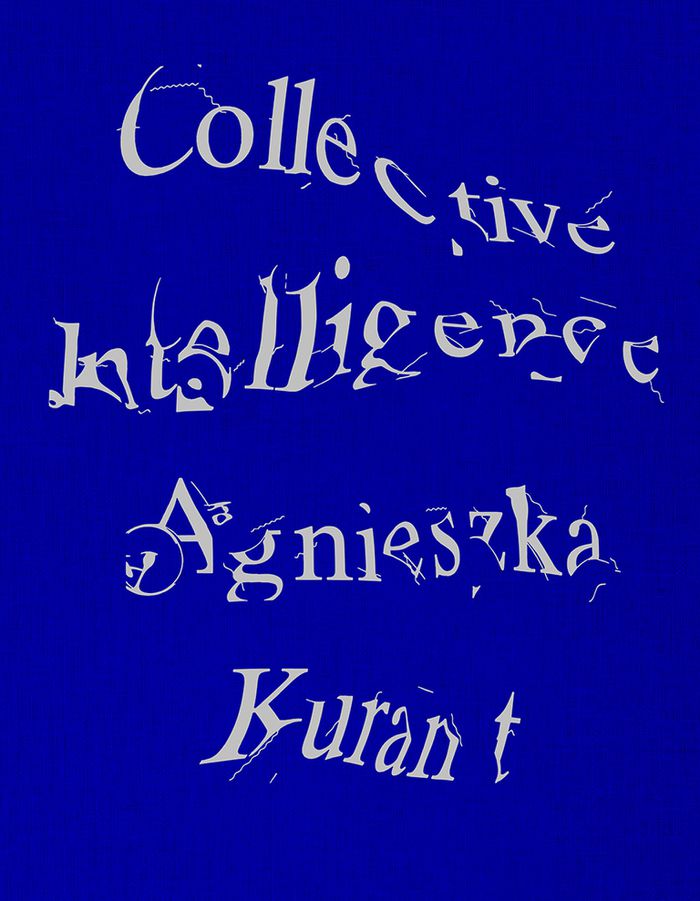
''Collective Intelligence'' is an innovative monograph that documents the last ten years of Polish-born conceptual artist Agnieszka Kurant’s interdisciplinary practice. It includes newly commissioned texts by renowned thinkers in science, philosophy, art, technology, anthropology, and economics. Kurant’s experimental work investigates collective and nonhuman intelligences and their impact on transformations of the human, the future of labor and creativity, and the exploitations within digital capitalism. Questioning the ideology of individualism, Kurant proposes that we rethink human and more-than-human worlds from a perspective of plural subjectivity, and, through this fundamental shift in perspective, posits the possibility of alternative political imaginaries. Her work probes the replacement of individual authorship with collective intelligence—a phenomenon observed in slime molds, termite colonies, social movements, cities, the internet, and inside our brains. In her collaborative practice, the artist investigates artificial intelligence, emergence, cybernetics, automation, artificial life, mining industries, and energy circuits to explore our collective evolution and the shifting status of objects in relation to agency, value, circulation, and redistribution. Through crowdsourcing the production of her artworks to thousands of humans and nonhumans, Kurant creates unstable, hybrid forms that constantly evolve. Her works, oscillating between biological, digital, and geological, embody the crumbling distinctions between what is natural and artificial, real and synthetic, and life and nonlife.
Agnieszka Kurant: Collective intelligence
Actions:
Price:
$56.00
(available in store)
Summary:
''Collective Intelligence'' is an innovative monograph that documents the last ten years of Polish-born conceptual artist Agnieszka Kurant’s interdisciplinary practice. It includes newly commissioned texts by renowned thinkers in science, philosophy, art, technology, anthropology, and economics. Kurant’s experimental work investigates collective and nonhuman intelligences and their impact on transformations of the human, the future of labor and creativity, and the exploitations within digital capitalism. Questioning the ideology of individualism, Kurant proposes that we rethink human and more-than-human worlds from a perspective of plural subjectivity, and, through this fundamental shift in perspective, posits the possibility of alternative political imaginaries. Her work probes the replacement of individual authorship with collective intelligence—a phenomenon observed in slime molds, termite colonies, social movements, cities, the internet, and inside our brains. In her collaborative practice, the artist investigates artificial intelligence, emergence, cybernetics, automation, artificial life, mining industries, and energy circuits to explore our collective evolution and the shifting status of objects in relation to agency, value, circulation, and redistribution. Through crowdsourcing the production of her artworks to thousands of humans and nonhumans, Kurant creates unstable, hybrid forms that constantly evolve. Her works, oscillating between biological, digital, and geological, embody the crumbling distinctions between what is natural and artificial, real and synthetic, and life and nonlife.
Form:
books
books
Publication:
December 2025
December 2025
Subject:
Contemporary Art Monographs
Contemporary Art Monographs
Form:
books
books
Actions:
Price:
$47.50
(available to order)
Summary:
The discipline of architecture depends on the transmission in space and time of accumulated experiences, concepts, rules, and models. From the invention of the alphabet to the development of ASCII code for electronic communication, the process of recording and transmitting this body of knowledge has reflected the dominant information technologies of each period. In this(...)
$47.50
(available to order)
Summary:
The discipline of architecture depends on the transmission in space and time of accumulated experiences, concepts, rules, and models. From the invention of the alphabet to the development of ASCII code for electronic communication, the process of recording and transmitting this body of knowledge has reflected the dominant information technologies of each period. In this(...)
Title:
Architecture in the age of printing : orality, writing, typography, and printed images in the history of architectural theory
Actions:
Price:
$47.50
(available to order)
Summary:
The discipline of architecture depends on the transmission in space and time of accumulated experiences, concepts, rules, and models. From the invention of the alphabet to the development of ASCII code for electronic communication, the process of recording and transmitting this body of knowledge has reflected the dominant information technologies of each period. In this book Mario Carpo discusses the communications media used by Western architects, from classical antiquity to modern classicism, showing how each medium related to specific forms of architectural thinking. Carpo highlights the significance of the invention of movable type and mechanically reproduced images. He argues that Renaissance architectural theory, particularly the system of the five architectural orders, was consciously developed in response to the formats and potential of the new printed media. Carpo contrasts architecture in the age of printing with what preceded it: Vitruvian theory and the manuscript format, oral transmission in the Middle Ages, and the fifteenth-century transition from script to print. He also suggests that the basic principles of "typographic" architecture thrived in the Western world as long as print remained our main information technology. The shift from printed to digital representations, he points out, will again alter the course of architecture.
Architecture in the age of printing : orality, writing, typography, and printed images in the history of architectural theory
Actions:
Price:
$47.50
(available to order)
Summary:
The discipline of architecture depends on the transmission in space and time of accumulated experiences, concepts, rules, and models. From the invention of the alphabet to the development of ASCII code for electronic communication, the process of recording and transmitting this body of knowledge has reflected the dominant information technologies of each period. In this book Mario Carpo discusses the communications media used by Western architects, from classical antiquity to modern classicism, showing how each medium related to specific forms of architectural thinking. Carpo highlights the significance of the invention of movable type and mechanically reproduced images. He argues that Renaissance architectural theory, particularly the system of the five architectural orders, was consciously developed in response to the formats and potential of the new printed media. Carpo contrasts architecture in the age of printing with what preceded it: Vitruvian theory and the manuscript format, oral transmission in the Middle Ages, and the fifteenth-century transition from script to print. He also suggests that the basic principles of "typographic" architecture thrived in the Western world as long as print remained our main information technology. The shift from printed to digital representations, he points out, will again alter the course of architecture.
Form:
books
books
Publication:
September 2001, Cambridge, Mass.
September 2001, Cambridge, Mass.
Subject:
Architectural Theory
Architectural Theory
Form:
books
books
Actions:
Price:
$104.00
(available to order)
Summary:
At last architects have discovered the free form shape – multiple curved surfaces, which do not exist in Cartesian geometry. What has long been usual in product design is now being adopted in architecture, these shapes are being generated by special software, and then they are subsequently built. Some young and innovative architectural firms have seized the(...)
$104.00
(available to order)
Summary:
At last architects have discovered the free form shape – multiple curved surfaces, which do not exist in Cartesian geometry. What has long been usual in product design is now being adopted in architecture, these shapes are being generated by special software, and then they are subsequently built. Some young and innovative architectural firms have seized the(...)
Subject:
Architecture since 1900, Europe
Architecture since 1900, Europe
Publication:
August 2001, Basel
August 2001, Basel
Title:
digital / real – blobmeister, first built projects
Actions:
Price:
$104.00
(available to order)
Summary:
At last architects have discovered the free form shape – multiple curved surfaces, which do not exist in Cartesian geometry. What has long been usual in product design is now being adopted in architecture, these shapes are being generated by special software, and then they are subsequently built. Some young and innovative architectural firms have seized the opportunity to expand the boundaries of architectural space, showing a willingness to experiment with the new technology, and these young architects, or "blobmeister" as Wes Jones rather negatively called them, are now moving on to built examples. In this book, 11 examples from Europe, the USA and Japan are presented, showing that far from being out of touch with reality, cyber-architects do transform their dreams into actual buildings, thus concluding the endless alternatives and possibilities implicit in every design. For it is only built architecture which shows true mastery. This volume extensively documents the complex design process, from the digital conception of the designs, the creation of models, to the final photographs of the building sites and the finished structures. Thematic essays give the reader an insight into the history of the digital scene, assessing its influence on architectural culture to date and evaluating its future potential. The accompanying CD-ROM shows dynamic animations.
digital / real – blobmeister, first built projects
Actions:
Price:
$104.00
(available to order)
Summary:
At last architects have discovered the free form shape – multiple curved surfaces, which do not exist in Cartesian geometry. What has long been usual in product design is now being adopted in architecture, these shapes are being generated by special software, and then they are subsequently built. Some young and innovative architectural firms have seized the opportunity to expand the boundaries of architectural space, showing a willingness to experiment with the new technology, and these young architects, or "blobmeister" as Wes Jones rather negatively called them, are now moving on to built examples. In this book, 11 examples from Europe, the USA and Japan are presented, showing that far from being out of touch with reality, cyber-architects do transform their dreams into actual buildings, thus concluding the endless alternatives and possibilities implicit in every design. For it is only built architecture which shows true mastery. This volume extensively documents the complex design process, from the digital conception of the designs, the creation of models, to the final photographs of the building sites and the finished structures. Thematic essays give the reader an insight into the history of the digital scene, assessing its influence on architectural culture to date and evaluating its future potential. The accompanying CD-ROM shows dynamic animations.
Form:
books
books
Publication:
August 2001, Basel
August 2001, Basel
Subject:
Architecture since 1900, Europe
Architecture since 1900, Europe
Form:
books
books
Price:
$62.00
(available to order)
Summary:
An inquiry into emergent media's rich lineage, "Devices of Wonder" explores the artful machines humans have used to augment visual perception. The encyclopedic cabinet of curiosities serves as a model for this study of the archaic instruments lurking in state-of-the art technology. Featured in "Devices of Wonder" are android automata, lunar landscapes, perspective(...)
$62.00
(available to order)
Summary:
An inquiry into emergent media's rich lineage, "Devices of Wonder" explores the artful machines humans have used to augment visual perception. The encyclopedic cabinet of curiosities serves as a model for this study of the archaic instruments lurking in state-of-the art technology. Featured in "Devices of Wonder" are android automata, lunar landscapes, perspective(...)
Subject:
Architectural Theory
Architectural Theory
Publication:
November 2001, Los Angeles
November 2001, Los Angeles
Title:
Devices of wonder from the world in a box to images on a screen
Actions:
Price:
$62.00
(available to order)
Summary:
An inquiry into emergent media's rich lineage, "Devices of Wonder" explores the artful machines humans have used to augment visual perception. The encyclopedic cabinet of curiosities serves as a model for this study of the archaic instruments lurking in state-of-the art technology. Featured in "Devices of Wonder" are android automata, lunar landscapes, perspective theaters, vues d'optique, microscopes, magnetic games, magic lanterns, camera obscuras, boxes by Joseph Cornell, Lucas Samaras's Mirrored Room, Suzanne Anker's Zoosemiotics, Mark Tilden's UniBug 3.1, panoramic works by Jeff Wall and Giovanni Lusieri, paintings by Jean-Baptiste Chardin and Joseph Wright of Derby, projections by Diana Thater and James Turrell, and a pop-up book by Kara Walker. Barbara Stafford's introduction weaves these fascinating artifacts into a provocative narrative analyzing the complex links between old and new media. Her wide-ranging investigation is complemented by thirty-one short essays in which Frances Terpak tracks the often surprising connections among individual items. Like the cabinet of curiosities, "Devices of Wonder" functions as an analogical instrument, reframing the beautiful "eye machines" that continue to mediate our encounters with the world. This book is published in conjunction with an exhibition at the Getty from November 13, 2001, through February 6, 2002.
Devices of wonder from the world in a box to images on a screen
Actions:
Price:
$62.00
(available to order)
Summary:
An inquiry into emergent media's rich lineage, "Devices of Wonder" explores the artful machines humans have used to augment visual perception. The encyclopedic cabinet of curiosities serves as a model for this study of the archaic instruments lurking in state-of-the art technology. Featured in "Devices of Wonder" are android automata, lunar landscapes, perspective theaters, vues d'optique, microscopes, magnetic games, magic lanterns, camera obscuras, boxes by Joseph Cornell, Lucas Samaras's Mirrored Room, Suzanne Anker's Zoosemiotics, Mark Tilden's UniBug 3.1, panoramic works by Jeff Wall and Giovanni Lusieri, paintings by Jean-Baptiste Chardin and Joseph Wright of Derby, projections by Diana Thater and James Turrell, and a pop-up book by Kara Walker. Barbara Stafford's introduction weaves these fascinating artifacts into a provocative narrative analyzing the complex links between old and new media. Her wide-ranging investigation is complemented by thirty-one short essays in which Frances Terpak tracks the often surprising connections among individual items. Like the cabinet of curiosities, "Devices of Wonder" functions as an analogical instrument, reframing the beautiful "eye machines" that continue to mediate our encounters with the world. This book is published in conjunction with an exhibition at the Getty from November 13, 2001, through February 6, 2002.
Form:
books
books
Publication:
November 2001, Los Angeles
November 2001, Los Angeles
Subject:
Architectural Theory
Architectural Theory
Form:
books
books
Actions:
Price:
$76.95
(available to order)
Summary:
This book relates circular economy principles to housing design and construction and highlights how those principles can result in both monetary savings, positive environmental impact, and socio-ecological change. Chapters focus on three key circular economy principles and apply them to architectural construction and design, namely rethinking of the end-of-use phase of a(...)
$76.95
(available to order)
Summary:
This book relates circular economy principles to housing design and construction and highlights how those principles can result in both monetary savings, positive environmental impact, and socio-ecological change. Chapters focus on three key circular economy principles and apply them to architectural construction and design, namely rethinking of the end-of-use phase of a(...)
Title:
Sustainable housing in a circular economy
Actions:
Price:
$76.95
(available to order)
Summary:
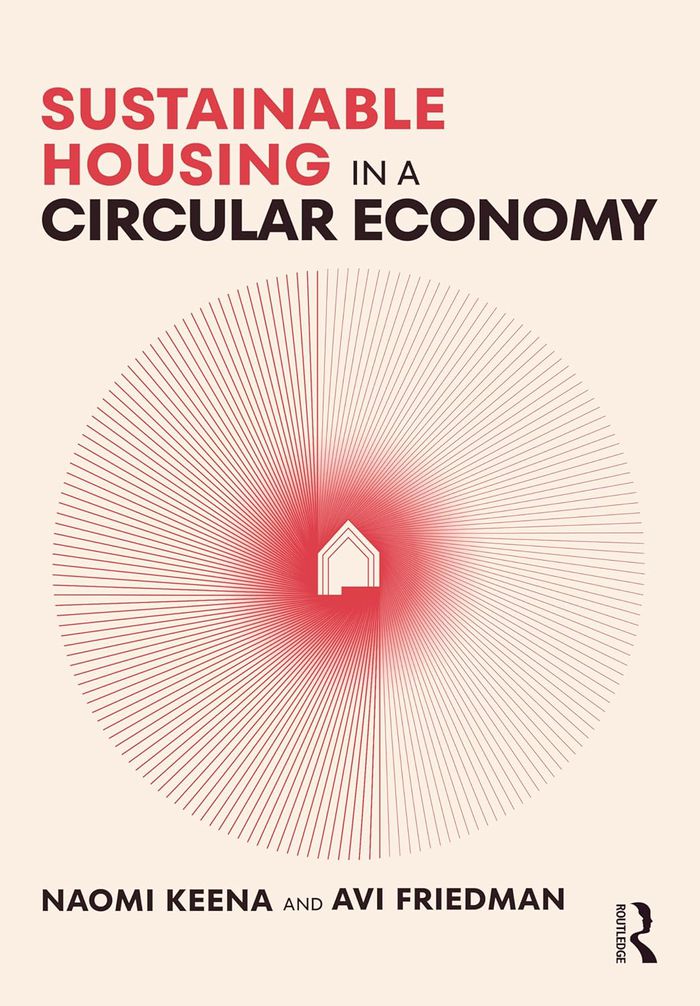
This book relates circular economy principles to housing design and construction and highlights how those principles can result in both monetary savings, positive environmental impact, and socio-ecological change. Chapters focus on three key circular economy principles and apply them to architectural construction and design, namely rethinking of the end-of-use phase of a building and the potential of design-for-disassembly; the role of digitization and data standardization in fostering evidence-based circular economy design decision-making; and presenting space as a resource to conserve, via exploration of the sharing economy and flexibility principles. Beyond waste management and material cycles, this book provides a holistic understanding of the opportunities across the building life cycle that can allow for sustainable and affordable circular housing. With case studies from 13 different countries, including but not limited to the Hammarby Sjöstad district in Sweden, the Circle House in Denmark, Benny Farm in Canada, VMD Prefabricated House in Mexico, and the Deep Performance Dwelling in China, authors pair theoretical frameworks with real-world examples. This will be a useful resource for upper-level students and academics of architecture, construction, and planning, especially those studying and researching housing design, building technology, green project management, and environmental design.
Sustainable housing in a circular economy
Actions:
Price:
$76.95
(available to order)
Summary:
This book relates circular economy principles to housing design and construction and highlights how those principles can result in both monetary savings, positive environmental impact, and socio-ecological change. Chapters focus on three key circular economy principles and apply them to architectural construction and design, namely rethinking of the end-of-use phase of a building and the potential of design-for-disassembly; the role of digitization and data standardization in fostering evidence-based circular economy design decision-making; and presenting space as a resource to conserve, via exploration of the sharing economy and flexibility principles. Beyond waste management and material cycles, this book provides a holistic understanding of the opportunities across the building life cycle that can allow for sustainable and affordable circular housing. With case studies from 13 different countries, including but not limited to the Hammarby Sjöstad district in Sweden, the Circle House in Denmark, Benny Farm in Canada, VMD Prefabricated House in Mexico, and the Deep Performance Dwelling in China, authors pair theoretical frameworks with real-world examples. This will be a useful resource for upper-level students and academics of architecture, construction, and planning, especially those studying and researching housing design, building technology, green project management, and environmental design.
Form:
books
books
Publication:
April 2024
April 2024
Subject:
Humans and cities
Humans and cities
Form:
books
books
Title:
Designing the X
Designing the X
Actions:
Price:
$53.95
(available to order)
Summary:
As the pace of global change accelerates—ecologically, socially, and technologically—our traditional ways of understanding and responding to change fall short. We now live in an era of supercomplexity, where challenges like climate instability, migration, technological disruption, resource depletion, and systemic inequality converge and defy conventional(...)
$53.95
(available to order)
Summary:
As the pace of global change accelerates—ecologically, socially, and technologically—our traditional ways of understanding and responding to change fall short. We now live in an era of supercomplexity, where challenges like climate instability, migration, technological disruption, resource depletion, and systemic inequality converge and defy conventional(...)
Title:
Designing the X
Actions:
Price:
$53.95
(available to order)
Summary:
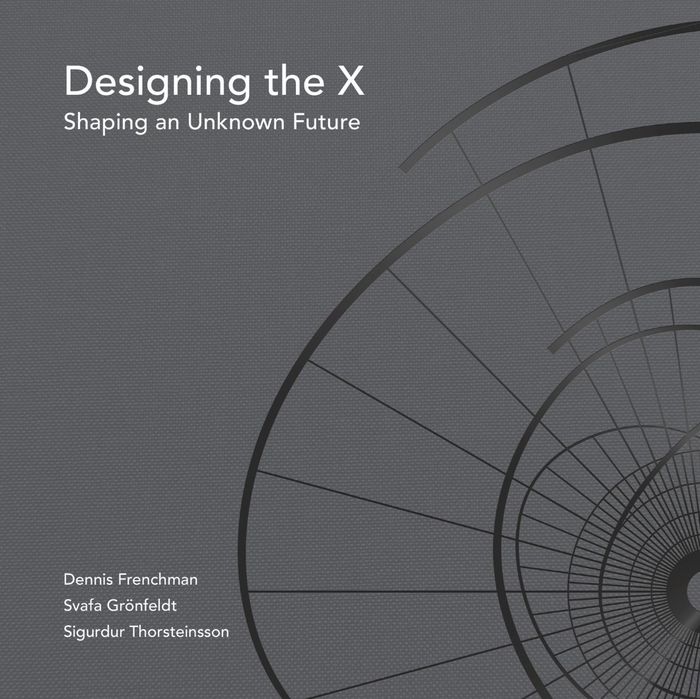
As the pace of global change accelerates—ecologically, socially, and technologically—our traditional ways of understanding and responding to change fall short. We now live in an era of supercomplexity, where challenges like climate instability, migration, technological disruption, resource depletion, and systemic inequality converge and defy conventional solutions. ''Designing the X'' meets this moment with a bold and timely proposition: when data, science, and analysis alone are insufficient to move us forward, we must turn to design as a powerful mode of reasoning through synthesis, where intuition meets insight and imagination drives action. Design enables us to move with complexity, not against it, and to shape futures beyond the limits of the present. Grounded in praxis and research—including 67 interviews with designers, technologists and scientists, innovators and entrepreneurs, urbanists, and educators— ''Designing the X'' makes a compelling case for design as an essential partner to science and technology: integrative, inventive, and profoundly human. The “X” stands for what’s missing in today’s analytic methods: the leap from parts to greater wholes, from current conditions to future potential. This book is for anyone seeking agency in an age of accelerating change. It’s a compass for those ready to imagine—and design—the future we cannot yet see.
Designing the X
Actions:
Price:
$53.95
(available to order)
Summary:
As the pace of global change accelerates—ecologically, socially, and technologically—our traditional ways of understanding and responding to change fall short. We now live in an era of supercomplexity, where challenges like climate instability, migration, technological disruption, resource depletion, and systemic inequality converge and defy conventional solutions. ''Designing the X'' meets this moment with a bold and timely proposition: when data, science, and analysis alone are insufficient to move us forward, we must turn to design as a powerful mode of reasoning through synthesis, where intuition meets insight and imagination drives action. Design enables us to move with complexity, not against it, and to shape futures beyond the limits of the present. Grounded in praxis and research—including 67 interviews with designers, technologists and scientists, innovators and entrepreneurs, urbanists, and educators— ''Designing the X'' makes a compelling case for design as an essential partner to science and technology: integrative, inventive, and profoundly human. The “X” stands for what’s missing in today’s analytic methods: the leap from parts to greater wholes, from current conditions to future potential. This book is for anyone seeking agency in an age of accelerating change. It’s a compass for those ready to imagine—and design—the future we cannot yet see.
Form:
books
books
Publication:
October 2025
October 2025
Subject:
Design Theory
Design Theory
Form:
books
books
Price:
$73.95
(available to order)
Summary:
Standing on Mont Ventoux near Avignon, the fourteenth-century poet Petrarch experienced an entirely new sensation that he described as 'stepping out of time and space'. On the mountain's summit he was as far as he could be from the 'world's stage all around'. The huge distance reduced reference points to insignificant specks down below, and everything in the panorama(...)
$73.95
(available to order)
Summary:
Standing on Mont Ventoux near Avignon, the fourteenth-century poet Petrarch experienced an entirely new sensation that he described as 'stepping out of time and space'. On the mountain's summit he was as far as he could be from the 'world's stage all around'. The huge distance reduced reference points to insignificant specks down below, and everything in the panorama(...)
Title:
The invented land : a bird's-eye view of Dutch landscape architecture
Actions:
Price:
$73.95
(available to order)
Summary:
Standing on Mont Ventoux near Avignon, the fourteenth-century poet Petrarch experienced an entirely new sensation that he described as 'stepping out of time and space'. On the mountain's summit he was as far as he could be from the 'world's stage all around'. The huge distance reduced reference points to insignificant specks down below, and everything in the panorama seemed motionless, dispelling any notion of time. Petrarch had placed himself outside reality. That is what makes aerial photography so fascinating, writes Clemens M. Steenbergen, professor of landscape architecture at Delft University of Technology, in his introduction. The higher the viewpoint the greater the visual control and the more abstract the image. We can see whether a landscape has been shaped by man or is pure nature, how space and mass form one composition. Aerial photographer and landscape architect Peter van Bolhuis captures on camera the Dutch landscape: areas devoted to agriculture, forestry, nature, infrastructure and urban development. The pictures show us the achievements of a half century of landscape architecture. We see a landscape in which everything is precisely measured and demarcated, everything is planned and calculated, with no space left unattended. We see, writes Tracy Metz in one of the essays, 'a landscape that is the sum of negotiations about ever smaller parts'.
The invented land : a bird's-eye view of Dutch landscape architecture
Actions:
Price:
$73.95
(available to order)
Summary:
Standing on Mont Ventoux near Avignon, the fourteenth-century poet Petrarch experienced an entirely new sensation that he described as 'stepping out of time and space'. On the mountain's summit he was as far as he could be from the 'world's stage all around'. The huge distance reduced reference points to insignificant specks down below, and everything in the panorama seemed motionless, dispelling any notion of time. Petrarch had placed himself outside reality. That is what makes aerial photography so fascinating, writes Clemens M. Steenbergen, professor of landscape architecture at Delft University of Technology, in his introduction. The higher the viewpoint the greater the visual control and the more abstract the image. We can see whether a landscape has been shaped by man or is pure nature, how space and mass form one composition. Aerial photographer and landscape architect Peter van Bolhuis captures on camera the Dutch landscape: areas devoted to agriculture, forestry, nature, infrastructure and urban development. The pictures show us the achievements of a half century of landscape architecture. We see a landscape in which everything is precisely measured and demarcated, everything is planned and calculated, with no space left unattended. We see, writes Tracy Metz in one of the essays, 'a landscape that is the sum of negotiations about ever smaller parts'.
Form:
books
books
Publication:
December 2004, Wageningen, Netherlands
December 2004, Wageningen, Netherlands
Subject:
Gardens
Gardens
Form:
books
books
Title:
Robbert Flick : trajectories
Robbert Flick : trajectories
Actions:
Price:
$110.50
(available to order)
Summary:
Robbert Flick's work extends the same visual, philosophical, and theoretically fertile tradition set by the highly influential and iconoclastic Robert Heinecken. But while Heinecken's emphasis can be said to rely on the manner in which images function within the intersection of popular culture and the fine arts, Flick has characteristically concentrated more intently on(...)
$110.50
(available to order)
Summary:
Robbert Flick's work extends the same visual, philosophical, and theoretically fertile tradition set by the highly influential and iconoclastic Robert Heinecken. But while Heinecken's emphasis can be said to rely on the manner in which images function within the intersection of popular culture and the fine arts, Flick has characteristically concentrated more intently on(...)
Title:
Robbert Flick : trajectories
Actions:
Price:
$110.50
(available to order)
Summary:
Robbert Flick's work extends the same visual, philosophical, and theoretically fertile tradition set by the highly influential and iconoclastic Robert Heinecken. But while Heinecken's emphasis can be said to rely on the manner in which images function within the intersection of popular culture and the fine arts, Flick has characteristically concentrated more intently on the artifactual, conceptual, and receptive properties of photography--specifically landscape photography. The distinctive retinal and conceptual strength of Flick's work has been evident since his early essay-format images of the 1960s. In his more recent digital work, he extends his participation in the critical discourse established around the interpretation, evaluation, and assessment of visual constructs related to the landscape. And yet, this movement has only become possible through a conceptual transition from a position of creating unique objects to an emphasis on interactivity and multiple access using still and moving images that allow for the work's insertion into the broader socio-political arena where the application defines the discourse. Trajectories traces the artist's career from the 1970s to the present, providing the opportunity to examine his visual development while also charting the conceptual and philosophical impact of contemporary culture on landscape, cultural geography, and technology. Edited by Tim B. Wride with essays by Michael Dear and David L. Ulin
Robbert Flick : trajectories
Actions:
Price:
$110.50
(available to order)
Summary:
Robbert Flick's work extends the same visual, philosophical, and theoretically fertile tradition set by the highly influential and iconoclastic Robert Heinecken. But while Heinecken's emphasis can be said to rely on the manner in which images function within the intersection of popular culture and the fine arts, Flick has characteristically concentrated more intently on the artifactual, conceptual, and receptive properties of photography--specifically landscape photography. The distinctive retinal and conceptual strength of Flick's work has been evident since his early essay-format images of the 1960s. In his more recent digital work, he extends his participation in the critical discourse established around the interpretation, evaluation, and assessment of visual constructs related to the landscape. And yet, this movement has only become possible through a conceptual transition from a position of creating unique objects to an emphasis on interactivity and multiple access using still and moving images that allow for the work's insertion into the broader socio-political arena where the application defines the discourse. Trajectories traces the artist's career from the 1970s to the present, providing the opportunity to examine his visual development while also charting the conceptual and philosophical impact of contemporary culture on landscape, cultural geography, and technology. Edited by Tim B. Wride with essays by Michael Dear and David L. Ulin
Form:
books
books
Publication:
January 1900, Los Angeles
January 1900, Los Angeles
Subject:
Photography monographs
Photography monographs
Form:
books
books
Price:
$32.95
(available to order)
Summary:
Cell phones, automatic teller machines, and the Internet have incontrovertibly become part of our daily lives, indistinguishable from other components of our habitual everyday activity. Life does not seem to have been fundamentally changed by these hi-tech, information-giving tools of convenience--or has it? Have we, unawares, become accustomed to a new way of living? And(...)
$32.95
(available to order)
Summary:
Cell phones, automatic teller machines, and the Internet have incontrovertibly become part of our daily lives, indistinguishable from other components of our habitual everyday activity. Life does not seem to have been fundamentally changed by these hi-tech, information-giving tools of convenience--or has it? Have we, unawares, become accustomed to a new way of living? And(...)
Subject:
Architectural Theory
Architectural Theory
Publication:
September 2004, Berlin
September 2004, Berlin
Title:
Dot city : relational urbanism and new media in the Bauhaus Kolleg
Actions:
Price:
$32.95
(available to order)
Summary:
Cell phones, automatic teller machines, and the Internet have incontrovertibly become part of our daily lives, indistinguishable from other components of our habitual everyday activity. Life does not seem to have been fundamentally changed by these hi-tech, information-giving tools of convenience--or has it? Have we, unawares, become accustomed to a new way of living? And how can designers make creative use of these new digital possibilities? This publication of the Fourth International Bauhaus Kolleg--a year-long thematic graduate session run by the Bauhaus Dessau Foundation--offers strategies for employing digital media to integrate the unpredictable and the unplanned into urban existence. "Dot.City" asks and answers many questions: Can the use of information and communication technology counteract the continuous processes of devaluation, the loss of urban identity, the lack of multifunctional networks? Can the activation and implementation of new social techniques of knowledge production compensate for missing economical impulses and functions? How do such processes generate new species of urban values? Is it possible to re-program local social resources using intelligent network technologies? What do urban action areas designed for this purpose look like? And how can urban information spheres and physical urban spaces penetrate each other?
Dot city : relational urbanism and new media in the Bauhaus Kolleg
Actions:
Price:
$32.95
(available to order)
Summary:
Cell phones, automatic teller machines, and the Internet have incontrovertibly become part of our daily lives, indistinguishable from other components of our habitual everyday activity. Life does not seem to have been fundamentally changed by these hi-tech, information-giving tools of convenience--or has it? Have we, unawares, become accustomed to a new way of living? And how can designers make creative use of these new digital possibilities? This publication of the Fourth International Bauhaus Kolleg--a year-long thematic graduate session run by the Bauhaus Dessau Foundation--offers strategies for employing digital media to integrate the unpredictable and the unplanned into urban existence. "Dot.City" asks and answers many questions: Can the use of information and communication technology counteract the continuous processes of devaluation, the loss of urban identity, the lack of multifunctional networks? Can the activation and implementation of new social techniques of knowledge production compensate for missing economical impulses and functions? How do such processes generate new species of urban values? Is it possible to re-program local social resources using intelligent network technologies? What do urban action areas designed for this purpose look like? And how can urban information spheres and physical urban spaces penetrate each other?
Form:
books
books
Publication:
September 2004, Berlin
September 2004, Berlin
Subject:
Architectural Theory
Architectural Theory
Form:
books
books
Actions:
Price:
$54.99
(available to order)
Summary:
Today, architecture schools are truly international in their intake, as students are able to select from courses worldwide. For school leavers and undergraduates, the choice is bewildering. Where different institutions provide very different courses and ultimately very different architects, the very act of shopping for a degree is an incredibly important stage in an(...)
$54.99
(available to order)
Summary:
Today, architecture schools are truly international in their intake, as students are able to select from courses worldwide. For school leavers and undergraduates, the choice is bewildering. Where different institutions provide very different courses and ultimately very different architects, the very act of shopping for a degree is an incredibly important stage in an(...)
Subject:
Architecture since 1900, Europe
Architecture since 1900, Europe
Publication:
November 2004, Chichester
November 2004, Chichester
Title:
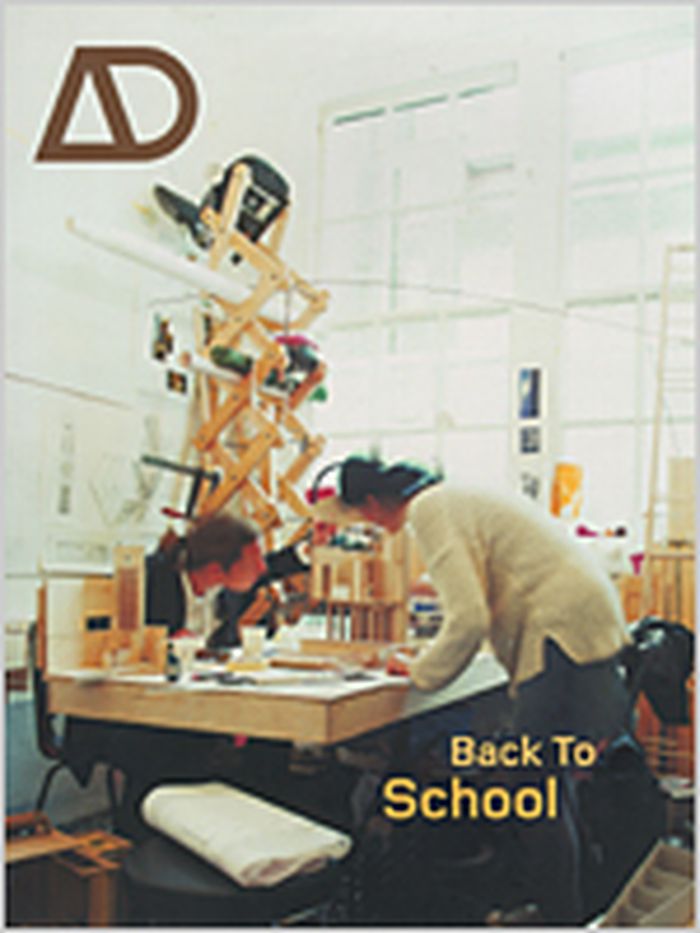
Back to school : architectural education - the information and the argument
Actions:
Price:
$54.99
(available to order)
Summary:
Today, architecture schools are truly international in their intake, as students are able to select from courses worldwide. For school leavers and undergraduates, the choice is bewildering. Where different institutions provide very different courses and ultimately very different architects, the very act of shopping for a degree is an incredibly important stage in an architecture student’s career. This book is set to become a touchstone publication for anyone involved in architectural education, from the academic to the aspiring student. It provides interviews with four of the most influential educators/heads of schools around the world: Peter Cook, Chair, the Bartlett School of Architecture, London, UK; Bernard Tschumi, Dean, School of Architecture at Columbia University, USA; Leon van Schaik, Innovation Professor of Architecture, Royal Melbourne Institute of Technology, Australia; Elia Zenghelis, Berlage, Dusseldorf. This is followed by short self-biographies of eleven further prominent figures including Rem Koolhaas, Anthony Vidler and Paul Virilio. It is the first publication of its kind to comprehensively cover architectural education in its current context as an international market. It will feature the first invaluable listing of architectural schools worldwide: no dedicated listing currently exists in printed form or on the web, giving students a useful reference from which to start the decision making process.
Back to school : architectural education - the information and the argument
Actions:
Price:
$54.99
(available to order)
Summary:
Today, architecture schools are truly international in their intake, as students are able to select from courses worldwide. For school leavers and undergraduates, the choice is bewildering. Where different institutions provide very different courses and ultimately very different architects, the very act of shopping for a degree is an incredibly important stage in an architecture student’s career. This book is set to become a touchstone publication for anyone involved in architectural education, from the academic to the aspiring student. It provides interviews with four of the most influential educators/heads of schools around the world: Peter Cook, Chair, the Bartlett School of Architecture, London, UK; Bernard Tschumi, Dean, School of Architecture at Columbia University, USA; Leon van Schaik, Innovation Professor of Architecture, Royal Melbourne Institute of Technology, Australia; Elia Zenghelis, Berlage, Dusseldorf. This is followed by short self-biographies of eleven further prominent figures including Rem Koolhaas, Anthony Vidler and Paul Virilio. It is the first publication of its kind to comprehensively cover architectural education in its current context as an international market. It will feature the first invaluable listing of architectural schools worldwide: no dedicated listing currently exists in printed form or on the web, giving students a useful reference from which to start the decision making process.
Form:
books
books
Publication:
November 2004, Chichester
November 2004, Chichester
Subject:
Architecture since 1900, Europe
Architecture since 1900, Europe


