


13794 Results
Form:
books
books

Title:
Spirit: garden inspiration
Spirit: garden inspiration
Actions:
Price:
$54.00
(available to order)
Summary:
Taking inspiration from art, sculpture, Chicago prairies and folk architecture such as tree houses, Dan Pearson--acclaimed garden designer and "green-fingered guru" at the U.K. newspaper The Observer--lays out his design philosophy and working process, giving readers direct insight into his collaborative approach of working with nature, instead of imposing preconceptions upon it.
$54.00
(available to order)
Summary:
Taking inspiration from art, sculpture, Chicago prairies and folk architecture such as tree houses, Dan Pearson--acclaimed garden designer and "green-fingered guru" at the U.K. newspaper The Observer--lays out his design philosophy and working process, giving readers direct insight into his collaborative approach of working with nature, instead of imposing preconceptions upon it.
Title:
Spirit: garden inspiration
Actions:
Price:
$54.00
(available to order)
Summary:
Taking inspiration from art, sculpture, Chicago prairies and folk architecture such as tree houses, Dan Pearson--acclaimed garden designer and "green-fingered guru" at the U.K. newspaper The Observer--lays out his design philosophy and working process, giving readers direct insight into his collaborative approach of working with nature, instead of imposing preconceptions upon it.
Spirit: garden inspiration
Actions:
Price:
$54.00
(available to order)
Summary:
Taking inspiration from art, sculpture, Chicago prairies and folk architecture such as tree houses, Dan Pearson--acclaimed garden designer and "green-fingered guru" at the U.K. newspaper The Observer--lays out his design philosophy and working process, giving readers direct insight into his collaborative approach of working with nature, instead of imposing preconceptions upon it.
Form:
books
books
Publication:
October 2009
October 2009
Subject:
Landscape Theory
Landscape Theory
Form:
books
books
Price:
$54.00
(available to order)
Summary:
We all have our own ideas about mosques, and many of those ideas go beyond the domain of architecture. In Europe, mosques are a central issue in the debates about the integration of Muslims and the potential dangers of Islam. In recent years, such debates have often edged out serious architectural discussion of European mosques, and the domes and minarets of traditional(...)
$54.00
(available to order)
Summary:
We all have our own ideas about mosques, and many of those ideas go beyond the domain of architecture. In Europe, mosques are a central issue in the debates about the integration of Muslims and the potential dangers of Islam. In recent years, such debates have often edged out serious architectural discussion of European mosques, and the domes and minarets of traditional(...)
Title:
The mosque, political, architectural and social transformations
Actions:
Price:
$54.00
(available to order)
Summary:
We all have our own ideas about mosques, and many of those ideas go beyond the domain of architecture. In Europe, mosques are a central issue in the debates about the integration of Muslims and the potential dangers of Islam. In recent years, such debates have often edged out serious architectural discussion of European mosques, and the domes and minarets of traditional mosque architecture have come to symbolize this entire field of controversy.The aim of this book is to bring greater depth and nuance to the debate about mosques. Amongst others politician Frits Bolkestein, architect Wilfried van Winden, sociologist Willem Schinkel, theologist/philosopher Tariq Ramadan, anthropologist Eric Roose and Ole Bouman, director of the Netherlands Architecture Institute, share their interdisciplinary perspectives on the emergence of this new architectural typology and explain its narrow and broad social impact.
The mosque, political, architectural and social transformations
Actions:
Price:
$54.00
(available to order)
Summary:
We all have our own ideas about mosques, and many of those ideas go beyond the domain of architecture. In Europe, mosques are a central issue in the debates about the integration of Muslims and the potential dangers of Islam. In recent years, such debates have often edged out serious architectural discussion of European mosques, and the domes and minarets of traditional mosque architecture have come to symbolize this entire field of controversy.The aim of this book is to bring greater depth and nuance to the debate about mosques. Amongst others politician Frits Bolkestein, architect Wilfried van Winden, sociologist Willem Schinkel, theologist/philosopher Tariq Ramadan, anthropologist Eric Roose and Ole Bouman, director of the Netherlands Architecture Institute, share their interdisciplinary perspectives on the emergence of this new architectural typology and explain its narrow and broad social impact.
Form:
books
books
Publication:
September 2009
September 2009
Subject:
Architectural Theory
Architectural Theory
Form:
books
books
Actions:
Price:
$54.00
(available in store)
Summary:
Through three radical critiques of Modernist architecture, illustrated by the iconic--and very different--works of the Situationist International, Venturi Scott Brown and Archigram, Radical Games offers new perspectives on the architecture of the 1960s. It illuminates some of the pitfalls of contemporary architectural thought and questions a number of preconceptions that(...)
$54.00
(available in store)
Summary:
Through three radical critiques of Modernist architecture, illustrated by the iconic--and very different--works of the Situationist International, Venturi Scott Brown and Archigram, Radical Games offers new perspectives on the architecture of the 1960s. It illuminates some of the pitfalls of contemporary architectural thought and questions a number of preconceptions that(...)
Title:
Radical games: Popping the bubble of 1960's architecture
Actions:
Price:
$54.00
(available in store)
Summary:
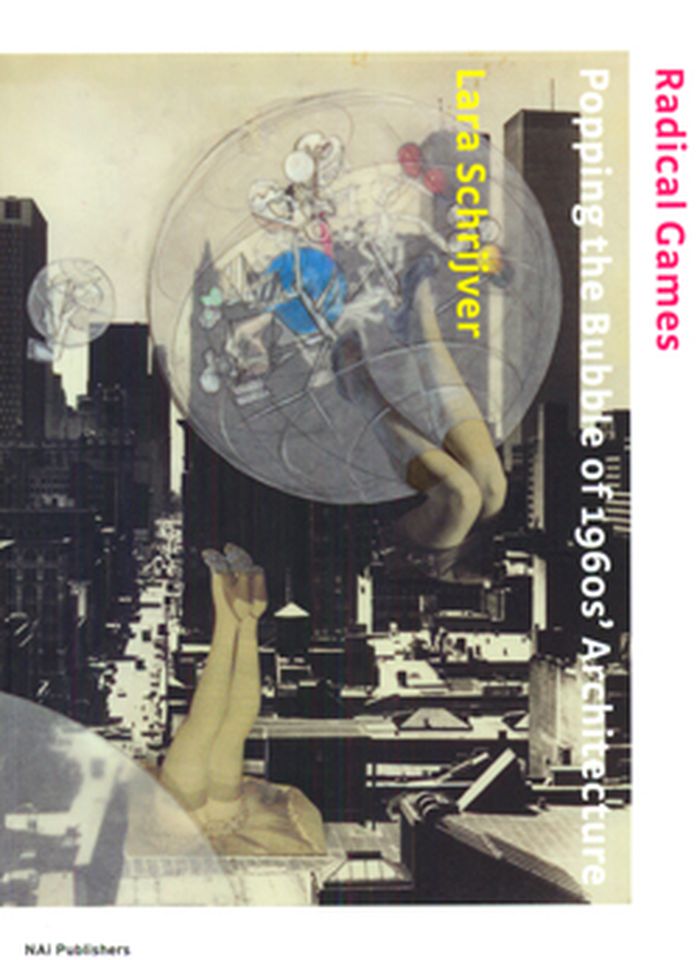
Through three radical critiques of Modernist architecture, illustrated by the iconic--and very different--works of the Situationist International, Venturi Scott Brown and Archigram, Radical Games offers new perspectives on the architecture of the 1960s. It illuminates some of the pitfalls of contemporary architectural thought and questions a number of preconceptions that remain with us from the prevalent discourses of the 1960s. Perched on the cusp of Postmodernism and global capitalism, the critiques in this volume demonstrate a perceptive understanding of Modernism, as well as contemporary conditions, such as our increasingly image-saturated society. It is also clear, however, that these radical projects were so entwined with Modernism that the architectural conversation of the 1960s was driven to an impasse, which the contemporary debate has not yet been able to escape.
Radical games: Popping the bubble of 1960's architecture
Actions:
Price:
$54.00
(available in store)
Summary:
Through three radical critiques of Modernist architecture, illustrated by the iconic--and very different--works of the Situationist International, Venturi Scott Brown and Archigram, Radical Games offers new perspectives on the architecture of the 1960s. It illuminates some of the pitfalls of contemporary architectural thought and questions a number of preconceptions that remain with us from the prevalent discourses of the 1960s. Perched on the cusp of Postmodernism and global capitalism, the critiques in this volume demonstrate a perceptive understanding of Modernism, as well as contemporary conditions, such as our increasingly image-saturated society. It is also clear, however, that these radical projects were so entwined with Modernism that the architectural conversation of the 1960s was driven to an impasse, which the contemporary debate has not yet been able to escape.
Form:
books
books
Publication:
June 2010
June 2010
Subject:
Architectural Theory
Architectural Theory
Form:
books
books
Actions:
Price:
$34.99
(available to order)
Summary:
The last explosive change in art education came nearly a century ago, when the German Bauhaus was formed. Today, dramatic changes in the art world—its increasing professionalization, the pervasive power of the art market, and fundamental shifts in art-making itself in our post-Duchampian era—combined with a revolution in information technology, raise fundamental questions(...)
$34.99
(available to order)
Summary:
The last explosive change in art education came nearly a century ago, when the German Bauhaus was formed. Today, dramatic changes in the art world—its increasing professionalization, the pervasive power of the art market, and fundamental shifts in art-making itself in our post-Duchampian era—combined with a revolution in information technology, raise fundamental questions(...)
Title:
Art school (propositions for the 21st century)
Actions:
Price:
$34.99
(available to order)
Summary:
The last explosive change in art education came nearly a century ago, when the German Bauhaus was formed. Today, dramatic changes in the art world—its increasing professionalization, the pervasive power of the art market, and fundamental shifts in art-making itself in our post-Duchampian era—combined with a revolution in information technology, raise fundamental questions about the education of today's artists. This book brings together more than thirty leading international artists and art educators to reconsider the practices of art education in academic, practical, ethical, and philosophical terms. The essays in the book range over continents, histories, traditions, experiments, and fantasies of education. Accompanying the essays are conversations with such prominent artist/educators as John Baldessari, Michael Craig-Martin, Hans Haacke, and Marina Abramovi, as well as questionnaire responses from a dozen important artists—among them Mike Kelley, Ann Hamilton, Guillermo Kuitca, and Shirin Neshat—about their own experiences as students. A fascinating analysis of the architecture of major historical art schools throughout the world looks at the relationship of the principles of their designs to the principles of the pedagogy practiced within their halls.
Art school (propositions for the 21st century)
Actions:
Price:
$34.99
(available to order)
Summary:
The last explosive change in art education came nearly a century ago, when the German Bauhaus was formed. Today, dramatic changes in the art world—its increasing professionalization, the pervasive power of the art market, and fundamental shifts in art-making itself in our post-Duchampian era—combined with a revolution in information technology, raise fundamental questions about the education of today's artists. This book brings together more than thirty leading international artists and art educators to reconsider the practices of art education in academic, practical, ethical, and philosophical terms. The essays in the book range over continents, histories, traditions, experiments, and fantasies of education. Accompanying the essays are conversations with such prominent artist/educators as John Baldessari, Michael Craig-Martin, Hans Haacke, and Marina Abramovi, as well as questionnaire responses from a dozen important artists—among them Mike Kelley, Ann Hamilton, Guillermo Kuitca, and Shirin Neshat—about their own experiences as students. A fascinating analysis of the architecture of major historical art schools throughout the world looks at the relationship of the principles of their designs to the principles of the pedagogy practiced within their halls.
Form:
books
books
Publication:
October 2009
October 2009
Subject:
Art Theory
Art Theory
Form:
books
books

Title:
The German issue
The German issue
Actions:
Price:
$34.95
(available to order)
Summary:
Like a time capsule, The German Issue brings together all the major "issues" that were being debated on both sides of the Atlantic—which eventually found their abrupt resolution in 1989 with the fall of the Berlin Wall. It involved the most important voices of the period—from writers and filmmakers to anthropologists, activists and poets, terrorists and philosophers:(...)
$34.95
(available to order)
Summary:
Like a time capsule, The German Issue brings together all the major "issues" that were being debated on both sides of the Atlantic—which eventually found their abrupt resolution in 1989 with the fall of the Berlin Wall. It involved the most important voices of the period—from writers and filmmakers to anthropologists, activists and poets, terrorists and philosophers:(...)
Title:
The German issue
Actions:
Price:
$34.95
(available to order)
Summary:
Like a time capsule, The German Issue brings together all the major "issues" that were being debated on both sides of the Atlantic—which eventually found their abrupt resolution in 1989 with the fall of the Berlin Wall. It involved the most important voices of the period—from writers and filmmakers to anthropologists, activists and poets, terrorists and philosophers: Joseph Beuys, Michel Foucault, Christo, Christa Wolf, Walter Abish, Alexander Kluge, Paul Virilio, Ulrilke Meinhof, William Burroughs, Jean Baudrillard, Hans Magnus Enzenberger, Maurice Blanchot, Hans Jürgen Syberberg, Heidegger, André Gorz, Helke Sander. Opening with Christo's "Wrapping Up of Germany" and the celebrated dialogue between East German dramaturge Heiner Müller and Sylvère Lotringer on the Wall ("Mauer"), since published in many languages, The German Issue offers a first-hand account of the Western world on the threshold of a major global mutation. It also embodies at its best Semiotext(e)'s tenacious effort to establish a creative bridge between art and intellect, culture and politics, Europe and America.
The German issue
Actions:
Price:
$34.95
(available to order)
Summary:
Like a time capsule, The German Issue brings together all the major "issues" that were being debated on both sides of the Atlantic—which eventually found their abrupt resolution in 1989 with the fall of the Berlin Wall. It involved the most important voices of the period—from writers and filmmakers to anthropologists, activists and poets, terrorists and philosophers: Joseph Beuys, Michel Foucault, Christo, Christa Wolf, Walter Abish, Alexander Kluge, Paul Virilio, Ulrilke Meinhof, William Burroughs, Jean Baudrillard, Hans Magnus Enzenberger, Maurice Blanchot, Hans Jürgen Syberberg, Heidegger, André Gorz, Helke Sander. Opening with Christo's "Wrapping Up of Germany" and the celebrated dialogue between East German dramaturge Heiner Müller and Sylvère Lotringer on the Wall ("Mauer"), since published in many languages, The German Issue offers a first-hand account of the Western world on the threshold of a major global mutation. It also embodies at its best Semiotext(e)'s tenacious effort to establish a creative bridge between art and intellect, culture and politics, Europe and America.
Form:
books
books
Publication:
October 2009
October 2009
Subject:
Critical Theory
Critical Theory
Form:
books
books
Title:
Michael Snow, wavelength
Michael Snow, wavelength
Actions:
Price:
$18.00
(available to order)
Summary:
In 1966, at the height of minimal art in New York, artist Michael Snow chose not to make another object to be placed in a room but instead spent a year planning a film of a room: Wavelength, a forty-five-minute more or less straight-line zoom from the near to the far wall of a loft space, accompanied by a rising sine wave. In this critical study, Elizabeth Legge describes(...)
$18.00
(available to order)
Summary:
In 1966, at the height of minimal art in New York, artist Michael Snow chose not to make another object to be placed in a room but instead spent a year planning a film of a room: Wavelength, a forty-five-minute more or less straight-line zoom from the near to the far wall of a loft space, accompanied by a rising sine wave. In this critical study, Elizabeth Legge describes(...)
Title:
Michael Snow, wavelength
Actions:
Price:
$18.00
(available to order)
Summary:
In 1966, at the height of minimal art in New York, artist Michael Snow chose not to make another object to be placed in a room but instead spent a year planning a film of a room: Wavelength, a forty-five-minute more or less straight-line zoom from the near to the far wall of a loft space, accompanied by a rising sine wave. In this critical study, Elizabeth Legge describes Wavelength as a film of virtuosically managed tensions, sensuous beauty, subtle light and color, and recession into perspectival depth. Wavelength won the grand prize for experimental film at Knokke-le-Zoute in 1967, and it was crucial to critics' efforts to establish a vocabulary for temporal art. It was a "wavelength" that could stand up to the French new wave, and it has has functioned ever since as a touchstone for art and film studies, and as a blue screen in front of which a range of ideological and intellectual dramas have been played.
Michael Snow, wavelength
Actions:
Price:
$18.00
(available to order)
Summary:
In 1966, at the height of minimal art in New York, artist Michael Snow chose not to make another object to be placed in a room but instead spent a year planning a film of a room: Wavelength, a forty-five-minute more or less straight-line zoom from the near to the far wall of a loft space, accompanied by a rising sine wave. In this critical study, Elizabeth Legge describes Wavelength as a film of virtuosically managed tensions, sensuous beauty, subtle light and color, and recession into perspectival depth. Wavelength won the grand prize for experimental film at Knokke-le-Zoute in 1967, and it was crucial to critics' efforts to establish a vocabulary for temporal art. It was a "wavelength" that could stand up to the French new wave, and it has has functioned ever since as a touchstone for art and film studies, and as a blue screen in front of which a range of ideological and intellectual dramas have been played.
Form:
books
books
Publication:
October 2009
October 2009
Subject:
Art Theory
Art Theory
Form:
books
books
Actions:
Price:
$27.99
(available to order)
Summary:
Three conceptual figures organize Agamben's argument and the advent of his new method: the paradigm, the signature, and archaeology. Each chapter is devoted to an investigation of one of these concepts and Agamben carefully constructs its genealogy transhistorically and from an interdisciplinary perspective. And at each moment of the text, Agamben pays tribute to Michel(...)
$27.99
(available to order)
Summary:
Three conceptual figures organize Agamben's argument and the advent of his new method: the paradigm, the signature, and archaeology. Each chapter is devoted to an investigation of one of these concepts and Agamben carefully constructs its genealogy transhistorically and from an interdisciplinary perspective. And at each moment of the text, Agamben pays tribute to Michel(...)
Title:
The signature of all things: on method
Actions:
Price:
$27.99
(available to order)
Summary:
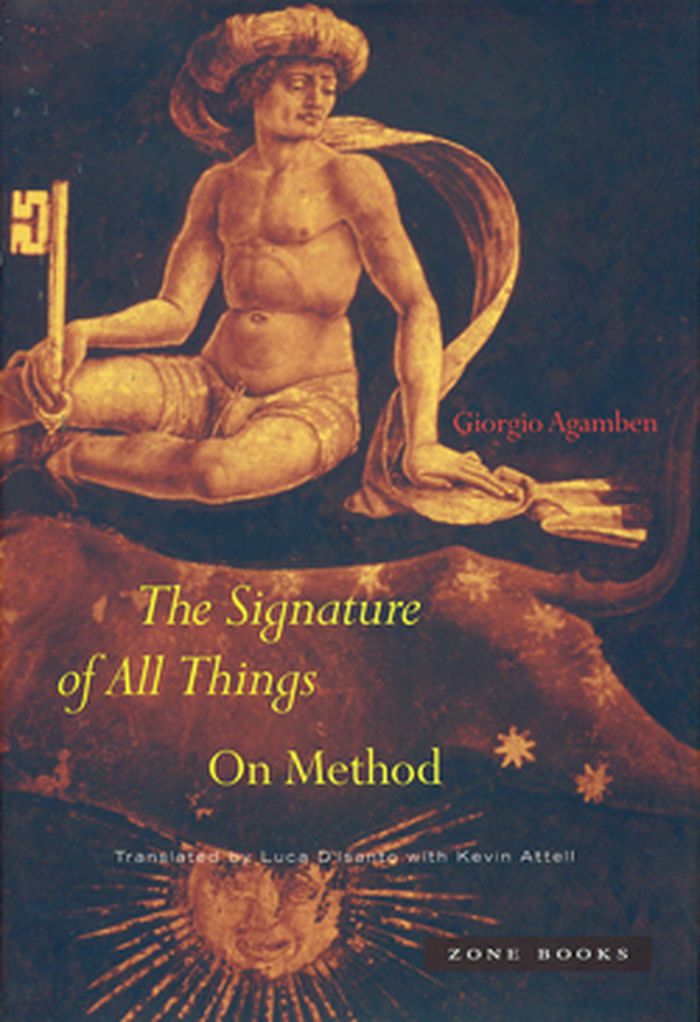
Three conceptual figures organize Agamben's argument and the advent of his new method: the paradigm, the signature, and archaeology. Each chapter is devoted to an investigation of one of these concepts and Agamben carefully constructs its genealogy transhistorically and from an interdisciplinary perspective. And at each moment of the text, Agamben pays tribute to Michel Foucault, whose methods he rethinks and effectively uses to reformulate the logic of the concepts he isolates.
The signature of all things: on method
Actions:
Price:
$27.99
(available to order)
Summary:
Three conceptual figures organize Agamben's argument and the advent of his new method: the paradigm, the signature, and archaeology. Each chapter is devoted to an investigation of one of these concepts and Agamben carefully constructs its genealogy transhistorically and from an interdisciplinary perspective. And at each moment of the text, Agamben pays tribute to Michel Foucault, whose methods he rethinks and effectively uses to reformulate the logic of the concepts he isolates.
Form:
books
books
Publication:
December 2009
December 2009
Subject:
Critical Theory
Critical Theory
Form:
books
books
Actions:
Price:
$25.95
(available to order)
Summary:
This book reconstructs and reconsiders the history of the sensation. In twenty-five concise chapters that move freely among ancient, medieval, and modern cultures, Daniel Heller-Roazen investigates a set of exemplary phenomena that have played central roles in philosophical, literary, psychological, and medical accounts of the nature of animal existence. Here sensation(...)
$25.95
(available to order)
Summary:
This book reconstructs and reconsiders the history of the sensation. In twenty-five concise chapters that move freely among ancient, medieval, and modern cultures, Daniel Heller-Roazen investigates a set of exemplary phenomena that have played central roles in philosophical, literary, psychological, and medical accounts of the nature of animal existence. Here sensation(...)
Title:
The inner touch : archaeology of a sensation
Actions:
Price:
$25.95
(available to order)
Summary:
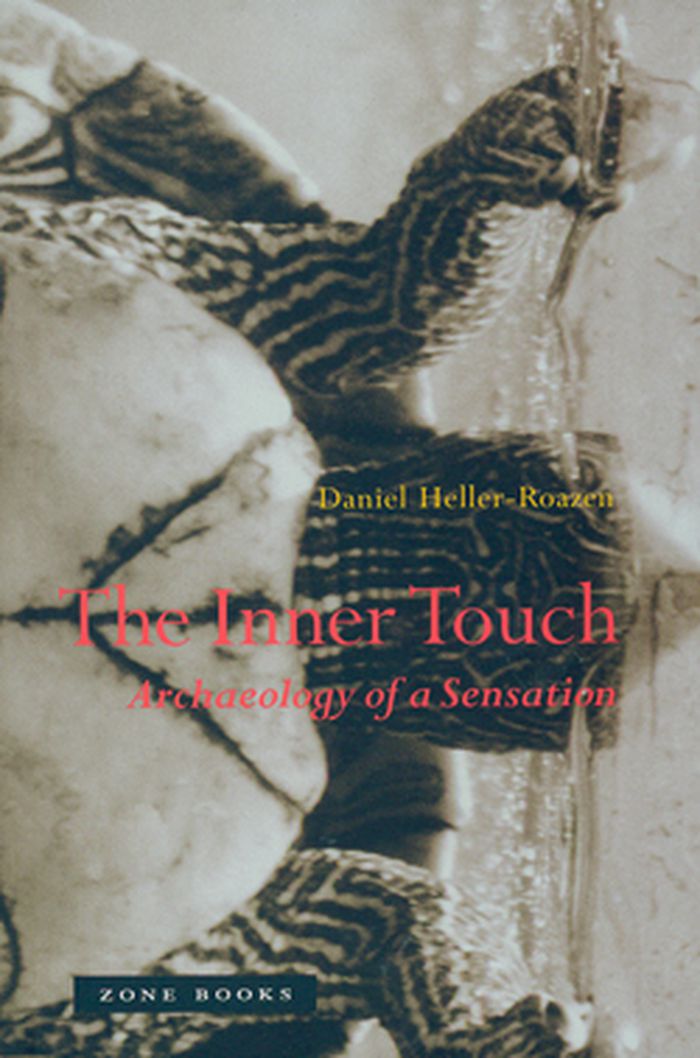
This book reconstructs and reconsiders the history of the sensation. In twenty-five concise chapters that move freely among ancient, medieval, and modern cultures, Daniel Heller-Roazen investigates a set of exemplary phenomena that have played central roles in philosophical, literary, psychological, and medical accounts of the nature of animal existence. Here sensation and self-sensation, sleeping and waking, aesthetics and anesthetics, perception and apperception, animal nature and human nature, consciousness and unconsciousness, all acquire a new meaning.
The inner touch : archaeology of a sensation
Actions:
Price:
$25.95
(available to order)
Summary:
This book reconstructs and reconsiders the history of the sensation. In twenty-five concise chapters that move freely among ancient, medieval, and modern cultures, Daniel Heller-Roazen investigates a set of exemplary phenomena that have played central roles in philosophical, literary, psychological, and medical accounts of the nature of animal existence. Here sensation and self-sensation, sleeping and waking, aesthetics and anesthetics, perception and apperception, animal nature and human nature, consciousness and unconsciousness, all acquire a new meaning.
Form:
books
books
Publication:
September 2009
September 2009
Subject:
Architectural Theory
Architectural Theory
Form:
books
books
Title:
Optical media
Optical media
Actions:
Price:
$31.95
(available to order)
Summary:
This book provides a comprehensive introduction to the history of image production which is indispensable for anyone wishing to understand the prevailing audiovisual conditions of contemporary culture.
$31.95
(available to order)
Summary:
This book provides a comprehensive introduction to the history of image production which is indispensable for anyone wishing to understand the prevailing audiovisual conditions of contemporary culture.
Title:
Optical media
Actions:
Price:
$31.95
(available to order)
Summary:
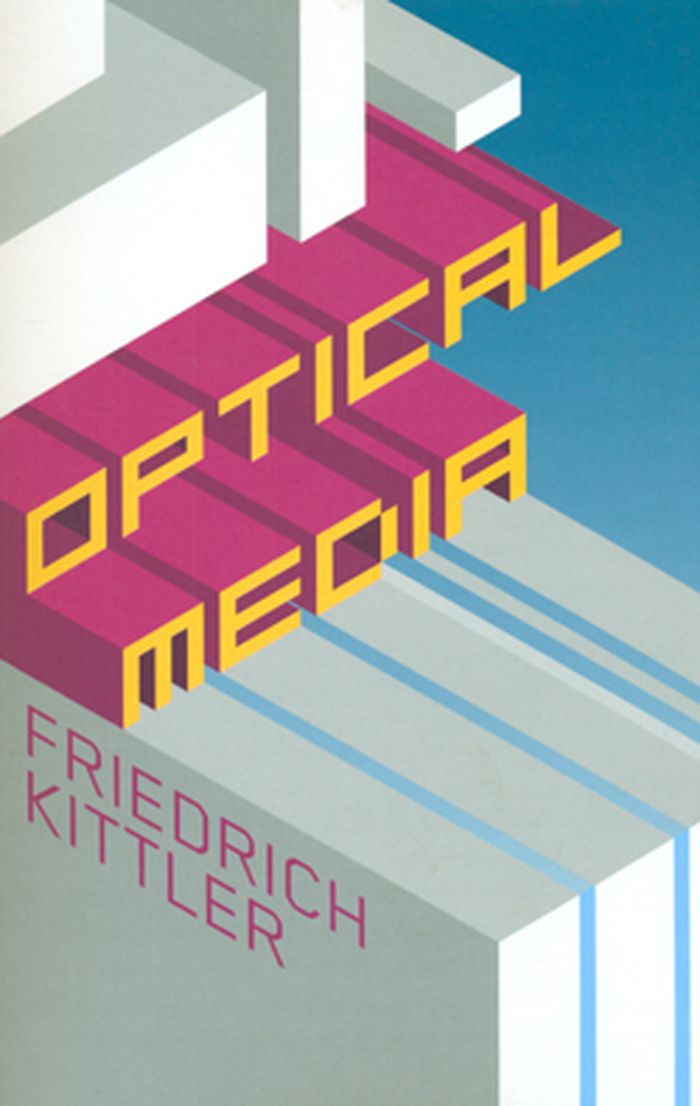
This book provides a comprehensive introduction to the history of image production which is indispensable for anyone wishing to understand the prevailing audiovisual conditions of contemporary culture.
Optical media
Actions:
Price:
$31.95
(available to order)
Summary:
This book provides a comprehensive introduction to the history of image production which is indispensable for anyone wishing to understand the prevailing audiovisual conditions of contemporary culture.
Form:
books
books
Publication:
November 2009
November 2009
Subject:
Art Theory
Art Theory
Form:
books
books
Price:
$24.95
(available to order)
Summary:
Things make us just as much as we make things. And yet, unlike the study of languages or places, there is no discipline devoted to the study of material things. This book shows why it is time to acknowledge and confront this neglect and how much we can learn from focusing our attention on stuff. It presents the theories that are required to understand the way we are(...)
$24.95
(available to order)
Summary:
Things make us just as much as we make things. And yet, unlike the study of languages or places, there is no discipline devoted to the study of material things. This book shows why it is time to acknowledge and confront this neglect and how much we can learn from focusing our attention on stuff. It presents the theories that are required to understand the way we are(...)
Title:
Stuff
Actions:
Price:
$24.95
(available to order)
Summary:
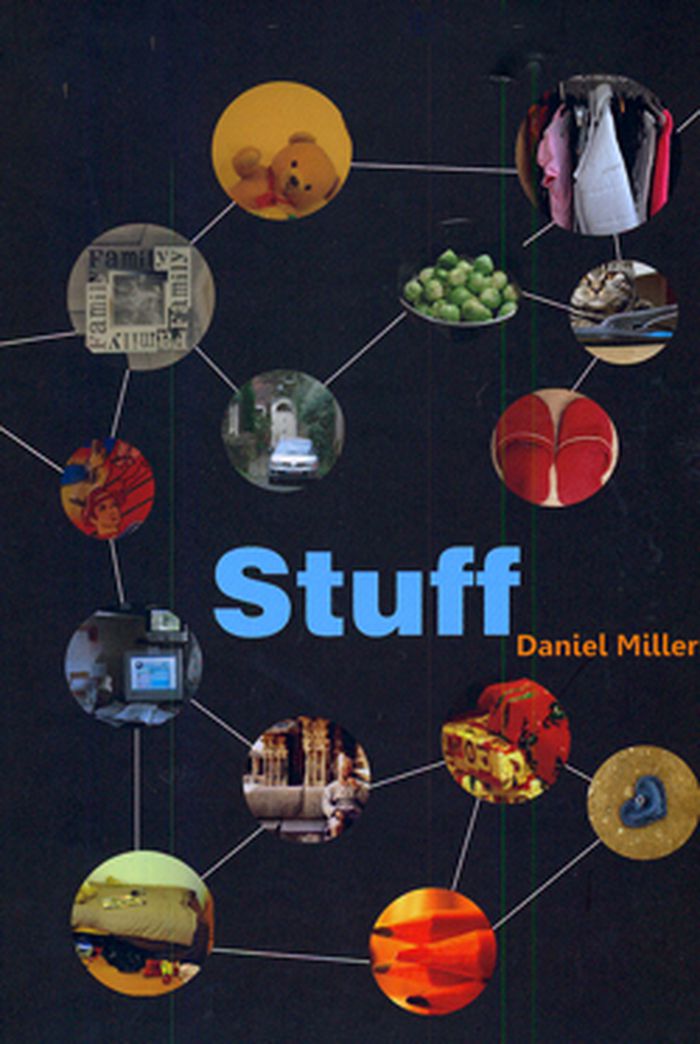
Things make us just as much as we make things. And yet, unlike the study of languages or places, there is no discipline devoted to the study of material things. This book shows why it is time to acknowledge and confront this neglect and how much we can learn from focusing our attention on stuff. It presents the theories that are required to understand the way we are created by material as well as social relations. It takes us inside the very private worlds of our home possessions and our processes of accommodating. It considers issues of materiality in relation to the media, as well as the implications of such an approach in relation, for example, to poverty. Finally, the book considers objects which we use to define what it is to be alive and how we use objects to cope with death.
Stuff
Actions:
Price:
$24.95
(available to order)
Summary:
Things make us just as much as we make things. And yet, unlike the study of languages or places, there is no discipline devoted to the study of material things. This book shows why it is time to acknowledge and confront this neglect and how much we can learn from focusing our attention on stuff. It presents the theories that are required to understand the way we are created by material as well as social relations. It takes us inside the very private worlds of our home possessions and our processes of accommodating. It considers issues of materiality in relation to the media, as well as the implications of such an approach in relation, for example, to poverty. Finally, the book considers objects which we use to define what it is to be alive and how we use objects to cope with death.
Form:
books
books
Publication:
November 2009
November 2009
Subject:
Design Theory
Design Theory


