


7437 Results
Form:
books
books
Actions:
Price:
$50.95
(available to order)
Summary:
We are not only living longer than our grandparents, but we are also working longer and remaining more active and enterprising than they did. Thus for many today the second half of life os marked by a broad and varied range of activities that call for freedom of action, whether one has a disability or other limitation or not. What types of housing will make it possible to(...)
$50.95
(available to order)
Summary:
We are not only living longer than our grandparents, but we are also working longer and remaining more active and enterprising than they did. Thus for many today the second half of life os marked by a broad and varied range of activities that call for freedom of action, whether one has a disability or other limitation or not. What types of housing will make it possible to(...)
Subject:
Commercial interiors, Building types
Commercial interiors, Building types
Publication:
June 2008, Basel, Boston, Berlin
June 2008, Basel, Boston, Berlin
Title:
New approaches to housing for the second half of life
Actions:
Price:
$50.95
(available to order)
Summary:
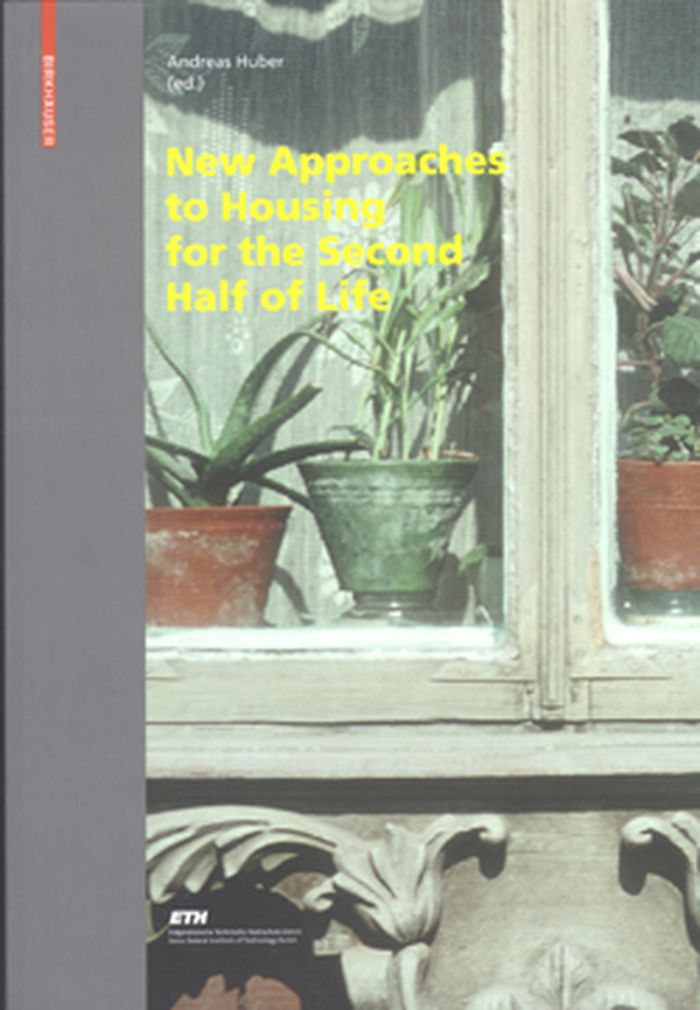
We are not only living longer than our grandparents, but we are also working longer and remaining more active and enterprising than they did. Thus for many today the second half of life os marked by a broad and varied range of activities that call for freedom of action, whether one has a disability or other limitation or not. What types of housing will make it possible to shape this ever longer and more important phase of our lives in accord with our wishes and needs? In addition to the desire of most older people to remain in their homes, we are also seeing the emergence of new and novel communal types of housing, such as shared apartments, houses, and housing developments; integrated residential communities; assisted living; and group homes. Against this backdrop, noted authors consider various aspects of the second phase of life. In addition, realized projects in Switzerland and Germany are presented and analysed in terms of their practical feasibility. Living Concepts is edited by the ETH Wohnforum, an interdiciplinary research group housed in the Faculty of Architecture of the Swiss Federal Institute of Technology Zurich. It presents selected themes from the broad field of housing and is aimed at both specialist readers and those with a general interest in culture.
New approaches to housing for the second half of life
Actions:
Price:
$50.95
(available to order)
Summary:
We are not only living longer than our grandparents, but we are also working longer and remaining more active and enterprising than they did. Thus for many today the second half of life os marked by a broad and varied range of activities that call for freedom of action, whether one has a disability or other limitation or not. What types of housing will make it possible to shape this ever longer and more important phase of our lives in accord with our wishes and needs? In addition to the desire of most older people to remain in their homes, we are also seeing the emergence of new and novel communal types of housing, such as shared apartments, houses, and housing developments; integrated residential communities; assisted living; and group homes. Against this backdrop, noted authors consider various aspects of the second phase of life. In addition, realized projects in Switzerland and Germany are presented and analysed in terms of their practical feasibility. Living Concepts is edited by the ETH Wohnforum, an interdiciplinary research group housed in the Faculty of Architecture of the Swiss Federal Institute of Technology Zurich. It presents selected themes from the broad field of housing and is aimed at both specialist readers and those with a general interest in culture.
Form:
books
books
Publication:
June 2008, Basel, Boston, Berlin
June 2008, Basel, Boston, Berlin
Subject:
Commercial interiors, Building types
Commercial interiors, Building types
Form:
books
books
Actions:
Price:
$29.95
(available in store)
Summary:
Are you bored of the endless scroll of your social media feed? Do you swipe left before considering the human being whose face you just summarily rejected? Do you skim articles on your screen in search of intellectual stimulation that never arrives? If so, this book is the philosophical lifeline you have been waiting for. Offering a timely meditation on the profound(...)
$29.95
(available in store)
Summary:
Are you bored of the endless scroll of your social media feed? Do you swipe left before considering the human being whose face you just summarily rejected? Do you skim articles on your screen in search of intellectual stimulation that never arrives? If so, this book is the philosophical lifeline you have been waiting for. Offering a timely meditation on the profound(...)
Title:
Wish I were here: Boredom and the interface
Actions:
Price:
$29.95
(available in store)
Summary:
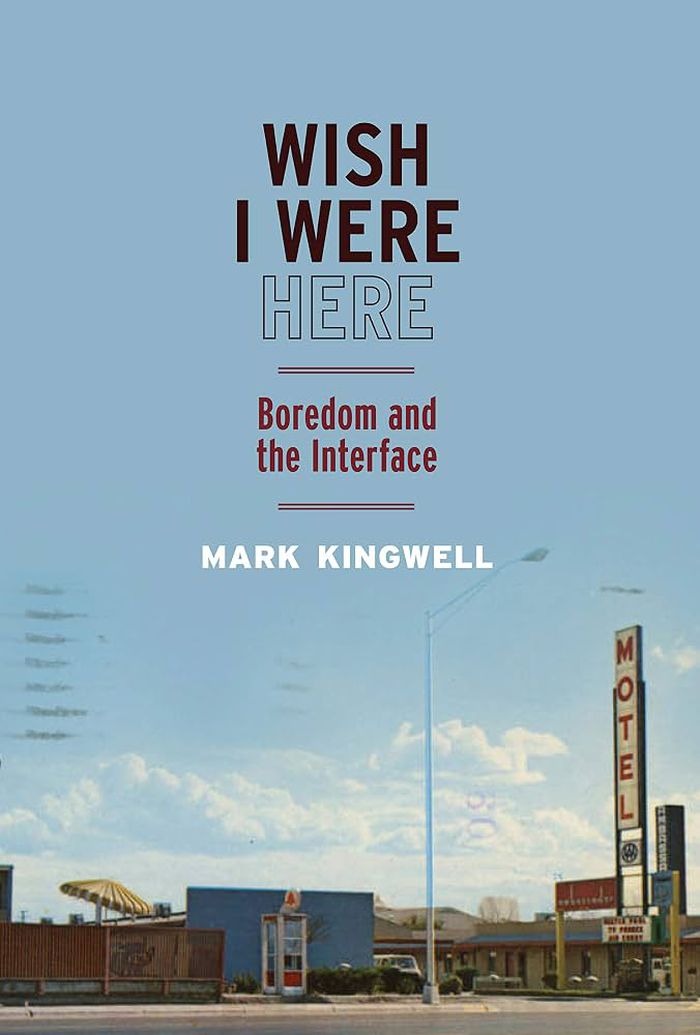
Are you bored of the endless scroll of your social media feed? Do you swipe left before considering the human being whose face you just summarily rejected? Do you skim articles on your screen in search of intellectual stimulation that never arrives? If so, this book is the philosophical lifeline you have been waiting for. Offering a timely meditation on the profound effects of constant immersion in technology, also known as the Interface, ''Wish I Were Here'' draws on philosophical analysis of boredom and happiness to examine the pressing issues of screen addiction and the lure of online outrage. Without moralizing, Mark Kingwell takes seriously the possibility that current conditions of life and connection are creating hollowed-out human selves, divorced from their own external world. While scrolling, swiping, and clicking suggest purposeful action, such as choosing and connecting with others, Kingwell argues that repeated flicks of the finger provide merely the shadow of meaning, by reducing us to scattered data fragments, Twitter feeds, Instagram posts, shopping preferences, and text trends captured by algorithms. Written in accessible language that references both classical philosophers and contemporary critics, ''Wish I Were Here'' turns to philosophy for a cure to the widespread unease that something is amiss in modern waking life.
Wish I were here: Boredom and the interface
Actions:
Price:
$29.95
(available in store)
Summary:
Are you bored of the endless scroll of your social media feed? Do you swipe left before considering the human being whose face you just summarily rejected? Do you skim articles on your screen in search of intellectual stimulation that never arrives? If so, this book is the philosophical lifeline you have been waiting for. Offering a timely meditation on the profound effects of constant immersion in technology, also known as the Interface, ''Wish I Were Here'' draws on philosophical analysis of boredom and happiness to examine the pressing issues of screen addiction and the lure of online outrage. Without moralizing, Mark Kingwell takes seriously the possibility that current conditions of life and connection are creating hollowed-out human selves, divorced from their own external world. While scrolling, swiping, and clicking suggest purposeful action, such as choosing and connecting with others, Kingwell argues that repeated flicks of the finger provide merely the shadow of meaning, by reducing us to scattered data fragments, Twitter feeds, Instagram posts, shopping preferences, and text trends captured by algorithms. Written in accessible language that references both classical philosophers and contemporary critics, ''Wish I Were Here'' turns to philosophy for a cure to the widespread unease that something is amiss in modern waking life.
Form:
books
books
Publication:
May 2026
May 2026
Subject:
Social
Social
Form:
books
books

Price:
$55.50
(available to order)
Summary:
"The boiled frog syndrome" presents compelling evidence to show that the source of the majority of the Western diseases of civilisation that have multiplied over the past 100 years, ranging from cancers to debilitating sicknesses and allergies, can be traced to the modern built environment, our increasing exposure to electromagnetic radiation and the indiscriminate use of(...)
$55.50
(available to order)
Summary:
"The boiled frog syndrome" presents compelling evidence to show that the source of the majority of the Western diseases of civilisation that have multiplied over the past 100 years, ranging from cancers to debilitating sicknesses and allergies, can be traced to the modern built environment, our increasing exposure to electromagnetic radiation and the indiscriminate use of(...)
Title:
The boiled frog syndrome : your health and the built environment
Actions:
Price:
$55.50
(available to order)
Summary:
"The boiled frog syndrome" presents compelling evidence to show that the source of the majority of the Western diseases of civilisation that have multiplied over the past 100 years, ranging from cancers to debilitating sicknesses and allergies, can be traced to the modern built environment, our increasing exposure to electromagnetic radiation and the indiscriminate use of untested advanced technology. It is also due, in part, to the 20th century's repudiation of perennial wisdom. Our physical, mental and spiritual wellbeing will depend on our endeavours to bring about fundamental changes to combat the hazards. But how can this be done? And what can we - the so-called ordinary people - do about it? The text explores how our subtle energy sensitivities respond to the external environment and suggests the steps we can take to ensure our homes and workplaces are safe and conducive to our continued good health. For this it draws on common sense and the author's personal experience as a practising architect and consultant. It is also based on the wisdom and teachings of the past, gleaned from those who knew how to create a healthy, harmonious environment. This book provides the reader with the 'ammunition' to challenge the attitudes of the practitioners and their teaching institutions who are engaged in the built environment.
The boiled frog syndrome : your health and the built environment
Actions:
Price:
$55.50
(available to order)
Summary:
"The boiled frog syndrome" presents compelling evidence to show that the source of the majority of the Western diseases of civilisation that have multiplied over the past 100 years, ranging from cancers to debilitating sicknesses and allergies, can be traced to the modern built environment, our increasing exposure to electromagnetic radiation and the indiscriminate use of untested advanced technology. It is also due, in part, to the 20th century's repudiation of perennial wisdom. Our physical, mental and spiritual wellbeing will depend on our endeavours to bring about fundamental changes to combat the hazards. But how can this be done? And what can we - the so-called ordinary people - do about it? The text explores how our subtle energy sensitivities respond to the external environment and suggests the steps we can take to ensure our homes and workplaces are safe and conducive to our continued good health. For this it draws on common sense and the author's personal experience as a practising architect and consultant. It is also based on the wisdom and teachings of the past, gleaned from those who knew how to create a healthy, harmonious environment. This book provides the reader with the 'ammunition' to challenge the attitudes of the practitioners and their teaching institutions who are engaged in the built environment.
Form:
books
books
Publication:
June 2002, Chichester
June 2002, Chichester
Subject:
Green Architecture
Green Architecture
Form:
books
books
Actions:
Price:
$47.95
(available to order)
Summary:
Plastiglomerates, surveillance robot dogs, fordite, artificial grass, antenna trees, COVID-19, decapitated mountains, drone-fighting eagles, standardized bananas: all of these specimens—some more familiar than others—are examples of the hybridity that shapes the current landscapes of science, technology and everyday life. Inspired by medieval bestiaries and the(...)
$47.95
(available to order)
Summary:
Plastiglomerates, surveillance robot dogs, fordite, artificial grass, antenna trees, COVID-19, decapitated mountains, drone-fighting eagles, standardized bananas: all of these specimens—some more familiar than others—are examples of the hybridity that shapes the current landscapes of science, technology and everyday life. Inspired by medieval bestiaries and the(...)
Title:
A bestiary of the Anthropocene. Hybrid plants, animals, minerals, fungi, and other specimens
Actions:
Price:
$47.95
(available to order)
Summary:
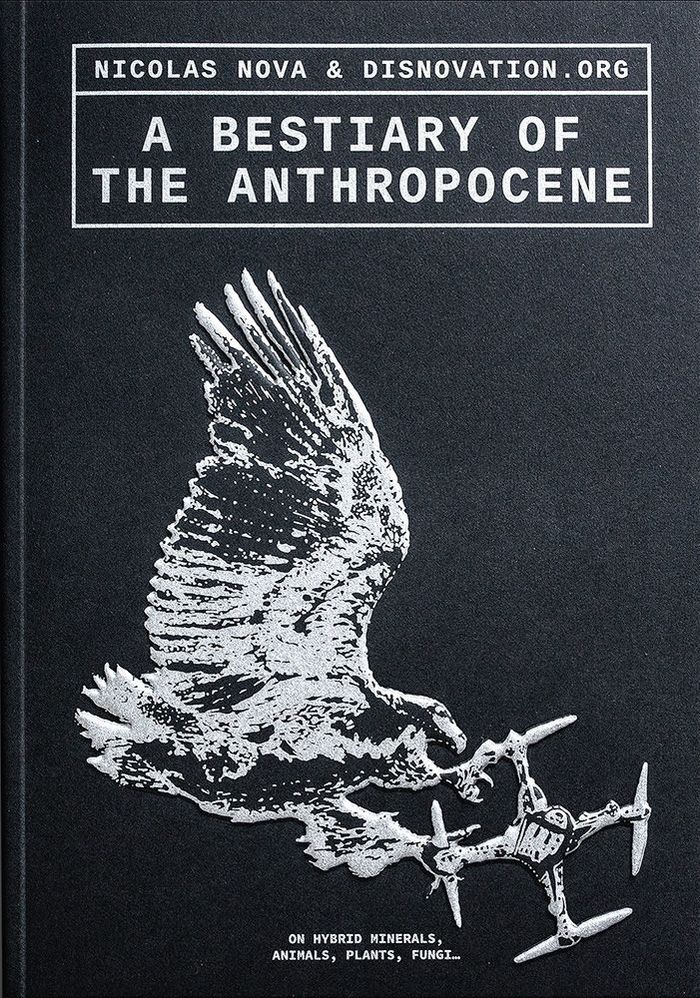
Plastiglomerates, surveillance robot dogs, fordite, artificial grass, antenna trees, COVID-19, decapitated mountains, drone-fighting eagles, standardized bananas: all of these specimens—some more familiar than others—are examples of the hybridity that shapes the current landscapes of science, technology and everyday life. Inspired by medieval bestiaries and the increasingly visible effects of climate change on the planet, French researcher Nicolas Nova & art collective DISNOVATION.ORG provide an ethnographic guide to the ''post-natural'' era in which we live, highlighting the amalgamations of nature and artifice that already co-exist in the 21st century. A sort of field handbook, ''A bestiary of the Anthropocene'' aims to help us orient ourselves within the technosphere and the biosphere. What happens when technologies and their unintended consequences become so ubiquitous that it is difficult to define what is “natural” or not? What does it mean to live in a hybrid environment made of organic and synthetic matter? In order to answer such questions, Nova & DISNOVATION.ORG bring their own research together with contributions from collectives such as the Center for Genomic Gastronomy and Aliens in Green as well as text by scholars and researchers from around the world. Polish graphic designer Maria Roszkowska provides illustrations.
A bestiary of the Anthropocene. Hybrid plants, animals, minerals, fungi, and other specimens
Actions:
Price:
$47.95
(available to order)
Summary:
Plastiglomerates, surveillance robot dogs, fordite, artificial grass, antenna trees, COVID-19, decapitated mountains, drone-fighting eagles, standardized bananas: all of these specimens—some more familiar than others—are examples of the hybridity that shapes the current landscapes of science, technology and everyday life. Inspired by medieval bestiaries and the increasingly visible effects of climate change on the planet, French researcher Nicolas Nova & art collective DISNOVATION.ORG provide an ethnographic guide to the ''post-natural'' era in which we live, highlighting the amalgamations of nature and artifice that already co-exist in the 21st century. A sort of field handbook, ''A bestiary of the Anthropocene'' aims to help us orient ourselves within the technosphere and the biosphere. What happens when technologies and their unintended consequences become so ubiquitous that it is difficult to define what is “natural” or not? What does it mean to live in a hybrid environment made of organic and synthetic matter? In order to answer such questions, Nova & DISNOVATION.ORG bring their own research together with contributions from collectives such as the Center for Genomic Gastronomy and Aliens in Green as well as text by scholars and researchers from around the world. Polish graphic designer Maria Roszkowska provides illustrations.
Form:
books
books
Publication:
May 2021
May 2021
Subject:
Environment and environmental theory
Environment and environmental theory
Form:
books
books

Actions:
Price:
$35.95
(available to order)
Summary:
Many societies have imagined going to live in space. What they want to do once they get up there—whether conquering the unknown, establishing space ''colonies,'' privatising the moon’s resources—reveals more than expected. In this fascinating radical history of space exploration, Fred Scharmen shows that often science and fiction have combined in the imagined dreams of(...)
$35.95
(available to order)
Summary:
Many societies have imagined going to live in space. What they want to do once they get up there—whether conquering the unknown, establishing space ''colonies,'' privatising the moon’s resources—reveals more than expected. In this fascinating radical history of space exploration, Fred Scharmen shows that often science and fiction have combined in the imagined dreams of(...)
Title:
Space forces: a critical history of life in outer space
Actions:
Price:
$35.95
(available to order)
Summary:
Many societies have imagined going to live in space. What they want to do once they get up there—whether conquering the unknown, establishing space ''colonies,'' privatising the moon’s resources—reveals more than expected. In this fascinating radical history of space exploration, Fred Scharmen shows that often science and fiction have combined in the imagined dreams of life in outer space, but these visions have real implications for life back on earth. For the Russian Cosmists of the 1890s space was a place to pursue human perfection away from the Earth. For others, such as Wernher Von Braun, it was an engineering task that combined, in the Space Race, the Cold War, and during World War II, with destructive geopolitics. Arthur C. Clarke, in his speculative books, offered an alternative vision of wonder that is indifferent to human interaction. Meanwhile NASA planned and managed the space station like an earthbound corporation. Today, the market has arrived into outer space and exploration is the plaything of superrich technology billionaires, who plan to privatise the mineral wealth for themselves. Are other worlds really possible? Bringing these figures and ideas together reveals a completely different story of our relationship with outer space, as well as the dangers of our current direction of extractive capitalism and colonisation.
Space forces: a critical history of life in outer space
Actions:
Price:
$35.95
(available to order)
Summary:
Many societies have imagined going to live in space. What they want to do once they get up there—whether conquering the unknown, establishing space ''colonies,'' privatising the moon’s resources—reveals more than expected. In this fascinating radical history of space exploration, Fred Scharmen shows that often science and fiction have combined in the imagined dreams of life in outer space, but these visions have real implications for life back on earth. For the Russian Cosmists of the 1890s space was a place to pursue human perfection away from the Earth. For others, such as Wernher Von Braun, it was an engineering task that combined, in the Space Race, the Cold War, and during World War II, with destructive geopolitics. Arthur C. Clarke, in his speculative books, offered an alternative vision of wonder that is indifferent to human interaction. Meanwhile NASA planned and managed the space station like an earthbound corporation. Today, the market has arrived into outer space and exploration is the plaything of superrich technology billionaires, who plan to privatise the mineral wealth for themselves. Are other worlds really possible? Bringing these figures and ideas together reveals a completely different story of our relationship with outer space, as well as the dangers of our current direction of extractive capitalism and colonisation.
Form:
books
books
Publication:
November 2021
November 2021
Subject:
Architectural Theory
Architectural Theory
Form:
audio
audio
Title:
Pulsar Threads.
Pulsar Threads.
Actions:
Description:
1 online resource.
Author:
Subject:
Publication:
[Place of publication not identified] : Lateral Addition, 2024.
[Place of publication not identified] : Lateral Addition, 2024.
Form:
audio
audio
Publication:
[Place of publication not identified] : Lateral Addition, 2024.
[Place of publication not identified] : Lateral Addition, 2024.
Author:
Subject:
Form:
books
books
Actions:
Holdings:
Description:
xiii, 301 pages : illustrations (some color), maps (some color), plans ; 26 x 28 cm
Description:
xiii, 301 pages : illustrations (some color), maps (some color), plans ; 26 x 28 cm
Author:
Subject:
Publication:
Los Angeles, Calif. : Getty Research Institute, ©2013.
Los Angeles, Calif. : Getty Research Institute, ©2013.
Title:
Overdrive : L.A. constructs the future, 1940-1990 / edited by Wim de Wit and Christopher James Alexander.
Actions:
Holdings:
Description:
xiii, 301 pages : illustrations (some color), maps (some color), plans ; 26 x 28 cm
Overdrive : L.A. constructs the future, 1940-1990 / edited by Wim de Wit and Christopher James Alexander.
Actions:
Holdings:
Description:
xiii, 301 pages : illustrations (some color), maps (some color), plans ; 26 x 28 cm
Form:
books
books
Publication:
Los Angeles, Calif. : Getty Research Institute, ©2013.
Los Angeles, Calif. : Getty Research Institute, ©2013.
Author:
Subject:
Form:
books
books
Title:
Asymptote : flux
Asymptote : flux
Actions:
Price:
$89.95
(available to order)
Summary:
"Asymptote", an award-winning New York City-based architectural firm, expands the boundaries of traditional practice with work that ranges from buildings and urban design to computer-generated environments. Recognized internationally as both cutting-edge architects and virtual-reality artists, Asymptote partners Lise Anne Couture and Hani Rashid have designed and written(...)
$89.95
(available to order)
Summary:
"Asymptote", an award-winning New York City-based architectural firm, expands the boundaries of traditional practice with work that ranges from buildings and urban design to computer-generated environments. Recognized internationally as both cutting-edge architects and virtual-reality artists, Asymptote partners Lise Anne Couture and Hani Rashid have designed and written(...)
Subject:
Architecture Monographs
Architecture Monographs
Publication:
May 2002, Londres
May 2002, Londres
Title:
Asymptote : flux
Actions:
Price:
$89.95
(available to order)
Summary:
"Asymptote", an award-winning New York City-based architectural firm, expands the boundaries of traditional practice with work that ranges from buildings and urban design to computer-generated environments. Recognized internationally as both cutting-edge architects and virtual-reality artists, Asymptote partners Lise Anne Couture and Hani Rashid have designed and written the first book to document their ‘real world’ (as opposed to virtual) projects completed since 1995. It includes work as diverse as a trading floor for the New York Stock Exchange; a multimedia research park in Kyoto, Japan; a modular furniture system for Knoll; and a centre for art and technology for the Guggenheim Museum in Soho, New York. Rashid and Couture’s work is intriguing because it draws inspiration from a wide range of sources not traditionally associated with architecture – among them the design of airline interiors, sporting equipment, and organic systems like seashells and honeycombs; and various means of communicating and disseminating information. Asymptote presents a seamless trajectory of projects organized in a non-linear fashion and illustrated with installation photographs, collaged photographs, and computer-generated diagrams and environments. The projects are interspersed with descriptive text and the speculative writing that Asymptote is known for. Both partners combine architectural practice with teaching, Rashid at Columbia University and Couture at Columbia and Parsons School of Design.
Asymptote : flux
Actions:
Price:
$89.95
(available to order)
Summary:
"Asymptote", an award-winning New York City-based architectural firm, expands the boundaries of traditional practice with work that ranges from buildings and urban design to computer-generated environments. Recognized internationally as both cutting-edge architects and virtual-reality artists, Asymptote partners Lise Anne Couture and Hani Rashid have designed and written the first book to document their ‘real world’ (as opposed to virtual) projects completed since 1995. It includes work as diverse as a trading floor for the New York Stock Exchange; a multimedia research park in Kyoto, Japan; a modular furniture system for Knoll; and a centre for art and technology for the Guggenheim Museum in Soho, New York. Rashid and Couture’s work is intriguing because it draws inspiration from a wide range of sources not traditionally associated with architecture – among them the design of airline interiors, sporting equipment, and organic systems like seashells and honeycombs; and various means of communicating and disseminating information. Asymptote presents a seamless trajectory of projects organized in a non-linear fashion and illustrated with installation photographs, collaged photographs, and computer-generated diagrams and environments. The projects are interspersed with descriptive text and the speculative writing that Asymptote is known for. Both partners combine architectural practice with teaching, Rashid at Columbia University and Couture at Columbia and Parsons School of Design.
Form:
books
books
Publication:
May 2002, Londres
May 2002, Londres
Subject:
Architecture Monographs
Architecture Monographs
Form:
books
books
Actions:
Price:
$60.00
(available to order)
Summary:
These days, a computer is as much a part of every household's standard equipment as a refrigerator, and yet the explosion of computer technology in the last several decades has transformed the daily life of every member of society far more than even utopians would ever have allowed themselves to dream. No wonder, then, that from design to production, architecture too is(...)
$60.00
(available to order)
Summary:
These days, a computer is as much a part of every household's standard equipment as a refrigerator, and yet the explosion of computer technology in the last several decades has transformed the daily life of every member of society far more than even utopians would ever have allowed themselves to dream. No wonder, then, that from design to production, architecture too is(...)
Title:
Digital process : planning, design, production
Actions:
Price:
$60.00
(available to order)
Summary:
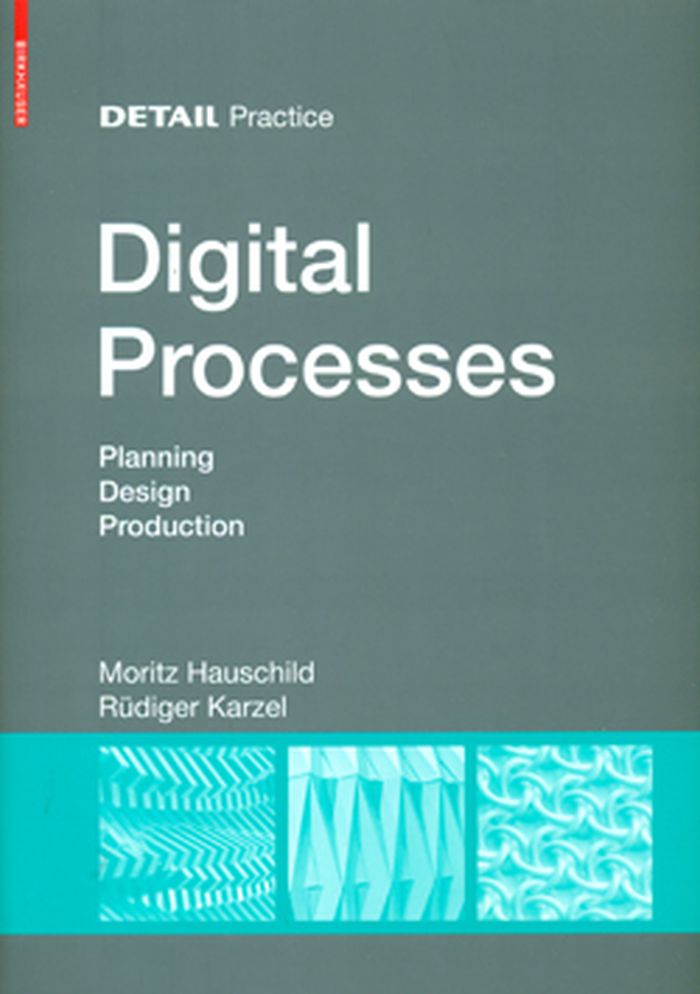
These days, a computer is as much a part of every household's standard equipment as a refrigerator, and yet the explosion of computer technology in the last several decades has transformed the daily life of every member of society far more than even utopians would ever have allowed themselves to dream. No wonder, then, that from design to production, architecture too is becoming more and more subject to digital influences. The range of those influences stretches from the classical computer programs used in design and presentation to media-supported design processes all the way to computerized production techniques, to say nothing of industrialized bricklayer "robots." From measurement to planning and production, archi-tecture is the product of a closely coordinated digital pro-cess chain. What influence do digital design and production methods have on contemporary architecture? How are these new methods changing architecture and the way it is created? Where does the potential of digital media for architecture lie? What are the areas in which every individual firm can begin to use them? What are the advantages of working electronically? How and at what cost can these methods be integrated into the day-to-day work of the professional architect? This publication offers answers to these and many other questions on all aspects of the digital design and construction process.
Digital process : planning, design, production
Actions:
Price:
$60.00
(available to order)
Summary:
These days, a computer is as much a part of every household's standard equipment as a refrigerator, and yet the explosion of computer technology in the last several decades has transformed the daily life of every member of society far more than even utopians would ever have allowed themselves to dream. No wonder, then, that from design to production, architecture too is becoming more and more subject to digital influences. The range of those influences stretches from the classical computer programs used in design and presentation to media-supported design processes all the way to computerized production techniques, to say nothing of industrialized bricklayer "robots." From measurement to planning and production, archi-tecture is the product of a closely coordinated digital pro-cess chain. What influence do digital design and production methods have on contemporary architecture? How are these new methods changing architecture and the way it is created? Where does the potential of digital media for architecture lie? What are the areas in which every individual firm can begin to use them? What are the advantages of working electronically? How and at what cost can these methods be integrated into the day-to-day work of the professional architect? This publication offers answers to these and many other questions on all aspects of the digital design and construction process.
Form:
books
books
Publication:
October 2011
October 2011
Subject:
Digital Architecture
Digital Architecture
Form:
books
books
Actions:
Price:
$39.95
(available to order)
Summary:
An epic project in both size and purview, Peter Sloterdijk's three-volume, 2,500-page Spheres is the late-twentieth-century bookend to Heidegger's Being and Time. Rejecting the century's predominant philosophical focus on temporality, Sloterdijk, a self-described "student of the air," reinterprets the history of Western metaphysics as an inherently spatial and(...)
$39.95
(available to order)
Summary:
An epic project in both size and purview, Peter Sloterdijk's three-volume, 2,500-page Spheres is the late-twentieth-century bookend to Heidegger's Being and Time. Rejecting the century's predominant philosophical focus on temporality, Sloterdijk, a self-described "student of the air," reinterprets the history of Western metaphysics as an inherently spatial and(...)
Title:
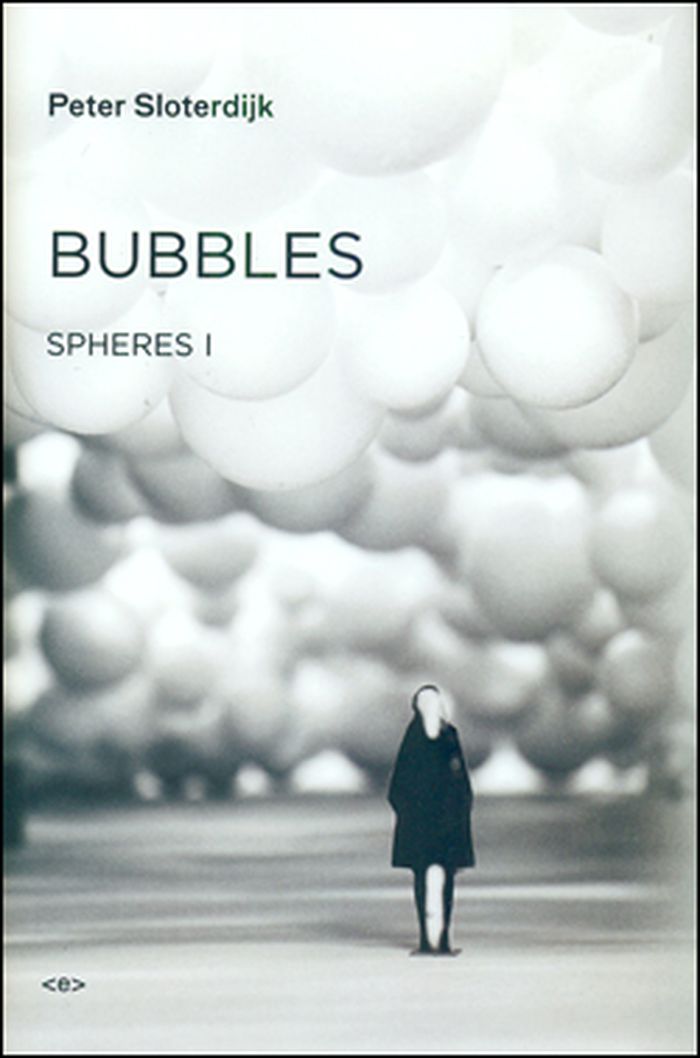
Spheres1 : Bubbles, microspherology
Actions:
Price:
$39.95
(available to order)
Summary:
An epic project in both size and purview, Peter Sloterdijk's three-volume, 2,500-page Spheres is the late-twentieth-century bookend to Heidegger's Being and Time. Rejecting the century's predominant philosophical focus on temporality, Sloterdijk, a self-described "student of the air," reinterprets the history of Western metaphysics as an inherently spatial and immunological project, from the discovery of self (bubble) to the exploration of world (globe) to the poetics of plurality (foam). Exploring macro- and micro-space from the Greek agora to the contemporary urban apartment, Sloterdijk is able to synthesize, with immense erudition, the spatial theories of Aristotle, René Descartes, Gaston Bachelard, Walter Benjamin, and Georges Bataille into a morphology of shared, or multipolar, dwelling - identifying the question of being as one bound up with the aerial technology of architectonics and anthropogenesis. Sloterdijk describes Bubbles, the first volume of Spheres, as a general theory of the structures that allow couplings - or as the book's original intended subtitle put it, an "archeology of the intimate." Bubbles includes a wide array of images, not to illustrate Sloterdijk's discourse, but to offer a spatial and visual "parallel narrative" to his exploration of bubbles. Written over the course of a decade, the Spheres trilogy has waited another decade for its much-anticipated English translation from Semiotext(e). Volumes II, Globes, and III, Foam, will be published in the coming seasons.
Spheres1 : Bubbles, microspherology
Actions:
Price:
$39.95
(available to order)
Summary:
An epic project in both size and purview, Peter Sloterdijk's three-volume, 2,500-page Spheres is the late-twentieth-century bookend to Heidegger's Being and Time. Rejecting the century's predominant philosophical focus on temporality, Sloterdijk, a self-described "student of the air," reinterprets the history of Western metaphysics as an inherently spatial and immunological project, from the discovery of self (bubble) to the exploration of world (globe) to the poetics of plurality (foam). Exploring macro- and micro-space from the Greek agora to the contemporary urban apartment, Sloterdijk is able to synthesize, with immense erudition, the spatial theories of Aristotle, René Descartes, Gaston Bachelard, Walter Benjamin, and Georges Bataille into a morphology of shared, or multipolar, dwelling - identifying the question of being as one bound up with the aerial technology of architectonics and anthropogenesis. Sloterdijk describes Bubbles, the first volume of Spheres, as a general theory of the structures that allow couplings - or as the book's original intended subtitle put it, an "archeology of the intimate." Bubbles includes a wide array of images, not to illustrate Sloterdijk's discourse, but to offer a spatial and visual "parallel narrative" to his exploration of bubbles. Written over the course of a decade, the Spheres trilogy has waited another decade for its much-anticipated English translation from Semiotext(e). Volumes II, Globes, and III, Foam, will be published in the coming seasons.
Form:
books
books
Publication:
November 2011
November 2011
Subject:
Critical Theory
Critical Theory


