


7437 Results
Form:
books
books
Actions:
Price:
$43.95
(available to order)
Summary:
This third volume in the Chora series continues to explore diverse historical and critical issues in architecture. Attempting to discover architectural alternatives based on concepts of aesthetics, technology, or sociology, the contributors offer refreshing interdisciplinary explorations of architectural tradition. The thirteen essays in(...)
$43.95
(available to order)
Summary:
This third volume in the Chora series continues to explore diverse historical and critical issues in architecture. Attempting to discover architectural alternatives based on concepts of aesthetics, technology, or sociology, the contributors offer refreshing interdisciplinary explorations of architectural tradition. The thirteen essays in(...)
Subject:
Architectural Theory
Architectural Theory
Publication:
February 1999, Montréal
February 1999, Montréal
Title:
Chora 3 : intervals in the philosophy of architecture
Actions:
Price:
$43.95
(available to order)
Summary:
This third volume in the Chora series continues to explore diverse historical and critical issues in architecture. Attempting to discover architectural alternatives based on concepts of aesthetics, technology, or sociology, the contributors offer refreshing interdisciplinary explorations of architectural tradition. The thirteen essays in this collection include historical subjects as well as speculative theoretical "projects" that blur conventional boundaries between history and fiction. Ricardo Castro provides an original reading of the Kogi culture in Colombia; Maria Karvouni explores philological and architectonic connections between the Greek demas (the political individual) and domus (the house); Mark Rozahegy speculates on relationships between architecture and memory; Myriam Blais discusses technical inventions by sixteenth-century French architect Philibert de l'Orme; Alberto Pérez-Gómez examines the late sixteenth-century reconstruction of the Temple of Jerusalem by Juan Bautista Villalpando; Janine Debanné offers a new perspective on Guarino Guarini's Chapel of the Holy Shroud in Turin; Katja Grillner examines the early seventeenth-century writings of Salomon de Caus and his built work in Heidelberg; David Winterton reflects on Charles-François Viel's "Letters"; Franca Trubiano looks at Jean-Jacques Lequeu's controversial Civil Architecture; Henrik Reeh considers the work of Sigfried Kracauer, a disciple of Walter Benjamin; Irena Zantovská Murray reflects on work by artist Jana Sterbak; artist Ellen Zweig presents a textual project that demonstrates the charged poetic space created by film makers such as Antonioni and Hitchcock; and Swedish writer and architect Sören Thurell asks a riddle about architecture and its mimetic origins.
Chora 3 : intervals in the philosophy of architecture
Actions:
Price:
$43.95
(available to order)
Summary:
This third volume in the Chora series continues to explore diverse historical and critical issues in architecture. Attempting to discover architectural alternatives based on concepts of aesthetics, technology, or sociology, the contributors offer refreshing interdisciplinary explorations of architectural tradition. The thirteen essays in this collection include historical subjects as well as speculative theoretical "projects" that blur conventional boundaries between history and fiction. Ricardo Castro provides an original reading of the Kogi culture in Colombia; Maria Karvouni explores philological and architectonic connections between the Greek demas (the political individual) and domus (the house); Mark Rozahegy speculates on relationships between architecture and memory; Myriam Blais discusses technical inventions by sixteenth-century French architect Philibert de l'Orme; Alberto Pérez-Gómez examines the late sixteenth-century reconstruction of the Temple of Jerusalem by Juan Bautista Villalpando; Janine Debanné offers a new perspective on Guarino Guarini's Chapel of the Holy Shroud in Turin; Katja Grillner examines the early seventeenth-century writings of Salomon de Caus and his built work in Heidelberg; David Winterton reflects on Charles-François Viel's "Letters"; Franca Trubiano looks at Jean-Jacques Lequeu's controversial Civil Architecture; Henrik Reeh considers the work of Sigfried Kracauer, a disciple of Walter Benjamin; Irena Zantovská Murray reflects on work by artist Jana Sterbak; artist Ellen Zweig presents a textual project that demonstrates the charged poetic space created by film makers such as Antonioni and Hitchcock; and Swedish writer and architect Sören Thurell asks a riddle about architecture and its mimetic origins.
Form:
books
books
Publication:
February 1999, Montréal
February 1999, Montréal
Subject:
Architectural Theory
Architectural Theory
Form:
books
books
Actions:
Price:
$58.95
(available to order)
Summary:
Bathing in antiquity elevates a prosaic function to the level of a civic institution for which there is no counterpart in contemporary culture. Enriched by over 500 illustrations, many of them by the author, "Baths and bathing in classical antiquity" is an important sourcebook for this ancient institution. Through hundreds of examples, it reviews and analyzes the(...)
$58.95
(available to order)
Summary:
Bathing in antiquity elevates a prosaic function to the level of a civic institution for which there is no counterpart in contemporary culture. Enriched by over 500 illustrations, many of them by the author, "Baths and bathing in classical antiquity" is an important sourcebook for this ancient institution. Through hundreds of examples, it reviews and analyzes the(...)
Title:
Baths and bathing in classical antiquity
Actions:
Price:
$58.95
(available to order)
Summary:
Bathing in antiquity elevates a prosaic function to the level of a civic institution for which there is no counterpart in contemporary culture. Enriched by over 500 illustrations, many of them by the author, "Baths and bathing in classical antiquity" is an important sourcebook for this ancient institution. Through hundreds of examples, it reviews and analyzes the structure, function, and design of baths, seeking to integrate their architecture with the wider social and cultural custom of bathing, and examining in particular the changes this custom underwent in Late Antiquity and in Byzantine and Islamic cultures. Yegul explores the complexities of ancient bathing from several points of view. Sociologically, the baths with their vast appeal for all levels of society - were seen as the epitome of democratic ideals and institutions. Politically, they provided the perfect vehicle of propaganda : their lavish and magnificent interiors reflected the might and prosperity of the Roman empire and the apparent generosity of the emperor himself. Architecturally, baths are at the vanguard in the development of Roman building technology. Some of the earliest uses of concrete as a building material and the most innovative applications of the aesthetics of concrete - bold, curvilinear forms, vaults, and domes involved bath buildings. Because of their status as transition between purely utilitarian structures and the more conservative, traditional forms of public and religious architecture, the baths helped to propagate and make acceptable new ideas and new styles in architecture.
Baths and bathing in classical antiquity
Actions:
Price:
$58.95
(available to order)
Summary:
Bathing in antiquity elevates a prosaic function to the level of a civic institution for which there is no counterpart in contemporary culture. Enriched by over 500 illustrations, many of them by the author, "Baths and bathing in classical antiquity" is an important sourcebook for this ancient institution. Through hundreds of examples, it reviews and analyzes the structure, function, and design of baths, seeking to integrate their architecture with the wider social and cultural custom of bathing, and examining in particular the changes this custom underwent in Late Antiquity and in Byzantine and Islamic cultures. Yegul explores the complexities of ancient bathing from several points of view. Sociologically, the baths with their vast appeal for all levels of society - were seen as the epitome of democratic ideals and institutions. Politically, they provided the perfect vehicle of propaganda : their lavish and magnificent interiors reflected the might and prosperity of the Roman empire and the apparent generosity of the emperor himself. Architecturally, baths are at the vanguard in the development of Roman building technology. Some of the earliest uses of concrete as a building material and the most innovative applications of the aesthetics of concrete - bold, curvilinear forms, vaults, and domes involved bath buildings. Because of their status as transition between purely utilitarian structures and the more conservative, traditional forms of public and religious architecture, the baths helped to propagate and make acceptable new ideas and new styles in architecture.
Form:
books
books
Publication:
August 1995, Cambridge
August 1995, Cambridge
Subject:
History until 1900, Classicism
History until 1900, Classicism
Form:
books
books
Actions:
Price:
$92.50
(available to order)
Summary:
MVRDV is a Rotterdam-based architecture and urban design practice founded in 1993 (its name is an acronym for founding members Winy Maas, Jacob van Rijs and Nathalie de Vries). In cooperation with Ilka and Andreas Ruby, MVRDV assembled a monographic overview of 20 years of architectural practice, "MVRDV Buildings", now available in a new, updated edition. Featuring user(...)
$92.50
(available to order)
Summary:
MVRDV is a Rotterdam-based architecture and urban design practice founded in 1993 (its name is an acronym for founding members Winy Maas, Jacob van Rijs and Nathalie de Vries). In cooperation with Ilka and Andreas Ruby, MVRDV assembled a monographic overview of 20 years of architectural practice, "MVRDV Buildings", now available in a new, updated edition. Featuring user(...)
Title:
MVRDV buildings, updated edition
Actions:
Price:
$92.50
(available to order)
Summary:
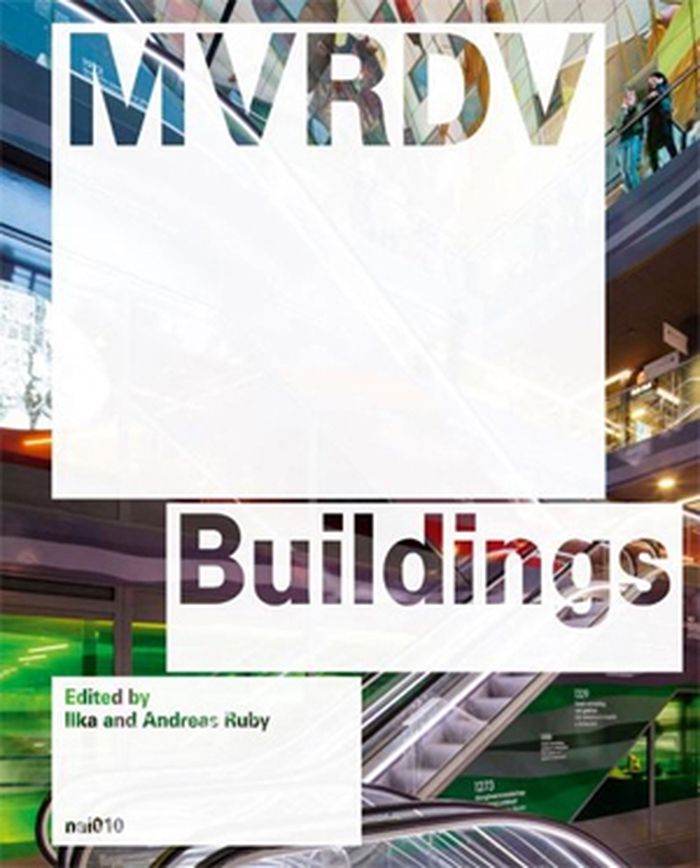
MVRDV is a Rotterdam-based architecture and urban design practice founded in 1993 (its name is an acronym for founding members Winy Maas, Jacob van Rijs and Nathalie de Vries). In cooperation with Ilka and Andreas Ruby, MVRDV assembled a monographic overview of 20 years of architectural practice, "MVRDV Buildings", now available in a new, updated edition. Featuring user testimonies, journalistic articles, and previously unpublished images and drawings, "MVRDV Buildings"surveys the realized work to date of one of the world’s top architecture bureaus. Acclaimed for its visionary research and thought-provoking projects such as Pig City (a high-rise landscape designed to solve lack-of-space problems for the pig meat industry in the Netherlands) and Grand Paris (a proposal to join Paris and its suburbs into a high-density "post-Kyoto city" by 2030), MVRDV has realized a stunning portfolio of buildings and urban plans. This volume includes MVRDV’s famous projects, such as Villa VPRO (Hilversum), WoZoCo (Amsterdam), Balancing Barn (Suffolk, UK) and Edificio Mirador (Madrid), and explores these with a characteristically inquisitive attitude. How do these buildings perform? What is life like in a blue house (in Didden Village, near Rotterdam), on an orange tribune (The Why Factory, situated within a courtyard at Delft University of Technology), in a vertical shopping street (the Gyre Shopping Center in Tokyo) or inside a mountain of books (the Book Mountain library in Spijkenisse)?
MVRDV buildings, updated edition
Actions:
Price:
$92.50
(available to order)
Summary:
MVRDV is a Rotterdam-based architecture and urban design practice founded in 1993 (its name is an acronym for founding members Winy Maas, Jacob van Rijs and Nathalie de Vries). In cooperation with Ilka and Andreas Ruby, MVRDV assembled a monographic overview of 20 years of architectural practice, "MVRDV Buildings", now available in a new, updated edition. Featuring user testimonies, journalistic articles, and previously unpublished images and drawings, "MVRDV Buildings"surveys the realized work to date of one of the world’s top architecture bureaus. Acclaimed for its visionary research and thought-provoking projects such as Pig City (a high-rise landscape designed to solve lack-of-space problems for the pig meat industry in the Netherlands) and Grand Paris (a proposal to join Paris and its suburbs into a high-density "post-Kyoto city" by 2030), MVRDV has realized a stunning portfolio of buildings and urban plans. This volume includes MVRDV’s famous projects, such as Villa VPRO (Hilversum), WoZoCo (Amsterdam), Balancing Barn (Suffolk, UK) and Edificio Mirador (Madrid), and explores these with a characteristically inquisitive attitude. How do these buildings perform? What is life like in a blue house (in Didden Village, near Rotterdam), on an orange tribune (The Why Factory, situated within a courtyard at Delft University of Technology), in a vertical shopping street (the Gyre Shopping Center in Tokyo) or inside a mountain of books (the Book Mountain library in Spijkenisse)?
Form:
books
books
Publication:
February 2016
February 2016
Subject:
Architecture Monographs
Architecture Monographs
Form:
books
books
Price:
$40.00
(available to order)
Summary:
Cities can make us sick. They always have—diseases spread more easily when more people are close to one another. And disease is hardly the only ill that accompanies urban density. Cities have been demonized as breeding grounds for vice and crime from Sodom and Gomorrah on. But cities have flourished nonetheless because they are humanity’s greatest invention, indispensable(...)
$40.00
(available to order)
Summary:
Cities can make us sick. They always have—diseases spread more easily when more people are close to one another. And disease is hardly the only ill that accompanies urban density. Cities have been demonized as breeding grounds for vice and crime from Sodom and Gomorrah on. But cities have flourished nonetheless because they are humanity’s greatest invention, indispensable(...)
Title:
Survival of the city: Living and thriving in an age of isolation
Actions:
Price:
$40.00
(available to order)
Summary:
Cities can make us sick. They always have—diseases spread more easily when more people are close to one another. And disease is hardly the only ill that accompanies urban density. Cities have been demonized as breeding grounds for vice and crime from Sodom and Gomorrah on. But cities have flourished nonetheless because they are humanity’s greatest invention, indispensable engines for creativity, innovation, wealth, and connection, the loom on which the fabric of civilization is woven. But cities now stand at a crossroads. During the global COVID crisis, cities grew silent as people worked from home—if they could work at all. The normal forms of socializing ground to a halt. How permanent are these changes? Advances in digital technology mean that many people can opt out of city life as never before. Will they? Are we on the brink of a post-urban world? City life will survive but individual cities face terrible risks, argue Edward Glaeser and David Cutler, and a wave of urban failure would be absolutely disastrous. In terms of intimacy and inspiration, nothing can replace what cities offer. Great cities have always demanded great management, and our current crisis has exposed fearful gaps in our capacity for good governance. It is possible to drive a city into the ground, pandemic or not. Glaeser and Cutler examine the evolution that is already happening, and describe the possible futures that lie before us.
Survival of the city: Living and thriving in an age of isolation
Actions:
Price:
$40.00
(available to order)
Summary:
Cities can make us sick. They always have—diseases spread more easily when more people are close to one another. And disease is hardly the only ill that accompanies urban density. Cities have been demonized as breeding grounds for vice and crime from Sodom and Gomorrah on. But cities have flourished nonetheless because they are humanity’s greatest invention, indispensable engines for creativity, innovation, wealth, and connection, the loom on which the fabric of civilization is woven. But cities now stand at a crossroads. During the global COVID crisis, cities grew silent as people worked from home—if they could work at all. The normal forms of socializing ground to a halt. How permanent are these changes? Advances in digital technology mean that many people can opt out of city life as never before. Will they? Are we on the brink of a post-urban world? City life will survive but individual cities face terrible risks, argue Edward Glaeser and David Cutler, and a wave of urban failure would be absolutely disastrous. In terms of intimacy and inspiration, nothing can replace what cities offer. Great cities have always demanded great management, and our current crisis has exposed fearful gaps in our capacity for good governance. It is possible to drive a city into the ground, pandemic or not. Glaeser and Cutler examine the evolution that is already happening, and describe the possible futures that lie before us.
Form:
books
books
Publication:
September 2021
September 2021
Subject:
Urban Theory
Urban Theory
Form:
books
books
Actions:
Price:
$32.95
(available in store)
Summary:
A small but growing group of today's knowledge workers actively seek a lifestyle of freedom, using technology to perform their jobs, traveling far and wide, and moving as often as they like. These digital nomads have left their local coffee shops behind and now proudly post their "office of the day" photos from exotic locales, but what do their lives really look like? In(...)
$32.95
(available in store)
Summary:
A small but growing group of today's knowledge workers actively seek a lifestyle of freedom, using technology to perform their jobs, traveling far and wide, and moving as often as they like. These digital nomads have left their local coffee shops behind and now proudly post their "office of the day" photos from exotic locales, but what do their lives really look like? In(...)
Publication:
January 2021
January 2021
Title:
Digital nomads: In search of freedom, community and meaningful work in the new economy
Actions:
Price:
$32.95
(available in store)
Summary:
A small but growing group of today's knowledge workers actively seek a lifestyle of freedom, using technology to perform their jobs, traveling far and wide, and moving as often as they like. These digital nomads have left their local coffee shops behind and now proudly post their "office of the day" photos from exotic locales, but what do their lives really look like? In ''Digital nomads,'' Rachael Woldoff and Robert Litchfield take readers into an expatriate digital nomad community in Bali, Indonesia to better understand this growing demographic of typically Millennial workers. Through dozens of interviews and several stints living in a digital nomad hub, Woldoff and Litchfield present new answers to classic questions about community, creativity, and work. They further show why digital nomads leave their conventional lives behind, arguing that creative class and Millennial workers, though successful, often feel that their "world class cities" and desirable jobs are anything but paradise. They first follow their transitions into freelancing, entrepreneurship, and remote work, then explain how digital nomads create a fluid but intimate community abroad in the company of like-minded others. Ultimately, Woldoff and Litchfield provide insight into digital nomads' efforts to live and work in ways that balance freedom, community, and creative fulfillment in the digital age. A sympathetic yet critical take on this emerging group of workers, ''Digital nomads'' provides a revealing take on the changing nature of work and the problems of the new economy.
Digital nomads: In search of freedom, community and meaningful work in the new economy
Actions:
Price:
$32.95
(available in store)
Summary:
A small but growing group of today's knowledge workers actively seek a lifestyle of freedom, using technology to perform their jobs, traveling far and wide, and moving as often as they like. These digital nomads have left their local coffee shops behind and now proudly post their "office of the day" photos from exotic locales, but what do their lives really look like? In ''Digital nomads,'' Rachael Woldoff and Robert Litchfield take readers into an expatriate digital nomad community in Bali, Indonesia to better understand this growing demographic of typically Millennial workers. Through dozens of interviews and several stints living in a digital nomad hub, Woldoff and Litchfield present new answers to classic questions about community, creativity, and work. They further show why digital nomads leave their conventional lives behind, arguing that creative class and Millennial workers, though successful, often feel that their "world class cities" and desirable jobs are anything but paradise. They first follow their transitions into freelancing, entrepreneurship, and remote work, then explain how digital nomads create a fluid but intimate community abroad in the company of like-minded others. Ultimately, Woldoff and Litchfield provide insight into digital nomads' efforts to live and work in ways that balance freedom, community, and creative fulfillment in the digital age. A sympathetic yet critical take on this emerging group of workers, ''Digital nomads'' provides a revealing take on the changing nature of work and the problems of the new economy.
Form:
books
books
Publication:
January 2021
January 2021
Form:
books
books
Holdings:
Description:
xvi, 891 pages : illustrations ; 25 cm
Description:
xvi, 891 pages : illustrations ; 25 cm
Author:
Subject:
Publication:
Boston : Butterworths, ©1983.
Boston : Butterworths, ©1983.
Title:
Museum, archive, and library security / Lawrence J. Fennelly.
Actions:
Holdings:
Description:
xvi, 891 pages : illustrations ; 25 cm
Museum, archive, and library security / Lawrence J. Fennelly.
Actions:
Holdings:
Description:
xvi, 891 pages : illustrations ; 25 cm
Form:
books
books
Publication:
Boston : Butterworths, ©1983.
Boston : Butterworths, ©1983.
Author:
Subject:
Form:
books
books
Actions:
Holdings:
Description:
191 pages : illustrations (some color), facsimiles, plans, portraits ; 26 cm
Description:
191 pages : illustrations (some color), facsimiles, plans, portraits ; 26 cm
Author:
Subject:
Publication:
[Vanves] : Hazan ; Paris : Musée d'Orsay, [2024], ©2024
[Vanves] : Hazan ; Paris : Musée d'Orsay, [2024], ©2024
Title:
La gare d'Orsay et ses métamorphoses / sous la direction de Clémence Raynaud.
Actions:
Holdings:
Description:
191 pages : illustrations (some color), facsimiles, plans, portraits ; 26 cm
La gare d'Orsay et ses métamorphoses / sous la direction de Clémence Raynaud.
Actions:
Holdings:
Description:
191 pages : illustrations (some color), facsimiles, plans, portraits ; 26 cm
Form:
books
books
Publication:
[Vanves] : Hazan ; Paris : Musée d'Orsay, [2024], ©2024
[Vanves] : Hazan ; Paris : Musée d'Orsay, [2024], ©2024
Author:
Subject:
Form:
books
books
Actions:
Description:
1 online resource (379 pages) : illustrations (some color)
Author:
Subject:
Publication:
Lüneburg, Germany : meson press, 2020.
Lüneburg, Germany : meson press, 2020.
Title:
Pandemic media : preliminary notes toward an inventory / edited by Philipp Dominik Keidl, Laliv Melamed, Vinzenz Hediger, and Antonio Somaini.
Actions:
Description:
1 online resource (379 pages) : illustrations (some color)
Pandemic media : preliminary notes toward an inventory / edited by Philipp Dominik Keidl, Laliv Melamed, Vinzenz Hediger, and Antonio Somaini.
Actions:
Description:
1 online resource (379 pages) : illustrations (some color)
Form:
books
books
Publication:
Lüneburg, Germany : meson press, 2020.
Lüneburg, Germany : meson press, 2020.
Author:
Subject:
Form:
books
books
Actions:
Holdings:
Description:
xxii, 326 pages : illustrations (some color), maps, plans ; 30 cm
Description:
xxii, 326 pages : illustrations (some color), maps, plans ; 30 cm
Author:
Subject:
Publication:
Leiden ; Boston : Brill, [2020]
Leiden ; Boston : Brill, [2020]
Title:
New directions and paradigms for the study of Greek architecture : interdisciplinary dialogues in the field / edited by Philip Sapirstein PhD, University of Toronto; David Scahill PhD, American School of Classical Studies at Athens.
Actions:
Holdings:
Description:
xxii, 326 pages : illustrations (some color), maps, plans ; 30 cm
New directions and paradigms for the study of Greek architecture : interdisciplinary dialogues in the field / edited by Philip Sapirstein PhD, University of Toronto; David Scahill PhD, American School of Classical Studies at Athens.
Actions:
Holdings:
Description:
xxii, 326 pages : illustrations (some color), maps, plans ; 30 cm
Form:
books
books
Publication:
Leiden ; Boston : Brill, [2020]
Leiden ; Boston : Brill, [2020]
Author:
Subject:
Form:
books
books
Title:
The Shenzhen experiment
The Shenzhen experiment
Actions:
Price:
$50.00
(available to order)
Summary:
Shenzhen is ground zero for the economic transformation China has seen in recent decades. In 1979, driven by China’s widespread poverty, Deng Xiaoping supported a bold proposal to experiment with economic policies in a rural borderland next to Hong Kong. The site was designated as the City of Shenzhen and soon after became China’s first Special Economic Zone (SEZ). Four(...)
$50.00
(available to order)
Summary:
Shenzhen is ground zero for the economic transformation China has seen in recent decades. In 1979, driven by China’s widespread poverty, Deng Xiaoping supported a bold proposal to experiment with economic policies in a rural borderland next to Hong Kong. The site was designated as the City of Shenzhen and soon after became China’s first Special Economic Zone (SEZ). Four(...)
Title:
The Shenzhen experiment
Actions:
Price:
$50.00
(available to order)
Summary:
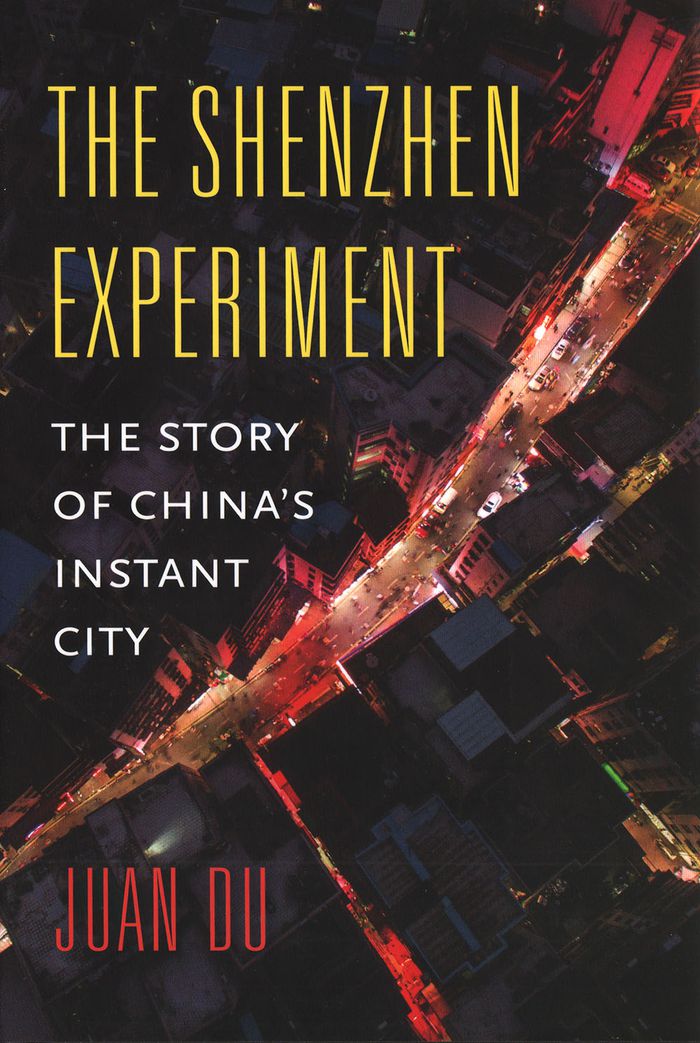
Shenzhen is ground zero for the economic transformation China has seen in recent decades. In 1979, driven by China’s widespread poverty, Deng Xiaoping supported a bold proposal to experiment with economic policies in a rural borderland next to Hong Kong. The site was designated as the City of Shenzhen and soon after became China’s first Special Economic Zone (SEZ). Four decades later, Shenzhen is a megacity of twenty million, an internationally recognized digital technology hub, and the world’s most successful economic zone. Some see it as a modern miracle city that seemingly came from nowhere, attributing its success solely to centralized planning and Shenzhen’s proximity to Hong Kong. The Chinese government has built hundreds of new towns using the Shenzhen model, yet none has come close to replicating the city’s level of economic success. But is it true that Shenzhen has no meaningful history? That the city was planned on a tabula rasa? That the region’s rural past has had no significant impact on the urban present? Juan Du unravels the myth of Shenzhen and shows us how this world-famous “instant city” has a surprising history—filled with oyster fishermen, villages that remain encased within city blocks, a secret informal housing system—and how it has been catapulted to success as much by the ingenuity of its original farmers as by Beijing’s policy makers. “The Shenzhen Experiment” is an important story for all rapidly urbanizing and industrializing nations around the world seeking to replicate China’s economic success in the twenty-first century.
The Shenzhen experiment
Actions:
Price:
$50.00
(available to order)
Summary:
Shenzhen is ground zero for the economic transformation China has seen in recent decades. In 1979, driven by China’s widespread poverty, Deng Xiaoping supported a bold proposal to experiment with economic policies in a rural borderland next to Hong Kong. The site was designated as the City of Shenzhen and soon after became China’s first Special Economic Zone (SEZ). Four decades later, Shenzhen is a megacity of twenty million, an internationally recognized digital technology hub, and the world’s most successful economic zone. Some see it as a modern miracle city that seemingly came from nowhere, attributing its success solely to centralized planning and Shenzhen’s proximity to Hong Kong. The Chinese government has built hundreds of new towns using the Shenzhen model, yet none has come close to replicating the city’s level of economic success. But is it true that Shenzhen has no meaningful history? That the city was planned on a tabula rasa? That the region’s rural past has had no significant impact on the urban present? Juan Du unravels the myth of Shenzhen and shows us how this world-famous “instant city” has a surprising history—filled with oyster fishermen, villages that remain encased within city blocks, a secret informal housing system—and how it has been catapulted to success as much by the ingenuity of its original farmers as by Beijing’s policy makers. “The Shenzhen Experiment” is an important story for all rapidly urbanizing and industrializing nations around the world seeking to replicate China’s economic success in the twenty-first century.
Form:
books
books
Publication:
January 2020
January 2020
Subject:
Contemporary Asian Architecture
Contemporary Asian Architecture


