


7437 Results
Form:
books
books
Actions:
Price:
$19.95
(available to order)
Summary:
Architect Jong Soung Kimm has his roots in Korea, but he spent his formative years as an architect in Chicago. He was educated at the Illinois Institute of Technology and after graduation he worked in the studio of Ludwig Mies van der Rohe for over ten years until 1972. While working for the master, Kimm participated in, among others, the Toronto-Dominion Centre(...)
$19.95
(available to order)
Summary:
Architect Jong Soung Kimm has his roots in Korea, but he spent his formative years as an architect in Chicago. He was educated at the Illinois Institute of Technology and after graduation he worked in the studio of Ludwig Mies van der Rohe for over ten years until 1972. While working for the master, Kimm participated in, among others, the Toronto-Dominion Centre(...)
Title:
Tectonic logic and spatial imagination
Actions:
Price:
$19.95
(available to order)
Summary:
Architect Jong Soung Kimm has his roots in Korea, but he spent his formative years as an architect in Chicago. He was educated at the Illinois Institute of Technology and after graduation he worked in the studio of Ludwig Mies van der Rohe for over ten years until 1972. While working for the master, Kimm participated in, among others, the Toronto-Dominion Centre Banking Hal, the Reception Hall on the 54th floor of the T-D Centre, or the 1968 Mies van der Rohe Retrospective at the Akademie der Künste in Berlin; exhibition design proposal for the new Brown Wing of the Museum of Fine Arts in Houston. All these projects deal with a unique Miesian mode of creating space which Mies van der Rohe had pioneered since Barcelona Pavilion (1928/29) and Tugendhat House (1928-30). Over the last twenty some years after his return to Seoul in 1978, Jong Soung Kimm has produced a significant body of built work as the lead architect of SAC International, which grew and developed under his participation. Some of the more significant work of architecture will be presented in this exhibition. Kimm’s work is characterized not only by his obvious debt to the principles of Mies van der Rohe, but also by Kimm’s sensibility derived from the cultural milieu he hails from. Eight projects will be shown that encompass museums, university buildings, a long span gymnasium building, two high-rise structures, one a hotel, the other a headquarters office for a major global enterprise. It is timely to present the work of an architect with multi-cultural background such as Jong Soung Kimm in our increasingly global architectural scene today.
Tectonic logic and spatial imagination
Actions:
Price:
$19.95
(available to order)
Summary:
Architect Jong Soung Kimm has his roots in Korea, but he spent his formative years as an architect in Chicago. He was educated at the Illinois Institute of Technology and after graduation he worked in the studio of Ludwig Mies van der Rohe for over ten years until 1972. While working for the master, Kimm participated in, among others, the Toronto-Dominion Centre Banking Hal, the Reception Hall on the 54th floor of the T-D Centre, or the 1968 Mies van der Rohe Retrospective at the Akademie der Künste in Berlin; exhibition design proposal for the new Brown Wing of the Museum of Fine Arts in Houston. All these projects deal with a unique Miesian mode of creating space which Mies van der Rohe had pioneered since Barcelona Pavilion (1928/29) and Tugendhat House (1928-30). Over the last twenty some years after his return to Seoul in 1978, Jong Soung Kimm has produced a significant body of built work as the lead architect of SAC International, which grew and developed under his participation. Some of the more significant work of architecture will be presented in this exhibition. Kimm’s work is characterized not only by his obvious debt to the principles of Mies van der Rohe, but also by Kimm’s sensibility derived from the cultural milieu he hails from. Eight projects will be shown that encompass museums, university buildings, a long span gymnasium building, two high-rise structures, one a hotel, the other a headquarters office for a major global enterprise. It is timely to present the work of an architect with multi-cultural background such as Jong Soung Kimm in our increasingly global architectural scene today.
Form:
books
books
Publication:
October 2006, Berlin
October 2006, Berlin
Subject:
small format
small format
Form:
books
books
Price:
$75.95
(available to order)
Summary:
More than one hundred exhibitions of Frank Lloyd Wright's work were mounted between 1894 and his death in 1959. Wright organized the majority of these exhibitions himself and viewed them as crucial to his self-presentation as his extensive writings. He used them to promote his designs, appeal to new viewers, and persuade his detractors. Wright on Exhibit presents the(...)
$75.95
(available to order)
Summary:
More than one hundred exhibitions of Frank Lloyd Wright's work were mounted between 1894 and his death in 1959. Wright organized the majority of these exhibitions himself and viewed them as crucial to his self-presentation as his extensive writings. He used them to promote his designs, appeal to new viewers, and persuade his detractors. Wright on Exhibit presents the(...)
Title:
Wright on exhibit: Frank Lloyd Wright's architectural exhibitions
Actions:
Price:
$75.95
(available to order)
Summary:
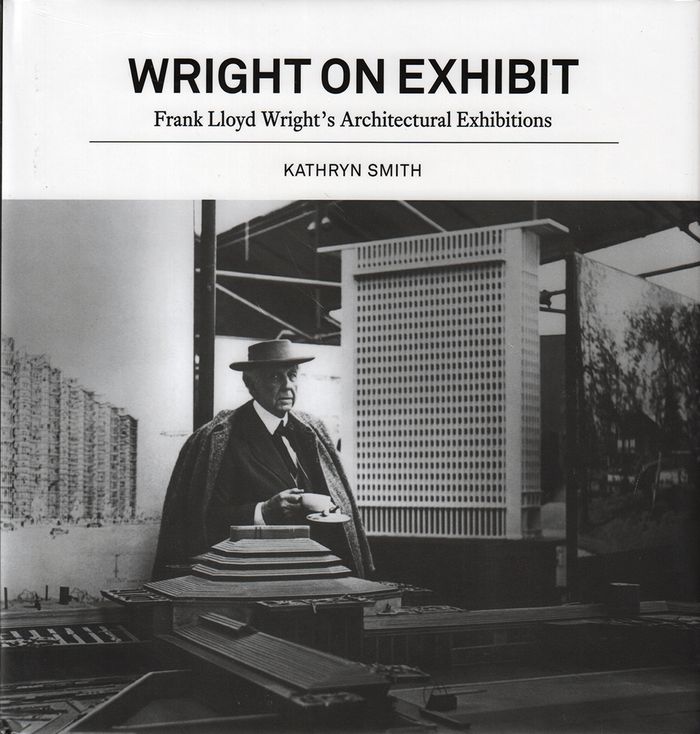
More than one hundred exhibitions of Frank Lloyd Wright's work were mounted between 1894 and his death in 1959. Wright organized the majority of these exhibitions himself and viewed them as crucial to his self-presentation as his extensive writings. He used them to promote his designs, appeal to new viewers, and persuade his detractors. Wright on Exhibit presents the first history of this neglected aspect of the architect’s influential career. Drawing extensively from Wright’s unpublished correspondence, Kathryn Smith challenges the preconceived notion of Wright as a self-promoter who displayed his work in search of money, clients, and fame. She shows how he was an artist-architect projecting an avant-garde program, an innovator who expanded the palette of installation design as technology evolved, and a social activist driven to revolutionize society through design. While Wright’s earliest exhibitions were largely for other architects, by the 1930s he was creating public installations intended to inspire debate and change public perceptions about architecture. The nature of his exhibitions expanded with the times beyond models, drawings, and photographs to include more immersive tools such as slides, film, and even a full-scale structure built especially for his 1953 retrospective at the Guggenheim Museum. Placing Wright’s exhibitions side by side with his writings, Smith shows how integral these exhibitions were to his vision and sheds light on the broader discourse concerning architecture and modernism during the first half of the twentieth century. Wright on Exhibit features color renderings, photos, and plans, as well as a checklist of exhibitions and an illustrated catalog of extant and lost models made under Wright’s supervision.
Wright on exhibit: Frank Lloyd Wright's architectural exhibitions
Actions:
Price:
$75.95
(available to order)
Summary:
More than one hundred exhibitions of Frank Lloyd Wright's work were mounted between 1894 and his death in 1959. Wright organized the majority of these exhibitions himself and viewed them as crucial to his self-presentation as his extensive writings. He used them to promote his designs, appeal to new viewers, and persuade his detractors. Wright on Exhibit presents the first history of this neglected aspect of the architect’s influential career. Drawing extensively from Wright’s unpublished correspondence, Kathryn Smith challenges the preconceived notion of Wright as a self-promoter who displayed his work in search of money, clients, and fame. She shows how he was an artist-architect projecting an avant-garde program, an innovator who expanded the palette of installation design as technology evolved, and a social activist driven to revolutionize society through design. While Wright’s earliest exhibitions were largely for other architects, by the 1930s he was creating public installations intended to inspire debate and change public perceptions about architecture. The nature of his exhibitions expanded with the times beyond models, drawings, and photographs to include more immersive tools such as slides, film, and even a full-scale structure built especially for his 1953 retrospective at the Guggenheim Museum. Placing Wright’s exhibitions side by side with his writings, Smith shows how integral these exhibitions were to his vision and sheds light on the broader discourse concerning architecture and modernism during the first half of the twentieth century. Wright on Exhibit features color renderings, photos, and plans, as well as a checklist of exhibitions and an illustrated catalog of extant and lost models made under Wright’s supervision.
Form:
books
books
Publication:
May 2017
May 2017
Subject:
Architecture Monographs
Architecture Monographs
Form:
books
books
Actions:
Price:
$42.00
(available in store)
Summary:
When is the digital in architecture? What are the conditions that led architects to integrate digital tools into their practices? Over the course of the Archaeology of the Digital research program, the CCA has collected the archival records of twenty-five projects realized between the late 1980s and the early 2000s in order to understand this moment as a point of origin(...)
$42.00
(available in store)
Summary:
When is the digital in architecture? What are the conditions that led architects to integrate digital tools into their practices? Over the course of the Archaeology of the Digital research program, the CCA has collected the archival records of twenty-five projects realized between the late 1980s and the early 2000s in order to understand this moment as a point of origin(...)
Title:
When is the digital in architecture?
Actions:
Price:
$42.00
(available in store)
Summary:
When is the digital in architecture? What are the conditions that led architects to integrate digital tools into their practices? Over the course of the Archaeology of the Digital research program, the CCA has collected the archival records of twenty-five projects realized between the late 1980s and the early 2000s in order to understand this moment as a point of origin for the digital. But if we take care to identify the digital as a condition that is made possible by the conceptual foundations of digital media and not necessarily by digital media itself, the boundaries of the digital moment—when it began and under what circumstances—become less clear. There are eight million stories of the origins of the digital in architecture, and this book brings together fourteen of them in a chronology of responses to the question of when the digital is in architecture. The arguments address specific changes in ways of thinking about architecture, building, and cities, as well as the shifts in technology that resulted from these changes, marking both a capstone to Archaeology of the Digital and the beginning of an investigation of other beginnings of the digital in architecture. Asking a question like When is the digital in architecture? can produce eight million stories in response, and eight million digressions and redirections that narrow in focus and change geographies, producing a Tristram Shandy of the digital as the CCA continues to build its digital archive and makes it increasingly accessible to researchers. If this novel of digressions is distributed across future research projects and extended with studies of new archival material, so much the better for the reader, in our opinion.
When is the digital in architecture?
Actions:
Price:
$42.00
(available in store)
Summary:
When is the digital in architecture? What are the conditions that led architects to integrate digital tools into their practices? Over the course of the Archaeology of the Digital research program, the CCA has collected the archival records of twenty-five projects realized between the late 1980s and the early 2000s in order to understand this moment as a point of origin for the digital. But if we take care to identify the digital as a condition that is made possible by the conceptual foundations of digital media and not necessarily by digital media itself, the boundaries of the digital moment—when it began and under what circumstances—become less clear. There are eight million stories of the origins of the digital in architecture, and this book brings together fourteen of them in a chronology of responses to the question of when the digital is in architecture. The arguments address specific changes in ways of thinking about architecture, building, and cities, as well as the shifts in technology that resulted from these changes, marking both a capstone to Archaeology of the Digital and the beginning of an investigation of other beginnings of the digital in architecture. Asking a question like When is the digital in architecture? can produce eight million stories in response, and eight million digressions and redirections that narrow in focus and change geographies, producing a Tristram Shandy of the digital as the CCA continues to build its digital archive and makes it increasingly accessible to researchers. If this novel of digressions is distributed across future research projects and extended with studies of new archival material, so much the better for the reader, in our opinion.
Form:
books
books
Publication:
June 2017
June 2017
Subject:
CCA Publications
CCA Publications
Form:
books
books
Actions:
Price:
$75.00
(available to order)
Summary:
This large-format monograph is the first to chronicle exclusively Shigeru Ban’s explorations in "paper architecture." Informed by a thorough and early interest in sustainable forms, his innovative practice pioneered the use of paper as a structural element in buildings. This book features permanent and temporary structures, ranging from one-off museums and exhibition(...)
$75.00
(available to order)
Summary:
This large-format monograph is the first to chronicle exclusively Shigeru Ban’s explorations in "paper architecture." Informed by a thorough and early interest in sustainable forms, his innovative practice pioneered the use of paper as a structural element in buildings. This book features permanent and temporary structures, ranging from one-off museums and exhibition(...)
Title:
Shigeru Ban: paper in architecture
Actions:
Price:
$75.00
(available to order)
Summary:
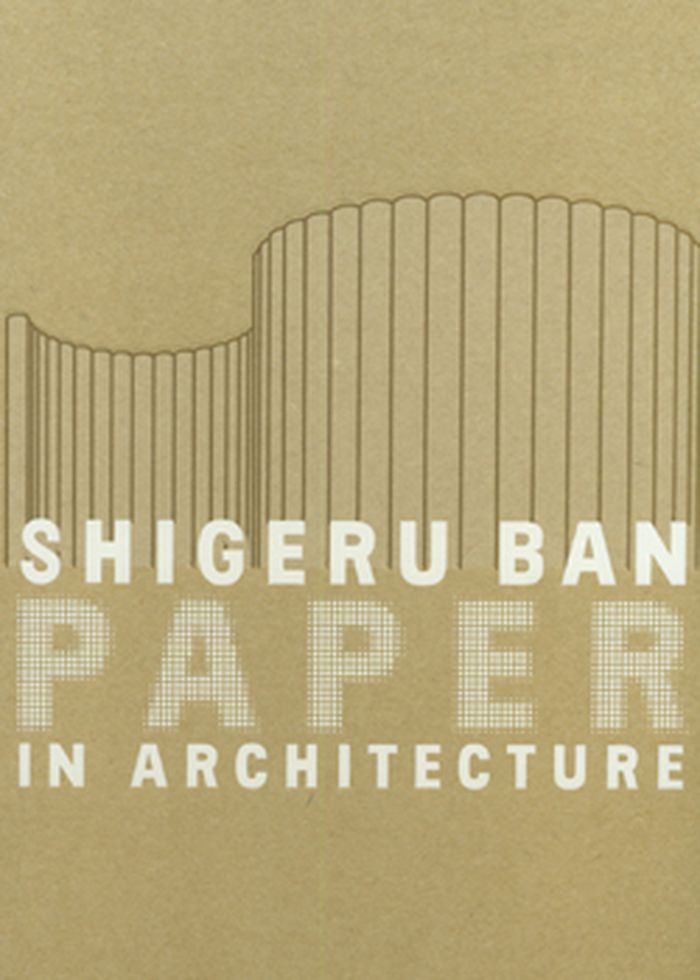
This large-format monograph is the first to chronicle exclusively Shigeru Ban’s explorations in "paper architecture." Informed by a thorough and early interest in sustainable forms, his innovative practice pioneered the use of paper as a structural element in buildings. This book features permanent and temporary structures, ranging from one-off museums and exhibition spaces to emergency structures for communities displaced by natural and man-made catastrophes. The forty projects featured in the book showcase the variety of possible applications for paper and its derivative forms (cardboard, fiber-based composites). As flexible as it is adaptable, when used in tandem with other locally sourced building materials or post-industrial surplus (maritime shipping containers), Ban’s singular use of paper knowingly references paper’s traditional uses in vernacular Japanese buildings, and advances modern construction technology, reducing its environmental impact. A number of prominent works from the last decade are featured, including the Nomadic Museums built in New York, Los Angeles, and Tokyo, his work for the Centre Pompidou in Paris and Metz, the Papertainer Museum in Seoul, his pavilions for design and luxury brands like Louis Vuitton and Artek, as well as a number of landmark residences in Japan, Europe, and North America. Of particular focus will be Ban’s humanitarian work. Documented in a book for the first time are all the relief projects his studio has undertaken in the last two decades for the U.N. High Commission on Refugees. These include housing for tsunami victims in Sri Lanka and earthquake victims in Turkey and Japan, and emergency shelter for war-ravaged communities in Rwanda and the Congo.
Shigeru Ban: paper in architecture
Actions:
Price:
$75.00
(available to order)
Summary:
This large-format monograph is the first to chronicle exclusively Shigeru Ban’s explorations in "paper architecture." Informed by a thorough and early interest in sustainable forms, his innovative practice pioneered the use of paper as a structural element in buildings. This book features permanent and temporary structures, ranging from one-off museums and exhibition spaces to emergency structures for communities displaced by natural and man-made catastrophes. The forty projects featured in the book showcase the variety of possible applications for paper and its derivative forms (cardboard, fiber-based composites). As flexible as it is adaptable, when used in tandem with other locally sourced building materials or post-industrial surplus (maritime shipping containers), Ban’s singular use of paper knowingly references paper’s traditional uses in vernacular Japanese buildings, and advances modern construction technology, reducing its environmental impact. A number of prominent works from the last decade are featured, including the Nomadic Museums built in New York, Los Angeles, and Tokyo, his work for the Centre Pompidou in Paris and Metz, the Papertainer Museum in Seoul, his pavilions for design and luxury brands like Louis Vuitton and Artek, as well as a number of landmark residences in Japan, Europe, and North America. Of particular focus will be Ban’s humanitarian work. Documented in a book for the first time are all the relief projects his studio has undertaken in the last two decades for the U.N. High Commission on Refugees. These include housing for tsunami victims in Sri Lanka and earthquake victims in Turkey and Japan, and emergency shelter for war-ravaged communities in Rwanda and the Congo.
Form:
books
books
Publication:
October 2009
October 2009
Subject:
Architecture Monographs
Architecture Monographs
Form:
books
books
Actions:
Price:
$75.00
(available to order)
Summary:
Architecture affects people. The architecture of hospitals contributes to the well-being and recovery of patients. This bold proposition dates back to the late 18th century, and has been a recurring theme in the functional development of hospital architecture ever since. The most recent manifestation of this was the phenomenon of 'Evidence-Based Design', which originated(...)
$75.00
(available to order)
Summary:
Architecture affects people. The architecture of hospitals contributes to the well-being and recovery of patients. This bold proposition dates back to the late 18th century, and has been a recurring theme in the functional development of hospital architecture ever since. The most recent manifestation of this was the phenomenon of 'Evidence-Based Design', which originated(...)
Subject:
Commercial interiors, Building types
Commercial interiors, Building types
Publication:
December 2005, Rotterdam
December 2005, Rotterdam
Title:
The architecture of hospitals
Actions:
Price:
$75.00
(available to order)
Summary:
Architecture affects people. The architecture of hospitals contributes to the well-being and recovery of patients. This bold proposition dates back to the late 18th century, and has been a recurring theme in the functional development of hospital architecture ever since. The most recent manifestation of this was the phenomenon of 'Evidence-Based Design', which originated in the USA. This methodology compares the effects of various spatial factors and provided indisputable evidence that architecture does indeed work for the first time. The positive influence of architecture is one of the two cornerstones of "The architecture of hospitals". The other is architecture as an historical discipline with a wide-ranging cultural dimension. The hospital, being a public and representative building with a special societal function, is the ideal vehicle to express this cultural dimension. From French and German examples it seems that good architecture can, moreover, contribute to an agreeable, orderly and well maintained environment, which perhaps has a greater impact on the functioning of the hospital than the effects of Evidence-Based Design. Architecture as architecture and as medicine is the theme of "The architecture of hospitals". Partially based on a project of the same name initiated by the University Medical Center Groningen (UMCG), which included various conferences, studios and workshops, the book bears no resemblance to the standard bundle of conference proceedings. Instead it is a richly illustrated publication which is constructed around five themes : culture, healthcare concepts, Evidence-Based Design, technology and country-specific presentations. With texts by : Cor Wagenaar (ed.), Abram de Swaan, Stephen Verderber, Charles Jencks, Aaron Betsky, Roger Ulrich et al.
The architecture of hospitals
Actions:
Price:
$75.00
(available to order)
Summary:
Architecture affects people. The architecture of hospitals contributes to the well-being and recovery of patients. This bold proposition dates back to the late 18th century, and has been a recurring theme in the functional development of hospital architecture ever since. The most recent manifestation of this was the phenomenon of 'Evidence-Based Design', which originated in the USA. This methodology compares the effects of various spatial factors and provided indisputable evidence that architecture does indeed work for the first time. The positive influence of architecture is one of the two cornerstones of "The architecture of hospitals". The other is architecture as an historical discipline with a wide-ranging cultural dimension. The hospital, being a public and representative building with a special societal function, is the ideal vehicle to express this cultural dimension. From French and German examples it seems that good architecture can, moreover, contribute to an agreeable, orderly and well maintained environment, which perhaps has a greater impact on the functioning of the hospital than the effects of Evidence-Based Design. Architecture as architecture and as medicine is the theme of "The architecture of hospitals". Partially based on a project of the same name initiated by the University Medical Center Groningen (UMCG), which included various conferences, studios and workshops, the book bears no resemblance to the standard bundle of conference proceedings. Instead it is a richly illustrated publication which is constructed around five themes : culture, healthcare concepts, Evidence-Based Design, technology and country-specific presentations. With texts by : Cor Wagenaar (ed.), Abram de Swaan, Stephen Verderber, Charles Jencks, Aaron Betsky, Roger Ulrich et al.
Form:
books
books
Publication:
December 2005, Rotterdam
December 2005, Rotterdam
Subject:
Commercial interiors, Building types
Commercial interiors, Building types
Form:
books
books
Title:
Kengo Kuma: New works
Kengo Kuma: New works
Actions:
Price:
$99.00
(available in store)
Summary:
Kengo Kuma is one of Japan’s leading architects and professor emeritus at the University of Tokyo. A prolific writer and philosopher, he proposes architecture that introduces new relationships between nature, technology, and human beings. This book, Kuma’s second monograph following ''Kengo Kuma: Complete Works'', surveys forty projects arranged according to building use,(...)
$99.00
(available in store)
Summary:
Kengo Kuma is one of Japan’s leading architects and professor emeritus at the University of Tokyo. A prolific writer and philosopher, he proposes architecture that introduces new relationships between nature, technology, and human beings. This book, Kuma’s second monograph following ''Kengo Kuma: Complete Works'', surveys forty projects arranged according to building use,(...)
Title:
Kengo Kuma: New works
Actions:
Price:
$99.00
(available in store)
Summary:
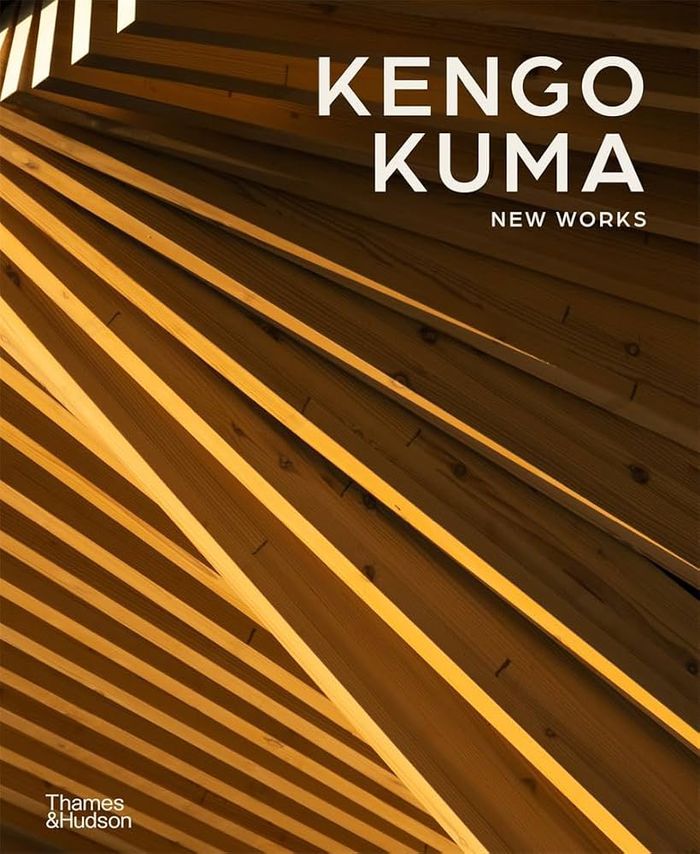
Kengo Kuma is one of Japan’s leading architects and professor emeritus at the University of Tokyo. A prolific writer and philosopher, he proposes architecture that introduces new relationships between nature, technology, and human beings. This book, Kuma’s second monograph following ''Kengo Kuma: Complete Works'', surveys forty projects arranged according to building use, with a timely focus on those that respond to natural disasters and the pandemic, build on the importance of local communities, and address our need to come together with others. The projects range in scale and ambition, from Japan’s Olympic Stadium—where Kuma used timber from every region in the country to build the nation’s largest arena—to a small community center in Yusuhara, and a fairytale museum in Denmark. Each celebrates Kuma’s skill using natural materials, as he pushes them to their limits to create exciting and surprising forms. Take for instance, The Exchange, a community center in Sydney, which has wooden “threads” which wrap around the building, giving the impression of a bird’s nest and the UCCA Clay Museum in Yixing, China, with an undulating organic form that mimics a mountain, covered with 3,600 handmade, clay terracotta tiles. In the book’s introductory essay, designer and Harvard University professor Grace La considers Kuma’s evolution since his previous monograph and explores the themes of his work and how they relate to the architecture world today. The projects included in ''Kengo Kuma: New Works''—stadiums and cultural centers, museums and houses, cafés and parks, temples and pavilions—have been chosen by Kuma himself as best representative of this stage in his career. None appear in his previous book.
Kengo Kuma: New works
Actions:
Price:
$99.00
(available in store)
Summary:
Kengo Kuma is one of Japan’s leading architects and professor emeritus at the University of Tokyo. A prolific writer and philosopher, he proposes architecture that introduces new relationships between nature, technology, and human beings. This book, Kuma’s second monograph following ''Kengo Kuma: Complete Works'', surveys forty projects arranged according to building use, with a timely focus on those that respond to natural disasters and the pandemic, build on the importance of local communities, and address our need to come together with others. The projects range in scale and ambition, from Japan’s Olympic Stadium—where Kuma used timber from every region in the country to build the nation’s largest arena—to a small community center in Yusuhara, and a fairytale museum in Denmark. Each celebrates Kuma’s skill using natural materials, as he pushes them to their limits to create exciting and surprising forms. Take for instance, The Exchange, a community center in Sydney, which has wooden “threads” which wrap around the building, giving the impression of a bird’s nest and the UCCA Clay Museum in Yixing, China, with an undulating organic form that mimics a mountain, covered with 3,600 handmade, clay terracotta tiles. In the book’s introductory essay, designer and Harvard University professor Grace La considers Kuma’s evolution since his previous monograph and explores the themes of his work and how they relate to the architecture world today. The projects included in ''Kengo Kuma: New Works''—stadiums and cultural centers, museums and houses, cafés and parks, temples and pavilions—have been chosen by Kuma himself as best representative of this stage in his career. None appear in his previous book.
Form:
books
books
Publication:
September 2026
September 2026
Subject:
Architecture Monographs
Architecture Monographs
Form:
books
books

Price:
$34.95
(available to order)
Summary:
A world-leading expert shares her amazing story of discovering the communication that exists between trees, and shares her own story of family and grief. Now, in her first book, Suzanne Simard brings us into her world, the intimate world of the trees, in which she brilliantly illuminates the fascinating and vital truths—that trees are not simply the source of timber(...)
$34.95
(available to order)
Summary:
A world-leading expert shares her amazing story of discovering the communication that exists between trees, and shares her own story of family and grief. Now, in her first book, Suzanne Simard brings us into her world, the intimate world of the trees, in which she brilliantly illuminates the fascinating and vital truths—that trees are not simply the source of timber(...)
Title:
Finding the mother-tree: discovering the wisdom of the forest
Actions:
Price:
$34.95
(available to order)
Summary:
A world-leading expert shares her amazing story of discovering the communication that exists between trees, and shares her own story of family and grief. Now, in her first book, Suzanne Simard brings us into her world, the intimate world of the trees, in which she brilliantly illuminates the fascinating and vital truths—that trees are not simply the source of timber or pulp but are a complicated, interdependent circle of life; that forests are social, cooperative creatures connected through underground networks by which trees communicate their vitality and vulnerabilities with communal lives not that different from our own. Simard describes up close—in revealing and accessible ways—how trees, living side by side for hundreds of years, have evolved; how they perceive one another, learn and adapt their behaviors, recognize neighbors, and remember the past; how they have agency about their future; how they elicit warnings and mount defenses, compete and cooperate with one another with sophistication: characteristics previously ascribed to human intelligence, traits that are the essence of civil societies. And, at the center of it all, the Mother Trees: the mysterious, powerful forces that connect and sustain the others that surround them.Simard, born and raised in the rain forests of British Columbia, spent her days as a child cataloging the trees from the forest; she came to love and respect them and embarked on a journey of discovery and struggle. Her powerful story is one of love and loss, of observation and change, of risk and reward. And it is a testament to how deeply human scientific inquiry exists beyond data and technology: it’s about understanding who we are and our place in the world.
Finding the mother-tree: discovering the wisdom of the forest
Actions:
Price:
$34.95
(available to order)
Summary:
A world-leading expert shares her amazing story of discovering the communication that exists between trees, and shares her own story of family and grief. Now, in her first book, Suzanne Simard brings us into her world, the intimate world of the trees, in which she brilliantly illuminates the fascinating and vital truths—that trees are not simply the source of timber or pulp but are a complicated, interdependent circle of life; that forests are social, cooperative creatures connected through underground networks by which trees communicate their vitality and vulnerabilities with communal lives not that different from our own. Simard describes up close—in revealing and accessible ways—how trees, living side by side for hundreds of years, have evolved; how they perceive one another, learn and adapt their behaviors, recognize neighbors, and remember the past; how they have agency about their future; how they elicit warnings and mount defenses, compete and cooperate with one another with sophistication: characteristics previously ascribed to human intelligence, traits that are the essence of civil societies. And, at the center of it all, the Mother Trees: the mysterious, powerful forces that connect and sustain the others that surround them.Simard, born and raised in the rain forests of British Columbia, spent her days as a child cataloging the trees from the forest; she came to love and respect them and embarked on a journey of discovery and struggle. Her powerful story is one of love and loss, of observation and change, of risk and reward. And it is a testament to how deeply human scientific inquiry exists beyond data and technology: it’s about understanding who we are and our place in the world.
Form:
books
books
Publication:
May 2021
May 2021
Subject:
Landscape Theory
Landscape Theory
Form:
books
books
Actions:
Price:
$33.95
(available to order)
Summary:
Hito Steyerl is one of the most celebrated artists of our time. Her work, both as an artist and a writer, has consistently challenged the political boundaries between art and technology. In this new collection of groundbreaking essays, she explores how AI, the use of large language models and the algorithmic creation of imagery transform our understanding of the world.(...)
$33.95
(available to order)
Summary:
Hito Steyerl is one of the most celebrated artists of our time. Her work, both as an artist and a writer, has consistently challenged the political boundaries between art and technology. In this new collection of groundbreaking essays, she explores how AI, the use of large language models and the algorithmic creation of imagery transform our understanding of the world.(...)
Title:
Medium hot: Images in the age of heat
Actions:
Price:
$33.95
(available to order)
Summary:
Hito Steyerl is one of the most celebrated artists of our time. Her work, both as an artist and a writer, has consistently challenged the political boundaries between art and technology. In this new collection of groundbreaking essays, she explores how AI, the use of large language models and the algorithmic creation of imagery transform our understanding of the world. She argues that such practices cannot be divorced from the economic and political conditions of the times. "Medium hot" is a collection of scintillating meditations on the limits of art and technology: the essential handbook for the present conjuncture. The pieces here probe the manufacture and distribution of images in the age of AI and climate change. She asks whether art can be made not only by machines but for machines. She argues against the production of images that heat up the planet, disfranchise workers and fuel the arms trade, and questions whether such creations can even be called art.
Medium hot: Images in the age of heat
Actions:
Price:
$33.95
(available to order)
Summary:
Hito Steyerl is one of the most celebrated artists of our time. Her work, both as an artist and a writer, has consistently challenged the political boundaries between art and technology. In this new collection of groundbreaking essays, she explores how AI, the use of large language models and the algorithmic creation of imagery transform our understanding of the world. She argues that such practices cannot be divorced from the economic and political conditions of the times. "Medium hot" is a collection of scintillating meditations on the limits of art and technology: the essential handbook for the present conjuncture. The pieces here probe the manufacture and distribution of images in the age of AI and climate change. She asks whether art can be made not only by machines but for machines. She argues against the production of images that heat up the planet, disfranchise workers and fuel the arms trade, and questions whether such creations can even be called art.
Form:
books
books
Publication:
June 2025
June 2025
Subject:
Art Theory
Art Theory
Form:
books
books
Actions:
Holdings:
Description:
472 pages : illustrations (chiefly color), portraits ; 24 cm
Description:
472 pages : illustrations (chiefly color), portraits ; 24 cm
Author:
Subject:
Publication:
Rotterdam : nai010 publishers, [2021], ©2021
Rotterdam : nai010 publishers, [2021], ©2021
Title:
Platform urbanism and its discontents / edited by Peter Mörtenböck and Helge Mooshammer ; contributors, Ross Exo Adams [and 44 others].
Actions:
Holdings:
Description:
472 pages : illustrations (chiefly color), portraits ; 24 cm
Platform urbanism and its discontents / edited by Peter Mörtenböck and Helge Mooshammer ; contributors, Ross Exo Adams [and 44 others].
Actions:
Holdings:
Description:
472 pages : illustrations (chiefly color), portraits ; 24 cm
Form:
books
books
Publication:
Rotterdam : nai010 publishers, [2021], ©2021
Rotterdam : nai010 publishers, [2021], ©2021
Author:
Subject:
Form:
books
books
Actions:
Holdings:
Description:
390 pages : illustrations (black and white, and colour) ; 23 cm
Description:
390 pages : illustrations (black and white, and colour) ; 23 cm
Author:
Subject:
Publication:
London : Reaktion Books, 2021., ©2021
London : Reaktion Books, 2021., ©2021
Title:
Extinct : a compendium of obsolete objects / edited by Barbara Penner, Adrian Forty, Olivia Horsfall Turner and Miranda Critchley.
Actions:
Holdings:
Description:
390 pages : illustrations (black and white, and colour) ; 23 cm
Extinct : a compendium of obsolete objects / edited by Barbara Penner, Adrian Forty, Olivia Horsfall Turner and Miranda Critchley.
Actions:
Holdings:
Description:
390 pages : illustrations (black and white, and colour) ; 23 cm
Form:
books
books
Publication:
London : Reaktion Books, 2021., ©2021
London : Reaktion Books, 2021., ©2021
Author:
Subject:


