


807 Results
Form:
books
books

Title:
Theory of seeing
Theory of seeing
Actions:
Price:
$48.99
(available to order)
Summary:
The first English translation of a radical and influential theory of art by a leader of Poland’s avant-garde After World War II, socialist realism became the official state doctrine of art in Poland, with abstract works deemed counterrevolutionary and forbidden from public view. Wladyslaw Strzeminski, a leader of the Polish constructivist avant-garde, developed a treatise(...)
$48.99
(available to order)
Summary:
The first English translation of a radical and influential theory of art by a leader of Poland’s avant-garde After World War II, socialist realism became the official state doctrine of art in Poland, with abstract works deemed counterrevolutionary and forbidden from public view. Wladyslaw Strzeminski, a leader of the Polish constructivist avant-garde, developed a treatise(...)
Title:
Theory of seeing
Actions:
Price:
$48.99
(available to order)
Summary:
The first English translation of a radical and influential theory of art by a leader of Poland’s avant-garde After World War II, socialist realism became the official state doctrine of art in Poland, with abstract works deemed counterrevolutionary and forbidden from public view. Wladyslaw Strzeminski, a leader of the Polish constructivist avant-garde, developed a treatise of visual consciousness as a foundation for progressive art, emphasizing art’s autonomy. His application of Marxist aesthetics to the physiology of seeing is expressed in Theory of Seeing, which was published posthumously in 1958 by his students from notes collected from his lectures. Preceding the comparable perspectives developed by Jacques Rancière, David Hockney, and John Berger, and even the cinema of Jean-Luc Godard, Strzeminski’s "Theory of seeing" introduces the radical and groundbreaking ideas of one of Poland’s most important artists to English-speaking audiences for the first time.
Theory of seeing
Actions:
Price:
$48.99
(available to order)
Summary:
The first English translation of a radical and influential theory of art by a leader of Poland’s avant-garde After World War II, socialist realism became the official state doctrine of art in Poland, with abstract works deemed counterrevolutionary and forbidden from public view. Wladyslaw Strzeminski, a leader of the Polish constructivist avant-garde, developed a treatise of visual consciousness as a foundation for progressive art, emphasizing art’s autonomy. His application of Marxist aesthetics to the physiology of seeing is expressed in Theory of Seeing, which was published posthumously in 1958 by his students from notes collected from his lectures. Preceding the comparable perspectives developed by Jacques Rancière, David Hockney, and John Berger, and even the cinema of Jean-Luc Godard, Strzeminski’s "Theory of seeing" introduces the radical and groundbreaking ideas of one of Poland’s most important artists to English-speaking audiences for the first time.
Form:
books
books
Publication:
September 2025
September 2025
Subject:
Art Theory
Art Theory
Form:
books
books
Actions:
Price:
$57.95
(available to order)
Summary:
Victor Gruen became renowned in 1950s America as the "pioneer of the shopping center", then by his urban redevelopment projects as the "savior of the downtowns", and by the mid-1960s as the "architect of the environment". "From Urban Shop to New City" focuses on Gruen's theories and projects, especially with respect to the terms that he set for himself : the return of(...)
$57.95
(available to order)
Summary:
Victor Gruen became renowned in 1950s America as the "pioneer of the shopping center", then by his urban redevelopment projects as the "savior of the downtowns", and by the mid-1960s as the "architect of the environment". "From Urban Shop to New City" focuses on Gruen's theories and projects, especially with respect to the terms that he set for himself : the return of(...)
Title:
Victor Gruen: from urban shop to new city
Actions:
Price:
$57.95
(available to order)
Summary:
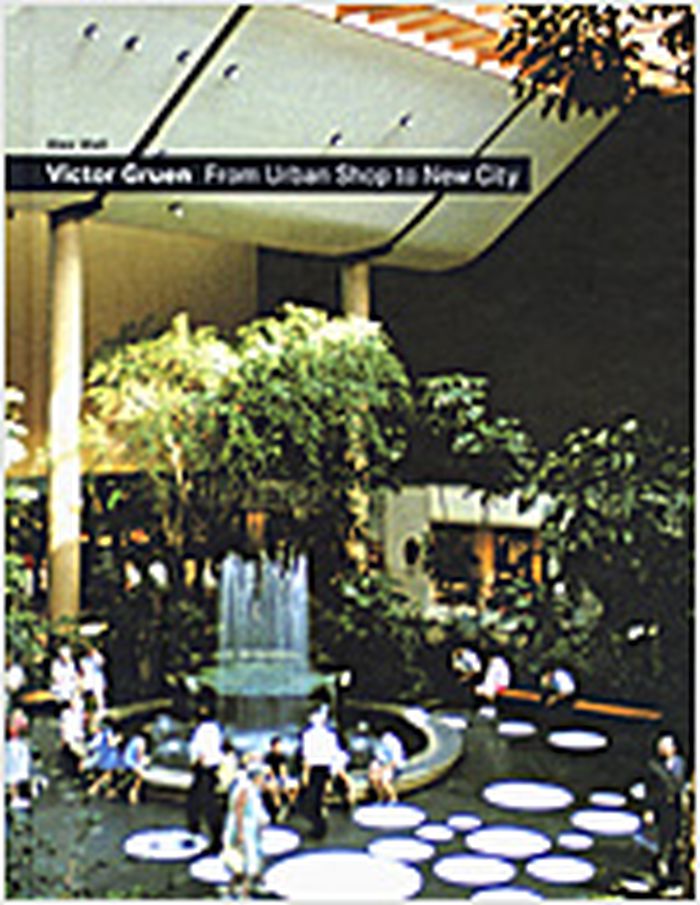
Victor Gruen became renowned in 1950s America as the "pioneer of the shopping center", then by his urban redevelopment projects as the "savior of the downtowns", and by the mid-1960s as the "architect of the environment". "From Urban Shop to New City" focuses on Gruen's theories and projects, especially with respect to the terms that he set for himself : the return of the city centre and urban public space as a focus of social and cultural life. The context for his vision, however, was the "triumph" of the suburbs and the collapses of American downtown. Gruen's successes and failures engaged or prefigured every important commercial retail, development, and planning trend since World War II ; thus his work is a crucial vehicule for understanding the transformation of American city-scape and landscape, and is a starting point for asking the question : what kind of city do we want?
Victor Gruen: from urban shop to new city
Actions:
Price:
$57.95
(available to order)
Summary:
Victor Gruen became renowned in 1950s America as the "pioneer of the shopping center", then by his urban redevelopment projects as the "savior of the downtowns", and by the mid-1960s as the "architect of the environment". "From Urban Shop to New City" focuses on Gruen's theories and projects, especially with respect to the terms that he set for himself : the return of the city centre and urban public space as a focus of social and cultural life. The context for his vision, however, was the "triumph" of the suburbs and the collapses of American downtown. Gruen's successes and failures engaged or prefigured every important commercial retail, development, and planning trend since World War II ; thus his work is a crucial vehicule for understanding the transformation of American city-scape and landscape, and is a starting point for asking the question : what kind of city do we want?
Form:
books
books
Publication:
September 2005
September 2005
Subject:
Urban Theory
Urban Theory
Form:
books
books
Price:
$27.95
(available to order)
Summary:
This book will be a resource for all who believe in the importance of art in the wider educational realm. Framing the recent "educational turn" in the arts within a broad historical and social context, this anthology raises fundamental questions about how and what should be taught in an era of distributive rather than media-based practices. Among the many sources and(...)
$27.95
(available to order)
Summary:
This book will be a resource for all who believe in the importance of art in the wider educational realm. Framing the recent "educational turn" in the arts within a broad historical and social context, this anthology raises fundamental questions about how and what should be taught in an era of distributive rather than media-based practices. Among the many sources and(...)
Title:
Education
Actions:
Price:
$27.95
(available to order)
Summary:
This book will be a resource for all who believe in the importance of art in the wider educational realm. Framing the recent "educational turn" in the arts within a broad historical and social context, this anthology raises fundamental questions about how and what should be taught in an era of distributive rather than media-based practices. Among the many sources and arguments traced here is second-wave feminism, which questioned dominant notions of personal and institutional freedom as enacted through art teaching and practice. Similarly, education-based responses by the art community to the catastrophes of World War II and postcolonial conflict critically inform contemporary art confronting the interrelationships of education, power, market capitalism, and--as Michael Hardt and Antonio Negri describe it--the global condition of war. These writings by artists, philosophers, educators, poets, and activists center on three recurring and interrelated themes: the notion of "indiscipline" in theories and practices that challenge boundaries of all kinds; the present and future role of the art school; and the turn to pedagogy as medium in a diverse range of recent projects. Other writings address such issues as instrumentalism and control, liberation and equality, the production and the politics of culture, and the roots of research-based practice and experimental participatory works.
Education
Actions:
Price:
$27.95
(available to order)
Summary:
This book will be a resource for all who believe in the importance of art in the wider educational realm. Framing the recent "educational turn" in the arts within a broad historical and social context, this anthology raises fundamental questions about how and what should be taught in an era of distributive rather than media-based practices. Among the many sources and arguments traced here is second-wave feminism, which questioned dominant notions of personal and institutional freedom as enacted through art teaching and practice. Similarly, education-based responses by the art community to the catastrophes of World War II and postcolonial conflict critically inform contemporary art confronting the interrelationships of education, power, market capitalism, and--as Michael Hardt and Antonio Negri describe it--the global condition of war. These writings by artists, philosophers, educators, poets, and activists center on three recurring and interrelated themes: the notion of "indiscipline" in theories and practices that challenge boundaries of all kinds; the present and future role of the art school; and the turn to pedagogy as medium in a diverse range of recent projects. Other writings address such issues as instrumentalism and control, liberation and equality, the production and the politics of culture, and the roots of research-based practice and experimental participatory works.
Form:
books
books
Publication:
September 2011
September 2011
Subject:
Art Theory
Art Theory
Form:
books
books
Title:
The lost subways of North America: A Cartographic guide to the past, present, what might have been
The lost subways of North America: A Cartographic guide to the past, present, what might have been
Actions:
Price:
$51.95
(available to order)
Summary:
Every driver in North America shares one miserable, soul-sucking universal experience—being stuck in traffic. But things weren’t always like this. Why is it that the mass transit systems of most cities in the United States and Canada are now utterly inadequate? ''The lost subways of North America'' offers a new way to consider this eternal question, with a strikingly(...)
$51.95
(available to order)
Summary:
Every driver in North America shares one miserable, soul-sucking universal experience—being stuck in traffic. But things weren’t always like this. Why is it that the mass transit systems of most cities in the United States and Canada are now utterly inadequate? ''The lost subways of North America'' offers a new way to consider this eternal question, with a strikingly(...)
Title:
The lost subways of North America: A Cartographic guide to the past, present, what might have been
Actions:
Price:
$51.95
(available to order)
Summary:
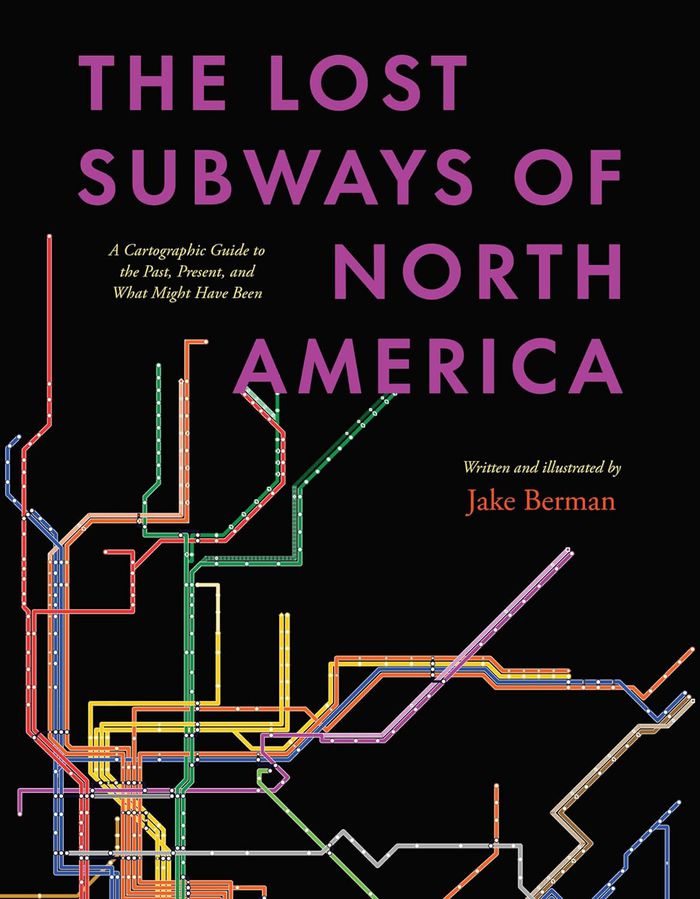
Every driver in North America shares one miserable, soul-sucking universal experience—being stuck in traffic. But things weren’t always like this. Why is it that the mass transit systems of most cities in the United States and Canada are now utterly inadequate? ''The lost subways of North America'' offers a new way to consider this eternal question, with a strikingly visual—and fun—journey through past, present, and unbuilt urban transit. Using meticulous archival research, cartographer and artist Jake Berman has successfully plotted maps of old train networks covering twenty-three North American metropolises, ranging from New York City’s Civil War–era plan for a steam-powered subway under Fifth Avenue to the ultramodern automated Vancouver SkyTrain and the thousand-mile electric railway system of pre–World War II Los Angeles. He takes us through colorful maps of old, often forgotten streetcar lines, lost ideas for never-built transit, and modern rail systems—drawing us into the captivating transit histories of US and Canadian cities. Berman combines vintage styling with modern printing technology to create a sweeping visual history of North American public transit and urban development. With more than one hundred original maps, accompanied by essays on each city’s urban development, this book presents a fascinating look at North American rapid transit systems.
The lost subways of North America: A Cartographic guide to the past, present, what might have been
Actions:
Price:
$51.95
(available to order)
Summary:
Every driver in North America shares one miserable, soul-sucking universal experience—being stuck in traffic. But things weren’t always like this. Why is it that the mass transit systems of most cities in the United States and Canada are now utterly inadequate? ''The lost subways of North America'' offers a new way to consider this eternal question, with a strikingly visual—and fun—journey through past, present, and unbuilt urban transit. Using meticulous archival research, cartographer and artist Jake Berman has successfully plotted maps of old train networks covering twenty-three North American metropolises, ranging from New York City’s Civil War–era plan for a steam-powered subway under Fifth Avenue to the ultramodern automated Vancouver SkyTrain and the thousand-mile electric railway system of pre–World War II Los Angeles. He takes us through colorful maps of old, often forgotten streetcar lines, lost ideas for never-built transit, and modern rail systems—drawing us into the captivating transit histories of US and Canadian cities. Berman combines vintage styling with modern printing technology to create a sweeping visual history of North American public transit and urban development. With more than one hundred original maps, accompanied by essays on each city’s urban development, this book presents a fascinating look at North American rapid transit systems.
Form:
books
books
Publication:
November 2023
November 2023
Subject:
Architectural Plans and Cartography
Architectural Plans and Cartography
Form:
books
books

Actions:
Price:
$35.95
(available to order)
Summary:
Many societies have imagined going to live in space. What they want to do once they get up there—whether conquering the unknown, establishing space ''colonies,'' privatising the moon’s resources—reveals more than expected. In this fascinating radical history of space exploration, Fred Scharmen shows that often science and fiction have combined in the imagined dreams of(...)
$35.95
(available to order)
Summary:
Many societies have imagined going to live in space. What they want to do once they get up there—whether conquering the unknown, establishing space ''colonies,'' privatising the moon’s resources—reveals more than expected. In this fascinating radical history of space exploration, Fred Scharmen shows that often science and fiction have combined in the imagined dreams of(...)
Title:
Space forces: a critical history of life in outer space
Actions:
Price:
$35.95
(available to order)
Summary:
Many societies have imagined going to live in space. What they want to do once they get up there—whether conquering the unknown, establishing space ''colonies,'' privatising the moon’s resources—reveals more than expected. In this fascinating radical history of space exploration, Fred Scharmen shows that often science and fiction have combined in the imagined dreams of life in outer space, but these visions have real implications for life back on earth. For the Russian Cosmists of the 1890s space was a place to pursue human perfection away from the Earth. For others, such as Wernher Von Braun, it was an engineering task that combined, in the Space Race, the Cold War, and during World War II, with destructive geopolitics. Arthur C. Clarke, in his speculative books, offered an alternative vision of wonder that is indifferent to human interaction. Meanwhile NASA planned and managed the space station like an earthbound corporation. Today, the market has arrived into outer space and exploration is the plaything of superrich technology billionaires, who plan to privatise the mineral wealth for themselves. Are other worlds really possible? Bringing these figures and ideas together reveals a completely different story of our relationship with outer space, as well as the dangers of our current direction of extractive capitalism and colonisation.
Space forces: a critical history of life in outer space
Actions:
Price:
$35.95
(available to order)
Summary:
Many societies have imagined going to live in space. What they want to do once they get up there—whether conquering the unknown, establishing space ''colonies,'' privatising the moon’s resources—reveals more than expected. In this fascinating radical history of space exploration, Fred Scharmen shows that often science and fiction have combined in the imagined dreams of life in outer space, but these visions have real implications for life back on earth. For the Russian Cosmists of the 1890s space was a place to pursue human perfection away from the Earth. For others, such as Wernher Von Braun, it was an engineering task that combined, in the Space Race, the Cold War, and during World War II, with destructive geopolitics. Arthur C. Clarke, in his speculative books, offered an alternative vision of wonder that is indifferent to human interaction. Meanwhile NASA planned and managed the space station like an earthbound corporation. Today, the market has arrived into outer space and exploration is the plaything of superrich technology billionaires, who plan to privatise the mineral wealth for themselves. Are other worlds really possible? Bringing these figures and ideas together reveals a completely different story of our relationship with outer space, as well as the dangers of our current direction of extractive capitalism and colonisation.
Form:
books
books
Publication:
November 2021
November 2021
Subject:
Architectural Theory
Architectural Theory
Form:
books
books
Actions:
Price:
$55.95
(available to order)
Summary:
In 1833, the Select Committee for Public Walks was introduced so that “the provision of parks would lead to a better use of Sundays and the replacement of the debasing pleasures.” Being “the safest and surest method of popular culture,” music was seen as an important moral influence in this endeavor. And so the bandstand was born. The history and heritage of bandstands in(...)
$55.95
(available to order)
Summary:
In 1833, the Select Committee for Public Walks was introduced so that “the provision of parks would lead to a better use of Sundays and the replacement of the debasing pleasures.” Being “the safest and surest method of popular culture,” music was seen as an important moral influence in this endeavor. And so the bandstand was born. The history and heritage of bandstands in(...)
Title:
Bandstands: pavilions for music, entertainment and leisure
Actions:
Price:
$55.95
(available to order)
Summary:
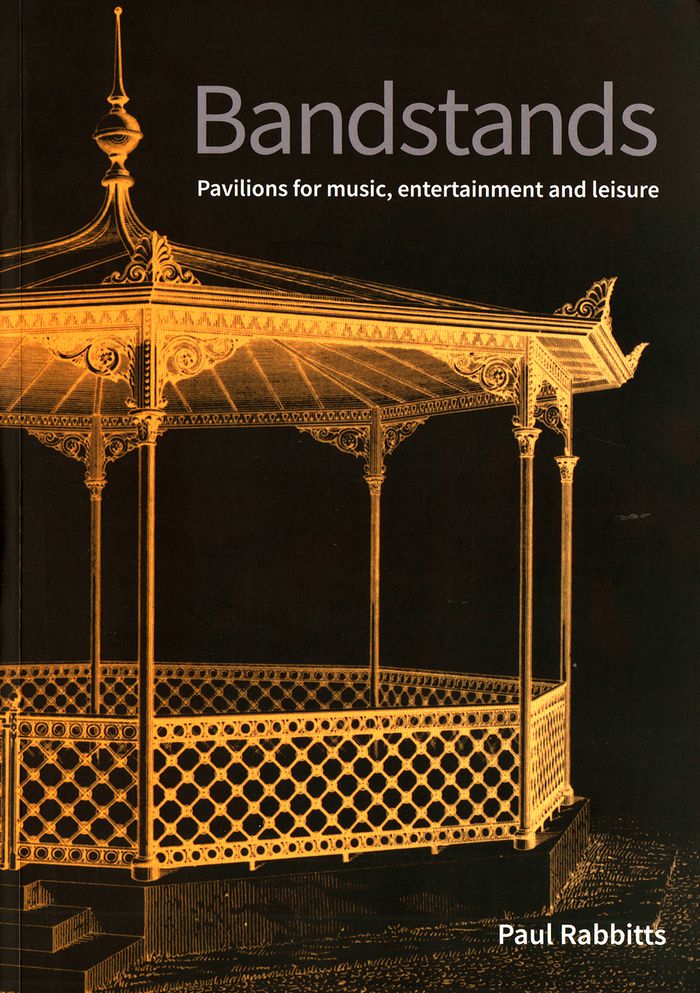
In 1833, the Select Committee for Public Walks was introduced so that “the provision of parks would lead to a better use of Sundays and the replacement of the debasing pleasures.” Being “the safest and surest method of popular culture,” music was seen as an important moral influence in this endeavor. And so the bandstand was born. The history and heritage of bandstands in England has largely been ignored. Yet in their heyday, there were more than 1500 bandstands in the country—in public parks, on piers, and at seaside promenades, often attracting crowds of thousands. In "Bandstands", landscape architect Paul Rabbitts guides us from their evolution as “orchestras” in the early pleasure gardens, to their great decline after World War II, to their subsequent revival in the late 1990s. This beautifully illustrated book tells for the first time the story of these pavilions made for music, illuminating their history, architecture, and worldwide influence.
Bandstands: pavilions for music, entertainment and leisure
Actions:
Price:
$55.95
(available to order)
Summary:
In 1833, the Select Committee for Public Walks was introduced so that “the provision of parks would lead to a better use of Sundays and the replacement of the debasing pleasures.” Being “the safest and surest method of popular culture,” music was seen as an important moral influence in this endeavor. And so the bandstand was born. The history and heritage of bandstands in England has largely been ignored. Yet in their heyday, there were more than 1500 bandstands in the country—in public parks, on piers, and at seaside promenades, often attracting crowds of thousands. In "Bandstands", landscape architect Paul Rabbitts guides us from their evolution as “orchestras” in the early pleasure gardens, to their great decline after World War II, to their subsequent revival in the late 1990s. This beautifully illustrated book tells for the first time the story of these pavilions made for music, illuminating their history, architecture, and worldwide influence.
Form:
books
books
Publication:
October 2018
October 2018
Subject:
Commercial interiors, Building types
Commercial interiors, Building types
Form:
books
books
Title:
Shomei Tomatsu
Shomei Tomatsu
Actions:
Price:
$92.50
(available to order)
Summary:
Casting a cold eye on postwar Japan, the raw, grainy and impressionistic photography of Shomei Tomatsu practically defined Japanese photography in the second half of the 20th century, greatly influencing Daido Moriyama, Nobuyoshi Araki and Takuma Nakihara. His best-known images are his portraits of people and street scenes from the 1950s, when the country struggled to(...)
$92.50
(available to order)
Summary:
Casting a cold eye on postwar Japan, the raw, grainy and impressionistic photography of Shomei Tomatsu practically defined Japanese photography in the second half of the 20th century, greatly influencing Daido Moriyama, Nobuyoshi Araki and Takuma Nakihara. His best-known images are his portraits of people and street scenes from the 1950s, when the country struggled to(...)
Title:
Shomei Tomatsu
Actions:
Price:
$92.50
(available to order)
Summary:
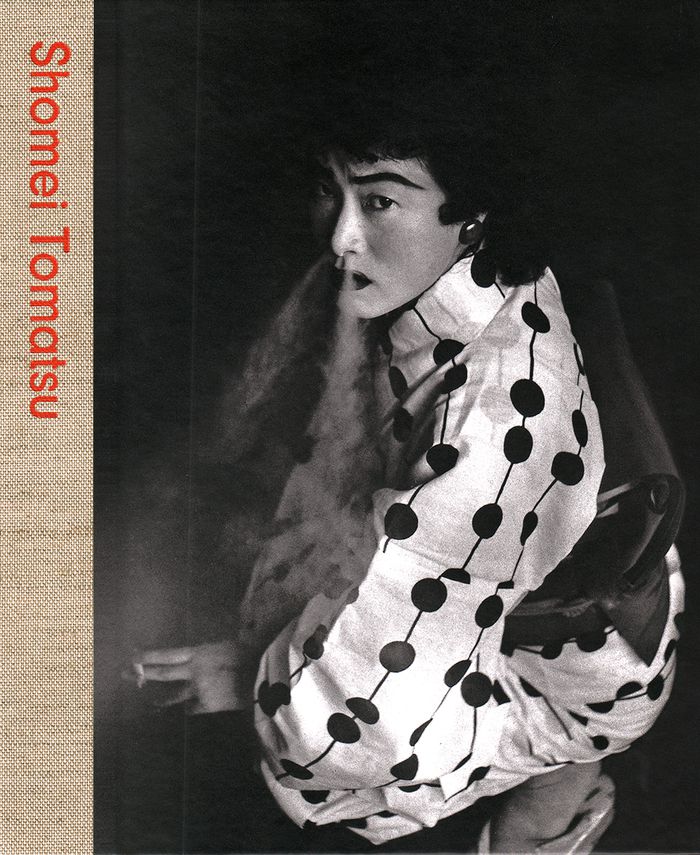
Casting a cold eye on postwar Japan, the raw, grainy and impressionistic photography of Shomei Tomatsu practically defined Japanese photography in the second half of the 20th century, greatly influencing Daido Moriyama, Nobuyoshi Araki and Takuma Nakihara. His best-known images are his portraits of people and street scenes from the 1950s, when the country struggled to recover from World War II and US military presence was ubiquitous; his photographs of 1960s Japan; and throughout his career, his images of Okinawa, where he died in 2012. Tomatsu's most famous single photograph is probably Melted Bottle, Nagasaki, 1961, which depicts a beer bottle rendered grotesquely biomorphic by the nuclear blast that devastated Nagasaki on August 9, 1945. The American photographer and writer Leo Rubinfien described Tomatsu's Nagasaki images as "sad, haggard facts," noting that "beneath the surface there was a grief so great that any overt expression of sympathy would have been an insult."
Shomei Tomatsu
Actions:
Price:
$92.50
(available to order)
Summary:
Casting a cold eye on postwar Japan, the raw, grainy and impressionistic photography of Shomei Tomatsu practically defined Japanese photography in the second half of the 20th century, greatly influencing Daido Moriyama, Nobuyoshi Araki and Takuma Nakihara. His best-known images are his portraits of people and street scenes from the 1950s, when the country struggled to recover from World War II and US military presence was ubiquitous; his photographs of 1960s Japan; and throughout his career, his images of Okinawa, where he died in 2012. Tomatsu's most famous single photograph is probably Melted Bottle, Nagasaki, 1961, which depicts a beer bottle rendered grotesquely biomorphic by the nuclear blast that devastated Nagasaki on August 9, 1945. The American photographer and writer Leo Rubinfien described Tomatsu's Nagasaki images as "sad, haggard facts," noting that "beneath the surface there was a grief so great that any overt expression of sympathy would have been an insult."
Form:
books
books
Publication:
September 2018
September 2018
Subject:
Photography monographs
Photography monographs
Form:
books
books
Actions:
Price:
$16.95
(available to order)
Summary:
John Gutmann (1905–1998) was one of America’s most distinctive photographers. Born in Germany where he trained as an artist and art teacher, he fled the Nazis in 1933 and settled in San Francisco, reinventing himself as a photo-reporter. Gutmann captured images of American culture, celebrating signs of a vibrant democracy, however imperfect. His own status as an(...)
$16.95
(available to order)
Summary:
John Gutmann (1905–1998) was one of America’s most distinctive photographers. Born in Germany where he trained as an artist and art teacher, he fled the Nazis in 1933 and settled in San Francisco, reinventing himself as a photo-reporter. Gutmann captured images of American culture, celebrating signs of a vibrant democracy, however imperfect. His own status as an(...)
Publication:
January 2009
January 2009
Title:
John Gutmann: the photographer at work
Actions:
Price:
$16.95
(available to order)
Summary:
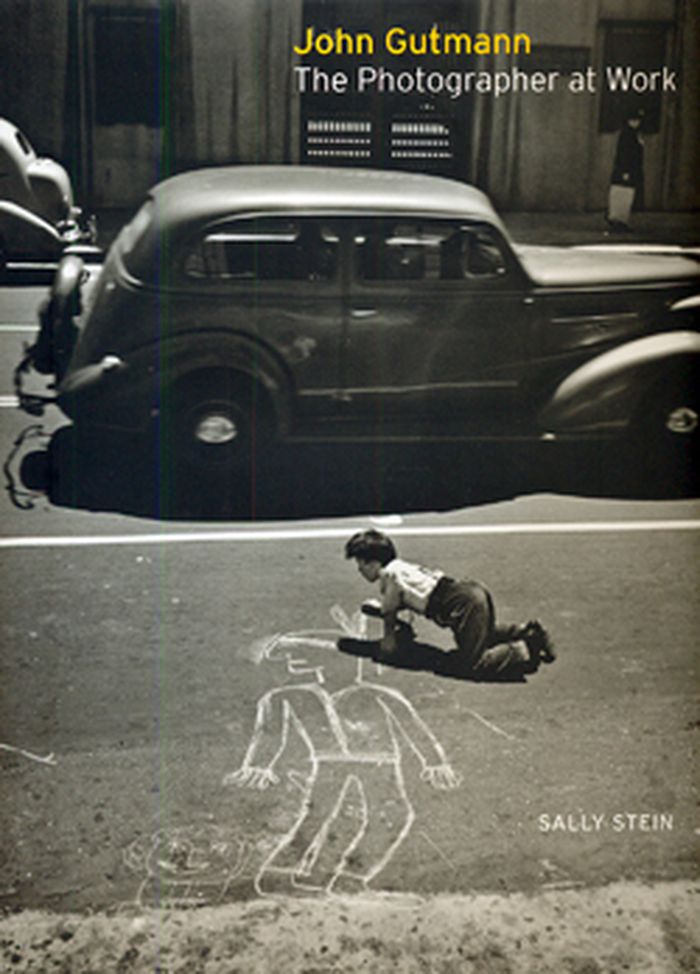
John Gutmann (1905–1998) was one of America’s most distinctive photographers. Born in Germany where he trained as an artist and art teacher, he fled the Nazis in 1933 and settled in San Francisco, reinventing himself as a photo-reporter. Gutmann captured images of American culture, celebrating signs of a vibrant democracy, however imperfect. His own status as an outsider—a Jew in Germany, a naturalized citizen in the United States—informed his focus on individuals from the Asian-American, African-American, and gay communities, as well as his photography in India, Burma, and China during World War II. This book acknowledges Gutmann’s place in the history of photography. Drawing on his archive of photographs and papers at the Center for Creative Photography, it presents both unfamiliar works and little-known contexts for his imagery, linking his photography to his passionate interest in painting and filmmaking, his collections of non-Western art and artifacts, and his pedagogy.
John Gutmann: the photographer at work
Actions:
Price:
$16.95
(available to order)
Summary:
John Gutmann (1905–1998) was one of America’s most distinctive photographers. Born in Germany where he trained as an artist and art teacher, he fled the Nazis in 1933 and settled in San Francisco, reinventing himself as a photo-reporter. Gutmann captured images of American culture, celebrating signs of a vibrant democracy, however imperfect. His own status as an outsider—a Jew in Germany, a naturalized citizen in the United States—informed his focus on individuals from the Asian-American, African-American, and gay communities, as well as his photography in India, Burma, and China during World War II. This book acknowledges Gutmann’s place in the history of photography. Drawing on his archive of photographs and papers at the Center for Creative Photography, it presents both unfamiliar works and little-known contexts for his imagery, linking his photography to his passionate interest in painting and filmmaking, his collections of non-Western art and artifacts, and his pedagogy.
Form:
books
books
Publication:
January 2009
January 2009
Form:
books
books
Actions:
Price:
$30.00
(available to order)
Summary:
Nye looks at America's development of its electrical grid, which made large-scale power failures possible; military blackouts before and during World War II ("The silence was the big surprise of the blackout, the darkness discounted," wrote Harold Ross in The New Yorker in 1942); New York City's contrasting 1965 and 1977 blackout experiences (the first characterized by(...)
$30.00
(available to order)
Summary:
Nye looks at America's development of its electrical grid, which made large-scale power failures possible; military blackouts before and during World War II ("The silence was the big surprise of the blackout, the darkness discounted," wrote Harold Ross in The New Yorker in 1942); New York City's contrasting 1965 and 1977 blackout experiences (the first characterized by(...)
Title:
When the lights went out, a history of blackouts in America
Actions:
Price:
$30.00
(available to order)
Summary:
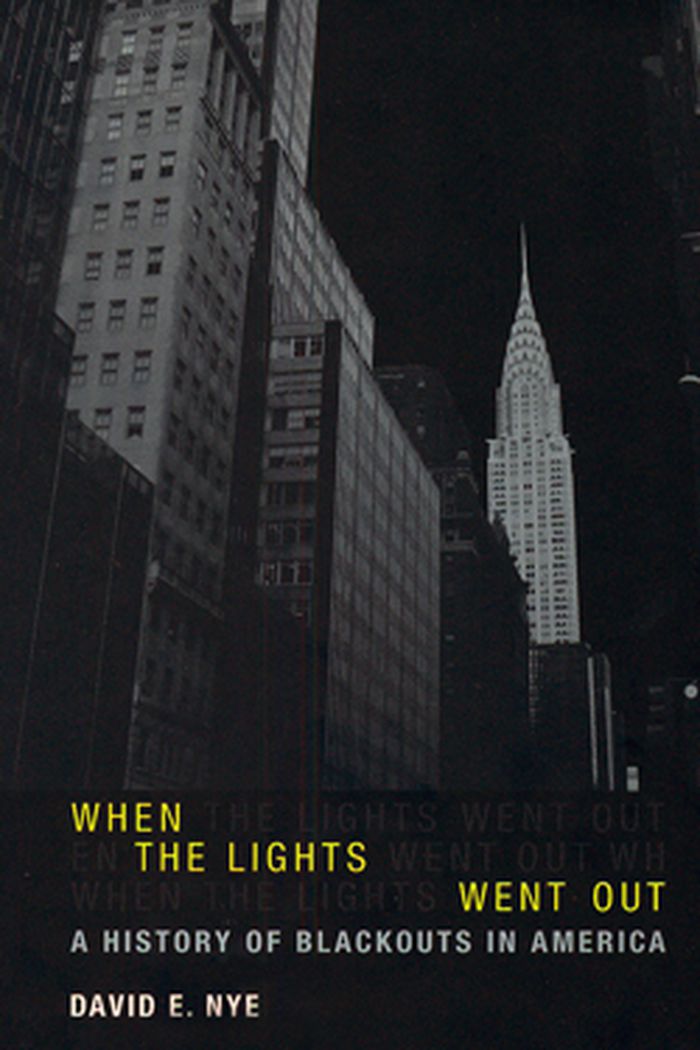
Nye looks at America's development of its electrical grid, which made large-scale power failures possible; military blackouts before and during World War II ("The silence was the big surprise of the blackout, the darkness discounted," wrote Harold Ross in The New Yorker in 1942); New York City's contrasting 1965 and 1977 blackout experiences (the first characterized by cooperation, the second by looting and disorder); the growth in consumer demand that led to rolling blackouts made worse by energy traders' market manipulations; blackouts caused by terrorist attacks and sabotage; and, finally, the "greenout" (exemplified by the new tradition of "Earth Hour"), a voluntary reduction organized by environmental organizations. Blackouts, writes Nye, are breaks in the flow of social time that reveal much about the trajectory of American history. Each time one occurs, Americans confront their essential condition—not as isolated individuals, but as a community that increasingly binds itself together with electrical wires and signals.
When the lights went out, a history of blackouts in America
Actions:
Price:
$30.00
(available to order)
Summary:
Nye looks at America's development of its electrical grid, which made large-scale power failures possible; military blackouts before and during World War II ("The silence was the big surprise of the blackout, the darkness discounted," wrote Harold Ross in The New Yorker in 1942); New York City's contrasting 1965 and 1977 blackout experiences (the first characterized by cooperation, the second by looting and disorder); the growth in consumer demand that led to rolling blackouts made worse by energy traders' market manipulations; blackouts caused by terrorist attacks and sabotage; and, finally, the "greenout" (exemplified by the new tradition of "Earth Hour"), a voluntary reduction organized by environmental organizations. Blackouts, writes Nye, are breaks in the flow of social time that reveal much about the trajectory of American history. Each time one occurs, Americans confront their essential condition—not as isolated individuals, but as a community that increasingly binds itself together with electrical wires and signals.
Form:
books
books
Publication:
March 2010
March 2010
Subject:
Urban Theory
Urban Theory
Form:
books
books
Actions:
Price:
$65.00
(available to order)
Summary:
After World War II, the American road trip began appearing prominently in literature, music, movies and photography. As Stephen Shore has written, “Our country is made for long trips. Since the 1940s, the dream of the road trip, and the sense of possibility and freedom that it represents, has taken its own important place within our culture.” Many photographers(...)
$65.00
(available to order)
Summary:
After World War II, the American road trip began appearing prominently in literature, music, movies and photography. As Stephen Shore has written, “Our country is made for long trips. Since the 1940s, the dream of the road trip, and the sense of possibility and freedom that it represents, has taken its own important place within our culture.” Many photographers(...)
Title:
The open road : photography and the American road trip
Actions:
Price:
$65.00
(available to order)
Summary:
After World War II, the American road trip began appearing prominently in literature, music, movies and photography. As Stephen Shore has written, “Our country is made for long trips. Since the 1940s, the dream of the road trip, and the sense of possibility and freedom that it represents, has taken its own important place within our culture.” Many photographers purposefully embarked on journeys across the U.S. in order to create work. Hundreds of them have continued the tradition of the photographic road trip on down to the present, from Stephen Shore to Taiyo Onorato, Nico Krebs, Alec Soth and Ryan McGinley. The Open Road considers the photographic road trip as a genre in and of itself, and presents the story of photographers for whom the American road is muse. The book features David Campany’s introduction to the genre and 18 chapters presented chronologically, each exploring one American road trip in depth through a portfolio of images and informative texts.
The open road : photography and the American road trip
Actions:
Price:
$65.00
(available to order)
Summary:
After World War II, the American road trip began appearing prominently in literature, music, movies and photography. As Stephen Shore has written, “Our country is made for long trips. Since the 1940s, the dream of the road trip, and the sense of possibility and freedom that it represents, has taken its own important place within our culture.” Many photographers purposefully embarked on journeys across the U.S. in order to create work. Hundreds of them have continued the tradition of the photographic road trip on down to the present, from Stephen Shore to Taiyo Onorato, Nico Krebs, Alec Soth and Ryan McGinley. The Open Road considers the photographic road trip as a genre in and of itself, and presents the story of photographers for whom the American road is muse. The book features David Campany’s introduction to the genre and 18 chapters presented chronologically, each exploring one American road trip in depth through a portfolio of images and informative texts.
Form:
books
books
Publication:
August 2014
August 2014
Subject:
Photography by Region
Photography by Region


