


951 Results
Form:
books
books
Price:
$36.95
(available to order)
Summary:
Le style, la beauté, la mobilisation des goûts et des sensibilités s’imposent chaque jour davantage comme des impératifs stratégiques des marques : le capitalisme d’hyperconsommation est un mode de production esthétique. Dans les industries de consommation, le design, la mode, la publicité, la décoration, le cinéma, le show-business des produits chargés de séduction(...)
$36.95
(available to order)
Summary:
Le style, la beauté, la mobilisation des goûts et des sensibilités s’imposent chaque jour davantage comme des impératifs stratégiques des marques : le capitalisme d’hyperconsommation est un mode de production esthétique. Dans les industries de consommation, le design, la mode, la publicité, la décoration, le cinéma, le show-business des produits chargés de séduction(...)
Title:
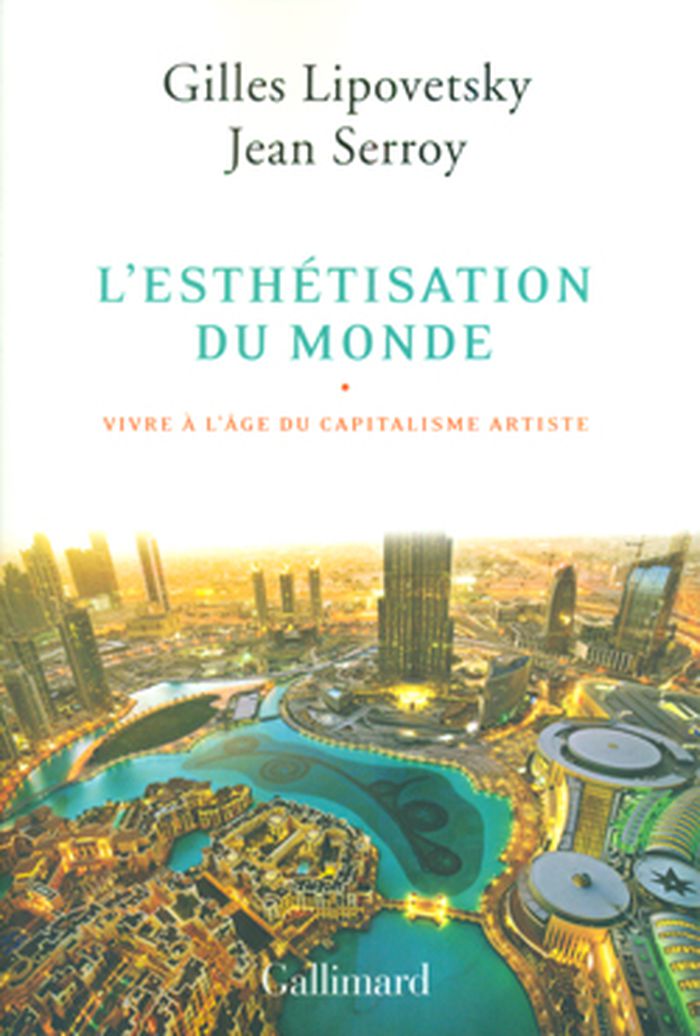
L'esthétisation du monde: vivre à l'âge du capitalisme artiste
Actions:
Price:
$36.95
(available to order)
Summary:
Le style, la beauté, la mobilisation des goûts et des sensibilités s’imposent chaque jour davantage comme des impératifs stratégiques des marques : le capitalisme d’hyperconsommation est un mode de production esthétique. Dans les industries de consommation, le design, la mode, la publicité, la décoration, le cinéma, le show-business des produits chargés de séduction sont créés en masse. Ils véhiculent des affects et de la sensibilité, ils agencent un univers esthétique proliférant et hétérogène par l’éclectisme des styles qui s’y déploie.
L'esthétisation du monde: vivre à l'âge du capitalisme artiste
Actions:
Price:
$36.95
(available to order)
Summary:
Le style, la beauté, la mobilisation des goûts et des sensibilités s’imposent chaque jour davantage comme des impératifs stratégiques des marques : le capitalisme d’hyperconsommation est un mode de production esthétique. Dans les industries de consommation, le design, la mode, la publicité, la décoration, le cinéma, le show-business des produits chargés de séduction sont créés en masse. Ils véhiculent des affects et de la sensibilité, ils agencent un univers esthétique proliférant et hétérogène par l’éclectisme des styles qui s’y déploie.
Form:
books
books
Publication:
May 2013
May 2013
Subject:
Urban Theory
Urban Theory
Form:
books
books

Actions:
Price:
$27.95
(available to order)
Summary:
In Anime’s Media Mix, Marc Steinberg convincingly shows that anime is far more than a style of Japanese animation. He traces the cultural genealogy that spawned Astro Boy to the transformations of Japanese media culture that followed—and forward to the even more profound developments in global capitalism supported by the circulation of characters like Doraemon, Hello(...)
$27.95
(available to order)
Summary:
In Anime’s Media Mix, Marc Steinberg convincingly shows that anime is far more than a style of Japanese animation. He traces the cultural genealogy that spawned Astro Boy to the transformations of Japanese media culture that followed—and forward to the even more profound developments in global capitalism supported by the circulation of characters like Doraemon, Hello(...)
Title:
Anime's media mix: franchising toys and characters in Japan
Actions:
Price:
$27.95
(available to order)
Summary:
In Anime’s Media Mix, Marc Steinberg convincingly shows that anime is far more than a style of Japanese animation. He traces the cultural genealogy that spawned Astro Boy to the transformations of Japanese media culture that followed—and forward to the even more profound developments in global capitalism supported by the circulation of characters like Doraemon, Hello Kitty, and Suzumiya Haruhi. He details how convergence was sparked by anime, with its astoundingly broad merchandising of images and its franchising across media and commodities. He also explains how the rise of anime cannot be understood properly—historically, economically, and culturally—without grasping the integral role that the media mix played from the start. Engaging with film, animation, and media studies, as well as analyses of consumer culture and theories of capitalism, Steinberg offers a sustained study of the Japanese mode of convergence that informs global media practices to this day.
Anime's media mix: franchising toys and characters in Japan
Actions:
Price:
$27.95
(available to order)
Summary:
In Anime’s Media Mix, Marc Steinberg convincingly shows that anime is far more than a style of Japanese animation. He traces the cultural genealogy that spawned Astro Boy to the transformations of Japanese media culture that followed—and forward to the even more profound developments in global capitalism supported by the circulation of characters like Doraemon, Hello Kitty, and Suzumiya Haruhi. He details how convergence was sparked by anime, with its astoundingly broad merchandising of images and its franchising across media and commodities. He also explains how the rise of anime cannot be understood properly—historically, economically, and culturally—without grasping the integral role that the media mix played from the start. Engaging with film, animation, and media studies, as well as analyses of consumer culture and theories of capitalism, Steinberg offers a sustained study of the Japanese mode of convergence that informs global media practices to this day.
Form:
books
books
Publication:
March 2012
March 2012
Subject:
Epistemology
Epistemology
Form:
books
books
Actions:
Price:
$24.00
(available to order)
Summary:
Christine Harold makes the case for a provocative new approach to combating the media supremacy of multinational corporations by co-opting the logic of capitalism itself. Exploring the revolutionary Creative Commons movement, copyleft, and open source technology, OurSpace advocates a more inclusive approach to intellectual property that invites innovation and wider(...)
$24.00
(available to order)
Summary:
Christine Harold makes the case for a provocative new approach to combating the media supremacy of multinational corporations by co-opting the logic of capitalism itself. Exploring the revolutionary Creative Commons movement, copyleft, and open source technology, OurSpace advocates a more inclusive approach to intellectual property that invites innovation and wider(...)
Title:
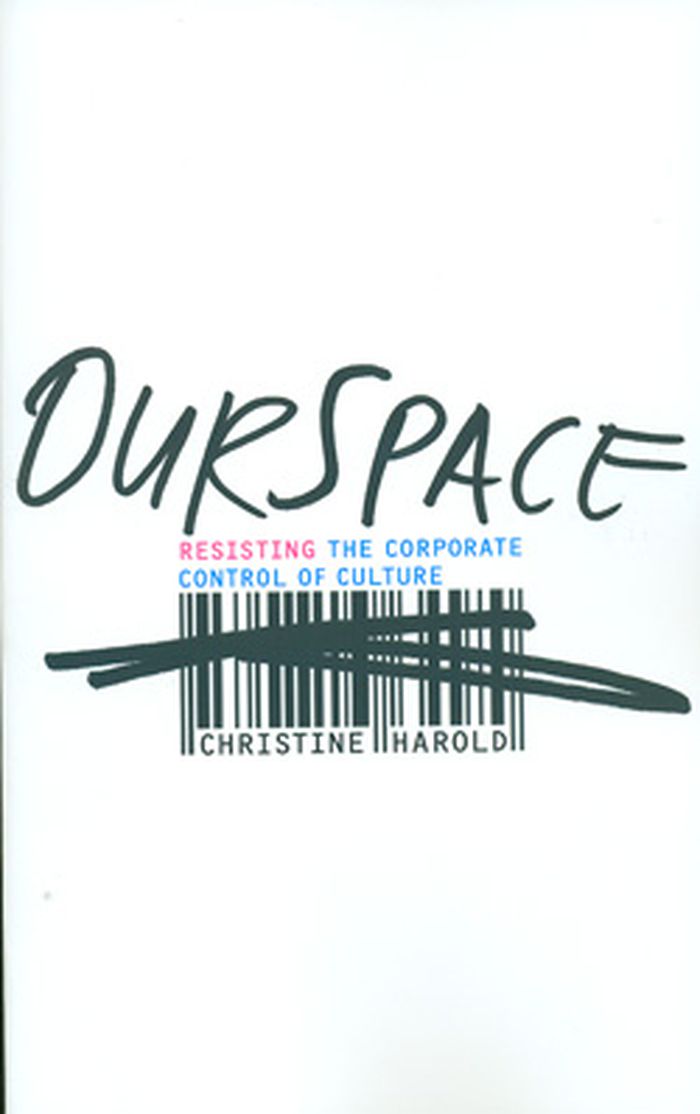
OurSpace: resisting the corporate control of culture
Actions:
Price:
$24.00
(available to order)
Summary:
Christine Harold makes the case for a provocative new approach to combating the media supremacy of multinational corporations by co-opting the logic of capitalism itself. Exploring the revolutionary Creative Commons movement, copyleft, and open source technology, OurSpace advocates a more inclusive approach to intellectual property that invites innovation and wider participation in the creative process.
OurSpace: resisting the corporate control of culture
Actions:
Price:
$24.00
(available to order)
Summary:
Christine Harold makes the case for a provocative new approach to combating the media supremacy of multinational corporations by co-opting the logic of capitalism itself. Exploring the revolutionary Creative Commons movement, copyleft, and open source technology, OurSpace advocates a more inclusive approach to intellectual property that invites innovation and wider participation in the creative process.
Form:
books
books
Publication:
May 2009
May 2009
Subject:
Critical Theory
Critical Theory
Form:
books
books
Actions:
Price:
$16.95
(available to order)
Summary:
Que peut bien vouloir dire « droit à la ville » ? Cette interrogation est indissociable d’une multitude d’autres questions. Quelle ville voulons-nous ? Quel genre de personnes voulons-nous être ? À quelles relations sociales aspirons-nous ? Quelle vie quotidienne trouvons-nous désirable ? Quelles valeurs esthétiques défendons-nous ? Quel rapport à la nature(...)
$16.95
(available to order)
Summary:
Que peut bien vouloir dire « droit à la ville » ? Cette interrogation est indissociable d’une multitude d’autres questions. Quelle ville voulons-nous ? Quel genre de personnes voulons-nous être ? À quelles relations sociales aspirons-nous ? Quelle vie quotidienne trouvons-nous désirable ? Quelles valeurs esthétiques défendons-nous ? Quel rapport à la nature(...)
Title:
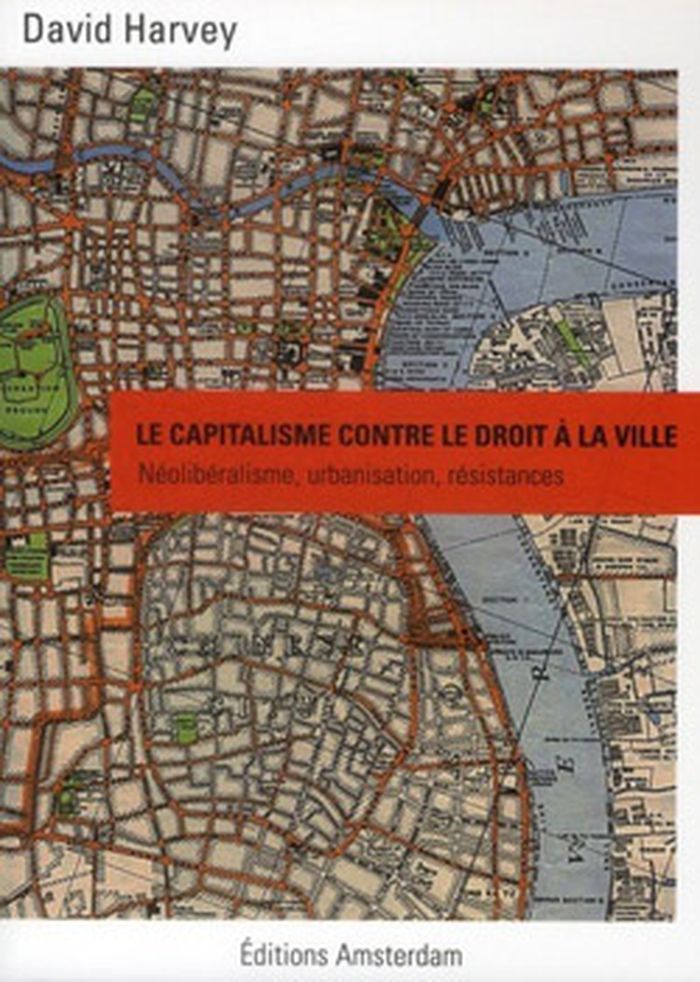
Le capitalisme contre le droit à la ville : néolibéralisme, urbanisation, résistances
Actions:
Price:
$16.95
(available to order)
Summary:
Que peut bien vouloir dire « droit à la ville » ? Cette interrogation est indissociable d’une multitude d’autres questions. Quelle ville voulons-nous ? Quel genre de personnes voulons-nous être ? À quelles relations sociales aspirons-nous ? Quelle vie quotidienne trouvons-nous désirable ? Quelles valeurs esthétiques défendons-nous ? Quel rapport à la nature souhaitons-nous promouvoir ? Quelles technologies jugeons-nous appropriées ? Le droit à la ville ne se réduit ainsi pas à un droit d’accès individuel aux ressources incarnées par la ville : c’est un droit à nous changer nous-mêmes en changeant la ville de façon à la rendre plus conforme à nos désirs les plus fondamentaux. C’est aussi un droit plus collectif qu’individuel, puisque, pour changer la ville, il faut nécessairement exercer un pouvoir collectif sur les processus d’urbanisation. Il importe dans cette perspective de décrire et d’analyser la manière dont, au cours de l’histoire, nous avons été façonnés et refaçonnés par un processus d'urbanisation toujours plus effréné et étendu, animé par de puissantes forces sociales et ponctué de violentes phases de restructurations urbaines par « destruction créative », ainsi que par les résistances et les révoltes que ces restructurations suscitaient.
Le capitalisme contre le droit à la ville : néolibéralisme, urbanisation, résistances
Actions:
Price:
$16.95
(available to order)
Summary:
Que peut bien vouloir dire « droit à la ville » ? Cette interrogation est indissociable d’une multitude d’autres questions. Quelle ville voulons-nous ? Quel genre de personnes voulons-nous être ? À quelles relations sociales aspirons-nous ? Quelle vie quotidienne trouvons-nous désirable ? Quelles valeurs esthétiques défendons-nous ? Quel rapport à la nature souhaitons-nous promouvoir ? Quelles technologies jugeons-nous appropriées ? Le droit à la ville ne se réduit ainsi pas à un droit d’accès individuel aux ressources incarnées par la ville : c’est un droit à nous changer nous-mêmes en changeant la ville de façon à la rendre plus conforme à nos désirs les plus fondamentaux. C’est aussi un droit plus collectif qu’individuel, puisque, pour changer la ville, il faut nécessairement exercer un pouvoir collectif sur les processus d’urbanisation. Il importe dans cette perspective de décrire et d’analyser la manière dont, au cours de l’histoire, nous avons été façonnés et refaçonnés par un processus d'urbanisation toujours plus effréné et étendu, animé par de puissantes forces sociales et ponctué de violentes phases de restructurations urbaines par « destruction créative », ainsi que par les résistances et les révoltes que ces restructurations suscitaient.
Form:
books
books
Publication:
July 2012
July 2012
Subject:
Urban Theory
Urban Theory
Form:
books
books
Price:
$33.95
(available in store)
Summary:
There is widespread consensus that we are living at the end—of democracy, of liberalism, of capitalism, of a healthy planet, of the Holocene, of civilization as we know it. In this book, drawing on radical futurisms and visions of justice-to-come emerging from the traditions of the oppressed—Indigenous, African-American, multispecies, anti-capitalist—as materialized in(...)
$33.95
(available in store)
Summary:
There is widespread consensus that we are living at the end—of democracy, of liberalism, of capitalism, of a healthy planet, of the Holocene, of civilization as we know it. In this book, drawing on radical futurisms and visions of justice-to-come emerging from the traditions of the oppressed—Indigenous, African-American, multispecies, anti-capitalist—as materialized in(...)
Title:
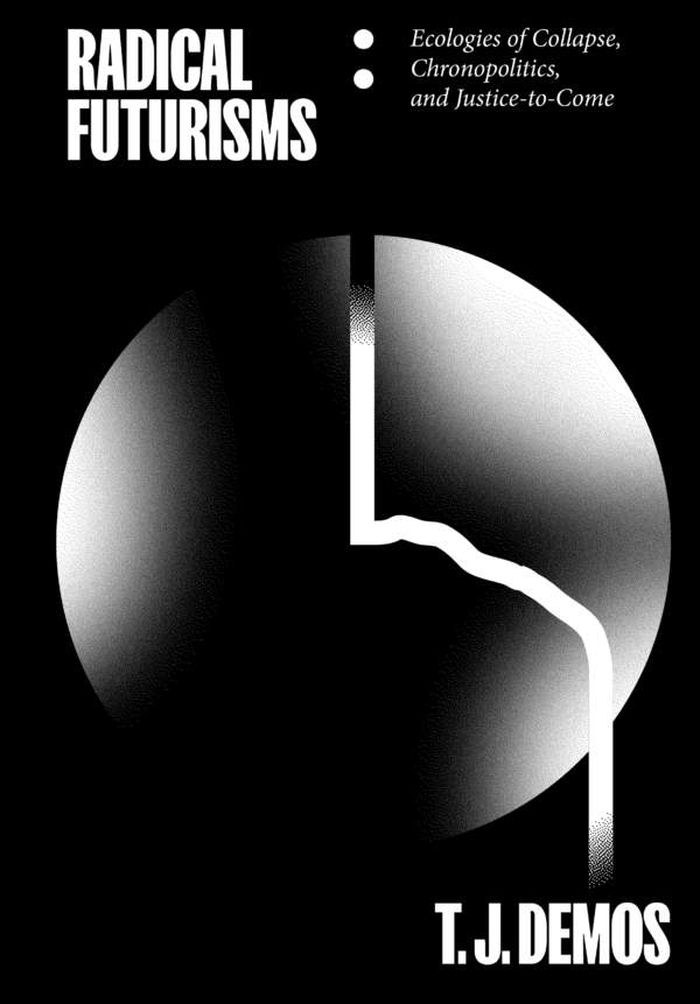
Radical futurisms: Ecologies of collapse/chronopolitics/justice to come
Actions:
Price:
$33.95
(available in store)
Summary:
There is widespread consensus that we are living at the end—of democracy, of liberalism, of capitalism, of a healthy planet, of the Holocene, of civilization as we know it. In this book, drawing on radical futurisms and visions of justice-to-come emerging from the traditions of the oppressed—Indigenous, African-American, multispecies, anti-capitalist—as materialized in experimental visual cultural, new media, aesthetic practices, and social movements, T. J. Demos poses speculative questions about what comes after end-of-world narratives. He argues that it's as vital to defeat fatalistic nihilism as it is to defeat the false solutions of green capitalism and algorithmic governance. How might we decolonize the future, and cultivate an emancipated chronopolitics in relation to an undetermined not-yet? If we are to avoid climate emergency's cooptation by technofixes, and the defuturing of multitudes by xenophobic eco-fascism, Demos argues, we must cultivate visions of just futurity and multispecies flourishing.
Radical futurisms: Ecologies of collapse/chronopolitics/justice to come
Actions:
Price:
$33.95
(available in store)
Summary:
There is widespread consensus that we are living at the end—of democracy, of liberalism, of capitalism, of a healthy planet, of the Holocene, of civilization as we know it. In this book, drawing on radical futurisms and visions of justice-to-come emerging from the traditions of the oppressed—Indigenous, African-American, multispecies, anti-capitalist—as materialized in experimental visual cultural, new media, aesthetic practices, and social movements, T. J. Demos poses speculative questions about what comes after end-of-world narratives. He argues that it's as vital to defeat fatalistic nihilism as it is to defeat the false solutions of green capitalism and algorithmic governance. How might we decolonize the future, and cultivate an emancipated chronopolitics in relation to an undetermined not-yet? If we are to avoid climate emergency's cooptation by technofixes, and the defuturing of multitudes by xenophobic eco-fascism, Demos argues, we must cultivate visions of just futurity and multispecies flourishing.
Form:
books
books
Publication:
May 2023
May 2023
Subject:
Architecture ecologies
Architecture ecologies
Form:
books
books
Actions:
Price:
$19.95
(available to order)
Summary:
With rapid increases in urban populations, there is an urgent need to transform our world's cities in keeping with ecological imperatives and democratic principles. A growing worldwide citizen movement is attempting to challenge bureaucratic administrations and replace the politics of fear with neighborhood power, direct democracy, and solidarity. They believe that(...)
$19.95
(available to order)
Summary:
With rapid increases in urban populations, there is an urgent need to transform our world's cities in keeping with ecological imperatives and democratic principles. A growing worldwide citizen movement is attempting to challenge bureaucratic administrations and replace the politics of fear with neighborhood power, direct democracy, and solidarity. They believe that(...)
Title:
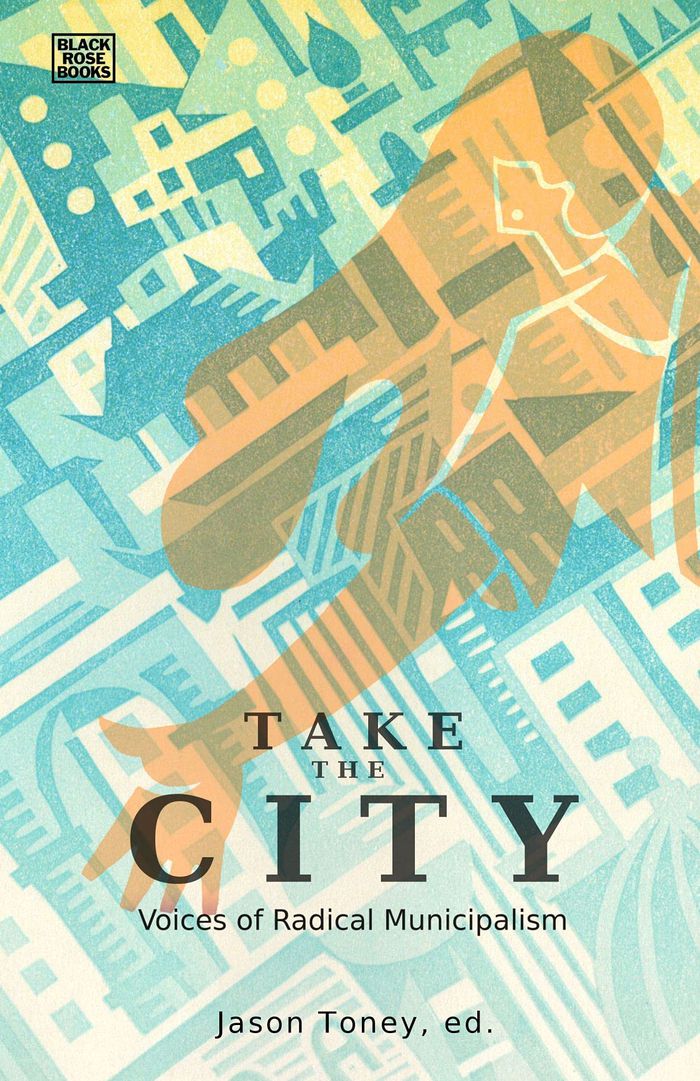
Take the city: Voices of radical municipalism
Actions:
Price:
$19.95
(available to order)
Summary:
With rapid increases in urban populations, there is an urgent need to transform our world's cities in keeping with ecological imperatives and democratic principles. A growing worldwide citizen movement is attempting to challenge bureaucratic administrations and replace the politics of fear with neighborhood power, direct democracy, and solidarity. They believe that threats of capitalism, totalitarianism, and climate change require imaginative political resistance rooted where they live. Combining political theory, philosophy, history, and intimate narrative, ''Take the city!'' presents an expansive view of municipalist movements around the world. With over twenty contributors, including David Harvey, this anthology provides crucial insights into the challenges ahead by looking at and beyond municipal electoral politics. Stories of diverse regions and issues illuminate the nuances of municipalist movements of the past and present, providing a roadmap of the fight for our future. From Seattle to Kurdistan, Burlington to Oaxaca, Barcelona to Mississippi, and Vienna to Montreal, contributors carefully consider the intertwined questions concerning current crises in housing, the environment, democracy, and capitalism.
Take the city: Voices of radical municipalism
Actions:
Price:
$19.95
(available to order)
Summary:
With rapid increases in urban populations, there is an urgent need to transform our world's cities in keeping with ecological imperatives and democratic principles. A growing worldwide citizen movement is attempting to challenge bureaucratic administrations and replace the politics of fear with neighborhood power, direct democracy, and solidarity. They believe that threats of capitalism, totalitarianism, and climate change require imaginative political resistance rooted where they live. Combining political theory, philosophy, history, and intimate narrative, ''Take the city!'' presents an expansive view of municipalist movements around the world. With over twenty contributors, including David Harvey, this anthology provides crucial insights into the challenges ahead by looking at and beyond municipal electoral politics. Stories of diverse regions and issues illuminate the nuances of municipalist movements of the past and present, providing a roadmap of the fight for our future. From Seattle to Kurdistan, Burlington to Oaxaca, Barcelona to Mississippi, and Vienna to Montreal, contributors carefully consider the intertwined questions concerning current crises in housing, the environment, democracy, and capitalism.
Form:
books
books
Publication:
October 2021
October 2021
Subject:
Humans and cities
Humans and cities
Form:
books
books
Actions:
Price:
$24.00
(available to order)
Summary:
The Master II contains Teller's recent body of work, Ukraine, in which he employs the city of Kiev as the setting for a fashion shoot and then mixes fashion, still lifes of the city and portraits of ordinary people in order to construct a singular fantasy of a country full of brash, youthful energy, deep in the thrall of capitalism.
$24.00
(available to order)
Summary:
The Master II contains Teller's recent body of work, Ukraine, in which he employs the city of Kiev as the setting for a fashion shoot and then mixes fashion, still lifes of the city and portraits of ordinary people in order to construct a singular fantasy of a country full of brash, youthful energy, deep in the thrall of capitalism.
Title:
Juergen Teller: The master II
Actions:
Price:
$24.00
(available to order)
Summary:
The Master II contains Teller's recent body of work, Ukraine, in which he employs the city of Kiev as the setting for a fashion shoot and then mixes fashion, still lifes of the city and portraits of ordinary people in order to construct a singular fantasy of a country full of brash, youthful energy, deep in the thrall of capitalism.
Juergen Teller: The master II
Actions:
Price:
$24.00
(available to order)
Summary:
The Master II contains Teller's recent body of work, Ukraine, in which he employs the city of Kiev as the setting for a fashion shoot and then mixes fashion, still lifes of the city and portraits of ordinary people in order to construct a singular fantasy of a country full of brash, youthful energy, deep in the thrall of capitalism.
Form:
books
books
Publication:
January 2009
January 2009
Subject:
Photography monographs
Photography monographs
Form:
journals and magazines
journals and magazines
Actions:
Price:
$10.00
(available to order)
Summary:
Vol2 #9 takes on the UK's services-for-surveillance state, technological utopias, green capitalism and much more. Borders 2.0: Future, Tense – Bryan Finoki and Angela Mitropoulos explore contemporary borderlands though text and image. The Battle of All Mothers – Madame Tlank on welfare, surveillance and working class women. Falling for the Future – Iain Boal(...)
$10.00
(available to order)
Summary:
Vol2 #9 takes on the UK's services-for-surveillance state, technological utopias, green capitalism and much more. Borders 2.0: Future, Tense – Bryan Finoki and Angela Mitropoulos explore contemporary borderlands though text and image. The Battle of All Mothers – Madame Tlank on welfare, surveillance and working class women. Falling for the Future – Iain Boal(...)
Subject:
Magazines
Magazines
Publication:
August 2008
August 2008
Title:
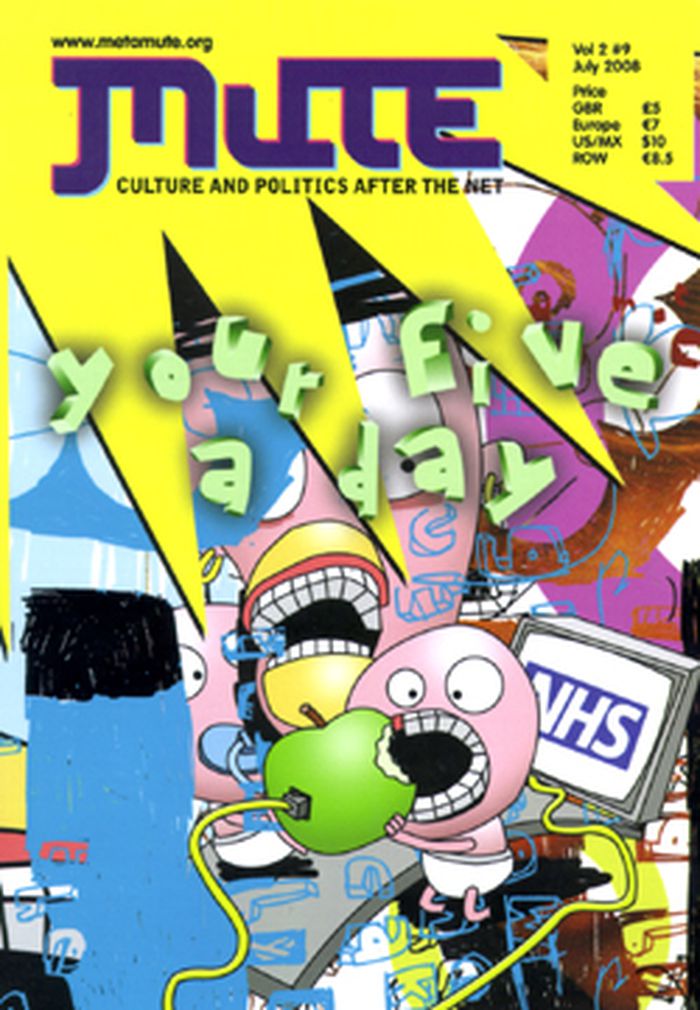
Mute: culture and politics after the net: vol 2, july 2008
Actions:
Price:
$10.00
(available to order)
Summary:
Vol2 #9 takes on the UK's services-for-surveillance state, technological utopias, green capitalism and much more. Borders 2.0: Future, Tense – Bryan Finoki and Angela Mitropoulos explore contemporary borderlands though text and image. The Battle of All Mothers – Madame Tlank on welfare, surveillance and working class women. Falling for the Future – Iain Boal brings modernity's futuramas back down to earth.
Mute: culture and politics after the net: vol 2, july 2008
Actions:
Price:
$10.00
(available to order)
Summary:
Vol2 #9 takes on the UK's services-for-surveillance state, technological utopias, green capitalism and much more. Borders 2.0: Future, Tense – Bryan Finoki and Angela Mitropoulos explore contemporary borderlands though text and image. The Battle of All Mothers – Madame Tlank on welfare, surveillance and working class women. Falling for the Future – Iain Boal brings modernity's futuramas back down to earth.
Form:
journals and magazines
journals and magazines
Publication:
August 2008
August 2008
Subject:
Magazines
Magazines
Form:
books
books
Price:
$60.00
(available in store)
Summary:
"Built on sand" is a research-based photographic project by Marcin Piekalkiewicz (PL/NL), in which he examines the social, environmental, and spatial effects of rapid real estate development in Malta. Inspired by Henri Lefebvre’s ideas, the project looks at how capitalism survives by producing and constantly reshaping space. But economic growth, while often celebrated,(...)
$60.00
(available in store)
Summary:
"Built on sand" is a research-based photographic project by Marcin Piekalkiewicz (PL/NL), in which he examines the social, environmental, and spatial effects of rapid real estate development in Malta. Inspired by Henri Lefebvre’s ideas, the project looks at how capitalism survives by producing and constantly reshaping space. But economic growth, while often celebrated,(...)
Publication:
June 2026
June 2026
Title:
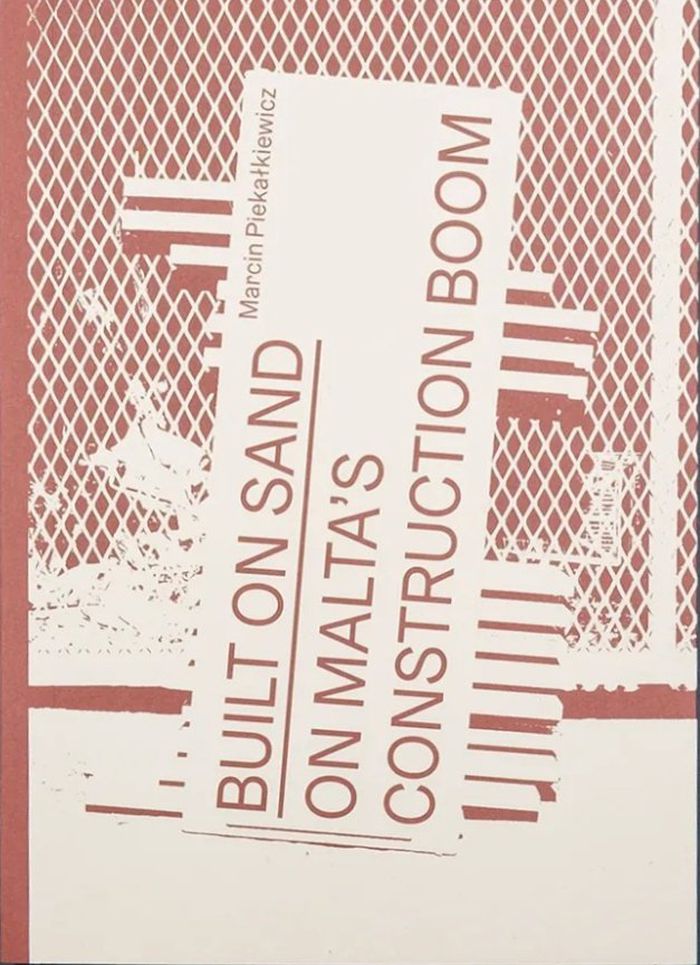
Marcin Pierkalkiewicz: Built on sand. On Malta's construction boom
Actions:
Price:
$60.00
(available in store)
Summary:
"Built on sand" is a research-based photographic project by Marcin Piekalkiewicz (PL/NL), in which he examines the social, environmental, and spatial effects of rapid real estate development in Malta. Inspired by Henri Lefebvre’s ideas, the project looks at how capitalism survives by producing and constantly reshaping space. But economic growth, while often celebrated, comes with significant, hidden, costs.
Marcin Pierkalkiewicz: Built on sand. On Malta's construction boom
Actions:
Price:
$60.00
(available in store)
Summary:
"Built on sand" is a research-based photographic project by Marcin Piekalkiewicz (PL/NL), in which he examines the social, environmental, and spatial effects of rapid real estate development in Malta. Inspired by Henri Lefebvre’s ideas, the project looks at how capitalism survives by producing and constantly reshaping space. But economic growth, while often celebrated, comes with significant, hidden, costs.
Form:
books
books
Publication:
June 2026
June 2026
Form:
books
books
Actions:
Price:
$33.50
(available to order)
Summary:
The twentieth-century American experience with the automobile has much to tell us about the relationship between consumer capitalism and the environment, Tom McCarthy contends. In Auto Mania he presents the first environmental history of the automobile that shows how consumer desire (and manufacturer decisions) created impacts across the product lifecycle—from raw(...)
$33.50
(available to order)
Summary:
The twentieth-century American experience with the automobile has much to tell us about the relationship between consumer capitalism and the environment, Tom McCarthy contends. In Auto Mania he presents the first environmental history of the automobile that shows how consumer desire (and manufacturer decisions) created impacts across the product lifecycle—from raw(...)
Publication:
October 2007, New Haven London
October 2007, New Haven London
Title:
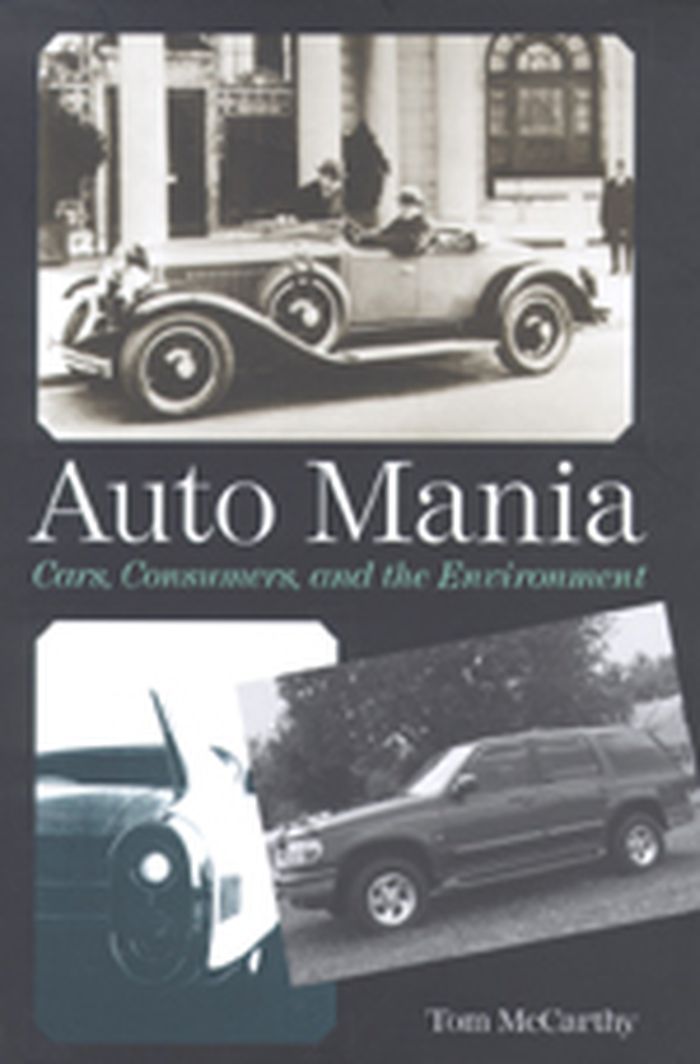
Auto mania : Cars, consumers, and the environment
Actions:
Price:
$33.50
(available to order)
Summary:
The twentieth-century American experience with the automobile has much to tell us about the relationship between consumer capitalism and the environment, Tom McCarthy contends. In Auto Mania he presents the first environmental history of the automobile that shows how consumer desire (and manufacturer decisions) created impacts across the product lifecycle—from raw material extraction to manufacturing to consumer use to disposal.
Auto mania : Cars, consumers, and the environment
Actions:
Price:
$33.50
(available to order)
Summary:
The twentieth-century American experience with the automobile has much to tell us about the relationship between consumer capitalism and the environment, Tom McCarthy contends. In Auto Mania he presents the first environmental history of the automobile that shows how consumer desire (and manufacturer decisions) created impacts across the product lifecycle—from raw material extraction to manufacturing to consumer use to disposal.
Form:
books
books
Publication:
October 2007, New Haven London
October 2007, New Haven London


