


781 Results
Form:
books
books
Actions:
Price:
$126.95
(available to order)
Summary:
In winter 2006, under the stewardship of philosopher Wolfgang Scheppe, a collective of students from the IUAV University in Venice fanned out to subject their city to a forensic structural mapping. Out of this fieldwork, conducted in the Situationist psychogeography tradition, there developed a three-year urban project that produced an enormous archive comprising tens of(...)
$126.95
(available to order)
Summary:
In winter 2006, under the stewardship of philosopher Wolfgang Scheppe, a collective of students from the IUAV University in Venice fanned out to subject their city to a forensic structural mapping. Out of this fieldwork, conducted in the Situationist psychogeography tradition, there developed a three-year urban project that produced an enormous archive comprising tens of(...)
Title:
Migropolis: Venice, atlas of a global situation
Actions:
Price:
$126.95
(available to order)
Summary:
In winter 2006, under the stewardship of philosopher Wolfgang Scheppe, a collective of students from the IUAV University in Venice fanned out to subject their city to a forensic structural mapping. Out of this fieldwork, conducted in the Situationist psychogeography tradition, there developed a three-year urban project that produced an enormous archive comprising tens of thousands of photographs, case studies, movement profiles and statistic data. From this archive, Venice, sited as it is at the junction of three migration corridors, emerges as a classic instance of the increasingly globalized city in which a decimated inner-city population meets armies of tourists and a parallel economy supported by illegal immigrants. In a map that cleverly branches out into visual essays, written essays, data maps and interviews, the globalized territory of Venice is microscopically dissected and defined as an urban metaphor, the city becoming an “atlas of a global situation.”
Migropolis: Venice, atlas of a global situation
Actions:
Price:
$126.95
(available to order)
Summary:
In winter 2006, under the stewardship of philosopher Wolfgang Scheppe, a collective of students from the IUAV University in Venice fanned out to subject their city to a forensic structural mapping. Out of this fieldwork, conducted in the Situationist psychogeography tradition, there developed a three-year urban project that produced an enormous archive comprising tens of thousands of photographs, case studies, movement profiles and statistic data. From this archive, Venice, sited as it is at the junction of three migration corridors, emerges as a classic instance of the increasingly globalized city in which a decimated inner-city population meets armies of tourists and a parallel economy supported by illegal immigrants. In a map that cleverly branches out into visual essays, written essays, data maps and interviews, the globalized territory of Venice is microscopically dissected and defined as an urban metaphor, the city becoming an “atlas of a global situation.”
Form:
books
books
Publication:
October 2009
October 2009
Subject:
Architectural Plans and Cartography
Architectural Plans and Cartography
Form:
books
books
Price:
$30.00
(available to order)
Summary:
"Geography of the gaze" offers a new history and theory of how the way we look at things influences what we see. Focusing on Western Europe from the seventeenth to the nineteenth century, Renzo Dibbini shows how developments in science, art, mapping, and visual epistemology affected the way natural and artificial landscapes were perceived and portrayed. He begins with(...)
$30.00
(available to order)
Summary:
"Geography of the gaze" offers a new history and theory of how the way we look at things influences what we see. Focusing on Western Europe from the seventeenth to the nineteenth century, Renzo Dibbini shows how developments in science, art, mapping, and visual epistemology affected the way natural and artificial landscapes were perceived and portrayed. He begins with(...)
Subject:
Landscape Theory
Landscape Theory
Publication:
April 2002, Chicago
April 2002, Chicago
Title:
Geography of the gaze : urban and rural vision in early modern Europe
Actions:
Price:
$30.00
(available to order)
Summary:
"Geography of the gaze" offers a new history and theory of how the way we look at things influences what we see. Focusing on Western Europe from the seventeenth to the nineteenth century, Renzo Dibbini shows how developments in science, art, mapping, and visual epistemology affected the way natural and artificial landscapes were perceived and portrayed. He begins with the idea of the "view" explaining its role in the invention of landscape painting and in the definition of landscape as a cultural space. Among other topics, Dubbini explores how the descriptive and pictorial techniques used in mariners' charts, view-oriented atlases, military cartography, and garden design were linked to the proliferation of highly realistic paintings of landscapes and city scenes; how the "picturesque" system for defining and composing landscapes affected not just art but also archaeology and engineering; and how the ever-changing modern cityspaces inspired new ways of seeing and representing the urban scene in Impressionist painting, photography, and stereoscopy. Transladed by Lydia G. Cochrane.
Geography of the gaze : urban and rural vision in early modern Europe
Actions:
Price:
$30.00
(available to order)
Summary:
"Geography of the gaze" offers a new history and theory of how the way we look at things influences what we see. Focusing on Western Europe from the seventeenth to the nineteenth century, Renzo Dibbini shows how developments in science, art, mapping, and visual epistemology affected the way natural and artificial landscapes were perceived and portrayed. He begins with the idea of the "view" explaining its role in the invention of landscape painting and in the definition of landscape as a cultural space. Among other topics, Dubbini explores how the descriptive and pictorial techniques used in mariners' charts, view-oriented atlases, military cartography, and garden design were linked to the proliferation of highly realistic paintings of landscapes and city scenes; how the "picturesque" system for defining and composing landscapes affected not just art but also archaeology and engineering; and how the ever-changing modern cityspaces inspired new ways of seeing and representing the urban scene in Impressionist painting, photography, and stereoscopy. Transladed by Lydia G. Cochrane.
Form:
books
books
Publication:
April 2002, Chicago
April 2002, Chicago
Subject:
Landscape Theory
Landscape Theory
Form:
books
books
Actions:
Price:
$34.00
(available to order)
Summary:
This volume gathers a collection of 50 texts on book design written by designers Siri Lee Lindskrog and Amanda-Li Kollberg of Berlin-based graphic and type design studio Formal Settings. The texts are based on a selection of books from the private collection of the Hopscotch Reading Room, a conceptual bookstore and event space in Berlin. Each text centers on a single book(...)
$34.00
(available to order)
Summary:
This volume gathers a collection of 50 texts on book design written by designers Siri Lee Lindskrog and Amanda-Li Kollberg of Berlin-based graphic and type design studio Formal Settings. The texts are based on a selection of books from the private collection of the Hopscotch Reading Room, a conceptual bookstore and event space in Berlin. Each text centers on a single book(...)
Title:
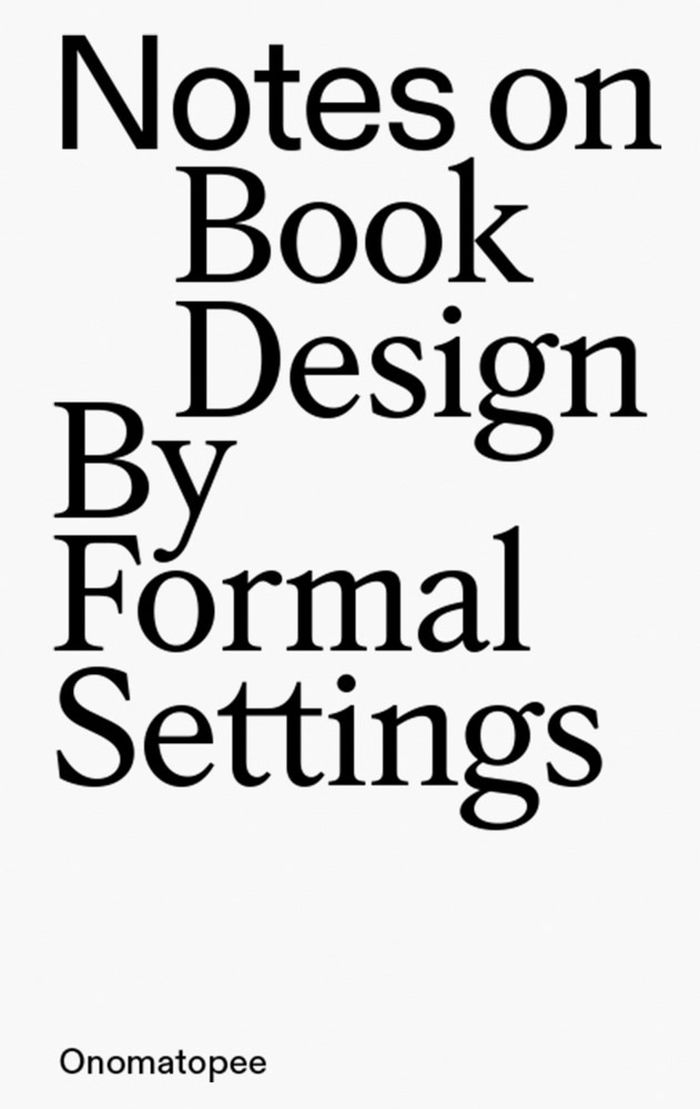
Notes on book design: By formal settings
Actions:
Price:
$34.00
(available to order)
Summary:
This volume gathers a collection of 50 texts on book design written by designers Siri Lee Lindskrog and Amanda-Li Kollberg of Berlin-based graphic and type design studio Formal Settings. The texts are based on a selection of books from the private collection of the Hopscotch Reading Room, a conceptual bookstore and event space in Berlin. Each text centers on a single book from the collection, examining its visual and tactile elements—from materials to layout to binding to typography. The essays explore the role and potential of books through the lens of design, mapping what their physical forms communicate about their content. Lindskrog and Kollberg draw parallels between each book as a design object and the cultural movements, political landscapes and economic conditions under which they were created. The 50 texts are paired with an introduction by Formal Settings, a foreword by Hopscotch Reading Room and an afterword in which designer, author and educator Prem Krishnamurthy offers additional framing and perspective to the project.
Notes on book design: By formal settings
Actions:
Price:
$34.00
(available to order)
Summary:
This volume gathers a collection of 50 texts on book design written by designers Siri Lee Lindskrog and Amanda-Li Kollberg of Berlin-based graphic and type design studio Formal Settings. The texts are based on a selection of books from the private collection of the Hopscotch Reading Room, a conceptual bookstore and event space in Berlin. Each text centers on a single book from the collection, examining its visual and tactile elements—from materials to layout to binding to typography. The essays explore the role and potential of books through the lens of design, mapping what their physical forms communicate about their content. Lindskrog and Kollberg draw parallels between each book as a design object and the cultural movements, political landscapes and economic conditions under which they were created. The 50 texts are paired with an introduction by Formal Settings, a foreword by Hopscotch Reading Room and an afterword in which designer, author and educator Prem Krishnamurthy offers additional framing and perspective to the project.
Form:
books
books
Publication:
June 2024
June 2024
Subject:
Book Design
Book Design
Form:
books
books

Actions:
Price:
$150.00
(available in store)
Summary:
Spanning from 3,500 BCE to the present, and organized along a global timeline, this unique guide was written by experts in their fields who emphasize the connections, contrasts, and influences of architectural movements throughout history and around the world. Fully updated and revised to reflect current scholarship, this third edition features expanded chapter(...)
$150.00
(available in store)
Summary:
Spanning from 3,500 BCE to the present, and organized along a global timeline, this unique guide was written by experts in their fields who emphasize the connections, contrasts, and influences of architectural movements throughout history and around the world. Fully updated and revised to reflect current scholarship, this third edition features expanded chapter(...)
Publication:
April 2017
April 2017
Title:
A global history of architecture, third edition
Actions:
Price:
$150.00
(available in store)
Summary:
Spanning from 3,500 BCE to the present, and organized along a global timeline, this unique guide was written by experts in their fields who emphasize the connections, contrasts, and influences of architectural movements throughout history and around the world. Fully updated and revised to reflect current scholarship, this third edition features expanded chapter introductions that set the stage for a global view, as well as: an expanded section on contemporary global architecture, more coverage of non-Western cultures, particularly South Asia, South East Asia Pre-Columbian America, and Africa. New drawings and maps by the iconic Francis D.K. Ching, as well as more stunning photographs. An updated companion website with digital learning tools and Google Earth mapping service coordinates that make it easier to find sites. Art and architecture enthusiasts, and anyone interested in architectural history, will have 5,000 years of the built environment perpetually at their fingertips with "A global history of architecture, third edition".
A global history of architecture, third edition
Actions:
Price:
$150.00
(available in store)
Summary:
Spanning from 3,500 BCE to the present, and organized along a global timeline, this unique guide was written by experts in their fields who emphasize the connections, contrasts, and influences of architectural movements throughout history and around the world. Fully updated and revised to reflect current scholarship, this third edition features expanded chapter introductions that set the stage for a global view, as well as: an expanded section on contemporary global architecture, more coverage of non-Western cultures, particularly South Asia, South East Asia Pre-Columbian America, and Africa. New drawings and maps by the iconic Francis D.K. Ching, as well as more stunning photographs. An updated companion website with digital learning tools and Google Earth mapping service coordinates that make it easier to find sites. Art and architecture enthusiasts, and anyone interested in architectural history, will have 5,000 years of the built environment perpetually at their fingertips with "A global history of architecture, third edition".
Form:
books
books
Publication:
April 2017
April 2017
Form:
books
books
Price:
$40.50
(available to order)
Summary:
The City provides an accessible yet critical introduction to one of the key concepts in human geography. Always at the heart of discussions in social theory, the definition and specification of ‘the city’ nonetheless remains illusive. In this volume, Phil Hubbard locates the concept of ‘the city’ within current traditions of social thought, providing a basis for(...)
$40.50
(available to order)
Summary:
The City provides an accessible yet critical introduction to one of the key concepts in human geography. Always at the heart of discussions in social theory, the definition and specification of ‘the city’ nonetheless remains illusive. In this volume, Phil Hubbard locates the concept of ‘the city’ within current traditions of social thought, providing a basis for(...)
Title:
City
Actions:
Price:
$40.50
(available to order)
Summary:
The City provides an accessible yet critical introduction to one of the key concepts in human geography. Always at the heart of discussions in social theory, the definition and specification of ‘the city’ nonetheless remains illusive. In this volume, Phil Hubbard locates the concept of ‘the city’ within current traditions of social thought, providing a basis for understanding its varying usages and meanings through a critical discussion of the contribution of key authors and thinkers. Written in a lively and accessible style, the individual chapters of The City offer a thematic overview of four dominant ways of approaching cities: as lived-in places, as imagined spaces, as networks of association and as technologies of flow. Drawing on a diverse range of literatures and case studies, the book spells out the importance of a geographical perspective on the city, suggesting that it is only by bringing these different ways of mapping the city together that we can begin to make sense of cities.
City
Actions:
Price:
$40.50
(available to order)
Summary:
The City provides an accessible yet critical introduction to one of the key concepts in human geography. Always at the heart of discussions in social theory, the definition and specification of ‘the city’ nonetheless remains illusive. In this volume, Phil Hubbard locates the concept of ‘the city’ within current traditions of social thought, providing a basis for understanding its varying usages and meanings through a critical discussion of the contribution of key authors and thinkers. Written in a lively and accessible style, the individual chapters of The City offer a thematic overview of four dominant ways of approaching cities: as lived-in places, as imagined spaces, as networks of association and as technologies of flow. Drawing on a diverse range of literatures and case studies, the book spells out the importance of a geographical perspective on the city, suggesting that it is only by bringing these different ways of mapping the city together that we can begin to make sense of cities.
Form:
books
books
Publication:
January 2006, London / New York
January 2006, London / New York
Subject:
Urban Theory
Urban Theory
Form:
books
books
Actions:
Price:
$70.00
(available in store)
Summary:
Official catalog of the National Pavilion of Lebanon at the 19th Venice biennale of Architecture, The Land Remembers invites us to explore alternative ways of healing and preserving the natural environment by harnessing local knowledge and the land intelligens. The content of this catalog confronts the deliberate destruction of Lebanon's ecosystems and societies, drawing(...)
$70.00
(available in store)
Summary:
Official catalog of the National Pavilion of Lebanon at the 19th Venice biennale of Architecture, The Land Remembers invites us to explore alternative ways of healing and preserving the natural environment by harnessing local knowledge and the land intelligens. The content of this catalog confronts the deliberate destruction of Lebanon's ecosystems and societies, drawing(...)
Subject:
Contemporary Architecture
Contemporary Architecture
Publication:
September 2025
September 2025
Title:
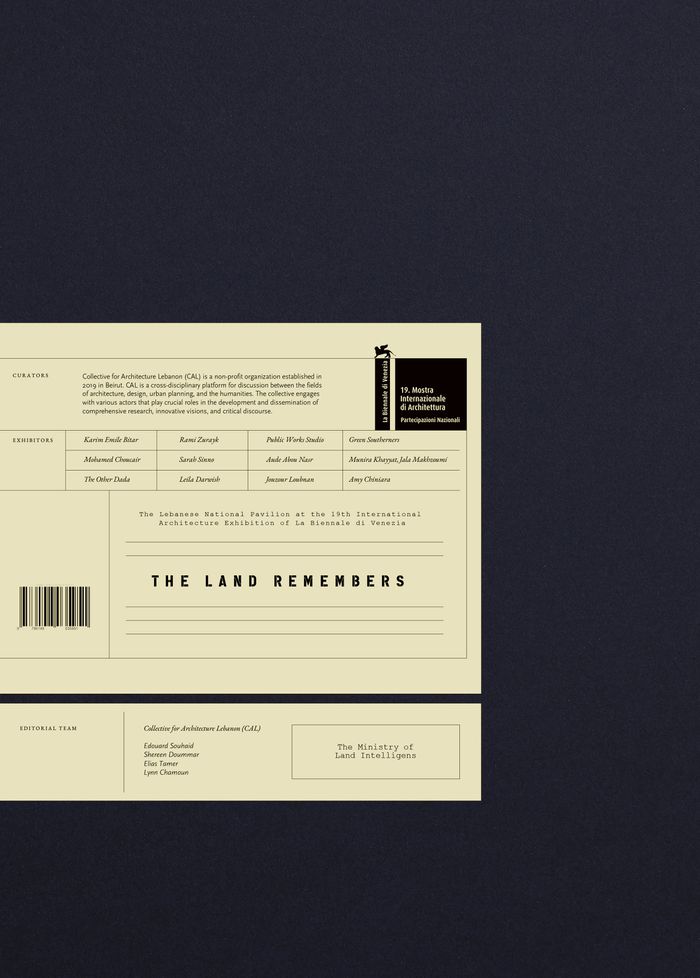
The land remembers: A Collective exploration into the possibilities for regeneration
Actions:
Price:
$70.00
(available in store)
Summary:
Official catalog of the National Pavilion of Lebanon at the 19th Venice biennale of Architecture, The Land Remembers invites us to explore alternative ways of healing and preserving the natural environment by harnessing local knowledge and the land intelligens. The content of this catalog confronts the deliberate destruction of Lebanon's ecosystems and societies, drawing on the soil's memory as a testament to resilience and renewal. The format of the memory box is an archive of the land's richness, challenges, and potential, asking: How can we heal the land to build for future generations? The catalog combines expert analysis, personal stories, and diverse perspectives on destruction, regeneration, and coexistence. From ecological restoration to regenerative architecture and preservation of Lebanon's biodiversity, it underscores the urgent need for a symbiotic relationship between people and nature. By counter-mapping environmental destruction, reflecting on modern warfare's impacts, and embracing innovative solutions, this collective work envisions a legacy for future generations—one rooted in resilience, learning, and hope.
The land remembers: A Collective exploration into the possibilities for regeneration
Actions:
Price:
$70.00
(available in store)
Summary:
Official catalog of the National Pavilion of Lebanon at the 19th Venice biennale of Architecture, The Land Remembers invites us to explore alternative ways of healing and preserving the natural environment by harnessing local knowledge and the land intelligens. The content of this catalog confronts the deliberate destruction of Lebanon's ecosystems and societies, drawing on the soil's memory as a testament to resilience and renewal. The format of the memory box is an archive of the land's richness, challenges, and potential, asking: How can we heal the land to build for future generations? The catalog combines expert analysis, personal stories, and diverse perspectives on destruction, regeneration, and coexistence. From ecological restoration to regenerative architecture and preservation of Lebanon's biodiversity, it underscores the urgent need for a symbiotic relationship between people and nature. By counter-mapping environmental destruction, reflecting on modern warfare's impacts, and embracing innovative solutions, this collective work envisions a legacy for future generations—one rooted in resilience, learning, and hope.
Form:
books
books
Publication:
September 2025
September 2025
Subject:
Contemporary Architecture
Contemporary Architecture
Form:
books
books
Actions:
Price:
$71.95
(available to order)
Summary:
Crossover is the very first publication by the Delft School of Design (DSD), a laboratory for research and experimentation in architecture, urbanism and technologies of construction at the TU Delft. Its investigations cover a wide variety of subjects, from theoretical considerations and historical studies to urban and architectural practices and contemporary structural(...)
$71.95
(available to order)
Summary:
Crossover is the very first publication by the Delft School of Design (DSD), a laboratory for research and experimentation in architecture, urbanism and technologies of construction at the TU Delft. Its investigations cover a wide variety of subjects, from theoretical considerations and historical studies to urban and architectural practices and contemporary structural(...)
Subject:
Architectural Theory
Architectural Theory
Publication:
December 2006, Rotterdam
December 2006, Rotterdam
Title:
Crossover : architecture, urbanism, technology
Actions:
Price:
$71.95
(available to order)
Summary:
Crossover is the very first publication by the Delft School of Design (DSD), a laboratory for research and experimentation in architecture, urbanism and technologies of construction at the TU Delft. Its investigations cover a wide variety of subjects, from theoretical considerations and historical studies to urban and architectural practices and contemporary structural design. What they all have in common is the emerging condition of architectural and urban knowledge in both the academic context and professional practice. Since its inception in 2003, the DSD has developed a strategy or field of inquiry for mapping new means of approaching the complexity of the contemporary urban and architectural conditions. Traditional approaches are seen to be increasingly inadequate in the face of this complexity. This is in part due to the nature of the information age. Yet, on the other hand, new technologies offer us the challenge and the potential to represent our world in unprecedenteded ways.
Crossover : architecture, urbanism, technology
Actions:
Price:
$71.95
(available to order)
Summary:
Crossover is the very first publication by the Delft School of Design (DSD), a laboratory for research and experimentation in architecture, urbanism and technologies of construction at the TU Delft. Its investigations cover a wide variety of subjects, from theoretical considerations and historical studies to urban and architectural practices and contemporary structural design. What they all have in common is the emerging condition of architectural and urban knowledge in both the academic context and professional practice. Since its inception in 2003, the DSD has developed a strategy or field of inquiry for mapping new means of approaching the complexity of the contemporary urban and architectural conditions. Traditional approaches are seen to be increasingly inadequate in the face of this complexity. This is in part due to the nature of the information age. Yet, on the other hand, new technologies offer us the challenge and the potential to represent our world in unprecedenteded ways.
Form:
books
books
Publication:
December 2006, Rotterdam
December 2006, Rotterdam
Subject:
Architectural Theory
Architectural Theory
Form:
books
books
Actions:
Price:
$25.95
(available to order)
Summary:
If we ask where the curating of art occurs these days--in which places, which kinds of place, and how--apparent answers immediately appear: everywhere, expanding as if to ubiquity. Yet at the same time, we sense, with fragile purpose. In this, his newest book, Terry Smith explores the contemporary contexts of curating, looking for less apparent answers. It will map the(...)
$25.95
(available to order)
Summary:
If we ask where the curating of art occurs these days--in which places, which kinds of place, and how--apparent answers immediately appear: everywhere, expanding as if to ubiquity. Yet at the same time, we sense, with fragile purpose. In this, his newest book, Terry Smith explores the contemporary contexts of curating, looking for less apparent answers. It will map the(...)
Title:
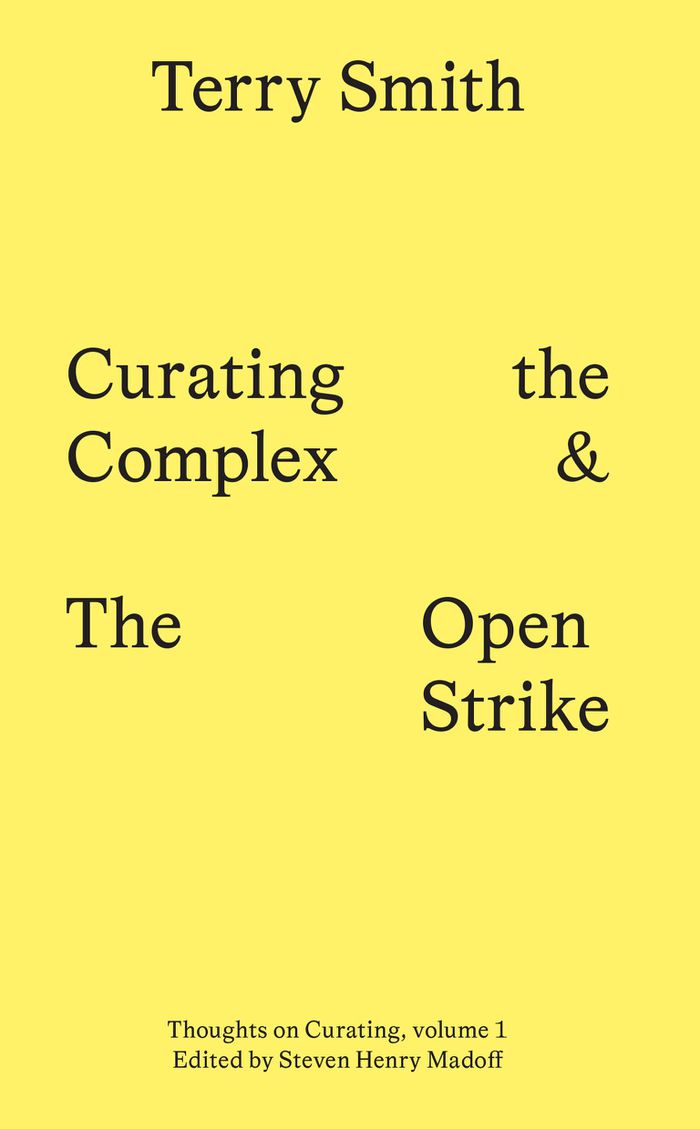
Curating the complex and the open strike
Actions:
Price:
$25.95
(available to order)
Summary:
If we ask where the curating of art occurs these days--in which places, which kinds of place, and how--apparent answers immediately appear: everywhere, expanding as if to ubiquity. Yet at the same time, we sense, with fragile purpose. In this, his newest book, Terry Smith explores the contemporary contexts of curating, looking for less apparent answers. It will map the dimensions of the visual arts exhibitionary complex, including its dialectical dance between institutionalization and deinstitutionalization; the persistence of professional classifications of curatorship; the given and changing categories of art exhibitions; the increasing variety of curatorial styles; the underthinking about publics; and (undistracted by curationism) the changing roles of art making and exhibiting art within an exhibitory iconomy that is at once viral and consumptive. A mapping of this kind might help us towards some answers to the more important questions: why curate art these days and in the name of which interests?
Curating the complex and the open strike
Actions:
Price:
$25.95
(available to order)
Summary:
If we ask where the curating of art occurs these days--in which places, which kinds of place, and how--apparent answers immediately appear: everywhere, expanding as if to ubiquity. Yet at the same time, we sense, with fragile purpose. In this, his newest book, Terry Smith explores the contemporary contexts of curating, looking for less apparent answers. It will map the dimensions of the visual arts exhibitionary complex, including its dialectical dance between institutionalization and deinstitutionalization; the persistence of professional classifications of curatorship; the given and changing categories of art exhibitions; the increasing variety of curatorial styles; the underthinking about publics; and (undistracted by curationism) the changing roles of art making and exhibiting art within an exhibitory iconomy that is at once viral and consumptive. A mapping of this kind might help us towards some answers to the more important questions: why curate art these days and in the name of which interests?
Form:
books
books
Publication:
May 2021
May 2021
Subject:
Museology
Museology
Form:
books
books
Title:
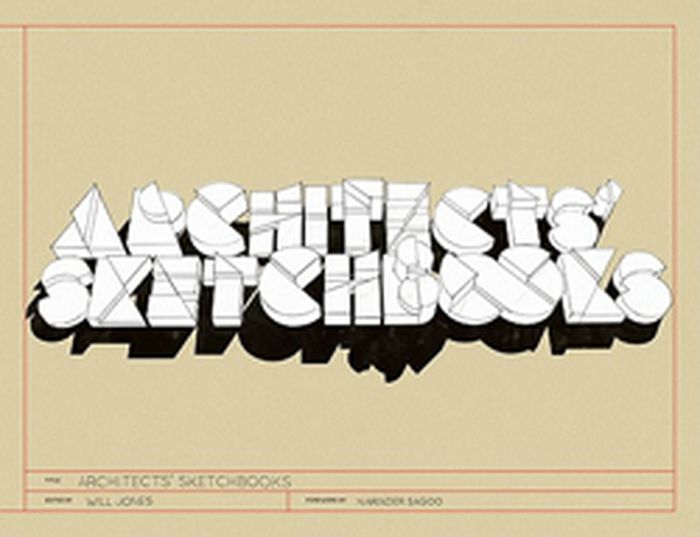
Architects' sketchbooks
Architects' sketchbooks
Actions:
Price:
$55.00
(available to order)
Summary:
The resurgence of drawing is not merely a retrograde trend, but an affirmation of the continued importance of sketching as part of the design process. Architects' Sketchbooks presents pages from the private sketchbooks of a wide international spectrum of architects, who use drawing to express their spatial ideas while revealing their unique thought processes. Sketches(...)
$55.00
(available to order)
Summary:
The resurgence of drawing is not merely a retrograde trend, but an affirmation of the continued importance of sketching as part of the design process. Architects' Sketchbooks presents pages from the private sketchbooks of a wide international spectrum of architects, who use drawing to express their spatial ideas while revealing their unique thought processes. Sketches(...)
Title:
Architects' sketchbooks
Actions:
Price:
$55.00
(available to order)
Summary:
The resurgence of drawing is not merely a retrograde trend, but an affirmation of the continued importance of sketching as part of the design process. Architects' Sketchbooks presents pages from the private sketchbooks of a wide international spectrum of architects, who use drawing to express their spatial ideas while revealing their unique thought processes. Sketches from some 85 architects and studios are featured, including Will Alsop, Architects Atelier Ryo Abe, Shigeru Ban, Elemental, Thom Faulders, Norman Foster, Carlos Jiménez, Alessandro Mendini and Office dA. Their works range from simple line drawings and clear perspectives to more abstract, artistic compositions, from quick freehand to measured mapping, from spontaneous squiggles on scrap paper to careful drawings on art paper. Accompanying texts by editor Will Jones include comments by the architects and profile how they use sketches to help evolve their initial inspirations and concepts into more developed ideas, revealing the artistry behind the built world.
Architects' sketchbooks
Actions:
Price:
$55.00
(available to order)
Summary:
The resurgence of drawing is not merely a retrograde trend, but an affirmation of the continued importance of sketching as part of the design process. Architects' Sketchbooks presents pages from the private sketchbooks of a wide international spectrum of architects, who use drawing to express their spatial ideas while revealing their unique thought processes. Sketches from some 85 architects and studios are featured, including Will Alsop, Architects Atelier Ryo Abe, Shigeru Ban, Elemental, Thom Faulders, Norman Foster, Carlos Jiménez, Alessandro Mendini and Office dA. Their works range from simple line drawings and clear perspectives to more abstract, artistic compositions, from quick freehand to measured mapping, from spontaneous squiggles on scrap paper to careful drawings on art paper. Accompanying texts by editor Will Jones include comments by the architects and profile how they use sketches to help evolve their initial inspirations and concepts into more developed ideas, revealing the artistry behind the built world.
Form:
books
books
Publication:
April 2011
April 2011
Subject:
Architectural Drawing
Architectural Drawing
Form:
books
books
Actions:
Price:
$63.00
(available to order)
Summary:
Despite its importance to place-making, urban planning, and the environment, landscape design has often played an inferior role to architecture. Typically, as little as three percent of a project's construction budget is allocated to the space that surrounds a building, but that is changing. A greater desire to blend buildings into their contexts, ecological(...)
$63.00
(available to order)
Summary:
Despite its importance to place-making, urban planning, and the environment, landscape design has often played an inferior role to architecture. Typically, as little as three percent of a project's construction budget is allocated to the space that surrounds a building, but that is changing. A greater desire to blend buildings into their contexts, ecological(...)
Title:
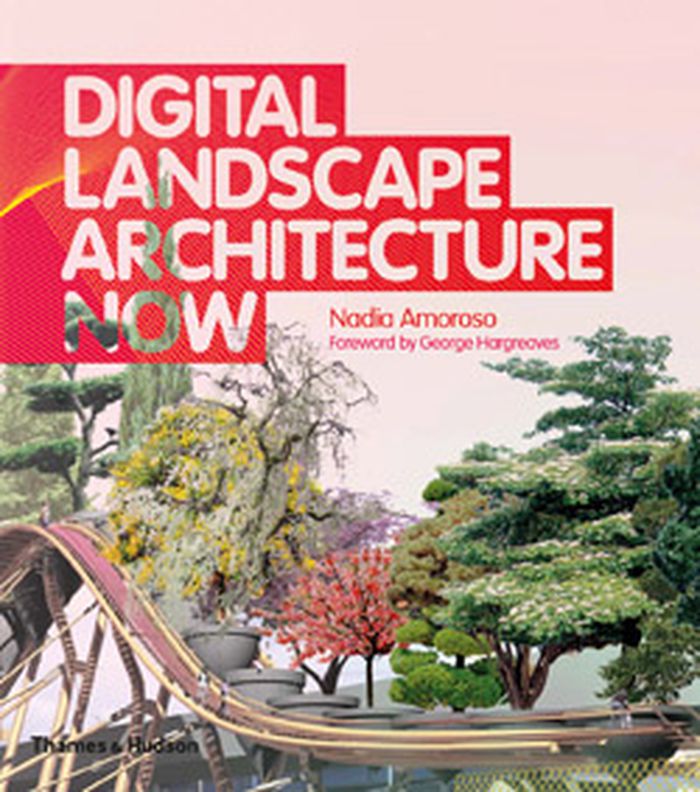
Digital landscape architecture now
Actions:
Price:
$63.00
(available to order)
Summary:
Despite its importance to place-making, urban planning, and the environment, landscape design has often played an inferior role to architecture. Typically, as little as three percent of a project's construction budget is allocated to the space that surrounds a building, but that is changing. A greater desire to blend buildings into their contexts, ecological considerations, legislation, and new definitions of "scaping" have opened up exciting possibilities. Coinciding with heightened social sensitivities, advances in material application, data-driven mapping techniques, and digital technologies and construction methods, landscape designers are producing a new wave of work around the world, reshaping gardens, public squares, leisure areas, and industrial parks. Among the practices included in this survey are designers who have bridged modernism with newer forms (Emergent, West 8); architects whose work fuses with the earth's contours (Zaha Hadid, MVRDV); and a generation of designers only just emerging from universities. Nadia Amoroso is Professor of Landscape Architecture at the University of Toronto and has lectured at Harvard and Cornell universities.
Digital landscape architecture now
Actions:
Price:
$63.00
(available to order)
Summary:
Despite its importance to place-making, urban planning, and the environment, landscape design has often played an inferior role to architecture. Typically, as little as three percent of a project's construction budget is allocated to the space that surrounds a building, but that is changing. A greater desire to blend buildings into their contexts, ecological considerations, legislation, and new definitions of "scaping" have opened up exciting possibilities. Coinciding with heightened social sensitivities, advances in material application, data-driven mapping techniques, and digital technologies and construction methods, landscape designers are producing a new wave of work around the world, reshaping gardens, public squares, leisure areas, and industrial parks. Among the practices included in this survey are designers who have bridged modernism with newer forms (Emergent, West 8); architects whose work fuses with the earth's contours (Zaha Hadid, MVRDV); and a generation of designers only just emerging from universities. Nadia Amoroso is Professor of Landscape Architecture at the University of Toronto and has lectured at Harvard and Cornell universities.
Form:
books
books
Publication:
October 2012
October 2012


