


13794 Results
Form:
books
books

Actions:
Price:
$32.95
(available to order)
Summary:
Today, we believe that the map is a copy of the Earth, without realizing that the opposite is true: in our culture the Earth has assumed the form of a map. In Blinding Polyphemus, Franco Farinelli elucidates the philosophical correlation between cultural evolution and shifting cartographies of modern society, giving readers an interdisciplinary study that attempts to(...)
$32.95
(available to order)
Summary:
Today, we believe that the map is a copy of the Earth, without realizing that the opposite is true: in our culture the Earth has assumed the form of a map. In Blinding Polyphemus, Franco Farinelli elucidates the philosophical correlation between cultural evolution and shifting cartographies of modern society, giving readers an interdisciplinary study that attempts to(...)
Title:
Blinding Polyphemus: geography and the models of the world
Actions:
Price:
$32.95
(available to order)
Summary:
Today, we believe that the map is a copy of the Earth, without realizing that the opposite is true: in our culture the Earth has assumed the form of a map. In Blinding Polyphemus, Franco Farinelli elucidates the philosophical correlation between cultural evolution and shifting cartographies of modern society, giving readers an interdisciplinary study that attempts to understand and redefine the fundamental structures of cartography, architecture, and the notion of “space.” Following the lessons of nineteenth-century critical German geography, this is a manual of geography without any map. To indicate where things are means already responding, in implicit and unreflective ways, to prior questions about their nature. Blinding Polyphemus not only takes account of the present state of the Earth and of human geography, it redefines the principal models we possess for the description of the world: the map, above all, as well as the landscape, subject, place, city, and space.
Blinding Polyphemus: geography and the models of the world
Actions:
Price:
$32.95
(available to order)
Summary:
Today, we believe that the map is a copy of the Earth, without realizing that the opposite is true: in our culture the Earth has assumed the form of a map. In Blinding Polyphemus, Franco Farinelli elucidates the philosophical correlation between cultural evolution and shifting cartographies of modern society, giving readers an interdisciplinary study that attempts to understand and redefine the fundamental structures of cartography, architecture, and the notion of “space.” Following the lessons of nineteenth-century critical German geography, this is a manual of geography without any map. To indicate where things are means already responding, in implicit and unreflective ways, to prior questions about their nature. Blinding Polyphemus not only takes account of the present state of the Earth and of human geography, it redefines the principal models we possess for the description of the world: the map, above all, as well as the landscape, subject, place, city, and space.
Form:
books
books
Publication:
February 2018
February 2018
Subject:
Critical Theory
Critical Theory
Form:
books
books
Price:
$34.95
(available in store)
Summary:
Cette publication entend contribuer à l’élaboration d’un regard critique aux dynamiques qui émergent de la croisée des notions de numérique et de l’urbain. Les mots digital et polis servent de « ruse » pour déplacer le regard, sans l’enfermer dans des discours dominants ou des significations préconçues : la ville est prise en compte en tant que polis, c’est-à-dire celui(...)
$34.95
(available in store)
Summary:
Cette publication entend contribuer à l’élaboration d’un regard critique aux dynamiques qui émergent de la croisée des notions de numérique et de l’urbain. Les mots digital et polis servent de « ruse » pour déplacer le regard, sans l’enfermer dans des discours dominants ou des significations préconçues : la ville est prise en compte en tant que polis, c’est-à-dire celui(...)
Title:
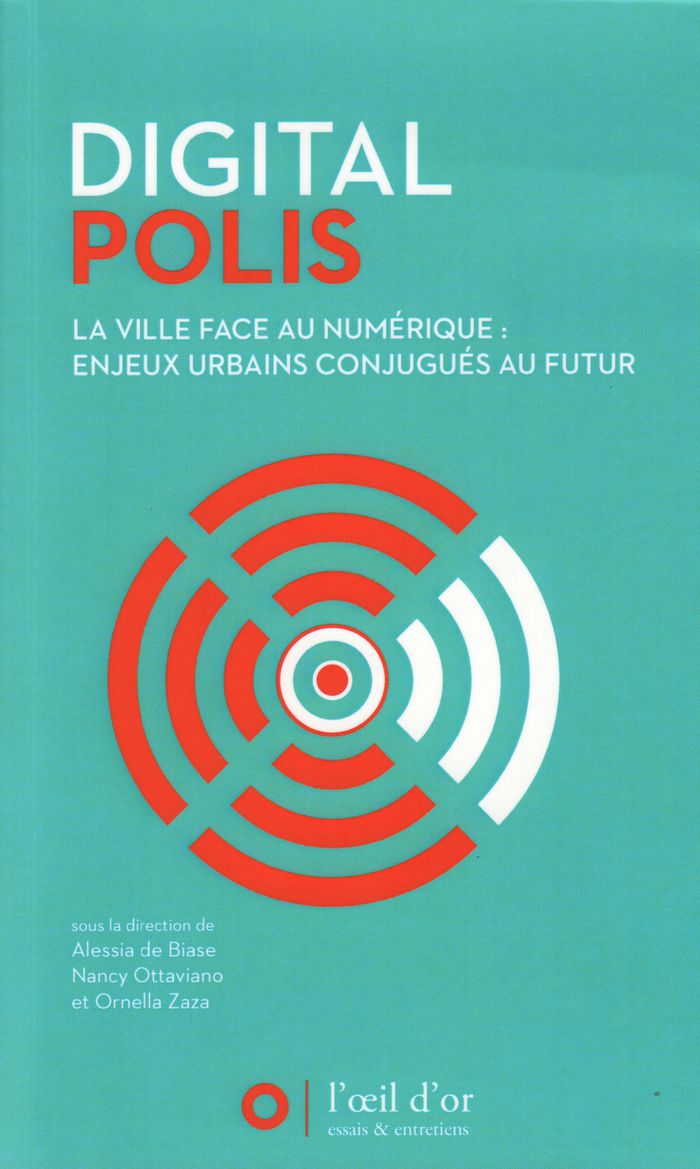
La ville face au numérique : enjeux urbains conjugués au futur
Actions:
Price:
$34.95
(available in store)
Summary:
Cette publication entend contribuer à l’élaboration d’un regard critique aux dynamiques qui émergent de la croisée des notions de numérique et de l’urbain. Les mots digital et polis servent de « ruse » pour déplacer le regard, sans l’enfermer dans des discours dominants ou des significations préconçues : la ville est prise en compte en tant que polis, c’est-à-dire celui qui serait le support actif d’un espace politique et social, et le numérique s’élargit à la notion de digitus, de l’empreinte digitale, où il serait possible de repérer la trace de l’humain, la présence du corps.
La ville face au numérique : enjeux urbains conjugués au futur
Actions:
Price:
$34.95
(available in store)
Summary:
Cette publication entend contribuer à l’élaboration d’un regard critique aux dynamiques qui émergent de la croisée des notions de numérique et de l’urbain. Les mots digital et polis servent de « ruse » pour déplacer le regard, sans l’enfermer dans des discours dominants ou des significations préconçues : la ville est prise en compte en tant que polis, c’est-à-dire celui qui serait le support actif d’un espace politique et social, et le numérique s’élargit à la notion de digitus, de l’empreinte digitale, où il serait possible de repérer la trace de l’humain, la présence du corps.
Form:
books
books
Publication:
April 2018
April 2018
Subject:
Urban Theory
Urban Theory
Form:
books
books
Actions:
Price:
$41.95
(available to order)
Summary:
D'où proviennent les formes ? Dans ce livre l'anthropologue Tim Ingold propose de déconstruire le modèle philosophique hylémorphique qui, depuis Aristote, pense l'acte de fabrication comme l'imposition d'une forme, ou d'un projet, à la matière inerte. Ce renversement théorique n'est possible qu'à la faveur d'une approche matérialiste de la fabrication qui révèle la(...)
$41.95
(available to order)
Summary:
D'où proviennent les formes ? Dans ce livre l'anthropologue Tim Ingold propose de déconstruire le modèle philosophique hylémorphique qui, depuis Aristote, pense l'acte de fabrication comme l'imposition d'une forme, ou d'un projet, à la matière inerte. Ce renversement théorique n'est possible qu'à la faveur d'une approche matérialiste de la fabrication qui révèle la(...)
Title:
Faire: anthropologie, archéologie, art et architecture
Actions:
Price:
$41.95
(available to order)
Summary:
D'où proviennent les formes ? Dans ce livre l'anthropologue Tim Ingold propose de déconstruire le modèle philosophique hylémorphique qui, depuis Aristote, pense l'acte de fabrication comme l'imposition d'une forme, ou d'un projet, à la matière inerte. Ce renversement théorique n'est possible qu'à la faveur d'une approche matérialiste de la fabrication qui révèle la correspondance des pratiques avec les matériaux, leur itinérance au sein de la matière pour engendrer des formes. Cette réflexion conduit Ingold à faire la proposition d'une pédagogie participante suggérant une nouvelle conception de l'enseignement fondée sur l'élucidation des pratiques constitutives des gestes de fabrication. L'anthropologie, l'archéologie, l'art et l'architecture ne sont pas ici considérées comme des disciplines académiques, mais comme des manières de faire qui explorent chacune, à leur façon, les conditions et les potentiels de la vie humaine au sein de son environnement.
Faire: anthropologie, archéologie, art et architecture
Actions:
Price:
$41.95
(available to order)
Summary:
D'où proviennent les formes ? Dans ce livre l'anthropologue Tim Ingold propose de déconstruire le modèle philosophique hylémorphique qui, depuis Aristote, pense l'acte de fabrication comme l'imposition d'une forme, ou d'un projet, à la matière inerte. Ce renversement théorique n'est possible qu'à la faveur d'une approche matérialiste de la fabrication qui révèle la correspondance des pratiques avec les matériaux, leur itinérance au sein de la matière pour engendrer des formes. Cette réflexion conduit Ingold à faire la proposition d'une pédagogie participante suggérant une nouvelle conception de l'enseignement fondée sur l'élucidation des pratiques constitutives des gestes de fabrication. L'anthropologie, l'archéologie, l'art et l'architecture ne sont pas ici considérées comme des disciplines académiques, mais comme des manières de faire qui explorent chacune, à leur façon, les conditions et les potentiels de la vie humaine au sein de son environnement.
Form:
books
books
Publication:
March 2017
March 2017
Subject:
Architectural Theory
Architectural Theory
Form:
books
books
Title:
Le visiteur
Le visiteur
Actions:
Price:
$39.95
(available to order)
Summary:
Ce numéro du Visiteur s’intéresse aux rapports entre l’architecture et le marché. Il s’agit d’interroger en premier lieu la relation que la discipline architecturale et la pratique entretiennent avec les puissances économiques et, à travers celles-ci, avec les instances politiques. Tout «marché» implique un échange; de quel échange de valeurs l’architecture est-elle le(...)
$39.95
(available to order)
Summary:
Ce numéro du Visiteur s’intéresse aux rapports entre l’architecture et le marché. Il s’agit d’interroger en premier lieu la relation que la discipline architecturale et la pratique entretiennent avec les puissances économiques et, à travers celles-ci, avec les instances politiques. Tout «marché» implique un échange; de quel échange de valeurs l’architecture est-elle le(...)
Title:
Le visiteur
Actions:
Price:
$39.95
(available to order)
Summary:
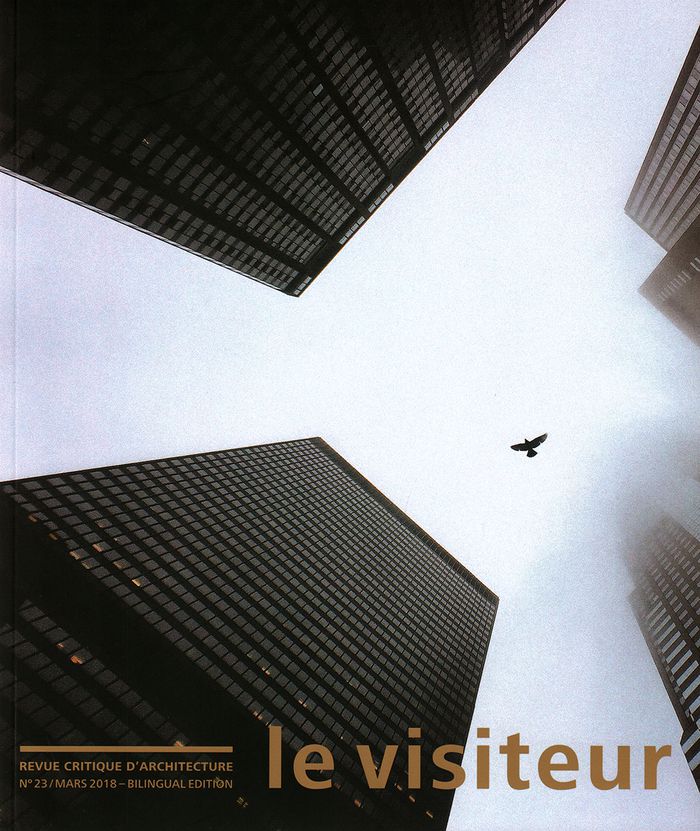
Ce numéro du Visiteur s’intéresse aux rapports entre l’architecture et le marché. Il s’agit d’interroger en premier lieu la relation que la discipline architecturale et la pratique entretiennent avec les puissances économiques et, à travers celles-ci, avec les instances politiques. Tout «marché» implique un échange; de quel échange de valeurs l’architecture est-elle le théâtre? Quels critères président aux choix des projets? Par ailleurs, le goût des élus, la décision régalienne, les «jurys» aux motivations complexes, la doxa architecturale exercent – de manière concentrée ou diffuse, manifeste ou implicite – un pouvoir qui façonne nos villes. L’histoire des concours elle-même est riche d’enseignements sur le rapport que la société, à travers la commande publique, a entretenu avec les grands projets.
Le visiteur
Actions:
Price:
$39.95
(available to order)
Summary:
Ce numéro du Visiteur s’intéresse aux rapports entre l’architecture et le marché. Il s’agit d’interroger en premier lieu la relation que la discipline architecturale et la pratique entretiennent avec les puissances économiques et, à travers celles-ci, avec les instances politiques. Tout «marché» implique un échange; de quel échange de valeurs l’architecture est-elle le théâtre? Quels critères président aux choix des projets? Par ailleurs, le goût des élus, la décision régalienne, les «jurys» aux motivations complexes, la doxa architecturale exercent – de manière concentrée ou diffuse, manifeste ou implicite – un pouvoir qui façonne nos villes. L’histoire des concours elle-même est riche d’enseignements sur le rapport que la société, à travers la commande publique, a entretenu avec les grands projets.
Form:
books
books
Publication:
May 2018
May 2018
Subject:
Architectural Theory
Architectural Theory
Form:
books
books
Price:
$24.95
(available to order)
Summary:
L’orthodoxie économiste s’obstine à imposer le modèle d’un individu décideur rationnel, qui maximise ses revenus à force de calculs régis par le souci de son intérêt bien entendu. Opérant un changement d’échelle radical, « L’économie contre elle-même » soutient plutôt que le néolibéralisme se fonde aux niveaux infra- et trans-individuel, sur une interaction complexe entre(...)
$24.95
(available to order)
Summary:
L’orthodoxie économiste s’obstine à imposer le modèle d’un individu décideur rationnel, qui maximise ses revenus à force de calculs régis par le souci de son intérêt bien entendu. Opérant un changement d’échelle radical, « L’économie contre elle-même » soutient plutôt que le néolibéralisme se fonde aux niveaux infra- et trans-individuel, sur une interaction complexe entre(...)
Title:
L'économie contre elle-même : vers un art anti-capitaliste de l'événement
Actions:
Price:
$24.95
(available to order)
Summary:
L’orthodoxie économiste s’obstine à imposer le modèle d’un individu décideur rationnel, qui maximise ses revenus à force de calculs régis par le souci de son intérêt bien entendu. Opérant un changement d’échelle radical, « L’économie contre elle-même » soutient plutôt que le néolibéralisme se fonde aux niveaux infra- et trans-individuel, sur une interaction complexe entre rationnel et affectif. Brian Massumi insiste en effet sur la manière dont, en deçà du niveau individuel, les tendances et contre-tendances affectives d’un individu résonnent avec celles des autres pour amorcer et orienter l’action. Cette plongée vers l’infra-économie des affects entraîne une recomposition conceptuelle de toutes les dynamiques sociales : là se dessinent les mouvements des corps sensibles et se constitue la volonté, mais surtout, là se crée l’action de transformation sociale. Empruntant à Hume, Foucault, Deleuze, Spinoza et Luhmann, L’économie contre elle-même a l’ambition de déployer une nouvelle théorie de l’économie politique.
L'économie contre elle-même : vers un art anti-capitaliste de l'événement
Actions:
Price:
$24.95
(available to order)
Summary:
L’orthodoxie économiste s’obstine à imposer le modèle d’un individu décideur rationnel, qui maximise ses revenus à force de calculs régis par le souci de son intérêt bien entendu. Opérant un changement d’échelle radical, « L’économie contre elle-même » soutient plutôt que le néolibéralisme se fonde aux niveaux infra- et trans-individuel, sur une interaction complexe entre rationnel et affectif. Brian Massumi insiste en effet sur la manière dont, en deçà du niveau individuel, les tendances et contre-tendances affectives d’un individu résonnent avec celles des autres pour amorcer et orienter l’action. Cette plongée vers l’infra-économie des affects entraîne une recomposition conceptuelle de toutes les dynamiques sociales : là se dessinent les mouvements des corps sensibles et se constitue la volonté, mais surtout, là se crée l’action de transformation sociale. Empruntant à Hume, Foucault, Deleuze, Spinoza et Luhmann, L’économie contre elle-même a l’ambition de déployer une nouvelle théorie de l’économie politique.
Form:
books
books
Publication:
May 2018
May 2018
Subject:
Art Theory
Art Theory
Form:
books
books
Actions:
Price:
$15.95
(available in store)
Summary:
Quel rapport, autre qu'instrumental ou de « maîtrise », le designer peut-il entretenir avec les techniques qu'il exerce ? Quelles « façons de faire » cultivons-nous quand nous avons de la considération pour les cultures techniques ? Et plus généralement qu'est-ce qui fait culture technique aujourd'hui ? Telles sont les questions dont témoigne cette édition. Sous le nom (...)
$15.95
(available in store)
Summary:
Quel rapport, autre qu'instrumental ou de « maîtrise », le designer peut-il entretenir avec les techniques qu'il exerce ? Quelles « façons de faire » cultivons-nous quand nous avons de la considération pour les cultures techniques ? Et plus généralement qu'est-ce qui fait culture technique aujourd'hui ? Telles sont les questions dont témoigne cette édition. Sous le nom (...)
Title:
Par nos propres efforts : documenter, lire, opérer et montrer les « manières de faire »
Actions:
Price:
$15.95
(available in store)
Summary:
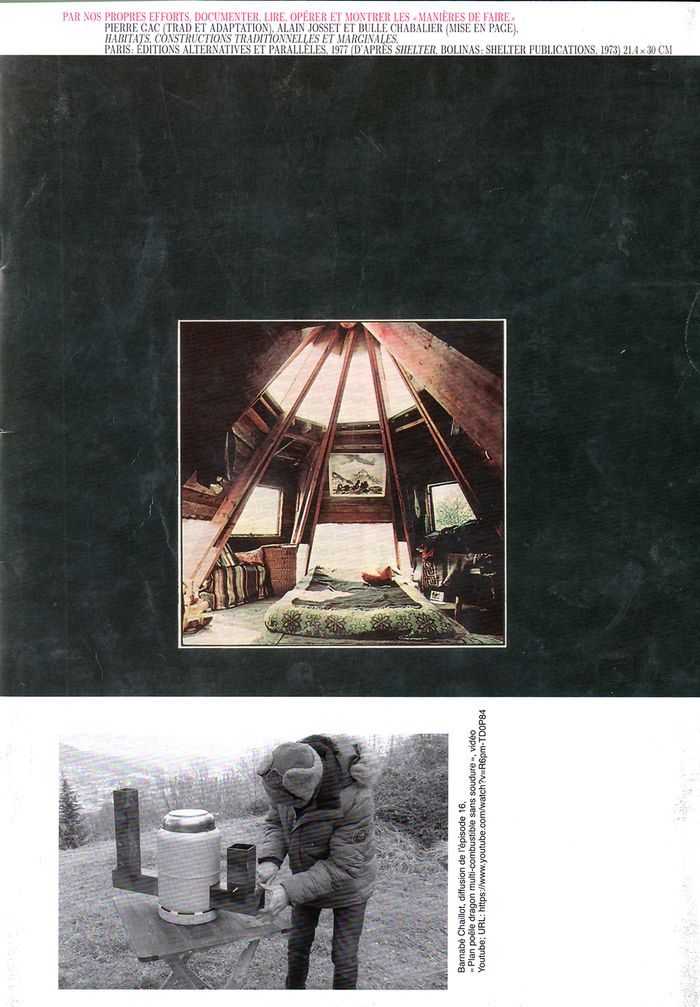
Quel rapport, autre qu'instrumental ou de « maîtrise », le designer peut-il entretenir avec les techniques qu'il exerce ? Quelles « façons de faire » cultivons-nous quand nous avons de la considération pour les cultures techniques ? Et plus généralement qu'est-ce qui fait culture technique aujourd'hui ? Telles sont les questions dont témoigne cette édition. Sous le nom repris d'une publication cubaine des années 1990, le document de restitution articule des documentations de la journée d'étude qui a réuni Caroline Maniaque-Benton et Pierre-Damien Huyghe ; des reproductions du corpus de publications de natures diverses qui documentent et diffusent la technique réunis pour l'occasion ; et des traces de deux ateliers de production : l'un consacré à l'interprétation de la grammaire de l'ouvrage emblématique d'Enzo Mari « Proposta per un'autoprogettazione », l'autre dédié à la réalisation d'un appareil de transformation / fabrication sous l'animation de l'activiste de la low technologie et de l'autonomie énergétique Barnabé Chaillot.
Par nos propres efforts : documenter, lire, opérer et montrer les « manières de faire »
Actions:
Price:
$15.95
(available in store)
Summary:
Quel rapport, autre qu'instrumental ou de « maîtrise », le designer peut-il entretenir avec les techniques qu'il exerce ? Quelles « façons de faire » cultivons-nous quand nous avons de la considération pour les cultures techniques ? Et plus généralement qu'est-ce qui fait culture technique aujourd'hui ? Telles sont les questions dont témoigne cette édition. Sous le nom repris d'une publication cubaine des années 1990, le document de restitution articule des documentations de la journée d'étude qui a réuni Caroline Maniaque-Benton et Pierre-Damien Huyghe ; des reproductions du corpus de publications de natures diverses qui documentent et diffusent la technique réunis pour l'occasion ; et des traces de deux ateliers de production : l'un consacré à l'interprétation de la grammaire de l'ouvrage emblématique d'Enzo Mari « Proposta per un'autoprogettazione », l'autre dédié à la réalisation d'un appareil de transformation / fabrication sous l'animation de l'activiste de la low technologie et de l'autonomie énergétique Barnabé Chaillot.
Form:
books
books
Publication:
April 2018
April 2018
Subject:
Design Theory
Design Theory
Form:
books
books
Actions:
Price:
$32.00
(available in store)
Summary:
This first comprehensive publication about the Silent University introduces the initiative—a solidary school by refugees, asylum seekers and migrants—and contextualizes it in the wider framework of both radical pedagogy and socially engaged art projects.
$32.00
(available in store)
Summary:
This first comprehensive publication about the Silent University introduces the initiative—a solidary school by refugees, asylum seekers and migrants—and contextualizes it in the wider framework of both radical pedagogy and socially engaged art projects.
Title:
The silent university: toward a transversal pedagogy
Actions:
Price:
$32.00
(available in store)
Summary:
This first comprehensive publication about the Silent University introduces the initiative—a solidary school by refugees, asylum seekers and migrants—and contextualizes it in the wider framework of both radical pedagogy and socially engaged art projects.
The silent university: toward a transversal pedagogy
Actions:
Price:
$32.00
(available in store)
Summary:
This first comprehensive publication about the Silent University introduces the initiative—a solidary school by refugees, asylum seekers and migrants—and contextualizes it in the wider framework of both radical pedagogy and socially engaged art projects.
Form:
books
books
Publication:
August 2016
August 2016
Subject:
Critical Theory
Critical Theory
Form:
books
books
Price:
$54.95
(available in store)
Summary:
The catalogue for an exhibition at MAXXI curated by Pippo Ciorra and Jean-Louis Cohen, this book is an homage to Bruno Zevi, the notable architect, historian, lecturer, critic, politician, and designer. Moreover, it is a reflection on the contemporary Italian architectures that Zevi supported and promoted during his 50-year career through his extensive writing and(...)
$54.95
(available in store)
Summary:
The catalogue for an exhibition at MAXXI curated by Pippo Ciorra and Jean-Louis Cohen, this book is an homage to Bruno Zevi, the notable architect, historian, lecturer, critic, politician, and designer. Moreover, it is a reflection on the contemporary Italian architectures that Zevi supported and promoted during his 50-year career through his extensive writing and(...)
Title:
Zevi's architects: history and counter-history of Italian architecture
Actions:
Price:
$54.95
(available in store)
Summary:
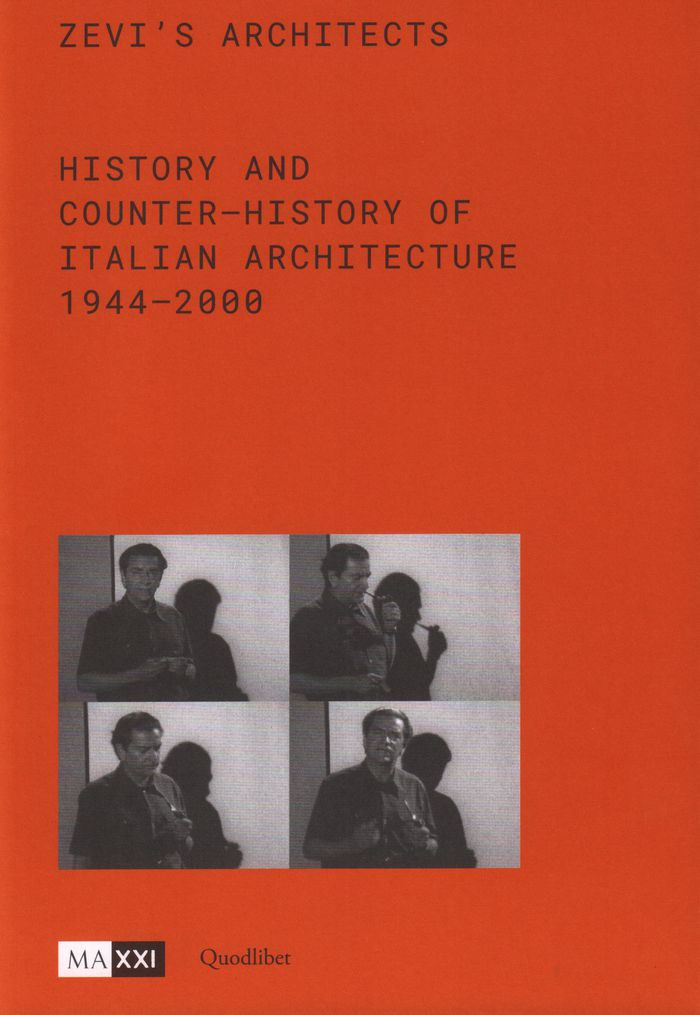
The catalogue for an exhibition at MAXXI curated by Pippo Ciorra and Jean-Louis Cohen, this book is an homage to Bruno Zevi, the notable architect, historian, lecturer, critic, politician, and designer. Moreover, it is a reflection on the contemporary Italian architectures that Zevi supported and promoted during his 50-year career through his extensive writing and criticism. Featuring 35 architects, the book’s drawings, models, and other visual materials clarify the key role Zevi played in the post-war architectural debate in Italy, highlighting the importance of the relationship between architecture and politics and his social passion and presence in the nation’s civic history.
Zevi's architects: history and counter-history of Italian architecture
Actions:
Price:
$54.95
(available in store)
Summary:
The catalogue for an exhibition at MAXXI curated by Pippo Ciorra and Jean-Louis Cohen, this book is an homage to Bruno Zevi, the notable architect, historian, lecturer, critic, politician, and designer. Moreover, it is a reflection on the contemporary Italian architectures that Zevi supported and promoted during his 50-year career through his extensive writing and criticism. Featuring 35 architects, the book’s drawings, models, and other visual materials clarify the key role Zevi played in the post-war architectural debate in Italy, highlighting the importance of the relationship between architecture and politics and his social passion and presence in the nation’s civic history.
Form:
books
books
Publication:
May 2018
May 2018
Subject:
Architectural Theory
Architectural Theory
Form:
books
books
Actions:
Price:
$39.95
(available to order)
Summary:
Focused on post-labor, psychopathology, and plasticity of human mind and body, this book introduces insight, critiques, and propositions in the area of “self-design,” ranging from design and architecture to science, media, history, philosophy, and contemporary art. The field of design has radically expanded. As a practice, design is no longer limited to the world of(...)
$39.95
(available to order)
Summary:
Focused on post-labor, psychopathology, and plasticity of human mind and body, this book introduces insight, critiques, and propositions in the area of “self-design,” ranging from design and architecture to science, media, history, philosophy, and contemporary art. The field of design has radically expanded. As a practice, design is no longer limited to the world of(...)
Title:
Superhumanity: Post-labor, psychopathology, plasticity
Actions:
Price:
$39.95
(available to order)
Summary:
Focused on post-labor, psychopathology, and plasticity of human mind and body, this book introduces insight, critiques, and propositions in the area of “self-design,” ranging from design and architecture to science, media, history, philosophy, and contemporary art. The field of design has radically expanded. As a practice, design is no longer limited to the world of material objects, but rather extends from carefully crafted individual looks and online identities, to the surrounding galaxies of personal devices, new materials, interfaces, networks, systems, infrastructures, data, chemicals, organisms, and genetic codes.
Superhumanity: Post-labor, psychopathology, plasticity
Actions:
Price:
$39.95
(available to order)
Summary:
Focused on post-labor, psychopathology, and plasticity of human mind and body, this book introduces insight, critiques, and propositions in the area of “self-design,” ranging from design and architecture to science, media, history, philosophy, and contemporary art. The field of design has radically expanded. As a practice, design is no longer limited to the world of material objects, but rather extends from carefully crafted individual looks and online identities, to the surrounding galaxies of personal devices, new materials, interfaces, networks, systems, infrastructures, data, chemicals, organisms, and genetic codes.
Form:
books
books
Publication:
July 2018
July 2018
Subject:
Architectural Theory
Architectural Theory
Form:
books
books
Actions:
Price:
$86.95
(available to order)
Summary:
The publication begins from the Andrea Branzi’s reflection on the relationship civility-design, from the Radical’s research on mass-production civilization to the 'infinite territories', proposing new territories able to interpret and anticipate the new dynamics of society. In particular, if the first chapters review the historical/critical works of Andrea Branzi and of(...)
$86.95
(available to order)
Summary:
The publication begins from the Andrea Branzi’s reflection on the relationship civility-design, from the Radical’s research on mass-production civilization to the 'infinite territories', proposing new territories able to interpret and anticipate the new dynamics of society. In particular, if the first chapters review the historical/critical works of Andrea Branzi and of(...)
Title:
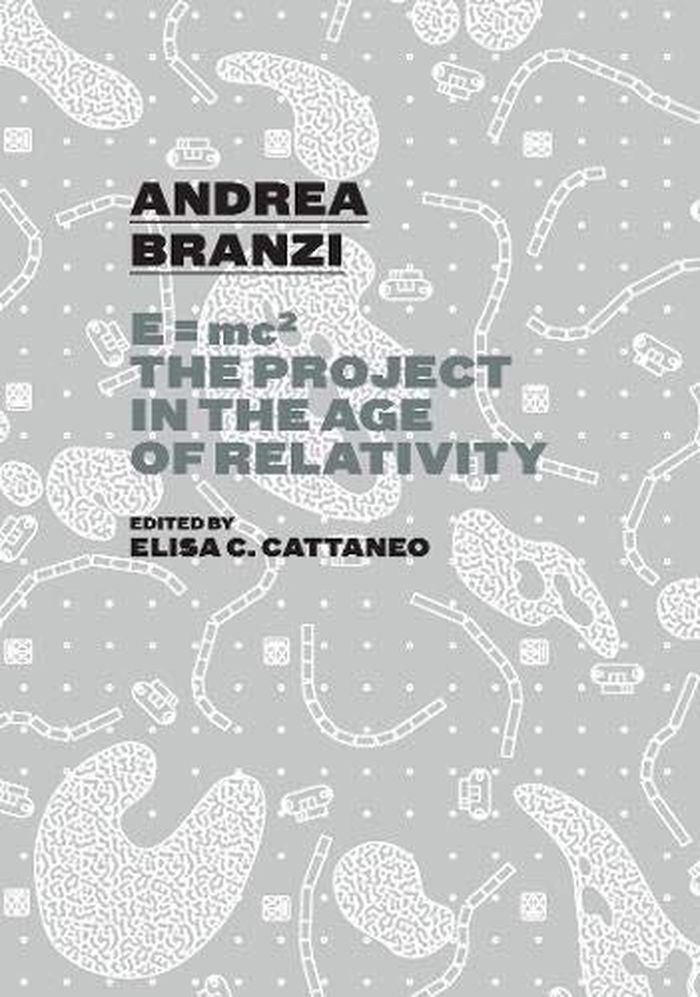
E=mc2 The project in the age of relativity
Actions:
Price:
$86.95
(available to order)
Summary:
The publication begins from the Andrea Branzi’s reflection on the relationship civility-design, from the Radical’s research on mass-production civilization to the 'infinite territories', proposing new territories able to interpret and anticipate the new dynamics of society. In particular, if the first chapters review the historical/critical works of Andrea Branzi and of Radical Movement, the last opens a new parenthesis of research, right now never expressed: the issues ignored by Modernity, like life, death, destiny and the sacred: themes which underline the new drama and the fracture between tragedy and normality, between consumerism and death, between theology and technology, between the silence of reason and the voice of an irrational reality.
E=mc2 The project in the age of relativity
Actions:
Price:
$86.95
(available to order)
Summary:
The publication begins from the Andrea Branzi’s reflection on the relationship civility-design, from the Radical’s research on mass-production civilization to the 'infinite territories', proposing new territories able to interpret and anticipate the new dynamics of society. In particular, if the first chapters review the historical/critical works of Andrea Branzi and of Radical Movement, the last opens a new parenthesis of research, right now never expressed: the issues ignored by Modernity, like life, death, destiny and the sacred: themes which underline the new drama and the fracture between tragedy and normality, between consumerism and death, between theology and technology, between the silence of reason and the voice of an irrational reality.
Form:
books
books
Publication:
October 2020
October 2020
Subject:
Architectural Theory
Architectural Theory


