


12071 Results
Form:
books
books
Title:
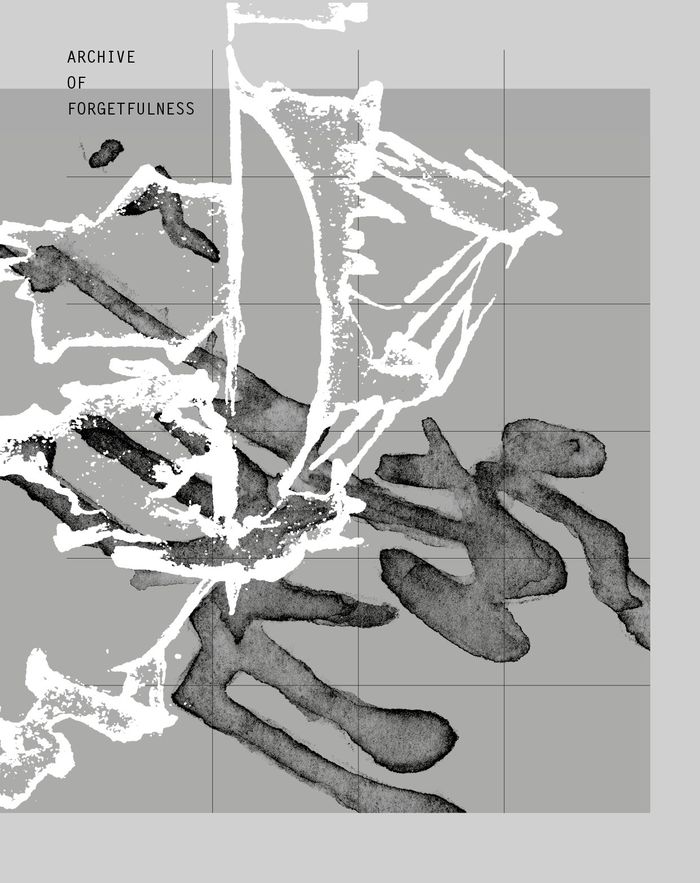
Archive of forgetfulness
Archive of forgetfulness
Actions:
Price:
$42.00
(available in store)
Summary:
''Archive of Forgetfulness'' is a catalogue of the pan-African digital exhibition and podcast series which ran from September 2020 and December 2021 at archiveofforgetfulness.com. The publication acts as a physical translation of the collection of work online, and opens up wider questions around archives, memory and forgetfulness. The project includes the work of(...)
$42.00
(available in store)
Summary:
''Archive of Forgetfulness'' is a catalogue of the pan-African digital exhibition and podcast series which ran from September 2020 and December 2021 at archiveofforgetfulness.com. The publication acts as a physical translation of the collection of work online, and opens up wider questions around archives, memory and forgetfulness. The project includes the work of(...)
Title:
Archive of forgetfulness
Actions:
Price:
$42.00
(available in store)
Summary:
''Archive of Forgetfulness'' is a catalogue of the pan-African digital exhibition and podcast series which ran from September 2020 and December 2021 at archiveofforgetfulness.com. The publication acts as a physical translation of the collection of work online, and opens up wider questions around archives, memory and forgetfulness. The project includes the work of fifty-six artists, cultural producers, curators, creative thinkers and researchers from the African continent and diaspora. The catalogue speaks to the four parts of this larger project, namely an eight-part podcast series, twenty-two art works submitted in response to an open call, five essays and six regionally curated projects. As a collection of work centred on the African continent, the various contributors interrogate archival gestures, raise questions on personal and political histories that emerge via infrastructures of mobility, and suggest ways of living and remembering for alternative possible futures. In these works, archival labour and memory work are understood as deeply political, personal and speculative.
Archive of forgetfulness
Actions:
Price:
$42.00
(available in store)
Summary:
''Archive of Forgetfulness'' is a catalogue of the pan-African digital exhibition and podcast series which ran from September 2020 and December 2021 at archiveofforgetfulness.com. The publication acts as a physical translation of the collection of work online, and opens up wider questions around archives, memory and forgetfulness. The project includes the work of fifty-six artists, cultural producers, curators, creative thinkers and researchers from the African continent and diaspora. The catalogue speaks to the four parts of this larger project, namely an eight-part podcast series, twenty-two art works submitted in response to an open call, five essays and six regionally curated projects. As a collection of work centred on the African continent, the various contributors interrogate archival gestures, raise questions on personal and political histories that emerge via infrastructures of mobility, and suggest ways of living and remembering for alternative possible futures. In these works, archival labour and memory work are understood as deeply political, personal and speculative.
Form:
books
books
Publication:
June 2023
June 2023
Subject:
Contemporary Architecture
Contemporary Architecture
Form:
books
books
Title:
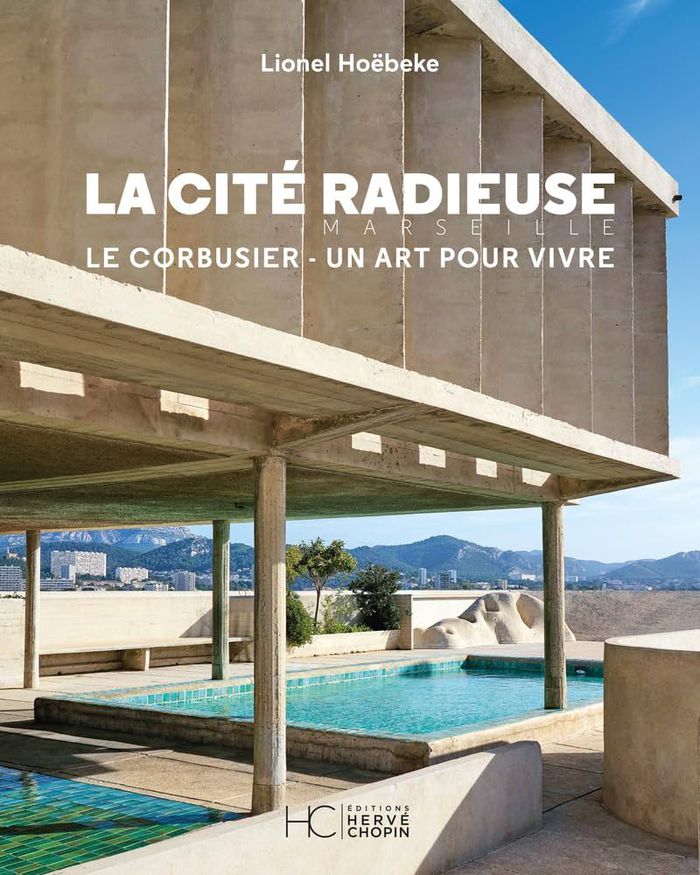
La cité radieuse
La cité radieuse
Actions:
Price:
$34.95
(available to order)
Summary:
C’est dans le contexte du vaste plan de reconstruction de la France de l’après-guerre que l’État commande au Corbusier, à titre expérimental, un immeuble à Marseille – premier d’un ensemble pouvant constituer une ville d’un type nouveau baptisé par Le Corbusier « Ville radieuse » La Cité radieuse sera l’illustration complète des théories de l’architecte, qui cherche à(...)
$34.95
(available to order)
Summary:
C’est dans le contexte du vaste plan de reconstruction de la France de l’après-guerre que l’État commande au Corbusier, à titre expérimental, un immeuble à Marseille – premier d’un ensemble pouvant constituer une ville d’un type nouveau baptisé par Le Corbusier « Ville radieuse » La Cité radieuse sera l’illustration complète des théories de l’architecte, qui cherche à(...)
Title:
La cité radieuse
Actions:
Price:
$34.95
(available to order)
Summary:
C’est dans le contexte du vaste plan de reconstruction de la France de l’après-guerre que l’État commande au Corbusier, à titre expérimental, un immeuble à Marseille – premier d’un ensemble pouvant constituer une ville d’un type nouveau baptisé par Le Corbusier « Ville radieuse » La Cité radieuse sera l’illustration complète des théories de l’architecte, qui cherche à associer harmonieusement vie individuelle et collective.Ce livre se compose comme une visite guidée.
La cité radieuse
Actions:
Price:
$34.95
(available to order)
Summary:
C’est dans le contexte du vaste plan de reconstruction de la France de l’après-guerre que l’État commande au Corbusier, à titre expérimental, un immeuble à Marseille – premier d’un ensemble pouvant constituer une ville d’un type nouveau baptisé par Le Corbusier « Ville radieuse » La Cité radieuse sera l’illustration complète des théories de l’architecte, qui cherche à associer harmonieusement vie individuelle et collective.Ce livre se compose comme une visite guidée.
Form:
books
books
Publication:
December 2023
December 2023
Subject:
Architecture Monographs
Architecture Monographs
Form:
books
books
Actions:
Price:
$60.00
(available to order)
Summary:
Jeanne Gang, one of America’s most distinguished contemporary architects, proposes applying the plant cultivation technique of grafting to architecture and urban design as a way of rethinking adaptive reuse and combatting climate change. Grafting is the process of connecting two separate living plants—one old and one new—so they can grow and thrive as one. This ancient(...)
$60.00
(available to order)
Summary:
Jeanne Gang, one of America’s most distinguished contemporary architects, proposes applying the plant cultivation technique of grafting to architecture and urban design as a way of rethinking adaptive reuse and combatting climate change. Grafting is the process of connecting two separate living plants—one old and one new—so they can grow and thrive as one. This ancient(...)
Title:
The art of architectural grafting
Actions:
Price:
$60.00
(available to order)
Summary:
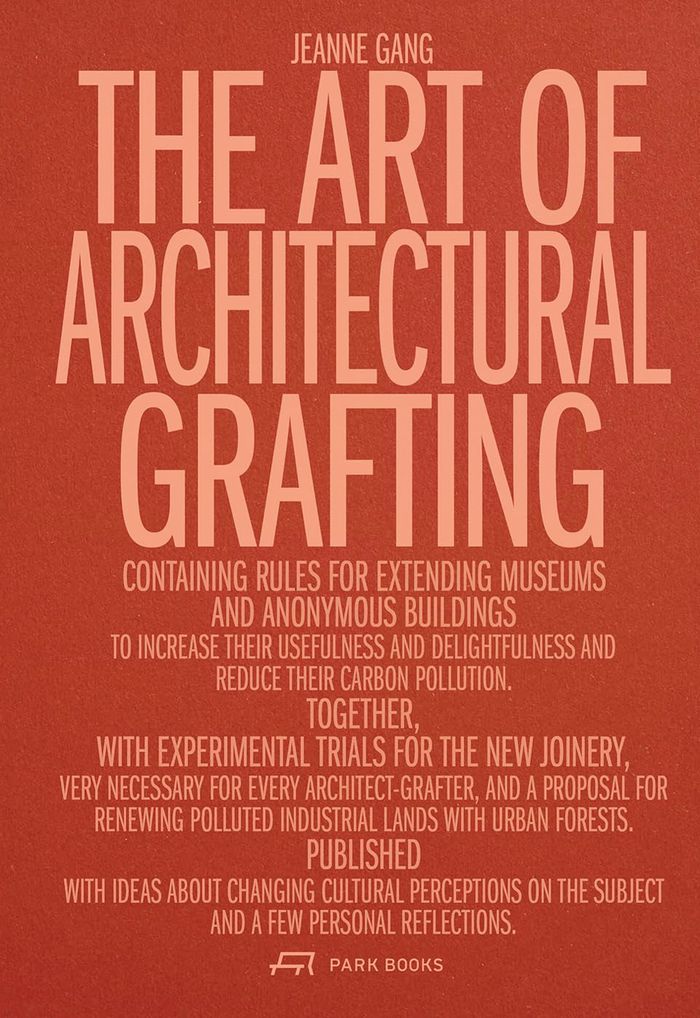
Jeanne Gang, one of America’s most distinguished contemporary architects, proposes applying the plant cultivation technique of grafting to architecture and urban design as a way of rethinking adaptive reuse and combatting climate change. Grafting is the process of connecting two separate living plants—one old and one new—so they can grow and thrive as one. This ancient practice continues to be performed today in search of more fruitful, palatable, and resilient varieties of plants. Grafting is also a useful paradigm for how architecture can address climate change on a broadly impactful scale by reusing and expanding older structures. Addressing both the environmental and cultural value of reuse, Gang shows how the concept of grafting can inform architecture across many scales, provoking the imagination and shaping tectonic, programmatic, formal, and regenerative adaptations.
The art of architectural grafting
Actions:
Price:
$60.00
(available to order)
Summary:
Jeanne Gang, one of America’s most distinguished contemporary architects, proposes applying the plant cultivation technique of grafting to architecture and urban design as a way of rethinking adaptive reuse and combatting climate change. Grafting is the process of connecting two separate living plants—one old and one new—so they can grow and thrive as one. This ancient practice continues to be performed today in search of more fruitful, palatable, and resilient varieties of plants. Grafting is also a useful paradigm for how architecture can address climate change on a broadly impactful scale by reusing and expanding older structures. Addressing both the environmental and cultural value of reuse, Gang shows how the concept of grafting can inform architecture across many scales, provoking the imagination and shaping tectonic, programmatic, formal, and regenerative adaptations.
Form:
books
books
Publication:
April 2024
April 2024
Subject:
Contemporary Architecture
Contemporary Architecture
Form:
books
books
Price:
$46.95
(available to order)
Summary:
Illuminates the origins of numerical control and computer-aided design technologies through hundreds of previously unpublished or rarely seen images drawn from institutional archives and personal collections including photographs, films, and interactive software reconstructions.
$46.95
(available to order)
Summary:
Illuminates the origins of numerical control and computer-aided design technologies through hundreds of previously unpublished or rarely seen images drawn from institutional archives and personal collections including photographs, films, and interactive software reconstructions.
Subject:
Digital Architecture
Digital Architecture
Publication:
December 2023
December 2023
Title:
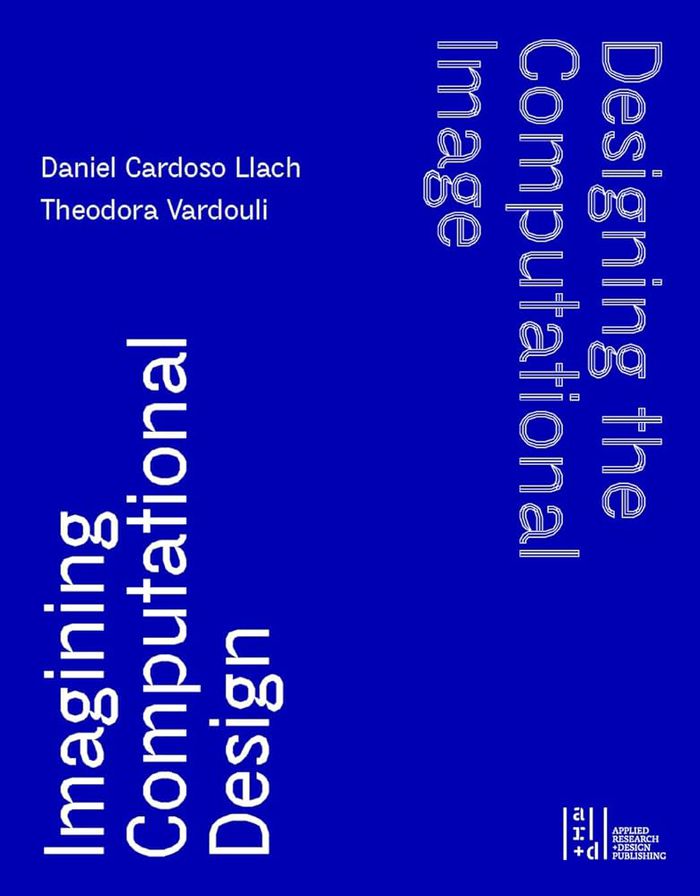
Designing the computational image, Imagining computation design
Actions:
Price:
$46.95
(available to order)
Summary:
Illuminates the origins of numerical control and computer-aided design technologies through hundreds of previously unpublished or rarely seen images drawn from institutional archives and personal collections including photographs, films, and interactive software reconstructions.
Designing the computational image, Imagining computation design
Actions:
Price:
$46.95
(available to order)
Summary:
Illuminates the origins of numerical control and computer-aided design technologies through hundreds of previously unpublished or rarely seen images drawn from institutional archives and personal collections including photographs, films, and interactive software reconstructions.
Form:
books
books
Publication:
December 2023
December 2023
Subject:
Digital Architecture
Digital Architecture
Form:
books
books

Price:
$24.00
(available in store)
Summary:
''Swimming in Atmosphere'' shows the diversity of today's swimming pools and spas: from school pools to thermal spas, from sports pools to wellness facilities. On the example of twelve selected projects, the range is examined in detail with models, plans and photos, and the key questions of swimming pool architecture are discussed. In short video statements, the(...)
$24.00
(available in store)
Summary:
''Swimming in Atmosphere'' shows the diversity of today's swimming pools and spas: from school pools to thermal spas, from sports pools to wellness facilities. On the example of twelve selected projects, the range is examined in detail with models, plans and photos, and the key questions of swimming pool architecture are discussed. In short video statements, the(...)
Title:
4a Architekten Stuttgart : Swimming in atmosphere/ Wasserwelten II
Actions:
Price:
$24.00
(available in store)
Summary:
''Swimming in Atmosphere'' shows the diversity of today's swimming pools and spas: from school pools to thermal spas, from sports pools to wellness facilities. On the example of twelve selected projects, the range is examined in detail with models, plans and photos, and the key questions of swimming pool architecture are discussed. In short video statements, the architects also explain what drives them in their design work.
4a Architekten Stuttgart : Swimming in atmosphere/ Wasserwelten II
Actions:
Price:
$24.00
(available in store)
Summary:
''Swimming in Atmosphere'' shows the diversity of today's swimming pools and spas: from school pools to thermal spas, from sports pools to wellness facilities. On the example of twelve selected projects, the range is examined in detail with models, plans and photos, and the key questions of swimming pool architecture are discussed. In short video statements, the architects also explain what drives them in their design work.
Form:
books
books
Publication:
January 2024
January 2024
Subject:
Architecture Monographs
Architecture Monographs
Form:
books
books
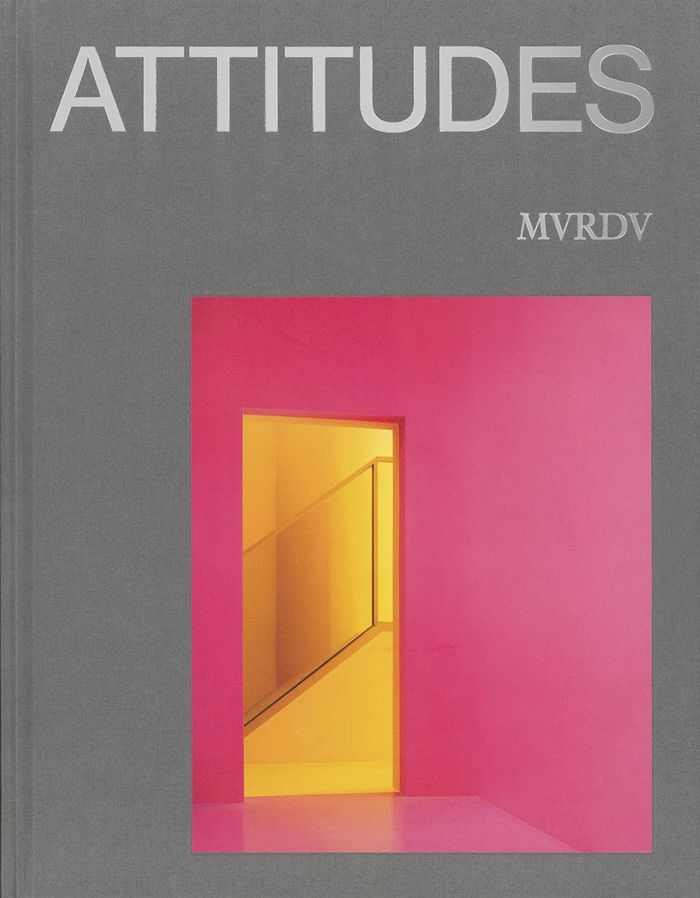
Title:
Attitudes: MVRDV
Attitudes: MVRDV
Actions:
Price:
$110.00
(available to order)
Summary:
Co-edited by MVRDV founding partner Jacob van Rijs and MVRDV partner Jan Knikker, this book presents twenty-five recently completed projects in Europe, North America, and Asia. Among these projects are several that show the potentials of reuse and transformation, such as "High Profile," a lamp made from leftover metal profiles, or "Seoullo 7017", the transformation of(...)
$110.00
(available to order)
Summary:
Co-edited by MVRDV founding partner Jacob van Rijs and MVRDV partner Jan Knikker, this book presents twenty-five recently completed projects in Europe, North America, and Asia. Among these projects are several that show the potentials of reuse and transformation, such as "High Profile," a lamp made from leftover metal profiles, or "Seoullo 7017", the transformation of(...)
Title:
Attitudes: MVRDV
Actions:
Price:
$110.00
(available to order)
Summary:
Co-edited by MVRDV founding partner Jacob van Rijs and MVRDV partner Jan Knikker, this book presents twenty-five recently completed projects in Europe, North America, and Asia. Among these projects are several that show the potentials of reuse and transformation, such as "High Profile," a lamp made from leftover metal profiles, or "Seoullo 7017", the transformation of an elevated highway in Seoul into an urban park. Many of the projects also have a distinct public dimension, welcoming people in, around, and sometimes also on top of buildings, as in the case of the depot of Museum Boijmans Van Beuningen in Rotterdam, or the Idea Factory in Shenzhen.
Attitudes: MVRDV
Actions:
Price:
$110.00
(available to order)
Summary:
Co-edited by MVRDV founding partner Jacob van Rijs and MVRDV partner Jan Knikker, this book presents twenty-five recently completed projects in Europe, North America, and Asia. Among these projects are several that show the potentials of reuse and transformation, such as "High Profile," a lamp made from leftover metal profiles, or "Seoullo 7017", the transformation of an elevated highway in Seoul into an urban park. Many of the projects also have a distinct public dimension, welcoming people in, around, and sometimes also on top of buildings, as in the case of the depot of Museum Boijmans Van Beuningen in Rotterdam, or the Idea Factory in Shenzhen.
Form:
books
books
Publication:
January 2024
January 2024
Subject:
Architecture Monographs
Architecture Monographs
Form:
books
books
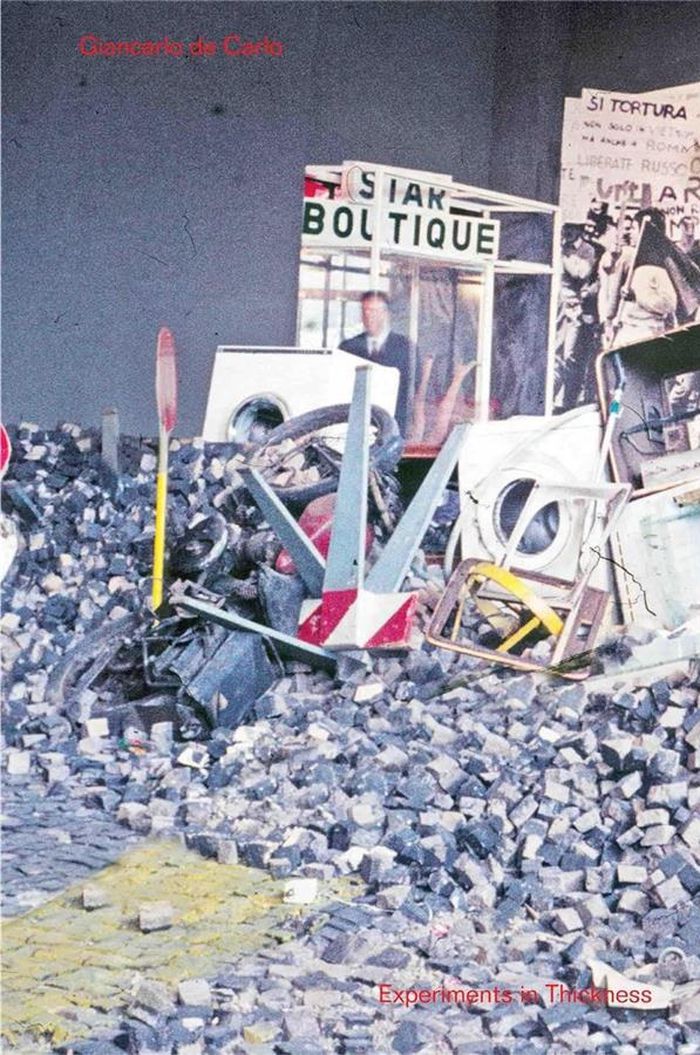
Actions:
Price:
$79.00
(available to order)
Summary:
Giancarlo de Carlo first visited Urbino in 1951 to carry out a minor refurbishment of the offices of the rector of the University. This was the beginning of his lifetime engagement with the small town where he continued working over the next five decades. This book is part of the "Everything without content" series by Kersten Geers, Jelena Pancevac and Joris Kritis, and(...)
$79.00
(available to order)
Summary:
Giancarlo de Carlo first visited Urbino in 1951 to carry out a minor refurbishment of the offices of the rector of the University. This was the beginning of his lifetime engagement with the small town where he continued working over the next five decades. This book is part of the "Everything without content" series by Kersten Geers, Jelena Pancevac and Joris Kritis, and(...)
Title:
Giancarlo De Carlo: Experiments in thickness
Actions:
Price:
$79.00
(available to order)
Summary:
Giancarlo de Carlo first visited Urbino in 1951 to carry out a minor refurbishment of the offices of the rector of the University. This was the beginning of his lifetime engagement with the small town where he continued working over the next five decades. This book is part of the "Everything without content" series by Kersten Geers, Jelena Pancevac and Joris Kritis, and it presents the work Giancarlo de Carlo built in Urbino in the 1960s and 70s, in the shadow of his involvement in Team 10 debates that challenged modernist doctrines on architecture and urbanism. The eight buildings in this book are presented in drawings by students of the Academy of Architecture USI, Mendriso, and photographs by Stefano Graziani.
Giancarlo De Carlo: Experiments in thickness
Actions:
Price:
$79.00
(available to order)
Summary:
Giancarlo de Carlo first visited Urbino in 1951 to carry out a minor refurbishment of the offices of the rector of the University. This was the beginning of his lifetime engagement with the small town where he continued working over the next five decades. This book is part of the "Everything without content" series by Kersten Geers, Jelena Pancevac and Joris Kritis, and it presents the work Giancarlo de Carlo built in Urbino in the 1960s and 70s, in the shadow of his involvement in Team 10 debates that challenged modernist doctrines on architecture and urbanism. The eight buildings in this book are presented in drawings by students of the Academy of Architecture USI, Mendriso, and photographs by Stefano Graziani.
Form:
books
books
Publication:
November 2023
November 2023
Subject:
Architecture Monographs
Architecture Monographs
Form:
books
books
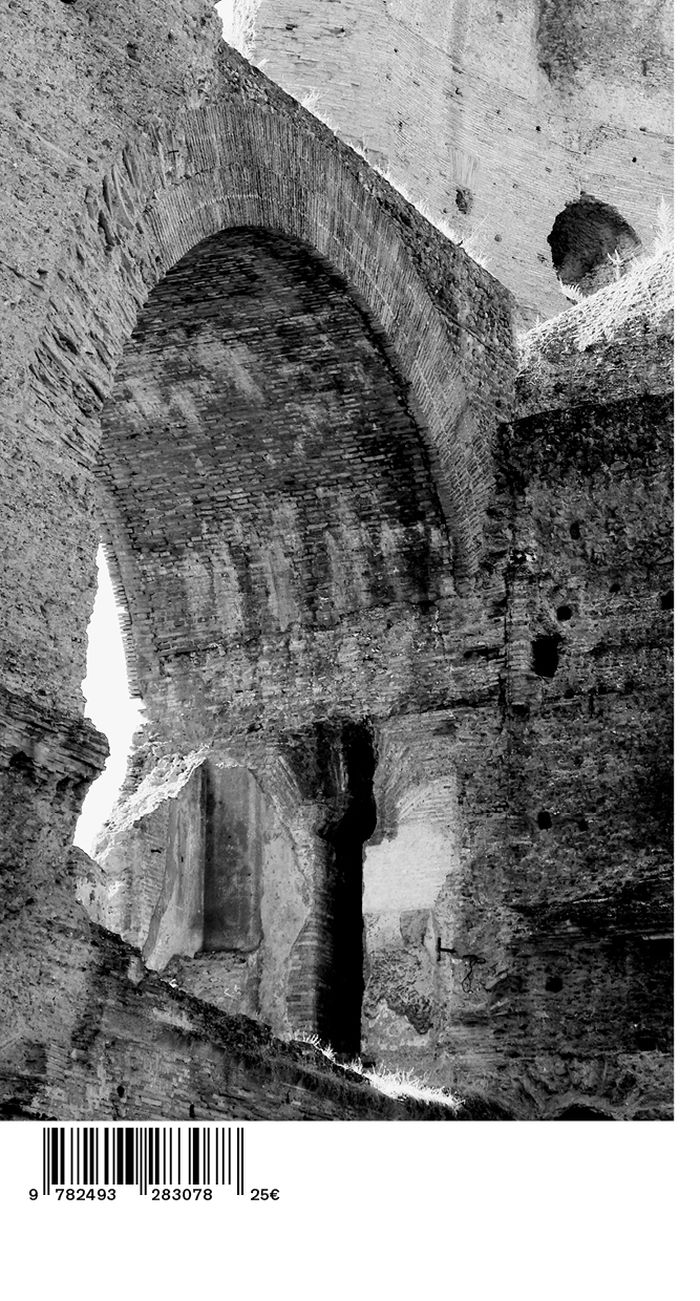
Actions:
Price:
$45.00
(available to order)
Summary:
Jesús María Aparicio Guisado expounds here his conception of architecture by exploring the notion of the wall in four major buildings through drawing and words.
$45.00
(available to order)
Summary:
Jesús María Aparicio Guisado expounds here his conception of architecture by exploring the notion of the wall in four major buildings through drawing and words.
Subject:
Architectural Theory
Architectural Theory
Publication:
January 2024
January 2024
Title:
Le mur : Concept essentiel dans le projet architectonique
Actions:
Price:
$45.00
(available to order)
Summary:
Jesús María Aparicio Guisado expounds here his conception of architecture by exploring the notion of the wall in four major buildings through drawing and words.
Le mur : Concept essentiel dans le projet architectonique
Actions:
Price:
$45.00
(available to order)
Summary:
Jesús María Aparicio Guisado expounds here his conception of architecture by exploring the notion of the wall in four major buildings through drawing and words.
Form:
books
books
Publication:
January 2024
January 2024
Subject:
Architectural Theory
Architectural Theory
Form:
books
books

Title:
Chronology
Chronology
Actions:
Price:
$21.95
(available to order)
Summary:
“It has never been my ambition to treat artworks as illustrations of philosophical doctrines. Rather, I believe that the works explored give rise to their own set of concepts.” A philosophical essay on time, phenomenology and beyond, Daniel Birnbaum’s Chronology was recently reviewed in the April 2006 issue of frieze as a “compelling and sophisticated take on the(...)
$21.95
(available to order)
Summary:
“It has never been my ambition to treat artworks as illustrations of philosophical doctrines. Rather, I believe that the works explored give rise to their own set of concepts.” A philosophical essay on time, phenomenology and beyond, Daniel Birnbaum’s Chronology was recently reviewed in the April 2006 issue of frieze as a “compelling and sophisticated take on the(...)
Title:
Chronology
Actions:
Price:
$21.95
(available to order)
Summary:
“It has never been my ambition to treat artworks as illustrations of philosophical doctrines. Rather, I believe that the works explored give rise to their own set of concepts.” A philosophical essay on time, phenomenology and beyond, Daniel Birnbaum’s Chronology was recently reviewed in the April 2006 issue of frieze as a “compelling and sophisticated take on the common theme of Deleuzian immanence.” Whereas many theoretical books littering the bookshops of art institutions are laudations of excess, Birnbaum’s convictions presented in Chronology cut a way through the “caesuras of non-meaning and blankness into the thick web of sense.” The works of artists such as Stan Douglas, Eija-Liisa Athila, Doug Aitken, Dominique Gonzalez-Foerster, Tacita Dean, Darren Almond, Tobias Rehberger, Pierre Huyghe, and Philippe Parreno are scrutinized as so many attempts to capture the very dialectic of time itself. As Brian Dillon writes in frieze, “Birnbaum’s notion of an art of unpredictable becoming … has its aporias too. A brief aside apropos Matthew Barney – to the effect that his art is all meaning, all of the time – is quite telling.” Daniel Birnbaum is Rector of the Städelschule in Frankfurt am Main and Director of its Portikus gallery. A contributing editor of Artforum, he is the author of a number of texts on art and philosophy.
Chronology
Actions:
Price:
$21.95
(available to order)
Summary:
“It has never been my ambition to treat artworks as illustrations of philosophical doctrines. Rather, I believe that the works explored give rise to their own set of concepts.” A philosophical essay on time, phenomenology and beyond, Daniel Birnbaum’s Chronology was recently reviewed in the April 2006 issue of frieze as a “compelling and sophisticated take on the common theme of Deleuzian immanence.” Whereas many theoretical books littering the bookshops of art institutions are laudations of excess, Birnbaum’s convictions presented in Chronology cut a way through the “caesuras of non-meaning and blankness into the thick web of sense.” The works of artists such as Stan Douglas, Eija-Liisa Athila, Doug Aitken, Dominique Gonzalez-Foerster, Tacita Dean, Darren Almond, Tobias Rehberger, Pierre Huyghe, and Philippe Parreno are scrutinized as so many attempts to capture the very dialectic of time itself. As Brian Dillon writes in frieze, “Birnbaum’s notion of an art of unpredictable becoming … has its aporias too. A brief aside apropos Matthew Barney – to the effect that his art is all meaning, all of the time – is quite telling.” Daniel Birnbaum is Rector of the Städelschule in Frankfurt am Main and Director of its Portikus gallery. A contributing editor of Artforum, he is the author of a number of texts on art and philosophy.
Form:
books
books
Publication:
January 1900, New York
January 1900, New York
Subject:
Architectural Theory
Architectural Theory
Form:
books
books

Actions:
Price:
$22.00
(available to order)
Summary:
With its 100 questions and answers from major practitioners of the art world and beyond, this book helps to examine the various parameters for a new institutional model. 3 selected questions: 1. Sabine Breitwieser: Is a private art institution more independent than a municipal one? 2. Barbara Steiner: Is the idea of internationality in / of art a myth? 3. Jan(...)
$22.00
(available to order)
Summary:
With its 100 questions and answers from major practitioners of the art world and beyond, this book helps to examine the various parameters for a new institutional model. 3 selected questions: 1. Sabine Breitwieser: Is a private art institution more independent than a municipal one? 2. Barbara Steiner: Is the idea of internationality in / of art a myth? 3. Jan(...)
Subject:
Architectural Theory
Architectural Theory
Publication:
January 2007, Berlin / New York
January 2007, Berlin / New York
Title:
Die frage des tages / the question of the day
Actions:
Price:
$22.00
(available to order)
Summary:
With its 100 questions and answers from major practitioners of the art world and beyond, this book helps to examine the various parameters for a new institutional model. 3 selected questions: 1. Sabine Breitwieser: Is a private art institution more independent than a municipal one? 2. Barbara Steiner: Is the idea of internationality in / of art a myth? 3. Jan Verwoert: Can a Kunsthalle establish a critical counter-discourse questioning the art system?
Die frage des tages / the question of the day
Actions:
Price:
$22.00
(available to order)
Summary:
With its 100 questions and answers from major practitioners of the art world and beyond, this book helps to examine the various parameters for a new institutional model. 3 selected questions: 1. Sabine Breitwieser: Is a private art institution more independent than a municipal one? 2. Barbara Steiner: Is the idea of internationality in / of art a myth? 3. Jan Verwoert: Can a Kunsthalle establish a critical counter-discourse questioning the art system?
Form:
books
books
Publication:
January 2007, Berlin / New York
January 2007, Berlin / New York
Subject:
Architectural Theory
Architectural Theory


