


10592 Results
Form:
books
books
Title:
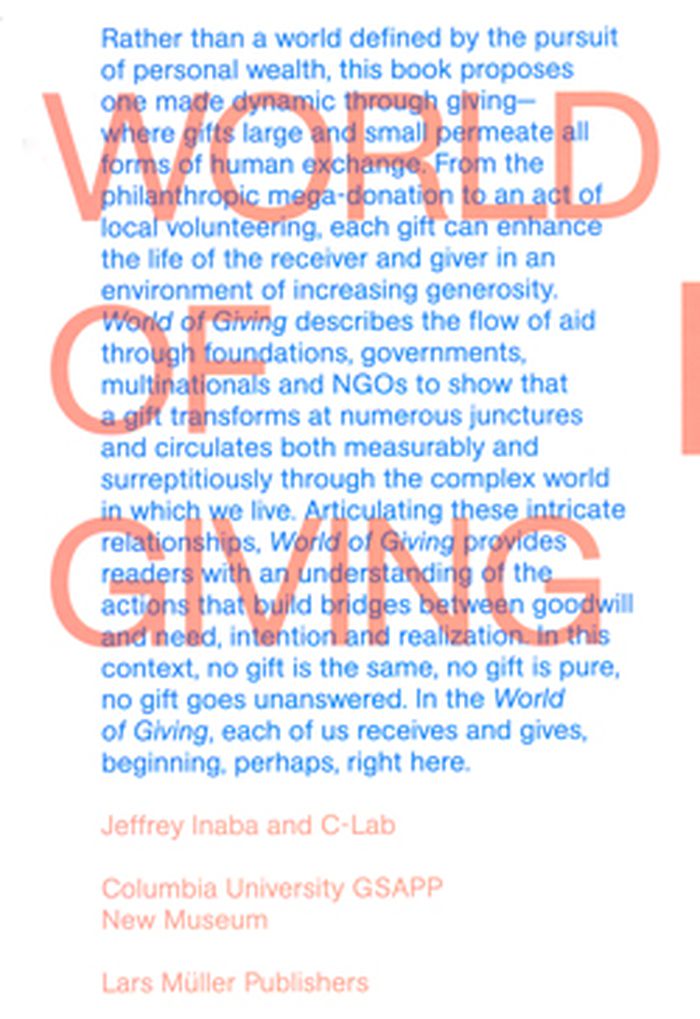
World of giving
World of giving
Actions:
Price:
$49.95
(available to order)
Summary:
The last decade was largely defined by consumption and greed. An untold story, however, is the rise in benevolent giving seen in institutional, public and private sectors. Such characteristics as altruism and duty are now as influential as self-interest. The geography of aid has also broadened; networks of NGOs now supplement philanthropy and the global operations of(...)
$49.95
(available to order)
Summary:
The last decade was largely defined by consumption and greed. An untold story, however, is the rise in benevolent giving seen in institutional, public and private sectors. Such characteristics as altruism and duty are now as influential as self-interest. The geography of aid has also broadened; networks of NGOs now supplement philanthropy and the global operations of(...)
Title:
World of giving
Actions:
Price:
$49.95
(available to order)
Summary:
The last decade was largely defined by consumption and greed. An untold story, however, is the rise in benevolent giving seen in institutional, public and private sectors. Such characteristics as altruism and duty are now as influential as self-interest. The geography of aid has also broadened; networks of NGOs now supplement philanthropy and the global operations of official channels. It has become a crucial counterpart of authorized programs; agencies that provide vital services rely on contributions to augment official doctrines. Yet, the current recession threatens to limit support, diminishing aid at this critical moment when distress is increasing. A new culture of giving that includes volunteering and action, coupled with accumulated expertise may enable imminent needs to be met. The Gift Economy presents aid's history as an index of past and current relationships, indicating how its future promises a significant global role.
World of giving
Actions:
Price:
$49.95
(available to order)
Summary:
The last decade was largely defined by consumption and greed. An untold story, however, is the rise in benevolent giving seen in institutional, public and private sectors. Such characteristics as altruism and duty are now as influential as self-interest. The geography of aid has also broadened; networks of NGOs now supplement philanthropy and the global operations of official channels. It has become a crucial counterpart of authorized programs; agencies that provide vital services rely on contributions to augment official doctrines. Yet, the current recession threatens to limit support, diminishing aid at this critical moment when distress is increasing. A new culture of giving that includes volunteering and action, coupled with accumulated expertise may enable imminent needs to be met. The Gift Economy presents aid's history as an index of past and current relationships, indicating how its future promises a significant global role.
Form:
books
books
Publication:
November 2009
November 2009
Subject:
Architectural Theory
Architectural Theory
Form:
books
books
Price:
$34.95
(available to order)
Summary:
Soon, more than two thirds of all human beings on the planet will live in cities, and the number of increasingly mobile people who shuttle effortlessly between major cities is constantly growing. Every year, various city rankings choose the “top ten” cities in the world. But what makes a city really livable? The answer to this question, as offered by the rankings, is(...)
$34.95
(available to order)
Summary:
Soon, more than two thirds of all human beings on the planet will live in cities, and the number of increasingly mobile people who shuttle effortlessly between major cities is constantly growing. Every year, various city rankings choose the “top ten” cities in the world. But what makes a city really livable? The answer to this question, as offered by the rankings, is(...)
Title:
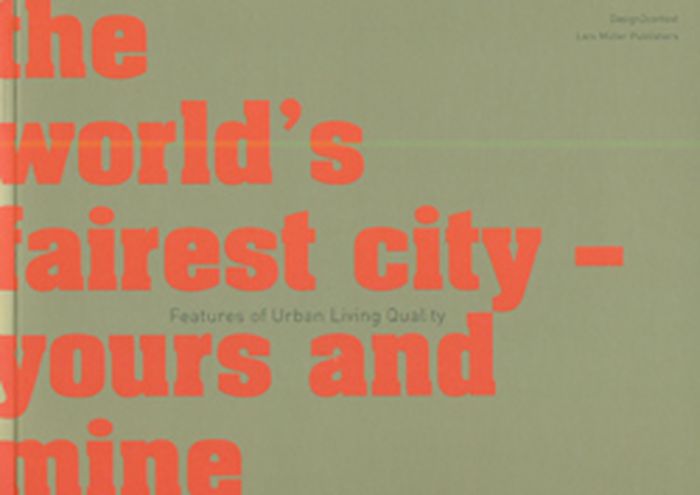
The world's fairest city, yours and mine: features of urban living quality
Actions:
Price:
$34.95
(available to order)
Summary:
Soon, more than two thirds of all human beings on the planet will live in cities, and the number of increasingly mobile people who shuttle effortlessly between major cities is constantly growing. Every year, various city rankings choose the “top ten” cities in the world. But what makes a city really livable? The answer to this question, as offered by the rankings, is anything but satisfactory. Their economically oriented, quantitative criteria are often taken out of context. But personal eperience is much more complex than this. Design2context began by studying established city rankings, then analyzed scenes from everyday urban life, and developed criteria that make it possible to rationally examine urban quality of life from “softer” and emotional perspectives. The result is fifty criteria and a questionnaire that invites the reader to actively reflect on his or her own personal criteria for urban quality of life. Essays by the researchers illuminate the scientific background of the study.
The world's fairest city, yours and mine: features of urban living quality
Actions:
Price:
$34.95
(available to order)
Summary:
Soon, more than two thirds of all human beings on the planet will live in cities, and the number of increasingly mobile people who shuttle effortlessly between major cities is constantly growing. Every year, various city rankings choose the “top ten” cities in the world. But what makes a city really livable? The answer to this question, as offered by the rankings, is anything but satisfactory. Their economically oriented, quantitative criteria are often taken out of context. But personal eperience is much more complex than this. Design2context began by studying established city rankings, then analyzed scenes from everyday urban life, and developed criteria that make it possible to rationally examine urban quality of life from “softer” and emotional perspectives. The result is fifty criteria and a questionnaire that invites the reader to actively reflect on his or her own personal criteria for urban quality of life. Essays by the researchers illuminate the scientific background of the study.
Form:
books
books
Publication:
December 2009
December 2009
Subject:
Urban Theory
Urban Theory
Form:
books
books
Price:
$49.95
(available to order)
Summary:
The essays are based on papers given at a symposium in Copenhagen in June 2008 and refer to the following considerations: When spectators confront and designers invent works of art and architecture, vital questions regarding their appearance arise. These are not simply questions about what appears, also what does not, i.e. what withdraws when works are experienced and(...)
$49.95
(available to order)
Summary:
The essays are based on papers given at a symposium in Copenhagen in June 2008 and refer to the following considerations: When spectators confront and designers invent works of art and architecture, vital questions regarding their appearance arise. These are not simply questions about what appears, also what does not, i.e. what withdraws when works are experienced and(...)
Title:
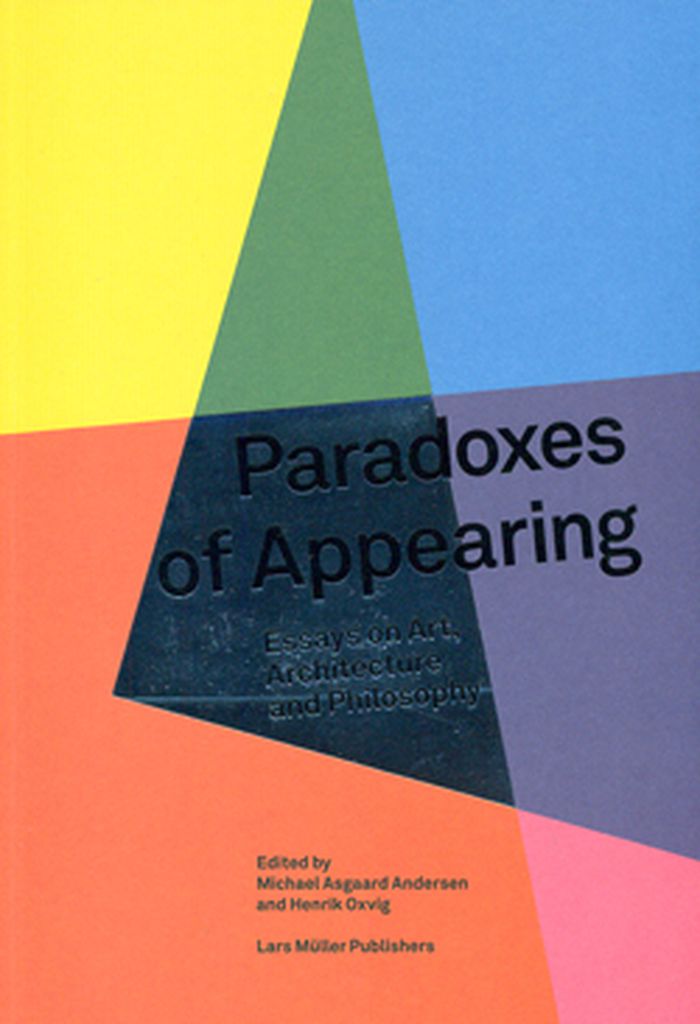
Paradoxes of appearing: essays on art, architecture and philosophy
Actions:
Price:
$49.95
(available to order)
Summary:
The essays are based on papers given at a symposium in Copenhagen in June 2008 and refer to the following considerations: When spectators confront and designers invent works of art and architecture, vital questions regarding their appearance arise. These are not simply questions about what appears, also what does not, i.e. what withdraws when works are experienced and created. How do we cope with this withdrawal, with latencies that escape concretization? What are the productive paradoxes associated hereto and how do they influence the processes of making? Based on multiple discourses on these subjects, contemporary positions in art, architecture and philosophy draw up new challenges, especially with regard to the creative practices. Within and between these positions emerge potentials for modes of thinking and doing with a new sensitivity. With contributions by Michael Asgaard Andersen and Henrik Oxvig, Renaud Barbaras, Andrew Benjamin, Olafur Eliasson, Sanford Kwinter, David Leatherbarrow, Martin Seel, David Summers, and Sven-Olov Wallenstein.
Paradoxes of appearing: essays on art, architecture and philosophy
Actions:
Price:
$49.95
(available to order)
Summary:
The essays are based on papers given at a symposium in Copenhagen in June 2008 and refer to the following considerations: When spectators confront and designers invent works of art and architecture, vital questions regarding their appearance arise. These are not simply questions about what appears, also what does not, i.e. what withdraws when works are experienced and created. How do we cope with this withdrawal, with latencies that escape concretization? What are the productive paradoxes associated hereto and how do they influence the processes of making? Based on multiple discourses on these subjects, contemporary positions in art, architecture and philosophy draw up new challenges, especially with regard to the creative practices. Within and between these positions emerge potentials for modes of thinking and doing with a new sensitivity. With contributions by Michael Asgaard Andersen and Henrik Oxvig, Renaud Barbaras, Andrew Benjamin, Olafur Eliasson, Sanford Kwinter, David Leatherbarrow, Martin Seel, David Summers, and Sven-Olov Wallenstein.
Form:
books
books
Publication:
October 2009
October 2009
Subject:
Architectural Theory
Architectural Theory
Form:
books
books
Actions:
Price:
$32.95
(available to order)
Summary:
Frederick Law Olmsted, who designed New York's Central Park, landscape architect John Charles Olmsted believed that pastoral spaces were integral to a healthy urban life. The success of Central Park brought attention to the company and sparked a nation-wide movement to beautify cities. By 1884, John Charles Olmsted had become a full partner in the Olmsted firm. In 1903,(...)
$32.95
(available to order)
Summary:
Frederick Law Olmsted, who designed New York's Central Park, landscape architect John Charles Olmsted believed that pastoral spaces were integral to a healthy urban life. The success of Central Park brought attention to the company and sparked a nation-wide movement to beautify cities. By 1884, John Charles Olmsted had become a full partner in the Olmsted firm. In 1903,(...)
Title:
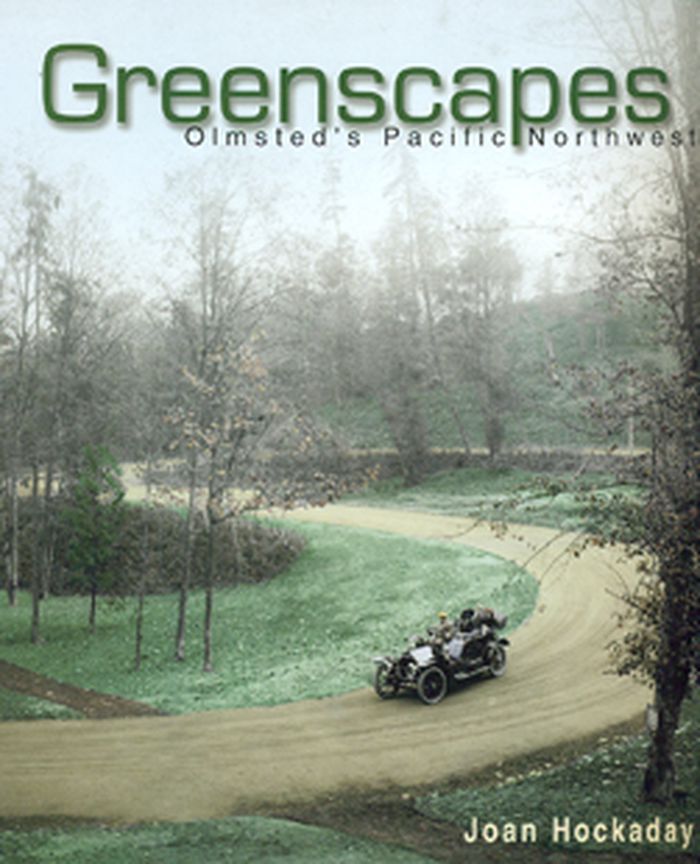
Greenscapes, Olmsted's Pacific northwest
Actions:
Price:
$32.95
(available to order)
Summary:
Frederick Law Olmsted, who designed New York's Central Park, landscape architect John Charles Olmsted believed that pastoral spaces were integral to a healthy urban life. The success of Central Park brought attention to the company and sparked a nation-wide movement to beautify cities. By 1884, John Charles Olmsted had become a full partner in the Olmsted firm. In 1903, he traveled to Portland and Seattle, submitting master plans for park systems in both. He produced designs for several of the region's university campuses and smaller cities, as well as Spokane's premier Manito Park.
Greenscapes, Olmsted's Pacific northwest
Actions:
Price:
$32.95
(available to order)
Summary:
Frederick Law Olmsted, who designed New York's Central Park, landscape architect John Charles Olmsted believed that pastoral spaces were integral to a healthy urban life. The success of Central Park brought attention to the company and sparked a nation-wide movement to beautify cities. By 1884, John Charles Olmsted had become a full partner in the Olmsted firm. In 1903, he traveled to Portland and Seattle, submitting master plans for park systems in both. He produced designs for several of the region's university campuses and smaller cities, as well as Spokane's premier Manito Park.
Form:
books
books
Publication:
April 2009
April 2009
Subject:
Landscape Theory
Landscape Theory
Form:
books
books
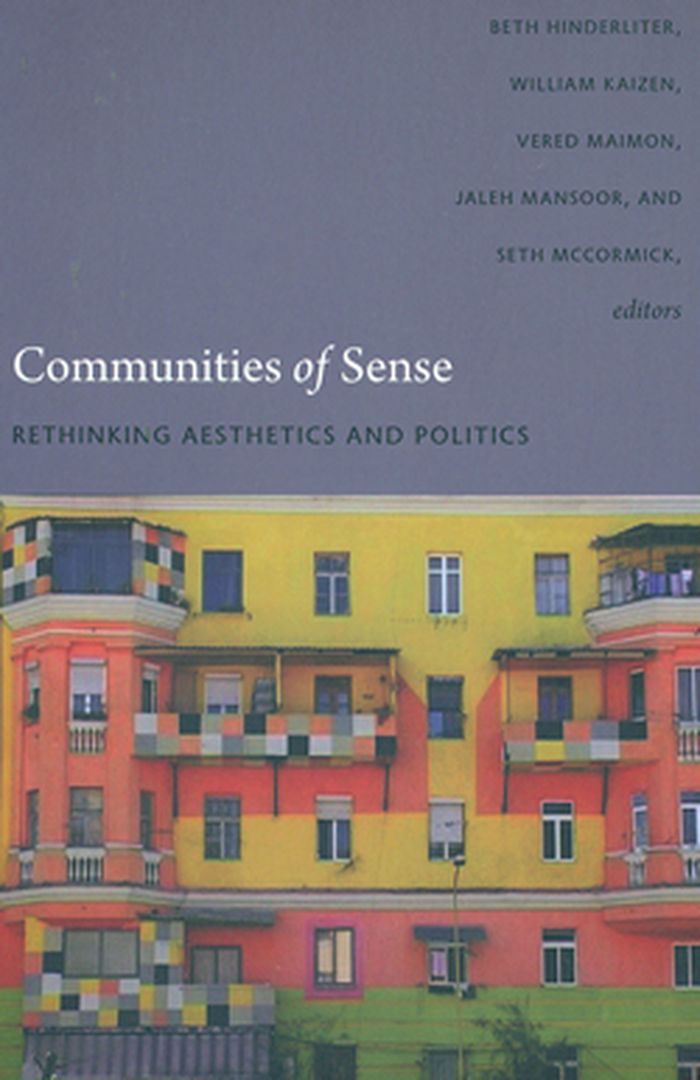
Title:
Communities of sense
Communities of sense
Actions:
Price:
$41.50
(available to order)
Summary:
Communities of Sense argues for a new understanding of the relations between politics and aesthetics in today’s globalized and image-saturated world.
$41.50
(available to order)
Summary:
Communities of Sense argues for a new understanding of the relations between politics and aesthetics in today’s globalized and image-saturated world.
Subject:
Architectural Theory
Architectural Theory
Publication:
September 2009
September 2009
Title:
Communities of sense
Actions:
Price:
$41.50
(available to order)
Summary:
Communities of Sense argues for a new understanding of the relations between politics and aesthetics in today’s globalized and image-saturated world.
Communities of sense
Actions:
Price:
$41.50
(available to order)
Summary:
Communities of Sense argues for a new understanding of the relations between politics and aesthetics in today’s globalized and image-saturated world.
Form:
books
books
Publication:
September 2009
September 2009
Subject:
Architectural Theory
Architectural Theory
Form:
books
books
Actions:
Price:
$31.95
(available to order)
Summary:
On the premise that words have the power to make worlds, each essay in this book follows a word as it travels around the globe and across time. Scholars from five disciplines address thirteen societies to highlight the social and political life of words in Asia, Europe, and the Middle East, from the mid-nineteenth century to the present. The approach is consciously(...)
$31.95
(available to order)
Summary:
On the premise that words have the power to make worlds, each essay in this book follows a word as it travels around the globe and across time. Scholars from five disciplines address thirteen societies to highlight the social and political life of words in Asia, Europe, and the Middle East, from the mid-nineteenth century to the present. The approach is consciously(...)
Subject:
Architectural Theory
Architectural Theory
Publication:
December 2009
December 2009
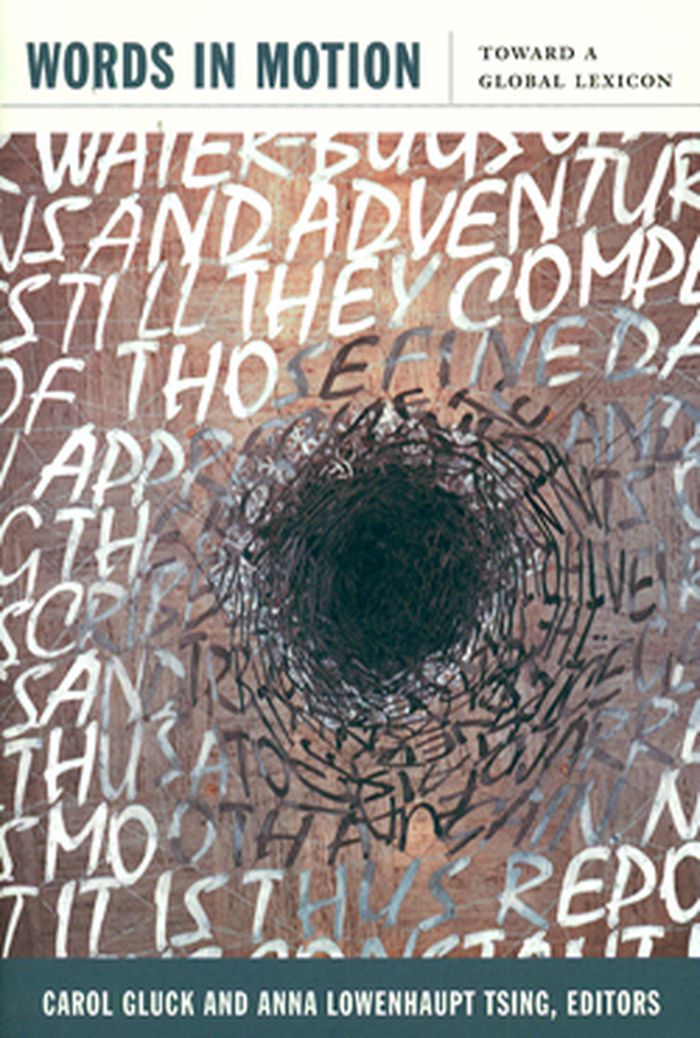
Title:
Words in motion: toward a global lexicon
Actions:
Price:
$31.95
(available to order)
Summary:
On the premise that words have the power to make worlds, each essay in this book follows a word as it travels around the globe and across time. Scholars from five disciplines address thirteen societies to highlight the social and political life of words in Asia, Europe, and the Middle East, from the mid-nineteenth century to the present. The approach is consciously experimental, in that rigorously tracking a specific word in specific settings frequently leads in unexpected directions and alters conventional depictions of global modernity. Such words as security in Brazil, responsibility in Japan, community in Thailand, and hijb in France changed the societies in which they moved even as they were changed by them. Some words threatened to launch wars, as injury did in imperial Britain's relations with China in the nineteenth century. Others, such as secularism, worked in silence to agitate for political change in twentieth-century Morocco. Words imposed or imported from outside could be transformed by those who wielded them to oppose the very powers that introduced them, as happened in Turkey, Indonesia, and the Philippines. Taken together, this selection of fourteen words reveals commonality as well as distinctiveness in modern societies, making the world look different from the interdisciplinary and transnational perspective of "words in motion."
Words in motion: toward a global lexicon
Actions:
Price:
$31.95
(available to order)
Summary:
On the premise that words have the power to make worlds, each essay in this book follows a word as it travels around the globe and across time. Scholars from five disciplines address thirteen societies to highlight the social and political life of words in Asia, Europe, and the Middle East, from the mid-nineteenth century to the present. The approach is consciously experimental, in that rigorously tracking a specific word in specific settings frequently leads in unexpected directions and alters conventional depictions of global modernity. Such words as security in Brazil, responsibility in Japan, community in Thailand, and hijb in France changed the societies in which they moved even as they were changed by them. Some words threatened to launch wars, as injury did in imperial Britain's relations with China in the nineteenth century. Others, such as secularism, worked in silence to agitate for political change in twentieth-century Morocco. Words imposed or imported from outside could be transformed by those who wielded them to oppose the very powers that introduced them, as happened in Turkey, Indonesia, and the Philippines. Taken together, this selection of fourteen words reveals commonality as well as distinctiveness in modern societies, making the world look different from the interdisciplinary and transnational perspective of "words in motion."
Form:
books
books
Publication:
December 2009
December 2009
Subject:
Architectural Theory
Architectural Theory
Form:
books
books
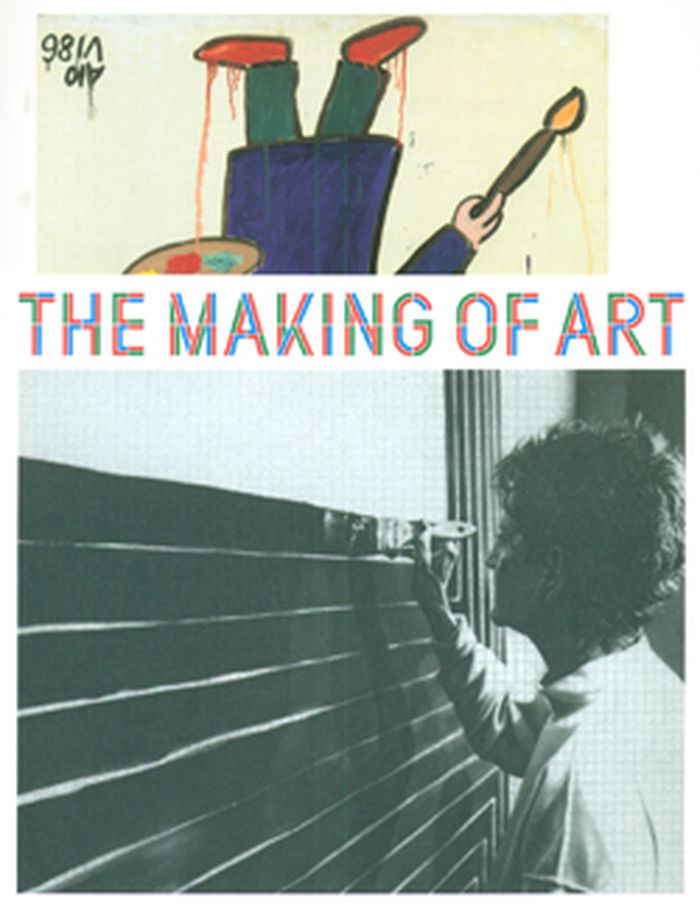
Title:
The making of art
The making of art
Actions:
Price:
$46.00
(available to order)
Summary:
The mechanisms, rhetoric and strategies of today's art world are probably closer to popular conceptions of the film industry than to the romantic image of the solitary studio-bound artist. The artists in The Making of Art show and trace these structures, offering some transparency as to how this world really operates. Artists contributing to this elucidation are Pawel(...)
$46.00
(available to order)
Summary:
The mechanisms, rhetoric and strategies of today's art world are probably closer to popular conceptions of the film industry than to the romantic image of the solitary studio-bound artist. The artists in The Making of Art show and trace these structures, offering some transparency as to how this world really operates. Artists contributing to this elucidation are Pawel(...)
Title:
The making of art
Actions:
Price:
$46.00
(available to order)
Summary:
The mechanisms, rhetoric and strategies of today's art world are probably closer to popular conceptions of the film industry than to the romantic image of the solitary studio-bound artist. The artists in The Making of Art show and trace these structures, offering some transparency as to how this world really operates. Artists contributing to this elucidation are Pawel Althamer, Azorro, Tami Ben-Tor, Joseph Beuys, Merlin Carpenter, Clegg & Guttmann, Phil Collins, Tracey Emin, Fischli & Weiss, Andrea Fraser, Ryan Gander, Thomas Hirschhorn, Jorg Immendorff, Komar & Melamid, Sean Landers, Louise Lawler, Manuel Ocampo, Martin Parr, Sigmar Polke, Cheri Samba, Nedko Solakov, Wolfgang Tillmans and John Waters.
The making of art
Actions:
Price:
$46.00
(available to order)
Summary:
The mechanisms, rhetoric and strategies of today's art world are probably closer to popular conceptions of the film industry than to the romantic image of the solitary studio-bound artist. The artists in The Making of Art show and trace these structures, offering some transparency as to how this world really operates. Artists contributing to this elucidation are Pawel Althamer, Azorro, Tami Ben-Tor, Joseph Beuys, Merlin Carpenter, Clegg & Guttmann, Phil Collins, Tracey Emin, Fischli & Weiss, Andrea Fraser, Ryan Gander, Thomas Hirschhorn, Jorg Immendorff, Komar & Melamid, Sean Landers, Louise Lawler, Manuel Ocampo, Martin Parr, Sigmar Polke, Cheri Samba, Nedko Solakov, Wolfgang Tillmans and John Waters.
Form:
books
books
Publication:
September 2009
September 2009
Subject:
Art Theory
Art Theory
Form:
books
books
Actions:
Price:
$39.00
(available to order)
Summary:
As architects devise ever more radical gestures with which to wow an increasingly architecture-literate public, the discipline itself has had to engage conceptions of "popular culture." This volume traces the discussions of a group of students, teachers and invited guests from the fields of architecture, landscape architecture and psychology, all of whom worked together(...)
$39.00
(available to order)
Summary:
As architects devise ever more radical gestures with which to wow an increasingly architecture-literate public, the discipline itself has had to engage conceptions of "popular culture." This volume traces the discussions of a group of students, teachers and invited guests from the fields of architecture, landscape architecture and psychology, all of whom worked together(...)
Title:
Interrogating pop in architecture
Actions:
Price:
$39.00
(available to order)
Summary:
As architects devise ever more radical gestures with which to wow an increasingly architecture-literate public, the discipline itself has had to engage conceptions of "popular culture." This volume traces the discussions of a group of students, teachers and invited guests from the fields of architecture, landscape architecture and psychology, all of whom worked together at the TU (Technical University) Berlin to discuss this subject.
Interrogating pop in architecture
Actions:
Price:
$39.00
(available to order)
Summary:
As architects devise ever more radical gestures with which to wow an increasingly architecture-literate public, the discipline itself has had to engage conceptions of "popular culture." This volume traces the discussions of a group of students, teachers and invited guests from the fields of architecture, landscape architecture and psychology, all of whom worked together at the TU (Technical University) Berlin to discuss this subject.
Form:
books
books
Publication:
August 2009
August 2009
Subject:
Architectural Theory
Architectural Theory
Form:
books
books
Actions:
Price:
$32.00
(available to order)
Summary:
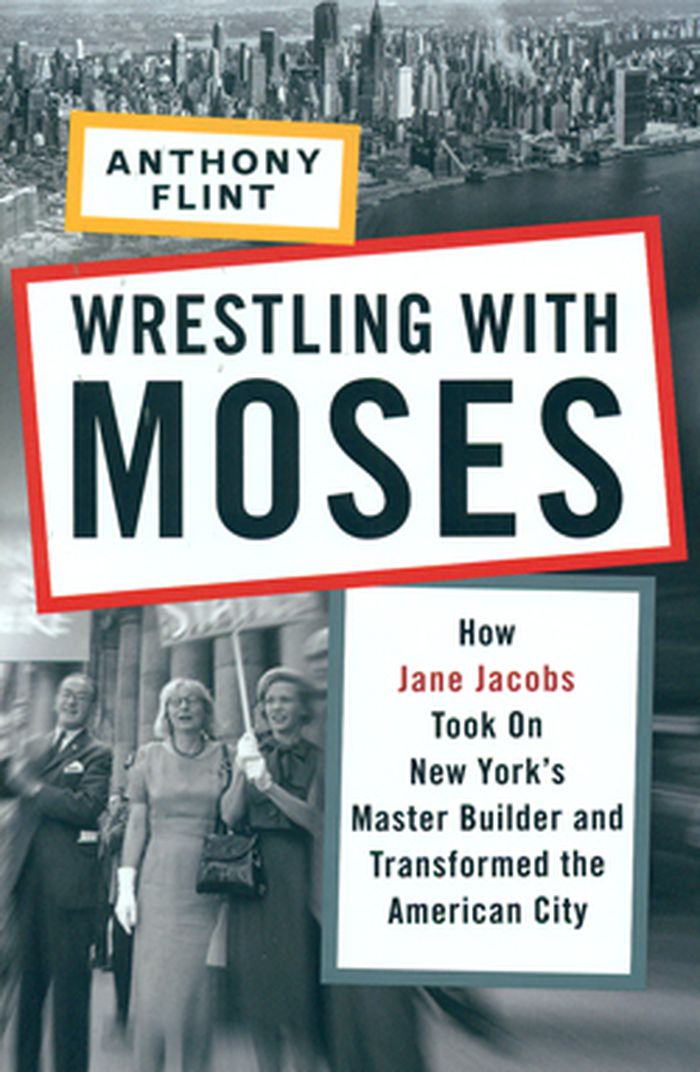
The epic rivalry of Jacobs and Moses, played out amid the struggle for the soul of a city, is one of the most dramatic and consequential in modern American history. In Wrestling with Moses, acclaimed reporter and urban planning policy expert Anthony Flint recounts this thrilling David-and-Goliath story, the legacy of which echoes through our society today.
$32.00
(available to order)
Summary:
The epic rivalry of Jacobs and Moses, played out amid the struggle for the soul of a city, is one of the most dramatic and consequential in modern American history. In Wrestling with Moses, acclaimed reporter and urban planning policy expert Anthony Flint recounts this thrilling David-and-Goliath story, the legacy of which echoes through our society today.
Title:
Wrestling with Moses: how Jane Jacobs took on New York's master builder and transformed the American city
Actions:
Price:
$32.00
(available to order)
Summary:
The epic rivalry of Jacobs and Moses, played out amid the struggle for the soul of a city, is one of the most dramatic and consequential in modern American history. In Wrestling with Moses, acclaimed reporter and urban planning policy expert Anthony Flint recounts this thrilling David-and-Goliath story, the legacy of which echoes through our society today.
Wrestling with Moses: how Jane Jacobs took on New York's master builder and transformed the American city
Actions:
Price:
$32.00
(available to order)
Summary:
The epic rivalry of Jacobs and Moses, played out amid the struggle for the soul of a city, is one of the most dramatic and consequential in modern American history. In Wrestling with Moses, acclaimed reporter and urban planning policy expert Anthony Flint recounts this thrilling David-and-Goliath story, the legacy of which echoes through our society today.
Form:
books
books
Publication:
July 2009
July 2009
Subject:
Urban Theory
Urban Theory
Form:
books
books
Title:
Sprawling places
Sprawling places
Actions:
Price:
$34.95
(available to order)
Summary:
People often bemoan the spread of malls, suburban strips, subdivisions, and other sprawling places in contemporary America. But are these places as bad as critics claim? In Sprawling Places, David Kolb questions widely held assumptions about our built environments. Engaging with the work of such writers and critics as Henri Lefebvre, Manuel Castells, Karsten Harries,(...)
$34.95
(available to order)
Summary:
People often bemoan the spread of malls, suburban strips, subdivisions, and other sprawling places in contemporary America. But are these places as bad as critics claim? In Sprawling Places, David Kolb questions widely held assumptions about our built environments. Engaging with the work of such writers and critics as Henri Lefebvre, Manuel Castells, Karsten Harries,(...)
Title:
Sprawling places
Actions:
Price:
$34.95
(available to order)
Summary:
People often bemoan the spread of malls, suburban strips, subdivisions, and other sprawling places in contemporary America. But are these places as bad as critics claim? In Sprawling Places, David Kolb questions widely held assumptions about our built environments. Engaging with the work of such writers and critics as Henri Lefebvre, Manuel Castells, Karsten Harries, and Christian Norberg-Schulz, Kolb seeks to move discussions about sprawl away from the idea that we must “choose between being rooted in the local Black Forest soil or wandering in directionless space.” By increasing our awareness of complexity and other issues, Kolb hopes to broaden and deepen people’s thinking about the contemporary built environment and to encourage better designs in the future.
Sprawling places
Actions:
Price:
$34.95
(available to order)
Summary:
People often bemoan the spread of malls, suburban strips, subdivisions, and other sprawling places in contemporary America. But are these places as bad as critics claim? In Sprawling Places, David Kolb questions widely held assumptions about our built environments. Engaging with the work of such writers and critics as Henri Lefebvre, Manuel Castells, Karsten Harries, and Christian Norberg-Schulz, Kolb seeks to move discussions about sprawl away from the idea that we must “choose between being rooted in the local Black Forest soil or wandering in directionless space.” By increasing our awareness of complexity and other issues, Kolb hopes to broaden and deepen people’s thinking about the contemporary built environment and to encourage better designs in the future.
Form:
books
books
Publication:
August 2008
August 2008
Subject:
Urban Theory
Urban Theory


