


12071 Results
Form:
books
books
Actions:
Price:
$77.00
(available to order)
Summary:
With a style that is as subtle as it is elegant, Hugh Newell Jacobsen has designed buildings throughout the United States and abroad, published his work regularly in magazines such as Architectural Digest and Architectural Record, and been commissioned by clients such as Jacqueline Kennedy Onassis and Meryl Streep. Although eclectic in his work, Jacobsen has found most(...)
$77.00
(available to order)
Summary:
With a style that is as subtle as it is elegant, Hugh Newell Jacobsen has designed buildings throughout the United States and abroad, published his work regularly in magazines such as Architectural Digest and Architectural Record, and been commissioned by clients such as Jacqueline Kennedy Onassis and Meryl Streep. Although eclectic in his work, Jacobsen has found most(...)
Subject:
Architecture Monographs
Architecture Monographs
Publication:
May 2007, New York
May 2007, New York
Title:
Hugh Newell Jacobsen architect
Actions:
Price:
$77.00
(available to order)
Summary:
With a style that is as subtle as it is elegant, Hugh Newell Jacobsen has designed buildings throughout the United States and abroad, published his work regularly in magazines such as Architectural Digest and Architectural Record, and been commissioned by clients such as Jacqueline Kennedy Onassis and Meryl Streep. Although eclectic in his work, Jacobsen has found most acclaim for his private houses. Infused with a rare sense of clarity and elegance, they are serene and classically proportioned, but at the same time distinctly modern. Drawing inspiration from vernacular architecture, his designs often recall the barns, detached kitchens, and smokehouses of early American architecture. This volume presents the architect's latest endeavors, including houses, university projects, a winery, and more. This third volume of Jacobsen's work is a definitive look at the architect's mature skill and refined taste. An introduction by Paul Goldberger explores Jacobsen's signature style.
Hugh Newell Jacobsen architect
Actions:
Price:
$77.00
(available to order)
Summary:
With a style that is as subtle as it is elegant, Hugh Newell Jacobsen has designed buildings throughout the United States and abroad, published his work regularly in magazines such as Architectural Digest and Architectural Record, and been commissioned by clients such as Jacqueline Kennedy Onassis and Meryl Streep. Although eclectic in his work, Jacobsen has found most acclaim for his private houses. Infused with a rare sense of clarity and elegance, they are serene and classically proportioned, but at the same time distinctly modern. Drawing inspiration from vernacular architecture, his designs often recall the barns, detached kitchens, and smokehouses of early American architecture. This volume presents the architect's latest endeavors, including houses, university projects, a winery, and more. This third volume of Jacobsen's work is a definitive look at the architect's mature skill and refined taste. An introduction by Paul Goldberger explores Jacobsen's signature style.
Form:
books
books
Publication:
May 2007, New York
May 2007, New York
Subject:
Architecture Monographs
Architecture Monographs
Form:
books
books
Actions:
Price:
$57.95
(available to order)
Summary:
Novartis Campus at Basel will be an international significant place of knowledge, innovation and encounters, characterized by far-reaching visions of urban space and architecture. Peter Märklis Visitor Center is the second building to be finished in that area and will be followed by others to be designed and realized by invited architects. With his building Peter(...)
$57.95
(available to order)
Summary:
Novartis Campus at Basel will be an international significant place of knowledge, innovation and encounters, characterized by far-reaching visions of urban space and architecture. Peter Märklis Visitor Center is the second building to be finished in that area and will be followed by others to be designed and realized by invited architects. With his building Peter(...)
Subject:
Architecture Monographs
Architecture Monographs
Publication:
January 2007, Basel
January 2007, Basel
Title:
Peter Märkli : Novartis Campus - Fabrikstrasse 6
Actions:
Price:
$57.95
(available to order)
Summary:
Novartis Campus at Basel will be an international significant place of knowledge, innovation and encounters, characterized by far-reaching visions of urban space and architecture. Peter Märklis Visitor Center is the second building to be finished in that area and will be followed by others to be designed and realized by invited architects. With his building Peter Märkli is relying on architecture's traditional terminology in order to win back lost or forgotten values. This is achieved within contemporary forms and composition and also means exposing the inherent qualities of the materials. Champagne-coloured profiles at the outside, gleaming marble at the inside, yew- and olive-wood as well as cast aluminium at the banisters and the lettering create a richness and variety of materialisation. This publication presents photos of Paolo Rosselli und Goran Potkonjak as well as drawings and sketches by Peter Märkli, showing his design strategy. Ulrike Jehle-Schulte Strathaus has written an introduction to the building, also appreciating the artistic contributions by Jenny Holzer, Alex Herter und Bringolf, Irion, Vögeli as integral parts of the building.
Peter Märkli : Novartis Campus - Fabrikstrasse 6
Actions:
Price:
$57.95
(available to order)
Summary:
Novartis Campus at Basel will be an international significant place of knowledge, innovation and encounters, characterized by far-reaching visions of urban space and architecture. Peter Märklis Visitor Center is the second building to be finished in that area and will be followed by others to be designed and realized by invited architects. With his building Peter Märkli is relying on architecture's traditional terminology in order to win back lost or forgotten values. This is achieved within contemporary forms and composition and also means exposing the inherent qualities of the materials. Champagne-coloured profiles at the outside, gleaming marble at the inside, yew- and olive-wood as well as cast aluminium at the banisters and the lettering create a richness and variety of materialisation. This publication presents photos of Paolo Rosselli und Goran Potkonjak as well as drawings and sketches by Peter Märkli, showing his design strategy. Ulrike Jehle-Schulte Strathaus has written an introduction to the building, also appreciating the artistic contributions by Jenny Holzer, Alex Herter und Bringolf, Irion, Vögeli as integral parts of the building.
Form:
books
books
Publication:
January 2007, Basel
January 2007, Basel
Subject:
Architecture Monographs
Architecture Monographs
Form:
books
books
Title:
VMX Architects: agenda
VMX Architects: agenda
Actions:
Price:
$59.95
(available in store)
Summary:
Architectural history often remains silent on the subject of how architecture is born. The VMX Architects Agenda demonstrates that this very aspect can be instructive. Within its pages VMX Architects ask : "What is it that constitutes our firm? Who or what has shaped us, influenced us, has continued to inspire us?" Leafing through ten years of office diaries they identify(...)
$59.95
(available in store)
Summary:
Architectural history often remains silent on the subject of how architecture is born. The VMX Architects Agenda demonstrates that this very aspect can be instructive. Within its pages VMX Architects ask : "What is it that constitutes our firm? Who or what has shaped us, influenced us, has continued to inspire us?" Leafing through ten years of office diaries they identify(...)
Title:
VMX Architects: agenda
Actions:
Price:
$59.95
(available in store)
Summary:
Architectural history often remains silent on the subject of how architecture is born. The VMX Architects Agenda demonstrates that this very aspect can be instructive. Within its pages VMX Architects ask : "What is it that constitutes our firm? Who or what has shaped us, influenced us, has continued to inspire us?" Leafing through ten years of office diaries they identify influences from their student years, from architectural discourse, social context and daily practice. Memories, facts, speculations and anecdotes take turns in a narrative that is both unique and generic. It is the personal history of VMX, but also the description of occurrences familiar to every architect. The sum total is a story of well-spent time, lost time, gained time and of ideals over time. The VMX Agenda is the truth, "inasmuch as truth is what we produce".
VMX Architects: agenda
Actions:
Price:
$59.95
(available in store)
Summary:
Architectural history often remains silent on the subject of how architecture is born. The VMX Architects Agenda demonstrates that this very aspect can be instructive. Within its pages VMX Architects ask : "What is it that constitutes our firm? Who or what has shaped us, influenced us, has continued to inspire us?" Leafing through ten years of office diaries they identify influences from their student years, from architectural discourse, social context and daily practice. Memories, facts, speculations and anecdotes take turns in a narrative that is both unique and generic. It is the personal history of VMX, but also the description of occurrences familiar to every architect. The sum total is a story of well-spent time, lost time, gained time and of ideals over time. The VMX Agenda is the truth, "inasmuch as truth is what we produce".
Form:
books
books
Publication:
January 2007, Rotterdam
January 2007, Rotterdam
Subject:
Architecture Monographs
Architecture Monographs
Form:
books
books
Title:
O N L : hyperbody logic
O N L : hyperbody logic
Actions:
Price:
$58.95
(available to order)
Summary:
This book series is designated to introducing contemporary digital, multi-media and net inform-ation based architecture design into China with a global perspective , in order to provide a valu-able reference for professional architecture design practice and education development in China and furnish Chinese architecture students and professionals with rich information on(...)
$58.95
(available to order)
Summary:
This book series is designated to introducing contemporary digital, multi-media and net inform-ation based architecture design into China with a global perspective , in order to provide a valu-able reference for professional architecture design practice and education development in China and furnish Chinese architecture students and professionals with rich information on(...)
Title:
O N L : hyperbody logic
Actions:
Price:
$58.95
(available to order)
Summary:
This book series is designated to introducing contemporary digital, multi-media and net inform-ation based architecture design into China with a global perspective , in order to provide a valu-able reference for professional architecture design practice and education development in China and furnish Chinese architecture students and professionals with rich information on the world's new architecture culture experience. From France to Italy, from U.S to Spain, Netherlands,Germany, Finland... all the architects are carefully selected with extensive consulting from experts in both U.S. and Chinese architectural education institutes and have gone through rigorous examinations of our advisors. This Project will start at August,2005 and continue to the year of 2006.
O N L : hyperbody logic
Actions:
Price:
$58.95
(available to order)
Summary:
This book series is designated to introducing contemporary digital, multi-media and net inform-ation based architecture design into China with a global perspective , in order to provide a valu-able reference for professional architecture design practice and education development in China and furnish Chinese architecture students and professionals with rich information on the world's new architecture culture experience. From France to Italy, from U.S to Spain, Netherlands,Germany, Finland... all the architects are carefully selected with extensive consulting from experts in both U.S. and Chinese architectural education institutes and have gone through rigorous examinations of our advisors. This Project will start at August,2005 and continue to the year of 2006.
Form:
books
books
Publication:
June 2006, Beijing
June 2006, Beijing
Subject:
Architecture Monographs
Architecture Monographs
Form:
books
books
Title:
Greg Lynn Form
Greg Lynn Form
Actions:
Price:
$57.95
(available to order)
Summary:
Greg Lynn FORM has been at the cutting edge of design in the field of architecture when comes to the use of computer-aided design. The projects, publications, teachings and writings associated with the office have been influential in the acceptance and use of advanced technology for design and fabrication. Greg Lynn FORM was established in 1994 in Iloboken , NJ and(...)
$57.95
(available to order)
Summary:
Greg Lynn FORM has been at the cutting edge of design in the field of architecture when comes to the use of computer-aided design. The projects, publications, teachings and writings associated with the office have been influential in the acceptance and use of advanced technology for design and fabrication. Greg Lynn FORM was established in 1994 in Iloboken , NJ and(...)
Title:
Greg Lynn Form
Actions:
Price:
$57.95
(available to order)
Summary:
Greg Lynn FORM has been at the cutting edge of design in the field of architecture when comes to the use of computer-aided design. The projects, publications, teachings and writings associated with the office have been influential in the acceptance and use of advanced technology for design and fabrication. Greg Lynn FORM was established in 1994 in Iloboken , NJ and relocated to Venice, California in 1998 to take advantage of the knowledge and technology resources in both the manufacturing and entertainment industries of Southern California. The office is a design forward team that combines a unique specialization in exotic form and a creative ease and expertise with cutting edge design, manufacturing and construction techniques germane to the aeronautic, automobile and film industries of Southern California . The office is especially experienced in collaborative partnerships on international projects ranging from boutique interiors to public housing. Most recently the office collaborated with 5 well known design firms in a team called United Architects and submitted one of the the proposals for the World Trade center competition. Greg Lynn FORM is committed to design quality and innovation with the ability to take leadership roles within interdisciplinary design teams that fuse a variety of expert knowledge and resources.
Greg Lynn Form
Actions:
Price:
$57.95
(available to order)
Summary:
Greg Lynn FORM has been at the cutting edge of design in the field of architecture when comes to the use of computer-aided design. The projects, publications, teachings and writings associated with the office have been influential in the acceptance and use of advanced technology for design and fabrication. Greg Lynn FORM was established in 1994 in Iloboken , NJ and relocated to Venice, California in 1998 to take advantage of the knowledge and technology resources in both the manufacturing and entertainment industries of Southern California. The office is a design forward team that combines a unique specialization in exotic form and a creative ease and expertise with cutting edge design, manufacturing and construction techniques germane to the aeronautic, automobile and film industries of Southern California . The office is especially experienced in collaborative partnerships on international projects ranging from boutique interiors to public housing. Most recently the office collaborated with 5 well known design firms in a team called United Architects and submitted one of the the proposals for the World Trade center competition. Greg Lynn FORM is committed to design quality and innovation with the ability to take leadership roles within interdisciplinary design teams that fuse a variety of expert knowledge and resources.
Form:
books
books
Publication:
January 2007, Beijing
January 2007, Beijing
Subject:
Architecture Monographs
Architecture Monographs
Form:
books
books
Actions:
Price:
$58.95
(available to order)
Summary:
This book series is designated to introducing contemporary digital, multi-media and net inform-ation based architecture design into China with a global perspective , in order to provide a valu-able reference for professional architecture design practice and education development in China and furnish Chinese architecture students and professionals with rich information on(...)
$58.95
(available to order)
Summary:
This book series is designated to introducing contemporary digital, multi-media and net inform-ation based architecture design into China with a global perspective , in order to provide a valu-able reference for professional architecture design practice and education development in China and furnish Chinese architecture students and professionals with rich information on(...)
Title:
R I e (n) : I've heard about...(c)
Actions:
Price:
$58.95
(available to order)
Summary:
This book series is designated to introducing contemporary digital, multi-media and net inform-ation based architecture design into China with a global perspective , in order to provide a valu-able reference for professional architecture design practice and education development in China and furnish Chinese architecture students and professionals with rich information on the world's new architecture culture experience. From France to Italy, from U.S to Spain, Netherlands,Germany, Finland... all the architects are carefully selected with extensive consulting from experts in both U.S. and Chinese architectural education institutes and have gone through rigorous examinations of our advisors. This Project will start at August,2005 and continue to the year of 2006. Text in English / Chinese
R I e (n) : I've heard about...(c)
Actions:
Price:
$58.95
(available to order)
Summary:
This book series is designated to introducing contemporary digital, multi-media and net inform-ation based architecture design into China with a global perspective , in order to provide a valu-able reference for professional architecture design practice and education development in China and furnish Chinese architecture students and professionals with rich information on the world's new architecture culture experience. From France to Italy, from U.S to Spain, Netherlands,Germany, Finland... all the architects are carefully selected with extensive consulting from experts in both U.S. and Chinese architectural education institutes and have gone through rigorous examinations of our advisors. This Project will start at August,2005 and continue to the year of 2006. Text in English / Chinese
Form:
books
books
Publication:
June 2005, Beijing
June 2005, Beijing
Subject:
Architecture Monographs
Architecture Monographs
Form:
books
books
Price:
$32.95
(available to order)
Summary:
With the perspective of a walker moving through a fluid landscape of neighbourhoods and eras, Sherry Simon experiences Montreal as a voyage across languages. She traces an evocative history of literary passages across familiar sites - the mythical boulevard Saint-Laurent, Mile End, Mont Royal - as she follows adventurous cultural translators such as Malcolm Reid, A.M.(...)
$32.95
(available to order)
Summary:
With the perspective of a walker moving through a fluid landscape of neighbourhoods and eras, Sherry Simon experiences Montreal as a voyage across languages. She traces an evocative history of literary passages across familiar sites - the mythical boulevard Saint-Laurent, Mile End, Mont Royal - as she follows adventurous cultural translators such as Malcolm Reid, A.M.(...)
Subject:
Architecture de Montréal
Architecture de Montréal
Publication:
October 2006, Montreal & Kingston London Ithica
October 2006, Montreal & Kingston London Ithica
Title:
Translating Montreal : Episodes in the life of a divided city
Actions:
Price:
$32.95
(available to order)
Summary:
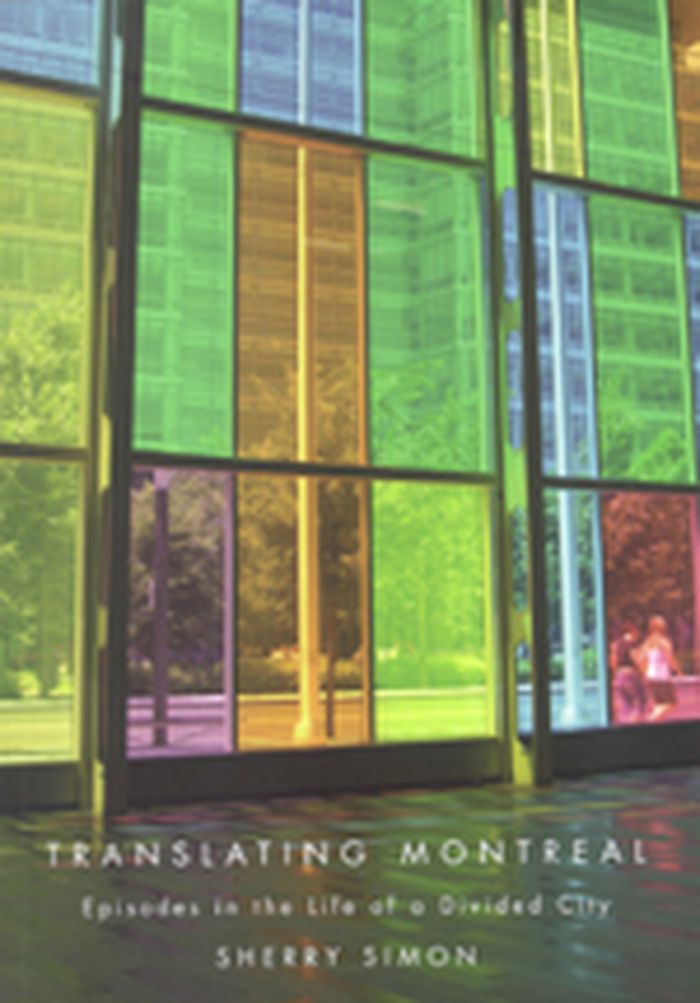
With the perspective of a walker moving through a fluid landscape of neighbourhoods and eras, Sherry Simon experiences Montreal as a voyage across languages. She traces an evocative history of literary passages across familiar sites - the mythical boulevard Saint-Laurent, Mile End, Mont Royal - as she follows adventurous cultural translators such as Malcolm Reid, A.M. Klein, and Pierre Anctil and contemporary writer-translators such as Gail Scott, Erin Moure, Jacques Brault, Nicole Brossard, and Emile Ollivier. Simon argues that translation is a dynamic and subtle tool for analysing cultural contact. An original view of cultural relations in the city, Translating Montreal explores the emergence of the "new" Montrealer. No longer "Franco-Québécois," "Anglo-Québécois," "immigrant," or "ethnic," the new Montrealer is a citizen of a mixed and cosmopolitan city.
Translating Montreal : Episodes in the life of a divided city
Actions:
Price:
$32.95
(available to order)
Summary:
With the perspective of a walker moving through a fluid landscape of neighbourhoods and eras, Sherry Simon experiences Montreal as a voyage across languages. She traces an evocative history of literary passages across familiar sites - the mythical boulevard Saint-Laurent, Mile End, Mont Royal - as she follows adventurous cultural translators such as Malcolm Reid, A.M. Klein, and Pierre Anctil and contemporary writer-translators such as Gail Scott, Erin Moure, Jacques Brault, Nicole Brossard, and Emile Ollivier. Simon argues that translation is a dynamic and subtle tool for analysing cultural contact. An original view of cultural relations in the city, Translating Montreal explores the emergence of the "new" Montrealer. No longer "Franco-Québécois," "Anglo-Québécois," "immigrant," or "ethnic," the new Montrealer is a citizen of a mixed and cosmopolitan city.
Form:
books
books
Publication:
October 2006, Montreal & Kingston London Ithica
October 2006, Montreal & Kingston London Ithica
Subject:
Architecture de Montréal
Architecture de Montréal
Form:
books
books
Actions:
Price:
$32.50
(available to order)
Summary:
Who are you? And how can you prove it? How were individuals described and identified by people who had never seen them before, in the centuries before photography and fingerprinting, in a world without centralized administrations, where names and addresses were constantly changing? In "Who are you?", Valentin Groebner traces the early modern European history of(...)
$32.50
(available to order)
Summary:
Who are you? And how can you prove it? How were individuals described and identified by people who had never seen them before, in the centuries before photography and fingerprinting, in a world without centralized administrations, where names and addresses were constantly changing? In "Who are you?", Valentin Groebner traces the early modern European history of(...)
Title:
Who are you? : identification, deception, and surveillance in early modern Europe
Actions:
Price:
$32.50
(available to order)
Summary:
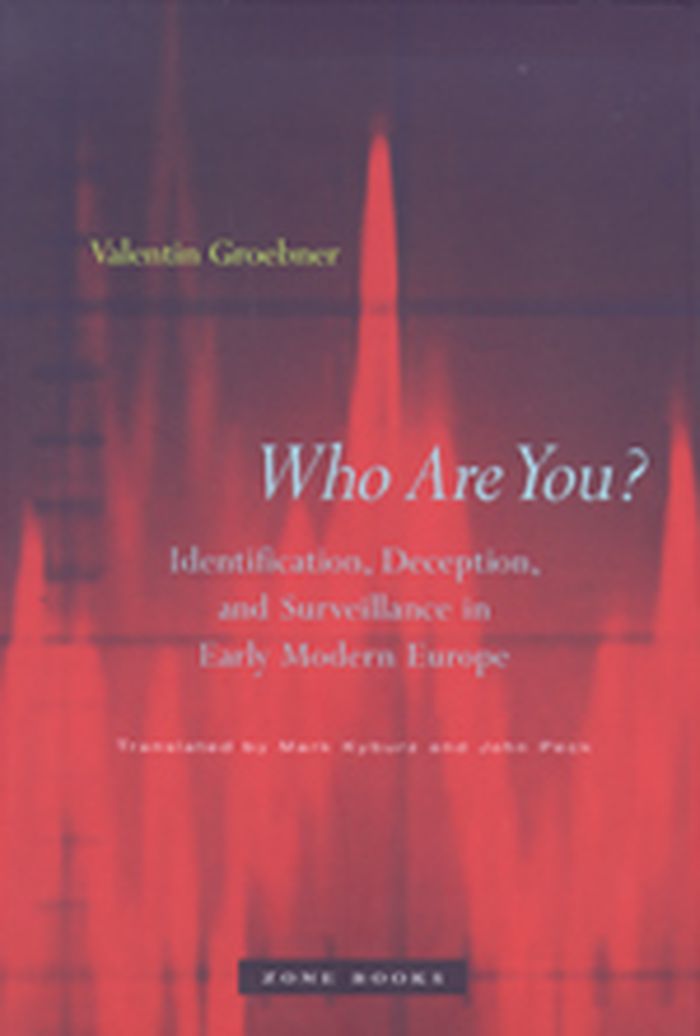
Who are you? And how can you prove it? How were individuals described and identified by people who had never seen them before, in the centuries before photography and fingerprinting, in a world without centralized administrations, where names and addresses were constantly changing? In "Who are you?", Valentin Groebner traces the early modern European history of identification practices and identity papers. The documents, seals, stamps, and signatures were — and are — powerful tools that created the double of a person in writ and bore the indelible signs of bureaucratic authenticity. Ultimately, as Groebner lucidly explains, they revealed as much about their makers’ illustory fantasies as they did about their bearers’ actual identity. The bureaucratic desire to register and control the population created, from the sixteenth century onward, an intricate administrative system for tracking individual identities. Most important, the proof of one’s identity was intimately linked and determined by the identification papers the authorities demanded and endlessly supplied. At the same time, these papers and practices gave birth to two uncanny doppelgängers of administrative identity procedures : the spy who craftily forged official documents and passports, and the impostor who dissimulated and mimed any individual he so disired. Through careful research and powerful narrative, Groebner recounts the complicated and bizarre stories of the many ways in which identities were stolen, created, and doubled. Groebner argues that identity papers cannot be interpreted literally as pure and simple documents. They are themselves pieces of history, histories of individuals and individuality, papers that both document and transform their owner’s identity — from Renaissance vagrants and gypsies to the illegal immigrants of today who remain "sans papiers", without papers.
Who are you? : identification, deception, and surveillance in early modern Europe
Actions:
Price:
$32.50
(available to order)
Summary:
Who are you? And how can you prove it? How were individuals described and identified by people who had never seen them before, in the centuries before photography and fingerprinting, in a world without centralized administrations, where names and addresses were constantly changing? In "Who are you?", Valentin Groebner traces the early modern European history of identification practices and identity papers. The documents, seals, stamps, and signatures were — and are — powerful tools that created the double of a person in writ and bore the indelible signs of bureaucratic authenticity. Ultimately, as Groebner lucidly explains, they revealed as much about their makers’ illustory fantasies as they did about their bearers’ actual identity. The bureaucratic desire to register and control the population created, from the sixteenth century onward, an intricate administrative system for tracking individual identities. Most important, the proof of one’s identity was intimately linked and determined by the identification papers the authorities demanded and endlessly supplied. At the same time, these papers and practices gave birth to two uncanny doppelgängers of administrative identity procedures : the spy who craftily forged official documents and passports, and the impostor who dissimulated and mimed any individual he so disired. Through careful research and powerful narrative, Groebner recounts the complicated and bizarre stories of the many ways in which identities were stolen, created, and doubled. Groebner argues that identity papers cannot be interpreted literally as pure and simple documents. They are themselves pieces of history, histories of individuals and individuality, papers that both document and transform their owner’s identity — from Renaissance vagrants and gypsies to the illegal immigrants of today who remain "sans papiers", without papers.
Form:
books
books
Publication:
March 2007, New York
March 2007, New York
Subject:
Architectural Theory
Architectural Theory
Form:
books
books
Actions:
Price:
$32.95
(available to order)
Summary:
Off the Grid confronts the ecological and cultural problems associated with the way we get and use energy, and explains how it is possible to live in a beautifully designed home using much less--no matter where your home is located. Our homes are connected by a nearly invisible grid of infrastructure that binds us together. It is a system of electrical poles, wire,(...)
$32.95
(available to order)
Summary:
Off the Grid confronts the ecological and cultural problems associated with the way we get and use energy, and explains how it is possible to live in a beautifully designed home using much less--no matter where your home is located. Our homes are connected by a nearly invisible grid of infrastructure that binds us together. It is a system of electrical poles, wire,(...)
Title:
Modern homes + alternative energy
Actions:
Price:
$32.95
(available to order)
Summary:
Off the Grid confronts the ecological and cultural problems associated with the way we get and use energy, and explains how it is possible to live in a beautifully designed home using much less--no matter where your home is located. Our homes are connected by a nearly invisible grid of infrastructure that binds us together. It is a system of electrical poles, wire, substations, hydroelectric dams, telecommunication towers, and water extraction and sewage systems. From within this system we work, play, and raise families. We have also created one of the greatest environmental challenges known to modern civilization. The signs of our impact upon the world can be recognized in the reports of environmental changes occurring across the earth, and they can also be seen in the growing failures of the energy grids across the world as the current system is stressed beyond its capacity.
Modern homes + alternative energy
Actions:
Price:
$32.95
(available to order)
Summary:
Off the Grid confronts the ecological and cultural problems associated with the way we get and use energy, and explains how it is possible to live in a beautifully designed home using much less--no matter where your home is located. Our homes are connected by a nearly invisible grid of infrastructure that binds us together. It is a system of electrical poles, wire, substations, hydroelectric dams, telecommunication towers, and water extraction and sewage systems. From within this system we work, play, and raise families. We have also created one of the greatest environmental challenges known to modern civilization. The signs of our impact upon the world can be recognized in the reports of environmental changes occurring across the earth, and they can also be seen in the growing failures of the energy grids across the world as the current system is stressed beyond its capacity.
Form:
books
books
Publication:
November 2005, Layton
November 2005, Layton
Subject:
Green Architecture
Green Architecture
Form:
books
books
Actions:
Price:
$23.95
(available to order)
Summary:
"Off the grid homes" looks at six contemporary architectural projects that integrate alternative technologies for generating and conserving energy. Being off the grid can refer to many different aspects of energy and resource independence, from rainwater collection, to photovoltaic (PV) systems, to gray-water systems and more. Diagrams and clear explanations of(...)
$23.95
(available to order)
Summary:
"Off the grid homes" looks at six contemporary architectural projects that integrate alternative technologies for generating and conserving energy. Being off the grid can refer to many different aspects of energy and resource independence, from rainwater collection, to photovoltaic (PV) systems, to gray-water systems and more. Diagrams and clear explanations of(...)
Title:
Off the grid homes : case studies for sustainable living
Actions:
Price:
$23.95
(available to order)
Summary:
"Off the grid homes" looks at six contemporary architectural projects that integrate alternative technologies for generating and conserving energy. Being off the grid can refer to many different aspects of energy and resource independence, from rainwater collection, to photovoltaic (PV) systems, to gray-water systems and more. Diagrams and clear explanations of technologies and their appropriate applications are provided alongside the case studies that explain just how the technologies work and how they may best be applied to each individual situation.
Off the grid homes : case studies for sustainable living
Actions:
Price:
$23.95
(available to order)
Summary:
"Off the grid homes" looks at six contemporary architectural projects that integrate alternative technologies for generating and conserving energy. Being off the grid can refer to many different aspects of energy and resource independence, from rainwater collection, to photovoltaic (PV) systems, to gray-water systems and more. Diagrams and clear explanations of technologies and their appropriate applications are provided alongside the case studies that explain just how the technologies work and how they may best be applied to each individual situation.
Form:
books
books
Publication:
April 2007, Layton
April 2007, Layton
Subject:
Green Architecture
Green Architecture


