


10697 Results
Form:
books
books
Price:
$59.95
(available to order)
Summary:
"The Artist as Producer" reshapes our understanding of the fundamental contribution of the Russian avant-garde to the development of modernism. Focusing on the single most important hotbed of Constructivist activity in the early 1920s - the Institute of Artistic Culture (INKhUK) in Moscow - Maria Gough offers a powerful reinterpretation of the work of the first group of(...)
$59.95
(available to order)
Summary:
"The Artist as Producer" reshapes our understanding of the fundamental contribution of the Russian avant-garde to the development of modernism. Focusing on the single most important hotbed of Constructivist activity in the early 1920s - the Institute of Artistic Culture (INKhUK) in Moscow - Maria Gough offers a powerful reinterpretation of the work of the first group of(...)
Title:
The artist as producer : Russian Constructivism in revolution
Actions:
Price:
$59.95
(available to order)
Summary:
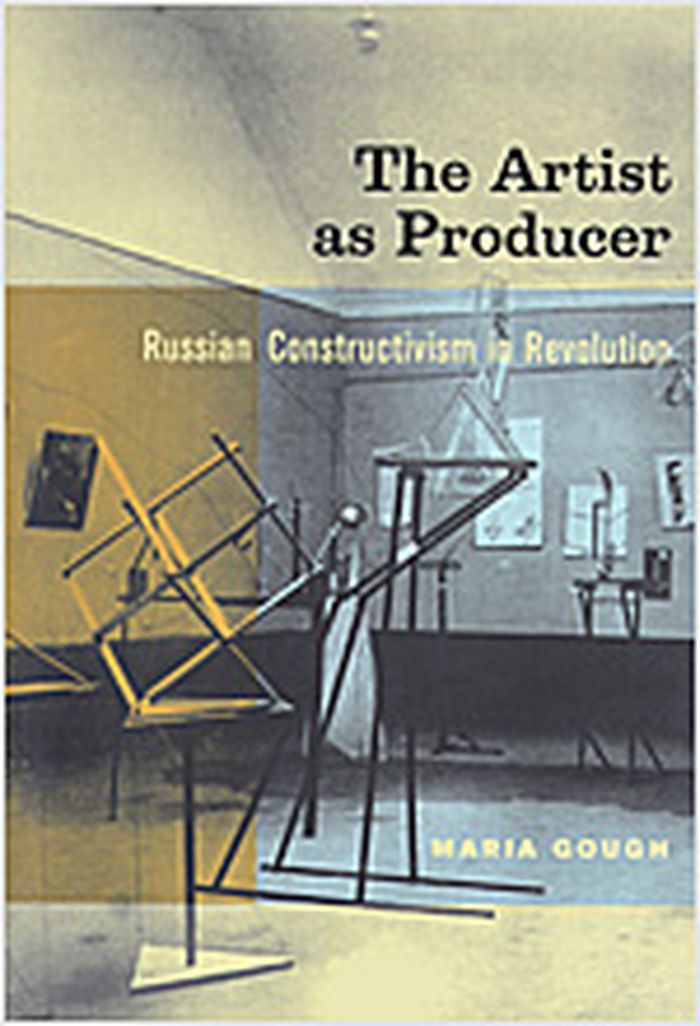
"The Artist as Producer" reshapes our understanding of the fundamental contribution of the Russian avant-garde to the development of modernism. Focusing on the single most important hotbed of Constructivist activity in the early 1920s - the Institute of Artistic Culture (INKhUK) in Moscow - Maria Gough offers a powerful reinterpretation of the work of the first group of artists to call themselves Constructivists. Her lively narrative ranges from famous figures such as Aleksandr Rodchenko to others who are much less well known, such as Karl Ioganson, a key member of the state-funded INKhUK whose work paved the way for an eventual dematerialization of the integral art object. Through the mining of untapped archives and collections in Russia and Latvia and a close reading of key Constructivist works, Gough highlights fundamental differences among the Moscow group in their handling of the experimental new sculptural form - the spatial construction - and of their subsequent shift to industrial production. "The Artist as Producer" upends the standard view that the Moscow group's formalism and abstraction were incompatible with the sociopolitical imperatives of the new Communist state. It challenges the common equation of Constructivism with functionalism and utilitarianism by delineating a contrary tendency toward non-determinism and an alternate orientation to process rather than product. Finally, the book counters the popular perception that Constructivism failed in its ambition to enter production by presenting the first-ever case study of how a Constructivist could, and in fact did, operate within an industrial environment. "The Artist as Producer" offers provocative new perspectives on three critical issues - formalism, functionalism, and failure - that are of central importance to our understanding not only of the Soviet phenomenon but also of the European vanguards more generally.
The artist as producer : Russian Constructivism in revolution
Actions:
Price:
$59.95
(available to order)
Summary:
"The Artist as Producer" reshapes our understanding of the fundamental contribution of the Russian avant-garde to the development of modernism. Focusing on the single most important hotbed of Constructivist activity in the early 1920s - the Institute of Artistic Culture (INKhUK) in Moscow - Maria Gough offers a powerful reinterpretation of the work of the first group of artists to call themselves Constructivists. Her lively narrative ranges from famous figures such as Aleksandr Rodchenko to others who are much less well known, such as Karl Ioganson, a key member of the state-funded INKhUK whose work paved the way for an eventual dematerialization of the integral art object. Through the mining of untapped archives and collections in Russia and Latvia and a close reading of key Constructivist works, Gough highlights fundamental differences among the Moscow group in their handling of the experimental new sculptural form - the spatial construction - and of their subsequent shift to industrial production. "The Artist as Producer" upends the standard view that the Moscow group's formalism and abstraction were incompatible with the sociopolitical imperatives of the new Communist state. It challenges the common equation of Constructivism with functionalism and utilitarianism by delineating a contrary tendency toward non-determinism and an alternate orientation to process rather than product. Finally, the book counters the popular perception that Constructivism failed in its ambition to enter production by presenting the first-ever case study of how a Constructivist could, and in fact did, operate within an industrial environment. "The Artist as Producer" offers provocative new perspectives on three critical issues - formalism, functionalism, and failure - that are of central importance to our understanding not only of the Soviet phenomenon but also of the European vanguards more generally.
Form:
books
books
Publication:
January 1900, Berkeley
January 1900, Berkeley
Subject:
Architecture since 1900, Europe
Architecture since 1900, Europe
Form:
books
books
Actions:
Price:
$48.00
(available to order)
Summary:
The 13th-century town of Tübingen, Germany, is best known for its university, which spawned both Hegel and Kepler. And now, something very progressive is going on in the southern sector of the city. A field where an army barracks once stood has been transformed into a new district which has won international praise and awards for the way it has forged a livable and lovely(...)
$48.00
(available to order)
Summary:
The 13th-century town of Tübingen, Germany, is best known for its university, which spawned both Hegel and Kepler. And now, something very progressive is going on in the southern sector of the city. A field where an army barracks once stood has been transformed into a new district which has won international praise and awards for the way it has forged a livable and lovely(...)
Subject:
Architecture since 1900, Europe
Architecture since 1900, Europe
Publication:
September 2005, Berlin
September 2005, Berlin
Title:
Go south : the Tübinger model
Actions:
Price:
$48.00
(available to order)
Summary:
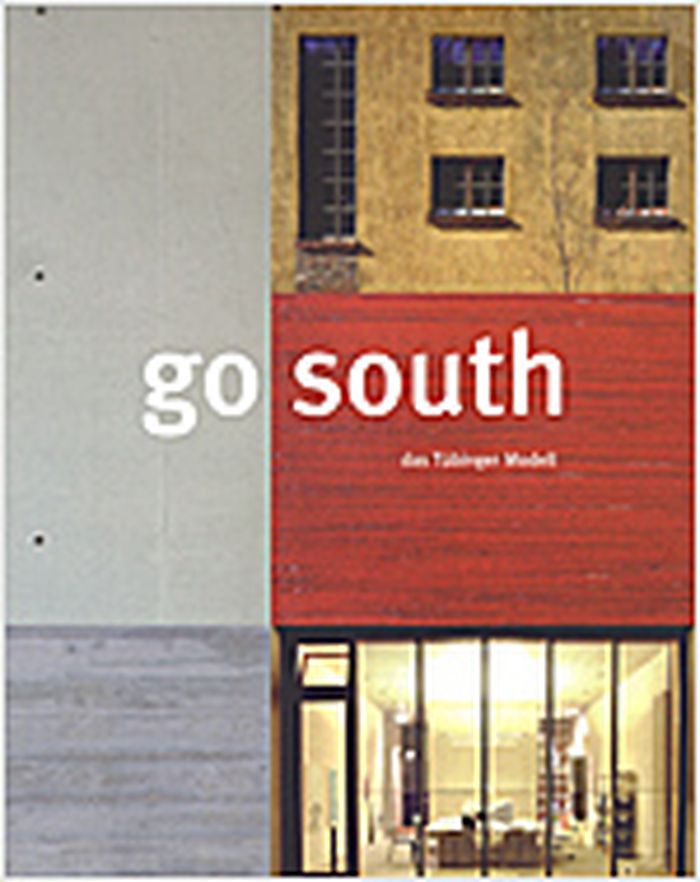
The 13th-century town of Tübingen, Germany, is best known for its university, which spawned both Hegel and Kepler. And now, something very progressive is going on in the southern sector of the city. A field where an army barracks once stood has been transformed into a new district which has won international praise and awards for the way it has forged a livable and lovely mixed-use environment out of thin (and clean) air. "Go South", in essays and in the color photographs of Gudrun Theresia de Maddalena, tells the story of what should become a model for urban and suburban development. The palette of buildings and spaces ranges from single-family homes to a townhouse for almost 30 families, from a business promotion center to a passive-solar mixed-use building, complete with apartments, office units, shops, a kindergarten, and a greenhouse lobby. The Tübingen South district received the European Municipal Construction Award in 2002 and the Deutsche Immobilien Fonds AG award for Europe's Best Districts in 2004.
Go south : the Tübinger model
Actions:
Price:
$48.00
(available to order)
Summary:
The 13th-century town of Tübingen, Germany, is best known for its university, which spawned both Hegel and Kepler. And now, something very progressive is going on in the southern sector of the city. A field where an army barracks once stood has been transformed into a new district which has won international praise and awards for the way it has forged a livable and lovely mixed-use environment out of thin (and clean) air. "Go South", in essays and in the color photographs of Gudrun Theresia de Maddalena, tells the story of what should become a model for urban and suburban development. The palette of buildings and spaces ranges from single-family homes to a townhouse for almost 30 families, from a business promotion center to a passive-solar mixed-use building, complete with apartments, office units, shops, a kindergarten, and a greenhouse lobby. The Tübingen South district received the European Municipal Construction Award in 2002 and the Deutsche Immobilien Fonds AG award for Europe's Best Districts in 2004.
Form:
books
books
Publication:
September 2005, Berlin
September 2005, Berlin
Subject:
Architecture since 1900, Europe
Architecture since 1900, Europe
Form:
books
books
Actions:
Price:
$38.95
(available to order)
Summary:
How does one reintegrate old textile mills into the fabric of a community? At a former Leipzig cotton-spinning mill (now the site of the Federkiel Foundation), a group of architects, critics, preservationists, city planners, and artists (among them Anne Dressen and Philipp Oswalt) convened to discuss the conversion of industrial space into cultural gathering place.(...)
$38.95
(available to order)
Summary:
How does one reintegrate old textile mills into the fabric of a community? At a former Leipzig cotton-spinning mill (now the site of the Federkiel Foundation), a group of architects, critics, preservationists, city planners, and artists (among them Anne Dressen and Philipp Oswalt) convened to discuss the conversion of industrial space into cultural gathering place.(...)
Title:
How architecture can think socially
Actions:
Price:
$38.95
(available to order)
Summary:
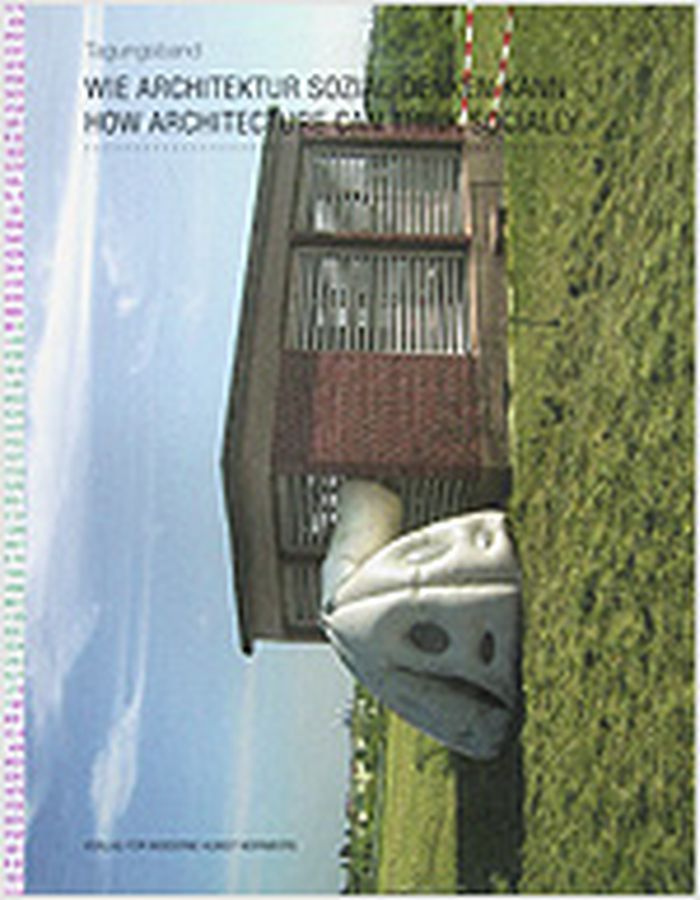
How does one reintegrate old textile mills into the fabric of a community? At a former Leipzig cotton-spinning mill (now the site of the Federkiel Foundation), a group of architects, critics, preservationists, city planners, and artists (among them Anne Dressen and Philipp Oswalt) convened to discuss the conversion of industrial space into cultural gathering place. Chapters here cover P.S.1 in New York and MASS MoCA.
How architecture can think socially
Actions:
Price:
$38.95
(available to order)
Summary:
How does one reintegrate old textile mills into the fabric of a community? At a former Leipzig cotton-spinning mill (now the site of the Federkiel Foundation), a group of architects, critics, preservationists, city planners, and artists (among them Anne Dressen and Philipp Oswalt) convened to discuss the conversion of industrial space into cultural gathering place. Chapters here cover P.S.1 in New York and MASS MoCA.
Form:
books
books
Publication:
August 2005, Nürnberg
August 2005, Nürnberg
Subject:
Architecture since 1900, Europe
Architecture since 1900, Europe
Form:
books
books
Actions:
Price:
$21.50
(available to order)
Summary:
In 1939, James Agee was assigned to write an article on Brooklyn for a special issue of Fortune on New York City. The draft was rejected for “creative differences,” and remained unpublished until it appeared in Esquire in 1968 under the title “Southeast of the Island : travel notes.” Crossing the borough from the brownstone heights over the Brooklyn Bridge out through(...)
$21.50
(available to order)
Summary:
In 1939, James Agee was assigned to write an article on Brooklyn for a special issue of Fortune on New York City. The draft was rejected for “creative differences,” and remained unpublished until it appeared in Esquire in 1968 under the title “Southeast of the Island : travel notes.” Crossing the borough from the brownstone heights over the Brooklyn Bridge out through(...)
Title:
Brooklyn is : southeast of the island, travel notes
Actions:
Price:
$21.50
(available to order)
Summary:
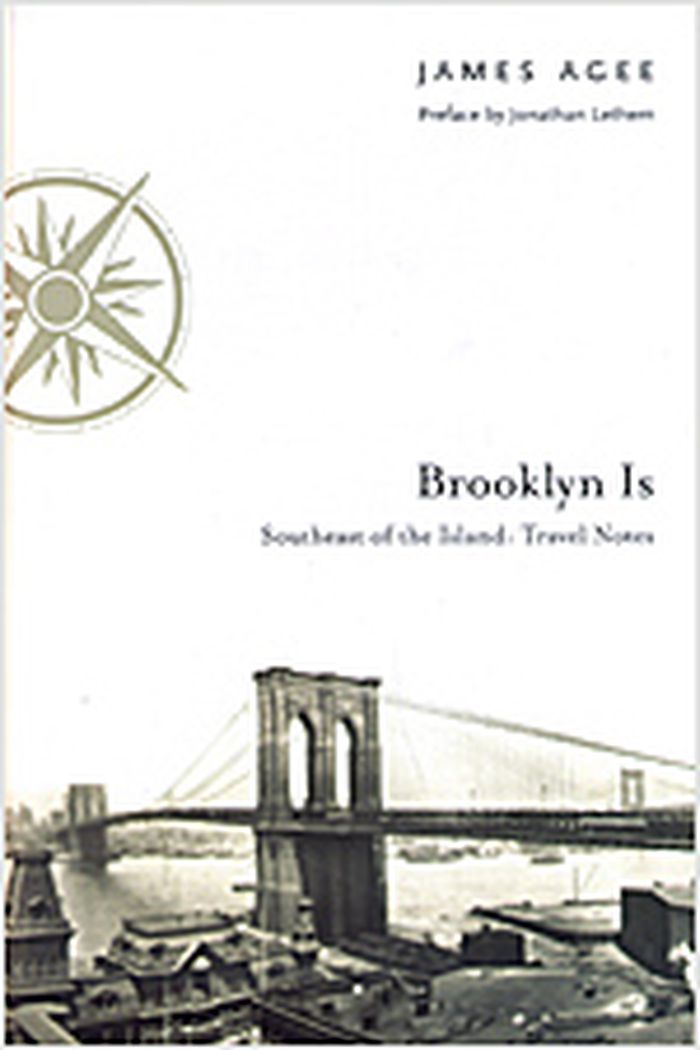
In 1939, James Agee was assigned to write an article on Brooklyn for a special issue of Fortune on New York City. The draft was rejected for “creative differences,” and remained unpublished until it appeared in Esquire in 1968 under the title “Southeast of the Island : travel notes.” Crossing the borough from the brownstone heights over the Brooklyn Bridge out through backstreet neighborhoods like Flatbush, Midwood, and Sheepshead Bay that roll silently to the sea, Agee captured in 10,000 remarkable words the essence of a place and its people.
Brooklyn is : southeast of the island, travel notes
Actions:
Price:
$21.50
(available to order)
Summary:
In 1939, James Agee was assigned to write an article on Brooklyn for a special issue of Fortune on New York City. The draft was rejected for “creative differences,” and remained unpublished until it appeared in Esquire in 1968 under the title “Southeast of the Island : travel notes.” Crossing the borough from the brownstone heights over the Brooklyn Bridge out through backstreet neighborhoods like Flatbush, Midwood, and Sheepshead Bay that roll silently to the sea, Agee captured in 10,000 remarkable words the essence of a place and its people.
Form:
books
books
Publication:
October 2005, New York
October 2005, New York
Subject:
Architecture since 1900, Europe
Architecture since 1900, Europe
Form:
books
books
Actions:
Price:
$60.00
(available to order)
Summary:
This book is based on two assumptions : the first is the will to identify and describe a network of existing relationship in a culture of new disciplinary connections ranging from the city to architecture to design. The other is that, in a difficult country like Italy, challenging the problem of conveying and promoting contemporary architectural projects is a somewhat(...)
$60.00
(available to order)
Summary:
This book is based on two assumptions : the first is the will to identify and describe a network of existing relationship in a culture of new disciplinary connections ranging from the city to architecture to design. The other is that, in a difficult country like Italy, challenging the problem of conveying and promoting contemporary architectural projects is a somewhat(...)
Subject:
Architecture since 1900, Europe
Architecture since 1900, Europe
Publication:
June 2005, Barcelone
June 2005, Barcelone
Title:
Net.it : a snapshot of contemporary architecture, design and photography in Italy
Actions:
Price:
$60.00
(available to order)
Summary:
This book is based on two assumptions : the first is the will to identify and describe a network of existing relationship in a culture of new disciplinary connections ranging from the city to architecture to design. The other is that, in a difficult country like Italy, challenging the problem of conveying and promoting contemporary architectural projects is a somewhat slippery task.
Net.it : a snapshot of contemporary architecture, design and photography in Italy
Actions:
Price:
$60.00
(available to order)
Summary:
This book is based on two assumptions : the first is the will to identify and describe a network of existing relationship in a culture of new disciplinary connections ranging from the city to architecture to design. The other is that, in a difficult country like Italy, challenging the problem of conveying and promoting contemporary architectural projects is a somewhat slippery task.
Form:
books
books
Publication:
June 2005, Barcelone
June 2005, Barcelone
Subject:
Architecture since 1900, Europe
Architecture since 1900, Europe
Form:
books
books
Actions:
Price:
$80.00
(available to order)
Summary:
Vol. 1: Introduction - Vol. 2: Frontières, communes : brève histoire du territoire - Vol. 3: Matériaux.
$80.00
(available to order)
Summary:
Vol. 1: Introduction - Vol. 2: Frontières, communes : brève histoire du territoire - Vol. 3: Matériaux.
Subject:
Architecture since 1900, Europe
Architecture since 1900, Europe
Publication:
November 2005, Basel
November 2005, Basel
Title:
La Suisse, portrait urbain (3 volumes)
Actions:
Price:
$80.00
(available to order)
Summary:
Vol. 1: Introduction - Vol. 2: Frontières, communes : brève histoire du territoire - Vol. 3: Matériaux.
La Suisse, portrait urbain (3 volumes)
Actions:
Price:
$80.00
(available to order)
Summary:
Vol. 1: Introduction - Vol. 2: Frontières, communes : brève histoire du territoire - Vol. 3: Matériaux.
Form:
books
books
Publication:
November 2005, Basel
November 2005, Basel
Subject:
Architecture since 1900, Europe
Architecture since 1900, Europe
Form:
books
books
Actions:
Price:
$59.95
(available to order)
Summary:
'Lesurator' provides a reconfigurable field that engenders a variety of leisure, sport and improvisational activities. This field is programmed with a set of variable configurations, the transformations of which offer emergent conditions suggestive of alternate social organization and cultural dimensions of game-like activities.
$59.95
(available to order)
Summary:
'Lesurator' provides a reconfigurable field that engenders a variety of leisure, sport and improvisational activities. This field is programmed with a set of variable configurations, the transformations of which offer emergent conditions suggestive of alternate social organization and cultural dimensions of game-like activities.
Subject:
Architecture since 1900, Europe
Architecture since 1900, Europe
Publication:
October 2004, Bari
October 2004, Bari
Title:
Leisurator : performative and adaptive leisure generator field for metropolitan areas
Actions:
Price:
$59.95
(available to order)
Summary:
'Lesurator' provides a reconfigurable field that engenders a variety of leisure, sport and improvisational activities. This field is programmed with a set of variable configurations, the transformations of which offer emergent conditions suggestive of alternate social organization and cultural dimensions of game-like activities.
Leisurator : performative and adaptive leisure generator field for metropolitan areas
Actions:
Price:
$59.95
(available to order)
Summary:
'Lesurator' provides a reconfigurable field that engenders a variety of leisure, sport and improvisational activities. This field is programmed with a set of variable configurations, the transformations of which offer emergent conditions suggestive of alternate social organization and cultural dimensions of game-like activities.
Form:
books
books
Publication:
October 2004, Bari
October 2004, Bari
Subject:
Architecture since 1900, Europe
Architecture since 1900, Europe
Form:
books
books
Title:
Les architectes et mai 68
Les architectes et mai 68
Actions:
Price:
$67.95
(available to order)
Summary:
Drôle d’époque ces années 68 où vices et vertus nocèrent dans la ferveur des Trente Glorieuses, avant de se figer dans l’opportunisme médiatique et comptable des années 80 d’hiver. Et pour une fois l’architecture en était, de ce vaste Mouvement dont la majuscule traduisait l’effervescence autant que la diffusion des idées de Mai. Entre mémoire et histoire, à l’écoute des(...)
$67.95
(available to order)
Summary:
Drôle d’époque ces années 68 où vices et vertus nocèrent dans la ferveur des Trente Glorieuses, avant de se figer dans l’opportunisme médiatique et comptable des années 80 d’hiver. Et pour une fois l’architecture en était, de ce vaste Mouvement dont la majuscule traduisait l’effervescence autant que la diffusion des idées de Mai. Entre mémoire et histoire, à l’écoute des(...)
Title:
Les architectes et mai 68
Actions:
Price:
$67.95
(available to order)
Summary:
Drôle d’époque ces années 68 où vices et vertus nocèrent dans la ferveur des Trente Glorieuses, avant de se figer dans l’opportunisme médiatique et comptable des années 80 d’hiver. Et pour une fois l’architecture en était, de ce vaste Mouvement dont la majuscule traduisait l’effervescence autant que la diffusion des idées de Mai. Entre mémoire et histoire, à l’écoute des acteurs à défaut d’avoir pu rassembler ses propres souvenirs, l’auteur met à nu les racines de la scène architecturale française contemporaine en retraçant les dernières années de l’École des Beaux-Arts. S’y croisent les univers et les réseaux, les affiliations politiques et les jeux d’acteurs, entre une administration d’abord conciliante puis dépassée par les événements et des architectes en herbe aux allures de « jeunes turcs », au moment où les méthodes deviennent des méthodologies ; la forme, un signe ; l’architecture, une syntaxe ; et un courant architectural, un code. Alors que l’enseignement de l’architecture se sépare brutalement de la profession sans gagner tout à fait les rivages de l’Université, alors que s’effondre le système des Beaux-Arts remplacé bientôt par celui des concours, l’élite encore fragile des architectes français emboîte le pas du vaste mouvement de libéralisation et de décentralisation qui allait si profondément modifier la société française.
Les architectes et mai 68
Actions:
Price:
$67.95
(available to order)
Summary:
Drôle d’époque ces années 68 où vices et vertus nocèrent dans la ferveur des Trente Glorieuses, avant de se figer dans l’opportunisme médiatique et comptable des années 80 d’hiver. Et pour une fois l’architecture en était, de ce vaste Mouvement dont la majuscule traduisait l’effervescence autant que la diffusion des idées de Mai. Entre mémoire et histoire, à l’écoute des acteurs à défaut d’avoir pu rassembler ses propres souvenirs, l’auteur met à nu les racines de la scène architecturale française contemporaine en retraçant les dernières années de l’École des Beaux-Arts. S’y croisent les univers et les réseaux, les affiliations politiques et les jeux d’acteurs, entre une administration d’abord conciliante puis dépassée par les événements et des architectes en herbe aux allures de « jeunes turcs », au moment où les méthodes deviennent des méthodologies ; la forme, un signe ; l’architecture, une syntaxe ; et un courant architectural, un code. Alors que l’enseignement de l’architecture se sépare brutalement de la profession sans gagner tout à fait les rivages de l’Université, alors que s’effondre le système des Beaux-Arts remplacé bientôt par celui des concours, l’élite encore fragile des architectes français emboîte le pas du vaste mouvement de libéralisation et de décentralisation qui allait si profondément modifier la société française.
Form:
books
books
Publication:
May 2005, Paris
May 2005, Paris
Subject:
Architecture since 1900, Europe
Architecture since 1900, Europe
Form:
books
books
Actions:
Price:
$54.99
(available to order)
Summary:
In the next few years, emerging practices in interactive architecture are set to transform the built environment. Whereas 'smart' design was once regarded as the preserve of museum exhibit or Jumbotrom advertising screens, 'multi-mediated' interactive design has now entered every domain of public and private life. As a spatial medium, interactive design is(...)
$54.99
(available to order)
Summary:
In the next few years, emerging practices in interactive architecture are set to transform the built environment. Whereas 'smart' design was once regarded as the preserve of museum exhibit or Jumbotrom advertising screens, 'multi-mediated' interactive design has now entered every domain of public and private life. As a spatial medium, interactive design is(...)
Subject:
Architecture since 1900, Europe
Architecture since 1900, Europe
Publication:
January 2005, Chichester
January 2005, Chichester
Title:
4dspace : interactive architecture
Actions:
Price:
$54.99
(available to order)
Summary:
In the next few years, emerging practices in interactive architecture are set to transform the built environment. Whereas 'smart' design was once regarded as the preserve of museum exhibit or Jumbotrom advertising screens, 'multi-mediated' interactive design has now entered every domain of public and private life. As a spatial medium, interactive design is revolutionising and reinventing our homes, as well as our work and leisure spaces. Essays and interviews by international commentators Lucy Bullivant, guest editor of the issue, Ole Bouman, Antonino Saggio, Stefano Mirti and Walter Aprile and Mike Weinstock on the cultural issues raised by the emergence of interactive architecture will be complemented with features on acclaimed practitioners Christian Moller, Tobi Schneidler, Ron Arad and Jason Bruges. Benchmark interactive projects in this issue evolving new models of interdisciplinary teamwork include The Media House, led by Metapolis, IaaC and the MIT Media Lab and projects conceived at the Interactive Institute, Ivrea, Italy. New work is also featured by KDa/Toshio Iwai; realities: united, Usman Haque, Adam Somlai-Fischer, Ben Rubin and Mark Hansen, Lars Spuybroek and the Institute of Neuro-Informatics, ETH, Zurich, Kitchen Rogers Design; IDEO, and Tom Barker, b consultants/SmartSlab.
4dspace : interactive architecture
Actions:
Price:
$54.99
(available to order)
Summary:
In the next few years, emerging practices in interactive architecture are set to transform the built environment. Whereas 'smart' design was once regarded as the preserve of museum exhibit or Jumbotrom advertising screens, 'multi-mediated' interactive design has now entered every domain of public and private life. As a spatial medium, interactive design is revolutionising and reinventing our homes, as well as our work and leisure spaces. Essays and interviews by international commentators Lucy Bullivant, guest editor of the issue, Ole Bouman, Antonino Saggio, Stefano Mirti and Walter Aprile and Mike Weinstock on the cultural issues raised by the emergence of interactive architecture will be complemented with features on acclaimed practitioners Christian Moller, Tobi Schneidler, Ron Arad and Jason Bruges. Benchmark interactive projects in this issue evolving new models of interdisciplinary teamwork include The Media House, led by Metapolis, IaaC and the MIT Media Lab and projects conceived at the Interactive Institute, Ivrea, Italy. New work is also featured by KDa/Toshio Iwai; realities: united, Usman Haque, Adam Somlai-Fischer, Ben Rubin and Mark Hansen, Lars Spuybroek and the Institute of Neuro-Informatics, ETH, Zurich, Kitchen Rogers Design; IDEO, and Tom Barker, b consultants/SmartSlab.
Form:
books
books
Publication:
January 2005, Chichester
January 2005, Chichester
Subject:
Architecture since 1900, Europe
Architecture since 1900, Europe
Form:
books
books
Price:
$109.00
(available to order)
Summary:
Living archtecture presents this book with new photographs of some of the most significant Scandinavian private houses built during the twentieth century to elucidate the distinctive characterof Nordic architecture, and to bring attention to the individual house as one of the most distinguished architectural problems, masterlysolved by a number of brilliant Scandinavian architects.
$109.00
(available to order)
Summary:
Living archtecture presents this book with new photographs of some of the most significant Scandinavian private houses built during the twentieth century to elucidate the distinctive characterof Nordic architecture, and to bring attention to the individual house as one of the most distinguished architectural problems, masterlysolved by a number of brilliant Scandinavian architects.
Title:
Scandinavian modern houses : the spirit of nordic light, volume 1
Actions:
Price:
$109.00
(available to order)
Summary:
Living archtecture presents this book with new photographs of some of the most significant Scandinavian private houses built during the twentieth century to elucidate the distinctive characterof Nordic architecture, and to bring attention to the individual house as one of the most distinguished architectural problems, masterlysolved by a number of brilliant Scandinavian architects.
Scandinavian modern houses : the spirit of nordic light, volume 1
Actions:
Price:
$109.00
(available to order)
Summary:
Living archtecture presents this book with new photographs of some of the most significant Scandinavian private houses built during the twentieth century to elucidate the distinctive characterof Nordic architecture, and to bring attention to the individual house as one of the most distinguished architectural problems, masterlysolved by a number of brilliant Scandinavian architects.
Form:
books
books
Publication:
January 1900, Copenhagen
January 1900, Copenhagen
Subject:
Architecture since 1900, Europe
Architecture since 1900, Europe


