


807 Results
Form:
books
books
Actions:
Price:
$30.00
(available to order)
Summary:
In the modern era, the archive--official or personal--has become the most significant means by which historical knowledge and memory are collected, stored, and recovered. The archive has thus emerged as a key site of inquiry in such fields as anthropology, critical theory, history, and, especially, recent art. Traces and testimonies of such events as World War II and(...)
$30.00
(available to order)
Summary:
In the modern era, the archive--official or personal--has become the most significant means by which historical knowledge and memory are collected, stored, and recovered. The archive has thus emerged as a key site of inquiry in such fields as anthropology, critical theory, history, and, especially, recent art. Traces and testimonies of such events as World War II and(...)
Publication:
November 2006, London / Cambridge
November 2006, London / Cambridge
Title:
The archive: Documents of contemporary art
Actions:
Price:
$30.00
(available to order)
Summary:
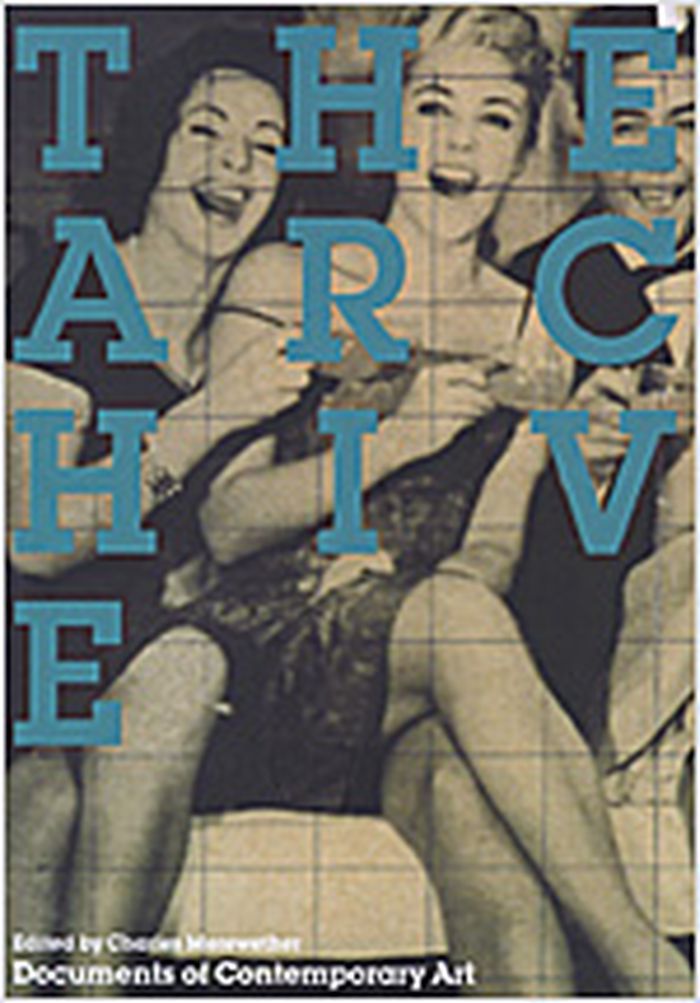
In the modern era, the archive--official or personal--has become the most significant means by which historical knowledge and memory are collected, stored, and recovered. The archive has thus emerged as a key site of inquiry in such fields as anthropology, critical theory, history, and, especially, recent art. Traces and testimonies of such events as World War II and ensuing conflicts, the emergence of the postcolonial era, and the fall of communism have each provoked a reconsideration of the authority given the archive--no longer viewed as a neutral, transparent site of record but as a contested subject and medium in itself. This volume surveys the full diversity of our transformed theoretical and critical notions of the archive--as idea and as physical presence--from Freud's "mystic writing pad" to Derrida's "archive fever"; from Christian Boltanski's first autobiographical explorations of archival material in the 1960s to the practice of artists as various as Susan Hiller, Ilya Kabakov, Thomas Hirshhorn, Renée Green, and The Atlas Group in the present.
The archive: Documents of contemporary art
Actions:
Price:
$30.00
(available to order)
Summary:
In the modern era, the archive--official or personal--has become the most significant means by which historical knowledge and memory are collected, stored, and recovered. The archive has thus emerged as a key site of inquiry in such fields as anthropology, critical theory, history, and, especially, recent art. Traces and testimonies of such events as World War II and ensuing conflicts, the emergence of the postcolonial era, and the fall of communism have each provoked a reconsideration of the authority given the archive--no longer viewed as a neutral, transparent site of record but as a contested subject and medium in itself. This volume surveys the full diversity of our transformed theoretical and critical notions of the archive--as idea and as physical presence--from Freud's "mystic writing pad" to Derrida's "archive fever"; from Christian Boltanski's first autobiographical explorations of archival material in the 1960s to the practice of artists as various as Susan Hiller, Ilya Kabakov, Thomas Hirshhorn, Renée Green, and The Atlas Group in the present.
Form:
books
books
Publication:
November 2006, London / Cambridge
November 2006, London / Cambridge
Form:
books
books
Title:
Joseph Beuys and history
Joseph Beuys and history
Actions:
Price:
$49.95
(available in store)
Summary:
Joseph Beuys (1921–1986) was one of the most significant artists of the twentieth century—and one of the most controversial. Working in Germany in the aftermath of World War II, he explored a radically expanded concept of art through a practice that ranged from performative actions to large-scale sculptural ensembles. While some contemporaries found his claim that(...)
$49.95
(available in store)
Summary:
Joseph Beuys (1921–1986) was one of the most significant artists of the twentieth century—and one of the most controversial. Working in Germany in the aftermath of World War II, he explored a radically expanded concept of art through a practice that ranged from performative actions to large-scale sculptural ensembles. While some contemporaries found his claim that(...)
Title:
Joseph Beuys and history
Actions:
Price:
$49.95
(available in store)
Summary:
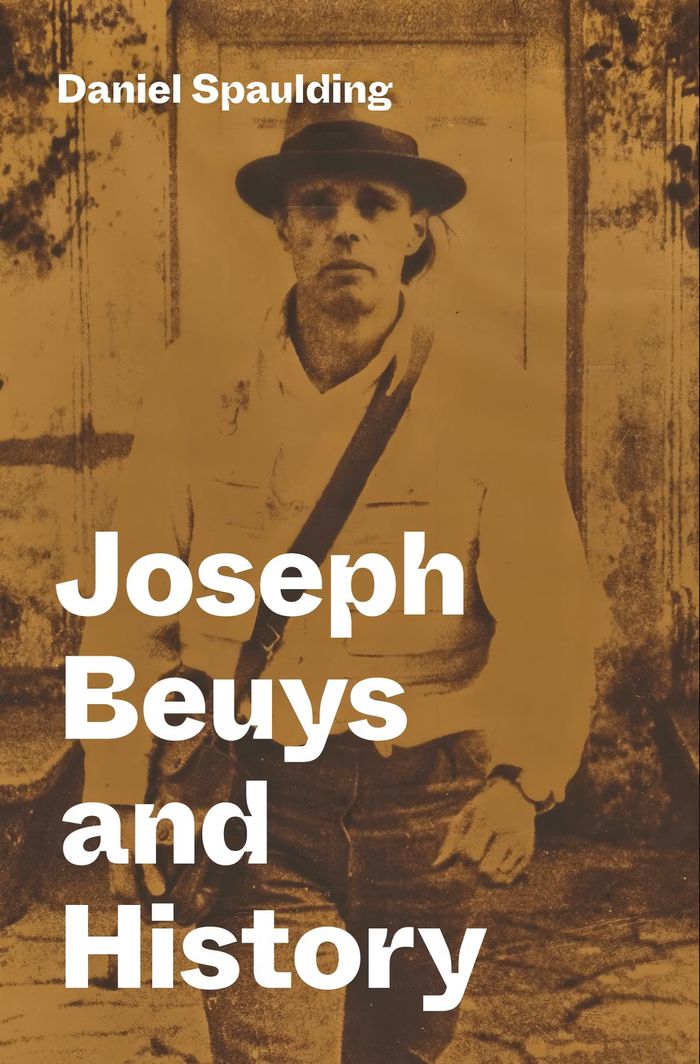
Joseph Beuys (1921–1986) was one of the most significant artists of the twentieth century—and one of the most controversial. Working in Germany in the aftermath of World War II, he explored a radically expanded concept of art through a practice that ranged from performative actions to large-scale sculptural ensembles. While some contemporaries found his claim that “everyone is an artist” liberating, even revolutionary, others accused him of fostering a dangerous cult of personality. In "Joseph Beuys and History", the first rigorous art historical study of the artist in English, Daniel Spaulding presents a striking new interpretation of Beuys’s work and career. By putting Beuys in the context of Germany’s postwar recovery, Spaulding shows that the artist’s superimposed biological, political, and economic metaphors offered a powerful way to think about the trajectory of human freedom, the place of art in capitalist modernity, and the possibility of an ecological aesthetics. At the same time, his oeuvre’s disquieting echoes of the Nazi past suggest that not everything could be reconciled in what Beuys called “social sculpture.”
Joseph Beuys and history
Actions:
Price:
$49.95
(available in store)
Summary:
Joseph Beuys (1921–1986) was one of the most significant artists of the twentieth century—and one of the most controversial. Working in Germany in the aftermath of World War II, he explored a radically expanded concept of art through a practice that ranged from performative actions to large-scale sculptural ensembles. While some contemporaries found his claim that “everyone is an artist” liberating, even revolutionary, others accused him of fostering a dangerous cult of personality. In "Joseph Beuys and History", the first rigorous art historical study of the artist in English, Daniel Spaulding presents a striking new interpretation of Beuys’s work and career. By putting Beuys in the context of Germany’s postwar recovery, Spaulding shows that the artist’s superimposed biological, political, and economic metaphors offered a powerful way to think about the trajectory of human freedom, the place of art in capitalist modernity, and the possibility of an ecological aesthetics. At the same time, his oeuvre’s disquieting echoes of the Nazi past suggest that not everything could be reconciled in what Beuys called “social sculpture.”
Form:
books
books
Publication:
April 2026
April 2026
Subject:
Contemporary Art Monographs
Contemporary Art Monographs
Form:
books
books
Price:
$41.95
(available to order)
Summary:
This richly illustrated book chronicles lighter-than-air flight from Archimedes' discovery of the principle of buoyancy to the latest in sport balloons and plans for future airships. Far more than a timeline of events, Lighter Than Air focuses on the people -- flamboyant and daring, heroes and scoundrels -- who made history in the sky. Here are the eighteenth-century(...)
$41.95
(available to order)
Summary:
This richly illustrated book chronicles lighter-than-air flight from Archimedes' discovery of the principle of buoyancy to the latest in sport balloons and plans for future airships. Far more than a timeline of events, Lighter Than Air focuses on the people -- flamboyant and daring, heroes and scoundrels -- who made history in the sky. Here are the eighteenth-century(...)
Subject:
Transportation, Tourism, Migration
Transportation, Tourism, Migration
Publication:
April 2009, Baltimore, Washington
April 2009, Baltimore, Washington
Title:
Lighter than air: an illustrated history of balloons and airships
Actions:
Price:
$41.95
(available to order)
Summary:
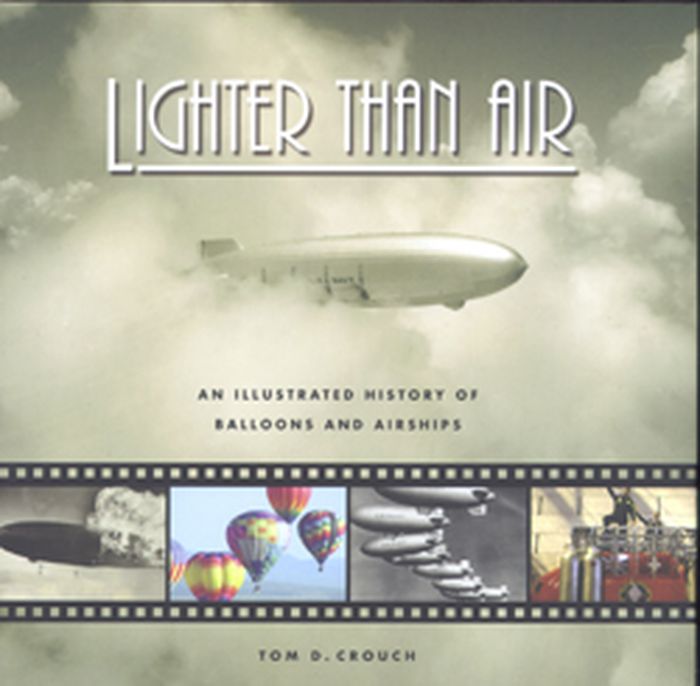
This richly illustrated book chronicles lighter-than-air flight from Archimedes' discovery of the principle of buoyancy to the latest in sport balloons and plans for future airships. Far more than a timeline of events, Lighter Than Air focuses on the people -- flamboyant and daring, heroes and scoundrels -- who made history in the sky. Here are the eighteenth-century pioneers who first took to the skies, the peripatetic aeronauts who criss-crossed two continents a century later, the airmen who manned the great rigid airships, and the intrepid balloonists who flew their craft across oceans and continents in the years following World War II. Tom D. Crouch, senior curator of the Division of Aeronautics at the Smithsonian Institution's National Air and Space Museum, has written and edited over a dozen books, including The Bishop's Boys: A Life of Wilbur and Orville Wright. He has won several major awards for historical writing, including prizes offered by the American Institute of Aeronautics and Astronautics and the Aviation/Space Writers Association.
Lighter than air: an illustrated history of balloons and airships
Actions:
Price:
$41.95
(available to order)
Summary:
This richly illustrated book chronicles lighter-than-air flight from Archimedes' discovery of the principle of buoyancy to the latest in sport balloons and plans for future airships. Far more than a timeline of events, Lighter Than Air focuses on the people -- flamboyant and daring, heroes and scoundrels -- who made history in the sky. Here are the eighteenth-century pioneers who first took to the skies, the peripatetic aeronauts who criss-crossed two continents a century later, the airmen who manned the great rigid airships, and the intrepid balloonists who flew their craft across oceans and continents in the years following World War II. Tom D. Crouch, senior curator of the Division of Aeronautics at the Smithsonian Institution's National Air and Space Museum, has written and edited over a dozen books, including The Bishop's Boys: A Life of Wilbur and Orville Wright. He has won several major awards for historical writing, including prizes offered by the American Institute of Aeronautics and Astronautics and the Aviation/Space Writers Association.
Form:
books
books
Publication:
April 2009, Baltimore, Washington
April 2009, Baltimore, Washington
Subject:
Transportation, Tourism, Migration
Transportation, Tourism, Migration
Form:
books
books
Price:
$77.00
(available to order)
Summary:
explores how leading architects of the twentieth century incorporated climate-mediating strategies into their designs, and shows how regional approaches to climate adaptability were essential to the development of modern architecture. Focusing on the period surrounding World War II—before fossil-fuel powered air-conditioning became widely available—Daniel Barber brings to(...)
$77.00
(available to order)
Summary:
explores how leading architects of the twentieth century incorporated climate-mediating strategies into their designs, and shows how regional approaches to climate adaptability were essential to the development of modern architecture. Focusing on the period surrounding World War II—before fossil-fuel powered air-conditioning became widely available—Daniel Barber brings to(...)
Title:
Modern architecture and climate: design before air conditioning
Actions:
Price:
$77.00
(available to order)
Summary:
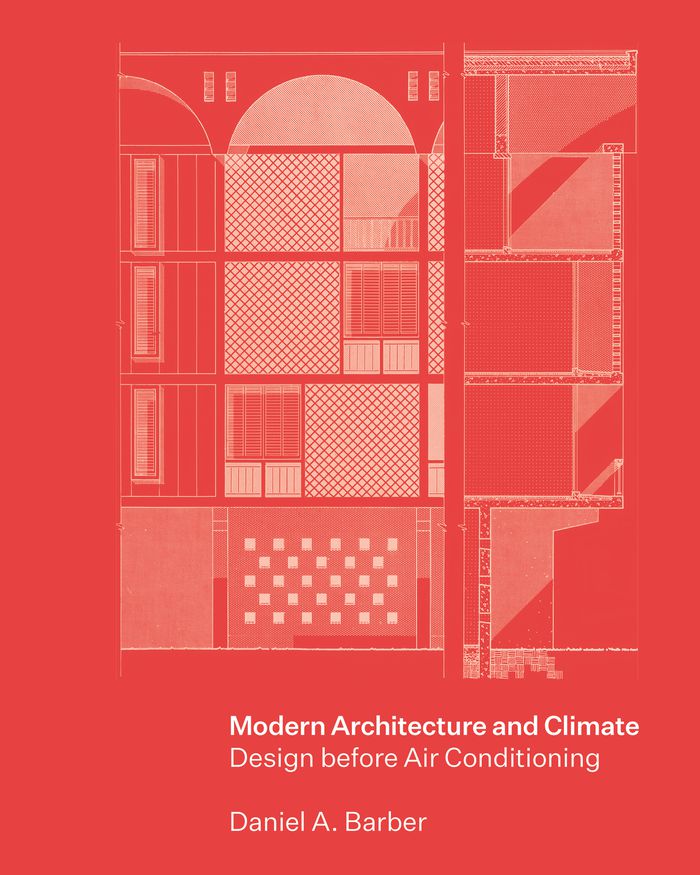
explores how leading architects of the twentieth century incorporated climate-mediating strategies into their designs, and shows how regional approaches to climate adaptability were essential to the development of modern architecture. Focusing on the period surrounding World War II—before fossil-fuel powered air-conditioning became widely available—Daniel Barber brings to light a vibrant and dynamic architectural discussion involving design, materials, and shading systems as means of interior climate control. He looks at projects by well-known architects such as Richard Neutra, Le Corbusier, Lúcio Costa, Mies van der Rohe, and Skidmore, Owings, and Merrill, and the work of climate-focused architects such as MMM Roberto, Olgyay and Olgyay, and Cliff May. Drawing on the editorial projects of James Marston Fitch, Elizabeth Gordon, and others, he demonstrates how images and diagrams produced by architects helped conceptualize climate knowledge, alongside the work of meteorologists, physicists, engineers, and social scientists. Barber describes how this novel type of environmental media catalyzed new ways of thinking about climate and architectural design.
Modern architecture and climate: design before air conditioning
Actions:
Price:
$77.00
(available to order)
Summary:
explores how leading architects of the twentieth century incorporated climate-mediating strategies into their designs, and shows how regional approaches to climate adaptability were essential to the development of modern architecture. Focusing on the period surrounding World War II—before fossil-fuel powered air-conditioning became widely available—Daniel Barber brings to light a vibrant and dynamic architectural discussion involving design, materials, and shading systems as means of interior climate control. He looks at projects by well-known architects such as Richard Neutra, Le Corbusier, Lúcio Costa, Mies van der Rohe, and Skidmore, Owings, and Merrill, and the work of climate-focused architects such as MMM Roberto, Olgyay and Olgyay, and Cliff May. Drawing on the editorial projects of James Marston Fitch, Elizabeth Gordon, and others, he demonstrates how images and diagrams produced by architects helped conceptualize climate knowledge, alongside the work of meteorologists, physicists, engineers, and social scientists. Barber describes how this novel type of environmental media catalyzed new ways of thinking about climate and architectural design.
Form:
books
books
Publication:
April 2020
April 2020
Subject:
Architectural Theory
Architectural Theory
Form:
books
books

Title:
Big, Formgiving
Big, Formgiving
Actions:
Price:
$70.00
(available to order)
Summary:
''Formgiving : an architectural future history,'' the new book by BIG (Bjarke Ingels Group), is a visionary attempt to look at the horizon of time. With ''Formgiving,'' BIG presents the third part of its TASCHEN trilogy, which began with ''Yes is More,'' one of the most successful architectural books of its generation, and continued with ''Hot to Cold.'' The book is(...)
$70.00
(available to order)
Summary:
''Formgiving : an architectural future history,'' the new book by BIG (Bjarke Ingels Group), is a visionary attempt to look at the horizon of time. With ''Formgiving,'' BIG presents the third part of its TASCHEN trilogy, which began with ''Yes is More,'' one of the most successful architectural books of its generation, and continued with ''Hot to Cold.'' The book is(...)
Title:
Big, Formgiving
Actions:
Price:
$70.00
(available to order)
Summary:
''Formgiving : an architectural future history,'' the new book by BIG (Bjarke Ingels Group), is a visionary attempt to look at the horizon of time. With ''Formgiving,'' BIG presents the third part of its TASCHEN trilogy, which began with ''Yes is More,'' one of the most successful architectural books of its generation, and continued with ''Hot to Cold.'' The book is presented in a timeline, stretching from the Big Bang into the most distant future. Projects are structured around six strands of evolution- ''Making,'' ''Sensing,'' ''Sustaining,'' ''Thinking,'' ''Healing,'' and ''Moving''- the multimedia-based, interdisciplinary concepts encompassing the building industry. Culture, climate, and landscape, as well as all the energies derived from the elements- the thermal mass of the ocean, the dynamics of currents, the energy and warmth of the sun, the power of the wind- are incorporated into these projects. Throughout more than 700 pages, Bjarke Ingels presents his personal selection of projects, including the 12,000-square-meter LEGO House in Denmark, the human-made ecosystems floating on oceans, the redesign of a World War II bunker into a contemplative museum, and the ski slope-infused power plant celebrating Copenhagen’s commitment to carbon neutrality. Through architecture and design, BIG gives shape to a sustainable and simultaneously colorful world.
Big, Formgiving
Actions:
Price:
$70.00
(available to order)
Summary:
''Formgiving : an architectural future history,'' the new book by BIG (Bjarke Ingels Group), is a visionary attempt to look at the horizon of time. With ''Formgiving,'' BIG presents the third part of its TASCHEN trilogy, which began with ''Yes is More,'' one of the most successful architectural books of its generation, and continued with ''Hot to Cold.'' The book is presented in a timeline, stretching from the Big Bang into the most distant future. Projects are structured around six strands of evolution- ''Making,'' ''Sensing,'' ''Sustaining,'' ''Thinking,'' ''Healing,'' and ''Moving''- the multimedia-based, interdisciplinary concepts encompassing the building industry. Culture, climate, and landscape, as well as all the energies derived from the elements- the thermal mass of the ocean, the dynamics of currents, the energy and warmth of the sun, the power of the wind- are incorporated into these projects. Throughout more than 700 pages, Bjarke Ingels presents his personal selection of projects, including the 12,000-square-meter LEGO House in Denmark, the human-made ecosystems floating on oceans, the redesign of a World War II bunker into a contemplative museum, and the ski slope-infused power plant celebrating Copenhagen’s commitment to carbon neutrality. Through architecture and design, BIG gives shape to a sustainable and simultaneously colorful world.
Form:
books
books
Publication:
December 2020
December 2020
Subject:
Architecture Monographs
Architecture Monographs
Form:
books
books
Actions:
Price:
$44.95
(available to order)
Summary:
CIAM (Congrès Internationaux d'Architecture Moderne), founded in Switzerland in 1928, was an avant-garde association of architects intended to advance both modernism and internationalism in architecture. CIAM saw itself as an elite group revolutionizing architecture to serve the interests of society. Its members included some of the best-known architects of the twentieth(...)
$44.95
(available to order)
Summary:
CIAM (Congrès Internationaux d'Architecture Moderne), founded in Switzerland in 1928, was an avant-garde association of architects intended to advance both modernism and internationalism in architecture. CIAM saw itself as an elite group revolutionizing architecture to serve the interests of society. Its members included some of the best-known architects of the twentieth(...)
Subject:
Urban Theory
Urban Theory
Publication:
October 2002, Cambridge, Massachusetts
October 2002, Cambridge, Massachusetts
Title:
The CIAM discourse on urbanism, 1928-1960
Actions:
Price:
$44.95
(available to order)
Summary:
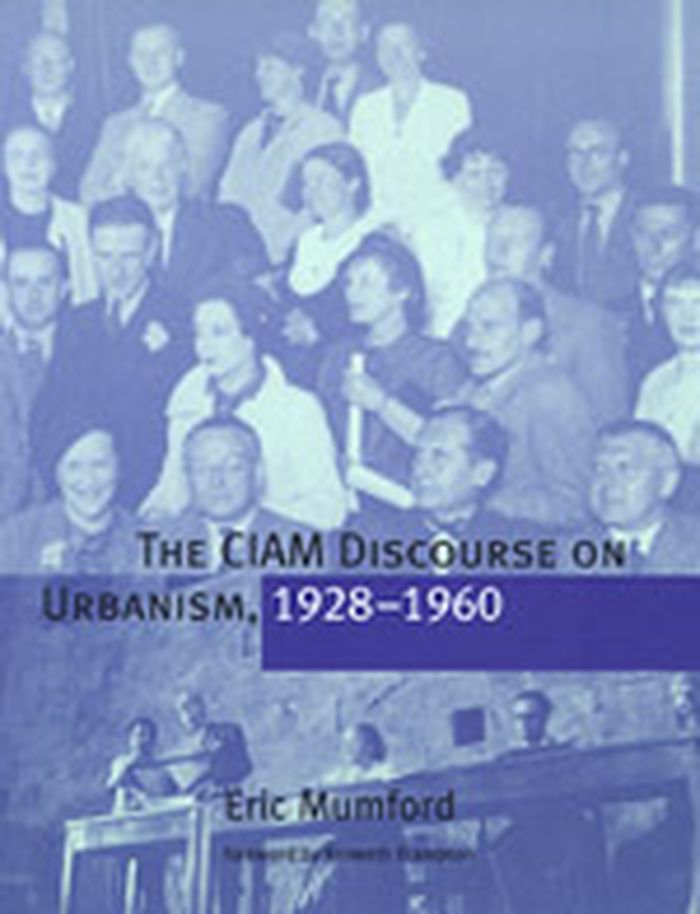
CIAM (Congrès Internationaux d'Architecture Moderne), founded in Switzerland in 1928, was an avant-garde association of architects intended to advance both modernism and internationalism in architecture. CIAM saw itself as an elite group revolutionizing architecture to serve the interests of society. Its members included some of the best-known architects of the twentieth century, such as Le Corbusier, Walter Gropius, and Richard Neutra, but also hundreds of others who looked to it for doctrines on how to shape the urban environment in a rapidly changing world. In this first book-length history of the organization, architectural historian Eric Mumford focuses on CIAM's discourse to trace the development and promotion of its influential concept of the "Functional City." He views official doctrines and pronouncements in relation to the changing circumstances of the members, revealing how CIAM in the 1930s began to resemble a kind of syndicalist party oriented toward winning over any suitable authority, regardless of political orientation. Mumford also looks at CIAM's efforts after World War II to find a new basis for a socially engaged architecture and describes the attempts by the group of younger members called Team 10 to radically revise CIAM's mission in the 1950s, efforts that led to the organization's dissolution in 1959.
The CIAM discourse on urbanism, 1928-1960
Actions:
Price:
$44.95
(available to order)
Summary:
CIAM (Congrès Internationaux d'Architecture Moderne), founded in Switzerland in 1928, was an avant-garde association of architects intended to advance both modernism and internationalism in architecture. CIAM saw itself as an elite group revolutionizing architecture to serve the interests of society. Its members included some of the best-known architects of the twentieth century, such as Le Corbusier, Walter Gropius, and Richard Neutra, but also hundreds of others who looked to it for doctrines on how to shape the urban environment in a rapidly changing world. In this first book-length history of the organization, architectural historian Eric Mumford focuses on CIAM's discourse to trace the development and promotion of its influential concept of the "Functional City." He views official doctrines and pronouncements in relation to the changing circumstances of the members, revealing how CIAM in the 1930s began to resemble a kind of syndicalist party oriented toward winning over any suitable authority, regardless of political orientation. Mumford also looks at CIAM's efforts after World War II to find a new basis for a socially engaged architecture and describes the attempts by the group of younger members called Team 10 to radically revise CIAM's mission in the 1950s, efforts that led to the organization's dissolution in 1959.
Form:
books
books
Publication:
October 2002, Cambridge, Massachusetts
October 2002, Cambridge, Massachusetts
Subject:
Urban Theory
Urban Theory
Form:
books
books
Actions:
Price:
$63.95
(available to order)
Summary:
Instructive, amusing, colorful—pictorial maps have been used and admired since the first medieval cartographer put pen to paper depicting mountains and trees across countries, people and objects around margins, and sea monsters in oceans. More recent generations of pictorial map artists have continued that traditional mixture of whimsy and fact, combining cartographic(...)
$63.95
(available to order)
Summary:
Instructive, amusing, colorful—pictorial maps have been used and admired since the first medieval cartographer put pen to paper depicting mountains and trees across countries, people and objects around margins, and sea monsters in oceans. More recent generations of pictorial map artists have continued that traditional mixture of whimsy and fact, combining cartographic(...)
Title:
Picturing America: the golden age of pictorial maps
Actions:
Price:
$63.95
(available to order)
Summary:
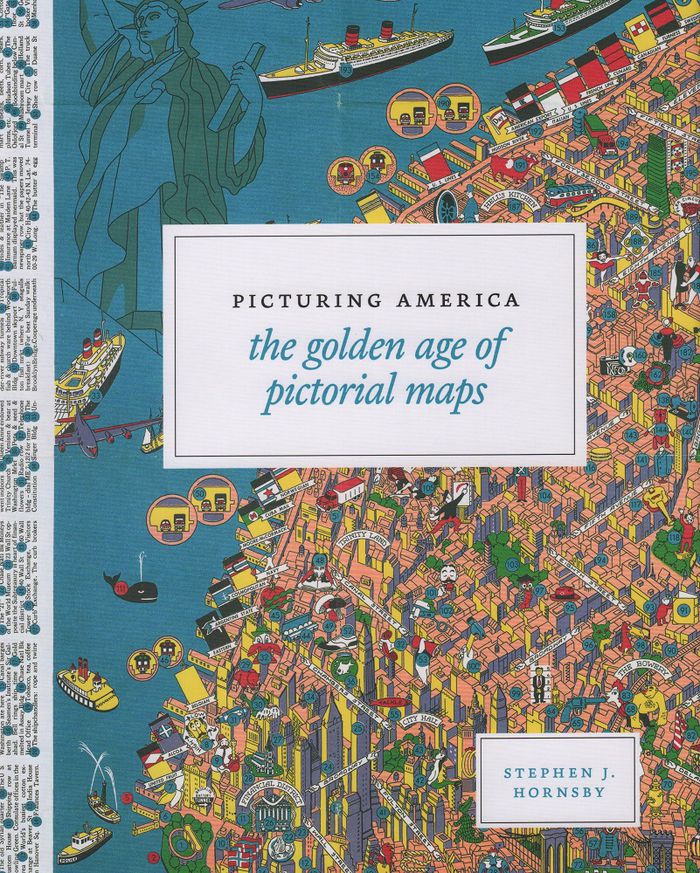
Instructive, amusing, colorful—pictorial maps have been used and admired since the first medieval cartographer put pen to paper depicting mountains and trees across countries, people and objects around margins, and sea monsters in oceans. More recent generations of pictorial map artists have continued that traditional mixture of whimsy and fact, combining cartographic elements with text and images and featuring bold and arresting designs, bright and cheerful colors, and lively detail. In the United States, the art form flourished from the 1920s through the 1970s, when thousands of innovative maps were mass-produced for use as advertisements and decorative objects—the golden age of American pictorial maps. "Picturing America" is the first book to showcase this vivid and popular genre of maps. Geographer Stephen J. Hornsby gathers together 158 delightful pictorial jewels, most drawn from the extensive collections of the Library of Congress. In his informative introduction, Hornsby outlines the development of the cartographic form, identifies several representative artists, describes the process of creating a pictorial map, and considers the significance of the form in the history of Western cartography. Organized into six thematic sections, "Picturing America" covers a vast swath of the pictorial map tradition during its golden age, ranging from “Maps to Amuse” to “Maps for War.” Hornsby has unearthed the most fascinating and visually striking maps the United States has to offer: Disney cartoon maps, college campus maps, kooky state tourism ads, World War II promotional posters, and many more.
Picturing America: the golden age of pictorial maps
Actions:
Price:
$63.95
(available to order)
Summary:
Instructive, amusing, colorful—pictorial maps have been used and admired since the first medieval cartographer put pen to paper depicting mountains and trees across countries, people and objects around margins, and sea monsters in oceans. More recent generations of pictorial map artists have continued that traditional mixture of whimsy and fact, combining cartographic elements with text and images and featuring bold and arresting designs, bright and cheerful colors, and lively detail. In the United States, the art form flourished from the 1920s through the 1970s, when thousands of innovative maps were mass-produced for use as advertisements and decorative objects—the golden age of American pictorial maps. "Picturing America" is the first book to showcase this vivid and popular genre of maps. Geographer Stephen J. Hornsby gathers together 158 delightful pictorial jewels, most drawn from the extensive collections of the Library of Congress. In his informative introduction, Hornsby outlines the development of the cartographic form, identifies several representative artists, describes the process of creating a pictorial map, and considers the significance of the form in the history of Western cartography. Organized into six thematic sections, "Picturing America" covers a vast swath of the pictorial map tradition during its golden age, ranging from “Maps to Amuse” to “Maps for War.” Hornsby has unearthed the most fascinating and visually striking maps the United States has to offer: Disney cartoon maps, college campus maps, kooky state tourism ads, World War II promotional posters, and many more.
Form:
books
books
Publication:
March 2017
March 2017
Subject:
Architectural Plans and Cartography
Architectural Plans and Cartography
Form:
books
books
Title:
When America became suburban
When America became suburban
Actions:
Price:
$23.95
(available to order)
Summary:
In the decades after World War II, the United States became the most prosperous nation in the world and a superpower whose dominance was symbolized by the American suburbs. Spurred by the decline of its industrial cities and by mass suburbanization, people imagined a new national identity—one that emphasized consumerism, social mobility, and a suburban lifestyle. The(...)
$23.95
(available to order)
Summary:
In the decades after World War II, the United States became the most prosperous nation in the world and a superpower whose dominance was symbolized by the American suburbs. Spurred by the decline of its industrial cities and by mass suburbanization, people imagined a new national identity—one that emphasized consumerism, social mobility, and a suburban lifestyle. The(...)
Title:
When America became suburban
Actions:
Price:
$23.95
(available to order)
Summary:
In the decades after World War II, the United States became the most prosperous nation in the world and a superpower whose dominance was symbolized by the American suburbs. Spurred by the decline of its industrial cities and by mass suburbanization, people imagined a new national identity—one that emphasized consumerism, social mobility, and a suburban lifestyle. The urbanity of the city was lost. In "When America became suburban", Robert A. Beauregard examines this historic intersection of urban decline, mass suburbanization, domestic prosperity, and U.S. global aspirations as it unfolded from 1945 to the mid-1970s. Suburban expansion and the subsequent emergence of sprawling Sunbelt cities transformed every aspect of American society. Assessing the global implications of America’s suburban way of life as evidence of the superiority of capitalist democracy, Beauregard traces how the suburban ideology enabled America to distinguish itself from both the Communist bloc and Western Europe, thereby deepening its claim of exceptionalism on the world-historical stage. Placing the decline of America’s industrial cities and the rise of vast suburban housing and retail spaces into a cultural, political, and global context, Beauregard illuminates how these phenomena contributed to a changing notion of America’s identity at home and abroad. "When America became suburban" brings to light the profound implications of de-urbanization: from the siphoning of investments from the cities and the effect on the quality of life for those left behind to a profound shift in national identity.
When America became suburban
Actions:
Price:
$23.95
(available to order)
Summary:
In the decades after World War II, the United States became the most prosperous nation in the world and a superpower whose dominance was symbolized by the American suburbs. Spurred by the decline of its industrial cities and by mass suburbanization, people imagined a new national identity—one that emphasized consumerism, social mobility, and a suburban lifestyle. The urbanity of the city was lost. In "When America became suburban", Robert A. Beauregard examines this historic intersection of urban decline, mass suburbanization, domestic prosperity, and U.S. global aspirations as it unfolded from 1945 to the mid-1970s. Suburban expansion and the subsequent emergence of sprawling Sunbelt cities transformed every aspect of American society. Assessing the global implications of America’s suburban way of life as evidence of the superiority of capitalist democracy, Beauregard traces how the suburban ideology enabled America to distinguish itself from both the Communist bloc and Western Europe, thereby deepening its claim of exceptionalism on the world-historical stage. Placing the decline of America’s industrial cities and the rise of vast suburban housing and retail spaces into a cultural, political, and global context, Beauregard illuminates how these phenomena contributed to a changing notion of America’s identity at home and abroad. "When America became suburban" brings to light the profound implications of de-urbanization: from the siphoning of investments from the cities and the effect on the quality of life for those left behind to a profound shift in national identity.
Form:
books
books
Publication:
September 2006, Minneapolis, London
September 2006, Minneapolis, London
Subject:
Suburbs
Suburbs
Form:
books
books
Actions:
Price:
$85.00
(available to order)
Summary:
This book revisits the history of modernism in architecture through the legacy of one of its protagonists, Armenian architect Gabriel Guevrekian (c. 1900–70). Born in Istanbul, Guevrekian grew up in Tehran and then moved to Vienna to study architecture at the Kunstgewerbeschule; he later worked with Oskar Strnad, Josef Hoffmann, Adolf Loos, Henri Sauvage and Robert(...)
$85.00
(available to order)
Summary:
This book revisits the history of modernism in architecture through the legacy of one of its protagonists, Armenian architect Gabriel Guevrekian (c. 1900–70). Born in Istanbul, Guevrekian grew up in Tehran and then moved to Vienna to study architecture at the Kunstgewerbeschule; he later worked with Oskar Strnad, Josef Hoffmann, Adolf Loos, Henri Sauvage and Robert(...)
Title:
Gabriel Guevrekian: the elusive modernist
Actions:
Price:
$85.00
(available to order)
Summary:
This book revisits the history of modernism in architecture through the legacy of one of its protagonists, Armenian architect Gabriel Guevrekian (c. 1900–70). Born in Istanbul, Guevrekian grew up in Tehran and then moved to Vienna to study architecture at the Kunstgewerbeschule; he later worked with Oskar Strnad, Josef Hoffmann, Adolf Loos, Henri Sauvage and Robert Mallet-Stevens. Among Guevrekian’s famous designs are the Cubist Garden for Villa Noailles in France and two houses for the Vienna Werkbund exhibition. Before he turned 30, Guevrekian was recognized as one of the protagonists of the European avant-garde in Paris. During the 1930s, Guevrekian spent a few years in Iran designing public buildings. Later, after the World War II, he took up teaching positions in Europe and America. All of Guevrekian’s various pursuits, and the homes and nationalities he held in Asia, Europe and then America, led the architect to a serial adoption of personae. Guevrekian was an architect, an avant-gardist and a cosmopolitan. He made every discipline meaningful, every city central, every period epochal, simply by his own very tangible engagement with it.
Gabriel Guevrekian: the elusive modernist
Actions:
Price:
$85.00
(available to order)
Summary:
This book revisits the history of modernism in architecture through the legacy of one of its protagonists, Armenian architect Gabriel Guevrekian (c. 1900–70). Born in Istanbul, Guevrekian grew up in Tehran and then moved to Vienna to study architecture at the Kunstgewerbeschule; he later worked with Oskar Strnad, Josef Hoffmann, Adolf Loos, Henri Sauvage and Robert Mallet-Stevens. Among Guevrekian’s famous designs are the Cubist Garden for Villa Noailles in France and two houses for the Vienna Werkbund exhibition. Before he turned 30, Guevrekian was recognized as one of the protagonists of the European avant-garde in Paris. During the 1930s, Guevrekian spent a few years in Iran designing public buildings. Later, after the World War II, he took up teaching positions in Europe and America. All of Guevrekian’s various pursuits, and the homes and nationalities he held in Asia, Europe and then America, led the architect to a serial adoption of personae. Guevrekian was an architect, an avant-gardist and a cosmopolitan. He made every discipline meaningful, every city central, every period epochal, simply by his own very tangible engagement with it.
Form:
books
books
Publication:
January 2021
January 2021
Subject:
Architecture Monographs
Architecture Monographs
Form:
books
books
Actions:
Price:
$34.95
(available to order)
Summary:
Jorge Otero-Pailos shows how architectural phenomenology radically transformed how architects engaged, theorized, and produced history. In the first critical intellectual account of the movement, Otero-Pailos discusses the contributions of leading members, including Jean Labatut, Charles Moore, Christian Norberg-Schulz, and Kenneth Frampton. For architects maturing after(...)
$34.95
(available to order)
Summary:
Jorge Otero-Pailos shows how architectural phenomenology radically transformed how architects engaged, theorized, and produced history. In the first critical intellectual account of the movement, Otero-Pailos discusses the contributions of leading members, including Jean Labatut, Charles Moore, Christian Norberg-Schulz, and Kenneth Frampton. For architects maturing after(...)
Title:
Architecture's historical turn: phenomenology and the rise of the postmodern
Actions:
Price:
$34.95
(available to order)
Summary:
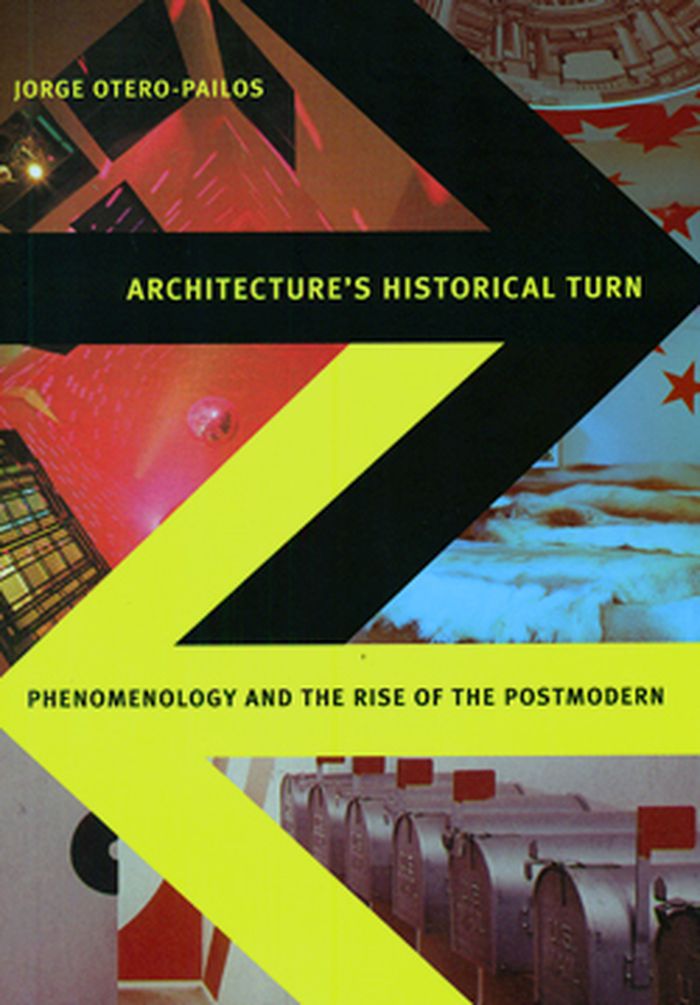
Jorge Otero-Pailos shows how architectural phenomenology radically transformed how architects engaged, theorized, and produced history. In the first critical intellectual account of the movement, Otero-Pailos discusses the contributions of leading members, including Jean Labatut, Charles Moore, Christian Norberg-Schulz, and Kenneth Frampton. For architects maturing after World War II, Otero-Pailos contends, architectural history was a problem rather than a given. Paradoxically, their awareness of modernism’s historicity led some of them to search for an ahistorical experiential constant that might underpin all architectural expression. They drew from phenomenology, exploring the work of Bachelard, Merleau-Ponty, Heidegger, and Ricoeur, which they translated for architectural audiences. Initially, the concept that experience could be a timeless architectural language provided a unifying intellectual basis for the stylistic pluralism that characterized postmodernism. It helped give theory—especially the theory of architectural history—a new importance over practice. However, as Otero-Pailos makes clear, architectural phenomenologists could not accept the idea of theory as an end in itself. In the mid-1980s they were caught in the contradictory and untenable position of having to formulate their own demotion of theory.
Architecture's historical turn: phenomenology and the rise of the postmodern
Actions:
Price:
$34.95
(available to order)
Summary:
Jorge Otero-Pailos shows how architectural phenomenology radically transformed how architects engaged, theorized, and produced history. In the first critical intellectual account of the movement, Otero-Pailos discusses the contributions of leading members, including Jean Labatut, Charles Moore, Christian Norberg-Schulz, and Kenneth Frampton. For architects maturing after World War II, Otero-Pailos contends, architectural history was a problem rather than a given. Paradoxically, their awareness of modernism’s historicity led some of them to search for an ahistorical experiential constant that might underpin all architectural expression. They drew from phenomenology, exploring the work of Bachelard, Merleau-Ponty, Heidegger, and Ricoeur, which they translated for architectural audiences. Initially, the concept that experience could be a timeless architectural language provided a unifying intellectual basis for the stylistic pluralism that characterized postmodernism. It helped give theory—especially the theory of architectural history—a new importance over practice. However, as Otero-Pailos makes clear, architectural phenomenologists could not accept the idea of theory as an end in itself. In the mid-1980s they were caught in the contradictory and untenable position of having to formulate their own demotion of theory.
Form:
books
books
Publication:
April 2010
April 2010
Subject:
Architectural Theory
Architectural Theory


