


10592 Results
Form:
books
books
Actions:
Price:
$34.95
(available to order)
Summary:
Jorge Otero-Pailos shows how architectural phenomenology radically transformed how architects engaged, theorized, and produced history. In the first critical intellectual account of the movement, Otero-Pailos discusses the contributions of leading members, including Jean Labatut, Charles Moore, Christian Norberg-Schulz, and Kenneth Frampton. For architects maturing after(...)
$34.95
(available to order)
Summary:
Jorge Otero-Pailos shows how architectural phenomenology radically transformed how architects engaged, theorized, and produced history. In the first critical intellectual account of the movement, Otero-Pailos discusses the contributions of leading members, including Jean Labatut, Charles Moore, Christian Norberg-Schulz, and Kenneth Frampton. For architects maturing after(...)
Title:
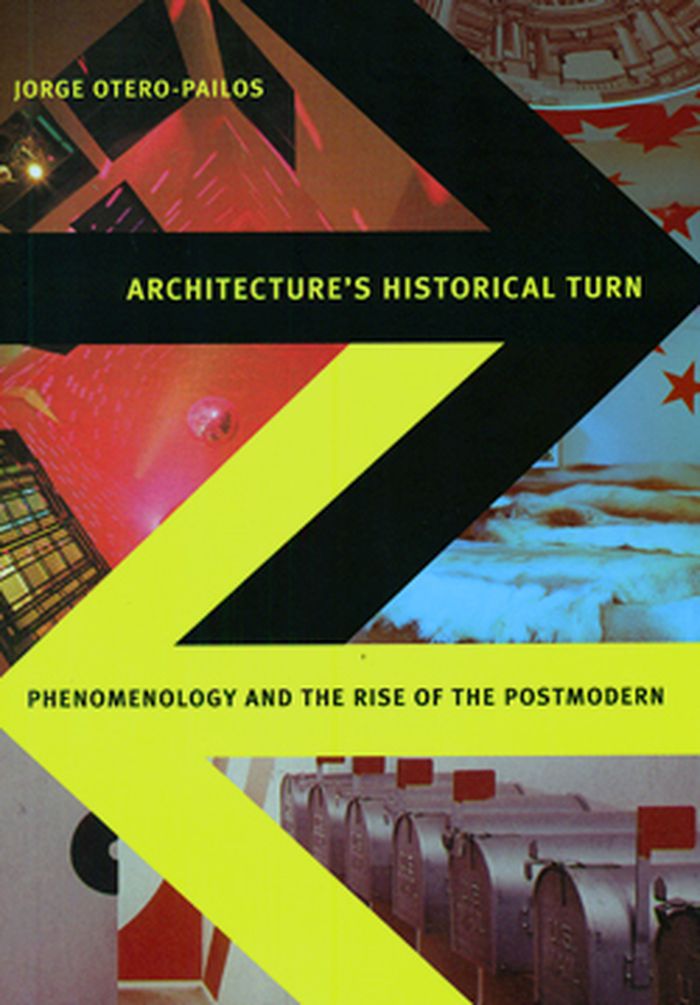
Architecture's historical turn: phenomenology and the rise of the postmodern
Actions:
Price:
$34.95
(available to order)
Summary:
Jorge Otero-Pailos shows how architectural phenomenology radically transformed how architects engaged, theorized, and produced history. In the first critical intellectual account of the movement, Otero-Pailos discusses the contributions of leading members, including Jean Labatut, Charles Moore, Christian Norberg-Schulz, and Kenneth Frampton. For architects maturing after World War II, Otero-Pailos contends, architectural history was a problem rather than a given. Paradoxically, their awareness of modernism’s historicity led some of them to search for an ahistorical experiential constant that might underpin all architectural expression. They drew from phenomenology, exploring the work of Bachelard, Merleau-Ponty, Heidegger, and Ricoeur, which they translated for architectural audiences. Initially, the concept that experience could be a timeless architectural language provided a unifying intellectual basis for the stylistic pluralism that characterized postmodernism. It helped give theory—especially the theory of architectural history—a new importance over practice. However, as Otero-Pailos makes clear, architectural phenomenologists could not accept the idea of theory as an end in itself. In the mid-1980s they were caught in the contradictory and untenable position of having to formulate their own demotion of theory.
Architecture's historical turn: phenomenology and the rise of the postmodern
Actions:
Price:
$34.95
(available to order)
Summary:
Jorge Otero-Pailos shows how architectural phenomenology radically transformed how architects engaged, theorized, and produced history. In the first critical intellectual account of the movement, Otero-Pailos discusses the contributions of leading members, including Jean Labatut, Charles Moore, Christian Norberg-Schulz, and Kenneth Frampton. For architects maturing after World War II, Otero-Pailos contends, architectural history was a problem rather than a given. Paradoxically, their awareness of modernism’s historicity led some of them to search for an ahistorical experiential constant that might underpin all architectural expression. They drew from phenomenology, exploring the work of Bachelard, Merleau-Ponty, Heidegger, and Ricoeur, which they translated for architectural audiences. Initially, the concept that experience could be a timeless architectural language provided a unifying intellectual basis for the stylistic pluralism that characterized postmodernism. It helped give theory—especially the theory of architectural history—a new importance over practice. However, as Otero-Pailos makes clear, architectural phenomenologists could not accept the idea of theory as an end in itself. In the mid-1980s they were caught in the contradictory and untenable position of having to formulate their own demotion of theory.
Form:
books
books
Publication:
April 2010
April 2010
Subject:
Architectural Theory
Architectural Theory
Form:
books
books
Actions:
Price:
$38.99
(available to order)
Summary:
Architectural postmodernism had a significant impact on the broader development of postmodern thought: Utopia’s Ghost is a critical reconsideration of their relationship. Combining discourse analysis, historical reconstruction, and close readings of buildings, projects, and texts from the 1970s and 1980s, Reinhold Martin argues that retheorizing postmodern architecture(...)
$38.99
(available to order)
Summary:
Architectural postmodernism had a significant impact on the broader development of postmodern thought: Utopia’s Ghost is a critical reconsideration of their relationship. Combining discourse analysis, historical reconstruction, and close readings of buildings, projects, and texts from the 1970s and 1980s, Reinhold Martin argues that retheorizing postmodern architecture(...)
Title:
Utopia's ghost: architecture and postmodernism, again
Actions:
Price:
$38.99
(available to order)
Summary:
Architectural postmodernism had a significant impact on the broader development of postmodern thought: Utopia’s Ghost is a critical reconsideration of their relationship. Combining discourse analysis, historical reconstruction, and close readings of buildings, projects, and texts from the 1970s and 1980s, Reinhold Martin argues that retheorizing postmodern architecture gives us new insights into cultural postmodernism and its aftermath.
Utopia's ghost: architecture and postmodernism, again
Actions:
Price:
$38.99
(available to order)
Summary:
Architectural postmodernism had a significant impact on the broader development of postmodern thought: Utopia’s Ghost is a critical reconsideration of their relationship. Combining discourse analysis, historical reconstruction, and close readings of buildings, projects, and texts from the 1970s and 1980s, Reinhold Martin argues that retheorizing postmodern architecture gives us new insights into cultural postmodernism and its aftermath.
Form:
books
books
Publication:
April 2010
April 2010
Subject:
Architectural Theory
Architectural Theory
Form:
books
books

Actions:
Price:
$32.95
(available to order)
Summary:
Abigail A. Van Slyck discusses the most visible and evocative aspect of camp life: its landscape and architecture. She argues that summer camps delivered much more than a simple encounter with the natural world. Instead, she suggests, camps provided a man-made version of wilderness, shaped by middle-class anxieties about gender roles, class tensions, race relations, and(...)
$32.95
(available to order)
Summary:
Abigail A. Van Slyck discusses the most visible and evocative aspect of camp life: its landscape and architecture. She argues that summer camps delivered much more than a simple encounter with the natural world. Instead, she suggests, camps provided a man-made version of wilderness, shaped by middle-class anxieties about gender roles, class tensions, race relations, and(...)
Title:
A manufactured wilderness: Summer camps and the shaping of American youth, 1890-1960
Actions:
Price:
$32.95
(available to order)
Summary:
Abigail A. Van Slyck discusses the most visible and evocative aspect of camp life: its landscape and architecture. She argues that summer camps delivered much more than a simple encounter with the natural world. Instead, she suggests, camps provided a man-made version of wilderness, shaped by middle-class anxieties about gender roles, class tensions, race relations, and modernity and its impact on the lives of children.
A manufactured wilderness: Summer camps and the shaping of American youth, 1890-1960
Actions:
Price:
$32.95
(available to order)
Summary:
Abigail A. Van Slyck discusses the most visible and evocative aspect of camp life: its landscape and architecture. She argues that summer camps delivered much more than a simple encounter with the natural world. Instead, she suggests, camps provided a man-made version of wilderness, shaped by middle-class anxieties about gender roles, class tensions, race relations, and modernity and its impact on the lives of children.
Form:
books
books
Publication:
April 2010
April 2010
Subject:
Architectural Theory
Architectural Theory
Form:
books
books
Title:
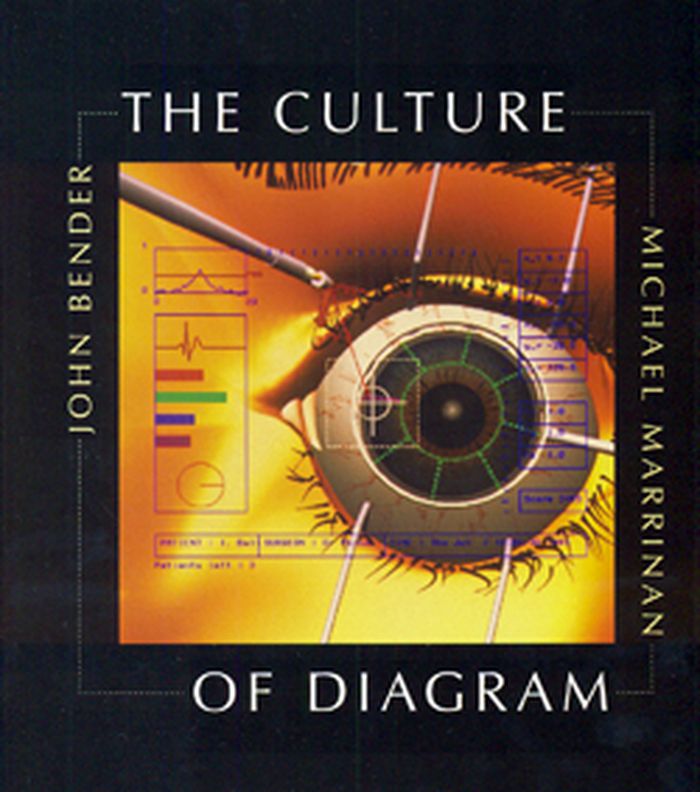
The culture of diagram
The culture of diagram
Actions:
Price:
$26.95
(available to order)
Summary:
This book is about visual thinking. Exploring a terrain where words meet pictures and formulas meet figures, the book foregrounds diagrams as tools for blurring those boundaries to focus on the production of knowledge as process. It outlines a history of convergence among diverse streams of data in real-time: from eighteenth-century print media and the diagrammatic(...)
$26.95
(available to order)
Summary:
This book is about visual thinking. Exploring a terrain where words meet pictures and formulas meet figures, the book foregrounds diagrams as tools for blurring those boundaries to focus on the production of knowledge as process. It outlines a history of convergence among diverse streams of data in real-time: from eighteenth-century print media and the diagrammatic(...)
Title:
The culture of diagram
Actions:
Price:
$26.95
(available to order)
Summary:
This book is about visual thinking. Exploring a terrain where words meet pictures and formulas meet figures, the book foregrounds diagrams as tools for blurring those boundaries to focus on the production of knowledge as process. It outlines a history of convergence among diverse streams of data in real-time: from eighteenth-century print media and the diagrammatic procedures in the pages of Diderot's Encyclopedia to the paintings of Jacques-Louis David and mathematical devices that reveal the unseen worlds of quantum physics. The culture of diagram broke with the certainties of eighteenth-century science to expand the range of human experience. Speaking across disciplines and discourses, Bender and Marrinan situate our modernity in a new and revealing light.
The culture of diagram
Actions:
Price:
$26.95
(available to order)
Summary:
This book is about visual thinking. Exploring a terrain where words meet pictures and formulas meet figures, the book foregrounds diagrams as tools for blurring those boundaries to focus on the production of knowledge as process. It outlines a history of convergence among diverse streams of data in real-time: from eighteenth-century print media and the diagrammatic procedures in the pages of Diderot's Encyclopedia to the paintings of Jacques-Louis David and mathematical devices that reveal the unseen worlds of quantum physics. The culture of diagram broke with the certainties of eighteenth-century science to expand the range of human experience. Speaking across disciplines and discourses, Bender and Marrinan situate our modernity in a new and revealing light.
Form:
books
books
Publication:
March 2010
March 2010
Subject:
Art Theory
Art Theory
Form:
books
books
Price:
$24.95
(available to order)
Summary:
While the construction of architecture has a place in architectural discourse, its destruction, generally seen as incompatible with the very idea of "culture," has been neglected in theoretical and historical discussion. Responding to this neglect, Herscher examines the case of the former Yugoslavia and in particular, Kosovo, where targeting architecture has been a(...)
$24.95
(available to order)
Summary:
While the construction of architecture has a place in architectural discourse, its destruction, generally seen as incompatible with the very idea of "culture," has been neglected in theoretical and historical discussion. Responding to this neglect, Herscher examines the case of the former Yugoslavia and in particular, Kosovo, where targeting architecture has been a(...)
Title:
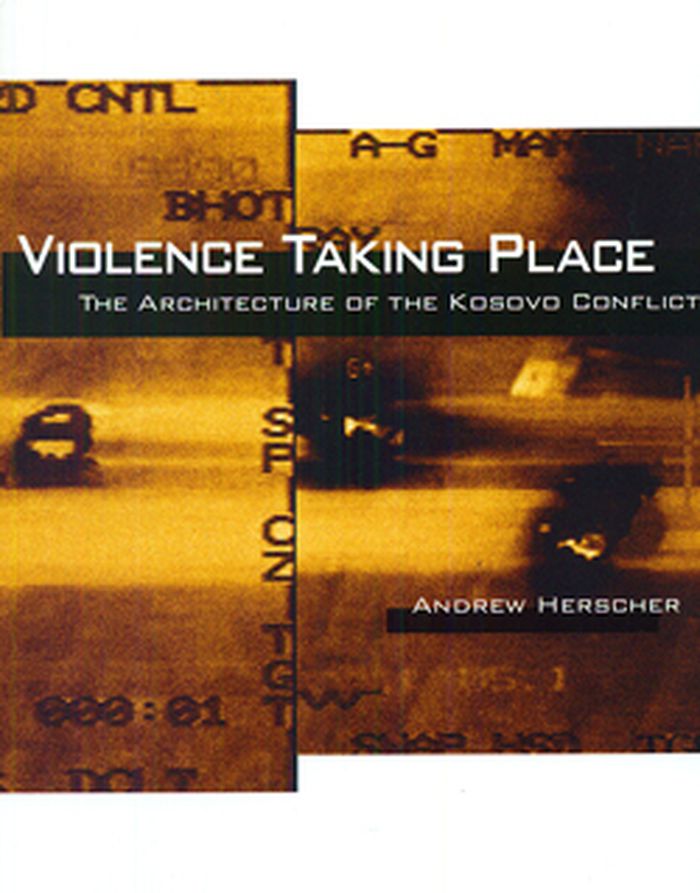
Violence taking place: the architecture of the Kosovo conflict
Actions:
Price:
$24.95
(available to order)
Summary:
While the construction of architecture has a place in architectural discourse, its destruction, generally seen as incompatible with the very idea of "culture," has been neglected in theoretical and historical discussion. Responding to this neglect, Herscher examines the case of the former Yugoslavia and in particular, Kosovo, where targeting architecture has been a prominent dimension of political violence. Focusing on the particular sites where violence is inflicted and where its subjects and objects are articulated, the book traces the intersection of violence and architecture from socialist modernization, through ethnic and nationalist conflict, to postwar reconstruction.
Violence taking place: the architecture of the Kosovo conflict
Actions:
Price:
$24.95
(available to order)
Summary:
While the construction of architecture has a place in architectural discourse, its destruction, generally seen as incompatible with the very idea of "culture," has been neglected in theoretical and historical discussion. Responding to this neglect, Herscher examines the case of the former Yugoslavia and in particular, Kosovo, where targeting architecture has been a prominent dimension of political violence. Focusing on the particular sites where violence is inflicted and where its subjects and objects are articulated, the book traces the intersection of violence and architecture from socialist modernization, through ethnic and nationalist conflict, to postwar reconstruction.
Form:
books
books
Publication:
April 2010
April 2010
Subject:
Architectural Theory
Architectural Theory
Form:
books
books
Actions:
Price:
$30.50
(available to order)
Summary:
In W. G. Sebald: Image, Archive, Modernity, J. J. Long identifies a wider "meta-problem" in Sebald's work—the problem of modernity. The numerous archival institutions and processes that lie at the heart of modernity are repeatedly explored in Sebald's novels. Photography, museums, libraries, and other institutions for producing and preserving knowledge are among Sebald's(...)
$30.50
(available to order)
Summary:
In W. G. Sebald: Image, Archive, Modernity, J. J. Long identifies a wider "meta-problem" in Sebald's work—the problem of modernity. The numerous archival institutions and processes that lie at the heart of modernity are repeatedly explored in Sebald's novels. Photography, museums, libraries, and other institutions for producing and preserving knowledge are among Sebald's(...)
Title:
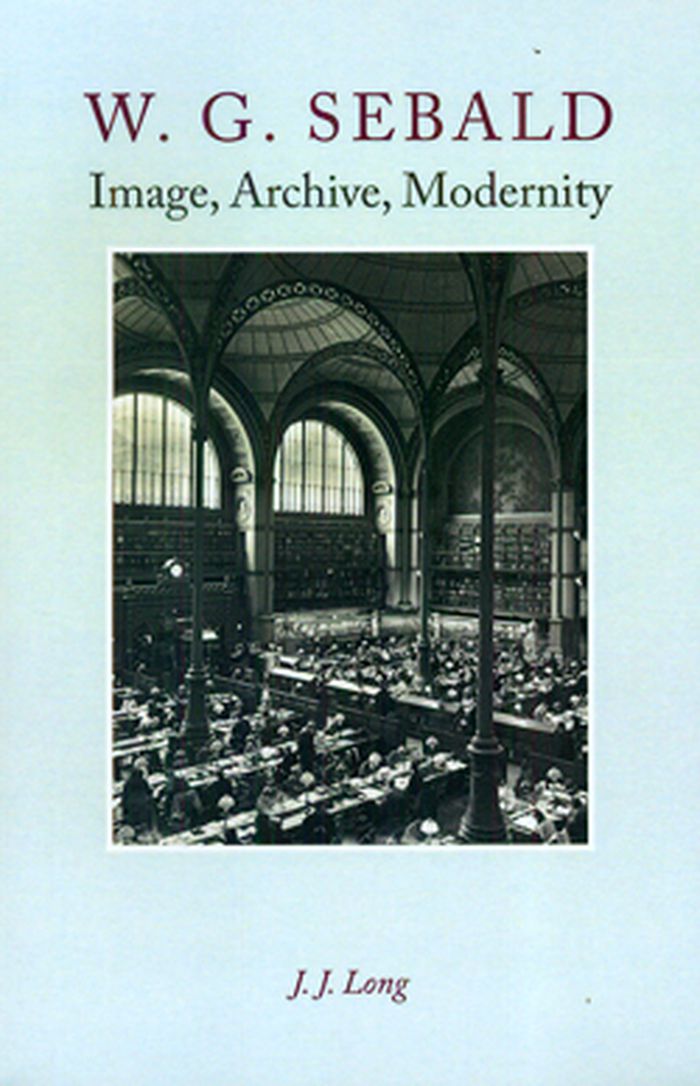
W.G. Sebald: Image, archive, modernity
Actions:
Price:
$30.50
(available to order)
Summary:
In W. G. Sebald: Image, Archive, Modernity, J. J. Long identifies a wider "meta-problem" in Sebald's work—the problem of modernity. The numerous archival institutions and processes that lie at the heart of modernity are repeatedly explored in Sebald's novels. Photography, museums, libraries, and other institutions for producing and preserving knowledge are among Sebald's main obsessions. Long advances an interpretation of the author's oeuvre, arguing that Sebald's project needs to be understood as a response not merely to post-Holocaust trauma but to the longer history of modernity.
W.G. Sebald: Image, archive, modernity
Actions:
Price:
$30.50
(available to order)
Summary:
In W. G. Sebald: Image, Archive, Modernity, J. J. Long identifies a wider "meta-problem" in Sebald's work—the problem of modernity. The numerous archival institutions and processes that lie at the heart of modernity are repeatedly explored in Sebald's novels. Photography, museums, libraries, and other institutions for producing and preserving knowledge are among Sebald's main obsessions. Long advances an interpretation of the author's oeuvre, arguing that Sebald's project needs to be understood as a response not merely to post-Holocaust trauma but to the longer history of modernity.
Form:
books
books
Publication:
July 2010
July 2010
Subject:
Art Theory
Art Theory
Form:
books
books
Title:
Lhasa: Streets with memories
Lhasa: Streets with memories
Actions:
Price:
$22.50
(available to order)
Summary:
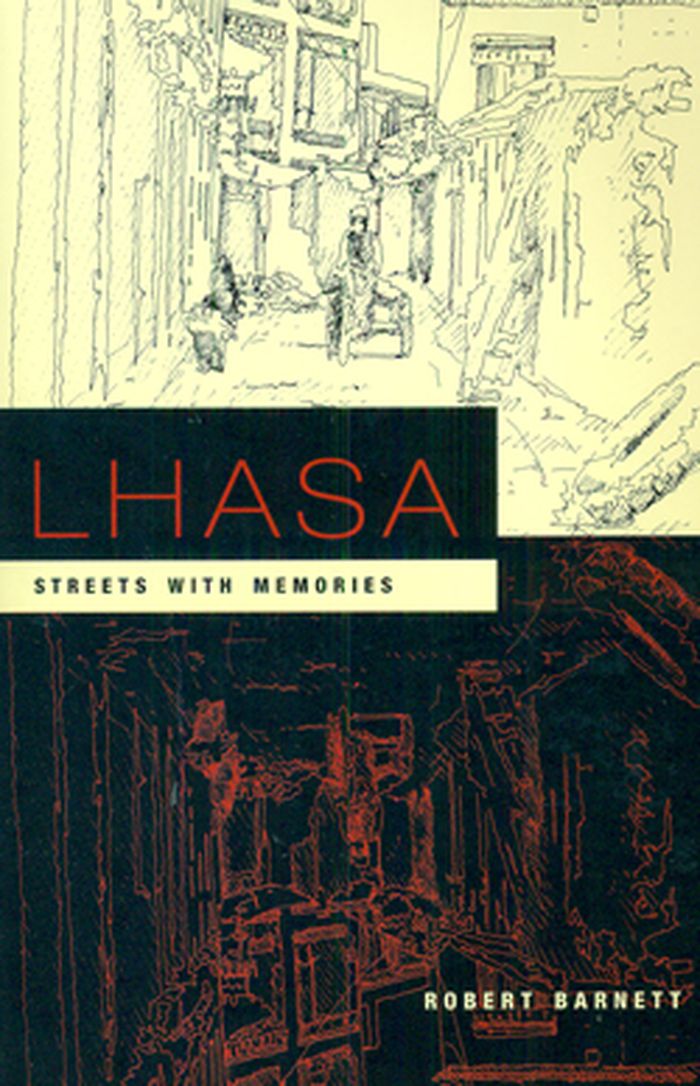
Robert Barnett offers an exploration of a city long idealized, disregarded, or misunderstood by outsiders. Looking to its streets and stone, Barnett presents a searching portrait of Lhasa, its history, and its illegibility. It only offers itself as a manual for thinking about contemporary Tibet but also questions our ways of thinking about foreign places.
$22.50
(available to order)
Summary:
Robert Barnett offers an exploration of a city long idealized, disregarded, or misunderstood by outsiders. Looking to its streets and stone, Barnett presents a searching portrait of Lhasa, its history, and its illegibility. It only offers itself as a manual for thinking about contemporary Tibet but also questions our ways of thinking about foreign places.
Title:
Lhasa: Streets with memories
Actions:
Price:
$22.50
(available to order)
Summary:
Robert Barnett offers an exploration of a city long idealized, disregarded, or misunderstood by outsiders. Looking to its streets and stone, Barnett presents a searching portrait of Lhasa, its history, and its illegibility. It only offers itself as a manual for thinking about contemporary Tibet but also questions our ways of thinking about foreign places.
Lhasa: Streets with memories
Actions:
Price:
$22.50
(available to order)
Summary:
Robert Barnett offers an exploration of a city long idealized, disregarded, or misunderstood by outsiders. Looking to its streets and stone, Barnett presents a searching portrait of Lhasa, its history, and its illegibility. It only offers itself as a manual for thinking about contemporary Tibet but also questions our ways of thinking about foreign places.
Form:
books
books
Publication:
June 2010
June 2010
Subject:
Urban Theory
Urban Theory
Form:
books
books
Title:
Deleuze and contemporary art
Deleuze and contemporary art
Actions:
Price:
$40.50
(available to order)
Summary:
What is at stake for contemporary art in the take up of Deleuze and Guattari's thought? To address these questions, this book presents a series of inflections that explore the connection between these two fields. The topics studied range from the political and the expanded 'aesthetic paradigm' of art practice today, to specific scenes and encounters and the question of(...)
$40.50
(available to order)
Summary:
What is at stake for contemporary art in the take up of Deleuze and Guattari's thought? To address these questions, this book presents a series of inflections that explore the connection between these two fields. The topics studied range from the political and the expanded 'aesthetic paradigm' of art practice today, to specific scenes and encounters and the question of(...)
Title:
Deleuze and contemporary art
Actions:
Price:
$40.50
(available to order)
Summary:
What is at stake for contemporary art in the take up of Deleuze and Guattari's thought? To address these questions, this book presents a series of inflections that explore the connection between these two fields. The topics studied range from the political and the expanded 'aesthetic paradigm' of art practice today, to specific scenes and encounters and the question of technology in relation to art.
Deleuze and contemporary art
Actions:
Price:
$40.50
(available to order)
Summary:
What is at stake for contemporary art in the take up of Deleuze and Guattari's thought? To address these questions, this book presents a series of inflections that explore the connection between these two fields. The topics studied range from the political and the expanded 'aesthetic paradigm' of art practice today, to specific scenes and encounters and the question of technology in relation to art.
Form:
books
books
Publication:
July 2010
July 2010
Subject:
Art Theory
Art Theory
Form:
books
books
Price:
$27.95
(available to order)
Summary:
The Essential Frank Lloyd Wright is a compendium of Wright's most critically important writings on every conceivable aspect of his craft. Beginning early in Wright's career with The Art and Craft of the Machine in 1901, the book follows major themes through The Disappearing City , The Natural House , and many other writings, and ends with A Testament in 1957 , published(...)
$27.95
(available to order)
Summary:
The Essential Frank Lloyd Wright is a compendium of Wright's most critically important writings on every conceivable aspect of his craft. Beginning early in Wright's career with The Art and Craft of the Machine in 1901, the book follows major themes through The Disappearing City , The Natural House , and many other writings, and ends with A Testament in 1957 , published(...)
Title:
The essential Frank Lloyd Wright: Critical writings on architecture
Actions:
Price:
$27.95
(available to order)
Summary:
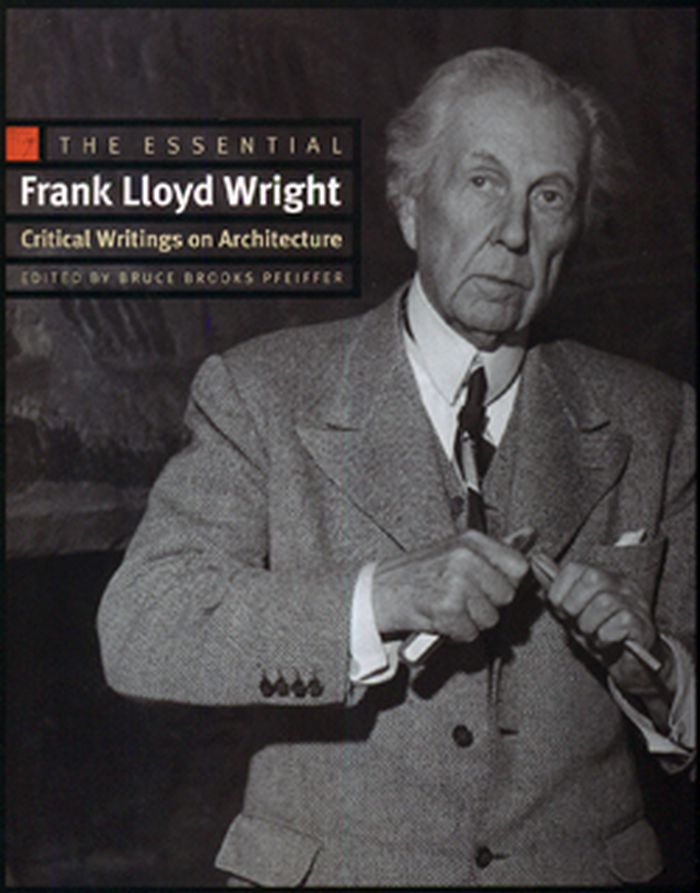
The Essential Frank Lloyd Wright is a compendium of Wright's most critically important writings on every conceivable aspect of his craft. Beginning early in Wright's career with The Art and Craft of the Machine in 1901, the book follows major themes through The Disappearing City , The Natural House , and many other writings, and ends with A Testament in 1957 , published two years before his death. This volume is illustrated with original drawings and photographs.
The essential Frank Lloyd Wright: Critical writings on architecture
Actions:
Price:
$27.95
(available to order)
Summary:
The Essential Frank Lloyd Wright is a compendium of Wright's most critically important writings on every conceivable aspect of his craft. Beginning early in Wright's career with The Art and Craft of the Machine in 1901, the book follows major themes through The Disappearing City , The Natural House , and many other writings, and ends with A Testament in 1957 , published two years before his death. This volume is illustrated with original drawings and photographs.
Form:
books
books
Publication:
March 2010
March 2010
Subject:
Architectural Theory
Architectural Theory
Form:
books
books
Price:
$41.95
(available to order)
Summary:
The Urban Spectator is a lively and utterly fascinating exploration of the ways in which technologies have influenced our collective conception of the American city, as well as our relationship with urban space and architecture. Eric Gordon argues that the city, developing late and in conjunction with a range of modern media, produced a particular way of seeing--what he(...)
$41.95
(available to order)
Summary:
The Urban Spectator is a lively and utterly fascinating exploration of the ways in which technologies have influenced our collective conception of the American city, as well as our relationship with urban space and architecture. Eric Gordon argues that the city, developing late and in conjunction with a range of modern media, produced a particular way of seeing--what he(...)
Title:
The urban spectator: American concept-cities from Kodak to Google
Actions:
Price:
$41.95
(available to order)
Summary:
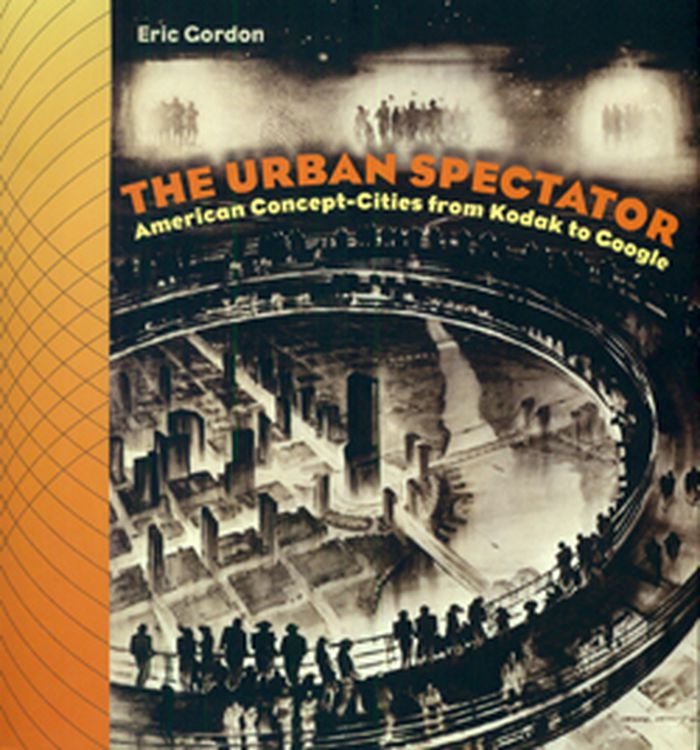
The Urban Spectator is a lively and utterly fascinating exploration of the ways in which technologies have influenced our collective conception of the American city, as well as our relationship with urban space and architecture. Eric Gordon argues that the city, developing late and in conjunction with a range of modern media, produced a particular way of seeing--what he labels "possessive spectatorship." Lacking the historical rootedness of European cities, the American city was open to individual interpretation, definition, and ownership. Beginning with the White City of the Chicago World's Fair of 1893 and the efforts to commodify the concept city through photography, Gordon shows how the American city has always been a product of the collision between the dominant conceptualization, shaped by contemporary media, and the spectator. From the viewfinder of the Kodak camera, to the public display of early cinema, to the speculative desire of network radio, all the way to machine-age utopianism, nostalgia, and America's "rerun" culture, the city is an amalgam of practice and concept. All of this comes to a head in the "database city" where urban spectatorship takes on the characteristics of a Google search. In new urban developments, the spectator searches, retrieves, and combines urban references to construct each experience of the city.
The urban spectator: American concept-cities from Kodak to Google
Actions:
Price:
$41.95
(available to order)
Summary:
The Urban Spectator is a lively and utterly fascinating exploration of the ways in which technologies have influenced our collective conception of the American city, as well as our relationship with urban space and architecture. Eric Gordon argues that the city, developing late and in conjunction with a range of modern media, produced a particular way of seeing--what he labels "possessive spectatorship." Lacking the historical rootedness of European cities, the American city was open to individual interpretation, definition, and ownership. Beginning with the White City of the Chicago World's Fair of 1893 and the efforts to commodify the concept city through photography, Gordon shows how the American city has always been a product of the collision between the dominant conceptualization, shaped by contemporary media, and the spectator. From the viewfinder of the Kodak camera, to the public display of early cinema, to the speculative desire of network radio, all the way to machine-age utopianism, nostalgia, and America's "rerun" culture, the city is an amalgam of practice and concept. All of this comes to a head in the "database city" where urban spectatorship takes on the characteristics of a Google search. In new urban developments, the spectator searches, retrieves, and combines urban references to construct each experience of the city.
Form:
books
books
Publication:
February 2010
February 2010
Subject:
Urban Theory
Urban Theory


