


13794 Results
Form:
books
books
Actions:
Price:
$46.95
(available to order)
Summary:
From the dawn of European civilization to the twentieth century, the automaton—better known today as the robot—has captured the Western imagination and provided a vital lens into the nature of humanity. Historian Minsoo Kang argues that to properly understand the human-as-machine and the human-as-fundamentally-different-from-machine, we must trace the origins of these(...)
$46.95
(available to order)
Summary:
From the dawn of European civilization to the twentieth century, the automaton—better known today as the robot—has captured the Western imagination and provided a vital lens into the nature of humanity. Historian Minsoo Kang argues that to properly understand the human-as-machine and the human-as-fundamentally-different-from-machine, we must trace the origins of these(...)
Title:
Sublime dreams of living machines: The automaton in the European imagination
Actions:
Price:
$46.95
(available to order)
Summary:
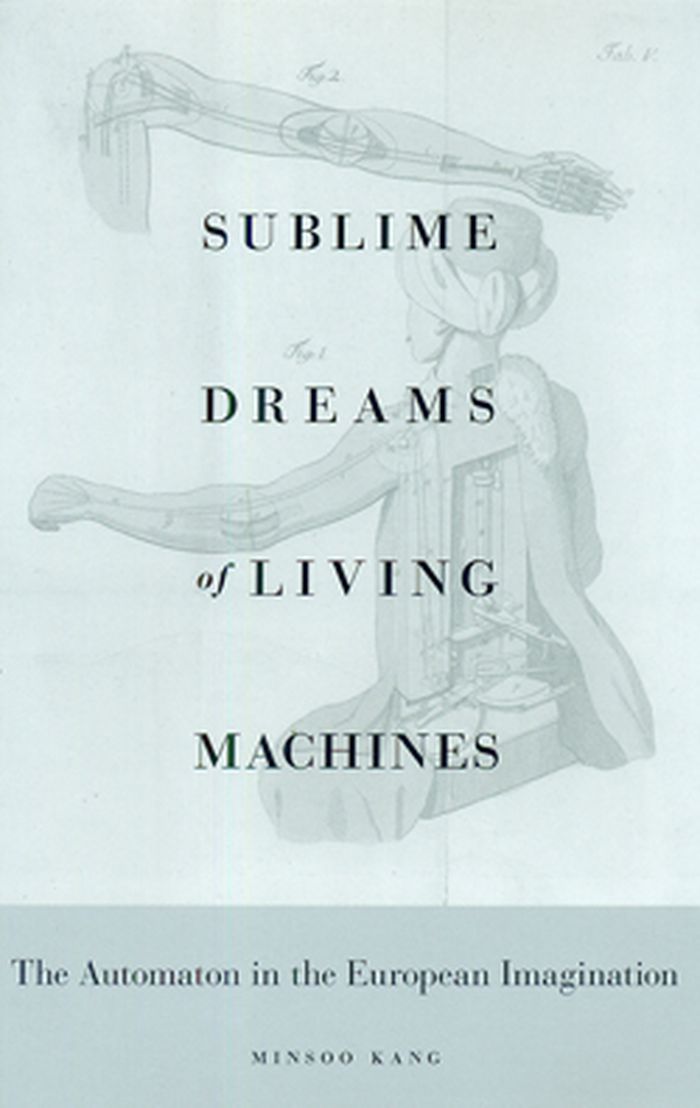
From the dawn of European civilization to the twentieth century, the automaton—better known today as the robot—has captured the Western imagination and provided a vital lens into the nature of humanity. Historian Minsoo Kang argues that to properly understand the human-as-machine and the human-as-fundamentally-different-from-machine, we must trace the origins of these ideas and examine how they were transformed by intellectual, cultural, and artistic appearances of the automaton throughout the history of the West. Kang tracks the first appearance of the automaton in ancient myths through the medieval and Renaissance periods, marks the proliferation of the automaton as a central intellectual concept in the Scientific Revolution and the subsequent backlash during the Enlightenment, and details appearances in Romantic literature and the introduction of the living machine in the Industrial Age.
Sublime dreams of living machines: The automaton in the European imagination
Actions:
Price:
$46.95
(available to order)
Summary:
From the dawn of European civilization to the twentieth century, the automaton—better known today as the robot—has captured the Western imagination and provided a vital lens into the nature of humanity. Historian Minsoo Kang argues that to properly understand the human-as-machine and the human-as-fundamentally-different-from-machine, we must trace the origins of these ideas and examine how they were transformed by intellectual, cultural, and artistic appearances of the automaton throughout the history of the West. Kang tracks the first appearance of the automaton in ancient myths through the medieval and Renaissance periods, marks the proliferation of the automaton as a central intellectual concept in the Scientific Revolution and the subsequent backlash during the Enlightenment, and details appearances in Romantic literature and the introduction of the living machine in the Industrial Age.
Form:
books
books
Publication:
February 2011
February 2011
Subject:
Critical Theory
Critical Theory
Form:
books
books
Title:
Building cities
Building cities
Actions:
Price:
$37.95
(available to order)
Summary:
This volume provides a synthesis of the lessons learned and challenges confronted in implementing neighbourhood improvement programs, based on the practical experiences of designing, implementing, and evaluating these types of programs in the Latin American and Caribbean (LAC) region. This book provides a wide panorama of the most complex problems that the cities of the(...)
$37.95
(available to order)
Summary:
This volume provides a synthesis of the lessons learned and challenges confronted in implementing neighbourhood improvement programs, based on the practical experiences of designing, implementing, and evaluating these types of programs in the Latin American and Caribbean (LAC) region. This book provides a wide panorama of the most complex problems that the cities of the(...)
Title:
Building cities
Actions:
Price:
$37.95
(available to order)
Summary:
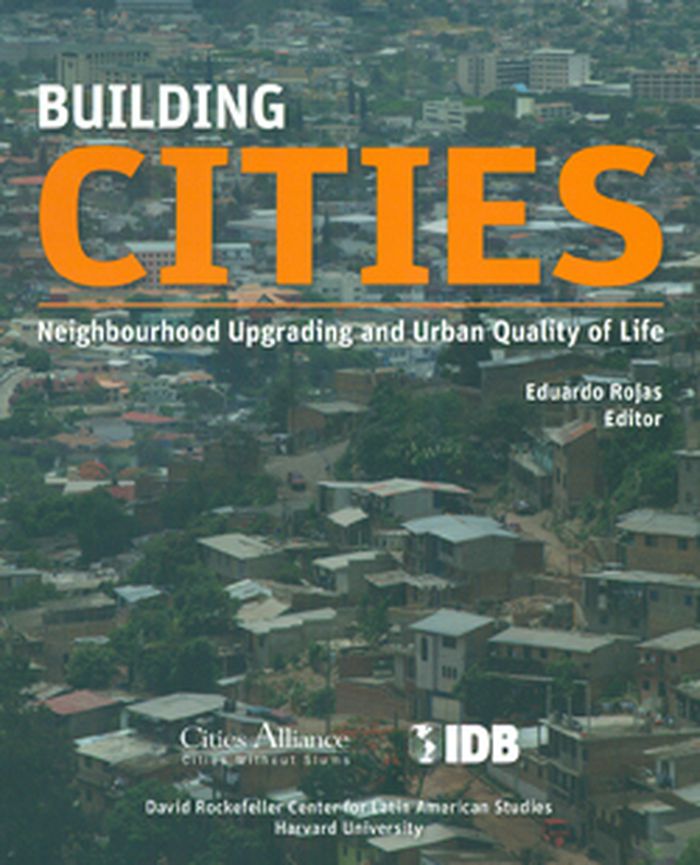
This volume provides a synthesis of the lessons learned and challenges confronted in implementing neighbourhood improvement programs, based on the practical experiences of designing, implementing, and evaluating these types of programs in the Latin American and Caribbean (LAC) region. This book provides a wide panorama of the most complex problems that the cities of the LAC region currently face and shows-with examples of projects under execution-that it is possible to solve them through the expansion of the scale of interventions. It is structured in seven thematic chapters that present the 'state of the art' on the knowledge and challenges in each theme.
Building cities
Actions:
Price:
$37.95
(available to order)
Summary:
This volume provides a synthesis of the lessons learned and challenges confronted in implementing neighbourhood improvement programs, based on the practical experiences of designing, implementing, and evaluating these types of programs in the Latin American and Caribbean (LAC) region. This book provides a wide panorama of the most complex problems that the cities of the LAC region currently face and shows-with examples of projects under execution-that it is possible to solve them through the expansion of the scale of interventions. It is structured in seven thematic chapters that present the 'state of the art' on the knowledge and challenges in each theme.
Form:
books
books
Publication:
July 2010
July 2010
Subject:
Urban Theory
Urban Theory
Form:
books
books
Actions:
Price:
$32.95
(available to order)
Summary:
What is a horizon? A line where land meets sky? The end of the world or the beginning of perception? In this brilliant, engaging, and stimulating history, Didier Maleuvre journeys to the outer reaches of human experience and explores philosophy, religion, and art to understand our struggle and fascination with limits—of life, knowledge, existence, and death. Maleuvre(...)
$32.95
(available to order)
Summary:
What is a horizon? A line where land meets sky? The end of the world or the beginning of perception? In this brilliant, engaging, and stimulating history, Didier Maleuvre journeys to the outer reaches of human experience and explores philosophy, religion, and art to understand our struggle and fascination with limits—of life, knowledge, existence, and death. Maleuvre(...)
Title:
The horizon: A history of our infinite longing
Actions:
Price:
$32.95
(available to order)
Summary:
What is a horizon? A line where land meets sky? The end of the world or the beginning of perception? In this brilliant, engaging, and stimulating history, Didier Maleuvre journeys to the outer reaches of human experience and explores philosophy, religion, and art to understand our struggle and fascination with limits—of life, knowledge, existence, and death. Maleuvre sweeps us through a vast cultural landscape, enabling us to experience each stopping place as the cusp of a limitless journey, whether he is discussing the works of Picasso, Gothic architecture, Beethoven, or General Relativity. If, as Aristotle said, philosophy begins in wonder, then this remarkable book shows us how wonder—the urge to know beyond the conceivable—is itself the engine of culture.
The horizon: A history of our infinite longing
Actions:
Price:
$32.95
(available to order)
Summary:
What is a horizon? A line where land meets sky? The end of the world or the beginning of perception? In this brilliant, engaging, and stimulating history, Didier Maleuvre journeys to the outer reaches of human experience and explores philosophy, religion, and art to understand our struggle and fascination with limits—of life, knowledge, existence, and death. Maleuvre sweeps us through a vast cultural landscape, enabling us to experience each stopping place as the cusp of a limitless journey, whether he is discussing the works of Picasso, Gothic architecture, Beethoven, or General Relativity. If, as Aristotle said, philosophy begins in wonder, then this remarkable book shows us how wonder—the urge to know beyond the conceivable—is itself the engine of culture.
Form:
books
books
Publication:
January 2011
January 2011
Subject:
Art Theory
Art Theory
Form:
books
books

Actions:
Price:
$24.99
(available to order)
Summary:
Now, and in the past, migration has provided millions with an escape route from poverty, oppression, and conflict of all kinds. Through full-color maps, graphs, and photographs, this book distills a vast amount of information as it explores the ways in which humans have spread around the world, adapted to new realities, and shaped their destinations. From the history of(...)
$24.99
(available to order)
Summary:
Now, and in the past, migration has provided millions with an escape route from poverty, oppression, and conflict of all kinds. Through full-color maps, graphs, and photographs, this book distills a vast amount of information as it explores the ways in which humans have spread around the world, adapted to new realities, and shaped their destinations. From the history of(...)
Title:
People on the move : an atlas of migration
Actions:
Price:
$24.99
(available to order)
Summary:
Now, and in the past, migration has provided millions with an escape route from poverty, oppression, and conflict of all kinds. Through full-color maps, graphs, and photographs, this book distills a vast amount of information as it explores the ways in which humans have spread around the world, adapted to new realities, and shaped their destinations. From the history of migration to contemporary global patterns, this concise atlas illuminates a wide range of topics in an accessible text — including refugees and asylum seekers, diasporas, remittances, the brain drain, trafficking, students, retirement, return migration, and much more. Full-color maps of regions, countries, and continents display trends, issues, and processes at a glance, giving a detailed picture of human mobility.
People on the move : an atlas of migration
Actions:
Price:
$24.99
(available to order)
Summary:
Now, and in the past, migration has provided millions with an escape route from poverty, oppression, and conflict of all kinds. Through full-color maps, graphs, and photographs, this book distills a vast amount of information as it explores the ways in which humans have spread around the world, adapted to new realities, and shaped their destinations. From the history of migration to contemporary global patterns, this concise atlas illuminates a wide range of topics in an accessible text — including refugees and asylum seekers, diasporas, remittances, the brain drain, trafficking, students, retirement, return migration, and much more. Full-color maps of regions, countries, and continents display trends, issues, and processes at a glance, giving a detailed picture of human mobility.
Form:
books
books
Publication:
August 2010
August 2010
Subject:
Urban Theory
Urban Theory
Form:
books
books
Actions:
Price:
$42.00
(available to order)
Summary:
First published in 1996, this publication has now been updated, revised, and expanded by Kristine Stiles to represent thirty countries and more than one hundred new artists. Stiles has added forty images and a diverse roster of artists, including many who have emerged since the 1980s, such as Julie Mehretu, Carrie Mae Weems, Damien Hirst, Shirin Neshat, Cai Guo-Qian,(...)
$42.00
(available to order)
Summary:
First published in 1996, this publication has now been updated, revised, and expanded by Kristine Stiles to represent thirty countries and more than one hundred new artists. Stiles has added forty images and a diverse roster of artists, including many who have emerged since the 1980s, such as Julie Mehretu, Carrie Mae Weems, Damien Hirst, Shirin Neshat, Cai Guo-Qian,(...)
Title:
Theories and documents of contemporary art: a sourcebook of artists' writings
Actions:
Price:
$42.00
(available to order)
Summary:
First published in 1996, this publication has now been updated, revised, and expanded by Kristine Stiles to represent thirty countries and more than one hundred new artists. Stiles has added forty images and a diverse roster of artists, including many who have emerged since the 1980s, such as Julie Mehretu, Carrie Mae Weems, Damien Hirst, Shirin Neshat, Cai Guo-Qian, Olafur Eliasson, Matthew Barney, and Takashi Murakami. The writings, which as before take the form of artists' statements, interviews, and essays, make vivid each artist's aesthetic approach and capture the flavor and intent of his or her work.
Theories and documents of contemporary art: a sourcebook of artists' writings
Actions:
Price:
$42.00
(available to order)
Summary:
First published in 1996, this publication has now been updated, revised, and expanded by Kristine Stiles to represent thirty countries and more than one hundred new artists. Stiles has added forty images and a diverse roster of artists, including many who have emerged since the 1980s, such as Julie Mehretu, Carrie Mae Weems, Damien Hirst, Shirin Neshat, Cai Guo-Qian, Olafur Eliasson, Matthew Barney, and Takashi Murakami. The writings, which as before take the form of artists' statements, interviews, and essays, make vivid each artist's aesthetic approach and capture the flavor and intent of his or her work.
Form:
books
books
Publication:
January 2011
January 2011
Subject:
Art Theory
Art Theory
Form:
books
books

Actions:
Price:
$60.00
(available to order)
Summary:
In this walking meditation, forest ranger and writer William Tweed takes us to California’s spectacular High Sierra to discover a new vision for american national parks as they approach their 100th anniversary facing dramatic changes. Tweed, who worked among the Sierra Nevada’s big peaks and big trees for more than thirty years, has now hiked more than 200 miles along(...)
$60.00
(available to order)
Summary:
In this walking meditation, forest ranger and writer William Tweed takes us to California’s spectacular High Sierra to discover a new vision for american national parks as they approach their 100th anniversary facing dramatic changes. Tweed, who worked among the Sierra Nevada’s big peaks and big trees for more than thirty years, has now hiked more than 200 miles along(...)
Title:
Uncertain path : a search for the future of national parks
Actions:
Price:
$60.00
(available to order)
Summary:
In this walking meditation, forest ranger and writer William Tweed takes us to California’s spectacular High Sierra to discover a new vision for american national parks as they approach their 100th anniversary facing dramatic changes. Tweed, who worked among the Sierra Nevada’s big peaks and big trees for more than thirty years, has now hiked more than 200 miles along California’s John Muir Trail in a personal search for answers : How do we address the climate change we are seeing even now — in melting glaciers in Glacier National Park, changing rainy seasons on Mt Rainer, and more fire in the West’s iconic parks. Should we intervene where we can to preserve biodiversity? Should the parks merely become ecosystem museums that exhibit famous landscapes and species? Tweed weaves his experiences along this high-altitude trail together with reflections on the people and ideas that created the parks and on their status and meaning today. Asking how we can make these magnificent parks relevant for the next generation, Tweed’s journey ultimately shows why we must do just that.
Uncertain path : a search for the future of national parks
Actions:
Price:
$60.00
(available to order)
Summary:
In this walking meditation, forest ranger and writer William Tweed takes us to California’s spectacular High Sierra to discover a new vision for american national parks as they approach their 100th anniversary facing dramatic changes. Tweed, who worked among the Sierra Nevada’s big peaks and big trees for more than thirty years, has now hiked more than 200 miles along California’s John Muir Trail in a personal search for answers : How do we address the climate change we are seeing even now — in melting glaciers in Glacier National Park, changing rainy seasons on Mt Rainer, and more fire in the West’s iconic parks. Should we intervene where we can to preserve biodiversity? Should the parks merely become ecosystem museums that exhibit famous landscapes and species? Tweed weaves his experiences along this high-altitude trail together with reflections on the people and ideas that created the parks and on their status and meaning today. Asking how we can make these magnificent parks relevant for the next generation, Tweed’s journey ultimately shows why we must do just that.
Form:
books
books
Publication:
October 2010
October 2010
Subject:
Landscape Theory
Landscape Theory
Form:
books
books
Price:
$32.95
(available to order)
Summary:
The “objective” world is one of facts, data, and actuality. The world of the “nonobject” is about perception, experience, and possibility. In Nonobject product design meets philosophy, poetry, and the theater of the imagination. Branko Lukic and Barry Katz imagine what would happen if design started not from the object but from the space between people and the objects(...)
$32.95
(available to order)
Summary:
The “objective” world is one of facts, data, and actuality. The world of the “nonobject” is about perception, experience, and possibility. In Nonobject product design meets philosophy, poetry, and the theater of the imagination. Branko Lukic and Barry Katz imagine what would happen if design started not from the object but from the space between people and the objects(...)
Title:
Nonobject
Actions:
Price:
$32.95
(available to order)
Summary:
The “objective” world is one of facts, data, and actuality. The world of the “nonobject” is about perception, experience, and possibility. In Nonobject product design meets philosophy, poetry, and the theater of the imagination. Branko Lukic and Barry Katz imagine what would happen if design started not from the object but from the space between people and the objects they use. The “nonobject,” they explain, is the designer’s personal experiment to explore our relation to the observable world.
Nonobject
Actions:
Price:
$32.95
(available to order)
Summary:
The “objective” world is one of facts, data, and actuality. The world of the “nonobject” is about perception, experience, and possibility. In Nonobject product design meets philosophy, poetry, and the theater of the imagination. Branko Lukic and Barry Katz imagine what would happen if design started not from the object but from the space between people and the objects they use. The “nonobject,” they explain, is the designer’s personal experiment to explore our relation to the observable world.
Form:
books
books
Publication:
October 2010
October 2010
Subject:
Design Theory
Design Theory
Form:
books
books
Title:
The politics of the impure
The politics of the impure
Actions:
Price:
$39.00
(available in store)
Summary:
This publication explores how the desire for "the pure" ultimately manifested as an economic process, advocating a need for technology to become an agent for the impure and the imperfect.
$39.00
(available in store)
Summary:
This publication explores how the desire for "the pure" ultimately manifested as an economic process, advocating a need for technology to become an agent for the impure and the imperfect.
Title:
The politics of the impure
Actions:
Price:
$39.00
(available in store)
Summary:
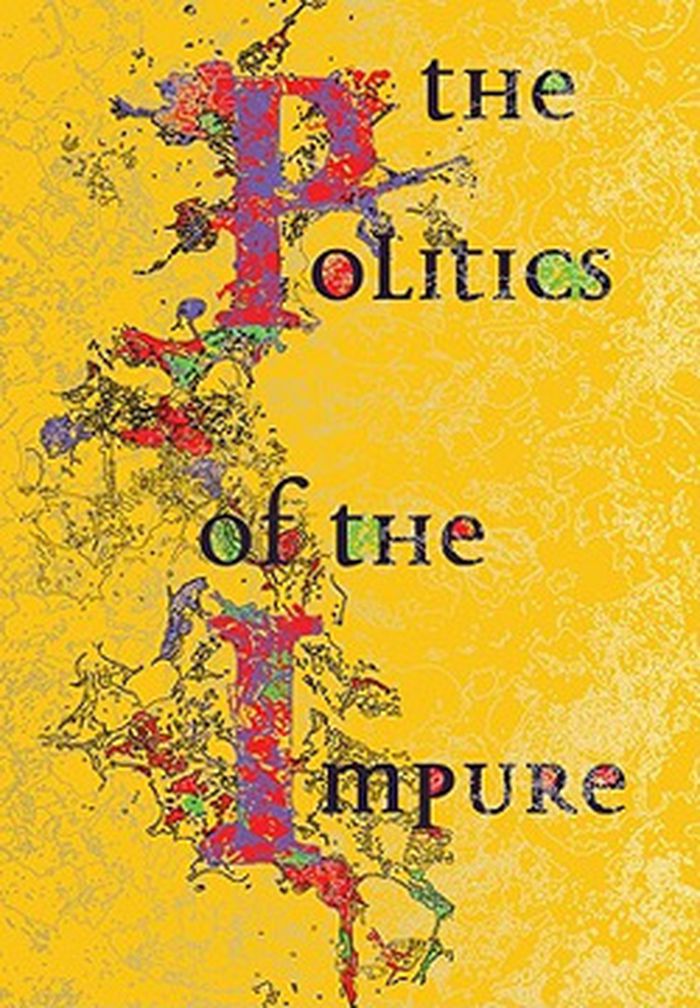
This publication explores how the desire for "the pure" ultimately manifested as an economic process, advocating a need for technology to become an agent for the impure and the imperfect.
The politics of the impure
Actions:
Price:
$39.00
(available in store)
Summary:
This publication explores how the desire for "the pure" ultimately manifested as an economic process, advocating a need for technology to become an agent for the impure and the imperfect.
Form:
books
books
Publication:
September 2010
September 2010
Subject:
Architectural Theory
Architectural Theory
Form:
books
books
Actions:
Price:
$42.00
(available to order)
Summary:
Across Europe, cities are rapidly changing. How to account for the requirements of culture and humanity amid urban planners' brisk intentions? Hans Venhuizen is a specialist in what he calls culture-based planning, which takes existing culture - architecture, art and the contemporary culture of an area's inhabitants - as the point of departure for planning efforts.(...)
$42.00
(available to order)
Summary:
Across Europe, cities are rapidly changing. How to account for the requirements of culture and humanity amid urban planners' brisk intentions? Hans Venhuizen is a specialist in what he calls culture-based planning, which takes existing culture - architecture, art and the contemporary culture of an area's inhabitants - as the point of departure for planning efforts.(...)
Title:
Game urbanism : manual for cultural spatial planning
Actions:
Price:
$42.00
(available to order)
Summary:
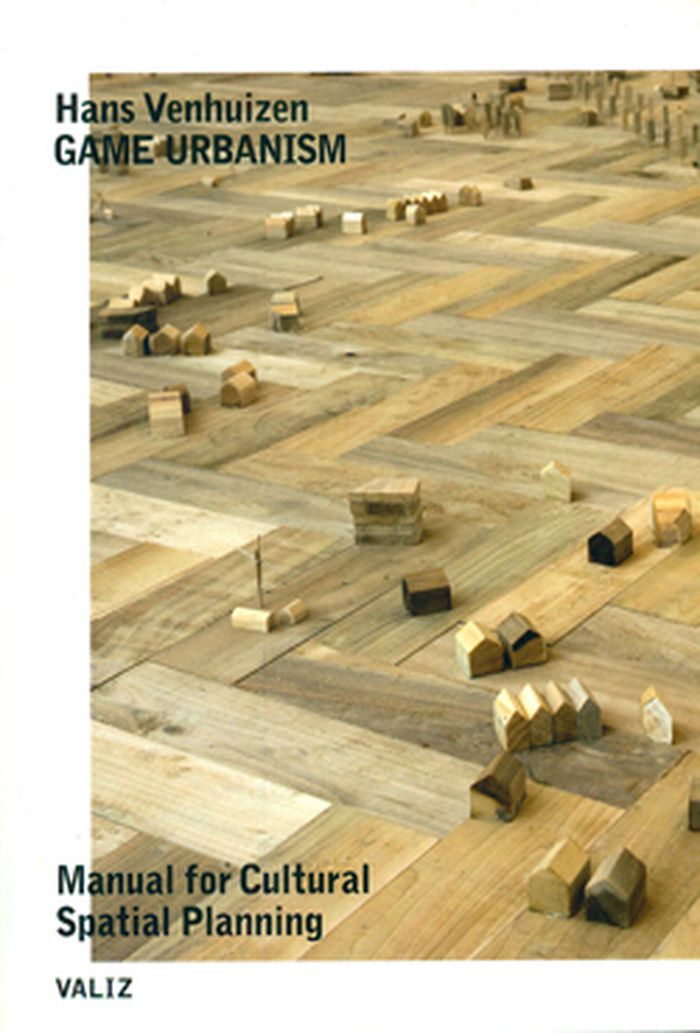
Across Europe, cities are rapidly changing. How to account for the requirements of culture and humanity amid urban planners' brisk intentions? Hans Venhuizen is a specialist in what he calls culture-based planning, which takes existing culture - architecture, art and the contemporary culture of an area's inhabitants - as the point of departure for planning efforts. Venhuizen is well known for his use of ingenious large-scale social games to identify the culture and explore the interests at stake: one such game, called "Life, the Game," involved 20 participants in reenacting the entire life cycle. This publication presents Venhuizen's working practices and shows how they can be applied by anybody (citizens, planners, artists, architects, local authorities, administrators) working in spatial planning, architecture, community arts or other creative industries. Charles Landry, author of The Creative City (2000) and The Art of City Making (2006), contributes an introduction.
Game urbanism : manual for cultural spatial planning
Actions:
Price:
$42.00
(available to order)
Summary:
Across Europe, cities are rapidly changing. How to account for the requirements of culture and humanity amid urban planners' brisk intentions? Hans Venhuizen is a specialist in what he calls culture-based planning, which takes existing culture - architecture, art and the contemporary culture of an area's inhabitants - as the point of departure for planning efforts. Venhuizen is well known for his use of ingenious large-scale social games to identify the culture and explore the interests at stake: one such game, called "Life, the Game," involved 20 participants in reenacting the entire life cycle. This publication presents Venhuizen's working practices and shows how they can be applied by anybody (citizens, planners, artists, architects, local authorities, administrators) working in spatial planning, architecture, community arts or other creative industries. Charles Landry, author of The Creative City (2000) and The Art of City Making (2006), contributes an introduction.
Form:
books
books
Publication:
November 2010
November 2010
Subject:
Urban Theory
Urban Theory
Form:
books
books
Actions:
Price:
$55.00
(available to order)
Summary:
A massive reduction in population and collosal overhaul of economic structure have presented enormous challenges for the people of east Germany over the past 20 years. As part of the International Building Exhibition Urban Redevelopment 2010, 19 towns and cities in the federal state of Saxony-Anhalt have implemented a series of innovative projects and formulated proposals(...)
$55.00
(available to order)
Summary:
A massive reduction in population and collosal overhaul of economic structure have presented enormous challenges for the people of east Germany over the past 20 years. As part of the International Building Exhibition Urban Redevelopment 2010, 19 towns and cities in the federal state of Saxony-Anhalt have implemented a series of innovative projects and formulated proposals(...)
Title:
Less is future: International Building Exhibition Urban Redevelopment Saxony-Anhalt 2010
Actions:
Price:
$55.00
(available to order)
Summary:
A massive reduction in population and collosal overhaul of economic structure have presented enormous challenges for the people of east Germany over the past 20 years. As part of the International Building Exhibition Urban Redevelopment 2010, 19 towns and cities in the federal state of Saxony-Anhalt have implemented a series of innovative projects and formulated proposals as to how the ever-shrinking towns and cities of east Germany could be redesigned to accommodate their present status. This book provides a general view of the methods, methodology and results of this investigation. A historical review of the urban developments of the last two decades show the causes of urban reduction and the IBA's earliest solutions, and three scenarios on the themes of town, landscape and climate outline questions and possible developments for Saxony-Anhalt up to the year 2050. With the IBA, Saxony-Anhalt has also instigated a laboratory for the city of tomorrow, to sustain this project well into the future.
Less is future: International Building Exhibition Urban Redevelopment Saxony-Anhalt 2010
Actions:
Price:
$55.00
(available to order)
Summary:
A massive reduction in population and collosal overhaul of economic structure have presented enormous challenges for the people of east Germany over the past 20 years. As part of the International Building Exhibition Urban Redevelopment 2010, 19 towns and cities in the federal state of Saxony-Anhalt have implemented a series of innovative projects and formulated proposals as to how the ever-shrinking towns and cities of east Germany could be redesigned to accommodate their present status. This book provides a general view of the methods, methodology and results of this investigation. A historical review of the urban developments of the last two decades show the causes of urban reduction and the IBA's earliest solutions, and three scenarios on the themes of town, landscape and climate outline questions and possible developments for Saxony-Anhalt up to the year 2050. With the IBA, Saxony-Anhalt has also instigated a laboratory for the city of tomorrow, to sustain this project well into the future.
Form:
books
books
Publication:
November 2010
November 2010
Subject:
Urban Theory
Urban Theory


