


10592 Results
Form:
books
books
Price:
$39.95
(available to order)
Summary:
In the wake of recent failures in America's urban infrastructure, an emerging group of activist designers are calling on architects to rethink their relationship to the city. For them, the future of the American city lies not in modernism's large-scale master plans or new urbanism's nostalgic community planning. Instead, they favor working with the realities of urban(...)
$39.95
(available to order)
Summary:
In the wake of recent failures in America's urban infrastructure, an emerging group of activist designers are calling on architects to rethink their relationship to the city. For them, the future of the American city lies not in modernism's large-scale master plans or new urbanism's nostalgic community planning. Instead, they favor working with the realities of urban(...)
Title:
Fast-forward urbanism: Rethinking architecture's engagement with the city
Actions:
Price:
$39.95
(available to order)
Summary:
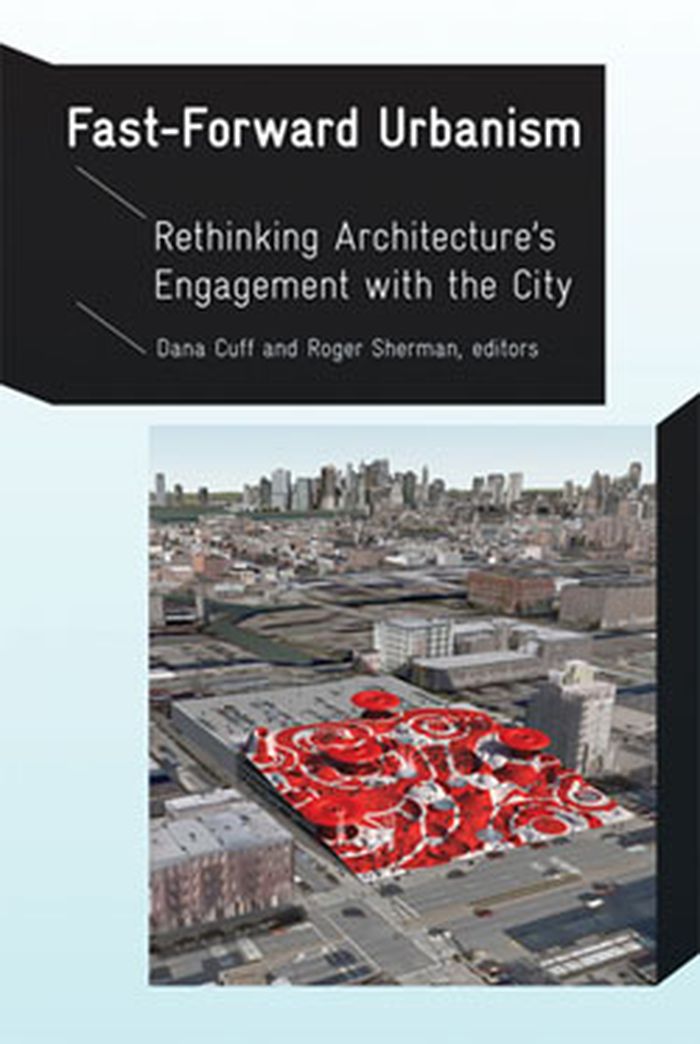
In the wake of recent failures in America's urban infrastructure, an emerging group of activist designers are calling on architects to rethink their relationship to the city. For them, the future of the American city lies not in modernism's large-scale master plans or new urbanism's nostalgic community planning. Instead, they favor working with the realities of urban space, finding hidden opportunities in what already exists in our cities; they eschew monolithic, top-down approaches. Fast-Forward Urbanism presents a mixture of essays, opinions, and design projects by well-known architects and theorists including Stan Allen, Will Alsop, Lars Lerup, and Keller Easterling. Equal parts theory and practice, their ideas lay the groundwork for the next American metropolis.
Fast-forward urbanism: Rethinking architecture's engagement with the city
Actions:
Price:
$39.95
(available to order)
Summary:
In the wake of recent failures in America's urban infrastructure, an emerging group of activist designers are calling on architects to rethink their relationship to the city. For them, the future of the American city lies not in modernism's large-scale master plans or new urbanism's nostalgic community planning. Instead, they favor working with the realities of urban space, finding hidden opportunities in what already exists in our cities; they eschew monolithic, top-down approaches. Fast-Forward Urbanism presents a mixture of essays, opinions, and design projects by well-known architects and theorists including Stan Allen, Will Alsop, Lars Lerup, and Keller Easterling. Equal parts theory and practice, their ideas lay the groundwork for the next American metropolis.
Form:
books
books
Publication:
December 2010
December 2010
Subject:
Urban Theory
Urban Theory
Form:
books
books
Price:
$21.95
(available to order)
Summary:
In the 1950s and 60s, Martin Heidegger turned to sculpture to rethink the relationship between bodies and space and the role of art in our lives. In his texts on the subject he formulates his later aesthetic theory, a thinking of relationality. Against a traditional view of space as an empty container for discrete bodies, these writings understand the body as already(...)
$21.95
(available to order)
Summary:
In the 1950s and 60s, Martin Heidegger turned to sculpture to rethink the relationship between bodies and space and the role of art in our lives. In his texts on the subject he formulates his later aesthetic theory, a thinking of relationality. Against a traditional view of space as an empty container for discrete bodies, these writings understand the body as already(...)
Title:
Heidegger among the sculptors: body, space and the art of dwelling
Actions:
Price:
$21.95
(available to order)
Summary:
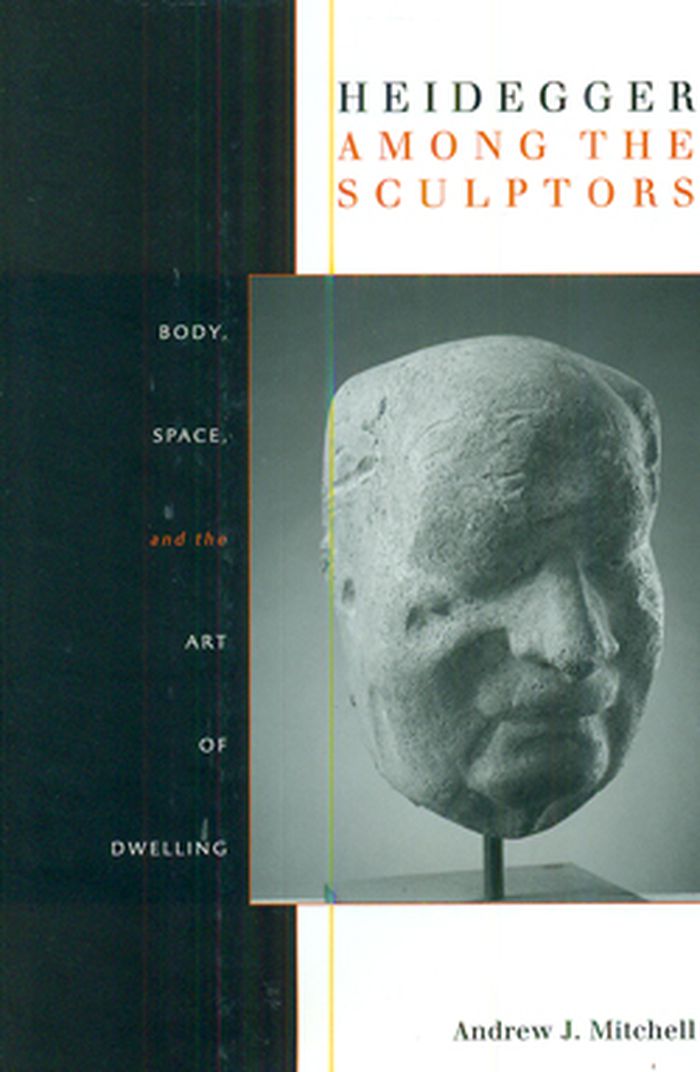
In the 1950s and 60s, Martin Heidegger turned to sculpture to rethink the relationship between bodies and space and the role of art in our lives. In his texts on the subject he formulates his later aesthetic theory, a thinking of relationality. Against a traditional view of space as an empty container for discrete bodies, these writings understand the body as already beyond itself in a world of relations and conceive of space as a material medium of relational contact.
Heidegger among the sculptors: body, space and the art of dwelling
Actions:
Price:
$21.95
(available to order)
Summary:
In the 1950s and 60s, Martin Heidegger turned to sculpture to rethink the relationship between bodies and space and the role of art in our lives. In his texts on the subject he formulates his later aesthetic theory, a thinking of relationality. Against a traditional view of space as an empty container for discrete bodies, these writings understand the body as already beyond itself in a world of relations and conceive of space as a material medium of relational contact.
Form:
books
books
Publication:
August 2010
August 2010
Subject:
Art Theory
Art Theory
Form:
books
books
Price:
$27.95
(available to order)
Summary:
The contributors to The City, Revisited trace an intellectual history that begins in 1925 with the publication of the influential classic The City, engaging in a spirited debate about whether the major theories of twentieth-century urban development are relevant for studying the twenty-first-century metropolis.
$27.95
(available to order)
Summary:
The contributors to The City, Revisited trace an intellectual history that begins in 1925 with the publication of the influential classic The City, engaging in a spirited debate about whether the major theories of twentieth-century urban development are relevant for studying the twenty-first-century metropolis.
Title:
The city revisited: Urban theory from Chicago, Los Angeles, New York
Actions:
Price:
$27.95
(available to order)
Summary:
The contributors to The City, Revisited trace an intellectual history that begins in 1925 with the publication of the influential classic The City, engaging in a spirited debate about whether the major theories of twentieth-century urban development are relevant for studying the twenty-first-century metropolis.
The city revisited: Urban theory from Chicago, Los Angeles, New York
Actions:
Price:
$27.95
(available to order)
Summary:
The contributors to The City, Revisited trace an intellectual history that begins in 1925 with the publication of the influential classic The City, engaging in a spirited debate about whether the major theories of twentieth-century urban development are relevant for studying the twenty-first-century metropolis.
Form:
books
books
Publication:
January 2011
January 2011
Subject:
Urban Theory
Urban Theory
Form:
books
books
Title:
The just city
The just city
Actions:
Price:
$35.00
(available to order)
Summary:
In The Just City, Fainstein draws on the work of John Rawls, Martha Nussbaum, Iris Marion Young, Nancy Fraser, and others to develop an approach to justice relevant to twenty-first-century cities, one that incorporates three central concepts: diversity, democracy, and equity. Fainstein also tests her ideas through case studies of New York, London, and Amsterdam by(...)
$35.00
(available to order)
Summary:
In The Just City, Fainstein draws on the work of John Rawls, Martha Nussbaum, Iris Marion Young, Nancy Fraser, and others to develop an approach to justice relevant to twenty-first-century cities, one that incorporates three central concepts: diversity, democracy, and equity. Fainstein also tests her ideas through case studies of New York, London, and Amsterdam by(...)
Title:
The just city
Actions:
Price:
$35.00
(available to order)
Summary:
In The Just City, Fainstein draws on the work of John Rawls, Martha Nussbaum, Iris Marion Young, Nancy Fraser, and others to develop an approach to justice relevant to twenty-first-century cities, one that incorporates three central concepts: diversity, democracy, and equity. Fainstein also tests her ideas through case studies of New York, London, and Amsterdam by evaluating their postwar programs for housing and development in relation to the three norms. She concludes by identifying a set of specific criteria for urban planners and policymakers to consider when developing programs to assure greater justice in both the process of their formulation and their effects.
The just city
Actions:
Price:
$35.00
(available to order)
Summary:
In The Just City, Fainstein draws on the work of John Rawls, Martha Nussbaum, Iris Marion Young, Nancy Fraser, and others to develop an approach to justice relevant to twenty-first-century cities, one that incorporates three central concepts: diversity, democracy, and equity. Fainstein also tests her ideas through case studies of New York, London, and Amsterdam by evaluating their postwar programs for housing and development in relation to the three norms. She concludes by identifying a set of specific criteria for urban planners and policymakers to consider when developing programs to assure greater justice in both the process of their formulation and their effects.
Form:
books
books
Publication:
September 2010
September 2010
Subject:
Urban Theory
Urban Theory
Form:
books
books
Price:
$43.95
(available to order)
Summary:
In this publication, Daniel Purdy surveys the volatile state of architectural theory in the Enlightenment, brought on by the newly emerged scientific critiques of Renaissance cosmology, then shows how German writers redeployed Renaissance terminology so that "harmony," "unity," "synthesis," "foundation," and "orderliness" became states of consciousness, rather than(...)
$43.95
(available to order)
Summary:
In this publication, Daniel Purdy surveys the volatile state of architectural theory in the Enlightenment, brought on by the newly emerged scientific critiques of Renaissance cosmology, then shows how German writers redeployed Renaissance terminology so that "harmony," "unity," "synthesis," "foundation," and "orderliness" became states of consciousness, rather than(...)
Title:
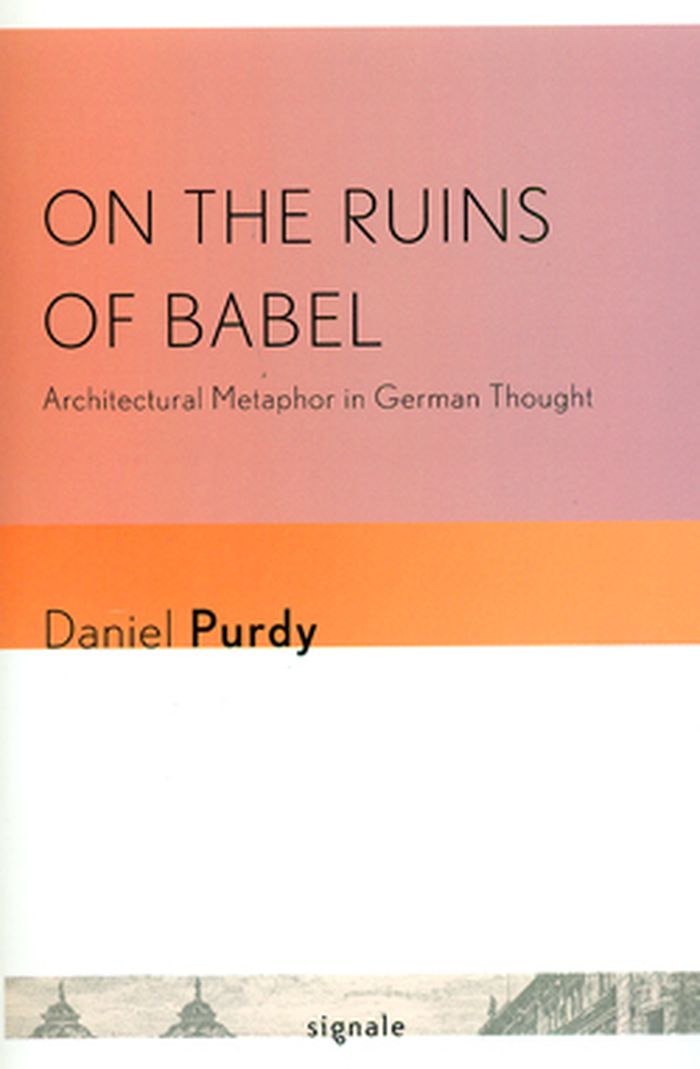
On the ruins of Babel : architectural metaphor in German thought
Actions:
Price:
$43.95
(available to order)
Summary:
In this publication, Daniel Purdy surveys the volatile state of architectural theory in the Enlightenment, brought on by the newly emerged scientific critiques of Renaissance cosmology, then shows how German writers redeployed Renaissance terminology so that "harmony," "unity," "synthesis," "foundation," and "orderliness" became states of consciousness, rather than terms used to describe the built world. Purdy's distinctly new interpretation of German theory reveals how metaphors constitute interior life as an architectural space to be designed, constructed, renovated, or demolished. He elucidates the close affinity between Hegel's Romantic aesthetic of space and Daniel Libeskind's deconstruction of monumental architecture in Berlin's Jewish Museum. Through a careful reading of Walter Benjamin's writing on architecture as myth, Purdy details how classical architecture shaped Benjamin's modernist interpretations of urban life, particularly his elaboration on Freud's archaeology of the unconscious. Benjamin's essays on dreams and architecture turn the individualist sensibility of the Enlightenment into a collective and mythic identification between humans and buildings.
On the ruins of Babel : architectural metaphor in German thought
Actions:
Price:
$43.95
(available to order)
Summary:
In this publication, Daniel Purdy surveys the volatile state of architectural theory in the Enlightenment, brought on by the newly emerged scientific critiques of Renaissance cosmology, then shows how German writers redeployed Renaissance terminology so that "harmony," "unity," "synthesis," "foundation," and "orderliness" became states of consciousness, rather than terms used to describe the built world. Purdy's distinctly new interpretation of German theory reveals how metaphors constitute interior life as an architectural space to be designed, constructed, renovated, or demolished. He elucidates the close affinity between Hegel's Romantic aesthetic of space and Daniel Libeskind's deconstruction of monumental architecture in Berlin's Jewish Museum. Through a careful reading of Walter Benjamin's writing on architecture as myth, Purdy details how classical architecture shaped Benjamin's modernist interpretations of urban life, particularly his elaboration on Freud's archaeology of the unconscious. Benjamin's essays on dreams and architecture turn the individualist sensibility of the Enlightenment into a collective and mythic identification between humans and buildings.
Form:
books
books
Publication:
December 2010
December 2010
Subject:
Architectural Theory
Architectural Theory
Form:
books
books
Title:
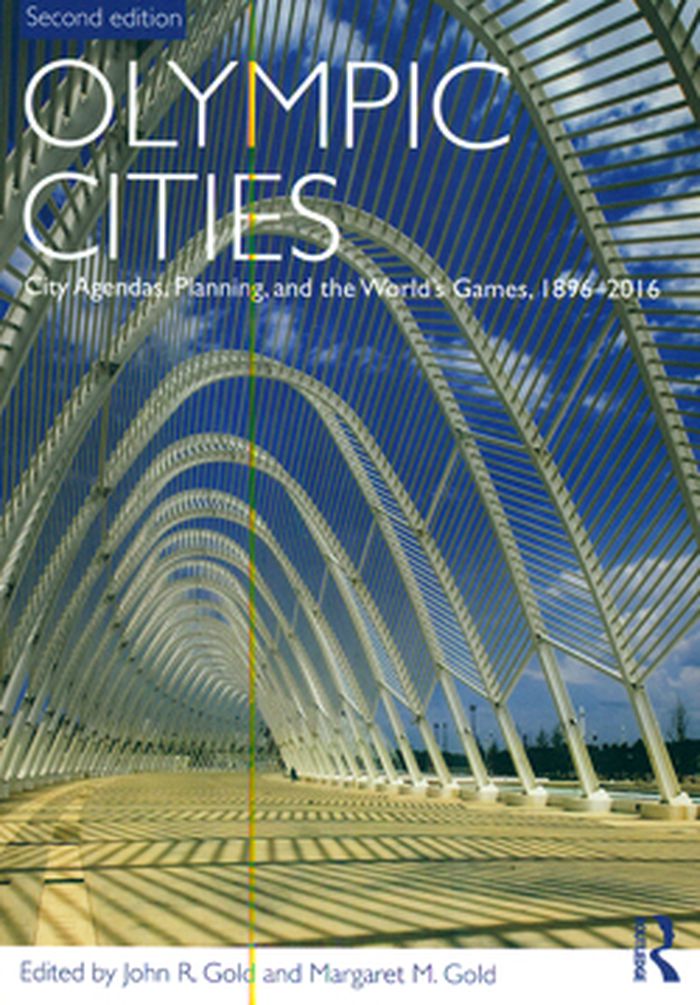
Olympic cities, 2nd edition
Olympic cities, 2nd edition
Actions:
Price:
$59.50
(available to order)
Summary:
Providing a full overview of the changing relationship between cities and the Olympic events, this substantially revised and enlarged edition builds on the success of its predecessor. Its coverage takes account of important new scholarship as well as adding reflections on the experience of staging Beijing 2008 and Vancouver 2010, the state of preparations for London 2012,(...)
$59.50
(available to order)
Summary:
Providing a full overview of the changing relationship between cities and the Olympic events, this substantially revised and enlarged edition builds on the success of its predecessor. Its coverage takes account of important new scholarship as well as adding reflections on the experience of staging Beijing 2008 and Vancouver 2010, the state of preparations for London 2012,(...)
Title:
Olympic cities, 2nd edition
Actions:
Price:
$59.50
(available to order)
Summary:
Providing a full overview of the changing relationship between cities and the Olympic events, this substantially revised and enlarged edition builds on the success of its predecessor. Its coverage takes account of important new scholarship as well as adding reflections on the experience of staging Beijing 2008 and Vancouver 2010, the state of preparations for London 2012, and the plans for the Games scheduled for Sochi in 2014 and Rio de Janeiro 2016. The book is divided into three parts that provide overviews of the urban legacy of the four component Olympic festivals; systematic surveys of five key aspects of activity involved in staging the Olympics; and ten chronologically arranged portraits of host cities. As controversy over the growing size and expense of the Olympics continues, this timely assessment of the Games’ development and the complex agendas that host cities attach to the event will be essential reading for urban and sports historians, urban geographers, planners and all concerned with understanding the relationship between cities and culture.
Olympic cities, 2nd edition
Actions:
Price:
$59.50
(available to order)
Summary:
Providing a full overview of the changing relationship between cities and the Olympic events, this substantially revised and enlarged edition builds on the success of its predecessor. Its coverage takes account of important new scholarship as well as adding reflections on the experience of staging Beijing 2008 and Vancouver 2010, the state of preparations for London 2012, and the plans for the Games scheduled for Sochi in 2014 and Rio de Janeiro 2016. The book is divided into three parts that provide overviews of the urban legacy of the four component Olympic festivals; systematic surveys of five key aspects of activity involved in staging the Olympics; and ten chronologically arranged portraits of host cities. As controversy over the growing size and expense of the Olympics continues, this timely assessment of the Games’ development and the complex agendas that host cities attach to the event will be essential reading for urban and sports historians, urban geographers, planners and all concerned with understanding the relationship between cities and culture.
Form:
books
books
Publication:
July 2010
July 2010
Subject:
Urban Theory
Urban Theory
Form:
books
books
Actions:
Price:
$25.50
(available to order)
Summary:
In Toward Sustainable Architecture Mazzola makes a series of observations aimed at bringing about a reversal in the trend of conceiving, developing and living in our cities and towns, before it is too late.
$25.50
(available to order)
Summary:
In Toward Sustainable Architecture Mazzola makes a series of observations aimed at bringing about a reversal in the trend of conceiving, developing and living in our cities and towns, before it is too late.
Title:
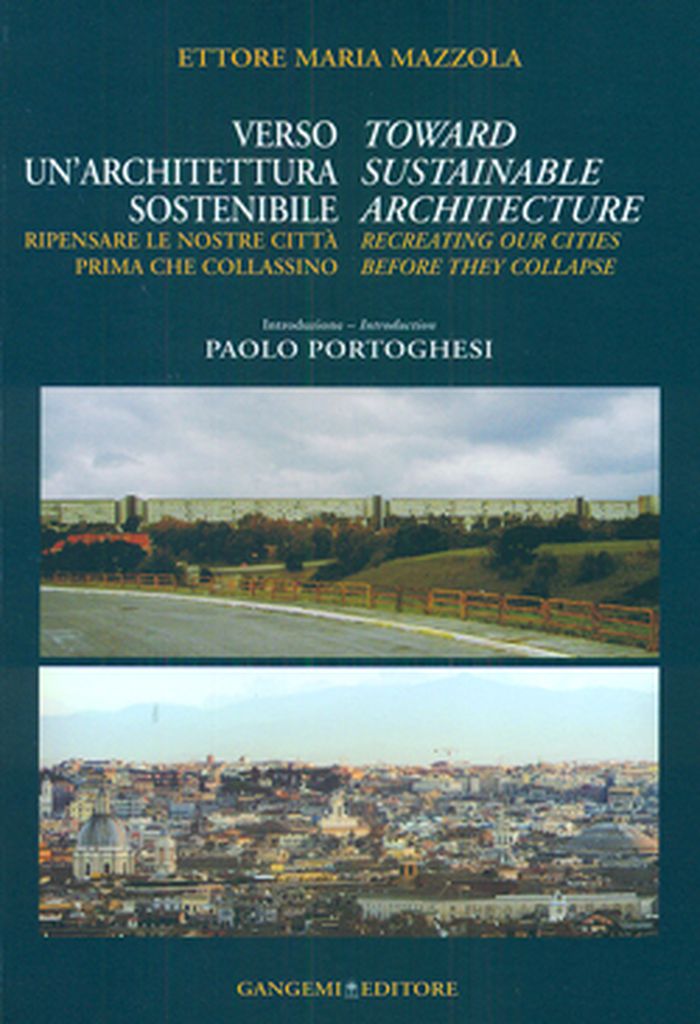
Toward sustainable architecture : recreating our cities before they collapse
Actions:
Price:
$25.50
(available to order)
Summary:
In Toward Sustainable Architecture Mazzola makes a series of observations aimed at bringing about a reversal in the trend of conceiving, developing and living in our cities and towns, before it is too late.
Toward sustainable architecture : recreating our cities before they collapse
Actions:
Price:
$25.50
(available to order)
Summary:
In Toward Sustainable Architecture Mazzola makes a series of observations aimed at bringing about a reversal in the trend of conceiving, developing and living in our cities and towns, before it is too late.
Form:
books
books
Publication:
September 2010
September 2010
Subject:
Urban Theory
Urban Theory
Form:
books
books
Title:
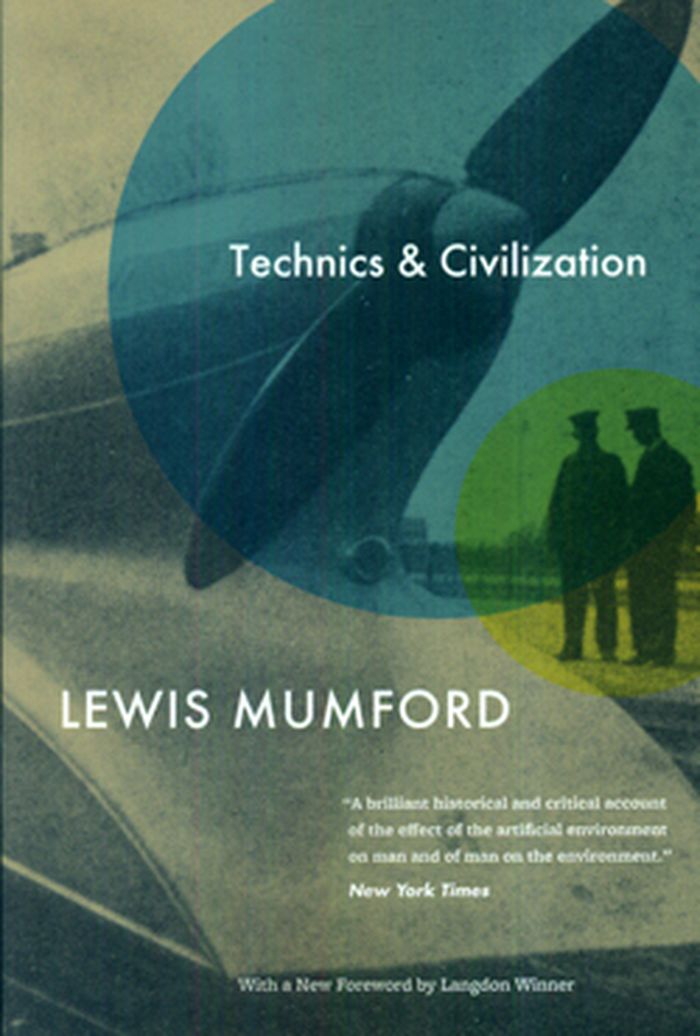
Technics & civilization
Technics & civilization
Actions:
Price:
$45.95
(available to order)
Summary:
Technics and Civilization first presented its compelling history of the machine and critical study of its effects on civilization in 1934 —before television, the personal computer, and the Internet even appeared on our periphery. Drawing upon art, science, philosophy, and the history of culture, Lewis Mumford explained the origin of the machine age and traced its(...)
$45.95
(available to order)
Summary:
Technics and Civilization first presented its compelling history of the machine and critical study of its effects on civilization in 1934 —before television, the personal computer, and the Internet even appeared on our periphery. Drawing upon art, science, philosophy, and the history of culture, Lewis Mumford explained the origin of the machine age and traced its(...)
Title:
Technics & civilization
Actions:
Price:
$45.95
(available to order)
Summary:
Technics and Civilization first presented its compelling history of the machine and critical study of its effects on civilization in 1934 —before television, the personal computer, and the Internet even appeared on our periphery. Drawing upon art, science, philosophy, and the history of culture, Lewis Mumford explained the origin of the machine age and traced its social results, asserting that the development of modern technology had its roots in the Middle Ages rather than the Industrial Revolution. Mumford sagely argued that it was the moral, economic, and political choices we made, not the machines that we used, that determined our then industrially driven economy. Equal parts powerful history and polemic criticism, this book was the first comprehensive attempt in English to portray the development of the machine age over the last thousand years — and to predict the pull the technological still holds over us today.
Technics & civilization
Actions:
Price:
$45.95
(available to order)
Summary:
Technics and Civilization first presented its compelling history of the machine and critical study of its effects on civilization in 1934 —before television, the personal computer, and the Internet even appeared on our periphery. Drawing upon art, science, philosophy, and the history of culture, Lewis Mumford explained the origin of the machine age and traced its social results, asserting that the development of modern technology had its roots in the Middle Ages rather than the Industrial Revolution. Mumford sagely argued that it was the moral, economic, and political choices we made, not the machines that we used, that determined our then industrially driven economy. Equal parts powerful history and polemic criticism, this book was the first comprehensive attempt in English to portray the development of the machine age over the last thousand years — and to predict the pull the technological still holds over us today.
Form:
books
books
Publication:
October 2010
October 2010
Subject:
Architectural Theory
Architectural Theory
Form:
books
books
Title:
The first six books of the elements of Euclid : facsimile of the famous first edition of 1847
The first six books of the elements of Euclid : facsimile of the famous first edition of 1847
Actions:
Price:
$64.99
(available to order)
Summary:
Red, yellow, blue – and of course black – are the colours that Oliver Byrne employs for the figures and diagrams in his most unusual 1847 edition of Euclid, published by William Pickering and printed by Chiswick Press, and which prompt the surprised reader to think of Mondrian. The author makes it clear in his subtitle that this is a didactic measure intended to(...)
$64.99
(available to order)
Summary:
Red, yellow, blue – and of course black – are the colours that Oliver Byrne employs for the figures and diagrams in his most unusual 1847 edition of Euclid, published by William Pickering and printed by Chiswick Press, and which prompt the surprised reader to think of Mondrian. The author makes it clear in his subtitle that this is a didactic measure intended to(...)
Title:
The first six books of the elements of Euclid : facsimile of the famous first edition of 1847
Actions:
Price:
$64.99
(available to order)
Summary:
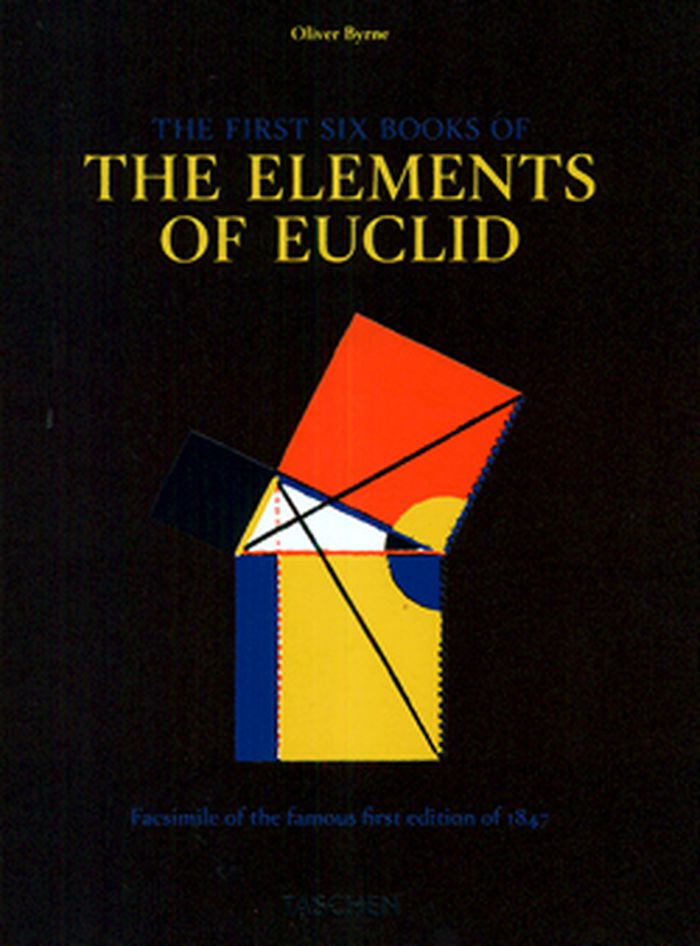
Red, yellow, blue – and of course black – are the colours that Oliver Byrne employs for the figures and diagrams in his most unusual 1847 edition of Euclid, published by William Pickering and printed by Chiswick Press, and which prompt the surprised reader to think of Mondrian. The author makes it clear in his subtitle that this is a didactic measure intended to distinguish his edition from all others: "The Elements of Euclid in which coloured diagrams and symbols are used instead of letters for the greater ease of learners." Byrne is not content to trust solely in the supposed intuitive "logical" structure of Euclid's axioms and theorems – who doesn't know the first famous sentences of Euclid's Elements: "I. A point is that which has no parts. II. A line is length without breadth"? –, but translates them into colourful diagrams and symbols. He thereby thinks in terms of the school classroom : he compares his colours to the dyed chalks in which figures are drawn on the blackboard.
The first six books of the elements of Euclid : facsimile of the famous first edition of 1847
Actions:
Price:
$64.99
(available to order)
Summary:
Red, yellow, blue – and of course black – are the colours that Oliver Byrne employs for the figures and diagrams in his most unusual 1847 edition of Euclid, published by William Pickering and printed by Chiswick Press, and which prompt the surprised reader to think of Mondrian. The author makes it clear in his subtitle that this is a didactic measure intended to distinguish his edition from all others: "The Elements of Euclid in which coloured diagrams and symbols are used instead of letters for the greater ease of learners." Byrne is not content to trust solely in the supposed intuitive "logical" structure of Euclid's axioms and theorems – who doesn't know the first famous sentences of Euclid's Elements: "I. A point is that which has no parts. II. A line is length without breadth"? –, but translates them into colourful diagrams and symbols. He thereby thinks in terms of the school classroom : he compares his colours to the dyed chalks in which figures are drawn on the blackboard.
Form:
books
books
Publication:
July 2010
July 2010
Subject:
Architectural Theory
Architectural Theory
Form:
books
books
Title:
Building cities
Building cities
Actions:
Price:
$37.95
(available to order)
Summary:
This volume provides a synthesis of the lessons learned and challenges confronted in implementing neighbourhood improvement programs, based on the practical experiences of designing, implementing, and evaluating these types of programs in the Latin American and Caribbean (LAC) region. This book provides a wide panorama of the most complex problems that the cities of the(...)
$37.95
(available to order)
Summary:
This volume provides a synthesis of the lessons learned and challenges confronted in implementing neighbourhood improvement programs, based on the practical experiences of designing, implementing, and evaluating these types of programs in the Latin American and Caribbean (LAC) region. This book provides a wide panorama of the most complex problems that the cities of the(...)
Title:
Building cities
Actions:
Price:
$37.95
(available to order)
Summary:
This volume provides a synthesis of the lessons learned and challenges confronted in implementing neighbourhood improvement programs, based on the practical experiences of designing, implementing, and evaluating these types of programs in the Latin American and Caribbean (LAC) region. This book provides a wide panorama of the most complex problems that the cities of the LAC region currently face and shows-with examples of projects under execution-that it is possible to solve them through the expansion of the scale of interventions. It is structured in seven thematic chapters that present the 'state of the art' on the knowledge and challenges in each theme.
Building cities
Actions:
Price:
$37.95
(available to order)
Summary:
This volume provides a synthesis of the lessons learned and challenges confronted in implementing neighbourhood improvement programs, based on the practical experiences of designing, implementing, and evaluating these types of programs in the Latin American and Caribbean (LAC) region. This book provides a wide panorama of the most complex problems that the cities of the LAC region currently face and shows-with examples of projects under execution-that it is possible to solve them through the expansion of the scale of interventions. It is structured in seven thematic chapters that present the 'state of the art' on the knowledge and challenges in each theme.
Form:
books
books
Publication:
July 2010
July 2010
Subject:
Urban Theory
Urban Theory


